
HealthNews
Does it make more grow back?
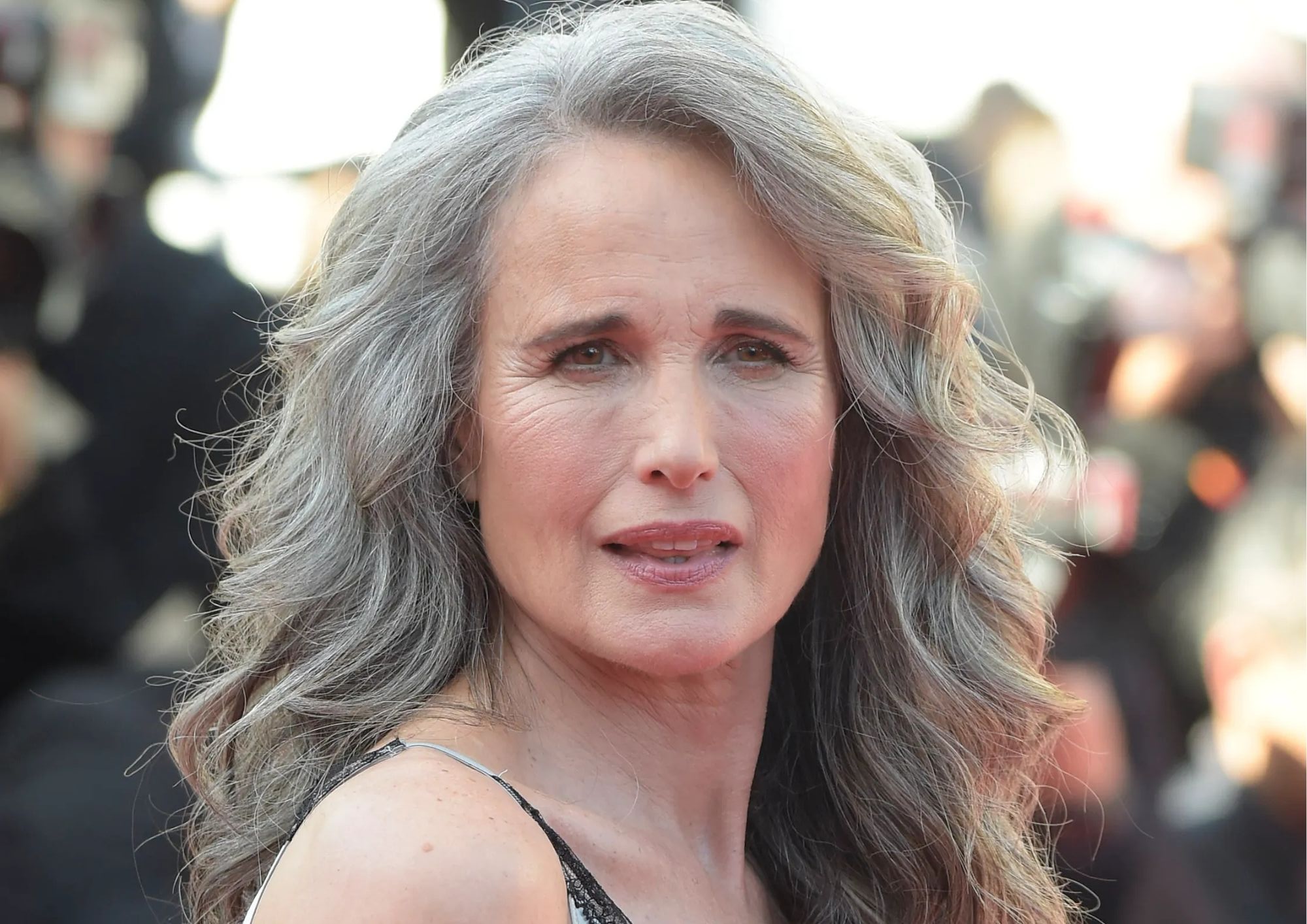
A myth under the microscope: Does plucking grey hairs really make more grow back? Experts give a definitive answer.
Although I’m not afraid of grey hairs, I’m not looking forward to the moment they start appearing out of nowhere, either. I’m sure many people know that moment all too well. You wake up one morning, glance in the mirror as usual, start your beauty routine and suddenly notice a silver glint that stands out from the rest of your hair. The greys have arrived. Your first, almost instinctive reaction is to reach for the tweezers, and at that moment, that old warning from our grandmothers fails to ring in your ears: “Don’t pluck it, two more will grow back!”
Admittedly, some women look fantastic with grey hair (just think of Andie MacDowell’s or Sarah Jessica Parker’s impeccable silhouettes on the red carpet). Yet for many, that first grey hair is still an unwelcome guest. Before you take on the first signs of ageing hair with a pair of tweezers, we asked hair and scalp health experts what they have to say about this age-old beauty myth. They explained why hair loses its pigment in the first place, what really happens when we pluck a hair and whether there is a way to slow the greying process without a trip to the salon.
Why does hair turn grey in the first place?
To understand what happens to a plucked hair, we first need to look beneath the surface of the scalp. “Hair colour comes from cells at the root of the hair called melanocytes, which produce melanin. When melanocytes stop producing melanin, grey hairs appear,” explains Ana Maletić, MD, PhD, a specialist in plastic, reconstructive and aesthetic surgery and a respected hair transplant expert (FISHRS, ABHRS Diplomate) at the Maletić Polyclinic.
Related: You don’t have to dye your first grey hairs: these tricks will help you conceal them
According to Dr Maletić, natural ageing and genetic predisposition are the main reasons these cells stop functioning, but everyday stress and certain health conditions, such as vitiligo, also play an important role. Dr Lisa Franchi, CEO of LOYA, agrees, noting that alongside genetics, oxidative stress is also a major factor. However, Dr Franchi shares one encouraging scientific finding: “Interestingly, research has shown that some grey hairs can regain their colour, so greying is not always irreversible.”
Plucking grey hairs makes more grow back: Myth or fact?
Let’s return to the key question: if we give in to temptation and pluck that one unruly hair, will we trigger a chain reaction that causes even more grey hairs to appear? “No, that’s a myth. Each follicle works independently, so plucking one grey hair won’t make others turn grey,” Dr Franchi states firmly, before warning of the real danger of this habit: “However, repeated plucking can damage the follicle and lead to thinning over time. And the hair that grows back will most likely still be grey.”
Dr Maletić confirms the same mechanism: “If we pluck a grey hair, another grey hair can grow from that follicle because the melanocytes in that follicle are not producing melanin. But plucking one grey hair does not cause several new ones to appear.” In other words, plucking will not create an army of new greys, but you do risk permanently damaging the root and losing hair density, a price I’m sure you would rather not pay.
How can you prevent grey hairs without dyeing?
If tweezers are off the table and you’re not yet ready for regular colour appointments or highlights, the question is: can we take preventive action?
The modern approach to beauty is increasingly embracing holistic care from within and targeted scalp care from the outside. Dr Maletić emphasises the importance of lifestyle and micronutrients: “To try to reduce hair greying, it is important to get enough of the nutrients essential to preventing this condition, such as vitamin B12, vitamin D, vitamin E, zinc, iron and copper. We should also try to reduce oxidative stress in the body, for example by quitting smoking, and lower our stress levels. In addition, certain scalp treatments have proved effective at reducing grey hairs.”
Related: How to grow out grey hair gracefully, according to hairstylists
Another option is a new generation of haircare products that aim to activate the hair’s own natural mechanisms rather than simply cover its pigment. “We can’t change our genetics, but not smoking, managing stress and eating a balanced diet all support healthier hair ageing. What I find exciting is that haircare is starting to move from covering grey hair to supporting the hair’s own pigmentation,” says Dr Franchi. As an example, she points to the philosophy behind the LOYA Silver-Away Serum formula, whose anti-grey complex combines a molecule from the Polygonum multiflorum plant with copper, a mineral essential to the function of tyrosinase, a key enzyme in pigmentation. “In laboratory tests on cells, the complex increased melanin production by 32%. In a dermatologist-supervised consumer study, 92.9% of the 42 participants said they noticed less grey hair after eight weeks of daily use.”
The next time you spot a silver strand in the mirror, put down the tweezers. Whether you choose to embrace it as a symbol of maturity and style or address it with a thoughtful approach to supplements and targeted scalp serums, your hair, and its density, will thank you.
HealthNews
Haven’t Exercised in a While? This Is the Best Time of Day to Go for a Walk
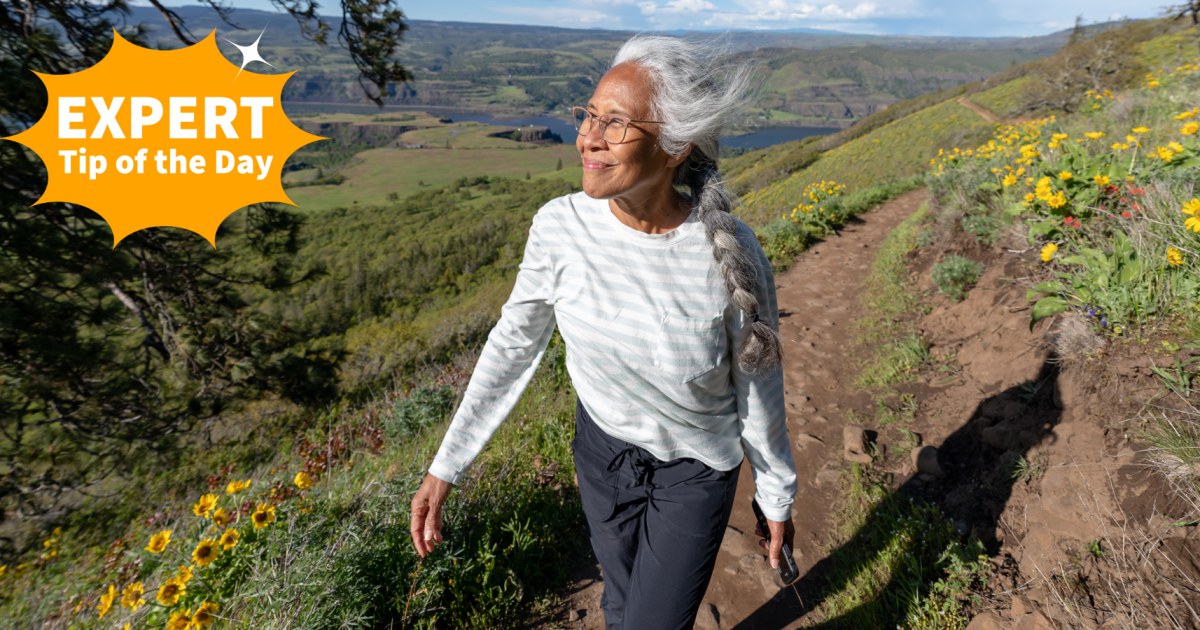
If you’re starting a new fitness journey or getting back into exercise after a long break, you’re not alone.
Everyone has to begin somewhere, even if it’s just getting up off the couch. And if you’re starting from zero, walking is one of the best ways to move your body and improve your physical fitness, orthopedic surgeon Dr. Vonda Wright tells TODAY.com.
Walking is an accessible, low-impact and science-backed way to boost both physical and mental health.
If you’re a beginner, you may set out to walk a certain distance or number of steps at first. But the time of day you choose to go on a walk also matters, says Wright.
In order to get the most out of your walk, Wright recommends walking at a specific time of day.
Fitness Tip of the Day: Go on A Walk After Eating Your Largest Meal of the Day
“…Take a walk after your biggest meal,” says Wright.
Whether that’s breakfast, lunch or dinner, try to go on your walk within about 30 minutes to an hour of finishing eating.
Why It Matters
Going on a walk after eating your largest meal of the day has several advantages, especially if you’re switching from a formerly sedentary lifestyle.
Approximately 25% of Americans report getting zero physical activity outside of work, according to data from the U.S. Centers for Disease Control and Prevention.
Walking is a tremendous way to start moving, says Wright, and strategically timing your walk can maximize the benefits.
Going on a walk will get the muscles moving, heart rate up and lungs working harder, which improves cardiovascular health.
Activating the muscles, especially the large muscle groups in the lower body, also helps pull glucose out of the bloodstream. And after a meal is when blood sugar tends to spike the highest.
Research shows that walking for just two to five minutes after a meal can help manage blood sugar and insulin levels, TODAY.com previously reported.
Walking after eating can also aid digestion by speeding up gastrointestinal motility, or the transit time of food moving through our digestive system.
Finally, a walk can combat feelings of sluggishness after a large meal, which may help boost mood.
How To Get Started
If you’re truly starting from zero, Wright recommends walking for just five minutes at first.
“Then go up to ten minutes, and eventually work your way up to 30 minutes,” Wright recommends.
The ultimate goal should be to walk for at least 30 minutes at a moderate-intensity pace, most days of the week.
If you want to make your walks more challenging, try increasing the time or distance, speeding up your pace, walking at an incline or wearing a weighted vest, says Wright.
HealthNews
I Run a Cancer Biotech Company. Then, I Was Diagnosed With Cancer.
This as-told-to essay is based on a conversation with Dr. Ryan Beal, CEO of Dyve Biosciences. It has been edited for length and clarity.
My brother and I were about 60 miles into a 120-mile race in Colorado when chest pain made me stop. I thought I was having a cardiac emergency, but doctors diagnosed me with thymoma — a rare cancer of the thymus gland, which sits in the middle of the chest.
To say it was a shock is an understatement. I was only 49 and healthy enough to run for six days through the Rockies. Months earlier, my mother had died of cancer; her celebration of life was just days before the race. My brother and I had considered canceling, but decided to run together to reflect on her life.
Instead, I found myself in an emergency room in Vail, facing a terrible diagnosis. But I had something few cancer patients do: I’m the CEO of a cancer-focused biotech company. I immediately sent my results to three doctor friends, and they got to work.
I’m an MD, but went into business, rather than medicine
I’ve always been a science nerd, and grew up wanting to be a physician. While I was in medical school at UPenn, I developed an interest in business. Med school felt like a lot of memorization and regurgitation of facts; in business classes, there were no rote answers, but more nuance and decision-making.
Then, while assisting with a surgery, I overheard two well-respected surgeons saying they wouldn’t want their kids going into medicine. That stuck with me.
I got my MD, but rather than doing a residency, I started working for McKinsey, the large consulting firm. I left that position because I wanted more time with my kids. I had another startup initially, and co-founded Dyve in 2014. Our technology delivers therapeutic agents through the skin in a noninvasive way, to target the acidic environment that cancer tumors thrive in.
I didn’t fully understand the emotional side until I was a patient
As I led Dyve, I was very much a scientist, focused on solving scientific problems. I knew our work would impact real people, but I very much came at the work through an empirical lens.
That changed when my mom was diagnosed with cancer. She survived breast cancer, but eight years later, was diagnosed with pancreatic cancer that killed her within weeks. Then, I was diagnosed.
I had sat in boardrooms discussing cancer infusions many, many times. Yet, I’d never sat in an infusion center or the waiting room at the oncologist’s office. Being in these spaces as a patient was incredibly emotional. It was eye-opening about not only the reality of cancer, but also the work I was doing.
I’m entirely focused on patients now
In some ways, my expertise helped me through treatment. I was familiar with the chemotherapy drugs I was taking, for example. I thought navigating insurance would be easy, given my background, but it was a nightmare, even for someone who knows the system well.
I took a two-year sabbatical during treatment. It took me that long to feel like I was back to myself. My team was kind enough to say they didn’t notice my brain fog, but I did.
When I returned, the way I thought about my company had dramatically shifted. Now, I’m entirely focused on the patient experience. I understand more acutely that long trials and timelines mean less hope for patients who have been told they have no more options to explore. I’m driven by emotion and my own experience now, more than science.
HealthNews
The Most Common COVID Symptoms Doctors Are Seeing This Fall
LOADINGERROR LOADING
The holiday season is swiftly approaching and bringing with it a range of fall and winter germs.
Indoor gatherings, colder weather and busy travel create the perfect trifecta for germs, including the spread of COVID-19, which historically peaks in January following holiday season gatherings.
“When we think about the numbers for COVID this fall, they’re starting to go up a little bit, and that’s kind of with all the acute respiratory illnesses — influenza, RSV, all the other kind of cold- and flu-like illnesses,” said Dr. Michael Angarone, infectious diseases specialist at Northwestern Medicine in Chicago.
Advertisement
While cases are currently low overall, there is a potential for increase as holiday gatherings kick off, Angarone said.
The Centers for Disease Control no longer reports all positive tests, but it does report hospitalizations, according to Dr. Susan Kline, a professor of infectious disease at the University of Minnesota Medical School. “That’s a sign of more COVID circulating in the community, if more people are being hospitalized,” Kline explained.
“Over the past year, the highest rate of hospitalizations due to COVID-19 were in January … and then they started to go on a downslope through the rest of the winter and spring into [a] low point in late June, July timeframe,” Kline said. “So, I think we’re going to see probably a similar, seasonal pattern to what we saw last year.”
Advertisement
COVID symptoms this fall look the same as symptoms in recent years, including runny nose, cough and fever.
The CDC is not currently tracking circulating variants, but as of late September, data shows that the XFG COVID variant was dominant, according to experts.
“Almost all the variants that we’re seeing are derived from the Omicron variant,” Angarone said, which was the “last big change in the variants and the one that really caused a lot of increased illness. … The strains that are most commonly circulating right now are the XFG strain.”
Advertisement
The symptoms of COVID-19 are largely the same as past seasons. Angarone said the issues now even more resemble the common cold — “except with fevers, where with rhinovirus or the common cold, we often don’t get a lot of fevers with it.”
“COVID symptoms can vary from asymptomatic, meaning no symptoms, to mild symptoms, a cold-like illness, to severe illness,” Kline said.
Most people who are not immunocompromised and don’t have underlying health issues experience less severe illness consisting of sore throat, cough, congestion, runny nose, fatigue, body aches, headache, fever and chills, Kline added. Symptoms are also less severe because so many people have a history of vaccination or illness.
Advertisement
“As it progresses, in some people who have the more severe forms, it can go into a shortness of breath … and that’s probably an indication people should seek medical attention because they could develop low oxygen in their blood,” Kline said. “And some people experience loss of taste or smell … but not everyone gets that,” as well as vomiting and diarrhea.
If you do get sick, stay home and get tested for COVID.
If you notice congestion, cough or sore throat, it’s a good idea to get tested for COVID, flu and RSV, Angarone said.
Advertisement
If you test positive for one of these illnesses, you can make the appropriate decisions to protect others, particularly those at higher risk such as babies and older adults. There are also specific treatments available for COVID and flu that your doctor can prescribe if you know what you have.
If you had plans to be around people, consider postponing that gathering a week. “And as you’re starting to feel better, when you do go around those people, you may want to wear a mask, or you’re not going to share utensils and what have you if you’re eating food,” Angarone said.
It’s also a good idea to let folks know you’re getting over an illness so they can prepare.
The best way to protect against COVID is with the vaccine, and there are additional steps you can take, too.
Hand-washing, wearing a mask in crowded indoor spaces and opting for outdoor gatherings over indoors are all great ways you can protect yourself and loved ones from COVID-19 this fall, but the COVID vaccine is the most powerful tool.
It’s not too late to get this season’s updated COVID vaccine, which protects against severe illness and death. It does take roughly two weeks for the vaccine to fully mount protection, Kline said.
“The current guidelines from the CDC are that, for this season, all adults age 18 and older should get a vaccine,” Kline said.
Advertisement
The guidance is a little different for children 17 and younger, so it’s best to talk to your child’s pediatrician for specific advice.
It’s especially important for anyone at risk of severe illness, Angarone said. “Anyone who’s over the age of 50, anyone who’s has chronic medical conditions [or is] immune compromised,” he added. “If your spouse or partner or child or someone you’re living with or you’re around all the time is in that vulnerable population, you should also get vaccinated because the vaccine is going to offer protection.”
“Ultimately, I recommend everyone should get vaccinated. The more people who are vaccinated, the less severe the illnesses are in general,” he said.
HealthNews
UC study finds pancreatic cancer tumor differences in Black patients

A University of Cincinnati study found differences in pancreatic tumors that could help explain why that type of cancer affects some patients differently, potentially leading to more personalized treatments.
Researchers examined 22 pancreatic tumors from patients of different racial backgrounds across the U.S., looking for differences in cancer cells and how the immune system responds to them. The study included seven Black patients and 15 non-African American patients.
The findings were published in the journal Cancer Research.
FDA APPROVES ONCE-DAILY PILL FOR DEADLY CANCER AFTER PATIENTS’ SURVIVAL RATES NEARLY DOUBLE
Tumors from Black patients had fewer of the most common type of pancreatic cancer cells and more cells with a mix of different characteristics, the researchers found.
Some of those cell characteristics have been associated with drug resistance, but the study did not establish whether they affected patients’ treatment outcomes.
Additionally, tumors from Black patients contained more B cells, a type of immune cell, and larger clusters of immune cells. Researchers found signs that some B cells may suppress the body’s response to cancer, although the significance of these differences is unclear.
PATIENTS REMAIN CANCER-FREE NEARLY 3 YEARS AFTER RECEIVING EXPERIMENTAL IMMUNOTHERAPY
Dr. Raymond Wadlow, a gastrointestinal medical oncologist at Inova Schar Cancer Institute in Virginia, said that using immunotherapy to help the immune system attack the disease has been particularly challenging in pancreatic cancer.
“That’s been very difficult to do in pancreatic cancer because the pancreatic tumor subverts the immune system so that it is fighting for it instead of for the host or the rest of the body,” Wadlow, who was not involved in the study, told Fox News Digital.
The study found no significant differences between groups in the major genetic changes known to drive the disease.
Pancreatic cancer is approximately 20% more likely to develop in Black Americans than in non-African Americans, according to the researchers.
WHERE YOU LIVE COULD SHAPE YOUR RISK OF CANCER MORTALITY, STUDY SUGGESTS
The findings highlight the importance of including patients from different backgrounds in cancer research, according to lead study author Nina Steele, Ph.D., an assistant professor in UC’s College of Medicine.
“This study shows that ignoring diverse ancestry in medical research leaves blind spots in the search for a cure,” she told Fox News Digital.
Wadlow noted that pancreatic cancers can share major DNA mutations but can differ considerably in how their cells behave and interact with nearby immune cells and surrounding tissue.
“Those differences may also vary across patient populations, such as between Black and non-Black patients,” he told Fox News Digital.
“While intriguing, these findings are still a long way from changing patient care.”
“That is potentially important both for understanding disparities in pancreatic cancer and, ultimately, for developing more individualized treatments.”
Pancreatic cancer can vary from one tumor to another, and even within the same tumor, Wadlow explained. “The cancer cell itself is only part of the story,” he said.
The surrounding immune cells and tissue may affect how a tumor behaves and responds to treatment, helping to explain why a single treatment approach may not work for every patient.
The findings have several limitations.
CLICK HERE FOR MORE HEALTH STORIES
Researchers have not established how the intermediate tumor cells affect survival or whether they respond differently to standard chemotherapy, Steele said.
The team also needs to study pancreatic tissue from people without cancer to better understand when these differences develop.
CLICK HERE TO SIGN UP FOR OUR HEALTH NEWSLETTER
Wadlow cautioned that race and genetic ancestry do not fully account for the environmental, socioeconomic and biological factors that could explain the findings.
Larger studies involving patients from diverse backgrounds are needed to determine whether these differences affect treatment outcomes or survival, the oncologist said.
“While intriguing, these findings are still a long way from changing patient care,” he added.
Wadlow encouraged newly diagnosed patients to ask about hereditary genetic testing, which can identify inherited mutations that may also affect relatives.
TEST YOURSELF WITH OUR LATEST LIFESTYLE QUIZ
“If we find an inherited mutation, then family members can be tested,” he said.
Steele said the findings also underscore the need for clinical trials that represent the patients affected by pancreatic cancer.
CLICK HERE TO DOWNLOAD THE FOX NEWS APP
“It is also a reminder for the medical system to ensure that clinical trials reflect the entire population at risk, in order to find treatments that can help all patients, not just some patients,” she told Fox News Digital.
The research was funded in part by the National Cancer Institute.
HealthNews
Period tracker apps are helping women diagnose and manage diseases

Maxine White was just 34 when a subtle lump turned out to be breast cancer, and she credits her period-tracking app with helping her find it.
She had been using Natural Cycles, an app designed to plan or prevent pregnancy, and it had been prompting her to check her breasts. It determines which phase of a user’s cycle they’re in based on daily temperature readings from a wearable or thermometer and manual logging of symptoms.
“A notification from the app would say, ‘Now is a good time to check your breasts,’ because your pain threshold will be lower, so you can feel it a little bit more. And that was news to me,” Maxine, from the North of England, told The Post.
“I knew my normal, and… I knew it was really unusual for me,” she explained. At a doctor’s appointment the next day, the physician wasn’t convinced there was anything there.
“I just kept advocating [for] myself because I just knew it wasn’t right. And I said, ‘No, there’s something, there’s something,’” she recalled.
“I think to appease me really, they put me in for an ultrasound.” That’s when it showed up. A mammogram and biopsy followed.
Then the specialist delivered the news: “I’m really sorry, but you have breast cancer.”
After an agonizing wait over Christmas, she was told it was stage 2 (it was eventually downgraded to stage 1) and it hadn’t spread to her lymph nodes. A lumpectomy soon followed. The tumor was so small that surgeons needed help locating it.
“They had to put a radioactive seed in it before surgery to help the surgeons find it,” Maxine recalled.
She still needed radiation, but she was spared the worst.
“It had been caught early enough that I didn’t need chemotherapy, which was… I can’t even explain that feeling. I wish I could just put that feeling in a bottle. I literally danced.”
Naturally, the journey hasn’t been easy. She was then put on tamoxifen, a hormone-blocking drug, to lower the risk of the cancer returning. And because it can harm a developing fetus, she chose to first freeze her eggs. But she’s grateful she found the lump when she did. Had it taken longer to spot, her treatment and her outcome could have looked very different.
More than just predicting your monthly
Maxine is far from alone in using cycle-tracking tech. An Ohio State University study suggests nearly half of American women ages 18–44 now do.
While most use them as intended — to predict when their period will come, find peak fertility windows, or manage hormonal fluctuations — others have found more surprising benefits.
For Grace Lemire, 27, who lives in Florida, it has proved an invaluable part of understanding the gynecological issues she lived with, eventually helping her land a diagnosis.
She had suffered bouts of severe pain since she was 15, sometimes ending up in the hospital — on one occasion, doctors suspected a burst appendix because she was in such agony.
She’d also been using Natural Cycles for period tracking and contraception, connected to her Oura ring for temperature readings, and she soon realized the value in tracking her symptoms alongside the data.
“I would have a severely painful period here and there, but it started to get more and more frequent,” she said. “I’m noticing the pain is spreading. I’m tracking more symptoms. It’s not just cramps on one day of my cycle; now I have back pain. There’s nerve pain. I’m getting headaches. I’m waking up in the middle of the night.”
She knew something wasn’t right, but it was only when she presented “the receipts of all my past pain” that she felt listened to by doctors.
“I think I saw five OB-GYNs… and I was going to a bunch of different specialists because of all the different symptoms.”
On reaching the final OB-GYN, “I took the data from Natural Cycles and I was like, ‘OK, hospitalized here, hospitalized here, this is the frequency of excruciating moments I’ve had. Here are when these symptoms developed…’ and he politely cut me off and said, ‘I think you know exactly what’s going on here.’”
She and the doctor said “endometriosis” at the same moment. The chronic condition means tissue similar to the uterine lining grows outside the uterus, causing inflammation, severe pain and potentially infertility. It had taken her 12 years to get this answer.
She eventually decided to go ahead with the surgery that is the gold standard for diagnosing the condition. They found multiple lesions.
“Endometriosis always gets this late diagnosis. But that woman who goes in with a six-month calendar on her cycle tracking app of her sleep, when she has painful sex and when she doesn’t, her fatigue, her bleeding length, and she goes and sits in front of the doctor and they can see a pattern, they’re more likely to get it to a diagnosis,” said Dr. Stephanie Kuku, a former practicing OB/GYN-turned-tech executive at Conceivable Life Sciences. “I also feel like there is an empowerment thing.”
A new tool for chronic conditions
Emmi Stead, a 40-year-old from the UK, certainly felt that. For her, adenomyosis has taken a heavy toll, both mentally and physically.
The condition, often called the evil sibling of endometriosis, is when the tissue that lines the uterus grows into its muscular wall, and it can cause heavy bleeding and debilitating pain.
After years of suffering, an ultrasound finally gave Emmi a diagnosis. But then came the job of managing a worsening condition.
“I lived in a constant state of anxiety tied to my cycle,” she told The Post.
Her periods were wildly irregular, and her moods swung with them.
She’d suspected the cycle-tracking feature on her Oura ring might be a bit of a “gimmick” — until she tried it. The ring measures her skin temperature every day and uses the data to build a personalized picture of her cycle.
“It has taken all the guesswork out of things for me, which is an unbelievable weight off my mind,” she said.
It has also helped her make sense of her pain.
“With adenomyosis, I also experience a lot of symptoms around ovulation, but again, my ring tells me when this is happening. Why does it feel like someone is stabbing me? Ah, I’m ovulating.”
“It has had an immeasurable impact on me to be able to have a better understanding of exactly where I am in my cycle and to know that what I am experiencing isn’t just in my head, that there is a physical cause for it.”
Dr. Kuku said apps like these are helping people connect the dots between various health systems and habits — but she and others note the importance of understanding tech’s limits.
“It has been known for a long time that our body temperature increases after ovulation, which can be monitored and tracked by wearables,” said Diana Laird, a professor at UCSF who researches how we might improve control over fertility and reproductive longevity.
“Understanding how exercise, sleep or diet affects the menstrual cycle could be helpful for managing menstrual pain or endometriosis, since we know these to be connected by hormones and even our immune system. Wearables give each of us the ability to practice science on ourselves, which can be powerful (but can also be exhausting).”
“Particularly for a progressive condition like endometriosis or adenomyosis, or a metabolic condition like PMOS (formerly PCOS), biomonitoring should not substitute for medical care with a knowledgeable doctor. I do think that patients can bring their own observations to their doctor and have a rich dialogue — in fact, those discussions can be helpful,” she added.
For Emmi, the monitoring is helping her to thrive beyond diagnosis, too.
“By arming myself with as much data as possible about my cycle, it has allowed me to have more control mentally which means I am better equipped to handle whatever symptoms my body throws at me next,” she said.


‘Serious mistakes’: Huang makes first statement since leaving Nvidia
Former Nvidia CEO Jensen Huang, who abruptly stepped down last week after a scandal involving extramarital affairs, said …


Exclusive: Highly classified US national security communications network goes down
The highly classified network that the National Security Agency uses for its internal communications is down, according to six …


Wall St falls before Nvidia earnings in key AI test; Huang says open to return
Jensen Huang said on Tuesday he “would be honored” to come back as Nvidia CEO if the board decided his...


Measles is officially not eliminated in the US anymore
After 26 years, the US has lost measles elimination status. What does that mean, and how did we get here?...
Nvidia (NVDA) Q3 2027 earnings report: Live updates
China’s Ministry of Commerce said Tuesday it “firmly opposes” the U.S. government’s move to tighten export controls on advanced chips....


NSA’s highly classified internal network goes down: Sources
The highly classified network that the National Security Agency uses for its internal communications is down, according to six …


Expert says Epstein was killed, medical examiner stands by verdict
A forensics expert on Monday announced findings that he says points to Jeffrey Epstein having been killed while in custody.


How soon will Milburn's review into UK youth unemployment help young people? #BBCNews
Subscribe to our channel here: https://bbc.in/bbcnews For the latest news download the BBC News app or visit BBC.com/news …


Trump administration dismisses crisis fears after string of disruptive tech outages
Homeland Security Secretary Markwayne Mullin on Monday downplayed concerns about technology disruptions that have …


China censors CNN’s Nvidia scandal coverage
CNN's live feed was cut in China when our report revealed details of the investigation into Alice Huang's suspected ties...
-

 HealthNews2 weeks ago
Thousands of bottles of blood pressure medication recalled by FDA
-

 Politics1 week ago
60 Minutes Transcript: Donald Trump, the 2026 post-midterm elections interview
-
Tech1 week ago
Photos Show Jensen Huang and Alice Huang Together Over 3 Years
-

 Business2 weeks ago
Top Democrats call to rein in AI buildout after midterms sweep: ‘National data center moratorium now’
-

 Blog2 weeks ago
Blog Title: How Artificial Intelligence Is Changing Everyday Life in 2026
-

 Blog1 month ago
Kelly Clarkson’s Art of Play Visit Revealed in Security Footage
-

 Blog4 weeks ago
AI and Data Centers Become Major Issues Ahead of the 2026 US Midterm Elections
-

 Blog4 weeks ago
2026 US Midterm Elections: Key Issues That Could Shape America’s Political Future