
Tech
Apple unsure when more of the foldable devices will be available
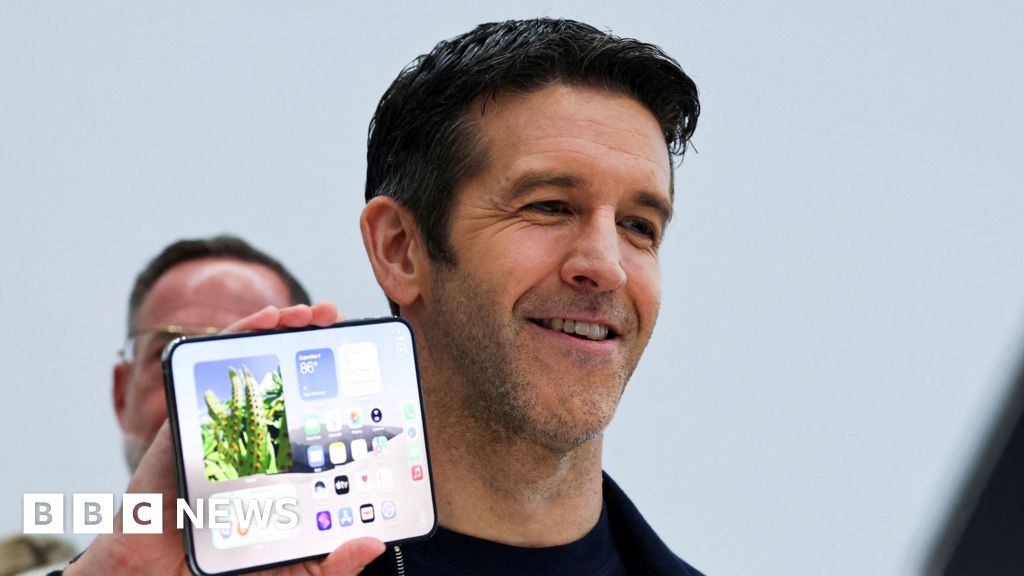
The new head of Apple says the company is working to get its new foldable iPhones available to more people after the $1,999 smartphone quickly sold out when it was released just over a week ago.
John Ternus, who in September took over the role as Apple’s chief executive from Tim Cook, said on Monday that he was “thrilled” at the early reaction to the iPhone Duo.
While the costly phone, which sells for £1,999 in the UK, immediately sold out, some buyers have seen their screens crack.
The phones are still in high demand and Sabhi Kahn, Apple’s new chief operating officer, said the technology giant did not know when more Duos would be available.
“At this time, it’s really hard to predict when supply and demand will be in balance,” Kahn said during a call with financial analysts to discuss Apple’s latest financial results.
Apple executives did not mention during the call any issues with the iPhone Duo. But last week, the company said it would replace any phones that were impacted by an issue that caused a “small number” of the new phones to crack along the inside fold.
Nevertheless, Apple said on Monday that over the last year it sold more iPhones globally than it ever has before.
During the three months to 26 September, which did not include sales of the iPhone Duo that went on sale toward the end of October, Apple saw iPhone sales rise 17% to $57bn.
Apple has boasted throughout the year that iPhone sales have been surging, despite the company’s warnings that crucial components for the device, along with Mac computers and iPads, were constrained to the point of weighing down sales.
However, sales for both the iPad and Apple’s wearable products, including its headphones and Watch fell by 10% and 7%, respectively.
Kahn noted during the call that most Apple devices are still seeing supply constraints driven in part by difficulty in getting enough microprocessors with “advanced nodes.”
Those components are essentially computer chip technology that allows Apple’s devices to operate more quickly, most of which Apple has manufactured through TSMC, which is based in Taiwan.
Khan said that such supply constraints are expected to continue into next year, particularly impacting iPads and Macs. The situation has been made worse by what the company has repeatedly insisted is “unexpected demand” for its products.
Ternus noted, too, that Apple is still seeing “unprecedented” cost increases for memory, or the ability of Apple devices to store data like apps, photos, and text messages.
Much of that memory storage runs through data centres which have seen a huge boom in demand for space as artificial intelligence (AI) chatbots and platforms, including those developed by OpenAI and Anthropic, have become popular.
Tech
Scientists Close In on Mysterious Zeptoverse After 40
Cambridge physicists have found evidence of an event that happens just once in every 10 billion particles, bringing them closer to understanding dark matter, the Big Bang and a mysterious world far smaller than an atom
British scientists have detected signs of an extraordinarily rare event deep inside the building blocks of matter, raising hopes of discovering previously unknown particles that could help explain how the universe began.
The breakthrough, led by physicists at the University of Cambridge, follows more than 40 years of searching and could help researchers explore a mysterious world billions of times smaller than an atom.
Known as the zeptoverse, this unimaginably tiny realm is one of the places scientists hope to find answers to some of the biggest unanswered questions in physics, including what dark matter is made of and why the universe contains so much more matter than antimatter.
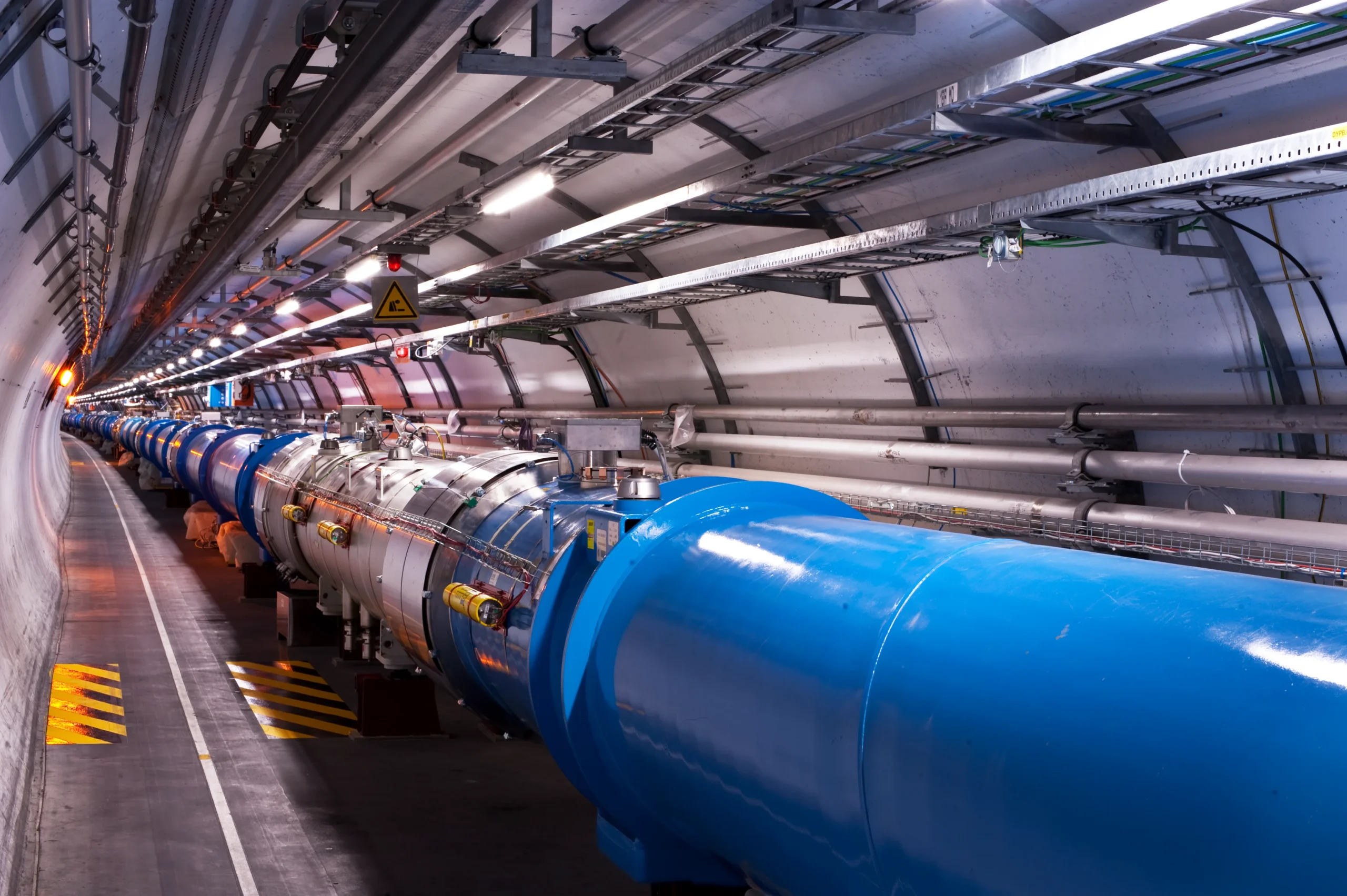
The research was carried out at the Large Hadron Collider (LHC), an enormous underground machine at CERN, near Geneva, which smashes particles together at tremendous speeds to investigate what they are made of.
Scientists were studying particles containing what are known as beauty quarks, short-lived building blocks of matter that are produced during the collisions.
These particles survive for only around one-and-a-half trillionths of a second before breaking down into other particles.
The Cambridge-led team has now found evidence of an exceptionally rare event in which one of these particles produces two smaller particles called muons, which are heavier relatives of electrons.
Dr Harry Cliff, from Cambridge’s Cavendish Laboratory, who led the analysis, said: “What we found in these latest results is an incredibly rare decay of one of these beauty particles, where it turns into two even smaller particles called muons.
“This process only happens for one in every ten billion beauty particles, so it’s incredibly difficult to find.”
Researchers have been hunting for evidence of this particular event since 1984, but its extreme rarity has made it almost impossible to detect.
The team finally made progress using a recently upgraded detector at CERN, which collected enormous amounts of information during 2024 and 2025.
With the help of machine learning, scientists were able to sift through the results and separate the faint signals they were looking for from countless other particle collisions.
The finding could eventually help scientists investigate a world so small that its distances are measured in zeptometres – each equivalent to a trillionth of a billionth of a metre.
Researchers believe unknown particles or forces may exist at these scales, potentially offering clues to mysteries that current scientific theories cannot fully explain.
While the latest results do not establish the existence of any new particles, they give scientists a powerful new way to search for signs of previously undiscovered physics.
The evidence has reached a statistical confidence level known as 3.2 sigma, enough to suggest the signal is real, although more data will be required before physicists can declare a confirmed discovery.
“Physicists have been looking for this rare type of decay since 1984, which was before I was born,” Cliff added.
“Seeing clear evidence for this rarest decay for the first time was thrilling,” he added. “We’re knocking on the door of the zeptoverse now. I can’t wait to see what we find as we explore deeper.”
The findings, which have yet to undergo peer review, are being presented at CERN on today.
Scientists hope further upgrades to the collider’s equipment in the 2030s will allow them to examine these rare events in much greater detail.
Professor Tim Gershon, from the University of Warwick, who leads the LHCb experiment, said: “This fantastic result showcases the extraordinary capabilities of LHCb to probe nature at the fundamental level. This project, driven and led by UK physicists, is producing beautiful science.”
READ MORE: Scientists and engineers quitting jobs as AI changes roles ‘beyond recognition’, study finds . Research involving more than 4,100 technology, engineering and life sciences professionals across five countries reveals growing concerns over career prospects, heavier workloads and employers struggling to replace experienced specialists.
Do you have news to share or expertise to contribute? The European welcomes insights from business leaders and sector specialists. Get in touch with our editorial team to find out more.
Tech
New X-Plane To Be Announced At Max Power Airshow: NASA Administrator Isaacman

NASA Administrator Jared Isaacman says a new X-plane will be announced at the Max Power exhibition at the Kennedy Space Center in Florida this coming weekend. He insisted, however, that this is unrelated to an SR-71 Blackbird that mysteriously disappeared from public display earlier this year. Isaacman also deflected a direct question about that SR-71 and the possibility that it could fly again, quipping that “we’re just cleaning it, man.”
Isaacman made his new remarks about the SR-71 that had been on display, commonly referred to by the tail number 844, and NASA’s broader X-plane plans on a new edition of NASASpaceflight’s The Flame Trench podcast, which was posted online last Friday. 844 had been on display at NASA’s Armstrong Flight Research Center, which is co-located at Edwards Air Force Base in California, following its retirement in 1999. This particular SR-71 had been the last flying Blackbird.
“I gotta ask, has 844 been powered on yet?” Eric Johnson, a science, technology, engineering, and mathematics educator and streamer, who was also on the podcast, asked Isaacman.
“So, we’re just cleaning it, man,” Isaacman said in response, with a smile and a small laugh. “It was so dusty out there in the desert, and it just felt like it needed a cleaning.”
The possibility that NASA has at least been exploring returning an SR-71 to flight in some configuration has been a hot topic of discussion since September. At a conference that month, Isaacman appeared to tease that possibility, or that his agency was eyeing a follow-on of some kind, with cryptic remarks and an image of a distinctly Blackbird-like silhouette. The matter of the ‘missing’ SR-71, as well as reports that NASA has been courting former SR-71 program members for a return-to-flight effort, subsequently emerged.
“Since I didn’t answer your question that you asked before, I will give you some insight that we will announce a new X-plane at it [Max Power], and it is not the one you’re thinking about,” the NASA director said in an ensuing discussion on the podcast about that event, which is set to kick off on Saturday. “I am gonna deliver on the promise there will be more X-planes.”
Isaacman has openly pledged to revitalize NASA’s X-plane portfolio on several occasions, including during a town hall with NASA staff on just his second day on the job in December 2025.
While on The Flame Trench podcast, Isaacman also noted that he had just been out to Armstrong recently, primarily to mark the naming of Troy Asher as the facility’s new director.
“They know to speed up when we go past the outdoor museum. They definitely don’t want me out –” the head of NASA said of that recent trip, before Johnson interjected with a tongue-in-cheek remark that they didn’t want him “cleaning more planes, right?”
“I was like, is there anything else?” Isaacman added immediately afterward. “You know the F-16 VISTA, pretty cool plane. Got some cool jets.”
The “F-16 VISTA” mentioned here is the Variable Stability In-flight Simulator Test Aircraft, a heavily modified two-seat F-16D Viper fighter that is now designated as an X-plane, the X-62A. The X-62A is in active U.S. Air Force service as a testbed based at Edwards. NASA’s museum at Armstrong does have several other retired jet-powered X-planes on display, including a delta-winged F-16XL and an X-29 with its distinctive reverse-swept wings.
As noted, Isaacman is an outspoken advocate for new X-planes, including types that could be capable of supersonic or even hypersonic flight. This has been reflected in NASA budget proposals and the prior announcement of a new Aeronautics Flight Accelerator (AFA) initiative.
At the aforementioned conference in September, Isaacman had also pushed back on the idea that the silhouette he had shown in his presentation was of an SR-71, despite it having a host of features in line with the Blackbird’s iconic shape. He declined to elaborate further at that time, but did say that “NASA is getting back in the business of flying high and fast again.”
“NASA has a long history of building and flying experimental aircraft that push the boundaries of what is possible,” NASA told TWZ at that time when asked for more information. “As Administrator Isaacman has said, we want to see more X-planes flying in the years ahead, developing the technologies that will allow us to fly higher, farther, and faster than we have in decades. We look forward to sharing more as those efforts progress.”
“NASA has a long history of pushing the boundaries of experimental aviation, and we continue to explore opportunities to build on that legacy,” the agency told us again following the initial story on the disappearance of 844 from Aviation Week. “As Administrator Isaacman has said, we want to see NASA flying higher, farther, and faster than we have in decades. We recognize the interest in the SR-71 and its remarkable history at NASA but have no additional information to share regarding the aircraft at this time.”
TWZ has reached back out to NASA today in light of Isaacman’s latest comments.
There do continue to be significant questions about the viability and practicality of returning even one SR-71 to flight, as we have detailed in our previous reporting. At the same time, getting a Blackbird flying again could be seen as being worth the cost and complexity given the unique high-flying, high-speed testbed the aircraft would offer. This entire discussion comes at a time when very high-speed flight is back in vogue, particularly within the U.S. military, but also in America’s commercial aviation sector.
“One of the reasons why there’s interest in this speed regime, it was neglected for a number of years. The focus was on hypersonics. If you proposed anything going back, say, 15 years in the Mach 3.5 speed regime, it was ignored,” Tim Conners, an engineer who worked on the SR-71 program at NASA, told us in an exclusive interview published last month. “The glitz and glamour was on hypersonics. Hypersonics is great tactically for certain scenarios, but the weaknesses of hypersonics are now becoming apparent.”
“And as far as countermeasures, hypersonics still has a place. Don’t get me wrong, but every system cannot be hypersonic from an affordability standpoint. So, now you’ve seen it over the last, say, five years. A lot of systems are coming back on the scene that operate in the Mach 2 to Mach 4 regime, and there’s a reason they’re all fitting in there, right?” Conners, who is now technical director for advanced weapons systems at Tiberius Aerospace, continued. “You stay below the speed limit that requires more exotic metallics. You stay in the titanium regime. You can fly, of course, up to [Mach] 3.5 with brief excursions up to about [Mach] 4, so that is tactically relevant against a lot of military targets and defensive systems. So here it is. You know we now have a potential flying test bed that can carry engines in the J58 size class.”
“They probably are not going to do this for — or trying to do this — for aerodynamic reasons. You can do CFD [computational fluid dynamics]-based modeling in this speed regime all day long and very accurately in this day and age. It does not take a lot of time or money to do that,” he also added. “What you cannot do is an accurate representation of a new type of engine integrated into a high-speed airframe. You can do the conceptual modeling of it. Of course, it’s difficult to get the final installed answer, especially if it involves an engine that operates at long duration. That is where I think they’re going with this. I believe that they’re developing basically a high-speed engine test bed. That would make the most sense to me.”
TWZ has also laid out in detail how the process itself of making an SR-71 flyable could be immensely valuable, including for informing follow-on developments. As we have noted in the past, it is possible that what NASA is doing with 844 now could be intended as a stepping stone to a new X-plane. There is also a potential for the aircraft to re-emerge in a substantially reworked form, potentially configured for pilot-optional or even completely uncrewed operation. However, any such conversion effort would be a different kind of major undertaking.
How any of this may or may not relate to the plans for the new X-plane that Isaacman mentioned remains to be seen. Even within the context of high-speed flight, NASA is publicly pursuing advanced technology developments in various different directions.
The main face of the agency’s X-plane work currently is the X-59 Quiet SuperSonic Technology (QueSST) jet, which has now flown 41 test flights since taking to the skies for the first time in October 2025. The X-59, which will also be present at Max Power, has been able to reach a top speed of Mach 1.53 and get up to an altitude of 56,000 feet in the course of that testing. The central goal of the QueSST program is to prove out technologies that could eventually enable commercial supersonic flight over land with a substantially reduced sonic boom. With this in mind, the X-59 has been in no way designed for the kind of extreme speeds the SR-71 is capable of reaching.
Max Power is “turning into a big exposition. I think you’re going to have a lot of stuff on display there, from space to VTOLs [vertical takeoff and landing designs], [and] drones. And for sure an air show will be a component to it,” NASA’s Isaacman said on The Flame Trench podcast. “From here forward, we might be trying to make a run at putting some real infrastructure on that next to that runway [at the Kennedy Space Center], and trying to create our own kind of Paris/Farnborough type, Dubai type, event here.”
Isaacman was referring here to the Paris Air Show, Farnborough International Air Show, and Dubai Airshow, all of which are major biennial events that aerospace firms globally routinely use as showcases for new developments.
In the meantime, what we do know now for sure is that we are set to get details about at least one new NASA X-plane this coming weekend at Max Power. There may also be new hints about what the future holds for SR-71 tail number 844.
Contact the author: joe@twz.com
Tech
Sectors bracing for a pivot as US midterm elections loom
Nov 2 (Reuters) – As the US midterm elections approach, Corporate America is bracing for a potential shift in the balance of power in Washington.
In case of a strong Democratic showing, analysts and strategists say clean energy, housing and healthcare stocks could benefit, while AI, data center and defense names may draw greater scrutiny from lawmakers.
Sign up here.
The odds of a Democratic sweep stood at 72%, according to Polymarket, the world’s largest prediction market, while that of the Republican Party holding on to the Senate and the Democratic Party winning the House of Representatives stood at 23%.
The chances of Republicans retaining the Senate and the House are a poor 6%, while a Reuters/Ipsos poll showed President Donald Trump’s approval ratings at a career low amid voter concerns over the cost of living and the war with Iran.
Even a divided Congress would give Democrats more control over investigations and funding, but it would still have to overcome any veto from Trump.
Investors are closely watching these sectors:
POTENTIAL BENEFICIARIES OF A BLUE WAVE:
CLEAN ENERGY
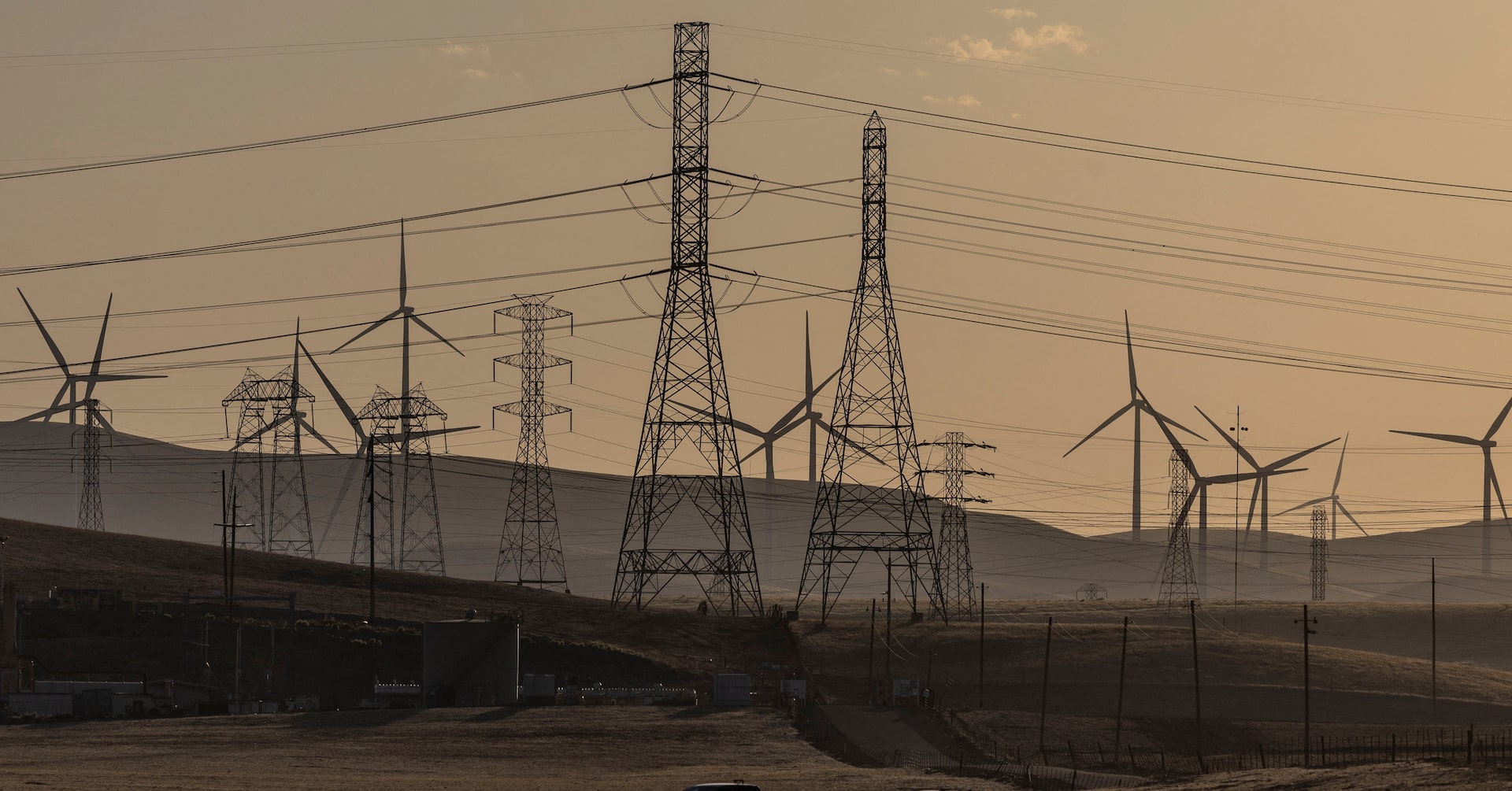
The Democratic-controlled Congress passed the Inflation Reduction Act in 2022, devoting hundreds of billions to climate and energy-security measures, including expanded tax credits for renewable energy, nuclear power and EVs.
In case of a divided government, brokerage UBS sees room for bipartisan legislation to speed up energy and infrastructure approvals and expects nuclear power to get backing from both sides.
Democrats plan to scrutinize the Trump administration’s efforts to roll back emissions rules and could use the Congressional Review Act to overturn regulations that make it easier to sell gas-powered trucks and SUVs.
HOMEBUILDERS
UBS said the Trump administration would continue to implement the 21st Century ROAD to Housing Act, which Congress passed in late June, to increase the availability of affordable single-family homes.
If Democrats take both chambers, they could add affordability measures, including restrictions on large institutional landlords, though those would still face Trump’s veto, UBS said.
SECTORS AT RISK FROM A BLUE WAVE:
AI AND DATA CENTERS
A Democratic majority would be more likely to use subpoena powers to compel tech executives to testify under oath or hand over records related to harmful AI-agent behavior.
Also, voters in at least 10 states could consider ballot measures that could impose new restrictions, permitting requirements or pauses on data-center development.
Still, Societe Generale said the AI trade is likely to remain intact as Democrats are unlikely to secure a majority large enough to override a Trump veto and key federal agencies remain under Republican control.
HEALTHCARE
Healthcare faces a mixed outlook under a Democratic sweep, with greater scrutiny of Medicaid and Medicare Advantage plans potentially weighing on insurers, though TD Cowen sees limited risk of major industry changes and broad structural reform.
A Democratic-controlled House would heighten the possibility of raising taxes to fund a fiscal program that includes more health spending.
“A Democratic sweep could create greater momentum behind measures targeting healthcare costs, consumer fees, prescription drug pricing and areas perceived to contribute to affordability concerns,” said Magdalena Ocampo, market strategist at Principal Asset Management.
DEFENSE
Defense stocks rallied in January after Trump called for a $1.5 trillion military budget, above the approved $901 billion, but they have since surrendered most of those gains.
A budget vote is unlikely before 2027. Democratic control of the House could bring military spending back under scruntiny, with analysts noting Congress has yet to appropriate funds for the multibillion-dollar contracts that big defense contractors signed to replenish stockpiles.
FINANCIALS
Morgan Stanley analysts said additional oversight under a Democratic outcome could slow the pace of regulatory easing, but was unlikely to derail it.
A Democratic Congress last overhauled bank regulations with the 2010 Dodd-Frank law, which tightened capital rules, created a consumer watchdog and imposed new trading restrictions.
A stronger GOP hand would support regulatory clarity and policy continuity. Keeping conditions favorable for mergers and acquisitions and sustaining capital markets activity are a big earnings driver for large banks, Barclays analysts said.
CRYPTOCURRENCIES
Analysts say the election is unlikely to have a significant impact on cryptocurrency prices but will likely influence how quickly crypto legislation moves through Congress.
The Senate failed in September to advance the Clarity Act amid Democratic opposition, and analysts say a Democratic-controlled Senate would make it harder for the crypto bill to be revived next year.
Reuters has reported that Democrats in Congress are preparing investigations into crypto companies tied to Trump and his family, arguing the dealings present potential conflicts of interest.
That could generate adverse headlines and legal risks for some publicly listed firms in the crypto and blockchain industries, attorneys told Reuters.
Reporting by Purvi Agarwal and Rashika Singh in Bengaluru; Additional reporting by Chris Sanders, Mike Stone, Courtney Rozen, Michelle Price and David Shepardson in Washington and Caroline Humer in New York; Editing by Arun Koyyur
Our Standards: The Thomson Reuters Trust Principles., opens new tab
Rashika Singh reports on financial markets, technology and corporate developments for Reuters. Her coverage focuses on analyst research, earnings, semiconductors, artificial intelligence, and other market-moving events involving U.S. and global companies. Her work appears across Reuters’ Technology, Business and Markets coverage. You can email her on rashika.Singh@thomsonreuters.com.
Tech
Samsung Galaxy S27 Pro and S27 Ultra to get improved Privacy Display

The Galaxy S26 Ultra introduced the groundbreaking Privacy Display feature earlier this year, and since then, several other brands have implemented a similar technology in their high-end phones. Now, Samsung is ready to improve upon it with the upcoming Galaxy S27 series.
We can exclusively confirm that the Galaxy S27 Pro and Galaxy S27 Ultra will not only feature Privacy Display, but they will also use an upgraded version of it. It would be the first time Samsung is expanding the feature to non-Ultra models.
Additionally, these phones will have enhanced display brightness, making their screens much easier to read in under direct sunlight.
Unfortunately, the standard Galaxy S27 and Galaxy S27+ will lack this feature. It appears Samsung prefers to reserve Privacy Display for its most premium Galaxy S models.
Previous reports indicate that the Galaxy S27 Pro and Galaxy S27 Ultra will sport a 200MP primary rear camera, a 50MP ultrawide camera with autofocus, and a 16MP front-facing camera.
The Galaxy S27 Pro will likely include a 10MP or 12MP telephoto lens, while the Galaxy S27 Ultra is expected to feature a 50MP telephoto camera with 5x optical zoom.
Tech
Ukraine’s air raid alert system hacked, Air Force says as false nuclear, chemical warnings sound

Editor’s note: This is a developing story and is being updated.
Ukraine’s air raid alert system was hacked late Nov. 1, the Air Force said, as sirens sounded across the country and people received false alerts warning of nuclear, chemical, and street fighting threats.
Kyiv Independent journalists on the ground received notifications on their phones from the officially supported Air Alert app, made in collaboration between the Digital Transformation Ministry and security technology company Ajax Systems.
“Hi! A nuclear alert is about to go off all across Ukraine! Don’t worry, the Oreshnik is on its way,” one of the false warnings read in Russian on the Air Alert app.
Air raid alerts also sounded in streets across the country, including Zakarpattia Oblast in western Ukraine, journalists on the ground reported.
“It is likely that the ‘Air Alert’ app has been compromised by the enemy. There is no radiation threat! Please stay calm and follow our updates on our (Telegram) channel,” Ukraine’s Air Force said.
Ukraine’s Center for Countering Disinformation claimed that the “Air Alert” app was “likely compromised.”
For Kyiv residents, the Digital Transformation Ministry recommended using the “Kyiv Digital” app to stay aware of air alerts.
Several regional governors also warned that the system was hacked and advised residents that there was no threat.
“Currently, the situation in the oblast is calm. Reports indicate a cyberattack on the notification app,” Ivano-Frankivsk Oblast Governor Svitlana Onyshchuk said.
Officials also warned the cyberattack could involve a phishing operation with attached links.
“Cyberattack on the ‘Air Alert’ app. Do not click on the link in the message,” Vinnytsia Oblast Governor Natalia Zabolotna reported.
The false alerts were then cleared about an hour later.
By midnight local time, Ukraine’s State Emergency Service said while the nationwide alert system was back to operating normally, citizens should continue to monitor information from local authorities and listen for signals played on loudpseakers.
“We once again urge citizens not to click on links from unknown sources and not to spread unverified information,” the Emergency Service said.


2026 Midterm Elections Live Updates: Voters Head to the Polls to Decide Control of Congress
“We still have to take care of, I would say, one or two sites, but we can do that in...


The Problem With Taika Waititi’s ‘Klara and the Sun’ Instagram Post
I’ve seen enough: Taika Waititi is no longer riffing on a level that is frickin’ sublime. A quick update for...


Jason Statham & Guy Ritchie Reunite For Netflix Feature ‘Dogfight’
Jason Statham will star in Dogfight, a new Netflix feature written, directed, and produced by Guy Ritchie. The streamer has...
Nicolas Cage says he is ‘a little bit homeless’ after Malibu sinkhole
Nicolas Cage is opening up about the massive sinkhole that consumed his driveway. Discussing his Halloween plans, the “National Treasure”...


Rebecca Gayheart Recalls Husband Eric Dane’s Last Days: EXCLUSIVE
When the camera cuts, the interview isn’t over. With “Cut for Time,” TODAY.com spotlights the questions our anchors couldn’t get...


Taylor Red country singer Nicole Taylor dead at 35, triplet sisters reveal ‘heartbreaking’ cause of death
Taylor Red country singer Nicole Taylor has died following a battle with breast cancer, her triplet sisters, Nika and Natalie...


Apple CEO John Ternus criticized for ‘scripted’ approach to first earnings call
Investors didn’t seem overly happy about yesterday’s Apple earnings call despite the record results. That likely reflects the company’s cautious...


Shopify Stock Plunges As Q3 Gross Operating Profit, Revenue, GMV Miss
Information in Investor’s Business Daily is for informational and educational purposes only and should not be construed as an offer,...


Yum Brands (YUM) Q3 2026 earnings
Yum Brands on Tuesday reported earnings that beat expectations, but a cyclospora outbreak linked to iceberg lettuce at Taco Bell...


I’m A Brain Expert. Here’s The 1 Mindset Shift I Wish More People Would Make.
LOADINGERROR LOADING Many of us keep tabs on our blood pressure, heart rate and sleep. Far fewer of us ever...
-

 HealthNews2 weeks ago
E. coli cases possibly linked to Bengtson’s Pumpkin Farm, Will County health officials say
-
Business2 weeks ago
GLP-1 injections recalled nationwide. See affected products
-

 Business2 weeks ago
Tesla (TSLA) Q3 2026 earnings preview: flat revenue, falling profits
-

 HealthNews2 weeks ago
She was paralyzed in a car crash that killed her parents. Now, she’s a mom of twins
-

 HealthNews2 weeks ago
My In-Laws Offered to Watch My Baby, Then Didn’t Give Her Back for Six Weeks. That Was Just the Beginning.
-

 Business2 weeks ago
I ate 12 burritos in SF, LA and SD. There’s one I still think about.
-

 Entertainment2 weeks ago
First October Read of 2027 Race
-

 Tech2 weeks ago
Microsoft reportedly projects $1,200 to $1,800 price for 2028 Project Helix