
Sports
Create My Widget, Pixel 10 Rambler
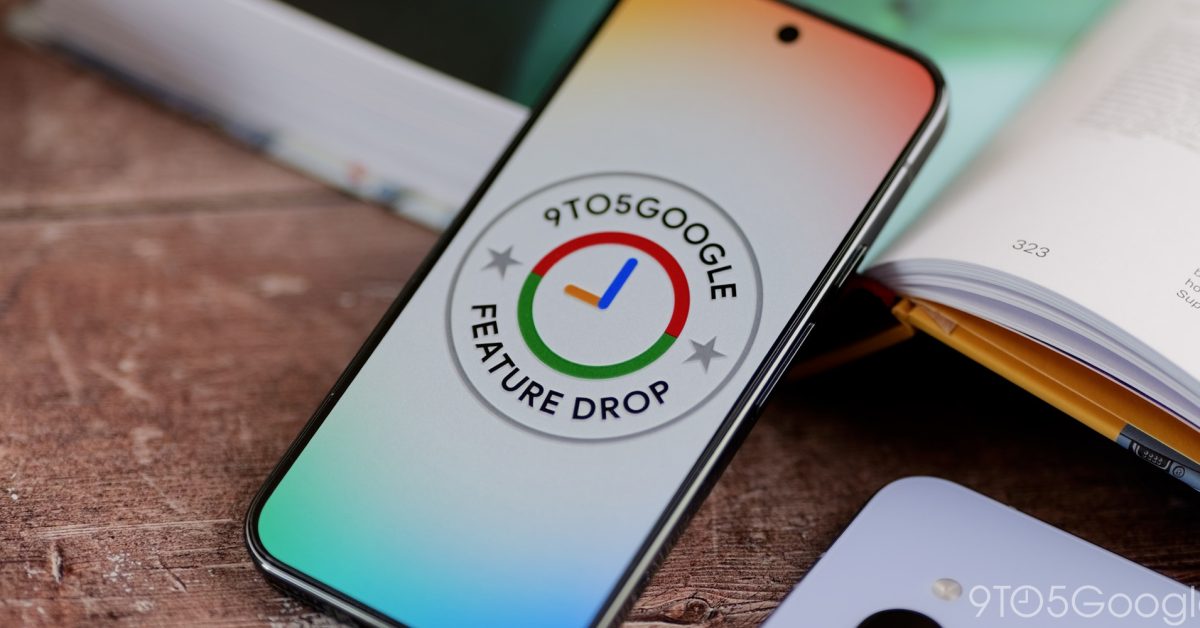
Like last year, the next Pixel Drop is rolling out a month early in November. Coupled with Android 17 QPR2, it’s quite a big Feature Drop for Gemini and other AI capabilities, as well as the Pixel 10 series.
Pixel Watch Drop: Create My Widget, Phone-to-Watch Unlock, and Wear OS 7.1
Gemini Intelligence is coming to the Pixel 10, Pixel 10 Pro, Pixel 10 Pro XL, and Pixel 10 Pro Fold. The lead feature is Rambler to automatically remove filler words and format your transcription.
The Pixel 10 series also gets Gemini app automation for ordering groceries, ride-sharing, meal delivery, marketplace transactions, and booking reservations. Proactive Gemini Actions let you “send groceries right to your Google Keep list straight from ongoing conversations” and more.
Advertisement – scroll for more content
The Pixel 11 and 10 are getting Create My Widget. This generative UI capability lets you create custom homescreen objects using natural language. For example, you can create a sports widget or an event countdown. The feature first debuted on Googlebooks.
On the Pixel 11, Gemini Call Screen is an “intelligent, proactive assistant that screens incoming inquiries on demand.” Replacing Manual Call Screen, Gemini will speak to callers in a more conversational manner than before.
Meanwhile, the Pixel 10+ now lets Gemini make calls on your behalf in the US. Use cases include changing reservations, putting items on hold, and checking inventory. Beta testing started in September.
The AI features continue with 10 new Custom Icon styles. Following the March introduction, Google has upgraded the experience with Nano Banana for higher-quality icons. Available on Pixel 6a+.
Pixel Solver in the Google Calculator app provides generative AI custom templates and allows for conversational, multi-step problem solving using prompts. This is available on Pixel 11+.
Unit Conversion is a “top-tier module” that saves you from switching between your browser and the Calculator app. It offers inline mathematics, combined unit interpretation, and real-time exchange rates on the Pixel 6a+.
On the Pixel 11 Pro, Pro XL, and Pro Fold, HiLight now supports Google Messages notifications after being restricted to phone calls and Gemini at launch.
Pixel Search is now available on the Pixel 6 and newer to provide a more integrated on-device lookup experience that spans apps, web, settings, and other personal content. It allows for natural language search from the search bar at the top of the app grid.
Extreme Battery Charging is now available on the Pixel 10 series.
Following the 2.0 redesign in September, Pixel VIPs now supports Live Location Sharing. This will surface real-time information and battery status from Find Hub in contact cards and homescreen widgets on the Pixel 6a+.
Transit Mode has been upgraded to automatically trigger based on device sensors. This is available on the Pixel 6a+.
International feature expansions today include:
Sports
Bills report card: Defense aces test in gritty win over Vikings
MINNEAPOLIS – Josh Allen strode into the interview room late Monday night with all of his limbs in working order, and that’s no small thing for a quarterback going against the most ferocious and aggressive defense in the NFL.
“That defense is one of the better ones you’ll see in the league any year,” the Buffalo Bills superstar said of the Minnesota Vikings unit that defended every rubber pellet in the artificial turf with uncommon vigor, though all for naught in what wound up being a decisive and statement-making 23-6 Buffalo victory at raucous U.S. Bank Stadium.
“I don’t care going back a long time, it’s a really tough defense to go against. I thought we stuck in there, we continued to find a little bit of success on third down. Obviously, there’s some stuff we want to clean up, and obviously don’t want to turn the ball over. But proud of our how our guys kind of finished at the end there.”
Ninety minutes before kickoff, it was revealed that the entire left side of the offensive line would be inactive and that Tylan Grable and Austin Corbett would be starting in place of injured Dion Dawkins and Alec Anderson. You would have been correct to surmise that there could not have been a worse game for that to happen, having to go against the blitz-crazy Vikings in their domed stadium.
And yeah, it created some big problems early, but the Bills persevered and ultimately wore the Vikings down as they ended up possessing the ball for more than 42 minutes.
“That’s a long time for a defense to be out there, it’s a lot of plays,” Allen said. “Our linemen were out there executing, Jimbo (Cook) finding holes, Ty Johnson and Ray (Davis) in the pass protection game, I thought they did a great job. So our guys stepped up and made a statement.”
Here’s how I graded the Bills:
PASS OFFENSE: B+
Allen overcame a rough start as he and coach Joe Brady were trying to figure out ways to cope with all the pressure, but once they found their groove, the Vikings could not stop them.
As Allen said, it was far from perfect as he suffered four sacks, threw an interception, and had a couple near-miss picks, but in the end, Allen found a way to put up more points against the Vikings than any team this season. He finished 21 of 31 for 234 yards and a 25-yard TD pass to fourth-string TE Keleki Latu against a pass defense that was No. 1 at 154.9 yards per game.
One of the biggest keys was Brady turning to the quick passing game, which alleviated some of the stress caused by the quick pressure. Khalil Shakir led the WR group with four catches for 58 yards and Dawson Knox had four for 37, though he failed to make a TD catch that should have been made.
RUN OFFENSE: A-
Coming into the game, this was the only area where it seemed Minnesota’s defense was vulnerable. Not that it was bad, but in comparison to the pass defense it was the way to attack and the Bills sure tried as they used two- and three-TE alignments on 63.3% of their snaps per Sumer Sports.
James Cook had nowhere to run in the first half, thanks in part to the state of the offensive line. He had just 17 yards on his first 11 carries and finished the first half with 33 on 15 attempts. But over the final two quarters the Bills hammered away and Cook eventually crossed 100 yards on his 30th carry which resulted in the clinching touchdown with 6:17 remaining.
He finished with 107 yards on 31 carries and those may have been the toughest 31 carries he’s ever had as every yard was hard to come by, but on Buffalo’s last TD drive, it was clear the Vikings were tired because at that point they’d been on the field nearly 40 minutes. On that drive Cook ran for 47 yards.
PASS DEFENSE: A+
Carson Wentz was beyond bad, maybe even worse than Ravens third-stringer Joe Fagnano the week before. He finished 8 of 25 for 81 yards with two picks and a passer rating of 8.9. Truly egregious.
The Bills had CB Christian Benford traveling with Justin Jefferson most of the first half and Benford blanked the star WR on the first seven matchups before allowing two catches for 39 yards on the final drive of the second quarter and that helped the Vikings get a field goal. Benford suffered a wrist injury, was able to return to start the second half, but eventually he left for good in the third quarter. Jefferson finished with just three catches for 58 yards.
The Bills had two interceptions in the third quarter, the first by Dorian Williams who made an outstanding catch at the Bills 11 while covering TJ Hockenson one-on-one on Minnesota’s first possession of the second half which probably cost the Vikings a scoring chance as they were already in field goal range. Terrel Bernard had one on the next series, but that one did not lead to points. Bernard also dropped one right in his hands with no one around him.
Early in the game, Jefferson dropped what was ruled a backward pass and Greg Rousseau recovered the fumble. Rousseau also had a sack and a deflected pass and helped the pass rush generate a 38.4% pressure rate per Sumer.
RUN DEFENSE: A
The Vikings had the ball just over 17 minutes, had only nine first downs and went 0-for-10 on third- and fourth-down plays so they really never had a chance to get a running game working.
They finished with 51 yards on 12 attempts led by Jordan Mason’s 35 yards. Up front, Ed Oliver had a strong game and was credited with four impact plays by Sumer while Bernard had five while also making six tackles along with his pick.
SPECIAL TEAMS: B
In a game like this, special teams figured to be important. Greg Dortch started the game with a 58-yard return of the opening kickoff, but that possession went nowhere and Tommy Doman hit a poor punt that went for a touchback and a terrible net yardage of 27.
That started a busy night for Doman who punted more in this game (5) than any other this season, and he did not have a good game as he had a second touchback and cost the Bills field position. His net average was an abysmal 35.2 yards.
Doman also handled kickoffs instead of Tyler Bass and on his first one, it was an adventure as Myles Price, perhaps the most dangerous returner in the league, returned it 35 yards and then he fumbled on a big hit by none other than Doman. However, the Vikings were able to make the recovery at their 45.
Bass continued his outstanding start to the season as he made three more field goals from 39, 25 and 52 yards and he made both of his extra points.
COACHING: A
The game plan obviously had to be altered with the realization that Dawkins and Anderson were not playing and I thought Brady did a very nice job of keeping the Bills on schedule and adjusting to what was happening. Early on it was clear dropbacks and downfield throws were going to be a problem so he worked the quick passing game and continued to hammer away on the ground, even when it wasn’t working.
Brady pulled off a great challenge in the first quarter when he believed Wentz threw a backward pass to Jefferson, which he dropped, and he was right. The play resulted in the fumble recovery by Rousseau.
Jim Leonhard deserves a lot of credit for how the defense has played the last two weeks. Yes, the Bills faced awful quarterbacking, but some of that had to do with the defenders who have turned it up in the aggressiveness department.
Sports
College Football Playoff committee executive admits they don’t care fans are against 24-team playoff
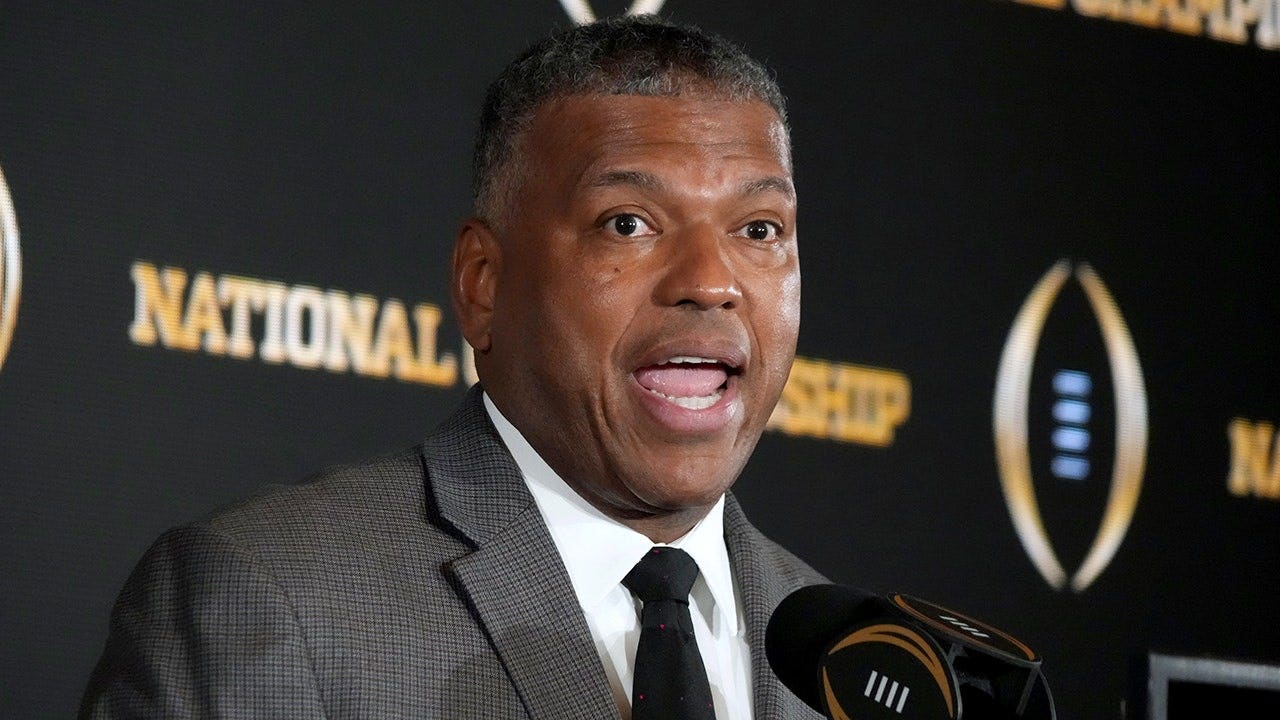
Monday made what was long rumored official: we’re moving to a 24-team College Football Playoff starting in the 2027-2028 season.
The reaction from most fans, commentators, analysts as well as many coaches and people within the sport, can be summed up in one word: why?
This page may contain affiliate links to legal sports betting partners. If you sign up or place a wager, FOX News may be compensated. This content was created by a team that works independently from the FOX newsroom.
As recently as 2023, the playoff was four teams. The smaller field ensured that the best of the best would compete for a title. Only one-loss or undefeated teams had a chance at postseason glory … well, unless you were an undefeated Florida State team.
COLLEGE FOOTBALL PLAYOFF EXPANDING TO 24 TEAMS IN 2027, WITH MORE GAMES COMING TO CAMPUSES ACROSS THE COUNTRY
Then, in 2024, we moved to a 12-team format, which offered more opportunity for teams to change their season. The 2024-2025 Ohio State Buckeyes were a perfect example, losing the final game of the season before roaring back to life and steamrolling their way through to a championship.
The 12-team format has generally been well liked; it’s a solid balance of maintaining the exclusivity of the tournament, while adding more big postseason games on campuses and mostly preserving bowl season and the importance of the regular season. While the upcoming 2026-2027 version of the playoff will be just the third under the expanded format, we’re already moving on to even more teams. Somehow.
24 teams essentially means the end of meaningful bowl games. With a bowl field so diluted by the increase in playoff participants, the remaining bowls will be picking up scraps. Major conference championship games are set to become a thing of the past.
The regular season, long the best in sports, will be significantly less meaningful. Not only will three losses not be enough to keep teams out, there’s a strong chance that four or potentially even five loss teams (from the SEC) will be in the 24-team playoff. This might mean more scheduled games between big programs, since they’ll no longer be concerned about a single loss hurting their chances, but if it doesn’t, the sport will have sacrificed the regular season almost entirely.
Which again, raises the all-important question: who wanted this? Who was asking for it? Why is it even happening?
The answer is money, money and money. The Big Ten led the charge for more playoff spots, and other conferences and groups eventually fell in line. The SEC, long the hold out, caved, presumably because commissioner Greg Sankey realized he could start campaigning for all 16 conference teams to reach the playoff each season.
Obviously, more playoff games means more money coming from the broadcast partner, ESPN. More teams will have late-season home games with a potential “playoff appearance” on the line. Then be able to sell expensive home playoff game tickets to their fans. Coaches now have a lower bar to claim a successful season. And boosters can see a return on investment instead of seeing their money go towards reaching the Pop-Tarts Bowl.
The one group missing here? Fans. As usual. Fans weren’t asking for this, and surveys have shown that they overwhelmingly don’t want it. Unsurprisingly, it’s happening anyway. And in a news conference announcing the change, Executive Director Rich Clark explained why: the playoff committee doesn’t care.
BIG TEN CONFERENCE COMMISSIONER GIVES TONE DEAF STATEMENT ABOUT 24-TEAM COLLEGE FOOTBALL PLAYOFF
Clark said on the call that changes brought about by the 24-team field will be beneficial for the sport, and most importantly, the business school executive’s new favorite word: “stakeholders.”
“New scheduling standards will incentivize institutions to schedule more compelling non-conference matchups during the regular season, and 16 Playoff games will now be played on campuses, bringing Playoff football to more students and local fans,” Clark said. “Finally, our commitment as the CFP administration and staff, we will make the 24-team Playoff spectacular for the fans, for the student-athletes, for the institutions, and for all our stakeholders.”
CLICK HERE FOR MORE OUTKICK SPORTS COVERAGE
Clark answered a few questions, saying that the committee will evaluate and encourage strong schedules, and teams will be required to play 10 games against teams from Power 4 conferences. That’s all well and good. But what came next was frustrating and a bit emblematic of how this whole process has played out.
One reporter asked Clark about fan opinion, saying “the online segment of the fan base seems to be maybe against this,” and wondered how Clark thought it would be “received by fans.” Here’s what he said:
“We’re aware of the fan sentiment and that many fans aren’t in favor of expansion,” Clark responded. “That was certainly weighed into the decision. It was considered. Ultimately we just need to make a spectacular Playoff. I mean, the CFP has a responsibility to our fans, they’re the lifeblood of college football. We owe it to them to make this great. That really is our intent. We appreciate our fans. We did take into account their sentiment. That was rolled into this decision. But we decided to move forward with it.”
Ah. Yes. We know fans don’t want it, we just didn’t care and did it anyway because it made more money. Perfection.
Obviously, that’s the real explanation for why they decided to “move forward” anyway. Fans are dead last when it comes to priorities among the leadership in college football. A “spectacular playoff” doesn’t require 24 teams, in fact, it’s more likely to dilute it.
In 2025-2026, for example, several games between P4 and G6 teams were widely decried as being non-competitive. Ole Miss blew out Tulane 41-10 and Oregon handled James Madison 51-34. Even in the 2024-2025 playoff, ESPN’s Kirk Herbstreit went on a rant decrying the Indiana Hoosiers reaching the 12-team field when they lost 27-17. In a 24-team format, how bad will that 24th team be?
SIGN UP FOR THE DAILY OUTKICK NEWSLETTER
Probably not great!
OUTKICK IS NOW AVAILABLE ON THE FOX NEWS APP: CLICK HERE TO DOWNLOAD
But this is what happens in modern college football; those in charge focus exclusively on short-term financial success over long-term health. Fans come last. Money comes first. At least this time they’re admitting it.
Sports
Bills vs. Vikings live updates, inactives, where to watch: MVP favorite Josh Allen, Buffalo face Carson Wentz with Kyler Murray injured
The Buffalo Bills and Minnesota Vikings will close out Week 9 on “Monday Night Football,” with kickoff set for 8:15 p.m. ET at U.S. Bank Stadium in Minneapolis. Both teams sit at 6-1.
The Bills have been off to another hot start with MVP quarterback Josh Allen at the helm, but he’ll face his most difficult test yet against Minnesota’s Brian Flores-led defense. Allen leads all quarterbacks in EPA (expected points added) per play, the Vikings have allowed the lowest EPA per play this season — the ultimate “unstoppable force meets an immovable object” kind of matchup.
Advertisement
While the Vikings have been at the top of the league defensively, they’ve struggled to find rhythm offensively. Veteran quarterback Carson Wentz will look to give Minnesota a spark in his second start of the season, as starter Kyler Murray is out with a hamstring injury. It’s not inconceivable that Wentz could win the starting job outright with a solid performance; the Vikings are averaging just 1.71 offensive touchdowns per game this year — the fourth-fewest in the league.
Follow along with Yahoo Sports for live updates, highlights and more as the Bills and Vikings close out Week 9, airing on ABC and ESPN.
Sports
David Ellison Is Very Bullish On AI’s Creative Potential

In his first earnings call as CEO at the helm of both Paramount and Warner Bros., David Ellison talked up his merged Hollywood empire as a tech-forward enterprise — and part of that tightrope walk included an embrace of AI while also dismissing “AI slop.”
It’s a two-step that’s not necessarily an easy one. The technology is widely seen as a harbinger of doom for Hollywood’s traditional workflows (i.e. building sets, shooting with real background extras, going on-location, etc) while also being increasingly adapted and integrated into the business (see: Ben Affleck’s VFX firm, which has helped Netflix use AI on 300-plus titles so far, while supposedly preserving the things that make Hollywood, Hollywood).
Ellison told analysts that he expects AI to help his company’s studios make content faster and cheaper, describing the technology as the biggest breakthrough in the industry since CGI effects went mainstream. Skydance plans to spend $30 billion annually across its content portfolio — that includes everything from prestige TV HBO projects to CBS procedurals and MTV reality shows as well as NFL sports rights and features at Warners and Paramount.
“I don’t think it can be discounted how fast this technology is moving,” Ellison said after table-setting by saying that “in a world of AI slop we think there will always be a premium for truly hand-crafted storytelling.”
Ellison has a unique lens into the issue as heir to his father Larry Ellison’s AI-powered Oracle tech fortune, which is a key facet of his effort to rebrand legacy Hollywood studios as a tech-centric venture. (To that point, the enterprise cloud apps of Oracle Fusion got a call out in the earnings call as well when talking about consolidating back office functions.)
The CEO also views franchise IP — he described his empire as having 40 $1 billion franchises — as a moat protecting against the onslaught of AI content, delivering more premium experiences to his 203 million-plus subscribers at a soon-to-be merged Paramount+ and HBO Max.
He then launched into an anecdote about a franchise that his Skydance Media has rebooted multiple times over the past two decades.
“AI really has the potential to be the biggest creative unlock in modern history,” Ellison bullishly said. “The last time we saw anything close to this was really the advent of CGI and digital composites in the early ’90s. That technology gave birth to amazing stories like Jurassic Park and Terminator 2. It’s hard to imagine that AI is not going to have a more significant impact than that. I personally believe that’s going to be an incredible unlock on creativity.”
“If you go back in time, speaking of Terminator which everyone knows is one of my favorites, if you go back to ’83, when James Cameron made that movie it was made for $4 million,” Ellison noted. “If you wanted to make that picture today shot-for-shot, it’d be $60 million-$70 million.”
The CEO added: “There’s not a lot of bets that get taken like that across our industry. And we think these tools will help unlock more original storytelling by being able to make the budgets more digestible to take that amount of risk.”
Cameron, who directed the original Arnold Schwarzenegger feature as well as its acclaimed sequel, has been one of the CEO’s biggest backers (and an early “Team Ellison” advocate as Skydance was fighting Netflix for its Warner Bros. prize). The Avatar helmer has himself been on the vanguard of the technology, with his Lightstorm banner just buying an AI-driven 3D post-production firm in September.
Skydance is also looking to bake in an AI productivity narrative as it looks to find some $6 billion in cost-synergies from merging Paramount and Warner Bros. In addition to finding redundancies in corporate overhead, real estate and facilities as well as consolidating back office and corporate functions, those efficiencies include scaling AI-workflows across the combined company. That includes merging Paramount+ and HBO Max within a year, which Ellison described as an “ambitious target” that is “possible because of the latest tools in artificial intelligence.”
Sports
Why NFL trade deadline evolved from afterthought to hectic: In-season transaction boom is league’s new normal

Less than a decade ago, it was common for the NFL to feature single-digit trades during the course of the regular season. The trade deadline was generally a snoozer in comparison to that of the other major American professional sports leagues, and the number of moves made at the buzzer could often be counted on one hand. That could not be further from the case anymore.
Twenty-four hours out from the 2026 trade deadline, there were 10 in-season trades in the books. That number will balloon in the final hours before the clock strikes 4 p.m. ET on Nov. 10. Star players could be on the move as Super Bowl contenders gear up for the stretch run and teams falling out of contention seek to jumpstart their rebuilds with premium draft capital. Basketball and baseball fans are used to seeing this flurry of transactions, but it is still relatively new to football fans. Just like in the other leagues, though, this boom is becoming the NFL’s new normal.
Last year, there were 22 trades from the first day of the regular season through the deadline. That was the most in any year since at least 1995, according to NFL Research. A whopping 12 players and 14 picks were exchanged on deadline day alone. General managers were busier than ever. That was the extreme continuation of a trend that has been in effect since the mid-2010s, in which front offices mortgage their futures for instant-impact players or, conversely, sell off their most valuable assets to hoard draft picks.
Only once from 2010 through 2017 did the NFL log 12 or more in-season trades, according to the Spotrac trade tracker. Something flipped towards the end of the decade, because that number now represents the low-water mark since 2018.
Why the sudden uptick? There are fundamental processes in the NFL that make this league more trade-averse than other sports leagues, but changes to the calendar and new front-office philosophies have created pathways for teams to bypass some of the roadblocks.
Here are the factors at play.
Why in-season trades used to be uncommon
Trading players in the NFL is not as simple as matching salaries. That is largely why player-for-player trades remain so rare. The way contracts are structured, with teams spreading bonuses out across multiple years, taking on dead money and being on the hook for some of the salary owed to the players they trade away, is sometimes prohibitive. Plus, the NFL has a hard salary cap, so unlike in the NBA, where teams use exceptions to go over the cap, or in MLB, where wealthy owners can pony up as much money as they please, all deals have to result in both teams remaining under that firm number.
Football is also not as plug-and-play as other sports. There are massive playbooks to learn, especially at the offensive skill positions. There is incredibly important timing to perfect, particularly for the quarterback-wide receiver tandem. With 11 players on the field at all times and complicated schemes to comprehend, anyone who joins a lineup in the middle of the season has a lot of learning to do on the fly.
The brevity of a 17-game regular season also keeps a larger percentage of the league in playoff contention deeper into the year compared to 82- or 162-game campaigns. The lack of non-contenders means fewer teams are willing to sell, and thus there is a smaller volume of available players.
Draft picks are also immensely valuable since teams have so many roster spots to fill. And at the same time, rosters are so large that fringe players around the 53-man cutoff can simply be released if the potential trade package is undesirable.
Calendar changes shift contention windows
Until 2011, the NFL trade deadline was extremely early in the season. It landed on the Tuesday following Week 6, which was well before the midway point of the campaign. Teams were often still attempting to figure out where they stood in the pecking order when it came time to lock in their rosters. How could a general manager shop one of his stars on an expiring contract when they were not sure whether their team was in the mix for a postseason berth or not? They rarely did.
That changed in 2012 when the NFL and NFL Players Association agreed to move the deadline back by two weeks to the Tuesday following Week 8. And not long after the league adopted a 17th regular-season game, it moved the deadline back another week to where it stands now: The Tuesday after Week 9, which is effectively the midseason point.
It is far clearer where teams stand in the playoff picture after Week 9 than after Week 6. Look no further than the Indianapolis Colts, who emerged as one of the NFL’s most aggressive sellers this year. Through six games, they were 2-4 and competitive enough in a couple of their losses to believe that they could right the ship. Now, after nine games, they are a measly 2-7 and own a five-game losing streak. Clearly out of the postseason hunt, they moved on from perennial Pro Bowlers in Quenton Nelson and DeForest Buckner.
“F them picks”
Perhaps the single most impactful change in the rise of in-season trades comes from the mentality surrounding draft picks. While the value of Day 1 picks in the NFL is still tremendous, it is more common now than ever to see general managers move that sacred capital for players who can help them win at the highest level right away instead of a couple of years down the line. Nowhere is this clearer than in Los Angeles, where Rams general manager Les Snead birthed the “F them picks” mantra.
Les Snead’s top blockbuster trades
2016: Traded six picks to move up to No. 1 overall
2018: Traded first-round pick for Brandin Cooks
2019: Traded three picks for Jalen Ramsey
2021: Traded Jared Goff, three picks for Matthew Stafford
2026: Traded Jared Verse, three picks for Myles Garrett AND traded four picks for Trent McDuffie
Each of those moves opened or extended the Rams’ championship contention windows. They are bets on current stars and their ability to keep playing at a high level, compared to the risk of boom-or-bust picks in the late first round. In order to balance the roster, Snead relies on finding diamonds in the rough in the later rounds, which he has been highly successful at pulling off.
This model delivered a Super Bowl and proved to other teams that it is a viable strategy for roster construction. In the copycat league that is the NFL, the Rams are no longer the only team to go all in to fuel championship runs.
Snead even has direct disciples putting his methodology to practice in other places. Jacksonville Jaguars general manager James Gladstone worked under Snead’s tutelage in various roles for nine years before he landed a GM job of his own. On Monday, he pulled off two trades in which he swapped draft picks for immediate-impact players. They may not have been Day 1 picks, but they were draft capital nonetheless.
General managers get crafty
Draft picks are still gold, even in this era where they are moved like never before. General managers who want the best of both worlds — to hoard picks and secure immediate impacts — can balance the two, but they have to be creative. Enter the pick swap. Instead of one team netting a draft pick while the other loses one, pick swaps allow teams to generate value in the aggregate while retaining at least some capital. If a player is valued around a late-Day 2 pick, the buying team could send a second-rounder and receive a Day 3 pick in return along with that player.
Compensatory picks also give general managers the flexibility to take swings at available players. If there is a veteran on an expiring contract who can join a team as a half-season rental, the buying franchise may give up a third-round pick or worse to acquire them, knowing that they can recoup the pick if the player leaves in free agency.
Gladstone himself pulled off a masterful move ahead of Tuesday’s deadline by factoring compensatory picks into the equation. He reached a deal with the New Orleans Saints that sent Davon Godchaux to Jacksonville in exchange for a conditional 2028 sixth-round pick. That pick would become a 2027 sixth-rounder if the Jaguars acquire one through another trade or through the compensatory formula. In essence, Gladstone traded a pick he does not even own yet.
Is this the new normal?
So many things in football are cyclical, but the surge in trade deadline action has staying power. Changes at the league level with regard to scheduling have made it more viable, and general managers are as aggressive as ever in a “what have you done for me lately” world. Now that front offices have another tool at their disposal in roster construction, it will only become more mainstream. The cat is out of the bag, and it will be hard to put it back in.


The outstanding ballots that could decide the Mississippi Senate race
Tuesday is the deadline for voters in Mississippi to provide updated documentation if they had to cast provisional ballots on...


The David Walliams allegations | BBC Newscast
Today, David Walliams has been named as the 'well-known celebrity' who was fighting in the courts to block the publication...


Hegseth, Massie trade barbs over impeachment articles
Defense Secretary Pete Hegseth described the effort to impeach him as “a political spectacle,” after GOP Rep. Thomas Massie …


Bernie Sanders says he won’t back Sen. Schumer for Democratic leader
Sen. Bernie Sanders, an independent who caucuses with Democrats, and Democratic Sen. Elissa Slotkin said they won't back …


Will Jeffrey Epstein's associates be brought to justice under Democrats? | Global News Podcast
WARNING: This video includes refrences to sexual violence, which may be disturbing to some viewers. A BBC investigation has …


Mitchell Robertson Cast as Purported Gay Lover
A planned biopic focusing on James Dean‘s personal life has found its co-lead. Mitchell Robertson, the Scottish actor known for...
They had jobs, homes and cars. Now they’re in line at the food bank
For years, Dave Poniatowski had no trouble managing his household budget. Then came a devastating triple whammy: two years without...


This bull and donkey are a same-sex couple
In an unusual pairing, this donkey and bull have struck up a same-sex relationship and researchers are trying to figure...


Rep Jordan elected House GOP leader: What to expect
House Republicans on Tuesday picked Rep. Jim Jordan — the famously pugnacious pro-Trump fighter — to lead their party in...


First snow and cold blast to bring an early taste of winter to the East
A late-week storm could bring snow to higher elevations in the Northeast before cold air plunges deep into the South.
-

 Entertainment2 weeks ago
‘Baywatch’ Star Erika Eleniak on Track to Hit $1 Million in 1st Year on OnlyFans
-
HealthNews2 weeks ago
The Most Powerful Obesity Drug Yet Has a Hidden Benefit-and It Happens While You Sleep
-

 Business2 weeks ago
Dollar General overcharged millions at checkout for years, FTC and 20 states allege
-

 Business2 weeks ago
In China, the AI bubble has already burst
-

 Entertainment2 weeks ago
Inside Matthew Perry’s ‘struggle’ ahead of the 2021 ‘Friends’ reunion
-
Entertainment2 weeks ago
I’m a Bus Driver at Walt Disney World at 51 Years Old; Great Benefits
-

 Entertainment2 weeks ago
Taylor Swift, Travis Kelce wedding props deemed too expensive, dangerous revealed
-

 HealthNews2 weeks ago
Comfort food may be exposing you to over 1,000 microplastic particles a week