
HealthNews
Pennsylvania’s quiet approach to measles vaccination : NPR
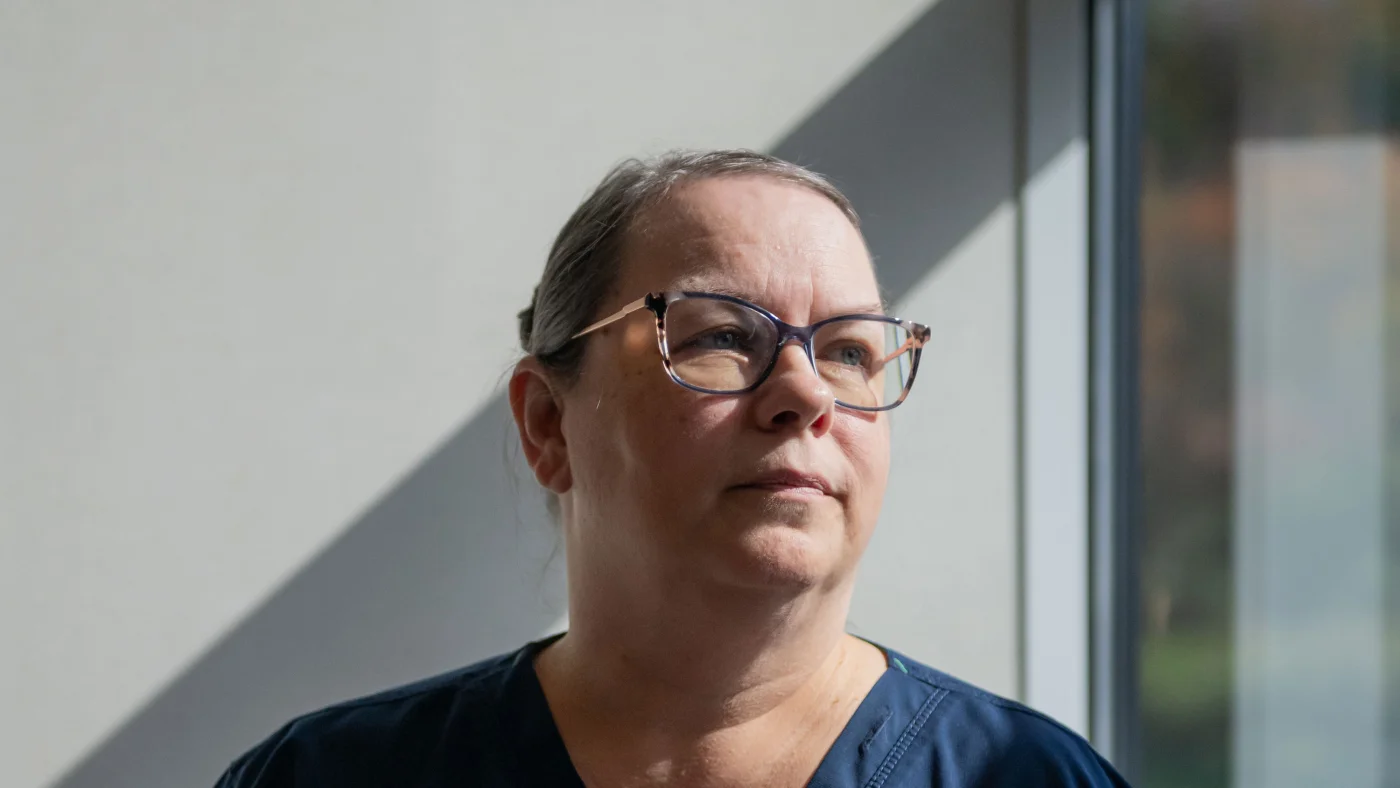
Measles spreads incredibly fast. For the last few months, so has Dale Weiser’s phone number.
Weiser is the clinical services supervisor for the Chester County Health Department in south-central Pennsylvania. Since August, she’s been driving out to Amish homes to vaccinate people against measles. She says it usually starts with a phone call.
“I was at a house, like, at 4:30 in the afternoon, and I had a phone call at 8 the next morning saying, ‘hey, I heard you were down the street. Can you come do that at my house?'” she says of a typical request she gets from Amish families. So far, she’s administered more than 400 doses of the measles, mumps and rubella vaccine in Amish homes.
The house calls are part of the state of Pennsylvania’s strategy to wage war on measles by flipping the script on traditional public health messaging. Instead of advertising vaccinations loudly, health officials have launched a quiet word-of-mouth campaign designed to win the trust of the state’s Amish community, which has been particularly hard hit by the country’s worst measles outbreak in 35 years. The state has confirmed six measles-related deaths and more than 1,500 cases so far — though the true count is likely much higher, since many people who get sick don’t seek medical care.
Lower vaccination rates
Surveys suggest only about a third of Amish families in the region vaccinate their children. That’s left the Amish community especially vulnerable to measles, one of the most contagious diseases.
There’s no religious edict against vaccination among the Amish. It’s very much seen as a family and individual choice, says Weiser. Often, she says, these decisions are driven by practical and cultural factors.
“They don’t have health insurance. They’re not interacting with the mainstream medical society. And measles wasn’t a problem for 30 years, so there was no real risk to not being vaccinated, at least for measles,” Weiser says.
But as measles cases have piled up in Pennsylvania, Weiser says many Amish families have changed their minds about getting the MMR vaccine. And when they do, she hops in her car and brings the shots to them.
“When I arrive at their home, there’s usually a small child that will run from the back of the house to the barn to tell the men that there’s somebody strange in the driveway, or that the nurse is here,” she says.
A patient, personalized approach to outreach
Some days, Weiser will vaccinate a single family in their kitchen. Other times, she’ll find dozens of people gathered to get the shot. She’s also fielded a lot of questions. Some, like what’s in the vaccine and potential side effects, are things anyone would ask, she says.
“But I was caught off guard when I was asked if there were tracking chips in the vaccine, and I was like, whoa. Flashback to COVID. Where did you hear that?” she recalls.
Want the latest stories on the science of healthy living? Subscribe to NPR’s Health newsletter.
As with the general population, vaccine misinformation has made its way to the Amish community. And when she encounters it, Weiser takes the time to explain why the rumors are false.
Chester County Public Health Director Jeanne Franklin says this kind of patient, personalized approach has helped build trust among the local Amish – who, along with conservative Mennonites, are known as the Plain community because of their simple way of life.
“That’s why we said it has to be boots on the ground in the communities. It’s not just because they were a Plain community, it was because we needed to be seen as caring people,” Franklin says.
Instead of relying on traditional top-down, rigid public health messaging, her staff has spent a lot of time quietly visiting Amish church leaders and businesses, introducing themselves and asking community leaders if they would hand out flyers advertising vaccine clinics. “One of them said, ‘Come on back with a clinic’ at his restaurant. And he helped spread the word,” Franklin says.
Vaccine questions and misinformation
When I stopped by the restaurant, Honey Brook Barbecue in Honey Brook, Pa., an area with a sizable Amish community, I found the manager grilling chicken in an outdoor tent. Like many Amish people NPR talked to, he spoke on the condition of anonymity in keeping with his community’s tradition of not drawing attention to oneself.
The manager says 24 people showed up to get vaccinated at his restaurant back in August, all drawn by word of mouth. He says he decided to host the clinic for two reasons: to protect the general public and to protect his own community. He said he didn’t want people blaming the Amish for spreading measles.
But he says other people in the Amish community who don’t regularly interact with the public aren’t getting vaccinated. For some, it’s because of cultural reasons, but he says others are concerned about what they’ve heard is in the MMR vaccine.
“In my community, a lot of it has to do with what people think is in it,” the manager says of the MMR vaccine. One concern he’s heard repeatedly is that the vaccine contains parts of aborted fetuses.
That is a myth often repeated by anti-vaccine forces, and it is one heard in conversations with Amish people in Lancaster County, home to around 45,000 Amish people. It’s also the county with a third of the state’s measles cases — more than 500 confirmed cases.
At the Amish-owned Gordonville Book Store, where a buggy is parked outside, I meet a shopper named Lydia Esh. She says she, her husband and six adult children had all previously been vaccinated against measles. But none of her 13 grandchildren have gotten the shot, because their parents had heard that the MMR vaccine had changed and now contained aborted fetus parts — which is false.
There is some evidence that anti-vaccine groups have been targeting the Amish in recent years, says Steve Nolt, a professor at Elizabethtown College who has written numerous books about Amish history and culture. For example, he points to an advertisement questioning the safety of childhood vaccines published in The Pennsylvania Busy Beaver, an advertising publication with a large Amish readership.
But in conversations around Lancaster, I also find evidence that public health outreach efforts are working. One member of the Plain community, a visibly pregnant woman outside an Amish-owned hardware store, says her husband and two children recently got vaccinated to protect her and her unborn child. She asked NPR not to use her name, as did an Amish man working at a produce stall in an Amish market. He says he recently got vaccinated because “measles is scary.”
Linda Beth Fisher, an 18-year-old Amish woman behind the counter at the Gordonville Book Store, says she is concerned that several Amish people in her area have died in the measles outbreak, but she’s not sure what to believe about the MMR vaccine.
“Personally, I’m kind of leery of it. I’m not sure why,” Fisher says. “I guess I’ve just kind of heard that they’re not good, but I’ve also heard that they are good. So I just feel like it’s two sides of the story. Would you encourage people to get it?”
“They almost always come back”
These types of concerns often surface at pop-up vaccine clinics like one recently hosted at the Christiana Fire Company in Lancaster County. The Pennsylvania Department of Health hosts these events in Lancaster three or four times a week — all advertised by word of mouth, says Dr. Jennifer Wallace. As medical director for the department’s Bureau of Community Health Systems, she oversees pop-up clinics and outreach to vulnerable communities across Pennsylvania.
Wallace says when members of the Plain community come with questions, “We’re here to give them that information and then let them ponder it. They can ask any questions they want to and then let them either get vaccinated if they choose or take that information home. Think about it. Talk with their bishops. Talk with their community. They almost always come back.”
Wallace says many who end up coming are families with multiple children. Tables set up around the firehouse are strewn with crayons, coloring books and bubble wands to keep young ones entertained while parents fill out paperwork.
“And then you see the kids get vaccinated and you can almost see the mother’s shoulders relax over time as each child gets that shot,” she says. “We’ve had some mothers cry afterwards because they’re just so relieved.”
HealthNews
Brookshire Farms’ owner speaks out after mysterious E. coli outbreak

The owner of the California farm linked to the E. coli outbreak that left more than 15 people severely sick, including a 6-year-old boy fighting for his life, said his heart goes out to the suffering families.
Brookshire Farms in San Luis Obispo County reopened on Nov. 6 after a 10-day voluntary shutdown while the Department of Public Health investigated the source of the E. coli outbreak.
“I am destroyed,” Brookshire Farms co-owner Shawn Callaway told The Tribune Friday as the farm reopened for the public.
“We’ve gone through … about 11 days now of numbness. I can’t explain it… I mean, the worries, the fears, the concerns, the ups and downs. I mean, how do you explain it? I don’t know,” he added.
Authorities said 5 people had laboratory-confirmed E. coli O157 infections after visiting the farm on Oct. 17 or 18, while 10 additional individuals who visited the farm between Oct. 16 and 26 developed matching symptoms.
Three children also required pediatric intensive care after developing Hemolytic Uremic Syndrome (HUS).
Among the affected children is 6-year-old Camden Foy of Nipomo, who is in critical condition at Stanford’s Lucile Packard Children’s Hospital with STEC and HUS following an Oct. 17 visit to Brookshire Farms.
His grandmother, Linda Strong-Foy, has been sharing constant updates on his health since his hospitalization nearly three weeks ago.
Camden was admitted to a Santa Maria hospital and subsequently diagnosed on Oct. 27 with HUS, prompting an emergency ambulance transfer to Stanford.
The tot’s condition quickly escalated into acute neurological complications, leading to severe confusion, brain scans for potential stroke or seizure activity, intubation, and multiple rounds of blood and platelet transfusions between Oct. 29 and 30.
“He’s on 5 blood pressure meds. An IV BP drip, 3 orals, and a BP patch,” Strong-Foy said in a Facebook post Monday.
SLO County’s Department of Public Health collected water, food, and other environmental samples at the farm but did not find E. coli O157 specifically.
The department said that other types of bacteria, including other strains of E. coli, were found at the farm in some samples, but those results did not identify the source of the E. coli O157 outbreak.
“Although it’s frustrating to not be able to pinpoint the exact source of the infection through environmental lab testing, this is not unexpected, and bacterial contamination is often temporary and difficult to detect through available sampling methods,” County Health Officer Dr. Christy Mulkerin said in a Nov. 6 statement.
Callaway said cleanliness is not a problem at the farm, with the 17 restrooms cleaned regularly and pumped twice a week. There are also 17 handwashing stations and eight sanitizing stations.
He added that he doesn’t think the pumpkins were the source of the outbreak because many of the victims had no contact with them.
“(The county) never tested our pumpkins,” Callaway told The Tribune. “They refused to test our pumpkins and said it was not in their investigational area because the pumpkins didn’t have the ability to get tested correctly.”
In the days following the outbreak, the county advised residents to wash their pumpkins and avoid touching ones that had already been carved.
As a result, San Luis Opisbo and Santa Maria canceled their annual pumpkin smash events.
Mulkerin later said the county didn’t intend to imply that the pumpkins were the source of the infection.
“We’re really trying to emphasize to the public, ‘Please don’t be afraid of pumpkins,’” she told The Tribune.
HealthNews
An Experimental Electric Comb May Stave Off Baldness
The future of hair loss treatment might be a bit more shocking than expected. Recent research showcases an experimental electrical comb that seems especially effective at combating baldness—at least in mice.
Scientists at Beihang University in China developed the contraption, which they’ve dubbed “Detangle.” Shaved mice treated with the comb experienced substantially more hair regrowth than mice given existing medications like minoxidil, the active ingredient in Rogaine, they found. Though more study is needed, the researchers are hopeful their device can be a valuable treatment for androgenetic alopecia, the most common form of baldness.
“[T]hese results demonstrate that electrostimulation via the Detangle system promotes hair growth and follicle regeneration in a safe and effective manner,” they wrote in their paper, published this month in the journal Nature Communications.
A detangled success
Minoxidil is an effective treatment for androgenetic alopecia, but it has its drawbacks. Many users hate the messy topical gels or creams typically used for application, for instance. Pill-based versions of minoxidil are easier to take but may cause unwanted hair growth elsewhere. And importantly, some people simply fail to respond to the drug or only experience modest regrowth.
Another limitation of topical agents like minoxidil is that very little of the drug actually manages to push through the skin and reach the hair follicles where it’s needed. That’s one limitation the researchers are aiming to address with their Detangle system—a name inspired by the 2010 Disney film retelling of Rapunzel, Tangled.
The Detangle comb has several components. It features two types of teeth with different lengths, with one type containing therapeutic molecules. As the comb is used, it delivers small pulses of electricity, while the differently-sized teeth are supposed to gently raise up the skin. These pulses and the skin-raising action are intended to generate a stronger electrical field than normally possible, which then makes it easier for the molecules to penetrate deeper into the skin.
Androgenetic alopecia, also called pattern baldness, is caused by hair follicles that are overly sensitive to androgens, particularly the hormone dihydrotestosterone (DHT). In these latest experiments, the researchers relied on two molecules to stymie pattern baldness: a plasmid that encourages new blood vessel growth and SRD5A2 siRNA to suppress the production of DHT.
The researchers tested the comb on mice modeled to have the condition. This meant the mice had their backs shaved and were dosed with testosterone for 28 days. Afterward, some mice were given topical minoxidil or oral finasteride (another common hair loss treatment), while others were combed daily with Detangle.
Overall, the detangled mice saw much more hair return than mice given either conventional drug. By the end of the month, the mice on Detangle experienced nearly 100% hair regrowth on their shaved backs, compared to the roughly 70% hair regrowth seen in the minoxidil group. Tests also showed that the comb effectively delivered the molecules to the mice and that it didn’t cause any noticeable harm to their skin.
What comes next?
Obviously, this is only an early test in mice. Plenty more research will be needed, including studies in human volunteers, before we can know whether the Detangle comb will work well in people with pattern baldness.
Still, the researchers are optimistic that their system can eventually provide the roughly 1.5 billion people living with androgenetic alopecia another treatment option. And it may even have applications for other conditions that involve the skin.
“The Detangle system proves safe and effective for deep tissue delivery in dermatology,” they wrote.
HealthNews
A look at Hegseth’s military testosterone plan amid impeachment vote
While Pentagon chief Pete Hegseth faces an impeachment vote in Congress, we’re looking back at his controversial plan to test U.S. troops’ testosterone levels as a way to “optimize performance” on the battlefield.
In July, a statement released by the Department of War, formally the Department of Defense, and a video of Hegseth said it will be the choice of service members whether they receive “testosterone replacement therapy.” He did not mention female troops.
While some commenters celebrated the news and many questioned the switch-up around gender-affirming care, others raised a concern: that increased testosterone levels could impact men’s sexual desires and even lead to sexual violence, a long-reported issue in the military. Experts said these concerns are largely unfounded, but the conversation is highlighting a bigger issue at hand than testosterone deficiency − an obsession with and major misunderstanding about masculinity.
Misconceptions about testosterone
Testosterone, which is a hormone produced in both men and women, plays an important role in maintaining muscle mass, bone density, red blood cell production, energy levels, mood and sexual function.
While bringing testosterone into a mainstream health conversation helps remove stigma around discussing symptoms that many experience, Dr. Arthur Burnett, professor of urology and oncology at the Johns Hopkins University School of Medicine, previously told USA TODAY he is concerned “a program like this could unintentionally reinforce misconceptions about testosterone.”
When it comes to treatment, it should be aimed at restoring a true deficiency back to normal, not “enhancing performance or redefining masculinity,” Burnett added.
“For men with clinically confirmed testosterone deficiency, testosterone replacement therapy can help restore normal libido, improve erectile function, increase energy and improve overall well-being,” Burnett explained. “The goal is to normalize sexual desire in men who have true testosterone deficiency − not to create excessive sexual interest, aggressive behavior or supernormal performance.”
Plus, taking testosterone without needing it can be harmful.
“If someone has a normal production of testosterone and is given exogenous (or, external) testosterone, we can shut down the normal endogenous (or, internal) production of testosterone, meaning the patient becomes ‘dependent’ of external testosterone. This can cause infertility in men,” said Dr. Rocio Salas-Whalen, an endocrinologist and obesity specialist.
In his video, Hegseth said the initiative was not about “artificial enhancement,” but instead “restoring and optimizing your natural abilities, protecting your longevity and ensuring you have the biological foundation required to sustain the fight.”
However, testosterone naturally decreases over time. “That’s part of normal biology − not every lower value represents a medical deficiency,” Burnett added, noting a lab test showing a low testosterone level is not typically enough to justify treatment.
Instead, testosterone deficiency should be diagnosed through both appropriate laboratory testing and symptom evaluation. Other potential causes of symptoms, such as thyroid disease, sleep apnea, obesity, medication effects or depression, should also be considered and addressed, he said.
The false promise of masculinity
While testosterone deficiency is a real issue for some, Hegseth’s testosterone program may be more about the idea of masculinity rather than actually meeting a medical need, suggested Ronald Levant, a professor emeritus of psychology at The University of Akron and co-author of “The Problem with Men: Insights on Overcoming a Traumatic Childhood from a World-Renowned Psychologist.”
“Masculinity is essentially a set of social norms that change from generation to generation … any connection to biology is tenuous at best,” Levant said.
The idea that being more macho will fix young men’s problems is an underlying message of the manosphere, which puts an emphasis on hypermasculinity, Levant explained. Extreme fringes of the manosphere have also praised violent attacks against women. “Looksmaxxers” are another subset of this group, some of whom turn to surgeries and supplements in an effort to achieve financial, romantic and overall happiness.
“They take testosterone and all sorts of other harmful compounds in the belief that it’ll make them more attractive,” he said, adding they don’t tend to consider nuance or evidence-based science. “You’re either ‘high T’ (testosterone) or ‘low T;’ you’re either alpha or beta.”
It’s a false promise, Levant said, explaining often it’s men’s emotional issues − not physical ones − that hinder their relationships.
“More emotional self-awareness, emotional intelligence among young men would make a huge difference,” he said.
HealthNews
My Belly Button Saved My Life

I knew what to look for, but I missed the signs.
I went to an ovarian cancer awareness walk a decade before I was diagnosed with it at the age of 44. I took home pamphlets describing it as a “silent killer” because most people miss the symptoms, which include frequent urination, feeling full quickly, changes in bowel habits, bloating, fatigue, upset stomach, back pain, pain during sex, constipation and heavy periods.
Unfortunately, every one of these symptoms could be a sign of something else, so we are often misdiagnosed and don’t know we have ovarian cancer until it’s already advanced. It is incurable and often fatal.
Advertisement
For 10 years after the awareness walk, I didn’t notice any changes to my health that I thought were unusual. I continued getting Pap smears at the recommended intervals and began getting yearly mammograms at age 41, even though my primary care doctor advised against it. “There are too many false positives,” she said.
It was a dermatologist, not a gynecologist, who diagnosed me. I had a small growth, the size and color of a pencil eraser, in my navel. When the dermatologist removed it, he thought it was something harmless. The biopsy said otherwise.
The call came on April 1, 2020. That first day, all I could do was get my blood tested. At this point in the pandemic, we didn’t know if we could get COVID-19 from surfaces. I used my shirt sleeve to open doors, then woke up in the middle of the night wearing the same shirt and wondering whether there was coronavirus on my sleeve.
Advertisement
The blood test found elevated levels of cancer antigen 125, a tumor marker that is not an entirely reliable indicator of ovarian cancer. Too many false positives. Also false negatives. My CT scan a week later showed that each ovary had been overtaken by tumors the size of small citrus fruit, and I had a third tumor the size of a larger citrus fruit in the center of my abdomen. The cancer had spread up through my umbilicus and out my navel, which was, as far as I knew at the time, the only symptom I had.
There seem to be as many ways to find the cancer as there are people who have it. According to the American Cancer Society, that’s 1 in 78 people with ovaries, of all ages. One in 108 will die of it.
Advertisement
A Pap smear doesn’t detect ovarian cancer, and there’s no ovarian version of a mammogram. Among the people in my online support groups, some discovered their cancer while they were pregnant, or trying to figure out why they weren’t getting pregnant. Some had unusual bleeding, or another emergent event that landed them in a hospital.
Countless others sought medical help for the symptoms listed above, but were misdiagnosed with something like irritable bowel syndrome, heartburn, diverticulitis or menopause. Too many patients were sent home believing it was nothing, or they were making too big a deal out of it, or it was their fault because they were overweight.
We misdiagnose ourselves, avoiding trips to the emergency room for those same three reasons. I did. In hindsight, I did have excruciating back pain six months before I was diagnosed. I thought I’d strained my back lifting my 85-pound elderly dog. I learned to lift with my legs and it mostly went away. I can’t imagine a scenario where my efforts to alleviate lower back pain would have led me to ask about ovarian cancer.
Advertisement
More than a year after my diagnosis, after several months being cancer-free, I recalled intermittent sharp chest pains in recent years. My internet research at the time convinced me it was heartburn, most likely from overindulging in processed carbohydrates and chocolate. Waiting it out at home was preferable to sitting in an emergency room for hours, and I never thought to mention it to anyone. It only occurred to me that this could have been a sign of ovarian cancer after 13 months of racking my brain trying to think of symptoms I missed.
Had my belly button saved my life?
If my cancer hadn’t found its way out of my body through my navel, it probably would not have been discovered until after it disrupted other essential organs like my liver, kidneys or lungs. It could have been a death sentence.
Advertisement
When I met my gynecologic oncologist over videoconference, she told me, “Ovarian cancer isn’t curable, but it is treatable.”
My treatment began with three chemotherapy infusions, making my hair fall out, before we discovered that I had a rare subtype called low-grade serous ovarian cancer, which often does not respond to chemotherapy. My gynecologic oncologist said, “The chemotherapy didn’t work as well as we hoped.”
I had to clarify, “You mean it didn’t work at all.”
In June 2020, my surgeon removed my ovaries, fallopian tubes, uterus, omentum, cervix, and 10 inches of colon because (surprise!) one of the ovarian tumors had perforated my colon. She removed all the cancer she could see, and my blood work following surgery showed lowered levels of CA-125 as well as another tumor marker called human epididymis protein 4 (HE4). Follow-up CT scans have shown no evidence of residual disease.
Advertisement
A common thing for people to ask at this point is, “So you’re good now?”
Yes and no.
Ovarian cancer is considered a chronic illness. I am likely to have a recurrence eventually. Even with the removal of all those organs, the cancer can come back elsewhere. But I don’t feel any closer to dying than I was a year ago. If it comes back, by the time it comes back, I hope ovarian cancer research will have led to treatment for all future expressions of my cancer.
The ribbon for ovarian cancer is teal. I dyed my newborn cap of hair teal and painted my nails to match before a September follow-up with my medical oncologist. The nurse who took my vitals complimented the coordination. “Thanks,” I said. “Ovarian Cancer Awareness Month.”
Advertisement
She paused in her disinfecting of the pulse oximeter and gave me a second look. “Why didn’t we know that it’s Ovarian Cancer Awareness Month?”
Maybe for the same reason I didn’t realize I had ovarian cancer, even though I’d been to an awareness walk. Ovarian cancer is a sneaky bitch.
Since my diagnosis, when I tell my friends that a Pap smear cannot detect ovarian cancer, I also give them the rundown of the symptoms to watch for.
Advertisement
“I have all of those,” they usually say.
I asked my gynecologic oncologist what they should do. Should they demand a CA-125 blood test and abdominal ultrasound? No, she said. They should tell their doctors about their symptoms and ask, “Do you think it could have something to do with my ovaries?”
Then she told me that early screening does not improve ovarian cancer survival rates. That took me some time to wrap my head around. My understanding is that it doesn’t necessarily matter when we detect ovarian cancer if we don’t have a way to cure it.
Not only do we need the equivalent of a Pap smear for our ovaries, we also need more research to find a cure.
Advertisement
Kari Neumeyer is a writer and editor in the Pacific Northwest. When she’s not writing about cancer, she writes about dogs and salmon. She is working on a memoir about her ovarian cancer diagnosis and treatment. Her first memoir, “Bark and Lunge: Saving My Dogs from Training Mistakes,” was published in 2014. She has a master’s degree in journalism from Northwestern University’s Medill School.
HealthNews
Gen Z thinks cigarettes are better than vaping – and see health benefits

Gen Z thinks cigarettes are good for you.
Young smokers are bringing the cancer sticks back, and not just because they want to look like Carolyn Bessette-Kennedy. Many Gen Zers claim smoking cigarettes actually makes them feel “healthier” — especially those trying to kick vapes, who insist making the switch cleared up their health issues.
As one youngster on TikTok puts it, cigarettes are the “plant-based alternative” for vaping.
Currently on Reddit, Gen Z members ask whether cigarettes might actually be better than disposable vapes or if vaping is really all that much safer than a Marlboro. Meanwhile, on Instagram, accounts like @cigfluencer continue to worship at the altar of Joe Camel.
Ironically, many Zoomer smokers say cigarettes were their gateway to vaping — and now they’re switching back to traditional cigarettes, just as tobacco stocks are reaching five-year highs. Philip Morris International is up more than 100% over the past five years, while British American Tobacco has gained almost 73%.
Everest Simmons, a Gen Zer from Los Angeles, told The Post she picked up cigarettes at 13 before switching to vaping in her 20s when JUUL, a brand of electronic cigarette, exploded in popularity.
“When I was vaping, one-third of the breaths I was taking were hitting my vape,” Simmons recalled. “I noticed it becoming harder to catch my breath on walks or hikes. My skin looked duller, and my eyes looked dull.”
When she fractured a bone in her hand, six weeks passed without healing and her doctor explained that nicotine constricts blood vessels, restricting circulation and stalling recovery.
Simmons tossed her vapes — but when cravings hit, she chose traditional cigarettes instead of a nicotine patch and a doctor-approved plan to quit.
“At my next checkup, I had significant healing,” Simmons recalled. “I’m not saying cigarettes are healthy, but people’s relationship with cigarettes is more sustainable than with a vape.”
The 26-year-old said after quitting vapes for cigarettes, her brain fog lifted and her energy returned. She also felt her lung capacity improve significantly — along with her social life.
“Vaping is isolating — everyone sits in corners with their own device,” Simmons explained. “Cigarettes bring people together. Someone steps onto the porch, others follow, and suddenly you’re having real conversations without phones.”
Simmons posted a TikTok about her switch from vaping to cigarettes that reached 4.2 million views and over 650k likes. She isn’t the only Gen Zer to preach the benefits of regular smokes on TikTok.
Mollie Fraser posted her “controversial opinion” that cigarettes are healthier than vapes, and thousands of young smokers agreed in the comments, saying it’s a case of organic vs. chemical.
“I never woke up 15 times a night to hit a cigarette,” one user wrote.
“Vapes probably started out being a healthier alternative but the convenience and how discreet it is made a lot of people’s addictions much worse,” wrote another.
Another video from vlogger Cora Hamilton says cigarettes are “spiritually healthy.” One fan agreed, saying her cigarette break was a moment to “touch grass.”
The Post spoke to multiple young smokers who say cigarettes have been better for them than vaping — but they asked to remain anonymous because, tellingly, they didn’t want their parents to discover they had started smoking.
A 22-year-old New Yorker said that because cigarettes require more effort to buy, light and smoke than a vape, they get used less often — which he said was healthier than using a vape all the time.
“I actually think [cigarettes] are low-key better,” said the young HR associate, “because you have the shame of smoking a cigarette, but you can vape sneakily, which leads you to consuming more nicotine.”
But experts caution that switching to cigarettes gives smokers an “illusion of control” that just excuses the addiction.
Rebecca Boone, a licensed counselor specializing in addiction recovery, told The Post that smokers tend to have the vape “live in their pocket” and use it as a stress relief after an email, in the car, while scrolling and before bed:
“It becomes an unconscious decision, while going outside and lighting a cigarette forces a beginning and end,” she explained.
Still, Boone warned against mistaking this for being less addicted or making a healthier decision.
“If stress happens, nicotine follows, relief happens, and the brain learns that sequence again,” she told The Post. “The packaging has changed but the lesson hasn’t.”
And of course, medical professionals are quick to slam the “benefits” of cigarette smoking over vaping, saying the claims are even foggier than a room full of Newport News ashtrays.
Dr. Carol Eisenstat, a board-certified physician and Medical Director of Line Eraser M.D. in New Jersey, told The Post that the idea that cigarettes are a healthier alternative to vaping is “concerning.”
“In my opinion, the most troubling aspect of this trend is the potential confusion between nicotine exposure and overall health risk,” Eisenstat shared. “A vape may deliver more nicotine than a cigarette in certain circumstances, but that does not make the cigarette healthier.”
Eisenstat said that nicotine drives addiction, but the combustion of tobacco has a substantial “burden of disease” that vapes don’t.
“Although vaping is not harmless, cigarette smoking generally exposes the body to a substantially greater burden of toxic chemicals,” Eisenstat explained to The Post. “You’re essentially replacing one nicotine delivery system with another, while introducing the well-established dangers of combustible tobacco.”
Dr. Sylvie Stacy, MD, MPH, an addiction medicine specialist, also weighed in, saying that cigarettes are in no way a healthier alternative because they are combustible.
“The vast majority of disease and death from smoking comes from combustion,” Stacy shared with The Post. “It’s not the nicotine component itself. When you light dried plant matter on fire and inhale the smoke, you draw in a lot of harmful chemicals, tar, and carbon monoxide into your lungs.”
Stacy did agree that the nicotine vapes on the market today have significantly higher amounts of nicotine than cigarettes. Still, she said, it doesn’t make either option safe.
“Vaping does have risks – particularly nicotine dependence and lung irritation,” Stacy said. “But it certainly doesn’t make sense to switch to cigarettes to lessen those risks.”


The outstanding ballots that could decide the Mississippi Senate race
Tuesday is the deadline for voters in Mississippi to provide updated documentation if they had to cast provisional ballots on...


The David Walliams allegations | BBC Newscast
Today, David Walliams has been named as the 'well-known celebrity' who was fighting in the courts to block the publication...


Hegseth, Massie trade barbs over impeachment articles
Defense Secretary Pete Hegseth described the effort to impeach him as “a political spectacle,” after GOP Rep. Thomas Massie …


Bernie Sanders says he won’t back Sen. Schumer for Democratic leader
Sen. Bernie Sanders, an independent who caucuses with Democrats, and Democratic Sen. Elissa Slotkin said they won't back …


Will Jeffrey Epstein's associates be brought to justice under Democrats? | Global News Podcast
WARNING: This video includes refrences to sexual violence, which may be disturbing to some viewers. A BBC investigation has …


Mitchell Robertson Cast as Purported Gay Lover
A planned biopic focusing on James Dean‘s personal life has found its co-lead. Mitchell Robertson, the Scottish actor known for...
They had jobs, homes and cars. Now they’re in line at the food bank
For years, Dave Poniatowski had no trouble managing his household budget. Then came a devastating triple whammy: two years without...


This bull and donkey are a same-sex couple
In an unusual pairing, this donkey and bull have struck up a same-sex relationship and researchers are trying to figure...


Rep Jordan elected House GOP leader: What to expect
House Republicans on Tuesday picked Rep. Jim Jordan — the famously pugnacious pro-Trump fighter — to lead their party in...


First snow and cold blast to bring an early taste of winter to the East
A late-week storm could bring snow to higher elevations in the Northeast before cold air plunges deep into the South.
-

 Entertainment2 weeks ago
‘Baywatch’ Star Erika Eleniak on Track to Hit $1 Million in 1st Year on OnlyFans
-
HealthNews2 weeks ago
The Most Powerful Obesity Drug Yet Has a Hidden Benefit-and It Happens While You Sleep
-

 Business2 weeks ago
Dollar General overcharged millions at checkout for years, FTC and 20 states allege
-

 Business2 weeks ago
In China, the AI bubble has already burst
-

 Entertainment2 weeks ago
Inside Matthew Perry’s ‘struggle’ ahead of the 2021 ‘Friends’ reunion
-
Entertainment2 weeks ago
I’m a Bus Driver at Walt Disney World at 51 Years Old; Great Benefits
-

 Entertainment2 weeks ago
Taylor Swift, Travis Kelce wedding props deemed too expensive, dangerous revealed
-

 HealthNews2 weeks ago
Comfort food may be exposing you to over 1,000 microplastic particles a week