
Tech
New X-Plane To Be Announced At Max Power Airshow: NASA Administrator Isaacman

NASA Administrator Jared Isaacman says a new X-plane will be announced at the Max Power exhibition at the Kennedy Space Center in Florida this coming weekend. He insisted, however, that this is unrelated to an SR-71 Blackbird that mysteriously disappeared from public display earlier this year. Isaacman also deflected a direct question about that SR-71 and the possibility that it could fly again, quipping that “we’re just cleaning it, man.”
Isaacman made his new remarks about the SR-71 that had been on display, commonly referred to by the tail number 844, and NASA’s broader X-plane plans on a new edition of NASASpaceflight’s The Flame Trench podcast, which was posted online last Friday. 844 had been on display at NASA’s Armstrong Flight Research Center, which is co-located at Edwards Air Force Base in California, following its retirement in 1999. This particular SR-71 had been the last flying Blackbird.
“I gotta ask, has 844 been powered on yet?” Eric Johnson, a science, technology, engineering, and mathematics educator and streamer, who was also on the podcast, asked Isaacman.
“So, we’re just cleaning it, man,” Isaacman said in response, with a smile and a small laugh. “It was so dusty out there in the desert, and it just felt like it needed a cleaning.”
The possibility that NASA has at least been exploring returning an SR-71 to flight in some configuration has been a hot topic of discussion since September. At a conference that month, Isaacman appeared to tease that possibility, or that his agency was eyeing a follow-on of some kind, with cryptic remarks and an image of a distinctly Blackbird-like silhouette. The matter of the ‘missing’ SR-71, as well as reports that NASA has been courting former SR-71 program members for a return-to-flight effort, subsequently emerged.
“Since I didn’t answer your question that you asked before, I will give you some insight that we will announce a new X-plane at it [Max Power], and it is not the one you’re thinking about,” the NASA director said in an ensuing discussion on the podcast about that event, which is set to kick off on Saturday. “I am gonna deliver on the promise there will be more X-planes.”
Isaacman has openly pledged to revitalize NASA’s X-plane portfolio on several occasions, including during a town hall with NASA staff on just his second day on the job in December 2025.
While on The Flame Trench podcast, Isaacman also noted that he had just been out to Armstrong recently, primarily to mark the naming of Troy Asher as the facility’s new director.
“They know to speed up when we go past the outdoor museum. They definitely don’t want me out –” the head of NASA said of that recent trip, before Johnson interjected with a tongue-in-cheek remark that they didn’t want him “cleaning more planes, right?”
“I was like, is there anything else?” Isaacman added immediately afterward. “You know the F-16 VISTA, pretty cool plane. Got some cool jets.”
The “F-16 VISTA” mentioned here is the Variable Stability In-flight Simulator Test Aircraft, a heavily modified two-seat F-16D Viper fighter that is now designated as an X-plane, the X-62A. The X-62A is in active U.S. Air Force service as a testbed based at Edwards. NASA’s museum at Armstrong does have several other retired jet-powered X-planes on display, including a delta-winged F-16XL and an X-29 with its distinctive reverse-swept wings.
As noted, Isaacman is an outspoken advocate for new X-planes, including types that could be capable of supersonic or even hypersonic flight. This has been reflected in NASA budget proposals and the prior announcement of a new Aeronautics Flight Accelerator (AFA) initiative.
At the aforementioned conference in September, Isaacman had also pushed back on the idea that the silhouette he had shown in his presentation was of an SR-71, despite it having a host of features in line with the Blackbird’s iconic shape. He declined to elaborate further at that time, but did say that “NASA is getting back in the business of flying high and fast again.”
“NASA has a long history of building and flying experimental aircraft that push the boundaries of what is possible,” NASA told TWZ at that time when asked for more information. “As Administrator Isaacman has said, we want to see more X-planes flying in the years ahead, developing the technologies that will allow us to fly higher, farther, and faster than we have in decades. We look forward to sharing more as those efforts progress.”
“NASA has a long history of pushing the boundaries of experimental aviation, and we continue to explore opportunities to build on that legacy,” the agency told us again following the initial story on the disappearance of 844 from Aviation Week. “As Administrator Isaacman has said, we want to see NASA flying higher, farther, and faster than we have in decades. We recognize the interest in the SR-71 and its remarkable history at NASA but have no additional information to share regarding the aircraft at this time.”
TWZ has reached back out to NASA today in light of Isaacman’s latest comments.
There do continue to be significant questions about the viability and practicality of returning even one SR-71 to flight, as we have detailed in our previous reporting. At the same time, getting a Blackbird flying again could be seen as being worth the cost and complexity given the unique high-flying, high-speed testbed the aircraft would offer. This entire discussion comes at a time when very high-speed flight is back in vogue, particularly within the U.S. military, but also in America’s commercial aviation sector.
“One of the reasons why there’s interest in this speed regime, it was neglected for a number of years. The focus was on hypersonics. If you proposed anything going back, say, 15 years in the Mach 3.5 speed regime, it was ignored,” Tim Conners, an engineer who worked on the SR-71 program at NASA, told us in an exclusive interview published last month. “The glitz and glamour was on hypersonics. Hypersonics is great tactically for certain scenarios, but the weaknesses of hypersonics are now becoming apparent.”
“And as far as countermeasures, hypersonics still has a place. Don’t get me wrong, but every system cannot be hypersonic from an affordability standpoint. So, now you’ve seen it over the last, say, five years. A lot of systems are coming back on the scene that operate in the Mach 2 to Mach 4 regime, and there’s a reason they’re all fitting in there, right?” Conners, who is now technical director for advanced weapons systems at Tiberius Aerospace, continued. “You stay below the speed limit that requires more exotic metallics. You stay in the titanium regime. You can fly, of course, up to [Mach] 3.5 with brief excursions up to about [Mach] 4, so that is tactically relevant against a lot of military targets and defensive systems. So here it is. You know we now have a potential flying test bed that can carry engines in the J58 size class.”
“They probably are not going to do this for — or trying to do this — for aerodynamic reasons. You can do CFD [computational fluid dynamics]-based modeling in this speed regime all day long and very accurately in this day and age. It does not take a lot of time or money to do that,” he also added. “What you cannot do is an accurate representation of a new type of engine integrated into a high-speed airframe. You can do the conceptual modeling of it. Of course, it’s difficult to get the final installed answer, especially if it involves an engine that operates at long duration. That is where I think they’re going with this. I believe that they’re developing basically a high-speed engine test bed. That would make the most sense to me.”
TWZ has also laid out in detail how the process itself of making an SR-71 flyable could be immensely valuable, including for informing follow-on developments. As we have noted in the past, it is possible that what NASA is doing with 844 now could be intended as a stepping stone to a new X-plane. There is also a potential for the aircraft to re-emerge in a substantially reworked form, potentially configured for pilot-optional or even completely uncrewed operation. However, any such conversion effort would be a different kind of major undertaking.
How any of this may or may not relate to the plans for the new X-plane that Isaacman mentioned remains to be seen. Even within the context of high-speed flight, NASA is publicly pursuing advanced technology developments in various different directions.
The main face of the agency’s X-plane work currently is the X-59 Quiet SuperSonic Technology (QueSST) jet, which has now flown 41 test flights since taking to the skies for the first time in October 2025. The X-59, which will also be present at Max Power, has been able to reach a top speed of Mach 1.53 and get up to an altitude of 56,000 feet in the course of that testing. The central goal of the QueSST program is to prove out technologies that could eventually enable commercial supersonic flight over land with a substantially reduced sonic boom. With this in mind, the X-59 has been in no way designed for the kind of extreme speeds the SR-71 is capable of reaching.
Max Power is “turning into a big exposition. I think you’re going to have a lot of stuff on display there, from space to VTOLs [vertical takeoff and landing designs], [and] drones. And for sure an air show will be a component to it,” NASA’s Isaacman said on The Flame Trench podcast. “From here forward, we might be trying to make a run at putting some real infrastructure on that next to that runway [at the Kennedy Space Center], and trying to create our own kind of Paris/Farnborough type, Dubai type, event here.”
Isaacman was referring here to the Paris Air Show, Farnborough International Air Show, and Dubai Airshow, all of which are major biennial events that aerospace firms globally routinely use as showcases for new developments.
In the meantime, what we do know now for sure is that we are set to get details about at least one new NASA X-plane this coming weekend at Max Power. There may also be new hints about what the future holds for SR-71 tail number 844.
Contact the author: joe@twz.com
Tech
Parts of jet’s tail found more than a mile from plane crash site in South Florida, official says

WEST PALM BEACH, Fla. (AP) — Investigators found part of the tail of the jet that crashed in South Florida more than a mile from the crater caused when the aircraft made impact.
READ MORE: Palm Beach plane crash footage isn’t AI-generated, despite social media claims
National Transportation Safety Board member Tom Chapman said during a news conference Tuesday that the discovery of tail parts confirms the plane was breaking apart before it hit the ground.
Chapman said the tail’s elevator was broken into three parts, and without that intact, pilot would not have been able to pull the Learjet out of its nose dive.
“The function of the elevator is to control the pitch up and down,” he said. “At those speeds I don’t know that it would’ve been effective even if it had still been attached to the aircraft, but knowing that it was lost is a very important piece of evidence in terms of pointing us towards other things to investigate.”
Chapman acknowledged Monday that parts of the jet likely started to break off before it struck the ground. The co-pilot, Nathalia Gadelha Filgueiras, told air traffic controllers minutes before the crash that ice was accumulating on the plane and that severe turbulence had thrown it up and down by more than 700 feet (210 meters).
“We’re going to die!” she said with a scream before the jet slammed into the ground and erupted in a fireball.
Friends and family celebrate and mourn pilot
Family and friends of one of the pilots have been posting online about the longtime aviator, husband and father from the Philadelphia suburbs.
Jeff Gregory, 55, was one of two crew members in the cockpit of the Bahamas-bound Learjet 60 as it encountered bad weather and slammed into the ground Sunday afternoon in Greenacres, about 7 miles (11 kilometers) southwest of West Palm Beach.
As the plane plunged, a man’s voice could be heard reciting the Lord’s Prayer in the background of the copilot’s final radio transmissions to air traffic control. Friends are convinced it was Gregory, a devout Christian.
Thomas Noetzel, the director of operations at the company that operated the flight, Upper Jets, organized an online fundraiser to support Gregory’s wife and children.
Gregory was a close, personal friend and “knowing him has made me a better person,” Noetzel wrote on the fundraising website GoFundMe.
READ MORE: Parts of a Learjet may have broken off midair before Florida crash that killed 9, investigators say
“Jeff was a devoted, conscientious, and deeply faithful man who had a genuine passion for flying and a strong love for the Lord ,” Noetzel’s father, Walter, posted on Facebook. “His journey on earth may have ended, but I like to think he is now flying among the angels, soaring peacefully in the presence of our Lord.”
Gregory held airline transport pilot and flight instructor certificates, according to Federal Aviation Administration records. He lived in Gilbertsville, about 35 miles (56 kilometers) northwest of Philadelphia, and had previously worked for a charter company based in Allentown, Pennsylvania.
“We are deeply saddened to learn that Captain Jeff Gregory was among those who lost their lives,” said April Honnen, the director of charter sales for East Coast Jets, Inc., where he worked in 2016 and 2017. “Our prayers go out to Jeff’s family, his fellow crew member, the passengers and everyone affected by this heart breaking tragedy.”
Co-pilot radios ATC and sends panicked texts
The Learjet hit the ground with enough force to create a crater before bursting into flames. The impact scattered plane fragments over a large area.
Images of the moment just before the aircraft made impact appear to show the elevator — a horizontal stabilizer — missing from the tail. About 600 nearby residents remain displaced, but only one injury was reported on the ground.
The plane took off from Austin, Texas. The victims included technology entrepreneur Adam Robinson, his wife, Helen Sharp, and their two young children, relatives said.
Filgueiras’ stepfather, Thiago Corteleti, told the New York Post that she texted her boyfriend about 10 minutes before the crash, telling him: “I’ve got turbulence, I’ve got ice.”
The texts were sent before the situation became critical. In the last two minutes of the flight, Filgueiras shifted from calmly communicating with air traffic controllers to calling out terrifying updates as the plane plummeted.
The FAA prohibits commercial airline pilots from using cellphones at any point during a flight. The rules aren’t as strict for pilots of charter flights; they are not supposed to use cellphones during critical phases of flight, such as takeoffs and landings, but are allowed while cruising at altitude unless their company or pilot in command specifically bans it.
Tom Chapman, a National Transportation Safety Board member, said Monday that weather would be a key focus of the investigation. A preliminary report describing what happened will be released in about a month, but it will likely take more than a year to determine the cause of the crash.
Tech
iPhone Duo vs Galaxy Z Fold 8: Is $2,000 worth it?
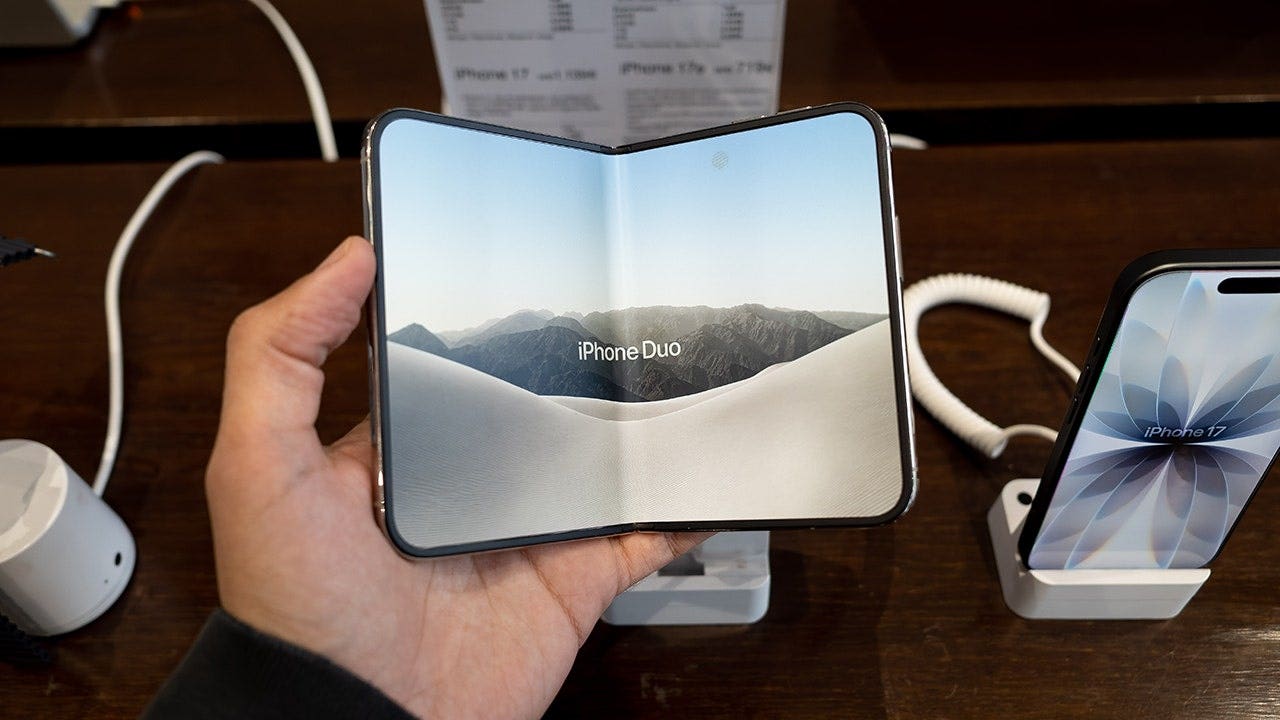
How much would you pay for a phone that turns into a small tablet? Apple is betting the answer is nearly $2,000. After seven years of watching Samsung build folding phones, Apple has finally entered the race with its first-ever foldable iPhone.
The new iPhone Duo, which went on sale Oct. 23, opens like a book to reveal a 7.6-inch screen. Its biggest competitor, Samsung’s Galaxy Z Fold 8, offers the same screen size and a remarkably similar design. However, Samsung’s phone is lighter and costs about $100 less.
Apple has some interesting advantages of its own, including impressive battery performance and a clever screen designed to reduce glare. But there are compromises on both sides, including a repair bill that might make you think twice about carrying either phone without protection. So, has Apple finally cracked the folding phone formula, or does Samsung still have the better idea?
Missed CyberGuy LIVE? Watch the replay and discover 5 ways to travel smarter and save money.
Our free CyberGuy LIVE class, 5 Ways to Travel Smarter and Save Money, has ended, but you can still watch the full replay. Kurt “CyberGuy” Knutsson walks you through five practical ways to protect your phone and personal information, avoid common travel scams, find better deals, save money on bookings and use technology to make your travels easier and less stressful. No technical experience is needed.
Watch the free replay + downloadable checklist now at CyberGuyLive.com.
8 BIGGEST THINGS WE LEARNED FROM APPLE’S 2026 EVENT
Apple enters the foldable phone race seven years late
Samsung introduced the original Galaxy Fold in 2019. Those early devices came with plenty of growing pains, including concerns about screen durability. Since then, Samsung has steadily improved its folding technology.
Apple took its time. In fact, we covered one of the company’s early ideas in our article about Apple’s foldable iPhone patent in 2023. Now the iPhone Duo is finally here, and Apple has made some interesting design decisions. The phone features a polished titanium frame, Apple’s A20 Pro processor and a large inner OLED display. It also introduces a redesigned version of iOS built around the folding experience.
Samsung’s Galaxy Z Fold 8 takes a different approach. It uses Qualcomm’s Snapdragon 8 Elite Gen 5 chip and Samsung’s One UI 9 software, which has evolved through several generations of folding phones. That experience gives Samsung an advantage in some areas. However, Apple has already managed to outperform its rival in early battery testing.
iPhone Duo vs Galaxy Z Fold 8 price: Prepare for sticker shock
Let’s get the painful part out of the way. The iPhone Duo starts at $1,999 for 256GB of storage. The 512GB model costs $2,199, while the 1TB version jumps to $2,599. If you really want to splurge, Apple’s 2TB model costs an eye-watering $3,199.
Samsung’s Galaxy Z Fold 8 starts at $1,899.99 for 256GB. The 512GB version costs $2,099.99, while the 1TB model reaches $2,499.99. That puts Samsung roughly $100 below Apple at comparable storage levels. Of course, Samsung has another advantage. Its Fold 8 has been on sale since August, so retailers and carriers have had time to introduce promotions.
However, I’d look closely at those deals before celebrating the savings. Some carrier offers require a qualifying trade-in or a lengthy commitment to monthly bill credits. There’s also a larger question. When you’re already spending nearly $2,000, will saving $100 really determine which phone you choose? I suspect the answer comes down to what happens when you actually hold them.
Apple’s folding iPhone has a weight problem
One of the first things you’ll notice about these phones is how similar they look. Both fold horizontally like a book, with smaller screens on the outside and expansive displays when opened. But there’s a noticeable difference in weight. The iPhone Duo weighs 8.96 ounces, compared with 7.09 ounces for Samsung’s Galaxy Z Fold 8. That’s almost two ounces heavier for Apple’s phone.
If you’ve ever carried a heavy smartphone in your pocket all day, you know how noticeable that can become. The difference could be even more apparent when you’re holding the phone open for extended periods. Samsung also wins on thickness. Its Fold 8 measures about 0.38 inches thick when closed, while the Duo measures 0.44 inches. Apple counters with a rounded titanium design that may feel more comfortable in your hand. Samsung uses sharper edges and a flatter appearance.
There’s also something worth thinking about. Both phones have relatively small outer screens. Apple’s measures 5.4 inches, while Samsung’s comes in at 5.5 inches. Those screens are perfectly usable for everyday tasks. However, they’re considerably smaller than the displays on many conventional flagship phones. You could end up spending $2,000 on a device that requires an extra step whenever you want a bigger screen. That’s why I’d recommend trying both in person before buying. The phone that feels exciting for five minutes in a store needs to feel comfortable after five hours in your hand.
The iPhone Duo display has a clever trick
Both folding phones open to reveal 7.6-inch OLED screens with adaptive refresh rates up to 120Hz. Each also offers peak outdoor brightness of 3,000 nits. The real difference comes down to how those displays handle reflections.
Apple developed a nano-texture finish for the Duo’s inner screen. It creates a matte appearance that helps reduce glare and makes the fold crease harder to see. Anyone who has struggled to read a glossy screen near a sunny window might appreciate this approach.
Samsung’s screen has a more traditional glossy finish, which can make colors appear richer. Some early iPhone Duo reviews suggest Apple’s matte display sacrifices a little contrast and vibrancy to achieve its reduced reflections. Neither approach will appeal to everyone. However, Apple has another interesting feature coming.
Apple Pencil support could give the Duo an edge
The iPhone Duo now supports the Apple Pencil (USB-C) through iOS 27.2, which Apple released on Oct. 26. That means you can sketch or annotate documents directly on the folding screen. The feature already works in the software’s release candidate.
Samsung’s Galaxy Z Fold 8 does not support the S Pen. Samsung removed the feature as it pursued thinner folding designs. There is one catch with Apple’s approach. The Duo works only with the USB-C Apple Pencil. Even if you already own an Apple Pencil Pro, you won’t be able to use it with this phone.
The USB-C version also lacks the pressure sensitivity available on more advanced Apple Pencil models. Still, this could be useful for someone who regularly signs documents or prefers handwritten notes.
Samsung still understands multitasking better
Here’s where those seven years of Samsung experience become apparent. Let’s say you’re on a video call and someone sends you an important document. You want to review it without interrupting the conversation. Then you need to check your calendar. Samsung’s Galaxy Z Fold 8 can handle several apps on its larger screen. You can run three apps in split-screen mode, and Samsung also offers pop-up windows for additional flexibility. The Fold 8 supports Samsung DeX, too, giving you a desktop-style experience when connected to compatible external displays.
Apple has introduced Split View on the Duo, allowing two apps to run side by side. That’s a first for the iPhone, and it should make the larger screen far more useful. However, Apple’s approach remains more restrictive than Samsung’s. Split View uses a fixed arrangement, and you don’t get the same floating-window flexibility. There’s another issue that early iPhone Duo owners are discovering.
Some iPhone apps aren’t ready for the bigger screen
Apple redesigned iOS 27 for the Duo, which ships with iOS 27.1. Its own apps have been adapted to use the folding display. However, some third-party apps haven’t caught up. Early reviewers found that certain apps display large black bars or awkward layouts when opened on the bigger screen. That could be frustrating when you’ve paid so much for additional screen space.
Fortunately, developers can update their apps to support the Duo’s design. Some popular apps have already received updates, and more are expected. For now, though, Samsung has a more established folding software experience. I would also pay attention to which apps you use most. A larger screen loses some of its appeal when your favorite apps still behave as though they’re running on a much smaller phone.
Apple’s battery life delivers a welcome surprise
Folding phones have a difficult job. They need enough battery power to run a large display without becoming too bulky. Apple’s iPhone Duo uses two internal batteries and an A20 Pro processor designed for efficient performance. Samsung equips its Galaxy Z Fold 8 with a 4,800mAh battery and Qualcomm’s Snapdragon 8 Elite Gen 5 chip.
Both processors offer plenty of power for demanding apps. However, early independent testing suggests Apple has a surprising advantage when it comes to battery life. In one battery test involving continuous web browsing over 5G, the iPhone Duo reportedly lasted 13 hours and 20 minutes, compared with 10 hours and 6 minutes for Samsung’s Galaxy Z Fold 8. That’s more than three additional hours for Apple.
Another independent test produced encouraging results for the Duo. While streaming video over Wi-Fi with the larger screens at maximum brightness, Apple’s foldable reportedly lasted 18 hours and 15 minutes, compared with 16 hours and 30 minutes for Samsung. Although the tests used different methods, both suggest Apple has managed to squeeze impressive battery life out of its first folding phone.
Apple officially claims up to 31 hours of video playback using the inner display. However, that figure comes from controlled laboratory testing, so everyday results will vary depending on how you use the phone.
Charging is another consideration. Apple says the Duo can reach 50% in about 20 minutes with a compatible wired charger. Samsung supports 45W wired charging and fast wireless charging. For anyone who spends long days traveling or regularly finds their battery running low before dinner, Apple’s early results are encouraging.
THE IPHONE DUO IS OFFICIALLY HERE — GET IT FOR NO MONEY DOWN AT T-MOBILE
A $2,000 folding phone still comes with camera compromises
For nearly $2,000, you’d expect a phone with an incredible camera. And while both of these foldables take excellent photos, there’s a catch. Apple’s iPhone Duo has two 48MP rear cameras, while Samsung’s Galaxy Z Fold 8 has two 50MP cameras. Neither has a dedicated telephoto lens, which means you’re giving up some of the zoom capabilities found on other premium phones.
Think about trying to get a close-up shot of your child playing soccer or capturing something interesting in the distance while on vacation. Apple’s Duo offers 2x optical-quality zoom by cropping into its main sensor. Samsung uses a similar approach, with digital zoom for subjects farther away. Both can handle everyday photos, but if you love getting those close-up shots, an iPhone 18 Pro Max or Galaxy S26 Ultra may be a better choice.
Here’s where Samsung throws another option into the mix. Its Galaxy Z Fold 8 Ultra starts at $2,099.99, just $100 more than Apple’s Duo at their regular starting prices. For that extra money, you get a 200MP main camera and a dedicated telephoto lens with 3x optical zoom. That’s worth considering if you want a folding phone but aren’t willing to give up a more versatile camera. And with Samsung already offering discounts on some models, you may not even have to spend more.
Apple has some fun camera features Samsung can’t match exactly
Ever try taking a group photo and realize you’re the one missing from it? Apple’s Smart Take could help with that. Just prop open the iPhone Duo, get into the picture and let its AI recognize when everyone is posing. The phone automatically snaps the photo, so there’s no racing against a timer or asking someone else to take the shot.
Then there’s Duo Preview, which lets the person you’re photographing see themselves on the outside screen. That could save you from hearing, “Wait, let me see that one,” after every picture. Apple also came up with Kid Cue, which plays Peanuts animations on the outer display to get children to look toward the camera. If you’ve ever tried getting a toddler to cooperate for a family photo, you can probably appreciate that one.
Samsung has a few tricks of its own. The Galaxy Z Fold 8 can show people a preview on its outer screen, and you can prop it partially open for hands-free photos. That comes in handy when you want to be in the picture instead of always being the one taking it.
The most expensive iPhone Duo surprise could come after you buy it
Now let’s talk about something that deserves far more attention than it usually receives. Repairs. Apple rates the iPhone Duo IP68 for dust and water resistance, while Samsung gives the Galaxy Z Fold 8 an IP48 rating. That gives Apple stronger protection against dust under standardized laboratory testing. However, neither rating guarantees that a folding screen or hinge will survive years of rough treatment. These phones also contain more moving parts than conventional smartphones. And if something goes wrong, the repair costs can be substantial.
There’s another reason to think carefully about durability. As we reported in our article, Apple confirms iPhone Duo screen problems after launch. Some owners experienced cracks along the inner screen near the hinge within hours or days of purchase, sometimes during initial setup. Apple acknowledged an issue affecting a small number of devices and directed affected customers to contact AppleCare for replacements. The company hasn’t identified the cause or disclosed how many phones are affected. An AppleCare+ subscription isn’t required to request a replacement for this acknowledged issue. Still, it’s something I’d consider before spending nearly $2,000 on a first-generation folding iPhone.
According to Apple’s published repair estimates, replacing the iPhone Duo’s damaged inner display costs $999 without AppleCare+. That’s roughly half the cost of the entry-level phone. Apple also lists an estimated $1,499 charge for certain other damage repairs. There is some relief for minor screen damage. Apple’s replaceable inner display cover layer costs $49 to replace without AppleCare+, provided the damage is limited to that layer. AppleCare+ can significantly reduce eligible repair charges. For example, an inner display repair is listed at $99 under the coverage, subject to the plan’s terms. Of course, the coverage itself adds to the cost of ownership.
Samsung’s folding phones also have specialized displays and hinges that can be expensive to repair. However, repair pricing varies by model, damage and coverage. This is one area where I’d encourage anyone considering either phone to look beyond the advertised purchase price. After all, a $2,000 phone is expensive enough without worrying about what happens if it slips out of your hand and you’re suddenly facing a repair bill approaching $1,000.
Another iPhone Duo change could surprise travelers
Apple has made the iPhone Duo eSIM-only worldwide. That means you won’t find a physical SIM card slot. Samsung’s Galaxy Z Fold 8 supports both eSIM and a physical nano-SIM card, although configurations may vary by market.
For most people in the United States, this probably won’t be an obstacle. Major carriers support eSIM, and many international providers offer digital plans. However, if you travel frequently and prefer buying physical SIM cards at your destination, Samsung gives you more flexibility. It’s worth checking whether your preferred mobile provider supports eSIM before buying the Duo.
iPhone Duo or Galaxy Z Fold 8: Which should you buy?
If you’ve been waiting years for a folding iPhone, Apple’s Duo is an appealing first attempt. It offers excellent early battery performance, an impressive display and the convenience of staying within Apple’s ecosystem. However, I wouldn’t overlook Samsung. The Galaxy Z Fold 8 is significantly lighter, costs a little less and offers more flexible multitasking. Those advantages could become increasingly important once the excitement of owning a new folding phone wears off.
And here’s something else to consider. If most of your day involves texting or checking email, you may spend far more time using the smaller outer screen than you expect. The larger display becomes especially useful when you frequently review documents or watch videos while traveling.
Before buying either phone, think about how much time you would realistically spend with it unfolded. Also, if you’re considering switching between Apple and Samsung, take a look at our guide on how to transfer data to a new iPhone or Android at CyberGuy.com. It can help make the move considerably easier.
HERE ARE SOME TIPS ON HOW TO ORGANIZE PHOTOS WITH KEYWORDS ON YOUR PHONE
Kurt’s key takeaways
I have to give Samsung credit. Seven years ago, folding phones seemed like an expensive experiment, and I wasn’t convinced they’d ever catch on. But Samsung stuck with the idea, and now Apple has finally joined the party. I like what Apple’s done with the iPhone Duo, especially the display and those impressive early battery results. Still, I keep coming back to the price. Nearly $2,000 for a phone that’s heavier than Samsung’s and doesn’t have a dedicated telephoto camera? That’s a tough sell. And the possibility of a $999 inner screen repair would certainly make me nervous.
I also wouldn’t count Samsung out just because Apple has entered the race. The Galaxy Z Fold 8 is noticeably lighter, and Samsung has spent years figuring out how to make that larger screen useful. Being able to run more apps at once is a nice advantage, especially if you’re someone who likes getting work done on your phone. And let’s face it, a lighter phone is something you’ll appreciate long after the excitement of showing everyone how it folds has worn off.
If I were spending this kind of money, I’d want to see how Apple’s first folding iPhone holds up after a few months of everyday use. I’d also want to hold both phones before deciding. But here’s what I keep wondering. How often would I really open that larger screen? If I ended up using the smaller outside display most of the day, I’d have a hard time convincing myself that spending $2,000 was worth it.
Would you really spend $2,000 on a folding phone, or do you think Apple and Samsung are charging us more to solve a problem we never had? Let us know by writing to us at CyberGuy.com.
Sign up for my FREE CyberGuy Newsletter
Get my best tech tips, urgent security alerts and exclusive deals delivered straight to your inbox.
For simple, real-world ways to spot scams early and stay protected, visit CyberGuy.com – trusted by millions who watch CyberGuy on TV daily.
Plus, you’ll get instant access to my Ultimate Scam Survival Guide free when you join.
CLICK HERE TO DOWNLOAD THE FOX NEWS APP
Copyright 2026 CyberGuy.com. All rights reserved.
Tech
on: Refreshed design, OLED display, more
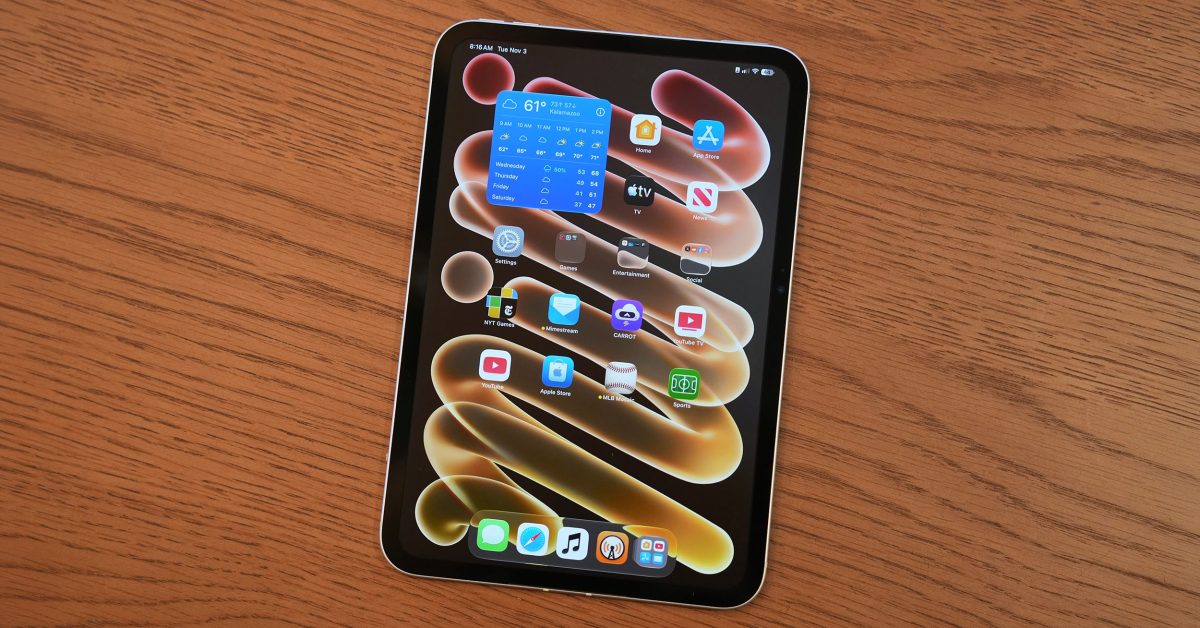
Apple’s smallest iPad has gotten its biggest update in years. The new iPad mini features a much thinner and lighter design, a larger OLED display, water resistance, and the powerful A20 Pro chip.
I’ve been testing the new iPad mini, and there’s a lot to like — but also a couple of frustrations. Here’s everything you need to know.
Pre-order the new iPad mini now
Design
The new iPad mini lives up to the “mini” name even more than its predecessor. It’s significantly thinner, down from 6.3mm on the previous iPad mini to 5.4mm on the new model. In fact, that puts it very close to the ultra-thin iPad Pro and the unfolded iPhone Duo. Here’s how it compares:
The new iPad mini is also significantly lighter, dropping from 293 grams to 255 grams. That puts it in the realm of the iPhone Duo, for comparison’s sake:
The reduction in weight and thickness was immediately noticeable when I picked up the new iPad mini. It feels significantly nicer to hold, more premium, and less “dense” in my hands.
The new iPad mini features an 8.5-inch screen, a slight increase from the previous generation’s 8.3-inch display. The overall footprint is mostly the same (the new model is actually about 2.2mm narrower). The larger screen is possible because the new iPad mini’s bezels are 24 percent thinner than before.
In addition to allowing a bigger screen in the same form factor, the narrower bezels also modernize the iPad mini’s overall look and feel. The bezels are noticeably slimmer than the iPad Air and base model iPad, and slightly thinner than the iPad Pro.
With smaller bezels, a thinner chassis, and a lighter weight, the new iPad mini feels significantly more premium than before. It reminds me less of the base model iPad or iPad Air and more of the iPad Pro, just shrunken down.
Display technology
The big news about the display, though, is the switch to OLED. This marks Apple’s first non-Pro iPad to offer an OLED screen. It’s not the fancy tandem OLED display of the iPad Pro, but it’s a huge improvement over the previous model’s LCD panel.
The new iPad mini offers SDR brightness up to 600 nits, up from the previous model’s 500 nits max. The iPad mini also supports HDR content, with up to 1200 nits peak brightness.
The new iPad mini’s screen is undeniably an improvement over its predecessor. All of the inherent benefits of OLED apply here, including better colors, improved contrast, higher brightness, and more.
Unfortunately, the new iPad mini’s screen has one limitation: it doesn’t support ProMotion, or a 120Hz refresh rate of any kind. Instead, it’s still locked to 60Hz. This is an incredibly frustrating decision that I can’t quite wrap my head around.
Apple touts the iPad mini’s OLED screen as offering significantly faster pixel response time than the previous generation’s LCD panel, leading to improvements like smoother scrolling and reduced motion blur.
I’ve noticed that things like swiping between Home Screen pages, scrolling social media, and system animations are noticeably smoother. They aren’t, however, as smooth as an Apple device with a ProMotion display, and they’re not a substitute for a higher refresh-rate display.
I’m sure Apple knows the iPad mini’s market, and it seems to have decided not to prioritize ProMotion based on that information. However, as someone who has longed for a so-called “iPad mini Pro” for years, I’m disappointed by the decision. The new iPad mini’s screen is so much better … I just wish Apple had gone that extra step and added ProMotion. We’ve reached a point where ProMotion should be table stakes, especially after Apple brought it to the base iPhone 17 last year.
Nano-texture
For an extra $100, you can upgrade the new iPad mini to have a nano-texture display (on the 256GB and 512GB models).
I’m a huge fan of Apple’s nano-texture display and have it on my 14-inch MacBook Pro. On the iPad mini, I think it makes even more sense.
The iPad mini is ultra-portable, and you naturally carry it around and use it in different lighting environments. The nano-texture glass helps reduce reflections and glare in a wide variety of lighting conditions. I also really like the combination of the iPad mini’s book-like size and the nano-texture finish.
There is a slight tradeoff in color vibrancy compared to a glossy OLED screen, as on other Apple devices with nano-texture, but it’s a very minor difference in my experience. The screen still looks fantastic.
Speakers and durability
One of the more interesting changes with the new iPad mini is something Apple calls the “Acoustic Display.” Instead of traditional speakers with visible grilles, Apple has developed a new system that uses the display itself to produce sound.
Essentially, Apple has designed special woofers that vibrate the display to produce low and midrange frequencies. For higher frequencies, custom tweeters are hidden between the glass and aluminum enclosure. Apple says this new system delivers louder audio, “punchier” bass, and clearer highs, despite the iPad mini’s significantly thinner design.
In practice, I think the new iPad mini sounds great. I’d choose headphones or an external speaker for serious music or video consumption, but day-to-day the iPad mini’s built-in speakers are perfectly adequate. (I’d bet that this Acoustic Display technology shows up in future iPhones too, and the iPad mini is serving as a test bed of sorts.)
The Acoustic Display also plays an important role in another major upgrade: water and dust resistance. The new iPad mini is IP67 rated, which means it can be immersed in 1 meter of freshwater for up to 30 minutes. It’s the first iPad to have an official water-resistance rating.
Adding water resistance to the iPad mini is particularly notable given its size and portability. I naturally find myself wanting to take it everywhere, and water resistance makes that more feasible.
One use case where all these improvements really come together is reading. The thinner and lighter design, nano-texture glass, and water resistance make the new iPad mini the most compelling iPad yet to serve as an e-reader.
Performance
The new iPad mini is powered by Apple’s A20 Pro chip, which I already covered in detail in my iPhone 18 Pro review. The short version: the A20 Pro chip gives you plenty of power for anything you can throw at the iPad mini today.
One detail worth calling out is that Apple uses two different versions of the A20 Pro in the iPad mini. The 128GB and 256GB models feature a five-core CPU and 16-core Neural Engine, while the 512GB model gets a six-core CPU and Dual 16-core Neural Engine. All three configurations feature the same seven-core GPU.
I don’t think anyone should buy the 512GB version of the iPad mini just for those extra cores. You should pick your iPad mini configuration based on how much storage you need, not the version of the A20 Pro chip. You don’t need to worry about performance with the new iPad mini. And perhaps most importantly, the A20 Pro chip ensures the iPad mini has enough headroom for the future.
9to5Mac’s Take
There’s been a lot of consternation about where the iPad mini fits in a world where the iPhone Duo also now exists. It’s a fair question. After all, when the iPhone Duo is unfolded, the two devices share a similar form factor … but that’s really where the similarities end.
The iPad mini offers the full-fledged, unapologetic iPadOS experience. It supports the full multitasking prowess of an iPad Pro, including windowing and the menu bar. The new iPad mini also supports extended display mode, so you can plug it into an external display and extend your iPad experience there.
The iPad mini also gets iPadOS app layouts, and most importantly, a desktop-class browsing experience in Safari. It’s a remarkably capable device in a remarkably compact form factor. It fits where other iPads can’t, yet it runs the same version of iPadOS as other iPads.
The new iPad mini does all of that, but better than before. The thinner, lighter design paired with smaller bezels gives the new iPad mini a meaningful visual refresh. The added water resistance means you can do even more with the compact and pocketable iPad mini design.
But all of this comes at a higher price of $699. This marks the second price increase for the iPad mini this year. It started the year at $499, rose to $599 as part of Apple’s broader price increases in June, and is now $699 as of this refresh.
The new iPad mini also still starts with 128GB of storage. Increasing the base storage to 256GB would’ve helped ease some of the pain of that price increase. It’s also getting increasingly hard to manage a device with 128GB, particularly with the storage needs of Apple Intelligence and Siri AI. The lack of ProMotion and Face ID also make the price increase sting more.
Ultimately, the iPad mini form factor is a joy to use. The design feels great in the hand, and having the full iPadOS experience in such a compact device remains impressive. It’s not quite the “iPad mini Pro” I’ve always wanted, but it’s big upgrade to a form factor that I’ve always loved.
My iPad mini recommendations:
Pre-order the new iPad mini now
Apple Pencil Pro
Apple 40W Dynamic Power Adapter with 60W Max
Apple Smart Folio for iPad mini – Taupe
Beats Woven USB-C to USB-C Cables
Tech
Scientists Close In on Mysterious Zeptoverse After 40
Cambridge physicists have found evidence of an event that happens just once in every 10 billion particles, bringing them closer to understanding dark matter, the Big Bang and a mysterious world far smaller than an atom
British scientists have detected signs of an extraordinarily rare event deep inside the building blocks of matter, raising hopes of discovering previously unknown particles that could help explain how the universe began.
The breakthrough, led by physicists at the University of Cambridge, follows more than 40 years of searching and could help researchers explore a mysterious world billions of times smaller than an atom.
Known as the zeptoverse, this unimaginably tiny realm is one of the places scientists hope to find answers to some of the biggest unanswered questions in physics, including what dark matter is made of and why the universe contains so much more matter than antimatter.
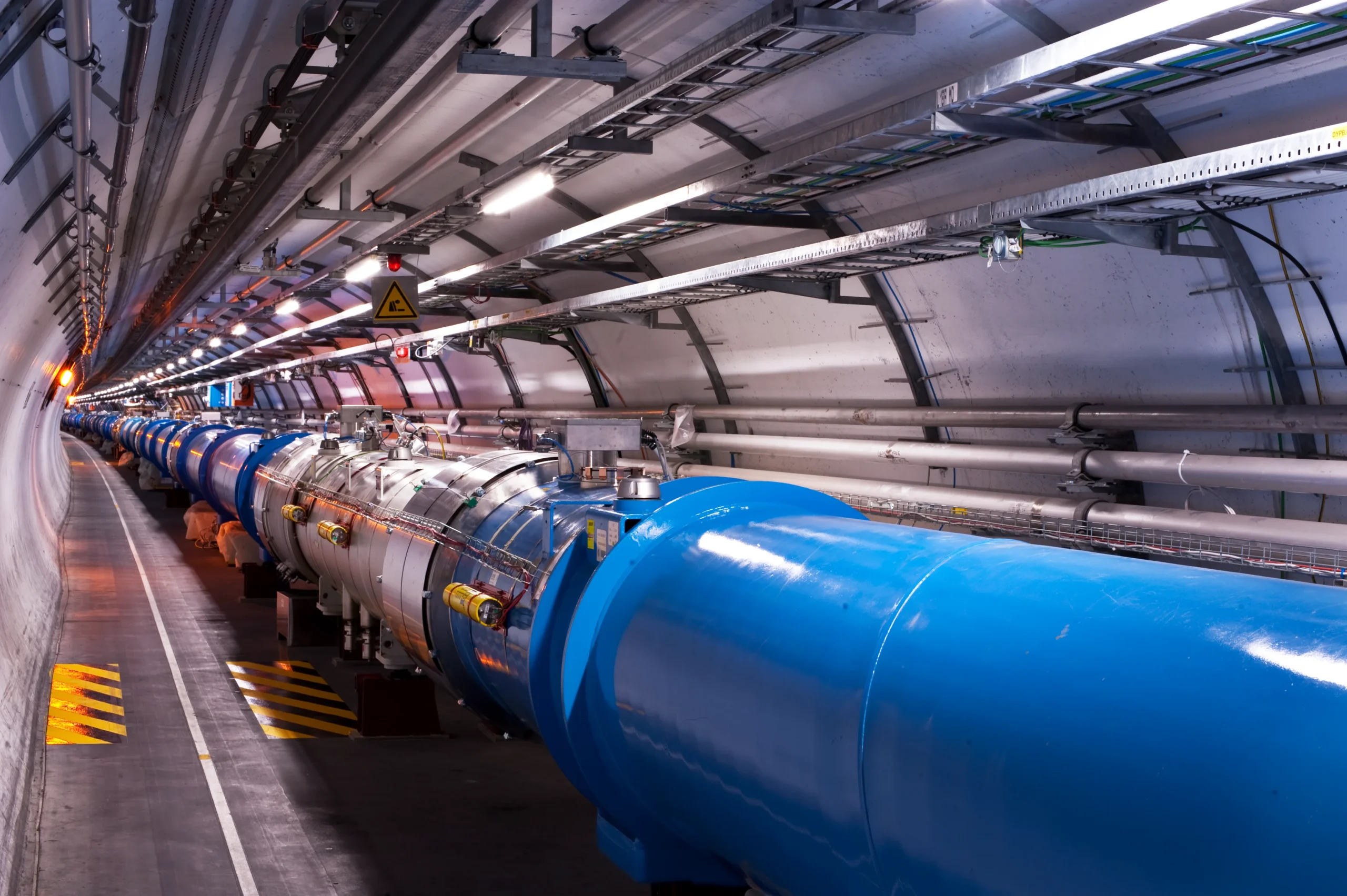
The research was carried out at the Large Hadron Collider (LHC), an enormous underground machine at CERN, near Geneva, which smashes particles together at tremendous speeds to investigate what they are made of.
Scientists were studying particles containing what are known as beauty quarks, short-lived building blocks of matter that are produced during the collisions.
These particles survive for only around one-and-a-half trillionths of a second before breaking down into other particles.
The Cambridge-led team has now found evidence of an exceptionally rare event in which one of these particles produces two smaller particles called muons, which are heavier relatives of electrons.
Dr Harry Cliff, from Cambridge’s Cavendish Laboratory, who led the analysis, said: “What we found in these latest results is an incredibly rare decay of one of these beauty particles, where it turns into two even smaller particles called muons.
“This process only happens for one in every ten billion beauty particles, so it’s incredibly difficult to find.”
Researchers have been hunting for evidence of this particular event since 1984, but its extreme rarity has made it almost impossible to detect.
The team finally made progress using a recently upgraded detector at CERN, which collected enormous amounts of information during 2024 and 2025.
With the help of machine learning, scientists were able to sift through the results and separate the faint signals they were looking for from countless other particle collisions.
The finding could eventually help scientists investigate a world so small that its distances are measured in zeptometres – each equivalent to a trillionth of a billionth of a metre.
Researchers believe unknown particles or forces may exist at these scales, potentially offering clues to mysteries that current scientific theories cannot fully explain.
While the latest results do not establish the existence of any new particles, they give scientists a powerful new way to search for signs of previously undiscovered physics.
The evidence has reached a statistical confidence level known as 3.2 sigma, enough to suggest the signal is real, although more data will be required before physicists can declare a confirmed discovery.
“Physicists have been looking for this rare type of decay since 1984, which was before I was born,” Cliff added.
“Seeing clear evidence for this rarest decay for the first time was thrilling,” he added. “We’re knocking on the door of the zeptoverse now. I can’t wait to see what we find as we explore deeper.”
The findings, which have yet to undergo peer review, are being presented at CERN on today.
Scientists hope further upgrades to the collider’s equipment in the 2030s will allow them to examine these rare events in much greater detail.
Professor Tim Gershon, from the University of Warwick, who leads the LHCb experiment, said: “This fantastic result showcases the extraordinary capabilities of LHCb to probe nature at the fundamental level. This project, driven and led by UK physicists, is producing beautiful science.”
READ MORE: Scientists and engineers quitting jobs as AI changes roles ‘beyond recognition’, study finds . Research involving more than 4,100 technology, engineering and life sciences professionals across five countries reveals growing concerns over career prospects, heavier workloads and employers struggling to replace experienced specialists.
Do you have news to share or expertise to contribute? The European welcomes insights from business leaders and sector specialists. Get in touch with our editorial team to find out more.
Tech
Apple unsure when more of the foldable devices will be available
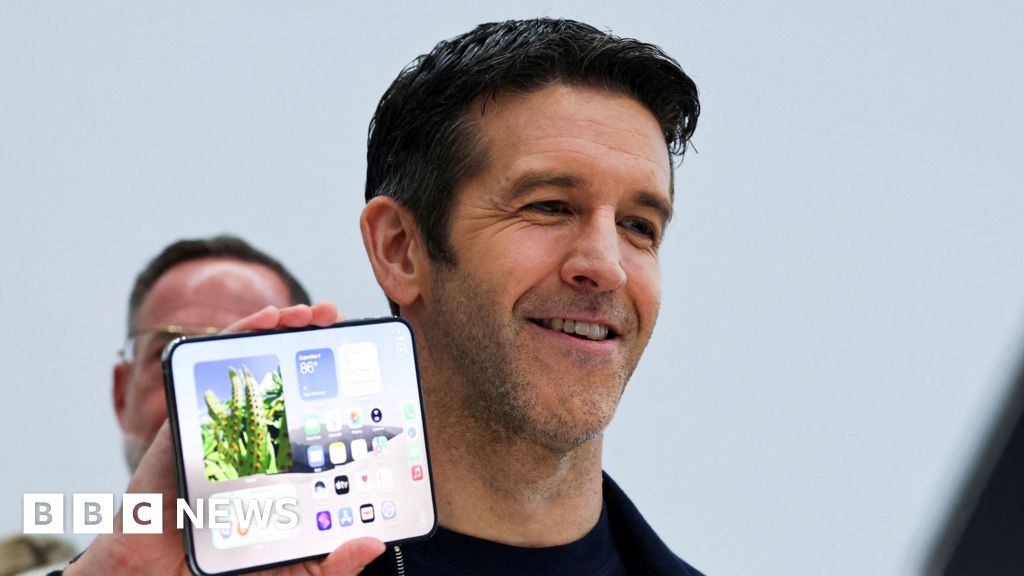
The new head of Apple says the company is working to get its new foldable iPhones available to more people after the $1,999 smartphone quickly sold out when it was released just over a week ago.
John Ternus, who in September took over the role as Apple’s chief executive from Tim Cook, said on Monday that he was “thrilled” at the early reaction to the iPhone Duo.
While the costly phone, which sells for £1,999 in the UK, immediately sold out, some buyers have seen their screens crack.
The phones are still in high demand and Sabhi Kahn, Apple’s new chief operating officer, said the technology giant did not know when more Duos would be available.
“At this time, it’s really hard to predict when supply and demand will be in balance,” Kahn said during a call with financial analysts to discuss Apple’s latest financial results.
Apple executives did not mention during the call any issues with the iPhone Duo. But last week, the company said it would replace any phones that were impacted by an issue that caused a “small number” of the new phones to crack along the inside fold.
Nevertheless, Apple said on Monday that over the last year it sold more iPhones globally than it ever has before.
During the three months to 26 September, which did not include sales of the iPhone Duo that went on sale toward the end of October, Apple saw iPhone sales rise 17% to $57bn.
Apple has boasted throughout the year that iPhone sales have been surging, despite the company’s warnings that crucial components for the device, along with Mac computers and iPads, were constrained to the point of weighing down sales.
However, sales for both the iPad and Apple’s wearable products, including its headphones and Watch fell by 10% and 7%, respectively.
Kahn noted during the call that most Apple devices are still seeing supply constraints driven in part by difficulty in getting enough microprocessors with “advanced nodes.”
Those components are essentially computer chip technology that allows Apple’s devices to operate more quickly, most of which Apple has manufactured through TSMC, which is based in Taiwan.
Khan said that such supply constraints are expected to continue into next year, particularly impacting iPads and Macs. The situation has been made worse by what the company has repeatedly insisted is “unexpected demand” for its products.
Ternus noted, too, that Apple is still seeing “unprecedented” cost increases for memory, or the ability of Apple devices to store data like apps, photos, and text messages.
Much of that memory storage runs through data centres which have seen a huge boom in demand for space as artificial intelligence (AI) chatbots and platforms, including those developed by OpenAI and Anthropic, have become popular.
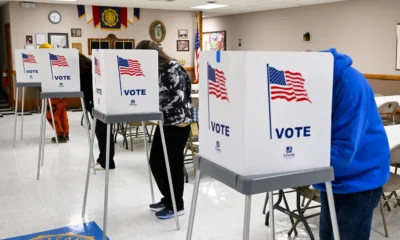

House races to watch : NPR
Midterms coverage: Live results | What to know | Stories around the country Stay connected: NPR Politics Podcast | NPR...
AMD Stock Jumps on Big Earnings Beat
You are now leaving Barron’s website By clicking on the “Proceed” button below, you will be redirected to a third-party...


Parts of jet’s tail found more than a mile from plane crash site in South Florida, official says
WEST PALM BEACH, Fla. (AP) — Investigators found part of the tail of the jet that crashed in South Florida...


Savannah Chrisley pictured showing off growing bump during Chick-fil-A run
Savannah Chrisley was spotted showing off her growing baby bump during a Chick-fil-A run in Nashville. In exclusive photos obtained...


Eric Dane’s Final Days in Hospital Revealed by Wife Rebecca Gayheart
Rebecca Gayheart is opening up about Eric Dane‘s final days timed to the release of the Grey’s Anatomy star’s posthumous...


Vicious ‘ankle biter’ mosquitoes capable of spreading dengue fever invade SoCal
These mosquitoes don’t wait for dusk and go straight for your ankles! Yellow fever mosquitoes native to Sub-Saharan Africa have...


Country singer Nicole Taylor of Taylor Red dead at 35
NEWYou can now listen to Fox News articles! Nicole Taylor, a singer in the country trio Taylor Red, has died....


Model Sahara Ray’s Death Certificate Reveals Cremation Plans
Model and influencer Sahara Ray is set to be cremated following her shocking death at 34 … TMZ has learned....


JetBlue raises bag fees for third time in a year as fuel costs bite
Welcome to the era of the $70 bag fee. JetBlue Airways has raised the price of checking a bag for...


Yaxel Lendeborg has changed Warriors’ outlook, per Joe Lacob
Yaxel Lendeborg has exceeded just about everyone’s expectations. Including his own. Does that change the Warriors’ outlook on the 2026-27...
-

 HealthNews2 weeks ago
E. coli cases possibly linked to Bengtson’s Pumpkin Farm, Will County health officials say
-
Business2 weeks ago
GLP-1 injections recalled nationwide. See affected products
-

 Business2 weeks ago
Tesla (TSLA) Q3 2026 earnings preview: flat revenue, falling profits
-

 HealthNews2 weeks ago
She was paralyzed in a car crash that killed her parents. Now, she’s a mom of twins
-

 HealthNews2 weeks ago
My In-Laws Offered to Watch My Baby, Then Didn’t Give Her Back for Six Weeks. That Was Just the Beginning.
-

 Business2 weeks ago
I ate 12 burritos in SF, LA and SD. There’s one I still think about.
-

 Entertainment2 weeks ago
First October Read of 2027 Race
-

 Tech2 weeks ago
Microsoft reportedly projects $1,200 to $1,800 price for 2028 Project Helix