
Business
Yum Brands (YUM) Q3 2026 earnings

Yum Brands on Tuesday reported earnings that beat expectations, but a cyclospora outbreak linked to iceberg lettuce at Taco Bell weighed on the company’s same-store sales growth.
However, Yum said Taco Bell, which the company considers a “growth engine” for its business, has since rebounded.
“Since the end of September, Taco Bell U.S. has been outpacing the [quick-service restaurant] industry on same-store sales growth,” Yum CEO Chris Turner said in a statement.
Here’s what the company reported compared with what Wall Street was expecting, based on a survey of analysts by LSEG:
Earnings per share: $1.56 adjusted vs. $1.49 expected
Revenue: $2.05 billion vs. $2.05 billion expected
Yum reported fiscal third-quarter net income of $1.62 billion, or $5.92 per share, up from $397 million, or $1.41 per share, a year earlier.
Excluding gains from its divestiture of Pizza Hut and other items, the restaurant company earned $1.56 per share.
Net sales rose 4% to $2.05 billion.
During the quarter, Yum completed its divestiture of Pizza Hut. It closed the sale of the pizza chain’s business in mainland China to Yum China on Aug. 7 and sold the rest of Pizza Hut to LongRange Capital on Sept. 1. The company’s third-quarter results include Pizza Hut up until those dates.
Excluding Pizza Hut, Yum’s same-store sales were flat for the quarter as Taco Bell weighed on the company’s overall results. Taco Bell’s same-store sales declined by 4% as diners temporarily pulled back on visits due to the foodborne illness outbreak.
Yum executives previously said the weekend of July 18 saw the most severe impact to sales, but sales trends have improved since then.
Outside of the U.S., Taco Bell’s much smaller international business reported same-store sales growth of 5%.
KFC’s same-store sales ticked up 1%, helped by system sales growth in China and Europe. The U.S., now the chicken chain’s third-largest market, saw system sales shrink 6% in the quarter.
Business
Apple CEO John Ternus criticized for ‘scripted’ approach to first earnings call
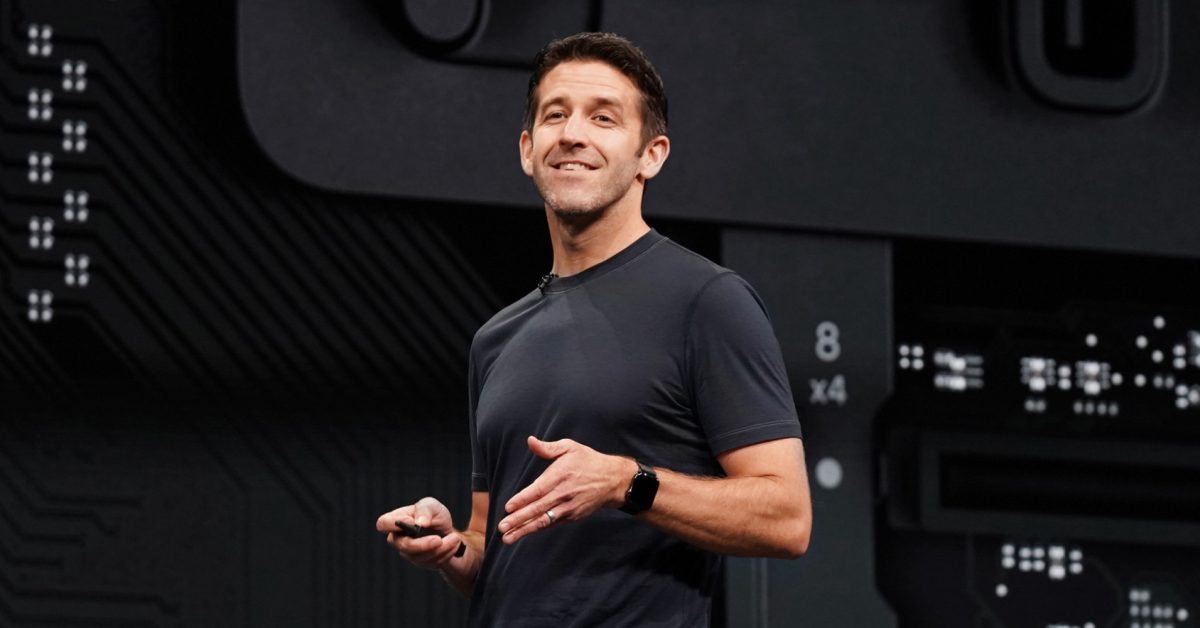
Investors didn’t seem overly happy about yesterday’s Apple earnings call despite the record results. That likely reflects the company’s cautious take on margins in the current quarter, but some have also criticized what they describe as a very “scripted” approach by new CEO John Ternus.
Bloomberg was the biggest critic, describing it as a “timid” performance that left analysts “sorely disappointed” …
Bloomberg’s Dave Lee didn’t hold back.
Apple investors and fans hoping to get an insight into the philosophy of new Chief Executive Officer John Ternus on Monday were left sorely disappointed. The 51-year-old’s first earnings call was a timid affair, with Ternus taking cover behind a carefully written script as analysts peppered him with questions.
Lee acknowledged that the slump in pre-market trading will have been largely driven by Apple’s caution about rising expenses in the current quarter. The company said that memory costs were continuing to rise and that building out Siri AI data centers we’re going to add to the RAM bill. But he argued that Ternus missed an opportunity to talk up the company.
In front of Ternus on Monday night was a chance to counteract the gloom and doom by instilling in Wall Street the fundamentals of the Ternus Doctrine — what he sees Apple becoming under his tenure, the “product guy” taking the company to a new era of innovation. Instead, he spoke like a man glancing at the clock and wishing the minutes away.
Fortune’s Sebastian Herrera was less vocal but echoed some of the criticism.
Ternus fielded some questions but also delegated answers to Chief Financial Officer Kevan Parekh and Chief Operating Officer Sabih Khan, who Apple said would participate in earnings calls moving forward, something the company hasn’t done for years. Ternus projected confidence on the call, but he appeared to stick mostly to scripted marketing points.
9to5Mac’s Take
It will of course take Ternus some time to develop his own style when it comes to all of the varied aspects of the role, including addressing analysts in earnings calls, but I thought he took a measured but optimistic approach. Given the famously reticent style of his predecessor, the criticism strikes me as rather odd.
What’s your take? Please share in the comments.
Business
Shopify Stock Plunges As Q3 Gross Operating Profit, Revenue, GMV Miss

Information in Investor’s Business Daily is for informational and educational purposes only and should not be construed as an offer, recommendation, solicitation, or rating to buy or sell securities. The information has been obtained from sources we believe to be reliable, but we make no guarantee as to its accuracy, timeliness, or suitability, including with respect to information that appears in closed captioning. Historical investment performances are no indication or guarantee of future success or performance. Authors/presenters may own the stocks they discuss. We make no representations or warranties regarding the advisability of investing in any particular securities or utilizing any specific investment strategies. Information is subject to change without notice. For information on use of our services, please see our Terms of Use.
*Real-time prices by Nasdaq Last Sale. Real-time quote and/or trade prices are not sourced from all markets. Ownership data provided by LSEG and Estimate data provided by FactSet.
IBD, IBD Digital, IBD Live, IBD Weekly, Investor’s Business Daily, Leaderboard, MarketDiem, MarketSurge and other marks are trademarks owned by Investor’s Business Daily, LLC.
©2026 Investor’s Business Daily, LLC. All Rights Reserved.
Business
What a Democratic sweep means for stocks

Umit Bektas | Reuters
The stock market is not yet pricing in a Democratic sweep of Congress — despite some polls and most prediction markets pointing that way — so that scenario could weigh on share prices Wednesday, according to investors and analysts.
Republicans managing to keep control could cause a short-term relief rally, they said.
Short-term moves aside, the typical post-midterm pattern in the months ahead is bullish. But some wonder if the market could buck the positive historical trend this time because the S&P 500 is already up so much this year going into the election.
As far as certain stocks to watch, a big Democratic win on Tuesday night — especially in the Texas governor race — could add fuel to an AI stock sell-off on the notion that more data center restrictions would gain momentum nationally. Defense stocks could come under pressure on fears of limits on spending.
Expected stock market reaction
Polls are pointing to a Democratic victory in the House and a toss-up in the Senate. Prediction markets have been more favorable to Democrats, calling for a blue sweep.
While investors are signaling “begrudging acceptance” to a base case scenario that there will indeed be a Democratic sweep, that’s not how they’re positioning, said Tobin Marcus, head of U.S. policy and politics at Wolfe Research. The firm’s recent survey data among more than 100 institutional investors suggests they are not strongly positioned for any particular result.
“Investors seem to have a significant dose of skepticism about whether the final outcome is going to be quite as favorable to Democrats as the polling suggests,” Marcus told CNBC, noting that the firm shares the view that the “polling is likely overstating Democratic strength.”
JPMorgan sees a blue wave knocking the S&P 500 by about a half percent on Wednesday.
On the other hand, if Republicans end up retaining both chambers of Congress, that could spur a rally, said Sameer Samana, head of global equities and real assets at Wells Fargo Investment Institute.
“From a certainty standpoint, the market knows what to do with Republicans holding both chambers,” he said.
Citigroup strategists said Monday that Republicans losing the House but managing to keep the Senate could be “a tailwind for equities into year-end.” JPMorgan traders predict up to a 1% pop on Wednesday if Republicans hold on to that chamber.
Looking past any short-term move, stocks tend to rally after the midterms have concluded. In fact, the S&P 500 was up one year out after all midterm elections going back to the early 1980s.
But the S&P 500 has already recorded double-digit gains so far in 2026, so some on Wall Street worry that investors are being overly complacent heading into this year’s elections.
Stock Chart IconStock chart icon
During midterm election years, the S&P 500 has typically averaged a 14% drawdown at some point in the second half of the year found Jonathan Krinsky, chief market technician at BTIG.
“The reason stocks often perform well in November during midterms is because [the S&P 500] typically is weak INTO the elections. We have the opposite setup this year,” Krinsky wrote last week. “Therefore, while consensus is that we see a post midterm rally, we think the opposite is actually more likely.”
AI jitters meet the ballot box
It’s not helping that the broader market has recently come under significant pressure due to turbulence in the AI trade, which led the Nasdaq Composite to post its worst day since June on Friday. AI shares led the market lower again on Monday.
A strong showing from Democrats in Tuesday’s midterm elections could pressure the trade even more.
At the state level, increased Democratic control is probably a headwind for stocks associated with data centers and technological capital equipment, analysts said.
“It [would solidify] the early kind of cautionary signs in different states around the advancement of AI infrastructure,” Rob Rains at Washington Analysis told CNBC.
Goldman Sachs strategists said this week that a Democratic Congress “might limit data center tax incentives, but a national moratorium looks unlikely in any election outcome.”
One example would be Texas — a key hub of the data-center buildout. A surprise loss there by Republican Gov. Greg Abbott has the “potential to spook” the market in the short term, Wolfe’s Marcus said.
Sergio Flores | Getty Images News | Getty Images
Defense and healthcare stocks
A blue wave might pressure defense shares, while boosting health care stocks, analysts and investors said.
“A substantial Democratic sweep could limit real spending growth unless a broader agreement increases both defense and health-care funding,” said Alex Sagal, global equity analyst at Wells Fargo Investment Institute. However, he noted that the earnings outlook for the defense industry looks “stable to modestly positive.”
Wolfe Research’s Marcus said that healthcare is going to be “the biggest focus,” as Democrats will push for restoring expired Affordable Care Act enhanced premium subsidies or unwinding some of the Medicaid reforms in the One Big Beautiful Bill Act.
“Healthcare stocks have been doing really well lately,” Jed Ellerbroek, portfolio manager at Argent Capital Management, said to CNBC. “I think part of that is the anti-AI trade, but I also think part of it is just optimism that Democrats are taking over.”
Ellerbroek is keeping his eye on hospital-related stocks such as HCA Healthcare and Tenet Healthcare as well as health insurers like UnitedHealth and Centene .
Bank pressure incoming?
Financials was the worst S&P 500 sector in early 2026 on the heels of President Donald Trump calling on Congress to pass a law that would cap credit card interest rates at 10%. While the sector has been able to notch gains since, with its year-to-date rise now at around 3%, things could get more unstable for the group under Democratic control.
“Democrats will come in wanting to show tangible progress on the affordability issue, and that means targeting sectors that are front and center in consumer budgets,” said Evercore ISI’s Matthew Aks. “We know Trump has populist instincts, populist leanings, and could he pick a couple of issues and decide to team up with the Democrats on those issues and target those industries in a populist way? Absolutely.”
Given that Democratic control is often associated with increased regulation, while Republican control is thought to promote deregulation, Democrats could be interested in passing credit card rate caps if they come out victorious.
“I think if Democrats have control of one or both chambers, they would try to pass it and see if they could get Trump to either sign it or force him to veto it, and that would let Democrats kind of score a political point,” Aks said.
Iran wildcard
Trump could restart the war against Iran after holding off any major strikes leading up to the midterms, a move that could upend the overall market and cause energy stocks to outperform. Crude oil prices jumped more than 10% in October, though they gave a lot of that gain back on Monday.
Fatemeh Bahrami | Anadolu | Getty Images
Gasoline prices stood at $4.17 a gallon on average nationwide Sunday, a nearly 40% increase compared to the same period last year, per AAA.
“If there are escalations, that could obviously put upward pressure on prices just ahead of Thanksgiving,” said Patrick De Haan, head of petroleum analysts at Gas Buddy, “which is also when Americans have really staunch traditions in terms of driving to friends and family.”
If Trump decides to take forceful action, it could snuff out hope for a typical post-midterm year-end rally.
Evercore ISI said the S&P 500 could retreat by double-digits to end the year at 6,800 as oil spikes if the president “moves to kinetic escalation in Iran ahead of seating the new Congress in January” and Democrats take Congress.
watch now
Business
A new cold war: hackers target fridges across the globe

It was a May morning in Israel when employees at a large food production plant watched in horror as the office printers started spontaneously spitting out reams of threatening messages.
Then, employees found malicious code on corporate computers designed to wipe away internal data.
Finally, an engineer smelled smoke coming out of the industrial freezers, only to find broken compressors and badly spoiled food inside.
The company’s operations ground to a halt for over a week while engineers waited for new parts to arrive from abroad.
It was all the result of a targeted, multi-pronged cyberattack.
“I do a lot of cyber incidents, but this is the kind of incident that I know will leave a mark on the people in charge,” said Omri Segev Moyal, head of an Israeli incident response firm called Profero, which responded to the attack.
Based on forensic data and direct claims from the culprits, Moyal is confident Iranian military hackers who currently go by the name Cyber Isnaad Front, the same group linked to influence campaigns targeting U.S. elections in 2024, are behind the attack on the refrigeration systems. It was a destructive digital strike that took place during the waning days of a ceasefire between Iran and Israel when tensions were ratcheting up.
In the months since, it appears to have become a trend.
Still unidentified hackers have targeted refrigeration controllers around the world. They have spoiled fresh produce and cost businesses time and money. These attacks have taken place on U.S. military bases in August, French supermarkets in October, and at food stores from small markets to big box stores like IKEA in countries including Sweden, Estonia, Ireland, Luxembourg, the Netherlands, and Belgium in early November.
“We’re observing targeted attacks gradually built and practiced against Israel, tested in Europe and the U.S., and unleashed [now],” Moyal said in an interview with NPR.
Across the globe, bad actors with access to AI are breaking into and taking control of the aging machines that run global critical infrastructure, from water pumps to cooling systems. That should put pressure on governments and companies to find solutions to long-standing security challenges before things get even worse, cybersecurity experts say.
“With great connectivity comes great responsibility,” said Josh Corman, a former cybersecurity official with the Cybersecurity and Infrastructure Security Agency who specializes in public safety. “As we connect industrial refrigeration to the Internet, we expose it to accidents and adversaries,” Corman continued. “While these [attacks] hit food,” he said, the next ones could go after “temperature sensitive drugs and laboratory materials.”
Origins in Israel
As early as March, hackers appear to have targeted a small chain of kosher grocery stores in Israel, according to avideo posted to social media. In the video, a customer is touching previously frozen food including soft, squishy packages of meat that have clearly spoiled. The company did not immediately respond to a request for comment about the incident.
A couple months later, hackers went after a bigger target in the food production plant and its associated businesses, the incident Profero was called in to respond to. Moyal declined to share the name of the company due to client confidentiality, but described further details about the incident to NPR.
The hackers broke into the industrial controllers that helped manage and monitor the freezers. They also adjusted the safety limits, opened the gas pressure valves, changed the credentials, disabled alerts, and destroyed forensic evidence in the middle of the night. They took advantage of the vulnerable devices as well as the laws of thermodynamics to render the compressors “eliminated,” Moyal said. “They were blown up … not like C4 exploding, but they got overused and there was smoke. They were not repairable.”
The technical sophistication of these attacks is advancing, in part thanks to AI, Moyal added.
“What we were able to see is they very rapidly were able to, almost like magic, go from initially playing with the system to fully understanding how the configuration works,” Moyal said. “They tried the simple things … and then they started to bombard the system with different types of configurations until they destroyed the compressor. It wasn’t human, the amount of configurations they were able to try in a short time span.”
Replacing parts and recovering from the attack were costly, in time and money, Moyal added.
But the hackers didn’t stop there.
A propaganda video about the Israeli grocery store hack was released in October. While it was largely wiped from the internet, it was shared with NPR on the condition that the identity of Moyal’s client wouldn’t be revealed. NPR is choosing not to publish it for that reason and not to aid in the spread of propaganda. That video suggests stoking fear was part of the hackers’ motivation.
In the video, labeled with a glowing red triangle embossed with the “Cyber Isnaad Front” logo, a masked man sits in a room full of digital screens, typing away on a keyboard before revealing hacked surveillance footage of customers across Israel in supermarkets that were affected by the large-scale destruction, as well as employees at the company finding the printed propaganda materials.
In Arabic, the hackers claim to have launched the attack on behalf of the starving children of Gaza, closing out with the hacker saluting French students in French, likely a reference to ongoing riots in France over education. It’s unclear why the video references French students, though the group has impersonated a French far-right group in the past and targeted the Israeli delegation to the 2024 Paris Olympics. The video was also released just weeks before the widespread digital attacks against French supermarkets, but it’s unclear if that timing is coincidental.
Ari Ben Am, the co-founder of a threat intelligence company called Telemetry Data Labs that tracks chatter on the social media platform Telegram, has been tracking this group for years. He says it’s working on behalf of the Iranian military.
Ben Am, an adjunct fellow at the Foundation for the Defense of Democracy’s Center on Cyber and Technology Innovation, says it’s one of the more technically capable Iranian hacking groups he has seen.
“They appear to have a higher level of investment, a higher quality of activity like actual hacking…they really do much more effective, more holistic operations,” he said.
Ben Am conducted an early analysis of the technical details of the hack of the Israeli food plant shared by Profero. He concluded that it’s possible that these hackers may have shared some digital tools like wiper malware with other Iranian hacking groups like the Cyber Av3ngers. That group hacked machines in water and wastewater treatment facilities in the U.S. in 2023 to display propaganda messages.
Cyber Isnaad Front, Ben Am says, has a history of hacking into surveillance cameras and promoting their activities across a range of social media platforms, and it’s the only Iranian group he has seen use human actors in videos.
“They’re capable of consistently compromising actual organizations that have some degree of cyber defense,” he concluded.
The military fridges
In August,there was what the Pentagon described as a “possible refrigeration disruption” at multiple U.S. military commissaries, grocery stores owned and operated by the Defense Commissary Agency, a wing of the Pentagon. It’s unclear exactly how many experienced outages, though an independent bloggercited social media posts and independent confirmations of disruptions for at least nine locations. Very few details have emerged about how bad actors might have compromised those systems.
The Pentagon has so far refused to officially acknowledge whether or not it believes hackers were responsible for the refrigeration disruptions.
However, the Defense Criminal Investigative Service, the criminal investigative arm of the Pentagon’s Office of Inspector General, has partnered with the Army Criminal Investigation Division’s Cyber Field Office and French law enforcement following the hacks across stores in France, according to a statement shared with NPR.
According to two former officials who requested anonymity to discuss an ongoing investigation, investigators are treating the outages as a cyberattack and believe some evidence points towards Iran as the culprit, though there’s not high confidence in that attribution yet.
While many questions remain about the incidents at the commissaries, there are clues across the internet about vulnerabilities that may have exposed these systems to compromise.
Publicly, there are indications that the Defense Commissary agency deploys remote monitoring control tools for their refrigeration and HVAC systems that could be vulnerable to ongoing attacks.
According to a review of public government contracting documents by NPR, multiple U.S. Defense Commissary installations, including several which have disclosed outages like Fort Irwin and Fort Huachuca, are operating Danfoss refrigeration remote control systems, products that have been identified by French officials and cybersecurity experts from a firm called Claroty as being vulnerable to attack.
French officials have cited those same Danfoss machines as one of the vectors of the confirmed incidents across French supermarkets in October.
According to those same contracting documents, the U.S. Defense Commissary agency is using several older versions of the Danfoss controllers, including some from the mid-2000s that can no longer be updated with new, secure software.
While a spokesperson for Danfoss declined to comment on specific customer relationships, she told NPR that the company is “aware of incidents in France affecting a limited number of refrigeration management systems” and “are in close contact with affected customers to support them in addressing their situation.”
Danfoss has advised customers to mitigate the risks by installing the latest firmware, removing the devices from the internet, and operating behind a firewall and VPN, Tate explained.
Social media posts about individual incidents on U.S. bases suggest these were not isolated outages that might’ve been caused by other environmental factors.
Fort Huachuca, an Army base in Arizona that houses the Army’s intelligence division, shared on Facebook that the post’s commissary experienced “an overnight equipment failure” that resulted in “all freezers [going into] defrost mode.” The page’s moderator clarified in the comments section of the post that there was no power outage, and that the switch to defrost mode “heated up all the food.”
“Trust us when we say it was ‘spoiled,'” the account posted.
The official social media account for Fort Irwin, the home of the Army’s National Training Center in the Mojave Desert in California, shared that technicians were “working around the clock” to “repair” the systems, and that the outages were affecting bases around the country. They wrote that they were waiting for “temperatures [to] stabilize” before restocking.
Ashley Upshaw, a military spouse living on Fort Irwin, told NPR she found out about the outage online through social media and a spouse forum.
“People were posting that all the frozen areas were blocked off, that there were no fruits, no vegetables. Like everything was cleared out. We didn’t know exactly what was going on,” she said.
People on base, including those in town for training, were forced to drive more than 40 minutes to go to the nearest grocery store, buy shelf-stable foods from the base’s thrift store, or pool resources with neighbors, she said. “There were a lot of people helping others out,” she said.
When asked what the military told families about the incident, she said she didn’t believe there was any official announcement about a cyberattack but that was what people were speculating about on social media, including on a popular page called “U.S. Army W.T.F! Moments.”
Across social meda, commenters expressed frustration that the commissary refrigeration systems were connected to the internet at all.
“You need clearance to even get on base. So why not have the same mentality for other things like refrigeration systems and stuff like that?” Upshaw said.
The French connection
Following the mysterious outages at the bases, things were quiet for weeks. The disruptions were limited to a handful of targets. It’s unclear why hackers didn’t manage to compromise more of the 107 Defense Commissary stores in the U.S. and abroad.
Then, in October, a manager of a French supermarket outside of Dijon told NPR he got a call from a surveillance company at four in the morning telling him that temperatures were shooting up in the store’s refrigerators and cold rooms before he came to find his freezers practically turned into ovens.
His store was one of hundreds whose fresh food was spoiled that day. The French cybersecurity agency ANSSI is in the middle of an ongoing investigation into what happened, and is in communication not just with the supermarkets and the companies that make the controllers, but also with other industrial sectors “which might be impacted by this incident,” a press officer for the ANSSI wrote in a statement to NPR. The attacks on French supermarkets were more wide ranging, hitting hundreds of supermarkets across multiple chains including Intermarché, Coopérative U and Carrefour. Even so, the number of affected systems was actually still a small fraction of the total number of stores and devices within those company’s portfolios.
Now, with attacks hitting supermarkets in at least six more European countries, the trend of compromising refrigeration technology appears to be continuing to escalate. Some officials including those in Sweden and Estonia have said impacts were more limited than they could have been, given the warnings they received from what happened in France. However, the full extent of the impacts of the new wave of attacks is still unfolding.
Officials are still investigating all these separate outages, while governments and industries are scrambling to determine whether they’re still operating devices that are vulnerable.
The internet of insecure things
Hackers remotely dialing up the temperature in industrial freezers or damaging other critical devices from a world away sounds a lot like science fiction.
But it’s happening. Despite a brief interlude years ago when some criminal hackers claimed that they wouldn’t target sensitive systems like those used in hospitals, many hackers have since done so.
That’s likely because the opportunity to make money by holding critical systems hostage is simply too lucrative to ignore, like the ransomware attack on Colonial Pipeline in 2021.
Meanwhile, these kinds of attacks are increasingly becoming a normal part of geopolitical conflict, whether that’s Russian hackers shutting off the power in Ukraine, or Chinese hackers burrowing into U.S. critical infrastructure to provide a foothold to cause damage in the event of a potential future conflict like a Chinese invasion of Taiwan. Additionally, experts have linked a series of disruptive attacks on U.S. water treatment plants in August to Iran, within weeks of the Defense Commissary outages.
In reality, securing operational technology, the digital machines that control physical processes in the real world, is a uniquely difficult challenge that has plagued cybersecurity experts focused on it for many years and is only getting worse.
“This has always been an issue,” explained Michael Garcia, the Policy Director of the Operational Technology Cybersecurity Coalition, a coalition of government and industry partners working to improve cybersecurity and resilience for critical infrastructure. “We know the threat is there, and it’s just a matter of time before a bad actor compromises something.”
It’s difficult to estimate the full extent of how many of these devices, from remote monitoring systems to what are called programmable logic controllers, are vulnerable to attack and for what reason, though cybersecurity firms have identified thousands of refrigeration systems alone still exposed to basic attacks even after the widely publicized incidents in France.
In recent years, there’s been a trend towards greater connectivity between devices, to allow individuals to remotely manage massive networks of machines from a central location. It makes sense, particularly for major corporations who are dealing with complex machines that can’t be adequately managed by individuals onsite, unlike a household refrigerator. But many of these systems were not originally designed with internet connectivity or security in mind.
On top of that, many of these systems are aging and can no longer be patched at all, because the companies that made them have moved on to newer versions.
And finally, many of the officials or executives whose agencies or businesses run operational technology have limited to no visibility into the specific devices they’re using, which ones are vulnerable, or whether or not they have cybersecurity protections in place. Some of those people haven’t invested in securing these systems the way they should.
“Internet exposed devices were always the soft underbelly of operational technology,” explained Amir Preminger, the chief technology officer for cybersecurity firm Claroty. Claroty first published a piece on the vulnerabilities in refrigeration technology back in August.
“Devices can be vulnerable to [bugs] that were discovered and nobody fixed them,” Preminger said. “They can be known vulnerabilities and nobody patched. And there can just be the fact that there’s no security measures. If you leave that door open, anyone can come in and do whatever he wants.”
— Eleanor Beardsley and Daniel Estrin contributed to this story.
Business
Apple earnings beat expectations, but rising chip costs worry investors
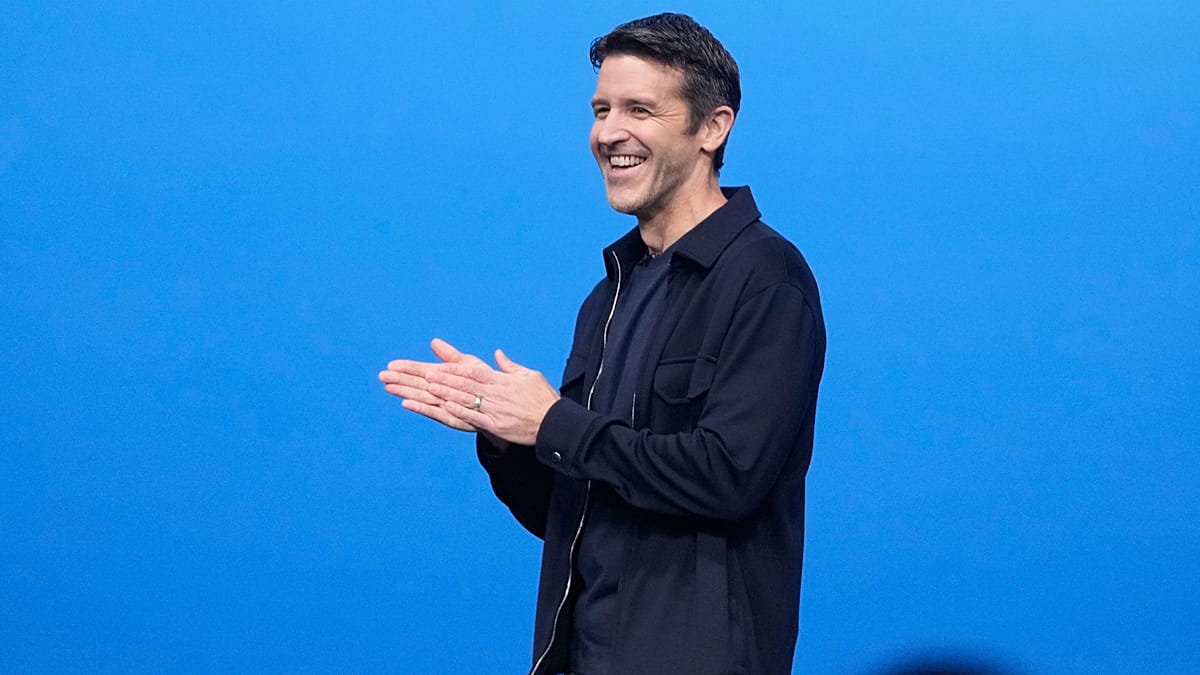
Apple Inc. posted stronger-than-expected revenue in the three months to 26 September 2026, boosted by record September-quarter iPhone sales.
However, shares fell around 3% in after-hours trading on Monday as investors weighed the strong results against pressure on profit margins.
Revenue rose 12% to $114.5 billion (€102.1bn) from $102.5 billion (€91.4bn).
The Cupertino, California-based company earned $30.71 billion (€27.4bn), or $2.10 per share, in the July-September period. That’s up 12% from $27.47 billion (€24.5bn), or $1.85 per share, in the same period a year earlier.
Analysts, on average, were expecting earnings of $1.99 per share on revenue of $113.4 billion (€101.1bn), according to a poll by FactSet. Both figures beat those estimates.
However, part of the profit improvement came from tariff refunds, which added $0.05 (€0.04) per share to earnings and lifted the company’s gross margin by about one percentage point to 47.9%.
The quarter included only the first days of sales of the premium iPhone 18 Pro models. Apple’s new foldable phone, the iPhone Duo, started selling in the current quarter, so its sales were not included in these results.
iPhone revenue rose 17.5% to $57.6 billion (€51.4bn), while Mac sales increased almost 24%. iPad revenue fell 10.4%, while wearables, home and accessories fell 7.9%.
It’s Apple’s first earnings report since CEO John Ternus took the helm on 1 September, succeeding Tim Cook.
Ternus highlighted a recovery in Greater China, where revenue rose 21% in the quarter and 28% over the full fiscal year. He said iPhone and Mac sales drove the quarterly growth.
However, Investing.com senior analyst Jesse Cohen said in a note quoted by MarketWatch that revenue from China, wearables and home devices all came in lower than analysts were expecting.
A stronger sales outlook, but thinner margins
On the earnings call, Apple said it expects revenue to increase by between 7% and 10% from a year earlier in the December quarter. The company said this would make it its biggest quarter for revenue.
But services growth is expected to slow to 8–9%, from 9.8% in the September quarter, when revenue reached a record $31.6 billion (€28.2bn). Apple pointed to pressure from third-party licensing and currency movements.
Apple expects rising memory costs and spending on the rollout of Siri AI to push its gross margin down to between 45% and 46% in the December quarter, below the 46.3% analysts had forecast. Higher memory chip costs account for most of the pressure.
“Where investors were left wanting was in the margin,” said Ben Barringer, head of technology research at Quilter Cheviot.
“Once those tariff benefits roll off, the margin will get hit and as such the guidance is for that to decline.”
However, the company expects revenue to grow by 7% to 10% in the quarter, above the 6.1% analysts had expected.
Apple has already raised prices on several products this year. It is also trying to limit the impact of higher memory costs by using stock bought at lower prices and reducing spending on other components.
Apple’s AI spending in focus
Long criticised for falling behind in AI, Apple is working with partners to improve its services while keeping its own capital spending relatively low.
In September, the iPhone maker confirmed that the models powering its new Siri were built with Google, following a multi-year agreement announced in January.
Barringer said Apple’s smaller exposure to the AI spending boom offered some protection during the recent tech sell-off, although its valuation remained demanding.
“Apple isn’t beholden to the fortunes of the AI trade like some of the hyperscalers, and certainly isn’t seeing the same pressures on cash flows. This is beneficial in the short term, but the company needs to ensure that doesn’t leave them behind in the long-term.”
Apple’s capital spending fell 29% to $9bn (€8bn) over the full fiscal year, although research and development spending rose 32% to $45.8bn (€40.8bn). The company does not disclose how much of either goes towards AI.
By comparison, Microsoft, Alphabet, Amazon and Meta are expected to spend more than $700bn (€624bn) on capital investment this year, much of it on AI infrastructure, according to analyst estimates.


2026 Midterm Elections Live Updates: Voters Head to the Polls to Decide Control of Congress
“We still have to take care of, I would say, one or two sites, but we can do that in...


The Problem With Taika Waititi’s ‘Klara and the Sun’ Instagram Post
I’ve seen enough: Taika Waititi is no longer riffing on a level that is frickin’ sublime. A quick update for...


Jason Statham & Guy Ritchie Reunite For Netflix Feature ‘Dogfight’
Jason Statham will star in Dogfight, a new Netflix feature written, directed, and produced by Guy Ritchie. The streamer has...
Nicolas Cage says he is ‘a little bit homeless’ after Malibu sinkhole
Nicolas Cage is opening up about the massive sinkhole that consumed his driveway. Discussing his Halloween plans, the “National Treasure”...


Rebecca Gayheart Recalls Husband Eric Dane’s Last Days: EXCLUSIVE
When the camera cuts, the interview isn’t over. With “Cut for Time,” TODAY.com spotlights the questions our anchors couldn’t get...


Taylor Red country singer Nicole Taylor dead at 35, triplet sisters reveal ‘heartbreaking’ cause of death
Taylor Red country singer Nicole Taylor has died following a battle with breast cancer, her triplet sisters, Nika and Natalie...


Apple CEO John Ternus criticized for ‘scripted’ approach to first earnings call
Investors didn’t seem overly happy about yesterday’s Apple earnings call despite the record results. That likely reflects the company’s cautious...


Shopify Stock Plunges As Q3 Gross Operating Profit, Revenue, GMV Miss
Information in Investor’s Business Daily is for informational and educational purposes only and should not be construed as an offer,...


Yum Brands (YUM) Q3 2026 earnings
Yum Brands on Tuesday reported earnings that beat expectations, but a cyclospora outbreak linked to iceberg lettuce at Taco Bell...


I’m A Brain Expert. Here’s The 1 Mindset Shift I Wish More People Would Make.
LOADINGERROR LOADING Many of us keep tabs on our blood pressure, heart rate and sleep. Far fewer of us ever...
-

 HealthNews2 weeks ago
E. coli cases possibly linked to Bengtson’s Pumpkin Farm, Will County health officials say
-
Business2 weeks ago
GLP-1 injections recalled nationwide. See affected products
-
 Business2 weeks ago
Tesla (TSLA) Q3 2026 earnings preview: flat revenue, falling profits
-

 HealthNews2 weeks ago
She was paralyzed in a car crash that killed her parents. Now, she’s a mom of twins
-

 HealthNews2 weeks ago
My In-Laws Offered to Watch My Baby, Then Didn’t Give Her Back for Six Weeks. That Was Just the Beginning.
-

 Business2 weeks ago
I ate 12 burritos in SF, LA and SD. There’s one I still think about.
-

 Entertainment2 weeks ago
First October Read of 2027 Race
-

 Tech2 weeks ago
Microsoft reportedly projects $1,200 to $1,800 price for 2028 Project Helix