
Tech
California voters reject Proposition 40, the billionaire wealth tax

California voters rejected Proposition 40, a proposed wealth tax on the net worth of billionaires, spurning a ballot proposition that would have imposed a one-time 5% tax on any Californian whose net worth exceeded $1 billion.
With 100% of precincts reporting results as of Monday evening, 52.8% of Californians who voted for the measure, or 5,909,899 people, voted against it, according to California’s secretary of state.
Despite a sweeping blue wave that saw numerous prominent progressive Democrats such as Los Angeles Mayor-elect Nithya Raman win their races, the far-left pet policy wealth tax did not make it past the state’s voters thanks in part to Gov. Gavin Newsom taking a stand against the measure.
Newsom, a rumored 2028 presidential hopeful, wrote a lengthy Substack post in June explaining why he’d be voting against the measure while imploring Californians to do the same.
CALIFORNIA FACES ONE-TWO PUNCH AS VOTERS REJECT WEALTH TAX AND BILLIONAIRES EYE EXITS
Rather than come out generally against a wealth tax, Newsom objected particularly to the fact that, under the measure’s text, revenue taken from the state’s billionaires would go exclusively to funding healthcare.
“I’m voting no because this measure dedicates almost all of the revenue it raises to a single category of state spending,” he wrote in the post.
“There is nothing for housing, nothing for childcare, nothing for public safety workers who must answer 911 calls, and nothing for our public universities that have powered California’s economy for a decade,” Newsom added.
The California governor has still said that he supports a national wealth tax on anyone with a net worth over $100 million.
CALIFORNIA ENTREPRENEUR WARNS BILLIONAIRE WEALTH TAX COULD TRIGGER ‘GIANT SUCKING SOUND’ OF BUSINESS EXITS
Newsom joined a number of the state’s trade associations and unions in opposing the measure, including the California Teachers Association, California Medical Association, California Children’s Hospital Association and California Professional Firefighters.
“Proposition 40 was a reckless experiment conducted on our state’s economy with little regard for the harms it would cause,” a coalition of the groups opposed to the proposal wrote in a statement.
Also opposing the measure, and pouring millions of dollars into political action committees to defeat it, were a number of California’s wealthy technology executives. Google co-founder Sergey Brin spent over $100 million of his own money to help nix the measure.
A wealth tax has long been a popular policy for progressives like Sens. Elizabeth Warren, D-Mass., and Bernie Sanders, I-Vt.
Opponents to the measure feared it could drive the state’s billionaires — whose taxes are a key revenue source for the state — elsewhere. The ballot initiative was crafted with a potential exodus in mind, and would have retroactively taxed any billionaire living in California on or before January 1, 2026. Despite this, some of the state’s most wealthy, like Meta CEO and founder Mark Zuckerberg, openly pledged not to leave.
Supporters of the measure have already begun running advertisements in key Democratic primary states such as New Hampshire and Virginia criticizing Newsom for opposing the measure.
GET FOX BUSINESS ON THE GO BY CLICKING HERE
Fox News Digital contacted Gov. Newsom’s office, the California Teachers Association, California Medical Association, California Children’s Hospital Association and California Professional Firefighters for further comment.
Tech
Nvidia CEO Huang Gets More Bad News. Cathie Wood Keeps the Faith.
You are now leaving Barron’s website
By clicking on the “Proceed” button below, you will be redirected to a third-party website owned and operated by Hong Kong Tiimoot Information Technology Co., Limited. (“HKT”), which is located in Hong Kong. That website operates independently from Barron’s and Barron’s does not control the website. The privacy practices of HKT are subject to its Privacy Statement, so please read it closely. We are not responsible for HKT’s privacy or other data-related practices.
Tech
Review: Apple’s M6 MacBook Pro is good, but it’s missing all the exciting stuff
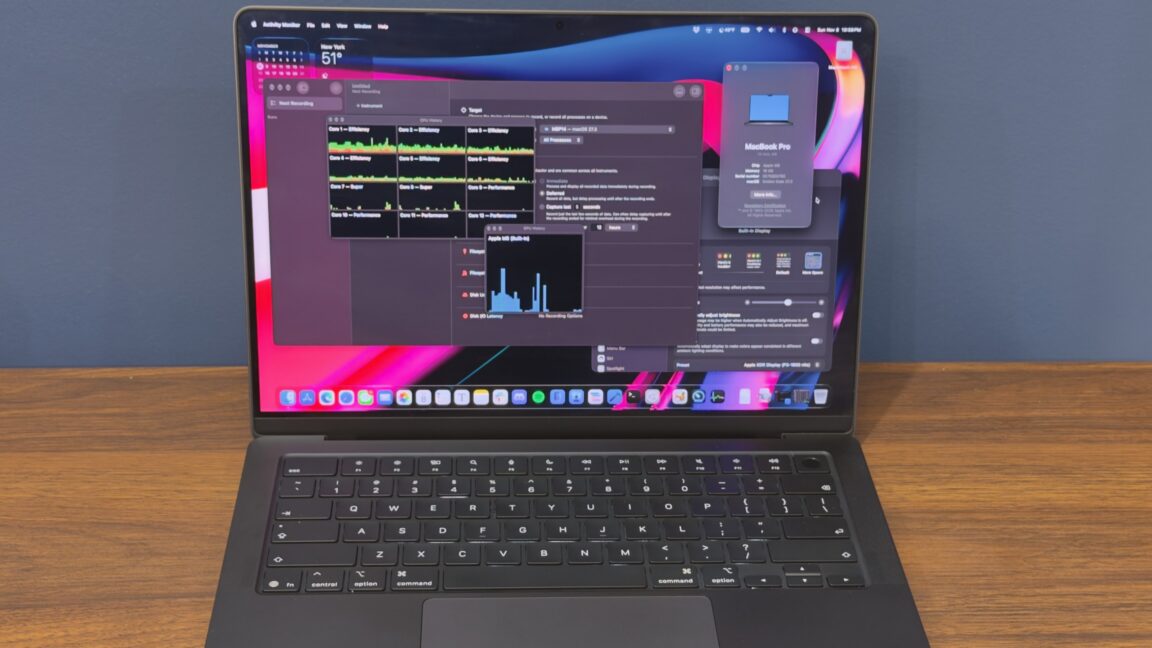
I’ve written more than once about the weird positioning of Apple’s entry-level 14-inch MacBook Pro, which has always occupied an uncomfortable perch between the MacBook Air and the higher-end MacBook Pros. The best versions of this laptop, like last year’s M5 refresh, come with the same basic design and external features of the higher-end MacBook Pros, just with a more modest processor and a lower ceiling for specs like RAM and storage.
The lesser versions stick with older designs or other compromises, reserving Apple’s most updated designs and screen technologies for the more expensive high-end models. Recall the 13-inch M1 and M2 MacBook Pros, which stuck with Apple’s 2016-era MacBook Pro designs for everything, up to and including the now-abandoned Touch Bar. (If you’re someone at Apple maintaining Touch Bar support into the 2030s for the sake of these two laptop models, I’d like to hear from you. Not for a story! I’d just like to know how you are.)
This year’s entry-level MacBook Pro mostly falls into that latter category. It does get an Apple M6 chip, and the M6 is great—rumors suggest the M6 won’t get Pro, Max, or Ultra configurations, so there are some fringe benefits here that you can’t get in the top-tier MacBook Pros. But it uses the same MacBook Pro design Apple has been using since 2021. There’s no touchscreen, no OLED panel, no Dynamic Island, no half-pound weight reduction, no glowing Apple logo on the lid.
In other words, it has very little of what makes the “PROLED XDR” MacBook Pros interesting, despite starting at an objectively very high starting price of $1,999. This is $700 more than the basic M1 MacBook Pro from 2020 and $400 more than the starting price of the M5 MacBook Pro from a year ago (though that model also got a mandatory 1TB storage upgrade and a $400 price hike when Apple raised most of its prices back in June).
That doesn’t mean there’s no constituency for the base-model MacBook Pro, which remains the cheapest way to get a 120 Hz ProMotion display or the anti-glare nano-texture display finish from one of Apple’s laptops. I just wish paying this kind of money was enough to get you Apple’s best technology.
Look and feel
There’s nothing new here compared to the M5 MacBook Pro, but just in case it’s been a few years, let’s run down the basics and go over what makes this laptop different from the MacBook Air.
Though it’s now a few years old, this iteration of the MacBook Pro design still looks and feels good, particularly with a nano-texture display installed. The laptop looks and feels (and is) thicker and heavier than either the 13- or 15-inch MacBook Air, but it also comes with more ports. In addition to the MagSafe port, a pair of Thunderbolt 4 ports, and a headphone jack on the laptop’s left side, you also get a dedicated HDMI port, another Thunderbolt 4 port, and an SD card reader on the right side.
For those who use USB-C chargers, it’s nice to be able to plug the laptop in to charge it from either side. For everyone else, it’s just nice to have more ports and need fewer dongles.
The MacBook Pro keyboard and trackpad are broadly pretty comparable to the Air’s, though if pressed, I’d say the Pro’s feels ever-so-slightly crisper and firmer to type on.
13-inch M5 MBA 14-inch M6 MBP 15-inch M5 MBA 14-inch OLED MBP Display size/tech 13.6-inch LED 14.2-inch mini-LED 15.3-inch LED 14.2-inch OLED touchscreen Display brightness 500 nits 1,000 nits (SDR), 1,600 nits (HDR) 500 nits 1,000 nits (SDR), 2,000 nits (HDR) Resolution 2560×1664, 60 Hz 3024×1964, 120 Hz 2880×1864, 60 Hz 3024×1968, 120 Hz Weight 2.7 pounds 3.4 pounds 3.3 pounds 3.0 pounds Starting price $1,299 $1,999 $1,499 $2,899
At 14.2 inches, the MacBook Pro’s screen sits between the 13.6- and 15.3-inch MacBook Air, though in practice it feels closer to the 13. And while it’s not OLED, it still comes with some notable upgrades to the Air’s regular old 60 Hz IPS laptop screens. These include a mini LED display panel with local dimming support that helps to improve contrast and lower black levels, a higher resolution than either MacBook Air display, a maximum SDR brightness of 1,000 nits and HDR brightness of up to 1,600 nits, the $150 nano-texture matte display upgrade, and, of course, the 120 Hz ProMotion refresh rate.
This is no longer a cutting-edge screen within Apple’s lineup, but it’s still very nice. It’s the biggest selling point for the basic MacBook Pro—aside from the M6, though the Air will presumably get that chip eventually, as it usually does. More on that in a bit.
But now that Apple is using OLED touchscreens in its flagship laptops, we’ll hopefully see all these models benefit from the gradual technology trickle-down that we generally see in Apple products. Just as the older iPhone eventually inherited OLED panels and ProMotion support from the iPhone Pro, I hope that in the next generation or two, we see OLED/touch come to this baseline MacBook Pro and ProMotion and/or nano-texture displays come to the MacBook Air. At least, I’d like to see those things if Apple can add them without a big price hike.
Performance and power: M6 redux
Apple’s M6 debuted in the new Mac mini a couple of months back, and it performs about the same in the M6 MacBook Pro (and in the M6 iMac) as it did there.
As a recap, the M6 is a fairly major refresh for Apple’s lowest-end chip. Both the M4 and the M5 used a mix of four high-performance CPU cores and six high-efficiency CPU cores (up from four of each in the M1/M2/M3 generations), and a maximum of 10 GPU cores (M2 and M3 also had 10, M1 maxed out at 8). And all Apple Silicon chips up until the M6 shipped with a 16-core Neural Engine NPU.
CPU S/P/E-cores GPU cores RAM options Display support (including internal) Memory bandwidth Apple M6 2S/4P/6E 12 16/24/32GB Up to three 153GB/s (16GB), 170GB/s (24GB/32GB) Apple M5 4S/6E 10 16/24/32GB Up to three 153GB/s Apple M4 4P/6E 10 16/24/32GB Up to three 120GB/s Apple M3 4P/4E 10 8/16/24GB Up to two 102.4GB/s Apple M2 4P/4E 10 8/16/24GB Up to two (one external) 102.4GB/s Apple M1 4P/4E 8 8/16GB Up to two (one external) 68.25GB/s (est.)
The M6 gets more CPU cores: two top-performance super cores, four performance cores, and six high-efficiency cores, for a total of 12. The GPU core count also increases to 12. And the Neural Engine is doubled, for a total of 32 NPU cores. RAM will still be the biggest limitation for the kinds of models that run well on an M6, but tasks that do engage the NPU should feel faster.
The RAM configurations on offer haven’t changed: 16GB is still the base, with 24GB and 32GB upgrade options. For the 16GB config, memory bandwidth is locked at 153 GB/s, the same as in the M5, but the 24GB and 32GB versions get a bump to 170 GB/s.
That brings us to our benchmark charts. The MacBook Pro review unit Apple sent ships with 16GB of RAM, down from the 24GB of RAM in the M6 Mac mini. That means the system is working with 90 percent of the memory bandwidth the Mac mini has; in practice, you mostly see this manifest as slightly lower graphics/gaming benchmarks, but they’re usually not enough to move the topline more than a couple of percentage points.
The chip is still a solid upgrade from the M5. Compared to last year’s M5 MacBook Pro, this year’s 16GB version offers around 7 percent and 15 percent better single- and multi-core CPU performance and between 20 and 30 percent better GPU performance, depending on the test.
As usual, Apple’s year-over-year performance upgrades add up when you’re jumping multiple generations at once. Compared to the M3 MacBook Pro, the M6 version offers around 30 percent better single-core CPU performance and between 40 and 60 percent faster multi-core CPU and graphics performance. So if you’re still using an M1 or M2 MacBook Air or Pro, you’re in for a sizable upgrade you should notice in day-to-day use. Compared to an M4 or M5, it will feel faster, but likely not staggeringly so.
As with the Mac mini, the basic MacBook Pro getting an M6-generation chip while the rest of the lineup sticks with the M5 means there are some specific ways in which this cheaper Mac is faster than the more expensive versions. While the M5 Pro’s higher core count definitely swamps the M6 for multi-threaded CPU work, the M6 still delivers Apple’s best single-core CPU performance, as well as the larger Neural Engine.
If and when the MacBook Air gets an M6, the MacBook Pro should still be the faster system, especially for sustained workloads. The MacBook Pro and Mac mini include active cooling fans, while the MacBook Air is fanless—the Airs have historically performed a little worse because they throttle their performance more quickly to keep temperatures in check.
Finally, a word on power usage. When I reviewed the M6 Mac mini, Apple’s built-in powermetrics tool wasn’t working with the M6 yet—it would run, but wouldn’t give any actual numbers. That’s been fixed since then, and the good news is that the power usage numbers are very boring. Under load, the M6 is faster than the M5 while consuming the same amount of power, which means it’s more power-efficient.
Pro-ish
It’s an exciting year for the MacBook Pro! Just not for this MacBook Pro.
That’s to be expected, I suppose, since this MacBook Pro tier didn’t get the 2021-era design updates until the M3 version was released in 2023. I would not be surprised if we were left waiting at least two years for an OLED touchscreen to trickle down to this laptop.
After all, the OLED MacBook Pros haven’t even fully replaced the non-OLED versions of the M5 Pro and M5 Max laptops. I’d expect the next-gen versions of those laptops to bring the OLED touchscreens down to those price points and eliminate the non-OLED versions, and then for the basic MacBook Pro to get the new screens sometime after that. But that’s assuming some kind of normal-ish technology progression, and the times are still anything but normal, mostly thanks to the ongoing RAM and storage shortages.
Tech
Photos Show Jensen Huang and Alice Huang Together Over 3 Years
It’s unclear when the duo first met, but their first public sighting together was at an after-party following Computex 2024, Taiwan’s famous annual computer and tech trade show.
NetThunder, a software company, shared a picture of Huang and Alice Huang at a bar with other technology executives in June 2024.
NetThunder shared the picture on its LinkedIn page, writing that the executives were raising their drinks to the “seemingly endless possibilities enabled through AI.”
Jensen Huang and Alice Huang were photographed together again at a dinner during an industry conference in Taipei in May 2025. This was close to Computex 2025, where Huang delivered a keynote presentation.
Footage from a local Taiwanese broadcaster showed the pair exiting San Liu Shi Fu, an upscale reservation-only restaurant in Taipei specializing in Shanghainese and Cantonese cuisine.
Local media reported that Huang has visited the restaurant multiple times.
Footage from local news outlet SETHN News Network showed Jensen Huang exiting the restaurant with to-go bags of “chao mian,” a stir-fried noodle dish, which he handed out to the crowd gathered outside.
Alice Huang, who exited the establishment with him, was seen standing in the background, waiting while Huang signed autographs for the crowd.
Alice Huang also shared a series of photos taken with Jensen Huang on WeChat, a Chinese social media platform. Hong Kong-based news agency EyePress, which is a Reuters content partner, obtained the picture from Alice Huang’s WeChat.
One photo shows the two sitting on a sculpture identified by a placard as the “Friendship Bench” made by artist John Kennedy.
Another picture obtained by EyePress showed Jensen Huang and Alice Huang together on a lawn. It’s unclear where or when the photos shared to WeChat were taken. Business Insider was unable to independently verify the authenticity of these images.
Nvidia’s stock was down more than 4% at market close on Monday following Huang’s admission of the affair. The stock had already taken a hit last week, after a widespread Democratic win in the US midterms elections caused a major tech sell-off.
In a memo to Nvidia staff on Sunday admitting to the affair, Huang apologized to his colleagues, Nvidia’s board, partners, and shareholders, saying that they deserved better from him.
Nvidia’s board has launched an independent investigation into whether its CEO was targeted by foreign intelligence. Huang said in his memo that he loves the US and Nvidia, and is “committed to protecting Nvidia and supporting America’s national security.”
Tech
China set for record trade surplus as AI boom pushes it past $1 trillion in just 10 months
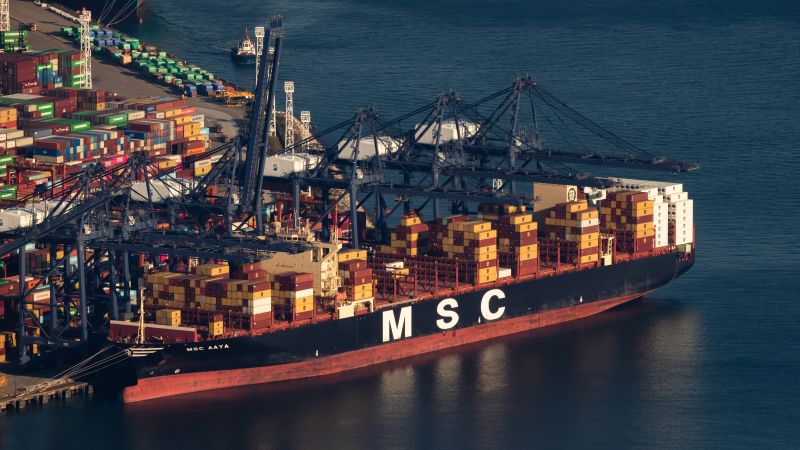
China’s trade surplus surged past $1 trillion in the first 10 months as a global race to build AI infrastructure buoyed sales of high-tech products and helped offset weak domestic demand, a dynamic likely to sharpen tensions with major trading partners.
The figures highlight Beijing’s growing reliance on overseas demand to support an economy hobbled by subdued consumption and a protracted property slump. But while the global AI investment boom is expected to keep demand for Chinese technology products strong into 2027, it risks deepening domestic imbalances and fueling trade frictions with partners including the European Union.
Exports rose sharply by 35.2% in October from the same month last year in US dollar terms, customs data showed on Tuesday, only a touch slower than the 36.3% surge in September, but ahead of economists’ forecast for an increase of 33.5%.
That helped lift China’s trade surplus to $1.04 trillion in the first 10 months, topping $1 trillion for a second consecutive year and reaching the milestone a month earlier than in 2025.
The swelling surplus could fuel further tensions with the European Union, where leaders have called for more trade curbs with China after reaching an agreement with Beijing to limit Chinese exports of hybrid vehicles to the bloc over the next few years. Because the measures have yet to take effect, factories are expected to bring forward shipments, bolstering exports in the near term.
China on Monday officially announced the extension of a trade truce with Washington due to expire on November 10 by two months, but said last week that expanding its purchases of US farm goods would hinge on the implementation of their agreed reciprocal tariff-reduction arrangement.
“The risk of additional tariffs and other trade barriers will remain elevated in 2027, particularly as Chinese manufacturers continue expanding their presence in overseas markets,” said Joe Peissel, lead macroeconomist at Trivium China.
Imports grew 41.6%, beating the median forecast for a 32% increase in the Reuters poll and accelerating from the 31% growth in September.
The Asia-Pacific Economic Cooperation summit will take place next week in the southern Chinese tech and innovation hub Shenzhen, where Chinese President Xi Jinping and US President Donald Trump are expected to meet for the third time so far this year.
Headwinds and uncertainties
One big worry for Beijing is that consumers remain reluctant to spend, constrained by a property market downturn that has battered household wealth and dented confidence in the economic outlook.
Sluggish demand at home has pushed Chinese automakers to seek sales in overseas markets. China’s car exports maintained a solid pace of growth in October, while domestic vehicle sales recorded a 12th straight month of declines, separate data released by an industry association showed.
Greater reliance on exports, however, leaves China’s economy increasingly exposed to any slowdown in global demand.
Much of the strength in exports this year has been fueled by a global push to expand AI infrastructure.
“The outlook for exports depends on how long the AI boom will last,” Macquarie analysts wrote. They expect China’s exports to accelerate further in the fourth quarter before starting to slow from the first quarter of 2027.
Tech
Earth is surrounded by millions of pieces of space junk and the problem is getting worse
A traffic jam is growing around Earth, but most of the debris is too small to see or track.
Scientists estimate that more than 230 million pieces of space debris measuring between 1 millimeter and 1 centimeter are circling the planet, along with another 1.5 million larger fragments. Traveling at orbital speeds that can exceed 17,000 mph, even relatively small pieces can seriously damage a functioning satellite.
And the problem could keep getting worse, even if we stopped launching spacecraft.
As companies explore putting artificial intelligence data centers in space and expand satellite networks, researchers warn that collisions could create more debris, setting off a chain reaction that makes parts of Earth’s orbit increasingly dangerous to use.
Now, a new British mission aims to send a robotic spacecraft into orbit to remove dead satellites, while researchers at North Carolina State University are exploring an unexpectedly simple way to encourage cleanup: a deposit system similar to those used for returnable bottles.
A growing junkyard above Earth
NASA visualizations show thousands of objects surrounding the planet, including discarded rocket components, defunct satellites and fragments from previous collisions.
In one NASA visualization showing tracked objects as of Jan. 1, 2019, approximately 95% represented orbital debris rather than functioning satellites.
The dots are enlarged to make them visible and do not represent the actual size of objects in orbit. The visualization also excludes the vast majority of smaller fragments that cannot be individually tracked.
The European Space Agency’s latest statistics, updated Nov. 2, 2026, estimate:
230 million debris objects measuring between 1 millimeter and 1 centimeter.
1.5 million debris objects measuring between 1 and 10 centimeters.
About 68,450 objects larger than 10 centimeters, including active spacecraft.
Roughly 19,610 satellites still in orbit, including approximately 15,800 functioning satellites.
That means thousands of satellites are no longer operating, while millions of fragments from rockets, spacecraft and previous breakups continue circling Earth.
“The risk with space is we don’t have cleanup crews, right?” said Mark Moretto, an assistant professor of mechanical and aerospace engineering at NC State.
Moretto studies the long-term sustainability of Earth’s orbit, including how collisions and cleanup efforts could affect future space operations.
He said debris can be especially dangerous when it is too small to track but still large enough to disable an active spacecraft.
A collision between two large objects can generate thousands of additional fragments, increasing the number of hazards for other satellites.
Scientists call the potential cascading process Kessler syndrome.
In a September 2026 analysis, the European Space Agency warned that the debris population could continue growing through collisions even if no additional satellites were launched. Over time, some orbital regions could become increasingly unsafe or potentially unusable.
The consequences extend well beyond space exploration. Satellites support GPS navigation, weather forecasting, communications and other services people use every day.
The problem is already affecting astronomy
At Duke University, assistant research professor of physics Arun Kannawadi is seeing another consequence of growing satellite traffic.
As an observational astronomer, Kannawadi studies stars and galaxies using telescope images. But satellites passing overhead can reflect sunlight, leaving bright streaks across the observations.
Scientists can digitally remove those streaks, but doing so also removes information from the affected portions of an image.
“Every time we have to mask them, we lose some some precious data that we are taking,” Kannawadi said.
He worries that as more satellites enter orbit, astronomers could miss rare discoveries hidden behind those streaks.
The issue is particularly concerning as companies propose much larger orbital infrastructure, including computing facilities designed to process artificial intelligence workloads in space.
Those projects could increase the number and size of spacecraft operating above Earth, raising additional questions about collision avoidance, light pollution and how the equipment would eventually be removed.
SpaceX acknowledges growing collision risks
SpaceX, which operates the world’s largest satellite constellation through Starlink, has publicly acknowledged that increasing orbital traffic requires stronger safety measures and coordination among satellite operators.
In an Oct. 6 update, the company reported operating more than 11,000 Starlink satellites in low Earth orbit. It also described plans that could eventually include up to 100,000 Starlink satellites and as many as 1 million satellites dedicated to orbital AI computing.
Those are company plans, not spacecraft already deployed.
SpaceX has called for operators to share more accurate satellite location and trajectory information to reduce the risk of collisions.
The company has developed automated collision-avoidance systems and a space-tracking network called Stargaze. It also says its satellites are designed to operate at relatively low altitudes, where atmospheric drag can eventually pull failed spacecraft back toward Earth.
In previous statements about space sustainability, SpaceX said it proactively removes satellites at risk of becoming unable to maneuver, even when that means retiring otherwise functioning spacecraft.
But the company’s expanding constellation illustrates a broader challenge: Keeping satellites from colliding becomes more complicated as more operators place spacecraft in orbit.
And avoiding collisions does not remove the millions of fragments already there.
A robotic cleanup mission aims to tackle the problem
In October, the U.K. Space Agency announced a £61 million contract with ClearSpace to develop a spacecraft capable of capturing two dead satellites and removing them from orbit.
The mission is scheduled to launch in 2029, with the goal of removing both satellites by 2032.
Using robotic claws, the spacecraft would approach satellites that were never designed to be captured, secure them and guide them toward reentry into Earth’s atmosphere, where they would burn up.
The technology could eventually help remove larger abandoned spacecraft and rocket components that pose significant collision risks.
Moretto said those large objects are particularly important because they can generate enormous amounts of additional debris if they collide or break apart.
Removing two satellites will not substantially reduce the overall debris population. Instead, the mission is intended to demonstrate technology that could make future cleanup operations possible.
The U.K. government also envisions developing spacecraft that can be refueled and reused for future servicing and removal missions.
But the mission raises another challenge: Removing spacecraft from orbit does not necessarily eliminate their environmental footprint.
Where does space junk go when it comes back down?
For many satellites operating in low Earth orbit, the most common disposal method is to let them descend into Earth’s atmosphere, where frictional heating during reentry causes much of the spacecraft to burn up.
The process reduces the amount of debris left in orbit, but it also introduces materials into the upper atmosphere.
Satellites contain metals, including aluminum, that can form particles such as aluminum oxide as they burn up.
Scientists are investigating whether increasing amounts of those materials could affect atmospheric chemistry, including processes involving the ozone layer.
Moretto said Earth naturally encounters material from meteoroids every day, but the composition of human-made spacecraft is different.
That makes the potential environmental consequences an open research question.
Engineers are also exploring ways to design satellites so their materials break apart and burn up in less environmentally disruptive ways.
The trade-off underscores the complexity of space sustainability: Removing debris from orbit can reduce collision risks, but the environmental consequences of disposal also need to be understood.
Could the solution be as simple as a bottle deposit?
Moretto’s research at NC State explores a different approach to the problem: giving satellite operators a financial incentive to remove their spacecraft when they reach the end of their useful lives.
The concept resembles a bottle deposit program.
A company would pay a deposit when launching a satellite and receive that money back after successfully removing it from orbit.
Moretto said a recent study he participated in found that even relatively limited participation could produce meaningful improvements in long-term orbital sustainability.
The researchers modeled a system in which just 20% of satellites participated in the deposit program.
The findings suggest financial incentives could complement regulations and robotic cleanup missions, encouraging companies to plan for disposal before their satellites ever leave Earth.
Moretto also studies the economics of active debris removal through NASA-funded research, examining how cleanup efforts could influence the future satellite population.
The immediate financial benefits of removing a single object are not always obvious, he said, but preventing collisions could help preserve access to valuable orbital regions over the long term.
The challenge is determining who should pay, how international operators would participate and how to enforce responsibility in an environment shared by countries and private companies.
With more satellites being launched and new industries looking to expand into orbit, researchers say those questions are becoming increasingly urgent.
The technology to launch spacecraft has advanced rapidly. Finding ways to prevent them from becoming permanent hazards may be just as important to the future of space.


The outstanding ballots that could decide the Mississippi Senate race
Tuesday is the deadline for voters in Mississippi to provide updated documentation if they had to cast provisional ballots on...


The David Walliams allegations | BBC Newscast
Today, David Walliams has been named as the 'well-known celebrity' who was fighting in the courts to block the publication...


Hegseth, Massie trade barbs over impeachment articles
Defense Secretary Pete Hegseth described the effort to impeach him as “a political spectacle,” after GOP Rep. Thomas Massie …


Bernie Sanders says he won’t back Sen. Schumer for Democratic leader
Sen. Bernie Sanders, an independent who caucuses with Democrats, and Democratic Sen. Elissa Slotkin said they won't back …


Will Jeffrey Epstein's associates be brought to justice under Democrats? | Global News Podcast
WARNING: This video includes refrences to sexual violence, which may be disturbing to some viewers. A BBC investigation has …


Mitchell Robertson Cast as Purported Gay Lover
A planned biopic focusing on James Dean‘s personal life has found its co-lead. Mitchell Robertson, the Scottish actor known for...
They had jobs, homes and cars. Now they’re in line at the food bank
For years, Dave Poniatowski had no trouble managing his household budget. Then came a devastating triple whammy: two years without...


This bull and donkey are a same-sex couple
In an unusual pairing, this donkey and bull have struck up a same-sex relationship and researchers are trying to figure...


Rep Jordan elected House GOP leader: What to expect
House Republicans on Tuesday picked Rep. Jim Jordan — the famously pugnacious pro-Trump fighter — to lead their party in...


First snow and cold blast to bring an early taste of winter to the East
A late-week storm could bring snow to higher elevations in the Northeast before cold air plunges deep into the South.
-

 Entertainment2 weeks ago
‘Baywatch’ Star Erika Eleniak on Track to Hit $1 Million in 1st Year on OnlyFans
-
HealthNews2 weeks ago
The Most Powerful Obesity Drug Yet Has a Hidden Benefit-and It Happens While You Sleep
-

 Business2 weeks ago
Dollar General overcharged millions at checkout for years, FTC and 20 states allege
-

 Business2 weeks ago
In China, the AI bubble has already burst
-

 Entertainment2 weeks ago
Inside Matthew Perry’s ‘struggle’ ahead of the 2021 ‘Friends’ reunion
-
Entertainment2 weeks ago
I’m a Bus Driver at Walt Disney World at 51 Years Old; Great Benefits
-

 Entertainment2 weeks ago
Taylor Swift, Travis Kelce wedding props deemed too expensive, dangerous revealed
-

 HealthNews2 weeks ago
Comfort food may be exposing you to over 1,000 microplastic particles a week