
Entertainment
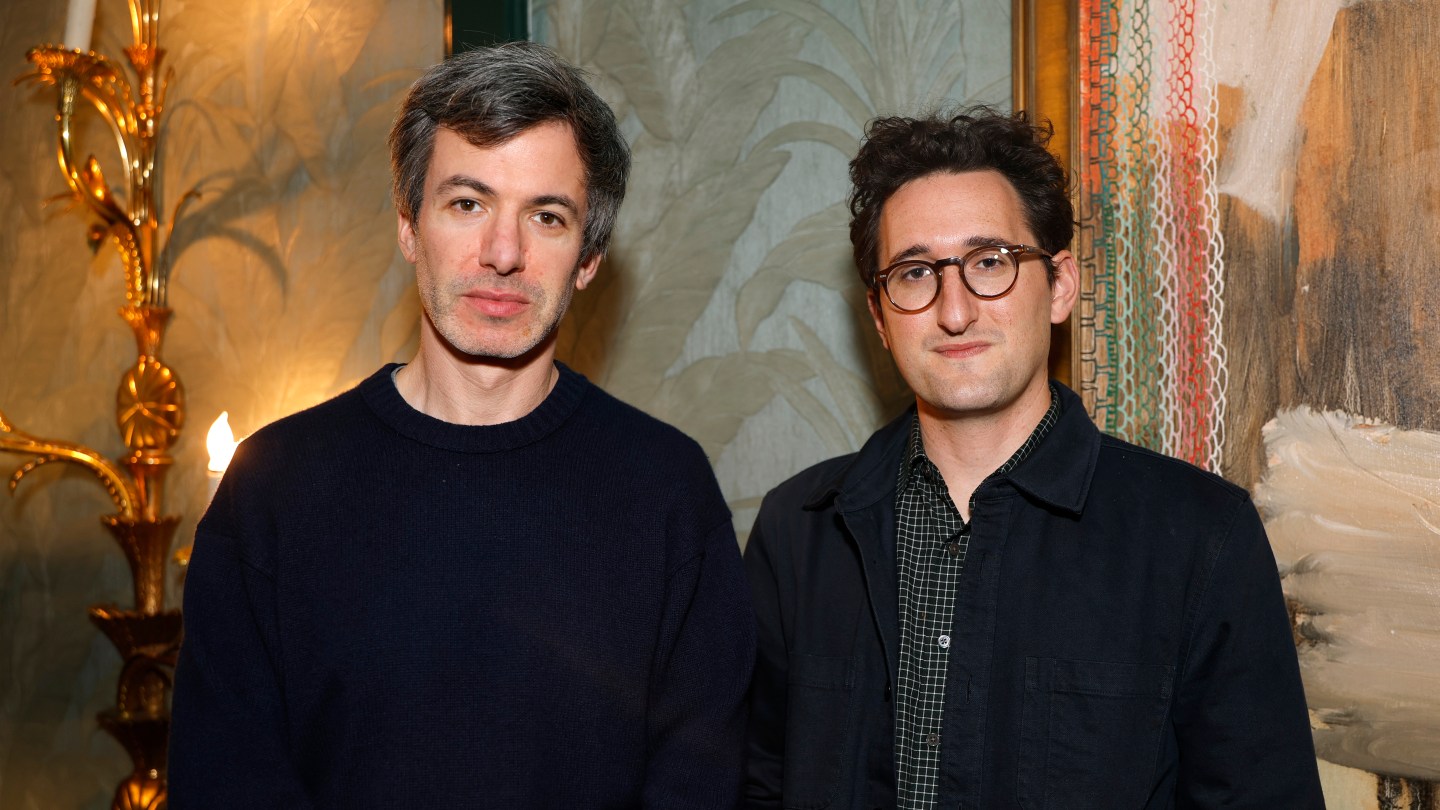
Nathan Fielder, Lance Oppenheim on Its Twists
[This story contains spoilers for You Can See Everything.]
Less than two months ago, the world did not know the existence of You Can See Everything. In the time since, the A24 production has opened as one of the most successful documentaries of all time at the North American box office and made a strong case to become the first documentary to ever be nominated for the best picture Oscar. The three-hour film, helmed by Nathan Fielder (The Rehearsal) and Lance Oppenheim (Primetime), has captured the zeitgeist in its combination of extensive, intimate access to its subjects; its newsmaking revelations; and its audacious formal choices, from the dynamic cinematography to the structural twist that defines the movie’s back half.
It’s also been a product of true discovery for audiences: Ever since its secret screening at the Telluride Film Festival over Labor Day weekend, You Can See Everything has generated deafening buzz while keeping its biggest surprises hidden.
Viewers went into cinemas likely knowing that the film would depict the final month of Elizabeth Holmes’ life with her husband, Billy Evans, and their children, before the start of her 11-plus-year prison sentence for fraud. But the surreal nature of Holmes and Evans’ dynamic, both with each other and with Fielder (who appears on camera), could hardly have been anticipated. Ditto the final act’s flash-forward that finds Fielder and Oppenheim’s access to Holmes, now incarcerated, slipping away — leading to the introduction of Amanda Seyfried, who won an Emmy for her portrayal of Holmes in Hulu’s The Dropout, to help them complete the film and re-enact key scenes and conversations from the time spent together.
In one of their first public Q&As since You Can See Everything’s theatrical release, Fielder and Oppenheim joined yours truly at the SCAD Savannah Film Festival for a wide-ranging conversation reflecting on those big surprises — while still clearly processing the years-long saga of making a film deep in the bubble of a “real-life human optical illusion.”
You guys had a seven-person crew moving into their household. How did you think about the way you were going to shoot this and capture this? I know whether Nathan would even be on camera was a conversation, too.
LANCE OPPENHEIM When we first started this, we didn’t think Nathan was going to be on camera. It was Elizabeth and Billy: When we were filming in the early days, they kept asking questions of Nathan. It almost felt like they wanted him to gravitate from behind the camera, in front of it. So it happened sort of organically. One of our operators, Jonathan Mitchell, who’s worked with Nathan for a long time, just panned the camera to Nathan, and I was watching on the monitor. I actually thought maybe this could be useful, in a way — if Nathan was becoming this accidental investigator of these everyday moments, he could try and pull Elizabeth from whatever version of reality she was living in and try and pull her back into the one that we were in.
The first stint of it was seven people. I usually shoot with one camera, with David [Bolen], and on this, it didn’t work at all because we kept missing these moments, especially when Nathan would ask a question — if we were panning from Nathan to Billy or Elizabeth, we would lose the first nonverbal reaction of what happens on somebody’s face when a question is posed. Nathan was like, “That’s unacceptable.” No, he wasn’t saying that. (Laughs.) But he was like, “We’ve got to get that stuff.”
NATHAN FIELDER For something like this, where you’re evaluating honesty and sincerity on someone’s face, their response even before they answer me is so important, in terms of trying to gauge if someone’s honest or not, or just what’s going on with them. … Because they would move around the house, it was a process of trying to continuously incorporate the things we were missing. We needed to pull the cameras back more, and we only had two operators for three cameras in that house; it was only two to three people maximum besides me and Lance in that house at any given time. We had the wide [shot] that would cover the whole house, and then we had these zoom lenses that could also go wide, so that we could cover anything that was happening and [we] could zoom into a tight [shot] from really far away.
Then what started happening is, before we were even rolling, they’d start talking to us. They’d try to catch us off camera and be like, “OK, this is what we’re doing today,” or, “Do you want to film this?” We thought, “Well, this is relevant because if they want something filmed, then that’s their idea of what’s going on.” We were like, “We need those process conversations.” We started coming in before they even woke up because they didn’t lock the door of their house, and we’d set up the cameras wide to cover the whole thing. You see it in the film when Billy’s like, “We’re going to the gym,” or whatever. It’s a totally different scene if you know he thinks that’s something that would be important for this documentary — to film him at the gym — as opposed to it coming from us.
OPPENHEIM Ironically for us, what felt new to us in some ways was embracing the oldest tenets of documentary filmmaking — like vérité film. As we were responding to the situation where we had less and less access to Elizabeth, that led us to embracing other modes of filmmaking, like a director on camera or even where we go later on with the re-enactments. It’s amazing seeing the way people are talking about the movie, saying it’s this new formal thing, but I’m like, “Oh no, this is actually the oldest. We’re channeling all of the different ways that documentaries have been made.” Ultimately, we’re doing that because we’re dealing with a real-life human optical illusion. That’s who she is.
You’ve mentioned some healthy disagreements between the two of you, just about what was happening and how you were interpreting it. Let’s take the “who’s on first” scene as an example: Nathan, what it was like to be there for a bizarre moment like that, and how would you two then talk about it in terms of how it would inform the movie? And how do you reflect on them now?
FIELDER There were so many things that we were tracking all at once. Sometimes these little moments would sit in your mind for a bit, but we were there constantly for a month, so some we would sort of forget about — and then be reminded when we reviewed the footage in the edit. That “who’s on first” moment, everyone was like, “What was that?” We knew these moments that we couldn’t make sense of were interesting because we would talk about them a lot. It’s hard because you’re just there and you’re observing and you can’t cultivate anything. You can’t make anything happen. You’re just documenting.
OPPENHEIM There are also so many moments in this where Nathan would be like, “I think you’re guilty. Why are we here? Do you want us to leave?” And they’d be like, “No, no, stay.”
FIELDER I didn’t say that in the same sentence, hold on. (Laughs.) I did not say, “I think you’re guilty. Do you want us to leave?” I said it very early on to her; I laid out so she knew how I felt. But yeah, we were conscious that this was a mother’s last month with her children. If tensions would ever run high and we sensed that our presence wasn’t wanted, I’d say, “Look, if you guys are regretting this decision, we’ll pull the plug. We’ll go.” It wasn’t a thing where we were saying, “You have to do this,” or trying to convince them to be a part of this.
OPPENHEIM It was the opposite.
FIELDER We always were saying, “We will leave anytime.” And they were very much like, “No.”
OPPENHEIM “Stay. Stay for this.”
FIELDER That was part of the mindfuck of it all. Sorry for swearing. I don’t normally swear in professional settings or even private ones a lot of times.
OPPENHEIM Before we started shooting, Billy showed us a video — because he would sometimes video things on his phone, like just of him and Elizabeth on a couch. He’d be like, “Look at this moment.” It’d be a video of Elizabeth crying, and he’s like, “We just watched Pride and Prejudice. This is so good.” I’m just like, “Are these the type of moments that you are interested in having us show? What do you want us to see? What is the object of your guys’ inquiry with this?”
FIELDER Why us? Why are we there? I mean, I like myself enough, but I would not want me there for my last month of freedom, if that makes sense. What was also weird about it is we felt like there was some game going on that even we couldn’t make sense of, but we were like, “Well, let’s just go along with this and see what comes out, I guess.”
Do you feel like you have any more clarity on that now?
FIELDER Fuck no.
OPPENHEIM Seeing it with audiences is always really different for me. I feel like I end up having a completely different reaction to the movie. It’s like it’s this evolving Rorschach test. But I do feel like we witnessed something. We saw a pattern of behavior emerge over the time we had. Other documentaries I’ve made, I’ve spent a lot of time with people — years — but sometimes you don’t really notice as much of a change. It felt like there were things that were going on, and there are times where I watch this movie and I feel like the behavior is totally unconscious and she’s not aware of it. And there are times where I’m like, “No, she’s totally aware of it.” It’s hard to operate fully in the world of binaries. It’s somewhere in between, somewhere deep, lost in the void or something.
FIELDER This is an interesting time because there are a lot of reactions to this, and I have time to look at some stuff. There is this phenomenon that happens that is related to proximity. When you’re in their bubble, you’re in a different mindset than when you step out of it and you’re in the world of everyone else. We weren’t talking to anyone about this project; no one had seen it, we were just talking amongst ourselves for so long. And now the conversation is so all over the world, I’m gleaning new things from just hearing what other people are saying. Also, it does feel like people bring to this a lot that’s inside them. It’s not just what’s on the screen, or else everyone would have a consensus. There’s something coming from people, individuals, and it’s hard sometimes for me to separate that from what we’re objectively looking at.
We should talk a little bit about the back half of the movie, as you were losing access to Elizabeth but decided to continue telling the story. How did you decide on the shape of it, and how did you know when to end it?
OPPENHEIM We both were interested in seeing what was going to happen with the business. Nathan said to Billy, “Let us know when you have something you can show us,” and he’s like, “I’ll have it in 365 days.” It turned out to be two years instead of when he had initially suggested it would happen. But then it felt like once we were out of the bubble of San Diego and we were seeing Billy work on the thing, there were these questions that kept coming up for us. We wanted to go to even more people. We reached out, but so many people we tried to talk to that were out of the bubble didn’t want to talk to us because they thought that Elizabeth was this toxic personality. So that led us to [Amanda Seyfried].
FIELDER When we watched everything and put together that first half, even though something felt complete with her going to prison, the picture didn’t feel complete because we were still having conversations where we were trying to make sense of it that were being informed by other stuff that happened off camera. We didn’t know where we were going to go. And like Lance said, we reached out to a bunch of people and then when we reached out to Amanda, she was like, “Come over, bring cameras.”
OPPENHEIM We didn’t know Amanda before this.
FIELDER And when we eventually realized we had something complete, that was just a decision that was made in the edit. We felt like there was enough, or the conversations that were being informed by things that the audience wouldn’t have been privy to were now part of the film. Once we felt like you guys had all the information basically that we had, it felt like, “OK, this is sort of as far as we can go with it.” We didn’t even know if it felt complete. It just felt like the end of the road for this, a little bit.
Entertainment
Hayden Panettiere’s manner of death revealed as officials conclude case

Officials in South Carolina announced Wednesday that an investigation found Hayden Panettiere’s Aug. 16 death to be accidental and the case is now closed.
“Based on the Medical Examiner’s determination and the findings of the investigation, Hayden Panettiere’s death has been ruled accidental,” officials in Greenville, S.C., said.
Paramedics and police found Panettiere in cardiac arrest, according to the coroner’s office. Dispatch audio recordings from Broadcastify.com reference a possible overdose and CPR in progress. Narcan was reportedly administered, and paramedics tried to resuscitate her. She was declared dead at 2:31 p.m.
Federal authorities probing the death of Panettiere are focusing their investigation in Los Angeles and looking into whether the actor procured nonprescription pills from an area dealer.
Drug Enforcement Administration agents and local investigators have questioned several people about the circumstances of her death.
Such counterfeit pills have repeatedly been found laced with fentanyl, which can be deadly when taken in small amounts.
Panettiere starred on “Nashville” (2012-18) and, before that, “Heroes” (2006-10). Her early work as a child actor included roles in the 1990s on the soap operas “One Life to Live” and “Guiding Light.” She was a model and a singer, having released several singles.
Panettiere also starred in the “Scream” horror movie franchise as well as in hits “I Love You, Beth Cooper” and “Remember the Titans.”
She gained widespread attention with “Heroes,” in which she played a cheerleader with superpowers.
Entertainment
Sunrise on the Reaping’ First Reactions Praise Prequel
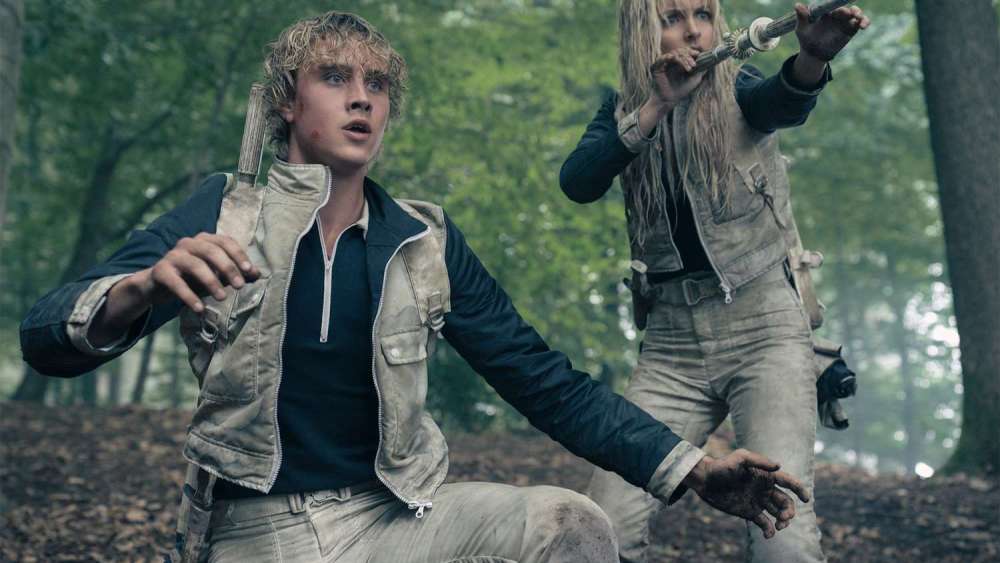
“The Hunger Games: Sunrise on the Reaping” has officially premiered, and members of the film press are already calling the sixth installment a “perfect adaptation” that breathes “new life” into the franchise. “Sunrise on the Reaping” is the second “Hunger Games” prequel movie following 2023’s “The Ballad of Songbirds & Snakes.”
Film critic Griffin Schiller hailed the movie as the “Rogue One” and “Andor” of “The Hunger Games” franchise, adding: “It’s [a] sobering, yet powerful story of devastating loss and the necessary cost of rebellion for a sunrise we may never see. As a massive fan of the series and especially this book, I couldn’t have asked for a more perfect adaptation.”
Filmhounds Magazine editor-in-chief and Tomatometer critic Gavin Spoors praised the film’s third act as “stellar,” writing that it “pulls the rug out underneath you.” “Anchored by terrific performances (Zada is a star), this emotional thriller nails the themes of the cost of revolution and how we all need to play our part,” he wrote on X.
Matt Neglia, Next Best Picture editor-in-chief, wrote that the film “features some of the best casting of the year” in his review. “Many of the actors breathe new life into familiar characters, making them their own, while preserving the qualities that made them so compelling in the first place,” he continued. “Glenn Close, with her horror-inducing face, is a scene-stealer as is Jesse Plemons embodying the spirit of the late great Philip Seymour Hoffman. Joseph Zada is beyond impressive in a highly demanding role that pushes him to the limit physically and emotionally, perfectly capturing the essence of Haymitch with all the sympathy, charm and bitterness Woody Harrelson brought to the role. I’m continually blown away by how Francis Lawrence continues to find more layers in this familiar structure thematically and stylistically as the production and costume design continue to be dazzling highlights. If this is to be the end of his time working on these movies, it’s a good way to go out as this latest installment brings the franchise full circle with the character that’s always been the beating heart at its center.”
“The rebellion is sparking with SUNRISE ON THE REAPING,” wrote fellow Next Best Picture editor Lauren LaMagna. “Francis Lawrence continues to breathe new life into this world. The unique production design doesn’t let familiar beats get too dull. Joseph Zada is heartbreakingly radiant as Haymitch. A star is born role.”
“One of the biggest highlights? Joseph Zada,” wrote Collider’s Perri Nemiroff. “I had high hopes for him after watching We Were Liars, but he had my jaw on the floor time and time again during Sunrise on the Reaping. His ability to capture Haymitch’s warmth and charm and then weave that into the rage and heartbreak the Hunger Games sparks is superb. SO much of this movie is on his shoulders, and he soars tackling every ounce of it. This is only the beginning for Zada.”
She continued: “Ballad of Songbirds and Snakes bolstered my rewatches of the original films, and I have no doubt the same will be true of Sunrise on the Reaping. Sparking real change can take time and demand great sacrifice. This film franchise is better off for having added Haymitch’s.”
Static Media writer Nina Starner also championed Zada’s casting, saying that it “couldn’t be better.” “The Hunger Games: Sunrise on the Reaping is a worthy addition to the franchise,” she wrote. “It looks and feels terrifyingly real, and it bridges the gap perfectly between the original stories and Ballad. A from me.”
Based on Suzanne Collins’ 2025 novel “Sunrise on the Reaping,” the latest “Hunger Games” movie centers on a young Haymitch (Zada, taking over the role from Woody Harrelson) as he fights to survive while competing in the 50th Hunger Games. The cast also features Jesse Plemons as Plutarch, Ralph Fiennes as President Snow, Kieran Culkin as Caesar Flickerman, Elle Fanning as Effie Trinket, Maya Hawke as Wiress and Kelvin Harrison Jr. as Beetee. New characters in the film franchise are played by the likes of Mckenna Grace, Glenn Close and Whitney Peak, among others.
“Sunrise on the Reaping” takes place 24 years before the start of the first “Hunger Games” movie. Frances Lawrence, who has directed every “Hunger Games” movie except for the first installment (that was Gary Ross), returns to helm the latest prequel movie.
Much of the buzz surrounding “Sunrise on the Reaping” has been related to the franchise returns of Jennifer Lawrence, Josh Hutcherson and Harrelson as Katniss, Peeta and Haymitch. Book readers know that Suzanne Collins’ novel ends with a flash-forward epilogue featuring the trio, so it appears the film adaptation is following suit.
“It was unbelievable,” Lawrence said on the “Call Her Daddy” podcast about reprising Katniss. “It was so crazy. It was the same crew. It was the same AD, who I’ve worked with a million times because I love him. And with Josh [Hutcherson] and Woody [Harrelson] … it was so emotional. Josh and I didn’t walk to the bathroom without our arms around each other. It was so beautiful.”
“The Hunger Games: Sunrise on the Reaping” is set to open in theaters Nov. 20 from Lionsgate. Check out first reactions to the movie below.
Entertainment
‘Smile 3’ Sets New Director and Writer to Take Over Franchise
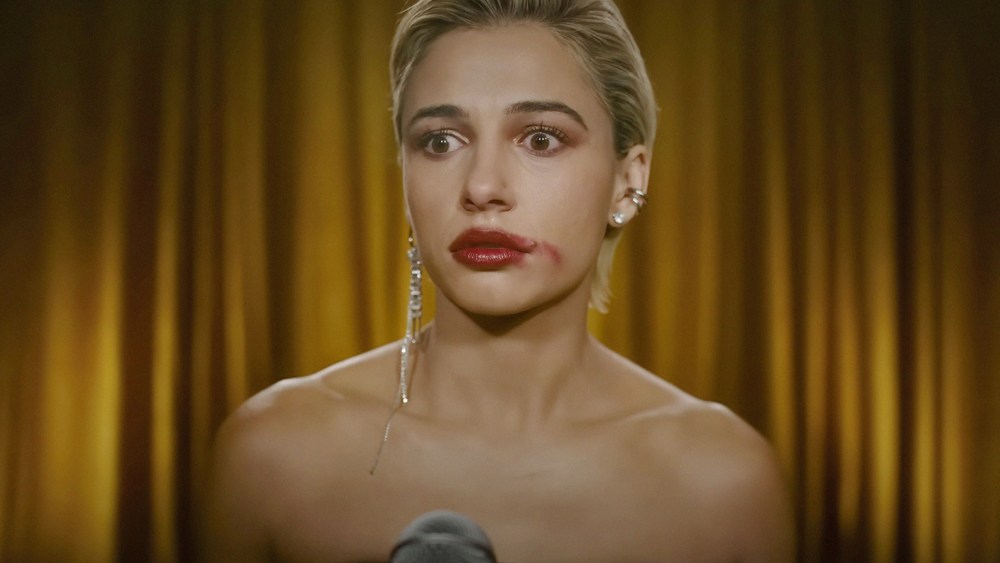
Put on a happy face, because “Smile 3” is officially in the works.
Paramount has hired David Bruckner to direct and Nick Antosca to write the screenplay. They’re taking over for Parker Finn, who created the series and will remain involved as a producer alongside Temple Hill. (Finn pitched the framework for the third installment.) Jonathan Fass will executive produce.
Bruckner’s credits include the 2022 “Hellraiser” reboot, 2017’s psychological thriller “The Ritual” and 2020’s supernatural horror film “The Night House.” Bruckner is particularly in demand as of late: he’s currently writing and developing a reboot of the sci-fi horror classic, “The Blob,” for Warner Bros., as well as Universal’s adaptation of “The Caretaker,” starring Sydney Sweeney, plus he’s set to direct “Mice” for A24.
Antosca is best known for creating Apple’s miniseries “Cape Fear” and co-creating Hulu’s “The Act,” as well as writing 2021’s “Antlers” and the most recent Colleen Hoover adaptation “Verity.”
Plot details for the third “Smile” movie haven’t been revealed. The first film stars Sosie Bacon as a therapist who becomes haunted by hallucinations after witnessing a patient die. In the second, Naomi Scott plays a pop singer who begins to experience a series of disturbing events as she embarks on tour. Since each “Smile” movie has functioned as a standalone sequel, with a separate story and new stars, it’s unclear who will appear in the threequel.
Finn wrote and directed 2022’s “Smile” and the 2024 sequel “Smile 2.” The original film — commissioned for streaming before pivoting to a theatrical release — became a sleeper hit, with $105 million domestically and $217 million globally. The follow-up wasn’t quite as big at the box office but became a commercial win, with $69 million domestically and $139 million globally against a modest $28 million budget. In total, the franchise has earned more than $350 million worldwide.
Although Finn isn’t spearheading “Smile 3,” he’s still working closely with Paramount, having signed a first-look deal with the studio after the first “Smile” became a theatrical success. Finn is directing a remake of the 1981 supernatural thriller “Possession,” starring Callum Turner and Margaret Qualley and set for June 11, 2027.
Entertainment
Barbara Barrie, Oscar-nominated ‘Barney Miller’ actress, dead at 95
NEWYou can now listen to Fox News articles!
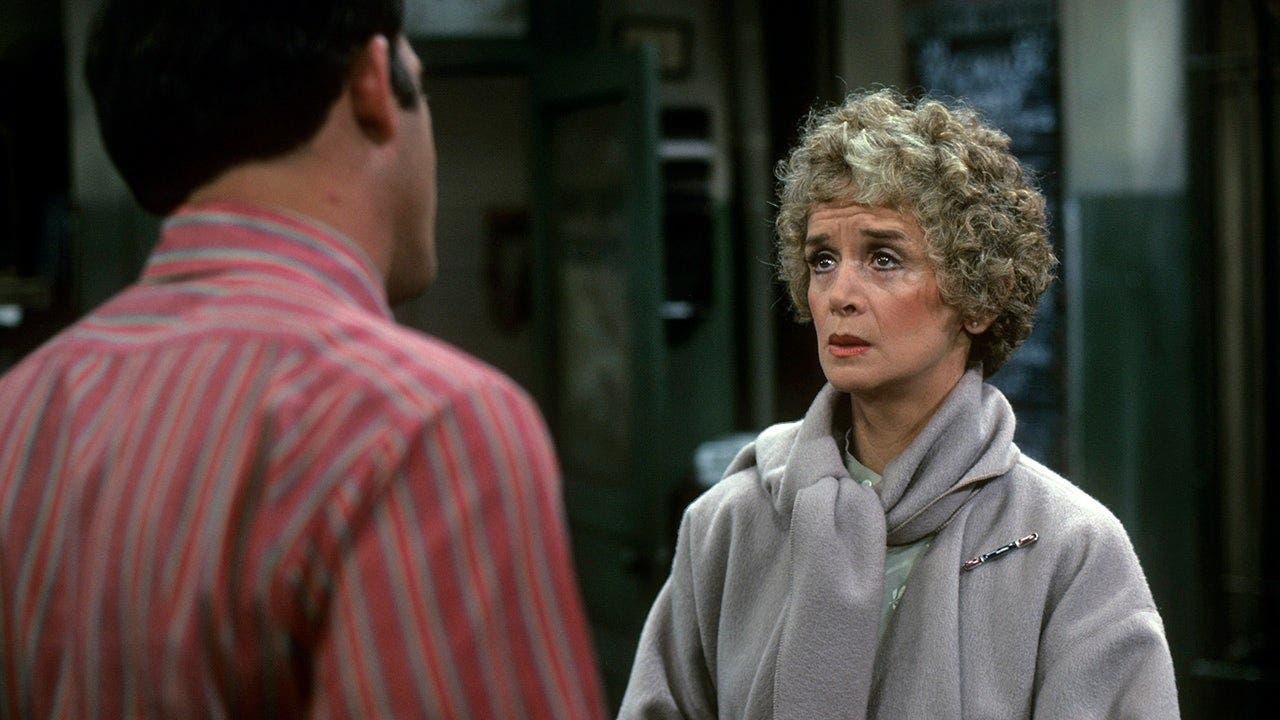
Barbara Barrie has died at age 95 after a terminal cancer diagnosis, according to a report.
The “Barney Miller” actress’s death at her home in New York City was medically assisted, her daughter told The New York Times.
The Oscar-nominated actress’s TV and film career spanned multiple decades from the 1950s until last year.
EVA MARIE SAINT, OSCAR-WINNING ‘ON THE WATERFRONT’ AND ‘NORTH BY NORTHWEST’ STAR, DEAD AT 102
Barrie was known for her small screen roles as Barney Miller’s wife on “Barney Miller,” a police series that ran from 1975 to 1982, and as Brooke Shields’ grandmother on “Suddenly Susan.”
She was nominated for an Academy Award for 1979’s “Breaking Away,” and she won best actress at the Cannes Film Festival for 1964’s “One Potato, Two Potato.”
She lost to Meryl Streep for “Kramer vs. Kramer” at the Oscars.
GET ENTERTAINMENT SCOOP DELIVERED RIGHT TO YOUR EMAIL BY CLICKING HERE
She also played Goldie Hawn’s mother in 1980’s “Private Benjamin.”
Barrie was also a prolific Broadway actress who was nominated for a Tony for her performance in the original 1970 cast of Stephen Sondheim’s “Company.”
LIKE WHAT YOU’RE READING? CLICK HERE FOR MORE ENTERTAINMENT NEWS
The 95-year-old made her Broadway debut in “The Wooden Dish” in 1955 after she moved to New York when she graduated from college in Texas, telling the Akron Beacon Journal in 1963 that she only went there because of a man.
PUT YOUR ENTERTAINMENT KNOWLEDGE TO THE TEST AND SEE HOW YOU SCORE
“To tell you the truth, the only reason I went was because I had a boyfriend who was living there. We were supposed to get married but couldn’t right away,” she said. “Since I had gone to all the trouble of moving to New York, I figured I might as well try to act.”
CLICK HERE TO DOWNLOAD THE FOX NEWS APP
Entertainment
Alexander Payne Hit With Copyright Suit Over ‘The Holdovers’ Script
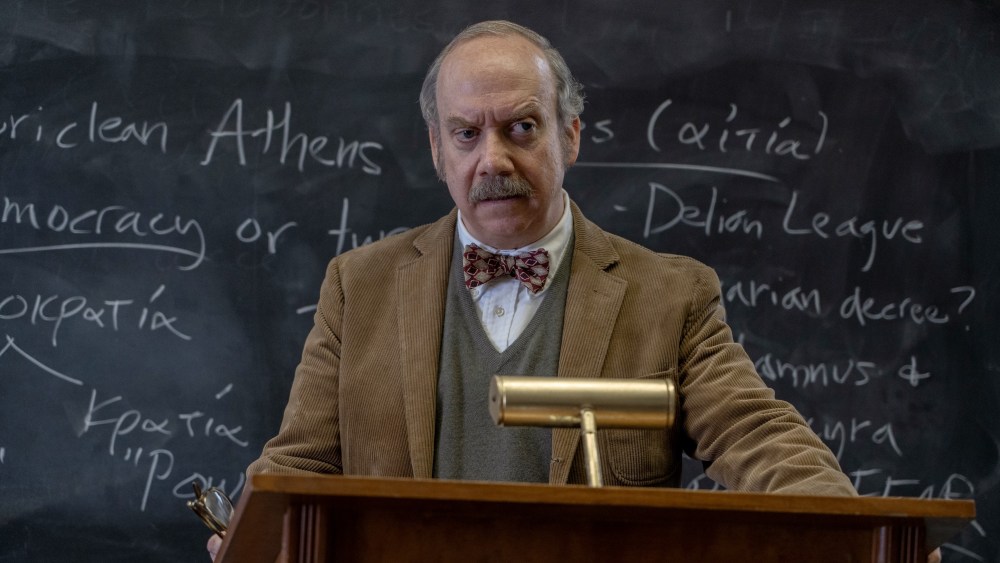
A screenwriter sued Alexander Payne on Wednesday, alleging that the script for “The Holdovers” was based on his unproduced screenplay set at a children’s hospital.
The screenwriter, Simon Stephenson, took his allegations to the Writers Guild of America in 2024, but was advised that the union could not adjudicate the issue and was referred to a lawyer. Payne later denied the allegations at the Sarajevo Film Festival, saying the claim was “the stupidest thing in the world.”
In addition to Payne, the lawsuit names as defendants “Holdovers” screenwriter David Hemingson, producer Mark Johnson, Miramax, Focus Features, and other corporate entities.
The suit contends that there are 46 “matched incidents” in the plots of the two scripts. As described in the complaint, Stephenson’s script, “Frisco,” tells the story of a dispirited doctor at the hospital who is stuck looking after a precocious teenage patient. The two develop a friendship on a trip to San Francisco, culminating in the doctor’s decision to quit his job and set off on a cross-country trek.
The lawsuit argues that the similarities with “The Holdovers” are more than mere coincidence, and that the structure and incidents of “Frisco” “were meticulously transposed into ‘The Holdovers,’ with surface cosmetic details changed.”
“Screenplays are often called the blueprint for a film,” the lawsuit states. “The Defendants built their film using ‘Frisco’ as their blueprint.”
Stephenson is an experienced screenwriter, with credits on “Paddington 2,” “Luca” and “The Electrical Life of Louis Wain.” He wrote “Frisco” in 2012-13, drawing on his experiences as a pediatrician, and the script was ranked third on the Black List — the list of the best unproduced screenplays in Hollywood.
According to Stephenson, his agents sought to interest Payne in making the film, and got him to read it in 2013 and again in 2019. But he passed, the lawsuit states, with his producing partner telling Stephenson’s agent that “Payne did like it but was not interested in prod or directing it.”
The suit alleges that elements of the “Frisco” script made their way into drafts of “The Holdovers” via Payne’s input to Hemingson.

Brewers win World Series for first time in franchise history with Game 5 victory over Rays
For the first time in franchise history, the Milwaukee Brewers can call themselves World Series champions. The Brewers couldn’t get...
Brewers vs Rays World Series Game 5; live updates, score, highlights
9:42 pm CT Abner Uribe negotiates the seventh; they’re six outs away JR Radcliffe Simpson got to third on a...


Hayden Panettiere’s manner of death revealed as officials conclude case
Officials in South Carolina announced Wednesday that an investigation found Hayden Panettiere’s Aug. 16 death to be accidental and the...
World Series 2026: Brewers beat Rays in Game 5 to win first title in franchise’s 57
A 57-year wait is over. The Milwaukee Brewers are World Series champions for the first time in franchise history. The...


Details of thousands of US immigration agents leaked in major hack
Details of more than 41,000 personnel working for the US Department of Homeland Security (DHS), including thousands involved in immigration...


Sunrise on the Reaping’ First Reactions Praise Prequel
“The Hunger Games: Sunrise on the Reaping” has officially premiered, and members of the film press are already calling the...


‘Smile 3’ Sets New Director and Writer to Take Over Franchise
Put on a happy face, because “Smile 3” is officially in the works. Paramount has hired David Bruckner to direct...

Barbara Barrie, Oscar-nominated ‘Barney Miller’ actress, dead at 95
NEWYou can now listen to Fox News articles! Barbara Barrie has died at age 95 after a terminal cancer diagnosis,...


High-speed train crash in Spain leaves at least 68 dead, dozens injured, officials say
A high-speed train slammed into the rear of another train that had stopped in central Spain, derailing two cars and...

Alexander Payne Hit With Copyright Suit Over ‘The Holdovers’ Script
A screenwriter sued Alexander Payne on Wednesday, alleging that the script for “The Holdovers” was based on his unproduced screenplay...
-

 Business2 weeks ago
‘Black Monday’ fears intensify as prediction markets shrug off 2026 crash
-
Business2 weeks ago
Why BlackRock is suddenly more bearish on stocks
-

 Business2 weeks ago
Dow Jones Futures: Stock Market Holds Up As Meta, AMD Lead Buys; ASML, CPI Inflation Due
-
Business2 weeks ago
AI Agent Company Decagon Held Early M&A Talks With ServiceNow, Others
-

 Business2 weeks ago
CPI inflation report September 2026
-

 HealthNews2 weeks ago
Carefree panty liners face lawsuit over dangerous carcinogenic claim
-

 Food2 weeks ago
Wall Street Sees Inflation Easing Even With Oil Above $90
-

 Business2 weeks ago
Endeavor Health, Rush University System for Health to merge