

HealthNews
NH man hospitalized for weeks after contracting tick-borne illness

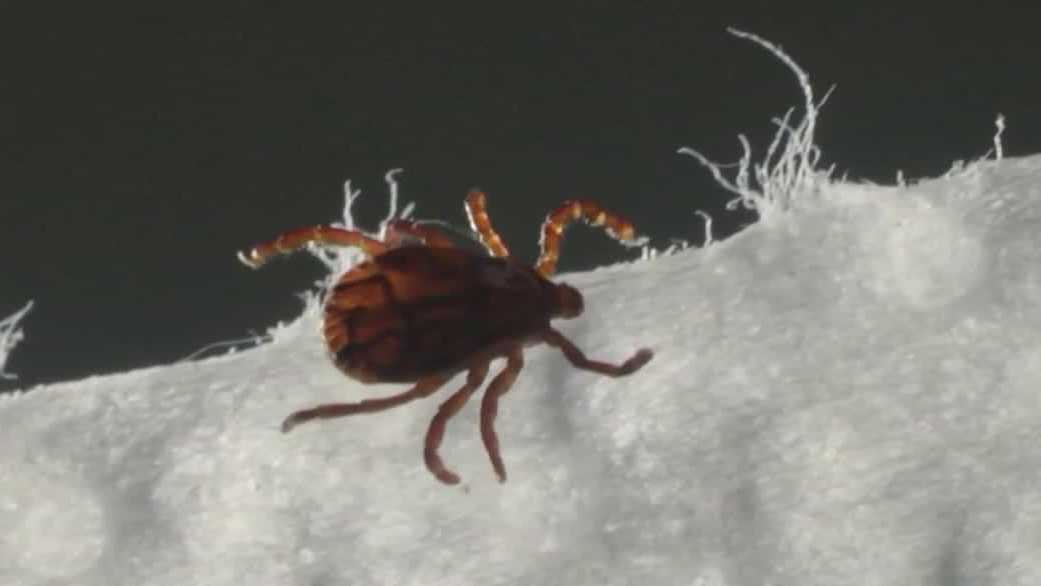
A Concord man has become seriously ill after contracting a tick-borne illness.John Reagan, 66, is an avid outdoorsman, but a tick bite has put him in the hospital with Powassan virus for the past few weeks.Reagan’s friend, Tom Wright, said Reagan felt worn down the day he went to Concord Hospital for the tick bite. The next day, he couldn’t speak and had a hard time moving. After two weeks, he was moved to Massachusetts General Hospital and has needed a ventilator to help him breathe.>> Download the free WMUR app to get updates on the go <> Download the free WMUR app to get updates on the go <<
"I talked to his wife this morning," Wright said. "He was moving his fingers and moving his toes, and even his eyelids were moving. So, they have given him a drug to help him wake up and come out of this."
According to the New Hampshire Department of Health and Human Services, three to four people are diagnosed with Powassan virus each year.
There are no vaccines to prevent Powassan virus or medications to treat it. The virus can cause symptoms ranging from fever, headache and fatigue to confusion, seizures and paralysis.
Doctors provide supportive care for those suffering from serious symptoms.
Reagan's family and friends said they're working hard to get the word out about Powassan virus and other tick-borne illnesses. They urged people to be vigilant when headed outdoors and always check themselves and pets for ticks.
HealthNews
Kennedy Orders Woman to Stay in Hantavirus Quarantine, Despite C.D.C. Recommendation

A cruise ship passenger who was exposed to hantavirus in early May is still being held at a quarantine facility in Nebraska, against her wishes and against the recommendation of a medical review from the Centers for Disease Control and Prevention.
On Monday, Health Secretary Robert F. Kennedy Jr., a staunch proponent of medical freedom, signed an order to continue quarantining Angela Perryman, 47, even though others who had been held at the facility have, since May 31, been allowed to return to their homes if they wished to do so.
In a telephone interview with The New York Times, Ms. Perryman, who has tested negative for the virus and says she has not had any symptoms, expressed anger and frustration. She said she learned of Mr. Kennedy’s decision when a copy of his order was slipped under the door to her room.
After a hearing to dispute her quarantine order, Dr. Michael Bell, the C.D.C.’s quarantine medical reviewer, recommended on Thursday that Ms. Perryman be allowed to return home for the remainder of her 42-day quarantine, with remote symptom monitoring once daily and access to 24-hour help “in the event she develops symptoms.”
HealthNews
Heart protection from COVID shots remains amid updates, study finds

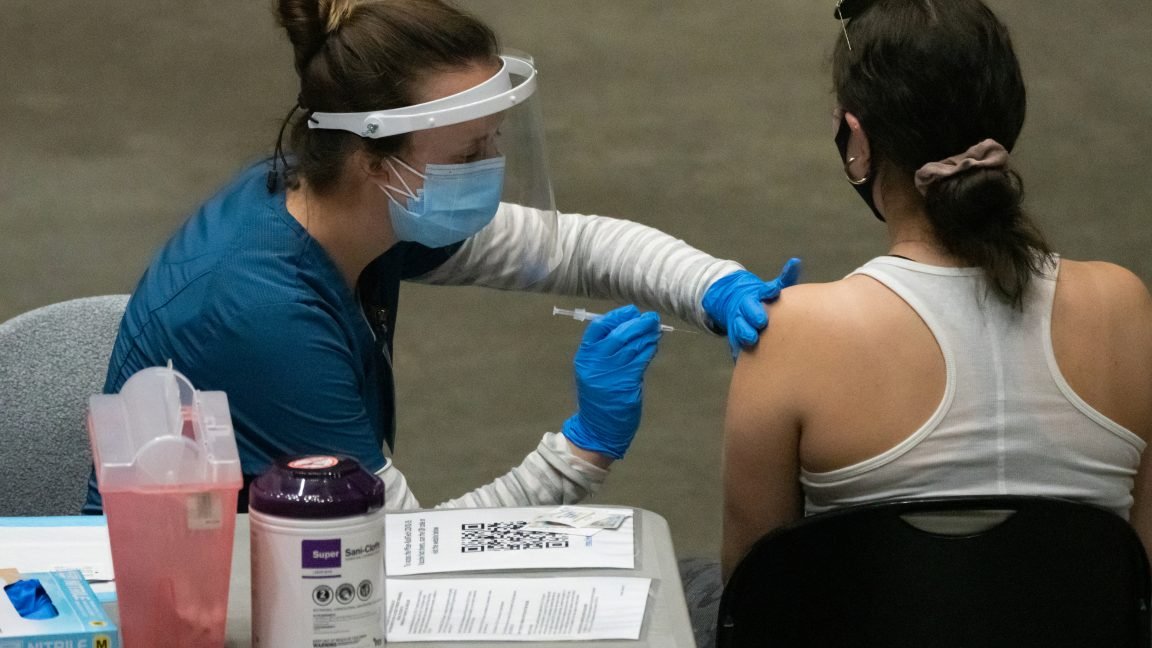
Although most Americans have eschewed seasonal COVID-19 vaccines, the updated shots continue to show significant protection against cardiovascular disease, especially for those over age 75 and those with underlying medical conditions. That’s according to a new study that pulled data from more than 1 million patients in a US Department of Veterans Affairs (VA) health system.
The finding builds on previous data showing that the vaccines significantly lower the risk of COVID-19-associated cardiovascular risks, particularly heart attacks and strokes. But it wasn’t a given that the benefit would hold up over time—as the virus evolved, the vaccines were updated, population-level immunity increased from previous infection and vaccination, and risk of severe outcomes fell.
The new study, published in JAMA Internal Medicine, found that the 2024–2025 COVID-19 vaccine continued to protect against COVID-19-associated “major adverse cardiovascular events” (MACE), which include cardiovascular death, heart attack, stroke, and hospitalization for heart failure.
The study included electronic medical record data from 1,039,659 patients in the VA’s St. Louis Health Care System. All of the patients received a seasonal flu shot between September 3, 2024, and December 31, 2024, with some also getting a COVID-19 vaccine at the same time. Of the 1,039,659 patients, 349,085 received both shots, while 690,574 got just the flu shot. The latter group acted as the control group for the study.
After eight months of follow-up, the researchers looked for documented COVID-19 cases and compared MACE events among the two groups. Overall, the COVID shots’ vaccine effectiveness against MACE events was 38 percent. In terms of absolute numbers, the benefit is modest. The study estimated that the shots dropped the rate of COVID-19-associated MACE events from about 5 in 10,000 to 3 in 10,000. Looking across subgroups, the benefits were strongest among those aged 75 and older and those with underlying health conditions.
Neglected benefits
The researchers, led by epidemiologist Ziyad Al-Aly at the St. Louis VA, also looked at MACE and deaths without documented COVID-19 cases. Here, the benefits of COVID-19 vaccines were stronger, suggesting COVID-19 cases may have been missed or undiagnosed. The shots appeared to drop the rate of MACE from 382 per 10,000 to 358, and the rate of death from 223 to 207.
“Extrapolating these estimates to a population of 1 million people, vaccination could plausibly be associated with averting approximately 2,370 MACE events and 1,580 deaths over an 8-month period,” the researchers note, though they urge caution in interpreting the finding.
The study has limitations, including that most of the US veteran population is older, White, and male, making it likely that the findings can’t be generalized to the whole population. Still, the findings indicate that the vaccines continue to offer cardiovascular protection against COVID-19, which should factor into people’s decisions on whether to get an annual COVID-19 booster. An accompanying study also published in JAMA Internal Medicine on Monday found the vaccines still directly protect against COVID-19, reducing the risk of hospitalization and critical illness by 35 percent and 41 percent, respectively.
In an accompanying editorial, Robert Califf, a cardiologist and former Food and Drug Administration commissioner, wrote that the data from the two studies “provide strong evidence of a favorable balance of benefit to risk for updated COVID-19 vaccine boosters across the population.” But, he lamented that despite that strong evidence, national views are being swayed by the “general antivaccination statements from the US Department of Health and Human Services,” which is run by anti-vaccine Health Secretary Robert F. Kennedy Jr.
Only 17.5 percent of adults and 22.6 percent of people over age 65 in the US have gotten the 2025–2026 COVID shot, according to federal data.
“The politicization of COVID-19 vaccination and messenger RNA vaccines in general has taken a toll on the longevity and functional status of those in the US,” Califf wrote. He called for researchers to collect more data on the vaccine’s benefits and engage with the public about the findings, particularly on social media, to combat anti-vaccine rhetoric.
HealthNews
Measles case detected at SFO days before World Cup start


Travelers at the often bustling international terminal at San Francisco Airport may have been exposed to the highly contagious measles virus days before the start of the World Cup, according to a news release from the Santa Clara County Public Health Department.
The department warned that a person with measles traveled through multiple areas of SFO on June 8, including the international terminal, passport control, customs and the baggage claim area between 8:30 and 11 a.m. On the same day, between the hours of 8 and 10 p.m., the individual also visited two markets in San Jose: a Trader Joe’s store at 635 Coleman Ave. and International Halal Market at 960 E. Santa Clara St.
Advertisement
Article continues below this ad
Measles is a respiratory virus that can spread via airborne particles. The virus is so infectious that it can infect 90% of people who aren’t protected through either vaccination or a previous infection. Even when a sickened person leaves an area, the airborne droplets can infect unvaccinated people for up to two hours, according to the U.S. Centers for Disease Control and Prevention.
The exposures happened three days before the kickoff of the World Cup, held across U.S., Mexico and Canada through mid-July. The weekslong event is expected to bring over 250,000 travelers to the Bay Area with multiple games being played at Levi’s Stadium in Santa Clara County.
Dr. Sarah Rudman, the public health officer for Santa Clara County, said in a video that anyone who has not been vaccinated or had measles before should take steps to protect themselves if they were in those areas at those times.
“We are sharing this information so that anyone who was in these locations at the specified times can do what they need to protect their own health and the health of those around them,” she said.
Advertisement
Article continues below this ad
Dr. William Schaffner, an infectious disease expert at Vanderbilt University Medical Center, said health departments are watching cities hosting World Cup events closely to look for any signs of disease outbreaks that could spread as fans and teams travel for the games.
“As we looked at the World Cup events and wondered what infectious hazards might crop up, measles was at the top of the list,” Schaffner told SFGATE. “It is the most contagious virus.”
Symptoms of measles virus include a distinctive rash, fever and headache. The virus can be severe, with one in five unvaccinated people needing hospitalization. People who aren’t vaccinated may be able to get protection if they get a vaccine within 72 hours of exposure or get short-term protection via immunoglobulin, which contains antibodies for the virus. The Centers for Disease Control and Prevention estimates for every 1,000 children infected, about one to three will die from conditions related to the disease.
Advertisement
Article continues below this ad
Measles generally incubates between eight and 14 days, although it can incubate as long as 21 days. Dr. Matt Willis, the former officer for the Marin County Public Health, said due to the relatively long incubation time, it can take up to 42 days before health officials know for certain no one else was infected. In this case, however, Willis said it’s likely no new cases will appear if none are detected in the next 21 days.
“It is a little bit of a white-knuckle ride, when … you know large numbers of people in your community have been exposed,” he said.
The Bay Area’s best free newsletter.
Stay informed, and entertained.
Email
Your website
By signing up, you agree to our Terms Of Use and acknowledge that your information will be used as described in our Privacy Policy.
There is no cure, but two doses of the measles vaccine is very effective, providing 97% protection against the disease.
Advertisement
Article continues below this ad
Willis said Santa Clara’s overall high vaccination rate will likely help keep the virus from spreading, but as cases increase nationwide, California has still seen an increase in measles outbreaks this year.
“It’s partly because we’re just seeing more and more of those embers kind of landing in our community,” he said. “Occasionally they … arrive in places where small brush fires of measles can arise.”
HealthNews
DRC reports record number of Ebola cases in a single day as outbreak hits 1-month mark


Health officials in the Democratic Republic of Congo (DRC) have reported a record one-day increase in Ebola cases since the current outbreak was first detected one month ago.
The DRC Ministry of Health reported 72 new confirmed Ebola cases on June 13, bringing the total number of cases to 782. Additionally, 29 deaths were recorded, bringing to 181 the number of fatalities that have occurred in the last month.
The majority of cases are still concentrated in three provinces in the northeast part of the country: Ituri, North Kivu and South Kivu. Two new health zones, Nia-Nia in Ituri and Mabalako in North Kivu, reported cases for the first time, increasing the number of affected health zones to 31, according to the Ministry of Health.
Contact tracing remains a concern. Health officials said only 56.5% of identified contacts have been followed up on, far below the desired 90%-95% target needed to contain the outbreak, according to the World Health Organization (WHO).
DRC health officials say they’re still experiencing community hesitance as well as shortages of essential medicines and infection-control supplies.
Meanwhile, Uganda has reported 19 confirmed cases, in large part linked to cross-border transmission from the DRC, and two deaths, according to the World Health Organization.
Last week, United Nations agencies warned that children in the eastern DRC could become increasingly affected by the Ebola outbreak. The U.N. said it may be difficult to accurately track the number of children who may be affected by the outbreak due to inefficient surveillance.
Although most infections have been among adults, “as the outbreak evolves, we must be prepared for increasing household transmission which means we may see more children affected in the days ahead,” Dr. Douglas Noble, UNICEF global lead for public health emergencies and global incident manager for Ebola, said on Friday.
“These are already very vulnerable children, so the capacity for this community to absorb any additional stressors was already stretched to breaking point,” he said.
In past Ebola outbreaks in the DRC, children “made up a significant share of cases and an even greater share of deaths, with the youngest facing the highest fatality rates and many left orphaned or separated from caregivers,” Noble said.
Meanwhile, the U.S. State Department recently announced plans to provide $50 million to the Coalition for Epidemic Preparedness Innovations (CEPI), which describes itself as “a global partnership working to accelerate the development of vaccines and other biologic countermeasures against epidemic and pandemic threats,” to help develop vaccines and treatments against the Bundibugyo strain of Ebola that’s driving the current outbreak.
The State Department further said it has committed more than $270 million directly to the Ebola response, with U.S.-funded partners screening more than 6,300 people in Ituri, supporting 100 health facilities and carrying out 200 safe burials.
HealthNews
The marshmallow test, redone with ten times as many children, found that a four-year-old’s willpower mostly stopped predicting teenage success once family background was taken into account


The marshmallow test is one of the most repeated stories in popular psychology. A small child is left alone with a treat and told that waiting will earn a second one. The children who held out, the familiar version goes, grew into teenagers and adults who scored higher, coped better, and generally did well, as if a single act of willpower at four had set the course of a life.
A 2018 study tested that promise against a much larger and more varied group of children, and the promise mostly did not hold. Concentrating on children whose mothers had not completed college, the researchers found that an extra minute of waiting at age four predicted only about a tenth of a standard deviation more achievement at age fifteen. That link was roughly half the size reported in the original work, and it shrank by about two-thirds once the researchers accounted for the child’s family background, early cognitive ability, and home environment.
What the replication actually did
The original results came from a study by Shoda, Mischel, and Peake in 1990, which reported strong correlations between a preschooler’s ability to delay gratification and both achievement and behaviour in adolescence. The sample was small and highly selective, drawn from children in the Stanford University community.
The 2018 team, led by Tyler Watts with Greg Duncan and Haonan Quan, ran what they called a conceptual replication. Rather than re-stage the exact experiment, they drew on the long-running NICHD Study of Early Child Care and Youth Development, which had measured children’s delay of gratification at 54 months and then followed them for years. Their analysis sample included 918 children, and the subgroup they focused on, children whose mothers had not finished college, numbered 552, about ten times the size of the original 1990 study.
That difference in scale matters. A larger and more economically mixed sample makes it possible to ask whether an apparent effect of willpower is really an effect of the circumstances that shape willpower in the first place.
The choice to focus on children of less-educated mothers was deliberate, and it cuts against the suspicion that the researchers were stacking the deck. The full study sample skewed toward advantaged families. The subgroup of children whose mothers had not completed college was, by the authors’ account, more comparable with a nationally representative sample of American children. In other words, the group where the marshmallow effect looked weakest was also the group that looked most like the country as a whole.
Why the story travelled so well
Part of what made the marshmallow test so sticky is how clean it looks. A child, a treat, a timer, and a single number: seconds waited. From that one number flowed a tidy moral that fit decades of advice about character and success, the idea that the capacity to wait is a stable trait, visible early, that quietly shapes the rest of a life.
A finding that simple is easy to repeat and hard to qualify. The original correlations were real, but they came from a small and unusual group of children, and a strong correlation in a narrow sample can look very different once a wider, more varied population is measured. That is the gap the 2018 study set out to probe, and it is why the size and makeup of the new sample do so much of the work.
The link did not vanish, but it thinned
It would overstate the findings to say the marshmallow test was debunked outright. Among children of less-educated mothers, waiting longer at age four was still associated with somewhat better achievement at fifteen. The point is how much of that association survived scrutiny.
Before controls, the correlation was already only half the size of the original studies’ headline numbers. After the researchers adjusted for family background, early cognitive skills, and the home environment, roughly two-thirds of even that smaller link disappeared. What remained was a faint association rather than the strong, life-shaping signal of the popular telling.
The team also noticed that most of the predictive value sat at the very start of the waiting period. Most of the variation in adolescent achievement came from whether a child could wait at least 20 seconds, not from the heroic minutes of resistance that make the test memorable. A child who could hold out briefly looked much like a child who held out for the full delay.
The part the famous version leaves out
The behavioural promise fared worst of all. The original story implied that early self-control predicted not just test scores but a calmer, better-adjusted adolescence. In the replication, associations between delay time and measures of behaviour at age fifteen were much smaller and rarely reached statistical significance.
In other words, the strand of the marshmallow legend most often repeated by parents, that a patient four-year-old becomes a well-behaved teenager, is the strand the larger study supported least.
What this does and does not prove
This is a single conceptual replication, and it should be read as one. Because it used a different sample and a different delay-of-gratification measure than the 1990 study, it is not a perfect like-for-like rerun, and the authors are careful to frame it as a replication and extension rather than a verdict. A follow-up analysis by other researchers later argued that the two studies’ results, read carefully, are less far apart than the headlines suggested.
The findings are also correlational. The study can show that early delay of gratification predicts later outcomes more weakly once background is accounted for; it cannot prove that teaching a child to wait would, or would not, change that child’s future. Self-control may still matter. What the data undercut is the specific, tidy claim that a few minutes of waiting at four reveals a trait that determines how the next decade goes.
And the controls themselves carry the real message. The reason the link thinned so much is that delay of gratification is bound up with the resources around a child: a parent’s education, the cognitive skills already in place by age four, the stability of the home. A test that looks like it measures character may be measuring circumstance.
What is left to sit with
The marshmallow test endures because it offers a clean moral: wait, and you will be rewarded. The larger study does not erase that idea so much as complicate it. A child’s patience at four still says something, but much of what it says is about the world that child was already living in.
That is a less quotable finding, and a harder one to put on a poster. It asks whether we have been admiring willpower when we were looking, much of the time, at advantage.


8 dead in B-52 crash: Air Force presser gives early details
Eight crew members are dead in a B-52 bomber crash shortly after takeoff from Edwards Air Force Base, northeast of...


‘Spider-Man of Yemen’ dies after fall into volcanic crater
A Yemeni climber known on social media as the “Spider-Man of Yemen” died after falling into a volcanic crater, according...


Iran v New Zealand: World Cup 2026 – live
Key events New Zealand’s national anthem rings out next and we aren’t too far away from kick-off at Los Angeles...


8 crew members dead after B-52 bomber crashes in California
Eight crew members are dead in a B-52 bomber crash shortly after takeoff from Edwards Air Force Base, northeast of...


Fans react to Cape Verde’s shocking draw against Spain in World Cup debut
The island nation of Cape Verde shocked fans in their first-ever World Cup match by earning a draw against reigning...


Live: B-52 crash site at Andrews Air Force base, CA
Eight crew members are dead in a B-52 bomber crash shortly after takeoff from Edwards Air Force Base, northeast of...


Why did 1.9M people leave California? | Fareed’s Take
CNN's Fareed Zakaria looks at why California's economy has stayed strong while its system of governance has become strained …


BBC tests out England and Argentina's World Cup training grounds in Kansas City | BBC News
The BBC's Will Grant has been taking a look around the base camps that England and defending champions Argentina will...


Marine jet crashes into mountain, erupts in fireball
A Marine pilot ejected from an F/A-18 Hornet shortly before it crashed into a mountainside during a routine training exercise...


US and Iran agree to strike a deal to end their conflict. #US #Iran #BBCNews
-

 Business2 days ago
How much of Musk’s wealth comes from government help? Virtually all of it
-

 LifestyleNews2 weeks ago
120 minutes of strength training per week may help extend lifespan
-

 Politics4 days ago
What to know about the stabbing that set off fiery riots in Northern Ireland
-

 Video3 days ago
Download fans say what they love about the festival. #DownloadFestival #BBCNews
-

 Video3 days ago
Why SpaceX IPO isn't about space. #SpaceX #ElonMusk #BBCNews
-

 HealthNews4 days ago
The people of Okinawa, Japan only eat until they are about 80 percent full, then stop — and the practice has been linked in multiple peer-reviewed studies to lower rates of cardiovascular disease, slo
-

 TravelNews3 days ago
My Paternal Instinct Should’ve Warned Me About Netflix’s Maternal Instinct
-

 Food3 days ago
Pope Leo’s plane was grounded. Then the King of Spain stepped in to help