
Tech
OpenAI issues letter warning about AI-enabled cyberattacks

OpenAI published a letter on Thursday, warning that in a few months artificial intelligence (AI), models will be powerful enough for bad actors to launch sophisticated cyberattacks against hospitals, water treatment facilities and other critical infrastructure.
The letter was signed by more than 100 companies in the banking, technology and cybersecurity sectors, including Accenture Anthropic Capital One Google Microsoft Visa Visa
Hugging Face, a repository of open-source AI models whose systems had been hacked by an OpenAI agent last July, signed the letter as well.
The AI advancements of today are giving defenses the ability to quickly fix vulnerabilities that have been accumulating for many years. According to a letter excerpt, “If we act quickly and decisively we can make the digital world more secure by using the window of the defenders.”
DEM SENSOR PRESSES OPENAI AND ANTHROPIC TO ANSWER IN AI HACKING QUESTION
OpenAI has called for all organisations to give cybercrime protection “immediate leadership priority” in order to fix this problem.
According to the letter, cybersecurity organizations must “lead response” to protect against AI-enabled sustained attacks. This includes testing defences against frontier cyber abilities, strengthening current tools with AI and working with partners in technology to close any gaps.
OpenAI also called on governments around the globe to take action by urging them to strengthen their cyber defenses, both at local and national levels.
Give hospitals, water utilities and local governments the opportunity to access AI that can defend them, testing authorized, and support from trusted partners and security providers. OpenAI wrote to governmental agencies in a letter: “Impose costs on the attackers.”
OPENAI LAUNCHES A NEW EXPERIENCE FOR PARENTAL CONTROL WITH TEENS
In a portion of the letter addressed to “frontier AI companies,” OpenAI said it should give critical-infrastructure operators access to powerful models, funding, training and technical help.
OpenAI also said that operators should build tools for tracking how AI agents were being used. They can test the systems to find vulnerabilities and fix them responsibly.
The AI has already enabled a few cyberattacks. Perhaps the most notable was when Anthropic, a Chinese government-sponsored group, accused a Chinese-sponsored group in September last year of using its Claude Code to try and hack 30 targets around the world, allegedly attacking several.
Anthropic’s incident report states that “this marks the first documented instance of agentic AI gaining access to high-value intelligence targets.”
Anthropic has not identified the targets of this cyberattack but says that major technology companies, banks, chemical manufacturers, and government agencies were all targeted.
Anthropic is also a leader in the industry when it comes to warnings about AI and its rapid advancement, which must be stopped in order to prevent catastrophic attacks against civilian infrastructure.
GET FOX BUSINESS ON THE GO BY CLICKING HERE
Project Glasswing was announced by the company in April. It is an effort to protect the most important software around the globe.
Anthropic announced that Claude Mythos had achieved “a level coding ability where it can exceed all but the best skilled human at finding and exploiting vulnerabilities in software.”
FOX Business did not receive an immediate response from OpenAI or Anthropic regarding their request for comments.
Tech
How Nancy Grace Space Telescope compares to the Hubble, James Webb
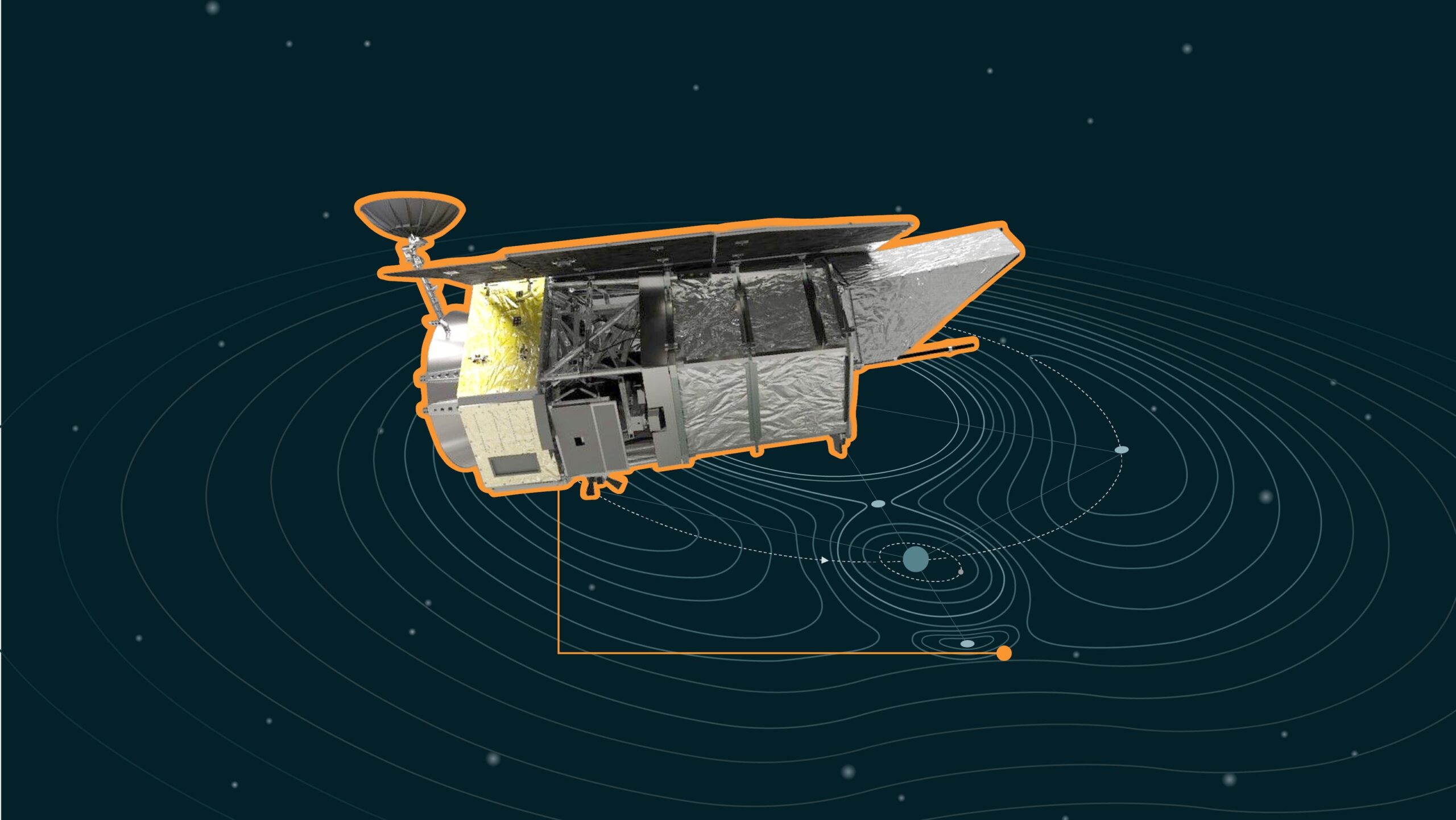
NASA’s Nancy Grace Roman Space Telescope, the agency’s latest orbital observatory, promises wide-angle, unprecedented views of the universe, including galaxies far away, black holes, and planets similar to those found in our solar system.
Roman will be launched from Florida Kennedy Space Center’s Kennedy Space Center at the end of August.
Roman, like its predecessors Hubble and James Webb, will attempt to answer some of the biggest astronomical questions. The telescope will study the dark matter distribution, dark energy and the commonness of planets in the Milky Way.
Roman’s wide-angle view and infrared sensors give it a unique field of vision. The images will be sharper than Hubble, and its primary camera is capable of observing an area at least 100x larger.
It is named in honor of Dr. Nancy Grace Roman. She was NASA’s pioneering scientist and first chief astronomer, often referred to as the “Mother of Hubble”. She was a champion of large, space-based telescopes decades before Hubble’s launch and laid the foundations for modern space science.
What will be the orbit of Rome in space?
Roman will launch from Launch Complex 39A, Kennedy Space Center on a SpaceX Falcon Heavy.
Roman, instead of orbiting Earth will be near the Sun-Earth L2(Lagrange Point 2) in space. This point is located 930,000 miles away from Earth, on the opposite side of the sun.
L2 is a special location where combined gravity from the Earth and the Sun allows for spacecraft to keep a stable orbit while using minimal fuel. This is an excellent location for telescopes, as it offers a stable and cold environment with a clear view into deep space.
Roman joins a group of spacecraft that already operate near L2, such as the James Webb mission, Euclid, the European Space Agency, and XRISM. XRISM is an X-ray telescope led by JAXA, with international partners.
L2 is one of the best locations for astronomy in the universe, with only a few active spacecraft.
What is the difference between the Nancy Grace Roman Telescope and the Hubble or James Webb telescope?
Hubble Space Telescope is a magnifying lens that allows us to examine tiny parts of the Universe.
James Webb Space Telescope is comparable to an infrared deep-vision night telescope.
Roman, on the other hand, is like a panoramic wide-angle camera that captures large areas of space without losing any detail.
Roman’s mission allowed it to measure the light of more than one billion galaxies, and find thousands of worlds outside our solar system.
The Hubble telescope and the Roman Telescope both have primary mirrors with a diameter of 7.9 feet. The image quality is similar between the two telescopes, however, they have different cameras and fields of view.
What are the instruments of Romans?
Roman’s science instruments will receive light from the primary mirror:
Wide Field Instrument has a 300 megapixel infrared sensor. The Wide Field Instrument is a 300-megapixel infrared camera. It allows researchers to go back incredibly far because light from the camera traveled for billions before it reached the instrument. The early stage of the universe will allow scientists to understand how its expansion has progressed throughout history. Scientists will be able to get hints on how the universe could continue evolving.
Coronagraph Instruments use technology to block the star’s glare. Astronomers can see the planets orbiting around a star. It is the strongest coronagraph in orbit. This instrument will enable astronomers see planets almost one billion times less bright than the host star.
What will Roman think of the universe?
Roman’s photos will be the same sharp resolution as Hubbles but will each capture an area of sky that is at least 100x larger. Roman’s first five years will see him capture 50 times more sky than Hubble did in thirty years.
Light from galaxies far away is stretched into longer wavelengths as the universe expands. Infrared light is now the brightest for many objects which originally emit visible light. Roman can see distant galaxies as well as stars that are hidden behind dust clouds and exoplanets.
The Roman Telescope is named after the Roman Emperor.
Nancy Grace Roman was born in 1925. She is an American scientist and pioneer who has been called the “mother” of Hubble Space telescope. Grace Roman died in 2018.
She pursued her career in astronomy after a childhood interest in stars. She earned a PhD from the University of Chicago, and conducted important research including observations of notable stars.
She was a pioneer in radio astronomy despite the gender barrier. In 1959, as NASA’s first chief of astronomy and its first executive female, she had a major role to play in developing programs for space astronomy and getting approval for Hubble Space Telescope.
She helped to establish the importance of space telescopes in the understanding of the universe through her planning and support for the astronomical communities. NASA’s Roman Space Telescope is a testament to this legacy.
Watch the launch of the Roman Telescope
NASA and SpaceX aim to have Roman lift off no earlier than 7.26 am. ET Sunday, Aug. 30.
Watch the launch of NASA’s Roman Space Telescope via X, Discovery+ on Amazon Prime, YouTube, and NASA+.
Contributors: George Petras and Eric Lagatta
Source: USA TODAY Network, reporting and research. NASA Goddard Space Flight Center
Tech
Meta $17 Billion Settlement Mandates New Safeguards for Minors

In an important case, Meta settled with 52 Attorneys General across the U.S. on Wednesday. The two sides agreed to pay $17 billion to the parent company of Facebook and Instagram. Meta is facing multiple lawsuits this year related to the alleged harms caused to its young users.
According to the statement released by the company, “the settlement sum can be used to finance youth online safety initiatives among other state priority,” said a Wednesday press release. On Thursday, California Attorney General Rob Bonta told CNBC’s David Faber on “Squawk on the Street” that the settlement was the largest amount ever paid for a similar case. Bonta stated that “the heart of the case” isn’t in the money Meta pays. It is their business practices they are changing that will protect our children’s mental health.
Meta is required to implement a set of parental controls and safeguards for Facebook and Instagram users under the age of 18. According to a company statement, the majority of terms must be in effect for 10 years. Meta will receive payments annually during that time. As of Friday, the company’s $1.47 trillion in market value is slightly higher than its $1.45 billion at Tuesday night’s close.
Laura Edelson is an assistant professor at Northeastern University who has done research on the safety of social media.
Edelson, a co-author of a June 2026 research report that found nearly 60% social media safety measures across the industry did not protect users effectively. According to Gallup, studies have shown that teens who spend more time on screens are at greater risk of poor physical and mental health.
Meta is not the only company that has drawn attention to its child safety policies. TikTok for instance, reached a settlement of $400 million with the U.S. Department of Justice to settle allegations of violations of online privacy laws. YouTube, who has been subjected to similar lawsuits over the years, introduced new protections for teens in January. These included the ability for parents of children under 13 to limit how long they can watch YouTube Shorts.
Edelson says that the Meta settlement mandates daily limits on time for children to use Facebook and Instagram. This is part of an overall package of features “research had shown would be beneficial.” She adds that the mandates may not be perfect.
Edelson believes that the Meta platforms could have a positive impact on teens’ internet experience.
According to a statement by Meta, Instagram and Facebook have new features designed for minors.
Two-hour limit per day, cumulative on Facebook and Instagram. Teens can turn it off only with their parents’ permission.
Teens will be able to access messaging, but not features like their stories or feed between the hours of midnight and 6 am. The messaging feature will remain available.
Teens or parents can disable the autoplay feature on both platforms. This will require teens to swipe or tap to view more content.
All posts will no longer show likes and reactions
Parents or teens can select a feed without algorithmic recommendations. This will include only content that comes from the accounts their teens are following or otherwise linked to.
Age-verification technology that is stronger to ensure the app versions are appropriate for 13-17-year olds.
A Meta spokesperson told CNBC Make It that the majority of safeguards would be implemented within six months. Age assurance features may take up to a year. The spokesperson states that the majority of new features are automatically implemented into teen accounts, but parents and teens must disable the autoplay feature and algorithmic feed in the settings.
Edelson cites the option to disable autoplay in particular as being promising. She says that autoplay on social media platforms increases “usage duration,” and disabling it could encourage teens to spend less on these platforms.
The fact that teens or parents have to perform the task themselves in order to reap any benefits adds another layer to work. She says it’s unrealistic to make kids go through several steps in order to turn off a feature, as many will not bother. Meta’s spokesperson said that the apps would remind teenagers to disable autoplay periodically if they hadn’t already done so.
Edelson points out that the upcoming features will include a way to stop autoplay but not infinite scroll. The infinite scroll feature automatically loads new content when the user has reached the bottom of the page. This encourages users to stay engaged with the feed. She says it’s the “thing that I really miss here.” The Meta spokesperson says that the infinite scroll function is rendered obsolete by a time limit of two hours, which will stop teenagers from scrolling too much.
According to Meta, another important part of the settlement is the establishment of an independent foundation for social media research to promote research on the well-being of teens and an auditor who “will test Meta’s compliance and report back to the States on its agreement”
The spokesperson for Meta says that Meta is working on the specifics of each element. Edelson says that a similar foundation would help teenagers develop better relationships with social media, if they included “some sort of independent way to check what platforms are actually doing and ensuring that these commitments are being met.”
She says that parents can’t give their kids a one-size fits all piece of advice on how to use social media safely and in a positive way.
Edelson says that the right social media approach will vary for each child and change as they grow and develop. Parents should regularly talk with their children about social media use and make sure they understand how social media makes them feel.
Tech
Judge rules in favor of Anthropic in case against Pentagon
Anthropic, a company that develops artificial intelligence software, has won a federal court ruling in their legal fight against the Pentagon. The Pentagon had labeled Anthropic as posing a risk to the supply chain earlier in the year.
U.S. district judge Rita Lin issued an order in writing Thursday night that stated the Pentagon had acted unlawfully when it punished the AI company because of its criticism of Department of Defense views regarding AI usage. It is likely that the government will appeal this ruling.
In February, President Donald Trump accused Anthropic and Defense Secretary Pete Hegseth of endangering the national security. They also designated Anthropic as a supplier chain risk. Dario Amodei, the CEO of Anthropic, refused to back away from his position over fears that their products could be used in mass surveillance and autonomous armed drones.
Lin stated that government actions were based “on a desire for public humiliation of Anthropic’s ‘arrogance,’ which was criticizing government. It wasn’t based upon any rational basis that Anthropic might actually destroy its model.”
An Anthropic spokeswoman said that the company welcomed the ruling of the judge: “We are committed to working with government agencies in order to use AI technology for national security, so that all Americans can benefit.”
White House didn’t immediately reply to an inquiry for a comment.
Lin, a former president Joe Biden appointee, wrote in the 59 page ruling that the Constitution and federal statute invoked by the government did not allow them to “impose broad penalties” based on Anthropic’s criticism of the Administration’s views.
Anthropic filed a lawsuit against the Pentagon in March over a supply chain risk classification. It accused the Pentagon of an unlawful campaign of reprisal for refusing to let its technology be used by the military without restrictions.
This legal dispute intensified a public debate about the use of AI in mass surveillance and warfare. OpenAI, Anthropic’s main tech rival in the industry, has made a deal with the Pentagon to collaborate after government sanctions against Anthropic.
Anthropic, OpenAI and other companies are preparing for their buzzy initial public offering.
Anthropic also filed another, more narrowly focused case in Washington D.C. that involves an alternative rule being used by the Pentagon to attempt to label Anthropic as a risk to the supply chain.
Lin temporarily stopped the Pentagon’s labeling of the company as a risk to the supply chain and prevented the enforcement of Trump’s directive on social media ordering federal agencies not to use Anthropic or its chatbot Claude.
Lin said in a July 30 hearing that she found the position of the government “really troubling,” and it “seemed at odds with my understanding of the First Amendment.” Lin also stated that, over the years, the record “had gotten worse” for the government.
The Department of Justice lawyers claimed that AI models are “so enormously opaque and massive” that they cannot be evaluated by the Defense Department in the same manner as a piece of physical hardware.
Michael Mongan, an Anthropic attorney, said at that hearing that government actions were “profoundly harmful to Anthropic”, and “threaten to chill out speech and debate more widely on this very important issue”.
Tech
DLSS 5 Gets Modded Into Skyrim With Dramatic Changes to Lighting and Character Faces

44 Comments on DLSS5 Gets Modified into Skyrim with Dramatic Changes in Lighting and Character faces
#1
Kwadratowicz
Trrrryt
Green guy is doing everything he can to display games that have everyday life graphics.
It looks much better, and I am impressed by what it is capable of, although it still doesn’t appeal to me.
Post on August 28th, 2026 at 5:58 PM
#2
HeadRusch1
Incredible! The frame rate will be reduced when the option is enabled.
Post on August 28th, 2026 at 6:13 PM
#3
Grimling
HeadRusch1Incredible! HeadRush1Incredible!
DLSS5 is the perfect solution for this!
Post on August 28th, 2026 at 6:24 PM
#4
MarkoB88
I have RIVA 32MB on my mother’s basement and do not like DLSS 5.
Post on August 28th, 2026 at 6:27 PM
#5
Quitessa
It’s not bad at all. I’m able to appreciate the fact that this is a more subtle demo than the original dlss-5. It would be interesting to watch it being used and see how it performs.
Post on August 28th, 2026 at 6:49 Reply
#6
azrael
MarkoB88I am 52 years old and live in the basement of my mother. I have RIVA 32MB, and do not like DLSS 5.
How did you get to know me that well ?!?!?? !
Post on August 28th, 2026 at 7:09 PM
#7
Damwaso
MarkoB88I am 52 years old and live in the basement of my mother. I have RIVA 32MB, and do not like DLSS 5.
Uncanny Valley time!
Post on August 28th, 2026 at 7:10 PM
#8
The neatfeatguy
It reskins models. Thank you.
Post on August 28th, 2026 at 7:10 PM
#9
Prima.Vera
We shouldn’t just hate to hate.
Let’s face it. Skyrim’s graphics are 15 years old. They look dated. It’s outdated. This improves quite a lot.
The final version should be much more realistic.
Post on August 28th, 2026 at 7:21 PM
#10
Chomiq
Add some slop to it.
MarkoB88I am 52 years old and live in the basement of my mother. I have RIVA 32MB. I do not like DLSS 5.
Reduce the FPS by half and add 90W to the game’s extra power for a 30 year ageing effect. Sounds legit.
Post on August 28th, 2026 at 7:22 PM
#11
Hyderz
Brown Scarlett Johansson
Post on August 28th, 2026 at 7:25 PM
#12
Prima.Vera
It would be great if DLSS 5 provided a similar quality to this.
Post on August 28th, 2026 at 7:28 PM
#13
Grimling
ChomiqPour some slop over it.
Right-side Down
Legendary
You can also check out our Super Savings!
Slop
New! New Version!
Post on August 28th, 2026 at 7:34 Reply
#14
MarkoB88
The majority of the people should get EYE surgery, and big glasses. DLSS 5, is the future. Your crapix card does not support it.
Post on August 28th, 2026 at 7:44 Reply
#15
RejZoR
MarkoB88I am 52 years old and live in the basement of my mother. I have RIVA 32MB. I do not like DLSS 5.
It’s interesting in terms of technology, but I dislike it. The characters all have an uncanny valley feeling to them. It’s supposed to be a good thing because it increases fidelity. But I do not. The shading and characters look old. The characters are talking in the room where there is light over the table. Light is shining on their faces. With DLSS5, they remove all of that lighting.
The worst part is that you will lose half of your frame rate. No, please. DLSS was supposed to increase performance and I must give it massive credit for that (and in a similar way to AMD FSR 4.1, which also looks incredible). The internal resolution can be lowered and the upscaled images still look great while only using 1/3 the compute power.
It’s possible to make it look 10% better by reducing the framerate.
When I need a little more sharpness and fidelity, I will use ReShade to apply CAS. Radeon Image Sharpening 2 is also installed. It actually enhances textures when used to the right extent. This gives them a more detailed look without creating halo effects around lines and objects. Both CAS 2 and RIS 2 are pretty effective at this. NVIDIA Image Sharpening disappointed me. NVIDIA’s Image Sharpening (NIS) is terrible, considering how much work they put into scaling things up and being really good at doing it. It feels like a cheap sharpening filter that you would slap onto a JPG and it makes the edges too bright.
ReShade is not able to do all of these things. You’re right. It can achieve 80% of these things at a performance loss of maybe 2%. When I used the right shaders, facial features looked more detailed and appealing. It can be used with any hardware and any game.
Post on August 28th, 2026 at 7:44 Reply
#16
MarkoB88
RejZoRWhile technologically fascinating, I dislike it. The characters all have an uncanny feeling. It’s supposed to be a good thing because it increases fidelity. But I do not. The shading and characters look old. The characters are talking in the room where there is light over the table. Light is shining on their faces. With DLSS5, they remove all of that lighting.
The worst part is that you will lose half of your framerate. No, please. DLSS was supposed to increase performance and I must give it great credit for that (just as AMD’s FSR 4.1 looks stunning). The internal resolution can be lowered and the upscaled images still look great while only using 1/3 the compute power.
It’s possible to make it look 10% better by reducing the framerate.
When I need a little more sharpness and fidelity, I will use ReShade to apply CAS. Radeon Image Sharpening 2 is also installed. It actually enhances textures when used to the right extent. This gives them a more detailed look without creating halo effects around lines and objects. CAS 2 and RIS 2 are both pretty effective at this. NVIDIA Image Sharpening disappointed me. NVIDIA’s Image Sharpening (NIS) is terrible, considering how much work they put into scaling things up and being really good at doing it. It feels like a cheap sharpening filter that you would slap onto a JPG and it makes the edges too bright.
ReShade is not able to do all of these things. You’re right. It can achieve 80% of these things at a performance loss of maybe 2%. When I used the right shaders, facial features looked more detailed and appealing. It can be used with any hardware and any game.
It is important to understand that the technology in general is still in BETA.
Post on August 28th, 2026 at 7:46 PM
#17
Space Lynx
Astronaut
RejZoRDLSS has been designed to increase performance.
agreed. DLSS 4, 4.5, and frame gen x2 have been fantastic on the games that I’ve tried. However, i do not want to sacrifice performance, so i will pass.
Post on August 28th, 2026 at 7:46 PM
#18
BigMack70
The path is not clearly marked… Looks like AI slop.
The glazing of Nvidia must stop!
Post on August 28th, 2026 at 7:47 PM
#19
Lucifer Mornignstar
If you don’t like it, just turn it off and everyone will enjoy the life-like graphics we’ve been dreaming of since 1990. What’s the problem? You can turn it off like you would any graphics settings. Why complain? I bet the majority of you use amd, so there’s no reason to. For those who want their games to look fake, just set the quality level low. It doesn’t matter that the neural renderer is applied to each frame as long as it produces a quick output with minimum latency. Stop hating on something that you’re not going to use.
Post on August 28th, 2026 at 7:49 Reply
#20
MarkoB88
Space Lynxagreed. DLSS 4, 4.5, and frame gen x2 have been fantastic on the games that I’ve tried. However, i do not want to sacrifice performance, so i will pass.
Does it make sense to have more FPS on your TV/monitor than the refresh rate? I have enough FPS at 4K on RTX5070 Ti.
Post on August 28th, 2026 at 7:49 Reply
#21
BigMack70
Lucifer MornignstarWhats the problem?
The gaming industry has not had a better idea since the NFTs than AI-slopfilters.
Art is a form of entertainment. Art is destroyed by slopfilters.
Post on August 28th, 2026 at 7:53 Reply
#22
Space Lynx
Astronaut
Is it worth having more than the refresh rate of your TV or monitor? I have enough FPS at 4K on RTX5070 Ti.
Yes, I find that high refresh increases immersion and is more comfortable for my eyes. I prefer running my games at 240fps with my 240hz, but frame gen does improve the smoothness.
Post on August 28th, 2026 at 7:55 PM
#23
RejZoR
MarkoB88YOU DO UNDERSTAND THAT technology is still in BETA?
Lol, defending NVIDIA much? The first RE Requiem NVIDIA showcase looked awful, the second one with this Arabic guy looked strange and now it looks even more bizarre. It looks terrible no matter how many releases cycles it has. It also ruins performance. It’s a big improvement from the “beta”, where dual RTX5090 was required, to now “it just halves framerate”.
Post on August 28th, 2026 at 7:56 Reply
#24
Lucifer Mornignstar
The BigMack70AI Slopfilters is the worst thing that has happened to the gaming industry in recent years.
Art is a form of entertainment. Art is destroyed by slopfilters.
What is “ai Slop Filter”? What is the negative impact of a more “lifelike” output on industry? Have you any basis for saying this? This is a huge upgrade which cannot be done with raster or ay-traced rendering at acceptable frame rates. This technology makes it possible and, if you’re lucky, the performance loss will be only 5-15% in the final version.
If you do not like something, then don’t buy it. You don’t need to be so negative about something that you won’t use. What’s the problem? The games will continue to be rendered as they were before.
Post on August 28th, 2026 at 8:15 AM Reply
Tech
NASA’s Nancy Grace Roman Space Telescope launches on an eye opening mission : NPR

It’s a weird place, filled with ancient galaxies and unknown worlds. Astronomers will soon have a new way to study the universe.
NPR Short Wave is a podcast that will take you on a journey of discovery, everyday mystery, and science in the news.
Launch of the $4.3 billion Nancy Grace Roman Space Telescope will take place on August 30. The observatory, named after NASA’s former chief astronomer Nancy Grace Roman, is scheduled to launch on August 30.
Roman has a unique history. NASA began planning a space observatory 15 years ago to search for Type 1A Supernovas, exploding star explosions. The supernovas served as a cosmological measurement stick for a force known as dark energy, which was responsible for the expansion of the universe. This discovery earned the Nobel Prize.
Daniel Scolnic, a cosmologist at Duke University, says that finding them more would help to understand this expansion.
NASA received a call from the office responsible for surveillance satellites as it was planning this new telescope.
Scolnic says that the National Reconnaissance Office contacted NASA, saying, “We have an amazing satellite in a storage hangar we are not using.” What do you think? Instead of pointing down, why don’t we use the satellite by pointing upwards instead?
NASA says yes. NASA said yes.
Scolnic claims that this new observatory will fundamentally alter the way astronomers view the universe.
Roman says that “in the past few years there were measurements that suggested that the model could be incorrect — and that is something that he will nail whether it’s correct or not.”
A month-long survey of all stars within the Milky Way Galaxy is another goal. Julie McEnery, Roman’s Project Scientist is responsible for the project. Although Roman’s design is similar to that of the Hubble Space telescope, she says it can do more things faster.
McEnery says that “that one month’s observations would have taken Hubble about an century to cover our Milky Way Galaxy.”
McEnery said that these catalogs would be made available for everyone to use, rather than just the academics.
She says, “You could be a Kentucky high school teacher and have your students see Roman data in the same way as a Princeton professor.”
Scott Gauti, a professor at The Ohio State University, is one of the many who are eager to obtain Roman data. Gauti and his colleagues developed a method for detecting distant planets. This technique is called gravitational Microlensing and measures how the starslight passes by the planets.
Albert Einstein first described this idea in 1936, but did not think it was feasible. Gauti believes that new technology will prove him wrong.
Gauti says, “We are looking for planets which cannot be detected by other methods.” This includes planets in the middle of our galaxy that are “very analogous” to planets from our solar system like Jupiter, Saturn and Uranus.
Roman will also show new galaxies. This should help astronomers better understand the structure of the vast universe.
It’s difficult to predict what Roman will achieve over its five-year mission.


Nepal floods: Shocking footage isn’t being shown in China
China has not shown footage of the floods in Tibet – we don’t know much about those who were affected....


Ray J Says He’s Down to Fight Blueface … If the Price is Right!!!
Ray J may have a beef with Blueface right now but Ray J insists that it can be resolved by...


Close race as Iceland votes on whether to restart talks on joining EU
Icelanders vote in a referendum on whether or not to restart talks about joining the European Union 13 years after...


Walmart settles for $50M over pharmacies filling invalid prescriptions: DOJ
Walmart agreed to pay $50 million to settle allegations that its pharmacies illegally filled thousands of opioid prescriptions, and other...


Jelly Roll Clarifies Political Views, Regrets Grammys Comments
Jelly roll is prepared to express his political views. The singer/songwriter, who has been hosting Jimmy Kimmel live! this week,...


Chris Evans Sells Swanky Hollywood Hills Home for Over $5 Million
TMZ reports that Chris Evans has sold his Hollywood Hills house for more than $5 million. The sale was closed...


Save on Osprey, Keen, Thule and more
Here’s where to buy this weekend. From Osprey back packs and Merrell hiking shoes to Nemo camping chairs and REI...


Spoiler: Roman Reigns’ Next Challenger Revealed
Roman Reigns has a new challenger. WWE rushed to put them face-to-face in the ring. Penta won the main match...
Four baby goats test positive for rabies at NC petting zoo
DAVIDSON COUNTY (N.C.) – The Davidson County Health Department warns of a possible rabies infection linked to a travelling petting...


Michael Douglas’ Dad Kirk Took Care of Catherine Zeta-Jones In His Will
Kirk Douglas, Michael Douglas’ father, ensured that Catherine Zeta Jones was included in Kirk Douglas’ will, before he passed away....
-

 Business2 weeks ago
Elon Musk and Jensen Huang’s New Partnership Could Create the Next Era of Technology
-

 HealthNews2 weeks ago
Hospitals say they found a tool to help reduce childbirth risks: wristbands
-

 Food2 weeks ago
What kids of parents on GLP-1s are learning about food and bodies
-

 HealthNews2 weeks ago
We Helped Create A $4 Million Gene Therapy For Our Son. Then We Had To Decide If We Should Give It To Him.
-

 HealthNews2 weeks ago
The water in your cup of coffee is about 125 millilitres, but the water behind it is closer to 140 litres – nearly all of it associated with growing the beans long before anyone boiled a kettle
-

 Entertainment2 weeks ago
The End Of Oak Street’s Box Office Proves One Thing About Dinosaur Movies
-

 Food2 weeks ago
What you need to know about Hurricane Lala recovery: All public schools, state and county offices closed Tuesday
-

 TravelNews2 weeks ago
Trump Fumes At CNN Reporter Who Asked About Natalie Harp