

Business
Anthropic Is Still at Odds With the White House Over Claude Fable 5

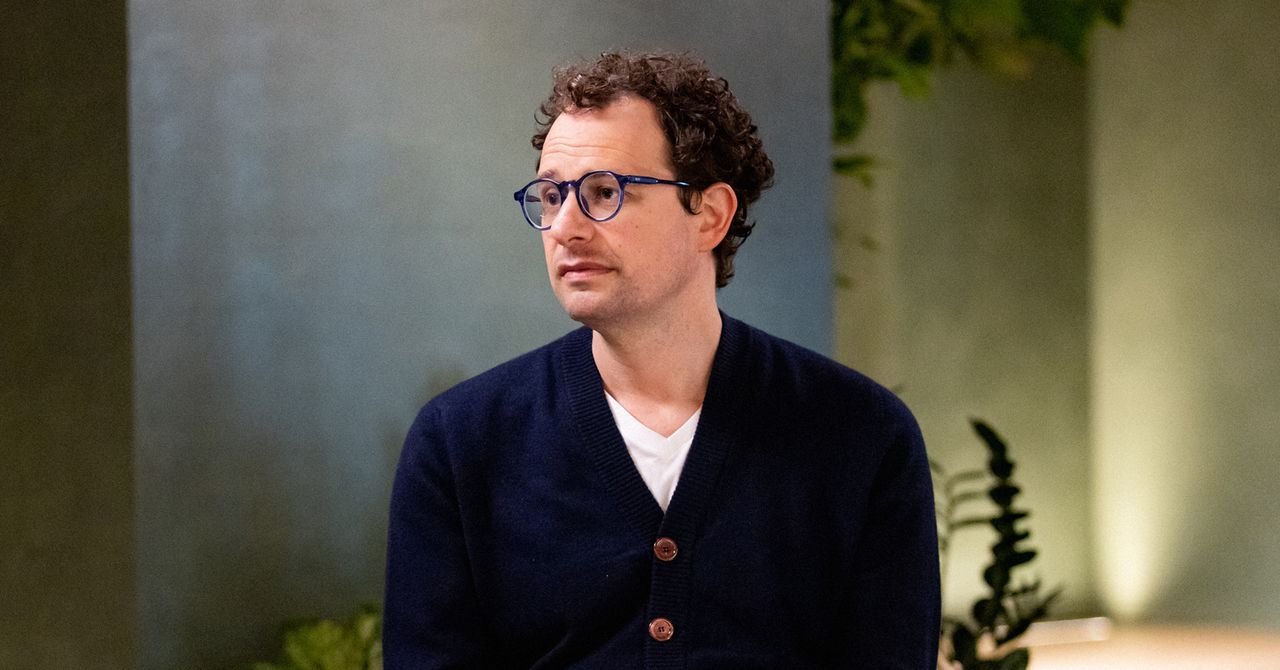
Trump administration officials concluded talks with Anthropic on Monday without lifting export controls that were imposed last week on the company’s most advanced AI models in response to jailbreaking concerns, according to three people briefed on the matter.
The administration continues to believe that there are ways to disable some of the guardrails on Anthropic’s Claude Fable 5, effectively allowing users to access the more powerful cybersecurity capabilities of the company’s Mythos model, the people said.
Anthropic has said for days that the administration’s concerns are overblown, a position it reiterated in working group meetings held at the Commerce Department with government researchers from the Center for AI Standards and Innovation and the Office of the National Cyber Director, Sean Cairncross, one of the people said.
The meetings were also attended by Commerce secretary Howard Lutnick, who dialed in by conference call from the G7 summit in Evian, France. Cairncross himself did not participate, the person said.
On Anthropic’s side, cofounder and chief compute officer Tom Brown and head of external affairs Sarah Heck have been leading the discussions. Anthropic’s head of frontier red-teaming, Logan Graham, and senior security researcher Nicholas Carlini flew to Washington, DC, for the talks.
“Both parties are working quickly to get this resolved,” an Anthropic spokesperson said in a statement to WIRED. A White House spokesperson declined to comment.
It was not immediately clear how any next steps might play out. The Commerce Department expressed a willingness to find a way to bring Fable 5 back online for consumer use, but it would likely be contingent on Anthropic fully resolving the jailbreak concerns, the person said.
Ringing the Alarm
The emergency talks have come at a fraught political moment for Anthropic, which was already in a prolonged fight with the Pentagon over whether its AI models could be used for certain military applications.
The Trump administration was first alerted to the jailbreak concerns last week. Amazon CEO Andy Jassy called Treasury secretary Scott Bessent directly about the alleged vulnerabilities, which played a role in spooking the administration, the people said. Jassy’s conversation with the Trump administration was first reported by The Information.
Alarmed White House officials tasked the NSA to help review the vulnerabilities. The NSA responded that it believed it was indeed possible to strip away Fable 5’s guardrails, prompting the administration to impose restrictions on the model.
Lutnick then spoke with Anthropic chief executive Dario Amodei on Friday, as the Commerce Department drew up its letter imposing export controls on Fable 5. Over the weekend, after Anthropic cut off access to the model for all users, Lutnick was on multiple calls with Brown and Heck, according to a person with knowledge of the events.
It’s unclear why Amazon, one of the largest investors in Anthropic, rang the alarm on Fable 5. “As a leading cloud provider that serves a large number of private and public sector customers, it’s not uncommon for governments to seek our counsel on potential security risks,” an Amazon spokesperson tells WIRED. “When they occur, we don’t share the details of these discussions.”
Security Disconnect
At the core of the conversations between Anthropic and the administration is a disagreement over the severity of the Claude Fable 5 jailbreaking concerns.
In a blog post on Friday, Anthropic implied that the administration’s characterizations of the potential risks are overblown. Some cybersecurity researchers reiterated this position to officials on Monday, sending an open letter arguing that the export control action taken against Anthropic was unjustified.
“Anthropic’s Mythos-class models are quite good at finding flaws and weaponizing exploits. However, they are not uniquely good at these tasks, and many of the undersigned individuals regularly use other foundation and open-source models for security audits and red-teaming every day,” the open letter reads. “As a result, this action has taken the best models away from defenders, created market uncertainty, and risked America’s AI leadership without any real risk to justify it.”
Jailbreaking works by prompting an AI model in specific ways to circumnavigate its safeguards. Because Fable 5 is a version of Mythos with certain cybersecurity, biology, and chemistry guardrails in place, getting around those protections would effectively give users a version of Mythos. Anthropic has itself raised significant concerns about allowing Mythos to be used by the general public; however, it said on Friday that Fable 5’s safeguards were strong enough to allow for a public release.
Researchers who evaluated Amazon’s findings say that the issues identified did not fully nullify Fable 5’s safeguards. “It wasn’t a jailbreak per se,” says Katie Moussouris, founder and CEO of Luta Security, who published an analysis after reading the Amazon paper.
Moussouris emphasizes that regardless of whether the US government has proof of a full Fable 5 jailbreak, restricting the model’s ability to access certain topics is a stopgap at best. “Most of us [in security research] think guardrails are speed bumps and shouldn’t be treated like security boundaries for skilled adversaries,” Moussouris says. “They only serve to slow down the less skilled.”
Investors in Anthropic have also been working over the weekend, trying to assess how the company’s latest spat with the White House affects its corporate future, says another person close to the company. Some investors believe the US government is singling out Anthropic, and a competitor may not have faced the same reaction if they released a model similar to Mythos, the person says.
The White House’s export control directive also raises broader questions for other AI labs aiming to release AI models with Mythos-level capabilities, and how they can do so in compliance with the US government. It’s now expected that AI labs give the White House early access to advanced AI models, and that they be extremely proactive about keeping the US government informed on model launches, according to AI lab leaders who spoke with WIRED.
“The events over the weekend … are informative for everyone that the [US] government would be willing to take these steps,” says Aidan Gomez, CEO of Cohere, a smaller AI lab based in Canada that offers enterprise tools. “No one can be naive to that reality.”
Business
Inside the fight over Claude Mythos 5


As the rest of the country celebrated the USA’s first World Cup win and the New York Knicks championship, Anthropic spent its weekend fighting the Trump administration over its latest model release. At 5:21 PM on Friday, the company received a US export control directive to suspend access to its Mythos 5 and Fable 5 AI models by “any foreign national” inside or outside the US, “including foreign national Anthropic employees.” The only way that was possible, Anthropic determined, was to completely disable products it spent the past week hyping — and travel to Washington, DC in hopes of changing President Donald Trump’s mind. Now, over the coming days, the US government could dramatically alter the trajectory of the entire industry, dealing a major blow to American AI companies.
Claude Mythos 5 and Fable 5 are built on the same foundation as Anthropic’s Mythos Preview, which Anthropic dubbed too dangerous to publicly release. (The company’s warnings could be seen as genuine concern or more hype for their own model — or both.) Mythos 5 was made available to a select group of government agencies and companies, while Fable 5, which featured additional safeguards, was deemed “safe for general use.” But when a report indicated those guardrails may have failed, Anthropic’s dire warnings about Mythos falling into the wrong hands came back to haunt it.
A source familiar with the situation, who participated in the negotiations between Anthropic and the Trump administration, said the administration called the AI lab on Friday around 1pm ET and gave the company a 90-minute ultimatum to shut down access to Mythos 5 and Fable 5. If it didn’t, then the government would impose export controls on Anthropic by authority of the US Commerce Department.
The source said that Anthropic executives were talking to the White House within 15 minutes of that first call, confirming that CEO Dario Amodei joined the discussions about an hour and 15 minutes after that initial call. Amodei directly spoke with US Treasury Secretary Scott Bessent, Commerce Secretary Howard Lutnick, and National Cyber Director Sean Cairncross, in some cases more than once, the source confirmed.
Anthropic wrote in a release on Friday that the company believed that the government “believes it has become aware of a method of bypassing, or ‘jailbreaking’ Fable 5.” Rather than an existential threat, though, Anthropic said that the jailbreak in question was a “potential narrow, non-universal” one that was “shared with the government” by an entity the company declined to name. Moreover, Anthropic said the behavior wasn’t unique to Fable 5. “We have reviewed a report that we believe is the basis of the government’s directive and validated that the level of capability displayed there is widely available from other models (including OpenAI’s GPT-5.5),” Anthropic wrote.
Semafor reported, citing one source familiar, that the hubbub began because the US government was concerned that a China-linked group had accessed the technology. But the source said that the China rumors went back weeks, referring to a large global telecommunications company that was initially cleared to be included in access to Mythos Preview, and that when the US government shared its concerns, Anthropic immediately revoked access.
An X post by David Sacks, the US government’s former AI and crypto czar who stepped down in March, didn’t mention China either. Sacks did, however, mention the unnamed entity that had exposed the issue to the government, calling it “a highly credible trusted partner of both Anthropic and the USG who was testing Fable [which] came forward with a jailbreak of those guardrails.”
Some reports point to Amazon CEO Andy Jassy as the person who flagged concerns to the US government after researchers at Amazon had red-teamed Fable 5. That conclusion stands at odds with some independent red-teamers, who have said they were impressed with the level of the protections.
The source familiar with the negotiations said that the Amazon research was explicitly mentioned in conversations with the US government. The person added that Anthropic had had access to that paper within days of the Friday export control directive and had been going back-and-forth since then with Amazon researchers to discuss it.
Everything in that paper, the source said, could be achieved by OpenAI’s GPT-5.5.
Anthropic spent the weekend scrambling to make nice with the Trump administration, beginning with virtual meetings and then flying employees to DC, including Dave Orr, Anthropic’s head of safeguards; Logan Graham, who runs its frontier red team and has led work on Project Glasswing; and Nicholas Carlini, a leading frontier developer and cybersecurity researcher. Axios reported, citing a source familiar with the Trump administration’s thinking, that the company simply has repeatedly made missteps in its communication with the administration and that it “has not done a great job at trying to speak to the administration and appreciate the ideological differences.” For Anthropic, the timing couldn’t be worse: the company had banked on Mythos to help it recover, in part, from months of high-profile clashes with the US Department of Defense.
The source familiar with the negotiations said that Anthropic pre-briefed the administration on Fable 5, and that the US Department of Commerce conducted testing pre-deployment, with no concerns shared at the time. The source added that Anthropic had been working closely with government agencies since Mythos Preview’s release.
The Trump administration initially took a hands-off approach to AI safety — but post-Mythos, it has become more ambivalent, even as it frets over the threat of losing the AI race to China. Now, prominent cybersecurity leaders have warned that sidelining Mythos 5 and Fable 5 could give China a significant AI advantage. Trump’s move has galvanized international calls for alternatives to American AI systems, while effectively putting a major US AI company’s new flagship model on ice.
A public letter from tech and cybersecurity executives called for restrictions on Fable 5 to be repealed on Sunday. “Not all of us agree that AI regulation is the right way forward,” the letter states, adding that if regulations are going to happen regardless, then they should be rooted in “scientific evaluations developed with input from industry and academia.”
Alex Stamos, chief product officer at Corridor, told The Verge he organized the public letter because the countless number of vulnerabilities in the past decade-plus, written in a variety of different coding languages, require AI to patch before bad actors find them. “We’re in a race, and I think policymakers don’t understand that,” Stamos said. “There’s this weird arrogance, this idea that American labs are hugely ahead of our adversaries that will always be true, that it’s really important to restrict access because of that. I just think that’s foolish. If the labs are ahead, it’s only by a matter of months. And you can see that in the open evaluations. The cutting-edge models are only something like six months ahead of the Chinese models — and those are the models we know about.”
The public letter goes on to state that though Anthropic’s Mythos-class models are skilled at finding cybersecurity vulnerabilities and taking advantage of exploits, they aren’t “uniquely good” at these tasks and that Fable 5’s safeguards “were so aggressive as to be the source of humor in the cyber community on launch day.” Stamos told The Verge that “there’s a real overstatement of Mythos’ capabilities. Anthropic is somewhat responsible for this themselves, clearly … Mythos is great, but the real turning point was really last year.”
Stamos said the industry is awash with backup contracts being signed with non-US companies and open-weight models being deployed on alternative hardware arrangements because the past weekend made political risk part of companies’ business plans more than ever before.
“They are laughing at us in Beijing right now,” Stamos said. “One of America’s champions is being kneecapped by the US government while we’re in a race with the Chinese. It’s just incredibly stupid. That’s why I wrote the letter, and I think that’s why a lot of people signed onto it.”
Ben Van Roo, co-founder and CEO of Legion Intelligence, a system of agents for the national security community, told The Verge that “the directive of ‘no foreign national should use this model’ is the most impossible thing to enforce.” He added, “When I first read that, my whole… [network of] AI community nerds was exploding.”
To make matters even more urgent, OpenAI, Google, and Microsoft have all come out with their own comparable products to Anthropic’s Mythos, making many of the same claims about their effectiveness and risks. If the Trump administration bans Anthropic’s advanced cybersecurity models, it can make a case for banning its competitors’ models, too. That could spur AI industry leaders to unite and help out Anthropic or, as with its fight over autonomous weapons with the Pentagon, position themselves as a safer and more compliant alternative.
Even as the Trump administration is trying to free tech companies of regulatory hassles, the Anthropic order could amount to a dramatic restriction on powerful AI models — depending on how the next few days play out.
Legion Intelligence’s Van Roo called it “uncharted territory” in the regulatory setting, adding that he doesn’t think this is the last time something like this will happen.
We’ve also entered the era of AI populism, when a growing number of people are pushing back against the AI industry’s outsized influence and the concentration of power at the top via data center protests, pledges to quit using AI chatbots, lawsuits over wrongful deaths, and even attempted attacks on AI company CEOs. Van Roo says the Trump administration’s recent moves against Anthropic could stoke “greater fears and concerns, potentially for the wrong reasons.”
The source familiar with the negotiations described the weekend’s conversations as constructive, with some members of the administration admitting that putting export controls on model providers isn’t ideal, since competitors with similar products may find themselves under the same restrictions — and since the US government is currently exploring a program that would encourage the export of American AI systems.
Monday’s talks concluded with no resolution as of yet.
As Anthropic continues to negotiate with the US government, there’s little chance that the company’s other myriad issues with the Pentagon won’t come up — namely, the ongoing battle between Anthropic and the Department of Defense over acceptable usage policies for Anthropic’s tech by the US military.
“This is new and we’ve never had anything potentially this drastic before, and it does have some real ramifications” in terms of how to enforce access to powerful models, Van Roo said. “Who gets to use this new technology that continues to outpace our own ability to regulate it?”
Business
Paramount-Warner Bros Deal Has States Eyeing More Than Just Antitrust Issue

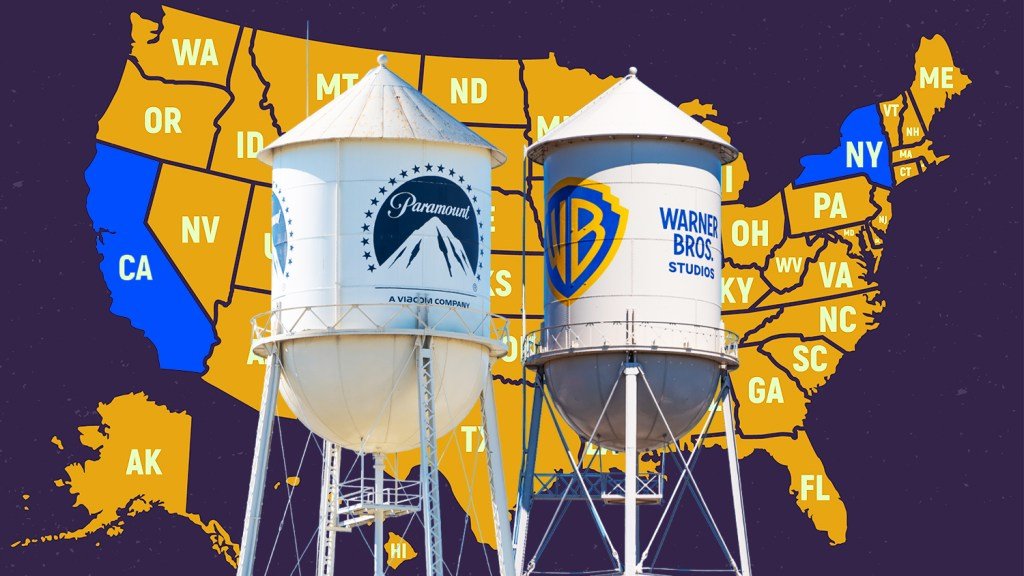
EXCLUSIVE: In a tough and rough election year for incumbents, Paramount’s $111 billion acquisition of Warner Bros Discovery has become a political football in California and across the nation.
Just a few feet from Donald Trump, a smiling David Ellison was front and center last night for the UFC’s controversial and inflammatory Freedom250 cage matches on the White House lawn. Still, even with the Justice Department approving the WBD merger late last week without any concessions, the Paramount Skydance’s CEO’s happy face masked some spikey obstacles to the merger from overseas and in state houses over Ellison’s strategic bear hug with the ex-Apprentice host.
“The Ellisons’ haste to get their deal done by Trump has a lot of enemies,” an individual close to power players in Sacramento told Deadline after the June 12 sign-off by the federal DOJ. “They may think they’re home free, but that’s wishful thinking and not political reality.”
Led by California’s reelection-seeking Rob Bonta, nearly a dozen state attorneys general are poised to launch a lawsuit in the next few weeks to derail the ParaBros deal or at least take a bite out of it, Deadline can confirm. However, for all the antitrust threats opponents to the merger have floated, the mainly unspoken but real battle in this year of midterm elections seems to be about old-fashioned politics and firing up the base.
Having told Deadline ages ago that his office was pondering an antitrust action over the WBD meld, AG Bonta threw cold water on the Trump DOJ’s signoff last week with a curt “the merger of Warner Bros and Paramount is not a done deal and remains under investigation by my office” tweet.
At the same time, the Ellisons have retained Jeffrey Kessler to get in the legal octagon for them if the state throws down.
Having fought alongside Bonta, New York AG Letitia James and others recently in successfully pinning Live Nation in the antitrust suit the Trump administration had walked away from, Kessler is an inspired choice by Paramount on many levels. Kessler won’t tip his hand to the electoral backroom moves at play, but the Winston & Strawn litigator is very skeptical the states have an antitrust suit when it comes to ParaBros.
“I have great respect for the states,” Kessler told Deadline in true diplomatic fashion. From the lawyer’s POV there will be no “reduction in competition” in Hollywood if the two companies become one. “I think they’re very talented lawyers there, and I think they do a lot of wonderful things for the public good. I will not criticize the states in any way, shape or form.”
With the precision of a closing argument, he adds: “What I would say is what I would hope they are doing, and I believe they are doing is seeing if they actually have an antitrust case to bring that has a reasonable chance for success. My hope is that they keep an open mind, that they don’t make a decision based on politics on an antitrust case, and that they only file an action if they really think that they can prove an antitrust violation. That process takes a long time, so it doesn’t surprise me that they haven’t filed anything yet.”
Certainly, besides the midterms in November, there are some other real time calendars issues coming up fast for Paramount.
As a multi-phased review by UK regulators may have thrown their own spanner in Para-WBD works last week, there is some serious money on the table for Ellison and his Oracle founder father if the merger isn’t locked in by September 30. At that point, a ticking fee kicks in and Paramount would be paying hundreds of millions out to WBD shareholders every subsequent month.
For a merger already weighed down by debt and foreign interest concerns, that real money is a big deal.
Adhering the illusion of still being on the fence over the ParaBros merger even as they are sitting down with potential outside counsel and have received a newly flush antitrust-fighting war chest from Gov. Gavin Newsom, Bonta’s team will only say they are “taking a very close look and intend to be vigorous in our review of the proposed Paramount and Warner Bros merger.”
In a vigorous(ish) AG race against Republican Michael Gates this year, Bonta has been showing up almost everywhere, including a very partisan IATSE attended mock hearing in Burbank by Sen. Adam Schiff in March, pounding the Ellisons, to be seen in the warm glow of anti-merger activists and layoff fearing Hollywood workers.
“Our office will take necessary action if we find that the transaction is unlawful under antitrust law,” a circumspect spokesperson for the Golden State AG told Deadline this week as anticipation of their expect action has only grown in the last week. “The opposite is also true: we will give it a fair review on the merits, and if it looks good for California consumers, there won’t be further action. California DOJ has been doing this work for a long time: our office has intervened in mergers in the grocery, broadcast market, and healthcare industries and has no qualms about stepping in and stopping deals we find illegal — and stepping back if those deals pass regulatory scrutiny.”
“Beyond this, the Paramount acquisition of Warner Brothers remains an active investigation, and we do not have any updates to share at this time.”
On the other side of the country, NY AG James faces far lesser GOP rivals as the Trump foe heads into her own primary later this month. To that, James has played less of a role publicly in any Paramount-WBD legal action, while being a “big player” behind the scenes, I’m told. In that context, a spokesperson from the New York Attorney General’s office confirmed New York was part of the coalition of states lining up in opposition to the big bucks and seemingly fast-tracked merger but declined to discuss any potential lawsuit.
“Paramount is going to have to give something up, maybe control of CNN, if they want this deal to happen,” a well-placed political operative asserts. “They could have handled it differently from the start and maybe, maybe, have gotten buy-in from Democrats, They went full MAGA and there too many objections, too many minefields now.”
With big names like Mark Ruffalo, Jane Fonda and others taking to podiums and Zoom calls to invoke the First Amendment and decry the Ellisons’ links to MAGA (with the future of CNN eating up a lot of the spotlight after the ongoing chaos at the Bari Weiss-led CBS News), a follow-the-money game separate from the state AGs has emerged. As over 5,000 Tinseltowners signed an open letter praising Bonta and other mainly Blue State AGs for “scrutinizing the merger and considering legal action to block it,” the Block the Merger movement has been swatted with allegations it’s all being masterminded by MAGA boogieman George Soros and a cadre of socialist billionaires and antisemites.
Closer to home in the Democrats civil war that is the L.A. mayoral race between vulnerable incumbent Karen Bass and her ex-ally Councilmember Nithya Raman, the takeover of the David Zaslav-run WBD by Paramount has become a major campaign issue In a city pummeled by a massive decline in production, the loss of over 40,000 industry jobs the past couple of years and worries over deep cuts once ParaBros occurs.
Personally connected to Hollywood through her producer/writer spouse, Raman was blunt about where she sees this all going.
“This merger is bad for Los Angeles, and its math only works through mass layoffs,” the two-term Hollywood heavy District 4 councilor says. “When Skydance bought Paramount, over 2,000 people lost their jobs, many of them in Los Angeles,” she adds. “This is what consolidation looks like on the ground. Billionaires will benefit, while the workers who built this industry get left behind. I’m grateful the attorneys general are acting to block it, and as mayor I’ll make sure Los Angeles does everything in its power to support their case.”
Bass, who has lashed out at Raman over inaction for Hollywood even before her political pal beat Hills alum Spencer Pratt to secure a second spot in the fall runoff, was more measured, kinda.
“The entertainment industry is at the core of who we are as a city, LA’s place on the global stage, and to our entire economy,” the ex-Congresswoman told Deadline. “I cannot support a deal that results in massive job losses,” Bass, who has family members of her own working in the industry, went on to say.
“I urge regulators to enforce job protections and creative freedom, and I call on Paramount’s leadership to redouble its commitment to the industry workers in our city.”
That’s a helluva lotta trust.
Business
Online portal used to send US deliveries to Cuba stops taking orders
MIAMI (AP) — One of the main online platforms that Cubans living in the United States use to send money, food, and clothing to their relatives on the island is ceasing operations as the Trump administration increases pressure on the Cuban government.
Envioscuba.com announced it has stopped taking orders as round after round of U.S. sanctions aim to choke off international support for businesses in Cuba. The latest target Cuba’s state-owned oil and gas company, Cuban President Miguel Diaz-Canel and GAESA, a business conglomerate run by the Revolutionary Armed Forces of Cuba that owns a wide range of businesses, from car rentals and retail stores to transportation companies.
Increasingly, it’s the most vulnerable who are being punished as Cubans endure shortages of food and medicine, nearly constant blackouts and stifling heat. Many have received help from family and friends in the U.S., who send money and packages from Miami containing appliances, food, and clothing, or purchase products online for delivery in Cuba.
Envioscuba.com said it no longer accepting new orders, but all those previously approved and in process will be delivered.
“Due to reasons beyond our control, our platform can no longer provide services,” the website said, without elaborating. It is not clear exactly when new orders stopped being received.
The AP was unable to contact the company. Its website does not list a phone number to call or an email address to send a message.
Platforms like envioscuba.com were operating directly with Grupo de Administración Empresarial S.A. said Emilio Morales, president at Havana Consulting Group, a Miami-based consulting firm specializing in market strategies for doing business in Cuba.
Most such portals, including envioscuba.com, do not ship products from the United States to Cuba, but rather sell and deliver products stored in GAESA warehouses on the island, Morales said. “The trend is for all of this to disappear, because GAESA is behind it all,” said Morales, who expects other similar portals to shut down as well to avoid being sanctioned for doing business with the Cuban government.
The administration’s sanctions threaten to freeze U.S. assets of foreign companies and even prohibit travel by their investors, employees and shareholders — virtually eliminating their activity in the U.S. financial system.
Business
U.S. Average Gasoline Prices Slide Below $4 Per Gallon

Patrick De Haan, a petroleum analyst at GasBuddy, wrote on X that the national average price of gasoline has finally slipped below the politically sensitive $4-a-gallon level for the first time in many months.
Per De Haan:
The nation’s average price of gasoline has fallen 9.3 cents over the last week and stands at $3.99 per gallon, according to GasBuddy data compiled from more than 12 million individual price reports covering over 150,000 gas stations across the country.
The national average is down 52.4 cents from a month ago and is 91.1 cents per gallon higher than a year ago. The national average price of diesel fell 11.7 cents in the last week and stands at $5.182 per gallon.
“Average gasoline prices fell in 47 states over the last week, with the national average dropping below $4 per gallon late Sunday for the first time since mid-April,” said Patrick De Haan, head of petroleum analysis at GasBuddy.
De Haan continued, “The decline came as oil prices moved sharply lower in reaction to news of a potential deal between the United States and Iran, though it remains to be seen whether the agreement will hold. A handful of price-cycling states saw averages jump before joining the broader downward trend. The real test now shifts to the Strait of Hormuz, where any reopening and resumption of normal oil flows would be the clearest signal that this relief is durable. For now, the national average could continue falling, provided there isn’t a drastic reversal and the U.S. and Iran continue moving in a positive direction.”
Looking at WTI crude futures and the AAA national average for gasoline, the implied decline suggests gas prices at the pump could tumble toward $3.75 by mid-summer.
Great news ahead of midterm elections.
Pump Pain Relief? Gas Above $4 May End Soon As U.S.-Iran Peace Deal Sends Oil Lower
The national average for U.S. gasoline prices has hovered above the politically sensitive $4-per-gallon level for 76 days, or roughly 2.5 months, as the Gulf energy shock tightened physical markets and forced emergency SPR draws.
But with President Trump declaring late Sunday, just 30 minutes before NY futures opened, that a US-Iran peace deal has been secured, and with WTI and Brent futures tumbling, pressure at the pump could begin to ease in the very near term.
National gasoline prices could slip back below $4 in the coming days or weeks if the crude selloff holds and traders begin pricing in a reopening of the Strait of Hormuz. Still, normalization of crude energy flows will likely take months, if not longer, to return to pre-war levels.
As of Sunday evening, AAA data show the national average for 87-octane gasoline stands at around $4.074.
Patrick De Haan, a petroleum analyst at GasBuddy, wrote on X shortly after Trump announced the peace deal that the national average for gas could fall to $3.75 by July 4.
De Haan wrote:
The U.S. and Iran signaling a deal has been struck. The next few days will be key to see if the agreement sticks, and if traffic begins moving in the Strait. WTI crude down 5%, as more confirmations come in days ahead, national average price of gasoline may continue to fade.
Beyond that, the national average could fall below $3.75/gal by July 4, under a optimistic timeline, but hurricane season could be a major wildcard for the rest of summer- tight global inventories mean it will take months or beyond to fully restore global oil inventories.
The next several weeks will be key- one major slip up could impact greatly prices moving forward. And with so many speedbumps in this situation, it may be foolish to think this problem is now completely over. Time will tell.
Surging gas and diesel prices over the last 2.5 months have added downward pressure on consumers, especially working-class households, who were hit with sticker shock at the pump.
The combination of elevated gas prices and fading tax-refund tailwinds had already begun to expose cracks in the consumer economy, particularly among lower- and middle-income households. That likely served as a warning signal for the Trump administration: resolve the Middle East conflict before worsening consumer sentiment and pain at the pump become much larger political liabilities heading into the midterms.
By Zerohedge.com
More Top Reads From Oilprice.com
Oil Prices Plunge as U.S. and Iran Reach Deal to Reopen Strait of Hormuz
Russian Governors Rush to Deny Fuel Crisis as Rationing Spreads
Nigeria’s Crude Oil Production Hits 15-Month High
Business
Centene to offer buyouts to some employees

Centene said it offered buyouts to some employees on Monday, as the health insurer grapples with higher medical costs, funding cuts and membership declines.
“Centene is positioning the company to lead the future of healthcare — working to deliver a simpler and better experience for our members and partners while meeting the realities of today’s healthcare environment,” a company spokesperson said in a statement. “Today we announced a Voluntary Separation Program to support employees who may be considering a transition.”
The company did not indicate how many employees were offered buyouts or how much it is aiming to reduce its workforce. Shares initially fell 4% after Bloomberg first reported the news on Monday.
Layoffs could follow if the company doesn’t meet the target for voluntary separations, Bloomberg reported.
Centene is the largest Medicaid provider and is focused on other federal health plans through Medicare and the Affordable Care Act. The buyouts come after the company reported a decline in membership in the first quarter, down 6% year over year to 26.3 million, according to a filing.
Centene’s ACA business lost about 2 million members in the first quarter compared with the end of 2025, primarily because Congress let enhanced federal subsidies in the program expire at the start of the year. The company in March also said it expects ACA membership to fall nearly 40% by the end of 2026, executives said in March at a Barclays conference.
Centene is bracing for the impact of more than $900 billion in cuts to Medicaid over a decade, and the broader insurance industry is still managing higher-than-expected medical costs in privately-run Medicare plans.




World Cup fans from around the world gathered at Santa Monica beach in Los Angeles. #BBCNews


Jelly Roll Files for Divorce From Bunnie Xo
Jelly Roll and Bunnie Xo are ending their marriage. According to divorce records obtained by People, the country music singer...


Inside the fight over Claude Mythos 5
As the rest of the country celebrated the USA’s first World Cup win and the New York Knicks championship, Anthropic...


Newsom calls out Trump over DOJ investigation
The Department of Justice is investigating Gavin Newsom's wife, according to a person familiar with the matter, in a move...


Jelly Roll, Wife Bunnie Xo Break Up, Divorcing After 10 Years Married
Bunnie Xo and Jelly Roll’s love story began in Las Vegas. As she recalled on Bussin’ With The Boys, she...


Fans react after Cape Verde draws with Spain in World Cup shock #BBCNews


Trump news at a glance: Long way to Friday and Iran peace deal signing
News of a potential reopening of the strait of Hormuz, through which a fifth of the world’s oil and liquid...


Brendan Sorsby, Texas Tech mutually part ways after gambling scandal, legal fallout
Against the backdrop of immense backlash and a slew of legal filings, quarterback Brendan Sorsby and Texas Tech have mutually...


Struggling ‘Celebrity Autobiography’ Announces Early Broadway Closing
Celebrity Autobiography, the Broadway specialty production in which bold-face names read the read the published memoirs of other bold-facers to...


Does it end with this? Justin Baldoni’s lawyer publishes settlement with Blake Lively
Justin Baldoni’s lawyer is hoping both Baldoni and Blake Lively can “move on” from their contentious “It Ends With Us”...
-
 Business2 days ago
How much of Musk’s wealth comes from government help? Virtually all of it
-

 LifestyleNews2 weeks ago
120 minutes of strength training per week may help extend lifespan
-

 Politics4 days ago
What to know about the stabbing that set off fiery riots in Northern Ireland
-

 Video3 days ago
Download fans say what they love about the festival. #DownloadFestival #BBCNews
-

 Video3 days ago
Why SpaceX IPO isn't about space. #SpaceX #ElonMusk #BBCNews
-

 HealthNews4 days ago
The people of Okinawa, Japan only eat until they are about 80 percent full, then stop — and the practice has been linked in multiple peer-reviewed studies to lower rates of cardiovascular disease, slo
-

 TravelNews3 days ago
My Paternal Instinct Should’ve Warned Me About Netflix’s Maternal Instinct
-
 Food3 days ago
Pope Leo’s plane was grounded. Then the King of Spain stepped in to help