

Tech
Astrobotic unveils Griffin-1 lunar lander for NASA Moon Base mission

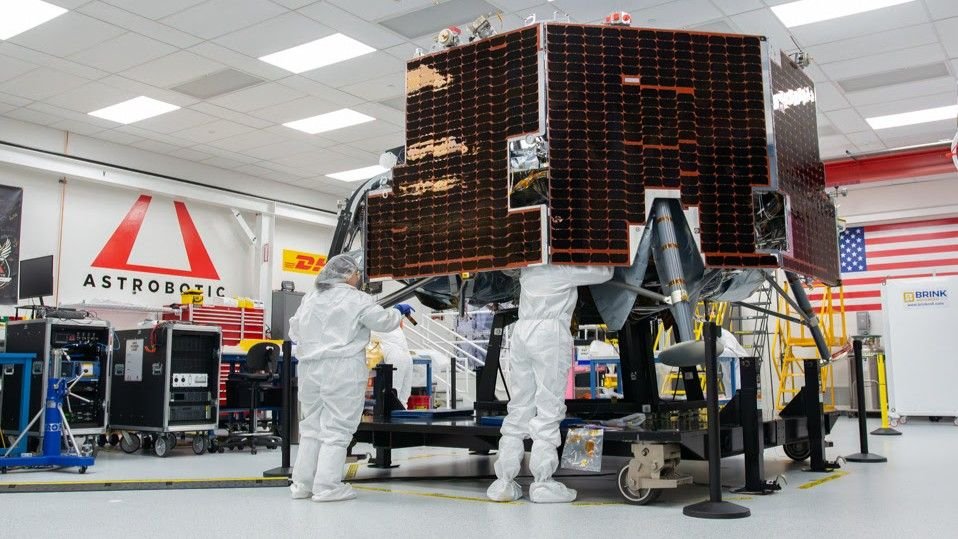
The next robotic lander to launch to the moon was revealed today (June 15) by Pittsburgh-based company Astrobotic.
NASA chose Astrobotic’s Griffin vehicle to be the lander for its Moon Base II mission, part of the first phase of the agency’s efforts to establish a permanent lunar outpost. Astrobotic is targeting late 2026 to launch Griffin Mission One (Griffin-1), which will lift off on a SpaceX Falcon Heavy rocket. The lander is contracted to deliver several research and technology demonstrations to the surface of the moon as part of NASA’s Commercial Lunar Payload Services (CLPS) program, including the FLIP (Flex Lunar Innovation Platform) rover from California-based company Astrolab.
“This is the first infrastructure-class lander going to the surface of the moon,” Astrobotic CEO John Thornton said during today’s event. “This lander will be part of the cornerstone of building the moon base on the surface of the moon, so I’m just so excited for it to be here today, and to wish it good travels as it heads out to JPL [NASA’s Jet Propulsion Laboratory] for environmental testing,”
Integration at the company’s headquarters is expected to wrap up this week, with a number of payloads already incorporated onto the lander. Those payloads include Astrobotic’s own BEACON CubeRover, in coordination with Mission Control Space Services, and the European Space Agency’s LandCam-X, designed to help improve lunar landing precision and reliability on future missions.
Griffin-1 is scheduled for transportation to JPL in California next week for environmental testing, ahead of its delivery to Florida in the coming months, where the FLIP rover will be integrated into the lander prior to launch.
The mission will be the second from Astrobotic that shoots for the moon, after the debut of the company’s smaller Peregrine lunar lander in January 2024. Peregrine experienced a propellant leak shortly after deploying into space, however, and never reached its destination.
In addition to being the company’s first lander, Peregrine Mission One was the first-ever NASA CLPS flight. Through CLPS, NASA is partnering with commercial companies to provide lunar landers to deliver technology demonstrations and other payloads to the surface of the moon. The program aims to support NASA’s Artemis program, through which the agency plans to establish a lunar base and eventual sustained human presence on the surface.
Griffin is considerably larger than Peregrine. Though both landers stand roughly 6 feet (2 meters) tall, Griffin is nearly twice as wide, measuring nearly 15 feet (4.5 meters) across. Astrobotic advertises the big lander’s payload capacity to the lunar surface at 1,377 pounds (625 kilograms), with a cost of $544,000 per pound ($1.2 million per kilogram).
In total, Griffin-1 will carry 10 payloads from six separate nations, with four additional NASA payloads aboard FLIP. Some of the smaller payloads on the Griffin lander include a plaque from the Nippon Travel Agency, with messages collected from children in Japan to send to the moon; the Galactic Library to Preserve Humanity from Nanofiche that’s carrying a super miniaturized repository of literature and art; and a MoonBox capsule that will deliver items from around the world submitted to the Tokyo-based company Astrobotic on micro SD cards.
“So, this is going to be chock full of interesting science and data that’s going to be coming back from the moon, and some of the best imagery we have seen yet coming back from the surface,” Thornton said.
Tech
Investigators look for cause of skydiving plane crash that killed 12
Several of the skydivers killed when their plane crashed moments after taking off from a Missouri airfield were experienced jumpers, including a leader at one of the sport’s biggest organizations.
Federal investigators were at the crash site, about an hour south of Kansas City, on Monday, a day after the plane carrying a pilot and 11 skydivers slammed into a field and burst into flames, killing all on board, authorities said.
Some family members of those who died were at the airport to watch the jump and witnessed the crash, said Bates County Sheriff Chad Anderson.
Authorities have not released the victims’ names, but friends and colleagues began paying tribute.
The United States Parachute Association, skydiving’s governing body, said its technology director, Jen Sharp, was among those killed.
“Jen was a remarkable force whose passion for the skies was matched only by her dedication to the people in our sport,” said Albert Berchtold, the organization’s executive director.
Sharp taught skydiving instructors, wrote educational materials and made 6,800 jumps since her first one in 1989, according to her website.
She once jumped into Denver’s Coors Field ballpark while dressed as the queen of England and was part of the Everest Skydive in the Himalayas, her site said.
Kevin Payne, who had jumped with seven of the skydivers on the plane, said they were all different in nearly every way, except that they were all brought together as a “sky family.”
“There is a joy and peace and freedom to what we do. That’s what most people never understand,” Payne, of Parkville, Missouri, wrote in an email. “It’s not about the adrenaline. It’s about really flying together with your family in that brief, exquisite instant that people who live their lives on the ground will never understand.”
It will be about a month before the National Transportation Safety Board issues a preliminary report, but weather did not appear to be a factor.
Investigators had interviewed some witnesses by Monday afternoon but not the company’s owner, NTSB Vice Chairman Michael Graham said. The plane didn’t have a “black box” like those that record flight data on commercial planes, but investigators will examine the wreckage for other clues, he said.
Skydiving plane went down soon after taking off
Witnesses say the plane was roughly 100 feet (30 meters) from the ground when it made an abrupt left turn before crashing.
It appeared to be losing power, and the pilot may have been trying to reach a highway to land when the plane stalled and went down nose first, said Dennis Jacobs, acting airport manager of Butler Memorial Airport. On Monday, Graham said investigators are only beginning to interview all those witnesses and gather photos and videos of the crash, so it’s too early to say definitively what happened.
The plane was operated by Skydive Kansas City, he said. The crash site in the small town of Butler is roughly 65 miles (105 kilometers) south of Kansas City.
Skydive Kansas City said in a statement that its team and the skydiving community were in shock.
“This is a devastating loss for everyone connected to Skydive Kansas City and for the wider skydiving community,” the company said. “Our deepest sympathies are with the families, friends, and loved ones of all who were lost.”
Plane made multiple flights over the weekend
The Pacific Aerospace 750XL — a single-engine turboprop plane — is a popular model in skydiving because it’s designed for the sport and can quickly take parachutists to jumping altitudes while using short runways.
This particular aircraft, built in 2010, made nine successful flights in the days before the crash, including two on Sunday morning, according to FlightAware, a digital flight tracking company.
Red flags raised about skydiving oversight
The NTSB has voiced concerns in past crash investigations about whether skydiving operators get enough oversight and inspections to ensure their planes are safe and their pilots are well trained.
The Federal Aviation Administration has yet to adopt the NTSB’s recommendations, but said Monday it established a committee in April that will recommend ways to increase skydiving safety and will consider the safety board’s proposals.
“It’s always frustrating when we see things the FAA hasn’t acted on,” said Graham, of the NTSB. “And then we continue to see accidents in those arenas.”
The FAA said its inspectors are required to examine certain aspects of skydiving businesses every year, including several safety items related to the aircraft and pilots. But the NTSB said previously that those inspections failed to identify a twisted wing on a skydiving plane that later crashed in Hawaii in 2019 and killed 11 people.
Skydiving businesses can operate under the same FAA rules that apply to any small plane owner as long as their flights don’t venture more than 25 miles (40 kilometers) away. Those rules also cover tourist helicopters and other local flights because the FAA considers those operations less complicated than a charter company or airline.
But all aircraft owners are expected to follow the manufacturer’s maintenance schedule and recommendations.
The United States Parachute Association said in a statement that Skydive Kansas City adheres to the safety standards set by the largest skydiving organization in the world, including all FAA maintenance requirements.
The skydiving industry says it has a strong safety record. The association said that last year nearly 3.5 million jumps were completed and that 16 civilians died, the majority from human error.
___
Associated Press reporters Kristen M. Hall in Kansas City, Missouri; Cathy Bussewitz in New York; Rebecca Boone in Boise, Idaho; and Hannah Fingerhut in Des Moines, Iowa, contributed.
Tech
Friends, loved ones remember victims killed in Butler skydiving plane crash


BUTLER, Mo. — Loved ones and friends continued to mourn the 12 victims who died Sunday morning when a skydiving plane crashed after takeoff from Butler Memorial Airport.
On Monday, investigators from the National Transportation Safety Board arrived in Butler to join Federal Aviation Administration investigators to start piecing together information about the crash.
As they continue their work, we’re learning more about the 11 skydivers on the plane and the pilot at the controls.
Friends, loved ones remember victims killed in Butler skydiving plane crash
RELATED | ‘It’s heart-wrenching’: Butler community mourns after deadly plane crash
RELATED | ‘Everybody on that plane was somebody that I know’: Kansas City skydiver remembers plane crash victims
This story will be updated as we learn more.
—
Michael Shanahan
One of Michael Shanahan’s friends, Brandon Carney, said Shanahan was among those who died in Sunday’s plane crash. Carney said Shanahan was on his way to his 23rd tandem jump.
“He was a humble human and a very dedicated native to the city,” Carney said in a GoFundMe post on Monday. “He loved his friends, and this man worked very hard.”
Carney said Shanahan was getting ready for retirement after a 36-year career as part of the Kansas City Sheet Metal Union Local No. 2.
“The world lost an amazing man yesterday,” Carney said. “I have no other words than please keep these children and this family in your prayers because this man will truly be missed.”
Jennifer “Jen” Sharp
The United States Parachute Association told KSHB 41 News on Monday that its Director of Technology, Jennifer Sharp, was among those killed in Sunday’s crash.
“Jen was a remarkable force whose passion for the skies was matched only by her dedication to the people in our sport,” USPA Executive Director Albert Berchtold said in a news release Monday. “Her loss leaves an unfillable void in our office, our community, and our hearts. We are incredibly grateful for the years of laughter, innovation, and friendship we shared with her.”
Sharp had worked with USPA for nine years, working to advance the sport, supporting USPA membership and strengthening the organization.
“She spent her career ensuring that our community stayed connected, safe and forward-looking,” the organization said.
Rhonda Vuletich, a classmate of Sharp’s from Kansas State University, said the two lived on the same floor of West Hall and both majored in music.
Vuletich started her freshman year in 1988, a year ahead of Sharp, who would have begun her freshman year in 1989.
She met Sharp when she went by Jennifer Bennett.
Both were also members of the marching band, where Sharp played the marimba on the drumline.
Vuletich, who lives in South Carolina, said she and Sharp kept in touch via Facebook after college.
“She was just the kind of person you could not miss,” Vuletich said. “If you saw her, you wanted to be her friend.”
Vuletich said Sharp discovered skydiving during her freshman year and never looked back.
“She went on her first dive, I think it had to be her freshman year because I remember talking about it with her in the dorm, and I remember her coming back and being so excited that she had done it,” Vuletich said. “She was just in love. She absolutely loved it and couldn’t wait to do more of it. And so, off she went.”
Even after graduation, she says Sharp’s passion took off.
“She took it from something she enjoyed and made a life out of it,” Vuletich said. “She knew the risks that were there, but she loved it so much.”
Vuletich remembered Sharp as someone whose talent and spirit were impossible to forget.
“She was just very, very good. She was very talented on the marimba,” Vuletich said. “She was just such a great person. Such a warmhearted, good person. To know her was to love her, absolutely. You don’t get that many people that are just that through and through good and smart and talented and just a good spirit about her.”
Dave Hershberger
The North Kansas City School District notified families at Oak Park High School and Antioch Middle School on Monday that orchestra teacher Dave Hershberger was among those who died Sunday in the crash.
“Mr. Hershberger was a beloved member of the Antioch and Oak Park family and was not only a passionate educator and talented musician, but one of the kindest humans. Mr. Hershberger has inspired so many of our students through his love for music and the way he treated others every day. He modeled appreciation and genuine care for everyone who was lucky enough to know him.”
“On behalf of everyone in our community, we have shared our condolences with Mr. Herberger’s family. We are working closely with them to provide support where we can.”
This is a developing story and will be updated.
Tech
Starmer announces social media ban for under


Under-16s will be banned from social media from early 2027
Millions of children in the UK will be forced off social media after the government announced it would ban under-16s from accessing a range of platforms.
Apps including TikTok, Snapchat and Instagram will become inaccessible for children, Prime Minister Sir Keir Starmer said.
“We hope to pass regulation before Christmas,” he said, with the ban coming into force in spring 2027.
Tech companies including Meta, Snapchat and YouTube warned a blanket ban would move children into more unsafe online environments
“I am not prepared to compromise on the safety and happiness of our children, and that is why this ban must happen, and why this ban will happen,” Sir Keir said.
The government is yet to release the full list of platforms affected, but said YouTube, Facebook and X would also be included.
The government said over-16s may have to verify their ages to continue using social media platforms.
But it said many adults would not need to do checks because their accounts are already over 16 years old, had a credit card linked or their email address was already verified in other ways.
Messaging apps such as WhatsApp, and Signal will not be banned, and neither will online gaming platform Roblox.
But certain features will be restricted for under-16s, such as livestreaming and strangers being able to contact children.
YouTube Kids is also exempt from the ban.
The government will also look at restrictions on some functionalities on social media, such as infinite scroll and curfews, for 16 and 17-year-olds.
Intimate and sexual chats with AI will also be banned for under-18s.
The ban follows growing pressure from campaigners to make the online world safer for young people, and is part of an international trend of governments restricting who can access social media.
“This social media ban won’t solve every problem overnight, but it is a major step forward,” said Joe Ryrie, co-founder of the Smartphone Free Childhood campaign group.
“Millions of children will now get a few more years to grow up before entering online environments that were never designed with their wellbeing in mind.”
Snapchat said it shared the objective of online safety, but disagreed with a full ban.
Meta said a ban risked “isolating teens from online communities and information, and driving them to unregulated alternatives”.
YouTube said it has many protections in place for teens, and called itself “a vital resource for young people, educators and parents”.
“Blanket bans push kids out of such curated, supervised, beneficial experiences and towards anonymous, less safe services,” its statement said.
TikTok said: “We will examine the details of the government’s measures, and we look forward to collaborating constructively with the government on this important issue.”
The BBC has contacted X for comment.
Speaking in the House of Commons, Technology Secretary Liz Kendall said the measures would “take power away from the tech giants, who have had countless opportunities to keep children safe”.
She said she was clear that there was still much more to do for adults as well as children on social media, and that “today’s announcement is not ‘one and done’ or the end of the story”.
The ban was generally welcomed by a group of bereaved parents who say their children died as a result of a variety of harms on social media.
“I’m so glad now that this announcement has been made”, Esther Ghey told BBC Breakfast.
Her daughter Brianna was killed by two teenagers in 2023. One of the killers said she had become interested in “dark materials” online, including videos of murder and torture.
Ghey said the ban can “potentially save so many children’s lives”, but added there needed to be support in place for children who will not be able to access social media.
Rocio Cifuentes, the children’s commissioner for Wales, said a ban “was too simplistic a framing” – and that the accountability should have been on the platforms to make them safe for children to use.
Nicola Killean, the equivalent in Scotland, said the ban was not a “proportionate, effective, or enforceable way to protect children’s rights”, while Chris Quinn – Northern Ireland’s commissioner – said the ban “risks letting technology companies off the hook”.
England’s children’s commissioner, Dame Rachel de Souza, meanwhile, called it “positive” – and said the ban should be extended to all children, including those up to the age of 18.
The government said it will use Australia’s definition of social media companies when deciding what to ban.
Australia banned social media for under-16s in December – though some research suggests children were able to get round the restrictions.
In April, a survey from the Molly Rose Foundation said 61% of 12-15 year-olds who had accounts on restricted platforms before the ban still had access to one or more accounts.
It received more than 116,000 responses to the survey. Some 90% of parents who responded backed a social media ban for under-16s, with more than 83% saying the benefits of social media were outweighed by the risks.
Sign up for our Tech Decoded newsletter to follow the world’s top tech stories and trends. Outside the UK? Sign up here.
Tech
20 years of Intel Macs: Why Apple switched, and why it switched again

The release of macOS 27 later this fall won’t quite close the book on the Intel Mac. The last handful of models that could run macOS 26 Tahoe will be eligible for security and Safari updates for two more years, and elements of the Rosetta compatibility layer for running Intel code on Apple Silicon Macs will be with us in some form for some indeterminate amount of time after that.
But macOS 26 is definitely the last chapter of the Intel Mac story. Anything that happens after this is a coda or an epilogue.
Most of our WWDC coverage has been forward-looking, so indulge us if you will in a look backward at the full history of the Intel Mac, a partnership between two companies that made Macs dramatically better, until it started making them worse.
“Project Marklar”
The Mac’s history with Intel didn’t start with version 10.4.4, the first Mac OS X version to ship on a commercially available Intel Mac. But we won’t go as far back as the x86-compatible versions of NeXTSTEP or Apple’s abortive ’90s efforts to make a version of classic Mac OS that could be licensed for third-party x86-based systems.
Let’s begin with JK Scheinberg, an Apple engineer in June of 2000, who was looking for a solo project to help him transition to working from home. His pitch? A version of the then-still-in-progress Mac OS X that could run on Intel processors.
“I’ve been working on the Intel platform for the last week getting continuations working,” Scheinberg wrote to his boss in an email shared by his wife. “I’ve found it interesting and enjoyable, and, if this (an Intel version) is something that could be important to us I’d like to discuss working on it full-time.”
At the time, all Macs still used PowerPC processors co-developed by Apple, IBM, and Motorola, as they had since 1994. Early Mac OS X versions ran on G3 and G4 chips, and the 64-bit G5 processor was launched in mid-2003. A version of Mac OS X that ran on Intel’s chips wasn’t strictly necessary, and for around a year and a half, it existed only as a sort of hobbyist side project codenamed “Marklar.”
By early 2002, Marklar had attracted more attention within Apple, and then-CEO Steve Jobs briefly flirted with the idea of allowing Mac OS X to run on Sony’s Vaio laptops. By that August, a dozen or so engineers had been added to the project as it grew from “proof-of-concept” to “contingency plan.”
That’s because Apple was having problems with PowerPC chips. Jobs promised that the desktop version of the G5 would climb in clock speed from 2 GHz to 3 GHz within a year, a promise that never came to pass. And Apple was never able to squeeze the hot, power-hungry processor into a laptop—iBooks and PowerBooks were stuck with revised versions of the G4. Future CEO Tim Cook called a G5-based laptop “the mother of all thermal challenges.”
Jobs had been fuming about PowerPC chips for a while; Walter Isaacson’s Jobs biography describes a heated call between Jobs and Motorola CEO Chris Galvin in 1997, in which Jobs declared that PowerPC chips “sucked.” And he may have harbored other bad feelings; Geoffrey Cain’s Steve Jobs in Exile says that Apple’s PowerPC switch doomed further development of the Motorola m68k chips that NeXT’s computers relied on, helping to kill NeXT’s already-struggling hardware business.
And IBM, for its part, didn’t want to devote its resources to developing a bunch of chips that would be used exclusively in the low-volume Mac lineup (in 2003, Apple shipped roughly 3 million Macs; the company no longer reports unit sales in its earnings reports, but analysts peg that number at just under 26 million Macs in 2025).
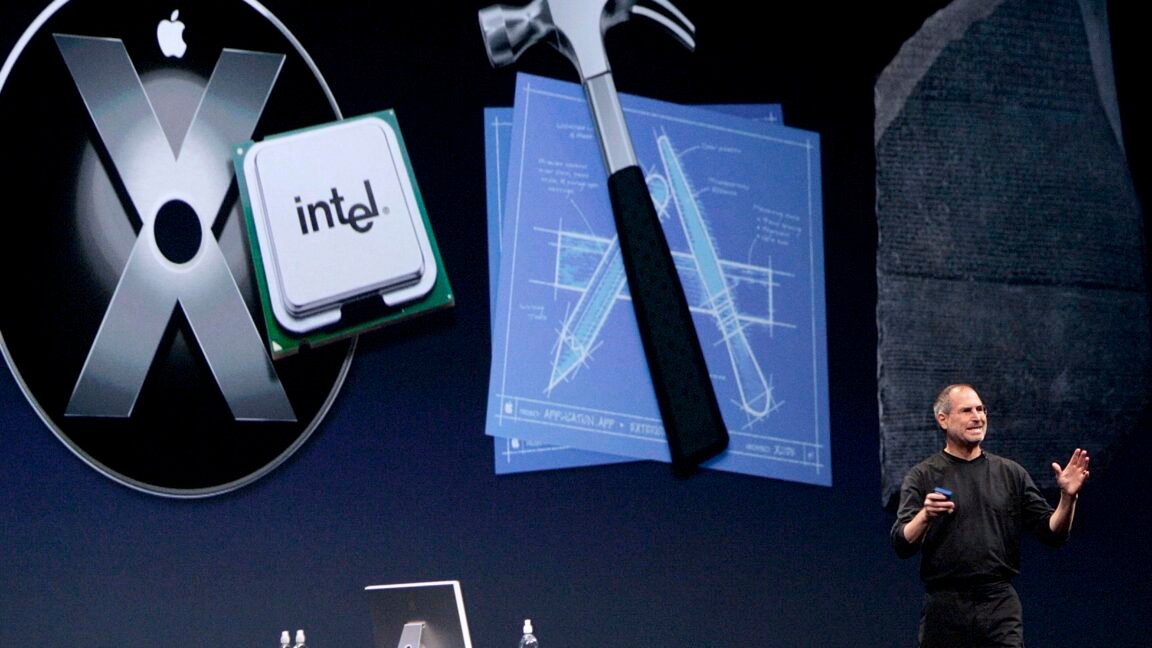
Intel’s Paul Otellini helped convince Jobs to jump to Intel’s chips, and Apple didn’t need to start the software switch from scratch because of its existing work on Marklar. In June of 2005, Apple publicly demonstrated Mac OS X 10.4 running on Intel hardware for the first time. His presentation obliquely mentioned Marklar, though not by name.
“And so today for the first time, I can confirm the rumors that every release of Mac OS X has been compiled for both PowerPC and Intel,” announced Jobs. “This has been going on for the last five years. Just in case.”
The transition
The “first” Intel Mac was a Developer Transition Kit (DTK) made available to software developers after WWDC 2005. It was essentially a Pentium 4-based PC inside a Power Mac G5 case, and it was available strictly as a loan to developers who could pay $499 per year for a developer account and another $999 for the kit. Few, if any, of these DTK kits survived; Apple required developers to return the systems by the end of 2006 and offered to trade them for a real retail Intel Mac to seal the deal.
The WWDC keynote laid out the timeline, in addition to the tools Apple would use to help developers and users navigate the transition. The next version of Mac OS X, version 10.5 Leopard, would be compatible with both PowerPC and Intel Macs. A compatibility layer called Rosetta would run most PowerPC apps tolerably well while developers worked on Intel-native versions, which could be distributed as universal binaries that supported both CPU architectures. This transition worked well enough that Apple essentially handled the Intel-to-Apple-Silicon switch the exact same way.
Apple would also take advantage of the fact that its computers would use the same hardware as other PCs. Right from the start, Apple officially supported running Windows directly on Intel Macs via Boot Camp; a Mac OS X app would handle partitioning the Mac’s disk and downloading Windows drivers for the Mac you were using, and a Windows-side app supported rebooting back into Mac OS (and eventually provided some other nice-to-haves like read-only access to HFS+ formatted volumes).
By January of 2006, Apple started shipping the first Intel Macs, starting with a new iMac and a renamed MacBook Pro to replace the outgoing PowerBook series. These first systems were externally almost indistinguishable from the PowerPC models they replaced, another strategy Apple recycled for the first Apple Silicon Macs—the implied message was “maybe these machines were different on the inside, but they’re still the Macs you know and love.”
The first new design of the Intel Mac era came later that year, when Apple launched the MacBook to replace the old iBook. Like the iBook, this laptop was made mostly of white plastic (a black version, inexplicably several hundred dollars more expensive, was also available eventually), and it used slower processors with Intel’s integrated graphics rather than the MacBook Pro’s dedicated graphics chips. But it was a popular machine—I was a college student at the time, and it was definitely the laptop you’d see the most often when you were out and about on campus (or maybe the second-most-often, if you added up every single permutation of “something cheap from Dell”).
During the WWDC 2005 presentation, Jobs predicted that the Intel transition would be mostly complete by the end of 2007. Unlike the 3GHz G5 prediction, this one actually wasn’t optimistic enough: Apple completed its switch from PowerPC to Intel chips with the announcement of a new Mac Pro and Intel-based Xserve in August of 2006.
A productive partnership
“As we look ahead, we can envision some amazing products we want to build for you, and we don’t know how to build them with the future PowerPC roadmap,” said Jobs while explaining the rationale for the switch. (It’s funny to think of now, but some of the Mac’s staunchest loyalists did react to the switch with disproportionate dismay.)
For the first few years of the Intel era, updates came fast and often. The first wave of Intel Macs briefly reverted to 32-bit chips, a retreat from the 64-bit architecture of the G5; this was fixed the next year with a switch to 64-bit Intel Core 2 Duo processors. A flashy new aluminum-and-glass iMac overhaul came in 2007, defining an aesthetic that is still recognizable in today’s Apple products. By the early 2010s, Intel’s rapidly improving integrated GPUs enabled the Mac’s first high-resolution “Retina” displays.
But the tastiest fruit of the early Apple-Intel partnership, a machine that wouldn’t have been possible with PowerPC chips, was the MacBook Air. For that first model, Intel had even made a special version of its Core 2 Duo CPU with 60 percent smaller packaging, something that helped Apple cram an entire laptop into something that could fit in a manila envelope.
That first Air was a bit too ahead of its time; its 4,200 RPM spinning hard drive in particular helped bog it down, and the things it was missing felt like bigger compromises in 2008 than they would have just a few years later. But fast solid-state storage soon became a standard feature, and within just a few years, the MacBook Air was what virtually all laptops looked like. This was something Intel both enabled and encouraged.
Signs of trouble
Apple began making its own Apple-branded processors in 2010, using technology it acquired when it bought P.A. Semi in 2008. But while early chips like the Apple A4 and A5 were energy-efficient and felt snappy in iPhones and iPads, it was extremely difficult to imagine their performance scaling all the way up to what Apple would need to replace the Intel chips in a MacBook, to say nothing of an iMac or a Mac Pro.
But these chips steadily improved, year after year, often by huge leaps and bounds. And there was trouble brewing at Intel.
By the mid-2010s, Intel’s “Tick-Tock” model for improving its products was beginning to falter. The company had more trouble than expected getting its 14 nm manufacturing process up and running, and its manufacturing improvements stalled for years. Intel’s next-generation 10 nm process wasn’t shipping in any volume until late 2019, and for years, it was stuck shipping warmed-over iterations of 2015’s 14 nm Skylake architecture.
And it wasn’t just the slowed rate of improvement that was a problem. Former Intel engineer François Piednoël claimed that the Skylake architecture was inordinately buggy and that Apple was the one finding a lot of the bugs.
“Basically our buddies at Apple became the number one filer of problems in the architecture. And that went really, really bad,” said Piednoël. “When your customer starts finding almost as much bugs as you found yourself, you’re not leading into the right place.”
The PowerPC-to-Intel switch because Apple was unhappy with its current chips and because a better, more viable option was readily available. By the late 2010s, both of those things were true again.
Bridge over troubled water
In retrospect, the first “Apple Silicon Mac” was not the M1 MacBook Air or Mac mini that came out in late 2010 but the redesigned butterfly-keyboard MacBook Pros that released in late 2016.
Those models shipped with a now-abandoned piece of technology called the Touch Bar, a narrow strip of touchscreen above the keyboard that attempted to replace the function row with other buttons and sliders that could change dynamically based on what the user was doing.
To make the Touch Bar work, those Macs included a chip called the Apple T1. The T1 wasn’t much—it was essentially a repurposed Apple Watch processor that existed to drive the Touch Bar display and provide Macs with a Secure Enclave that could be used for Touch ID and Apple Pay. But it was a sign that Intel’s chips were no longer serving all of Apple’s needs. As in the PowerPC days, Apple was envisioning products that its chip supplier couldn’t help it build.
The T1 was followed by the T2, a relative of the Apple A10 chip that handled the same things as the T1 plus additional security features, an SSD controller, and video encoding and decoding. Both the T1 and T2 ran their own operating system called “bridgeOS”—in one sense, the “bridge” referred to communication between those Macs’ Intel processors and the Apple coprocessors. But in retrospect, you could also read it as a reference to those Macs’ status as a bridge between the height of the Intel Mac era and the looming Apple Silicon era.
Apple inside
“When we make bold changes, it’s for one simple yet powerful reason,” said Apple CEO Tim Cook. “So we can make much better products. When we look ahead, we envision some amazing new products, and transitioning to our own custom silicon is what will enable us to bring them to life.”
Cook formally announced the long-rumored Apple Silicon transition in the company’s 2020 WWDC keynote, which was delivered fully virtually during the height of the COVID-19 pandemic. (There’s something faintly strange about watching this video now, even though basically all of Apple’s major announcements are delivered as fully pre-recorded videos these days—it’s full of weird cuts, and it feels like none of the presenters are sure what they should be doing with their hands.)
Tech
Experimental treatment kills prostate tumor cells while reawakening antitumor immunity

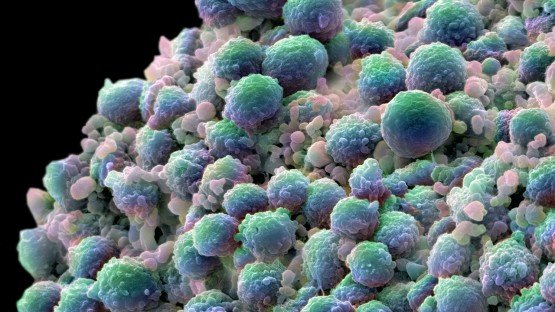
Prostate-targeted, engineered nanoparticles made of amorphous silica are effective in killing prostate tumors directly while enhancing antitumor immunity, according to a preclinical study led by investigators at Weill Cornell Medicine and the Cornell Duffield College of Engineering.
The particles, derived from silicon dioxide, a common component of healthy foods or fossilized sedimentary structures from single-celled organisms, induced several complete remissions of aggressive tumors in mouse models, supporting the further investigation of their use in clinical trials.
Originally developed for medical imaging applications, these particles – known as ultrasmall fluorescent core-shell silica nanoparticles, or Cornell Prime dots (C’ dots) – have progressed into advanced-phase clinical trials for image-guided surgery and therapeutic applications. In recent years, the researchers have found that the C’ dots on their own can exert therapeutic effects against cancerous cells, while sparing healthy cells.
In the new study, published June 15 in Cancer Research, a journal of the American Association for Cancer Research, the researchers evaluated the particles’ effects on mouse models of aggressive prostate cancer. They showed that the particles make the tumor cells highly susceptible to a powerful self-destruct process, and simultaneously convert the normally inactive, “cold” prostate tumor immune microenvironment into a “hot” one featuring strong antitumor immune activity – which can dramatically enhance the effects of other immunotherapies.
“We’re very encouraged by these results; a treatment that directly induces tumor-cell death while transforming the immune microenvironment, as this does, would represent a new clinical paradigm,” said study senior author Dr. Michelle Bradbury, the Endowed Professor of Imaging Research in Radiology and director of the Molecular Imaging Innovations Institute at Weill Cornell Medicine and a neuroradiologist at NewYork-Presbyterian/Weill Cornell Medical Center.
The study was part of a long-term collaboration between Bradbury’s laboratory and the laboratory of co-corresponding author Ulrich Wiesner, the Spencer T. Olin Professor in the Department of Materials Science and Engineering and professor in the Department of Design Tech in the College of Architecture, Art and Planning. It was funded in part by the Parker Institute for Cancer Immunotherapy at Weill Cornell Medicine.
As detailed in the study, the unusual effects of the C’ dots include pushing prostate tumor cells toward a self-destruct mode called “ferroptosis,” in which the overwhelming oxidation of molecules in the cells, especially the fat-related molecules that make up cell membranes, leads to the degradation of those membranes. Precisely how the particles trigger ferroptosis remains unclear, but the researchers have found evidence that the particles, originally designed as carriers for imaging agents, often pick up positively charged iron ions in the bloodstream, and transport those reactive cargoes inside tumor cells – where they ultimately can help catalyze runaway oxidation.
The C’ dots had numerous immunological impacts, including the conversion of T cells, macrophages and other immune cells in the tumor vicinity from inert or actively immunosuppressive modes to robust antitumor activity. These results led to C’ dots sensitizing tumors to clinically approved anticancer immunotherapies. The experiments also revealed extensive growth-inhibiting metabolic disruptions in different cell populations within the tumor microenvironment.
The silica particles were specifically targeted to prostate tumor cells by a molecule that homes in on a prostate cell surface protein called PSMA, but even in non-prostate tissues where the particles were briefly concentrated, such as the spleen, there was no sign of toxicity.
“It seems unreal – how is it possible that rather than a single pathway, we see all these effects happening simultaneously, and only in tumors and not in healthy tissues?” Wiesner said. “I have to wonder whether ultrasmall silica’s very early and ubiquitous presence in the environment and foods like leafy greens or cereal grains has given it a connection to biology that we’re only beginning to glimpse.”
The most striking results came when the researchers conducted survival experiments in mice with aggressive prostate cancer. The C’ dots on their own, and immunotherapies on their own, moderately extended survival compared to no treatment. But the combination of silica particles with an immunotherapy called immune checkpoint blockade synergistically resulted in complete or near-complete remissions and indefinite survival in four out of 10 mice treated this way. Adding a third treatment called CSF-1R blockade, which targets tumor-associated macrophages, yielded five out of 10 complete remissions.
“We think there’s nothing else out there that has such a strong and durable tumor growth suppressing effect,” Bradbury said.
“One of the most intriguing aspects of this work is the convergence of direct tumor-cell killing with broad immune remodeling,” said study co-author Dr. Jedd Wolchok, the Meyer Director of the Sandra and Edward Meyer Cancer Center, professor of medicine at Weill Cornell Medicine, director of the Parker Institute for Cancer Immunotherapy at Weill Cornell Medicine Meyer Cancer Center and an oncologist at NewYork-Presbyterian/Weill Cornell Medical Center. “By creating conditions that support a more effective antitumor immune response, these particles may help unlock the full potential of immunotherapy in prostate cancer, where durable responses have historically been difficult to achieve.”
Bradbury and her colleagues also recognized the contributions of the study’s co-first authors, Nabil Siddiqui, Dr. Li Zhang and Gabriel DeLeon, who led many of the biological, mechanistic and translational studies, as well as Nada Naguib, Ph.D. ’25, and Rachel Lee, Ph.D. ’22, graduate students in Wiesner’s laboratory whose precision synthesis and characterization of particle batches made the work possible.
“This study reflects years of collaborative effort across multiple laboratories and would not have been possible without the dedication, creativity and perseverance of this tremendous research team that helped drive the science forward,” Bradbury said.
The researchers are continuing to explore these ultrasmall core-shell silica particles as a new class of anticancer therapeutics that can simultaneously modulate inflammatory, immune and metabolic pathways, with the ultimate goal of evaluating their safety and efficacy in clinical trials.
This study was funded by the Department of Defense; the National Cancer Institute, part of the National Institutes of Health, the Cancer Center Support Grant; and Cycle for Survival/Parker Institute funding.
Dr. Michelle Bradbury and Ulrich Wiesner are inventors on patents related to the technology described in this study.
Jim Schnabel is a freelance writer for Weill Cornell Medicine.




World Cup fans from around the world gathered at Santa Monica beach in Los Angeles. #BBCNews


Jelly Roll Files for Divorce From Bunnie Xo
Jelly Roll and Bunnie Xo are ending their marriage. According to divorce records obtained by People, the country music singer...


Inside the fight over Claude Mythos 5
As the rest of the country celebrated the USA’s first World Cup win and the New York Knicks championship, Anthropic...


Newsom calls out Trump over DOJ investigation
The Department of Justice is investigating Gavin Newsom's wife, according to a person familiar with the matter, in a move...


Jelly Roll, Wife Bunnie Xo Break Up, Divorcing After 10 Years Married
Bunnie Xo and Jelly Roll’s love story began in Las Vegas. As she recalled on Bussin’ With The Boys, she...


Fans react after Cape Verde draws with Spain in World Cup shock #BBCNews


Trump news at a glance: Long way to Friday and Iran peace deal signing
News of a potential reopening of the strait of Hormuz, through which a fifth of the world’s oil and liquid...


Brendan Sorsby, Texas Tech mutually part ways after gambling scandal, legal fallout
Against the backdrop of immense backlash and a slew of legal filings, quarterback Brendan Sorsby and Texas Tech have mutually...


Struggling ‘Celebrity Autobiography’ Announces Early Broadway Closing
Celebrity Autobiography, the Broadway specialty production in which bold-face names read the read the published memoirs of other bold-facers to...


Does it end with this? Justin Baldoni’s lawyer publishes settlement with Blake Lively
Justin Baldoni’s lawyer is hoping both Baldoni and Blake Lively can “move on” from their contentious “It Ends With Us”...
-

 Business2 days ago
How much of Musk’s wealth comes from government help? Virtually all of it
-

 LifestyleNews2 weeks ago
120 minutes of strength training per week may help extend lifespan
-

 Politics4 days ago
What to know about the stabbing that set off fiery riots in Northern Ireland
-

 Video3 days ago
Download fans say what they love about the festival. #DownloadFestival #BBCNews
-

 Video3 days ago
Why SpaceX IPO isn't about space. #SpaceX #ElonMusk #BBCNews
-

 HealthNews4 days ago
The people of Okinawa, Japan only eat until they are about 80 percent full, then stop — and the practice has been linked in multiple peer-reviewed studies to lower rates of cardiovascular disease, slo
-

 TravelNews3 days ago
My Paternal Instinct Should’ve Warned Me About Netflix’s Maternal Instinct
-

 Food3 days ago
Pope Leo’s plane was grounded. Then the King of Spain stepped in to help