

Business
Dermatologist explains benefits of newly approved sunscreen ingredient

William Brangham:
For the first time in more than 25 years, the Food and Drug Administration has approved a new active ingredient for over-the-counter sunscreens.
In a recent conversation, Amna Nawaz got the latest on what consumers need to know.
Amna Nawaz:
The long-awaited approval clears the way for sunscreen manufacturers to begin using bemotrizinol, or BEMT, an ingredient that’s been used in Europe and Asia since the 1990s. Experts are welcoming the move, at a time when more than 8,500 Americans are expected to die from melanoma this year.
For more on why this change took so long and what people should know about this new ingredient, I’m joined now by dermatologist Dr. Rachel Nazarian.
Doctor, welcome to the “News Hour.” Thanks for joining us.
Dr. Rachel Nazarian, Dermatologist:
Thanks for having me.
Amna Nawaz:
So what exactly is BEMT and why is it such an effective ingredient for sunscreens?
Dr. Rachel Nazarian:
So bemotrizinol is one of those unique ingredients that does a great job of blocking both UVA and UVB, but it’s not a mineral sunscreen. Typically, we had mineral sunscreens that were always giving that white cast on the skin, but they did a fantastic job of blocking broad spectrum ultraviolet light.
BEMT can do that, but it goes on much nicer and has negligible absorption into the system, meaning it’s even safer.
Amna Nawaz:
Is this something that people might find easier to use in some way, more attractive to use? From the consumer’s perspective, how should they look at this?
Dr. Rachel Nazarian:
They should look at this as just an absolute upgrade. I have many patients that go to Europe or go to Asia and they actually get their sunscreen there because they know they’re dealing with something that’s so much more cosmetically elegant.
So it’s going to feel great on the skin. It’s less irritating and it still does a fantastic job of preventing sun damage and skin cancers. So I really can’t find any negative to this. I just think it took a little long to get to the U.S. market, but, in every way, this is something that we should be very excited about.
Amna Nawaz:
So why did it take that long to get to the U.S. market? If it’s something that’s being used in other countries for so long, why did that take so long to get here in the States?
Dr. Rachel Nazarian:
It’s a really good question and it’s one that we were asking ourselves at the American Academy of Dermatology. And I have to tell you, in some ways, it’s good, right? Because in this country, we want to make sure something is really safe before we offer it to the American consumer.
But some of what they were requiring for the legislation here in the U.S. to approve it was a little bit tedious. We didn’t have to reinvent the wheel if this is something that was being used internationally and known to be safe.
And, because of that, the American Academy of Dermatology, they really pushed through legislation to make sure that it’s not like this in the future anymore. We should be able to access some of these great, safe ingredients much quicker in the future.
Amna Nawaz:
You mentioned that the sunscreens with bemotrizinol don’t penetrate the skin as much, of lower levels of absorption. And we found, when people look at sunscreens, there is concern around this.
There was a consumer analysis by CivicScience that found the percentage of Americans who believe sunscreen is toxic grew from 17 percent in 2021 to 24 percent in 2025. Is there a reason for people to worry about the safety of the sunscreens that are currently on the market here in the U.S.?
Dr. Rachel Nazarian:
I wouldn’t say there’s a reason to worry, but I think there’s room for improvement.
If you can have something like bemotrizinol, which is a really large bulky molecule, not absorbed, then certainly people should feel a little bit safer about that. What we’re really looking for is something that doesn’t enter the bloodstream. And bemotrizinol has proven itself very, very safe.
And I also think it’s just better for sensitive skin. The more absorption you get, the more likely you already irritate sometimes. So this kind of allows people with sensitive skin, people with any concern about anything that might have systemic absorption, it really kind of takes that off the list.
There’s just nothing the sunscreen really doesn’t do in terms of safety and effectiveness. So I understand the concern, but I have to tell you this one was worth the wait.
Amna Nawaz:
So manufacturers can begin to use bemotrizinol as an active ingredient beginning on August 9 of 2026. When should consumers expect it out in the market? When can they use it?
Dr. Rachel Nazarian:
I think very shortly outside of August 9 and after August 9, I think they’re going to start seeing it on the shelves.
Now, remember, one company has exclusivity with this ingredient for about 18 months. So you’re not going to see it everywhere. You’re going to see it really exclusive to that one company and their brands. But after the 18-month period lapses, it’s going to be very widely available.
Some of the brands you know and love here in the United States already have it in their products internationally. So it should be very quick for them to transfer those things here in this country. So even after 18 months, I think you’re going to find it at your local drugstores very easily.
Amna Nawaz:
So, before I let you go, we’re heading into these summer months.
I want to remind people of some big picture issues here, because studies have shown that having five or more sunburns doubles your risk for melanoma, and that some 90 percent of non-melanoma skin cancers are associated with overexposure to UV radiation from the sun.
So for folks out there listening and wondering what they should do, what do you want to remind people about when and how to use sunscreen this summer?
Dr. Rachel Nazarian:
I want to remind them that this is one of the most preventable cancers that are here in the United States.
The skin cancers, especially basal cells and squamous cells, do not need to be a way of life for Americans, and also that sunscreen is just one of the tools that we have here. People should be using sun-protective clothing, like hats and rash guards. And also try to avoid mid-peak day sun, when the UV is really the strongest.
Using all these tools can keep you super safe and super healthy over a lifetime.
Amna Nawaz:
Dr. Rachel Nazarian, thank you so much for your time. We really appreciate the advice.
Dr. Rachel Nazarian:
Thank you again
Business
Banks Slash Oil Price Forecasts After U.S.-Iran Breakthrough

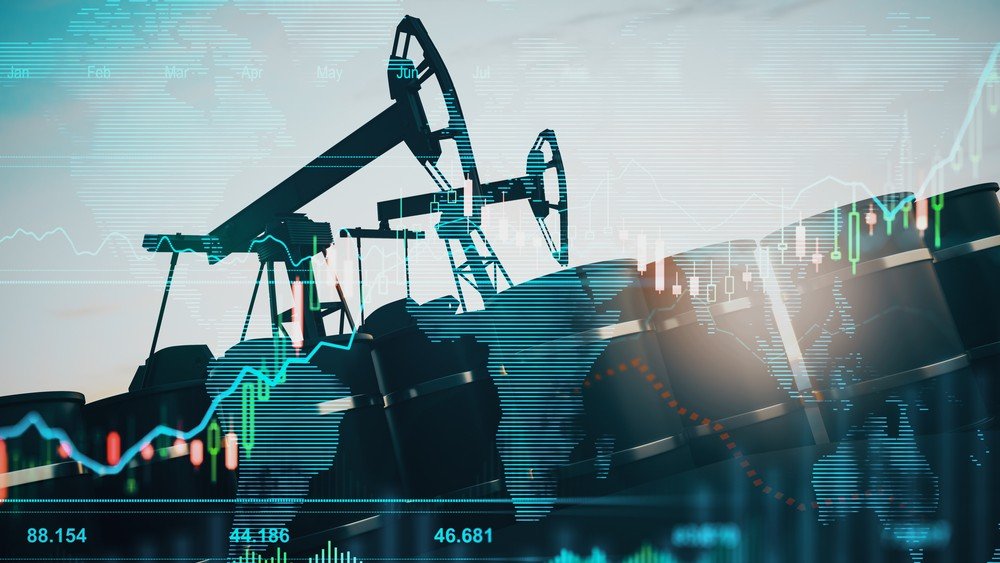
Morgan Stanley and Goldman Sachs cut their forecast for oil prices towards the end of the year and 2027 following developments in the peace negotiations between the United States and Iran earlier this week.
Morgan Stanley now sees Brent crude averaging $80 per barrel in the last quarter of 2026, and $90 per barrel in the third quarter, Bloomberg reported, citing a note from the bank’s commodity team. Morgan Stanley’s earlier forecast was for an average of $100 per barrel of Brent in the third quarter, while the fourth-quarter price forecast was unchanged.
“Much is still to be negotiated, and key risks remain, but for now, this is a key step towards a de-escalation of the conflict and higher oil exports via the Strait of Hormuz,” the analysts said, expecting a speedy recovery in tanker flows once the strait is reopened.
Goldman Sachs, meanwhile, cut its price forecast for the fourth quarter to $80 per barrel from $90 per barrel, and the 2027 average forecast for Brent crude to $75 per barrel from $80 in earlier forecasts. According to the bank’s commodity analysts, tanker traffic via the Strait of Hormuz would recover fully by the end of July.
Citi is even more bearish than its peers on oil prices. On Monday, the bank cut its oil price forecast to $75 per barrel of Brent in the third quarter of this year, falling further to an average of $70 per barrel in the final quarter. For 2027, Citi expects an average Brent price of $65 per barrel. That’s down from an earlier 2027 forecast of $80 per barrel of Brent.
The international benchmark earlier this week fell to the lowest since early March following the news of a preliminary peace deal between Washington and Tehran. Set to be signed on Friday in Switzerland, the deal will see Iran reopen Hormuz within 30 days.
Brent dropped below $90 per barrel on the news earlier today, extending the loss to trade at $82.51 per barrel at the time of writing. WTI was trading at $80.23 per barrel.
By Irina Slav for Oilprice.com
More Top Reads From Oilprice.com
ConocoPhillips Set to Become First U.S. Major to Sign Post-War Syria Gas Deal
Oil Prices Plunge as U.S. and Iran Reach Deal to Reopen Strait of Hormuz
Russian Governors Rush to Deny Fuel Crisis as Rationing Spreads
Business
Japan Raises Rates to 31-Year High to Ward Off War Inflation

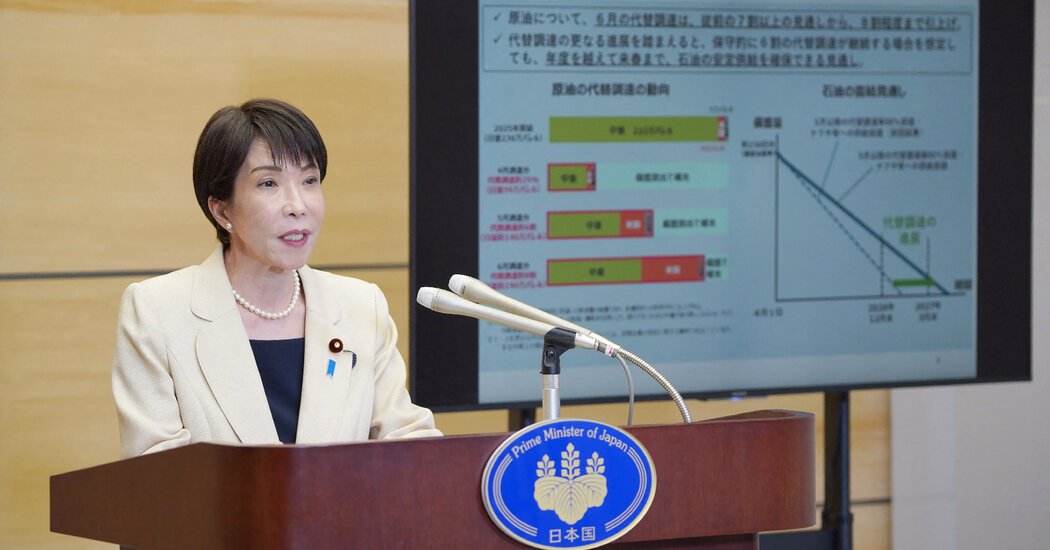
The Bank of Japan joined other major global central banks in raising interest rates to head off an expected spike in inflation fueled by higher energy costs from the war in the Middle East.
The bank said on Tuesday that it would raise its benchmark interest rate a quarter of a percentage point to 1 percent — the highest level in 31 years. Citing inflationary pressures from rising crude oil prices, the central bank said it would continue raising interest rates while monitoring prices and the broader economy.
Japan, along with much of the rest of the world, is bracing for a surge in prices for oil, gas, and other commodities driven by the closure of the Strait of Hormuz. An agreement between the United States and Iran to reopen the strait will likely provide relief. Still, economists expect war-related pressures to show up in Japan’s pricing data already this month, and lingering supply-chain strains and higher inflation to persist through the end of the year.
The strategy is to get ahead of the coming price surge, drawing lessons from 2022, when Russia’s invasion of Ukraine caused the last major disruption to global energy flows. At the time, the European Central Bank initially described inflation as “transitory” and delayed raising rates, only to see eurozone inflation shoot past 10 percent.
Business
Higher prices for gas, groceries and flights will likely outlast the Iran war
NEW YORK (AP) — A tentative deal to end the Iran war makes it reasonable to ask how soon prices will drop for gasoline, groceries, airline tickets and other items that got more expensive during the conflict.
Not so fast, experts say.
Even after oil starts flowing again from the Middle East, it could take a while for consumers to see a difference at local fuel pumps, supermarkets and other places they shop, according to economists and industry analysts.
Fighting over the Strait of Hormuz disrupted not only supplies of crude and refined fuel but also the supply chains for fertilizer, food and even footwear. Businesses expect higher costs to linger, which means their customers might need to prepare for that too.
“It is not clear, despite three months of war, that anything has been achieved that makes the American consumer better off,” Brett House, an economist who teaches at Columbia Business School, said. “In fact, by almost any measure, not just the American consumer, but the world, is worse off as a result of this attack.”
If the deal between the U.S. and Iran holds, here’s how experts see the war’s effects receding — or not — in the weeks ahead:
US motorists can expect some gas price relief
Following news of the tentative agreement, oil prices fell Monday to about $80 for a barrel of U.S. benchmark crude. That compares to $67 per barrel before the war and the price of over $120 a barrel reached earlier in the conflict.
Refineries typically pay for crude oil a month or more in advance, so even after oil prices drop, they won’t immediately be processing cheaper products.
“The tendency of gasoline prices to fall slowly is partly because the raw material takes weeks to work through the system until it’s delivered to consumers,” said Michael Lynch, a distinguished fellow at the nonpartisan Energy Policy Research Foundation.
In places without enough refining capacity to meet their needs, such as the West Coast of the U.S., gas prices will take longer to drop, said Mark Barteau, a professor of chemical engineering and chemistry at Texas A&M University.
In some Asian and African countries that rely more on oil from the Middle East, the supply shock led to school and government office closures and instructions to work from home, according to the International Energy Agency.
“The bottom line is that getting back to ‘normal’ will be a lengthy process involving many parties and countries,” Barteau said. “Getting an agreement between the U.S. and Iran to open the strait is just the beginning.”
Flights won’t get cheaper right away
Industry experts have spent months warning that even if the war ended, travelers should not expect airfares to go down immediately.
Airlines typically buy fuel in advance, adjust their schedules gradually and price tickets based heavily on demand, meaning lower oil and jet fuel prices can take weeks or months to get factored into the cost of commercial flights.
“I think it’s unlikely that we’re going to see a retreat or reduction in the cost of flying at any point this summer,” Columbia’s House said.
Fuel surcharges that some airlines outside the U.S. added are one of the first areas where passengers might get a reprieve, said Gordon Ho, a professor at the University of Southern California’s business school.
“Consumers are going to say, ‘Wait a minute, why are you still charging me a fuel surcharge?’” Ho said.
Pressure on grocery prices will likely continue
Reopening the strait is unlikely to deliver instant relief at the grocery store, according to David Ortega, a professor of food economics and policy at Michigan State University.
Fuel accounts for roughly 15% to 30% of the total cost of food, according to the Independent Grocers Alliance, a grouping of 7,500 global supermarkets.
But it can take months for an energy shock like the one caused by the Iran war to wind through the food supply chain and raise grocery prices. And once prices go up, it takes them a long time to come back down, especially when the future is unpredictable, Ortega said.
“We’re likely still looking at inflationary pressure on food in the coming months,” Ortega said. “There’s still a good deal of uncertainty about how the reopening will unfold, and it will take time for fuel, diesel and retail fertilizer prices to come back down.”
Rabobank, which is based in the Netherlands, said it expected war-related food price inflation to peak sometime next year in Europe. In the U.S., grocery prices are expected to rise 3.2% this year, which compares to a historical average of 2.6%, according to the U.S. Department of Agriculture.
Farmers remain strapped for fertilizer
Reopening the Strait of Hormuz would also be a welcome change for farmers and the production of food globally. Roughly 30% of the world’s fertilizer passed through the waterway before the war began. Prices soared as the supply was effectively cut off, and shipments probably will take a long time to return to pre-war levels.
The consequences of the shortage facing farmers now may only intensify down the road, regardless.
Many farmers around the world are going through planting seasons without the fertilizer they need or paying sky-high prices for both fertilizer and fuel needed to produce and transport their products. The World Food Program of the United Nations expects this to have a “devastating impact” on crop yields — and consequently, food prices and the availability of food — for months to come.
Retailers don’t anticipate a cost reprieve
U.S. retailers that sell shoes were encouraged to see falling gasoline prices, hoping they would mean Americans have more money to spend on back-to-school shopping, said Andy Polk, senior vice president of the Footwear Distributors and Retailers of America trade group.
However, shoe companies anticipate their own costs staying higher for the foreseeable future, Polk said. The group’s members keep a two- to three-month inventory of finished products, but their next orders may include suppliers charging more for materials, he said.
Most of the footwear sold in the U.S. is imported, and Polk said he expects shipping costs to remain higher for the rest of 2026 and 2027.
U.S. tariffs imposed last year have made it more difficult for shoe sellers to absorb higher costs or pass them on customers, he said. In May, footwear prices were 5.2% higher than the same month a year earlier, according to government figures.
Shipping industry expects a slow recovery
Judah Levine, head of research at the freight booking platform Freightos, said the Straight of Hormuz closure has affected about 2% to 3 % of the total volume of container ships that are used for global shipping, but higher oil prices and disruption have impacted the shipping industry more broadly.
Josh Steinitz, chief strategy officer of the business logistics platform ShipStation Global, said consumers might notice higher shipping costs and more out-of-stock items online until the end of the year.
“I think fuel surcharges, which then flow into shipping costs, which then get passed along to consumers, are still going to be with us for quite sometime from many of the major carriers,” Steinitz said.
___
Associated Press writers Cathy Bussewitz, Anne D’Innocenzio, and Wyatte Grantham-Philips in New York, Dee-Ann Durbin in Detroit and Rio Yamat in Las Vegas contributed to this report.
Business
China’s Spending Slowdown Deepens as Households Tighten Their Belts

China’s consumer spending slowdown deepened in May as retail sales unexpectedly fell from a year earlier, in the latest sign that the country’s housing market crash has left millions of families reluctant to spend.
Retail sales dropped 0.6 percent in May from the same month a year earlier, the National Bureau of Statistics said on Tuesday. It was the first year-over-year decline since December 2022, when a wave of coronavirus infections swept the country and kept consumers at home after Beijing abruptly dismantled its stringent “Covid zero” restrictions.
Last month’s decline was a surprise because higher energy costs were expected to help lift retail sales. Gasoline sales, which are included in the retail sales figures, have risen as fuel costs increased following the closure of the Strait of Hormuz, and the retail sales figures are not adjusted for inflation. Yet retail sales still fell. After accounting for rising consumer prices, the decline in spending would have been steeper.
Business
Exclusive: OpenAI Losses Increased Nearly 8X in 2025, With Spending Hitting $34 Billion


Soundtrack: In Flames – Colony
To further support my independent journalism, please subscribe to my premium newsletter. It’s $7 a month or $70 a year. If you’re subscribed to the free newsletter and logged in, you should see at the bottom right hand corner of your screen a little circle you can click, and you’ll be able to sign up for premium.
Today, I can exclusively report, based on audited financial documents viewed by this publication that have been independently verified by the Financial Times, that OpenAI lost around $38.5 billion in 2025, as well as other crucial details about the financial condition of the company.
Due to the seriousness of this story, I am not going to do very much editorializing, as the numbers speak for themselves.
OpenAI Lost $5.09 Billion In 2024
2024 — OpenAI Had $3.7 Billion In Revenue, $12.4 Billion In Costs and Expenses, and a net loss attributable to the company of $5.09 Billion.
OpenAI’s financial statements tell the story of a company with incredible losses.
Revenue: $3.7 billion
Cost of Revenue: $2.65 billion
Research and Development: $7.81 billion
Sales and Marketing: $1.11 billion
General and Administrative: $907 Million
Total Costs and Expenses: $12.48 billion
Loss from Operations: $8.78 billion
Additional factors – including interest income and interest expense – left it with a net loss of $8.84 billion. It then marked $3.74 billion of losses as “net loss attributable to noncontrolling members capital,” leaving the net loss attributable to the company as $5.09 billion.
It’s unclear what this means, nor how OpenAI reconciled the removal of $3.74 billion in costs. I will not speculate further.
OpenAI Lost $38.5 Billion In 2025
2025 — OpenAI Had $13.07 Billion In Revenue, $34 Billion In Costs and Expenses, and $20.92 Billion In Losses, with a net loss attributable to the company of $38.53 Billion
Revenue: $13.07 billion
Cost of Revenue: $7.5 billion
Research and Development: $19.18 billion
Sales and Marketing: $5.73 billion
General and Administrative: $1.57 Billion
Total Costs and Expenses: $34 billion
Loss from Operations: $20.92 billion
Please note that 2025 was the year that OpenAI converted from a non-profit to a for-profit entity, leading to a $41.55 billion loss due to changes in fair value of convertible interests and warrant liability.
Taking into account other minor factors like interest income and interest expense, OpenAI is left with a net loss of $60.35 billion, which it lowered to $38.53 billion by removing $17.87 billion in costs via that “net loss attributable to noncontrolling members capital” and another $3.95 billion via a “net loss attributable to redeemable noncontrolling interests.”
Ultimately, the net loss attributable to OpenAI in 2025 was $38.5 billion.
At the end of the year, OpenAI had just over $50 billion in assets, with almost half of that in cash.
OpenAI Was Paid $867 Million By SoftBank and $303 Million From Microsoft In 2025
In 2025, SoftBank paid OpenAI $867 million. Microsoft paid it $303 million.
The documents revealed how much OpenAI paid Microsoft for services. In the 2025 calendar year, OpenAI paid Microsoft $10.59 billion for “Research and development” expenses. We believe this most likely refers to the cost of training OpenAI’s models.
The documents also mention a $6.047 billion charge related to “cost of revenue,” a $527 million charge for sales and marketing, and $42 million in “general and administrative expenses.” In total, OpenAI’s expenses to Microsoft amounted to $17.2 billion.
According to the figures, OpenAI had liabilities to Microsoft of $3.64 billion at the close of the calendar year, and additional $21 million in “accrued expenses and other current liabilities.” The documents also mention a further $58 million in non-current liabilities.
Further Notes
I intend to follow up this story in the next month with more in-depth reporting related to the documents. The documents are detailed, and I need time to fully parse them. Once I have done so, you’ll know.
The financial condition of OpenAI is deeply concerning. $38.53 billion in losses are astronomical, and far higher than most believed it would be. Losses also appear to be mounting year-over-year at a dramatic rate, and I’m not sure how this company finds a way toward any kind of sustainability or profitability.
As discussed, I have not editorialized much today. I believe the best thing I can do for the general public is to deliver this news as plainly as possible.


She started swinging for her husband. It left her traumatised. #Swinging #BBCNews


Hillary Clinton says Joe Biden's second term campaign was a 'terrible mistake'
Former Secretary of State Hillary Clinton said Monday that former President Joe Biden made “a terrible mistake for himself, for...


She started swinging for her husband. It left her traumatised | BBC News
Ruth says she reluctantly joined a swinging website after she was persuaded by her husband. It escalated, and she says...


Banks Slash Oil Price Forecasts After U.S.-Iran Breakthrough
Morgan Stanley and Goldman Sachs cut their forecast for oil prices towards the end of the year and 2027 following...


Why Japanese soccer fans tidy up at the World Cup
Japanese soccer fans have a reputation of cleaning up after themselves at major global sporting events, including at the FIFA...


How to navigate your job in the AI boom | Terms of Service
A wave of AI-related layoffs has hit the US economy — and leaders warn more could be on the way....


Iranian-Americans protest against Iran team at World Cup. #WorldCup #BBCNews
Subscribe to our channel here: https://bbc.in/bbcnews For the latest news download the BBC News app or visit BBC.com/news …


Think higher SPF means better? Experts say not always
It’s sunscreen season! The warmer months are here, and as I start spending more time outdoors, I find this time...


Kerry Kennedy recalls time her brother threw a snake into a swimming pool full of kids
Kerry Kennedy tells Erin her brother, RFK Jr. once captured a snake while holding his infant child, showed it to...


‘Scary Movie’ Star Marlon Wayans’ Ex Drops Custody Battle Over Daughter
Marlon Wayans is on a roll …. he has a megahit with “Scary Movie 6,” and his ex is no...
-
 Business3 days ago
How much of Musk’s wealth comes from government help? Virtually all of it
-

 LifestyleNews2 weeks ago
120 minutes of strength training per week may help extend lifespan
-

 Politics5 days ago
What to know about the stabbing that set off fiery riots in Northern Ireland
-

 Video4 days ago
Download fans say what they love about the festival. #DownloadFestival #BBCNews
-

 Video4 days ago
Why SpaceX IPO isn't about space. #SpaceX #ElonMusk #BBCNews
-

 HealthNews4 days ago
The people of Okinawa, Japan only eat until they are about 80 percent full, then stop — and the practice has been linked in multiple peer-reviewed studies to lower rates of cardiovascular disease, slo
-

 TravelNews4 days ago
My Paternal Instinct Should’ve Warned Me About Netflix’s Maternal Instinct
-

 Food3 days ago
Pope Leo’s plane was grounded. Then the King of Spain stepped in to help