

Business
Dermatologist explains benefits of newly approved sunscreen ingredient


William Brangham:
For the first time in more than 25 years, the Food and Drug Administration has approved a new active ingredient for over-the-counter sunscreens.
In a recent conversation, Amna Nawaz got the latest on what consumers need to know.
Amna Nawaz:
The long-awaited approval clears the way for sunscreen manufacturers to begin using bemotrizinol, or BEMT, an ingredient that’s been used in Europe and Asia since the 1990s. Experts are welcoming the move, at a time when more than 8,500 Americans are expected to die from melanoma this year.
For more on why this change took so long and what people should know about this new ingredient, I’m joined now by dermatologist Dr. Rachel Nazarian.
Doctor, welcome to the “News Hour.” Thanks for joining us.
Dr. Rachel Nazarian, Dermatologist:
Thanks for having me.
Amna Nawaz:
So what exactly is BEMT and why is it such an effective ingredient for sunscreens?
Dr. Rachel Nazarian:
So bemotrizinol is one of those unique ingredients that does a great job of blocking both UVA and UVB, but it’s not a mineral sunscreen. Typically, we had mineral sunscreens that were always giving that white cast on the skin, but they did a fantastic job of blocking broad spectrum ultraviolet light.
BEMT can do that, but it goes on much nicer and has negligible absorption into the system, meaning it’s even safer.
Amna Nawaz:
Is this something that people might find easier to use in some way, more attractive to use? From the consumer’s perspective, how should they look at this?
Dr. Rachel Nazarian:
They should look at this as just an absolute upgrade. I have many patients that go to Europe or go to Asia and they actually get their sunscreen there because they know they’re dealing with something that’s so much more cosmetically elegant.
So it’s going to feel great on the skin. It’s less irritating and it still does a fantastic job of preventing sun damage and skin cancers. So I really can’t find any negative to this. I just think it took a little long to get to the U.S. market, but, in every way, this is something that we should be very excited about.
Amna Nawaz:
So why did it take that long to get to the U.S. market? If it’s something that’s being used in other countries for so long, why did that take so long to get here in the States?
Dr. Rachel Nazarian:
It’s a really good question and it’s one that we were asking ourselves at the American Academy of Dermatology. And I have to tell you, in some ways, it’s good, right? Because in this country, we want to make sure something is really safe before we offer it to the American consumer.
But some of what they were requiring for the legislation here in the U.S. to approve it was a little bit tedious. We didn’t have to reinvent the wheel if this is something that was being used internationally and known to be safe.
And, because of that, the American Academy of Dermatology, they really pushed through legislation to make sure that it’s not like this in the future anymore. We should be able to access some of these great, safe ingredients much quicker in the future.
Amna Nawaz:
You mentioned that the sunscreens with bemotrizinol don’t penetrate the skin as much, of lower levels of absorption. And we found, when people look at sunscreens, there is concern around this.
There was a consumer analysis by CivicScience that found the percentage of Americans who believe sunscreen is toxic grew from 17 percent in 2021 to 24 percent in 2025. Is there a reason for people to worry about the safety of the sunscreens that are currently on the market here in the U.S.?
Dr. Rachel Nazarian:
I wouldn’t say there’s a reason to worry, but I think there’s room for improvement.
If you can have something like bemotrizinol, which is a really large bulky molecule, not absorbed, then certainly people should feel a little bit safer about that. What we’re really looking for is something that doesn’t enter the bloodstream. And bemotrizinol has proven itself very, very safe.
And I also think it’s just better for sensitive skin. The more absorption you get, the more likely you already irritate sometimes. So this kind of allows people with sensitive skin, people with any concern about anything that might have systemic absorption, it really kind of takes that off the list.
There’s just nothing the sunscreen really doesn’t do in terms of safety and effectiveness. So I understand the concern, but I have to tell you this one was worth the wait.
Amna Nawaz:
So manufacturers can begin to use bemotrizinol as an active ingredient beginning on August 9 of 2026. When should consumers expect it out in the market? When can they use it?
Dr. Rachel Nazarian:
I think very shortly outside of August 9 and after August 9, I think they’re going to start seeing it on the shelves.
Now, remember, one company has exclusivity with this ingredient for about 18 months. So you’re not going to see it everywhere. You’re going to see it really exclusive to that one company and their brands. But after the 18-month period lapses, it’s going to be very widely available.
Some of the brands you know and love here in the United States already have it in their products internationally. So it should be very quick for them to transfer those things here in this country. So even after 18 months, I think you’re going to find it at your local drugstores very easily.
Amna Nawaz:
So, before I let you go, we’re heading into these summer months.
I want to remind people of some big picture issues here, because studies have shown that having five or more sunburns doubles your risk for melanoma, and that some 90 percent of non-melanoma skin cancers are associated with overexposure to UV radiation from the sun.
So for folks out there listening and wondering what they should do, what do you want to remind people about when and how to use sunscreen this summer?
Dr. Rachel Nazarian:
I want to remind them that this is one of the most preventable cancers that are here in the United States.
The skin cancers, especially basal cells and squamous cells, do not need to be a way of life for Americans, and also that sunscreen is just one of the tools that we have here. People should be using sun-protective clothing, like hats and rash guards. And also try to avoid mid-peak day sun, when the UV is really the strongest.
Using all these tools can keep you super safe and super healthy over a lifetime.
Amna Nawaz:
Dr. Rachel Nazarian, thank you so much for your time. We really appreciate the advice.
Dr. Rachel Nazarian:
Thank you again
Business
Japan Raises Rates to 31-Year High to Ward Off War Inflation

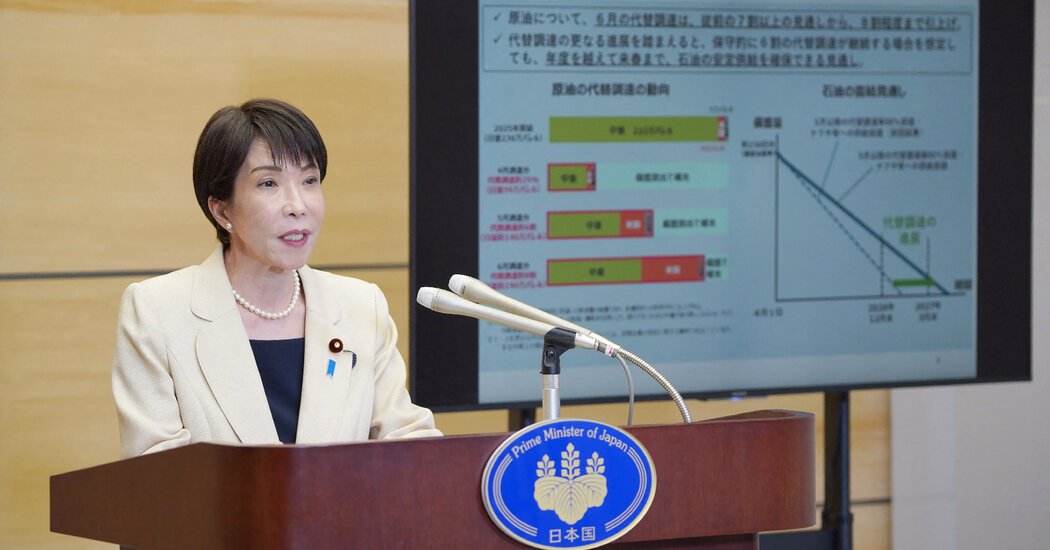
The Bank of Japan joined other major global central banks in raising interest rates to head off an expected spike in inflation fueled by higher energy costs from the war in the Middle East.
The bank said on Tuesday that it would raise its benchmark interest rate a quarter of a percentage point to 1 percent — the highest level in 31 years. Citing inflationary pressures from rising crude oil prices, the central bank said it would continue raising interest rates while monitoring prices and the broader economy.
Japan, along with much of the rest of the world, is bracing for a surge in prices for oil, gas, and other commodities driven by the closure of the Strait of Hormuz. An agreement between the United States and Iran to reopen the strait will likely provide relief. Still, economists expect war-related pressures to show up in Japan’s pricing data already this month, and lingering supply-chain strains and higher inflation to persist through the end of the year.
The strategy is to get ahead of the coming price surge, drawing lessons from 2022, when Russia’s invasion of Ukraine caused the last major disruption to global energy flows. At the time, the European Central Bank initially described inflation as “transitory” and delayed raising rates, only to see eurozone inflation shoot past 10 percent.
Business
China’s Spending Slowdown Deepens as Households Tighten Their Belts

China’s consumer spending slowdown deepened in May as retail sales unexpectedly fell from a year earlier, in the latest sign that the country’s housing market crash has left millions of families reluctant to spend.
Retail sales dropped 0.6 percent in May from the same month a year earlier, the National Bureau of Statistics said on Tuesday. It was the first year-over-year decline since December 2022, when a wave of coronavirus infections swept the country and kept consumers at home after Beijing abruptly dismantled its stringent “Covid zero” restrictions.
Last month’s decline was a surprise because higher energy costs were expected to help lift retail sales. Gasoline sales, which are included in the retail sales figures, have risen as fuel costs increased following the closure of the Strait of Hormuz, and the retail sales figures are not adjusted for inflation. Yet retail sales still fell. After accounting for rising consumer prices, the decline in spending would have been steeper.
Business
Exclusive: OpenAI Losses Increased Nearly 8X in 2025, With Spending Hitting $34 Billion

Soundtrack: In Flames – Colony
To further support my independent journalism, please subscribe to my premium newsletter. It’s $7 a month or $70 a year. If you’re subscribed to the free newsletter and logged in, you should see at the bottom right hand corner of your screen a little circle you can click, and you’ll be able to sign up for premium.
Today, I can exclusively report, based on audited financial documents viewed by this publication that have been independently verified by the Financial Times, that OpenAI lost around $38.5 billion in 2025, as well as other crucial details about the financial condition of the company.
Due to the seriousness of this story, I am not going to do very much editorializing, as the numbers speak for themselves.
OpenAI Lost $5.09 Billion In 2024
2024 — OpenAI Had $3.7 Billion In Revenue, $12.4 Billion In Costs and Expenses, and a net loss attributable to the company of $5.09 Billion.
OpenAI’s financial statements tell the story of a company with incredible losses.
Revenue: $3.7 billion
Cost of Revenue: $2.65 billion
Research and Development: $7.81 billion
Sales and Marketing: $1.11 billion
General and Administrative: $907 Million
Total Costs and Expenses: $12.48 billion
Loss from Operations: $8.78 billion
Additional factors – including interest income and interest expense – left it with a net loss of $8.84 billion. It then marked $3.74 billion of losses as “net loss attributable to noncontrolling members capital,” leaving the net loss attributable to the company as $5.09 billion.
It’s unclear what this means, nor how OpenAI reconciled the removal of $3.74 billion in costs. I will not speculate further.
OpenAI Lost $38.5 Billion In 2025
2025 — OpenAI Had $13.07 Billion In Revenue, $34 Billion In Costs and Expenses, and $20.92 Billion In Losses, with a net loss attributable to the company of $38.53 Billion
Revenue: $13.07 billion
Cost of Revenue: $7.5 billion
Research and Development: $19.18 billion
Sales and Marketing: $5.73 billion
General and Administrative: $1.57 Billion
Total Costs and Expenses: $34 billion
Loss from Operations: $20.92 billion
Please note that 2025 was the year that OpenAI converted from a non-profit to a for-profit entity, leading to a $41.55 billion loss due to changes in fair value of convertible interests and warrant liability.
Taking into account other minor factors like interest income and interest expense, OpenAI is left with a net loss of $60.35 billion, which it lowered to $38.53 billion by removing $17.87 billion in costs via that “net loss attributable to noncontrolling members capital” and another $3.95 billion via a “net loss attributable to redeemable noncontrolling interests.”
Ultimately, the net loss attributable to OpenAI in 2025 was $38.5 billion.
At the end of the year, OpenAI had just over $50 billion in assets, with almost half of that in cash.
OpenAI Was Paid $867 Million By SoftBank and $303 Million From Microsoft In 2025
In 2025, SoftBank paid OpenAI $867 million. Microsoft paid it $303 million.
The documents revealed how much OpenAI paid Microsoft for services. In the 2025 calendar year, OpenAI paid Microsoft $10.59 billion for “Research and development” expenses. We believe this most likely refers to the cost of training OpenAI’s models.
The documents also mention a $6.047 billion charge related to “cost of revenue,” a $527 million charge for sales and marketing, and $42 million in “general and administrative expenses.” In total, OpenAI’s expenses to Microsoft amounted to $17.2 billion.
According to the figures, OpenAI had liabilities to Microsoft of $3.64 billion at the close of the calendar year, and additional $21 million in “accrued expenses and other current liabilities.” The documents also mention a further $58 million in non-current liabilities.
Further Notes
I intend to follow up this story in the next month with more in-depth reporting related to the documents. The documents are detailed, and I need time to fully parse them. Once I have done so, you’ll know.
The financial condition of OpenAI is deeply concerning. $38.53 billion in losses are astronomical, and far higher than most believed it would be. Losses also appear to be mounting year-over-year at a dramatic rate, and I’m not sure how this company finds a way toward any kind of sustainability or profitability.
As discussed, I have not editorialized much today. I believe the best thing I can do for the general public is to deliver this news as plainly as possible.
Business
Inside the fight over Claude Mythos 5


As the rest of the country celebrated the USA’s first World Cup win and the New York Knicks championship, Anthropic spent its weekend fighting the Trump administration over its latest model release. At 5:21 PM on Friday, the company received a US export control directive to suspend access to its Mythos 5 and Fable 5 AI models by “any foreign national” inside or outside the US, “including foreign national Anthropic employees.” The only way that was possible, Anthropic determined, was to completely disable products it spent the past week hyping — and travel to Washington, DC in hopes of changing President Donald Trump’s mind. Now, over the coming days, the US government could dramatically alter the trajectory of the entire industry, dealing a major blow to American AI companies.
Claude Mythos 5 and Fable 5 are built on the same foundation as Anthropic’s Mythos Preview, which Anthropic dubbed too dangerous to publicly release. (The company’s warnings could be seen as genuine concern or more hype for their own model — or both.) Mythos 5 was made available to a select group of government agencies and companies, while Fable 5, which featured additional safeguards, was deemed “safe for general use.” But when a report indicated those guardrails may have failed, Anthropic’s dire warnings about Mythos falling into the wrong hands came back to haunt it.
A source familiar with the situation, who participated in the negotiations between Anthropic and the Trump administration, said the administration called the AI lab on Friday around 1pm ET and gave the company a 90-minute ultimatum to shut down access to Mythos 5 and Fable 5. If it didn’t, then the government would impose export controls on Anthropic by authority of the US Commerce Department.
The source said that Anthropic executives were talking to the White House within 15 minutes of that first call, confirming that CEO Dario Amodei joined the discussions about an hour and 15 minutes after that initial call. Amodei directly spoke with US Treasury Secretary Scott Bessent, Commerce Secretary Howard Lutnick, and National Cyber Director Sean Cairncross, in some cases more than once, the source confirmed.
Anthropic wrote in a release on Friday that the company believed that the government “believes it has become aware of a method of bypassing, or ‘jailbreaking’ Fable 5.” Rather than an existential threat, though, Anthropic said that the jailbreak in question was a “potential narrow, non-universal” one that was “shared with the government” by an entity the company declined to name. Moreover, Anthropic said the behavior wasn’t unique to Fable 5. “We have reviewed a report that we believe is the basis of the government’s directive and validated that the level of capability displayed there is widely available from other models (including OpenAI’s GPT-5.5),” Anthropic wrote.
Semafor reported, citing one source familiar, that the hubbub began because the US government was concerned that a China-linked group had accessed the technology. But the source said that the China rumors went back weeks, referring to a large global telecommunications company that was initially cleared to be included in access to Mythos Preview, and that when the US government shared its concerns, Anthropic immediately revoked access.
An X post by David Sacks, the US government’s former AI and crypto czar who stepped down in March, didn’t mention China either. Sacks did, however, mention the unnamed entity that had exposed the issue to the government, calling it “a highly credible trusted partner of both Anthropic and the USG who was testing Fable [which] came forward with a jailbreak of those guardrails.”
Some reports point to Amazon CEO Andy Jassy as the person who flagged concerns to the US government after researchers at Amazon had red-teamed Fable 5. That conclusion stands at odds with some independent red-teamers, who have said they were impressed with the level of the protections.
The source familiar with the negotiations said that the Amazon research was explicitly mentioned in conversations with the US government. The person added that Anthropic had had access to that paper within days of the Friday export control directive and had been going back-and-forth since then with Amazon researchers to discuss it.
Everything in that paper, the source said, could be achieved by OpenAI’s GPT-5.5.
Anthropic spent the weekend scrambling to make nice with the Trump administration, beginning with virtual meetings and then flying employees to DC, including Dave Orr, Anthropic’s head of safeguards; Logan Graham, who runs its frontier red team and has led work on Project Glasswing; and Nicholas Carlini, a leading frontier developer and cybersecurity researcher. Axios reported, citing a source familiar with the Trump administration’s thinking, that the company simply has repeatedly made missteps in its communication with the administration and that it “has not done a great job at trying to speak to the administration and appreciate the ideological differences.” For Anthropic, the timing couldn’t be worse: the company had banked on Mythos to help it recover, in part, from months of high-profile clashes with the US Department of Defense.
The source familiar with the negotiations said that Anthropic pre-briefed the administration on Fable 5, and that the US Department of Commerce conducted testing pre-deployment, with no concerns shared at the time. The source added that Anthropic had been working closely with government agencies since Mythos Preview’s release.
The Trump administration initially took a hands-off approach to AI safety — but post-Mythos, it has become more ambivalent, even as it frets over the threat of losing the AI race to China. Now, prominent cybersecurity leaders have warned that sidelining Mythos 5 and Fable 5 could give China a significant AI advantage. Trump’s move has galvanized international calls for alternatives to American AI systems, while effectively putting a major US AI company’s new flagship model on ice.
A public letter from tech and cybersecurity executives called for restrictions on Fable 5 to be repealed on Sunday. “Not all of us agree that AI regulation is the right way forward,” the letter states, adding that if regulations are going to happen regardless, then they should be rooted in “scientific evaluations developed with input from industry and academia.”
Alex Stamos, chief product officer at Corridor, told The Verge he organized the public letter because the countless number of vulnerabilities in the past decade-plus, written in a variety of different coding languages, require AI to patch before bad actors find them. “We’re in a race, and I think policymakers don’t understand that,” Stamos said. “There’s this weird arrogance, this idea that American labs are hugely ahead of our adversaries that will always be true, that it’s really important to restrict access because of that. I just think that’s foolish. If the labs are ahead, it’s only by a matter of months. And you can see that in the open evaluations. The cutting-edge models are only something like six months ahead of the Chinese models — and those are the models we know about.”
The public letter goes on to state that though Anthropic’s Mythos-class models are skilled at finding cybersecurity vulnerabilities and taking advantage of exploits, they aren’t “uniquely good” at these tasks and that Fable 5’s safeguards “were so aggressive as to be the source of humor in the cyber community on launch day.” Stamos told The Verge that “there’s a real overstatement of Mythos’ capabilities. Anthropic is somewhat responsible for this themselves, clearly … Mythos is great, but the real turning point was really last year.”
Stamos said the industry is awash with backup contracts being signed with non-US companies and open-weight models being deployed on alternative hardware arrangements because the past weekend made political risk part of companies’ business plans more than ever before.
“They are laughing at us in Beijing right now,” Stamos said. “One of America’s champions is being kneecapped by the US government while we’re in a race with the Chinese. It’s just incredibly stupid. That’s why I wrote the letter, and I think that’s why a lot of people signed onto it.”
Ben Van Roo, co-founder and CEO of Legion Intelligence, a system of agents for the national security community, told The Verge that “the directive of ‘no foreign national should use this model’ is the most impossible thing to enforce.” He added, “When I first read that, my whole… [network of] AI community nerds was exploding.”
To make matters even more urgent, OpenAI, Google, and Microsoft have all come out with their own comparable products to Anthropic’s Mythos, making many of the same claims about their effectiveness and risks. If the Trump administration bans Anthropic’s advanced cybersecurity models, it can make a case for banning its competitors’ models, too. That could spur AI industry leaders to unite and help out Anthropic or, as with its fight over autonomous weapons with the Pentagon, position themselves as a safer and more compliant alternative.
Even as the Trump administration is trying to free tech companies of regulatory hassles, the Anthropic order could amount to a dramatic restriction on powerful AI models — depending on how the next few days play out.
Legion Intelligence’s Van Roo called it “uncharted territory” in the regulatory setting, adding that he doesn’t think this is the last time something like this will happen.
We’ve also entered the era of AI populism, when a growing number of people are pushing back against the AI industry’s outsized influence and the concentration of power at the top via data center protests, pledges to quit using AI chatbots, lawsuits over wrongful deaths, and even attempted attacks on AI company CEOs. Van Roo says the Trump administration’s recent moves against Anthropic could stoke “greater fears and concerns, potentially for the wrong reasons.”
The source familiar with the negotiations described the weekend’s conversations as constructive, with some members of the administration admitting that putting export controls on model providers isn’t ideal, since competitors with similar products may find themselves under the same restrictions — and since the US government is currently exploring a program that would encourage the export of American AI systems.
Monday’s talks concluded with no resolution as of yet.
As Anthropic continues to negotiate with the US government, there’s little chance that the company’s other myriad issues with the Pentagon won’t come up — namely, the ongoing battle between Anthropic and the Department of Defense over acceptable usage policies for Anthropic’s tech by the US military.
“This is new and we’ve never had anything potentially this drastic before, and it does have some real ramifications” in terms of how to enforce access to powerful models, Van Roo said. “Who gets to use this new technology that continues to outpace our own ability to regulate it?”
Business
Anthropic Is Still at Odds With the White House Over Claude Fable 5

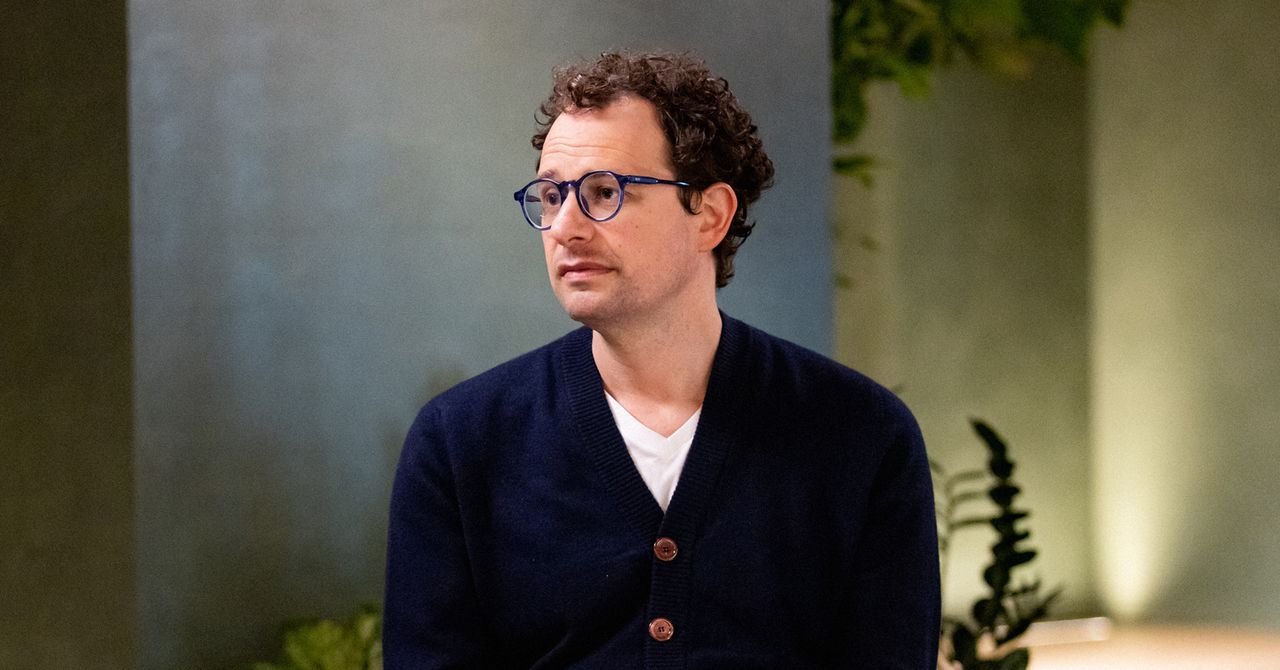
Trump administration officials concluded talks with Anthropic on Monday without lifting export controls that were imposed last week on the company’s most advanced AI models in response to jailbreaking concerns, according to three people briefed on the matter.
The administration continues to believe that there are ways to disable some of the guardrails on Anthropic’s Claude Fable 5, effectively allowing users to access the more powerful cybersecurity capabilities of the company’s Mythos model, the people said.
Anthropic has said for days that the administration’s concerns are overblown, a position it reiterated in working group meetings held at the Commerce Department with government researchers from the Center for AI Standards and Innovation and the Office of the National Cyber Director, Sean Cairncross, one of the people said.
The meetings were also attended by Commerce secretary Howard Lutnick, who dialed in by conference call from the G7 summit in Evian, France. Cairncross himself did not participate, the person said.
On Anthropic’s side, cofounder and chief compute officer Tom Brown and head of external affairs Sarah Heck have been leading the discussions. Anthropic’s head of frontier red-teaming, Logan Graham, and senior security researcher Nicholas Carlini flew to Washington, DC, for the talks.
“Both parties are working quickly to get this resolved,” an Anthropic spokesperson said in a statement to WIRED. A White House spokesperson declined to comment.
It was not immediately clear how any next steps might play out. The Commerce Department expressed a willingness to find a way to bring Fable 5 back online for consumer use, but it would likely be contingent on Anthropic fully resolving the jailbreak concerns, the person said.
Ringing the Alarm
The emergency talks have come at a fraught political moment for Anthropic, which was already in a prolonged fight with the Pentagon over whether its AI models could be used for certain military applications.
The Trump administration was first alerted to the jailbreak concerns last week. Amazon CEO Andy Jassy called Treasury secretary Scott Bessent directly about the alleged vulnerabilities, which played a role in spooking the administration, the people said. Jassy’s conversation with the Trump administration was first reported by The Information.
Alarmed White House officials tasked the NSA to help review the vulnerabilities. The NSA responded that it believed it was indeed possible to strip away Fable 5’s guardrails, prompting the administration to impose restrictions on the model.
Lutnick then spoke with Anthropic chief executive Dario Amodei on Friday, as the Commerce Department drew up its letter imposing export controls on Fable 5. Over the weekend, after Anthropic cut off access to the model for all users, Lutnick was on multiple calls with Brown and Heck, according to a person with knowledge of the events.
It’s unclear why Amazon, one of the largest investors in Anthropic, rang the alarm on Fable 5. “As a leading cloud provider that serves a large number of private and public sector customers, it’s not uncommon for governments to seek our counsel on potential security risks,” an Amazon spokesperson tells WIRED. “When they occur, we don’t share the details of these discussions.”
Security Disconnect
At the core of the conversations between Anthropic and the administration is a disagreement over the severity of the Claude Fable 5 jailbreaking concerns.
In a blog post on Friday, Anthropic implied that the administration’s characterizations of the potential risks are overblown. Some cybersecurity researchers reiterated this position to officials on Monday, sending an open letter arguing that the export control action taken against Anthropic was unjustified.
“Anthropic’s Mythos-class models are quite good at finding flaws and weaponizing exploits. However, they are not uniquely good at these tasks, and many of the undersigned individuals regularly use other foundation and open-source models for security audits and red-teaming every day,” the open letter reads. “As a result, this action has taken the best models away from defenders, created market uncertainty, and risked America’s AI leadership without any real risk to justify it.”
Jailbreaking works by prompting an AI model in specific ways to circumnavigate its safeguards. Because Fable 5 is a version of Mythos with certain cybersecurity, biology, and chemistry guardrails in place, getting around those protections would effectively give users a version of Mythos. Anthropic has itself raised significant concerns about allowing Mythos to be used by the general public; however, it said on Friday that Fable 5’s safeguards were strong enough to allow for a public release.
Researchers who evaluated Amazon’s findings say that the issues identified did not fully nullify Fable 5’s safeguards. “It wasn’t a jailbreak per se,” says Katie Moussouris, founder and CEO of Luta Security, who published an analysis after reading the Amazon paper.
Moussouris emphasizes that regardless of whether the US government has proof of a full Fable 5 jailbreak, restricting the model’s ability to access certain topics is a stopgap at best. “Most of us [in security research] think guardrails are speed bumps and shouldn’t be treated like security boundaries for skilled adversaries,” Moussouris says. “They only serve to slow down the less skilled.”
Investors in Anthropic have also been working over the weekend, trying to assess how the company’s latest spat with the White House affects its corporate future, says another person close to the company. Some investors believe the US government is singling out Anthropic, and a competitor may not have faced the same reaction if they released a model similar to Mythos, the person says.
The White House’s export control directive also raises broader questions for other AI labs aiming to release AI models with Mythos-level capabilities, and how they can do so in compliance with the US government. It’s now expected that AI labs give the White House early access to advanced AI models, and that they be extremely proactive about keeping the US government informed on model launches, according to AI lab leaders who spoke with WIRED.
“The events over the weekend … are informative for everyone that the [US] government would be willing to take these steps,” says Aidan Gomez, CEO of Cohere, a smaller AI lab based in Canada that offers enterprise tools. “No one can be naive to that reality.”


Iranian-Americans protest against Iran team at World Cup. #WorldCup #BBCNews
Subscribe to our channel here: https://bbc.in/bbcnews For the latest news download the BBC News app or visit BBC.com/news …


Kerry Kennedy recalls time her brother threw a snake into a swimming pool full of kids
Kerry Kennedy tells Erin her brother, RFK Jr. once captured a snake while holding his infant child, showed it to...


‘Scary Movie’ Star Marlon Wayans’ Ex Drops Custody Battle Over Daughter
Marlon Wayans is on a roll …. he has a megahit with “Scary Movie 6,” and his ex is no...


Protesters gather before Iran's World Cup game
Some Iranian-Americans outside SoFi Stadium called for regime change in Iran and said they want their protests seen inside …


Biden talks politics and family with Jay Leno
Former President Joe Biden and his 1967 Chevrolet Corvette Stingray convertible were featured on the latest episode of “Jay …


‘Love Island USA’ executive producer dies while filming in Fiji
James Barker, an executive producer on “Love Island USA,” died while the hit reality dating show was filming in Fiji...
Iran coach says team ordered out of US right after 2-2 draw with New Zealand in World Cup opener
INGLEWOOD, Calif. (AP) — The coach of Iran’s World Cup team said it was ordered to leave the U.S. and...


Monmouthshire mum says she may have avoided ovarian cancer if she lived in England
I might have avoided ovarian cancer if I lived in England not Wales Had Heather Morgan lived in England when...


Jelly Roll Files for Divorce from Bunnie XO After a Decade of Marriage
Jelly Roll has filed for divorce from wife Bunnie XO after nearly a decade of marriage, first reported by The...


Japan Raises Rates to 31-Year High to Ward Off War Inflation
The Bank of Japan joined other major global central banks in raising interest rates to head off an expected spike...
-
 Business3 days ago
How much of Musk’s wealth comes from government help? Virtually all of it
-

 LifestyleNews2 weeks ago
120 minutes of strength training per week may help extend lifespan
-

 Politics5 days ago
What to know about the stabbing that set off fiery riots in Northern Ireland
-

 Video4 days ago
Download fans say what they love about the festival. #DownloadFestival #BBCNews
-

 Video4 days ago
Why SpaceX IPO isn't about space. #SpaceX #ElonMusk #BBCNews
-

 HealthNews4 days ago
The people of Okinawa, Japan only eat until they are about 80 percent full, then stop — and the practice has been linked in multiple peer-reviewed studies to lower rates of cardiovascular disease, slo
-

 TravelNews4 days ago
My Paternal Instinct Should’ve Warned Me About Netflix’s Maternal Instinct
-

 Food3 days ago
Pope Leo’s plane was grounded. Then the King of Spain stepped in to help