
Politics
Seventeen projects, initiatives selected for National Awards for e-Governance

New Delhi, A total of 17 projects or initiatives selected for the National Awards for e-Governance 2026 across seven categories to recognise exemplary contributions in digital governance, an official statement issued on Thursday said.
The National Awards for e-Governance are presented every year to recognise and promote excellence in implementation of e-governance initiatives.
The 29th NAeG 2026 awardees in seven categories include the gram panchayats category, recognising deepening and widening of service delivery at grassroots level through digitisation.
“Agri Stack”, a project of Ministry of Agriculture & Farmers Welfare, “Mahakumbh 2025” by Prayagraj Mela Authority, Uttar Pradesh’s Prayagraj, and Blood Bag Traceability and Citizen Interaction portal for promoting speedy, safe and voluntary blood donation by Kerala Development and Innovation Strategic Council are among the awardees, according to the statement issued by the Personnel Ministry.
TRINETRA, an AI based Video Surveillance system for Mahakal Rudrasagar Integrated Development Area , including Mahakaleshwar Temple by Mahakaleshwar Temple Trust, Samrat Vikramaditya Prashasnik Sankul Bhawan, Ujjain; and Panchayat Advancement Index, a Data Driven Governance for Viksit Bharat by the Ministry of Panchayati Raj are also among the awardees, it said.
The awards ceremony will be held during the 29th National Conference on e-Governance in Jaipur, Rajasthan, the statement said, without mentioning the date of the event.
The seven categories for the NAeG 2026 include ‘Government Process Re-engineering by Use of Technology for Digital Transformation’, ‘Innovation by Use of AI and Other New Age Technologies for Providing Citizen Centric Services’, ‘Best e-Gov Practices/Innovation in Cyber Security’, and ‘Digital transformation by Use of Data in Digital Platforms by Central Ministries/States/UTs’, among others.
The awards consist of a trophy, certificate and an incentive of ₹10 lakh for gold awardees and ₹5 lakh for silver awardees to be awarded to central ministry/ department/state/UT/district/organisation/gram panchayat for being utilised for implementation of project/programme or bridging resources gs in any area of public welfare.
This article was generated from an automated news agency feed without modifications to text.
Politics
Nigerias second-chance schools: women balancing study and survival
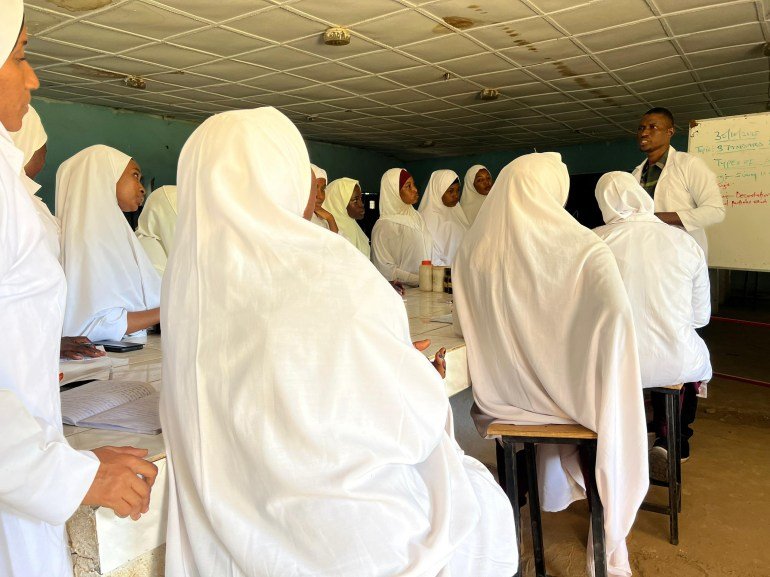
Sokoto, Nigeria – Each time her curious seven-year-old child returned home from school with homework, 28-year-old Habiba Abubakar knew it was time to take him to her neighbour, whom the child called aunt, even though they were not related by blood, who had been his saviour every time he wanted to stand in front of his class and receive a standing ovation.
But that changed in 2021, when Abubakar enrolled herself in the Women Centre for Continuing Education (WCCE) in Sokoto State, northwest Nigeria.
I’ve always felt ashamed when Muhammad told me that they’ve been given another assignment, she told Al Jazeera.
This frustration, coupled with her enthusiasm for learning English, pushed her to return to the classroom 13 years after she left.
Now, the mother of four said she helps all the children with their assignments.
The interruption in Abibaker’s studies is not uncommon across northern Nigeria, especially in rural communities, where girls are more likely to drop out of school due to cultural practices, such as early marriage, or poverty, which forces parents to make gender-biased decisions by enrolling male children over females.
UNICEF reported that more than half of the girls in the region are not attending school.
Jennifer Agbaji, a social accountability professional and the executive director at Basileia Vulnerable Persons Rights Initiative (BVPRI),a Nigerian nonprofit dedicated to advancing the rights of women, girls, and other vulnerable populations through education and leadership development, viewed the initiative as a positive and necessary intervention.
Nonetheless, she said second-chance education should not be limited to classroom-based learning alone.
If access to education depends solely on physical attendance, many women who face mobility, childcare, economic, health, or security challenges may still be excluded.
How the system works
WCCE, commissioned by the then-military governor of Sokoto State, Navy Ctain Abdul Rasheed Adisa Raji, was founded in 1997 to provide adult education and vocational skills to women in the state.
Since then, Nuraddeen Ladan Dogon Daji, a physics teacher, told Al Jazeera that the centre has trained many students, some of whom now practise professions, such as teaching and nursing, helping to address the country’s shortage of skilled professionals.
Unlike other public schools, where pupils spend six years, the centre designed a three-year curriculum for its primary section, from adult one to three.
In the secondary sections, students spend three years each in the junior and senior levels.
In their final years, they also sit for the mandatory Junior Leaving School Certificate of Education (JLSCE) and Senior School Certificate of Education (SSCE) examinations.
To help these students realise their dreams, the centre also offers free education, benefitting from the state government’s effort to reduce the number of out-of-school children.
This has helped students like Abubakar, who, following her divorce, relied heavily on her father’s support to stay in school.
We used to pay 5,000 naira ($3.5) per term, but were later told to stop because the state government has given us a chance to study for free, Abubakar told Al Jazeera from her home in the Kofar Atiku neighbourhood.
But free tuition does not eliminate all costs. Students still have to pay for transport, books, and other daily expenses.
The challenges
According to Agbaji, beyond poverty and early marriage, there are several structural barriers, including restrictive gender norms that prioritise domestic responsibilities over education.
She said many women lose confidence after years away from formal education, and in some communities, education is still viewed as an investment for boys rather than a lifelong right for women.
In her opinion, these norms often combine to make re-entry into education difficult, even when opportunities exist. In her journey to becoming a nurse, Fatima Attahir, who left school after primary school 12 years ago, found it necessary to go back to the classroom and start afresh.
To support herself while studying, she helps with her family’s trading activities when she is not in class.
She said that although some of her friends already saw the decision as time-consuming, she is not satisfied with the system’s duration.
I wish the primary section was also up to six years, she said.
Because to become a nurse, I need to have a solid background in the core subjects. Some of the students Al Jazeera spoke to said their greatest challenge is juggling academic activities with household responsibilities.
Before her divorce, Abubakar said she would wake up earlier than usual to prepare breakfast, clean the house, and get herself and her children ready for school.
When I finally set my foot in class, I was already tired, and as the lectures went on, I would start slumbering because I hadn’t had enough sleep. She said the pressure became worse when her youngest child frequently fell ill, sometimes forcing her to leave class before lectures ended.
After her divorce, transport costs became another obstacle. Since I was no longer married, my parents were the ones paying for the transport fares, but when they couldn’t, I would not go to school because I couldn’t afford it myself, she said.
Later, her father gave her 10,000 naira to start making and selling local snacks and small chops.
The small business now helps her cover transport costs and other school-related expenses. Abubakar still credits the neighbour who used to help her son with homework before she returned to school.
When transport costs became difficult to afford after her divorce, her parents stepped in when they could, while her father later provided the cital that helped her start a small business and continue her studies.
Her experience is not unique.
Another student, Hafsat Aliyu, said she leaves her two-year-old child with her in-laws whenever she attends classes to avoid disrupting lessons.
Her husband pays for books and other occasional school needs, while she sells local pastries during break time at the centre to earn money for daily transport and personal expenses.
During examination periods, she studies late into the night after completing household chores and putting her children to bed.
My husband does his best, but I thought it was time for me to get a source of income, too, she said.
Now, I pay for my transport and a few other daily needs.
However, the physics teacher, Dogon Daji, said that in his seven years of teaching at the centre, a recurring challenge among students is the pace of learning.
I’ve taught young people, and the level of their understanding is quite different, he said.
But he added that there are still outstanding students among them; one recently won this year’s Usmanu Danfodio Week, an annual quiz competition organised for secondary school students in the state.
On the other hand, the vocational section of the centre, which was designed to equip students with practical skills such as tailoring and so-making, now offers only tailoring.
Students are required to provide tools, such as scissors, including those whose interests may lie in other trades.
The way forward
Agbaji acknowledged that for Nigeria to bridge the gender disparity in education, the country must adopt a lifelong learning framework that recognises education as a continuous right and opportunity.
This requires increased investment in adult education, digital and remote learning platforms, community-based education, and flexible pathways for women who missed formal schooling, because the long-term consequences are significant.
She added that many women pursuing second-chance education continue to balance childcare, household responsibilities, and income-generating activities, often relying on family and community support networks to remain in school.
Educational exclusion perpetuates poverty, limits economic opportunities, increases vulnerability to abuse and exploitation, and restricts women’s participation in governance and public service. It also affects future generations because children of educated mothers are generally more likely to enrol in and complete school, Agbaji clarified.
Politics
Chinese spies using job websites to target government workers, MI5 warns

In a joint warning issued in a bulletin by the Five Eyes alliance, made up of UK, US, Australia, Canada and New Zealand agencies, it warned undercover operatives are using legitimate sites including LinkedIn, Indeed and Upwork to advertise fake analyst jobs.
Politics
Delhi hotel building owner Lavkesh Bajaj arrested after Malviya Nagar fire kills 21
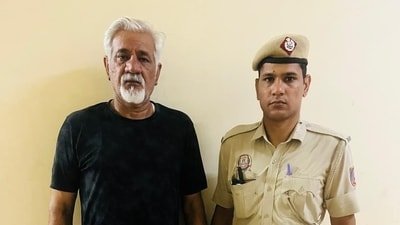
Delhi Police on Wednesday arrested Lavkesh Bajaj, owner of the building that housed the Flourish Stay B&B in Malviya Nagar. This came hours after a massive fire killed 21 people and exposed alleged violations of fire safety and building regulations. Track live updates here
The blaze erupted early Wednesday at the five-storey guest house in the congested Hauz Rani area of south Delhi. Among the 21 killed, 18 were foreigners from African nations, Bangladesh, Afghanistan and more.
Police had earlier issued a lookout circular against Bajaj and his wife before launching a search operation to trace them. An FIR has been registered under charges of culpable homicide and other relevant provisions of the Bharatiya Nyaya Sanhita, PTI reported.
How the fire occured
Investigations and statements by Delhi home minister Ashish Sood suggest the guest house was operating without the mandatory fire no-objection certificate (NOC) and in violation of multiple safety norms.
ALSO READ | Delhi fire: Hotel under scanner, owner detained, 18 foreign nationals killed
Officials said the building had only one entry-exit point, permanently sealed windows and a sensor-operated main door, conditions that are believed to have severely hindered evacuation efforts as the fire spread ridly through the structure.
Investigators have also alleged that the establishment was operating far beyond its proved cacity. According to police sources, the property had permission for only six rooms under Delhi government‘s Bed and Breakfast policy but was allegedly running around 25 rooms, including some in the basement.
Additional floors were reportedly added over the years without obtaining the required provals from authorities.
Inspection drive ordered
Delhi lieutenant governor Taranjit Singh Sandhu has ordered a month-long inspection drive covering hotels, nursing homes, coaching centres, restaurants and other vulnerable commercial establishments.
ALSO READ | ‘No ventilation’ in shaft-like building, chilling esce video: 5 shocking details in Delhi Malviya Nagar fire
Separately, home minister Ashish Sood directed a citywide verification of Bed and Breakfast properties by the Delhi Fire Services and the Power Department.
Chief minister Rekha Gupta said the government was closely monitoring the situation and has sought a detailed report on the incident, while opposition leaders criticised the administration over recurring fire-related tragedies in the national cital.
Police said the investigation remains underway and the role of other individuals associated with the guest house is also being examined.
Politics
Israel detains Palestine international womens football player

Rand Halawani’s detention also saw four other women arrested on Tuesday, including a former Palestine player.
Published On 3 Jun 2026
Israeli authorities have extended the detention of a player on the Palestinian women’s national football team after she was summoned for questioning in Jerusalem, Palestinian officials have reported.
The Palestinian Football Association (PFA) denounced the prolonged detention of 20-year-old Rand Halawani, who was arrested on Tuesday evening.
Recommended Stories
list of 4 itemsend of list
In a statement, it said Halawani’s arrest and that of a former national team player was not an isolated incident, it is part of a well-documented pattern of systematic targeting of Palestinian athletes, which continues without accountability.
According to the Palestinian governorate for Jerusalem, an Israeli court on Wednesday extended Halawani’s detention until Friday.
Israel’s military also arrested former national football player Natalie Abu Diyeh, a student at Birzeit University, as well as three other young Palestinian women in the occupied West Bank on Tuesday.
The military said in a statement that the four women were suspected of promoting terrorist activities and additional terrorist-related activities.
Birzeit University denounced the arrests as part of Israel’s systematic policies targeting Palestinian education and students’ right to continue their academic journey.
Bishop Imad Haddad of the Evangelical Lutheran Church in Jordan and the Holy Land, to which Natalie Abu Diyeh belonged, called for her release.
We are deeply shocked and horrified by this news, as well as by the news that her family does not yet know where she has been taken, Haddad said in a statement on Tuesday.
According to the Prisoners Club, the main association for prisoners’ rights in the Palestinian territories, 89 Palestinian women are currently in Israeli jails, including three minors and three pregnant women.
The Palestinian Authority-affiliated Prisoners Club announced in late May that more than 9,400 Palestinians were in Israeli jails, including Palestinian citizens of Israel.
Politics
No ventilation in shaft-like building, chilling escape video: 5 shocking details in Delhi Malviya Nagar fire

Several shocking details have emerged on the condition of the stay where a massive fire led to over 20 deaths in Delhi’s Malviya Nagar on Wednesday. Witness and survivor accounts alleged big lses, like lack of ventilation, at Flourish B&B, where the massive fire broke out.
A video also surfaced, showing occupants jumping out as locals around laid down mattresses for them.
According to residents, the stay was used mostly by people or their families who needed a place to stay while awaiting treatment at Max Hospital nearby. Follow live updates on Delhi fire here.
‘No ventilation, smoke filled up building’
Giriraj Prajati, 40, who was present at the scene, said the property lacked ventilation, suspecting that to be the case with most structures around. “People were jumping from the upper floors onto mattresses, as the smoke had filled the entire building, Prajati said.
As stated in an earlier HT report, locals had rushed to save those inside the building, laying mattresses for them. According to a witness, the fire started at the ground floor and soon spread to the upper floor.
Narrow esce from fire
Minhazul Hassan, a 26-year-old man from Bangladesh who had been staying at the property for his mother’s surgery, also alleged lack of ventilation. Describing a close shave with the fire, Hassan said his brother left the building ten minutes before, and he had been at the hospital with his mother.
“However, all our passports and belongings are inside, and we are worried that those might have been burnt. The building was not well ventilated, as there were no windows, not even in the bathrooms, said Hassan.
‘Only one entry and exit’
One of the locals who helped out after the fire erupted shared how people scrambled to rescue those inside the building. Mohammed Afzal, a 39-year-old lawyer, said there was only one entry and entrance to the building, which likely trped people inside.
“Additionally, the roof was also locked. We were forced to throw brick at windows to break them so that people could jump, said Mohammed Afzal.
‘Building like a shaft, sealed from all sides’
Residents have alleged that fire tenders arrived late at the Malviya Nagar site.
However, AK Malik, Chief Fire Officer DFS South Zone, said that seven fire tenders were dispatched after a call was received at 8:50 am, and the deployment increased as more details came in. A total of 37 people were rescued. The fire was extinguished around 10:25 am, and we have completed the final search and cordoned off the building, the official said.
In line with what the locals described, the fire official also said that the building was sealed from all sides and was like a shaft.
“It is sealed from all four sides, as even in the front, there is a facade, and the windows are sealed. In buildings like these, it often hpens that the fire spreads, the chief fire officer added.
Permission for six rooms, occupancy 24
Flourish B&B, where the fire broke out, had the permission to have only six rooms, but had four times more occupancy, a source in the Municipal Corporation of Delhi (MCD) told HT.
The online booking portal for the stay also shows availability of 24 rooms. The property was registered under the silver category of Delhi’s B&B policy, with a license valid till ril 2027.
Meanwhile, a disturbing video showing people jumping out of the building during the fire also surfaced amid claims of the property lacking ventilation and enough windows.
EU Preparing Economic Support Package for Armenia After Russian Pressure on It
Description US News is a recognized leader in college, grad school, hospital, mutual fund, and car rankings. Track elected officials,...


House rebukes Trump's war powers. Is his grip on the GOP slipping?
The House passed a resolution on Wednesday to limit President Donald Trump's war powers in Iran, a significant rebuke to...


New York Knicks fans celebrate after winning opening game of NBA Finals. #BBCNews


House passes resolution to limit Trump's war powers
The House passed a resolution on Wednesday to limit President Donald Trump's war powers in Iran, a significant rebuke to...
Lebanese Americans Open Their Wallets and Hearts as War Rages Back Home
Description CANTON, Mich. () — Every week, Mirvet Makki sets aside earnings from her catering business to help people in...
Ben Affleck’s visit to Luna’s Mexican Grill in Swarthmore sends business soaring
Description Cristina Luna Ramirez’s restaurant runs on family and the flavors of northern Mexico. Her current success comes after years...


Samsungs updated Health app unsurprisingly comes with new AI-powered features – Engadget
The new p was designed to showcase the upcoming Galaxy Watches’ cabilities. Samsung Samsung will start rolling out an update...
Netanyahu Faces Plunging Support in North Israel as Voters Demand Tougher Lebanon Stance
Description US News is a recognized leader in college, grad school, hospital, mutual fund, and car rankings. Track elected officials,...


Victor Ortiz Wants Bare Knuckle Fights With Canelo Alvarez and Terence Crawford
Description Former boxing champ Victor Ortiz is making his Bare Knuckle Boxing debut next month … and he tells TMZ...
Dalai Lama, 90, to Seek Knee Treatment in New Delhi
Description US News is a recognized leader in college, grad school, hospital, mutual fund, and car rankings. Track elected officials,...
-

 Video2 weeks ago
Nadal tells Amanpour about extreme solution to 19-year injury
-

 LifestyleNews2 weeks ago
What Your Lifestyle Says About You: Psychology, Habits, and Personality Explained
-

 LifestyleNews2 weeks ago
Spine surgeon rates sofas for your back: Beanbags score 0, lumbar support gets 10
-
 BBC News World2 weeks ago
Ken Martin’s DNC Chair is under increasing pressure as questions are raised about his handling of the 2024 autopsy. Subscribe to this story to enjoy it without ads
-

 Tech2 weeks ago
Today's NYT Connections Hints, Answers and Help for May 25, #1079
-

 Video2 weeks ago
What we don't know about Colbert's last 'Late Show'
-

 Video2 weeks ago
911 call reveals more about Kyle Busch’s condition before his sudden death
-

 Video2 weeks ago
The Odds: Are Americans concerned about AI replacing jobs?