
Politics
3 dead, 4 missing as boat capsizes in Ganga, in Bihar

At least three people died and four others went missing after a boat carrying 14 passengers csized in the river Ganga in Bihar’s Samastipur district on Thursday morning, police said.
The incident took place around 5.45 am and the rescue teams said seven passengers were rescued, while search operations for the missing people continued till late in the evening.
Three deaths have been confirmed so far and four persons are still missing, Mohiuddin Nagar circle officer Brijesh Kumar Dwivedi said, adding that the deceased included a woman.
According the district administration, the 14 passengers, all residents of Masoomganj Bind Toli under Barh police station in Patna district, were crossing the Ganga to Sultanpur Diara in Mohiuddin Nagar for agricultural work and were returning to Umanath Ghat with vegetables from parwal fields when the accident occurred.
Patna district magistrate SM Thiyagarajan said the boat carrying 14 people csized due to strong winds and added that teams from Samastipur and Patna district administrations are jointly carrying out rescue operations.
Through the joint efforts of local divers, NDRF and SDRF teams, three bodies have been recovered so far. Search and rescue operations are underway to locate and recover the bodies of the remaining four missing individuals, Barh SDPO-1 Ram Krishna said. He informed that the boat was a small dinghy whose motor had reportedly malfunctioned and stopped working properly, after which it overturned amid strong winds.
Politics
Fearful foreign nationals in South Africa forced out of their homes
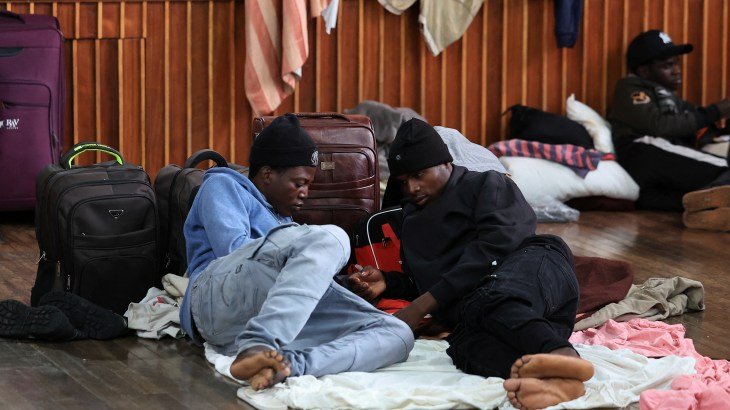
Fearful foreign nationals in South Africa forced out of their homes
Anti-immigration violence in South Africa has forced foreign migrants to flee their homes, with Mozambique saying five of its citizens were killed and hundreds are fleeing across the border. Displaced families are sheltering in community centres as Ghana and Nigeria plan evacuations.
Published On 4 Jun 2026
Politics
Avoid reactive police reforms after Nowak murder, senior black officer warns

Politics
Seventeen projects, initiatives selected for National Awards for e-Governance

New Delhi, A total of 17 projects or initiatives selected for the National Awards for e-Governance 2026 across seven categories to recognise exemplary contributions in digital governance, an official statement issued on Thursday said.
The National Awards for e-Governance are presented every year to recognise and promote excellence in implementation of e-governance initiatives.
The 29th NAeG 2026 awardees in seven categories include the gram panchayats category, recognising deepening and widening of service delivery at grassroots level through digitisation.
“Agri Stack”, a project of Ministry of Agriculture & Farmers Welfare, “Mahakumbh 2025” by Prayagraj Mela Authority, Uttar Pradesh’s Prayagraj, and Blood Bag Traceability and Citizen Interaction portal for promoting speedy, safe and voluntary blood donation by Kerala Development and Innovation Strategic Council are among the awardees, according to the statement issued by the Personnel Ministry.
TRINETRA, an AI based Video Surveillance system for Mahakal Rudrasagar Integrated Development Area , including Mahakaleshwar Temple by Mahakaleshwar Temple Trust, Samrat Vikramaditya Prashasnik Sankul Bhawan, Ujjain; and Panchayat Advancement Index, a Data Driven Governance for Viksit Bharat by the Ministry of Panchayati Raj are also among the awardees, it said.
The awards ceremony will be held during the 29th National Conference on e-Governance in Jaipur, Rajasthan, the statement said, without mentioning the date of the event.
The seven categories for the NAeG 2026 include ‘Government Process Re-engineering by Use of Technology for Digital Transformation’, ‘Innovation by Use of AI and Other New Age Technologies for Providing Citizen Centric Services’, ‘Best e-Gov Practices/Innovation in Cyber Security’, and ‘Digital transformation by Use of Data in Digital Platforms by Central Ministries/States/UTs’, among others.
The awards consist of a trophy, certificate and an incentive of ₹10 lakh for gold awardees and ₹5 lakh for silver awardees to be awarded to central ministry/ department/state/UT/district/organisation/gram panchayat for being utilised for implementation of project/programme or bridging resources gs in any area of public welfare.
This article was generated from an automated news agency feed without modifications to text.
Politics
Nigerias second-chance schools: women balancing study and survival
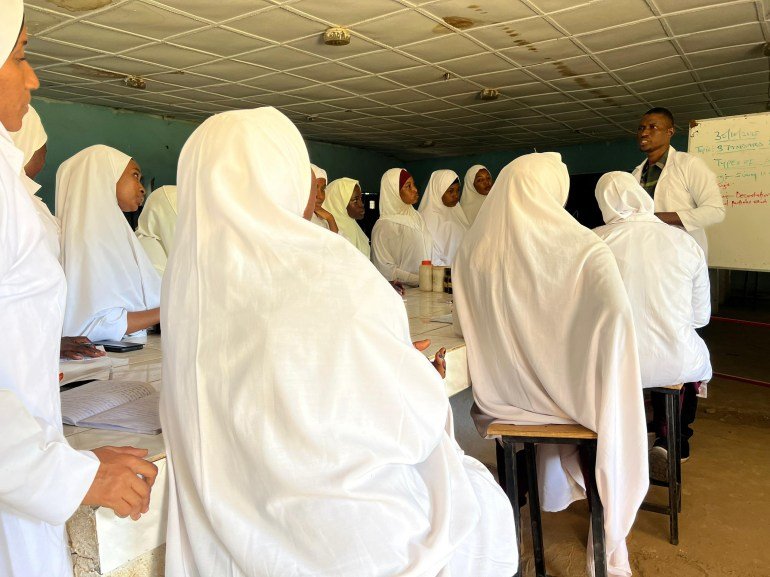
Sokoto, Nigeria – Each time her curious seven-year-old child returned home from school with homework, 28-year-old Habiba Abubakar knew it was time to take him to her neighbour, whom the child called aunt, even though they were not related by blood, who had been his saviour every time he wanted to stand in front of his class and receive a standing ovation.
But that changed in 2021, when Abubakar enrolled herself in the Women Centre for Continuing Education (WCCE) in Sokoto State, northwest Nigeria.
I’ve always felt ashamed when Muhammad told me that they’ve been given another assignment, she told Al Jazeera.
This frustration, coupled with her enthusiasm for learning English, pushed her to return to the classroom 13 years after she left.
Now, the mother of four said she helps all the children with their assignments.
The interruption in Abibaker’s studies is not uncommon across northern Nigeria, especially in rural communities, where girls are more likely to drop out of school due to cultural practices, such as early marriage, or poverty, which forces parents to make gender-biased decisions by enrolling male children over females.
UNICEF reported that more than half of the girls in the region are not attending school.
Jennifer Agbaji, a social accountability professional and the executive director at Basileia Vulnerable Persons Rights Initiative (BVPRI),a Nigerian nonprofit dedicated to advancing the rights of women, girls, and other vulnerable populations through education and leadership development, viewed the initiative as a positive and necessary intervention.
Nonetheless, she said second-chance education should not be limited to classroom-based learning alone.
If access to education depends solely on physical attendance, many women who face mobility, childcare, economic, health, or security challenges may still be excluded.
How the system works
WCCE, commissioned by the then-military governor of Sokoto State, Navy Ctain Abdul Rasheed Adisa Raji, was founded in 1997 to provide adult education and vocational skills to women in the state.
Since then, Nuraddeen Ladan Dogon Daji, a physics teacher, told Al Jazeera that the centre has trained many students, some of whom now practise professions, such as teaching and nursing, helping to address the country’s shortage of skilled professionals.
Unlike other public schools, where pupils spend six years, the centre designed a three-year curriculum for its primary section, from adult one to three.
In the secondary sections, students spend three years each in the junior and senior levels.
In their final years, they also sit for the mandatory Junior Leaving School Certificate of Education (JLSCE) and Senior School Certificate of Education (SSCE) examinations.
To help these students realise their dreams, the centre also offers free education, benefitting from the state government’s effort to reduce the number of out-of-school children.
This has helped students like Abubakar, who, following her divorce, relied heavily on her father’s support to stay in school.
We used to pay 5,000 naira ($3.5) per term, but were later told to stop because the state government has given us a chance to study for free, Abubakar told Al Jazeera from her home in the Kofar Atiku neighbourhood.
But free tuition does not eliminate all costs. Students still have to pay for transport, books, and other daily expenses.
The challenges
According to Agbaji, beyond poverty and early marriage, there are several structural barriers, including restrictive gender norms that prioritise domestic responsibilities over education.
She said many women lose confidence after years away from formal education, and in some communities, education is still viewed as an investment for boys rather than a lifelong right for women.
In her opinion, these norms often combine to make re-entry into education difficult, even when opportunities exist. In her journey to becoming a nurse, Fatima Attahir, who left school after primary school 12 years ago, found it necessary to go back to the classroom and start afresh.
To support herself while studying, she helps with her family’s trading activities when she is not in class.
She said that although some of her friends already saw the decision as time-consuming, she is not satisfied with the system’s duration.
I wish the primary section was also up to six years, she said.
Because to become a nurse, I need to have a solid background in the core subjects. Some of the students Al Jazeera spoke to said their greatest challenge is juggling academic activities with household responsibilities.
Before her divorce, Abubakar said she would wake up earlier than usual to prepare breakfast, clean the house, and get herself and her children ready for school.
When I finally set my foot in class, I was already tired, and as the lectures went on, I would start slumbering because I hadn’t had enough sleep. She said the pressure became worse when her youngest child frequently fell ill, sometimes forcing her to leave class before lectures ended.
After her divorce, transport costs became another obstacle. Since I was no longer married, my parents were the ones paying for the transport fares, but when they couldn’t, I would not go to school because I couldn’t afford it myself, she said.
Later, her father gave her 10,000 naira to start making and selling local snacks and small chops.
The small business now helps her cover transport costs and other school-related expenses. Abubakar still credits the neighbour who used to help her son with homework before she returned to school.
When transport costs became difficult to afford after her divorce, her parents stepped in when they could, while her father later provided the cital that helped her start a small business and continue her studies.
Her experience is not unique.
Another student, Hafsat Aliyu, said she leaves her two-year-old child with her in-laws whenever she attends classes to avoid disrupting lessons.
Her husband pays for books and other occasional school needs, while she sells local pastries during break time at the centre to earn money for daily transport and personal expenses.
During examination periods, she studies late into the night after completing household chores and putting her children to bed.
My husband does his best, but I thought it was time for me to get a source of income, too, she said.
Now, I pay for my transport and a few other daily needs.
However, the physics teacher, Dogon Daji, said that in his seven years of teaching at the centre, a recurring challenge among students is the pace of learning.
I’ve taught young people, and the level of their understanding is quite different, he said.
But he added that there are still outstanding students among them; one recently won this year’s Usmanu Danfodio Week, an annual quiz competition organised for secondary school students in the state.
On the other hand, the vocational section of the centre, which was designed to equip students with practical skills such as tailoring and so-making, now offers only tailoring.
Students are required to provide tools, such as scissors, including those whose interests may lie in other trades.
The way forward
Agbaji acknowledged that for Nigeria to bridge the gender disparity in education, the country must adopt a lifelong learning framework that recognises education as a continuous right and opportunity.
This requires increased investment in adult education, digital and remote learning platforms, community-based education, and flexible pathways for women who missed formal schooling, because the long-term consequences are significant.
She added that many women pursuing second-chance education continue to balance childcare, household responsibilities, and income-generating activities, often relying on family and community support networks to remain in school.
Educational exclusion perpetuates poverty, limits economic opportunities, increases vulnerability to abuse and exploitation, and restricts women’s participation in governance and public service. It also affects future generations because children of educated mothers are generally more likely to enrol in and complete school, Agbaji clarified.
Politics
Chinese spies using job websites to target government workers, MI5 warns

In a joint warning issued in a bulletin by the Five Eyes alliance, made up of UK, US, Australia, Canada and New Zealand agencies, it warned undercover operatives are using legitimate sites including LinkedIn, Indeed and Upwork to advertise fake analyst jobs.


FPL, Community Cooperative distribute aid in advance of hurricanes
A simple blue bag stuffed with supplies gave some Southwest Florida seniors a peace of mind as the dreaded “hurricane...

Free three-day festival with food, games, fun will celebrate C.S. Mott Foundation’s 100th year
FLINT, MI — Three days of free fun in Flint starts Friday. The C.S. Mott Foundation, in accordance with its...


California fast-food chain sets opening date for first Michigan location since 1970s
BATTLE CREEK, MI –– Jack in the Box will soon cut the ribbon on its first Michigan location since the...
Tainted Food Is Killing Far More People Than Previously Thought, WHO Says
Eating is one of the most essential and fulfilling parts of life. Unfortunately, many people today are still getting sick...


Longmont Dog Days will have dog gear, adoptions
The new Longmont Dog Days event this weekend will give dog lovers the chance to give back to their canine...
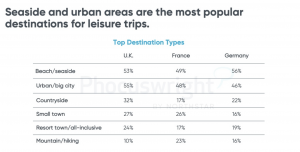

European Travelers Seek Active and Nature-Led U.S. Itineraries as Perception Enters Sensitive Phase
European travel demand to the United States is evolving as European travelers are proaching long-haul trips to U.S. destinations with...


New MLB All-Star Game Concession Menu Reveals Philly-Themed Food Items in Trending Photos
The 2026 MLB All-Star Game is celebrating the United States’ semiquincentennial with new signature food items on offer at the...


Food trucks at Jackson County Animal Shelter every Wednesday throughout June
JACKSON COUNTY, MI – Hungry residents are invited to come visit the Jackson County Animal Shelter for lunch on Wednesdays....


14 businesses participate in Ann Arbor’s first sustainable food walking tour
ANN ARBOR, MI – Fourteen businesses participated in Ann Arbor’s first-ever Food Sustainability Walk Wednesday all throughout downtown. The walk...


Acting Out Theatre brings “Annie” to Momence July 17-19
Acting Out Theatre Co. brings Annie to Downtown Momence this July—a beloved musical performed outdoors on East Washington Street at...
-

 LifestyleNews2 weeks ago
What Your Lifestyle Says About You: Psychology, Habits, and Personality Explained
-

 Video2 weeks ago
Nadal tells Amanpour about extreme solution to 19-year injury
-

 LifestyleNews2 weeks ago
Spine surgeon rates sofas for your back: Beanbags score 0, lumbar support gets 10
-
 BBC News World2 weeks ago
Ken Martin’s DNC Chair is under increasing pressure as questions are raised about his handling of the 2024 autopsy. Subscribe to this story to enjoy it without ads
-

 Tech2 weeks ago
Today's NYT Connections Hints, Answers and Help for May 25, #1079
-

 Video2 weeks ago
What we don't know about Colbert's last 'Late Show'
-

 Video2 weeks ago
911 call reveals more about Kyle Busch’s condition before his sudden death
-

 UsaLocalNews2 weeks ago
Assistant principal did nothing when told about 6-year-old with gun, prosecutor says