
Food
31 Shocking GLP-1 Side Effects That Have Nothing To Do With Weight Loss

Lily Grossinger
Thu, October 29, 2026 at 10:01 AM UTC
22 min read
Add Yahoo as a preferred source to see more of our stories on Google.
This post contains mentions of eating disorders, addiction, and mental illness.
Recently, we rounded up stories from a viral Reddit thread about the surprising personality, mood, and behavioral changes people noticed in loved ones taking GLP-1 drugs like Ozempic, Wegovy, and Mounjaro. As it turns out, a LOT of people could relate, and readers flooded the comments with even more of their own experiences.
So, we’re back with 31 more firsthand accounts about the unexpected ways GLP-1s have affected people’s lives beyond the number on the scale, from shifts in their interests and hobbies to changes in how they experience joy and connect with others.
Submissions have been edited for length and/or clarity.
1. “I went through a very bad divorce. My daughter died five years ago at the age of 24. I didn’t want to live anymore; I was drinking, smoking, and making poor decisions. My psychiatrist had me heavily medicated, but I wasn’t getting any relief. Then, I was offered a GLP-1 to lose some weight I’d put on, but I had done my own research and read that it could also have some benefits for substance abuse, depression, and anxiety, so I went for it. Now, I don’t drink, I don’t smoke, and lost the weight. But it was never about the weight — I’m functional now, have a part-time job, and I do think about the future. I miss my daughter every single day, but I’m coping. GLP-1s saved my life!!”
—Anonymous, 52, F
2. “My husband was on it for a year and a half, and it masked his symptoms of colon cancer. He went in for annual bloodwork and was extremely anemic. Had he not gotten a yearly physical, we would never have known and would have chalked the symptoms up to being GLP-1-related. So my PSA is please use it under medical supervision, go in for follow-ups, and do not buy it online!”
—Anonymous, 41, F, USA
Related: “15 Patients Who Learned The Hard Way To Never Lie To Their Doctor”
3. “I can’t take normal ADHD meds because they trigger some negative mental health side effects and panic. So I’ve mostly been raw-dogging my ADHD. I started on Wegovy almost two months ago, and I’ve dropped maybe eight pounds. But even if I don’t drop another pound, I plan on staying on it because the impulse control is life-changing. The ability to go into Target and buy the one thing I planned on going in there for and not walk out with two other little treats because I couldn’t control the impulse, on its own, is worth its weight in gold. I can look at the healthy food in my fridge and pick the thing I want to eat because I know it will give me energy, instead of the thing that sounds so good but I know will give me a sugar crash. It’s like I’m back in the driver’s seat of my own mind again.”
—Anonymous, 41
4. “My partner and friends on Ozempic are struggling to eat more than a single bite when we go out now. They are tired, dizzy, and have instant diarrhea after meals. Rising anhedonia, which is the inability to experience pleasure. Chronic low-grade nausea and fullness. It’s completely changed meals for us as a social thing, and I feel alienated when I eat an average portion and actually finish it while others are staring at me. It’s really triggering for my past eating disorder, and I hope to see more regulation with these medications and a ban on advertising this as an aesthetic drug for weight loss.”
—Anonymous, 32, F, Canada
5. “My dad has always been heavy, and he gained a lot of weight after a cross-country move. He has also always suffered from depression. After starting to take GLP-1s, his depression and flat disinterest in life have only gotten more severe. He got into a fight with my mom and just left, totally disappeared, turned off his phone, went totally dark for several hours. My mom was at the point of calling the police; she was so scared that he had harmed himself. He has always suffered from depression, but now I’m genuinely scared for his life. Yes, he has lost some weight. But is it worth it?”
—Anonymous
6. “My sister and I discovered that our grown daughters, aged 50 and 40, were both taking GLP-1s and were blowing up their lives. We had been very close to our daughters, and they both abruptly cut us out of their lives. It was as if they had been talking to each other and had agreed to do this at the same time. (They didn’t.) This wild behavior lasted about six months (for both girls), and we’ve been slowly rebuilding the relationship. They both have been on this med for around the same time. Over a year now. Also, my ex-husband blew up his life while on these meds. He cheated on his girlfriend and moved out after a very long-term relationship. While I’m not sure the exact medical reasoning for this, I know that the GLP-1s changed my loved ones profoundly. Wild times.”
—Anonymous
7. “I began using Zepbound six months ago. The hidden, non-physical side effects are: steady mood. Able to negotiate the grief of losing my daughter to cancer more easily; it’s still there, but it doesn’t control my life. No food cravings or alcohol cravings.”
—Anonymous, 68, F, CA, USA
8. “My mother is on it. She’s so much smaller than she’s ever been, and I mean that physically and emotionally. She just seems flat. Uninterested in things, listless, with zero energy. She used to be such a foodie, but that’s all gone. She gets violently ill for three days after every shot, and her migraines have at least doubled, as far as I can tell. However, she’s lost, like, 30 pounds. I mean, you can decide for yourself if that’s worth it.”
Advertisement
Advertisement
Advertisement
Advertisement
—Anonymous, 25, F, Charlottetown, Canada
9. “I have been on a GLP-1 for two and a half years. Nothing but positive things to say about my experience, other than the fact that I need a facelift to deal with my saggy skin! I’ve lost 80 pounds, which I would never have been able to achieve on diet and exercise alone. Trust me — I’ve been on that roller coaster my entire adult life. It’s such a relief to feel healthy and not have any more cravings. The most dramatic side effect has been a reduction in inflammation. My hands and feet were always swollen, and that went away immediately, even before I lost any weight.”
“The first six months, I felt pretty emotionally dull, but that went away when I found things like gardening and exercising to replace consumption when I got bored. My experience has been so positive that at least eight of my friends have started taking them as well. It’s so great to see people I care about getting healthy, too. 10/10 would recommend to anyone willing to do it in a healthy way.”
—Anonymous, 56, F, Maine
10. “I was on the medication for three to four months. It gave me severe, debilitating anxiety and depression. I am now 18 months off and finally starting to stabilize. But when it was bad, it was horrible. I got to a point where I could not speak because my brain fog was so bad. I’ve been to the ER over 10 times in a year, diagnosed with a panic attack every single time. I have memory loss from the experience, and my brain definitely doesn’t operate the same way that it used to. I have days when I want to run away from the family I built. I never felt this way before in my life.”
Related: “20 Unsexy Hygiene Habits People Swear By”
“If I could go back in time, I would’ve never taken the GLP-1s. It also caused hallucinations, delusions, and suicidal thoughts. I work in the mental health field, and none of the normal coping mechanisms worked for me. I had to start emergency medicine to calm myself down. I’ve never had to even take an SSRI before. There’s something much more serious going on in the brain from this medication, and it doesn’t just stop after you go off. And I lost no weight on it. It is my biggest regret in life.”
—Anonymous, 30, F, USA
11. “I’m disabled after a car accident. I eat pretty healthy, but I do walk with a cane. GLP-1s have cheered me up. I feel more confident about myself. I don’t obsess over food. My bloodwork is so much better. My blood pressure is steadily going down. Mentally, it’s a huge load off my mind, as I’m not sitting around getting fatter and sicker. I can do gentle exercise. I feel better about growing older, and I’ve started socializing again for the first time in a decade. That has cheered me up as well.”
—Anonymous
12. “I have always been thin, but when COVID got serious, and there was so much uncertainty at work (I work in a medical clinic), and we also had an earthquake, I suddenly developed major anxiety or something (panic attacks in my sleep, which was so scary). I gained, like, 100 pounds in just a few years. I went on semaglutide about two years ago, and it felt like I instantly was back to my previous weight (it took about a year total, but the majority of the weight loss happened early). The thing is, since I hadn’t been overweight for years, like a lot of people, I was just excited to be ‘me’ again. But, I didn’t go back to what I was; I look much older than I expected. My self-esteem didn’t really return, because I still don’t see ‘me’ in the mirror. I think when you’ve been overweight for years, the transformation is exciting because it’s a new you.”
“But if you are expecting to look like your old self, even from just a few years ago, you will be surprised and maybe not as confident as you expected you’d be. I was excited to be the ‘me’ I knew, but I got a ‘me’ that looks much different. Still better than being overweight, much better, but I didn’t get my confidence back (if that makes sense?), so I’m a little jealous of everyone excited to see a new them. Oh, and my libido is nonexistent. I never had much before, but now it’s not there at all, so weigh your pros and cons!”
—Anonymous, 46, F, Utah, USA
13. “Within a week of starting Zepbound, I just feel better and clearer mentally. I’m not as anxious, and food is a thing, not a craving. I now understand what it feels like to just ‘be’ in my life without worrying and obsessing constantly about everything. If I don’t lose a pound, it is still worth taking it to just feel normal feelings at normal volume.”
—Anonymous, 70, F, Texas
14. “I’ve been on GLP-1s for two months and have lost 11 pounds. I am bouncing with energy, happy to cook and eat good food, and things are great. I’m at the lowest dosage. Silencing the food noise has meant everything, but so has my husband, who goes to the gym with me five days a week. He’s losing weight, too, even though he isn’t taking a GLP-1 medication. Note: If anyone says you’re ‘cheating’ by losing weight with the help of the meds, look them in the eye and ask, ‘Who, exactly, is being cheated?’ and don’t let them change the subject. Make them say it OUT LOUD. They would prefer to have us suffering the shame of struggling instead of us living our best healthy lives as we now can!”
—Anonymous, 67, F, Washington
15. “People who have never struggled with food noise will not get it. It literally goes away — it’s incredible: the amount of brain energy I had spent my entire life on what I was eating, what I was going to eat next, how many calories were in this, what the next diet was, etc., etc., etc. It is a miracle drug. Do not knock it till you try it. I was on Ozempic, and a full dose was too much for me, so I lowered the dose, and now I can enjoy food and yet don’t overeat. Incredible. I wish these drugs were around 20 years ago.”
—redcactus632
Related: “People Are Sharing The Hygiene Tips That Changed Their Lives”
16. “This medication is like pretty much all drugs. It works for some people, and not others. I’ve tried the pill form of GLP-1s and had nausea and explosive, bloody diarrhea. I had a colonoscopy after, and it was fine. So, no clue why I had such an extreme reaction. We have one daughter who tried the shots and lost 20 pounds, but was nauseous the whole time. We have another daughter who has been on the shots for about nine months and has lost 50 pounds with no negative side effects. I do worry, though, that super-skinny body styles are going to make a comeback. Looking like a walking skeleton is just as unhealthy as being overweight.”
—rlstahr
17. “I’ve known a couple of people on it, and I’m seeing a trend here that I’ve noticed personally as well. The drug ‘quiets the food noise,’ however, it makes you completely ignore food for most of the day. By evening, the people I know who were or are on it are NASTY. This is because we literally need food to function. Due to the drug, your stomach might not be telling you you’re not hungry, but your brain is literally screaming for food. You have to remind yourself to eat smaller meals throughout the day, otherwise you turn into a cranky asshole.”
—oldtoaster86
18. “I have a friend who thinks that starting GLP-1s will fix everything that is wrong in her life. She has an abusive husband who only gives her money when he feels like it, even if the shelves are empty. She has had a number of surgeries for spinal issues and takes a large amount of narcotic pain meds, and I think she’s somehow thinking that this is the ‘magic fix’ to all her problems. She talks of nothing but being able to start taking it in December. She tried it once before and was sick for almost three weeks after the first dose, so she stopped. I’m truly very worried.”
Advertisement
Advertisement
—Anonymous, 65, F, USA
19. “I’m on my return to paying for GLP-1s out of pocket since getting a new steady job, and after three months being back on the meds, I’m reminded why I missed them so much when I lost my previous job and couldn’t afford them anymore. My insurance doesn’t acknowledge GLP-1s unless in specific cases, and even then, they’re looking to take some of those cases away, and the process itself is incredibly long (like probably about almost a year to get to have the conversation about it being prescribed, depending on the doctor/clinician), so I didn’t bother and went through an online company.”
“The biggest changes, besides no longer craving junk food, are that I haven’t been nearly as financially irresponsible. I can be patient and wait for the price of something I like to come down instead of impulse-buying from scalpers. I actually shop around for lower prices and ways to save! I’m really on top of using my phone and rewards apps/accounts to my full advantage, too, to have their rewards points pay for gift cards to put toward the hobbies/activities that I enjoy. This has extended to me saving money on groceries, too, which has been super helpful against the rising cost of everything. No more fast food, except for maybe once in a blue moon when I’m exhausted.”
—Anonymous, 30, F, USA
20. “My daughter has had many mental health issues, including self-medicating with alcohol and food. It was so important for her to gain control that we paid full price for Wegovy (ouch), but it’s been well worth it. She has completely backed away from alcoholism, doesn’t overeat, and is much more mentally stable. She was absolutely incapable of handling any kind of stressor, and around her menstrual cycles, she was a nightmare. All of that is gone now! She’s been slowly losing weight, but even if she wasn’t, we’d finance the whole endeavor just for her mental health. Not all react this way to the meds, but she is one of the very lucky ones. I only hope the medical profession starts treating this medication as a medical need so more people are able to afford it. Fingers crossed!”
—Anonymous, 62, F, California
21. “My husband had a slightly elevated blood sugar, so he was put on Ozempic. He lost 40 pounds in two months, and essentially stopped eating and communicating. He was divorced from life. So he tried Mounjaro, and it was a little better, but the constipation and diarrhea were from a horror/comedy movie. I called his doctor’s office, crying. I didn’t know if we could make it. So we went over all his meds and eliminated some that did too much dehydration, and now he’s on Jardiance. So much better. Excess sugar is excreted in urine, not in the stomach. Do not let someone close to you disappear into these drugs if they’re not working.”
—Anonymous, 67, F, Arizona
22. “I am a nurse practitioner and own a med spa. We fill prescriptions for many GLP-1 meds. One thing I noticed right away is that GLP-1 meds affect Botox and fillers…our spa has MANY clients who notice that fillers and injections burn off in about half the time. GLP-1s raise your metabolism, which also affects how the body handles fillers and Botox! Make a choice that really matters to you, or get your injections twice as often. I’m surprised that hardly anyone knows or talks about this side effect outside of my industry!”
—Anonymous, 50, F, Colorado
23. “My (former) best friend takes a GLP-1. She became increasingly irritable and negative almost from the get-go. I confronted her about something she did that I thought was out of line — not a fight, just a ‘please don’t do this in the future’ thing — and she snapped, ‘Well, it’ll never happen again!’ And hung up on me. I tried to call her back, but she wouldn’t answer. That was seven months ago, and we haven’t talked since. She was never like that before taking GLP-1s.”
—Anonymous, 62, F, Virginia
24. “Soooo, I found out that my stepdad has become addicted to exercise after starting Zepbound for his diabetes. I didn’t know that was a thing, and apparently, a small group of people who were in the drug trials became addicted to the dopamine and endorphin rush from exercising. He will literally exercise for, like, an hour before going to the gym, then work out there for three to four hours, and then go to physical therapy for an hour, and then go do tai chi for two hours. My mom has been really worried about him because he’s lost SO much weight in such a short time, and he looks sick. He was only about 10 pounds overweight when he started it, and now he looks positively skeletal.”
—ogsassytaco
25. “I am on Mounjaro. I have lost almost half my starting weight. Positives: everything. I have the labs, A1C, and BMI of a thin person half my age (I am old). Negatives: Emotionally flat, but because I’m flat, I don’t care. I am more judgy about overweight people, even as I know that not everyone’s insurance will pay for it. When people ask me how I lost the weight, I say, ‘My doctor and I worked out a plan.’ It’s none of their business. Most people probably have guessed, but I’m an intensely private person and don’t talk about my body with anyone except my spouse, siblings, and one best friend.”
—nyc4ever
Related: “29 Women On GLP-1s Share The Side Effects No One’s Been Talking About”
26. “I have been on GLP-1 meds for some years now; maybe almost four? It’s hard to remember. I got on them for weight loss, as I was pre-diabetic, and I’m staying on them because…when you stop, the weight comes right back. I have never felt better than I do when taking the meds. I’m running at the same pace I ran at almost 20 years ago. My wedding ring, which I haven’t worn since my second pregnancy, fits. Downsides: Life’s a little flatter, that part’s true. But so am I!”
—Anonymous
27. “A relative of mine was on it for diabetes, and it has been a nightmare. He got so snappish that his assistant at work quit. His GI system is so bad that he can barely leave the house. His balance became so bad that he fell numerous times. He was also dizzy. His wife thought he had Parkinson’s. And he only lost maybe 10 lbs. His doctor keeps taking him off it and restarting it. Evil drug.”
—shelleye
28. “I tried the GLP-1 drugs for about four months. Really horrible side effects, like I was so lightheaded I almost passed out when I stood up. Very nauseous to the point I couldn’t even drink water and got dehydrated. I kept weight training, but it was hard to eat enough to work out, and I felt like I was going to throw up after every set. No energy or interest in anything. I would just lie on the couch and stare. I am prone to depression anyway, and this wasn’t helping at all. Now off all drugs, and it took over a month to feel normal again. My strength is back, and I will tell people I will ‘raw dog’ my weight loss using old-fashioned exercise and a calorie deficit.”
Advertisement
Advertisement
—magicalscissors71
29. “Since being on GLP-1s for almost a year, I have lost 68 pounds, my type 2 diabetes has gone into remission, I’m off Metformin and insulin, and my A1C is 5.7. I feel wonderful. My self-esteem is through the roof. My sex drive is amazing, and my libido is OMG. I found love and am deliriously happy. My skin started to sag, and I started losing hair before I realized l had to eat more protein, so once I started walking and exercising, that all improved. I eat protein, take Nutrafol for hair growth, and have noticed great improvements.”
—Anonymous, 73, F, Washington
30. “I entered my ‘menopause era’ three years ago, and do not know when I entered my ‘perimenopause era,’ but before any of that, I did not have a weight problem. About six years ago, I started gaining weight that I could not take off. I have always been one that could lose weight easily with exercise, but this was different. The more I exercised, the worse I felt, and I was still gaining weight. It was starting to negatively affect everything about who I was. I tried diets, and I even hired a ‘food coach’ who helped guide me. She promised she could turn my weight around. I lost a whopping seven pounds. Nothing in comparison to what I had gained.”
“Then, in 2023, I entered full-blown menopause. It felt like someone lit my insides on fire! My doctor eventually started me on Zepbound. I started losing weight immediately. Out of the miserable 40-plus pounds I gained in five to six years, I lost 60 pounds in 10 months. I did not experience any mood flatness, thankfully. I am so thankful for the research that has been done and just feel for all the women who had to live life during menopause, not feeling like themselves. This has been a total game-changer for me!”
—Anonymous, 53, F, Indiana
31. And finally, “GLP-1s took away my urge to drink alcohol. I lost my husband a few years ago, and before his death, we were bordering on alcoholism, if not outright functional alcoholics. After his death, booze became the only thing that took away the pain for a few hours and allowed me to sleep. I’ve been on Zepbound for six months and have lost 45 pounds. The weight loss has been great, and I have a new confidence I haven’t had in years, but to me, not craving booze anymore has been the real win. The loss of food noise has been very beneficial to me as well.”
—Anonymous, 59, F, California
Did you or a loved one notice any unexpected changes in mood, personality, emotional well-being, or relationships after starting a GLP-1? Whether the changes were positive, negative, or somewhere in between, we want to hear about it.
Share your experience in the comments or use the anonymous form below, and your contribution could be featured in an upcoming post.
Note: Submissions have been edited for length and/or clarity. This post contains mentions of eating disorders, addiction, and mental illness.
Your daily brain workout: I’m Convinced You Need A PhD To Solve This Word Puzzle
Also in Health: “People Are Revealing The Hygiene Products They Quit Buying For Good”
Also in Health: “27 Things Doctors Wish They Could Tell Their Patients—But Can’t”
Read it on BuzzFeed.com
Food
Milwaukee Brewers 2026 World Series Parade: What we know

MILWAUKEE —
MAKING HISTORY | MERCHANDISE | MVP | REACTION | MKE GIVEAWAYS
Brewers make history! Brew Crew, now is the time to celebrate our first World Series title.
In World Series tradition, Milwaukee will hold a parade to celebrate our beloved team.
>> CLICK HERE TO GET YOUR MLB BREWERS WORLD SERIES MERCH <<
Here's what we know.
The parade will be on Friday. It will start at 10 a.m.
There will be exclusive merchandise during the celebration.
Parade route
Watch News Chopper 12 fly the route of the parade in the video player above.
The championship parade will start the intersection of N. 4th Street and W. Wisconsin Avenue. It will go through downtown Milwaukee before concluding at Henry Maier Festival Park (HMFP), where a rally will take place throughout the grounds.
Admission to the general HMFP grounds will be free to all fans until capacity is reached.
HMFP will open to the public at 8 a.m. to accommodate fans. There will be multiple large video screens featuring live parade coverage, along with live music, food and drinks.
Rally speech tickets
Tickets to be seated in the American Family Insurance Amphitheater for the rally speeches will be available starting at 10 a.m. on Thursday and the public on sale at 2 p.m.
As with postseason Watch Parties, net proceeds from Amphitheater ticket sales will benefit Brewers Community Foundation. The rally speeches will be available on various video boards throughout the HMFP grounds.
Street closings
Road closures will begin at 7 a.m. on Friday. Drivers should expect traffic delays in the area.
School closings
No school districts have closed schools for the parade at this time. There are a few districts that had the day planned off already for other calendar reasons.
Forecast
There are rain chances ahead for SE Wisconsin through Tuesday.
This is a developing story. Stay with WISN 12 News for the latest information.
Food
A U.S. cruise ship suspends a voyage due to fuel costs, stranding 200 passengers : NPR

SIHANOUKVILLE, Cambodia — A U.S. cruise ship on an around-the-world voyage that touted its cabins as floating homes suspended its three-year journey in Cambodia due to fuel costs, forcing hundreds of passengers to disembark.
The MV Odyssey set sail two years ago on a voyage to the seven continents marketed as combining long-term living at sea with global travel. Its operator had offered to “make the Odyssey your permanent home,” with the purchase price of a suite for the lifetime of the vessel starting around $230,000.
For now, it is docked at the Cambodian port of Sihanoukville on the Gulf of Thailand, with no certain departure date.
The ship has been carrying 203 passengers, mostly Americans, along with 156 crew members, according to Cambodian officials. It has a 650-passenger capacity.
Its Florida-based operator, Villa Vie Residences, said monthly fuel expenses per cabin that historically averaged $1,800 have reached an estimated $6,000 to $8,000 in parts of Asia due to the war in Iran. The company said it sought to reduce fuel consumption by slowing the itinerary and spending more time in port, but was unable to offset the surging costs.
Traffic has been curtailed in the Strait of Hormuz since the war in Iran began, squeezing supplies of all kinds of petroleum-based fuels, especially in Southeast Asia, and sharply increasing prices.
“We have been unable to continue carrying the resulting operating losses,” Villa Vie Residences said in a statement issued Tuesday. “Passing the full increase on to residents is not a realistic solution. Our focus now is on supporting residents, crew, and employees” while it tries to restructure.
“The company is working with residents to coordinate disembarkation and identify temporary living arrangements,” it said.
Those on the ship had hoped to sail for years to come
Passengers, however, said they received no support and had to make their own arrangements after being given seven hours notice on Tuesday to disembark. Some were devastated and expressed hope a new company could rescue the venture so life at sea can continue.
Paul and Lynn Montoya, a retired couple from Wyoming, said they bought a window cabin and had expected to sail for years. They boarded the ship 17 months ago in Panama.
Paul praised the concept of residential cruising but said the shipowner lacked the expertise to make the business financially sustainable. While rising fuel costs had been cited publicly as the reason for the suspension, he said the company had already been struggling. Changes to itinerary, unreliable internet access and declining food quality had pushed many residents to leave the ship in recent months, he said.
Lynn said residents were repeatedly asked to contribute additional money for fuel and other expenses, including a fresh call to raise funds for fuel to get out of Cambodia. She said the crew members were also not paid.
“We were tired of every two to four weeks being asked for money for fuel, money for everything,” she said. “We had hopes but they just kept sinking further and further into the hole through mismanagement.”
The company could not immediately be contacted for comment.
For some, the venture was a risk worth taking
Yet for some, even the financial and logistical turmoil couldn’t outweigh the extraordinary experience of traveling the world and living at sea.
Carol Larson, 69, and her sister Crystal Lavering, 72, occupied separate cabins aboard the ship for 18 months. The siblings, from California, described the suspension as heartbreaking, and hoped the cruise would be resuscitated.
“I hope there is a movement for the residents to buy the ship and I am hoping that goes through because it’s a dream to live on the ship and I don’t want it to end,” Larson said.
Lavering said her health improved during her time on the ship, and that she didn’t need to use a cane to walk anymore. “You come to this ship to live … it’s just sad that it’s all over.”
Larson bought her cabin for $120,000, paid in installments, in addition to monthly maintenance fees, under a plan that had promised the possibility of living aboard for up to 15 years. She said she blamed U.S. President Donald Trump for the ship’s woes as fuel costs spiked due to the Iran war, in addition to poor management. But she said she didn’t regret her investment.
“Because it was a startup company, I believe that it was a risk. From the very first day, I said to myself that if it lasts a year, I can walk away and feel like I got my money’s worth … I still feel that way. I feel blessed to have been part of the experiment of residential cruising,” she said.
The cruise began in Northern Ireland in 2024
The ship arrived in Sihanoukville last Friday and was scheduled to depart Wednesday, according to a statement from Long Dimanche, the deputy governor of Preah Sihanouk province. He said it was now expected to refuel and depart Cambodia on Saturday, but the ship’s operator has not yet publicly confirmed any date.
Built in 1993 and operated under different names by several cruise lines over the years before being becalmed by the coronavirus pandemic in 2020, the Odyssey was bought by Villa Vie Residences in 2023.
Its current cruise, originally intended to last 3 1/2 years, began in October 2024 in Belfast, Northern Ireland, where the ship had been refitted. A second cruise had been tentatively scheduled to end in August 2030.
The Odyssey is not the first cruise ship Sihanoukville has hosted in crisis.
In February 2020, the MS Westerdam was allowed to dock in Cambodia after being turned away at five ports in other nations because of fears of COVID-19, which just a month earlier had started to spread from China. It carried 1,455 passengers, more than 600 of them American citizens.
After being stranded at sea for two weeks, Cambodia’s then-Prime Minister Hun Sen allowed it to dock for what he said were humanitarian reasons. Cambodia won plaudits as passengers were welcomed ashore and arrangements were made for them to fly home.
Food
Dolores Huerta death: Chicana activist icon
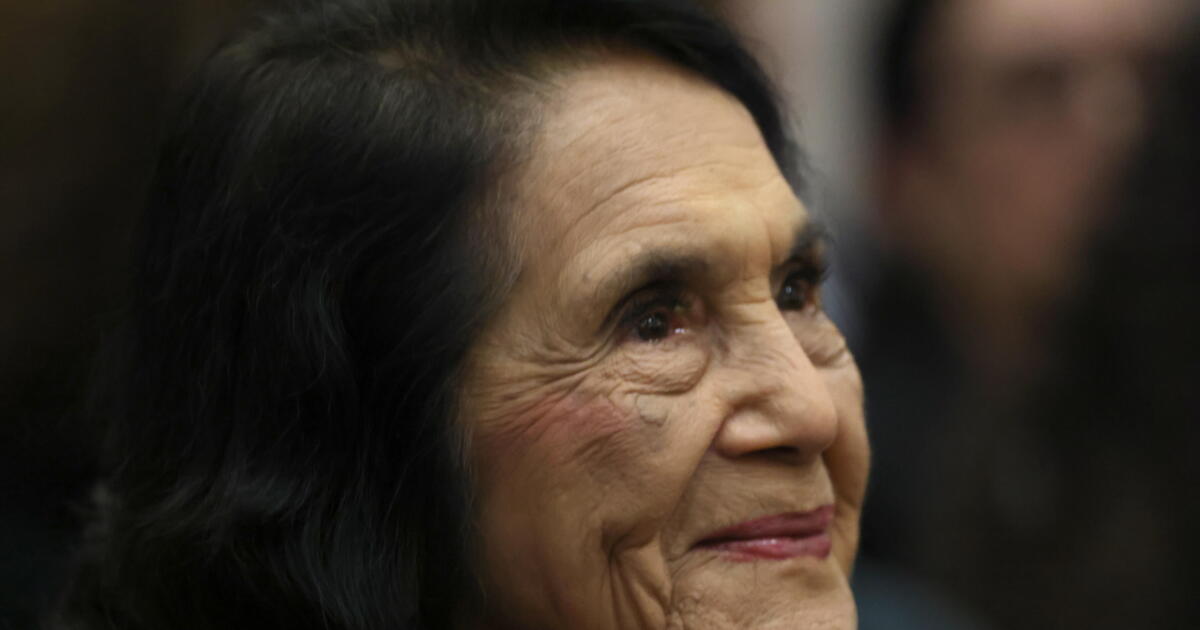
Dolores Huerta, the fiery and resolute activist who helped launch and guide the nation’s first enduring labor union for poor farmworkers and later became an inspiration to women and liberal true believers, has died. She was 96.
Erik Olvera, a family spokesperson, told The Times that Huerta died in Bakersfield on Wednesday, surrounded by members of her “huge family.” The cause, he said, was cancer.
“It’s a tough time,” Olvera said. “She was incredibly beloved, and not only was she beloved, but she was an icon to so many people around the country and around the world, really. If anything, her family is clinging to memories and clinging to each other as they mourn.”
Huerta never gave up on her dream of a more equitable distribution of wealth in America, campaigning for working people for years beyond standard retirement age.
The emotional compass of the United Farm Workers of America for decades, the petite mother of 14 attained singular stature as a rule-breaking proto-feminist, godmother of the Chicano power movement and doyenne of American labor.
Huerta’s fervent crusading for the dispossessed made her the potent alter ego to her union co-founder, the soft-spoken and methodical Cesar Chávez, though the full complexity and pathology of their relationship only became publicly apparent late in her life.
The duo’s history took an unexpected and dark turn in March , when two women came forward to say they had been sexually assaulted by Chávez when they were teenage girls. Huerta told the New York Times that the venerated labor leader also had twice forced sex on her, resulting in two pregnancies.
Nearly 96 at the time, Huerta said she had remained silent for six decades to protect the farmworker movement. But she added: “I now understand that I am a survivor — of violence, of sexual abuse, of domineering men who saw me, and other women, as property, or things to control.”
Some wished Huerta had spoken out earlier, at least within the insular union, to prevent others from being victimized. But her many champions insisted the late-life revelation reflected badly only on Chávez, who for decades before his fall from grace had been an American civil rights icon and a virtual secular saint to the political left.
Some historians insist that Huerta be given full recognition for teaming with Chávez during much of the early foundational work that produced the UFW, from its founding in 1962 in the San Joaquin Valley farm town of Delano until she stopped working full-time for the union in the late 1980s.
It was Huerta who hurried from pickup truck to back stoop to pool hall to recruit many of the union’s first members; Huerta who stormed up and down picket lines to keep striking workers out of the fields; Huerta who helped negotiate one of the first contracts ever for farmworkers in North America; and Huerta who struggled to keep the union relevant as its membership and clout faded. She turned the phrase “Sí, se puede!” into a chant that animated rallies and marches well into a new century.
Complications and byzantine controversies helped stymie the union in its adolescence, with Huerta usually supporting Chávez, even as he became distracted from the union’s central work and demanded absolute power. The pair’s obsession with loyalty and often-imagined conspiracies ended with purges of some of the UFW’s most dynamic leaders, even as field hands continued to labor under abysmal conditions.
Huerta later devoted much of her time to women’s rights, Democratic Party politics and community organizing.
In 1999, the then-69-year-old great-grandmother helped obtain extra government benefits for workers who lost their jobs in a citrus freeze and stared across the contract bargaining table at lawyers for the giant Gallo wine company. Even late in life, she toured the nation as a public speaker and used her foundation to register voters and campaign for progressive causes. Liberal groups clamored to have Huerta at the front of their marches. Often sporting a jaunty red beret, she locked arms with activists one-quarter her age.
Her Dolores Huerta Foundation supported endeavors as diverse as a performing arts camp for children, higher education mentoring for high school students and food distribution to victims of floods that inundated the Central Valley in 2023. The foundation became something of a family business — headed by her daughter, Camila Chávez, and supported by legal advice from her son, Emilio Huerta, while four other relatives served on the board.
In another step to cement Huerta’s legacy, one of her nonprofits broke ground in 2025 for the Dolores Huerta Peace and Justice Cultural Center in Bakersfield, the San Joaquin Valley city she called home. The $35-million project, paid for largely by the state of California, will include an academy to teach future generations how to become community organizers.
“They are the ones who are going to guide us forward,” the then-95-year-old told a crowd, which stood under a scorching sun for the groundbreaking.
Through it all, Huerta insisted her primary loyalty remained la causa — the struggle to win better wages, working and living conditions for poor people, particularly farmworkers.
Beginning with the early organizing days in the 1960s, Huerta inspired passions almost as intense as her own. She won almost breathless admiration from followers for the way she faced down sometimes violent anti-union forces, worked for days with little rest and negotiated late into the night, while others faded. She alienated others with a waspish temper, an unwillingness to forgive even small slights and inattention to some of the details that make a union work.
To the union faithful, she was the “Madonna of the Fields.” Some said Huerta reminded them of the soldaderas, a handful of women warriors who followed Emiliano Zapata and Pancho Villa into battle during the Mexican Revolution. The growers, whom she almost always scorned, had another name for her: “the dragon lady.”
A woman of frenetic energy who lived in a world of myriad contradictions, Huerta was one of the only women in many board rooms and union halls full of men. She was a jet-setting, president-schmoozing pragmatist, who in unguarded moments spoke mystically about her two youthful encounters with UFOs. She was a devout Catholic who had the last four of her children with a man she never married, Richard Chávez, César’s younger brother. (Only in 2026 did she acknowledge having two other daughters, given to others to raise, fathered by César Chávez.)
Her relationship with César Chávez was as complex as it was volatile — a fact acknowledged by UFW regulars long before Huerta’s charges about his sexual misconduct.
The two met through their work for the Community Service Organization, or CSO, a progressive group that sought better government services and equal rights for poor and minority people. Both were called to the cause by the organization’s founder, Fred Ross Sr. — Huerta in Stockton and Chávez in San José — and later united over their common concern for farmworkers. But even when he became statewide leader of the CSO, Chávez could not persuade the group to focus its energies on organizing field workers.
It was 1961 and Chávez was living in East Los Angeles when he called Huerta to his home and said: “We have got to start the union. If we don’t do it, nobody else will,” Huerta once recalled. He left the CSO, and Huerta followed.
Both soon moved their families to the Kern County farm town of Delano. Chávez relied on Huerta for nearly everything. When she wasn’t going door-to-door to recruit new members, Huerta negotiated with growers and created union hiring halls. She formed farmworker ranch committees and moved to the East Coast for months to promote the union’s national grape boycott.
But Chávez and his right hand also clashed routinely during their decades-long collaboration. The two would explode in shouting matches over strategy, while other union leaders shrank from the room. In audio recordings of one 1979 confrontation reviewed by the New York Times, Huerta fought back and demanded respect as Chávez called her a “stupid bitch” and accused her of stealing. Huerta might quit, or be fired. Inevitably, she would be back in the fold within a few days or weeks.
“Their commitment to the cause trumped all else and grew into a mutual dependence that survived decades of discord,” wrote Miriam Pawel, a former Los Angeles Times editor, in the biography “The Crusades of Cesar Chavez.” Asked by ABC News if she tried to protect Chávez, Huerta replied, “Always. Always.”
During a wine grape strike in the Central Valley, Huerta and other UFW women once locked arms in a human blockade between the union’s male picketers and replacement workers wielding two-by-fours. She blocked one worker’s car with her own, to prevent him from going to work and breaking a 1965 strike against rose growers in McFarland.
Chávez never doubted Huerta’s resolve. He once called her “totally fearless, both mentally and physically.”
Her years of community organizing in Stockton taught Huerta how to inspire even the most humble of her poor constituents.
In the union’s founding days, Huerta helped recruit a 19-year-old grape picker named Eliseo Medina to perform a one-man picket at the Port of Los Angeles — supposedly to stop the loading of a shipment of non-union grapes. The grapes never materialized. But Medina recalled how Huerta’s spirit and determination galvanized him.
“Dolores had a gift for making you believe in yourself,” Medina said. “She has an ability to inspire you and urge you to do things you could not think were possible. She is one of those life-changers.”
Medina left the Chávez-Huerta-led union, believing it had strayed from its core work. He went on to become the international secretary treasurer of the more than 2-million-member Service Employees International Union — just one of many UFW acolytes who fueled the labor movement as it staged a modest resurgence in the 21st century.
Huerta was at the center of many of the union’s landmark achievements, including the negotiation of a contract in 1966 with the Schenley Wine Co. It was the first labor agreement obtained by farmworkers themselves with an agricultural company, according to the union’s history.
But the UFW’s fortunes would rise and fall. One low ebb came in 1973 with the loss of many contracts to the Teamsters Union, which struck sweetheart deals with growers. But some union insiders also complained that the UFW had failed by not winning enough concessions for the workers it represented. The union’s membership plummeted.
Two years later, momentum swung again, as the union helped persuade California Gov. Jerry Brownto impose the toughest farm labor regulations in the nation.
The union’s membership would spiral downward until Chávez’s death, at 66, in 1993. There was a sense among many insiders that the union became overly insular, with repeated purges designed to promote absolute fealty to Chávez.
In one incident, students graduating from English classes at the union’s headquarters, La Paz, ended a slide show with the words: “The Union is not César Chávez, the Union is not La Paz, the Union is the farmworkers.” Huerta, fuming, demanded to know which of the teachers had planted this message, which she viewed as an act of treason against Chávez — an episode detailed by one of the teachers, Jeffrey W. Rubin, who went on to become a history professor at Boston University.
“Confronted there by Huerta, Richard Chávez, and César Chávez himself, we were accused of being part of a subversive plot, railed at, called ‘chicken s—’ by César, and thrown out of La Paz and the union,” wrote Rubin, who kept the episode quiet for years.
At the same time, the UFW lost contracts and sometimes failed to provide the benefits it promised to workers. Huerta was one of many union leaders unable to set Chávez, and the UFW, on a better path.
As Chávez’s son-in-law Arturo Rodriguez took control of the union in 1993 and began clawing to regain members and clout, Huerta remained the UFW’s most public persona.
At hundreds of marches across the nation that she attended with regularity throughout her life, parents would push forward, telling their children they were witnessing a historic figure. Asked for an autograph, she would boldly scrawl: “Sí, se puede.”
The phrase — “Yes, it can be done” — had been part of the union’s fabric since 1972, when some doubters suggested the union would fail in its campaign against an anti-union law in Arizona. Huerta responded, “Sí, se puede,” creating a mantra for the American left.
Born April 10, 1930, in Dawson, a small mining town in the mountains of northern New Mexico, Dolores Clara Fernandez moved to Stockton when she was 3, along with her mother, two brothers and two sisters. Her father and mother had divorced, but Juan Fernandez’s legend had been fixed as a brawling union leader and New Mexico state legislator. Her mother, a hotel operator, believed in public service and would not let the poorest guests go hungry.
Dolores thrived on a middle-class upbringing of Girl Scouts, violin lessons and tap dancing, describing her mother’s generosity as a guiding force. She was bright and popular and even founded a teen center where she and other kids hung out.
But Dolores would recall her high school years as a time of slights and rewards not received — injustices she linked to her Mexican American heritage. When police ordered her teen center shut down, it became clear it was because they did not like whites socializing with Mexican American, Black and Filipino kids.
Those setbacks would not be forgotten.
After community college in Stockton, Huerta became a teacher. But she left after just a year, because, she said: “I thought I could do more by organizing farmworkers than by trying to teach their hungry children.”
Soon she met Ross and Chávez, and her life’s path would be set. Even her name seemed to brand her for the work. When she divorced her second husband, Ventura Huerta, Chávez advised her to hold on to her last name. Dolores Huerta means Sorrows of the Orchard.
Along the way, there would be great personal heartache.
In 1968, she was at the Ambassador Hotel in Los Angeles on the night Sen. Robert F. Kennedy was shot. The Democratic presidential front-runner had just finished his California primary victory speech — thanking Chávez and Huerta — when an assassin gunned him down.
Twenty years later, her politics thrust Huerta even more directly in the path of violence. A television camera captured a San Francisco police officer clubbing her as she and others peacefully picketed an appearance by Vice President George H.W. Bush. The blows ruptured Huerta’s spleen and nearly killed her.
She later won an $850,000 settlement from the city for the attack. Some in the union said that Chávez’s insistence that Huerta give the money up to the UFW created another rift that caused her to leave the union.
Huerta would struggle, as well, to find time for her expansive family — which in the end included 14 children, 24 grandchildren, 23 great-grandchildren and seven great-great-grandchildren, according to her foundation’s website.
One of her greatest heartaches grew out of the struggles of her oldest daughter, Celeste, a schizophrenic who, on occasion, would leave the institutions where she lived and wander the streets.
Huerta’s union zealotry would inspire a range of emotions from her other children.
“We understood very quickly she wasn’t ours to have,” said son Emilio, the lawyer, who is a Central Valley activist. “She sort of belonged to the farmworker movement. And it was our job to support her.”
He and several other Huerta offspring devoted their lives to the UFW and related causes, basking in a sense that their family played a part in history. That did not always make up for the personal slights — the times their mother would fob them off on union allies or neighbors, or miss a birthday.
In a bittersweet essay, Dolores’ daughter Juanita once recalled how her mother forgot to pick her up from junior high school. She compared Huerta to a train “rattling all the windows behind me, blaring out its horn, announcing its simultaneous arrival and departure with an incredible clamor, but rushing constantly forward.”
At a 69th birthday party in 1999, Huerta told a large dinner gathering that her own sacrifices had been overblown.
“It was our families who sacrificed,” she said. She then told a story about driving a carload of children to school one day in an automobile limping along because a tire had been slashed by union opponents. “That,” she said, “was kind of how we made it through life.”
Approaching her 90th birthday in 2020, Huerta spent a day that might have been more typical for someone half her age. She protested at the Fresno County Board of Supervisors for increased pay for home healthcare workers, who made just $12 an hour. Huerta hadn’t planned on being arrested that day, but when she felt police used excessive force on one of the protest leaders, she changed her mind. “Take me too,” she said, according to USA Today. Officers cinched a plastic zip-tie around her wrists and led her away.
More typically in her later years, she supported her foundation. In one moment, she might be campaigning for a bond measure for a middle school gym in the poor San Joaquin Valley community of Weedpatch; in seemingly the next, she would be stumping via Zoom for Joe Biden during his fight to take the White House from President Trump.
In 2020, USA Today named Huerta one of the 100 women “who’ve made a substantial impact on our country or our lives over the past 100 years.” By then, at least half a dozen schools across America bore her name. Others considered taking her name after they removed Chávez’s following the sexual abuse revelations.
President Obama presented Huerta with the country’s highest civilian honor, the Presidential Medal of Freedom, in 2012 — a one-time community organizer, who made his way to the White House, honoring a woman still doing the work.
“The great social justice changes in our country have happened when people came together, organized and took direct action,” Huerta said in accepting the honor. “It is this right that sustains and nurtures our democracy today.”
Olvera, the family spokesperson, said Wednesday that Huerta’s relatives would be announcing the details of a public memorial in the coming days.
Food
Fuel costs force US cruise ship to suspend multiyear voyage in Cambodia

A United States cruise ship has suspended its around-the-world voyage in Cambodia, forcing hundreds of passengers to disembark with no confirmed departure date.
The MV Odyssey, operated by Florida-based Villa Vie Residences, arrived at the Cambodian port of Sihanoukville on Friday. The company said monthly fuel expenses per cabin, which historically averaged $1,800, had climbed to an estimated $6,000 to $8,000 in parts of Asia.
Recommended Stories
list of 3 items
list 1 of 3Iran’s enriched uranium re-emerges as point of contention in US talks
list 2 of 3Bank of Canada raises interest rates for the first time in three years
list 3 of 3Russia to send first diesel tanker to the US amid Trump deal
end of list
The company said it tried to reduce consumption by slowing the ship and spending more time in port but could not offset the rising costs.
“We have been unable to continue carrying the resulting operating losses,” Villa Vie Residences said in a statement on Tuesday, adding that passing the full increase on to residents was not a realistic solution.
Traffic through the Strait of Hormuz has been curtailed since the United States-Israel war on Iran began, squeezing supplies of petroleum-based fuels and pushing up prices, particularly in Southeast Asia.
The ship was carrying 203 passengers, mostly Americans, and 156 crew members, Cambodian officials said. Some passengers said they received only seven hours notice to disembark and had to arrange their own accommodation.
Paul and Lynn Montoya, a retired couple from the US state of Wyoming who boarded the ship 17 months ago, said they had expected to live at sea for years. They said the company had already struggled with itinerary changes, unreliable internet and declining food quality.
“We were tired of every two to four weeks being asked for money for fuel, money for everything,” Lynn Montoya said, alleging mismanagement and unpaid crew members.
Other passengers said they hoped a new company or a resident-led effort could save the venture.
Carol Larson, 69, who bought her cabin for $120,000 in instalments, said she did not regret taking the risk despite the suspension.
“I feel blessed to have been part of the experiment of residential cruising,” she said.
The ship set sail from Belfast, Northern Ireland, in October 2024 on a voyage originally planned to last three and a half years. Built in 1993, the ship was purchased by Villa Vie Residences in 2023 and offered cabins for long-term living with lifetime-vessel suites initially priced from about $230,000.
Cambodian officials said the ship was expected to refuel and leave on Saturday although the operator had not publicly confirmed a departure date.
Food
RFK Jr. takes shortcut to make some peptides more widely available
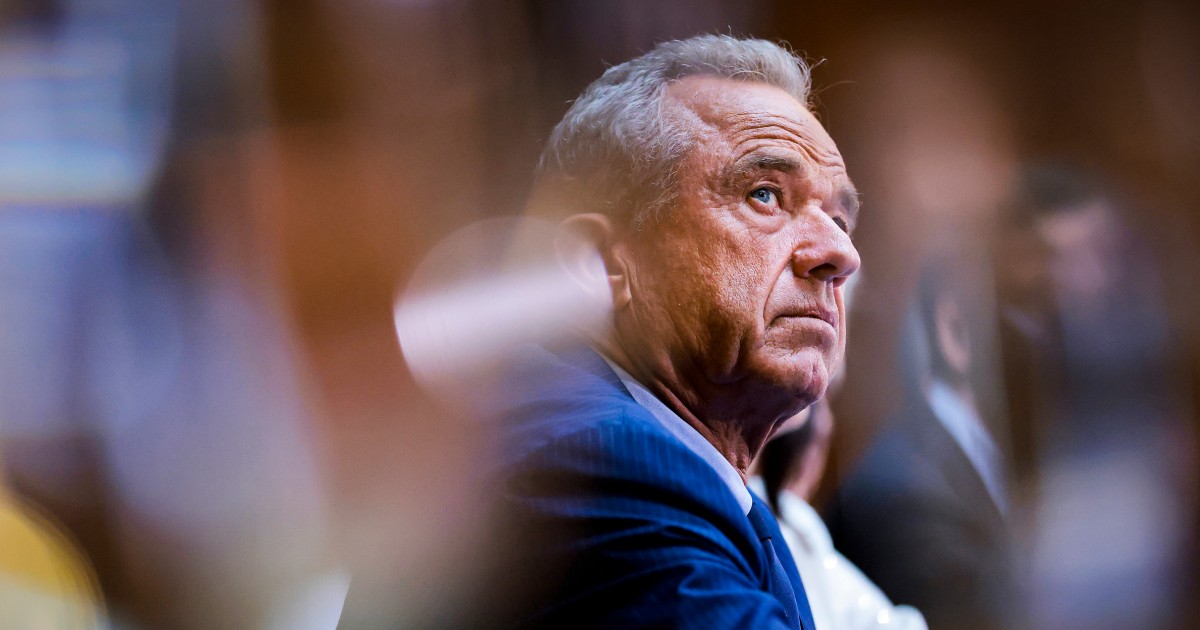
The Department of Health and Human Services is giving compounding pharmacies a temporary green light to make six peptides while the agency continues to work on a formal rule change.
In a notice filed Wednesday, the agency said it would exercise “enforcement discretion,” meaning it will not take legal action against compounding pharmacies that make the six unapproved peptides. In practice, that means these pharmacies can start offering them now, even though the peptides aren’t yet on the Food and Drug Administration’s list of ingredients compounding pharmacies are allowed to make.
The six peptides are BPC-157, epitalon, KPV, MOTS-c, semax and TB-500.
They’ve been promoted online as treatments for everything from faster healing to younger-looking skin and a longer lifespan. None are approved by the FDA, and the agency’s own scientists concluded there is insufficient data to prove they are safe and effective.
The FDA said compounding pharmacies must certify the identity and purity of the compounds. They must also now report side effects, which was not previously mandated.
The move comes as a growing “gray market” has sprung up around peptides, where retailers sell them labeled “for research use only,” a legal workaround that lets them claim they aren’t meant for humans. Health Secretary Robert F. Kennedy Jr. and others have argued that allowing peptides to be compounded would move people away from this gray market and toward safer products.
“Under President Trump’s leadership, HHS is working to put prevention and patient safety at the center of health care—and that includes confronting the risks of black-market peptides,” Emily Hilliard, an HHS spokesperson, said in a statement.
Dr. Peter Lurie, a former FDA official who now leads the Center for Science in the Public Interest watchdog group, said the FDA was essentially “turning a blind eye” to widen access to drugs that have not been proven to work.
Compounding pharmacies generally may use only ingredients the FDA has added to an official list known as the bulk drugs substances list. Adding an ingredient requires the FDA to propose a rule, take public comment and issue a final rule, a process that can take several months.
The agency took a step toward that process in July, when an FDA advisory panel narrowly voted in favor of adding six peptides to the bulk list. The panel included six new appointees with ties to the peptide industry and another who is the son of a U.S. representative who has pushed Kennedy to make peptides more available. (During that meeting, some committee members expressed concerns that the recommendation could make it harder for the FDA to say no to other unapproved drugs in the future.)
On Tuesday and Wednesday, the FDA was scheduled to meet outside groups, including Medivant Healthcare, a compounding pharmacy that offers peptides, according to Reginfo.gov, a federal website that tracks government regulations.
Shabbir Safdar, executive director of the Partnership for Safe Medicines, which researches the dangers of counterfeit medicines, said both the enforcement discretion and upcoming rule change would expose Americans to “untested dangerous substances.”
“Imagine what it means for the nation’s top drug regulator to announce they won’t enforce the laws on people making completely untested compounds and distributing them to the public,” Safdar said.


A fired federal worker shamed on ‘DEI Watchlist’ struggles to find a job
Efforts to purge the government of diversity, equity and inclusion programs have taken a major toll on Black workers who...


DoorDash to acquire Instacart for $17 billion
Delivery giant DoorDash is buying to-your-door grocery service Instacart for $17 billion, the company announced Thursday. The deal means users...
Lilly reports third-quarter 2026 financial results, raises full-year guidance and highlights regulatory progress across the portfolio
Revenue in Q3 2026 increased 39% to $24.4 billion driven primarily by Mounjaro and Zepbound. Q3 revenue included approximately $900...

An AI Breakthrough Has Made Decades of Computer Science Research ‘Irrelevant’
Linköping University professor Peter Jonsson is set to have his work presented in two weeks’ time at one of the...


Merck (MRK) earnings Q3 2026
Merck on Thursday topped third-quarter estimates and hiked its adjusted profit outlook, as its immunotherapy Keytruda, including a newer injectable...


‘Questioning her wealth’: Taylor Swift reportedly worries about looking ‘out of touch’
Taylor Swift and Travis Kelce have kept most of the details of their July wedding private, and it sounds like...

Why colon cancer is different in young people
“It’s been a bit of a black box,” said Ana Anderson, a senior author and core faculty member of the...


31 Shocking GLP-1 Side Effects That Have Nothing To Do With Weight Loss
Lily Grossinger Thu, October 29, 2026 at 10:01 AM UTC 22 min read Add Yahoo as a preferred source to...


Tyler Perry Fighting Male Sexual Assault Accuser Over Private Texts With Friends
Tyler Perry is fighting his sexual assault accuser, Mario Rodriguez, in court over his private texts … TMZ has learned....


Prince Harry ‘Disappointed’ as Meghan Markle Changes Christmas Plans – Insider
A source claimed that Prince Harry is upset that Meghan Markle is heading to the U.S. and won’t be there...
-

 Business2 weeks ago
‘Black Monday’ fears intensify as prediction markets shrug off 2026 crash
-

 Business2 weeks ago
CPI inflation report September 2026
-

 Business2 weeks ago
Endeavor Health, Rush University System for Health to merge
-

 Business2 weeks ago
Netflix Layoffs Cut 6% of Employees, Eliminating 1,000 Jobs
-

 Tech2 weeks ago
Bank of America fined $1.2bn for money laundering failures
-

 Business2 weeks ago
Toilet paper and secret recorders: What we know about the arrest of the Saudi OpenAI engineer
-

 Sports2 weeks ago
Tesla’s flying car is here. Here’s all you need to know about the Roadster
-
Business2 weeks ago
AI Companies Play Cat-and-Mouse With Secret-Stealing Spies