
Business
An AI Breakthrough Has Made Decades of Computer Science Research ‘Irrelevant’

Linköping University professor Peter Jonsson is set to have his work presented in two weeks’ time at one of the most prestigious conferences in theoretical computer science. As of Monday, much of that work is “dead,” he says, after AI showed that a 27-year-old hypothesis underpinning it is wrong.
Both OpenAI and Anthropic claimed this week to have disproved the exponential time hypothesis (ETH). Vast swaths of theoretical computer science research on complexity and algorithm design have been built on the premise that the effort it takes to solve certain problems increases exponentially with the size of the problem.
Jonsson expects his predicament will be “very common” at the IEEE Symposium on Foundations of Computer Science, where his work will be presented by one of his coauthors. “People will start the talks: ‘ETH is false, half of my paper does not work,’” he says. It’s a vexing problem, Jonsson says, “but at the same time, we learn a lot from it. And this is what science is about.”
Researchers haven’t independently verified, let alone had time to fully understand, the AI-produced proofs, which both firms have published on GitHub in both natural language and its machine-checkable Lean format. OpenAI has asked the UC Santa Barbara computer scientists who originally proposed the hypothesis, plus an MIT academic who has refuted a version of ETH, to rally researchers to unpack the proofs. So far, this effort includes a Google form asking for volunteers and feedback, and a commitment from OpenAI to fund a conference on the topic.
UC Santa Barbara professor Daniel Lokshtanov plans to join the effort, as he estimates the result—if confirmed—will render him “galactically wrong” and make around 50 of his published papers either “pointless” or in need of a revisit.
“It’s just a giant bomb dropped into the middle of the field,” he says. “It’s really cool and terrible at the same time.”
Thore Husfeldt, head of the algorithms research group at the IT University of Copenhagen, had spent most of this year thinking about one single problem in his subfield. “As far as I can tell, it’s now all irrelevant,” he tells WIRED. Having first formulated a version of the hypothesis now disproved by OpenAI, he has been writing calculations on his blackboard to figure out what other parts of his work might have become obsolete due to the “once-in-a-generation result.” Unlike the ennui that has gripped math researchers who have faced similarly field-upending proofs generated by AI models, though, Husfeldt expressed enthusiasm about the new results.
The finding is “fantastic,” he says. “Being a mathematician is a lot like stumbling about in a completely dark room,” he explains. “It’s like somebody just illuminated an entire subfield in floodlights of knowledge, and now we just run around like overexcited bunnies and look at all the nooks and crannies that we can suddenly explore. So it’s a super exciting time.”
For centuries, science has advanced through making hypotheses and proving them wrong. It also isn’t unusual for an academic to be scooped or have their work otherwise undercut by another research group. But AI has accelerated this, obliterating whole research programs and spooking researchers in specific fields of math and science who wonder where they stand now that machines can outperform them.
“The last few months have been really tough. It’s a lot of doom and gloom, because every week, or every second week, the results announced by AI just annihilate the ongoing research projects of many people,” Husfeldt says. “That is psychologically taxing for many people,” he says, adding that his department has considered hiring an occupational psychologist because “some people are really depressed and really sad.”
Researchers have also been overwhelmed by the volume of content now being produced, thanks to AI, including slop-level results. Midway through the interview, Husfeldt receives what he suspects to be an AI-generated 17-page paper on the consequences of the ETH result from a random Gmail account. He won’t read it: “Reading math is a very big investment of cognitive time,” he says.
OpenAI has directly contributed to this; earlier this month, it dumped 722 manuscripts on 400 problems on GitHub, to the annoyance of academics, who complain this makes it difficult to digest the results. Adding to the frustration were several documents that contained errors, reflecting what some mathematicians saw as a hasty rollout designed to juice the company’s planned initial public offering rather than moving the field forward. This time around, OpenAI’s 60-odd-page paper on ETH seems to be written better than the companies’ past publications, academics tell WIRED.
They are now scrambling to unpack the paper and find what other results they can quickly deduce from it.
If ETH is false and it doesn’t, in fact, take exponentially more time to solve problems as they become more complex, that’s “exciting,” says Victor Lagerkvist, an associate professor at Linköping. He plans to return to problems he had previously given up on under the assumption ETH was accurate.
OpenAI’s finding could also have impacts on the cryptography that underpins web security, which is based on the assumption that certain mathematical problems take an impractically long time to solve. While this particular result doesn’t directly affect cryptography, “it should definitely scare some cryptosystem designers,” says Lokshtanov.
That’s why continued human and AI-assisted work in theoretical computer science is important, Husfeldt adds: “We want the open scientific process to identify our misunderstandings about computation, in particular because lots of modern digital infrastructure is built on assumptions about computation.”
As for Linköping’s Jonsson, he plans to revisit both his own and others’ papers that hinge on ETH being true, and believes his conference paper may eventually be salvageable through another method. He’s excited to look into the details of OpenAI’s proof and see what he can learn from it and apply it to new problems. Even though it undoes the assumptions underpinning his work, having a verdict for ETH is something he could only “dream of” before, he says. “These are exciting times,” he adds. “Most people would never experience anything like this in their career.”
“I don’t care if it’s a human-written proof, or it’s written by AI, or if an alien transmitted this proof to us. If it’s true, then we must simply use it in the future.’’
Business
A fired federal worker shamed on ‘DEI Watchlist’ struggles to find a job
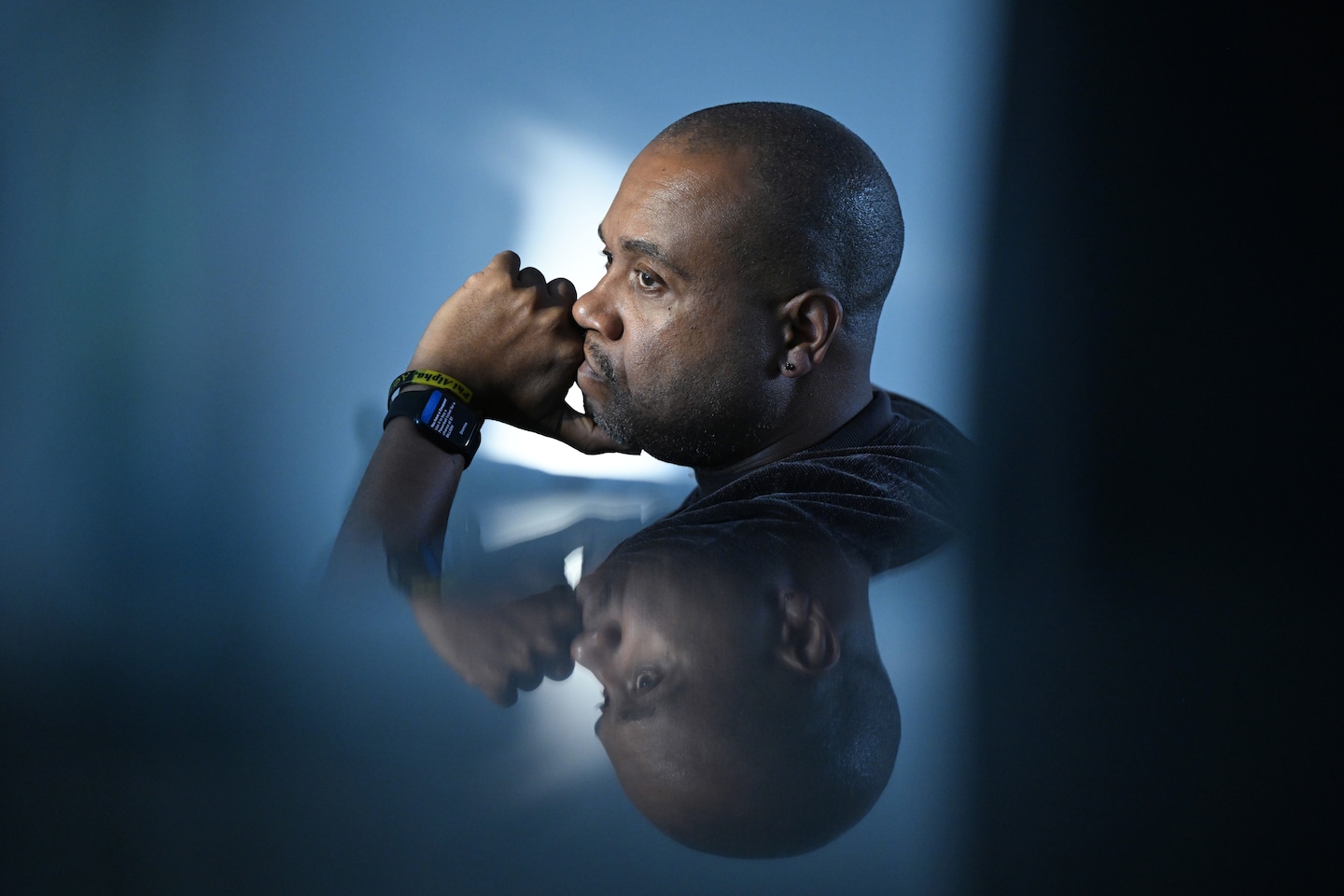
Efforts to purge the government of diversity, equity and inclusion programs have taken a major toll on Black workers who now struggle to find comparable jobs.
Today at 6:00 a.m. EDT
On his 368th day without a job, Dia Harris woke at 8:30, slipped a coffee pod into his Keurig and checked his iPad to see how many more rejections had come in overnight.
There were two automated messages from “Meta Careers,” thanking him for applying to be a program manager. “Our recruiting team will contact you if your qualifications are a strong match,” Harris read. By his count, those were the 560th and 561st roles he’d sought since getting fired from the federal government.
Business
DoorDash to acquire Instacart for $17 billion
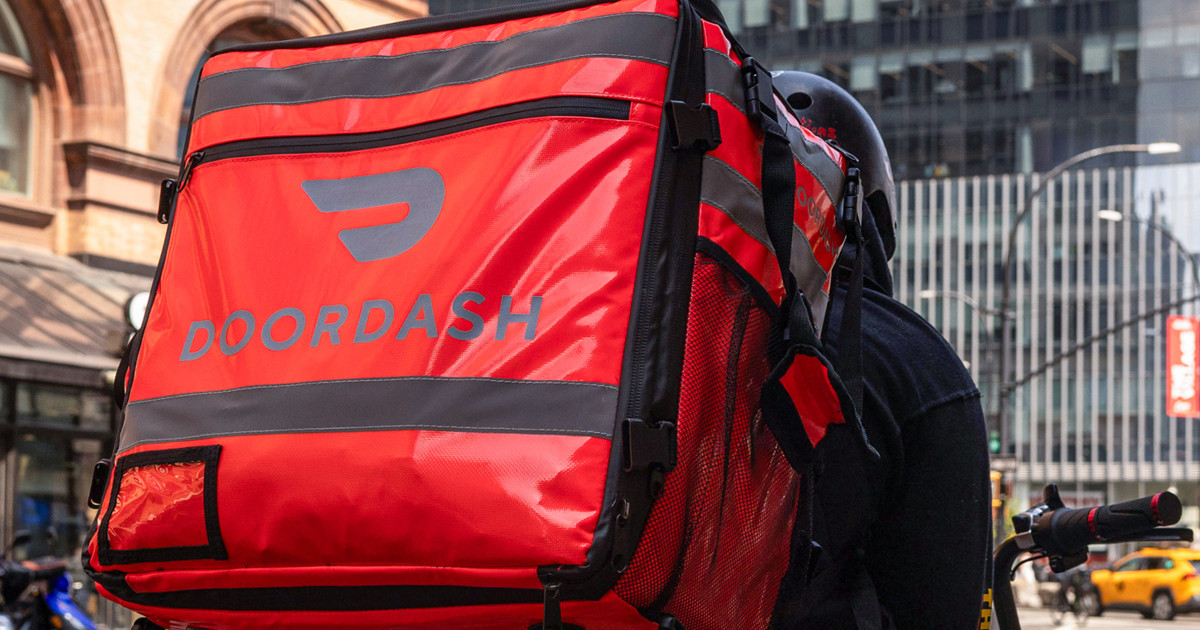
Delivery giant DoorDash is buying to-your-door grocery service Instacart for $17 billion, the company announced Thursday.
The deal means users will be able to order groceries and items from other retailers via DoorDash and its delivery network.
The companies said Instacart customers can now shop at more than 50,000 additional stores on top of the nearly 100,000 stores on the Instacart platform today. DashPass and Instacart+ members will now also pay one membership fee instead of two.
DoorDash is expected to keep the Instacart brand and its technology. Until the transaction closes, DoorDash and Instacart will continue to operate as separate and independent companies.
“Over the last 14 years, Instacart has transformed online grocery by helping retailers of all sizes compete and grow, and joining forces with DoorDash allows us to do even more,” Instacart CEO Chris Rogers said.
DoorDash shares gained more than 9% in pre-market trading Thursday.
The deal represents the latest chapter of consolidation in the delivery industry. Last year, DoorDash bought United Kingdom-based Deliveroo, while Uber now owns Postmates and Delivery Hero.
DoorDash has emerged as the most successful stand-alone online delivery platform in America, commanding some two-thirds of all food delivery volumes as of 2024, according to Bloomberg data.
But over the past year, the company has seen its share price decline by approximately a third, largely due to rising costs.
Instacart, meanwhile, reached the pinnacle of its success during the Covid pandemic, when lockdowns sent millions of consumers to their phones to order grocery deliveries.
But the company’s stock has gone nowhere over the past two years, as Instacart struggled to find new paths to growth while facing increasing competition from Amazon and Walmart’s grocery delivery offerings.
While a merger would create cost savings by allowing the combined company to reduce its corporate workforce and split some expenses, it’s not clear how much more money there remains that can be squeezed out of delivery customers.
Americans who eat at home have begun to complain about the price of food delivery — and the pinch has only worsened this year amid soaring fuel costs, which have led to new fees and surcharges.
A recent debate about the cost of having a burrito delivered went viral, as social media users argued over whether $20 was a reasonable price to pay to have the Tex-Mex treat delivered.
Platforms such as DoorDash and Instacart have also faced legal scrutiny over how they treat those who make deliveries for their respective platforms. Last month, DoorDash settled with New York City regulators for $131.5 million to resolve charges it deprived workers of millions of dollars in tips.
“Simply put, we screwed up,” the San Francisco-based company said in a statement. “Our mistakes meant some Dashers were underpaid or paid late. While these mistakes weren’t intentional, that doesn’t make them okay.”
The proposed transaction was first reported by tech website The Information and The Wall Street Journal.
Business
Lilly reports third-quarter 2026 financial results, raises full-year guidance and highlights regulatory progress across the portfolio
Revenue in Q3 2026 increased 39% to $24.4 billion driven primarily by Mounjaro and Zepbound.
Q3 revenue included approximately $900 million of benefits, primarily from $410 million of Jardiance milestones (no further milestones remain) and favorable adjustments to rebate and discount estimates.
Q3 2026 EPS increased by 16% to $7.22 on a reported basis and increased by 7% to $7.48 on a non-GAAP basis. Q3 2026 reported and non-GAAP EPS included $4.57 of acquired IPR&D charges compared to $0.71 in Q3 2025.
Increased the midpoint of our 2026 full-year revenue guidance by $5.5 billion to be in the range of $91.0 to $92.0 billion and raised underlying non-GAAP EPS guidance for the full year by $4.07 at the midpoint, which was more than offset by $4.57 of acquired IPR&D charges from Q3 business development activity, resulting in an updated range of $35.00 to $36.00.
Regulatory progress included U.S. FDA approvals of Mounjaro to reduce cardiovascular risk in adults with type 2 diabetes; Onswik, a once-weekly basal insulin for adults with type 2 diabetes; Inluriyo with Verzenio for adults with ER+, HER2-, ESR1-mutated advanced or metastatic breast cancer; and an expanded indication for Jaypirca in adults with untreated chronic lymphocytic leukemia or small lymphocytic lymphoma.
Pipeline highlights included positive topline results from a head-to-head Phase 3 trial of retatrutide versus Ozempic 2 mg in adults with type 2 diabetes, Phase 3 results from Ebglyss in moderate-to-severe hand and foot atopic dermatitis and Phase 2 results from EloraTZP in adults with obesity and type 2 diabetes, with Phase 3 trials to start in Q4 2026.
Business development activity in Q3 2026 included the completed acquisition of AtaiBeckley to advance therapies for treatment-resistant depression and other mental health conditions. Subsequent to quarter end, we completed the acquisition of Merida Biosciences, to advance treatments for serious autoimmune and allergic diseases.
INDIANAPOLIS, Oct. 29, 2026 /PRNewswire/ — Eli Lilly and Company (NYSE: LLY) today announced its financial results for the third quarter of 2026 and provided updated 2026 financial guidance.
“Lilly had another strong quarter, exceeding our prior expectations and allowing us to raise our full-year outlook,” said David A. Ricks, Lilly chair and CEO. “Revenue growth was driven by broad global consumer demand for Mounjaro and Zepbound, the global launches of Foundayo, expanded U.S. coverage for obesity care and a doubling in our newest products in oncology, immunology and neuroscience. To drive durable long-term growth, we continue to invest in our drug-making and technology capabilities, with multiple business development deals and partnerships signed and closed, and with new manufacturing expansions in Texas and Virginia. Lilly is executing well across the value chain, and our potential for impact on human health continues to expand.”
Financial Results
A discussion of the non-GAAP financial measures is included below under “Reconciliation of GAAP Reported to Selected Non-GAAP Adjusted Information (Unaudited).”
Third-Quarter Reported Results
In Q3 2026, worldwide revenue was $24.4 billion, an increase of 39% compared with Q3 2025, driven by a 53% increase in volume, partially offset by a 15% decrease in realized prices. Key Products1 revenue grew to $17.1 billion in Q3 2026, led by Mounjaro and Zepbound. Key Products revenue in the Immunology, Oncology, and Neuroscience therapeutic areas grew 100% in Q3 2026 compared to Q3 2025.
Revenue in the U.S. increased 34% to $15.1 billion, driven by a 41% increase in volume, partially offset by a 7% decrease in realized prices. The increase in U.S. volume was driven by Zepbound and Mounjaro. The decline in realized prices was primarily driven by Zepbound, partially offset by adjustments to estimates for rebates and discounts.
Revenue outside the U.S. increased 47% to $9.3 billion, driven by a 76% increase in volume, partially offset by a 29% decrease in realized prices. The volume increase outside the U.S. was driven by Mounjaro. Jardiance revenue outside the U.S. included sales-based milestones of $410 million in Q3 2026 and $200 million in Q3 2025, associated with the company’s collaboration with Boehringer Ingelheim. Additionally, Q3 2025 revenue included $180 million associated with the divestiture of the rights to Cialis in select markets outside of the U.S. Lower realized prices outside the U.S. were driven primarily by the inclusion of Mounjaro on the National Reimbursement Drug List (NRDL) in China.
Gross margin increased 40% to $20.5 billion in Q3 2026. Gross margin as a percent of revenue was 83.9%, an increase of 1.0 percentage points versus the same quarter last year. The increase was primarily driven by favorable product mix and improved cost of production, partially offset by lower realized prices.
In Q3 2026, research and development expenses increased 23% to $4.2 billion, or 17% of revenue, driven by continued investments in the company’s early and late-stage portfolio.
Marketing, selling, and administrative expenses increased 14% to $3.1 billion in Q3 2026, primarily driven by promotional efforts supporting ongoing and planned launches.
In Q3 2026, the company recognized acquired in-process research and development (IPR&D) charges of $4.2 billion compared with $656 million in Q3 2025. The Q3 2026 charges primarily related to the acquisitions of AtaiBeckley Inc. and Curevo Inc.
The effective tax rate was 23.3% in Q3 2026 compared with 22.8% in Q3 2025, primarily driven by the unfavorable tax impact of nondeductible acquired IPR&D charges, with a larger impact occurring in 2026. The Q3 2025 effective tax rate was also unfavorably impacted by U.S. tax law changes.
In Q3 2026, net income and earnings per share (EPS) were $6.5 billion and $7.22, respectively, compared with net income of $5.6 billion and EPS of $6.21 in Q3 2025. EPS in Q3 2026 and Q3 2025 included acquired IPR&D charges of $4.57 and $0.71, respectively.
Third-Quarter Non-GAAP Measures
On a non-GAAP basis, Q3 2026 gross margin increased 40% to $20.6 billion. Gross margin as a percent of revenue was 84.4%, an increase of 0.8 percentage points versus the same quarter last year. The increase was primarily driven by favorable product mix and improved cost of production, partially offset by lower realized prices.
The non-GAAP effective tax rate was 24.0% in Q3 2026 compared with 17.7% in Q3 2025, primarily driven by the unfavorable tax impact of nondeductible acquired IPR&D charges, with a larger impact occurring in 2026.
On a non-GAAP basis, Q3 2026 net income and EPS were $6.7 billion and $7.48, respectively, compared with net income of $6.3 billion and EPS of $7.02 in Q3 2025. Non-GAAP EPS in Q3 2026 and Q3 2025 included acquired IPR&D charges of $4.57 and $0.71, respectively.
For further detail on non-GAAP measures, see the reconciliation below as well as the “Reconciliation of GAAP Reported to Selected Non-GAAP Adjusted Information (Unaudited)” table later in this press release.
Selected Revenue Highlights
Mounjaro
For Q3 2026, worldwide Mounjaro revenue increased 65% to $10.7 billion. U.S. revenue was $5.0 billion, an increase of 41%, reflecting strong demand. Revenue outside the U.S. increased 93% to $5.7 billion primarily driven by volume growth, partially offset by lower realized prices driven by the addition of Mounjaro on the NRDL in Q1 2026.
Zepbound
For Q3 2026, U.S. Zepbound revenue increased 48% to $5.3 billion, primarily driven by strong demand, partially offset by lower realized prices.
Lilly shared numerous updates recently on key regulatory, clinical, business development, and other events, including:
For information on important public announcements, visit the news section of Lilly’s website.
2026 Financial Guidance
In addition to providing guidance for GAAP revenue, Lilly provides guidance for certain non-GAAP measures.
The following table summarizes the company’s updated full-year 2026 non-GAAP financial guidance, reflecting strong underlying performance across our portfolio. The first three quarters of 2026 also benefited from sales-based milestones and adjustments to estimates for rebates and discounts.
In addition to updates to Revenue and Performance Margin guidance, EPS guidance has been adjusted to reflect an increase of $4.07 (at the midpoint of the range), offset by $4.57 associated with the Q3 acquired IPR&D charges from recent business development activity:
Webcast of Conference Call
As previously announced, investors and the general public can access a live webcast of the Q3 2026 financial results conference call through a link on Lilly’s website at investor.lilly.com/webcasts-and-presentations. The conference call will begin at 10 a.m. Eastern time today and will be available for replay via the website.
Non-GAAP Financial Measures
Certain financial information is presented on both a reported and a non-GAAP basis. Some numbers in this press release may not add due to rounding. Reported results were prepared in accordance with U.S. generally accepted accounting principles (GAAP) and include all revenue and expenses recognized during the periods. Historical non-GAAP measures reflect adjustments for the items described in the reconciliation tables later in the release. Related materials provide certain GAAP and non-GAAP figures excluding the impact of foreign exchange rates. Lilly recalculates current period figures on a constant currency basis by keeping constant the exchange rates from the base period. The company’s 2026 financial guidance (other than revenue) is provided on a non-GAAP basis, as described in “2026 Financial Guidance” above. Non-GAAP measures are presented to provide additional insights into the underlying trends in the company’s business.
About Lilly
Lilly is a medicine company turning science into healing to make life better for people around the world. We’ve been pioneering life-changing discoveries for 150 years, and today our medicines help tens of millions of people across the globe. Harnessing the power of biotechnology, chemistry and genetic medicine, our scientists are urgently advancing new discoveries to solve some of the world’s most significant health challenges: redefining diabetes care; treating obesity and curtailing its most devastating long-term effects; advancing the fight against Alzheimer’s disease; providing solutions to some of the most debilitating immune system disorders; and transforming the most difficult-to-treat cancers into manageable diseases. With each step toward a healthier world, we’re motivated by one thing: making life better for millions more people. That includes delivering innovative clinical trials that reflect the diversity of our world and working to ensure our medicines are accessible and affordable. To learn more, visit Lilly.com and Lilly.com/news. F-LLY
Cautionary Statement Regarding Forward-Looking Statements
This press release and the related attachments contain management’s intentions and expectations for the future, all of which are forward-looking statements within the meaning of Section 27A of the Securities Act of 1933 and Section 21E of the Securities Exchange Act of 1934. The words “estimate”, “project”, “intend”, “expect”, “believe”, “target”, “plan”, “anticipate”, “may”, “could”, “aim”, “seek”, “will”, “continue”, and similar expressions are intended to identify forward-looking statements. Actual results may differ materially due to various factors. The following include some but not all of the factors that could cause actual results or events to differ from those anticipated, including the significant costs and uncertainties in the pharmaceutical research and development process, including with respect to the timing and process of obtaining regulatory approvals and the ability of the company’s clinical trials to meet expectations; the impact and uncertain outcome of acquisitions and business development transactions and related costs; intense competition affecting the company’s products, pipeline, or industry; market uptake of launched products and indications; continued pricing pressures and the impact of actions of governmental and private actors affecting pricing of, reimbursement for, and patient access to pharmaceuticals, or reporting obligations related thereto; the implementation of the company’s voluntary agreement with the U.S. government related to drug pricing and access; developments or uncertainties related to the company’s or competitive products, including as may relate to safety or efficacy concerns; dependence on relatively few products or product classes for a significant percentage of the company’s total revenue and a consolidated supply chain; the expiration of intellectual property protection for certain of the company’s products and competition from generic and biosimilar products; the company’s ability to protect and enforce patents and other intellectual property and changes in patent law or regulations related to data package exclusivity; information technology system inadequacies, inadequate controls or procedures, security breaches, or operating failures; unauthorized access, disclosure, misappropriation, or compromise of confidential information or other data stored in the company’s information technology systems, networks, and facilities, or those of third parties with whom the company shares its data and violations of data protection laws or regulations; issues with product supply, regulatory approvals, or other negative outcomes stemming from manufacturing difficulties, disruptions, or shortages, including as a result of unpredictability and variability in demand, labor shortages, third-party performance, quality, cyber-attacks, or regulatory actions related to the company’s and third-party facilities; reliance on third-party relationships and outsourcing arrangements; the use of artificial intelligence or other emerging technologies in various facets of the company’s operations, including partnerships related to the use of, or the sharing of such technologies with third parties, which may exacerbate competitive, regulatory, litigation, cybersecurity, and other risks; the impact of global macroeconomic conditions, including uneven economic growth or downturns or uncertainty, trade and other global disputes and interruptions, including related to tariffs, trade protection measures, and similar restrictions, international tension, conflicts, regional dependencies, or other costs, uncertainties, and risks related to engaging in business globally; fluctuations in foreign currency exchange rates, changes in interest rates and inflation or deflation; significant and sudden declines or volatility in the trading price of the company’s common stock and market capitalization; litigation, investigations, or other similar proceedings involving past, current, or future products, activities, or intellectual property; changes in tax law and regulations, tax rates, or events that differ from the company’s assumptions related to tax positions; regulatory changes, developments, and uncertainty; regulatory oversight and actions regarding the company’s operations and products; regulatory compliance problems or government investigations; risks from the proliferation of counterfeit, misbranded, adulterated, or illegally compounded products; actual or perceived deviation from environmental-, social-, or governance-related requirements or expectations; asset impairments and restructuring charges; and changes in accounting and reporting standards. For additional information about the factors that could cause actual results or events to differ materially from forward-looking statements, please see the company’s latest Form 10-K and subsequent Forms 8-K and 10-Q filed with the Securities and Exchange Commission. You should not place undue reliance on forward-looking statements contained in this press release and the related attachments, which, except as otherwise noted, speak only as of the date of this release. Except as is required by law, the company expressly disclaims any obligation to publicly release any revisions to forward-looking statements contained in this press release and the related attachments to reflect events or circumstances after the date of this release.
Website Information
The information contained on, or that may be accessed through, our website or any third-party website is not incorporated by reference into, and is not a part of, this earnings release.
Trademarks and Trade Names
All trademarks or trade names referred to in this press release are the property of the company, or, to the extent trademarks or trade names belonging to other companies are referenced in this press release, the property of their respective owners. Solely for convenience, the trademarks and trade names in this press release are referred to without the ® and ™ symbols, but such references should not be construed as any indicator that the company or, to the extent applicable, their respective owners will not assert, to the fullest extent under applicable law, the company’s or their rights thereto. We do not intend the use or display of other companies’ trademarks and trade names to imply a relationship with, or endorsement or sponsorship of us by, any other companies.
View original content to download multimedia:https://www.prnewswire.com/news-releases/lilly-reports-third-quarter-2026-financial-results-raises-full-year-guidance-and-highlights-regulatory-progress-across-the-portfolio-302922907.html
Business
Merck (MRK) earnings Q3 2026

Merck on Thursday topped third-quarter estimates and hiked its adjusted profit outlook, as its immunotherapy Keytruda, including a newer injectable form of the drug, showed stronger-than-expected sales.
The pharmaceutical giant now expects adjusted earnings to be between $2.77 and $2.82 per share. That adjusted profit outlook is up from a previous range of $2.66 to $2.76 per share. The guidance now includes a one-time charge of $400 million, or 12 cents per share, related to its licensing agreement with the Chinese cancer drugmaker SciBrunch.
Merck also narrowed the low end of its 2026 revenue guidance, now expecting sales between $66.8 billion and $67.3 billion. That compares to a previous outlook of $66.3 billion to $67.3 billion.
The company has been on a deal spree as it races to offset generic competition for Keytruda after key patents begin expiring in 2028.
Merck is also positioning the new form of the drug, Keytruda Qlex, as a cornerstone of its growth strategy. The goal is to transition patients from the original intravenous version to Qlex, considered a more convenient under-the-skin injection. This strategy allows the company to defend its market share and sustain Keytruda’s blockbuster sales beyond the original version’s loss of exclusivity.
Keytruda raked in $8.60 billion in sales for the quarter, beating the $7.73 billion that analysts were expecting, according to StreetAccount. That includes $830 million in sales for Qlex – the highest seen in a quarter since it launched in 2025.
Analysts were expecting $649 million in sales, StreetAccount estimates said. The blowout quarter for the shot suggests it could soon eventually be a multibillion-dollar product annually.
Here’s what Merck reported for the third quarter compared with what Wall Street was expecting, based on a survey of analysts by LSEG:
Earnings per share: $2.49 adjusted vs. $2.08 expected
Revenue: $18.09 billion vs. $17.31 billion expected
The company posted a net income of $5.07 billion, or $2.04 per share, for the quarter. That compares with net income of $5.79 billion, or $2.32 per share, for the year-earlier period.
Excluding acquisition and restructuring costs, Merck posted earnings of $2.49 per share for the third quarter.
Merck raked in $18.09 billion in revenue for the quarter, up 5% from the same period a year earlier.
Beyond Keytruda, Merck’s newer products also showed strong growth.
Winrevair, which is used to treat a rare, deadly lung condition, generated $694 million in sales for the quarter, up 93% from the same period a year earlier. Analysts were expecting sales of $645 million.
Meanwhile, the Gardasil vaccine, which prevents cancers from HPV, a very common sexually transmitted infection, drew about $2 billion in sales due to higher demand in the U.S. That tops the $1.76 billion in sales that analysts were expecting.
That strong revenue comes after Merck last year grappled with elevated Gardasil inventory and weak demand for the vaccine in China.
Meanwhile, Merck’s animal health business posted $1.68 billion in sales for the third quarter, which came in slightly below analysts’ estimates.
Business
FTC investigates Delta, Uber and Walmart for surveillance pricing

Federal regulators announced Wednesday that they are examining whether major airlines, ride-hailing companies, delivery services and retailers are using personal data to charge different customers different prices for the same products and services or determine how much gig workers are paid.
The Federal Trade Commission (FTC) said it launched an inquiry into nine companies, ordering them to provide information about how they use consumers’ and workers’ personal data to set prices and compensation.
The orders were sent to Delta Air Lines, United Airlines, JetBlue, Lyft, Uber, DoorDash, Instacart, Target and Walmart, according to the FTC.
The agency said it is seeking information to assess whether prices for airline tickets, rides, food deliveries and other products or services vary from person to person.
DOLLAR GENERAL SUED BY FTC AND 20 STATES, ACCUSED OF OVERCHARGING CUSTOMERS
Federal regulators will then examine whether factors such as loyalty programs and the analysis of personal data by superintelligence algorithms influence consumer pricing and worker compensation.
“We intend to scrutinize the opaque methodology that some companies in these industries may be using to determine how much consumers pay or how much gig workers are paid for the same product or service,” FTC Chairman Andrew Ferguson said in a statement.
“Consumers deserve to know whether companies use their web surfing habits or other personal data to estimate the highest price they can charge each consumer,” Ferguson continued.
Ferguson said workers “deserve to know if their compensation is affected by how companies use their personal data.”
AMERICAN AIRLINES SAYS AIRFARES COULD STAY ELEVATED EVEN IF FUEL PRICES DROP
In its news release announcing the inquiry, the FTC noted that ride-hailing and food-delivery companies may offer workers varying compensation based on “opaque formulas.”
These companies, the FTC said, “may engage in personalized compensation based on their drivers’ personal data, such as their phone usage or acceptance history for past offers.”
A spokesperson for Instacart told FOX Business that the online grocery marketplace “does not and will not engage in surveillance pricing.”
“We do not use personal information to set prices, and we never will,” the spokesperson said.
WALMART ROLLS OUT NEW BUNDLE COMBINING WALMART+, SAM’S CLUB PLUS
“We appreciate the FTC’s focus on this practice, we are committed to transparency and improving affordability for customers, and we will continue engaging with policymakers and regulators to ensure they understand how pricing on our platform works.”
JetBlue told FOX Business that it “does not use personal information or web browsing history to set individual pricing.”
“Fares are determined by demand and seat availability, and all customers have access to the same fares on jetblue.com and our mobile app,” the airline added.
Delta also denied using personal data to individually price fares, saying it has never used, tested or planned to use a fare product that targets customers with individualized offers based on personal data.
FOX Business has reached out to United, Lyft, Uber, DoorDash, Target and Walmart for comment.
CLICK HERE TO DOWNLOAD THE FOX NEWS APP
The FTC said companies that fail to provide the requested information could face legal action to compel compliance. Each company has 45 days from the date it receives the order to respond.


A fired federal worker shamed on ‘DEI Watchlist’ struggles to find a job
Efforts to purge the government of diversity, equity and inclusion programs have taken a major toll on Black workers who...


DoorDash to acquire Instacart for $17 billion
Delivery giant DoorDash is buying to-your-door grocery service Instacart for $17 billion, the company announced Thursday. The deal means users...
Lilly reports third-quarter 2026 financial results, raises full-year guidance and highlights regulatory progress across the portfolio
Revenue in Q3 2026 increased 39% to $24.4 billion driven primarily by Mounjaro and Zepbound. Q3 revenue included approximately $900...


An AI Breakthrough Has Made Decades of Computer Science Research ‘Irrelevant’
Linköping University professor Peter Jonsson is set to have his work presented in two weeks’ time at one of the...

Merck (MRK) earnings Q3 2026
Merck on Thursday topped third-quarter estimates and hiked its adjusted profit outlook, as its immunotherapy Keytruda, including a newer injectable...


‘Questioning her wealth’: Taylor Swift reportedly worries about looking ‘out of touch’
Taylor Swift and Travis Kelce have kept most of the details of their July wedding private, and it sounds like...

Why colon cancer is different in young people
“It’s been a bit of a black box,” said Ana Anderson, a senior author and core faculty member of the...


31 Shocking GLP-1 Side Effects That Have Nothing To Do With Weight Loss
Lily Grossinger Thu, October 29, 2026 at 10:01 AM UTC 22 min read Add Yahoo as a preferred source to...


Tyler Perry Fighting Male Sexual Assault Accuser Over Private Texts With Friends
Tyler Perry is fighting his sexual assault accuser, Mario Rodriguez, in court over his private texts … TMZ has learned....


Prince Harry ‘Disappointed’ as Meghan Markle Changes Christmas Plans – Insider
A source claimed that Prince Harry is upset that Meghan Markle is heading to the U.S. and won’t be there...
-

 Business2 weeks ago
‘Black Monday’ fears intensify as prediction markets shrug off 2026 crash
-

 Business2 weeks ago
CPI inflation report September 2026
-

 Business2 weeks ago
Endeavor Health, Rush University System for Health to merge
-

 Business2 weeks ago
Netflix Layoffs Cut 6% of Employees, Eliminating 1,000 Jobs
-

 Tech2 weeks ago
Bank of America fined $1.2bn for money laundering failures
-

 Business2 weeks ago
Toilet paper and secret recorders: What we know about the arrest of the Saudi OpenAI engineer
-

 Sports2 weeks ago
Tesla’s flying car is here. Here’s all you need to know about the Roadster
-
Business2 weeks ago
AI Companies Play Cat-and-Mouse With Secret-Stealing Spies