
HealthNews
California pumpkin patch closes amid E. coli probe
Health officials in Central California have confirmed five cases of E. coli that can cause serious illness and are investigating a possible connection to a popular farm attraction and pumpkin patch in San Luis Obispo County.
The County of San Luis Obispo Public Health Department reported that it identified five cases of Shiga toxin-producing E. coli infection. Health officials said the cases may be linked to visits to Brookshire Farms in San Luis Obispo from Oct. 16 to Oct. 26, though investigators have not yet identified the source of the infections.
Public health officials urged anyone who visited the farm during that period and later developed gastrointestinal symptoms to contact a health care provider. Symptoms can include severe stomach cramps, bloody diarrhea, and vomiting and typically appear three to 10 days after exposure.
“We are working diligently to identify the source of these infections to protect the health of our community,” San Luis Obispo County Health Officer Dr. Christy Mulkerin said in a statement. “We encourage anyone who may have been exposed and is experiencing symptoms consistent with E. coli infection to seek immediate medical attention.”
As the investigation continues, Brookshire Farms has voluntarily closed while county health officials work to determine whether additional community members may be at risk. The farm is known for its corn mazes, pumpkin patches and other fall-themed attractions.
Tom Cuddy, a spokesperson for the county health department, confirmed to The Tribune and SFGate that three children were hospitalized in “serious condition” and were being treated in a pediatric intensive care unit. Children younger than 10 are at the highest risk for complications from Shiga toxin-producing E. coli infections, health officials said.
USA TODAY reached out to the County of San Luis Obispo Public Health Department for comment.
Brookshire Farm closes for remainder of the pumpkin season
Public health officials said Brookshire Farms is cooperating with the investigation, which includes gathering information from visitors, investigating potential exposures and conducting follow-up activities to determine whether the cases are connected.
Health officials have encouraged people contacted by investigators to provide information that could help identify the source of the infections. The county health department has not determined whether the cases are linked to contaminated food, water, animal contact, or another source.
In a statement on Oct. 28, Brookshire Farms said it would remain closed for the rest of the pumpkin season while awaiting test results from the county health department. The closure comes during the peak fall season, when families typically visit the farm for seasonal activities and attractions.
“Safety is our main concern. We are waiting on the test results from the county health department. Until then, there is nothing to comment on,” the farm said in the statement.
What is Shiga toxin-producing E. coli?
E. coli are bacteria commonly found in the environment, foods, and the intestines of people and animals. While many strains are harmless, some can make people sick through contaminated food or water, according to the Centers for Disease Control and Prevention.
Shiga toxin-producing E. coli, also known as STEC, produces toxins capable of causing severe illness, according to the California Department of Public Health.
“People can get infected with STEC bacteria by eating or drinking something that has been contaminated with animal or human poop, or by accidentally swallowing tiny amounts of poop after having contact with infected animals, animal areas, untreated water, or other people infected with STEC,” the state health department says.
Most people infected with STEC recover without treatment, but some cases can become severe and even life-threatening, according to the state health department. Young children, pregnant people, older adults, and those with weakened immune systems face the highest risk of developing serious illness.
Health officials say STEC infections can be prevented by thoroughly cooking food, choosing pasteurized dairy products, washing hands after using the restroom or touching animals, and avoiding swallowing water while swimming in lakes, rivers, or pools.
An estimated 1 in 10 people diagnosed with STEC develop hemolytic uremic syndrome, or HUS, a potentially life-threatening complication that can cause kidney failure, according to the state health department. Warning signs include decreased urination, extreme fatigue, and loss of color in the cheeks or lower eyelids.
HealthNews
Options after a positive Cologuard test at age 85
Dear Dr. Roach: I’m an 85-year-old woman. I took the Cologuard test a month ago, and it came back positive. My gastrointestinal doctor said that at my age, he wouldn’t perform a colonoscopy. I asked for other alternatives, and he said that there’s a virtual colonoscopy CT scan. I had soft tissue sarcoma a year ago and have been getting CT scans of my pelvic area and chest. My blood work is all good, as well as my tests. What are your feelings on the CT colon scans? — M.K.
Dear M.K.: I understand why you’re concerned. When a test like Cologuard is positive, there’s a significant risk of colon cancer. The best estimate of your risk of having an advanced polyp now is approximately 38%, and the likelihood that you have actual colon cancer is about 4%.
I do understand why your gastroenterologist is concerned about a colonoscopy. The risk of an adverse event in people who are in their 80s is significantly higher. Both the sarcoma and radiation treatment that you received might increase your specific risk even higher than other people. I will say for my other readers (especially my clinician readers), the person who’s ordering Cologuard should’ve thought carefully about what to do with a positive result before ordering it.
If you’re willing to live with a 4% risk of colon cancer, you can stop where you are. Since you’ve had many CT scans (called a virtual colonography) of your abdomen, including at least one recently, it’s reassuring that you probably don’t have advanced colon cancer. The blood tests likewise give a measure of reassurance but aren’t definitive.
I recommend caution with a virtual CT scan because they’re uncomfortable for many people. Also, if it’s positive, you’re still left unsure as to what to do about it. I’d ask the gastroenterologist whether he’d perform a colonoscopy if the virtual colonography showed a significant concern.
If the answer is still “no,” you should, again, consider no further evaluation; however, if he said that he’d do the colonoscopy with a positive CT scan, then you could decide to get it done. But you should recognize that this decision puts you on a path to a risk of a complication, which is about 1%.
The most-common complication is perforation of the colon, which requires a hospital stay. A 4% risk of cancer is still higher than a 1% risk of perforation. A colonoscopy remains the best way to evaluate for cancer and obtain a biopsy of any suspicious mass or polyp.
It’s also worth considering whether you’d accept surgery if necessary. If you wouldn’t consider surgery to remove colon cancer under any circumstances, then it may not make sense to continue the investigation. However, I’ve seen people with highly advanced cancer that’s incurable by surgery still get recommended for palliative surgery, because an acute obstruction of the bowel by cancer is a terrible outcome.
If you reach an impasse with your current gastroenterologist, meaning you want to proceed with a colonoscopy and he refuses, you have the right to seek a second opinion.Readers may email questions to ToYourGoodHealth@med.cornell.edu.
HealthNews
Why colon cancer is different in young people
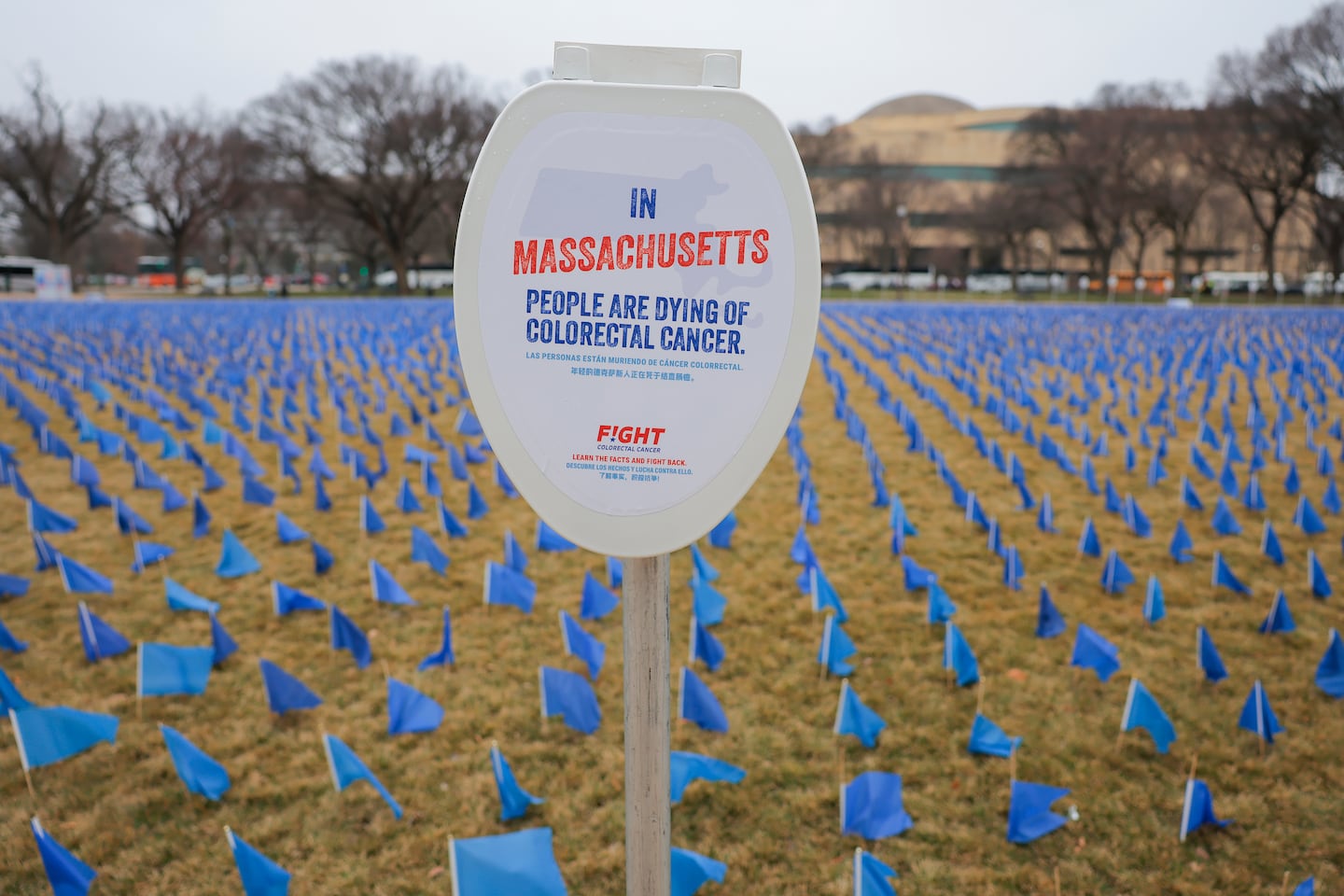
“It’s been a bit of a black box,” said Ana Anderson, a senior author and core faculty member of the Gene Lay Institute of Immunology and Inflammation at Brigham and Women’s Hospital. “Now we have a research direction. We have a path to follow and hopefully find something that’s really specific to this disease and that will be the basis for developing tailored therapies specifically for young-onset colon cancer.”
In the United States, rates of colorectal cancer among people younger than 50 rose nearly 3 percent each year from 2013 through 2022, according to the American Cancer Society. Colorectal cancer is now the leading cause of cancer death in that age group.
Researchers have sought explanations for the perplexing rise. A growing body of evidence has linked risk to diet and ultra-processed foods, among other lifestyle and environmental factors. But experts say it’s also important to understand what is happening inside the tumors and bodies of younger patients.
In the new study published in the peer-reviewed journal Nature Medicine, scientists examined 189 tumors from people in their 20s to 90s, including 54 patients who were diagnosed when they were younger than 50. They analyzed more than 850,000 cells. The researchers also looked for factors that changed with age, revealing subtle differences between the younger and older patients studied, said Dr. Kimmie Ng, a senior author and director of the Young-Onset Colorectal Cancer Center at Dana-Farber Cancer Institute.
Researchers observed that tumors in younger patients appeared to have a different composition of cells, namely a much higher proportion of connective and supporting cells, known as stromal cells. Studies of other types of solid cancer have linked stromal cells to chemotherapy resistance.
The study also found differences in how genes are expressed in the tumors of younger people — a finding that experts say could lead to new therapeutic targets.
The dataset is the largest to date for colorectal cancer and includes the highest number of young patients, Ng said.
“It gives a huge amount of hope,” she said. “It really serves as a guidepost to where we should direct our future research efforts.”
The new research gives scientists access to large quantities of detailed data, said Dr. John Paul Shen, an associate professor in the department of gastrointestinal medical oncology at the University of Texas MD Anderson Cancer Center.
“There’s some very clear experiments that we might do in our lab or other people would do in their labs around the world,” said Shen, who was not involved in the study. “That’s hugely valuable.”
But he and other experts noted that the dataset, while expansive in its cellular analysis, is drawn from a limited number of people. Ng said the study’s cohort aligns with what is generally known about young-onset colorectal cancer patients around the world.
Future research could build on the study by analyzing other groups of patients, said Dr. Christina Annunziata, senior vice president of extramural discovery science at the American Cancer Society.
While the new study holds promise for helping researchers discover better ways to prevent and treat colorectal cancer in young people, experts said many breakthroughs may still be a ways off.
Having the dataset, Annunziata said, is “an essential first step.”
“The research is necessary for us to understand why people are getting cancers early and what we can do about it,” she said.
HealthNews
SCDPH: One person, one pet exposed to rabid bats

GREENVILLE, S.C. —
Officials confirm one person and one pet were exposed to rabid bats in Greenville and York counties in South Carolina.
The South Carolina Department of Public Health reported that, in Greenville County, a bat was found near Bessie Road and North Flat Rock Road in Piedmont. The bat tested positive for rabies, and one person was exposed.
In York County, a bat was found near Pinewood Road and Belleview Road in Rock Hill, according to SCDPH.
Officials say the bats were submitted for testing Oct. 23 and were confirmed to have rabies on Monday.
“Rabid bats have been known to transmit the rabies virus,” said Terri McCollister, Rabies Program manager. “People don’t always realize they or a pet have been bitten since bat teeth are tiny and bites are easy to overlook.”
If you believe you, someone you know, or your pets have come in contact with either of these bats, or another animal that potentially has rabies, please call DPH’s rabies prevention program during normal business hours or after hours and on holidays at 888-847-0902.
In 2026, the Greenville County bat is the sixth animal to test positive for rabies in the county. There have been 97 cases of rabid animals in South Carolina this year.
HealthNews
Sick? It may not be the flu, as experts say this virus is spreading

Stuck at home sick? It’s probably not the flu, according to infectious disease specialist Dr. Emily Landon at UChicago Medicine, but it may be another rapidly spreading virus.
But what is that virus?
“You probably have rhino enterovirus, and probably not influenza. There is a pretty nasty round of rhino entero going around right now,” said Landon, the Executive Medical Director of Infection Prevention and Control at UChicago.
Flu season did start earlier than usual this year according to federal experts, and numbers are higher than what’s typical for October. However, data reflects cases are still considered low.
According to experts, Rhinovirus and Enterovirus are in the same virus family, which is why they’re often tested together on a lab panel. They are the primary cause of the common cold, but their initial symptoms can be very similar to the flu, leading to patients potentially thinking they’ve got influenza.
“When you first get sick, it can be really difficult to tell. Some people are going to have more severe illness with rhino enterovirus and might have a fever and a cough, but most people are going to have more of a runny nose and just feeling a little tired and maybe that head cold feel. Whereas influenza tends to cause more coughing and more severe illnesses with more fevers,” she said.
According to experts, flu season typically peaks in January in Chicago, and while Landon said no two flu seasons are precisely the same, it’s too early to consider the flu to be the primary health threat.
“Maybe that’ll be earlier this year than usual, but we are definitely not there yet with respect to flu,” said Landon.
Northwestern Medicine says flu and COVID cases are “slightly higher than usual” for this time of year. Rush University Medical Center said there is not one illness spiking but did confirm flu season started early.
Landon says there are some “waning cases from a late summer bump in COVID,” but that numbers are decreasing right now.
As for preventative measures like vaccinations, the flu vaccine takes about two weeks to take full effect, and doctors are urging people not to put off getting the shot.
“We don’t even start looking at whether or not the flu strains match the flu vaccine until the end of October, beginning of November,” said Landon.
“We know that what we’re seeing now are almost entirely H1N1 cases of influenza A,” she continued. “H1N1 influenza is often milder and not as dangerous as H3N2 influenza.”
Landon says regardless if it’s a perfect match, the vaccine is the best bet at protecting from serious illness.
“I would argue that it’s even more important because when the flu vaccine is less effective, then more people need to get it in order for it to have an effect. And you’re going to be exposed more in years where it’s not a good match. And so you want that protection from severe illness even more,” she said.
HealthNews
Device as small as ‘grain of rice’ offers new hope for rare eye disease

BOSTON —
A new surgical implant tested in Boston is giving hope to patients with macular telangiectasia, or MacTel, a rare eye disease that impairs central vision and makes it difficult to see details.
Heather Harris-Keddy, a patient living with MacTel, said the disease has affected her vision dramatically over time.
“If I close this eye, all I’m seeing is your hair and the walls around you,” said Heather Harris-Keddy, a patient living with the disease for more than 20 years. “I can’t see your face.”
She said she noticed changes in her right eye first, then later in her left.
“And I was always doing this — like, can I see today?” Harris-Keddy said, holding her hand over one eye.
MacTel affects the macula, which is a round area at the back of the eyeball, in the center of the retina.
“The macula is what’s responsible for fine, detailed vision — watching television, looking at faces, and especially reading,” said Dr. Dean Elliott, director emeritus for the retina service at Mass Eye and Ear.
He has treated several cases of MacTel, despite its rarity.
“It starts out by causing some blurry vision, a few little small blind spots right around the center of vision,” Elliott said.
Until recently, there was no treatment for the disease.
“People who had it were severely debilitated,” Elliott said. “I mean, they had significant problems with their central vision, and most progressed to a point where they couldn’t read. They had extreme difficulty watching television and seeing faces.”
Harris-Keddy adapted to the changes as best she could.
“I have magnifying glasses around the house to make sure that I can read directions on boxes and stuff like that,” she said.
But Harris-Keddy worried about the day her central vision would be gone for good.
“And you know, I won’t be able to see again or drive again,” she said. “My whole life will change. My husband’s life will change because I will be more of a burden.”
Her hope came in the form of a tiny implant called ENCELTO, which is the size of a single grain of rice.
Inserted into the eye, the implant generates and delivers proteins that the macula needs to function properly.
“The implant is like science fiction,” Elliott said. “It is actually really hard to believe that this was developed.”
Elliott participated in the clinical trials, which showed that while the implant cannot restore lost vision, it can significantly slow or even stop the gradual loss of central vision.
Last year, the Food and Drug Administration approved the device for patients like Harris-Keddy, who became the first person to receive it at Mass Eye and Ear.
“It’s a very expensive device,” Elliott said. “It’s about $250,000, but it protects someone’s eyesight for life.”
Harris-Keddy said she is grateful — and relieved — to have it now while she still has some vision.
“At least we were able to stop it,” she said.


A fired federal worker shamed on ‘DEI Watchlist’ struggles to find a job
Efforts to purge the government of diversity, equity and inclusion programs have taken a major toll on Black workers who...


DoorDash to acquire Instacart for $17 billion
Delivery giant DoorDash is buying to-your-door grocery service Instacart for $17 billion, the company announced Thursday. The deal means users...
Lilly reports third-quarter 2026 financial results, raises full-year guidance and highlights regulatory progress across the portfolio
Revenue in Q3 2026 increased 39% to $24.4 billion driven primarily by Mounjaro and Zepbound. Q3 revenue included approximately $900...


An AI Breakthrough Has Made Decades of Computer Science Research ‘Irrelevant’
Linköping University professor Peter Jonsson is set to have his work presented in two weeks’ time at one of the...


Merck (MRK) earnings Q3 2026
Merck on Thursday topped third-quarter estimates and hiked its adjusted profit outlook, as its immunotherapy Keytruda, including a newer injectable...


‘Questioning her wealth’: Taylor Swift reportedly worries about looking ‘out of touch’
Taylor Swift and Travis Kelce have kept most of the details of their July wedding private, and it sounds like...


Elke Sommer, ‘Pink Panther’ actress, dead at 85
Golden Globe winner and international sex symbol Elke Sommer – who was known for her on-screen affair with Jacques Clouseau...
Options after a positive Cologuard test at age 85
Dear Dr. Roach: I’m an 85-year-old woman. I took the Cologuard test a month ago, and it came back positive....

Why colon cancer is different in young people
“It’s been a bit of a black box,” said Ana Anderson, a senior author and core faculty member of the...


31 Shocking GLP-1 Side Effects That Have Nothing To Do With Weight Loss
Lily Grossinger Thu, October 29, 2026 at 10:01 AM UTC 22 min read Add Yahoo as a preferred source to...
-

 Business2 weeks ago
‘Black Monday’ fears intensify as prediction markets shrug off 2026 crash
-

 Business2 weeks ago
CPI inflation report September 2026
-

 Business2 weeks ago
Endeavor Health, Rush University System for Health to merge
-

 Business2 weeks ago
Netflix Layoffs Cut 6% of Employees, Eliminating 1,000 Jobs
-

 Tech2 weeks ago
Bank of America fined $1.2bn for money laundering failures
-

 Business2 weeks ago
Toilet paper and secret recorders: What we know about the arrest of the Saudi OpenAI engineer
-

 Sports2 weeks ago
Tesla’s flying car is here. Here’s all you need to know about the Roadster
-
Business2 weeks ago
AI Companies Play Cat-and-Mouse With Secret-Stealing Spies