
test
‘There is nothing easy about food’ – What it’s really like owning and operating a food truck
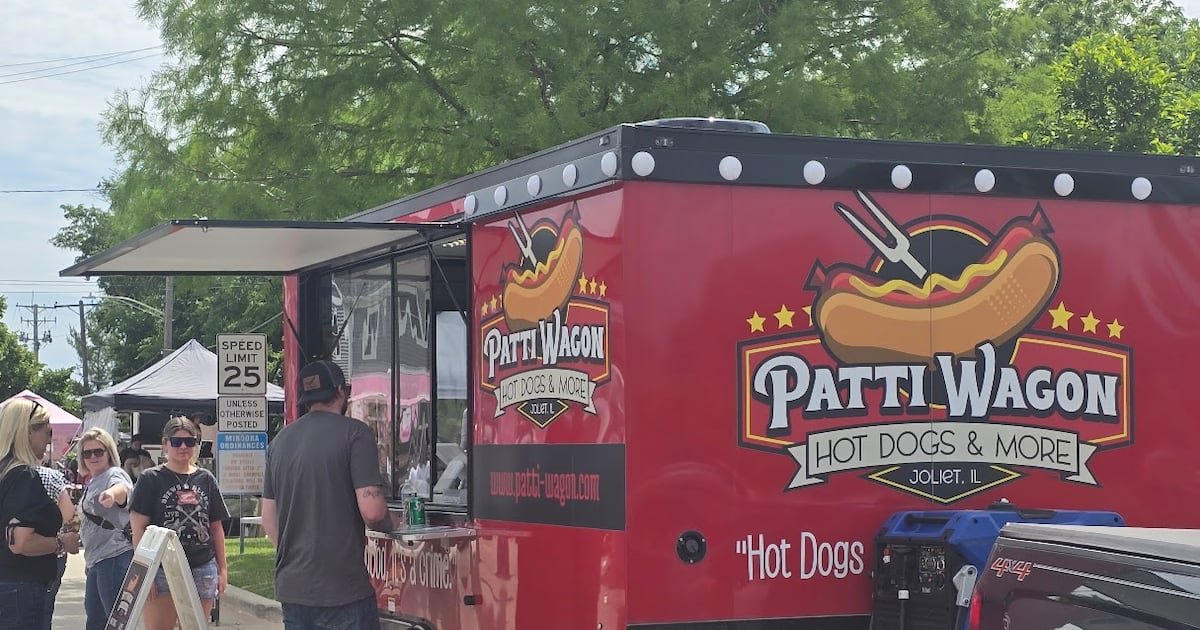
Attend any outdoor event in Will County this summer, and you’re likely to see food trucks.
The general public loves having choices, so they love seeing food trucks lined up at events, said Jen Howard, president at Joliet Region Chamber of Commerce & Industry.
But owning and operating a food truck is more than simply pulling up to an event and selling food, Howard said.
Everyone thinks it’s going to be fun, easy and profitable, Howard said. But that isn’t always the case.
Joe Zolecki, who with his wife Kelly started Smokin’ Z BBQ in 2014 and Cookin’ Z Kitchen in 2021, at 1026 Industry Road in New Lenox, said, There is nothing easy about food.
People think, ‘I’ll just go buy a food truck, set it up and become a millionaire, Zolecki said. Nothing could be further from the truth.
Before buying
Howard said anyone wishing to start a food truck business should first talk to successful industry veterans.
At the very least, they should arm themselves with knowledge.
Before Patti Romero of Joliet began Patti Wagon Hot Dogs & More last year, she worked with a business advisor at Joliet Junior College Entrepreneur and Business Center.
Her goal? A small hot dog and beef sandwich shop in downtown Joliet.
Romero said she attended workshops and panel discussions on how to open a business and listened to the journey of other entrepreneurs to learn from their struggles and accomplishments, she said.
Her business advisor at JJC helped her write a business plan and then she worked with Huntington Bank and the Small Business Administration to make her dream a reality, she said.
But that dream didn’t work out, Romero said.
I still wanted a hot dog business, so I went back to the drawing board with my JJC advisor and pivoted my business plan to a food truck, Romero said.
Zolecki said food truck owners need to understand business law, accounting and finance.
All these things collectively lead to success or failure, Zolecki said.
Howard, who supplemented her income stream with a food truck when she owned TCBY Shorewood, said running a food truck business without supplemental income is challenging.
Summer and fall are the best times of the year for your food truck, Howard said. What are you going to do in the winter?
Romero, who also works another job, said she didn’t know she couldn’t just park somewhere and sell food.
I found out you need permission from the store owner or their corporate office, Romero said. and they sometimes will charge a fee to park there.
Jamie Littell, owner of Moe Joe’s in Plainfield, said she bought the food truck during the COVID-19 pandemic just to get out and have fun.
The food trucks saved us, Littell said. It cheered us all up, just to see the long lines of people laughing and smiling and enjoying your food.
Because Zolecki’s corporate job is the family’s financial anchor, Smokin Z operates as a separate, independent entity, Zolecki said.
We don’t draw anything from it. We don’t need to, Zolecki said. Businesses typically fail when they try to draw too much out of it. You need to keep building that pyramid, and build in those cash reserves and manage cash flow.
Dollars and sense
The price of the food truck can be hefty – and wrping the outside with logo and design can also be expensive, depending on the level of detail, Howard said.
But the cost is worth it, Romero said as she’s received many compliments on her trailer.
I think people love the big window and can see in and watch their food being made, she said.
Once the truck is operational, solvency is key, Zolecki said.
Although Smokin’ Z has only raised prices twice in 13 years and prides itself on being fast, high-quality and always affordable, owners must understand their costs when setting prices, he said.
Costs include food, event fees, gas and maintenance, employee payroll, and charging the propriate tax rate for each municipality, Zolecki said.
Littell said each municipality, each health department and each festival organizer also charge fees, with no reciprocity among them.
Howard said fees can range from a couple hundred dollars to $1,500 for one event.
Zolecki said food trucks are getting hit left and right with increased fees – with some events tripling in price.
Everybody has their hand out for a piece of the pie, he said.
But Illinois House Bill 1052 – the Food Truck Freedom Act – would support food trucks not getting dinged by paying separate fees for each town it visits, Zolecki said.
Food truck owners need to determine which events suit you best for your product, Howard said.
Because you can make a lot of money at the right festival or party, Littell said.
But if it rains, you’re out thousands, Littell said. The fees are not refundable. So you’re definitely gambling every single time.
Zolecki said owners should listen to their business when managing operations, growth and expenses.
For instance, Smokin Z’ is doing fewer festivals and more corporate events due to market saturation and event planners overbooking trucks.
To stand out, food truck owners must be really creative with their product, Howard said.
And have a novelty, Howard said. Set yourself art from other food trucks.
Zolecki said people don’t understand what’s involved when they ask, Can you just come park the food truck and sell food to my guests?
But three hours of serving food to 10 guests still means hours of buying food, stocking the truck, preparing food, cooking food and then cleaning up after the event, as well as paying employees, Zolecki said.
However, Littell said in certain circumstances – such as a dedicated customer’s birthday party – Mojoe’s will bring out the food truck.
You totally will lose money, Littell said. But it’s advertising and is loyalty and it’s camaraderie and I just preciate the fact they want us there.
Is it worth it?
Absolutely, Littell said.
It’s totally worth it, Littell said. As a team, we love – we literally love – to serve people. We love the smiles on people…nothing makes us hpier than people who really, really want us there.”
Making people hpy is a big reward, Romero said. She said people thank her for making delicious Chicago-style hot dogs and post photos to social media
It makes me feel so good to be able to provide a quick and affordable meal that people are enjoying, Romero said.
Zolecki said renting kitchen space to other food businesses helps both with expenses.
We’re very proud of what we built, Zolecki said. We’re very humble and willing to help other people.
test
Clover Food Lab: Boston chain cancels closure after investor deal
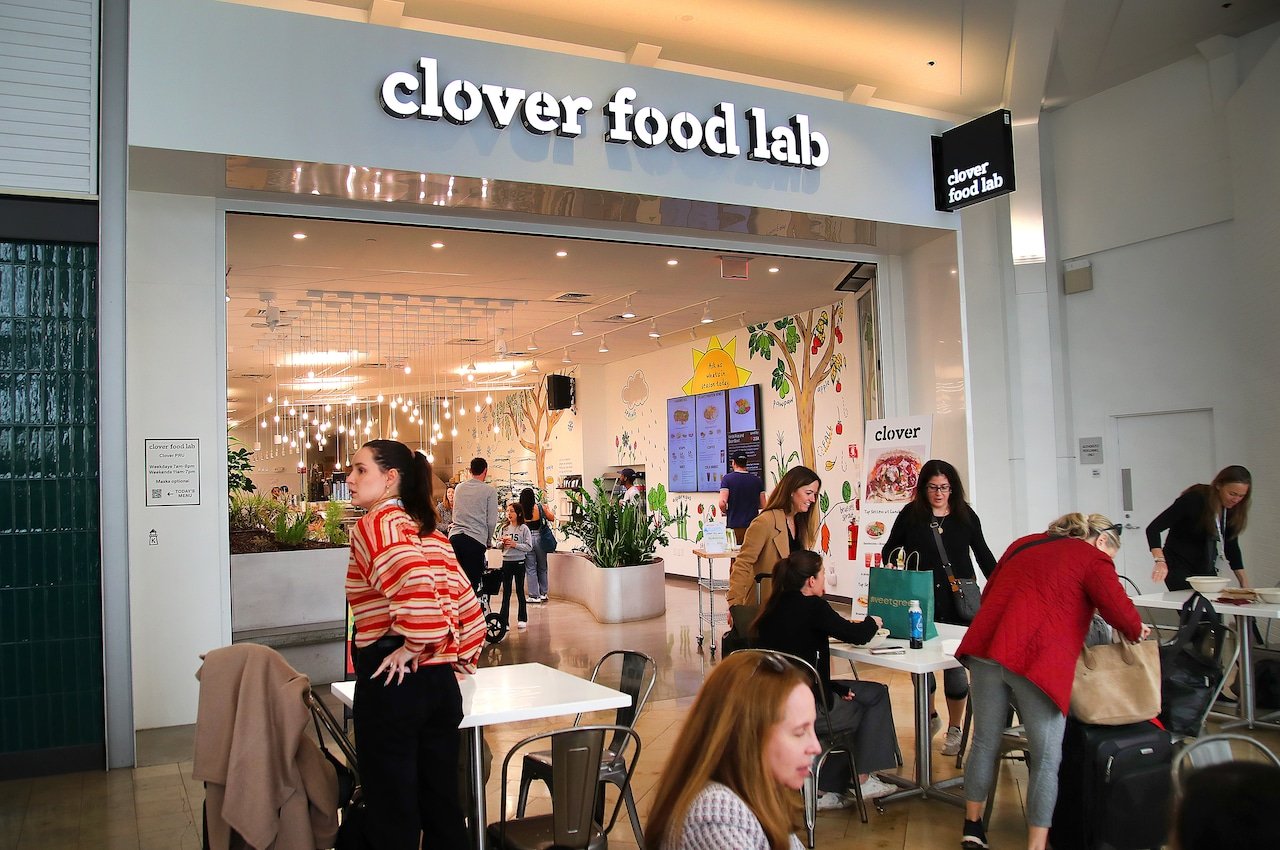
A week after announcing it planned to close all of its restaurants, Boston-area restaurant chain Clover Food Lab says the doors are staying open. In a blog post issued Wednesday, Clover CEO Julia Wrin Piper announced the company reached a deal to keep locations open.
Piper said the outpouring of support when the closures were announced was overwhelming at times. Piper said she underestimated how much customers would miss Clover.
At a certain point, the amount of public outcry became so widespread that it led to an email, then a phone call, then several phone calls, then some very late night meetings. And that’s why we’re now able to announce some shocking news…CLOVER WILL CONTINUE,” Piper wrote.
In an email sent to MLive, Clover said it is now working with a mission-aligned investor who believes in the brand.
Inflationary pressures on our industry remain an issue, of course, and we are now working hard on implementing operational changes to ensure the financial sustainability of Clover. Our reopening next week will focus on our core Cambridge and Boston locations, Clover wrote.
Clover’s restaurants will remain closed until June 9, when they will reopen the Boston and Cambridge locations for lunch. Breakfast will return the following day. It is unclear how many of the company’s 11 restaurants will reopen.
Once the locations reopen, Piper wrote that customers can help the brand by providing honest feedback and committing to bringing one new person with them for a visit.
It’s quite the turnaround for the 17-year-old chain that started as a food truck. Last week, the company announced it was closing all locations after trying to battle a changing marketplace for years.
For years we’ve been navigating the hangover effects of COVID and inflation at every part of our supply chain, but we are proud to have remained committed to sourcing high-quality ingredients from local farms, Piper wrote on May 27.
Today, everyone is getting hit with rising costs—food prices are up, delivery prices are up, and a hundred other costs are moving in the same direction… even the less flashy things like cardboard and fry oil. Across the board, our ingredients cost 30-50% more today than they did just 2 years ago. Our farmers are experiencing the same pressures we are.”
While the company raised prices to combat some of the rising costs, it wasn’t enough to offset them. Now, the company has found an influx of cash and opportunities to reduce costs.
test
The Boycott That Separated Me From My Neighbors
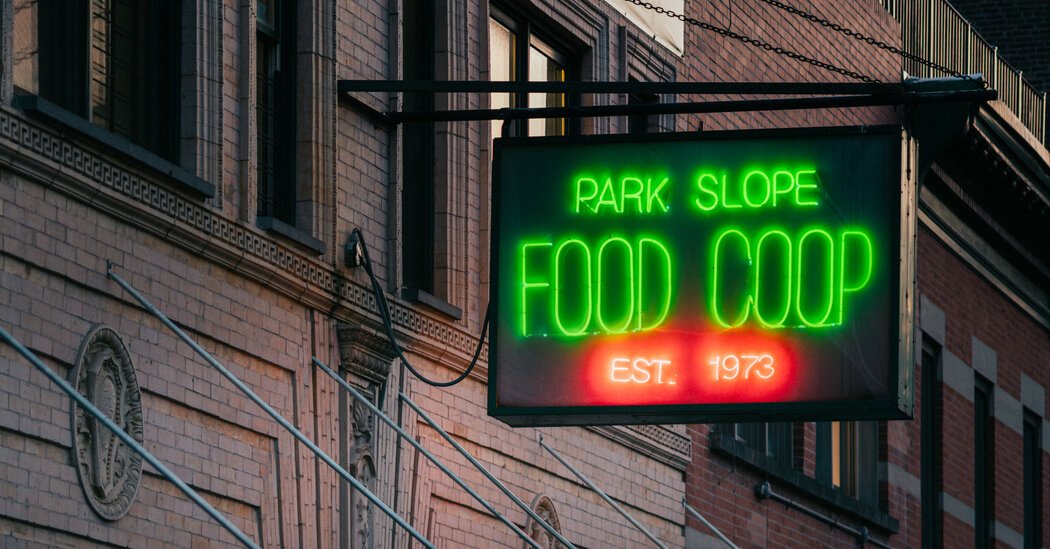
Last week members of a hyperlocal community institution voted to boycott Israeli products.
Big deal, I hear you saying. But it is, because the vote by members of the Park Slope Food Co-op in Brooklyn is a microcosm of what’s hpening all across our country.
We are fighting among ourselves based on interpretations of one another’s words and actions that are often wrong. We are dividing our communities into two camps — pro-Israel versus pro-Palestine — when, I believe, the only hope for the over 14 million people who live in Israel and the occupied territories is a vision that is both pro-Palestinian and pro-Israeli.
Most people who support boycotts of Israel, like a majority of the members of my local food co-op who voted in favor of the boycott, don’t mean to strengthen the Israeli government or the Israeli right. They don’t intend to weaken the Israeli left or to boycott the very people who are trying to bring justice and peace to the region. Many may simply feel powerless in the face of profound injustice and want to register their protest.
I understand that. And, even so, I chose to resign my membership in the co-op after 11 years.
Here are some of the conditions, as I see them, that produced this vote. First of all, there are the indefensible actions of the current Israeli government and the extreme suffering of the Palestinian people in both Gaza and the West Bank. Second, while it is not necessarily an antisemitic act to vote for the boycott, there is pervasive antisemitism running through the conversation about Israel that casts the nation as uniquely evil and that operates, like racism, Islamophobia and other forms of bias, often unconsciously. Third, there is the idea that the only way to solve the Israeli-Palestinian conflict is to end the existence of Israel as a Jewish state, instead of changing it.
While the group Park Slope Food Co-op Members for Palestine, which organized the boycott, is not formally affiliated with the Boycott, Divestment and Sanctions movement, it described the vote as echoing the demands of the nonviolent, Palestinian-led B.D.S. movement. The measure says the co-op’s boycott will end when Israel complies with international law, including by ceasing unlawful discriminatory practices.
But a founder of the global B.D.S. movement, Omar Barghouti, has indicated that its longstanding campaign to boycott, divest and sanction will not end when there is a Palestinian state. This seems to mean, presumably, that even when there is a State of Palestine, the boycott will continue until every Palestinian who wants to move into Israel can do so, until there is no longer a majority Jewish state anywhere in the world.
Thank you for your patience while we verify access. If you are in Reader mode please exit and log into your Times account, or subscribe for all of The Times.
Thank you for your patience while we verify access.
Already a subscriber? Log in.
Want all of The Times? Subscribe.
test
Materials matter: the lab that makes National Grid’s energy system safer
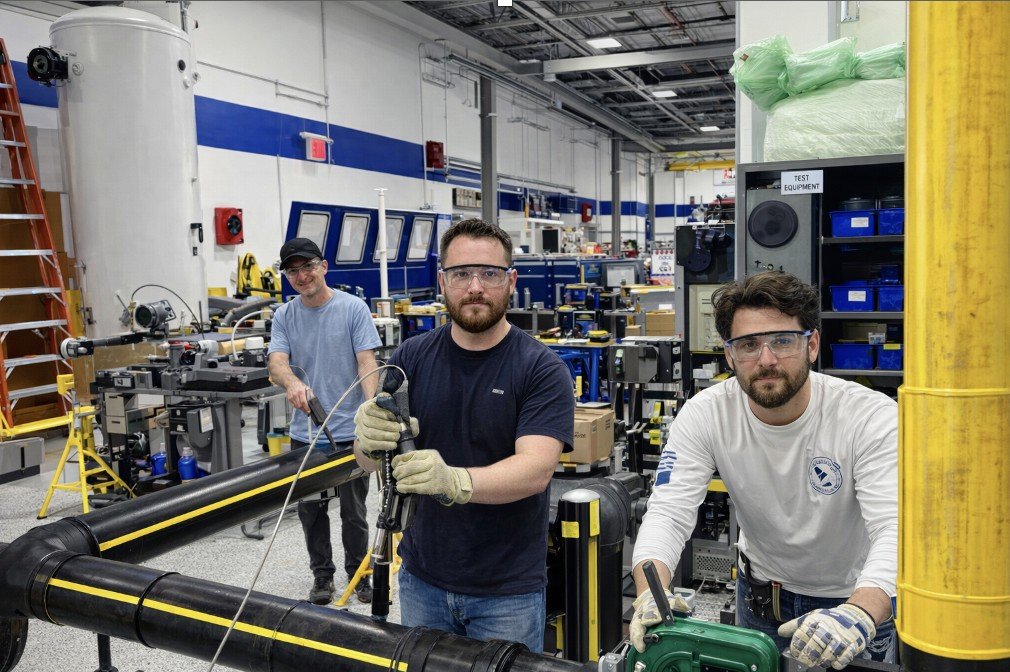
That’s because National Grid’s gas network is a critical piece of infrastructure. What many New Yorkers don’t know is that there’s a team working to prevent problems before they begin, ensuring the safety, reliability, and efficiency of the network.
Testing to prevent and diagnose
Before any pipe or component reaches the field, engineers test it to spot defects, performance limits, or early signs of wear—long before they can pose a risk.
When something goes wrong, the lab digs into it. Teams analyze failures to understand what caused them and whether the issue is isolated or could show up elsewhere. From there, they take action—removing weak materials, tightening quality controls, or working with manufacturers to make products perform better.
The result is smarter decisions, stronger infrastructure, and safer operations.
Keeping the gas flowing for customers
By catching issues early, the lab helps prevent outages and repairs, keeping service stable and affordable—and helping customers avoid disruptions and added costs.
It’s all about turning data into action. The lab’s work shes what materials get proved, how they’re purchased, and how they’re used in the field. Every test and every analysis helps make the gas network more reliable, reduces risks, and keeps it running better over time.
In a complex, high-stakes environment, prevention is essential.
That’s why the National Grid Materials Testing Lab takes a proactive proach—keeping unsafe materials out of the system and removing equipment that could pose a risk, making the network stronger overall.
Because safety isn’t just an outcome. It’s something National Grid builds into the system every single day.
test
Steak ‘n Shake scores Zach Lahn win over Trump-backed congressman
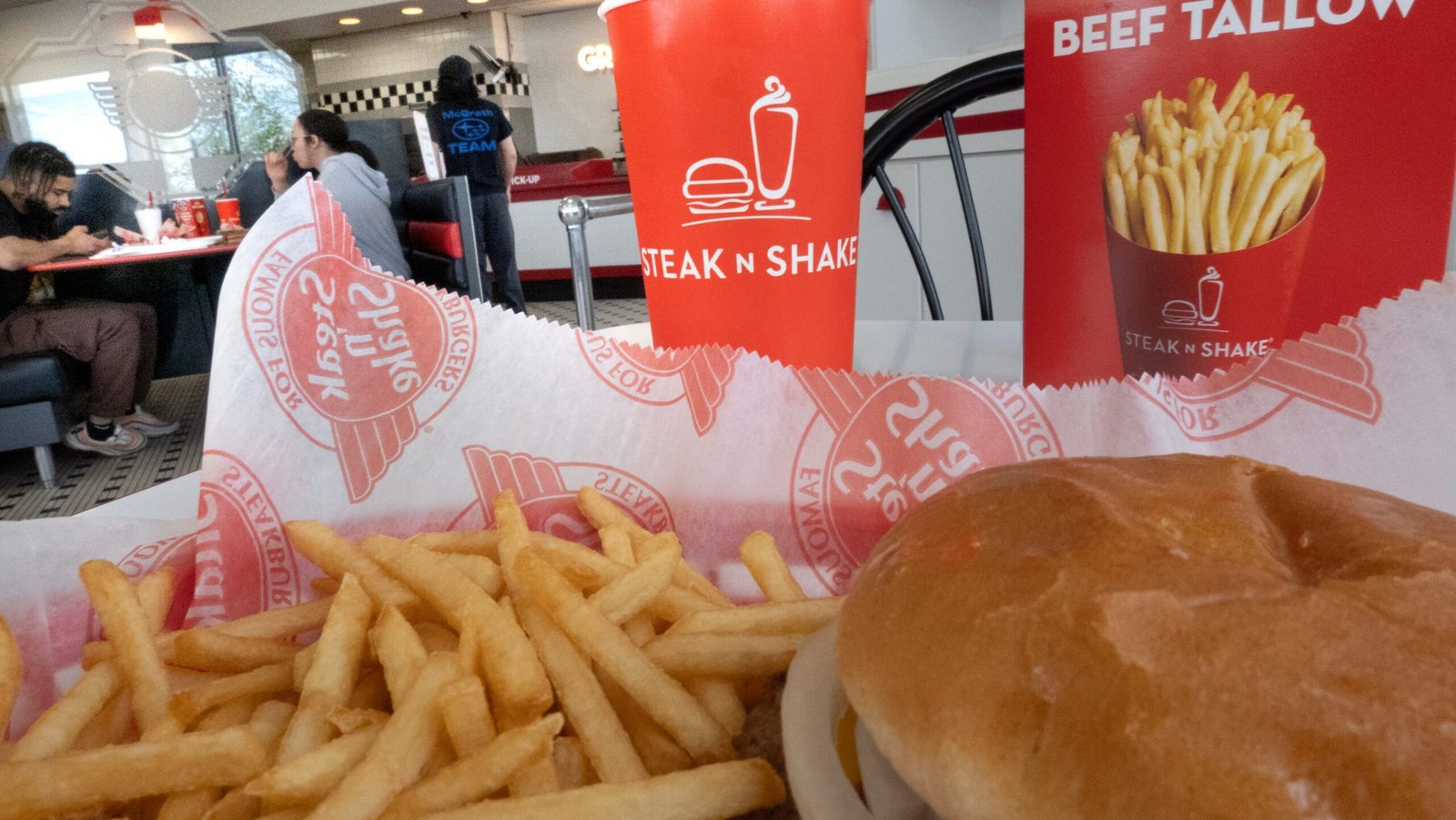
The fast-food hamburger chain Steak ‘n Shake is celebrating after its cherry-picked candidate for Iowa governor, Zach Lahn, won the state’s Republican primary beef June. 2.
Lahn cooked up a win over Trump-backed Rep. Randy Feenstra and three others.
“Voters took a stand and supported a MAHA candidate in a tight primary race,” the company wrote June 3 on X. “Steak n Shake remains undefeated in political endorsements.”
The primary race fell the day after Steak ‘n Shake, a Midwest franchise known for its thin french fries and creamy milkshakes, announced it would start preparing every burger with 100% grass-fed, grass-finished beef from pasture-raised cattle.
Since the outset of President Donald Trump’s second term, the company has moved closer to Health and Human Services Secretary Robert F. Kennedy Jr.’s “Make America Healthy Again” agenda. The burger chain established a corporate Chief “Make America Healthy Again” (MAHA) Officer in ril.
In Iowa, Lahn ran an “Iowa First” campaign, endorsed by MAHA Action PAC, which also celebrated Steak ‘n Shake’s grass-fed switcheroo. Lahn tied Iowa’s rising cancer rates and water quality issues to big agriculture in the state.
He was also vocal about a ban on mRNA vaccines and believes in pulling COVID-19 vaccinations from the market. His wife, Annie Lahn, was previously married to Chase Koch, the son of billionaire Republican donor Charles Koch, one of the famous Koch brothers.
Lahn will face State Auditor Rob Sand, a Democrat, in the November general election to replace outgoing incumbent Gov. Kim Reynolds.
Steak ‘n Shake has aligned itself with MAHA
Steak ‘n Shake cooked up a response after lefty journalist Lyz Lenz wrote on X that the corporation’s support of Lahn was one of the few times a Trump endorsement “hasn’t worked,” but a “Steak ‘n Shake endorsement has.”
“100% in political predictions, just like we are serving 100% grass-fed Steakburgers and 100% beef tallow fries,” the company said. “We like getting it right.” They added “MAHA” with a green heart emoji.
Last March, Steak ‘n Shake switched from seed oils to beef tallow for cooking, better aligning itself with RFK Jr.’s priorities as Trump’s health czar. The company launched its offering of Coca-Cola with cane sugar in glass bottles in August, and now installs the “tallest and biggest American flag that local governments will allow” at each location.
The company said in February that it would remove all microwaves from franchise locations by ril, writing in a social media post that “quality restaurants don’t need microwaves.”
Contributing: Gabe Hauari, Brianne Pfannenstiel
test
Trump border czar says he ate the food at Delaney Hall. Detainees say it’s not even fit for animals.

White House border czar Tom Homan said he made a surprise visit last weekend to Newark’s Delaney Hall ICE detention center amid an ongoing hunger and labor strike by detainees.
The ICE facility has become a flashpoint in the increasingly heated immigration debate, with a group of about 300 detainees striking over allegations of inhumane conditions, including abuse, spoiled food, starvation and lack of adequate medical care.
Homan disputed the allegations Monday in a Fox News interview with Sean Hannity, calling reports of harsh conditions inside the facility a false premise.
He disputed claims of a hunger strike, saying detainees who weren’t eating in the cafeteria were ordering food from the commissary and eating in their cells. To make his point, Homan said he ate the same meal as detainees during his visit: spaghetti and meat sauce, green beans, bread, rolls and dessert.
The food was good. There wasn’t any abuse. It’s not inhumane conditions, Homan said. That facility is well-run.
Homan previouslytold Fox News that hunger strikes never work and we are not going to change what we do because of them. He added they could force-feed detainees if it gets bad enough.
Homan’s characterization of the food and the conditions inside Delaney Hall run contrary to claims made by detainees, immigrant rights activists and Democratic politicians who have toured Delaney Hall.
Detainees at Delaney Hall say they have been served food with worms, denied treatment for life-threatening conditions and punished with solitary confinement for speaking out. About 300 detainees launched a hunger and labor strike May 22, releasing a letter that detailed the alleged abuses.
Conditions are substandard and human rights violations are commonplace, detainee Jordi Alvarado said. Those who speak out against the abuses, as we’re doing now, are harshly punished for it, berated, and placed in solitary confinement for days.
The Department of Homeland Security has rejected the allegations, calling them a coordinated attack driven in part by Democratic politicians. DHS contends Delaney Hall provides comprehensive medical care, that no hunger strike exists and that ICE personnel have not physically attacked or pepper-sprayed detainees.
The state took legal action Tuesday, with Attorney General Jennifer Davenport filing suit against GEO Group, Inc. — the private company operating Delaney Hall under a $1 billion federal contract — in Essex County Superior Court.
The lawsuit alleges GEO Group has blocked state health inspectors from key areas of the facility, preventing a full review of conditions. When state inspectors visited May 28, they were barred from the medical unit, sleeping quarters and bathrooms.
Fourteen Democratic members of the House Homeland Security Committee joined the calls for action in a June 2 letter to DHS Secretary Markwayne Mullin, demanding he immediately close the Delaney Hall detention center in New Jersey for its deplorable conditions.
Gov. Mikie Sherrill, who has been denied entry to the facility, has also called for its closure. That drew a sharp response from Homan.
The governor keeps saying she’s going to keep raising hell until this facility shuts down, Homan said. Well, I’ve got news for the governor: that facility isn’t going anywhere.


Flesh-eating screwworm arrives in US for first time in 60 years. #US #BBCNews


Clover Food Lab: Boston chain cancels closure after investor deal
A week after announcing it planned to close all of its restaurants, Boston-area restaurant chain Clover Food Lab says the...

Materials matter: the lab that makes National Grid’s energy system safer
That’s because National Grid’s gas network is a critical piece of infrastructure. What many New Yorkers don’t know is that...

The Boycott That Separated Me From My Neighbors
Last week members of a hyperlocal community institution voted to boycott Israeli products. Big deal, I hear you saying. But...

Steak ‘n Shake scores Zach Lahn win over Trump-backed congressman
The fast-food hamburger chain Steak ‘n Shake is celebrating after its cherry-picked candidate for Iowa governor, Zach Lahn, won the...


Trump border czar says he ate the food at Delaney Hall. Detainees say it’s not even fit for animals.
White House border czar Tom Homan said he made a surprise visit last weekend to Newark’s Delaney Hall ICE detention...


Ultra-Orthodox protest at Israeli justice's home turns violent
Video shows dozens of ultra-Orthodox Jews outside the home of one of Israel's Supreme Court justices, protesting against the …
Test post title
Test post content


Donald Trump hits back at ‘unpatriotic' vote after House rebukes him over Iran | BBC News
US President Donald Trump has hit back at lawmakers who voted to send him a rebuke over the war in...

The lawsuit claims that a Florida mother found moving parasites inside a can SpaghettiOs her daughter shared. Subscribe to this story to enjoy it ad free
Enjoy unlimited access to exclusive content and articles without ads. Mary Hubbard filed the suit on Tuesday with Gregory Lovell....
-

 LifestyleNews2 weeks ago
What Your Lifestyle Says About You: Psychology, Habits, and Personality Explained
-

 Video2 weeks ago
Nadal tells Amanpour about extreme solution to 19-year injury
-

 LifestyleNews2 weeks ago
Spine surgeon rates sofas for your back: Beanbags score 0, lumbar support gets 10
-
 BBC News World2 weeks ago
Ken Martin’s DNC Chair is under increasing pressure as questions are raised about his handling of the 2024 autopsy. Subscribe to this story to enjoy it without ads
-

 Video2 weeks ago
What we don't know about Colbert's last 'Late Show'
-

 Tech2 weeks ago
Today's NYT Connections Hints, Answers and Help for May 25, #1079
-

 Video2 weeks ago
911 call reveals more about Kyle Busch’s condition before his sudden death
-
 Video2 weeks ago
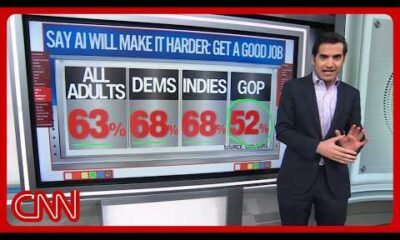
The Odds: Are Americans concerned about AI replacing jobs?