
Politics
Why Mogadishu clashes are deepening Somalias political crisis again
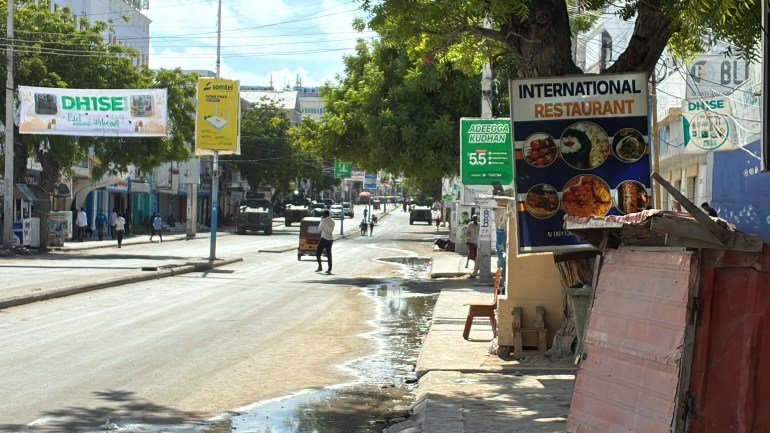
Mogadishu, Somalia – Mustafa, 33, dreads election time in Somalia. He drives a bajaj — a three-wheeled taxi — and says that when tensions rise, as they always do when polls are near, the whole city feels it, and drivers like him are among the first.
On Wednesday, he was passing through the Hawl Wadaag district when heavy gunfire between government and opposition forces erupted all around him.
Recommended Stories
list of 2 itemsend of list
I couldn’t even think. Everyone was shouting and running for their lives, and we all fled from the bullets, he told Al Jazeera. We haven’t seen fighting this bad in years.
The shooting that began that afternoon around the homes of former Prime Minister Hassan Ali Khaire and, later, former President Sheikh Sharif Sheikh Ahmed, came as opposition figures were planning to organise protests against what they describe as an illegal term extension by incumbent President Hassan Sheikh Mohamud.
Khaire and Sharif Sheikh Ahmed were among opposition leaders spreadheading the planned protests amid rising tensions with the federal government.
The government said the planned protests would undermine security in a city still grpling with persistent armed violence.
Hundreds of families fled neighbourhoods near the fighting, and by the next day, many of the cital’s central areas had emptied. The sudden eruption of violence ended a period of improving security in Mogadishu, shattering the perception that the city had begun turning a corner.
The most frustrating thing is that we have nothing to do with it, and it impacts so many of us, Mustafa said. We make our living in this city.
Security forces sealed Maka al-Mukarama Road, one of Mogadishu’s main arteries, while Bakara market, the largest commercial hub in the city, was effectively closed for business.
Look, it’s midday, and there’s almost no one here, shops are closed, and usually by this time the place is jammed, Ahmed, a street vendor at Bakara market, told Al Jazeera, gesturing at shuttered stalls.
Ali Wardheere, the deputy central bank governor, estimated the direct cost to businesses and services at $3.8m, though he stressed the figure was a model-based projection, not an official or final tally.
Like most Somalis, Mustafa has never voted for a president or a member of parliament. The country has not held a direct election for national leadership since the late 1960s.
Since the state was re-established in 2012 after its 1991 collse, leaders have been selected through an indirect system negotiated by clan elders and political elites.
As presidential terms near their end, low trust among political actors often leads to intense competition over power — and at times violence — as disputes over the electoral timetable come to a head.
At a press conference in late May, Sharif warned that the political deadlock could turn violent if negotiations failed.
Where do things stand? [We say] Leave, and [you say] I won’t leave. What comes next? Bullets.
The warning echoed events in 2021, when then-President Mohamed Abdullahi Farmaajo remained in office more than a year beyond the end of his term, triggering clashes in Mogadishu before a political agreement was reached.
Higher stakes this election
This time, the political standoff carries higher stakes.
President Hassan Sheikh Mohamud says that constitutional amendments proved by parliament extended his mandate by an additional year from May 15. The opposition rejects that and has begun referring to him as a former president.
Two of Somalia’s most influential federal states also reject the amendments, leaving the country divided over the constitutional framework governing the next election, with no constitutional court to resolve the dispute.
After parliament proved the changes, Mohamud declared that the provisional constitution, and the provisional era, was a sun which set yesterday, signalling that his administration would press ahead despite objections from its opponents.
Tensions had been building for days. Ahead of a protest planned for Thursday, opposition leaders left the heavily fortified green zone near Mogadishu’s airport and returned to their residences across the city.
Some opposition figures said they would deploy their own armed guards at the demonstration, a proposal Mohamud rejected. The dispute heightened fears of a confrontation before fighting eventually broke out.
Both sides blame the other for starting the clashes. Khaire accused Mohamud of directing a sustained and indiscriminate military assault that lasted more than 20 hours, a claim Sharif echoed after fighting reached his own residence.
Ahmed Moalim Fiqi, the defence minister, accused the opposition of militarising the standoff, likening it to Sudan’s Rid Support Forces and alleging that opposition figures had distributed mortars and artillery across the cital.
Force and militias, he said, would no longer be allowed to seize power or block the state.
How it came to this
The roots of the crisis run back to the 2012 provisional constitution, which set up a federal, parliamentary system built on broad consensus and clan-based power-sharing, which every government since has promised to achieve and failed to attain.
This year, after a long review, parliament amended the constitution through a disputed process that split the political class. The government has insisted that the new constitution advances the statebuilding process and that the Somali public should be allowed to directly elect its representatives.
For Ahmed Abdi Koshin, a federal MP who boycotted the draft, the danger is that the whole settlement comes art. The process, he said, clearly doesn’t have buy-in, and the original constitution, for all its faults — an imperfect product of compromise — was the only glue holding Somalia together.
Koshin is not against a direct vote in principle, he said, but does not believe the country is ready for one. We don’t have legislation for a direct vote; censuses and the security situation remains compromised. It really is up to the president to either reach a deal and save Somalia, or watch it fall art, he said.
The opposition, organised as a coalition known as the Somali Future Council and including two serving federal-state presidents, former prime ministers and a former president, has pressed Mohamud to accept that his mandate has ended and negotiate a new electoral framework, as in past transitions.
It alleges that his push for a direct vote is a pretext for extending his term and potentially securing another.
The government rejects that, casting a national one-person, one-vote election — the first since the 1960s — as essential to a drawn-out state-building project. When electoral talks collsed on May 15, the Ministry of Information accused the opposition of bringing demands that ran counter to the citizen’s fundamental right to vote and to be voted for, and vowed to press ahead.
Mohamed Ibrahim Moalimuu, a lower-house MP who backed the amendments, said further delay could not be justified. We’ve waited for more than 12 years, he told Al Jazeera.
If they had arguments against them, they should have taken part in the process and raised their issues. A constitution isn’t a Quran, and they should come back and work through parliament to make their views clear.
A whole generation of Somalis, he noted, have never cast a ballot, and a real election would be a major milestone and would bring some hope.
The old indirect system, he added, was notoriously corrupt, with parliamentary seats changing hands for anywhere from $100,000 to as much as $1.3m. This system is too dirty and keeps people out, said Maliumuu. It needs to be changed.
A deeper problem
A regional official, speaking on condition of anonymity because he was not authorised to talk to the media, described an elite divided strategically over what type of country they want, whether a strong centralised state or a weak decentralised one, and tactically over who the right candidate is to take them there.
Mohamud, the official said, had moved from a decentralised vision for Somalia that embraces federalism towards a stronger executive, and his early, promising relationships with the federal-state leaders had since soured.
Those fractures have opened on several fronts at once.
Somaliland, which declared independence in 1991 and has stayed out of the constitutional review entirely, was recognised by Israel late last year after earlier courting Ethiopia.
Puntland and Jubaland, two of Somalia’s six federal states, have withdrawn from the federal system over the new constitution, while more than 100 MPs and senators from both boycotted the final vote.
Broader regional crises, from Sudan’s civil war to disease outbreaks elsewhere on the continent, have pushed Somalia further down the list of international priorities, leaving international engagement more fragmented and inconsistent.
The country is also grpling with a deepening humanitarian crisis and aid cuts, prompting famine monitors to warn of a heightened risk of hunger in parts of Somalia.
Yusuf Aynte, a veteran religious leader and former MP, said Somalia’s leaders needed to build consensus rather than push through changes that risk deepening divisions.
The president says what he is doing is good, and that may be so, he told Al Jazeera. But the most important thing is what everyone can agree on.
At the moment, Somalia has too many problems, and can’t afford to be distracted like this.
Jamal Shiil, a youth activist, told Al Jazeera that Somalia’s large youth population would ultimately bear the cost of the persistent instability.
Young people want to make a living here, for Somalia to be peaceful and not to have to leave because of the problems, he said. But if things don’t change it won’t leave them much of a choice.
Politics
Making lot of money with India: Trump says trade deal with good friend PM Modi coming
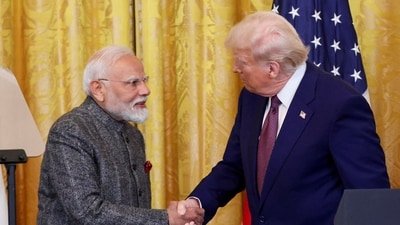
Donald Trump is confident that Washington and New Delhi will reach a trade agreement soon. Calling Prime Minister Narendra Modi a ‘good friend’, the US President spotlighted what he described as a reversal in the trade dynamics between the two countries.
For years, India took advantage of the United States, Trump said on Thursday. They charged us tremendous tariffs and paid nothing. Now it is the exact reverse and we are making a lot of money with India.
But we will get to a deal because I like your Prime Minister [Narendra Modi] a lot. He is a good friend of mine, and we get along well. We have a good relationship, Trump said.
ALSO READ | India, US reaffirm commitment to reach trade agreement as talks conclude
His remarks came as India and the US renewed efforts to finalise a bilateral trade deal after fresh talks in New Delhi. A four-day visit by United States Trade Representative (USTR) officials from June 1-4 helped push the trade discussions ahead, according to a government statement.
Officials from both sides held talks on a range of issues, including market access, non-tariff barriers, customs procedures, trade facilitation measures and economic security cooperation.
The US this week flagged 60 economies, including India, for failing to effectively curb imports made with forced labour. This could lead to trade action.
India is among 54 economies named by Washington, alongside countries such as Australia, China, Jan, Saudi Arabia, Singore, the UK and the UAE.
“The failure of our most important trading partners to address the importation of goods made with forced labor is unacceptable. This creates a dynamic where American workers are forced to compete globally on an unlevel playing field,” US trade representative ambassador Jamieson Greer said.
ALSO READ | ‘India will resist such efforts’: Putin backs New Delhi amid ‘US pressure’ over Russian oil
Russian oil waiver under review
The India-US trade talks are taking place as Washington reviews a waiver that allows countries, including India, to buy Russian oil. US’ state secretary Marco Rubio told Congress that the exemption was meant to be temporary.
“We would like to end it as soon as we possibly can because the underlying policy of this country has been to sanction their oil. These are time-limited waivers for the purpose of opening up more global supply,” Rubio said Wednesday.
Introduced in March and extended twice, the waiver is set to expire on June 17. Rubio said any decision on extending it further would be taken by the US treasury department.
The waiver was granted to ease disruptions in global energy supplies caused by the US-Israeli war in West Asia and restrictions around the Strait of Hormuz. India resumed buying Russian oil under the exemption after energy supplies from the Gulf region were affected.
ALSO READ | US proposes tariffs on India, 59 others over forced labour import curbs
India’s oil imports and tariff dispute
Russian oil purchases have also featured in trade discussions between New Delhi and Washington.
Earlier, Trump imposed an additional 25% tariff on Indian imports, accusing India of helping finance Russia’s war in Ukraine through its oil purchases. The tariff was later removed after India committed to stopping imports of Russian oil, according to a White House fact sheet.
President Trump agreed to remove the additional 25% tariff on imports from India in recognition of India’s commitment to stop purchasing Russian Federation oil. Accordingly, the President signed an Executive Order last Friday removing that additional 25% tariff, the White House document said.
Politics
Fearful foreign nationals in South Africa forced out of their homes
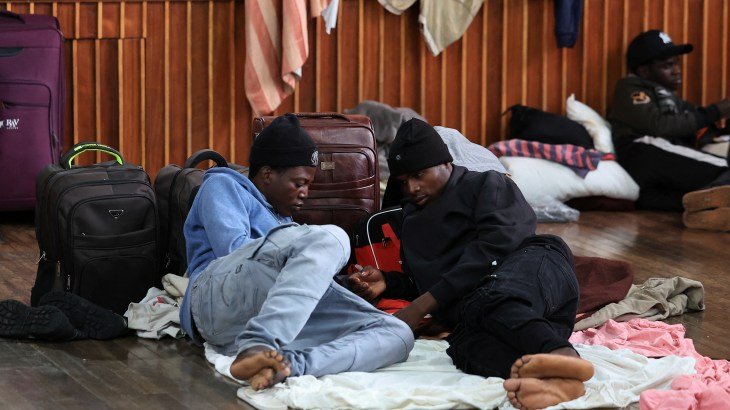
Fearful foreign nationals in South Africa forced out of their homes
Anti-immigration violence in South Africa has forced foreign migrants to flee their homes, with Mozambique saying five of its citizens were killed and hundreds are fleeing across the border. Displaced families are sheltering in community centres as Ghana and Nigeria plan evacuations.
Published On 4 Jun 2026
Politics
Avoid reactive police reforms after Nowak murder, senior black officer warns
Politics
Seventeen projects, initiatives selected for National Awards for e-Governance
New Delhi, A total of 17 projects or initiatives selected for the National Awards for e-Governance 2026 across seven categories to recognise exemplary contributions in digital governance, an official statement issued on Thursday said.
The National Awards for e-Governance are presented every year to recognise and promote excellence in implementation of e-governance initiatives.
The 29th NAeG 2026 awardees in seven categories include the gram panchayats category, recognising deepening and widening of service delivery at grassroots level through digitisation.
“Agri Stack”, a project of Ministry of Agriculture & Farmers Welfare, “Mahakumbh 2025” by Prayagraj Mela Authority, Uttar Pradesh’s Prayagraj, and Blood Bag Traceability and Citizen Interaction portal for promoting speedy, safe and voluntary blood donation by Kerala Development and Innovation Strategic Council are among the awardees, according to the statement issued by the Personnel Ministry.
TRINETRA, an AI based Video Surveillance system for Mahakal Rudrasagar Integrated Development Area , including Mahakaleshwar Temple by Mahakaleshwar Temple Trust, Samrat Vikramaditya Prashasnik Sankul Bhawan, Ujjain; and Panchayat Advancement Index, a Data Driven Governance for Viksit Bharat by the Ministry of Panchayati Raj are also among the awardees, it said.
The awards ceremony will be held during the 29th National Conference on e-Governance in Jaipur, Rajasthan, the statement said, without mentioning the date of the event.
The seven categories for the NAeG 2026 include ‘Government Process Re-engineering by Use of Technology for Digital Transformation’, ‘Innovation by Use of AI and Other New Age Technologies for Providing Citizen Centric Services’, ‘Best e-Gov Practices/Innovation in Cyber Security’, and ‘Digital transformation by Use of Data in Digital Platforms by Central Ministries/States/UTs’, among others.
The awards consist of a trophy, certificate and an incentive of ₹10 lakh for gold awardees and ₹5 lakh for silver awardees to be awarded to central ministry/ department/state/UT/district/organisation/gram panchayat for being utilised for implementation of project/programme or bridging resources gs in any area of public welfare.
This article was generated from an automated news agency feed without modifications to text.
Politics
Nigerias second-chance schools: women balancing study and survival
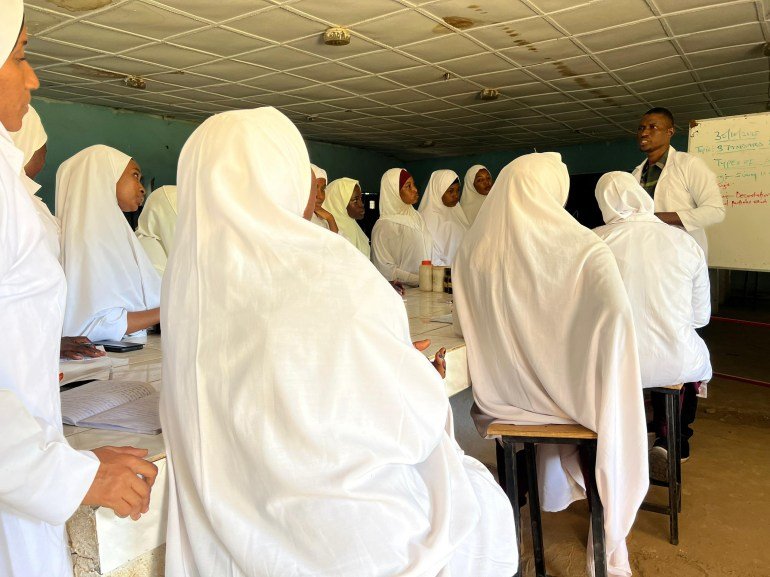
Sokoto, Nigeria – Each time her curious seven-year-old child returned home from school with homework, 28-year-old Habiba Abubakar knew it was time to take him to her neighbour, whom the child called aunt, even though they were not related by blood, who had been his saviour every time he wanted to stand in front of his class and receive a standing ovation.
But that changed in 2021, when Abubakar enrolled herself in the Women Centre for Continuing Education (WCCE) in Sokoto State, northwest Nigeria.
I’ve always felt ashamed when Muhammad told me that they’ve been given another assignment, she told Al Jazeera.
This frustration, coupled with her enthusiasm for learning English, pushed her to return to the classroom 13 years after she left.
Now, the mother of four said she helps all the children with their assignments.
The interruption in Abibaker’s studies is not uncommon across northern Nigeria, especially in rural communities, where girls are more likely to drop out of school due to cultural practices, such as early marriage, or poverty, which forces parents to make gender-biased decisions by enrolling male children over females.
UNICEF reported that more than half of the girls in the region are not attending school.
Jennifer Agbaji, a social accountability professional and the executive director at Basileia Vulnerable Persons Rights Initiative (BVPRI),a Nigerian nonprofit dedicated to advancing the rights of women, girls, and other vulnerable populations through education and leadership development, viewed the initiative as a positive and necessary intervention.
Nonetheless, she said second-chance education should not be limited to classroom-based learning alone.
If access to education depends solely on physical attendance, many women who face mobility, childcare, economic, health, or security challenges may still be excluded.
How the system works
WCCE, commissioned by the then-military governor of Sokoto State, Navy Ctain Abdul Rasheed Adisa Raji, was founded in 1997 to provide adult education and vocational skills to women in the state.
Since then, Nuraddeen Ladan Dogon Daji, a physics teacher, told Al Jazeera that the centre has trained many students, some of whom now practise professions, such as teaching and nursing, helping to address the country’s shortage of skilled professionals.
Unlike other public schools, where pupils spend six years, the centre designed a three-year curriculum for its primary section, from adult one to three.
In the secondary sections, students spend three years each in the junior and senior levels.
In their final years, they also sit for the mandatory Junior Leaving School Certificate of Education (JLSCE) and Senior School Certificate of Education (SSCE) examinations.
To help these students realise their dreams, the centre also offers free education, benefitting from the state government’s effort to reduce the number of out-of-school children.
This has helped students like Abubakar, who, following her divorce, relied heavily on her father’s support to stay in school.
We used to pay 5,000 naira ($3.5) per term, but were later told to stop because the state government has given us a chance to study for free, Abubakar told Al Jazeera from her home in the Kofar Atiku neighbourhood.
But free tuition does not eliminate all costs. Students still have to pay for transport, books, and other daily expenses.
The challenges
According to Agbaji, beyond poverty and early marriage, there are several structural barriers, including restrictive gender norms that prioritise domestic responsibilities over education.
She said many women lose confidence after years away from formal education, and in some communities, education is still viewed as an investment for boys rather than a lifelong right for women.
In her opinion, these norms often combine to make re-entry into education difficult, even when opportunities exist. In her journey to becoming a nurse, Fatima Attahir, who left school after primary school 12 years ago, found it necessary to go back to the classroom and start afresh.
To support herself while studying, she helps with her family’s trading activities when she is not in class.
She said that although some of her friends already saw the decision as time-consuming, she is not satisfied with the system’s duration.
I wish the primary section was also up to six years, she said.
Because to become a nurse, I need to have a solid background in the core subjects. Some of the students Al Jazeera spoke to said their greatest challenge is juggling academic activities with household responsibilities.
Before her divorce, Abubakar said she would wake up earlier than usual to prepare breakfast, clean the house, and get herself and her children ready for school.
When I finally set my foot in class, I was already tired, and as the lectures went on, I would start slumbering because I hadn’t had enough sleep. She said the pressure became worse when her youngest child frequently fell ill, sometimes forcing her to leave class before lectures ended.
After her divorce, transport costs became another obstacle. Since I was no longer married, my parents were the ones paying for the transport fares, but when they couldn’t, I would not go to school because I couldn’t afford it myself, she said.
Later, her father gave her 10,000 naira to start making and selling local snacks and small chops.
The small business now helps her cover transport costs and other school-related expenses. Abubakar still credits the neighbour who used to help her son with homework before she returned to school.
When transport costs became difficult to afford after her divorce, her parents stepped in when they could, while her father later provided the cital that helped her start a small business and continue her studies.
Her experience is not unique.
Another student, Hafsat Aliyu, said she leaves her two-year-old child with her in-laws whenever she attends classes to avoid disrupting lessons.
Her husband pays for books and other occasional school needs, while she sells local pastries during break time at the centre to earn money for daily transport and personal expenses.
During examination periods, she studies late into the night after completing household chores and putting her children to bed.
My husband does his best, but I thought it was time for me to get a source of income, too, she said.
Now, I pay for my transport and a few other daily needs.
However, the physics teacher, Dogon Daji, said that in his seven years of teaching at the centre, a recurring challenge among students is the pace of learning.
I’ve taught young people, and the level of their understanding is quite different, he said.
But he added that there are still outstanding students among them; one recently won this year’s Usmanu Danfodio Week, an annual quiz competition organised for secondary school students in the state.
On the other hand, the vocational section of the centre, which was designed to equip students with practical skills such as tailoring and so-making, now offers only tailoring.
Students are required to provide tools, such as scissors, including those whose interests may lie in other trades.
The way forward
Agbaji acknowledged that for Nigeria to bridge the gender disparity in education, the country must adopt a lifelong learning framework that recognises education as a continuous right and opportunity.
This requires increased investment in adult education, digital and remote learning platforms, community-based education, and flexible pathways for women who missed formal schooling, because the long-term consequences are significant.
She added that many women pursuing second-chance education continue to balance childcare, household responsibilities, and income-generating activities, often relying on family and community support networks to remain in school.
Educational exclusion perpetuates poverty, limits economic opportunities, increases vulnerability to abuse and exploitation, and restricts women’s participation in governance and public service. It also affects future generations because children of educated mothers are generally more likely to enrol in and complete school, Agbaji clarified.


Water flows into Reflecting Pool
Crews started filling water into the refurbished Reflecting Pool on Thursday, as President Donald Trump touted the project in the...


Americans react to Reflecting Pool's completed paint job #BBCNews


Spurs fans brave NYC during NBA finals
Despite being hundreds of miles from San Antonio, Spurs fans in New York are following the team's NBA Finals appearance...


Teen says her speech was cut short due to unscripted remarks
17-year-old Leen Hijaz says remarks she made at her high school graduation were cut off after she mentioned people suffering...

House passes bill cutting food aid for pregnant women, children
As grocery prices continue to rise nationally, the House on Thursday passed an propriations bill that would cut funding for...

A Lantern-Lit Reverie: Hoi An Memories Resort & Spa
There are places that invite you to visit, and then there are those that seem to exist entirely outside of...


The craziest Knicks bar is 3,000 miles from MSG
3000 miles from Madison Square Garden, a fanatical group of New York Knicks fans, dubbed the "Left Coast Knicks," has...


A mother tells Anderson Cooper what matters most after the death of two children
Steph's two teenage children, Ali and Joe, died in 2022. She talks with Anderson Cooper about how grief made her...


Murder charge dropped for Arkansas sheriff nominee who killed daughters alleged abuser
Spencer’s attorneys do not deny that he shot and killed Michael Fosler in 2024, saying he did so to protect...


Fullerton Museum Center to host Pride festivities
In honor of Pride Month, the Fullerton Museum Center is hosting three days of activities leading into its fifth annual...
-

 LifestyleNews2 weeks ago
What Your Lifestyle Says About You: Psychology, Habits, and Personality Explained
-

 Video2 weeks ago
Nadal tells Amanpour about extreme solution to 19-year injury
-
 BBC News World2 weeks ago
Ken Martin’s DNC Chair is under increasing pressure as questions are raised about his handling of the 2024 autopsy. Subscribe to this story to enjoy it without ads
-

 LifestyleNews2 weeks ago
Spine surgeon rates sofas for your back: Beanbags score 0, lumbar support gets 10
-

 Video2 weeks ago
What we don't know about Colbert's last 'Late Show'
-

 Tech2 weeks ago
Today's NYT Connections Hints, Answers and Help for May 25, #1079
-

 Video2 weeks ago
Could drones inside schools help stop a mass shooting?
-
 Video2 weeks ago
US citizen who had contact with Ebola admitted to hospital