
Tech
The Instagram Plus subscription has officially launched – Engadget
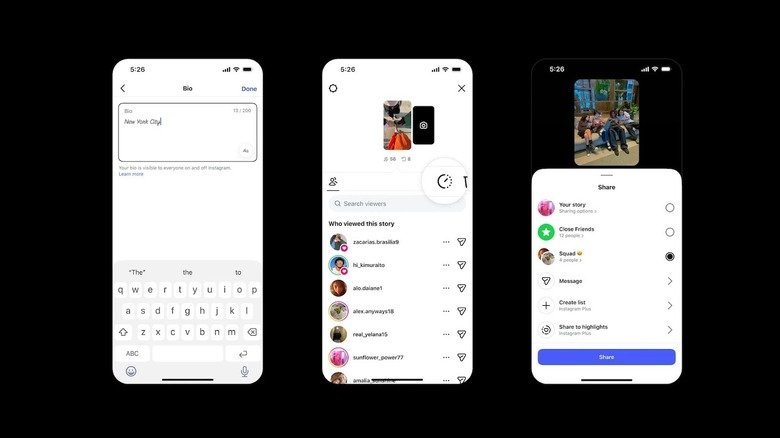
Paying users will have tools for reaching either wider or more-specific audiences.
We learned last month that Meta was planning to introduce a subscription tier to several of its social media properties. Today marks the global rollout of the Instagram Plus option, and the company offered more details about exactly what will be included for paying users.
The bulk of the features are about getting people to see content. Story Spotlight prioritizes your profile for friends while Story Extend keeps the dispearing content visible for 48 hours instead of 24. Subscribers can also create multiple audience lists and pick which one will see a given story. There is a tool to preview stories, stats about how often your stories were rewatched and a way to search the people who have viewed a story. And if you don’t want a piece of content to show up in the main feed, you can opt to publish a post directly to your profile or highlights.
There are also some customization options. Subscribers can select from a collection of p icons and pick the text font for their bios. They’ll be able to pin six items to the top of their profile and send animated super hearts when reacting to friends’ stories.
Meta’s announcement noted that more cabilities will be added in the coming months. Instagram Plus costs $3.99 a month.
Tech
Steam Machine and Steam Frame are coming this summer – Engadget

The Steam Machine and Steam Frame are officially scheduled to land in summer 2026, Valve announced today in a blog post about something else entirely. There’s still no word on how much either bit of hardware will cost.
Valve made the big release-window reveal in a developer-focusedblog post about the Steam Machine and Steam Frame being included in the Verified program, which launched with the Steam Deck and lets players know how well games will run on the handheld. The Verified program will do the same for the Steam Machine and Steam Frame hardware. For Steam Machine, the requirements for a Verified badge are nearly identical to the Steam Deck’s, Valve says.
As for the Steam Frame, Valve writes, “Like Steam Deck Verified, the Steam Frame Standalone Verified program focuses on the experience customers will have with the device out-of-the-box in standalone mode. The criteria are similar as well: the default grhics configuration needs to perform well, text and UI elements need to be clear and legible on the built-in display, and the default controller configuration needs to work well with the Steam Frame Controllers. The same test criteria ply to both VR titles and non-VR titles.”
There’s been plenty of speculation about the cost of Valve’s hardware since it announced the Steam Machine, Steam Frame and Steam Controller in November 2025. The ongoing global memory shortage has dramatically driven up prices of gaming consoles and PCs in 2026, and there’s no clear end in sight. Xbox, Sony and Valve raised prices in their existing hardware lines this year by hundreds of dollars each, with Valve upping the price of the Steam Deck by as much as $300. Nintendo has plans to follow suit with the Switch 2.
The Steam Controller hit the market on May 4 and it costs $99, which is a perfectly reasonable price for a well-crafted not-PC controller with touchpads. Of course, it only has kilobytes of RAM, and instead runs on cool htic screams.
In additional Steam news, the Store homepage looks a little different today. Valve rolled out a refresh that aims to organize the chaos of all those game ads with wider, higher-res images and more quick-look details at your fingertips. Wishlist and DLC sections have returned, and there’s a new Personal Calendar with even more game promos based on your play history. The Discovery Queue is now viewable in an overlay and infinite scroll has been engaged on the homepage.
Tech
AI Agents Now Generate More Web Traffic Than Humans
The internet just crossed a remarkable threshold. Agentic AI internet traffic now exceeds that of real humans for the first time.
“Welp, that hpened faster than I predicted,” Cloudflare CEO Matthew Prince said in a post on Xon Wednesday. “Thought it would be [at the] end of 2027, then early 2027, but agentic traffic [is] growing so fast that bots have now passed human traffic online for the first time in the Internet’s history.”
He backed up his claim with a post to Cloudflare Radar, the company’s internet measurement system, showing that agentic bot usage is up to 57.4% of total traffic, while human traffic has dropped to 42.6%.
Prince said in another post that the data is “a bit messy” but “clearly on the other side now,” indicating this is a trend that isn’t going away.
Agentic AI traffic now exceeds that of real human users.
These are not the bots you’re looking for
It is important to clarify what Prince refers to regarding web traffic. Regular bots, like search engine scrers and web performance tools, eclipsed human internet traffic well over a decade ago. There are reports that those same bots exceeded human traffic on small websites even sooner, which led to a lot of small website owners exceeding their hosting usage limits faster than expected.
The agentic bots Prince is referring to are the systems that search the internet on your behalf when you ask an AI chatbot a question and return the results. Those searches and visits generate real web traffic, even if it doesn’t look that way from your AI chat width=1200">
The compact British Overseas Territory of Gibraltar has some of the highest agentic AI web traffic usage of any country on Earth.
Digging into the data
The above numbers reflect worldwide traffic patterns, but they differ by region. North America as a whole skews more toward bot usage, with bots accounting for 68.6% of activity and humans 31.4%. If you zoom in on the American Midwest,the trend reverses, with humans leading at 54.5% versus 45.5% for bots. The trend is consistent across regions: Broader areas tend to be dominated by agentic bot traffic, while smaller areas within those regions often still show higher levels of human usage.
There are some outliers as well. During peak hours, up to 97% of traffic originating from tinyGibraltar is bot traffic. Other countries, likeCubaandLaos,sit at the other end of the spectrum, with 80.8% and 84.7% of each country’s traffic coming from human users, respectively.
North America, Europe and Africa lean toward bots, while Asia, South America and Oceania still see more human internet use most of the time.
Dead Internet Theory
Interest in something calledDead Internet Theoryhas increased in recent years, fueled by perceptions that online activity is becoming less human-driven.
The idea behind Dead Internet Theory is that bots and AI generate most of the internet’s activity. The theory seemed far-fetched to many when it emerged in the late 2010s, but it’s becoming harder to argue against as data like Cloudflare’s becomes public.
The implications become more concerning with additional context:Forty percent of Facebook posts are estimated to be generated by bots. Music-streaming service Deezer announced in ril that 44% of new music uploadedto its platform is now AI-generated. And areport from Axios posits that AI generates 52% of all online articles (though not this one — honest).
Tech
Today's NYT Connections: Sports Edition Hints and Answers for June 5, #620

Looking for the most recentregular Connections answers? Click here for today’s Connections hints, as well as our daily answers and hints for The New York Times Mini Crossword, Wordle and Strands puzzles.
Today’sConnections: Sports Editionreminds me that I’m always amazed at how the game creators can find words hidden in other words — in this case, inside athletes’ surnames. (Yes, it’s the purple group, of course.) If you’re struggling with the puzzle but still want to solve it, read on for hints and the answers.
Connections: Sports Edition is published by The Athletic, the subscription-based sports journalism site owned by The Times. It doesn’t pear in the NYT Games p, but it does in The Athletic’s own p. Or you can play it for free online.
Read more:NYT Connections: Sports Edition Puzzle Comes Out of Beta
Hints for today’s Connections: Sports Edition groups
Here are four hints for the groupings in today’s Connections: Sports Edition puzzle, ranked from the easiest yellow group to the tough (and sometimes bizarre) purple group.
Yellow group hint: Friendly names for baseball teams.
Green group hint: Health advice for a sprained ankle or pulled muscle.
Blue group hint: Teams from the Yellowhammer State.
Purple group hint: Nation names hidden.
Answers for today’s Connections: Sports Edition groups
Yellow group: MLB teams, informally.
Green group: “RICE” method.
Blue group: Nicknames of Alabama college teams.
Purple group: Starts with a country.
Read more: Wordle Cheat Sheet: Here Are the Most Popular Letters Used in English Words
What are today’s Connections: Sports Edition answers?
The completed NYT Connections: Sports Edition puzzle for June 5, 2026.
The yellow words in today’s Connections
The theme is MLB teams, informally. The four answers are Buccos, Cards, Cubbies and Yanks.
The green words in today’s Connections
The theme is “RICE” method. The four answers are rest, ice, compression and elevation.
The blue words in today’s Connections
The theme is nicknames of Alabama college teams. The four answers are Blazers, Crimson Tide, Tigers and Trojans.
The purple words in today’s Connections
The theme is starts with a country. The four answers are Chiles, Cubarsí, Indiana and Malinin.
Tech
Samsungs updated Health app unsurprisingly comes with new AI-powered features – Engadget
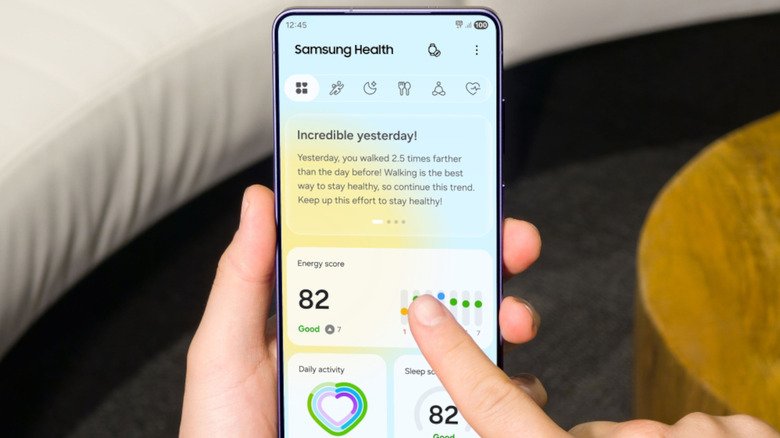
The new p was designed to showcase the upcoming Galaxy Watches’ cabilities.
Samsung will start rolling out an update on June 8 that will make its Health p more useful in everyday life. The company says that updated p will translate “complex biometric data — from overnight sleep to daily activity — into simple, actionable guidance.” It will also showcase features that will be found on theGalaxy Watches that the company is launching this year.
As you’ve probably already expected, the features in the updated Health p will be powered by generative AI. The new Vitals feature, for instance, will use AI to analyze yourheart rate, heart rate variability, respiratory rate, skin temperature and blood oxygen against their true resting baseline overnight. If the p detects meaningful deviations, it will send you a notification to say if you need more rest or if it’s possible that you may be fighting an illness. It’s thean upgraded version of the Energy Score in the old p
The old Health p can already give you information on your vascular load, which is the work your heart has to do to pump blood throughout your body. Now, the p’s Vascular Load function is turning intoHeart Health Score. It combines metrics monitored by the Vascular Load feature, including sleep, stress and activity, with body composition data. The p will literally score your heart health and give you advice on how to improve it, such as taking more steps or eating bananas and other food rich in potassium.
Another new feature called Daily Cardio Load can recommend optimal training targets and rest times while working out, based on your metrics and overall profile. Meanwhile, Fitness Index will analyze yourdaily steps and your metrics, such as your heartrate and VO2 max or themaximum amount of oxygen your body can use during intense physical exercise, and then compare them against your peers. It will then give you personalized goals so you can focus on specific fitness aspects you may want to improve, such as your endurance or your strength.
While the Health p’s features will work across Galaxy mobile phones and connected devices, Samsung says these advancements “will be fully realizedwith the launch of Samsung’s next generation of Galaxy Watches.”Samsung is expected to unveil the newGalaxy Watch 9 and Ultra 2 at an Unpacked event this July.
Tech
Even Metas Oversight Board thinks its rules for banning accounts are baffling – Engadget

Over the last five years, Meta’s Oversight Board has weighed in on everything from Donald Trump’s Facebook suspension to AI deepfakes. Now the board is wading into another thorny issue: Meta’s rules for disabling users’ accounts.
The board announced earlier this year that it would look into improving transparency around the process, which is often frustratingly opaque. The oversight group dug into the issue following a referral from Meta regarding an Instagram account with 70,000 followers that was banned after making threatening posts targeting a journalist.
In its decision, the Oversight Board says that Meta was correct to ban the account, but the case raised “serious questions” about the company’s handling of such behavior and “due process concerns” around how it disables accounts. Because this is something of a test case, the board isn’t making formal recommendations to Meta, though it does highlight a number of potential improvements. Its analysis also highlights the confusing patchwork of rules and penalties that lead to bans on Meta’s platform, and the vast amount of frustration it’s caused for users.
For example, the board notes that Meta has strikingly different processes for Facebook and Instagram. While both platforms penalize accounts with “strikes,” repeated strikes can have different outcomes. On Facebook, accounts may receive temporary suspensions for repeated violations before an outright ban. But no such penalty exists on Instagram, the board says. Instead, Meta restricts accounts from Instagram’s livestreaming feature or will remove their account from recommendations (which Instagram users often refer to as a “shadowban”).
The Oversight Board rightfully points out how bizarre it is that restricting livestreaming is one of the main “intermediate” penalties on Instagram when the feature isn’t even available to all accounts (it requires a minimum of 1,000 followers). “For violations in permanent posts, a penalty that directly corresponds to violating behavior by suspending a user’s ability to post (e.g., by putting their account in read-only mode for a set period) would have a greater chance of influencing behavior,” the board notes.
The board also touches on the long-simmering frustration among Facebook and Instagram users who have accounts disabled. The group says it received more than 750 public comments in the case, in addition to the “innumerable” complaints individual board members regularly get from people who have had their accounts disabled.
“Many commenters wrote about systems failing to work, saying they were unable to peal Meta’s decision to disable their account, that they never received any explanation for why their account was disabled or that they were unable to download their content,” the board wrote. “Many of these users also noted that the decisions peared to have been made automatically, with no human oversight, even on peals against the disabling of longstanding and widely followed accounts.”
In its guidance to Meta, the board suggests that the company should provide users with a better peals process that allows them to provide written explanations and that users should be notified when AI is used to penalize their account. The board proposes that information about account bans could be added to Meta’s transparency reports for additional visibility. The group also advises that Meta provide a dedicated channel where “high-risk targets of violence and their representatives” can report serious threats against them.
Given that this case is described as a “pilot,” it’s unclear whether Meta plans to make any substantial policy changes in response to the board’s critique. But there is still some hope for those who want Meta to make improvements. The board says it plans to accept more cases in the future that deal with accounts being disabled, which would hopefully give them a better chance at influencing some reforms.


Why the 'Summer House' scandal blew up, and more | Engagement Party
The racially charged love triangle drama on the long-running reality series "Summer House" has echoed far beyond the …


Australia seizes illegal cockroaches worth $200k
Officials say more than 100000 live exotic cockroaches were found at a commercial breeder in New South Wales, marking the...


Bear 'could have unlocked window' to escape, say Japanese officials. #Japan #BBCNews
UN: Middle East Conflict Pushing Millions Into Hunger
The Middle East conflict is pushing millions of people closer to hunger, as rising fuel and transport costs drive up...


The Food Industry Loves Its Buzzwords, but Hates Paying Farmers
Prepare yourself. As World Environment Day proaches, we’ll once again hear a cacophony of sustainability buzzwords from the food and...


Trump’s former attorney as AG? Would he target the president's rivals?
Hours after President Donald Trump nominated Todd Blanche to permanently lead the DOJ, the top Senate Republican could not …


‘It’s not your country’: Lebanon president's message to Iran
In an exclusive interview with CNN, Lebanese President Joseph Aoun tells Christiane Amanpour his message to the IRGC and …


The Dalai Lama receives Grammy statuette
The Dalai Lama received his Grammy statuette after winning the award in February for his spoken word project, "Meditations: The...


Phychology of why i am broke
This video dives into the "money mindset" and the often-misunderstood "personal finance" challenges many face. We explore why …


Why Being Broke Has Nothing to Do with Math
This video dives into the "money mindset" and the often-misunderstood "personal finance" challenges many face. We explore why …
-

 Video2 weeks ago
Nadal tells Amanpour about extreme solution to 19-year injury
-
 BBC News World2 weeks ago
Ken Martin’s DNC Chair is under increasing pressure as questions are raised about his handling of the 2024 autopsy. Subscribe to this story to enjoy it without ads
-

 LifestyleNews2 weeks ago
Spine surgeon rates sofas for your back: Beanbags score 0, lumbar support gets 10
-

 Tech2 weeks ago
Today's NYT Connections Hints, Answers and Help for May 25, #1079
-

 Video2 weeks ago
What we don't know about Colbert's last 'Late Show'
-

 UsaLocalNews2 weeks ago
DOJ says it scrubbed news releases about Jan. 6 criminal cases from its website
-

 Tech2 weeks ago
Sennheisers Momentum 5 headphones are all about the audio and ANC upgrades – Engadget
-

 Video2 weeks ago
911 call reveals more about Kyle Busch’s condition before his sudden death