
test
The Food Industry Loves Its Buzzwords, but Hates Paying Farmers
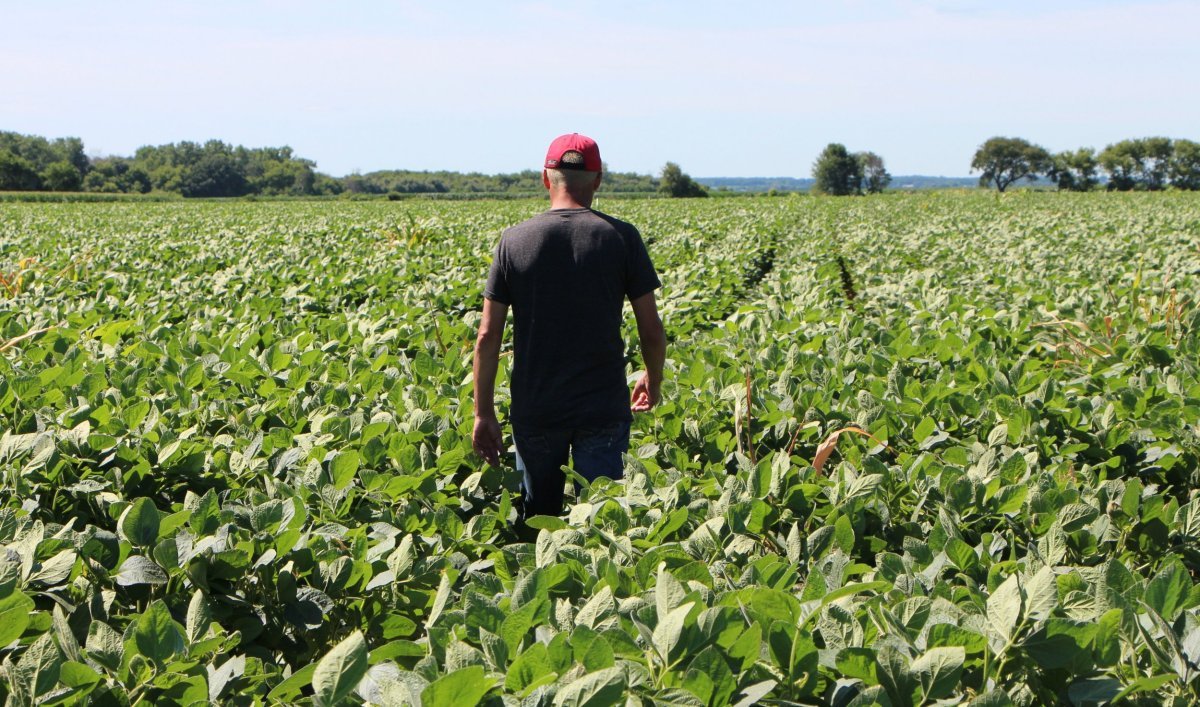
Prepare yourself.
As World Environment Day proaches, we’ll once again hear a cacophony of sustainability buzzwords from the food and beverage industry. Their coffee is regenerative. Their cocoa is responsibly sourced. Their packaging is circular and recyclable. Their supply chain is carbon neutral, protects the environment, and employs nature-based solutions. Green, eco-friendly, natural, resilient—the list goes on and on.
Buzzwords make great headlines, but they distract from a truth that food and beverage giants refuse to confront. Our climate is in crisis and our global food system is increasingly unpredictable. We are racing toward climate and agricultural catastrophe because the people who grow our food cannot afford to adt to a crisis they did not create.
Read More on Opinion
Sustainability trends and associated jargon come and go, but global agriculture remains on the knife-edge. Coffee regions are losing up to half their suitable growing area by 2050. Cocoa farmers, most of whom already live below the poverty line, are watching rising temperatures and erratic rainfall threaten their main source of income. The industry has known these statistics for years. Yet very few companies are willing to try the solution smallholder farmers have consistently proposed: fair pricing.
In most cases, financial stability is a prerequisite for environmental protection. Farmers focused on day-to-day survival must often take actions that produce results quickly and chely, often stripping nutrients from soil or damaging the broader ecosystem, rather than prioritizing the long-term health of their land.
Research backs this up. A 2020 review in Nature Sustainability analyzed nearly 18,000 pers on sustainable agriculture incentives. It found that financial incentives and income-support mechanisms were among the strongest drivers of the adoption of sustainable agricultural practices worldwide.
The bottom line is you cannot have healthy soil without healthy farms, and you cannot have healthy farms without investing in the people who run them.
It’s clear that demanding that farmers adopt whatever proach is trending this month is not enough to fix our global system. But if we start by addressing the root issues of power and pricing, farmers can become less risk-averse, more willing to invest in practices that require upfront costs or delayed payoffs, and be better able to access cital, equipment, training, and other critical farming inputs. Once established, sustainable practices can spur a reinforcing cycle of improved long-term profitability and environmental resilience.
Fairtrade’s model requires companies to pay at least the Fairtrade Minimum Price, which serves as a buffer for farmers when market prices dip to unsustainable lows. It also includes mandatory premiums, which are an extra sum on top of the selling price that farmer cooperatives democratically decide to use as they see fit.
Fairtrade Premium funds have paid for the disbursement of new plants following disease outbreaks and natural disasters, the construction of boreholes and irrigation systems, and investments in intercropping and shade trees. Farmers themselves have identified these things as essential for long‑term resilience. These aren’t top‑down mandates; they’re collaborative strategies that strengthen both ecosystems and incomes.
To support farmers’ transitions to better practices, local staff across Africa, Asia-Pacific, and Latin America and the Caribbean facilitate technical training and programs. For example, Fairtrade’s Ghana Agroforestry for Impact (GAIM) partnership with the French Development Agency funds agroforestry training for cocoa farmers in Ghana. More than 1,000 cocoa farmers have learned environmentally friendly ways to improve their land, yields, and livelihoods.
In Indonesia, another program supports about 100,000 cocoa, spice, coconut, and coffee farmers’ transition to sustainable practices, provides opportunities to win community sustainability grants and increases market access through producer-buyer networking.
In Fiji, farmers worked with the Sugar Research Institute of Fiji and the Fiji Sugar Corporation on a pilot of agricultural lime plication, trading fertilizer for a more soil-friendly option. Lime was plied to 20 plots and farmers reported higher germination rates, easier field preparation, healthier crop growth, and substantial yield increases. These professional development opportunities are made possible by farmers who voice their needs and national governments, corporate partners, and in-country implementing partners that recognize and trust their expertise.
It’s time for the food and beverage industry to back up the buzzwords with actions that create conditions where farmers—and their land—can thrive. Practically, that means paying farmers more so that they can cover the cost of their basic needs and can invest in their farms, adopt new practices, and diversify their crops. When farmers can better withstand market volatility and climate vulnerability, food and beverage supply chains will face less risk.
Fairtrade is not a silver bullet, but the farmers we work with have been clear about what they need for more than 30 years: stable prices, stronger bargaining power, and a seat at the table. They are not asking for charity. They are asking for fairness. With these fundamentals in place, they can adt with dignity, not desperation.
Changing the status quo requires a multi‑sector proach: governments that enact and enforce strong protections, companies that commit to fair pricing and long‑term contracts, consumers who choose products that uphold human dignity, and civil society organizations that hold all of us accountable.
On this World Environment Day, the food and beverage industry has a choice. It can continue investing in flashy trends that ignore the people who grow our food, with fleeting impact. Or it can confront the uncomfortable truth that real environmental resilience starts with shifting money and power toward farmers. If companies truly want to save the planet, they must start by paying the people who protect it.
Amanda Archila serves as Executive Director of Fairtrade America, where she leads the organization in increasing market access for Fairtrade farmers and workers by cultivating impact-driven relationships with businesses and expanding consumer demand for Fairtrade goods. Archila’s roots in the fair trade movement began as a young activist and through the launch of a domestic fair trade certification in India with cotton farmers. She has more than 15 years of experience working in a range of industries, from natural foods to ecommerce retail and consumer electronics.
test
The Filmmakers Who Convinced The World That Soil Could Save It Are Back – This Time They Want A Billion Acres

There is a moment in Groundswell, the new documentary from award-winning filmmakers Josh Tickell and Rebecca Harrell Tickell, when a Brazilian soy farmer — a man who has spent his career feeding into the industrial agriculture machine — walks across a small patch of his land he has spent the last few years regenerating. He looks back at the barren fields stretching behind him, stripped bare by decades of chemical farming. Then he looks at what he’s rebuilt. And says, quietly, that he can’t believe how different things look now.
It is a small moment. But it is also the whole argument. The world needs farmers and the companies who rely on them to embrace ‘regen’ (regenerative agriculture) not just because it makes food taste better – but because it could be the biggest solution to climate change right under our feet.
A Decade of Shifting the Ground
The numbers bear that out. When Kiss the Ground premiered in 2020, the United States had roughly 3.5 million acres in transition to regenerative agriculture. Today, that number is over 86 million. Harrell is careful not to overclaim causality, but she doesn’t shy away from it either. These films have a role to play in that, she says. They were a huge catalyst in achieving this kind of transition.
MORE FOR YOU
Groundswell expands the lens globally — seven countries, twelve crew members, two children, one bout of typhoid for the whole team. Harrell and Tickell traveled with their kids, then aged seven and ten, through refugee settlements in northern Uganda, into the steep coffee highlands of Colombia, deep into the Mato Grosso region of Brazil. “Every time I think I’ve learned something or I know something about this issue,” Harrell says, “my eyes get opened again.”
What they found — and what the film makes vivid — is that regenerative agriculture is not a niche practice. It is already a global movement. What it needs now is scale. And that is where the business case begins.
One Billion Acres: The Tipping Point
At the Cannes Film Festival, ahead of Groundswell’s premiere, Harrell and Tickell launched One Billion Acres — a campaign calling on companies worldwide to commit to the regenerative transition. The math is deliberate. One billion acres represents roughly 10% of global agricultural land. That threshold, Tickell explains, is where the movement becomes self-sustaining. Once we reach 10% of global ag land, the resources, the information — everything opens up and becomes this unstoppable force for regeneration.
Nespresso became the first company to sign the pledge, committing to have at least 75% of its agricultural supply chain verified or certified as regenerative. For Tickell, it is a signal to an entire sector. If you look at the trajectory — the volatility of the climate is so dangerous to the sustainability of these big brands, he says. Whether it’s berries, coffee, cocoa, bananas — regenerative agriculture makes sense both from a consumer standpoint and from a securing the supply chain standpoint.
Why the World’s Biggest Food Brands Are Paying Attention
Nespresso’s commitment is not new to this announcement. Julie Reneau, the company’s Head of Coffee Sustainability and Regenerative Agriculture, has been inside this work for nearly fifteen years. The company works with 130,000 farmers across 18 countries and a sourcing footprint of 320,000 hectares — all of it, Reneau says, pointed toward the same transition. We started 20 years ago by minimizing the negative impact on nature. Now we are definitely trying to find the positive — to sequester carbon, to farm with the services nature provides, to reintegrate diversity into the farming system.
That last phrase — reintegrating diversity — turns out to be the key to something most consumers have never thought about: why regenerative food tastes better.
The Science of Flavor
Harrell describes it plainly. Flavor is a result of food being grown with insects. It’s what creates the color. It’s what creates the flavor. It’s a natural response. Reneau adds the science. Working with researchers from the Smithsonian Institution since 2018, Nespresso commissioned a study asking whether regenerative practices leave a detectable signature in the soil — and whether that signature shows up in the coffee itself. It does. If you have a big bean of coffee that is not rich in terms of nutrients internally, Reneau explains, you don’t have the precursors of flavors. Biodiversity, quite literally, is terroir.
There is also a bird study. Cornell’s eBird database — billions of data points from birdwatchers around the world — was used to build an AI index measuring biodiversity at the farm level. The results were striking. In Colombia, where Nespresso has been planting shade trees since 2013, researchers found that tree cover on program farms doubled, from 25% to 50%. Bird populations followed. When you have bird presence, Reneau says, it means they have home and they have food — and the above ground and below the ground are usually connected. Biodiversity is health. Health is resilience. Resilience is the whole point.
The Largest Growth Sector You’ve Never Heard Of
For Tickell, the business opportunity is as clear as any he has seen. Regenerative agriculture has only existed as a mainstream market category for a few years. We’re looking at the largest growth sector of the domestic and soon international food market, period, he says. There’s no accident why companies like Nestlé and Nespresso are looking at this.
What One Billion Acres offers is a shared measure of progress. Companies can register their supply chain commitments against recognized regenerative certifiers. Consumers can look for logos on their products — a bottle of ketchup, a bag of chips, a csule of coffee — and know that a purchase is a vote. It’s both a goal for food entities and a goal for consumers, Tickell says. Everywhere.
The Lesson in the Method
The leadership lesson in all of this is quieter than it might seem. Harrell and Tickell did not build a movement by arguing with the people they were trying to change. They built it by showing — across three documentary films, in seven countries — what was already working. They gave the soy farmer in Brazil a mirror. They gave the indigenous seed-gatherers of Mato Grosso an audience. They gave a refugee settlement in northern Uganda a close-up.
Reneau puts it simply. The change cannot hpen if we are working on our own. It has to be collective actions, collective intelligence. She pauses. The snowball effect is now hpening with the movie, which for us is a real gift.
One billion acres is not a destination. It is the moment when a Groundswell becomes unstoppable.
test
Chengdu Cuisine in Hoover praised for having the best Chinese food in Alabama
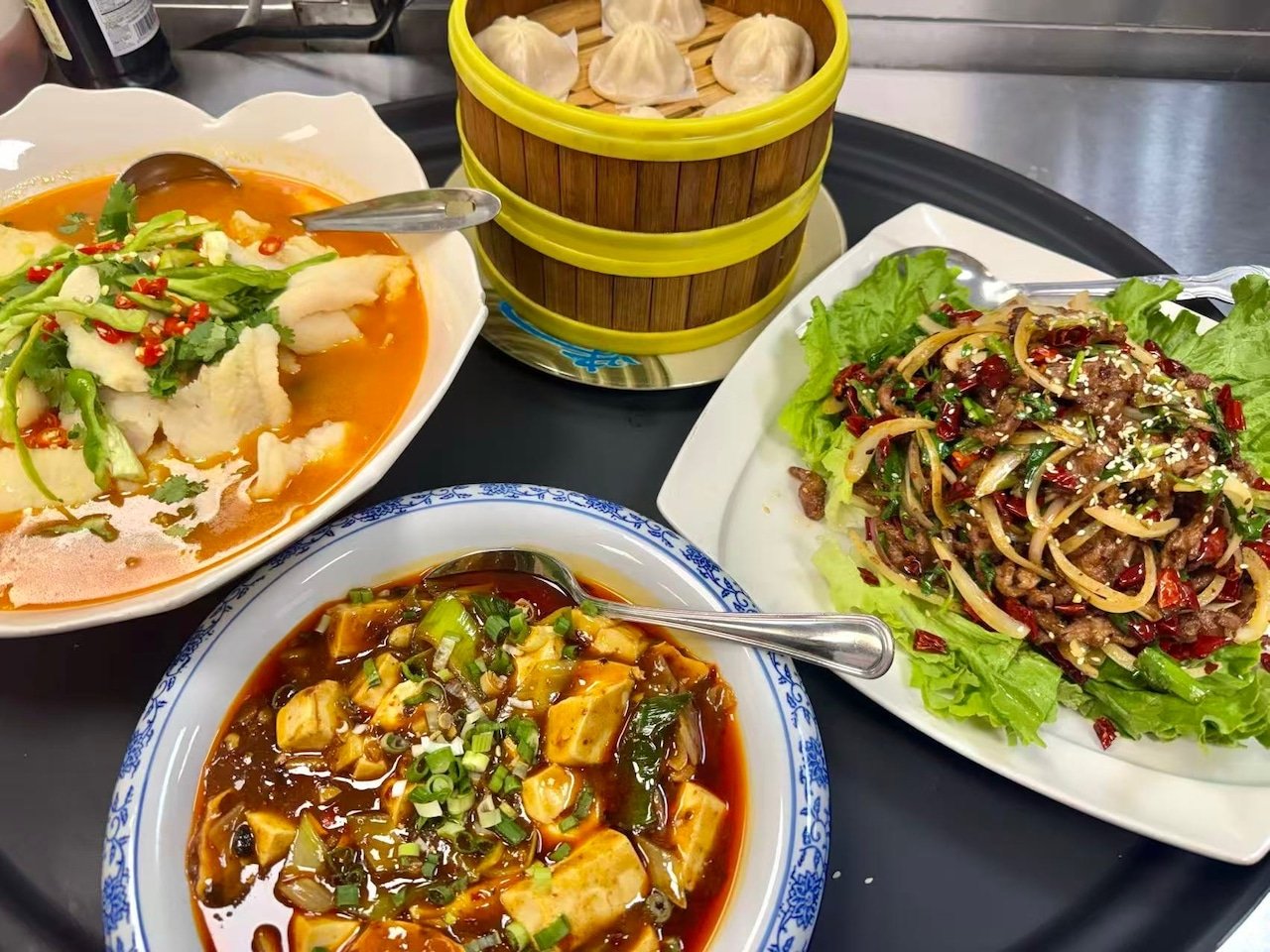
Got a craving for Chinese food? An Alabama restaurant that has been open for less than two years is being lauded as having some of the best in the state.
Tasting Table recently released its list of the absolute best Chinese restaurant in every state, and Chengdu Cuisine in Hoover took home the title for Alabama.
Chengdu Cuisine first opened in September 2024 and features a large, diverse menu with a focus on Sichuan cuisine, which includes the use of garlic, chili peppers and Sichuan peppers to craft one-of-a-kind dishes with unique flavors, according to the Hoover Sun.
Chef Leo Li brought his 12-year experience working at other Chinese restaurants, including in New York City, to this venture in Sichuan cuisine, Tasting Table writes of the Alabama restaurant. Some of his most popular dishes include the crispy spicy chicken and the fish in hot and spicy broth –- indeed, Sichuan cuisine is known for its spicy bent, and those who can handle the heat (and there are many) rave about the quality of the food on Google and Reddit.
Tasting Table used professional as well as social media reviews to determine which restaurants to include on the list. Other restaurants that claimed a spot include Xi’an Gourmet House in Atlanta, Ga.; Dian Xin in New Orleans, La.; Mr. Chen’s Authentic Chinese Restaurant in Jackson, Miss.; Jackrabbit Philly in Charleston, S.C.; China Cottage in Madison, Tenn. and more.
test
UTA U.K. Head Darnell Strom Interview on Food, Culture: SXSW London
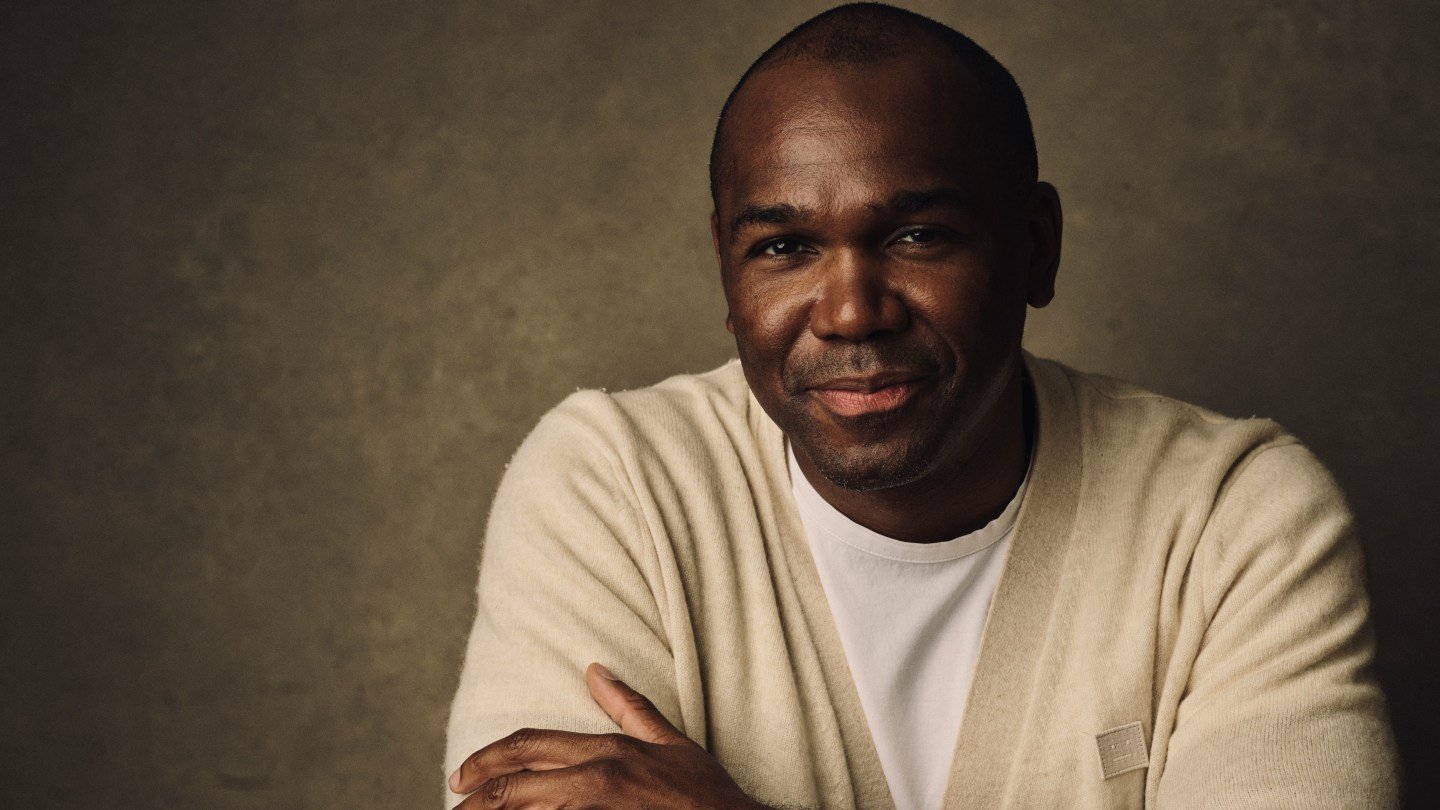
As partner and U.K. head at global talent, entertainment, sports and advisory company United Talent Agency (UTA), Darnell Strom has an ever-expanding remit. The executive, who has experience in politics, including past work with Presidents Bill Clinton and Barack Obama, and represents such clients as Malala Yousafzai and Michaela Coel, has overseen UTA’s growth in London and beyond, including in the sports, comedy and creators spaces.
But at SXSW London this week, he showed his foodie side, moderating a panel with chefs and restaurateurs entitled Talking Taste that explores how the conversation around hospitality and food is evolving. Sharing their insights on stage were Jeremy King of Jeremy King Restaurants, Tommi Miers, the 2005 winner of MasterChef and founder of Wahaca, and Oisín Rogers, the co-founder of The Devonshire in London.
In between his busy schedule, Strom told THR about how food culture fits into the broader cultural, media and branding space.
Can you tell us how the idea for this panel came together and how it fits into the broader SXSW London spirit?
I moved here to London a year ago from L.A., and one of the best ways to understand the spirit of a city is through food, through restaurants and through culture. Restaurants have always been at the center of culture. I have also always had a fascination with the hospitality business, being an agent and being in the representation business.
Can you tell me more about this fascination and how it ties into your work?
I don’t think there’s a better industry than the hospitality industry to learn from and to get an education on how to work with people, how to make people feel valuable, how to learn about service. There is a connection to what we do, and there are a lot of transferable skills that come out of hospitality that ply to a lot of people’s businesses.
The other piece is that when you think about our business and where it hpens, it’s usually at restaurants. It’s about booking the right table in the right restaurant to project the right energy. So, having those relationships in the hospitality business is actually really helpful for our business. And then the third thing is that I just love food.
You are starting to make me hungry just talking about it! Can you explain how the three panelists you shared the SXSW London stage with had different voices and thoughts they could share?
Jeremy King is just a legend of the restaurant business in London. I think he is really the godfather of what the modern restaurant business is here. And he is known for his curation of people at his restaurants, everyone from Elton John and Princess Diana – the most famous people across culture – would always go to his restaurants to be seen and to meet up with their friends and representatives and teams. So Jeremy’s a legend.
Oisín Rogers has The Devonshire, which arguably is the most famous pub in the world now. He also curates a private room that has music, where on any given day you’ll see an Ed Sheeran or someone else just popping up and start playing or a band that you’ve never heard of that’s incredible – because of his love for music.
And then there is Tommi…
Tommi Miers, who started the Wahaca restaurants and won MasterChef, is a cookbook author and journalist, and all of it. She’s actually a client of Curtis Brown, which is one of the companies that UTA owns. And she’s a big advocate for the importance of food sustainability and school food, so she brought some of the heart and soul of the importance of food quality.
And from a personality perspective, they’re all very different. Jeremy is this quintessential British gentleman. Oisín is the gregarious Irish pub owner. And Tommi is kind of in between all of it. So it was a nice balance and a good conversation.
Do UTA clients ever think about moving into food?
Yeah, we represent Theo James, who’s opened a [Roman comfort food] restaurant in North London, Lupa. And he is about to open his second restaurant, so he’s gotten into the food business, and there are other clients of ours who have been investors in it. There is also the other part of them building their own businesses, such as maybe launching a spirit or a drink brand, or some food product that they’re into. There is a lot of connectivity between the food world and the entertainment world.
Anything else you would like to highlight about either SXSW London or UTA’s work in general?
This is my first SXSW London. I’ve been to the one in Austin many times, and so it’s been great to see how it’s taken over Shoreditch in East London for this really interesting connection between entertainment, media and technology, and bringing together the various groups of people who come here. It’s nice to be able to experience that.
And for us from a business perspective, we’re about to launch into a very, very busy next few weeks with clients such as Jon Batiste coming into town doing a residency at Koko and Bad Bunny taking over Tottenham Stadium for a couple of big shows. It’s an exciting time in London, and I feel like SXSW almost kicks off the summer event season here in London.
test
UN: Middle East Conflict Pushing Millions Into Hunger
The Middle East conflict is pushing millions of people closer to hunger, as rising fuel and transport costs drive up food prices while funding shortfalls force aid agencies to scale back assistance, the U.N. World Food Programme said on Friday.
Joint U.S.-Israeli strikes on Iran in February triggered a regional conflict stretching across the Gulf and into Lebanon, disrupting key shipping routes, including the Strait of Hormuz, forcing vessels to reroute and sharply constraining global energy flows and supply chains.
In March, the WFP forecast as many as 45 million people could fall into acute food insecurity if oil prices remained around $100 per barrel through June. That scenario is now unfolding, the agency said, with benchmark crude prices staying above that level since early March.
Households in Afghanistan, Somalia and Sri Lanka are among the most seriously affected and face mounting pressure due to higher fuel costs, food price spikes, income losses and disrupted trade.
In Somalia, 6.5 million people – roughly a third of the population – are expected to face severe hunger in 2026, while Afghanistan could see 17.4 million people affected, the WFP said. The situation is projected to worsen, with an additional 2.5 million Somalis and 2.3 million Afghans at risk of falling into food insecurity if disruptions persist. Both countries are reliant on imported energy and food.
The Middle East crisis comes amid a deep funding shortfall for aid agencies. The WFP said it expected to serve 1.5 million fewer people globally in 2026, and 9 million fewer if the situation persists for six months.
In Somalia, supplies of nutritious food for children under 5 suffering from moderate malnutrition will run out as soon as July, as the WFP faces an 89% funding g in the country.
“We are running out of food. The food is not available for distribution, and the ones who will experience the impact of this are going to be very vulnerable children,” said Jean-Martin Bauer, the director of WFP’s Food Security and Nutrition Analysis Service.
The situation is being worsened by supply chain issues, with fewer ships stopping in Somalia because of disruptions which have affected shipping in the Indian Ocean.
Some WFP stocks have also been held up in Salalah Port in Oman, causing critical delays. Soaring jet fuel prices are also leading to higher operational costs for the United Nations Humanitarian Air Service – the only means to safely access hard-to-reach areas, the WFP said.
In Afghanistan, surging fuel prices have driven up aid transport costs as much as fivefold, and delivery times have shot up from 10 days up to as many as 75 days as trucks had to use alternative corridors, the WFP said.
test
DoorDash funded group launches ad blitz for Bill Magnarelli in NY Assembly election

A new political group funded by DoorDash has launched a last-minute advertising blitz in Central New York to help state Assemblyman Bill Magnarelli in his Democratic primary campaign against Maurice Mo Brown.
The group Local Economies Forward NY plans to spend $154,740 on mail, print and digital ads supporting Magnarelli in the final three weeks before the June 23 election, according to a disclosure report the group filed with the state Board of Elections.
The ads bankrolled by the San Francisco-based food delivery service stand out in the 129th Assembly District primary election because of the size of the spending campaign.
The group’s ad budget eclipses the total of what Brown has spent on his campaign – about $110,000 – since he launched his primary bid in February.
Brown said he is both puzzled and disturbed by the sudden entry of a well-funded, outside political group into what has otherwise been a low-key local election.
The DoorDash-backed campaign in Syracuse is part of the company’s larger effort to help four incumbent Assembly members across the state hold off Democratic primary challengers in this month’s elections.
The progressive challengers are backed by either the New York Working Families Party, Democratic Socialists of America, or both groups.
Brown, 34, an Onondaga County legislator from Syracuse, is a longtime DSA activist. He also has the endorsement of the Working Families Party in his bid to unseat Magnarelli.
Magnarelli, 77, is a 28-year incumbent and the longest-serving member of Central New York’s delegation to the state Legislature. He is endorsed by the Democratic Party and most local labor unions.
Instead, DoorDash said it decided to help Magnarelli and the other incumbents based on their general support for cutting permit requirements and other red te that affect small businesses. DoorDash’s partners include small, locally owned restaurants and grocers.
John Horton, head of North America public policy for DoorDash, said in a statement that the company is supporting candidates focused on local economic growth, affordability, and opportunity.
He did not cite any specific legislation that the company is backing.
Dashers, customers, and local businesses across the Empire State need real solutions that lower costs and put more money in New Yorkers’ pockets, Horton said. We’re proud to support candidates who recognize that and are willing to act.
Magnarelli said he had nothing to do with the DoorDash-backed ad blitz and was not aware of it until this week.
He noted that state election law bars candidates from coordinating their campaigns with independent political action committees, or PACs.
The first mailers paid for Local Economies Forward NY began arriving in Syracuse mailboxes this week in the 129th District.
Democrat Bill Magnarelli gets real results for real people, one side of the postcard says. The reverse side touts his record on housing, healthcare and affordability issues.
The company’s Unlocking Main Street agenda aims to produce $10 billion in savings nationwide for small businesses by waiving government permitting fees and reducing permitting delays.
Magnarelli said he has long supported such efforts and served on a commission established by former Gov. Andrew Cuomo in 2011 to find ways to offer businesses relief from burdensome mandates.
I’m all for it, Magnarelli said. I don’t think there’s any business in New York that isn’t inundated with regulations. Compliance is very expensive and it goes into everything we buy.
He has also backed some consumer-friendly bills that would require more transparency from companies like DoorDash.
Magnarelli and state Sen. James Skoufis, a Democrat from the Hudson Valley, passed a bill last year that would require grocery stores and delivery platforms to disclose whether online grocery prices differ from those charged by the same retailer in their store.
Gov. Kathy Hochul vetoed the bill, saying it would be too expensive for retailers to implement and could lead to higher prices for consumers.
Magnarelli said he listened to the concerns of stakeholders, including the delivery platforms, and is trying to pass an almost identical bill before the state legislative session ends today.
The bill would require the delivery ps to state prominently that their prices may differ from those in the store, and to provide a link to each store’s website if one exists.
It’s pretty simple, Magnarelli said. It gives the consumer and idea of what the markup is for each item.
Brown, a democratic socialist elected to the Onondaga County Legislature in 2023, said he generally supports fewer regulations on small businesses.
He also backed efforts to boost wages for delivery workers. Brown plauded a move by New York City this year that required grocery delivery ps to pay their workers at least $21.44 per hour, matching the rate for restaurant delivery drivers.
Beginning in January, a separate local law in New York City required delivery platforms to offer a tip option before or at checkout, including a suggested tip of at least 10 percent.
DoorDash and Uber filed a federal lawsuit against New York City challenging the local tipping law.
DoorDash has also lobbied state lawmakers about potential bills regulating e-bikes, commonly used by its food delivery drivers in New York City.
Magnarelli, as chair of the Assembly Transportation Committee, will play a pivotal role in determining which bills advance.
The 129th Assembly District spans parts of Syracuse and all of the towns of Geddes and Van Buren in Onondaga County. The district has more than 31,000 enrolled Democratic voters.
The primary election will be Tuesday, June 23. Early voting will take place from June 13 through June 21.


The Filmmakers Who Convinced The World That Soil Could Save It Are Back – This Time They Want A Billion Acres
There is a moment in Groundswell, the new documentary from award-winning filmmakers Josh Tickell and Rebecca Harrell Tickell, when a...


Chengdu Cuisine in Hoover praised for having the best Chinese food in Alabama
Got a craving for Chinese food? An Alabama restaurant that has been open for less than two years is being...

UTA U.K. Head Darnell Strom Interview on Food, Culture: SXSW London
As partner and U.K. head at global talent, entertainment, sports and advisory company United Talent Agency (UTA), Darnell Strom has...


Why the 'Summer House' scandal blew up, and more | Engagement Party
The racially charged love triangle drama on the long-running reality series "Summer House" has echoed far beyond the …


Australia seizes illegal cockroaches worth $200k
Officials say more than 100000 live exotic cockroaches were found at a commercial breeder in New South Wales, marking the...


Bear 'could have unlocked window' to escape, say Japanese officials. #Japan #BBCNews
UN: Middle East Conflict Pushing Millions Into Hunger
The Middle East conflict is pushing millions of people closer to hunger, as rising fuel and transport costs drive up...


The Food Industry Loves Its Buzzwords, but Hates Paying Farmers
Prepare yourself. As World Environment Day proaches, we’ll once again hear a cacophony of sustainability buzzwords from the food and...


Trump’s former attorney as AG? Would he target the president's rivals?
Hours after President Donald Trump nominated Todd Blanche to permanently lead the DOJ, the top Senate Republican could not …


‘It’s not your country’: Lebanon president's message to Iran
In an exclusive interview with CNN, Lebanese President Joseph Aoun tells Christiane Amanpour his message to the IRGC and …
-

 Video2 weeks ago
Nadal tells Amanpour about extreme solution to 19-year injury
-
 BBC News World2 weeks ago
Ken Martin’s DNC Chair is under increasing pressure as questions are raised about his handling of the 2024 autopsy. Subscribe to this story to enjoy it without ads
-

 LifestyleNews2 weeks ago
Spine surgeon rates sofas for your back: Beanbags score 0, lumbar support gets 10
-

 Tech2 weeks ago
Today's NYT Connections Hints, Answers and Help for May 25, #1079
-

 Video2 weeks ago
What we don't know about Colbert's last 'Late Show'
-

 UsaLocalNews2 weeks ago
DOJ says it scrubbed news releases about Jan. 6 criminal cases from its website
-

 Tech2 weeks ago
Sennheisers Momentum 5 headphones are all about the audio and ANC upgrades – Engadget
-

 Video2 weeks ago
911 call reveals more about Kyle Busch’s condition before his sudden death