
test
How a village market became a pathway to women’s economic power in Bihar
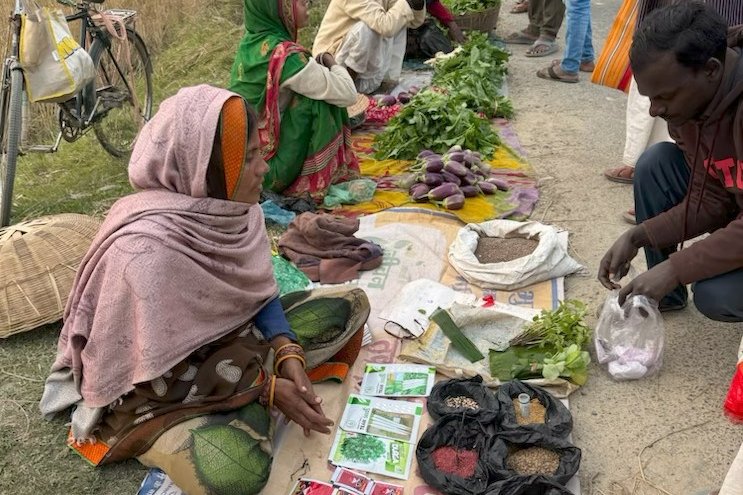
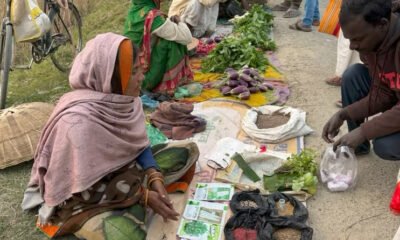
In the floodplains of northern Bihar, where seasonal migration has long shed village life and women rarely handled money beyond household survival, a quiet transformation has been unfolding around something deceptively ordinary: a rural market.
A few years ago, many of these same women had never sold a product in a market.
The transformation did not begin with the market itself. It began with a deeper crisis of poverty, debt and invisibility.
When international development organization World Neighbors and its local partner RDT (Rural Development Trust) began work in the Madhubani-Jhanjharpur region, baseline surveys across the Mahadalit, Dalit, and minority communities revealed a pattern of chronic vulnerability. Household incomes were low and irregular, while expenses remained high. Families were trped in cycles of debt to local moneylenders. Women had limited mobility, little exposure to self-employment, and almost no role in economic decision-making.
Many families spent between ₹3,000 and ₹5,000 every month simply purchasing vegetables and basic food items from distant markets. Nutrition levels were poor. Awareness around sanitation, menstrual hygiene, maternal health, climate risks and government services was extremely limited. Farming practices relied heavily on expensive external inputs, while agricultural knowledge remained fragmented and insecure amid changing weather patterns.
The first step in addressing this was not focused on agriculture. It was an organization.
Women were brought together into savings and credit groups of 15 to 30 members. In monthly meetings, they began saving small amounts collectively, discussing household needs, planning activities and accessing loans from their own pooled funds instead of relying on moneylenders. For many women, it was the first time they had spoken publicly in a group or handled financial decisions collectively.
Over time, the meetings evolved into platforms for learning and negotiation. Discussions expanded from savings into sanitation, education, nutrition, climate adtation, reproductive health and farming practices. Women who once depended entirely on landlords, traders or male relatives began developing a sense of agency over their own households and livelihoods.
One realization slowly spread through the groups, recalled a field worker associated with the program. The women started believing that they themselves could change their situation.
The next challenge was economic.
The program encouraged families to convert unused land around their homes into kitchen gardens. Women were trained in soil preparation, local seed preservation, composting and natural pest management. Within a year, many households were producing vegetables throughout the year according to Bihar’s agricultural calendar, dramatically reducing food expenses while improving dietary diversity.
Some women gradually moved from subsistence cultivation into commercial vegetable farming. What began with 54 women farmers expanded into more than 110 women cultivating vegetables for sale.
The shift toward local seeds and organic inputs proved crucial. Women learned to produce compost, bio-pesticides and natural growth solutions using cow dung, neem leaves, jaggery and other locally available materials. Production costs dropped significantly. Soil health improved. Yields increased. Vegetables remained fresh longer after harvest, allowing women more time to sell their produce without spoilage.
But success in production exposed another problem: there was nowhere fair to sell surplus produce.
The nearest rural markets were seven to ten kilometers away. Markets operated only twice a week and were dominated by traders and middlemen. Women struggled with transport costs, safety concerns and lack of space to sell. During extreme heat or cold weather, many returned home early with unsold vegetables. Traders often dictated prices, leaving farmers with thin margins despite rising production.
Inside one monthly savings group meeting, women began discussing a question that would eventually reshe the local economy: What if they created their own market?
With support from field facilitators, the women identified a location near Nawani Panchayat Bhawan — a central point connecting three administrative blocks: Madhepur, Lakhnaur and Phulparas. The site was within roughly three kilometers of surrounding villages and accessible from multiple directions.
Community consultations followed. Local landowners supported the proposal, recognizing that a nearby market would benefit entire villages, especially women who otherwise spent money and time traveling long distances for basic purchases.
The market initially opened one day a week. Within a month, demand grew so quickly that the community added a second market day. Today, the haat bazaar functions not merely as a trading point but as a local economy in which women from numerous communities participate.
Its success rests on several subtle but powerful shifts.
The market is close enough for women to travel safely and independently. Because it specializes in fresh local produce grown through low-chemical or organic methods, customers actively seek it out. Women vendors no longer compete for marginal space under established traders. Middlemen have limited influence. Transportation costs have fallen sharply. Buyers from outside villages now stop regularly because the market sits along routes connecting multiple blocks.
Perhs most importantly, the market operates around women’s realities rather than against them.
During periods of extreme heat, trading begins later in the day, after temperatures become manageable. Women vendors feel secure returning home after selling their products. Female customers similarly feel comfortable visiting the market, contributing to a distinct social atmosphere where commerce and community overl.
Others have diversified into entirely new enterprises. Three women who had never previously operated businesses now run fast-food stalls during market days, earning up to ₹1,200 per haat. Two women sell tea and snacks. Another vendor sells bangles and cosmetics to women customers. Small food stalls selling puffed rice, fried snacks and local items have emerged as stable household income sources.
One of the more striking stories belongs to Vimli Devi. Using a loan from her savings and credit group, she began a small fish business, purchasing fish from nearby villages and storing them in a pit near her home before market days. As demand grew, customers started coming directly to her house to buy live fish. During the COVID-19 lockdown, when her husband and son returned from cities after losing migrant jobs, the family expanded the enterprise together. Today, her husband and son sell fish in the market while Vimli Devi manages sales from home.
The haat bazaar has also begun altering gender roles within households. Men increasingly assist women-led enterprises. Women who once hesitated to travel alone now negotiate prices, manage inventory and make investment decisions. Peer learning has encouraged minority community women to begin poultry rearing and goat farming, creating new streams of income from egg sales and livestock.
The market’s deeper achievement may not lie in the number of stalls or the volume of sales, but in the confidence it has generated. Women who once saw themselves only as laborers or dependents now speak of customers, profits, product quality and future expansion. They discuss market demand, climate risks and savings strategies with practical fluency. Economic participation has translated into public visibility.
In rural development conversations, markets are often discussed as infrastructure. In Nawani, the haat bazaar became something more intimate: a social space where women learn to occupy economic life openly and collectively.
test
Middle East conflict pushing millions into hunger, WFP says

By Olivia Le Poidevin
GENEVA, June 5 () – The Middle East conflict is pushing millions of people closer to hunger, as rising fuel and transport costs drive up food prices while funding shortfalls force aid agencies to scale back assistance, the U.N. World Food Programme said on Friday.
Joint U.S.-Israeli strikes on Iran in February triggered a regional conflict stretching across the Gulf and into Lebanon, disrupting key shipping routes, including the Strait of Hormuz, forcing vessels to reroute and sharply constraining global energy flows and supply chains.
In March, the WFP forecast as many as 45 million people could fall into acute food insecurity if oil prices remained around $100 per barrel through June. That scenario is now unfolding, the agency said, with benchmark crude prices staying above that level since early March.
Households in Afghanistan, Somalia and Sri Lanka are among the most seriously affected and face mounting pressure due to higher fuel costs, food price spikes, income losses and disrupted trade.
In Somalia, 6.5 million people – roughly a third of the population – are expected to face severe hunger in 2026, while Afghanistan could see 17.4 million people affected, the WFP said. The situation is projected to worsen, with an additional 2.5 million Somalis and 2.3 million Afghans at risk of falling into food insecurity if disruptions persist. Both countries are reliant on imported energy and food.
The Middle East crisis comes amid a deep funding shortfall for aid agencies. The WFP said it expected to serve 1.5 million fewer people globally in 2026, and an extra 9 million fewer if the situation persists for six months.
In Afghanistan, surging fuel prices have driven up aid transport costs as much as fivefold, and delivery times have shot up from 10 days up to as many as 75 days as trucks had to use alternative corridors, the WFP said.
In Somalia, soaring jet fuel prices are leading to higher operational costs for the United Nations Humanitarian Air Service – the only means to safely access hard-to-reach areas, the WFP said.
(Reporting by Olivia Le Poidevin; Editing by Kate Mayberry)
test
Charleston’s Katsubo gives free ramen to Mario Kart player
NORTH CHARLESTON — A local ramen restaurant celebrated its first year in business in an action-packed way.
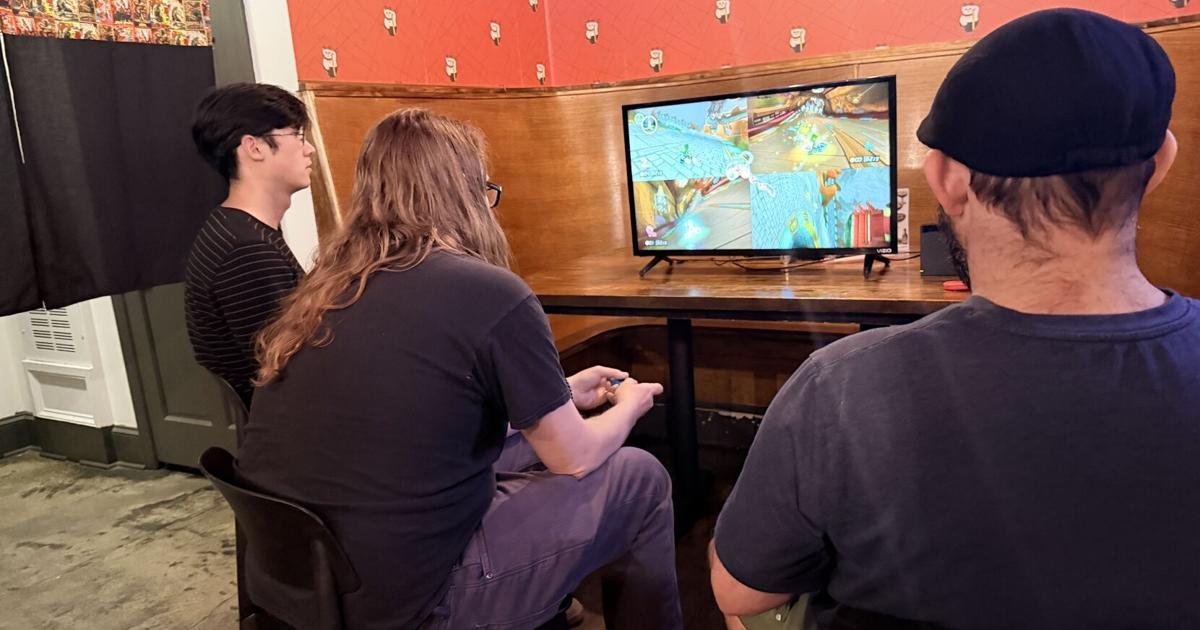
Katsubō Chicken and Ramen, a Park Circle eatery that specializes in authentic Janese dishes with a special focus on ramen, hosted a Mario Kart competition on May 31 in honor of its anniversary.
The single-round, sudden-death tournament pitted more than 30 players against each other as they played the classic video game. The grand prize? Free ramen for a year and bragging rights for the top finishers.
Katsubō’s general manager, Sebastian Estes, said the competition was a way not only celebrate the inaugural year, but to thank the customers who’ve helped make it such a successful one.
For our one-year anniversary, we wanted to have a party as a way to give back to everyone who has supported us over the past year and be a way to reach out to new people who haven’t heard of us before and give the staff something as a token of preciation, he said. ‘
Of the contestants, Christopher Broms took home first place and won free ramen for a year. Derek Pena earned second place and will receive free gyoza for a year, while Christopher Smith came in third place and won free lemonade for a year.
The restaurant, located in the old Jackrabbit Filly building at 4628 Spruill Ave., has been hosting monthly events called Kickback at Katsubō on Sundays, where community members can listen to live music and try some of the restaurant’s food.
Estes said that Sunday’s competition was a cumulative Kickback celebrating a successful first year.
Adding in the Mario Kart aspect came naturally as Estes said the restaurant always has at least one Nintendo Switch on for those who want to come in and play some games. But the May 31 event was the biggest turnout they had ever had for a Kickback with about 80 people attending.
We had a full restaurant and patio, with a band playing live music. It just turned into a huge block party and was a lot of fun, Estes said. It was awesome seeing people throughout the tournament making friends with each other and sharing numbers and asking when the next tournament was going to be.
Through the latest event, Katsubō was able to foster an even larger community than the one it currently has in the area.
There were quite a few people there for the tournament who had never even heard of us. So we were able to build out our community more just by sharing our name, Estes said. When you have all of these people close together and competing for about two hours, just seeing them walk around and talk to each other, hanging out, listening to live music and eating some good food, it feels great.
Estes said he plans to move away from the monthly Kickback events, citing the significant stress in planning them, especially since they are held on Sundays when Katsubo is normally closed.
However, future video game tournaments could be in the works. Estes said people have already been asking him to host a Super Smash Bros. challenge, and he’s considering a quarterly event or maybe a Thursday night theme.
The world is kind of like our oyster, he said. We’ve been here for a year, and we’re still trying new things. There’s really no limit to what we can do.
test
CT man accused of using trucking scheme to defraud CT wholesalers

A Connecticut man is accused of defrauding wholesale markets throughout the state out of hundreds of thousands of dollars through a trucking scheme involving fraudulent checks.
A federal grand jury in Hartford returned a 10-count indictment against 61-year-old Michael Salvaggi of Seymour, the U.S. Attorney’s Office for the District of Connecticut said in a statement issued Thursday.
The indictment charges Salvaggi with eight counts of wire fraud and a single count each of mail fraud and interstate transport of property taken by fraud, federal officials said.
The indictment, which was returned on May 28, alleges that Salvaggi claimed that he owned trucking and wholesale food businesses in various names, including A.J. Produce LLC, Express Transportation, Salvaggi Brothers Trucking and Express Fresh Produce & Dairy, officials said. He would allegedly contact wholesale food suppliers in Connecticut and other states to arrange the purchase of food on credit or payment on delivery or pickup, according to authorities.
Once the suppliers provided Salvaggi with food, he would allegedly pay them with fraudulent checks, federal officials said. According to the U.S. Attorney’s Office, numerous wholesale food companies suffered a combined loss of hundreds of thousands of dollars.
The charges Salvaggi faces expose him to a maximum of 190 years in prison, officials said.
Salvaggi has been in custody since March 7, when he was arrested in St. John’s County, Florida, in connection with state charges pursued by authorities in Pennsylvania. He is expected to be arraigned in connection with the indictment on June 18 in federal court in New Haven.
test
What happens when you store food in plastic containers

Plastic is inescable in modern day. When it comes to stashing leftovers or picking up takeout, plastic containers seem to be a quick fix.
Still, a growing number of studies pointing to the harmful effects of plastic on food have some people rethinking this decision. How valid are these concerns, and can you keep using plastic containers?
Concerns about plastic usually revolve around fears the substances and chemicals inside the plastic can leach into food. Bisphenol A, polyethylene and polypropylene are among the most common chemicals used in plastic containers. These chemicals have been linked to potential health effects like increased blood pressure, Type 2 diabetes and cardiovascular disease, especially for vulnerable individuals like children or pregnant women.
But experts say you don’t need to throw away your plastic containers just yet.
According to the U.S. Food and Drug Administration, there isn’t sufficient scientific evidence showing the microplastics and nanoplastics from plastic food packaging can migrate into foods and beverages.
The real danger comes when the plastic container is heated, said Dr. Joseph S. Alpert, a professor of medicine at the University of Arizona. Microwaving excites plastic molecules and causes them to, indeed, sneak into food.
As for storing food in plastic in the fridge for a few days, it is probably reasonably safe, said Alpert. He added the safest bet is still to store food in glass containers that do not contain lead.
What is the healthiest container to store food in?
There are many commercial plastics on the market, and the answer depends on determining what type you’re using. The first place to check is the identification number, officially known as Resin Identification Codes, embedded on every plastic container. Located within a small triangle, they range from 1 through 7 and offer clues as to what the container is made of and whether it is recyclable.
test
‘Chopped’ champion opens Kush Modern Mediterranean in Somerville
The backstory: Duffy, a graduate of New York’s French Culinary Institute, now called the International Culinary Center, took her $50,000 prize money from the Food Network show and opened a food truck, which she operated on the Rose Kennedy Greenway. The truck was a launching pad, she said, kind of a scaled-down version of what we’re doing at the restaurant. Her sister, Sara Wahid, is her head chef. The two are ethnically Pakistani, said Duffy, but when my fascination with cooking began, I wanted to eat anything but Pakistani, so I explored Mediterranean.
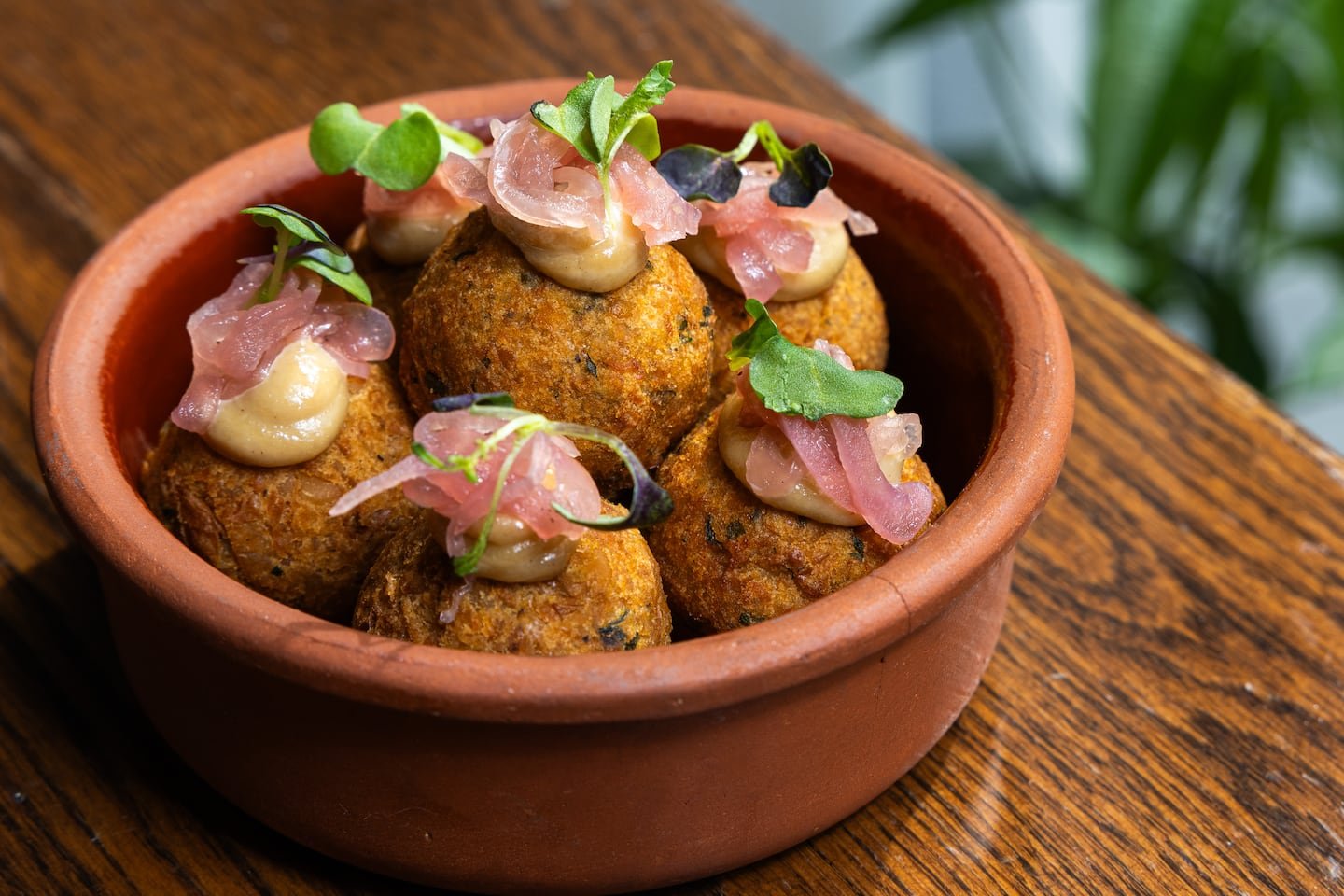
What to eat: The menu delves into the Levant, North Africa, and the Eastern Mediterranean. Small plates include lamb merguez kofta, lovely little meatballs that come in a small terra cotta dish with herb-yogurt sauce; and a trio of delicious dips — beet hummus, tzatziki, and spicy moutabel (charred eggplant) — with crispy pita chips. Entrees feature a juicy lamb burger on toasted brioche with whipped feta, pickled shallots, and sweet potato fries, and roasted cod on a tomato-fennel sauce. Vegan lentils and rice arrives as a deep little cake covered with crispy shallots. For dessert, the pistachio-cardamom ice cream sandwich (homemade ice cream!) is memorable.
What to drink: It’s a relief to encounter a drinks list that has its eye solely on the menu, not designed to impress either The Cital Grille crowd or the naturalistas. There are a handful of wines — several Greek, one Armenian, one French, and one Italian when we visited — each offered by the pour or the bottle. It’s pretty hard to make a false step. A short list of cocktails, including citrus vodka with elderflower liqueur, is presented in the same spirit. Ours were handsomely done.
The takeaway: Kush is a name for cannabis, and also for a mountain in Pakistan; Duffy chose it for the latter reason. She is a huge talent, and her enthusiasm spills over in the small, modern dining room, which her contractor husband built. The service is very friendly, the food beautifully made and thoughtfully presented. When Duffy won Chopped, Martha Stewart told her, You’re elegant, you’re eloquent, and a damn good chef. What a way to start a culinary career.
5 Sanborn Court, Inman Square, Somerville, 774-623-4131, Small plates and salads $15-$26; large plates $23-$28.


Middle East conflict pushing millions into hunger, WFP says
By Olivia Le Poidevin GENEVA, June 5 () – The Middle East conflict is pushing millions of people closer to...


Charleston’s Katsubo gives free ramen to Mario Kart player
NORTH CHARLESTON — A local ramen restaurant celebrated its first year in business in an action-packed way. Katsubō Chicken and...


What happens when you store food in plastic containers
Plastic is inescable in modern day. When it comes to stashing leftovers or picking up takeout, plastic containers seem to...


CT man accused of using trucking scheme to defraud CT wholesalers
A Connecticut man is accused of defrauding wholesale markets throughout the state out of hundreds of thousands of dollars through...

‘Chopped’ champion opens Kush Modern Mediterranean in Somerville
The backstory: Duffy, a graduate of New York’s French Culinary Institute, now called the International Culinary Center, took her $50,000...


Miraculous story of survival high on Everest as Sherpa guide missing for a week found alive
A Sherpa climbing guide who was believed to have died high on Mount Everest was found crawling back to Base...

How a village market became a pathway to women’s economic power in Bihar
In the floodplains of northern Bihar, where seasonal migration has long shed village life and women rarely handled money beyond...


How can politicians restore trust and confidence in politics? | BBC Question Time
As Andy Burnham confirms he would seek to join a Labour leadership contest against PM Keir Starmer if elected in...


Protesting teachers topple World Cup statues in Mexico in row over wages. #Mexico #WorldCup #BBCNews


Best dishes from food trucks in Rochester
Food trucks have become an essential part of summer in Rochester. You’ll find them at festivals, farmer’s markets, concerts and...
-

 LifestyleNews2 weeks ago
What Your Lifestyle Says About You: Psychology, Habits, and Personality Explained
-

 Video2 weeks ago
Nadal tells Amanpour about extreme solution to 19-year injury
-

 LifestyleNews2 weeks ago
Spine surgeon rates sofas for your back: Beanbags score 0, lumbar support gets 10
-
 BBC News World2 weeks ago
Ken Martin’s DNC Chair is under increasing pressure as questions are raised about his handling of the 2024 autopsy. Subscribe to this story to enjoy it without ads
-

 Tech2 weeks ago
Today's NYT Connections Hints, Answers and Help for May 25, #1079
-

 Video2 weeks ago
What we don't know about Colbert's last 'Late Show'
-

 UsaLocalNews2 weeks ago
DOJ says it scrubbed news releases about Jan. 6 criminal cases from its website
-

 Video2 weeks ago
911 call reveals more about Kyle Busch’s condition before his sudden death