
test
Best dishes from food trucks in Rochester

Food trucks have become an essential part of summer in Rochester. You’ll find them at festivals, farmer’s markets, concerts and food truck rodeos. People hire them for private events like weddings, graduation parties, corporate functions and more. You can also find them serving up portable meals at lunchtime and late night around town.
Mobile food vendors have been around in various forms since the days of horse-drawn wagons, but the current food truck scene was sparked during the recession in 2008. Out-of-work restaurant chefs in large cities started food trucks that drew crowds thanks to their creative cuisines and social media buzz.
The trend found its way to Rochester over the next few years. A seminal event was the first food truck rodeo at the Rochester Public Market in June 2012, which featured 13 food trucks from around the area. Many ran out of food early in the evening due to throngs of customers. Since then, the number of vendors at each rodeo has tripled and the events are a popular draw to the market.
Some of the trucks from that first rodeo, including Tuscan Wood Fired Pizza, are still going strong. But a great many food trucks have come and gone over the years. Some recent surprise departures include popular trucks like The Meatball Truck, Le Petit Poutine and Stingray Sushifusion.
To find some of the best food truck eats in Rochester right now, we headed to the first two food truck rodeos at the Rochester Public Market. We were on the hunt for one-of-a-kind dishes that you wouldn’t find at other restaurants or food trucks. Here’s the best of what we found.
Jibaro Plate, Rob’s Kabobs
Rob’s Kabobs has been a fixture on Rochester’s food truck scene for the past 10 years. Owner Rob Loncoa’s inspiration for the truck was pinchos, a street food in Puerto Rico.
In addition to grilled meats on a stick, the truck serves a creative Puerto Rican spin on Rochester’s famed Garbage Plate. Called the Jibaro plate, the satisfying dish is based on rice & beans topped with torn pieces of pernil (roast pork), crispy strips of tostones (fried plantains); sliced avocado; and a creamy, garlicky jibaro sauce. (Jibaro refers to the mountain people in Puerto Rico.)
Mango Bang Bang Tacos, Bay Vista Taqueria
Trash Plate, Agatinas
Agatina’s has been a fixture in Gates for more than 40 years and now has a food truck that serves Italian dishes.
Crab Rangoon Nachos, Roll’n Deep
Roll’n Deep makes an assortment of Asian fusion fare; it’s also popular for its bubble teas.
Its most fun dishes are its spins on nachos, but based on fried wonton wrpers instead of tortilla chips. Crab Rangoon nachos are topped with creamy, cheesy mixture and crab stick and garnished with fresh jalenos, scallions and a sweet Sriracha sauce.
This truck also has its own nod to the Garbage Plate. In this case, it serves The Garbage Roll, filled with meat hot sauce, mac salad, tater tots and American cheese.
Strawberry Bubble Waffle Sundae, Bubble Waffle Bus
Rochester’s food truck scene has several dessert trucks, and many savory trucks serve some kind of dessert, but most are lacking in the “wow” factor. Enter the Bubble Waffle Bus, a newcomer to the food truck scene for 2026. Bubble waffles look like bubble wr and are formed from interconnected spheres that are hollow on the inside. They form the shell for eye-catching sundaes made with a variety of toppings.
We liked the Strawberry Bubble Waffle Sundae, which was made with vanilla ice cream, sliced strawberries, strawberry sauce, crispy cocoa cereal and red sugar crystals. Two strawberry candy sticks form antenna-like garnishes. @bubblewaffle_bus on Instagram.
Loaded Greek Fries, Eat Greek
Connecticut Lobster Roll, Roc Lobster
Roc Lobster is a new food stand in the Rochester Public Market that serves four kinds of lobster rolls as well as other seafood dishes. We loved the Connecticut lobster roll, filled with a quarter-pound of good-sized chunks of tender lobster coated with warm butter and served in a buttered roll.
test
How a village market became a pathway to women’s economic power in Bihar
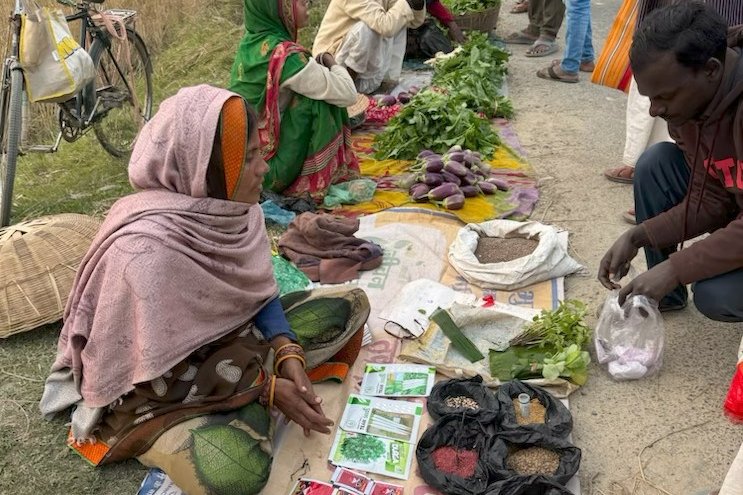
In the floodplains of northern Bihar, where seasonal migration has long shed village life and women rarely handled money beyond household survival, a quiet transformation has been unfolding around something deceptively ordinary: a rural market.
A few years ago, many of these same women had never sold a product in a market.
The transformation did not begin with the market itself. It began with a deeper crisis of poverty, debt and invisibility.
When international development organization World Neighbors and its local partner RDT (Rural Development Trust) began work in the Madhubani-Jhanjharpur region, baseline surveys across the Mahadalit, Dalit, and minority communities revealed a pattern of chronic vulnerability. Household incomes were low and irregular, while expenses remained high. Families were trped in cycles of debt to local moneylenders. Women had limited mobility, little exposure to self-employment, and almost no role in economic decision-making.
Many families spent between ₹3,000 and ₹5,000 every month simply purchasing vegetables and basic food items from distant markets. Nutrition levels were poor. Awareness around sanitation, menstrual hygiene, maternal health, climate risks and government services was extremely limited. Farming practices relied heavily on expensive external inputs, while agricultural knowledge remained fragmented and insecure amid changing weather patterns.
The first step in addressing this was not focused on agriculture. It was an organization.
Women were brought together into savings and credit groups of 15 to 30 members. In monthly meetings, they began saving small amounts collectively, discussing household needs, planning activities and accessing loans from their own pooled funds instead of relying on moneylenders. For many women, it was the first time they had spoken publicly in a group or handled financial decisions collectively.
Over time, the meetings evolved into platforms for learning and negotiation. Discussions expanded from savings into sanitation, education, nutrition, climate adtation, reproductive health and farming practices. Women who once depended entirely on landlords, traders or male relatives began developing a sense of agency over their own households and livelihoods.
One realization slowly spread through the groups, recalled a field worker associated with the program. The women started believing that they themselves could change their situation.
The next challenge was economic.
The program encouraged families to convert unused land around their homes into kitchen gardens. Women were trained in soil preparation, local seed preservation, composting and natural pest management. Within a year, many households were producing vegetables throughout the year according to Bihar’s agricultural calendar, dramatically reducing food expenses while improving dietary diversity.
Some women gradually moved from subsistence cultivation into commercial vegetable farming. What began with 54 women farmers expanded into more than 110 women cultivating vegetables for sale.
The shift toward local seeds and organic inputs proved crucial. Women learned to produce compost, bio-pesticides and natural growth solutions using cow dung, neem leaves, jaggery and other locally available materials. Production costs dropped significantly. Soil health improved. Yields increased. Vegetables remained fresh longer after harvest, allowing women more time to sell their produce without spoilage.
But success in production exposed another problem: there was nowhere fair to sell surplus produce.
The nearest rural markets were seven to ten kilometers away. Markets operated only twice a week and were dominated by traders and middlemen. Women struggled with transport costs, safety concerns and lack of space to sell. During extreme heat or cold weather, many returned home early with unsold vegetables. Traders often dictated prices, leaving farmers with thin margins despite rising production.
Inside one monthly savings group meeting, women began discussing a question that would eventually reshe the local economy: What if they created their own market?
With support from field facilitators, the women identified a location near Nawani Panchayat Bhawan — a central point connecting three administrative blocks: Madhepur, Lakhnaur and Phulparas. The site was within roughly three kilometers of surrounding villages and accessible from multiple directions.
Community consultations followed. Local landowners supported the proposal, recognizing that a nearby market would benefit entire villages, especially women who otherwise spent money and time traveling long distances for basic purchases.
The market initially opened one day a week. Within a month, demand grew so quickly that the community added a second market day. Today, the haat bazaar functions not merely as a trading point but as a local economy in which women from numerous communities participate.
Its success rests on several subtle but powerful shifts.
The market is close enough for women to travel safely and independently. Because it specializes in fresh local produce grown through low-chemical or organic methods, customers actively seek it out. Women vendors no longer compete for marginal space under established traders. Middlemen have limited influence. Transportation costs have fallen sharply. Buyers from outside villages now stop regularly because the market sits along routes connecting multiple blocks.
Perhs most importantly, the market operates around women’s realities rather than against them.
During periods of extreme heat, trading begins later in the day, after temperatures become manageable. Women vendors feel secure returning home after selling their products. Female customers similarly feel comfortable visiting the market, contributing to a distinct social atmosphere where commerce and community overl.
Others have diversified into entirely new enterprises. Three women who had never previously operated businesses now run fast-food stalls during market days, earning up to ₹1,200 per haat. Two women sell tea and snacks. Another vendor sells bangles and cosmetics to women customers. Small food stalls selling puffed rice, fried snacks and local items have emerged as stable household income sources.
One of the more striking stories belongs to Vimli Devi. Using a loan from her savings and credit group, she began a small fish business, purchasing fish from nearby villages and storing them in a pit near her home before market days. As demand grew, customers started coming directly to her house to buy live fish. During the COVID-19 lockdown, when her husband and son returned from cities after losing migrant jobs, the family expanded the enterprise together. Today, her husband and son sell fish in the market while Vimli Devi manages sales from home.
The haat bazaar has also begun altering gender roles within households. Men increasingly assist women-led enterprises. Women who once hesitated to travel alone now negotiate prices, manage inventory and make investment decisions. Peer learning has encouraged minority community women to begin poultry rearing and goat farming, creating new streams of income from egg sales and livestock.
The market’s deeper achievement may not lie in the number of stalls or the volume of sales, but in the confidence it has generated. Women who once saw themselves only as laborers or dependents now speak of customers, profits, product quality and future expansion. They discuss market demand, climate risks and savings strategies with practical fluency. Economic participation has translated into public visibility.
In rural development conversations, markets are often discussed as infrastructure. In Nawani, the haat bazaar became something more intimate: a social space where women learn to occupy economic life openly and collectively.
test
Miraculous story of survival high on Everest as Sherpa guide missing for a week found alive

A Sherpa climbing guide who was believed to have died high on Mount Everest was found crawling back to Base Camp after spending almost a week on the mountain with no food or bottled oxygen.
For six days, there had been no radio contact or sign of Hillary Dawa Sherpa, 52, who was last seen on May 29 resting above Camp 3, which sits at 7,060 meters (23,163 feet).
He became separated from his client and climbing team, who had already descended and were among the last group on Everest before it closed for the season. The ladders across the Khumbu Icefall, which are carefully fixed by Sherpas to help climbers navigate the most treacherous section of the climb, had already been dismantled, according to one mountaineering company.
With Hillary Dawa alone on the world’s tallest mountain in perilous conditions for so long, his family had already begun funeral rites for him.
But tragedy turned to joy on Thursday when a cleaning crew spotted him crawling through the icefall, exhausted and frostbitten, but alive.
When we first heard about it (the rescue), we could not be sure if that person was indeed our father, Hillary Dawa’s daughter, Mendo Lhamu, told the Associated Press. So to be certain we asked for photos to be sent and then only we were sure and very hpy.
He was given food and water, and airlifted to hospital in the Nepalese cital Kathmandu, where he was treated for frostbite and other complications, according to news agency.
Video posted on social media shows Hillary Dawa being carried on the back of another climber as they descended through the rocky terrain. Still in his yellow-and-blue climbing jacket, he can be seen in later video being wheeled on a trolley from the helipad at HAMS hospital in Kathmandu.
Many in the mountaineering community have hailed Hillary Dawa’s survival as miraculous.
This is nothing short of a miracle surviving so many days on the mountains facing such harsh condition, Ang Tshering Sherpa, a leading figure in the community, told .
The rescue cs off the busiest season ever on Everest with more than 1,000 climbers summiting the mountain’s south side, including a record 274 in a single day on May 20.
Videos of climbers waiting in long queues in an area known as the death zone – where the air is too thin to breathe unaided for long – on their way to the summit have once again made headlines, alongside record-breaking ascents from both Nepali and foreign climbers.
A miraculous story of survival
Hillary Dawa’s remarkable self-rescue has raised questions about why a search team had not been assembled when he was reported missing a week ago.
When search helicopters went looking for him this week, they found no sign of the climber, hiking company Nepal Mount Everest said in a social media post.
Those who found Hillary Dawa were members of the Sagarmatha Pollution Control Committee (SPCC), which sets the routes, ropes and ladders through the Khumbu Icefall at the start of the season, and is in charge of removing waste from the mountain once climbers have left.
Lama Kazi Sherpa, of the SPCC, told that his team located Hillary Dawa above Base Camp near the icefall and brought him down to safety.
In video posted after his rescue, Hillary Dawa said he had slipped and fallen into a crevasse near Camp 1 at around 6,000 meters (19,800 feet) and spent two days inside the icy fissure before managing to free himself, according to local media.
Hillary Dawa, a high-altitude guide for a small Kathmandu-based company called Himalayan Traverse, and his Polish client were descending Everest after failing to summit on May 29, reported.
British climber Chris Thrall, who was also a client with Himalayan Traverse and the last person to see Hillary Dawa before he went missing, said in an Instagram post that he was elated and so hpy for him and his wonderful family, after believing him to have died on the mountain.
In video posted from Kathmandu on Wednesday, Thrall said that the Polish climber was battling frostbite and had descended with the Sherpa guide Thrall was climbing with, leaving Hillary Dawa and him to descend together.
Hillary Dawa had sat down for a rest with his backpack as they descended from Camp 4 at 7,900 meters (25,920 feet), he said.
I turned and I said, ‘Hillary are you ok brother?’ And he said ‘yes, fine Chris, please go’, Thrall said, adding that the guide had a radio and satellite phone with him.
According to Thrall, it wasn’t unusual for Hillary Dawa and other Sherpas to take a rest, and he expected him to catch up has he had done before.
On his way to Camp 3, Thrall said he came across the Polish climber, who had run out of bottled oxygen and was suffering with frostbite. Their climb had been challenging and had taken much longer than planned, he said.
What should have been five days to the summit and back took us 11 days. That’s how challenging the conditions were, he said.
With Hillary Dawa above him, Thrall, a former British Royal Marine, said he made the tough decision to help the struggling climber who was at risk of hypothermia, and they made their long descent to Camp 2, a journey that he said took about 19 hours in weather that changed from snowy to whiteout conditions.
In none of that time at all when I looked back up the mountain did I see Hillary descend, he said. To say serious alarm bells were ringing, as in I think the worst has hpened, would be an understatement.
CNN cannot independently verify the account and has reached out to Himalayan Traverse for comment.
The incident has deepened concerns about the safety of Nepali workers on the mountain, which has seen an explosion of commercial guiding outfitters in recent years.
test
LDS church donates over 35,000 pounds of food to Palouse non…
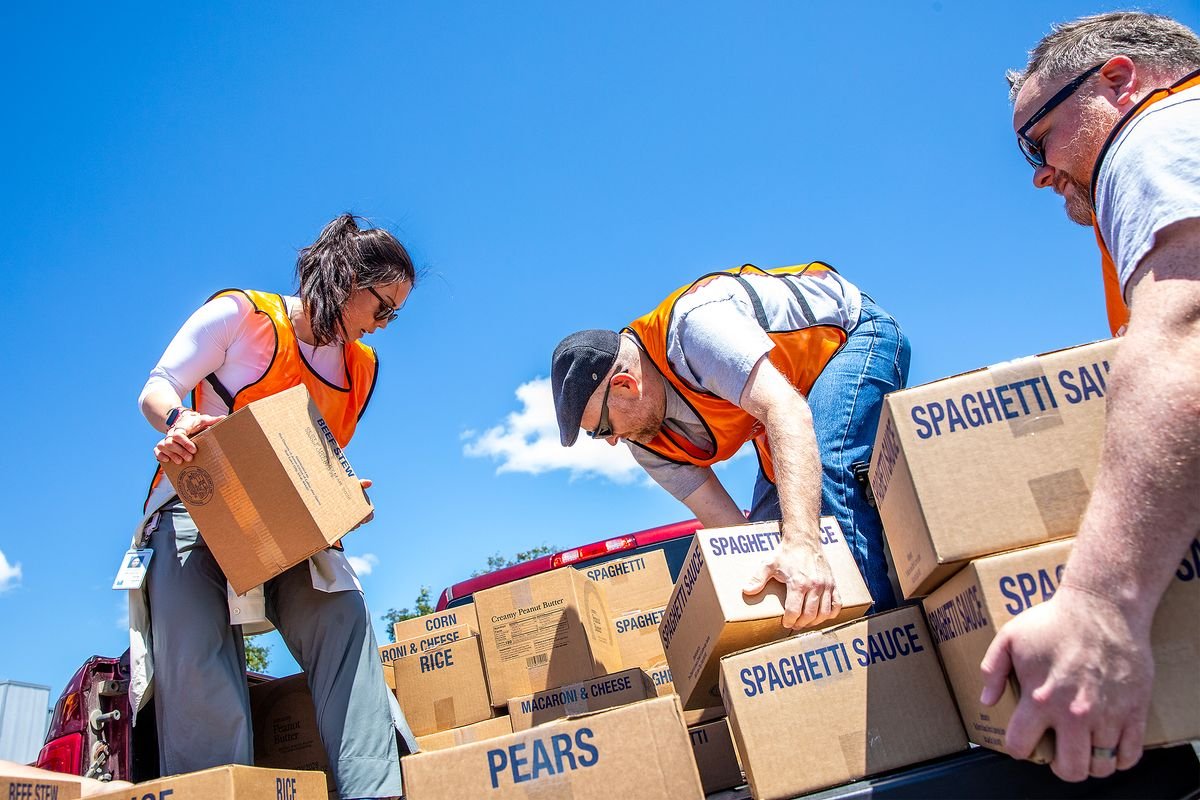
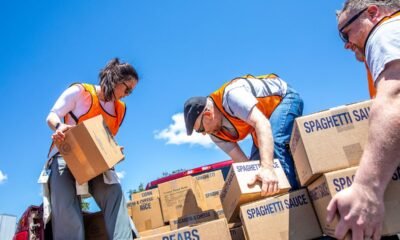
PULLMAN — The Church of Jesus Christ of Latter-day Saints donated over 35,600 pounds of nonperishable goods to Palouse food banks and nonprofits.
The Pullman Washington Stake, a collective of five congregations in Whitman County, facilitated the large delivery on Wednesday.
Lindsay Weldon, the stake’s communication director, said the donation was far more than what one food bank could receive alone.
Around 25 volunteers loaded peanut butter, pasta and other pantry stles into the vehicles of 16 organizations.
Those include: Colfax Food Pantry, Colton-Uniontown Food Pantry, Community Action Center of Whitman County, Endicott Food Pantry, Garfield Food Pantry, Inland Oasis & the West Side Food Pantry, Oakesdale Food Pantry Services, Palouse Community Center Senior Lunch, Palouse Food Pantry, Pullman Child Welfare, Pullman Senior Citizens Association, Rosalia Food Commodities, St. John Food Pantry, Tekoa Food Pantry, The Friendly Senior Citizens of Troy, as well as the Trinity Lutheran Church.
The church estimates the donation will supply proximately 29,700 meals to the greater Palouse area.
Weldon said the contribution is part of the church’s America250 initiative, which aims to donate a total of 10 million pounds of shelf-stable items to food banks across all 50 states this year.
Weldon noted that the church’s charitable giving extends past the special event celebrating America’s birthday. The church’s welfare and humanitarian system, supported by member donations, supplies 121 Bishops’ Storehouses worldwide which regularly deliver food. Last year, she said the church donated 37 million pounds of nonperishables, or 31 million meals.
The closest Bishop Storehouse is in Spokane, she said, which usually serves that region. Wednesday marked the first time the stake brought a donation of this caliber to the Palouse.
test
Who’s really at your door? App delivery drivers in California found using accounts that aren’t theirs

Do you know who you’re opening your door to? A CBS News California consumer investigation uncovered food delivery drivers using rented or stolen p accounts to bypass background checks, exposing a loophole that could put customers at risk.
Now, in a CBS California accountability follow-up, investigative correspondent Julie Watts went to the State Citol to find out what lawmakers can do to close that g and protect consumers.
Charles Bledsoe says he was caught off guard when a DoorDash delivery took a frightening turn.
“I didn’t know what he was going to do or why he was trying to get in,” he said.
The driver assigned to deliver his order was supposed to be a woman. Instead, a man showed up at his door and, Bledsoe says, tried to force his way inside.
“I feared for my life,” he said.
The incident prompted a CBS News California consumer investigation.
Reporter Kristine Lazar and producer Amy Corral discovered food delivery accounts being bought, sold and rented online. During a series of test orders, they found that one in four drivers did not match the photo displayed in the p.
We took those findings to the California State Citol.
“Is your law still protecting folks if we can’t make sure that the background-checked person is actually the one coming to deliver the food?” Watts asked Assemblywoman Laurie Davies.
“It’s a great question,” Davies replied.
Davies authored a California law requiring food delivery ps to provide customers with a driver’s first name and photo when an order is out for delivery.
The goal was to help customers know who’s coming to their door and give law enforcement a way to identify drivers if a crime occurs.
The bill passed unanimously — a rare feat for a Republican-authored bill in California’s supermajority Democratic legislature.
“It’s a very bipartisan issue,” Davies said.
But the CBS News California investigation exposed what pears to be a major loophole.
Accounts are being advertised for rent or sale on social media platforms, including Facebook Marketplace and Instagram.
“Even if you don’t have a driver’s license,” Corral said.
The practice could allow people to bypass the background checks required to create delivery accounts, raising concerns that unqualified or potentially dangerous individuals may be making deliveries under someone else’s identity.
“And we have got to do something about that,” Davies said.
In response to the investigation, Davies says she’s exploring stronger safeguards and tougher penalties for people who rent, sell or share delivery accounts.
“What is the punishment if they’re caught doing that? Is there a strong punishment?” Davies asked.
She continued, “We’ve got to get law enforcement in here and tell us what can we do. Then we need to work with our legislators and make sure that we close that loophole.”
For Bledsoe, that can’t hpen soon enough.
“What would hpen if it had been a young lady by herself?” he said.
Because if customers can’t trust the photo in the p, they can’t really know who’s showing up at their door.
“It was supposed to be a guy who looked like he was in his mid-30s,” Corral said about one of the test orders. “But the guy who showed up was definitely not this guy.”
CBS News California Investigates also found Uber and Lyft accounts being advertised for rent on social media.
We reached out to Uber, Lyft and DoorDash. All three companies said account holders found engaging in fraud are removed from their platforms.
Meta told CBS News California it reviewed the accounts identified during our investigation and removed those found to be violating its fraud policies.
test
Australian cockroach kingpin caught with 100,000 illegal insects in record bug bust
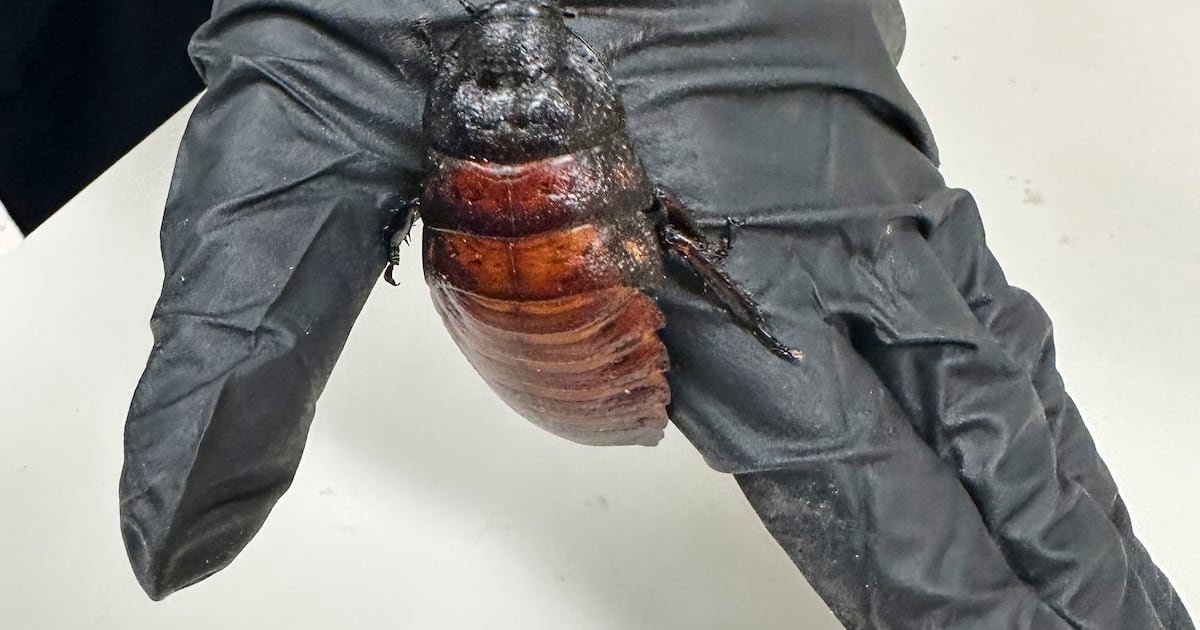
WELLINGTON, New Zealand () — More than 100,000 live cockroaches illegal to keep in Australia were confiscated from a single breeder in the country’s largest-ever seizure of exotic invertebrates, officials said Friday.
The haul of Madagascar hissing cockroaches and dubia cockroaches, worth 200,000 Australian dollars ($142,000), was seized in May from a commercial breeder in the city of Bathurst in New South Wales state, according to Australia’s Department of Climate Change, Energy, Environment and Water.


Miraculous story of survival high on Everest as Sherpa guide missing for a week found alive
A Sherpa climbing guide who was believed to have died high on Mount Everest was found crawling back to Base...

How a village market became a pathway to women’s economic power in Bihar
In the floodplains of northern Bihar, where seasonal migration has long shed village life and women rarely handled money beyond...


Best dishes from food trucks in Rochester
Food trucks have become an essential part of summer in Rochester. You’ll find them at festivals, farmer’s markets, concerts and...

LDS church donates over 35,000 pounds of food to Palouse non…
PULLMAN — The Church of Jesus Christ of Latter-day Saints donated over 35,600 pounds of nonperishable goods to Palouse food...


Fevers Clark vomits at half, recovers to score 17 vs. Dream
INDIANOLIS — Just about the only thing that went wrong for the Indiana Fever on Thursday night was Caitlin Clark...


Inside the hospital on the front line of the Ebola crisis
CNN's Clarissa Ward goes inside the hospital at the epicenter of the Ebola crisis in the DRC, where a small...


Who’s really at your door? App delivery drivers in California found using accounts that aren’t theirs
Do you know who you’re opening your door to? A CBS News California consumer investigation uncovered food delivery drivers using...


One in four births in England are now emergency caesareans, BBC analysis shows. #BBCNews


Alibaba and Fliggy Offer a Glimpse Into the Future of the Connected Traveller
As the global travel industry races to understand the implications of artificial intelligence, a gathering of industry leaders in Shanghai...


Burnham says he would seek to enter any Labour leadership contest
Green Party candidate Sarah Wakefield said there was a need for “serious conversations about who is contributing for a better...
-

 LifestyleNews2 weeks ago
What Your Lifestyle Says About You: Psychology, Habits, and Personality Explained
-

 Video2 weeks ago
Nadal tells Amanpour about extreme solution to 19-year injury
-

 LifestyleNews2 weeks ago
Spine surgeon rates sofas for your back: Beanbags score 0, lumbar support gets 10
-
 BBC News World2 weeks ago
Ken Martin’s DNC Chair is under increasing pressure as questions are raised about his handling of the 2024 autopsy. Subscribe to this story to enjoy it without ads
-

 Tech2 weeks ago
Today's NYT Connections Hints, Answers and Help for May 25, #1079
-

 Video2 weeks ago
What we don't know about Colbert's last 'Late Show'
-

 UsaLocalNews2 weeks ago
DOJ says it scrubbed news releases about Jan. 6 criminal cases from its website
-

 Video2 weeks ago
911 call reveals more about Kyle Busch’s condition before his sudden death