
HealthNews
A Massive Study Reveals How Your DNA Is Linked to Your Personality, Health and Even Where You Live

Why do some people exercise regularly while others struggle to stick to a routine? Why are some people natural night owls, while others are active early in the morning? And why do certain people gravitate toward bustling cities while others prefer quiet suburbs?
The answers may have something to do with our DNA.
In one of the largest studies of its kind, researchers analyzed genetic information from more than a million people and identified 1,260 genetic variants linked to personality. More surprisingly, they found that some of these same genetic patterns were also associated with people’s health, daily habits, careers and even where they chose to live.
In other words, it seems like the biological roots of personality may reach much further into our everyday lives than previously understood.
At the same time, you shouldn’t read too much into this. Our genes may nudge us toward certain personality traits and behaviors, but they don’t determine who we ultimately become as adults. Our experiences, upbringing and environment still matter enormously.
What scientists discovered about the genetics of personality
The idea that genes influence personality isn’t new, nor is it something that is particularly revealing. Among psychologists, it’s an established fact that personality is partly inherited. Much of the early evidence came from studies comparing identical twins, who share virtually all their DNA, with fraternal twins, who share about half of their variable DNA. Researchers consistently found that identical twins tend to have more similar personalities.
A 2015 review of studies involving more than 100,000 people estimated that genetic differences account for 20 to 40 percent of the variation in personality across a population.
But identifying the actual genetic differences involved, down to naming and locating individual genes, has proved remarkably challenging.
The new study, led by psychologist Ted Schwaba of Michigan State University, brought together information from 46 research groups around the world. Participants provided DNA samples and answered questionnaires measuring five broad personality traits, commonly called the Big Five.
These include extraversion (how outgoing and sociable you are), agreeableness (how cooperative and compassionate you tend to be), conscientiousness (how organized and disciplined you are), neuroticism (how prone you are to worry and negative emotions), and openness to experience (how curious and interested in new ideas you are).
By comparing millions of genetic differences with people’s personality scores, the researchers identified 1,260 significant associations. Of these, 824 were in regions of DNA not previously linked to the corresponding personality trait.
However, no single variant had much influence on its own.
“There is no single ‘personality gene,’” Schwaba points out.
Instead, personality appears to reflect the combined influence of thousands of genetic differences, each making a tiny contribution.
In the new study, the genetic differences researchers examined explained about 5 to 9 percent of the variation in people’s personality scores. That’s much lower than the 40 to 60 percent estimated by earlier twin studies. But the two approaches measure different things. Twin studies estimate the overall influence of inherited genetic differences, including those scientists haven’t identified yet. The new study measured only the effects of common genetic variants that current DNA analyses can detect.
The researchers also wanted to make sure these genetic links weren’t simply a reflection of family upbringing. To test this, they compared relatives, including twins who grew up in the same household but inherited different combinations of genes. The genetic links to personality remained largely consistent. This suggests that the associations reflect genuine genetic influences rather than just shared family circumstances.
However, that’s not say that upbringing or life experiences are unimportant. They still play a major role in shaping personality.
Your personality genes may also influence your health and habits
Perhaps the most interesting finding was that genetic patterns associated with personality also appeared in other aspects of people’s lives.
For example, people with genetic profiles associated with greater conscientiousness tended to exercise more often, use fewer addictive substances and have fewer hospital stays. They also tended to be more physically active during the day.
Meanwhile, genetic patterns linked to openness to experience were associated with greater activity at night.
The researchers also found connections with mental health. Genetic profiles associated with neuroticism — a tendency to experience anxiety and emotional distress — overlapped with increased vulnerability to several psychiatric conditions.
Even infectious disease, of all things, entered the picture.
People whose genetic profiles were associated with greater extraversion were more likely to become infected with COVID-19 early in the pandemic. One possible explanation is that outgoing people may have had more social contact, increasing their opportunities for exposure.
Using information from more than 419,000 participants in the UK Biobank, researchers found that people with genetic profiles linked to greater openness were more likely to move into cosmopolitan urban neighborhoods by later adulthood. Those with profiles linked to greater conscientiousness were more likely to move toward affluent suburbs.
Our personality may help determine the environments we seek out, while those environments may, in turn, reinforce aspects of our personality. You can see how difficult it can be for scientists to untangle the two, in a chicken-or-egg kind of way.
“Personality seems to be relevant nearly everywhere you look,” Schwaba said.
Could a DNA test tell you what kind of person you are?
Not reliably, at least for now.
Although researchers identified hundreds of previously unknown genetic links, their combined effects remain too small to predict an individual’s personality accurately.
A person carrying genetic variants associated with extraversion could still be quiet and reserved. Someone with genetic variants associated with neuroticism is not destined to develop anxiety or depression. We’re talking about trendlines and statistical associations here, which make sense across a broad population but lose their predictive value when referring to a single person like you or me.
“Our DNA influences, but does not dictate our personality or our future,” said Henry Kranzler, a psychiatrist at the University of Pennsylvania and co-author of the study.
HealthNews
First-of-its-kind food pyramid with international seal of approval released – and counters Trump advice

A first-of-its-kind food pyramid from a group of international nutritionists has been released – and counters the Trump administration’s recommendations for a healthy diet.
The new guidance, devised by 22 leading nutritionists from Europe, Canada, the U.S. and Australia, echoes the traditional food pyramid that has been used in the U.S. for decades by advising on daily food groups and portion sizes.
The new food pyramid, endorsed by global experts on carbohydrates, breaks from the Trump administration’s updated nutritional guidelines which follow Health Secretary Robert F. Kennedy, Jr.’s “MAHA” agenda and prioritize red meat above plants.
Instead, the new pyramid emphasizes plant-based protein sources, cooking with plant-based oils and healthier sugars and carbohydrates.
“When you’re designing a meal, start by thinking about the plant foods you want to emphasize,” Brigham Young University nutritional scientist Karen Della Corte explained. “What vegetables, whole or lower-GI grains, beans or lentils could you include?”
Decades of research has shown that regularly eating red meat – which is high in saturated fats that raises cholesterol levels – is tied to an increased risk of heart disease, cancer and premature death.
In another break with the Trump administration’s denial of climate change, the researchers acknowledge the heavy impact of the livestock industry in worsening the carbon and methane emissions that are driving up global temperatures.
“Our diet has to be not only for our own health but also for the health of our planet,” co-author David Jenkins, a professor at the University of Toronto and creator of the Glycemic Index, said. “Our science base has to be appropriately comprehensive to include that.”
The pyramid also recommends keeping sugar intake below 10 percent of a person’s total calories, in line with former U.S. guidance. The Trump administration changed the guidance this year to instruct people to have no more than 10 grams of added sugar per meal, in an effort to make it easier to understand.
Like carbohydrates, not all sugar sources are made equal. Sugary drinks are particularly of concern, the scientists noted. Substitute with sugar-free sparkling water or just plain water, the group advises.
The new pyramid also says canola or olive oil should be used instead of animal fats such as butter or tallow for cooking. Beans, peas, lentils, fish, poultry or yogurt should be eaten as sources of protein more often than red and processed meats.
But these changes won’t be easy for everyone to make, the scientists acknowledge, particularly with soaring food costs around the world.
“We need food environments that make it easy to put the pyramid’s recommendations into practice,” co-author Anette Buyken, professor at Germany’s Paderborn University, said. “Knowing what is healthy and being motivated to eat healthily is not enough when these choices are difficult or expensive.”
HealthNews
Golden Retriever Needs His Morning Cuddles, Even if It Means Becoming His Human’s Whole Workout

There’s nothing cuter than witnessing a big fur baby giving their owner the most affectionate hug. This Instagram video captured a charming Golden Retriever dog named Goose absolutely needing his morning cuddles, even if it meant that he had to become his human parent’s entire workout routine.
On October 29, the owner of the dog took to Instagram to post the video through the account @gooseandhisadventures. Since then, it has begun to attract considerable attention from viewers across the globe. As of now, the clip has garnered more than 2K likes on Instagram.
Golden Retriever proves that being a big boy doesn’t mean outgrowing cuddles
A heart-melting video of Goose on Instagram proves that being a big boy doesn’t mean outgrowing cuddles with his human parent. The video has been winning hearts all over social media, as people can’t resist the fur baby’s undeniable cuteness. In the caption of the post, the owner of the dog wrote, “Just one small polar for morning cuddles.”
The Instagram video started by giving a closer look at Goose, who was in the arms of his human parent. The pet parent was preparing the morning coffee. Meanwhile, the fur baby was enjoying a big cuddle session with the owner. In the meantime, the text written over the clip read, “To everyone asking how heavy is he.” It continued, “He’s just a small baby (32kg of fluff).” As the clip went on, viewers could see the fur baby holding onto the owner in the most adorable way possible while the pet parent tried to do the morning chores. Their cuddling session will melt anyone’s heart.
In the comments section of the video, one fan wrote, “Who needs the gym when you got a retriever on you.” Meanwhile, another admirer’s comment read, “That’s my kind of strength training.” “Perfect morning,” another fan gushed in the comments.
HealthNews
Options after a positive Cologuard test at age 85
Dear Dr. Roach: I’m an 85-year-old woman. I took the Cologuard test a month ago, and it came back positive. My gastrointestinal doctor said that at my age, he wouldn’t perform a colonoscopy. I asked for other alternatives, and he said that there’s a virtual colonoscopy CT scan. I had soft tissue sarcoma a year ago and have been getting CT scans of my pelvic area and chest. My blood work is all good, as well as my tests. What are your feelings on the CT colon scans? — M.K.
Dear M.K.: I understand why you’re concerned. When a test like Cologuard is positive, there’s a significant risk of colon cancer. The best estimate of your risk of having an advanced polyp now is approximately 38%, and the likelihood that you have actual colon cancer is about 4%.
I do understand why your gastroenterologist is concerned about a colonoscopy. The risk of an adverse event in people who are in their 80s is significantly higher. Both the sarcoma and radiation treatment that you received might increase your specific risk even higher than other people. I will say for my other readers (especially my clinician readers), the person who’s ordering Cologuard should’ve thought carefully about what to do with a positive result before ordering it.
If you’re willing to live with a 4% risk of colon cancer, you can stop where you are. Since you’ve had many CT scans (called a virtual colonography) of your abdomen, including at least one recently, it’s reassuring that you probably don’t have advanced colon cancer. The blood tests likewise give a measure of reassurance but aren’t definitive.
I recommend caution with a virtual CT scan because they’re uncomfortable for many people. Also, if it’s positive, you’re still left unsure as to what to do about it. I’d ask the gastroenterologist whether he’d perform a colonoscopy if the virtual colonography showed a significant concern.
If the answer is still “no,” you should, again, consider no further evaluation; however, if he said that he’d do the colonoscopy with a positive CT scan, then you could decide to get it done. But you should recognize that this decision puts you on a path to a risk of a complication, which is about 1%.
The most-common complication is perforation of the colon, which requires a hospital stay. A 4% risk of cancer is still higher than a 1% risk of perforation. A colonoscopy remains the best way to evaluate for cancer and obtain a biopsy of any suspicious mass or polyp.
It’s also worth considering whether you’d accept surgery if necessary. If you wouldn’t consider surgery to remove colon cancer under any circumstances, then it may not make sense to continue the investigation. However, I’ve seen people with highly advanced cancer that’s incurable by surgery still get recommended for palliative surgery, because an acute obstruction of the bowel by cancer is a terrible outcome.
If you reach an impasse with your current gastroenterologist, meaning you want to proceed with a colonoscopy and he refuses, you have the right to seek a second opinion.Readers may email questions to ToYourGoodHealth@med.cornell.edu.
HealthNews
Why colon cancer is different in young people
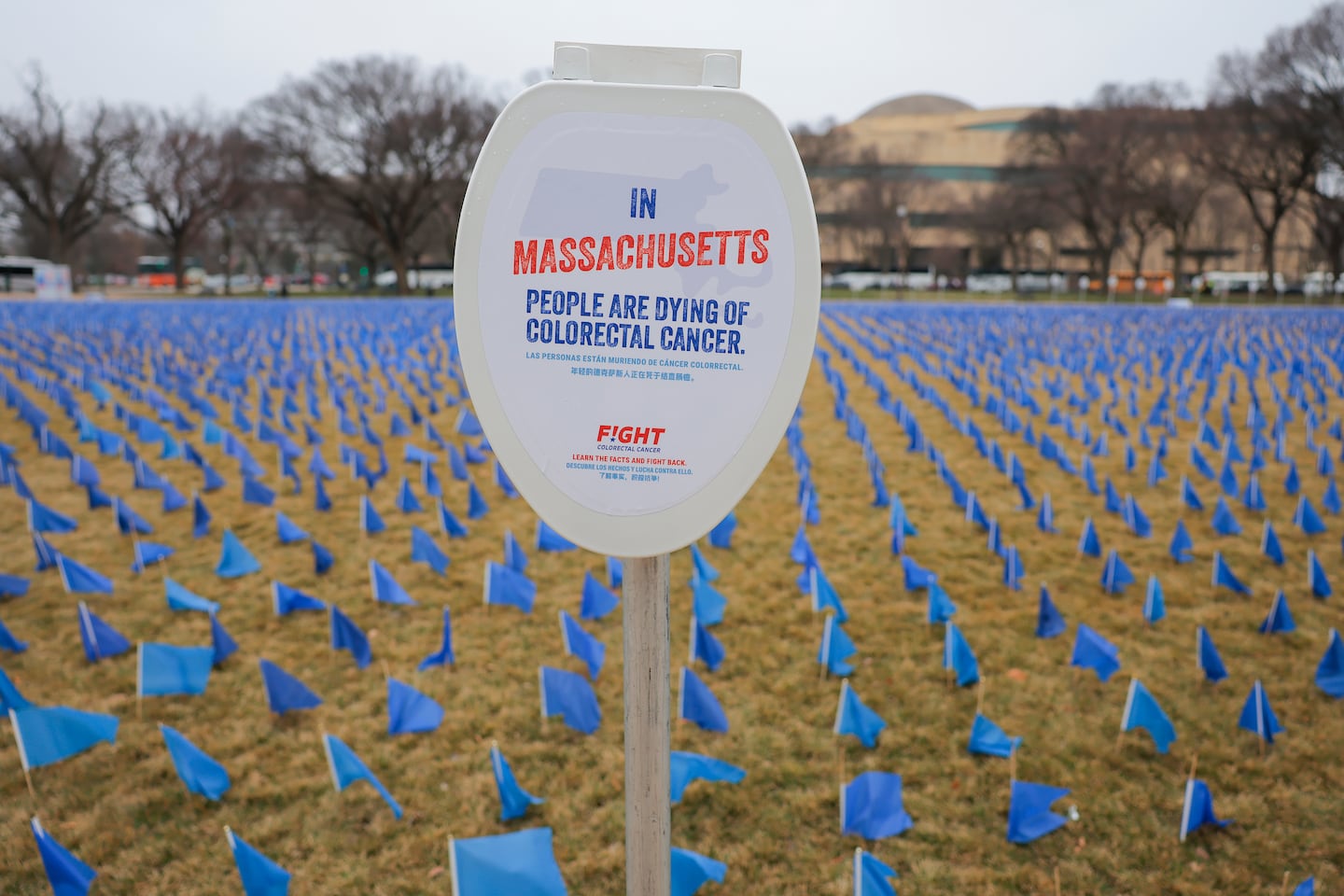
“It’s been a bit of a black box,” said Ana Anderson, a senior author and core faculty member of the Gene Lay Institute of Immunology and Inflammation at Brigham and Women’s Hospital. “Now we have a research direction. We have a path to follow and hopefully find something that’s really specific to this disease and that will be the basis for developing tailored therapies specifically for young-onset colon cancer.”
In the United States, rates of colorectal cancer among people younger than 50 rose nearly 3 percent each year from 2013 through 2022, according to the American Cancer Society. Colorectal cancer is now the leading cause of cancer death in that age group.
Researchers have sought explanations for the perplexing rise. A growing body of evidence has linked risk to diet and ultra-processed foods, among other lifestyle and environmental factors. But experts say it’s also important to understand what is happening inside the tumors and bodies of younger patients.
In the new study published in the peer-reviewed journal Nature Medicine, scientists examined 189 tumors from people in their 20s to 90s, including 54 patients who were diagnosed when they were younger than 50. They analyzed more than 850,000 cells. The researchers also looked for factors that changed with age, revealing subtle differences between the younger and older patients studied, said Dr. Kimmie Ng, a senior author and director of the Young-Onset Colorectal Cancer Center at Dana-Farber Cancer Institute.
Researchers observed that tumors in younger patients appeared to have a different composition of cells, namely a much higher proportion of connective and supporting cells, known as stromal cells. Studies of other types of solid cancer have linked stromal cells to chemotherapy resistance.
The study also found differences in how genes are expressed in the tumors of younger people — a finding that experts say could lead to new therapeutic targets.
The dataset is the largest to date for colorectal cancer and includes the highest number of young patients, Ng said.
“It gives a huge amount of hope,” she said. “It really serves as a guidepost to where we should direct our future research efforts.”
The new research gives scientists access to large quantities of detailed data, said Dr. John Paul Shen, an associate professor in the department of gastrointestinal medical oncology at the University of Texas MD Anderson Cancer Center.
“There’s some very clear experiments that we might do in our lab or other people would do in their labs around the world,” said Shen, who was not involved in the study. “That’s hugely valuable.”
But he and other experts noted that the dataset, while expansive in its cellular analysis, is drawn from a limited number of people. Ng said the study’s cohort aligns with what is generally known about young-onset colorectal cancer patients around the world.
Future research could build on the study by analyzing other groups of patients, said Dr. Christina Annunziata, senior vice president of extramural discovery science at the American Cancer Society.
While the new study holds promise for helping researchers discover better ways to prevent and treat colorectal cancer in young people, experts said many breakthroughs may still be a ways off.
Having the dataset, Annunziata said, is “an essential first step.”
“The research is necessary for us to understand why people are getting cancers early and what we can do about it,” she said.
HealthNews
California pumpkin patch closes amid E. coli probe
Health officials in Central California have confirmed five cases of E. coli that can cause serious illness and are investigating a possible connection to a popular farm attraction and pumpkin patch in San Luis Obispo County.
The County of San Luis Obispo Public Health Department reported that it identified five cases of Shiga toxin-producing E. coli infection. Health officials said the cases may be linked to visits to Brookshire Farms in San Luis Obispo from Oct. 16 to Oct. 26, though investigators have not yet identified the source of the infections.
Public health officials urged anyone who visited the farm during that period and later developed gastrointestinal symptoms to contact a health care provider. Symptoms can include severe stomach cramps, bloody diarrhea, and vomiting and typically appear three to 10 days after exposure.
“We are working diligently to identify the source of these infections to protect the health of our community,” San Luis Obispo County Health Officer Dr. Christy Mulkerin said in a statement. “We encourage anyone who may have been exposed and is experiencing symptoms consistent with E. coli infection to seek immediate medical attention.”
As the investigation continues, Brookshire Farms has voluntarily closed while county health officials work to determine whether additional community members may be at risk. The farm is known for its corn mazes, pumpkin patches and other fall-themed attractions.
Tom Cuddy, a spokesperson for the county health department, confirmed to The Tribune and SFGate that three children were hospitalized in “serious condition” and were being treated in a pediatric intensive care unit. Children younger than 10 are at the highest risk for complications from Shiga toxin-producing E. coli infections, health officials said.
USA TODAY reached out to the County of San Luis Obispo Public Health Department for comment.
Brookshire Farm closes for remainder of the pumpkin season
Public health officials said Brookshire Farms is cooperating with the investigation, which includes gathering information from visitors, investigating potential exposures and conducting follow-up activities to determine whether the cases are connected.
Health officials have encouraged people contacted by investigators to provide information that could help identify the source of the infections. The county health department has not determined whether the cases are linked to contaminated food, water, animal contact, or another source.
In a statement on Oct. 28, Brookshire Farms said it would remain closed for the rest of the pumpkin season while awaiting test results from the county health department. The closure comes during the peak fall season, when families typically visit the farm for seasonal activities and attractions.
“Safety is our main concern. We are waiting on the test results from the county health department. Until then, there is nothing to comment on,” the farm said in the statement.
What is Shiga toxin-producing E. coli?
E. coli are bacteria commonly found in the environment, foods, and the intestines of people and animals. While many strains are harmless, some can make people sick through contaminated food or water, according to the Centers for Disease Control and Prevention.
Shiga toxin-producing E. coli, also known as STEC, produces toxins capable of causing severe illness, according to the California Department of Public Health.
“People can get infected with STEC bacteria by eating or drinking something that has been contaminated with animal or human poop, or by accidentally swallowing tiny amounts of poop after having contact with infected animals, animal areas, untreated water, or other people infected with STEC,” the state health department says.
Most people infected with STEC recover without treatment, but some cases can become severe and even life-threatening, according to the state health department. Young children, pregnant people, older adults, and those with weakened immune systems face the highest risk of developing serious illness.
Health officials say STEC infections can be prevented by thoroughly cooking food, choosing pasteurized dairy products, washing hands after using the restroom or touching animals, and avoiding swallowing water while swimming in lakes, rivers, or pools.
An estimated 1 in 10 people diagnosed with STEC develop hemolytic uremic syndrome, or HUS, a potentially life-threatening complication that can cause kidney failure, according to the state health department. Warning signs include decreased urination, extreme fatigue, and loss of color in the cheeks or lower eyelids.

AMC’s Infamous ‘Dune’ Sandworm Popcorn Bucket Is Back for ‘Part Three’
This time, you can get cozy with sandworm popcorn bucket as a couple. AMC Theatres has revealed follow ups to...


Tom Brady ‘Wants Absolutely No Part’ in Candice Swanepoel and Joan Smalls’ Feud
It’s only been days since Tom Brady and Candice Swanepoel’s rumored relationship went public, but things are already off to...


Iovance, A Top 1% Biotech Stock, Crashes In A Surprise Lung Cancer Twist
Information in Investor’s Business Daily is for informational and educational purposes only and should not be construed as an offer,...


DoorDash to buy Instacart in $17bn deal it says will expand options for customers
DoorDash will acquire grocery delivery firm Instacart in a $17bn (£12.8bn) deal, creating a behemoth that will bring more meals,...


Noah Kahan Announces Summer 2027 U.S. Stadium Tour
There are no flies in the ointment of the overwhelming touring success of Noah Kahan. The fan enthusiasm that led...


DoorDash gobbles up Instacart in $17 billion deal
DoorDash said Thursday that it will buy Instacart for $17 billion, uniting one of the nation’s top grocery delivery services...


‘He’s being dragged into the drama’: Tom Brady reportedly already faces ‘tension’ in Candice Swanepoel relationship
Tom Brady’s rumored romance with Victoria’s Secret model Candice Swanepoel has already sparked a messy falling-out between Swanepoel and one...


‘Dune 3’ Popcorn Bucket Has Two Sandworms
In 2024, AMC Theatres went viral after moviegoers discovered the sandworm-inspired popcorn bucket for “Dune: Part Two” was… suggestive, to...


September PCE: Inflation rose further from the Fed’s target
The Federal Reserve’s preferred inflation gauge rose further away from the central bank’s target in September as consumers face price...


Bears acquiring Jeffery Simmons in blockbuster trade with Titans
The Chicago Bears have reportedly pulled off a blockbuster trade with the Tennessee Titans for star defensive lineman Jeffery Simmons....
-

 Business2 weeks ago
‘Black Monday’ fears intensify as prediction markets shrug off 2026 crash
-

 Business2 weeks ago
CPI inflation report September 2026
-

 Business2 weeks ago
Endeavor Health, Rush University System for Health to merge
-

 Business2 weeks ago
Netflix Layoffs Cut 6% of Employees, Eliminating 1,000 Jobs
-

 Tech2 weeks ago
Bank of America fined $1.2bn for money laundering failures
-

 Business2 weeks ago
Toilet paper and secret recorders: What we know about the arrest of the Saudi OpenAI engineer
-

 Sports2 weeks ago
Tesla’s flying car is here. Here’s all you need to know about the Roadster
-
Business2 weeks ago
AI Companies Play Cat-and-Mouse With Secret-Stealing Spies