
Tech
Apple introduces first touchscreen MacBook Pro at higher prices
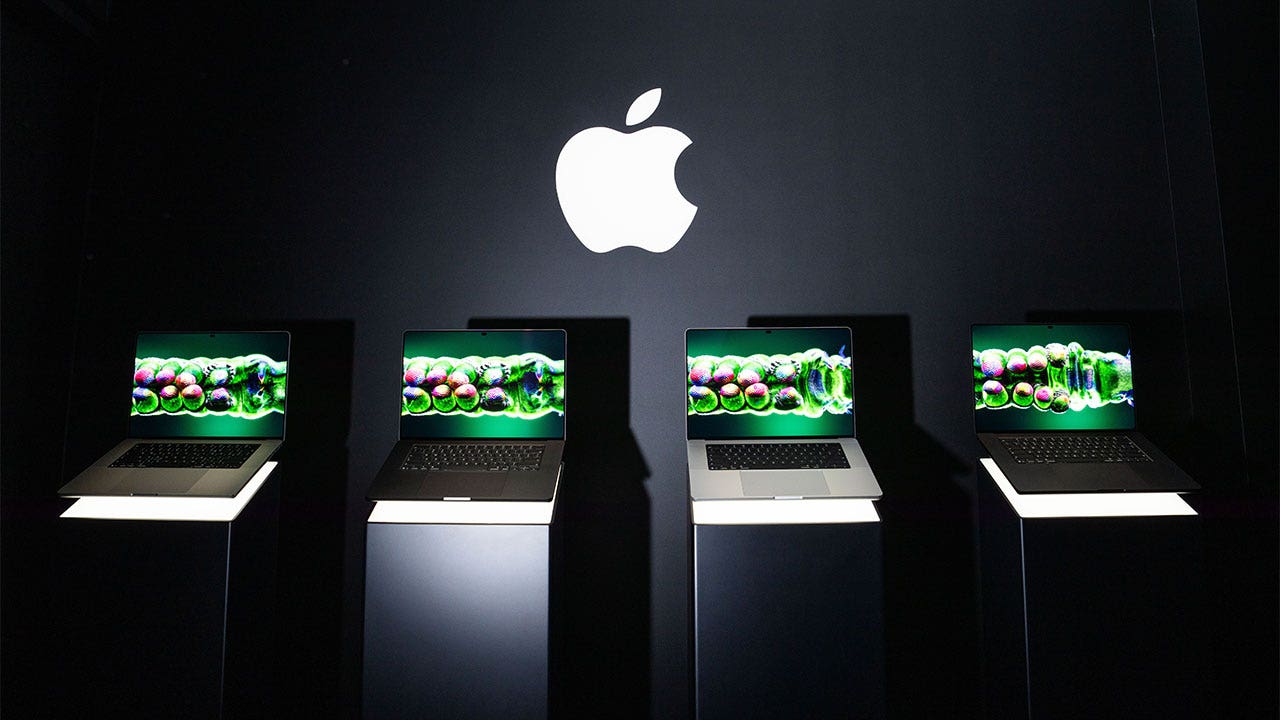
Apple introduced its first touchscreen MacBook Pro on Wednesday, reversing its longstanding approach to laptop design as the company rolls out new models with higher starting prices.
The redesigned 14-inch MacBook Pro starts at $2,899, compared with $2,199 for the M5 Pro model introduced in March. The 16-inch version starts at $3,399, up from the previous model’s $2,699 starting price.
The $700 differences reflect Apple’s advertised starting prices rather than direct comparisons of identical configurations. The new laptops have different hardware and features.
The move marks a shift for Apple, which has long kept touchscreen functionality on devices such as the iPhone and iPad while relying on keyboards and trackpads for its MacBook computers.
APPLE SETTLEMENT COULD MEAN A PAYOUT FOR SOME IPHONE OWNERS
The new models allow users to scroll through webpages, zoom in on images and navigate applications directly from the screen. The laptops retain their traditional keyboards and trackpads.
Apple also replaced the previous MacBook Pro display technology with an OLED screen, which the company says offers improved brightness, contrast and color accuracy.
The laptops come in 14-inch and 16-inch sizes, with M5 Pro and M5 Max processor options.
Models equipped with the M5 Max carry higher starting prices. The 14-inch version starts at $4,499, compared with $3,599 for the previous model, while the 16-inch version starts at $4,799, up from $3,899. Those comparisons also involve different base configurations.
APPLE’S IPHONE 18 GOES ON SALE AS CUSTOMERS LINE UP AT STORES WORLDWIDE
Apple says the new laptops offer up to 24 hours of battery life, matching the maximum battery life advertised for the previous generation.
The company also added Dynamic Island, a feature already available on iPhones, to display notifications and other information on the laptop screen.
Ticker Security Last Change Change % AAPL NO DATA AVAILABLE – – –
GET FOX BUSINESS ON THE GO BY CLICKING HERE
Apple is separately offering a 14-inch MacBook Pro with an M6 processor starting at $1,999. That model does not include the touchscreen or OLED display available on the higher-priced versions.
Preorders for the touchscreen MacBook Pro begin Wednesday, Oct. 28, with availability scheduled for Nov. 6.
Tech
CoreWeave Earnings Beat Expectations, Assuaging Market Nervousness
You are now leaving Barron’s website
By clicking on the “Proceed” button below, you will be redirected to a third-party website owned and operated by Hong Kong Tiimoot Information Technology Co., Limited. (“HKT”), which is located in Hong Kong. That website operates independently from Barron’s and Barron’s does not control the website. The privacy practices of HKT are subject to its Privacy Statement, so please read it closely. We are not responsible for HKT’s privacy or other data-related practices.
Tech
Nvidia CEO Huang Gets More Bad News. Cathie Wood Keeps the Faith.
You are now leaving Barron’s website
By clicking on the “Proceed” button below, you will be redirected to a third-party website owned and operated by Hong Kong Tiimoot Information Technology Co., Limited. (“HKT”), which is located in Hong Kong. That website operates independently from Barron’s and Barron’s does not control the website. The privacy practices of HKT are subject to its Privacy Statement, so please read it closely. We are not responsible for HKT’s privacy or other data-related practices.
Tech
California voters reject Proposition 40, the billionaire wealth tax

California voters rejected Proposition 40, a proposed wealth tax on the net worth of billionaires, spurning a ballot proposition that would have imposed a one-time 5% tax on any Californian whose net worth exceeded $1 billion.
With 100% of precincts reporting results as of Monday evening, 52.8% of Californians who voted for the measure, or 5,909,899 people, voted against it, according to California’s secretary of state.
Despite a sweeping blue wave that saw numerous prominent progressive Democrats such as Los Angeles Mayor-elect Nithya Raman win their races, the far-left pet policy wealth tax did not make it past the state’s voters thanks in part to Gov. Gavin Newsom taking a stand against the measure.
Newsom, a rumored 2028 presidential hopeful, wrote a lengthy Substack post in June explaining why he’d be voting against the measure while imploring Californians to do the same.
CALIFORNIA FACES ONE-TWO PUNCH AS VOTERS REJECT WEALTH TAX AND BILLIONAIRES EYE EXITS
Rather than come out generally against a wealth tax, Newsom objected particularly to the fact that, under the measure’s text, revenue taken from the state’s billionaires would go exclusively to funding healthcare.
“I’m voting no because this measure dedicates almost all of the revenue it raises to a single category of state spending,” he wrote in the post.
“There is nothing for housing, nothing for childcare, nothing for public safety workers who must answer 911 calls, and nothing for our public universities that have powered California’s economy for a decade,” Newsom added.
The California governor has still said that he supports a national wealth tax on anyone with a net worth over $100 million.
CALIFORNIA ENTREPRENEUR WARNS BILLIONAIRE WEALTH TAX COULD TRIGGER ‘GIANT SUCKING SOUND’ OF BUSINESS EXITS
Newsom joined a number of the state’s trade associations and unions in opposing the measure, including the California Teachers Association, California Medical Association, California Children’s Hospital Association and California Professional Firefighters.
“Proposition 40 was a reckless experiment conducted on our state’s economy with little regard for the harms it would cause,” a coalition of the groups opposed to the proposal wrote in a statement.
Also opposing the measure, and pouring millions of dollars into political action committees to defeat it, were a number of California’s wealthy technology executives. Google co-founder Sergey Brin spent over $100 million of his own money to help nix the measure.
A wealth tax has long been a popular policy for progressives like Sens. Elizabeth Warren, D-Mass., and Bernie Sanders, I-Vt.
Opponents to the measure feared it could drive the state’s billionaires — whose taxes are a key revenue source for the state — elsewhere. The ballot initiative was crafted with a potential exodus in mind, and would have retroactively taxed any billionaire living in California on or before January 1, 2026. Despite this, some of the state’s most wealthy, like Meta CEO and founder Mark Zuckerberg, openly pledged not to leave.
Supporters of the measure have already begun running advertisements in key Democratic primary states such as New Hampshire and Virginia criticizing Newsom for opposing the measure.
GET FOX BUSINESS ON THE GO BY CLICKING HERE
Fox News Digital contacted Gov. Newsom’s office, the California Teachers Association, California Medical Association, California Children’s Hospital Association and California Professional Firefighters for further comment.
Tech
Review: Apple’s M6 MacBook Pro is good, but it’s missing all the exciting stuff
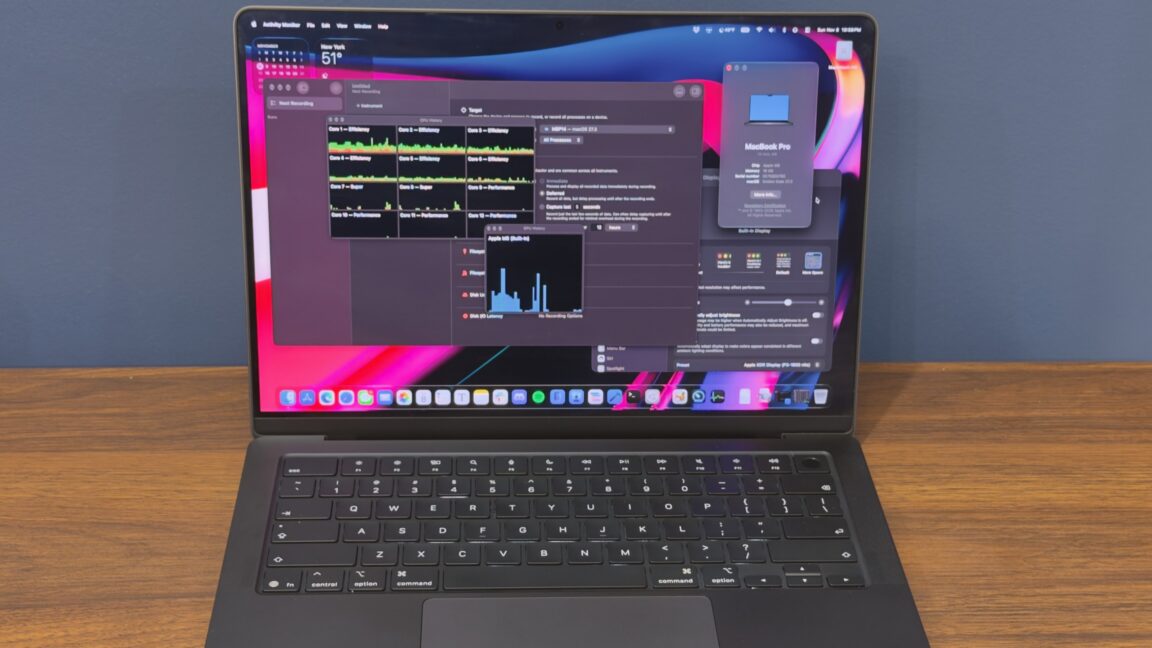
I’ve written more than once about the weird positioning of Apple’s entry-level 14-inch MacBook Pro, which has always occupied an uncomfortable perch between the MacBook Air and the higher-end MacBook Pros. The best versions of this laptop, like last year’s M5 refresh, come with the same basic design and external features of the higher-end MacBook Pros, just with a more modest processor and a lower ceiling for specs like RAM and storage.
The lesser versions stick with older designs or other compromises, reserving Apple’s most updated designs and screen technologies for the more expensive high-end models. Recall the 13-inch M1 and M2 MacBook Pros, which stuck with Apple’s 2016-era MacBook Pro designs for everything, up to and including the now-abandoned Touch Bar. (If you’re someone at Apple maintaining Touch Bar support into the 2030s for the sake of these two laptop models, I’d like to hear from you. Not for a story! I’d just like to know how you are.)
This year’s entry-level MacBook Pro mostly falls into that latter category. It does get an Apple M6 chip, and the M6 is great—rumors suggest the M6 won’t get Pro, Max, or Ultra configurations, so there are some fringe benefits here that you can’t get in the top-tier MacBook Pros. But it uses the same MacBook Pro design Apple has been using since 2021. There’s no touchscreen, no OLED panel, no Dynamic Island, no half-pound weight reduction, no glowing Apple logo on the lid.
In other words, it has very little of what makes the “PROLED XDR” MacBook Pros interesting, despite starting at an objectively very high starting price of $1,999. This is $700 more than the basic M1 MacBook Pro from 2020 and $400 more than the starting price of the M5 MacBook Pro from a year ago (though that model also got a mandatory 1TB storage upgrade and a $400 price hike when Apple raised most of its prices back in June).
That doesn’t mean there’s no constituency for the base-model MacBook Pro, which remains the cheapest way to get a 120 Hz ProMotion display or the anti-glare nano-texture display finish from one of Apple’s laptops. I just wish paying this kind of money was enough to get you Apple’s best technology.
Look and feel
There’s nothing new here compared to the M5 MacBook Pro, but just in case it’s been a few years, let’s run down the basics and go over what makes this laptop different from the MacBook Air.
Though it’s now a few years old, this iteration of the MacBook Pro design still looks and feels good, particularly with a nano-texture display installed. The laptop looks and feels (and is) thicker and heavier than either the 13- or 15-inch MacBook Air, but it also comes with more ports. In addition to the MagSafe port, a pair of Thunderbolt 4 ports, and a headphone jack on the laptop’s left side, you also get a dedicated HDMI port, another Thunderbolt 4 port, and an SD card reader on the right side.
For those who use USB-C chargers, it’s nice to be able to plug the laptop in to charge it from either side. For everyone else, it’s just nice to have more ports and need fewer dongles.
The MacBook Pro keyboard and trackpad are broadly pretty comparable to the Air’s, though if pressed, I’d say the Pro’s feels ever-so-slightly crisper and firmer to type on.
13-inch M5 MBA 14-inch M6 MBP 15-inch M5 MBA 14-inch OLED MBP Display size/tech 13.6-inch LED 14.2-inch mini-LED 15.3-inch LED 14.2-inch OLED touchscreen Display brightness 500 nits 1,000 nits (SDR), 1,600 nits (HDR) 500 nits 1,000 nits (SDR), 2,000 nits (HDR) Resolution 2560×1664, 60 Hz 3024×1964, 120 Hz 2880×1864, 60 Hz 3024×1968, 120 Hz Weight 2.7 pounds 3.4 pounds 3.3 pounds 3.0 pounds Starting price $1,299 $1,999 $1,499 $2,899
At 14.2 inches, the MacBook Pro’s screen sits between the 13.6- and 15.3-inch MacBook Air, though in practice it feels closer to the 13. And while it’s not OLED, it still comes with some notable upgrades to the Air’s regular old 60 Hz IPS laptop screens. These include a mini LED display panel with local dimming support that helps to improve contrast and lower black levels, a higher resolution than either MacBook Air display, a maximum SDR brightness of 1,000 nits and HDR brightness of up to 1,600 nits, the $150 nano-texture matte display upgrade, and, of course, the 120 Hz ProMotion refresh rate.
This is no longer a cutting-edge screen within Apple’s lineup, but it’s still very nice. It’s the biggest selling point for the basic MacBook Pro—aside from the M6, though the Air will presumably get that chip eventually, as it usually does. More on that in a bit.
But now that Apple is using OLED touchscreens in its flagship laptops, we’ll hopefully see all these models benefit from the gradual technology trickle-down that we generally see in Apple products. Just as the older iPhone eventually inherited OLED panels and ProMotion support from the iPhone Pro, I hope that in the next generation or two, we see OLED/touch come to this baseline MacBook Pro and ProMotion and/or nano-texture displays come to the MacBook Air. At least, I’d like to see those things if Apple can add them without a big price hike.
Performance and power: M6 redux
Apple’s M6 debuted in the new Mac mini a couple of months back, and it performs about the same in the M6 MacBook Pro (and in the M6 iMac) as it did there.
As a recap, the M6 is a fairly major refresh for Apple’s lowest-end chip. Both the M4 and the M5 used a mix of four high-performance CPU cores and six high-efficiency CPU cores (up from four of each in the M1/M2/M3 generations), and a maximum of 10 GPU cores (M2 and M3 also had 10, M1 maxed out at 8). And all Apple Silicon chips up until the M6 shipped with a 16-core Neural Engine NPU.
CPU S/P/E-cores GPU cores RAM options Display support (including internal) Memory bandwidth Apple M6 2S/4P/6E 12 16/24/32GB Up to three 153GB/s (16GB), 170GB/s (24GB/32GB) Apple M5 4S/6E 10 16/24/32GB Up to three 153GB/s Apple M4 4P/6E 10 16/24/32GB Up to three 120GB/s Apple M3 4P/4E 10 8/16/24GB Up to two 102.4GB/s Apple M2 4P/4E 10 8/16/24GB Up to two (one external) 102.4GB/s Apple M1 4P/4E 8 8/16GB Up to two (one external) 68.25GB/s (est.)
The M6 gets more CPU cores: two top-performance super cores, four performance cores, and six high-efficiency cores, for a total of 12. The GPU core count also increases to 12. And the Neural Engine is doubled, for a total of 32 NPU cores. RAM will still be the biggest limitation for the kinds of models that run well on an M6, but tasks that do engage the NPU should feel faster.
The RAM configurations on offer haven’t changed: 16GB is still the base, with 24GB and 32GB upgrade options. For the 16GB config, memory bandwidth is locked at 153 GB/s, the same as in the M5, but the 24GB and 32GB versions get a bump to 170 GB/s.
That brings us to our benchmark charts. The MacBook Pro review unit Apple sent ships with 16GB of RAM, down from the 24GB of RAM in the M6 Mac mini. That means the system is working with 90 percent of the memory bandwidth the Mac mini has; in practice, you mostly see this manifest as slightly lower graphics/gaming benchmarks, but they’re usually not enough to move the topline more than a couple of percentage points.
The chip is still a solid upgrade from the M5. Compared to last year’s M5 MacBook Pro, this year’s 16GB version offers around 7 percent and 15 percent better single- and multi-core CPU performance and between 20 and 30 percent better GPU performance, depending on the test.
As usual, Apple’s year-over-year performance upgrades add up when you’re jumping multiple generations at once. Compared to the M3 MacBook Pro, the M6 version offers around 30 percent better single-core CPU performance and between 40 and 60 percent faster multi-core CPU and graphics performance. So if you’re still using an M1 or M2 MacBook Air or Pro, you’re in for a sizable upgrade you should notice in day-to-day use. Compared to an M4 or M5, it will feel faster, but likely not staggeringly so.
As with the Mac mini, the basic MacBook Pro getting an M6-generation chip while the rest of the lineup sticks with the M5 means there are some specific ways in which this cheaper Mac is faster than the more expensive versions. While the M5 Pro’s higher core count definitely swamps the M6 for multi-threaded CPU work, the M6 still delivers Apple’s best single-core CPU performance, as well as the larger Neural Engine.
If and when the MacBook Air gets an M6, the MacBook Pro should still be the faster system, especially for sustained workloads. The MacBook Pro and Mac mini include active cooling fans, while the MacBook Air is fanless—the Airs have historically performed a little worse because they throttle their performance more quickly to keep temperatures in check.
Finally, a word on power usage. When I reviewed the M6 Mac mini, Apple’s built-in powermetrics tool wasn’t working with the M6 yet—it would run, but wouldn’t give any actual numbers. That’s been fixed since then, and the good news is that the power usage numbers are very boring. Under load, the M6 is faster than the M5 while consuming the same amount of power, which means it’s more power-efficient.
Pro-ish
It’s an exciting year for the MacBook Pro! Just not for this MacBook Pro.
That’s to be expected, I suppose, since this MacBook Pro tier didn’t get the 2021-era design updates until the M3 version was released in 2023. I would not be surprised if we were left waiting at least two years for an OLED touchscreen to trickle down to this laptop.
After all, the OLED MacBook Pros haven’t even fully replaced the non-OLED versions of the M5 Pro and M5 Max laptops. I’d expect the next-gen versions of those laptops to bring the OLED touchscreens down to those price points and eliminate the non-OLED versions, and then for the basic MacBook Pro to get the new screens sometime after that. But that’s assuming some kind of normal-ish technology progression, and the times are still anything but normal, mostly thanks to the ongoing RAM and storage shortages.
Tech
NASA is paying $164,000 for people to live on the Moon

Ever dreamed of ditching your 9-to-5 desk job for a commute off the planet? NASA is officially accepting applications for a position that pays around $164,000 to live and work on the Moon. But before you dust off your résumé and pack your bags for the lunar surface, there’s a catch: the space agency is hunting for candidates with extraordinary credentials, requiring far more than standard workplace skills to land a spot in humanity’s next frontier. From strict physical hurdles to elite technical demands, read on to discover what it actually takes to make the cut, and whether you have what it takes to join NASA’s next generation of lunar explorers.
A six-figure ticket off the planet
If the promise of living on the Moon isn’t enough motivation to submit a resume, the compensation package certainly helps. NASA is offering selected candidates a starting salary of $164,395 per year—more than double the U.S. national average salary of $64,220.
For those looking to step into humanity’s most elite workforce, the clock is ticking: applications will remain open until 11:59 p.m. EST on December 3.
“The window is open. The mission is waiting. And the only thing missing from the greatest adventure humanity has ever embarked upon is you,” said NASA Deputy Administrator Matt Anderson in a recruitment statement.
NASA has a competitive selection process
Getting selected for NASA’s astronaut program is no easy task. The agency last accepted applications in 2024, eventually choosing just 10 candidates from a pool of more than 8,000 applicants.
Since the beginning of the U.S. space program in the mid-20th century, NASA has selected 370 individuals for astronaut training. The newest recruits will join the agency’s 32-member active astronaut corps and prepare for a wide range of demanding assignments.
NASA announced its latest recruitment drive on X, sharing a promotional video featuring astronauts Jessica Meir, Andre Douglas, Deniz Burnham, Randy Bresnik, Kayla Barron, Jack Hathaway, and Chris Williams. The campaign carries a simple but exciting tagline: “The Universe Is Calling.”
However, answering that call requires much more than a passion for space exploration.
What qualifications does NASA require?
Anyone hoping to become a NASA astronaut must first meet some demanding educational and professional requirements. Applicants must be U.S. citizens and hold a master’s degree in a science, technology, engineering, or mathematics (STEM) field from an accredited institution.
Qualifying subjects include engineering, biological science, physical science, and computer science. Those without a completed master’s degree may still qualify if they have completed at least two years of work toward a doctoral program.
But an advanced education alone won’t be enough. Candidates must also have at least three years of related professional experience and provide five strong references to support their applications.
NASA also requires applicants to pass its long-duration astronaut flight physical. Beyond academic and physical qualifications, the agency looks for individuals with excellent leadership, teamwork, and communication skills.
In other words, candidates must demonstrate that they can handle the technical challenges of spaceflight while working effectively with others in demanding environments.
Life in space comes with serious challenges
Even for those who meet NASA’s strict requirements, the realities of space travel can be difficult to imagine. Future astronauts must be prepared for extended deep-space deployments, where isolation and separation from family and friends become part of everyday life.
NASA describes missions lasting 12 months or longer as involving “extreme isolation, austere living conditions, and separation from loved ones.”
These conditions demand considerable mental and emotional resilience. Astronauts must remain focused, adaptable, and capable of making important decisions even when they are far from the comforts of home.
While the prospect of exploring the Moon or eventually traveling to Mars may sound exciting, the experience also involves sacrifices that not everyone would be willing to make.
Selected candidates face two years of intensive training
After applications are reviewed, NASA’s selection board will invite the highest-scoring candidates to the agency’s Johnson Space Center in Houston for initial interviews. Approximately half of those interviewed will be invited back for a second round of screening.
Those who ultimately make the cut will report to Johnson Space Center for two years of intensive astronaut training. The program is designed to prepare recruits for the many challenges they could encounter during future space missions.
Their training will cover everything from piloting T-38 high-performance jets and operating robotic arms to conducting spacewalks and managing operations aboard the International Space Station.
Astronaut candidates will also study lunar geology and develop the technical skills needed to support NASA’s upcoming exploration missions.
For the agency, the goal is to prepare a new generation of explorers capable of supporting its return to the Moon and eventual crewed journeys to Mars.
“For those who apply, becoming a NASA astronaut is more than a career opportunity,” said Scott Tingle, chief astronaut and chair of the Astronaut Selection Board at NASA’s Johnson Space Center in Houston. “It is a chance to join a legacy of explorers who have pushed the boundaries of discovery and play a role in the missions that will shape humanity’s future in space.”
With a six-figure salary, an opportunity to explore beyond Earth, and a chance to contribute to some of humanity’s most ambitious space missions, NASA’s latest recruitment drive offers an extraordinary career path. However, only candidates who can meet the agency’s demanding standards will have a shot at joining its next generation of astronauts.
Source:
New York Post


Hegseth Impeachment Effort Blocked in Key House Vote
House GOP leaders successfully killed a push to impeach Defense Secretary Pete Hegseth in a surprising show of unity from...


Trump’s private 2021 letter to Biden revealed in upcoming memoir
In his forthcoming book, former President Joe Biden discloses the contents of a 2021 letter written by President Donald Trump...


Scott Colom says tight Mississippi Senate race is almost over
Democratic Mississippi Senate Candidate Scott Colom tells CNN's Jake Tapper and Annie Grayer when he thinks his race will be...


Conveyor belt of storms unloads on Pacific Northwest
The north Pacific is cranking out one storm after another, sending relentless rain and snow into Alaska, British Columbia and...


Hegseth survives, but Dems say more impeachments could follow
House Republicans narrowly blocked an effort to impeach Defense Secretary Pete Hegseth, voting 211-204 to defeat the …


Man who admitted to dismembering wife remains emotionless as guilty verdict is read
A jury found Virginia man Naresh Bhatt guilty of first-degree murder Tuesday, rejecting his claim on the stand that his...


‘Mike Hammer,’ ‘Fat City’ Star Was 85
Stacy Keach, a commanding actor whose work includes movies like “Fat City” and the starring role in “The New Mike...


Shopping sucks. Blame your feed.
Shopping used to be fun. Now it's all microtrends and algorithm-approved outfits. Audie Cornish, Ari Shapiro, and Amy Odell …


California voters reject billionaire tax
Voters in California have rejected a measure to impose a one-time 5% wealth tax on residents with net worth over...


House GOP blocks Hegseth impeachment effort
The House voted to refer the measure to a committee, effectively killing the resolution to impeach Defense Secretary Pete Hegseth...
-

 Entertainment2 weeks ago
‘Baywatch’ Star Erika Eleniak on Track to Hit $1 Million in 1st Year on OnlyFans
-
HealthNews2 weeks ago
The Most Powerful Obesity Drug Yet Has a Hidden Benefit-and It Happens While You Sleep
-

 Business2 weeks ago
Dollar General overcharged millions at checkout for years, FTC and 20 states allege
-

 Business2 weeks ago
In China, the AI bubble has already burst
-

 Entertainment2 weeks ago
Inside Matthew Perry’s ‘struggle’ ahead of the 2021 ‘Friends’ reunion
-
Entertainment2 weeks ago
I’m a Bus Driver at Walt Disney World at 51 Years Old; Great Benefits
-

 Entertainment2 weeks ago
Taylor Swift, Travis Kelce wedding props deemed too expensive, dangerous revealed
-

 HealthNews2 weeks ago
Your Blood Pressure Could Be Higher Than You Think. These 7 Fruits May Help Bring It Down, Say Experts