
PM office canada
Quebec premier boycotts Mark Carney’s EU summit
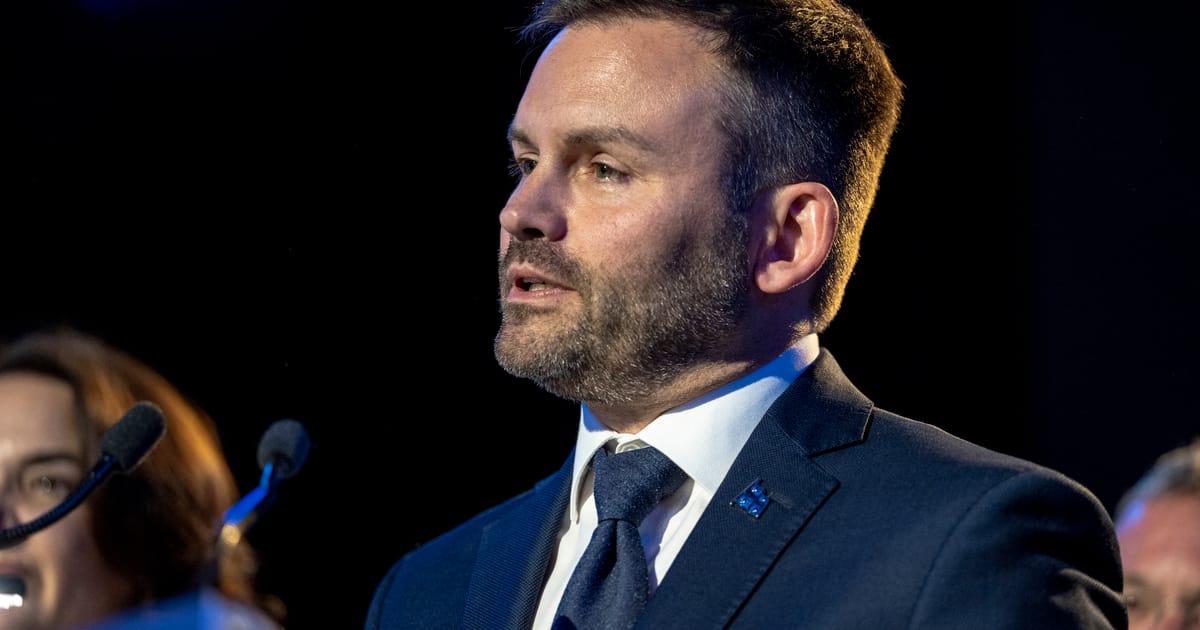
Quebec’s separatist premier says that he will boycott the EU-Canada summit that opens in Montreal on Thursday, warning European leaders that deals struck there without his government’s consent may not be applied in the country’s second-biggest province.
Paul St-Pierre Plamondon confirmed his absence late Wednesday in an open letter to the European delegation, which he posted on X. His announcement followed two days of public sparring with Canadian Prime Minister Mark Carney over Ottawa’s refusal to let him address the summit.
“This dynamic creates uncertainty as to the application of the agreements you could negotiate during the summit,” he wrote in French.
In the letter, St-Pierre Plamondon says Ottawa has “decided to sideline Quebec” from the talks. He says this leaves his government with “neither a chair at the negotiating table nor the opportunity to speak,” even though the summit is on Quebec soil.
Under Canada’s federal system, he argued, the provinces implement international agreements that fall within their powers. Without Quebec’s consent, a deal that runs against its interests “will simply not be implemented,” he wrote. He also accused Ottawa of withholding “critical information” on the negotiations.
He offered to meet European leaders “in the near future, in a more opportune context.” He will send Quebec’s chief diplomat, Pascal Paradis, to the summit in his place.
Carney said Wednesday his office had offered the premier the honor of welcoming the Commission president to Montreal, and a seat at the head table. “I hope he will reconsider,” he said. On Tuesday, the prime minister had accused St-Pierre Plamondon of choosing to “leave an empty chair again.”
The row has soured the upbeat mood around the summit, which Commission President Ursula von der Leyen and European Council President António Costa have billed as a milestone. Leaders will launch an “Alliance for the Future,” a framework for shared prosperity and economic security.
St-Pierre Plamondon’s letter says many of its topics fall under Quebec’s responsibility, including health, education and natural resources.
The premier has also pursued his own contacts with European leaders.
He spoke by phone with French President Emmanuel Macron on Monday, and said the two had agreed on a possible meeting in France in the coming weeks.
At working level, ties have held so far, and officials describe the relationship as constructive.
Hélène Drainville, Quebec’s delegate general in Brussels, told POLITICO last week that Quebec was in talks with the European Investment Bank and the Commission, and that “all the signals are green.”
Carney, Costa and von der Leyen are due to hold a joint press conference on Friday.
PM office canada
Carney to push for closer ties at Canada-EU summit in Montreal
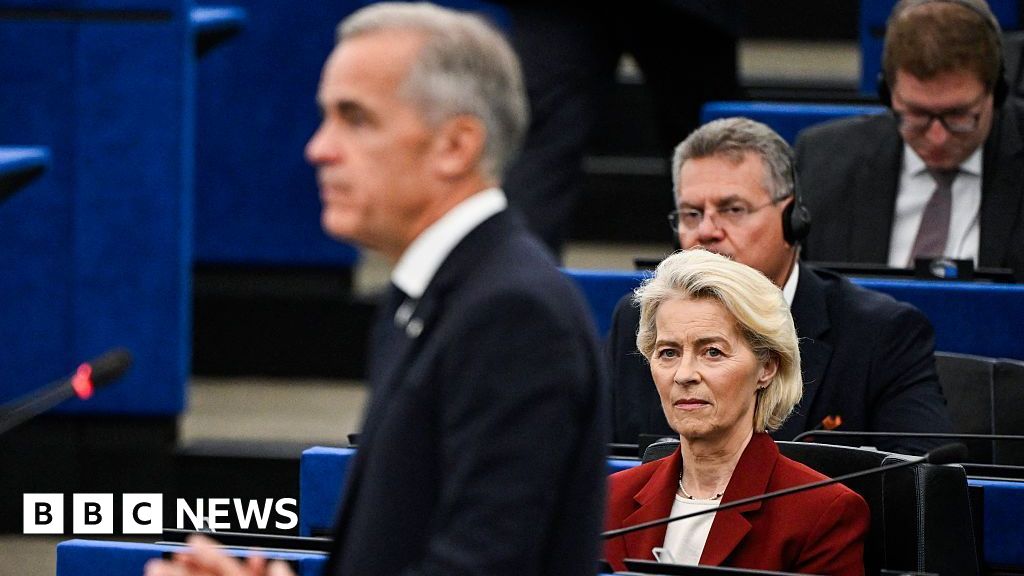
For decades, Canada-EU summits took place without much fanfare – but that’s not the case for this coming two-day meeting in Montreal.
Thursday and Friday’s summit will be closely watched for details on how Canada and the European bloc deepen their ties.
Last month, European Commission President Ursula von der Leyen proposed “opening the door” to Canada for what she called an “associate membership” – a status that does not currently exist.
The overture came after Prime Minister Carney addressed the European Parliament in Strasbourg, telling EU lawmakers that Canada and Europe were “stronger together” in the face of “geopolitical rupture”.
Von der Leyen, speaking to reporters after landing in Montreal on Wednesday, said the two sides will “start discussing how to make Canada the first associate member of the EU”.
“Our ambition is to build the closest partnership we have ever had with a non-European country,” she said.
Carney and many EU member states welcome closer ties, but not all are on board with what to call this new relationship.
Some, like Germany, are questioning the “associate member” term, fearing that Canada is getting preferential treatment ahead of other nations who also want in.
According to reports by multiple news outlets, Germany and other nations successfully lobbied to remove mention of the title in a draft statement ahead of the summit, opting instead for softer language that references an “ever closer association”.
Germany’s ambassador to Canada, Matthias Lüttenberg, told CTV News on Tuesday that some member states were “a little surprised” by von der Leyen’s announcement last month.
The concept of “associate membership”, he added, is something that is not clearly understood as it pertains to Canada.
“Germany has been using the term of associate membership for something completely different, which is the relationship of the EU to Ukraine and potentially Moldova”, he said, both of which have been trying to join the bloc for many years.
Lüttenberg noted, however, that neither Canada nor the EU is seeking full membership for the North American country.
Rather, both want to bring Canada “as close as possible” to the bloc without membership.
On the first day of the summit, Carney and von der Leyen and business leaders from both Europe and Canada will gather for a business forum.
Canadian officials said they also expect agreements to be hammered out on defence, critical minerals, research and trade over the two days.
Speaking to reporters earlier this week, European officials downplayed the possibility of a major announcement on Canada’s new relationship with EU, saying much will be sorted in the coming months.
But both Canadian and EU officials have provided some clues on what the relationship could look like, including closer business ties and allowing more students to study on either side of the Atlantic.
Canada also does not plan on paying a membership fee similar to other EU nations, Canadian officials have said. Instead, it is looking at participating in different EU programmes that would benefit both Canada and member states.
And despite some disagreement about the wording, both have signalled they are fully on board with deepening ties.
“The wording is emblematic of the ambition,” said one senior Canadian official who was granted anonymity to speak to reporters at a briefing ahead of the summit.
Since taking office last year, Prime Minister Carney has pushed Canada closer to Europe as his country continues to deal with an ongoing trade war with the US, its neighbour and largest trading customer.
US President Donald Trump has called the idea of Canada becoming an associate member of the EU “laughable”, and has threatened “very serious tariffs” on Europe if he considered it a “hostile act”.
Canadian officials stressed on Wednesday that their pivot to Europe is not meant to offend anybody, but rather to build on work that was already underway.
Canada recently signed an agreement that gives its defence companies procurement access to the EU’s Security and Defence Partnership programme.
It also signed a landmark energy deal with Germany in May that would see the first-ever long-term shipments of liquified natural gas from Canada to Europe in the coming years.
Carney said earlier this week that the summit would “launch further formal discussions” between Canada and the EU on deepening ties and creating new opportunities for both sides.
PM office canada
EU and Canada eye now-or-never window to Trump-proof their ties
The EU and Canada are betting they can deepen their partnership while Donald Trump looks inward at the U.S. midterms — and before European elections upend the political calculus.
Their strategy is to push for the broadest possible upgrade and hope Trump is too busy campaigning to respond, four EU officials and two Canadian diplomats familiar with preparations for this week’s summit in Montreal said.
Trump, whose Republican Party is fighting to retain control of Congress in next week’s midterms, has called the EU’s offer of associate membership for Canada “laughable” and threatened “serious tariffs” if the two sides get too close.
European Commission President Ursula von der Leyen and European Council President António Costa will join Canadian Prime Minister Mark Carney for two days of talks on trade, security, energy, education and the Arctic on Thursday.
The summit “is a very strong statement,” said Mark Camilleri, president of the Canada and EU Trade and Investment Association. “I don’t think there’s any feeling that this is going to be some discreet get-together.”
Canada is also looking to move before Europe’s politics shift. Ottawa wants changes to the partnership that will outlast Trump and Marine Le Pen, whose National Rally is polling ahead in France and has criticized the EU-Canada trade pact, CETA, said a Canadian diplomat. All the officials and diplomats in this article were granted anonymity to speak frankly about the summit preparations.
Avoiding Trump’s ire
Brussels and Ottawa are pushing to strengthen their relationship, including by cooperating more closely on trade and defense, international engagement and institutional links, according to a draft joint statement obtained by POLITICO.
In her September State of the Union speech, von der Leyen emphasized that the EU-Canada alliance is “not against anyone else.” Yet officials acknowledge that a stronger alliance risks triggering retaliation from Trump.
Von der Leyen, Costa and Carney “are fully aware that the eyes of the world are upon them,” said Camilleri.
The Europeans and Canadians know “the U.S. is watching,” a senior EU official said, adding that the bloc and Canada were nevertheless proceeding with business as usual and pushing for the most expansive possible relationship with Ottawa.
Another possibility is that the summit yields only “nice pictures” and little substance, a third senior official said, making it less likely to “trigger” the president.
European capitals, EU institutions and Canada’s provinces are all waiting to see what von der Leyen and Carney agree on in their meeting, the Canadian diplomat said, adding it was impossible to pre-judge how Trump would react.
Shadow of Le Pen
For Ottawa, pressure comes from another direction: Europe’s electoral calendar and the rise of the far right.
With Spain, France, Poland and Italy all set to go to the polls in the next year, Canadian officials want to secure concrete gains while EU governments remain receptive to closer cooperation and keep the topic front of mind, before elections across the bloc risk shifting priorities and upsetting the political balance.
When Carney came to Strasbourg to lay out his vision for a closer alliance in September, he was heckled from the gallery by the far-right Alternative for Germany MEP Siegbert Droese, who led chants of “USA!”
But it’s France’s presidential election in April — and the prospect of Le Pen in office — that is causing the most concern, according to a second Canadian diplomat.
“It’s very fortunate we’re doing this summit now and not in six months,” the diplomat said, referring to the French election date.
Canada is pushing for big, bold “structural changes” in its relationship with the EU now that will outlast Trump and Le Pen, the diplomat added. Carney has grasped the moment’s rarity and urgency and will not leave the summit without securing major wins, the first Canadian diplomat said.
Another question is whether Brussels and Ottawa can upgrade their partnership without eventually drawing the U.S. president’s ire. The midterms might buy them some time, but the vote will not keep Trump busy forever.
Trump might be even more dangerous and more likely to take out his anger on the EU and Canada after the election, given that he will retain many of his tariff and foreign policy powers even if the Republicans lose Congress, the second Canadian diplomat warned.
“At the end of the day, his reaction could be anything,” Camilleri said. “We can only control what we can control.”
Mathieu Pollet contributed reporting.
PM office canada
EU removes mention of ‘associate membership’ from Canada declaration
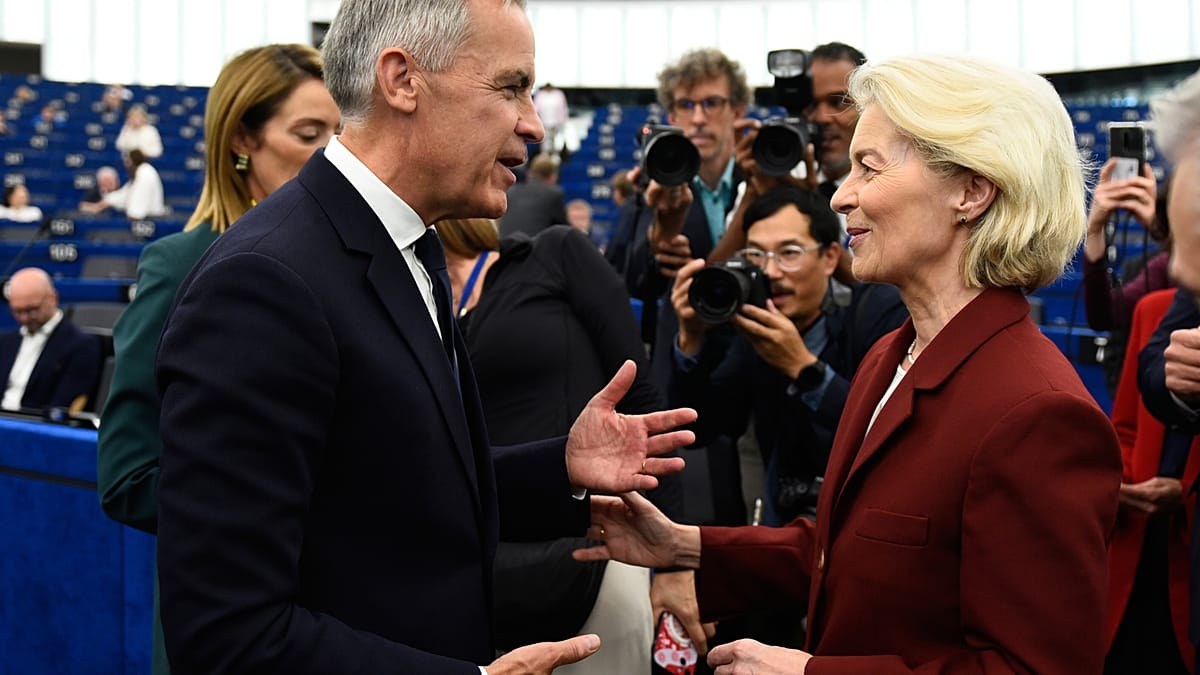
The EU has dropped any mention of associate membership from the latest draft of the joint declaration due to be adopted at the end of the EU-Canada summit in Montreal on Thursday and Friday.
The proposal, introduced at Germany’s insistence in a revised text circulated to member states on Wednesday, has been replaced by a commitment to “ever closer association” between the EU and Canada, but short of full membership itself.
The office of European Council President António Costa has spent recent hours in intense talks with several member states, above all Germany, which objected to the term in the political declaration.
Commission President Ursula von der Leyen floated the idea in her State of the Union address to the European Parliament last month, inviting Canada to become the first EU associate member.
An earlier draft was put to member states on Tuesday under the silent procedure, under which a text is deemed adopted unless a country explicitly objects. Germany, France, Italy and Greece all raised issues with it.
Germany has been the most vocal opponent of the term. Chancellor Friedrich Merz had previously proposed a similar status for Ukraine as a way to give Kyiv security guarantees before it fully joins the bloc.
For Berlin, the priority is to define what closer cooperation with Ottawa means in practice, rather than shoehorn the package into a term that is absent from the treaties and could carry significant legal implications.
Canadian Prime Minister Mark Carney has favoured the phrase “alliance for the future”, saying he wanted to focus on the substance of the agreement and that the terminology was for the EU to settle.
The latest version of the text has been submitted again for silent procedure, meaning it will be adopted unless EU countries object to it later this afternoon.
PM office canada
‘Correct this error’ and let me speak at EU summit, St-Pierre Plamondon tells Carney
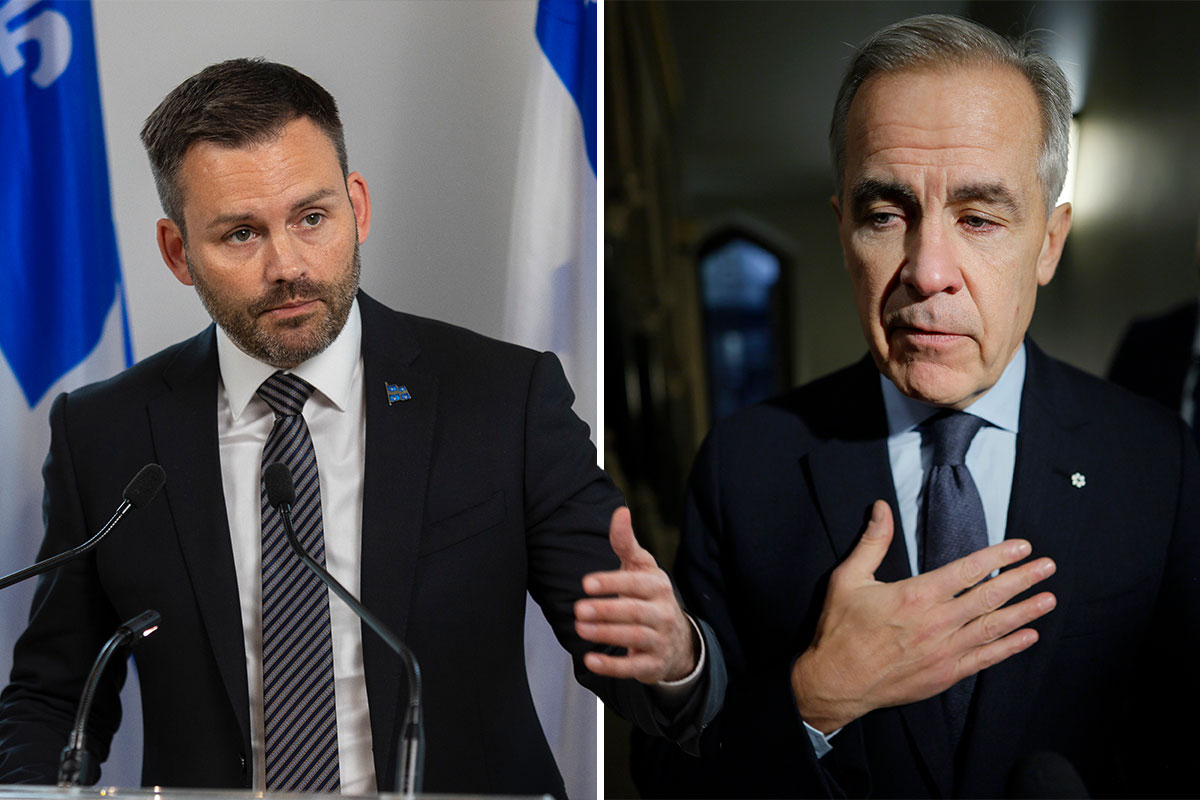
QUEBEC – Premier Paul St-Pierre Plamondon is calling on Prime Minister Mark Carney to recognize an “error” was made and reverse his decision to not let him speak at this week’s Canada-European Union summit in Montreal.
“I invite the Canadian prime minister to reverse his decision,” St-Pierre Plamondon told reporters arriving for a meeting of the Quebec cabinet Wednesday. “It’s never too late to do the right thing.
“I always indicated I wanted a productive relationship with Ottawa, but I also indicated I wanted a relationship of respect. It is not respectful to not give a place to the premier of Quebec at an event in Quebec, where Quebec’s economic interests are being negotiated.”
St-Pierre Plamondon argued his position that Quebec be on stage beside Canada should come as no surprise.
“I am very predictable,” he said. “I will always defend the interests of Quebec. What I am defending is the Gérin-Lajoie doctrine which has existed for 60 years; that is to say a Quebec which takes its place internationally and watches over its interests.”
The Gérin-Lajoie doctrine has existed since 1965. It stipulates that Quebec can speak for itself internationally in areas of provincial jurisdiction such as education and culture.
St-Pierre Plamondon did not answer when asked whether he might attend the summit, taking place in Montreal on Thursday and Friday. Ottawa has proposed he attend the dinner Friday with dignitaries, but not deliver public remarks.
He is also invited to be part of the reception at Trudeau airport to greet dignitaries.
St-Pierre Plamondon has rejected both options in what has become a war of words with the federal government.
“What I am asking this morning, the most logical solution, is that Ottawa correct this error,” St-Pierre Plamondon said.
Asked what he would settle for, St-Pierre Plamondon said speaking rights.
“It’s a right to speak, where we say welcome to our European invitees,” St-Pierre Plamondon said. “I am the premier of Quebec. We are in Quebec.
“But it is above all the right to participate. Jean Charest (the former premier) set an important precedent. That is to say that when Quebec’s interests are being negotiated and it has a lot of impact on us, Quebec gets a chair and participates in the negotiations.”
Noting the province’s trade balance with Europe is in the negative, he said “it is “vital that Quebec be at the table to say what can we do to correct this and well represent Quebec’s interests.”
The comments show St-Pierre Plamondon is not ready to back down. On Tuesday, Carney held his line too, saying Quebec has been consulted three times in the lead up to what is a bilateral, federal summit with the leaders of the EU.
“He was invited to the dinner; he refused,” Carney told reporters in Ottawa.
“We have had three consultations with the Quebec delegation about the European Union accord. It was his decision to leave the chair empty — again.”
The “again” was a reference to St-Pierre Plamondon’s absence Monday from a meeting of Canada’s premiers, Carney and First Nations leaders.
St-Pierre Plamondon responded with a blast on his Facebook page, saying he has no intention of taking a secondary role at an event held in Quebec.
“The federal government would like us to believe that the fact the premier of Quebec obtains the permission to serve the shrimp cocktails at a reception constitutes an acceptable and sufficient level of influence in the representation of Quebec’s interests,” St-Pierre Plamondon wrote in a post Tuesday.
In the same post he cranked up the drama. He drew a parallel between the summit decision and the satirical cult movie, Le temps des bouffons —produced by Pierre Falardeau in 1985 and released in 1993 — which highlights with derision that fact Quebecers were once treated as water carriers on their own territory and under the control of financial elites.
Later Wednesday while on his way into parliament in Ottawa, Carney also asked St-Pierre Plamondon to reconsider his decison, repeating his offers to be at the reception of dignitaries at the airport and also at the dinner.
“My office suggested to Mr. St-Pierre Plamondon that have the honour of welcoming the president (of the EU) to Montreal, to Quebec, Canada,” Carney said. “This offer stands.
“Secondly, I myself, I invited him to dinner, at my table (the head table). In my view this is a good occasion, a useful occasion to have conversations and establish relations with the president of the European Union.
“And for us too, Mr. St-Pierre Plamondon and me, to have a chance to reinforce our relations. I hope he will reconsider.”
The head table of the summit includes the President of the European Council, António Costa, and the President of the European Commission Ursula von der Leyen.
PM office canada
Canada facing carbon tariff threat from European Union: internal documents
Canada is facing a carbon tariff threat from the European Union within months as the economic bloc fully implements its Carbon Border Adjustment Mechanism (CBAM).
According to internal documents CBC News obtained through an access to information request, Canadian iron, steel and aluminum are not exempt from the carbon tariff even with Canada’s national price on carbon and its decade-old trade deal with the European Union.
The memo from Global Affairs Canada signed on Dec. 10, 2025, describes the CBAM as a “border charge” or “effectively a ‘carbon tariff.'”
With the Canada-EU Summit this week in Montreal, Ottawa’s diplomats continue to seek an agreement with Brussels before Canadian exporters face additional compliance costs and a carbon charge that European importers will have to pay at the border in 2027.
Prime Minister Mark Carney said on Tuesday that the summit marks the start of negotiations for Canada to become a closer strategic partner to the 27-member bloc.
Global Affairs estimates $2.8 billion worth of goods annually are exposed to the carbon import levy — primarily on metals that are already impacted by U.S tariffs.
The internal note flags “risks” with the implementation of the carbon tariff “occurring as Canada seeks to diversify trade away from the U.S. and toward markets like the EU.”
It adds Canada’s exposure to the tariff “appears modest” overall but the “potential impacts vary considerably across provinces and territories” — hitting Newfoundland and Labrador and Quebec particularly hard.
READ the internal note CBC News obtained
The briefing note states that an annual average of $885 million worth of the Atlantic province’s iron and steel exports — almost half — are exposed to the EU’s incoming tariff.
In Quebec the value of aluminum, iron and steel exports that are exposed amounts to about $792 million annually.
Those figures are averages based on data between 2021 and 2024, meaning exposure could be higher as Canadian goods seek new buyers to avoid U.S. tariffs.
‘Big change’ to trade regime
Climate trade experts have been warning about the pending EU carbon charge for some time.
“It’s a big deal conceptually,” said Ross-Linden Fraser, an acting director at the Canadian Climate Institute. “This is a big change in the way that trade gets treated.”
The EU’s carbon border adjustment mechanism is being applied at a low level and will ramp up to fully in 2034. It’s meant to encourage exporters to lower the planet-warming emissions created when producing their industrial goods.
But Canadian steel, aluminum, iron and cement exporters are already incurring costs for compliance, having to measure the emissions embedded in their exports and have those figures reviewed by an accredited verifier.
“That’s a costly prospect,” said Aaron Cosbey, an economist who researches carbon border adjustments at the International Institute for Sustainable Development.
The EU, however, is exempting countries like Switzerland, Norway, Iceland and soon the U.K. That’s because their carbon pricing systems are linked or fall under Europe’s carbon market, the EU Emissions Trading System.
The briefing note obtained by CBC News explicitly states that an “exemption … is not currently possible” for Canada because our carbon price is not linked to Europe’s.
“In 2025, the EU carbon price is approximately $134 per tonne, compared to $95 per tonne [in Canada],” according to the briefing note.
The Carney government’s recent energy accord with Alberta weakened Canada’s carbon price further.
Canadian diplomats and ministers are “focused on minimizing” the impact of the carbon tariff on Canadian exporters in their engagements with the European Commission, according to the documents.
Countries that have a carbon price will get credit for that, according to the internal note, but it’s not clear how the EU will recognize Canada’s.
Canada engages EU on carbon tariffs
Environment and Climate Change Minister Julie Dabrusin will be attending the Canada-EU Summit in Montreal.
Her office previously noted that Canada has been “advocating for recognition of Canada’s industrial carbon pricing systems and streamlined approaches that avoid unnecessary administrative burdens for Canadian exporters.”
In an interview with CBC News on Oct. 22, Dabrusin did not say whether negotiators were making progress.
“My goal always is to make sure that we have an industrial carbon pricing system that’s effective and that works for making sure that our industry is competitive and that we are supporting Canadian jobs,” Dabrusin said.
European Union officials briefing reporters ahead of the summit said both countries are “committed to [tackling] climate change.”
With Europe moving ahead with the carbon border adjustment mechanism, both sides are working to have “the same kind of baselines, the same kind of processes,” the officials said.
It’s unclear though what that looks like.
One producer sees an edge
The threat of carbon tariffs for exporters is growing. The internal note speaks of “CBAM proliferation,” flagging several countries developing or assessing carbon border adjustment mechanisms, including the United Kingdom, Australia, Japan and Turkey.
Canada’s major metals producers Rio Tinto and ArcelorMittal declined to comment. But one exporter sees an upside.
Canada Nickel is advancing a nickel project in Timmins, Ont. With its access to low-carbon electricity and plans to capture carbon and store it underground, the company says it is well positioned to export what the industry calls potentially zero-carbon steel to Europe.
It hasn’t calculated the final costs, including administrative compliance, on its balance sheet. But compared with other global exporters, it estimates it will be minimal.
“We’re looking to ship millions of tonnes of steel per year eventually to Europe … but that’ll translate into pennies per tonne over the long run,” said Canada Nickel CEO Mark Selby.
Not every producer may see it that way.
By the time Europe’s carbon tariff fully kicks in by 2034, Cosbey estimates Canadian steel could cost an additional $150 per tonne.
“That’s more than 10 per cent of the price of a tonne of steel on the open market these days. So that’s a significant cost,” Cosbey said.


WNBA Finals scheduling chaos leaves West Coast fans fuming
Picture this: Two years ago, your city added a major professional sports expansion team. You thought it might be fun,...

Midterm Elections Live Updates: Trump Heads to South Carolina to Rally Republicans
And in recent weeks, Mr. Trump’s pitch has faced pushback from an old foil: former President Barack Obama, who is...


American Airlines credit card annual fee is rising to $150 with new perks
The era of the standard $99 airline credit card may be fading as American Airlines becomes the latest major carrier...

Caterpillar Stock Dives, Dig Hole For Dow Jones Industrial Average, On Sales, Outlook
Information in Investor’s Business Daily is for informational and educational purposes only and should not be construed as an offer,...


A fired federal worker shamed on ‘DEI Watchlist’ struggles to find a job
Efforts to purge the government of diversity, equity and inclusion programs have taken a major toll on Black workers who...


DoorDash to acquire Instacart for $17 billion
Delivery giant DoorDash is buying to-your-door grocery service Instacart for $17 billion, the company announced Thursday. The deal means users...

Jake Paul announces Christmas Eve comeback fight in Dubai after broken jaw threatened his career
Jake Paul is getting back in the ring. The YouTuber-turned-boxer fought former heavyweight champion Anthony Joshua last December and lasted...
Lilly reports third-quarter 2026 financial results, raises full-year guidance and highlights regulatory progress across the portfolio
Revenue in Q3 2026 increased 39% to $24.4 billion driven primarily by Mounjaro and Zepbound. Q3 revenue included approximately $900...


An AI Breakthrough Has Made Decades of Computer Science Research ‘Irrelevant’
Linköping University professor Peter Jonsson is set to have his work presented in two weeks’ time at one of the...


Merck (MRK) earnings Q3 2026
Merck on Thursday topped third-quarter estimates and hiked its adjusted profit outlook, as its immunotherapy Keytruda, including a newer injectable...
-

 Business2 weeks ago
‘Black Monday’ fears intensify as prediction markets shrug off 2026 crash
-

 Business2 weeks ago
CPI inflation report September 2026
-

 Business2 weeks ago
Endeavor Health, Rush University System for Health to merge
-

 Business2 weeks ago
Netflix Layoffs Cut 6% of Employees, Eliminating 1,000 Jobs
-

 Tech2 weeks ago
Bank of America fined $1.2bn for money laundering failures
-

 Business2 weeks ago
Toilet paper and secret recorders: What we know about the arrest of the Saudi OpenAI engineer
-

 Sports2 weeks ago
Tesla’s flying car is here. Here’s all you need to know about the Roadster
-
Business2 weeks ago
AI Companies Play Cat-and-Mouse With Secret-Stealing Spies