
Politics
Midterm Elections Live Updates: Trump Heads to South Carolina to Rally Republicans
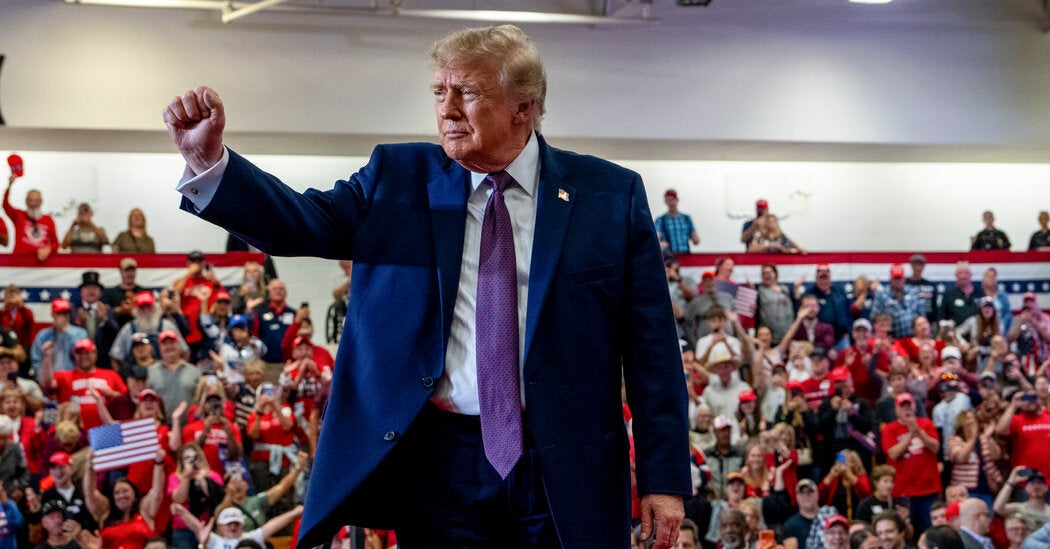
And in recent weeks, Mr. Trump’s pitch has faced pushback from an old foil: former President Barack Obama, who is also traveling through competitive states.
Their speeches on Wednesday evening offered a striking split-screen. As Mr. Trump bragged in Ohio about his ability to pass cognitive tests, Mr. Obama assailed him in Atlanta for higher prices and rampant corruption.
They also continued their tiff over a joke Mr. Obama made about Mr. Trump’s décor choices. The former president had said the White House now looks like “Saddam Hussein opened a Cheesecake Factory,” rankling Mr. Trump. Mr. Obama on Wednesday characterized the president’s pique over his comment as “distractions” and “phony outrage.”
The two men will be joined by a third president on Friday. Former President Bill Clinton is scheduled to campaign in Mississippi, where Scott Colom, the Democratic nominee for Senate, has mounted a surprisingly strong challenge in a state that last elected a Democrat to the chamber in 1982.
Tens of millions of Americans have already cast their ballots, as early voting is well underway. As of Wednesday night, more than 40 million had either gone to vote or mailed in their ballot, according to data collected by the University of Florida’s Election Lab, which tracks early voting.
Along with dispatching Mr. Trump to rally the MAGA base, the White House has also turned to pre-emptive legal action. Last week, Mr. Trump directed the Department of Justice to sue to block certification of the Senate race should Mary Peltola, the Democratic candidate in Alaska, win.
He went further on Wednesday, calling for her criminal prosecution after a New York Times report that her campaign was involved in recruiting candidates to draw votes from the Republican incumbent, Senator Dan Sullivan, including one with the same name as him.
Later on Wednesday, Alaska’s Republican governor, Mike Dunleavy, said he was ordering an investigation into whether Ms. Peltola’s campaign should face criminal charges or civil penalties.
Here’s what else we’re covering:
New Hampshire debate: Representative Chris Pappas, a Democrat, and former Senator John E. Sununu, a Republican, had a tense debate, fighting over Social Security and the cause of the high cost of living. The two men are battling for the seat of the retiring Senator Jeanne Shaheen, a Democrat. Read more ›
A split city: In Mason, Mich., residents are united against a proposed data center that they say is a threat to their way of life. But they are divided on which House candidate — Tom Barrett, the Republican, or William Lawrence, the Democrat — is best suited to protect them from the development. Read more ›
No show of support: After Representative Haley Stevens lost Michigan’s Democratic Senate primary to Dr. Abdul El-Sayed in August, she pledged to campaign with him. But the election is now days away, and the two have yet to appear together. Read more ›
But Mr. Droscha, 64, said he wasn’t sure if Mr. Lawrence could deliver on his promises, especially without a Democrat in the White House and with control of Congress unclear. So, he said, he would likely vote again for the familiar candidate, Representative Tom Barrett, a Republican seeking re-election.
“You can say it 100 times a day, every day, but is it going to happen?” Mr. Droscha said last week, before feeding hay to his cows. “That’s the distrust I have.”
The anger toward the data center boom rippling through rural America permeates the front lawns, council meetings and daily conversations in Mason, a mid-Michigan county seat of about 8,300 people where residents view the potential 400-acre project as a serious threat to their groundwater, property values, environment and quality of life.
Their shared backlash has upended local politics, driving emotionally charged public meetings where residents asserted that city officials did not speak openly about the developers’ plans. In exquisite timing, it has also collided with a marquee federal contest, the most expensive House race of the midterms and one that could change the balance of power in Congress.
Even as Mr. Lawrence and Mr. Barrett both oppose the construction of a data center near Mason, their contrasting remedies have managed to divide the community at the rare time neighbors are uniting across party lines.
“It’s the biggest issue for City of Mason voters, absolutely,” said Meg Short, 41, who works in real estate, adding that she wasn’t ready to return the ballot she had marked for Mr. Lawrence and Dr. Abdul El-Sayed, the Democratic candidate for Senate. “It’s been hard to choose on the state level who I want to represent me.”
Mr. Lawrence, a progressive who has positioned himself as an anti-corporate outsider, has made reining in tech giants through federal intervention a central pillar of his campaign. On the Republican side, Mr. Barrett has called for repealing state tax incentives for developers but opposes federal action, saying that zoning decisions should remain entirely in local hands.
Some voters around Mason said that Mr. Lawrence’s engagement with the anti-data center community had appealed to them. Zachary Bartels, 48, a conservative who lives about a third of a mile from the proposed data center site, recalled Mr. Lawrence receiving thunderous applause after a speech against data centers in a city council meeting last month.
“He just earned — not even necessarily our vote — but the right to be in the room by being in the room so many times,” said Mr. Bartels, a pastor who has also spoken in recent municipal meetings.
Mr. Bartels said he was undecided about who would receive his vote, even though he had helped elect Mr. Barrett and President Trump. But, Mr. Bartels added, neither House candidate had offered a detailed enough plan on how they could help Mason from Congress.
“I’m kind of going both ways,” he said.
Much like Mr. Bartels, other voters said they were torn. They said they didn’t trust local officials to stop the project. But they were also hesitant to embrace federal regulation or to trust that the progressive candidate, Mr. Lawrence, could make meaningful changes.
They have seen how quickly the nationwide data center surge has suffused Michigan: Favorable tax laws, a cool climate, vast acreages and easy access to water for cooling have made it among the more preferred destinations for artificial intelligence nationwide.
Huge projects have advanced elsewhere in the state, including a $16 billion campus backed by OpenAI and Oracle in Saline Township. Mason-area residents seized on the project’s approval as proof that local governments lacked the legal and financial power to resist big corporations and that state laws favored tech giants over small towns.
The issue flared in Mason late last year, when city officials considered a new zoning ordinance addressing a potential data center. It passed this year, with officials saying they established guardrails, but residents said they were far too weak. The ordinance was later repealed.
Residents also forced a recall vote for a long-serving city councilwoman on the Nov. 3 ballot and began trying to unseat the mayor.
The discussion intensified in August when local landowners working with an Ohio-based developer petitioned the state to annex 400 acres of farmland into the City of Mason to secure municipal water and sewer for a data center, something many residents learned through public-records requests.
City officials have said the data center would bring tax revenues. The Trump administration has also said that the buildup of A.I. infrastructure is necessary to win technological supremacy over China.
A representative for the developer, Comino Development, and the property owners’ lawyer did not respond to requests for comment.
At a city council meeting last week, about 200 residents toting signs, shirts and hats declaring “No Data Centers in Mason” packed City Hall, many of them there to offer public comments before the council voted on a plan for a proposed zoning rewrite. (They ultimately rejected it.)
One resident, Doug DeLind, a sculptor who lives next to the proposed site, took the bold step of suggesting candidates they could support. Partisan divisions surfaced.
When Mr. DeLind said he endorsed Dr. El-Sayed, who has called for a ban on superintelligent A.I. and a cabinet-level agency to regulate the fast-developing industry, someone in the crowd said, “Terrorism.”
“Not terrorism,” Mr. DeLind replied, joining residents recoiling at the baseless accusation leveled at Dr. El-Sayed throughout his campaign that he had ties to terrorist groups.
When Mr. DeLind mentioned Mr. Lawrence’s name, someone said, “Socialist!”
“He is,” Mr. DeLind shot back, drawing applause. “I’m glad we got that out there.”
Mr. Lawrence has let his membership in the Democratic Socialists of America lapse, but still identifies as a progressive. Even with his left-wing platform, he said the issue had given him an opening to talk to conservative voters.
“There are some people that are voting with me on this issue for sure, including people who have been Republican voters in the past who see me standing alongside them,” Mr. Lawrence said in an interview.
For his part, Mr. Barrett said that he did not believe he was losing voters on the data center issue, adding that Mr. Lawrence’s proposal for a federal moratorium was unrealistic.
“Are you going to get enough votes in the U.S. Senate to do that?” he said in an interview. “And then, is President Trump going to sign it, knowing that he’s on record opposing these restrictions?”
Mayor Russell Whipple of Mason, a nonpartisan official, disputed residents’ accusations that he had withheld information about his conversations with data center developers. He said that residents’ fears about the dangers of such a center were exaggerated, adding that the city would establish standards for noise, as well as air and water quality.
But he said he expected the midterms to be “a little more blue” in his city because of Mr. Lawrence’s visibility.
“I had an old newspaperman tell me 30 years ago: He said, ‘In small town elections, the most signs wins,’” Mr. Whipple said. “There’s more Will Lawrence than Tom Barrett signs.”
The odd sentence was a sign that artificial intelligence tools had been used to write parts of his website. A staffer had apparently asked an A.I. chatbot to steer clear of President Trump in its writing. (Mr. Pratt said in a statement posted to Facebook that the passage was “an internal note” and that his campaign had used A.I. tools to “clean up the wording.”)
It was one example among hundreds identified by The New York Times in which candidate biographies and position papers were apparently written with A.I. tools.
A.I. has increasingly seeped into all parts of the nation’s electoral process, rewriting the playbook for how politicians connect with voters. Money-strapped campaigns, eager for shortcuts, have rapidly adopted several A.I. tools, even though many of the candidates have not spoken publicly about their use.
“If it improves the quality of campaign information” for voters seeking information about candidates, “that can be a good thing,” said Lisa Argyle, an associate professor of political science at Purdue University, who studies generative A.I. and political communication. The problem arises when candidates begin prompting A.I. “without really reflecting in a meaningful way on their own views and what they want to do as a representative.”
Chatbots, like OpenAI’s ChatGPT and Google’s Gemini, are capable of writing glistening prose almost instantly, after being provided with a set of simple instructions, called prompts. When producing their own text, they have a tendency to drift toward the most likely writing styles — and often the most predictable or clichéd.
To identify campaign sites produced with A.I., The Times downloaded text from the websites of 695 candidates running for House and Senate. That content was then analyzed by two A.I.-text detectors: Pangram and GPTZero. Both services can make errors and can be fooled if writers significantly rework A.I. generated text. But a 2025 study from the University of Chicago found that with the most common types of online writing, Pangram was accurate more than 99 percent of the time, with GPTZero not far behind.
The detectors found there was high likelihood that 291 candidate websites were written with A.I. tools. One hundred fifty had pages flagged as generated by A.I., while the detectors found the remaining sites were a mix of human and A.I. writing.
The A.I. detectors work by detecting subtle linguistic patterns like character frequency, word order and rhythm — all signs that are often imperceptible to humans and difficult for politicians to replicate by accident. That makes the tools less likely to falsely identify mere clichéd writing, which is common in campaign writing, as A.I.-made.
Many passages across the websites used telltale signs of A.I. writing. The systems, trained on billions of passages of text from across the internet, tend to repeat phrases and writing styles that were eventually identified by A.I. watchdogs.
“The cost of living isn’t just ‘high’,” Stephanie Vargas, a Republican House candidate in California, said on her platform page, which was flagged as A.I.-written by detectors. “It’s being driven up by government spending.”
That kind of passage — a phrase that includes the words “isn’t just,” followed by a phrase beginning with “it’s” — was repeated across dozens of campaign websites flagged as having A.I. text, including these:
From Ray Pooley, a Democratic House candidate in Michigan: “True strength isn’t just a mighty military. It’s the wisdom to know when to use it.”
From Patrick Halpin, a Democratic House candidate in New York: “Long Island’s environment isn’t just something we enjoy. It’s what makes this a great place to live.”
The tools identified each of those websites as having been heavily if not entirely written by A.I. tools.
“A.I. has allowed me to be able to run a campaign effectively,” said Dale Pabst, the campaign manager for Mr. Halpin, who is running against Andrew Garbarino, a well-funded Republican incumbent. “It allows us to compete with another campaign that has a 20-time financial advantage over us.” He said that he pulled together Mr. Halpin’s platform webpage in a few days using A.I. tools, instead of a couple of weeks.
The other campaigns did not respond to requests for comment.
While more than 30 states have laws requiring disclosures around A.I.-generated content in campaign ads, such regulations tend to focus on deceptive replicas of candidates, known as “deepfakes.” There are no laws requiring A.I.-written text to be disclosed.
Political operatives have adopted A.I. in a variety of ways this year, seeing the tools as useful for the difficult and monotonous work of campaigning, at least behind the scenes. That includes managing voter databases, writing campaign messages and processing feedback from voters through door-knocking operations nationwide.
Some candidates have also relied on A.I. to help guide their campaigns, turning to chatbots as a cheap form of campaign manager.
But the integration of A.I. in campaigns also threatens to send conflicting messages to voters, especially as lawmakers push for more A.I. regulations and fight plans for enormous data centers that make A.I. possible.
Many of the campaigns flagged for having A.I. text were congressional races with limited funds and long-shot odds. But some had far more resources.
The A.I. detectors found that the online biography for Ken Paxton, the Republican candidate for Senate in Texas, was heavily written by A.I. His race is one of the most expensive nonpresidential races in U.S. history, with ad spending surpassing $500 million.
“Ken Paxton is a fearless conservative, a relentless fighter, and a true defender of Texas values,” the site said. Pangram assessed the sentence as “100 percent A.I.,” indicating it was fully written by an A.I. model.
A representative Mr. Paxton’s campaign declined to comment.
The campaign website of James Talarico, Mr. Paxton’s Democratic opponent, was also tested for A.I. writing. It received a score of “100 percent human.”
Mr. Pappas and Mr. Sununu are running for a seat currently held by the retiring Senator Jeanne Shaheen, a Democrat. Both parties view the race as crucial to their hopes of retaking the chamber. Mr. Pappas, who leads in polling, seized opportunities to attack Mr. Sununu and present him as beholden to President Trump — perhaps reflecting a degree of discomfort that Mr. Sununu has been able to keep the race competitive by presenting himself as independent of the unpopular president.
Here are five takeaways from the night.
Neither candidate is new to voters.
Sometimes, a political candidate bursts onto the scene out of nowhere. That is not the story of New Hampshire in 2026.
The Senate race pits Mr. Pappas, an understated, four-term Democrat who has spent much of his adult life in elected office, against Mr. Sununu, a former congressman and one-term senator who won this same seat in 2002 before losing it in 2008. Mr. Sununu is the son and brother of former New Hampshire governors. Mr. Pappas’s family is best known for its popular restaurant, the Puritan Backroom in Manchester.
Mr. Pappas, 46, sought to present himself as a “new generation of leadership.” Mr. Sununu, 62, insisted he could shake things up in Washington after being first elected to Congress 30 years ago.
And each nevertheless accused the other of representing the status quo.
“Chris Pappas talked about all the things he wants to do and wants to accomplish, but he’s been there for eight years, and he hasn’t gotten the job done,” Mr. Sununu said.
“This election is about Team New Hampshire versus Team Trump,” Mr. Pappas said. “Fact is, John Sununu was our senator before and, if he was as effective and as independent as he says he was, then he’d probably still be our senator today. But voters had another idea.”
Both bragged about challenging their own party …
Mr. Sununu’s candidacy depends on his ability to convince voters in New Hampshire — a state that has never really warmed to Mr. Trump — that he is independent of a president who endorsed him early in the race.
So he rattled of a list of his differences with the president: the trade war with Canada, the war in Iran, the $1.8 billion fund Mr. Trump proposed for victims of “weaponization” by the Department of Justice and his now-scuttled plan to televise a military execution.
“When Donald Trump leaves office in two years,” Mr. Sununu asked, “where does the country go?”
What was more surprising, perhaps, was how frequently Mr. Pappas made a point of spelling out his differences with national Democrats like former President Joseph R. Biden Jr.
“I called out Joe Biden when he was president because he let things get out of control on the southern border, and it created a crisis,” Mr. Pappas said. “And I’ve taken on my own party on immigration, and I’ve gotten a lot of flak for it.”
… and working with the other side.
It’s an era of deeply tribal politics, but things are split in New Hampshire. Republicans have total control over state government, while Democrats hold each seat in the federal delegation.
That might be why, in a somewhat retro twist, both candidates were eager to talk about how frequently they reach across the aisle.
Mr. Pappas talked about his support for one bipartisan measure after another: a ban on stock trading by members of Congress, a measure that would provide heating assistance to low-income people, immigration measures and more.
Mr. Sununu said that he had worked with Democrats plenty, and he praised Senator Susan Collins of Maine — another Republican who likes to talk up bipartisanship — as a “model.”
“I even wrote bipartisan legislation with Hillary Clinton to improve auto safety and protect kids,” he said.
Sununu climbed in his Wayback Machine.
Mrs. Clinton wasn’t the only reference Mr. Sununu made that seemed, well, dated.
He talked about demanding changes to the Patriot Act during the presidency of George W. Bush. He said he was the first Republican to call for the firing of Alberto Gonzales, Mr. Bush’s attorney general.
He grew visibly annoyed as he parsed an attack by Mr. Pappas over legislation privatizing Social Security during his term in the Senate.
“That wasn’t my bill, Chris,” Mr. Sununu said. “OK, you can’t ascribe every crazy bill ever introduced in Congress to me. That’s dishonest.”
He also chafed when Mr. Pappas said his net worth had grown to an “estimated” $35 million after he left the Senate.
“Goodness knows, I’m not worth $35 million,” he said, before accusing Mr. Pappas of being unable to read a financial disclosure form, the federally required filings that publish broad ranges for public officials’ assets. “Now, I blame that on the time he spent at Harvard.” (Mr. Sununu attended M.I.T.)
Pappas demurred on impeachment.
Some Democrats are hungry for candidates who want to punish Mr. Trump for what they see as the excesses of his second term — but that’s not the audience Mr. Pappas was playing to.
Asked about the prospect of impeaching Mr. Trump if the Democrats gained a majority in Congress, Mr. Pappas called instead for “focused hearings” and “oversight.”
“We need to stay focused on how we can solve problems, make lives better for Granite Staters and lower costs,” Mr. Pappas said.
Mr. Sununu nevertheless accused him of being too liberal for New Hampshire. He said Mr. Pappas voted too often with former House Speaker Nancy Pelosi and knocked him for campaigning alongside former Vice President Kamala Harris and Gov. Gavin Newsom of California.
“I don’t know what Chris’s infatuation is with California, but it’s not New Hampshire, and it’s not a good model for our state,” Mr. Sununu said.
Mr. Pappas reminded him that Ms. Harris won New Hampshire in 2024, and that Mr. Trump had not.
“Here in New Hampshire,” he said, “we welcome out-of-town guests.”
“Of course, I’m voting for our Democratic nominee for Senate,” Ms. Stevens said on CNN. “I’m voting for the Democratic ticket. But I want to encourage this campaign to shut out the hate and to call it out and to make people who are in my coalition, right — make them feel comfortable about coming to the polls.”
Ms. Stevens’s remarks are an unwelcome development for Dr. El-Sayed in a high-stakes race. It is rare for the loser of a primary who has endorsed the winner to be publicly critical this close to the general election.
It’s not the first time it has happened in this year’s midterms. In Texas, Senator John Cornyn has missed few opportunities to needle Ken Paxton, who beat him for the Republican nomination in May. Mr. Cornyn, however, has not made as many cable news appearances as Ms. Stevens.
Ms. Stevens, a staunch supporter of Israel, said on CNN that she is representing Jewish Michiganders who supported her and are angry about advertising that they view as antisemitic. The campaign of Dr. El-Sayed, a vocal critic of Israel, has said it was “not affiliated in any way” with the ad that has come under scrutiny. But Ms. Stevens said that does not go far enough.
“He can disavow these ads, and he can reassure these undecided voters who are still out,” she said.
A spokeswoman for Dr. El-Sayed’s campaign declined to comment on Ms. Stevens’s remarks.
Dr. El-Sayed, speaking to reporters earlier Wednesday, dismissed concerns that Ms. Stevens’s fiancé was backing Mr. Rogers over concerns about Dr. El-Sayed’s Israel policy.
“I’m building a movement to take on the challenges that Donald Trump is facing,” Dr. El-Sayed said. “If folks have issues that are more important to them than that, that’s fine — that’s their choice.”
The public criticism from Ms. Stevens made clear that there has been little private reconciliation between the primary rivals despite her vow to vote for him. While Ms. Stevens couched her public remarks as constructive criticism, she has been more critical of Dr. El-Sayed in private, according to a person who has spoken with her, leaving some allies wondering if she would in fact vote for him.
She said in a text message on Wednesday that she would not appear with Dr. El-Sayed in the campaign’s final week. “I am not campaigning with Abdul,” she wrote.
Ms. Stevens’s criticism of Dr. El-Sayed had been building.
On Sunday, in another CNN interview, she said, “I can’t say that I agree with everything that’s gone on.” She questioned Dr. El-Sayed’s efforts to appeal to Black voters and suggested that he was too focused on foreign policy.
On Wednesday, Ms. Stevens’s fiancé, Jason Turkish, a Jewish Democrat, said he planned to vote for Mr. Rogers, and joined him at an event with the Republican Jewish Coalition in the evening.
“I watched Haley graciously concede an election, and open her arms and her heart to Abdul on Aug. 5, the day after the primary, and I prayed that he would moderate, and he hasn’t,” Mr. Turkish said in an interview.
Mr. Turkish said he was frustrated after Dr. El-Sayed declined to answer a question at an October debate about whether Iran or Israel was a greater threat to the United States. And Mr. Turkish expressed disappointment that the day after the primary, Dr. El-Sayed was joined by another Democratic primary contender, Mallory McMorrow, who finished a distant third after dropping out weeks before the primary, rather than Ms. Stevens at a celebratory news conference in Detroit.
Dr. El-Sayed’s campaign said that its leadership remains in frequent contact with Ms. Stevens and that the congresswoman had campaigned on his behalf at a mid-October Democratic event in Oakland County, which she had carried in the primary. It also said Dr. El-Sayed had brought on several staff members from Ms. Stevens’s campaign after the primary.
Dr. El-Sayed’s campaign said it had also asked Ms. Stevens to campaign alongside him. It did not respond to a question about why that had not happened recently.
“The Abdul campaign is grateful for Congresswoman Stevens’s immediate and sustained support,” Roxie Richner, a spokeswoman for Dr. El-Sayed, said in a statement.
Ms. Stevens’s tepid support — and the awkward dynamic between the two Democrats — is one of the most public points of tension among Democrats in Michigan, who remain far more divided than party leaders had hoped to be going into the election next Tuesday.
Opinion polls show that Dr. El-Sayed and Mr. Rogers are running neck-and-neck in Michigan, a traditional battleground state where a Republican has not won a Senate race in more than three decades. The battle between Dr. El-Sayed and Mr. Rogers could play a critical role in the national fight for Senate control.
Israel remains a dividing line for some Democrats in the state, and Jewish voters say they are torn about whether to support Dr. El-Sayed, who has called Israel’s government “evil.” Dr. El-Sayed is also trying to overcome tensions between Black and Arab American voters in the Detroit area.
Dr. El-Sayed and Ms. Stevens clashed regularly over Israel during the primary race, with Dr. El-Sayed assailing Ms. Stevens over support she received from the American Israel Public Affairs Committee, a lobbying group. AIPAC is now backing Mr. Rogers.
Lonnie Scott, a Democratic consultant in Michigan, said Ms. Stevens’s recent commentary was not “helpful” and that “Haley should be a team player.” But, he said, Dr. El-Sayed “should be doing more outreach.”
“I don’t place blame on one over the other,” Mr. Scott said.
Representative Debbie Dingell, a Michigan Democrat who stayed publicly neutral in the primary, defended Ms. Stevens.
“I’m sick and tired of people blaming Haley,” Ms. Dingell said.
Corrected on
Oct. 29, 2026
:
An earlier version of this article misidentified the Republican who has not made as many cable news appearances as Ms. Stevens. It is Mr. Cornyn, not Mr. Paxton.
We acknowledge mistakes in our reporting with corrections. If you spot an error, please let us know at corrections@nytimes.com.Learn more.
“Deliberately tricking voters into casting their ballots for someone else strikes at the integrity of our elections,” he said in a post on X. “Anyone or any organization found to have broken the law must be held accountable.”
Earlier in the day, President Trump demanded that Ms. Peltola, a Democrat, be removed from the ballot and prosecuted without explaining what crime, if any, was committed.
“They said they didn’t do it, and they did do it, and they got caught,” Mr. Trump told reporters on his way to a rally in Ohio, describing the Democratic effort as “voter fraud at the highest level.”
The secret plan involved senior advisers to both the Peltola campaign and the top campaign committee supporting Senate Democrats. The retiree, who is from a small Alaskan fishing village, was recruited because he shared the Republican incumbent’s first and last name.
Both Sullivans will appear on the ballot on Tuesday alongside Ms. Peltola and a fourth candidate, Gerald Heikes. Mr. Trump called for Daniel J. Sullivan’s removal from the ballot.
Mr. Trump wasn’t the only Republican to object to the plan. But proving that a crime was committed is likely to be difficult. State leaders had tried earlier this year to remove Daniel J. Sullivan from the ballot, but the Alaska Supreme Court ruled that nothing in state law nor in the U.S. Constitution allowed it to rule on the motives of a candidate.
And the Peltola campaign is hardly the first political committee on either side of the aisle to engage in ballot-stacking.
Many Democrats defended the plan by pointing out how commonplace such actions are. Republicans have employed them in a variety of states, including Alaska.
Some Democrats even said that the intricate plot was a welcome sign that the party was fighting tooth and nail to oppose Mr. Trump’s agenda in what they viewed as an existential election.
Lauren French, a spokeswoman for the Senate Majority PAC, a Democratic group aligned with Senator Chuck Schumer of New York, the minority leader, posted a series of examples of G.O.P. chicanery on X. Her posts included the instance of a super PAC with Republican ties spending hundreds of thousands of dollars in Alaska to prop up Democratic and Green Party candidates in this year’s Senate primary.
In 2024, the Alaska Republican Party participated in a lawsuit arguing to keep on the ballot a Democratic candidate for the U.S. House who was a federal inmate campaigning from a prison in New York.
Also sharing examples was Chris Meagher, a veteran Democratic strategist who served in the Biden administration.
“The reality is that while it’s maybe an interesting story, this sort of thing is not really new,” he wrote on X.
Ms. Peltola herself appeared to brush off the news at a rally on Wednesday, saying it was “just another distraction.”
A spokesman for Senator Sullivan said in a statement that Ms. Peltola and her campaign “have spent months gaslighting Alaskans, denying a scheme they were running all along.”
Before The Times published its article, the Trump administration had already filed a lawsuit calling for the Alaska Senate race not to be certified if Senator Sullivan lost. That suit did not, however, allege specific illegal activity. And in a Fox News interview on Wednesday, Attorney General Todd Blanche seemed to concede that laws may not have been broken. “It should be!” he exclaimed when asked if the Democratic plot was illegal.
The lawsuit, filed by the Justice Department last week at Mr. Trump’s direction, is unusual because it preemptively demands an investigation only if the incumbent senator loses. It accuses Daniel J. Sulivan, who has said he voted for Democrats in the last three presidential races and for Ms. Peltola in her 2022 and 2024 congressional campaigns, of trying to “dupe Alaska’s voters into believing that he is Senator Sullivan.”
Chief Judge Sharon Gleason of U.S. District Court in Alaska agreed to a motion by the Alaska elections division to move quickly, giving the Justice Department until Thursday afternoon to respond to a motion to dismiss the case.
She also noted in her rulings that the administration waited to sue until “after Alaskans had already begun casting their ballots for the November 2026 election — and nearly four months after the Alaska Supreme Court directed the Division of Elections to include Daniel J. Sullivan on the ballot.”
The Peltola campaign and the Democratic Senatorial Campaign Committee have asked to join the case, noting that the state election office tried to block Daniel J. Sullivan from the ballot before state courts overruled them.
The Trump administration initially opposed that request, but on Wednesday afternoon it lifted its objection, “given a change in circumstances.” The administration cited the Times article detailing what federal lawyers called a “sprawling conspiracy to recruit and prop up a sham candidate for the purpose of deceiving Alaskan voters.”
Scott Kendall, a lawyer in Anchorage who has worked for Senator Lisa Murkowski, a Republican, and former Gov. Bill Walker, an independent, said the Democratic effort to influence the ballot might amount to a “dirty trick,” but one with a long history in American politics.
“Go back to J.F.K. There’s a long history of this kind of chicanery,” he said, noting that in John F. Kennedy’s first campaign for Congress, his father’s political operation was accused of paying a man to run against a better-known candidate with the same name, splitting the vote in a crowded Democratic primary.
Mr. Kendall, the architect of Alaska’s ranked-choice voting system, said the system could mitigate potential confusion because Republican voters who rank both Sullivans on their ballot are likely to see their vote go eventually to the incumbent senator.
One Alaska Republican not known to embrace the theatrics of the Trump administration also reacted with anger to the news of the Democratic plan.
“While some may try to write this off as just how politics works now, ballot-stacking should have no place in our electoral process,” Ms. Murkowski, a moderate Republican who endorsed Ms. Peltola in her previous campaigns but is supporting Senator Sullivan this year, said in a statement. “Alaskans deserve the honest truth from Mary and her campaign — what has been revealed is a pattern of lies and coverups and a culture of deception.”
Dan Watson contributed reporting.
Politics
President Trump returns to Ohio for midterm rally
9:06 pm ET October 28, 2026
Trump finishes Chillicothe address
President Trump wrapped up his Chillicothe event at around 9 p.m.
8:43 pm ET October 28, 2026
Trump hints Ohio could land Space Academy … if Husted wins
Jessie Balmert
Ohio has a bid to bring the U.S. Space Academy to the state, pitching it as an ideal location because of Wright-Patterson Air Force Base and NASA’s Glenn Research Center near Cleveland. Trump hinted he would give it to Ohio if Husted won.
“I want you to know that if Jon Husted wins, I am going to consider putting the Space Academy right here in Ohio,” Trump said. “Everybody wants it.”
8:13 pm ET October 28, 2026
Trump defends Ramaswamy’s use of Acton’s mother in ad
Jessie Balmert
Trump came to Ramaswamy’s defense over the ad featuring his opponent’s estranged mother.
“Vivek was treated very unfairly. He had the mother of his opponent say that her daughter was a liar,” Trump said of the ad. “And the press, the fake news, criticized him.”
“The mother said that Amy Acton, the daughter, is a liar, that she’s no good, that she lied about the opponent. How the hell is that his problem?” Trump asked. Ramaswamy rose to his feet, clapping as the crowd cheered for him.
8:05 pm ET October 28, 2026
Trump takes credit for removing Haitians from Springfield
Jessie Balmert
Trump took credit for removing Haitian immigrants from Springfield, Ohio, by ending their temporary protected status. He said the town had “went to hell.”
“You know what, the Haitians have moved out.”
7:50 pm ET October 28, 2026
Trump urges support for Issue 3
Shelby Reeves
In addition to supporting Republican candidates, Trump also supported Issue 3 which would put the state’s photo ID requirement in the state Constitution.
“They don’t want voter ID, why? Because they want to cheat,” Trump said of Democrats.
7:42 pm ET October 28, 2026
Protesters removed
Shelby Reeves
At least 2 people have been removed from President Trump’s rally in Chillicothe. Protesters started yelling right after Trump began his address.
7:37 pm ET October 28, 2026
Trump praises Husted
Jessie Balmert
President Donald Trump praised Sen. Jon Husted’s football prowess, and said that the Republican senator would win in a fight.
“I looked at him as being a very high-quality, nice man that if I got in a fight with him, I’d rip his heart out, and it probably would have been just the opposite.”
“Boy, oh boy, since I explained to people that he was a phenomenal, not a good, a phenomenal football player, you have really taken on a new life.”
7:35 pm ET October 28, 2026
Trump live now in Chillicothe. Watch now
6:30 pm ET October 28, 2026
Husted says ‘life better’ with Brown out of office
Jessie Balmert
Ohio Sen. Jon Husted talked about how he loved Ohio, which he called the “greatest state in the nation,” and criticized his opponent, Democratic former Sen. Sherrod Brown.
“He’s been in office for over 50 years. Can you name a single thing that he’s done to make their life better?” Husted asked. “The closest anybody came to giving me a good answer is they said ‘Yes, he lost two years ago to Bernie Moreno, and that made my life better.’”
Husted advocated for prohibiting undocumented immigrants from obtaining driver’s licenses, something that’s illegal in Ohio but not elsewhere.
“Why do people like Sherrod Brown care more about people who are illegally in this country than he cares about you?” Husted asked.
Husted described the final days of the Ohio elections like a slugfest of a football game.
“That’s what happens in a game is that they want to hit you so hard and you want to hit them back so hard that it saps your will, and at some point one team breaks and the other team wins,” Husted told the crowd. “Are you going to break?”
“No,” the crowd replied.
6:25 pm ET October 28, 2026
President Trump has landed in Ohio
Anthony Shoemaker
President Trump landed in Ohio at Rickenbacker International Airport at around 6:05 p.m. on his way to a rally in Chillicothe.
6:11 pm ET October 28, 2026
Ramaswamy says he’ll end sanctuary cities, cut property taxes
Jessie Balmert
Ohio gubernatorial candidate Vivek Ramaswamy criticized Acton for how she handled the COVID-19 pandemic as health director, including closing schools and workplaces. Gov. Mike DeWine has said those decisions were his.
“I am running against a woman who has already shown you who she is and what she’s made of,” Ramaswamy said. “We say ‘absolutely no’ to Amy Acton.”
Ramaswamy pitched ending sanctuary cities and slashing property taxes.
“Put that money in your pocket where it belongs,” Ramaswamy said. He has proposed slashing property taxes back to levels at the end of the pandemic.
Ramaswamy didn’t mention the ad he’s running that features Dr. Amy Acton’s estranged mother. He criticized the media for covering up other aspects of her resume.
6:04 pm ET October 28, 2026
Treasurer candidate Edwards says Brown needs to retire
Shelby Reeves
Ohio treasurer candidate Jay Edwards says people in the Appalachian area of Ohio believe in three things:
God
Guns
Getting illegals out of here.
“We believe if you’re here illegally, it’s time for you to get the hell out of here,” Edwards said. Then, the crowd chanted “deport.”
He said he wants to send Brown to permanent retirement in six days and when Republicans win they will celebrate in Appalachia.
“Sherrod Brown is like a cat that showed up on your porch in 1974, and they just won’t go away,” Edwards said.
5:40 pm ET October 28, 2026
Sprague pushes support for Issue 3
Jessie Balmert
Ohio Treasurer Robert Sprague, who is running for Ohio secretary of state, talked about the importance of having photo ID to vote.
“If you have to show photo ID to buy a beer in the state of Ohio, I think that you should have to show a photo ID to be able to vote in the great state of Ohio,” he said.
Issue 3 on the Ohio ballot would put the current photo ID requirement in the Ohio Constitution.
5:31 pm ET October 28, 2026
Protester calls Trump supporters ‘pedophile protectors’
Cole Behrens
Gwyn Stonerock, 63, of Chillicothe was one of around a dozen protestors near the line to enter the rally, and was using a megaphone to lampoon Trump supporters as “pedophile protectors.” A number of Trump supporters engaged with her, including by filming her or insulting her or other protestors.
Stonerock told The Dispatch that she wanted to use her free speech and “protect children.”
“That’s what (Trump) supporters like to do, come up to you and start some problems,” Stonerock said. “They like their rights but they don’t like us to have rights.”
She described herself as a “God-fearing woman” who was sick of the war in Iran and Trump’s approach to the presidency.
“I know God is looking down and thinking ‘What is going on?'” Stonerock said.
5:20 pm ET October 28, 2026
Trump supporter: ‘I’ve never seen a country so divided’
Shelby Reeves
People are traveling from hours away to attend this midterm rally. Greg Craigun from Indiana came with two of his sons because they had never been to a Trump rally and he wanted them to experience it.
For Roger Bellar, 73, of Chillicothe, the event is a little closer to home. This is his second Trump rally
“I had to come here to see him,” said Bellar.
He wants more people to listen to the things he says, as he believes it helps the country, While Bellar isn’t against all Democrats he believes the party often votes down party lines and opposes things just because Trump supports them.
“I’m 73 years old and I’ve never seen a country so divided.”
5:16 pm ET October 28, 2026
President Trump on way to Ohio
Anthony Shoemaker
President Trump has boarded Air Force One on his way to Chillicothe for a rally ahead of Tuesday’s election.
5:07 pm ET October 28, 2026
Trump supporter said Ramaswamy ad featuring Acton’s mom was ‘cruel and rude’
Cole Behrens
Jeff Peecher, 66, says he thinks he got a ticket but was not sure he would be able to get in because of the crowd. He supported Trump in 2024 and said he was hoping to hear how Trump was planning to end the war in Iran.
He said he has gone “both ways” on both Ramaswamy and Husted, and said he has read good things about Vivek and also questionable things about how he amassed his fortune. Regardless, he said he still think he is the “viable” candidate over Acton.
Regarding his attack ad against Acton, he said he thought it was “cruel and rude.”
“But that’s politics,” Peecher said. “They all do it, that’s a little extreme. But that her mother would come on and do that, it means a lot to me too that she would come on and say that. Maybe they were estranged – still.”
3:15 pm ET October 28, 2026
‘It’s not every day you get to see the president’
Cole Behrens
Robert Moore, 57, of Waverly, was attending the Oct. 28 rally because “it’s not every day you get to see the president.” He said he believed Ohio had good Republican candidates across the board.
“(We’re) just hoping to stay supporters, and continue to bring people out and get them to vote,” Moore said.
Moore said he was unconcerned about polling or Republican turnout. He also said Republican gubernatorial candidate Vivek Ramaswamy’s attack ad on Democratic candidate Amy Acton featuring her estranged mother doesn’t bother him.
“The political ads are what they are and they’re disgusting on both sides,” Moore said. “Do we want a person that has credibility running a business or a person who crawls under a desk?”
3:00 pm ET October 28, 2026
Chillicothe mayor tells Trump to ‘show some kindness’
Shelby Reeves
Mayor Luke Feeney criticized U.S. Sen. Jon Husted and offered a message to President Donald Trump hours before Trump’s rally in Chillicothe: “Show some kindness.”
Feeney’s criticism centered on the closure of the Pixelle Specialty Solutions paper mill in Chillicothe. When the company announced the mill would close in 2025, Husted was among Ohio politicians who opposed the shutdown. In April 2025, Husted joined U.S. Sen. Bernie Moreno, Gov. Mike DeWine and others at a news conference supporting hundreds of workers affected by the closure.
Feeney said politicians in Washington failed the area despite promises to help workers.
“A promise means nothing without action,” Feeney said.
Asked about Trump’s visit, Feeney said he believes the president is coming to Chillicothe so close to Election Day because Republicans are worried about the election’s outcome. He said Chillicothe welcomes Trump and his supporters despite their political differences.
“At the end of the day, what I would hope the message I could deliver to him is to show some kindness,” Feeney said.
2:25 pm ET October 28, 2026
Protester: ‘Everything is upside down’
Cole Behrens
Becky Borland, 76, a Chillicothe resident, was among a dozen or so protestors demonstrating around 2 p.m. at the base of the hill leading up to the event center where Trump was speaking.
Borland said she felt the country was broken and Trump was to blame.
“Everything is upside down – everything is for the ultra rich and not for the average person,” Borland said.
As they protested, Trump supporters rolled down their windows and shouted at the demonstrators or expressed their support for the president.
Borland said she says the same thing to each of them: “have a good day.”
“They’re allowed to have their views we’re allowed to have ours,” Borland said. “If it keeps on, we won’t be allowed to – that’s what I’m here for, because democracy is at risk.”
Lisa Wayland, 67, of Chillicothe, was among those protesting the rally. She said she was not against Republicans, she was against Trump.
“This is about morals ethics, bringing dignity back to the White House,” Wayland said.
1:00 pm ET October 28, 2026
Protests begin near Trump rally site
Shelby Reeves
Pam Morrow from Chillicothe joined a protest near where Trump is speaking tonight because she believes America needs a change.
Gayle Mahaffey from Bainbridge came to show that Ross County isn’t entirely Republican and that some residents support Amy Acton for governor and Sherrod Brown for the U.S. Senate.
“Democrats are not completely in the minority here in Chillicothe.”
12:49 pm ET October 28, 2026
Air space restriction near Columbus ahead of Trump visit
Nathan Hart
The Federal Aviation Administration issued temporary flight restrictions around Rickenbacker International Airport on Oct. 28, ahead of President Donald Trump’s expected arrival in Ohio for a midterm rally in Chillicothe.
Trump has not officially announced his travel plans for the rally, but the FAA issued the restriction, a temporary no-fly zone, centered on Rickenbacker.
The restriction will be in place from 3:30 p.m. to 11:15 p.m. Oct. 28, during the period when Trump is expected to travel to Ohio, attend the rally and return to Washington. There is also a temporary flight restriction over Chillicothe from 4:30 to 7 p.m. Oct. 28.
11:56 am ET October 28, 2026
Today’s stop is Trump’s third to Ohio in recent weeks
Jessie Balmert
Trump’s frequent rallies in Ohio underscore the competitiveness of a state that hasn’t elected a Democratic governor since 2006. He’s already campaigned in Vandalia near Dayton, Youngstown and in northern Kentucky across the river from Cincinnati.
Meanwhile, Vice President JD Vance has made recent stops inthe Cincinnati area and Lima.Today, Trump is campaigning in Ross County, which he won three times, including by 39 percentage points in 2024. Chillicothe has faced hardships in the years since. In August 2025, a major employer, the Pixelle Specialty Solutions paper mill, closed and hundreds lost their jobs.
More recently, the plant transitioned to making nitrile gloves. A data center company is leasing some of the land. And U.S. Paper Mill is bringing back some paper production employees.
Politics
Fed Holds Rates Steady Despite ‘Elevated’ Inflation
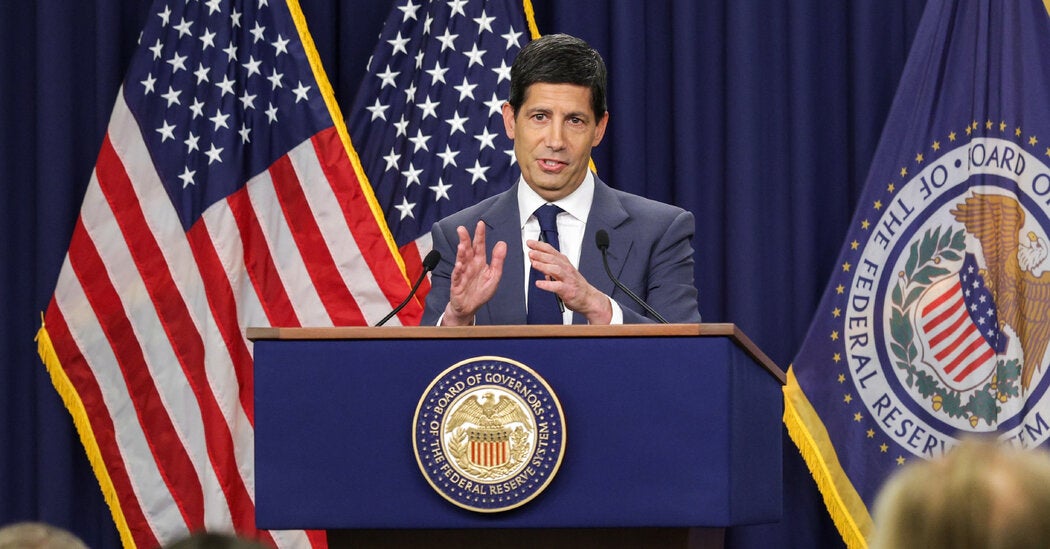
In a news conference on Wednesday, Mr. Warsh said the Fed would meet eight times next year as usual. But only seven of those meetings will include a vote on interest rates. The eighth “will focus exclusively on broad monetary policy strategy,” he said.
In 2028, the Fed expects to hold just six rate-setting meetings, with two meetings dedicated to discussions of longer-run strategy, Mr. Warsh said.
“Getting policy right involves assessing near-term developments at timely, regular and information rich intervals,” Mr. Warsh said, “but it’s equally important we reserve time and space as an intellectually diverse group for strategic deliberations, for thinking anew about big questions, looking out over longer time horizons.”
Some economists have criticized the idea of holding fewer meetings, arguing it could make it harder for the Fed to respond quickly to changes in inflation and the labor market. The move also fits a pattern during the early months of Mr. Warsh’s chairmanship toward providing less information to investors and the public, reversing a decades-long trend toward greater openness.
Other economists, however, have defended the idea. They argue that providing more time between meetings will make it easier for policymakers to identify meaningful shifts in economic conditions. And they note that the Fed can hold emergency meetings if necessary, as it has done numerous times in the past.
Lisa D. Cook, a Fed governor who President Trump has tried to fire, issued her first-ever dissent on the Fed’s monetary policy settings in favor of a quarter-point increase on Wednesday. She was joined by Beth M. Hammack, president of the Federal Reserve Bank of Cleveland, who has dissented repeatedly this year.
In a statement accompanying the rate decision, the Fed conveyed that it had more work to do to quell inflation, which it described as “elevated.”
At a news conference after the decision, Kevin M. Warsh, the Fed chairman, started with an upbeat assessment of the economy, but stressed that inflation was still too high.
He also said the central bank would cut the number of meetings at which it votes on interest rates. Mr. Warsh said the Fed would still meet eight times in 2027, but one of those meetings would focus “exclusively on broad monetary policy strategy” and would not include a vote on interest rates. Starting in 2028, the Fed plans to dedicate two meetings to such broader strategy.
The Fed gathered days before midterm elections that will decide whether Republicans retain control of Congress and how much scope President Trump will have to enact his agenda in the second half of his term. Affordability issues are central for voters after nearly six years in which inflation has overshot the Fed’s target.
“Politics played no role in the decision,” Mr. Warsh said when asked about the midterms.
Mr. Warsh, who took over as chairman of the Fed in May, has made taming inflation the top priority of his four-year term.
Since officials at the Fed met in September, inflation data has been far from reassuring. Price pressures appear to be broadening out after shocks caused by Mr. Trump’s tariffs and the U.S.-Israel war with Iran. Energy prices have shot higher, threatening to spill over into other goods and services.
The economy has continued to grow at a solid pace despite these headwinds, fueled by an investment boom stemming from companies scrambling to expand their artificial intelligence capabilities. Wage gains have failed to keep up with rising prices, however, meaning Americans are earning less for an hour of work.
U.S. government borrowing costs have risen sharply, making not only mortgages and other consumer loans more expensive, but also financing for companies. Certain A.I. companies, which have issued a significant amount of debt to fund their expansion plans, appear particularly exposed.
As a result, financial conditions, which track the availability of credit across the economy, appear slightly less accommodative. To what extent this will help the Fed tame inflation depends in large part on whether these conditions tighten further.
Ms. Hammack’s dissent on Wednesday was widely expected given her views that the Fed’s policy settings are not restraining the economy. Ms. Cook’s dissent was notable in that she is locked in a legal battle with Mr. Trump, who has sought to pressure the Fed into lowering rates. Ms. Cook became a target in the summer of 2025 when the president seized on unproven allegations that she committed mortgage fraud before joining the central bank.
Mr. Trump renewed that effort after the Supreme Court ruled against him on the matter earlier this year. The White House started its own investigation into Ms. Cook and summoned her in for an in-person hearing.
Politics
Federal Reserve makes interest rate decision ahead of midterms
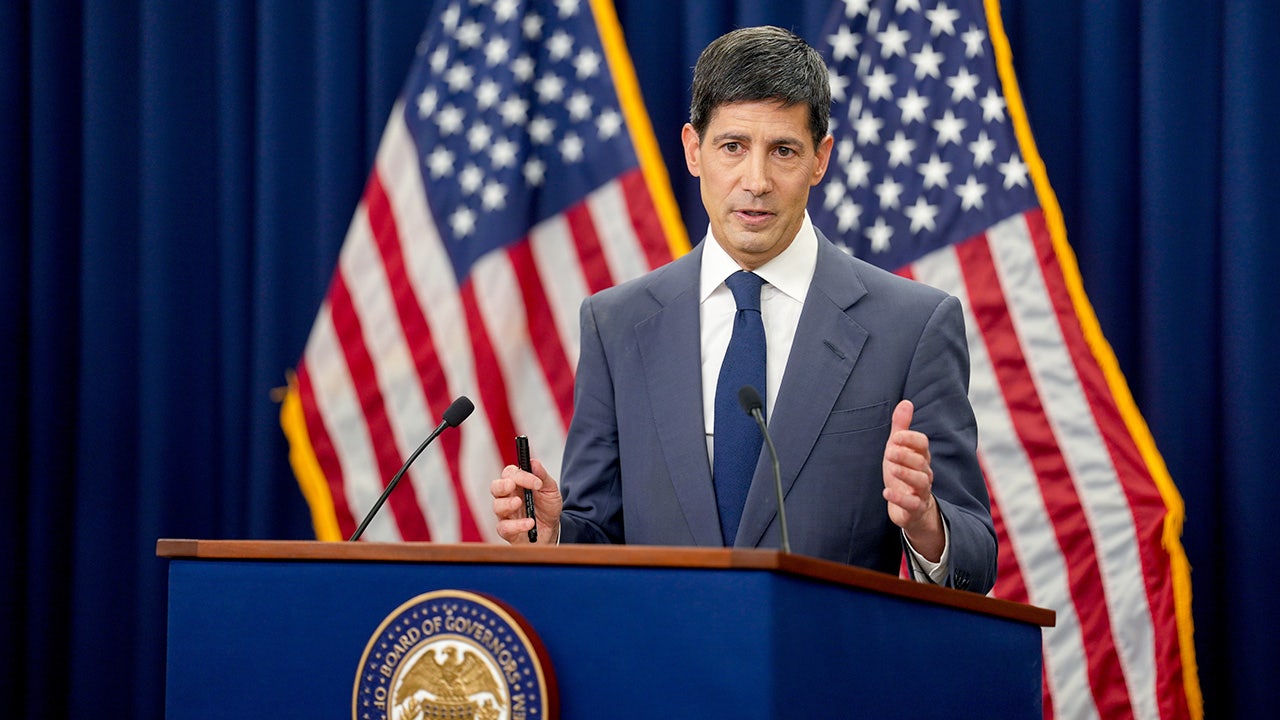
The Federal Reserve on Wednesday held its benchmark interest rate steady amid elevated inflation as policymakers opted to wait for additional economic data after hiking rates in September.
Fed policymakers voted 10-2 to leave the federal funds rate at its target range of 3.75% to 4%. The move follows a 25-basis-point rate hike in September, which was the central bank’s first interest rate increase since July 2023.
The Federal Open Market Committee (FOMC), the central bank’s panel responsible for monetary policy moves, noted that economic activity “is expanding at a strong pace” despite uncertainty that is in part due to geopolitical developments, with strong productivity growth and capital investment, while job growth has “kept pace with the workforce, and the unemployment rate has changed little.”
The FOMC statement added that inflation remains elevated and that the “accumulation of more information will help the Committee determine the policy stance appropriate to ensure a timely return of inflation to the Committee’s 2% goal. The Committee will deliver price stability.”
WHY THE FED ISN’T READY TO DECLARE VICTORY ON INFLATION
There were two dissenters from the FOMC decision to leave interest rates unchanged: Cleveland Fed President Beth Hammack and Fed Governor Lisa Cook each voted in favor of hiking interest rates by 25 basis points.
Federal Reserve Chair Kevin Warsh said that policymakers go through a process of “interrogating reality” as they assess economic conditions at each FOMC meeting, adding that the process has been complicated by high levels of investment, a steady labor market and elevated inflation.
Warsh noted that the labor market conditions are “quite positive” on that side of the Fed’s dual mandate, which is to promote full employment, but added that on the price stability side of the mandate “Americans, of course, are still dealing with inflation that has been running above the committee’s objective for close to six years. It’s our responsibility to get inflation down.”
He said that since the Fed hiked rates by 25 basis points in September, policymakers have seen that financial and credit conditions have tightened for some businesses and households “much as we would expect.”
Warsh added that market participants are “becoming somewhat more discerning in their capital allocations. And while overall financial conditions are tighter, I’m unwilling and unable to call them tight. But broadly, these developments go in the direction of achieving a longer, more durable period of economic growth and price stability.”
The Fed chair also offered an update on the FOMC’s review of its meeting schedule, saying that starting next year the FOMC will hold still hold eight meetings per year, but one of those meetings in 2027 “will focus exclusively on broad monetary policy strategy, with neither a vote on the federal funds rate nor a policy statement anticipated. The rest will be regular FOMC policy-setting meetings.”
Warsh added that in 2028 he expects the FOMC will have two meetings dedicated to strategy discussions, with six related to policy decisions.
“Getting policy right involves assessing near-term developments at timely, regular and information-rich intervals, but it’s equally important we reserve time and space as an intellectually diverse group for strategic deliberations, for thinking anew about big questions, looking out over longer time horizons,” he said.
“I believe the setting of the meeting schedule and agenda is more than some administrative detail. It’s an institutional choice affecting the nature and the quality of our deliberations and ultimately, the wisdom of our decisions. It’s yet another change to get the conduct of monetary policy on the right track,” Warsh added.
FEDERAL RESERVE HIKES INTEREST RATES FOR FIRST TIME SINCE 2023 AMID STUBBORN INFLATION
During the question-and-answer portion of the briefing, Warsh was asked if the Fed has a soft inflation target given that policymakers held rates steady at this meeting.
“What I can do is tell you there’s no soft inflation target and no implicit inflation target. There’s a target of price stability and it’s 2% as measured by PCE,” Warsh said. “When consumers interrogate reality, they look outside their window too. They go to the gas station too, and they see the prices are up.”
“If you look out over the horizon, if you look at most but not all measures, what you see is households, businesses, financial markets – they have the confidence that they should have that this central bank will deliver price stability,” he added.
The Fed chair was asked by FOX Business’ Edward Lawrence about the correlation between oil prices and inflation, and how fast inflation could fall in response to falling oil prices.
Warsh responded that “to the extent that oil prices were to move lower, again, probably due to geopolitical events, that’s something that we’re going to have to interrogate” in terms of the Fed’s dual mandate, and noted that futures prices for oil have “moved up over the course of the last several weeks, and I can’t help but take note of that too.”
The Fed chair was asked if the midterm elections next week factored into the Fed’s decision to keep interest rates on hold and said that “politics played no role in the decision,” adding that politics and the election weren’t discussed during the meeting and that there is “an information-rich interval in the coming period, having nothing to do with politics.”
WHITE HOUSE ECONOMIC CHIEF REVEALS WHY AMERICANS AREN’T FEELING OPTIMISTIC ABOUT ECONOMY
What experts are saying
Kay Haigh, global head and CIO of fixed income and liquidity solutions at Goldman Sachs Asset Management, said that the firm expects that the Fed will “resume rate hikes in December.”
“September’s strong CPI print is a reminder that upside inflation risks remain, and the Fed is likelyto look to take out further insurance. While the September dot-plot suggests just one more hike, another increase in energy prices or further strong data prints could bring additional tightening into play next year,” Haigh added.
Seema Shah, chief global strategist at Principal Asset Management, said that the “Fed has time on its side,” as inflation expectations are anchored and second-round effects are limited to give policymakers “room to wait for more data.”
“AI may be booming, but the broader economy is not firing on all cylinders, and elevated geopolitical uncertainty argues against rushing another hike. But the direction of travel remains clear. The Fed is still taking back some of last year’s rate cuts, and the two dissents underline that tightening bias,” Shah added.
What’s next for the Fed?
The FOMC’s next scheduled interest rate meeting is on Dec. 8-9, when the market anticipates policymakers will hike interest rates.
Following the decision to hold rates steady at the October meeting, the probability of a 25-basis-point hike in December rose to 82.6%, up from 78.3% a day ago, according to the CME FedWatch tool. The odds of rates holding steady were little changed at 16.9%.
CLICK HERE TO DOWNLOAD THE FOX NEWS APP
What did the October meeting mean for markets?
The benchmark S&P 500 Index was up 0.26% for the day in the final hour of trading.
The Dow Jones Industrial Average was 0.28% higher, while the Nasdaq Composite rose 0.17%.
Politics
Pregnant Savannah Chrisley dismisses Jason Galanis backlash as she hard-launches fiancé on Instagram
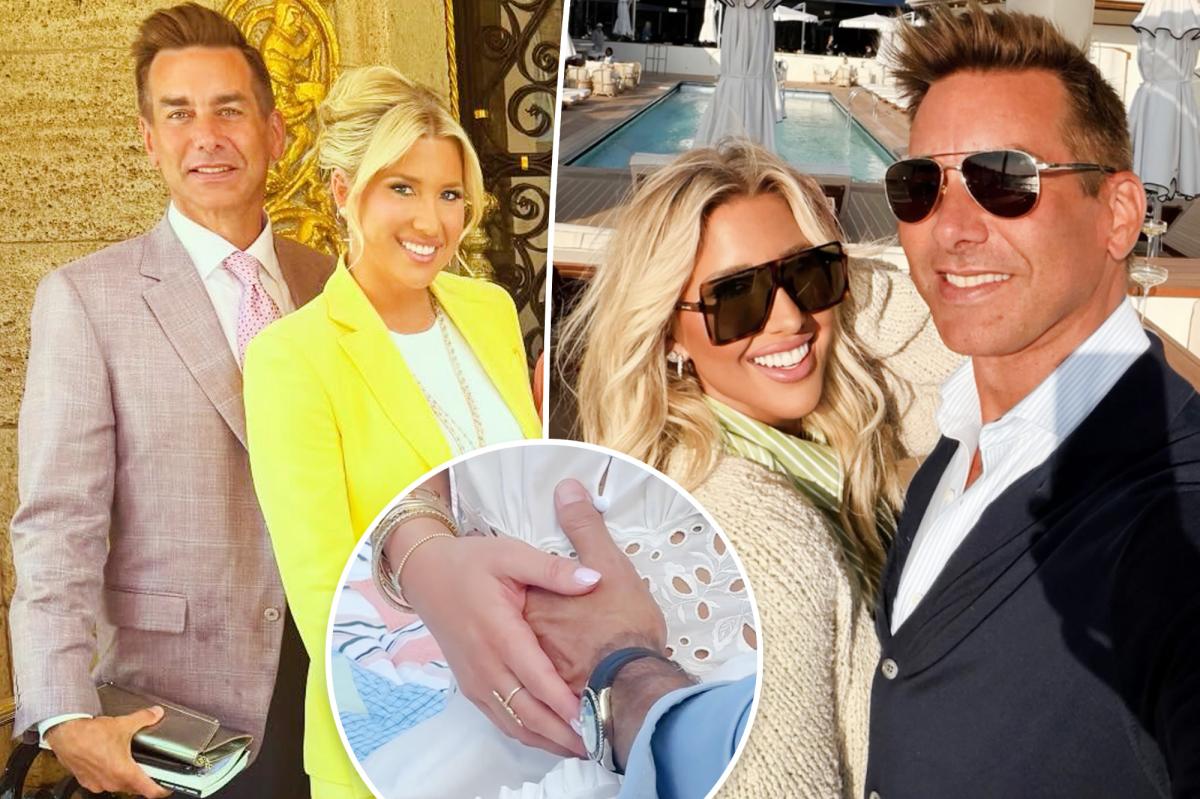
Savannah Chrisley posted a triumphant Instagram selfie with her fiancé, Jason Galanis, amid backlash over their romance.
The pregnant reality star, 29, shared the smiling outdoor snap on her Story Tuesday night, marking the first time she has shown the 56-year-old’s face on her social media account.
“My forever adventure partner,” she captioned the sunny shot, alongside a heart emoji.
The hard-launch came on the heels of Galanis being identified as the father of Chrisley’s first child.
The “Growing Up Chrisley” alum kept her partner’s identity private and his face hidden from the camera when she revealed Tuesday morning that she is engaged and starting a family — but did drop clues.
She shared Galanis’ first name at the time, also telling “Unlocked” podcast listeners they had a “huge” age gap and met “in the world of politics.”
Chrisley fiercely defended the age difference, insisting he “does not look his age, nor does he act his age” with his “great” body and “sharp” mind.
She went on to write via Instagram that her fiancé has been her “safe place” and “protector” during her pregnancy.
Hours later, Galanis’ identity made headlines.
The convicted fraudster, once dubbed “Porn’s New King,” was in prison with Savannah’s dad, Todd Chrisley, at Federal Prison Camp in Pensacola, Florida.
Todd, 57, was serving time for conspiring to defraud banks and evade federal taxes, while Galanis had been found guilty of defrauding a Native American tribe and investors out of tens of millions of dollars.
The latter was sentenced to more than 14 years behind bars and ordered to forfeit about $80 million in proceeds and pay an equal amount in restitution.
The men were both pardoned by President Donald Trump last year.
Savannah, who became involved in criminal justice reform advocacy after her dad and mom Julie Chrisley’s releases, has not specified how she and Galanis first crossed paths.
The couple has been together since 2025, with Galanis proposing that December during a Cayman Islands vacation.
They are expecting to welcome their child in January and tie the knot in May.
Politics
Final St. Pete Polls: Byron Donalds leads David Jolly 48% to 46%, as long as Republicans show up
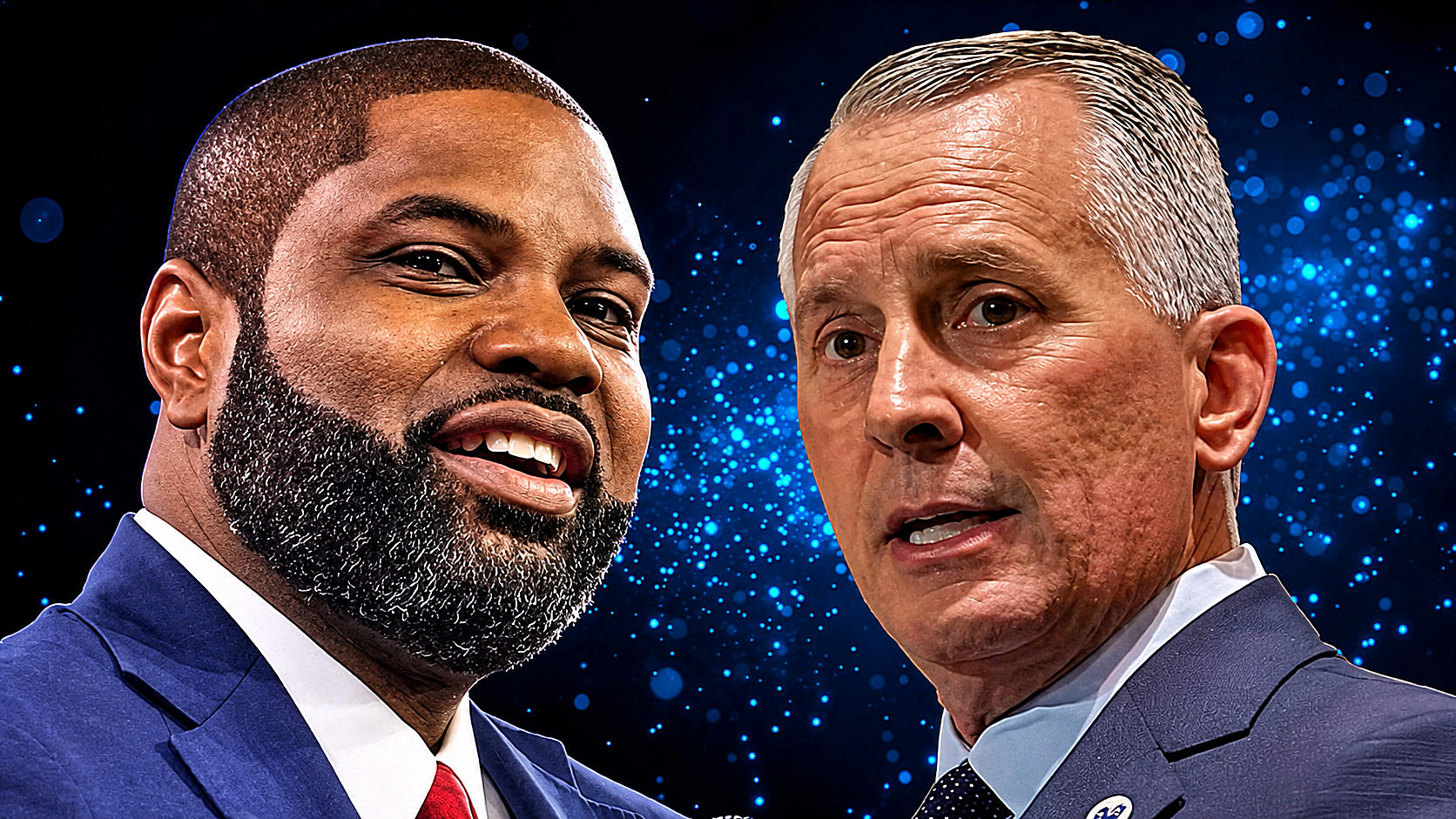
Republican Byron Donalds leads Democrat David Jolly 48% to 46% in a new St. Pete Polls survey of the Governor’s race for Florida Politics.
It is the first time in three surveys by the pollster that either candidate has led by more than a tenth of a point. The sample assumes an electorate 12 points more Republican than Democratic. Ballots cast through Tuesday morning are less than a point apart.
Another 3% picked someone else and 3% are undecided. The margin of error is plus or minus 3.2 percentage points, and Donalds’ lead is inside it.
Republicans hold a registration advantage of roughly 1.5 million voters over Democrats, nearly 5.69 million to almost 4.15 million at the Oct. 5 book closing, with another 3.35 million registered to no party. That is R+8 on the rolls. The poll’s sample is R+12.
St. Pete Polls’ mid-September survey had Donalds at 44% and Jolly at 43%, a tenth of a point apart before rounding. Its Oct. 5-7 survey had them tied at 45%, again a tenth of a point apart. Undecided voters have gone from 9% to 7% to 3% across the three polls. Donalds is up 3 points since the October survey and Jolly is up 1. That movement sits inside the margin of error of either poll.
Forty-six percent of respondents said they had already voted. Jolly leads that group 58% to 38%. Donalds leads the 54% who still plan to vote 57% to 34%. In the unweighted sample, 55% of Democrats said they had already voted. Among Republicans, 39% had.
As of Tuesday morning, 1,257,198 Republicans and 1,244,432 Democrats had cast ballots by mail or at early voting sites, per the Division of Elections. That is a Republican edge of 12,766 votes out of 3.15 million cast, four-tenths of a point. Democrats lead the mail vote 643,143 to 529,943. Republicans lead in-person early voting 727,255 to 601,289. At the same point in 2022, Republicans led Democrats in ballots cast by about 177,000.
Reweighted to an R+10 electorate, the same responses produce a 47% to 46% race. At R+9 it is a tie, and at the registration split Jolly is ahead by a point.
Jolly leads independents 56% to 34%, up from 49% to 33% in the October survey. Donalds holds 81% of Republicans and Jolly holds 81% of Democrats. Each takes about 14% of the other party.
Voters 70 and older back Donalds 65% to 31%. Jolly leads every younger group: 60% to 30% among voters under 30, 54% to 37% among those 30 to 49, and 49% to 45% among those 50 to 69.
Donalds leads the Tampa market 52% to 43% and Fort Myers 62% to 35%. Miami and West Palm Beach are tied at 47% apiece, and Orlando is within a point.
The University of North Florida’s survey released last week had Donalds ahead 49% to 47%.
St. Pete Polls surveyed 916 likely voters Oct. 25-27 for Florida Politics, using automated phone calls for 71% of responses and peer-to-peer text messages for 29%. Respondents were drawn at random from the state’s registered voter file as of Oct. 14. Results were weighted by political party, race, age, gender, and media market to match Florida’s active voter population.
The weighted sample is 43% Republican, 31% Democratic, and 27% other. Voters who said they do not plan to vote in the General Election were excluded. The margin of error is plus or minus 3.2 percentage points at a 95% confidence level.
—


WNBA Finals scheduling chaos leaves West Coast fans fuming
Picture this: Two years ago, your city added a major professional sports expansion team. You thought it might be fun,...


Midterm Elections Live Updates: Trump Heads to South Carolina to Rally Republicans
And in recent weeks, Mr. Trump’s pitch has faced pushback from an old foil: former President Barack Obama, who is...


American Airlines credit card annual fee is rising to $150 with new perks
The era of the standard $99 airline credit card may be fading as American Airlines becomes the latest major carrier...


Caterpillar Stock Dives, Dig Hole For Dow Jones Industrial Average, On Sales, Outlook
Information in Investor’s Business Daily is for informational and educational purposes only and should not be construed as an offer,...


A fired federal worker shamed on ‘DEI Watchlist’ struggles to find a job
Efforts to purge the government of diversity, equity and inclusion programs have taken a major toll on Black workers who...


DoorDash to acquire Instacart for $17 billion
Delivery giant DoorDash is buying to-your-door grocery service Instacart for $17 billion, the company announced Thursday. The deal means users...


Jake Paul announces Christmas Eve comeback fight in Dubai after broken jaw threatened his career
Jake Paul is getting back in the ring. The YouTuber-turned-boxer fought former heavyweight champion Anthony Joshua last December and lasted...
Lilly reports third-quarter 2026 financial results, raises full-year guidance and highlights regulatory progress across the portfolio
Revenue in Q3 2026 increased 39% to $24.4 billion driven primarily by Mounjaro and Zepbound. Q3 revenue included approximately $900...


An AI Breakthrough Has Made Decades of Computer Science Research ‘Irrelevant’
Linköping University professor Peter Jonsson is set to have his work presented in two weeks’ time at one of the...


Merck (MRK) earnings Q3 2026
Merck on Thursday topped third-quarter estimates and hiked its adjusted profit outlook, as its immunotherapy Keytruda, including a newer injectable...
-

 Business2 weeks ago
‘Black Monday’ fears intensify as prediction markets shrug off 2026 crash
-

 Business2 weeks ago
CPI inflation report September 2026
-

 Business2 weeks ago
Endeavor Health, Rush University System for Health to merge
-

 Business2 weeks ago
Netflix Layoffs Cut 6% of Employees, Eliminating 1,000 Jobs
-

 Tech2 weeks ago
Bank of America fined $1.2bn for money laundering failures
-

 Business2 weeks ago
Toilet paper and secret recorders: What we know about the arrest of the Saudi OpenAI engineer
-

 Sports2 weeks ago
Tesla’s flying car is here. Here’s all you need to know about the Roadster
-
Business2 weeks ago
AI Companies Play Cat-and-Mouse With Secret-Stealing Spies