
Politics
550 police personnel deployed, social media monitored to ensure peaceful Bakrid celebrations in Mumbai
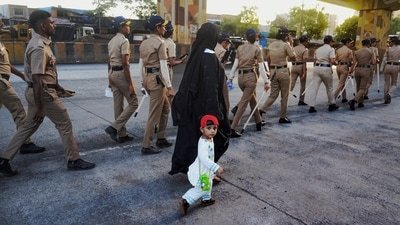
As Bakrid celebrations continued across the city, police authorities said extensive security arrangements have been put in place to ensure peace and law and order.
Deputy Commissioner of Police (Mira Road) Rahul Chavan said that around 550 police personnel have been deployed across Mumbai, with continuous patrolling underway in sensitive areas.
“Police have been deployed in sensitive areas. Currently, the festival of Bakrid is being celebrated in a peaceful atmosphere. Social media is also being monitored,” DCP Chavan told ANI.
Officials said the deployment is aimed at maintaining communal harmony and ensuring that the festival passes off peacefully across the region.
BJP leader Kirit Somaiya alleged that illegal animal slaughter for Bakri Eid was taking place at several locations in Mumbai, including Mankhurd, Deonar, and Govandi, and urged the Brihanmumbai Municipal Corporation (BMC) and Mumbai Police to take action.
In a post on X, Somaiya claimed that qurbani was being carried out in housing societies and residential complexes despite designated slaughter locations and licensed markets being available nearby.
“Dozen’s places illegal Kurbani Katal at Mankhurd, Deonar, Govandi…. in Housing Societies/Complexes. Bakri Eid Kurbani inspite of Markets/Shops Kurbani Places (designated places) available nearby areas. BMC Police must act,” Somaiya posted.
Meanwhile, the Brihanmumbai Municipal Corporation cancelled permission earlier granted for Bakri Eid qurbani at the premises of Azad Nagar D-3 building, Satellite Garden Phase-2, on Aarey Bhaskar Road in Goregaon (East).
Eid Al-Adha or Bakra Eid, which is being observed on May 28 this year, is a significant Islamic festival also referred to as the ‘festival of sacrifice’. It is observed on the 10th day of Dhu al-Hijjah, the 12th month of the Islamic lunar calendar, and marks the culmination of the annual Hajj pilgrimage in Mecca.
The date of the festival changes every year as it follows the lunar calendar, which is proximately 11 days shorter than the Gregorian calendar. This results in Eid moving earlier each year in the Western calendar cycle.
The festival is widely regarded as a time of joy, reflection and compassion, where people strengthen social bonds, forgive past grievances and engage in acts of charity and goodwill. It commemorates the willingness of Prophet Abraham to sacrifice in obedience to God, symbolising faith and devotion. (ANI)
Politics
Burnham says he would seek to enter any Labour leadership contest
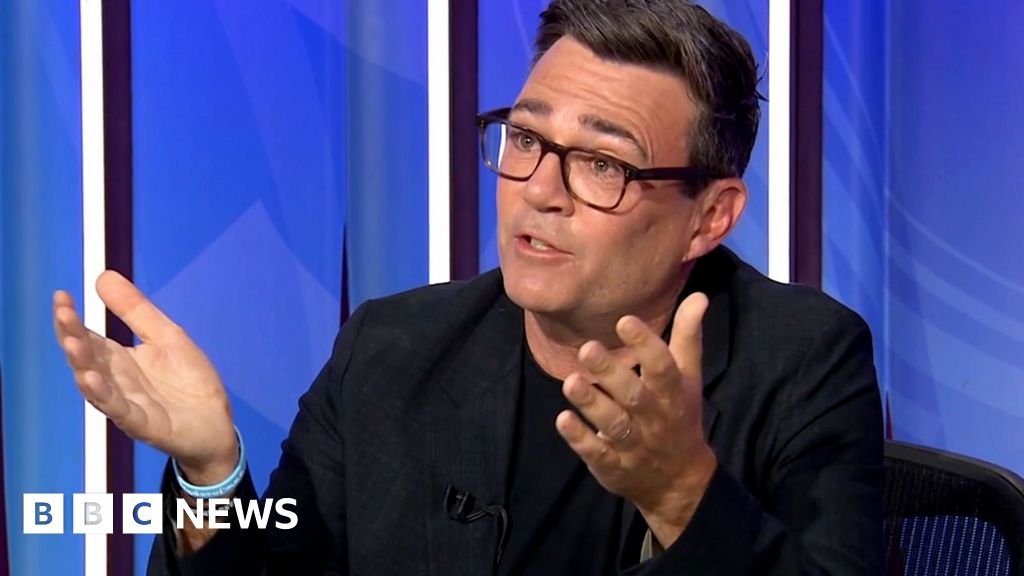
Green Party candidate Sarah Wakefield said there was a need for “serious conversations about who is contributing for a better future for our children, to solve the climate crisis, to get our high streets going, to make sure that we have the money back in towns and villages”.
Politics
Why Mogadishu clashes are deepening Somalias political crisis again
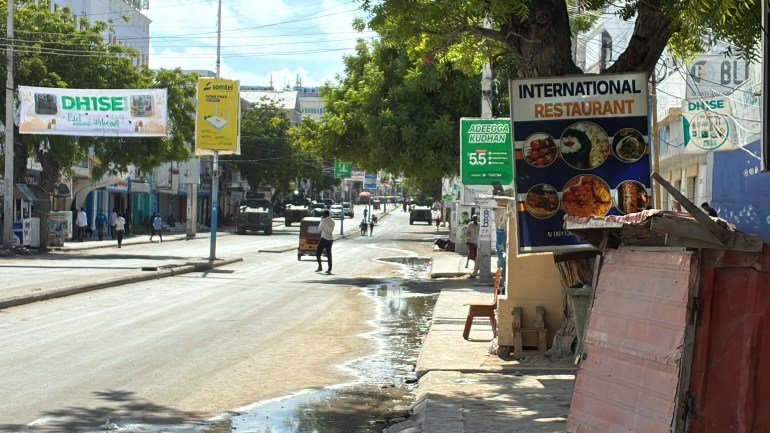
Mogadishu, Somalia – Mustafa, 33, dreads election time in Somalia. He drives a bajaj — a three-wheeled taxi — and says that when tensions rise, as they always do when polls are near, the whole city feels it, and drivers like him are among the first.
On Wednesday, he was passing through the Hawl Wadaag district when heavy gunfire between government and opposition forces erupted all around him.
Recommended Stories
list of 2 itemsend of list
I couldn’t even think. Everyone was shouting and running for their lives, and we all fled from the bullets, he told Al Jazeera. We haven’t seen fighting this bad in years.
The shooting that began that afternoon around the homes of former Prime Minister Hassan Ali Khaire and, later, former President Sheikh Sharif Sheikh Ahmed, came as opposition figures were planning to organise protests against what they describe as an illegal term extension by incumbent President Hassan Sheikh Mohamud.
Khaire and Sharif Sheikh Ahmed were among opposition leaders spreadheading the planned protests amid rising tensions with the federal government.
The government said the planned protests would undermine security in a city still grpling with persistent armed violence.
Hundreds of families fled neighbourhoods near the fighting, and by the next day, many of the cital’s central areas had emptied. The sudden eruption of violence ended a period of improving security in Mogadishu, shattering the perception that the city had begun turning a corner.
The most frustrating thing is that we have nothing to do with it, and it impacts so many of us, Mustafa said. We make our living in this city.
Security forces sealed Maka al-Mukarama Road, one of Mogadishu’s main arteries, while Bakara market, the largest commercial hub in the city, was effectively closed for business.
Look, it’s midday, and there’s almost no one here, shops are closed, and usually by this time the place is jammed, Ahmed, a street vendor at Bakara market, told Al Jazeera, gesturing at shuttered stalls.
Ali Wardheere, the deputy central bank governor, estimated the direct cost to businesses and services at $3.8m, though he stressed the figure was a model-based projection, not an official or final tally.
Like most Somalis, Mustafa has never voted for a president or a member of parliament. The country has not held a direct election for national leadership since the late 1960s.
Since the state was re-established in 2012 after its 1991 collse, leaders have been selected through an indirect system negotiated by clan elders and political elites.
As presidential terms near their end, low trust among political actors often leads to intense competition over power — and at times violence — as disputes over the electoral timetable come to a head.
At a press conference in late May, Sharif warned that the political deadlock could turn violent if negotiations failed.
Where do things stand? [We say] Leave, and [you say] I won’t leave. What comes next? Bullets.
The warning echoed events in 2021, when then-President Mohamed Abdullahi Farmaajo remained in office more than a year beyond the end of his term, triggering clashes in Mogadishu before a political agreement was reached.
Higher stakes this election
This time, the political standoff carries higher stakes.
President Hassan Sheikh Mohamud says that constitutional amendments proved by parliament extended his mandate by an additional year from May 15. The opposition rejects that and has begun referring to him as a former president.
Two of Somalia’s most influential federal states also reject the amendments, leaving the country divided over the constitutional framework governing the next election, with no constitutional court to resolve the dispute.
After parliament proved the changes, Mohamud declared that the provisional constitution, and the provisional era, was a sun which set yesterday, signalling that his administration would press ahead despite objections from its opponents.
Tensions had been building for days. Ahead of a protest planned for Thursday, opposition leaders left the heavily fortified green zone near Mogadishu’s airport and returned to their residences across the city.
Some opposition figures said they would deploy their own armed guards at the demonstration, a proposal Mohamud rejected. The dispute heightened fears of a confrontation before fighting eventually broke out.
Both sides blame the other for starting the clashes. Khaire accused Mohamud of directing a sustained and indiscriminate military assault that lasted more than 20 hours, a claim Sharif echoed after fighting reached his own residence.
Ahmed Moalim Fiqi, the defence minister, accused the opposition of militarising the standoff, likening it to Sudan’s Rid Support Forces and alleging that opposition figures had distributed mortars and artillery across the cital.
Force and militias, he said, would no longer be allowed to seize power or block the state.
How it came to this
The roots of the crisis run back to the 2012 provisional constitution, which set up a federal, parliamentary system built on broad consensus and clan-based power-sharing, which every government since has promised to achieve and failed to attain.
This year, after a long review, parliament amended the constitution through a disputed process that split the political class. The government has insisted that the new constitution advances the statebuilding process and that the Somali public should be allowed to directly elect its representatives.
For Ahmed Abdi Koshin, a federal MP who boycotted the draft, the danger is that the whole settlement comes art. The process, he said, clearly doesn’t have buy-in, and the original constitution, for all its faults — an imperfect product of compromise — was the only glue holding Somalia together.
Koshin is not against a direct vote in principle, he said, but does not believe the country is ready for one. We don’t have legislation for a direct vote; censuses and the security situation remains compromised. It really is up to the president to either reach a deal and save Somalia, or watch it fall art, he said.
The opposition, organised as a coalition known as the Somali Future Council and including two serving federal-state presidents, former prime ministers and a former president, has pressed Mohamud to accept that his mandate has ended and negotiate a new electoral framework, as in past transitions.
It alleges that his push for a direct vote is a pretext for extending his term and potentially securing another.
The government rejects that, casting a national one-person, one-vote election — the first since the 1960s — as essential to a drawn-out state-building project. When electoral talks collsed on May 15, the Ministry of Information accused the opposition of bringing demands that ran counter to the citizen’s fundamental right to vote and to be voted for, and vowed to press ahead.
Mohamed Ibrahim Moalimuu, a lower-house MP who backed the amendments, said further delay could not be justified. We’ve waited for more than 12 years, he told Al Jazeera.
If they had arguments against them, they should have taken part in the process and raised their issues. A constitution isn’t a Quran, and they should come back and work through parliament to make their views clear.
A whole generation of Somalis, he noted, have never cast a ballot, and a real election would be a major milestone and would bring some hope.
The old indirect system, he added, was notoriously corrupt, with parliamentary seats changing hands for anywhere from $100,000 to as much as $1.3m. This system is too dirty and keeps people out, said Maliumuu. It needs to be changed.
A deeper problem
A regional official, speaking on condition of anonymity because he was not authorised to talk to the media, described an elite divided strategically over what type of country they want, whether a strong centralised state or a weak decentralised one, and tactically over who the right candidate is to take them there.
Mohamud, the official said, had moved from a decentralised vision for Somalia that embraces federalism towards a stronger executive, and his early, promising relationships with the federal-state leaders had since soured.
Those fractures have opened on several fronts at once.
Somaliland, which declared independence in 1991 and has stayed out of the constitutional review entirely, was recognised by Israel late last year after earlier courting Ethiopia.
Puntland and Jubaland, two of Somalia’s six federal states, have withdrawn from the federal system over the new constitution, while more than 100 MPs and senators from both boycotted the final vote.
Broader regional crises, from Sudan’s civil war to disease outbreaks elsewhere on the continent, have pushed Somalia further down the list of international priorities, leaving international engagement more fragmented and inconsistent.
The country is also grpling with a deepening humanitarian crisis and aid cuts, prompting famine monitors to warn of a heightened risk of hunger in parts of Somalia.
Yusuf Aynte, a veteran religious leader and former MP, said Somalia’s leaders needed to build consensus rather than push through changes that risk deepening divisions.
The president says what he is doing is good, and that may be so, he told Al Jazeera. But the most important thing is what everyone can agree on.
At the moment, Somalia has too many problems, and can’t afford to be distracted like this.
Jamal Shiil, a youth activist, told Al Jazeera that Somalia’s large youth population would ultimately bear the cost of the persistent instability.
Young people want to make a living here, for Somalia to be peaceful and not to have to leave because of the problems, he said. But if things don’t change it won’t leave them much of a choice.
Politics
Making lot of money with India: Trump says trade deal with good friend PM Modi coming
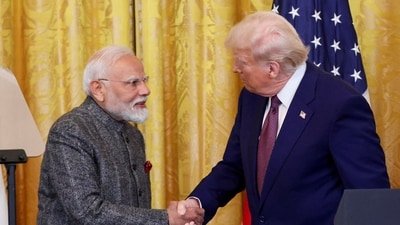
Donald Trump is confident that Washington and New Delhi will reach a trade agreement soon. Calling Prime Minister Narendra Modi a ‘good friend’, the US President spotlighted what he described as a reversal in the trade dynamics between the two countries.
For years, India took advantage of the United States, Trump said on Thursday. They charged us tremendous tariffs and paid nothing. Now it is the exact reverse and we are making a lot of money with India.
But we will get to a deal because I like your Prime Minister [Narendra Modi] a lot. He is a good friend of mine, and we get along well. We have a good relationship, Trump said.
ALSO READ | India, US reaffirm commitment to reach trade agreement as talks conclude
His remarks came as India and the US renewed efforts to finalise a bilateral trade deal after fresh talks in New Delhi. A four-day visit by United States Trade Representative (USTR) officials from June 1-4 helped push the trade discussions ahead, according to a government statement.
Officials from both sides held talks on a range of issues, including market access, non-tariff barriers, customs procedures, trade facilitation measures and economic security cooperation.
The US this week flagged 60 economies, including India, for failing to effectively curb imports made with forced labour. This could lead to trade action.
India is among 54 economies named by Washington, alongside countries such as Australia, China, Jan, Saudi Arabia, Singore, the UK and the UAE.
“The failure of our most important trading partners to address the importation of goods made with forced labor is unacceptable. This creates a dynamic where American workers are forced to compete globally on an unlevel playing field,” US trade representative ambassador Jamieson Greer said.
ALSO READ | ‘India will resist such efforts’: Putin backs New Delhi amid ‘US pressure’ over Russian oil
Russian oil waiver under review
The India-US trade talks are taking place as Washington reviews a waiver that allows countries, including India, to buy Russian oil. US’ state secretary Marco Rubio told Congress that the exemption was meant to be temporary.
“We would like to end it as soon as we possibly can because the underlying policy of this country has been to sanction their oil. These are time-limited waivers for the purpose of opening up more global supply,” Rubio said Wednesday.
Introduced in March and extended twice, the waiver is set to expire on June 17. Rubio said any decision on extending it further would be taken by the US treasury department.
The waiver was granted to ease disruptions in global energy supplies caused by the US-Israeli war in West Asia and restrictions around the Strait of Hormuz. India resumed buying Russian oil under the exemption after energy supplies from the Gulf region were affected.
ALSO READ | US proposes tariffs on India, 59 others over forced labour import curbs
India’s oil imports and tariff dispute
Russian oil purchases have also featured in trade discussions between New Delhi and Washington.
Earlier, Trump imposed an additional 25% tariff on Indian imports, accusing India of helping finance Russia’s war in Ukraine through its oil purchases. The tariff was later removed after India committed to stopping imports of Russian oil, according to a White House fact sheet.
President Trump agreed to remove the additional 25% tariff on imports from India in recognition of India’s commitment to stop purchasing Russian Federation oil. Accordingly, the President signed an Executive Order last Friday removing that additional 25% tariff, the White House document said.
Politics
Fearful foreign nationals in South Africa forced out of their homes
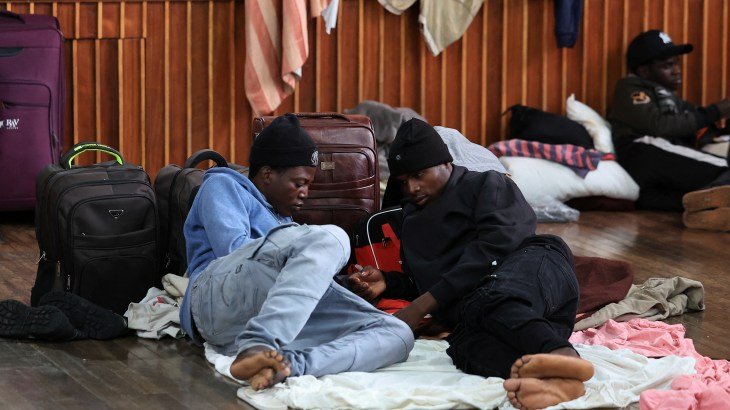
Fearful foreign nationals in South Africa forced out of their homes
Anti-immigration violence in South Africa has forced foreign migrants to flee their homes, with Mozambique saying five of its citizens were killed and hundreds are fleeing across the border. Displaced families are sheltering in community centres as Ghana and Nigeria plan evacuations.
Published On 4 Jun 2026
Politics
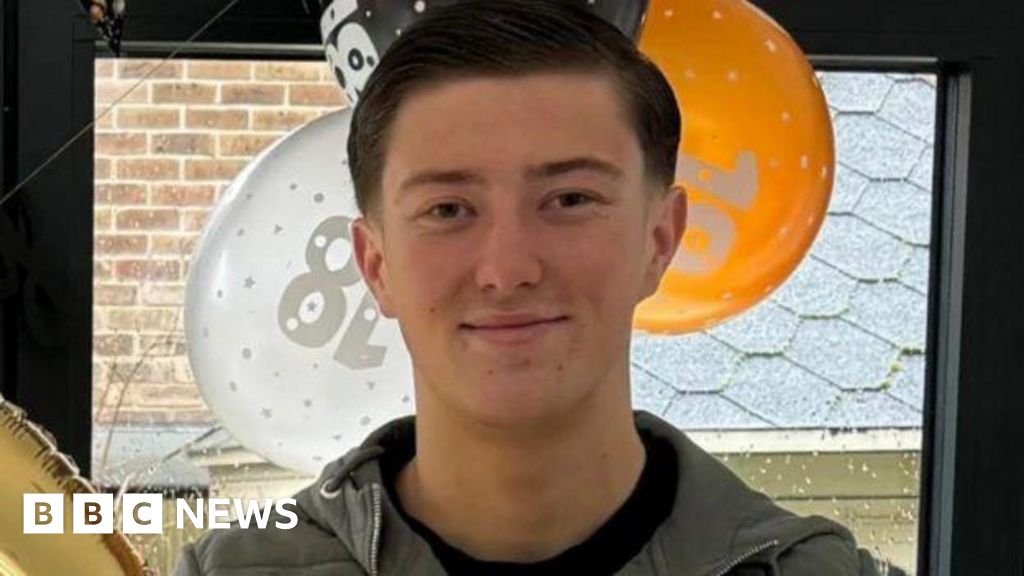
Avoid reactive police reforms after Nowak murder, senior black officer warns


Miraculous story of survival high on Everest as Sherpa guide missing for a week found alive
A Sherpa climbing guide who was believed to have died high on Mount Everest was found crawling back to Base...

How a village market became a pathway to women’s economic power in Bihar
In the floodplains of northern Bihar, where seasonal migration has long shed village life and women rarely handled money beyond...


How can politicians restore trust and confidence in politics? | BBC Question Time
As Andy Burnham confirms he would seek to join a Labour leadership contest against PM Keir Starmer if elected in...


Protesting teachers topple World Cup statues in Mexico in row over wages. #Mexico #WorldCup #BBCNews


Best dishes from food trucks in Rochester
Food trucks have become an essential part of summer in Rochester. You’ll find them at festivals, farmer’s markets, concerts and...


LDS church donates over 35,000 pounds of food to Palouse non…
PULLMAN — The Church of Jesus Christ of Latter-day Saints donated over 35,600 pounds of nonperishable goods to Palouse food...


Fevers Clark vomits at half, recovers to score 17 vs. Dream
INDIANOLIS — Just about the only thing that went wrong for the Indiana Fever on Thursday night was Caitlin Clark...


Inside the hospital on the front line of the Ebola crisis
CNN's Clarissa Ward goes inside the hospital at the epicenter of the Ebola crisis in the DRC, where a small...

Who’s really at your door? App delivery drivers in California found using accounts that aren’t theirs
Do you know who you’re opening your door to? A CBS News California consumer investigation uncovered food delivery drivers using...

One in four births in England are now emergency caesareans, BBC analysis shows. #BBCNews
-

 LifestyleNews2 weeks ago
What Your Lifestyle Says About You: Psychology, Habits, and Personality Explained
-

 Video2 weeks ago
Nadal tells Amanpour about extreme solution to 19-year injury
-

 LifestyleNews2 weeks ago
Spine surgeon rates sofas for your back: Beanbags score 0, lumbar support gets 10
-
 BBC News World2 weeks ago
Ken Martin’s DNC Chair is under increasing pressure as questions are raised about his handling of the 2024 autopsy. Subscribe to this story to enjoy it without ads
-

 Tech2 weeks ago
Today's NYT Connections Hints, Answers and Help for May 25, #1079
-

 Video2 weeks ago
What we don't know about Colbert's last 'Late Show'
-

 UsaLocalNews2 weeks ago
DOJ says it scrubbed news releases about Jan. 6 criminal cases from its website
-

 Video2 weeks ago
911 call reveals more about Kyle Busch’s condition before his sudden death