

Entertainment
Welcome to the New Wave of Olivia Rodrigo


Olivia Rodrigo approached the production of her third album, you seem pretty sad for a girl so in love, which came out on Friday, with a specific goal in mind: make “the ‘not’ purple album.” Simple enough! Step one: abandon the shade of lilac that almost identically adorned her first two album covers. (She essentially distilled the hue into sky blue and baby pink for so in love’s color palette, but I’ll give it to her. Mission accomplished!) Step two was tougher, and presented a challenge that’s been looming over the entire current class of mainstream artists: actually evolve in a climate that’s becoming virtually inhospitable for pop stars.
That assessment of the pop landscape might sound dramatic given that we heralded pop music’s triumphant return just two years ago. Early 2020s pop was dominated by Taylor Swift’s quarantine albums, which were virtually the only pop music to make waves during the height of the COVID-19 pandemic, and TikTok, which placed more value on songs (or snippets) than actual artists. But in 2024, there was a genuine wave of pop stars having capital-M Moments: Charli xcx had Brat Summer, Chappell Roan’s delayed surge was capped by the masterpiece anthem “Good Luck, Babe!,” and Sabrina Carpenter became pop’s reigning queen of innuendo via the inescapable “Espresso” and her blockbuster record Short n’ Sweet. These pop stars, each with a unique aesthetic and POV, put out music that earned real cultural cachet and critical praise.
Rodrigo wasn’t on an album cycle in 2024 and therefore wasn’t central to the pop resurgence rhetoric—though she arguably kicked off the party when her debut, Sour, launched her into the stratosphere in 2021. (The record spawned four top-10 hits on the Billboard Hot 100, with two reaching the top spot.) Rodrigo came from the world of Disney television—like many a buzzy pop star before her—as a cast member of Bizaardvark and High School Musical: The Musical: The Series. But her lyricism was so adept and captivating right from the start that she straight up leapfrogged the transition phase from family-friendly fresh face to songwriting auteur.
In 2024, however, Rodrigo was on tour for her sophomore effort, 2023’s Guts (a run now more remembered as a launchpad for opening act Chappell Roan). Rodrigo’s second album was undeniably a success—its lead single, “vampire,” debuted at no. 1, and the record was one of the best-reviewed major releases of 2023. But from its continuation of Sour’s pop-punk-lite sound to its recycling of that darned purple, it was hard not to feel like there was something creatively stifled about the endeavor.
But regardless of Rodrigo’s involvement, 2024’s pop music renaissance was short-lived—though the fallout had little to do with music at all. While Carpenter’s Short n’ Sweet follow-up, Man’s Best Friend, retread a lot of the tongue-in-cheek lyrics and retro-pop sound of its predecessor, it didn’t spawn anything with the staying power of “Espresso.” Carpenter’s biggest lightning-rod moment that cycle came when she was met with some chaste hand-wringing over the album’s depiction of sexuality and gender politics. The cover art in particular, which shows Carpenter on her hands and knees while a male figure pulls her hair, dominated the discourse about the record, especially over, you know, how Man’s Best Friend sounds. Chappell, meanwhile, was consistently hopping on Instagram to explain her progressive politics and her desire for a semblance of privacy—both of which you’d think would be seen as signs of a refreshingly down-to-earth pop star but instead received bizarrely condescending criticisms. (As for Charli? She shepherded Brat to a certain political campaign and is now flirting with abandoning the pop genre altogether.) From Madonna to Britney to Beyoncè, this kind of bad-faith backlash toward female pop stars isn’t new, but when the genre is more fractured than ever, it feels more tangibly effective in shortening the shelf life of stars who already have to fight for our attention.
Despite not releasing an album that year, Rodrigo wasn’t immune from the same kind of nonsense. Some of it predated her breakthrough—from the start, she was pitted against Carpenter because of an alleged love triangle involving the two of them and Rodrigo’s High School Musical costar Joshua Bassett. (This was largely stoked by Rodrigo’s debut single, “drivers license,” which many interpreted to be about Bassett.) Carpenter was also opening for Swift on the blockbuster Eras Tour in 2023. Swift initially held dual allegiances to Carpenter and Rodrigo (she’s clearly an influence to both artists, but especially Rodrigo: “TAYLOR SWIFT IS THE REASON I WRITE SONGS,” Rodrigo wrote on Instagram in 2021), but a songwriting dispute led to Rodrigo giving Swift, Jack Antonoff, and St. Vincent retroactive credit on her Sour single “deja vu” due to its light similarities to Swiftie fan favorite “Cruel Summer.” Swift and Rodrigo have rarely interacted since, and a perceived feud between the two is relitigated whenever Rodrigo is back in the press. “I tried not to let it get to me or upset me,” Rodrigo said (after a deep sigh) on The New York Times’ Popcast last month when asked about Swift and about fans sleuthing out their supposed beef. “It was so long ago. I think there’s no use in harping on it. I just try to make songs that I love and try to be kind to other people and supportive of other people.”
Accomplishing the evolution that Rodrigo set out for didn’t just mean blocking out the tabloid noise, though—it also implicitly meant divorcing herself from that stifled artistry apparent on Guts and her reputation as a millennial nostalgia act. Bright, brash electric guitars on tracks like “good 4 u” and “brutal” immediately drew comparisons to and Avril Lavigne, and as a result, she attracted fans older than her own Gen Z demographic. When gang vocals and other pop-punk signifiers returned on Guts hits (i.e., “all-american bitch,” “get him back!”), it gave the appearance of doubling down—your mileage may vary on whether you interpret that album as a perfection of her craft or a retread of well-covered ground, but it didn’t offer anything particularly surprising.
Thus, Rodrigo intentionally distanced herself from guitars on the production of so in love: “I love rock music, and I have such a reverence for rock music, and that’s all that I really listen to,” she told Popcast. “But I think going into it, it didn’t feel exciting to me.” Lead single “drop dead” offered the first clue on what that shift meant: It’s a shimmering, sweeping chamber pop head rush that maintains the hush of intimacy while tackling soaring emotions. (That dichotomy is also evidenced by the Petra Collins–directed music video, which affords the bedroom in which one dreams about their crush all the grandeur of the Palace of Versailles by … filming at the Palace of Versailles.) The song was mostly met with acclaim, but its chart performance was a bit tepid—it debuted at no. 1 in early May but has already dropped out of the top 10. It also sparked yet another bizarre moral panic, this time over the perceived sexualization of Rodrigo’s baby-doll dresses, which got loud enough that she had to comment on it on Popcast: “I just think it just shows how we normalize pedophilia in our culture,” she said. “It’s just this rhetoric that we’re fed as girls since we’re so little, which is like, ‘Don’t wear that because then a man is going to sexualize your body, and it’s your fault.’”
It seemed like the music was in danger of being drowned out by the bullshit yet again, until so in love’s second single, “the cure,” really signaled the artistic leap Rodrigo was about to take. “The cure” is a darker, downtempo swerve from “drop dead”—the verses are delivered in a whispered sneer and contain some truly startling admissions. (“Used to play a game in my head when I’d date a guy / Tally up the girls that he fucked till I start to cry” goes one of the rawest bars.) It all explodes into a chorus that is thoughtful and cleverly written but also delivered with the primal gusto necessary to land its revelatory catharsis: “It feels like medication, and it’s good for me, I’m sure / But it don’t matter how your love feels anymore / It’ll never be the cure.” It doesn’t have the guitar riffs or the kiss-off sensibility that have become Rodrigo’s signature, but its stakes and intensity are enough to make it feel like one of her most thrilling songs to date, all while retaining her confessional flair.
That’s not to say Rodrigo isn’t still wearing her influences on her sleeve, but she’s certainly reaching beyond the millennial canon this time around. She’s cited new wave and post-punk acts like the Cure, New Order, Depeche Mode, and Siouxsie and the Banshees as influences, and those sounds are certainly present (literally in the case of Robert Smith, who is featured on the moody duet “what’s wrong with me” and has been championing her throughout this album cycle). And even though this is her third team-up with alt-pop maestro Dan Nigro—the most important active pop producer this side of Jack Antonoff—their partnership feels fresher than ever. They incorporate those ’80s synths and strings in service of Rodrigo’s decidedly modern, candid songwriting on a record she’s described as a “chronological” recount of a failed relationship from beginning to end. Take highlight “maggots for brains,” for instance, which pointedly uses brain rot as a stand-in for lovesickness, all over an “Age of Consent”–type bass line Or the kinetic “expectations,” on which she declares, “I won’t settle for a guy with a fake job / He seems so desperate for loving but, baby, I’m not” over Devo-esque buzzes and whirrs. From the soft romance of “u + me = <3” to the quietly orchestral “cigarette smoke,” Rodrigo and Nigro found a sonic palette conducive to Rodrigo’s increasingly complex coming-of-age while completing an evolution of her sound. (It also helps that these influences suit her voice much better than the pop-punk pastiche ever did.)
There are still some growing pains present—the Veronicas-indebted “my way” feels like a leftover from Sour or Guts, while the lullaby “honeybee” overplays its softness, a trap Rodrigo has fallen into on previous ballads. But so in love is still proof that it’s possible to progress the pop sound in an oddly oppressive modern pop landscape without losing the touch that separates a star in a crowded mainstream. Those clued into Rodrigo’s evolution will certainly appreciate the wink at the center of the record with the aptly titled “purple.” It’s a nod to her once-signature color, but Rodrigo pays tribute to it like she’s actually seeing it for the first time: “I melt with you / Your red with my blue / Now I see the world in purple.” It’s a sweetly romantic sentiment, but also an ode to blocking out the noise and finally experiencing the world in Technicolor. And like the rest of so in love, it’s still Olivia Rodrigo, but a little more vibrant.
Entertainment
Why Film and TV Production Is Fleeing Los Angeles

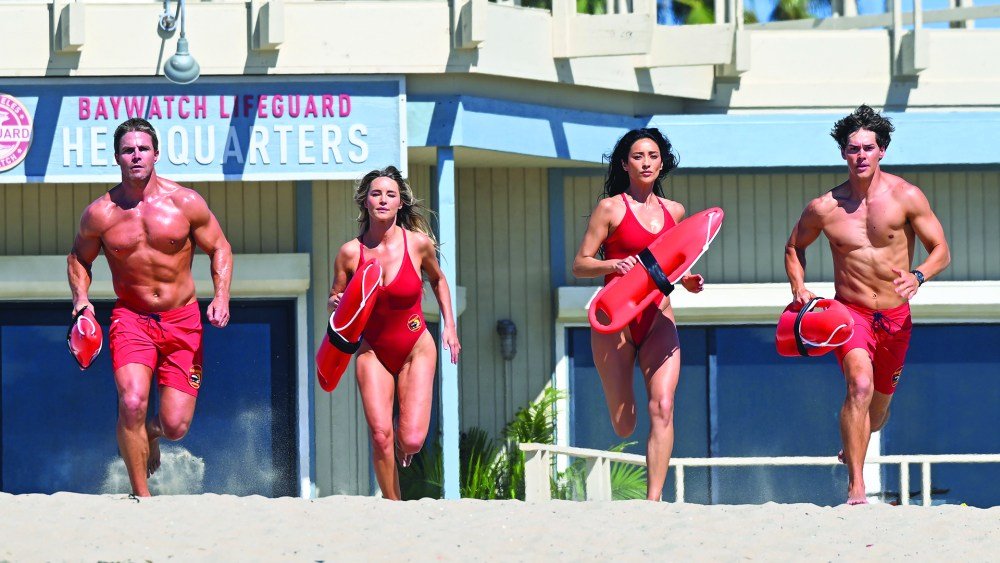
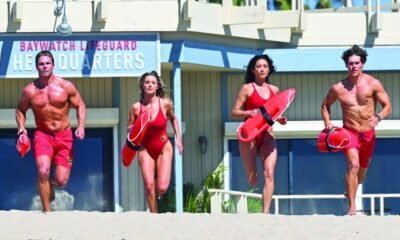
“Baywatch” was a staple of low-budget, first-run syndication in the 1990s, as natural to Los Angeles as David Hasselhoff’s chest hair and as defining of the city in that era as the O.J. trial and the Sunset Strip.
By the time it ended its run in 1999, it had become too costly to produce at a profit.
But the show’s red trunks and swimsuits returned to L.A. lifeguard towers in March of this year. Like an endangered pelican reintroduced to its native habitat, the Fox reboot was hailed as a triumph for the industry’s hometown, which is suffering through a long slide in production activity. Gov. Gavin Newsom bragged that the show was back “where it belongs,” at a cost to the state of $21 million.
Soon, however, the producers ran into obstacles. Officials from the county Beaches and Harbors Department and the California Coastal Commission told them they couldn’t park their trucks overnight, light fires or drive on the sand.
“We’re a lifeguard show,” “Baywatch” co-creator Greg Bonann remembers saying. “What do you mean we can’t drive a truck on the beach?”
Suddenly the show was at risk of becoming the wrong kind of symbol: this one, a victim of California’s tangle of regulations. No one in power — not Newsom or L.A. Mayor Karen Bass — wanted to read the headline about “Baywatch” bailing out of Los Angeles. When elected leaders were summoned to the Fox lot to smooth things over, the show held all the leverage. “After a while, you have to sit down with the right people and say, ‘Guys, do we want to have this show here or not?’” Bonann says.
Los Angeles has been the world’s entertainment capital for 100 years and still has an unmatched concentration of talent and infrastructure. But in an age of globalization, with easy international travel and communication, the city is losing its edge.
Everything costs more in L.A., starting with labor, due to the high cost of living and elaborate union agreements. Other states and countries have developed crew bases of their own, are more solicitous of producers’ needs and offer more generous incentives. Producers are also under pressure from the audience to deliver ever more spectacular experiences. Creating a premium product — at a price — often means going overseas.
These trends have been underway for 20 or 30 years. But since the end of the streaming bubble in 2022, America has lost 73,000 production jobs — two-thirds of them in Los Angeles — bringing the issue of foreign competition to a rapid boil.
In the chaotic race for L.A. mayor, the candidates have clashed over who lost Hollywood. At a debate in May, Councilmember Nithya Raman accused Bass of failing to cut red tape. “That’s what happened in ‘Baywatch,’” she said. “The city and county weren’t talking to each other.” Spencer Pratt, the reality star who conceded last week, bemoaned the sorry state of California’s incentive program: “Even Massachusetts has better tax credits than Hollywood.”
The contenders for governor are also battling to show that they can revive the industry with the right package of incentives. Newsom doubled the state program to $750 million in 2025. Everyone seems to agree it should be more — maybe a lot more — and that it should cover above-the-line salaries for actors, writers and producers.
“In my understanding, California’s rebate is one of the least beneficial for anybody who is financing motion pictures and television,” says Charles Roven, co-founder of Atlas Entertainment and producer of “Oppenheimer” and “Wonder Woman.” “It’s capped and it has no above-the-line.”
But the state can do only so much to compete with the 81 countries that have embraced filming as an economic development tool. The U.K. alone spent $2.2 billion on film and TV subsidies in 2024, and national incentives are often stacked on top of local rebates.
California “went into this knife fight without a weapon, and now folks are bringing guns,” says Xavier Becerra, the Democratic gubernatorial candidate who is the favorite to succeed Newsom.
As she runs for reelection, Bass has to walk a fine line between projecting confidence in the city’s ability to retain production and lobbying for more federal help for Hollywood. “I don’t feel like we’re going to lose our industry,” Bass says, noting that studios and networks are still grappling with the business changes wrought by the streaming revolution. “When all of that settles, I feel confident that we can maintain our industry.”
Once a pipe dream, the idea of a federal film subsidy now seems like a real possibility.
“In order to save this industry in America, we need to be competitive with tax credits,” says Sen. Adam Schiff, the California Democrat who is working on introducing an incentive bill in Congress. “We have a lot of our influence around the world as a result of American film and TV. We don’t want to lose that soft power.”
Advocates warn that unless the U.S. responds to foreign subsidies, Hollywood is at risk of becoming Detroit, which has bled jobs as automakers pursued low-wage labor and generous incentives in other states and abroad.
“This is supposed to be the film capital of the world,” said Noelle Stehman, a co-founder of the grassroots group Stay in L.A., at a rally for Raman’s campaign. “It should be the cheapest and easiest place to film. In fact, it is the most cumbersome and the most expensive. That cannot continue. If we don’t do something quickly, this is going to become the next Detroit.”
Mike Miller, vice president of the International Alliance of Theatrical Stage Employees, was raised in Cleveland. He also sees a parallel. “I watched the demise of steel and rubber and automotive manufacturing as I grew up,” he says. “This is identical in many ways. We have an undeclared trade war that our government is standing by and watching happen.”
For every show like “Baywatch” that shoots in Los Angeles, there’s another reboot that doesn’t. “The Rockford Files,” the 1970s drama about a hard-boiled L.A. detective, will return to NBC next January. It’s still set in L.A., but it’s filming outside Atlanta. “Little House on the Prairie,” another mainstay of the 1970s NBC lineup, was originally filmed in Simi Valley. The version coming to Netflix in July was shot in Winnipeg, Manitoba.
Canada offers a 16% labor credit on top of Manitoba’s 30% incentive — though that was only part of the reason to go there. Produced by CBS Studios, “Little House on the Prairie” also benefits from lower costs, a favorable exchange rate and available soundstages. Though not in America, Winnipeg also was a better fit creatively, with panoramic vistas that resemble the show’s Midwest setting.
When the Michael Landon version was made, L.A. was the obvious choice. But it’s no longer the default. With bigger screens at home, TV looks more and more like film and has the costs to match. Going abroad can make the difference between the show existing and not.
These changes are accelerating. In the 2000s, “Scrubs” filmed for nine years at an abandoned hospital in the San Fernando Valley. The reboot is made in British Columbia, with producers shuttling north to keep tabs on the set. “It is an absolute creative bummer to me that I’m shooting that show in Vancouver,” says creator Bill Lawrence. “It was a shock to my system. I wasn’t prepared for a show that existed, first and foremost, here to be cost prohibitive here.”
The economics can be even harder for features. “Beetlejuice,” released in 1987, was filmed in L.A.; the 2024 sequel was made in the U.K. “The Social Network,” from 2010, was shot in L.A. (and on location in Boston, Baltimore and the U.K.); “The Social Reckoning,” due out in October, was made in Vancouver. “Spaceballs,” from 1988, shot in L.A. “Spaceballs 2” is shooting in Australia. ”The studios want you to make everything for less money,” says Brian Grazer, whose Imagine Entertainment is producing the latter sequel. “You’re forced to go out of the country to make it for less money.”
U.S. states that once poached California’s production jobs are now falling behind as well. Georgia, which grew exponentially in the 2010s, is down nearly 50% from its peak in 2022, despite an uncapped incentive that includes above-the-line costs. “Avengers: Endgame” was made in Atlanta in 2017. The new “Avengers” films are being made in London.
The U.K. incentive not only covers up-front salaries for actors, writers, directors and producers — for those with a U.K. partner, it also covers back-end pay, a deal that is almost unique in the world and hard for studios to pass up.
“I call it the gift that keeps on giving,” says Roven, who shot two films in the U.K. last year. “If the project that you’re doing actually starts to make money, that rebate percentage is paid back to the company when they pay profit participants.”
Independent filmmakers have to watch every penny, and for them the math is nearly impossible to ignore. Brady Corbet’s 2024 drama “The Brutalist” takes place in Pennsylvania and was filmed in Hungary. His next movie, “The Origin of the World,” is set in California and will be shot in Portugal and South Africa.
“It’s much cheaper making films elsewhere than it is here,” says producer David Kaplan, whose company, Kaplan Morrison, makes Corbet’s films. “To pull off a film that looks like it costs multiple times what it actually does, you have to go somewhere where you get that financial trade-off.”
Indie producers can make things more cheaply in the U.S. if they shoot nonunion. “Obsession,” the breakout horror hit, was filmed in Los Angeles for just $750,000. But with fewer domestic productions overall, IATSE has been working harder to “flip” the nonunion ones, which drives up the cost.
“The films I grew up making, for $500,000 or $1 million, the unions are really interested in having those be signatory projects,” Kaplan says.
IATSE jurisdiction extends only to North America, part of the reason projects go to Europe. Employers also pay much less for healthcare abroad.
“I love working with unions. They serve a great purpose,” says John Hadity, a production finance consultant. “But there are rules, minimums, all that stuff. Labor doesn’t work that way in other countries. In Europe and the U.K., there’s a lot more flexibility.”
“The Gray House,” the Prime Video series set during the Civil War, was shot in Romania. “If we could have shot it in and around where it took place in Richmond, Virginia, at anywhere close to the same budget, we would have stayed in America,” says producer Lori McCreary, a past president of the Producers Guild of America. “It was two-thirds, or less, the cost.”
In Romania, she wasn’t required to hire cable pullers and other crew that would be mandated in the U.S. “Those are all very good jobs for Americans that I’m not able to provide when I’m shooting something overseas,” McCreary says. “I would much rather put all of these people to work in America.”
On May 4, 2025, President Trump threatened to impose a 100% tariff on foreign-made films. Likely both illegal and impossible, this idea was nevertheless taken in Hollywood as an encouraging sign. At least he recognized the problem.
Schiff circulated draft legislation that would create a 15% federal credit for labor costs, roughly equivalent to Canada’s incentive. The Motion Picture Association pushed for 20%, plus 5% bonuses for filming in a disaster area or an enterprise zone. (Due to the fires, all of L.A. County would qualify.) As in other countries, the federal credit would stack on top of state incentives.
Plenty of Democrats are on board, but to get anywhere, the proposal needs bipartisan support. Rep. Brian Jack, a Republican from suburban Atlanta, is said to be willing to cosponsor the bill in the House. But other Republicans appear to be waiting for a thumbs-up from the White House.
“We’ve been working very hard to get an affirmative statement out of the president that he’s open to Congress looking at a federal incentive,” says Scott Karol, who is working on the issue with Jon Voight, one of Trump’s “Hollywood ambassadors.” “We think that will open up the floodgates, and you’ll see a caucus of bipartisan politicians that will come out in support of this.”
Trump has embraced state support for farming, coal mining and advanced manufacturing, and the U.S. subsidizes other industries as well.
“Hollywood is not asking for special treatment,” Rep. Laura Friedman, D-Burbank, said at a hearing in March. “This is something that is standard in the United States across industries that we have determined that we care about.”
For now, no bill has been introduced. As of June 4, Schiff says his Republican colleagues are waiting on “smoke signals from the White House.” Supporters hope that if Democrats take control of Congress, the push for a federal incentive could be a rare area of cooperation next year.
“This is good for the economy,” says actor Zachary Levi, who voted for Trump. “This is not a handout. We want to be able to lead the world in telling great stories, and I think the president does too.”
Federal intervention cannot come fast enough in Los Angeles, where the post-peak era has rippled across the local economy. Crews are out of work, but so are white-collar executives and those who work in ancillary businesses.
“I’m down 50%,” says Corri Levelle, CEO of Sandy Rose Floral in North Hollywood, which supplies silk and fresh flowers to film sets. “We’ve had ups and downs in business, but it’s gone on too long. We can’t survive.”
This spring, chef Michael Cimarusti announced the closure of Connie & Ted’s in West Hollywood, one of a wave of restaurants to shut down following the 2023 writers and actors strikes.
“We had a lot of crew folks that were regulars who simply were not able to afford to dine out the way they used to,” Cimarusti says.
Filming in L.A. has become sort of a cause du jour, like freeing Tibet or avoiding fur. At this year’s TV upfronts in New York, one presenter after another announced that a new show would be filming in L.A., winning applause each time.
ProdPro tallied 81 film and TV projects in California in the first quarter of 2026 — down from the prior year but still a lot more than anywhere else in the U.S. According to FilmLA, the regional permit office, Hollywood remains the world’s largest production hub — even if it sure doesn’t feel like it to the creative community.
Studios will spend what it takes to shoot in Southern California when they’re working with A-list stars who demand top talent and extremely skilled crews. The showbiz farce “The Studio” was sold to Apple with the understanding that it would only work if it was shot in L.A., says James Weaver, president of Seth Rogen’s Point Grey Pictures, which produces the series with Lionsgate.
“The show is really about people yelling and screaming at each other in beautiful places,” he says. “That was an important part of the ethos of the show. Apple knew that when they said they would make it.”
Shooting in L.A. means working on a tighter production schedule. But “The Studio” snagged a $13 million tax credit for Season 2, which eases some of the budget pressure and may help extend its run.
Showrunner Lawrence, who is making ABC’s “Scrubs” revival for Disney in Vancouver, is also producing four shows with Warner Bros. Television in L.A. “I’m very lucky in that I try to shoot everything in Los Angeles,” Lawrence says. “I just think it’s really important to maintain this place as the hub of the television industry.”
Stars like Harrison Ford on “Shrinking” or Kathy Bates on “Matlock” can demand that a show be made here. And with state incentives, the math can work. California allots nearly $50 million per season to Lawrence’s shows alone.
Still, it’s not as though costs are going down. In the current round of union negotiations, the studios are hiking their health contributions considerably, making the U.S. even less competitive with countries that provide national healthcare.
It’s very hard to get around that. Miller of IATSE argues that labor shouldn’t be forced into a global race to the bottom. “We can’t turn the entertainment industry into a minimum-wage job with no benefits just so we can compete with Bulgaria,” he says. “Our federal government has to acknowledge that and has to step up.”
Bonann agrees. “It’s not like our labor here in L.A. is overpaid — they’re fairly paid,” he says. “If cost is the only factor, then every single production will eventually leave. You’ll lose something much bigger in the process.”
Despite higher costs, Hollywood still makes movies and TV shows, and Detroit still makes cars, trucks and SUVs — though with fewer people.
“It’s oversold that the auto industry left Michigan,” says James Hohman, director of fiscal policy at the Mackinac Center for Fiscal Policy. “Michigan is the top-producing auto state, and it’s not especially close either.”
That’s because Michigan decided to keep the auto industry, providing billions in subsidies over the last 25 years. The federal government has stepped in, too, seeing auto jobs as vital to the U.S. economy. In that sense, Hollywood isn’t becoming Detroit so much as emulating it.
Back in the late 1980s, “Baywatch” was birthed in part from Bonann’s personal experience working as a Los Angeles County lifeguard. He remains partial to his hometown, but he’s also a businessman. Over the years, he has lensed “Baywatch”-related projects in Hawaii and Georgia, and he considered doing the reboot in Australia or South Africa. Both had the requisite ingredients — beaches and incentives — and both are cheaper places to shoot. But in the end he chose L.A.
“You have to really want to shoot in L.A.,” he says. “It costs more money, but you have to find a way to make that work. This show belongs here.”
After Bonann’s meetings with public officials earlier this year, the show has faced no parking and permitting issues. The actors can drive on the beach. Without even asking, the show got a 20% discount on its city parking fees.
“I just saw the first cut,” he says. “I cannot imagine having produced an episode of TV this good anywhere else in the world.”
Entertainment
No, Zac Brown, Your UFC Anthem Wasn’t ‘Patriotic’

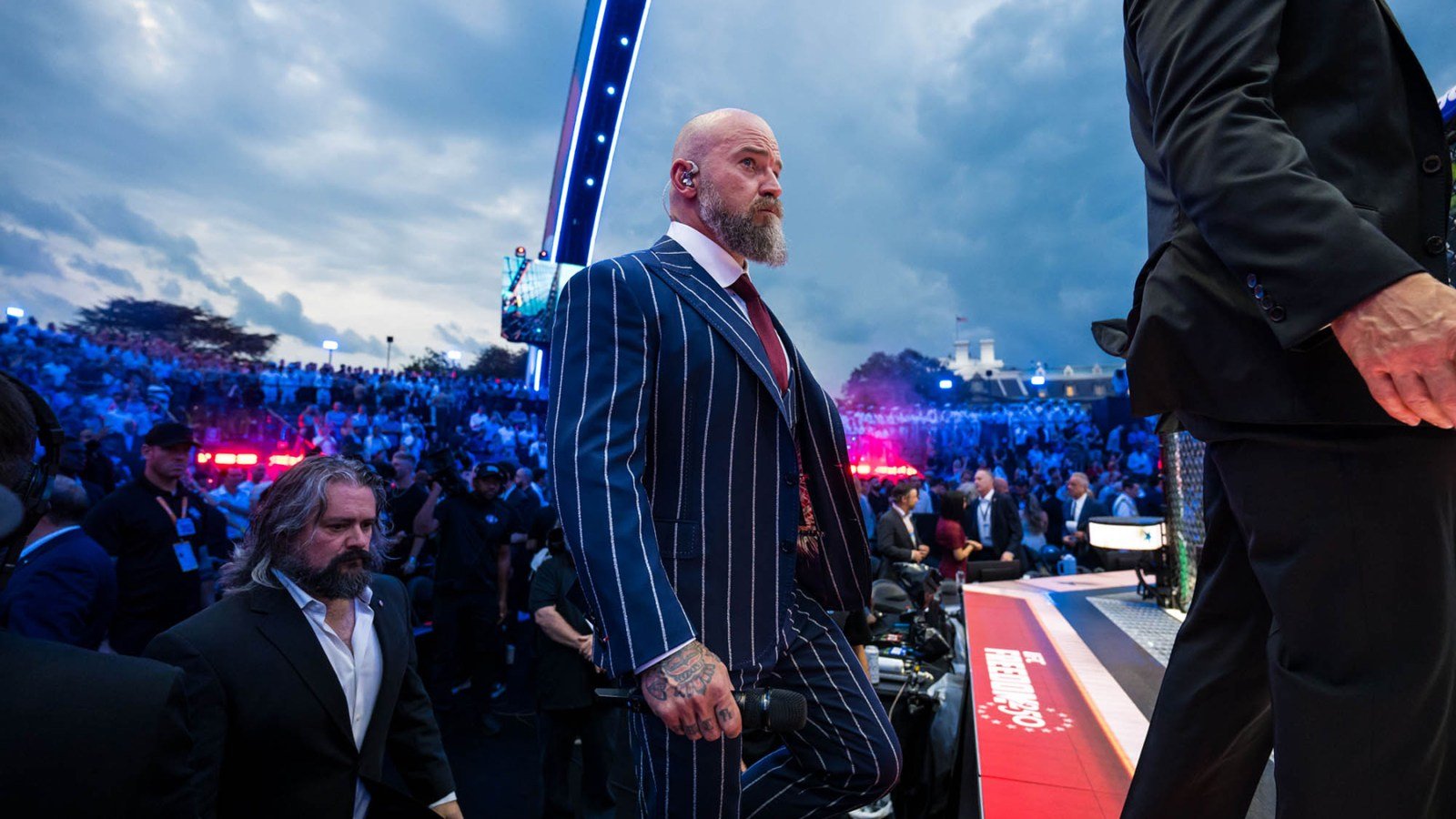
This past Sunday, Zac Brown delivered one of country music’s most beloved refrains: It’s not political, it’s patriotic.
He also performed the national anthem.
Brown sang “The Star-Spangled Banner” at the cage fights held on the South Lawn of the White House, standing honorably on an American flag-themed Monster Energy drink logo, beneath the glow of a massive UFC claw in a suit that was lightly giving cartoon detective at Donald Trump’s birthday bash. If you want to memorialize the event, you can purchase the official patriotic t-shirt (imported).
“This is patriotism, not politics for me,” Brown told the Pat McAfee Show in an interview about appearing at the match. “I mean, fuck all the division. I don’t believe in that. I love this country. I love all the people that have sacrificed so that I can live my American dream.” Brown was on the show to combat some criticism he’d received for signing on to appear at the event — a night that unfolded in an extremely non-apolitical way when heavyweight fighter Josh Hokit capped his win by yelling “Michelle Obama is a man” to the crowd. Whether or not you try to preemptively excuse yourself by declaring it’s about “patriotism,” anything Trump does is inherently political. Of course it ended with its winner hollering a ridiculous, unpatriotic statement about the only Black First Lady in history.
For country artists, it’s one of the oldest tricks in the try-to-keep-as-many-fans-as-possible playbook. Many before Brown have lobbed the “it’s not political, it’s patriotic” packaging when doing anything but: Jason Aldean’s racially coded “Try That in a Small Town,” Toby Keith’s jingoistic “Courtesy of the Red, White and Blue (The Angry American),” Darryl Worley’s “Have You Forgotten.” Musicians aren’t obligated to do anything political as part of the job, and plenty of audiences appreciate when artists don’t preach partisan points of view. But doing something divisive and trying to explain it away with “patriotism” is, to many, a step too far.
Editor’s picks
“I’m ashamed,” says Michael Trotter Jr. of the War and Treaty, a veteran of the Iraq war who endured live combat. “I take great pride in being able to say that I served this country and served it well. So, I am ashamed that people would hide behind the term ‘patriotism.’ I’m ashamed that grown men would use a sporting event to throw a jab at a former First Lady, who represented the very grounds the event was on with class, dignity, and beauty. I’m ashamed that my colleagues participated in it. But the truth of the matter is there’s nothing patriotic about what we just saw.”
To be fair, Brown has used his platform to direct resources and support to military families and veterans with his Camp Southern Ground organization. Because of that, the “Chicken Fried” singer likely knows where patriotism ends and politics begins — and where Trump’s machismo 80th birthday party might fall on that scale.
Trending Stories
Trotter, meanwhile, is launching an organization called iVet Cares with his wife Tanya, to support veterans, and says he wants more country artists to stop posturing and start listening about what being patriotic actually means. “I think most artists think that throwing money at a thing is enough, but it’s more important to listen to veterans, listens to soldiers and sailors and Marines, and really learn what they truly need. And then go lobbying, go to congress and get involved,” he says. “Artists need to stop being artists, and start being humans.”
Entertainment
Senn Penn Directing January 6 Drama, Bradley Cooper Starring as Cop
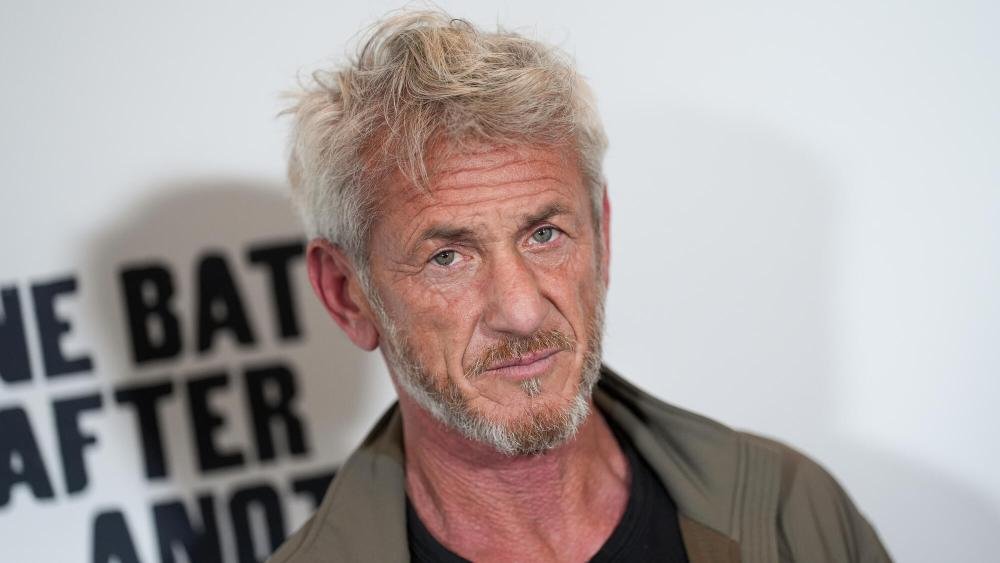
Sean Penn will direct a film about the early life of a cop who was present for the Jan. 6 storming of the United States Capitol. Bradley Cooper is being eyed for the lead role, though the real life inspiration for the film has yet to be identified. The film is currently untitled and has been set up at Warner Bros. It is described as “an unexpected story about friendship,” which needs a little work as a marketing hook and seems like a clear attempt to minimize any future controversy.
To that end, insiders insist the film is not really about Jan. 6 and is only tangentially related to the attacks. Despite that spin, it’s unclear how this project will play with David Ellison and the team at Paramount who are poised to buy Warner Bros. Discovery now that the Justice Department has cleared their merger. Ellison has made a point of highlighting his family’s ties to Donald Trump, hosting a dinner for the president and members of his administration in April and showing up at the UFC fight that was held at the White House last weekend. That event, which was held on Trump’s 80th birthday, was broadcast on Paramount+, Ellison’s streaming service. Penn, who has called Trump “an enemy of mankind,” is of a different political persuasion.
The actor recently won his third Oscar for “One Battle After Another,” which Warner Bros. produced. Penn also won Oscars for his performances in “Mystic River” and “Milk.” His credits include “Dead Man Walking” and “Sweet and Lowdown,” but he has been busy behind the camera over the course of his career. As a director, Penn’s films include “The Indian Runner,” “Into the Wild” and “The Pledge.” Penn wrote the script for his Jan. 6 film and will produce with John Ira Palmer and John Wildermuth under their Projected Picture Works banner. Production is targeting a mid-2027 start.
Cooper is also an acclaimed director, with Penn publicly praising his work on “A Star is Born.” The actor most recently directed and appeared in “Is This Thing On?” and also starred in and directed “Maestro.” Cooper’s credits include “American Sniper,” “The Hangover” and the upcoming “Ocean’s 11” prequel, in which he will star with Margot Robbie.
The deal with Warner Bros. was negotiated by CAA Media Finance. Penn and Projected Picture Works are represented by CAA; Cooper is represented by Range Media Partners. Deadline broke the news of Penn’s next project.
Entertainment
The Best Songs of 2026 So Far
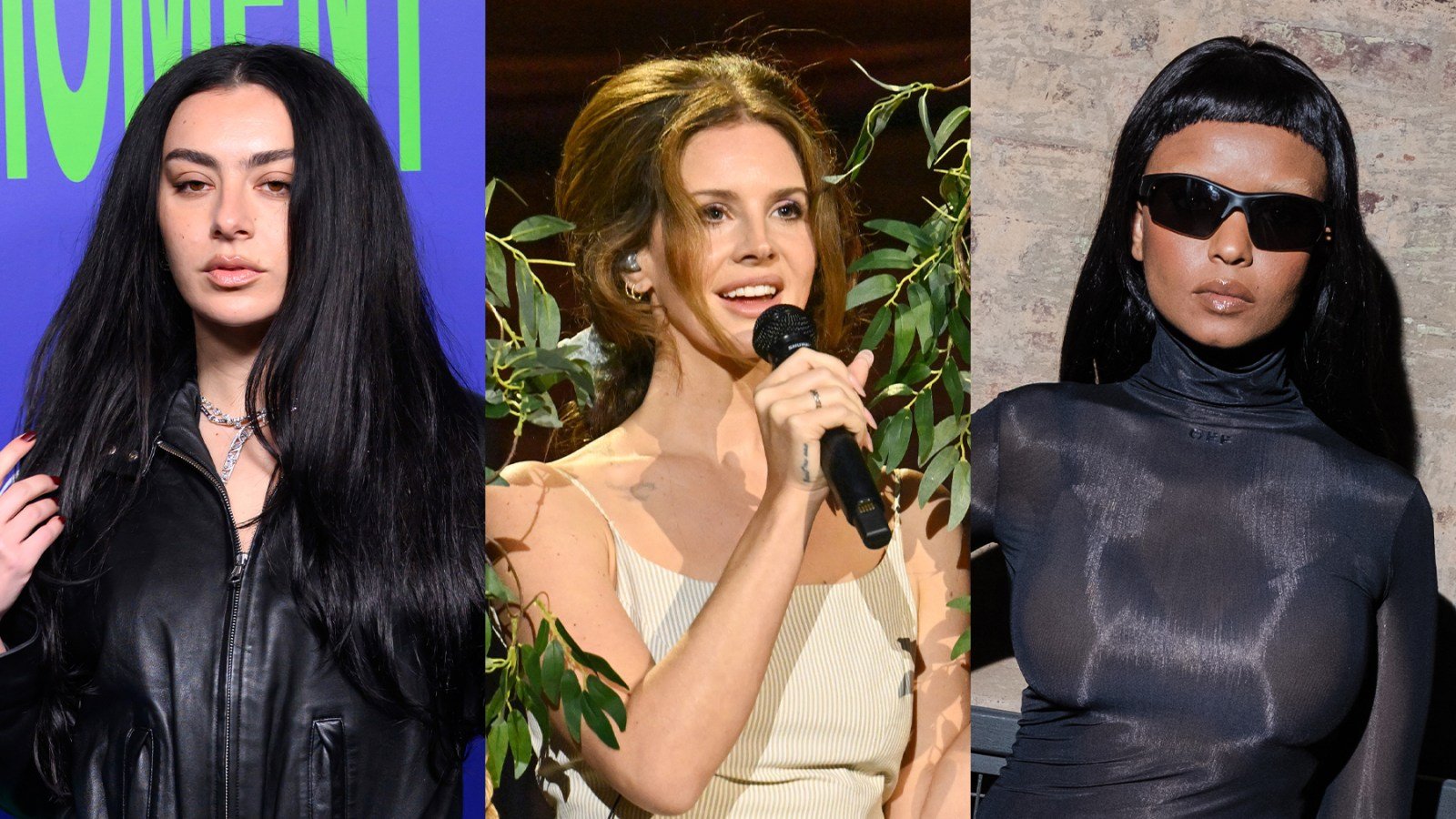
Centuries from now, historians will study 2026 with this Charli xcx classic, in which spring and summer are doomed because “We’re walkin’ on a runway that goes straight to hell/Nothing’s gonna save us, not music, fashion, or film.” The instrumentation is minimal — some electronic drums here, subdued, fuzzy riffs there — leaving room for Charli’s hilariously brutal songwriting to bask on its own. She revisits the Brat era and Kamala Harris’ 2024 presidential campaign (“Think my politics could work as a press strategy”) and pokes fun at cancel culture (“Wrote a really good notes-app apology”), culminating in a wild time capsule for the ages. We can’t wait for her take on fall and winter. —Angie Martoccio
In January, federal immigration agents killed Minneapolis residents Renée Goode and Alex Pretti. Shortly after the incidents, Springsteen released “Streets of Minneapolis,” one of his most immediate and powerful political songs, recalling Sixties protest folk as well as the stark realism of his own classic Nebraska. He excoriated “Trump’s federal thugs,” and “[Stephen] Miller and [Kristi] Noem’s dirty lies,” and celebrated the memory of Pretti and Goode, channeled the street protest chant “ICE out now,” and got loads of local credit for pronouncing Nicollet Avenue correctly.–Jon Dolan
This year’s most surprising Hot 100 chart-topper is a sparkling entry in the tear-in-my-beer canon. Over weepy slide guitars and a brisk rhythm, the Alabama-born country phenomenon broods about her intended being two-stepped out of her life by a Lone Star-born babe. Langley’s vocal has a bruised quality on the verses, opening wide when she admits that she knew what was coming on the chorus: “It doesn’t take a crystal ball to see/ A cowboy always finds a way to leave,” she declares, sounding as annoyed with herself as she is with her ex.–Maura Johnston
“Drop Dead” was the first taste of You Seem Pretty Sad for a Girl So in Love, where Olivia Rodrigo captured the feeling of being so deliriously head over heels that you feel literally sick. She was bored in bed and stalked a dude on the internet, and now she’s comparing the way he waits in line for the bathroom to an angel on the walls of Versailles. There’s sugary Eighties synths and a Cure reference here — which hinted at what this fantastic album would be like — and an astrological pairing that will live in our minds forever. But perhaps Rodrigo said it best when describing the track: “It makes me wanna skip around and roll the windows down and make out!” —A.M.
“Do you love me now? Do you? Do you?” Harry Styles asks on “Season 2 Weight Loss.” “Do I let you down?” Away from the screaming crowds and sold-out shows — away from the performance of who his audience knows him to be — Styles begins to wonder how they would react if he showed up as the person he knows himself to be when they aren’t around. Would they still love him the same? Would he? The song revels in the tension it creates, reflected in choir-like harmonies set against thudding percussion. It’s one of the smartest, most intriguing records Styles has made to date.–Larisha Paul
Nothing screams summer quite like a sexy beat — and that’s exactly what Young Miko and her producer Mauro deliver with “BIAF.” On the track, Miko declares “Baby, I’m a freak” over sleek drums and synths that echo Right Said Fred’s “I’m Too Sexy.” With the confident, masculine energy ripe in “BIAF,” it’s no wonder the song has racked up 18 million streams so far. —Maya Georgi
New York electronic dance duo Fcukers dropped their debut album, Ö, this spring, making it abundantly clear that the dance floor is definitely not dead. No one on the scene currently captures the nonchalant, deadpan club-rat disposition of the 2020’s like Jackson Walker Lewis and Shanny Wise — just check out their single “L.U.C.K.Y.” On the track, Wise’s kittenish vocals float above a sea of flickering synths and throbbing wubs, drolly delivering what actually — if you listen closely — is a pretty earnest love song, albeit not so sincere that it kills Fcuker’s addictive, too-cool facade. —Leah Lu
The hit lead single off The Romantic, Bruno’s long-awaited first album since 2016, is the kind of effervescent pop-funk sugar that’s made him one of the most popular showman in pop music. “I Just Might” is dance-the-night-away bubblegum, steeped in the Seventies disco classics of KC & the Sunshine Band and Hot Chocolate, with Bruno posing the metaphysical conundrum, “What good is beauty if your booty can’t find the beat?”–J.D.
An online leak rarely suggests someone is in a position of agency, but U.K. R&B trio FLO take the power back into their hands on “Leak It,” a track that’s as razor sharp as the stilettos they’re strutting in. A surge of confidence finds the girls exposing some racy photos of themselves just to get back at their boos, and between FLO’s sky-high vocal runs, the production’s Timbaland influence, and the barbed yet hilarious lyrics, “Leak It” is pure ear candy, just like those pictures they threaten to drop. Seriously, how could they not? —Jaedan Pinder
New York electro-jitter outfit Lip Critic capture the uniquely claustrophobic feeling of a long night indulging in vices on this track from this year’s Theft World. As lead yelper Bret Kaser outlines the scenario in which he’ll take a “swan dive right into [his] swan song,” stuttering drums and malfunctioning-machine blips close in on him the way a casino might after a long night of riding the odds. It’s a jarring, adrenaline-rush listen that’s also an ideal set piece for the era of prediction markets and slot-machine apps. —M.J.
In the spring, New Orleans rapper Juvenile scored his first Billboard Hot 100 hit in 20 years with “B.B.B.,” the breakout single from his album Boiling Point. Much of its success is due to guest Megan Thee Stallion, who delivers a blushingly sexual verse that matches Juvie’s legacy as the author of booty-twerking classics like “Back Dat Azz Up” and “Slow Motion.” “Come feed me, Big Daddy,” she raps seductively. Juvenile, for his part, gets equally ribald: “See, when you do that maneuver you do with your pussy ‘round me, I be losing my cool.” —Mosi Reeves
Any concerns over Max B’s ability to regroup and adapt following his release after a lengthy prison sentence were quickly silenced by “Ever Since You Left Me (I Went Deaf),” an addictive groove reuniting him with longtime collaborator French Montana. With production built around a prominent sample of “That’s the Way (I Like It)” by KC and the Sunshine Band, the song finds Montana taking charge on the hook and opening verse, while Max B’s disarming charm and melodic sensibilities are favorably displayed on this contender for rap song of the year. —Preezy Brown
T.I. has long been in the stage of a rap career where he could rest on his laurels. Yet, when you call yourself a king — a proclamation he bestowed upon himself two decades ago — heavy is the head that wears the crown. Thus, defending that status is paramount to survival, as he lyrically reminds his constituents on “Let ’Em Know,” the lead single from his (alleged) 12th and final album, Kill the King. Produced by Pharrell, the track is T.I.’s highest-charting Billboard Hot 100 hit in 12 years and a reminder to anyone questioning his rank. —P.B.
“This a motion party, you cannot get in,” claims Bossman Dlow. He’s undoubtedly being facetious: The Florida rapper’s single, which peaked at Number 37 on the Billboard Hot 100 chart, is full of sly seductions over a glassy, bass-heavy track reminiscent of Mannie Fresh’s Cash Money hits that’s intended to draw in an audience, not repel them. Meanwhile, the remix features Megan Thee Stallion, who uses the opportunity to air out her widely publicized breakup with NBA all-star Klay Thompson. “I ain’t goin through no phones, that shit stupid/If I catch a nigga cheatin’ on me, it’s deuces,” she raps. —M.R.
Featuring Future alongside the red-hot Southern California rapper Molly Santana, “Ran to Atlanta” chips away at the faulty logic of Drake’s detractors. What distinguishes Drake’s participation in Atlanta’s musical ecosystem from the countless other artists, executives, media figures, and corporations who have profited from the city’s cultural output for decades? And what does it mean that virtually no major Atlanta rapper publicly embraced Kendrick’s framing of Drake as outsider-villain in “Not Like Us”? “Ran to Atlanta” proves that framing barely stands scrutiny. —Jeff Ihaza
The opening track of this shape-shifting Houston artist’s fifth album, Octane, makes a sweeping statement from its opening synth crashes, with Toliver’s processed falsetto — professing that he’s been both tryin’ and cryin’ — adding to the spectacle. From there, he embarks on a trap&B joyride that can only end up in the backseat — but his charm (“We laugh all day like Dumb & Dumber”), obvious affection for the song’s subject, and fervent vocal performance make getting there more than half the fun. —M.J.
Karriem Riggins and Liv.e’s collaboration as GENA, The Pleasure Is Yours, is a delightful throwback to the synthesized and beat-heavy grooves of the aughts, with sounds clearly inspired by the likes of D’Angelo and Sa-Ra Creative Partners. On the opening track, “Who’s Got a Problem With GENA,” drummer and producer Riggins — who worked with the Roots and the late J Dilla — offers rolling percussion and warm, Rhodes-like keyboard tones. Meanwhile, fans of Liv.e’s heady and cryptic solo experiments will find her funkily down-to-earth, wailing away as she sings the title with a passion reminiscent of Erykah Badu. —M.R.
“We discovered a complete freestyle rap from Proof that we had never considered using before,” Jamie Hewlett said earlier this year. That’s how the rapper and Eminem collaborator who passed away two decades ago appears on Gorillaz’s The Mountain, the British ensemble’s homage to fallen friends that feels more like a joyous revival than a mournful wake. On “The Manifesto,” Proof’s voice rings out again as he brags, “Y’all ain’t ready for death.” Meanwhile, amid horn fanfare and a cheery chorus from Gorillaz mastermind Damon Albarn, Argentinian rapper Trueno offers verses about embracing the future no matter what it brings. —M.R.
J Balvin and Ryan Castro offered an initial glimpse into their joint album, Omerta, with this explosive track, which also marks their first-ever collaboration. The pair sample Kriss Kross’ “Jump,” but make the hip-hop classic all their own by infusing Colombian rhythms into the Nineties beat. With Balvin’s son introducing the two artists in a sweet snippet at the beginning of the song, it’s truly a family affair. —M.G.
The first post-breathrough release from New York pop wunderkind sombr is a hazy plea to a lover who has a partner waiting at home. It glides on a lite-funk beat (with a bassline laid down by former Prince muse Wendy Melvoin) as Sombr lays out how he’s been strung along, including ‘til-dawn fire-escape chats; while he’s sympathetic to his romantic rival (“I don’t wanna talk down on your lover/ I don’t wanna be a homewrecker,” he bellows on the chorus) his all-in vocal indicates that he really, really wants to win.–M.J.
The Kid LAROI’s greatest strength has always been his willingness to lean into the reality of blatantly uncomfortable circumstances around love and heartbreak. “Thank God” is proudly honest to a fault as he tries to move on from a breakup with a new relationship, admitting, “She sits right next to me, but I still look at these old pictures of us.” His heart is still tangled up elsewhere. Frustration, loss, and disbelief are clear in his tone, though his vocals are light and airy with the love he still holds. “Thank God” is one of the most convincing and emotional performances of his career. —L.P.
Earlier this year, Ravyn Lenae told Rolling Stone, “The thing that people can expect from me every time is I’m going to try something different.” Her single “Handle” is a testament to this. Lenae sinks into an indie-rock dream on the guitar-heavy record. The sound serves as a fresh backdrop for her succinct accounts of what it takes to go toe to toe with her heart. “Oh, my love, my love is like a landslide,” she sings, throwing her voice with sensational elasticity. “Hold on tight, one with me in the undertow.” By the end, “Handle” cranks up the anticipation for what Lenae might do next. —L.P.
The Los Angeles sparkplug’s 2025 debut, Switcheroo, smashed together surrealist pranksterism and DIY synth-pop in charming fashion, but the crushed-out single added to its March reissue showed how high she’d raised her game in a year. Its sing-song refrain is full of vowels that are begging to be turned into Silly Putty by Haha and her crew; its verses find her delighting in the magic of consonant blends (“I’m in the crowds, I’m in the club, I’m in the cumulus,” she trills) and collective countdowns, and its chopped-up synth squiggles give the whole thing a kind of contagious effervescence. —M.J.
Underscores’ April Harper Grey lived several lives by the time she got here (including being a teenage dubstep student and a moderately successful K-pop historian), and her love for pop maximalism shows no bounds on the ever-expanding “Hollywood Forever.” Across its distinct three acts, the self-proclaimed overproducer daydreams about the highs and lows of fame, from getting a hall pass to be a snob to being memorialized at a cemetery turned tourist attraction. She alchemizes the spirit of Skrillex, K-pop’s imperial-leanings, plus a Drake interpolation as a treat, to head-spinning effect. —J.P.
Australian electronic producer Memphis LK calls her latest Eurodance cut “angel pilled,” and between her breathy vocals and the pirouetting synths, it’s easy to see why. LK’s blissed out lyrics are par for the course when it comes to trance tracks (though a mention of dolphins might conjure the image of Lisa Frank’s saccharine illustrations), but the song’s glossy production keeps the cloud-nine high spiraling into eternity. As synths rip past one another and dodge piano plinks, “Out My Body” embodies the effect of zipping down Rainbow Road, and you’ll want to keep running laps over and over, even as the sun comes up. —J.P.
Kacey Musgraves delivers one of her strongest songs to date as the penultimate track of new LP Middle of Nowhere. The singer paints the sultry promise of a new flame over distinctly regional Mexican music rhythms, and it goes down smooth just like the whiskey she writes about. After an album spent decrying her sex dry spell and ghosting exes, the tale is more than earned — it’s welcomed. —M.G.
Rival Sons’ lead howler Jay Buchanan went solo on his Dave Cobb-produced album Weapons of Beauty, a record that shows Buchanan is just as at home doing rootsy and soulful Americana as he is at hard rock. “True Black” is the LP’s showstopper, a grooving jam of a song that reads like an apology to oneself. (“You have to be a lot of people to become who you are today,” Buchanan told Rolling Stone’s Nashville Now podcast of the song’s message.) “Paint my casket true black,” he sings, before delivering a rousing refrain of “Shoo-rah, shoo-rah, shoo-rah.” —Joseph Hudak
Mike Ness kicked cancer to return with the Orange County punks’ best album in years, and a title track that’s as ferocious as the tiger that graces Born to Kill’s cover. Over a massive electric guitar riff, Ness spits about upending the status quo, celebrates being a rock & roll animal, and reminds you that even at 64 he’s still “a-lookin’ for a thrill.” “Born to Kill” rages to an explosive climax, with SD marking their territory for all of the young bucks who come after them. Shouts Ness: “Look out, man, you’re in my pissing range!” —J.H.
“Alco-hol/Hall of Fame” is one of those puns so head-slappingly obvious, it’s shocking it took country songwriters nearly 100 years to hit upon it. One must hat-tip Riley Green for doing so first in 2024, but Luke Combs’ version earns the plaque. It’s a barn-stomping heartbreak anthem that finds Combs toeing the line between blubbering vulnerability and resolute defiance. His roughshod, yearning Carolina drawl is the perfect vehicle for the song’s monster hook — “I need a longneck bottle, I need a jukebox song/I need a neon angel to kickstart my moving on” — a chorus so good, you can’t help but raise a glass. —Jon Blistein
Title notwithstanding, Ashley Monroe’s stunner “I Hate Nashville” is far more love song than score-settling rant. Monroe has had the kind of career where she’s your favorite artist’s favorite artist — loved by Jack White, collaborated with by Miranda Lambert, produced by Vince Gill — but never quite became the name on the big marquee. Here, she comes to terms with her disappointment without underselling all of that Music City magic. “If I’m being honest,” she sings to lush production by Luke Laird, “I’d do it all again.” —Marissa R. Moss
Del Rey’s upcoming album Stove has had quite a journey — from title changes to release date postponement. But earlier this year, she gifted fans with another single from it: “White Feather Hawk Tail Deer Hunter,” co-produced by Jack Antonoff and co-written with her husband, Jeremy Dufrene (among others). The track sparkles in feathery instrumentation and mystical string arrangements, as Del Rey sings about domesticity (“I wanted to know if I could use your stove/To cook somethin’ up for you”) and whimsical phrasing (“Whoopsie-daisy, yoo-hoo!”). “This is the one I’ve been waiting for,” Del Rey said. We have to agree.–A.M.
Karol G made her historic Coachella headlining set even more exciting when she debuted her new song, “Despues de Ti,” in collaboration with Cigarettes After Sex’s Greg Gonzalez. It’s only natural Karol tapped Gonzalez for this heartbreak ballad since his dream-pop band is one of her favorites, especially when the Colombian superstar is as upset as she is here. “Every time I’m going through something, I listen to them because their music makes me feel everything,” she told Rolling Stone last year. As Karol sings, “I fabricate fantasies that you’re still her,” in a hurt voice over an echoing kick drum, the track brings on all the feels. —M.G.
The lead singer of the New York rock trio Sunflower Bean drops a solo debut for the ages with this song-of-herself anthem. After years of hard work on the live circuit, Julia Cumming decamped to L.A., and decided to stop caring what other people thought and make the Seventies singer-songwriter music she’d always wanted to. “I don’t do this to impress you/I don’t wear this to undress you,” she croons with crystal clarity over sumptuous AOR piano and dreamy backing vocals. Can she get a “Hell yeah”? —Simon Vozick-Levinson
The first single from the visionary singer-songwriter’s forthcoming New Avatar is a document of tension — fingerpicked guitars giving way to room-filling fuzz, candy-coated background singers’ ripostes feeling like an anxious mind’s real-time machinations The lush unease of “Idea 1” is meant to reflect “the weight of being expected to witness, absorb, and speak truth at a time when the world feels like it’s unraveling,” she said in a statement — a burden that, she noted, is particularly felt by Black women. “Idea 1” holds space for the world’s ails and the assumptions that come with them sonically and lyrically. —M.J.
Star Moles, a.k.a. Philly’s Emily Moales, is one of the most talked-about new phenoms in indie rock this year. On this highlight from her excellent Highway to Hell album, she spirals through punny lyrics about beefing with Ben Franklin: “You just messed with the postmaster general/The four-star postmaster general/And neither snow nor rain nor heat nor gloom of night can save you now …” But the real magic in “Real Magic” comes from her melodic instincts, spinning her arcane jokes into majestic DIY. —S.V.L.
This year, Beabadoobee came back to do what she does best: release grungy stunners, her wistful lyrics pushing up against heavy riffs. But the singer upped the ante when she tapped the Marías for this new track. On it, María Zardoya’s haunting soprano sounds like a literal dream, breaking up the nightmarish quality of the song. It also seems to be the first tease of new music from Beabadoobee, who described the song as “a nice bridge to the next thing I want to release.” Here’s hoping for a Bea summer. —M.G.
These indie-rock rookies from Adelaide, Australia, come spilling out of the speakers with a rush of irresistible hooks on the first single from their upcoming debut album. The guitars crash and swell around lead singer Venus O’Broin’s trembling vocals, and the band plays with an energy that’s both loose and locked-in. They’ve said that this song began as a wildly fun pre-show jam that they couldn’t tear themselves away from, and once you hear it, you won’t want it to end either.–S.V.L.
Bella Kay cuts right to the chase on “iloveitiloveitiloveit.” “I like being used, it means I have a purpose,” she sings in the opening line. There are flecks of country influence scattered across the track, but Kay undercuts the buoyant acoustics with a delicate vocal performance packed with personality. Few one-lines in pop this year come close to “I’m a couple minutes out from relapsing into you.” She’s an expert at playing up the theatrics. That you’re left questioning whether she’s being serious is a testament to this. Regardless, it’s clear there’s something about Kay that gives the song endless replay value. —L.P.
Julia Wolf has a gift for setting the scene. In the opening verse of her latest single, “Deep End,” she’s assembling furniture in her living room, much to the detriment of her press-on nails. The vivid details are almost inconsequential. She’s just trying to keep herself distracted. When she gets to the heart of what she’s really feeling — discarded and lovelorn — it’s obvious why she was avoiding it. “I’m doing handstands in the deep end of your mind, in the deep end till I’m blue,” she sings. “You know I’ll drown if I have to.” You can’t help but believe her. —L.P.
The Queens-based singer-songwriter closes out her striking new album, Girlfriend, with this muscular empowerment anthem. “Stupid bitches can’t hurt me,” Ives sings over spiraling, grinding Wall of Sound production courtesy Ariel Rechtshaid and John DeBold that seems designed to embody the mess of emotional contradiction she’s fighting through in her urgent lyrics. It’s the sound of someone fighting through their own doubt and the glaring lens of the world to arrive at their own freedom — and grand a pop epiphany too. —J.D.
Holly Humberstone is all about packing big emotions into sticky pop songs — and she’s done it again on this gem. The British singer-songwriter takes the grandness of being head-over-heels in love and the frenetic heartbreak that follows and turns those feelings into a heart-swell of a song. With expansive Eighties synths and Humberstone’s quick wit, the song sounds like it could fit nicely into a rom-com soundtrack. —M.G.
The deluxe edition of Halsey’s The Great Impersonator expanded the haunting album with “Afraid of the Dark,” a career highlight at once devastating and disarming. The demo doesn’t have the same theatrical flourish as the rest of the record. It’s all the more cutting in its stripped-back state, spotlighting her songwriting with lines like “You spineless girl, you should donate your legs because you never stand.” Halsey sings candidly about the divide between her pop-star persona and the complex person she hides beneath it. “Do you recognize your own two feet inside my shoes?” she asks. “I’d rather be like you.” —L.P.
Since he scored a viral bloghouse hit in 2025, Fakemink is far from being the underground rapper he once was. On “Blow the Speaker .,” Fakemink drowns out the noise of online rap discourse, unsavory Rolling Loud critiques, and his ballooning fame with more noise. When the song’s ethereal intro bursts like a balloon just after the 40-second mark, the bass (courtesy of producer Wraith9) is sludgy and suffocating, with strings barely filtering through the fog. For less than three minutes, everything slips away on “Blow the Speaker .,” and Fakemink’s recurring command to crank the volume becomes something like a prayer. —J.P.
Abrams’ comeback single is about that feeling of unraveling, when you’re so exhausted and frustrated with yourself that you hit a breaking point. Her deceptively simple lyrics (“Hit the wall, I just hit the wall/I’m not a problem you can solve”) are part of what makes her such a compelling songwriter, and she holds very little back on this addictive standout. The track was produced by her longtime collaborator Aaron Dessner, who delivers subtle, sporadic synths that beautifully weave through each line. Come for the devastating lyric about not getting married, stay for the stellar Joni Mitchell reference. —A.M.
Temper City broke out with “Self-Aware,” an sleek, infectiously moody ode to a toxic relationship that went from TikTok virality to the Hot 100. Writer-producers Eytan Peled, Chen Kordova, and Aviv Barenholtz tapped a nostalgia for the hazy feel of early-2010s alt-rock gems like the Arctic Monkeys’ AM and Cage the Elephant’s Melophobia, and slung that sound around an earworm melody and lyrics that make romantic self-analysis feel vaguely unhinged. —J.D.
James Blake sleepwalks through a nightmare on “Death of Love,” a hazy appraisal of the state of compassion and connection. “I don’t know how we got here, everything feels different,” he sings matter-of-factly. “People are losing interest in the best of love.” The downcast harmonies surrounding his voice create a sense of desolateness. Samples from Leonard Cohen’s “You Want It Darker” are dispersed throughout the song, intensifying the unease of loneliness Blake sings about. In some ways, it feels like the heart of his latest album, Trying Times — emphasis on trying. “Don’t leave me behind,” he pleads, “over one bad hour.” —L.P.
There’s several standout moments from Lala Lala’s Heaven 2: the spellbinding “Even Mountains Erode,” the propulsive rocker “Does This Go Faster?” But the title track, tucked right in the center, is the heartbeat of the record. Lala Lala, real name Lillie West, admitted the song is a tad melodramatic, that she was feeling “very doomed and defeated” when she wrote it, and you can hear that downward spiral on the drums and synths that surge forward with each line: “Heaven is a moment/Hell is a life.” It’s a delicious downer that shouldn’t be slept on. —A.M.
Entertainment
Behind ‘Obsession’: Curry Barker’s indie hit took more than a wish
NEW YORK (AP) — Days before “Obsession” opened in theaters, its 26-year-old director, Curry Barker, made a bet with his manager and agent. They said if the movie opened above $20 million, they would all get tattoos.
“Obsession” fell just short. It debuted with $17 million. They were still thrilled. Barker made the horror film with just $750,000. It was enormously successful. But then something unexpected happened. The following weekend, “Obsession” easily cleared $20 million. And then it did again and again and almost a fourth time — an almost unheard-of staying power.
“It was just like: Holy cow. I didn’t think that was an option,” Barker says. “Now we’ve said if it hits $300 million, we’ll all get the tattoo. We had to make a new milestone. And I think we’ll reach it.”
Over the last month, “Obsession” has sent shock waves through Hollywood. Barker’s microbudget thriller has grossed $286 million worldwide, and it’s still going. On its fifth weekend in theaters, it was second only to Steven Spielberg’s “Disclosure Day,” with $19 million. In North America, it has outgrossed “Star Wars: The Mandalorian and Grogu.” It’s the biggest hit in the 24-year existence of Focus Features, which has had to postpone the video-on-demand release. It ranks among the most profitable movies ever made.
Barker, who built a following making sketches and short films on YouTube, is living out the dream of every aspiring filmmaker. Life, he granted in a recent interview, is different now.
“My day to day is pretty much the same. It’s just that when I go out in public, it’s a lot different,” he says, laughing. “I actually feel a little unsafe sometimes.”
That’s an ironic development for someone whose twist on an old Monkey Paw story has frightened moviegoers. In “Obsession,” Bear Bailey (Michael Johnston) wishes on an antique toy called a One Wish Willow that his crush, Nikki (Inde Navarrette), loved him. The spell — loosely inspired by an old “Simpsons” Halloween episode — works disturbingly well.
The astonishing success of “Obsession” has been hotly debated throughout the industry. Coupled with the A24 hit “Backrooms,” by 20-year-old Kane Parsons, it’s been a coming-out party for YouTube as a breeding ground for the next generation of filmmakers.
It’s also brought waves of Gen Z moviegoers — who already make up a promisingly robust percentage of frequent ticket buyers — into theaters. Summer has historically been dominated by legacy franchises, but “Obsession” may represent a sea change.
“If there’s a lesson from ‘Obsession,’ I think it’s about audiences,” says Peter Kujawski, chairman of Focus Features. “We have a generation that grew up online, approaches culture with enormous curiosity and playfulness, and is far less concerned with where a filmmaker comes from than whether the story connects. They’re engaged, incredibly film-literate and eager to champion new voices and original stories.”
From YouTube to the multiplex
Barker, who grew up in Mobile, Alabama, before moving to Los Angeles at 18, says he feels as though he’s writing for his generation. The response to “Obsession,” he says, taps into a collective need.
“I get it because I think we’re a little tired of being at home. Our generation is the COVID generation,” says Barker. “I was fortunate enough to have all four years of high school experience. My brother, Riley, lost two years of that. We’re sick of the phones.”
Barker wanted to be an actor before he wanted to be a filmmaker. And while his early exposure to “The Texas Chainsaw Massacre,” at age 11, helped set him on a horror path, he didn’t begin that way.
“I was a huge Harry Potter fan growing up. Huge. I was obsessed,” Barker says, smiling. “I had all the wands. I would dress up.”
Barker attended film school in Los Angeles for a year, where he met Cooper Tomlinson, a co-star and producer on “Obsession.” The two soon forged their own path, though, on YouTube and TikTok. Their comedy sketch series, “That’s a Bad Idea,” found a footing online.
Barker wrote and directed the 2023 short “The Chair,” which attracted the interest of Tea Shop Productions. Producer James Harris approached Barker about a feature of “The Chair,” but he instead wanted to make a film — “Obsession” — that drew on many of the same ideas. Meanwhile, Barker also made an $800 found-footage horror film, “Milk & Serial.” After failing to secure distribution, he simply uploaded to YouTube. It went viral and landed him an agent.
“Obsession” was selected to premiere at the Toronto International Film Festival last year, giving it an enviable platform. After a bidding war, Kujawski and Focus acquired it for $15 million.
“What stands out about Curry is that he isn’t working from an inherited playbook,” says Kujawski. “Whether you look at his earlier work or ‘Obsession,’ there’s a consistency of vision and a confidence in his storytelling that immediately sets him apart. He knows exactly what he wants to say while being absolutely committed to making every minute of his work as entertaining as possible, and he’s willing to take real risks in service of that vision.”
More ‘Obsession,’ but other projects first
Barker’s swift but hard-earned rise has made him the poster boy for a new brand of filmmaker, one who has honed his craft as a digital creator and arrives with an established fan base. Jason Blum, the chief executive of Blumhouse Productions, has compared Barker and company to the 1970s wave of American auteurs, “making edgy movies that are connecting in theaters in a crazy way.”
“When you really step back, my journey is not really that different than Christopher Nolan or David Fincher or Steven Spielberg,” Barker says. “You can watch their early short films and see their work before they were given a chance. I think YouTube is just a path, a platform we can use now to show the industry what we’ve got.”
Now, Barker is one of the most in-demand filmmakers in Hollywood. He has already shot his next feature, “Anything But Ghosts,” starring Aaron Paul and Bryce Dallas Howard, for Blumhouse. Two months ago, A24 announced that he will write and direct a reboot of “The Texas Chainsaw Massacre.”
All the attention has taken some getting used to. Filmmakers like Ari Aster and Zach Cregger and even Spielberg have reached out to compliment Barker on his film.
“That’s when you start to feel this impostor syndrome of like: What? It’s not that good,” Barker says, laughing. “All I see when I watch ‘Obsession’ is the problems.”
An “Obsession” sequel is, naturally, a certainty. “A sequel isn’t hard for this movie,” grants Barker. He sketches out how new wishes by other characters on One Wish Willows could lead to entirely different stories, all revolving around some new vice: greed, fame, whatever.
But as much as it’s tempting to see “Obsession” as the product of Barker’s own wish, it’s more like the opposite. In the film, Bear’s profound mistake is putting off confessing his feelings to Nikki, thinking there’s plenty of time to do it. (The movie immediately cuts to a dead cat.) Barker, on the other hand, had no timidity about realizing his dreams. He wanted to make movies, so he did.
“Anyone that asks what advice you have for young filmmakers, I always say the same thing,” says Barker. “I went to a film school for a year out in L.A. and I watched people paralyze themselves with the pressure of: I’ve told people I’m a director so now I have to direct something that has to be good. If it’s not good, everyone’s going to judge me. The result of that thinking is two years on one short film.”
“You can’t put too much pressure on an idea,” adds Barker. “You just got to make it.”




Toy Story 5 Review
Toy Story 5 is in theaters on June 19. Woody, Buzz and the gang are back in theaters for Toy...


German Chancellor Merz gifts Trump soccer jersey at G7
President Donald Trump was presented a soccer jersey with the number 47 printed on the back by German Chancellor Friedrich...


What the tentative Iran deal means for the Middle East
Displaced families are beginning to return to southern Lebanon after the US and Iran signed a memorandum of understanding …


Trump says he may read Iran agreement on camera
President Donald Trump vowed to publicly release the text of the agreement with Iran "in a couple of days" and...


White House attack thwarted: Arrests made for drone plot at UFC fight
Federal officials have arrested multiple people who they claim discussed plots to attack the UFC fight night event at the...

Kamala Harris: ‘This is a war the American people did not want’
Former U.S. Vice President Kamala Harris talks with CNN's Elex Michaelson and Arnold Schwarzenegger at the Austrian World …

MLB issues warning to Giants pitchers who wrote Bible verses on Pride Night caps
After three San Francisco Giants pitchers appeared in Friday’s game with Bible verses written on their Pride Night caps, Major...
Verizon breaks industry mold
NEW YORK—Verizon (NYSE, Nasdaq: VZ) today announced the next step in its ongoing transformation, replacing complexity and friction with simplicity...


Ebola outbreak in DR of Congo could take year to end, Red Cross says | BBC News
The Red Cross said it could take a year to end the Ebola outbreak in the Democratic Republic of Congo....

Why Film and TV Production Is Fleeing Los Angeles
“Baywatch” was a staple of low-budget, first-run syndication in the 1990s, as natural to Los Angeles as David Hasselhoff’s chest...
-
 Business3 days ago
How much of Musk’s wealth comes from government help? Virtually all of it
-

 LifestyleNews2 weeks ago
120 minutes of strength training per week may help extend lifespan
-

 Politics5 days ago
What to know about the stabbing that set off fiery riots in Northern Ireland
-
 Video4 days ago
Download fans say what they love about the festival. #DownloadFestival #BBCNews
-

 Video4 days ago
Why SpaceX IPO isn't about space. #SpaceX #ElonMusk #BBCNews
-

 HealthNews4 days ago
The people of Okinawa, Japan only eat until they are about 80 percent full, then stop — and the practice has been linked in multiple peer-reviewed studies to lower rates of cardiovascular disease, slo
-

 Food4 days ago
Pope Leo’s plane was grounded. Then the King of Spain stepped in to help
-

 TravelNews4 days ago
My Paternal Instinct Should’ve Warned Me About Netflix’s Maternal Instinct