

Politics
DHS could be a threat to midterm elections this year : NPR

Stay up to date with our Politics newsletter, sent weekly.
Gary Berntsen is convinced Venezuela stole the 2020 U.S. election.
That myth has been debunked numerous times, including as part of Fox News’ 2023 $787 million settlement with voting machine company Dominion, but Berntsen, a former CIA operative, has been pushing it for years.
“One of the things that we learned is there’s 14 different technical ways that you can steal an election,” Berntsen explained in an interview in the fall with conservative podcaster Lara Logan.
But ahead of the 2024 election, Berntsen says he couldn’t get anyone to listen to him. Not the FBI. Not the media.
Finally, he went to Congress, where he says he was similarly rebuffed by almost everyone, including Republicans. Except one.
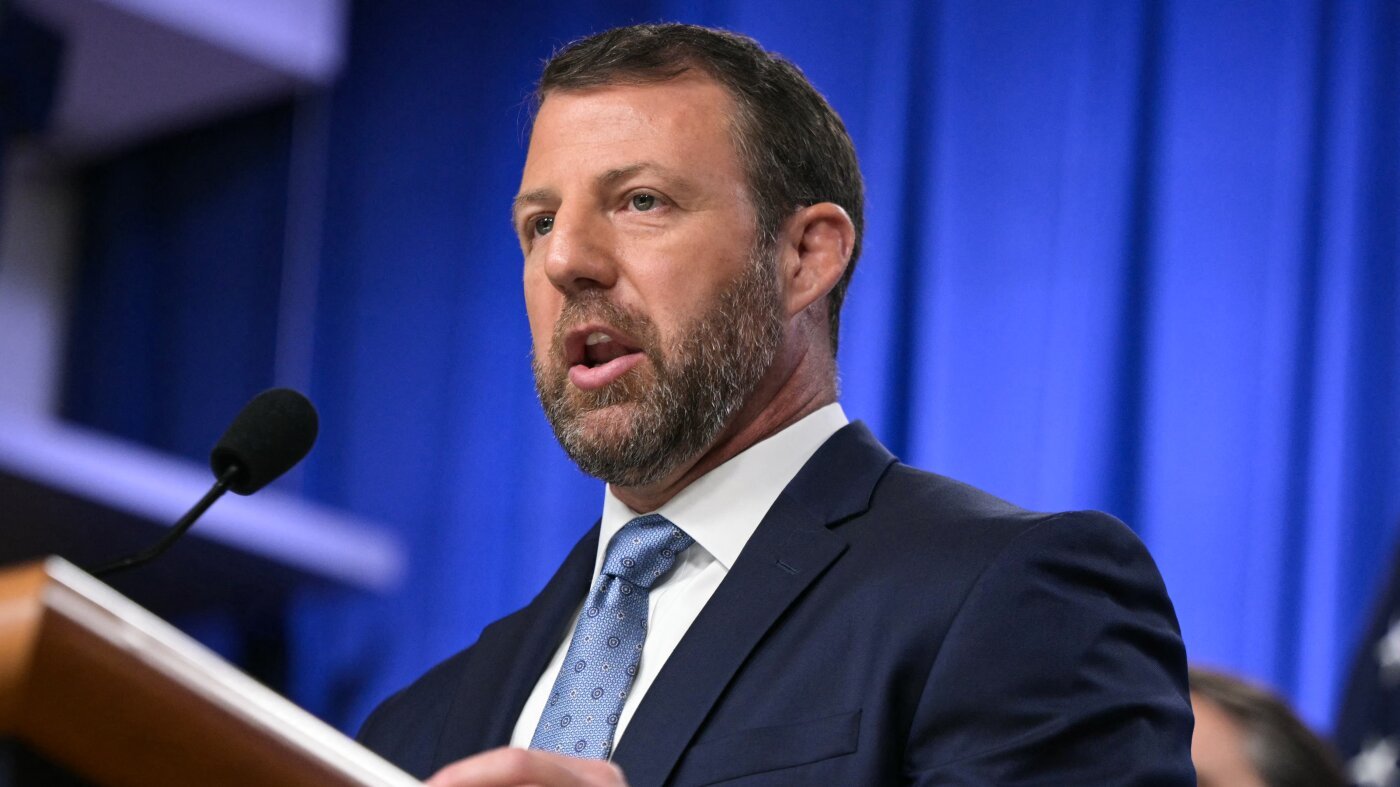
“One politician in America was not afraid,” Berntsen told Logan. “It was Markwayne Mullin of Oklahoma.”
Allies of Berntsen say Mullin — then a U.S. senator, now the head of the Department of Homeland Security — brokered a meeting at Mar-a-Lago so Berntsen could brief President Trump’s team on conspiracy theories about Venezuelan interference in elections.
That is just one time of many that Mullin has gone to bat for election denial.
“[D]ue to all of the fraud and uncertainty surrounding the 2020 election there is no way I can vote to certify the Electoral College,” Mullin wrote online on Jan. 2, 2021. Four days later, after a mob overran the U.S. Capitol during the certification, Mullin was one of 147 congressional Republicans who still voted not to certify the results.
Mullin’s history of false election fraud claims has heightened concerns that voting officials have had for more than a year: that DHS will not be a partner helping to secure elections, but rather a threat seeking to undermine results that Trump dislikes.
Numerous local election officials, across the political spectrum, have told NPR they are avoiding sharing voter data or other security information with the federal government for fear that information could be used against them in some way.
“I’m actively discouraging it,” said Matt Crane, a former Republican county clerk who now runs the professional organization for local election officials in Colorado. “I don’t trust how the administration is using that data. I don’t trust that they’re going to keep it confidential. And so I can’t in good conscience advocate that any of my counties do any work with them right now.”
Trump has spoken about wanting to “take over” elections in America. And Crane noted that the current DHS point person for elections, Heather Honey, also has a long history of spreading election misinformation.
“All of this points to the fact that these are not trusted partners anymore,” Crane said. “They’ve brought the fox into the henhouse.”
From allies to adversaries
It’s hard to overstate how different the federal election security landscape looks heading into this year’s midterms, compared with two years ago prior to the last federal campaign.
The Trump administration has taken unprecedented steps to investigate local election administration, including taking states to court in an effort to get their private voter registration data and attempting (and in some cases succeeding) to access voting machines and ballots.
Administration officials, like White House border czar Tom Homan, and other Trump allies have seemed open to deploying immigration enforcement to voting locations this fall. That would be against federal law.
“They say illegal aliens don’t vote. But … part of DHS’ job is [to] secure elections, and I’m not going to say, you know, what our plan is going forward,” Homan said on The Charlie Kirk Show this spring. “But if only U.S. citizens can vote, I don’t see the issue.”
At his confirmation hearing in March, Mullin said DHS agents would only be present at polling places if there was a specific threat at those locations.
And in a statement to NPR about this story, DHS said Secretary Mullin is “committed to restoring integrity to our election systems and ensuring that American citizens, and only American citizens, are electing American leaders.”
But he now helms a department where most people working on election security issues, at least within its Cybersecurity and Infrastructure Security Agency (CISA), were pushed out or resigned last year. That agency — which Trump created in his first term — has also been without a Senate-confirmed leader for the entirety of Trump’s second term.
Paul Lux, a Republican election supervisor in Okaloosa County, Fla., says the federal government has told local officials it is still providing the same cybersecurity services as were offered under the Biden administration and during Trump’s first term, but he has not heard of any counties in Florida that have actually received services from the agency recently.
“You know, try calling somebody at CISA and see who answers the phone,” Lux said in an interview earlier this year. “Because at the end of the day, it’s been radio silence from CISA when we reach out about just about anything.”
In response to a request for comment from NPR, a CISA spokesperson said the agency provides “state and local election officials, upon request, no-cost voluntary services such as the sharing of threat information, technical expertise, vulnerability scanning, and resilience-building support.”
But the spokesperson did not detail how many election jurisdictions it has provided services for during Trump’s second term.
Until recently, Lux chaired a national cybersecurity partnership for local and state election officials called the Elections Infrastructure Information Sharing and Analysis Center (EI-ISAC). The organization spawned after Russia’s efforts to interfere in the 2016 U.S. election exposed how little threat information was being communicated across the nation’s thousands of election jurisdictions.
For its first seven years, the EI-ISAC — which provides numerous cybersecurity tools like endpoint protection and malicious domain blocking, in addition to issuing best practices to its members — was funded by the federal government. But in 2025, the Trump administration zeroed out the funding as part of its DOGE cuts.
Election officials are still baffled by how that move and other cuts at DHS square with Trump’s language on wanting to secure U.S. elections.
“The actions of defunding and dismantling those protections speak for themselves,” said Jocelyn Benson, Michigan’s Democratic secretary of state and a candidate for governor. “And it’s meant that we as states have had to rebuild networks to protect our respective states from foreign interference. That’s not easy. And we can never replicate what the federal government has built and had done.”
A fractured landscape
The EI-ISAC scrambled last year to create a membership model funded by its county and state members, but the organization told NPR that membership is less than 20% of what it was before the federal funding cut.
“So that collective collaboration is unfortunately becoming more fractured,” Lux said.
Sen. Mark Warner, D-Va., introduced legislation this month that would restore funding for a broader threat-sharing service that covers all local governments. But there’s no indication the bill will gain traction.
Marci Andino, a former South Carolina election official who now runs the EI-ISAC as executive director, said without federal backing, a big challenge is just communicating with the thousands of election jurisdictions. Some are eligible to join the group for free because their state pays for a membership plan, but it’s a struggle to reach all of them to let them know that.
“We’re continuing to get the message out that the EI-ISAC still exists,” Andino said. “We’re having to say, ‘Hey, we’re still here.'”
In addition to the cybersecurity services the organization provides, the EI-ISAC also plans to stand up a virtual situation room for elections, similar to one that was previously provided by the federal government through CISA.
On Election Day, election officials can log on to share physical or cyber threats they’re encountering in real time and see whether other local governments are seeing the same thing.
There was no such space during the off-year elections last year, but the EI-ISAC plans to offer one this year. All members will be invited, but no one from DHS will be there.
If the federal government wants a role in election security again at some point, said Lux, the Florida voting official, they’ll be invited back — skeptically.
“[They’ll] probably be that uncle that we keep at arm’s length at Thanksgiving rather than giving him a big bear hug,” Lux said. “But, you know, we’ll have to see. Certainly, the relationship has been damaged. And how long it takes to rebuild that trust will depend on how dedicated they are to trying to rebuild that trust.”
Politics
San Francisco lawmaker criticizes players ‘cherry-picking’ Bible quotes amid Giants controversy

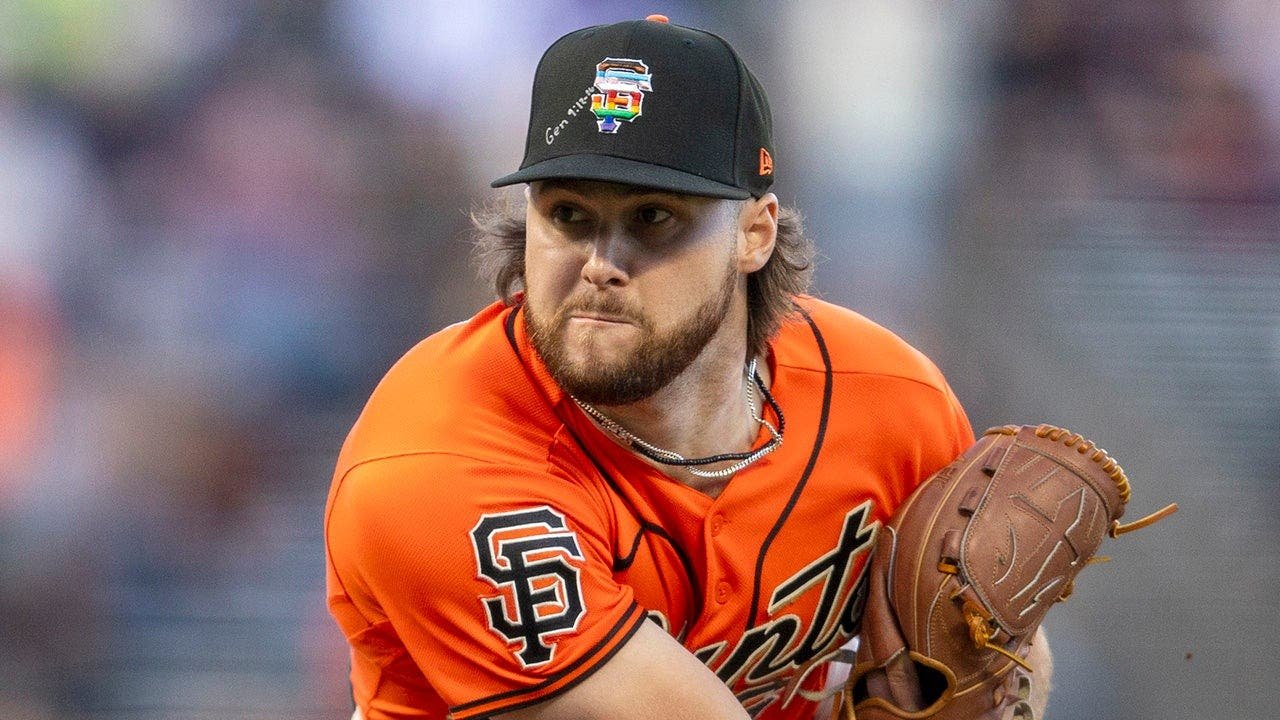
A San Francisco lawmaker criticized Giants players for writing Bible verses on their cap during the organization’s Pride Night as MLB warned the team about the messages on Monday.
Matt Dorsey, a Democrat who represents District 6 and sits on the San Francisco Board of Supervisors, wrote on social media the event was “disappointing in several respects.” He authored a lengthy thread on X about the ordeal.
ZERO BS. JUST DAKICH. TAKE THE DON’T @ ME PODCAST ON THE ROAD. DOWNLOAD NOW!
“First, as a sports fan, it struck me as problematically undisciplined,” he began. “When you’re a highly paid professional athlete, your uniform isn’t a canvas for individual self-expression — especially about politics — and it has been my observation over the years that championship-caliber teams never tolerate distractions like this.
“Second, as a person of faith, I’ll be the first to defend Bible verses and prayer as sources of inspiration and strength for many athletes — I have no problem with that. But I am bothered to see Biblical cherry-picking used to score political points, on a single occasion, and it’s hard to argue this was anything other than that.”
Dorsey added that, as a gay man, he was “disappointed” that a symbol of the LGBTQ+ community was still seen as “controversial.”
“Major cities with major-league sports teams are inherently diverse, and if you’re uncomfortable celebrating the wide array of heritage and pride nights for communities that make up the city on your uniform, maybe the major leagues aren’t for you.”
CLICK HERE FOR MORE SPORTS COVERAGE ON FOXNEWS.COM
Still, Dorsey didn’t think the players who wrote the Bible verses on their Pride Night cap were “bigoted.”
“All that being said, I refuse to call what these athletes did bigoted or hateful — and I would urge all those offended or hurt by this episode to show them grace. The LGBTQ+ equality movement succeeds when we commit to winning hearts and minds, rather than shaming them,” he added.
MLB warned Giants players about the Bible verses.
“The writing on the cap violates our rules, and consistent with normal practice, we have warned the players about future violations,” MLB’s chief communications officer Pat Courtney said in a statement, via The Athletic.
San Francisco pitcher Landen Roupp wrote “Gen 9:12-16” on his cap over the weekend and was asked about the decision.
“It’s just about God’s covenant and a promise that he makes to us that, you know, his faithfulness and his mercy,” Roupp said to reporters. “That’s just kind of something I believe in, and I stand firm in that, and I’m thankful we live in a country where, you know, we have the freedom to believe what we want … and express what we want.
“There’s no hate at all. It’s just what I stand for, and what I stand in. I believe in God.”
Giants manager Tony Vitello also seemed to brush off the issue.
CLICK HERE TO DOWNLOAD THE FOX NEWS APP
“Not really. I mean, just kind of a general knowledge of the individuals have the freedom to do what they think is best,” Vitello said. “But I do think it’s been apparent from day one, actually, even some of the exhibition games, it’s pretty impressive how the Giants, as an organization, try and embrace the entire community.”
Politics
Iran diaspora watches World Cup game with protests, support


LOS ANGELES — Fans snuck them into the stadium. Demonstrators waved them outside the security gates. And at watch parties around the city, they appeared whenever the “home” team scored.
The lion-and-sun flag, associated with Iran before the 1979 Islamic Revolution, was seemingly everywhere across “Tehrangeles” on Monday as Iran opened its World Cup campaign against New Zealand.
But its meaning varied depending on who carried it.
Some told NBC News the flag symbolized solidarity with the Iranian people, who many feel have been isolated by conflict and political turmoil. Others said it represented opposition to Team Melli, Iran’s national soccer team, which they view as an extension of the clerical regime governing the Islamic Republic.
The competing interpretations reflect a question that has long weighed on the Iranian diaspora: Can pride in their country coexist with opposition to its government?
“I think at the moment people are so confused, people are so angry … and they don’t know whether they support our team or not,” said Helen Kohandel, who draped one of the flags over her shoulders as she prepared to enter the stadium on Monday, defying a ban on the flag from FIFA.
“Because after all, we know that they need to be supported by the regime, otherwise they can’t play.”
The thrill of the World Cup for this soccer-mad country and its diaspora comes at a hugely fraught time for Iranians both inside and outside of the country.
Thousands were killed during a brutal government crackdown earlier this year on anti-government unrest that had been sparked in part by soaring inflation.
Then, in late February, the U.S. and Israel launched a war that consumed the Middle East and was felt from Tehran to ‘Tehrangeles’ and beyond. On Sunday, not long before Team Melli landed on U.S. soil, President Donald Trump announced the two sides had agreed a deal to end fighting and reopen the Strait of Hormuz.
The news, however, came too late to benefit the team, which had already navigated several hurdles including visa issues and a last-minute move of its training camp from the U.S. to Tijuana, Mexico.
By gametime, Iran had been met with both jeers — as the national anthem played — and thunderous cheers — when Team Melli scored in the 2-2 tie.
“There were many Iranians here,” Coach Amir Ghalenoei told reporters after the match. “They believed in different political affiliations, different beliefs, but they all wholeheartedly encouraged us and I think that’s a victory for all of us.”
Some demonstrators said they wished Team Melli would do more to stand up against the regime, with several protesters outside the stadium calling on FIFA to expel the team entirely.
“All of us are here for a protest against Islamic Republic,” said Kourosh Salman, as a 15-foot lion-and-sun flag flew over his head. “Let us challenge them.”
But others said it’s unrealistic to expect political action from the players, as they are at risk of being punished if they defy the government.
“Separating politics from sports has gotten increasingly difficult because I think sports has gotten political, and politicians have come for sports,” actor and activist Nazanin Nour said in a phone interview ahead of the game.
In March, the Iranian women’s soccer team were branded “traitors” on state television after they didn’t sing the national anthem ahead of a match in Australia. The country granted six of the players humanitarian visas, but five quickly withdrew their claims for asylum and the women then sang the anthem at their following games.
Key striker Sardar Azmoun was omitted from the men’s World Cup roster after Iranian media reported that he had been expelled from the national team for what was described as an act of disloyalty to the government.
Ahead of the tournament, taking place across the U.S., Canada and Mexico, FIFA outlawed the lion-and-sun flag at matches, saying it violated the organization’s code of conduct prohibiting “banners, flags, fliers, apparel and other paraphernalia that are of a political, offensive and/or discriminatory nature.”
Many Iranians at the match, eager to express their views publicly, ignored the policy. Nour was among them, proudly posing with a lion-and-sun flag from the stands.
“The regime has taken away so much from Iranians,” Nour said. “But I don’t believe that me going to the game to show my pride in being Iranian means I support every player, or everything they stand for … Our love of being Iranian surpasses everything else.”
Nour said she understands why members of the diaspora struggle with whether to support Team Melli. “Everyone’s decisions are informed by their pain and trauma,” she said.
Ultimately, however, she decided the regime doesn’t “own our culture or our joy. We do.”
The roars each time Iran surged forward suggested she was far from alone. And across town, the mood was jubilant at Meymuni Cafe, where owner Shaheen Ferdowsi had organized a watch party centered around the community.
As patrons sipped on lavashak (traditional Persian fruit leather) smoothies and dug into Persian nachos, they erupted in applause and screams during Iran’s best moments of the game. For attendees, the focus was on soccer — and spending time with one another.
“I want to celebrate the people of Iran,” said Parvin, who requested that her last name be withheld due to concerns about potential political repercussions in her home country for speaking publicly on the issue. “The next generation, I just want them to be happy as they watch from home.”
Her sister, Parvaneh, who also requested her last name be withheld for the same reason, said she was watching the game out of “curiosity” — not excitement.
“I get chills seeing the flag,” she said, pointing to the official Islamic Republic of Iran flag on the TV screen as the game was kicking off.
“It’s not ours.”
Politics
The Trump candidate who could cost Republicans Georgia
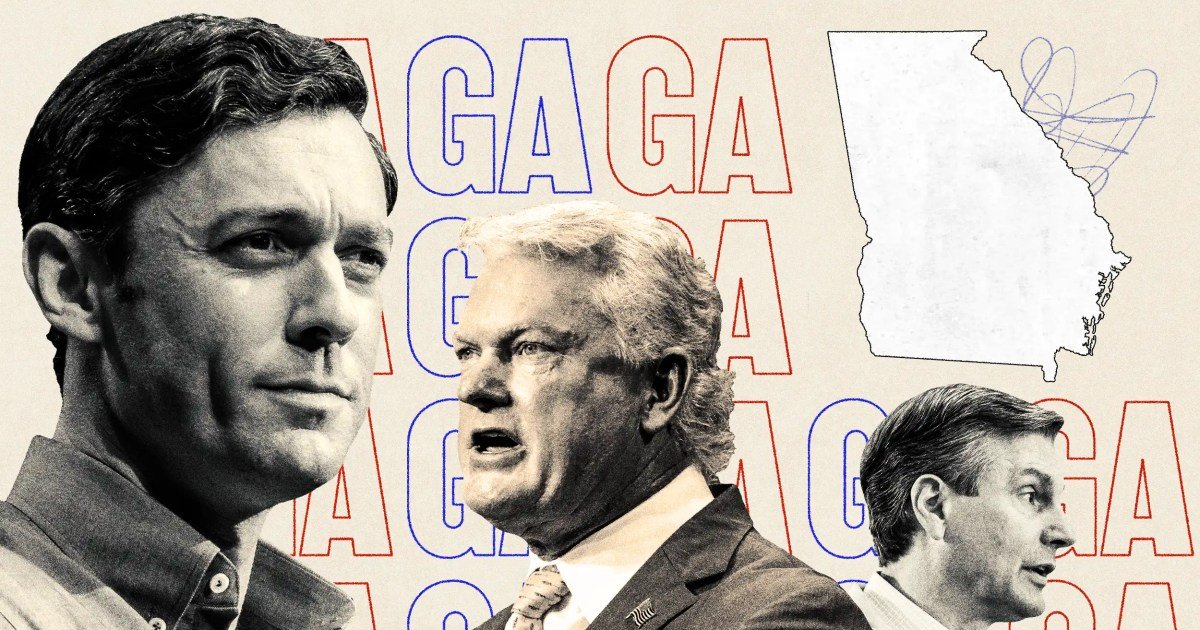
In the same post, Trump wrote, “I don’t know Derek Dooley, and neither does anyone else,” before once again pushing the lie that his presidential campaign won the state in 2020. Despite sharing admiration for Trump, Dooley responded to the endorsement by countering on social media that “a vote for Mike Collins is a vote for Jon Ossoff.”
Even before Trump’s runoff endorsement, Collins appeared well positioned to make it to November despite an Office of Congressional Conduct probe into his office’s potential misuse of resources that the Republican has referred to as a “nothing burger.” His social media tone, which includes severely downplaying the U.S. Capitol attack where pro-Trump rioters injured law enforcement, gives credence to the president’s view of him as a “a true Friend, Fighter, and WARRIOR.” It also spotlights a few of the ample vulnerabilities for a statewide candidate coming from a reliably red congressional district.
The worries are compounded by the bigger picture: Democrats now have a plausible route to retake the Senate in November, even though they will need the races to go almost perfectly to reclaim the majority. That once seemed far-fetched, but a clearer path has emerged in recent months as competitive races have opened up across presidential battlegrounds and more right-leaning states scattered around the country. Holding Georgia would be practically essential to any such scenario — and Ossoff’s standing gives him a significant early advantage in making that case.
Ossoff’s own political rise has been unlikely. He lost a close 2017 special election for a House seat, then ran for Senate in 2020, trailing Republican incumbent David Perdue when the votes were counted in November. But because neither candidate crossed the majority threshold, the race went to a runoff — and Ossoff won.
American politics, especially in the Trump era, can change quickly, however, and there is still plenty of time for momentum to shift before November, especially in a place with vast national influence like Georgia.
This race, like so many others over the past decade, has many forces in the mix. But no matter who is on the ballot, it all ties back to the man in the White House. For the Republicans in Georgia, Trump is the presence they covet and concern themselves with. And for the Democrats, he is the throughline for what they see as ailing the nation.
That was true six years ago, and it remains true now. And it may be what matters again — more than anything else — come November.
“He’s a failed president and a national disgrace,” Ossoff said at a recent rally.
Nnamdi Egwuonwu contributed reporting to this article
Politics
Trump news at a glance: Long way to Friday and Iran peace deal signing

News of a potential reopening of the strait of Hormuz, through which a fifth of the world’s oil and liquid gas pass, sent stock markets higher and oil prices lower on Monday morning. Iran had closed the waterway to most shipping in the early days of the war mounted against it by the US and Israel.
The secretariat of Iran’s supreme national security council said war and military operations on all fronts, including Lebanon, would end permanently from Monday night. The precise terms of the peace deal remain unclear and Julian Borger writes that in reopening the strait, on a basis yet to be fully explained, Donald Trump achieves little more than fixing a problem that he caused himself. “Even that is not in the bag yet. It is still a long way to Friday and a planned signing ceremony in Geneva, in view of all the fudges that have been packed into this compromise deal.”
Politics
Authoritarians target wives and children because it works. Trump is no different
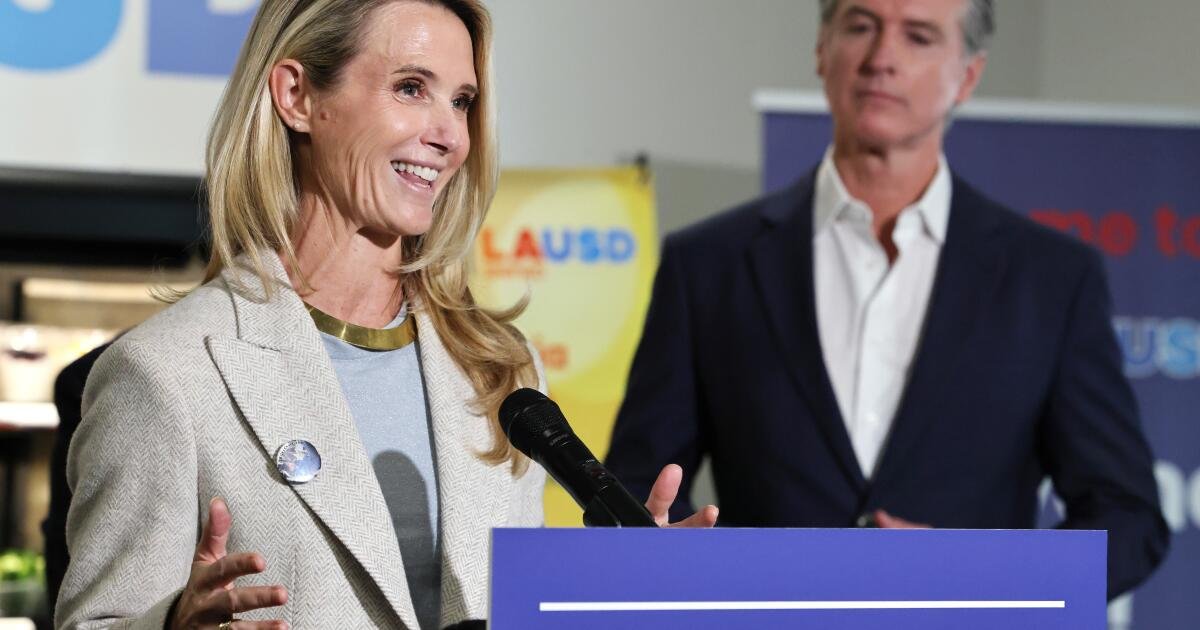
The Trump Department of Justice going after people who make the president mad or even sad is nothing new, in this dangerous age when the presidency is increasingly about placating the desires of the old man in the Oval Office.
Leticia James, James Comey, Adam Schiff. Most recently, E. Jean Carroll, who sued President Trump personally and won a huge settlement on her claim that he sexually assaulted her. Now, the Department of Justice is investigating her for potential perjury.
It would be easy to think of Gov. Gavin Newsom’s announcement Monday that the U.S. Department of Justice is now targeting his wife, Jennifer Siebel Newsom, as just another addition to that list.
But this attack on Siebel Newsom (alleged attack, anyway — the Department of Justice has not confirmed she is a target) is something much darker in our slide into authoritarianism. While the details of what is being investigated are murky and the president hasn’t chimed in yet, it has all the appearances of the Trump administration seeking to stop a political rival who has a real shot at knocking MAGA out of the top office.
“It’s not just random or accidental that the wife of a major presidential candidate is being investigated,” Steven Levitsky, a professor of politics at Harvard University, told me Monday. “That’s the nature of selective prosecution and that is a pillar of authoritarian rule.”
Levitsky is an expert on authoritarian regimes, and how they take and keep power. His point that Newsom is a viable challenger may seem obvious — Newsom himself is already fundraising off of it. But this particular alleged investigation bears a moment of pause because it is not the regular decline of justice we have been witnessing to this moment.
“This is different,” he said. “This is forward-looking persecution.”
Until now, Levistky points out, Trump has screamed and hollered for the prosecution of those who have wronged him in the past, sometimes even the distant past. Yes, he’s disgraced the Department of Justice with the demand it function as his own personal hammer of retribution, even putting his own personal attorney, Todd Blanche, in charge when Pam Bondi wasn’t accommodating or successful enough at stomping perceived enemies and quashing the Epstein files.
But those prosecutions have largely been grievance-based, not aimed at keeping power.
Going after Siebel Newsom seems more like a forward-looking, preemptive strike targeting Newsom ahead of the 2028 election through every decent man’s Achilles’ heel, his family.
In fact, the right-wing media — which is closely tied to the whims of the White House — has been targeting Siebel Newsom for months.
In particular, Siebel Newsom has been attacked for her work as a documentary filmmaker who focuses on female empowerment and parsing how and why we have the gender norms that we do when it comes to masculinity and femininity. I’ll let you figure out how popular that is in MAGA world, where real women make sandwiches.
Conservative commentator Sean Hannity has gone after Siebel Newsom for saying she sometimes changes the gender of a book’s character from “he” to “she” when she’s reading to her children. Fox News has attacked her for daring to give her boys dolls to play with, leading some MAGA influencers to label her “psychotic” or “abusive.” Right-wing icon Megyn Kelly called her a “nutcase” for sharing the tragic story of her sister’s death when Siebel Newsom was 6.
And other media have focused on the fact that some of the films she has been involved with have been approved for use in California schools, leading to conspiracies that Newsom used his influence to force his wife’s “woke” agenda on kids, by which we are apparently talking about the liberal plagues of decency and inclusion.
Newsom’s office said that in recent weeks, relatives, friends and business associates of the family have been contacted by investigators from the FBI and IRS. Siebel Newsom also does work around online safety for children, but it seems likely that any attention would focus on these films, and related nonprofits, and the perennially popular MAGA boogeyman of schools forcing ideologies on kids. Throw in Siebel Newsom’s company making even a dollar, and the way the IRS can find problems with any tax return, and you’ve got about 10,000 hours of right-wing propaganda.
So whether the pressure to target Siebel Newsom came from the White House or not, Newsom’s announcement raises the troubling specter that this administration is getting more serious about remaining in control by kneecapping potential replacements before they grow too strong.
In his Monday video, Newsom urged Trump with mano a mano bravado to come after him as much as he wanted, but to leave his wife and family out of it. But I would not underestimate Siebel Newsom, who showed her strength when she testified against disgraced Hollywood mogul Harvey Weinstein, laying out publicly a private, painful tale.
Siebel Newsom’s office told me she’s fine being part of any fight against Trump.
“There are clearly no boundaries to what Donald Trump will do to get his way or to challenge those who get in his way,” Siebel Newsom said in a statement.
The “governor and I will continue to speak truth to power because the American people deserve so much more.”
By coming out in advance of any official announcement of an investigation by the Department of Justice, Siebel Newsom and her husband may be able to take control of the narrative, something Trump detests.
That pushback, Levitsky said, is critical, not just for them, but more importantly for all of us. After last year, when so many institutions and individuals crumbled in the face of Trump’s power, the strength of our democracy increasingly depends on those with political capital standing up to him.
Coming out punching first does just that.




How can future students avoid GCSE burnout? #GCSE #Exams #BBCNews


Iranian fans react to opening World Cup match
Iran and New Zealand played to a 2-2 draw in Iran's opening FIFA World Cup match at SoFi Stadium in...


Has anyone won the Iran war? | The Global Story
Donald Trump says a deal to end the war with Iran has already been signed and details will be released...


Why one small area could decide Britain’s next PM. #Makerfield #Politics #BBCNews
McDonald’s brings back fried apple pie for America’s 250th birthday
McDonald’s is frying up some apple pies to honor America’s 250th birthday. The company said Tuesday it’s bringing back fried...

Steven Spielberg gets serious about aliens
Steven Spielberg has a lifelong alien obsession. The legendary director, along with actors Emily Blunt and Colman Domingo, …

“I Made These Problems for Myself” (Exclusive Interview)
The last time I had dinner with Armie Hammer, he drove us up Pacific Coast Highway in his black pickup...


Catapult crime: 'We thought it was a gun shot'. #Catapults #UK #Kent #News #BBCNews


Trump said he'd "suggested to Israel to let Syria take care of Hezbollah". #BBCNews
Subscribe to our channel here: https://bbc.in/bbcnews For the latest news download the BBC News app or visit BBC.com/news …


Swipe right for sperm | BBC News
With fertility prices soaring and treatment difficult to access for some, same-sex female couples say they have little choice but...
-

 Business3 days ago
How much of Musk’s wealth comes from government help? Virtually all of it
-

 LifestyleNews2 weeks ago
120 minutes of strength training per week may help extend lifespan
-

 Politics5 days ago
What to know about the stabbing that set off fiery riots in Northern Ireland
-

 Video4 days ago
Download fans say what they love about the festival. #DownloadFestival #BBCNews
-

 Video4 days ago
Why SpaceX IPO isn't about space. #SpaceX #ElonMusk #BBCNews
-

 HealthNews4 days ago
The people of Okinawa, Japan only eat until they are about 80 percent full, then stop — and the practice has been linked in multiple peer-reviewed studies to lower rates of cardiovascular disease, slo
-
 Food4 days ago
Pope Leo’s plane was grounded. Then the King of Spain stepped in to help
-

 TravelNews4 days ago
My Paternal Instinct Should’ve Warned Me About Netflix’s Maternal Instinct