

Food
“I Made These Problems for Myself” (Exclusive Interview)

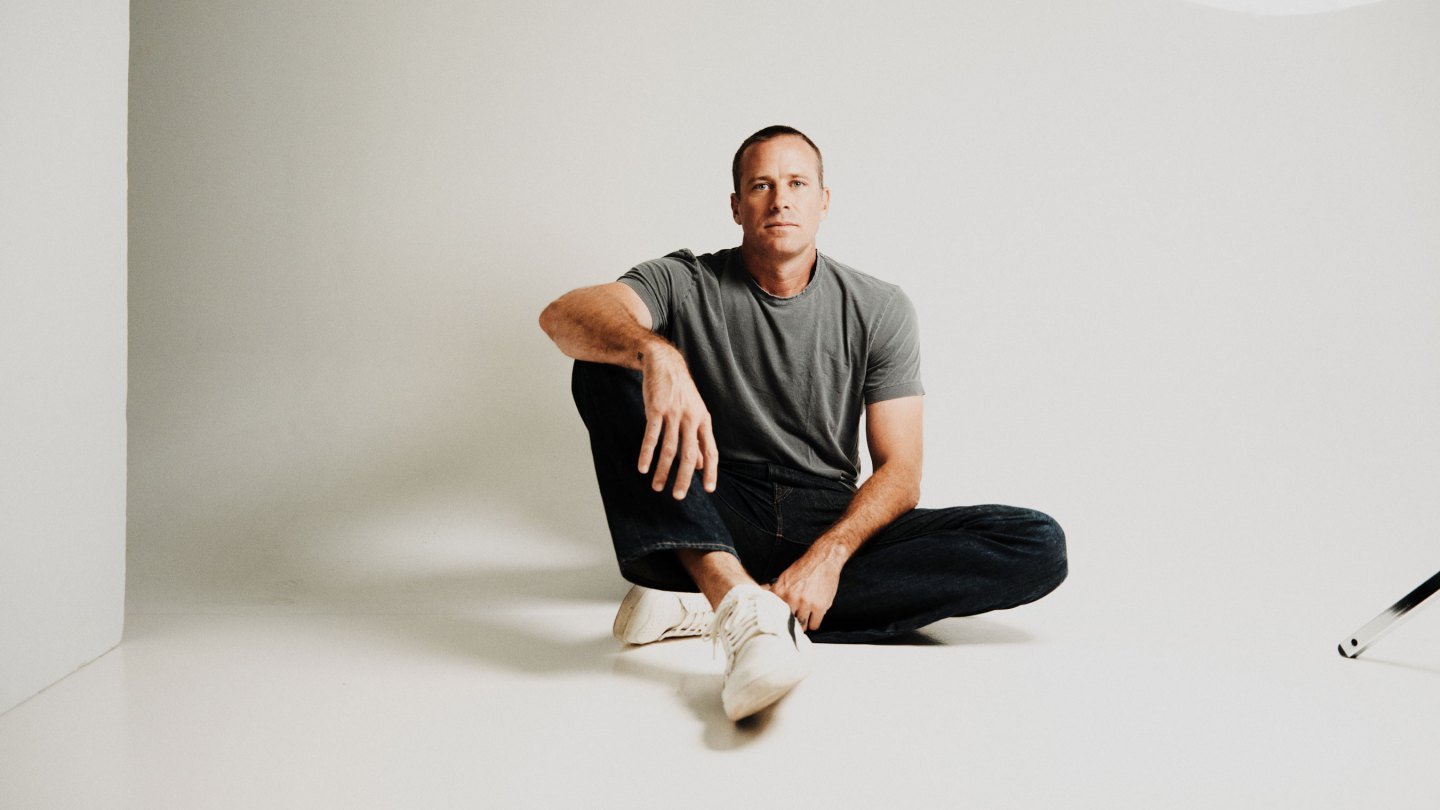
The last time I had dinner with Armie Hammer, he drove us up Pacific Coast Highway in his black pickup truck and ordered mutton shank at a Greek spot in Malibu. That was November 2017, Call Me by Your Name was about to open and the world was his. He was 31, absurdly handsome, resistant of the label “movie star” — and bracing for something on the horizon.
“Given my history,” he told me that afternoon, referring to a string of box office disappointments, “I’m waiting for the other shoe to drop.”
The shoe dropped. What followed was one of the most total and public collapses of a Hollywood career in recent history. The scandal consumed him so completely that for a stretch, he was living in a 200-square-foot hole of a flat in Venice Beach, paying for groceries with a debit card a friend had pressed into his hand. He went to the Cayman Islands. He built a farm. He carried a burner flip phone he bought at a gas station. He got no work for five years.
Now it’s a Tuesday night in June, nine years after that PCH drive, and we are on the bustling terrace of a discreet industry canteen in West Hollywood. Hammer arrives a few minutes late. He spots me, offers a quick wave, then changes course entirely to offer an enthusiastic greeting — big smiles, hearty hugs — to a man across the courtyard. Many heads turn his way.
After a minute or two, he makes his way over to me. He apologizes for the detour, explaining the man is another father at his daughter’s primary school.
“I called my publicist on the way here,” he says as I tactfully place a recorder on the corner of the table. “She asked if I was sure about this. I told her: ‘Do you think anything Seth can write is going to move the needle compared to what I’ve been through the last five years?’ “
He orders an Arnold Palmer and inspects the menu. He is clean-shaven, 39 years old and looks far from broken. In fact, he looks quite good — still trim, still tall (he’s 6- foot-5) and several degrees more rugged than the boy I met in 2017.
Yes, Armie Hammer is back. The question, however, is what “back” means for a man like this now.
***
Nine years ago, Hammer seemed to exist at the precise intersection of genetics, legacy and timing that occasionally produces a superstar. Great-grandson of the Russian-Jewish oil tycoon Armand Hammer, whose name still graces buildings across Los Angeles, he had grown up between Beverly Hills and the Cayman Islands, emerged from his teens with Polo-ad looks and old-school ease in front of cameras.
His breakthrough came playing both Winklevoss twins in David Fincher’s The Social Network. What followed — The Lone Ranger, The Man From U.N.C.L.E. and finally Call Me by Your Name — was a career that kept almost arriving.
He was funny about it then. “I’ve heard the ‘This is your moment’ speech so many times,” I remember him saying with a sigh during our first encounter. “The way I look at it is, I’m building a collage of my work.” And enjoying himself as much as he could in the process.
“I used to call myself a consumer,” he tells me now. “Drinks, women, validation, experiences — I just wanted to consume. All of it. More, more, more.” He pauses. “I didn’t actually know how to give myself what I needed internally, so I relied on external sources. It’s like a black hole — no matter how much you throw in, it’s gone. You’re never going to fill up a black hole.”
There was also, underneath all that consumption, something more corrosive. “I had a bit of imposter syndrome,” he says. “I was like, ‘I don’t really belong here, but it seems like I’m here — so maybe I’ll have a martini, that’ll make me feel better about the fact that I’m here.’ “
Four years later, the collage he was building went up in flames. What happened is public record. Several women came forward with accounts of psychological and sexual abuse. Explicit messages attributed to Hammer had circulated online describing graphic sexual and cannibalistic fantasies. A woman with whom he carried on a four-year affair — all while married to ex-wife Elizabeth Chambers — accused him of rape. He denied the allegations. An LAPD investigation was opened and later closed without charges. For many, none of that settled anything. The messages alone were specific enough — and disturbing enough — that those who read them have not been able to unread them. The career, already faltering, ended entirely.
His WME agents dropped him; his publicist was gone. He is now represented by a single entertainment attorney whose primary job is contracts and who told Hammer, when asked to make some calls on his behalf, “That’s not really what I do.”
What followed was genuine chaos. Friends who texted their support privately were targeted by internet obsessives and doxed, he says. Hammer changed his phone number repeatedly until he gave up entirely and bought a burner flip phone at a gas station, carrying it for a year and a half.
For a stretch, he was couch surfing, staying in friends’ places while they traveled. He ended up in the Venice apartment — a rent-controlled space so small, it had a Murphy bed. The Hammer family fortune, such as it remains, was not a safety net. After his father died, he received nothing. “It’s just one of those things that’s so complicated, you have to be a tax attorney to fully understand it,” he says of the estate. “But the end result was not I’m set for the rest of my life, or even for the next couple of years. It hasn’t been that.”
I ask, carefully, about reports that his ex-wife played some role in what unfolded. He doesn’t take the bait, but he doesn’t entirely deflect it, either. “It doesn’t help my situation to make it worse for somebody else to try to save my own ass,” he says. “And all I’m doing is making something worse for someone who was for a long time the sole breadwinner of the family. If I disrupt that, it’s my kids who suffer.”
Hammer could write a handbook to surviving an epic cancellation: He got off social media. He read Pema Chödrön. He developed a philosophical framework for surviving the experience of having the entire internet decide it hates you. “There was a period where I was obsessively reading what people were saying,” he says. “And then it hit critical mass, and I thought: There is no nutritional value in this for me. This is almost not even the real world.” He cites a Tyler, the Creator tweet about cyberbullying, circa 2012, and pulls it up on his phone. (“Hahahahahahahaha How The Fuck Is Cyber Bullying Real,” the tweet begins.)
“I realized I could just focus on myself and my kids and staying healthy and growing as a person. You can make that your purpose,” he says.
What saved him, he says, was his father.
The family, including his wife — who had already filed for divorce — had retreated to the Cayman Islands when COVID hit. His father, Michael, held Caymanian citizenship, which gave them access to an island that for the first year of the pandemic had essentially zero cases. Schools stayed open. Restaurants stayed open. While Los Angeles descended into Zoom school and anxiety, his kids were outside, living something close to a normal childhood.
“It really was idyllic for the kids,” he says.
His relationship with his father had been complicated for years — two strong personalities, with accumulated grievances on both sides. When the scandal broke, Michael Hammer wanted to go to war with his son’s accusers. “He was furious,” Armie says. ” ‘I’m going to call this person, I’m going to do this, we have to make sure they know this.’ He really wanted to go on the offensive.
“I said: ‘Look, dude, I’m already on the cross,’ ” he continues. ” ‘The nails are in my hands. I’m not getting off this cross no matter what we do. And the more I struggle, the longer I’m going to be up here.’ “
He had come to believe, through whatever combination of self-help reading and desperation and time, that acceptance was the only viable strategy. “That which you resist persists. That which you accept transforms,” he says, reciting mantra. “There was nothing I could say that was going to fix anything for me.”
Then his father got sick, and the old grievances stopped mattering.
“He was still able to be a lifeline,” Hammer says. Michael owned a small apartment building on the island and gave his son a unit to stay in. But as Michael’s illness progressed, it was his son who became the lifeline: “I would bathe him and cook food for him and feed him and change his diapers and do all that stuff.” It transformed their relationship, just in time. “We got to have all those conversations,” he says. “We got to have an amends with each other. We got to really move through it. And then I got to be there holding his hand when he died. Which is like a gift.”
Still raw from his father’s death, he found himself one afternoon talking to a man he describes only as “an old Jamaican guy.” Hammer had been complaining that his industry friends were sending sympathetic texts but not publicly defending him. The Jamaican man looked at him.
“What kind of friend are you?” he said. He explained: Your house is burning down right now, in real time. You want your friends to run into a burning house? What happens to them if they do?
“They get burned,” Hammer said.
“Do you want your friends to get burned?”
“No.”
“So if you were really a good friend, what would you want your friends to do?”
Hammer thought about it. “I would want them to stay as far away from the fire as possible.”
The man patted his leg. “Now you’re thinking like a real friend.” Then he stood up and walked away.
“I think that was a spiritual moment,” Hammer says. “Joseph Campbell would have called it a mentor moment in my hero’s journey, whatever the fuck that is.”
***
He came back to Los Angeles in 2024, and about a year and a half later, an email arrived. It was from Uwe Boll — the German filmmaker whose decades of aggressively low-budget, critically dismissed genre films had transformed him into something of a cult figure, the kind of director whose name functions as its own punchline. Boll wanted Hammer for a movie. It was the first offer he had received in five years.
“I’m pretty sure I cried,” Hammer says. “It was just this moment where I was like: I’m going to get to do the thing that I love more than anything — other than my children.”
He pauses.
“I would have done a fucking cat food commercial. I just wanted to work again.”
But underneath was something more unsettling: He wasn’t sure he could remember how to act. “I was scared shitless until the moment Uwe said action for the first time,” he says. “And then I was like — ‘Wait. I do know how to do this.’ There’s a reason I had the success I had.”
The film, shot in Croatia, is called Citizen Vigilante. Boll’s methods are famously economical: The script was around 50 pages when Hammer received it. “I was like, ‘Where’s the rest?’ ” He adopts a thick German accent as Boll: ” ‘No, no, no! Ve just go and shoot and have fun. Ve vant you to be great!’ ” Hammer laughs at the memory. “I was like, ‘Well, OK?’ “
He has since done three more low-budget films: Frontier Crucible, a Western. Night Driver, a small L.A. thriller about a Mafia errand boy whose night goes sideways. And a film in Bulgaria, playing a real person whose identity he won’t disclose because the project hasn’t been announced. He grew a mustache for it that, paired with a trucker hat in a recent paparazzi photo, generated significant online enthusiasm. “Was I Daddy?” he jokingly inquires after I bring it up.
The professional apparatus is gone entirely. No agents, no manager, no personal publicist. If someone wants to hire Armie Hammer, they go on IMDb Pro and find his attorney. “Lately, they always say on the first day of set, ‘We can’t believe we actually got you to do this.’ ” He pauses. “And I’m like: ‘My schedule was pretty open.’ “
His life now is structured around the children — a daughter, 11, and a son, 9 — with an almost monastic discipline. He is up at 6:30 every morning. He makes his bed. He cleans his apartment. He makes coffee and takes it outside and meditates and does what he calls his “gratitude practice.” Then he walks to his ex-wife’s house, wakes the kids, makes their breakfast, gets them to school. He picks them up most afternoons. He drops them off in the evening.
He lives in a small, rented house in West Hollywood — a minor but welcome upgrade from the Venice shoebox. Returning to Los Angeles after the Caymans was harder than he expected. “I was back in a city that felt like it used to be my city,” he says, “but it had moved on without me.”
Throughout the evening, as he cuts into his medium rare steak frites, I keep waiting for the score-settling. It never comes. He won’t go after his ex-wife when given the opening. He won’t name the industry friends who went quiet — although he will note that his gay friends never turned on him. “They were like, ‘Bitch, you think you’re special? If the Grindr chats got released and someone hacked into those, no one would have a job.’ ” He laughs. “And, by the way,” he adds, referencing his own leaked texts, “if you’re sitting up in your room late at night high as shit just going, ‘This is fucking hilarious. I’m being funny now’ — you take that shit out of context, then you’re done.”
But he does not claim total innocence, either. “I made these problems for myself,” he says. “This didn’t happen to me by a fluke accident. I didn’t do what people are saying I did. But I brought very dangerous and unsafe people into my life, and I pissed off people in my life — and here we are.”
He describes the chaos of the scandal — the doxing, the phone numbers, the siege of it — without identifying a villain. But he acknowledges that his public image is a hurdle he has far from cleared, that he is not yet entirely un-canceled. “It’s like Sisyphus pushing the boulder,” he says, “except my boulder is covered in Vaseline.”
He went to see a movie recently — the hit horror breakout Obsession — and afterward found himself in a conversation about wishes. A friend asked what he would wish for if he could wish for anything. He thought about it seriously. A billion dollars, he decided. Put a chunk of it in an ETF, set the kids up, have some comfort and stability. His friend was surprised: Your wish wouldn’t be going back and undoing everything that’s happened?
“Honestly, no,” he tells me toward the end of our reunion dinner, after the apple tarte tatin à la mode arrives (his suggestion). “I remember the emotional state and the mental state I was in before all that happened. Healthy people don’t act the way I was acting.” He glances down at the table. “I would have loved if I could have had an opportunity to do it in a little bit more of a gentle way,” he says of his struggles since we last sat down together. “But at the end of the day — you get what you get.”
Food
El Niño has arrived: 5 ways California could get pummeled

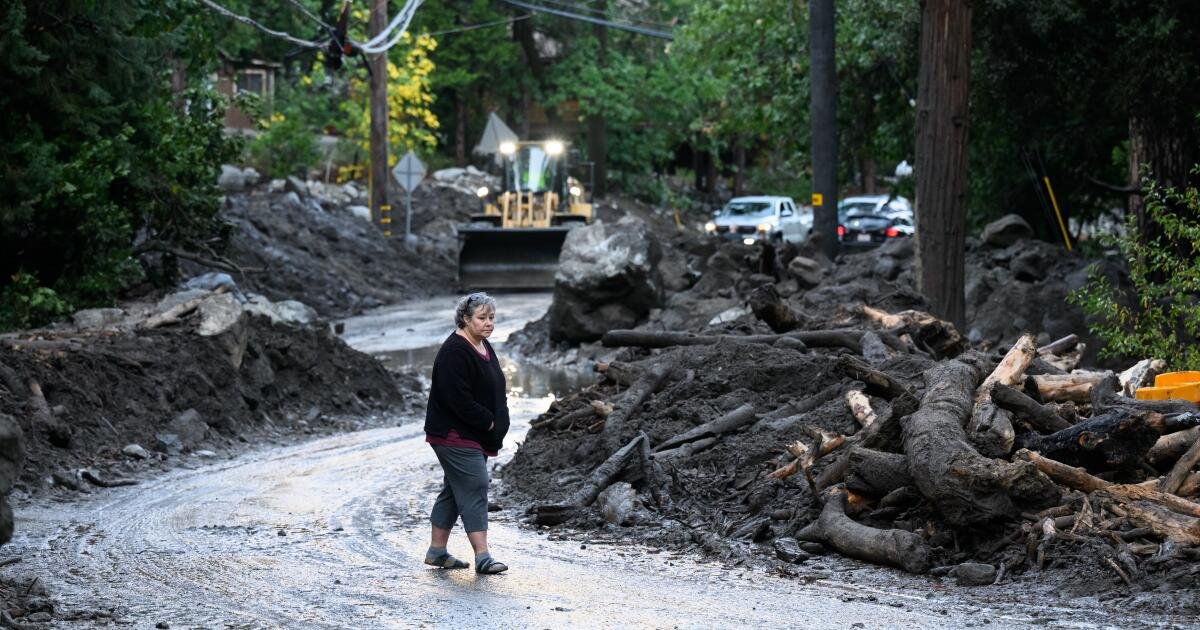
El Niño has arrived and it could become one of the largest on record, and California may be in for a bumpy ride.
While the climate pattern is often linked with a higher chance of more rain in Southern California, it can affect the state — and its famous coastline — in numerous ways. That’s especially possible during a strong El Niño event, as this one is shaping up to be.
In fact, there’s a 63% chance El Niño could be “very strong” toward the end of the year, according to the National Oceanic and Atmospheric Administration’s Climate Prediction Center. And there’s an 88% chance El Niño will be either “very strong” or “strong.”
“The recently observed and ongoing rapid escalation of conditions in the tropical Pacific, plus the consistently and increasingly extreme forward-looking model projections, truly do suggest that something extraordinary could unfold,” Daniel Swain, a UC climate scientist, wrote in a blog post.
“The upcoming El Niño event — which has a high likelihood of becoming very strong or even historic in magnitude — will likely lead to widespread and significant global impacts,” he added. “It is possible, even probable, that at least some of these effects will be unprecedented in the modern era, given the combined effects of a high-end El Niño event plus over a century of accumulated global warming.”
El Niño’s impacts are usually felt strongest during the winter. Here are five major ways California could be affected.
1. Wet and wild winter
While it’s no given, El Niño could open up the atmospheric floodgates in Southern California.
Of the last four “very strong” El Niños on record, two — 1982-83 and 1997-98 — brought coastal Southern California more than double its typical annual rainfall. Another, in 1991-92, brought 133% of the average, according to data provided by Jan Null, adjunct professor at San José State University. But the last one — in 2015-16 — did not meet expectations, with just 77% of the annual average rainfall in the Southland.
According to NOAA, stormier weather is generally more likely in the southern United States during an El Niño. The Pacific Northwest, on the other hand, generally gets drier winters.
“A very strong El Niño event might well be the single most important predictor of substantially increased odds of unusually wet conditions, and increased likelihood of individual heavy precipitation events, in any given winter in California — and perhaps also an early warning indicator of increased risk of large-scale flood events,” Swain wrote.
Despite the threat of floods, a wet winter could bring some relief to the Colorado River basin, which is in an “exceptionally severe multi-decadal drought,” Swain wrote.
2. High-tide flooding
More high-tide flooding is possible in an El Niño.
“Elevated sea levels along the West Coast of the U.S. can occur, causing high tides and strong surf to ride higher and push much further inland than normal,” NOAA said in a statement.
Agency experts noted that the El Niños of 2015-16 and 2023-24 brought more frequent, deeper and widespread high-tide flooding, a risk made worse after decades of sea level rise.
The El Niño of 2015-16 brought “record coastal erosion along many California beaches,” according to the California Coastal Commission.
“Major El Niño events can raise local sea level by around six to 10 inches in California during the winter rainy and stormy season through a combination of northward-propagating coastally-trapped Kelvin waves and thermal expansion of seawater,” Swain wrote. “Significant coastal flooding is possible later this year.”
3. Warmer waters and temperatures
One of the ingredients of El Niño is triggered when the trade winds in the Pacific Ocean — winds that reliably blow from east to west — weaken. That allows the sea level to rise a little bit, “and it creates what we call a downwelling oceanic Kelvin wave,” said Jon Gottschalck, the Climate Prediction Center’s operational prediction branch chief.
That’s not an ocean wave at the surface but one that moves warmer water at the surface deeper down. And the wave “will bring warm water from the western Pacific to the central and eastern Pacific,” Gottschalck said.
The next ingredient to an El Niño is seeing how the movement of warmer water eastward changes wind patterns.
Warmer water moving from west to east also decreases the west-to-east winds, which then allows even more warmer western water to move toward the eastern Pacific. “It’s kind of a positive feedback. And so once that occurred, the El Niño event will basically develop and intensify,” Gottschalck said.
The El Niño-triggered warming of water off the coast of Mexico, Central America and northern South America then typically moves the atmospheric jet stream southward to the southern United States, “which can bring wetter-than-normal conditions to our area” in the winter, said Ariel Cohen, a meteorologist at the National Weather Service office in Oxnard.
El Niño will probably contribute to more record-breaking global temperatures, Swain wrote.
4. Sharks and other sea creatures
The warmer waters could attract additional seafaring tourists toward California’s shores.
“In the near future, we may expect to see an increase in tropical or warm subtropical species, which may include increased shark sightings off of the Southern California coast,” said Nate Jaros, the Aquarium of the Pacific’s vice president of animal care for fish and invertebrates. “In very rare cases, even whale sharks have visited off Catalina, including in the 2015-2016 El Niño events.”
Marine mammals and other migratory species may also move closer to shore, “because they’re going to where their food is,” said Andrew Leising, a research oceanographer at the National Oceanic and Atmospheric Administration’s Southwest Fisheries Science Center.
El Niño has in the past been associated with larger sablefish found closer to shore, and a higher larval abundance of rockfish.
Warmer ocean temperatures can also increase the presence of sea jellies and other gelatinous creatures, Jaros said.
A jellyfish-like creature called Velella velella, also known as by-the-wind sailors, can wash up on West Coast shores and are usually harmless to people. However, “in past El Niño events, we’ve seen similar-looking Portuguese man o’ war, a very rare visitor to our waters, washing up on our beaches. These animals can have a very painful sting,” Jaros said.
In a previous marine heat wave called “The Blob,” which was followed by a very strong El Niño, scientists observed increased tuna come closer to shore, go farther north, “and come in earlier than they do in other years, and so that actually leads to increases in fishing opportunity for those highly migratory and large game fish species,” Leising said.
5. But other sea life could struggle
While not solely the work of El Niño, warmer oceanic waters can wreak havoc on ocean life.
There are currently two marine heat waves unrelated to El Niño near California — one just off the state’s southern coast that started in December, and another farther west off the coast of Northern California and Oregon that started in May, according to data shared by Leising.
El Niño also tends to cause marine heat waves, Leising said.
“One of the most important things, though, for the animals in the ecosystem is not necessarily just how hot it is — that is important in some cases — but just how long they’re exposed to the heat,” Leising said. “We have a situation, particularly in Southern California, where we’ve already had this marine heat wave, and we’re just gonna kind of roll on into a heat wave that’s been brought about by El Niño.”
Past marine heat waves have decimated California’s kelp, “with bull kelp habitats declining 90% in Northern California since 2014,” Jaros said.
“The effects of this decline trickle down to other species, including endangered white abalone. And warmer waters can exacerbate the effects of sea star wasting disease, especially on the sunflower sea star, a population that’s nearly been wiped out of California,” he said.
In past strong El Niños, scientists have observed decreased plankton — an important food source for marine animals — and an increased probability of harmful algal blooms.
Previous strong El Niños have also brought a lower abundance, and a more northward shift, of market squid, Leising said.
“We often have seen in the past with El Niños reduced productivity of California sea lions, and the pups are often smaller,” Leising said.
A previous combination of “The Blob” — which hit the West Coast more than a decade ago — followed by a very strong El Niño resulted in “several closures of crab and shellfish fisheries due to harmful algal blooms,” according to Leising.
“We had increased whale entanglements because the whales, again, are closer to shore, they’re coming into contact with more ships and more fishing gear,” Leising said. “And we also had a loss of some of the habitat for groundfish because the oxygen at the bottom, where they live, was lower.”
There were also die-offs of seals, sea lions and marine birds, Leising said, probably from a combination of a lack of food and harmful algal blooms, and less food out there for baleen whales.
Food
How weight lifting can help you stay healthier as you age


If you watched me carry my shopping into the house the other day, you’d have caught me behaving a little strangely. Clutching a two-litre bottle of water in each hand, I started doing squats.
And there’s good reason why I should. When it comes to staying fit, my circle of friends tend to focus on cardio. We count our steps, track our runs, cycle at the weekend. Some of us even enter the occasional half-marathon or triathlon.
But while aerobic exercise like this can keep you healthy and help you live longer, experts say that adding in strength training can ensure you live a better quality of life as you age.
With that in mind, I’ve been looking into the benefits of resistance training and how best to add some into our lives.
When it comes to strength training, also called resistance training, the biggest health gains come when you are just starting out compared to doing nothing at all, says Jess Gorzelitz,an epidemiologist at the University of Iowa. “The riskiest group are those who do nothing… That’s a big message for people who are new to this.”
Initially, you should aim for two sessions per week, lasting between 20 to 30 minutes each, says Phillips. He suggests doing any of the following with several repetitions in a set and repeating the set two to three times:
As you train more you can look to increase the amount you do to get further benefits. If using your body weight feels too easy for certain exercises such as squats, you can consider adding some light weights.
You don’t necessarily need to set foot in a gym or any special equipment to start resistance training. (BBC Sport explains how to work out at home without equipment.)
Gorzelitz, who is a powerlifter herself, says we can easily do bodyweight squats using a chair. A couch or bed can help us to practice sitting down and standing up in a controlled manner, whilst household items like cans of food or bottles of water can be used for bicep curls.
She also suggests trying shoulder presses as “your back can never be strong enough”. Back strength is key for posture, preventing back pain and improving spine stability. (Watch the video below to find out why squats can also give your brain an unexpected boost.)
If your workout feels too easy, simply add more resistance, repetitions or additional sets, because over time as we build strength, our body will adapt to challenge. “That does not need to be dramatic. Small increments repeated over months are where the magic lives,” says Phillips. When you start out, you may only be able to hold a plank for less than 15 seconds, for example, but you’ll gradually be able to increase this as you get stronger.
The level should feel challenging but still manageable, adds Phillips. “You do not need to crawl out of the gym like a wounded animal. Progress gradually,” he says. It’s better to be consistent than try to do too much. If you do lose motivation, remember that as with all exercise advice, small bursts are better than none.
Regular muscle strengthening exercise will give you a better chance of living longer. It can also lower your risk of cardiovascular disease, cancer, diabetes and premature death, according to a large review of studies. It found that just 30-60 minutes per week of muscle strengthening activities was linked to a 10-17% reduction in all-cause mortality.
Health benefits increase when we do more according to another large recent study, which found that 90 minutes to two hours of resistance training per week reduces the risk of an early death by 13%. And those who do both resistance training and cardio have a 58% lower risk.
“A simple way to put it is this: aerobic fitness likely helps you live longer, but muscle strength helps you live better while you are here. Ideally, we want both,” says Phillips.
We benefit whatever age we are, research shows. Gorzelitz has found that adults aged over 70 who took part in regular weight training had a lower risk of dying compared to those who did none. “In particular as we age, we can see improvements in functionality, physical function and muscle mass,” says Gorzelitz.
The key, say both Gorzelitz and Phillips, is to find exercises that you can do easily and fit in with your day-to-day life.
With that in mind, as I already do plenty of cardio, I can now be found doing the plank and some squats before my morning coffee or between meetings. I aim to increase this gradually and know my future self will thank me.
*Melissa Hogenboom is a senior health correspondent at the BBC and author of Breadwinners and The Motherhood Complex. She is melissa_hogenboom on Instagram.
For trusted insights on health and wellbeing, sign up to the Health Fix newsletter by senior health correspondent Melissa Hogenboom who also writes the Live Well For Longer and Six Steps to Calm courses.
Food
Iran and US reach tentative deal to end war in Iran
DUBAI, United Arab Emirates (AP) — The United States and Iran reached an initial agreement early Monday that would extend their shaky ceasefire and lead to the reopening of the Strait of Hormuz, but challenges immediately loomed, including Israel insisting it would hold onto land seized in Lebanon as it battles Hezbollah.
Details of the deal, which would potentially allow desperately needed oil and natural gas to reach the global market through the critical waterway, were not immediately released. Iran signaled implementation would not start until the signing, which key mediator Pakistan said would take place Friday in Switzerland.
But the memorandum of understanding over the war already faced hurdles. Israel’s continued hostilities with the Iranian-backed militia Hezbollah in Lebanon, where Israel bombed Beirut’s southern suburbs Sunday, nearly derailed the negotiations. Israel joined the U.S. in launching the war on Feb. 28.
Israel says it won’t withdraw from Lebanon
In the first official Israeli comments after the announcement of the deal, Defense Minister Israel Katz said Israel won’t withdraw from land seized in Lebanon as the interim deal is pending. Katz said Israel plans to stay “indefinitely” in lands it holds in Lebanon, as well as Syria and the Gaza Strip. Iran has tied the interim deal over the war to halting Israel’s attacks on Hezbollah in Lebanon.
Katz also threatened that if Iran attacks Israel over Israeli strikes in Lebanon, Israel will strike Iran with “great force.”
Over the past 2 1/2 years, Israel has taken control of areas in Gaza, Lebanon and Syria amounting to 1,000 square kilometers (386 square miles) of territory — an area that is slightly smaller than New York City.
Meanwhile, the deal between the U.S. and Iran gives just 60 days to resolve what to do about Iran’s stockpile of highly enriched uranium and its atomic program. That took years to resolve in Tehran’s 2015 nuclear deal with world powers. U.S. President Donald Trump unilaterally withdrew America from that accord in his first term, setting the stage for the tensions that culminated in the war.
“Congratulations to all!” Trump wrote on social media as he celebrated his 80th birthday Sunday with a UFC cage match fight at the White House.
He added, “I hereby fully authorize the toll free opening of the Strait of Hormuz, and, simultaneously herewith, authorize the immediate removal of the United States Naval blockade,” which was imposed in retaliation for Iran’s grip on the crucial waterway.
He soon hedged, however, saying the strait wouldn’t open until Friday’s signing.
Iran’s deputy foreign minister, Kazem Gharibabadi, confirmed the agreement on state television but said Iran would not start implementing it until it was signed Friday. He said the deal followed talks with Qatar, another mediator.
World leaders applaud the agreement
Leaders from China to Europe welcomed the announcement. The closure of the Strait of Hormuz has roiled international markets and sent prices of fuel and other essential goods, including food, spiraling.
Chinese Foreign Ministry spokesperson Lin Jian said that China “hopes the U.S. and Iran will sign the initial memorandum of understanding as scheduled.” Beijing hopes that safe and free passage through the Strait of Hormuz will be restored as soon as possible, he added.
France’s Foreign Minister Jean-Noel Barrot welcomed the agreement “that should bring an end to hostilities on all fronts, including in Lebanon.” He said that “all parties to the conflict must respect this agreement.”
Barrot said “for far too long” the war in Iran has driven prices of fuel and fertilizer painfully high. With the ceasefire, he said dozens of nations like France and the United Kingdom could send ships to protect freedom of navigation in the Strait of Hormuz.
The European Union’s top diplomat pledged support for further negotiations over outstanding issues like Iran’s nuclear program.
“Fingers crossed that they will be also initialized on Friday, because everybody needs the Strait of Hormuz to be open and actually this war to stop,” Kaja Kallas, foreign policy chief of the 27-nation EU, said ahead of a gathering of foreign ministers in Luxembourg on Monday.
But some of the ministers, like Luxembourg’s Xavier Bettel, expressed skepticism. “It’s a long time till Friday,” he said.
U.K. Prime Minister Keir Starmer also welcomed the breakthrough and said it was vital that all parties in the region seize the opportunity to restore freedom of navigation in the Strait of Hormuz.
“We will now work closely with our partners to support this agreement and to ensure that it turns into a durable, lasting peace,’’ he said.
Pakistan, a key mediator, announced the deal
Pakistan first announced the deal, with Prime Minister Shehbaz Sharif saying “both sides have declared the immediate and permanent termination of military operations on all fronts, including in Lebanon.” He added that mediators this week will facilitate meetings to “lay the foundation for the technical talks.”
Broader negotiations on outstanding issues like Iran’s nuclear program would continue over the next 60 days, two senior Pakistani officials said earlier Sunday, speaking on condition of anonymity because they were not authorized to discuss the matter publicly. If the sides fail to reach a resolution within that time, the timeline could be extended.
Iranian state television cited the secretariat of the Supreme National Security Council as saying the war on all fronts “will end immediately and permanently beginning tonight” — and that the U.S. blockade “will be terminated immediately and in full.”
Qatari mediators later left Tehran following 17 hours of negotiations, said an official briefed on the developments who spoke on condition of anonymity due to sensitivity of the talks. Separate preparatory meetings with each side will take place in Doha this week, the official said.
It was not clear who from Iran would sign the deal on Friday. U.S. Vice President JD Vance told Fox News the White House was still figuring out who would attend: “I certainly plan to be there, but it’s possible the president himself could be there.”
But concern among Republicans in the U.S. already could be seen. They included U.S. Sen. Lindsey Graham of South Carolina, who described Vance as “the architect of the deal.”
“I am somewhat concerned that Iran’s view of the agreement seems different than what the American negotiating team is claiming,” Graham wrote online.
___
Becatoros reported from Athens, Greece. Associated Press writers Munir Ahmed in Islamabad, Pakistan, Sam McNeil and Sylvain Plazy in Brussels, Danica Kirka in London, Melanie Lidman in Tel Aviv, Israel, Simina Mistreanu in Taipei, Taiwan, Cathy Bussewitz in New York and Cara Anna in Lowville, New York, contributed to this report.
Food
Live updates: UFC fight event at the White House


President Donald Trump was seen smiling briefly cage-side after UFC fighter Josh Hokit made a false and offensive remark about former first lady Michelle Obama during his post-fight speech.
Hokit praised Trump for putting on the White House event, before adding, “And lastly, Michelle Obama is a man. Am I right, America?”
In a brief moment captured on camera, Trump, seated first row at the “Octagon,” appeared to show a half-smile seconds after the false remark, which has previously circulated online. A mixture of cheers and boos rippled through the crowd.
CNN has reached out to the White House and Michelle Obama’s office for comment.
Earlier this year, Trump refused to apologize after posting and then deleting a racist video depicting former President Barack Obama and Michelle Obama as apes in a jungle, insisting he hadn’t seen the final frames containing the offensive content and blaming a staffer for the mistake.
Trump talks with David Ellison at UFC fight
0:09 • Source: CNN
Trump talks with David Ellison at UFC fight
0:09
David Ellison, the Paramount Skydance chief executive, spoke with President Donald Trump at the UFC Freedom 250 event on Sunday, days after the Trump administration approved a merger between Paramount and Warner Bros. Discovery.
Friday’s sign-off by the Department of Justice, while expected, was a key step in Paramount’s quest to acquire CNN, HBO, the Warner Bros. movie studio and other Warner Bros. Discovery assets.
The bid for WBD has been a source of controversy, partly due to Paramount’s close ties to Trump and the company’s perceived efforts to win favor with his administration.
Paramount says the deal is “fundamentally pro-competitive.” As for the prospect of taking control of CNN, which has raised alarms among press freedom groups, the company says it is committing to “invest in the future of journalism, not diminish it.”
Ellison was first seen kneeling beside the president as the two spoke for roughly a minute and a half while Trump remained seated.
Meta CEO Mark Zuckerberg was also seen with the president.
Trump greets Mark Zuckerberg at White House UFC event
0:23 • Source: CNN
Trump greets Mark Zuckerberg at White House UFC event
0:23
Both men were seen in video footage at different points approaching Trump, who was seated cage-side during a break between fights, to briefly greet him.
Zuckerberg approached Trump, shook his hand, and also greeted first lady Melania Trump.
Following the interactions, Trump stood and joined a group photo with Zuckerberg, Ellison, and others. Dana White appeared centered in the frame as the group gathered for the picture.
CNN’s Brian Stelter contributed reporting.
President Donald Trump’s entire immediate family turned out cage-side for the historic “UFC Freedom 250” event held Sunday on the White House South Lawn, which coincided with his 80th birthday celebration.
First lady Melania Trump was seated next to the president throughout the fights as the mega event unfolded.
Donald Trump Jr. and his new wife Bettina Trump, Eric Trump and Lara Trump, Ivanka Trump and her husband Jared Kushner, and Tiffany Trump with her husband Michael Boulos were all spotted ringside, at times approaching the US president, to take photos during breaks in the fights. Barron Trump, the president’s youngest son, sat behind his parents.
Several of the president’s grandchildren also attended the mixed martial arts event. Kai Trump, his eldest granddaughter, who has often appeared with him at sporting events, posted on social media earlier Sunday, a playful staged pre-fight face-off with UFC CEO Dana White inside the White House octagon.
Other grandchildren, including Donald J. Trump III and Spencer Trump, have also previously attended as part of Trump’s entourage at major public sporting events.
Sean Strickland, the current UFC middleweight champion, was not on the fight card. Instead, after he showed up anyway to the UFC Fan Fest at the Ellipse, the fighter was escorted out and brought back to his hotel earlier this evening, US Park Police told CNN.
“The unplanned presence of Sean Strickland drew significant attention from attendees, resulting in disorder,” the law enforcement agency told CNN, adding that Strikland left “without incident.”
“Due to concerns for Strickland’s safety and the safety of event patrons, personnel from the U.S. Marshals Service, U.S. Park Police, and other assisting agencies evacuated him safely from the area,” the US Park Police public information office said.
The agency said Strickland was neither cited nor arrested in connection with the incident and he “was advised not to return to the venue for his own and public safety.”
Strickland is a former supporter of President Donald Trump. He has frequently taken to social media to criticize the president over his support of Israel, the war in Iran and how the release of the Department of Justice’s Epstein files has unfolded, sometimes using inflammatory remarks.
Trump watches fights alongside UFC CEO Dana White
0:16 • Source: CNN
Trump watches fights alongside UFC CEO Dana White
0:16
President Donald Trump watched the UFC matches from a cage-side seat on the White House South Lawn, sitting between first lady Melania Trump and UFC President and CEO Dana White.
Throughout the event, Trump could be seen leaning over to speak with both the first lady and White as fighters faced off inside the “Octagon.” At one point, he pointed toward the action while closely watching.
The president maintained a serious expression during one match, but broke into applause and smiles after it concluded, once again leaning in to speak with White, who nodded in response.
During a break in the action, the Village People’s “YMCA” — a Trump mainstay — blasted across the huge structure called the “Claw,” as the president stood to greet attendees.
At one point during a break in the action, two of Trump’s children, Ivanka Trump and Eric Trump, and his daughter-in-law Lara Trump approached the president with several of his grandchildren, gathering near the Octagon for photos.
Large security presence at White House UFC event
0:46 • Source: CNN
Large security presence at White House UFC event
0:46
CNN observed heavy security around the entrance to the UFC event at the Ellipse Sunday evening, as the proceedings got underway.
Metropolitan DC Police were working alongside National Guardsmen, US Park Police, Secret Service Police, and Homeland Security Investigations agents.
An armored bearcat vehicle operated by the Secret Service Police cruised down the center of Constitution Avenue shortly before the event, and a Park Police helicopter flew overhead. About 200 yards from the entrance to the Ellipse, a line of mounted Park Police officers stood at the ready.
In addition, the perimeter of the Ellipse is ringed with anti-scale fencing and bike-rack barricades.
A Secret Service official previously told CNN there would be a “very tight security presence” at the UFC event. The Secret Service is handling all security on the White House grounds itself, the official said, with Park Police being the “point” on the Ellipse and DC Metropolitan Police handling everything outside the Ellipse, including multiple street closures.
The Secret Service is handling the screening of all guests on the Ellipse, the official said — utilizing magnetometers, wanding, radiation detection and other measures. In addition, the official said, there is an “unseen” layer of security, including plainclothes officers, sniper teams and counter-assault teams.
Event organizers, in court papers associated with a lawsuit, said they expected more than 100,000 people inside the Ellipse to watch the UFC fights on big screens, with an additional 4,000-plus people on the South Lawn itself.
Trump arrives at UFC fights
0:21 • Source: CNN
Trump arrives at UFC fights
0:21
President Donald Trump and Ultimate Fighting Championship President and CEO Dana White have arrived at the White House balcony to kick off tonight’s events.
The pair walked out of the Oval Office, through the Colonnade and up to the balcony of the Blue Room.
Shortly after they arrived at about 8:28 p.m., the Zac Brown Band played the National Anthem and kicked off the evening’s events. While they played, a 12-jet flyover streaked overhead.
In an ironic choice considering the threatening weather, “Thunderstruck” by AC/DC blasted immediately after the anthem.
Trump is cage-side, on the western side of the octagon. Dana White and family members including Donald Trump Jr are with him.
Kid Rock arrives at UFC fight
0:09 • Source: CNN
Kid Rock arrives at UFC fight
0:09
Noteworthy guests who scored VIP tickets to the UFC fight on the South Lawn have begun arriving at the event near the White House.
CNN spotted NFL Hall of Famer Michael Irvin, who played for the Dallas Cowboys; Raiders NFL player Maxx Crosby; Reddit co-founder Alexis Ohanian; and the owners of the New York Jets and the Washington Commanders. Guests encountered some confusion on which VIP area to enter. The CEO of Kalshi, Tarek Mansour, was walking around trying to find the correct entrance for his ticket.
Comedian Shane Gillis walked past the VIP gate. When asked by CNN how he scored a ticket, he said, “I swear, I don’t know.”
Musician Kid Rock showed up, too, wearing a white ball cap while he signed autographs.
Shane Gillis arrives at UFC fight
0:06 • Source: CNN
Shane Gillis arrives at UFC fight
0:06
Sharon Simmons, the Arkansas woman who delivered DoorDash to the Oval Office for Trump in April, stood near the VIP information tent.
Several members of Congress were seen walking on the streets and beyond the gates, including Sen. David McCormick, Rep. Jim Jordan, Rep. Brandon Gill, Rep. Ronny Jackson and Rep. Maria Elvira Salazar.
Some were dropped off in SUVs and walked out toward the gates, including Paula White-Cain, senior adviser for the White House faith office.
People took pictures with influencer Nick Shirley outside the VIP information tent. The administration credits him with uncovering fraud in Minnesota.
David Warrington, White House counsel, went up to UFC VIP staff at an entrance where attendees were required to have wristbands for a pre-fight party.
“I’m the White House counsel; I’d presume I’d get in through VIP,” he said, but was directed elsewhere.
Fox News anchors Martha MacCallum and Harris Faulkner were also spotted.
Later, as the fights were underway, a New York Times reporter posted photos of Meta founder Mark Zuckerberg, a fan of mixed martial arts fighting, sitting in the front row beneath the Claw. Nearby, stood David Ellison, chief executive of Paramount Skydance, whose $111 billion purchase of Warner Brothers Discovery, parent company of CNN, was recently approved by the Justice Department.
This post has been updated with additional information.
As President Donald Trump prepares to host tonight’s UFC fights at the White House, his family is promoting a venture aimed at profiting off the spectacle by selling gold coins priced as high as $12,000.
The “Freedom 250”-themed silver and gold medallions feature Trump’s face and are being marketed as a collaboration between the UFC and the Trump Organization, which is run by the president’s sons, Eric and Donald Trump Jr.
The coins, which were being sold in advance of the fights, have been dubbed “Trump Coins” on a website that also boasts they were “designed by President Trump.” There are four coins for sale, ranging from a silver one that costs nearly $250 to a $11,999.99 gold medallion whose holder comes with a portrait of Trump and UFC chief Dana White.
The Trump Organization appears only to be licensing the president’s brand for the coins and is not manufacturing or selling them.
But the collaboration marks the Trump family’s latest involvement in efforts to cash in on his return to the White House — and yet another example of the president’s eagerness to put his name on an array of products, events and initiatives related to his administration.
CNN’s Anderson Cooper takes a closer look into other products Trump and his family have promoted:
Video Ad Feedback
Trump family cashing in on UFC fight
CNN’s Anderson Cooper looks at how President Donald Trump and his family are promoting gold and silver coins commemorating the UFC fight set to take place at the White House.
2:41 • Source: CNN
Trump family cashing in on UFC fight
2:41
Spectators file into fan zone ahead of UFC fights
4:45 • Source: CNN
Spectators file into fan zone ahead of UFC fights
4:45
As the UFC fights on the White House lawn approach, spectators are filing into the fan zone on the Ellipse.
“You can see the crowds. They’ve really starting to fill in. There are tens of thousands of people here,” CNN anchor Sara Sidner said.
While only about 4,000 fans will be able to watch the fight from the arena on the White House lawn, roughly 125,000 guests are expected to take in the fight from the viewing area on the Ellipse, according to court documents.
Joining Sidner from inside a replica “Octagon,” CNN correspondent Donnie O’Sullivan added, “For UFC fans, this is the place to be. It’s a very apolitical crowd. Nobody wants to talk about politics.”
President Donald Trump joked in a post to social media that “maybe we’ll never, ever” take the “Claw” lighting structure down from the White House South Lawn. But officials have put a detailed plan in place to break everything down starting Monday.
“The Claw will be disassembled immediately after the Event concludes. Plans are in place for demobilization to begin at 10:00am on June 15, 2026,” said a sworn declaration from White House management and administration director Joshua Fisher.
Per a detailed tick-tock of the event, all attendees will clear the area by 1 a.m. ET Monday, and the load-out begins immediately. Pedestrian barriers, anti-scale fencing and merchandise trailers will be removed overnight. Cameras, food and beverage, and staging load-out will begin early in the morning. The process will take more than a week, culminating on June 23.
Also part of the process: “turf remediation,” which will begin on June 23, according to the schedule.
UFC chief Dana White told Sports Business Journal that the organization plans to pay $700,000 just to re-sod the grass of the South Lawn, where the “Claw,” audience stands and the “Octagon” — the cage where fights take place — is sitting.
“Because we’re going to f**k up the South Lawn, $700,000 just to replace the grass,” he said.
Food
Transcript: Sen. Mark Kelly on “Face the Nation with Margaret Brennan,” June 14, 2026
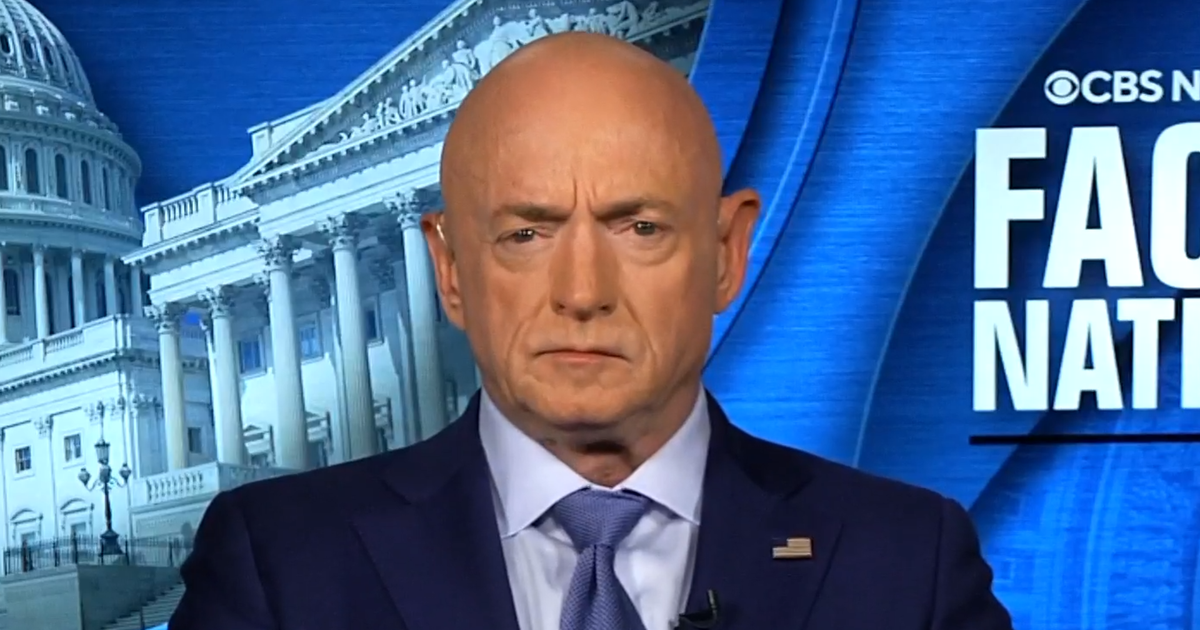
The following is the transcript of the interview with Sen. Mark Kelly, Democrat of Arizona, that aired on “Face the Nation with Margaret Brennan” on June 14, 2026.
MARGARET BRENNAN: We turn now to Arizona Democratic Senator Mark Kelly, who joins us from Phoenix. Welcome back to Face the Nation. Senator, I just want to read something that the president posted on his social media account moments ago in regard to the events today in Beirut. He said the attack, the Israeli attack on Beirut, should not have happened, particularly on a special day when we are so close to a peace deal with Iran. Israel has a right to defend itself, but the attack it was responding to was very small and meaningless, and all sides should stand down. That’s a different response than what the Secretary of Defense shared with us. It seems like the president is worried this could disrupt the negotiation and the possibility of a deal being signed. Do you support the memorandum of understanding?
SENATOR MARK KELLY: Well, I haven’t seen the details yet, Margaret, and you know, I don’t know if this is a special day, and if we’re very close to a deal. I do agree with what the president said about standing down. It’s obvious that we’re negotiating with the Iranians at this point. I think it’s always important for folks to remember, how did- how did we get here? We’re here because in 2018, Donald Trump tore up the JCPOA and got us into an unauthorized war with the Iranians, and all this has done for the American people is driven up costs, the costs of energy, so, specifically gasoline, the cost of food. And this is at a time when the American people are having a historic time just affording their lives.
MARGARET BRENNAN: Well, you questioned Secretary Hegseth last month about what this war did to American military preparedness, specifically restocking munitions that are depleted by the Iran war. As I questioned him about that, he said it was a media narrative, that I was making it up, but also said his testimony before your committee was speculation. What’s the reality check there? Do we have a munitions problem?
SEN. KELLY: Well, as Secretary Hegseth said in front of the Armed Services Committee, of which I’m a member, this will take years to rebuild the stockpiles of munitions, so of course we have a munitions issue. I mean, it just came from him, and I think it’s widely understood that when you attack over 10,000 targets from the air with cruise missiles and ballistic missiles and bombs from airplanes, you are using a lot of munitions, and we do not have an endless supply of these things. So, now we’re in a posture where we’ve got to be incredibly careful, and this is also at a time when Ukraine continues to need some help. President now sells munitions to the Europeans, because I think, as everybody understands, this is always about the bottom line for him. But Ukraine is an ally, they’ve been illegally- illegally attacked by the Russians, and they still need our assistance.
MARGARET BRENNAN: Well, President Zelenskyy was on this program and told us he’s waiting on President Trump to say yes to a US-Ukraine drone deal. Do you know what the holdup is?
SEN. KELLY: I do not at this point, and I don’t think there should be a holdup. I also agree that we should consider some co-manufacturing. Secretary of Defense Pete Hegseth, you know, clearly indicated that he didn’t- he didn’t seem very interested in this, but if Ukraine is going to win, and I got to say, right now it seems like the momentum is on their side, they need additional help from us. So co-production of some interceptors could be a possibility, but also help with their drone manufacturing, and this could also help us in the future. Ukrainians are really good at this, and we have a lot we could learn from them.
MARGARET BRENNAN: I want to come back to something we were discussing with Senator Warner, and that is the security risk that is resulting from having this warrantless surveillance program, Section 702, suspended right now. You, earlier this month, voted against a bipartisan bill extending surveillance authority. You said any short or long-term extension you would not be in favor of until you solve the Bill Pulte problem. Hasn’t that problem been solved now that Jay Clayton is the nominee?
SEN. KELLY: Not completely, because when Tulsi Gabbard leaves, we’re not so sure if the president is going to put Bill Pulte in as the acting DNI, but this is very easy to solve. The president could today make it very clear to the American people that Bill Pulte is going to have no role in the office of the Director of National Intelligence. When I hear that, then we have a very straightforward path to getting FISA renewed.
MARGARET BRENNAN: That’s the price of your vote, is that statement from the president himself?
SEN. KELLY: I mean, you know, I’m constantly reevaluating the situation. I value FISA, especially 702B, that allows surveillance of foreign nationals in other countries. It is incredibly important to our national security, and when it lapses, there is some risk. But I also think there is as much, if not more risk of putting somebody, Bill Pulte specifically, who is- who is unqualified for this job, Margaret. If you made a list of the one million most qualified Americans for this position, I am very confident that Bill Pulte would not be on that list. There’s risk in putting him in this position, and it’s pretty straightforward right now how we solve this.
MARGARET BRENNAN: Well, the hearing for Jay Clayton, who would be the Senate-confirmed head of National Intelligence, if he gets all these votes, is this Wednesday. Are you pretty much a definite yes? I mean, given your opposition to Pulte, you need a solution. It sounds like this is not a question.
SEN. KELLY: Hey, I don’t know Clayton. I mean, I’m reviewing his background. He’s got a process to go through. We need to vet him. The statute for this job says somebody will have extensive national security or intelligence experience. Does he have that? I think it’s pretty clear he does not. Is he better than Bill Pulte? Yes, I think a lot better. Does he meet some kind of, maybe a minimum, barely minimum standard? Perhaps. So, I’m looking forward to Wednesday. He’s got to answer some tough, tough questions from the committee, and I’ll evaluate his background and whether or not I think he’s prepared to do this job.
MARGARET BRENNAN: Wow. Meanwhile, there are so many issues of- of serious concern on the national security front. One of them, artificial intelligence. The White House on Friday came out and seemed to really ramp up the dispute with Anthropic. The White House told them to suspend access to any foreign nationals, which led the company to suspend all customers from accessing its most advanced AI systems. Do you know if there is an emergency, and is it, as reported by Semafor, because there was suspicion that a China link group had accessed it?
SEN. KELLY: Well, I haven’t officially heard that, but Mythos and some of their other models from AI companies are incredibly capable, and some of the capabilities that these models have to access systems, not only federal government systems, but financial systems, is very concerning to us. So we’ve got to take some time with these tools and do extensive evaluations as to what is the risk to the American people when we release these. So I agree with the administration on this. We’ve got to be incredibly careful, and the AI companies, and you know, I think Anthropic is a good example, seems to be willing to work with the federal government on this to make sure that we do not make a mistake and release something that we will later regret.
MARGARET BRENNAN: Senator Mark Kelly, thank you for your time today. We’ll be back in a moment.




German Chancellor Merz gifts Trump soccer jersey at G7
President Donald Trump was presented a soccer jersey with the number 47 printed on the back by German Chancellor Friedrich...


What the tentative Iran deal means for the Middle East
Displaced families are beginning to return to southern Lebanon after the US and Iran signed a memorandum of understanding …


Trump says he may read Iran agreement on camera
President Donald Trump vowed to publicly release the text of the agreement with Iran "in a couple of days" and...


White House attack thwarted: Arrests made for drone plot at UFC fight
Federal officials have arrested multiple people who they claim discussed plots to attack the UFC fight night event at the...


Kamala Harris: ‘This is a war the American people did not want’
Former U.S. Vice President Kamala Harris talks with CNN's Elex Michaelson and Arnold Schwarzenegger at the Austrian World …


Ebola outbreak in DR of Congo could take year to end, Red Cross says | BBC News
The Red Cross said it could take a year to end the Ebola outbreak in the Democratic Republic of Congo....


Wildfires light up Southern California night
Evacuations are underway as the "Shore Fire" blazes through Riverside County in Southern California.


Trump says Netanyahu needs to be 'more responsible' with Lebanon
President Donald Trump criticized Israeli Prime Minister Benjamin Netanyahu during bilateral meetings at the G7 summit, saying …


Which social media platforms will be banned for under-16s in the UK? | BBC News
Millions of children in the UK will be forced off social media after the government announced it would ban under-16s...


Meet the World Cup tourists going viral
Tourists visiting the United States for the FIFA World Cup are gaining the attention of thousands online after posting their...
-
 Business3 days ago
How much of Musk’s wealth comes from government help? Virtually all of it
-

 LifestyleNews2 weeks ago
120 minutes of strength training per week may help extend lifespan
-

 Politics5 days ago
What to know about the stabbing that set off fiery riots in Northern Ireland
-

 Video4 days ago
Download fans say what they love about the festival. #DownloadFestival #BBCNews
-

 Video4 days ago
Why SpaceX IPO isn't about space. #SpaceX #ElonMusk #BBCNews
-

 HealthNews4 days ago
The people of Okinawa, Japan only eat until they are about 80 percent full, then stop — and the practice has been linked in multiple peer-reviewed studies to lower rates of cardiovascular disease, slo
-
 Food4 days ago
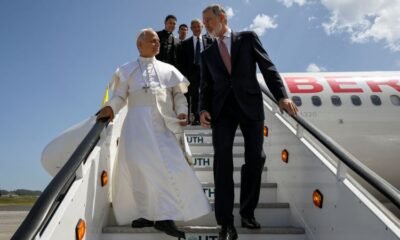
Pope Leo’s plane was grounded. Then the King of Spain stepped in to help
-

 TravelNews4 days ago
My Paternal Instinct Should’ve Warned Me About Netflix’s Maternal Instinct