

Business
Fed set to make interest rate decision as inflation hits 3-year high

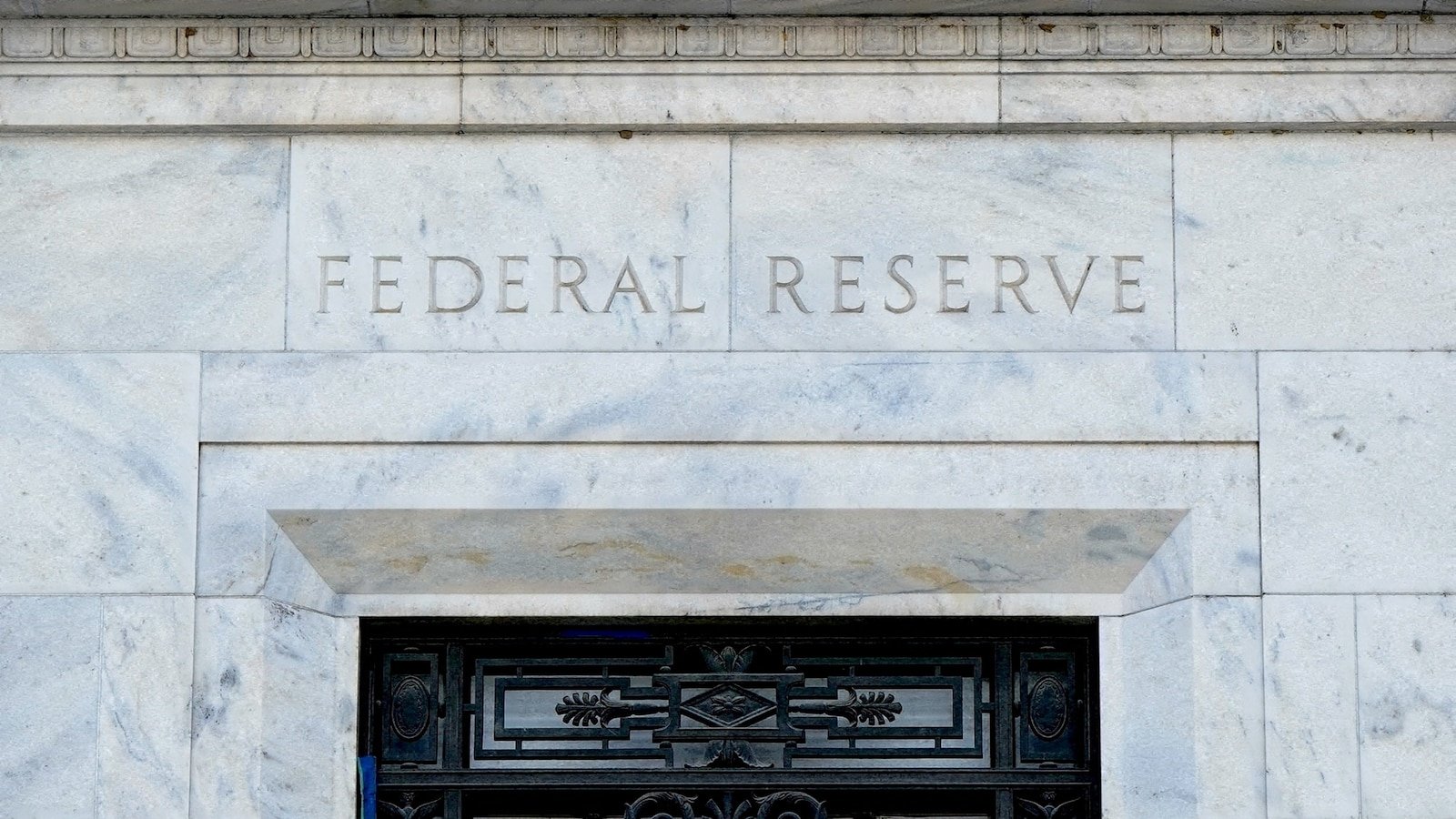
The Federal Reserve is set to announce its latest decision on interest rates on Wednesday as the central bank weathers the highest inflation in three years.
The announcement will mark the first possible adjustment of the benchmark interest rate since Trump nominee Kevin Warsh began his four-year term as Fed chair last month.
The policy move is also set to arrive at a moment of flux for the nation’s economy, just days after an agreement between the United States and Iran offered hope for some price relief.
The U.S.-Iran accord, set to be formally signed on Friday, came as gasoline prices fell below $4 a gallon for the first time since March. Still, fuel costs stand well above pre-war levels, and an array of grocery prices remain elevated.
Futures markets overwhelmingly expect the Fed to hold interest rates steady when policymakers meet on Wednesday, according to the CME FedWatch Tool, a measure of investor sentiment.
In recent weeks, however, odds have risen for a potential interest rate hike by the end of 2026, the tool showed, granting a roughly four in 10 chance of a quarter-point increase in December.
The shift in expectations came after a stronger-than-expected jobs report earlier this month showed robust hiring in May. In theory, a resilient labor market could afford central bankers leeway to raise interest rates in an effort to dial back inflation, since elevated borrowing costs risk a hiring slowdown.
Inflation jumped for a third consecutive month as the Iran war continued to drive up prices in May, surpassing 4% for the first time in three years
The Middle East conflict prompted the Iranian closure of the Strait of Hormuz, a maritime trading route that facilitates the transport of about one-fifth of global oil supply. The standoff triggered one of the largest oil shocks ever recorded, sending gasoline prices surging.
On Monday, President Donald Trump announced a U.S.-Iran deal that included plans to reopen the strait. Iranian Deputy Foreign Minister Kazem Gharibabadi confirmed the deal had been finalized and said it would be signed in Switzerland on Friday. Oil prices fell to their lowest level since March.
The benchmark rate stands at a level between 3.5% and 3.75%. That figure marks a significant drop from a recent peak attained in 2023, but borrowing costs remain well above a 0% rate established at the outset of the COVID-19 pandemic.
The rate decision will be the first major policy move overseen by Warsh, who will address reporters during a customary press conference minutes after the central bank issues its announcement.
During his term as a Fed governor in the late 2000s and early 2010s, Warsh gained a reputation as an interest-rate “hawk,” meaning he generally preferred higher interest rates as a means of ensuring low and stable inflation.
Last year, Warsh voiced support for lower interest rates. At his Senate confirmation hearing in April, Warsh emphasized the threat posed by elevated inflation.
“When inflation surges — as it has done in recent years — grievous harm is done to our citizens, especially to the least well-off,” Warsh said.
Bucking typical norms, former Fed Chair Jerome Powell Powell will cast a vote on interest rates as a member of the Fed’s 12-person policymaking board.
Powell said he would stay on at the central bank’s board of governors after his term as chair expired as an investigation into the Fed’s office renovation continues.
The Department of Justice moved to drop a criminal probe into Powell in April, calling on the Fed’s inspector general to carry out the investigation into cost overruns tied to the renovation. Powell will remain on the Fed’s board for an indeterminate length of time, he said last month.
The criminal investigation into Powell focused on alleged false testimony to Congress about an office renovation. Powell, who was appointed by Trump in 2017, has rebuked the probe as a politically motivated effort to influence interest-rate policy. Trump denied any involvement in the criminal investigation.
Business
McDonald’s brings back fried apple pie for America’s 250th birthday
McDonald’s is frying up some apple pies to honor America’s 250th birthday.
The company said Tuesday it’s bringing back fried apple pies for the first time in more than three decades. They’ll be available at most U.S. restaurants for a limited time starting June 23.
McDonald’s is one of several fast food companies offering semiquincentennial treats. Burger King recently debuted its Firecracker Cookie Pie, which has a sugar cookie crust and red, white and blue star-shaped sprinkles. Sonic is offering a red, white and blue slush float for $2.50. Hardee’s has an iced Star-Spangled Biscuit with red and blue sprinkles.
Here’s a look at McDonald’s fried apple pies by the numbers:
— 1968: The year McDonald’s introduced both its fried apple pie and the Big Mac hamburger. Litton Cochran, a McDonald’s franchisee in Tennessee, developed the rectangle-shaped pie, whch was served in a cardboard sleeve. 1968 was a momentous year that included the assassinations of Martin Luther King Jr. in Memphis and Robert F. Kennedy in Los Angeles, protests against the Vietnam War, and the signing of a federal law prohibiting housing discrimination.
— 1992: The year McDonald’s replaced the fried apple pie with a baked version in most of the U.S., responding to growing consumer awareness of fat and cholesterol consumption. The U.S. Department of Agriculture first published its food guide pyramid the same year. Fried apple pie remains on McDonald’s menus in some other countries, including Mexico, Australia and China.
— 230: Number of calories in McDonald’s baked apple pie. That’s 10 more calories than the fried version, according to the company’s website. A cup of boiled lentils, a single almond Snickers bar and a grande coffee Frappucino from Starbucks have the same calorie count, according to publicly available nutrition information.
— 130: Number of members of the Facebook group “Bring Back the Original McDonald’s Fried Apple Pie”
— 170 million: Number of American-grown apples that McDonald’s says it serves every year at its U.S. stores.
— 35: Height, in feet, of a giant fried apple pie that McDonald’s is installing on Route 66 in Joliet, Illinois, near McDonald’s Chicago headquarters. That’s about the height of a three-story house and some species of palm trees. The giant apple pie will stay in place until July 4, the company said.
Business
AI may be messing with home prices


A version of this article first appeared in the CNBC Property Play newsletter with Diana Olick. Property Play covers new and evolving opportunities for the real estate investor, from individuals to venture capitalists, private equity funds, family offices, institutional investors and large public companies. Sign up to receive future editions, straight to your inbox. A home is only worth what someone is willing to pay for it. That is probably the only dependable truth when it comes to putting a price tag on a property. Enter artificial intelligence. As with everything on the planet, AI is disrupting real estate. In March, celebrity real estate CEO Ryan Serhant, of his namesake company, posted a video on Instagram titled, “ChatGPT just blew up my $50M deal.” In the post, he explained how he had brokered a deal on the property, but, “at the last minute the seller uses ChatGPT, asks it, ‘Should I sell at this price?’ And maybe because of how he asked, whatnot, ChatGPT basically told him no, you should not sell at that price, it’s worth more.” Then, he said, the buyer did the same thing, asking the AI tool from OpenAI if he was overpaying, and ChatGPT told him that, yes, he was paying too much. “It gave him comparables that showed why, without context and without actually understanding the property,” Serhant said. Serhant’s post has more than 3 million views. He was able to salvage the deal, he said in a subsequent post, by explaining to both the buyer and seller the following about AI: “It doesn’t know the future, it can’t predict the future. It doesn’t know intentions, doesn’t know emotions, doesn’t know what buyers are circling, doesn’t know off-market comparables, doesn’t understand, fully, replacement costs, and doesn’t actually optimize for the deal,” he said. “AI can model a market. It can’t model a deal.” Serhant has said he does believe AI is a critical tool for real estate agents and even launched his own AI-powered workflow automation platform and operating system, called S.MPLE, which he talked about recently on the Property Play podcast. And he’s not alone. For most real estate professionals, the data aggregation capabilities of AI can certainly enhance their expertise, according to Kamini Lane, CEO of Coldwell Banker Realty. “Market analysis, comparative analysis, those are key tools in a real estate agent’s toolbox. But the important thing is that those are starting points for an agent to then apply their judgment, their expertise, their nuanced understanding of the real estate market, to either validate or enhance the recommendation that any data tool would provide,” she said. Lane said her agents are seeing more and more clients — both buyers and sellers — look to sources like Anthropic’s Claude and OpenAI’s ChatGPT to price their homes or calculate offers. Like Serhant, she warned of how these generalized large language models miss the nuances of a home, a neighborhood and a client. “One of the most important things that agents can see, that ChatGPT, or any other AI tool is not going to know, is [what’s] up and coming. So neighborhoods that are up and coming, design features that are up and coming,” she said. “Anecdotal data that agents are aggregating through their conversations, that is something that no AI tool is ever going to be able to aggregate in the same way that a real estate professional can.” Zillow, one could argue, was the original AI price model for residential real estate. It launched its so-called Zestimate feature back in 2006, alongside the launch of its website. It recently launched “AI mode,” designed to guide homebuyers through their search by learning their specific needs. It then enables homebuyers to have a more personalized conversation with the Zestimate. “AI guidance for consumers needs to be connected to real context, real data, real ability to take action,” said Nicholas Stevens, vice president of product and AI at Zillow. “Then that AI guidance needs to be deeply connected to what a real estate agent is attempting to do. That’s the difference between what we’re doing at Zillow versus like a third-party, generic experience.” Agents have to upload in-depth floor plans and 3D visual captures of the entire home and surrounding lot with every possible piece of information. Then, in AI mode, Zillow gives advice to the buyer on what might be a good offer. “It actually sees a remodeled kitchen. It actually sees upgrades in the house, and that’s useful, both for buyers but also homeowners thinking about selling or remodeling as well,” said Stevens. Zillow’s AI feature is now primarily for buyers, but Stevens said the company will roll out a tool for sellers as well. It still raises accuracy questions, however, about the AI itself as it tries to understand its human users. Coldwell Banker’s Lane said she worries that for both buyers and sellers, AI will not be able to pick up on what they might need compared with what they say they want. It might also not be inclined to offer the often hard-to-hear advice that a human agent has to. “Artificial intelligence is trained to be sycophantic, it’s trained to give you the answers that you want, so that you will continue to engage, and so AI is more likely to give you the price that you want versus the price at which a home is going to sell for,” said Lane.
Business
Yum Brands sells Pizza Hut to LongRange Capital and Yum China
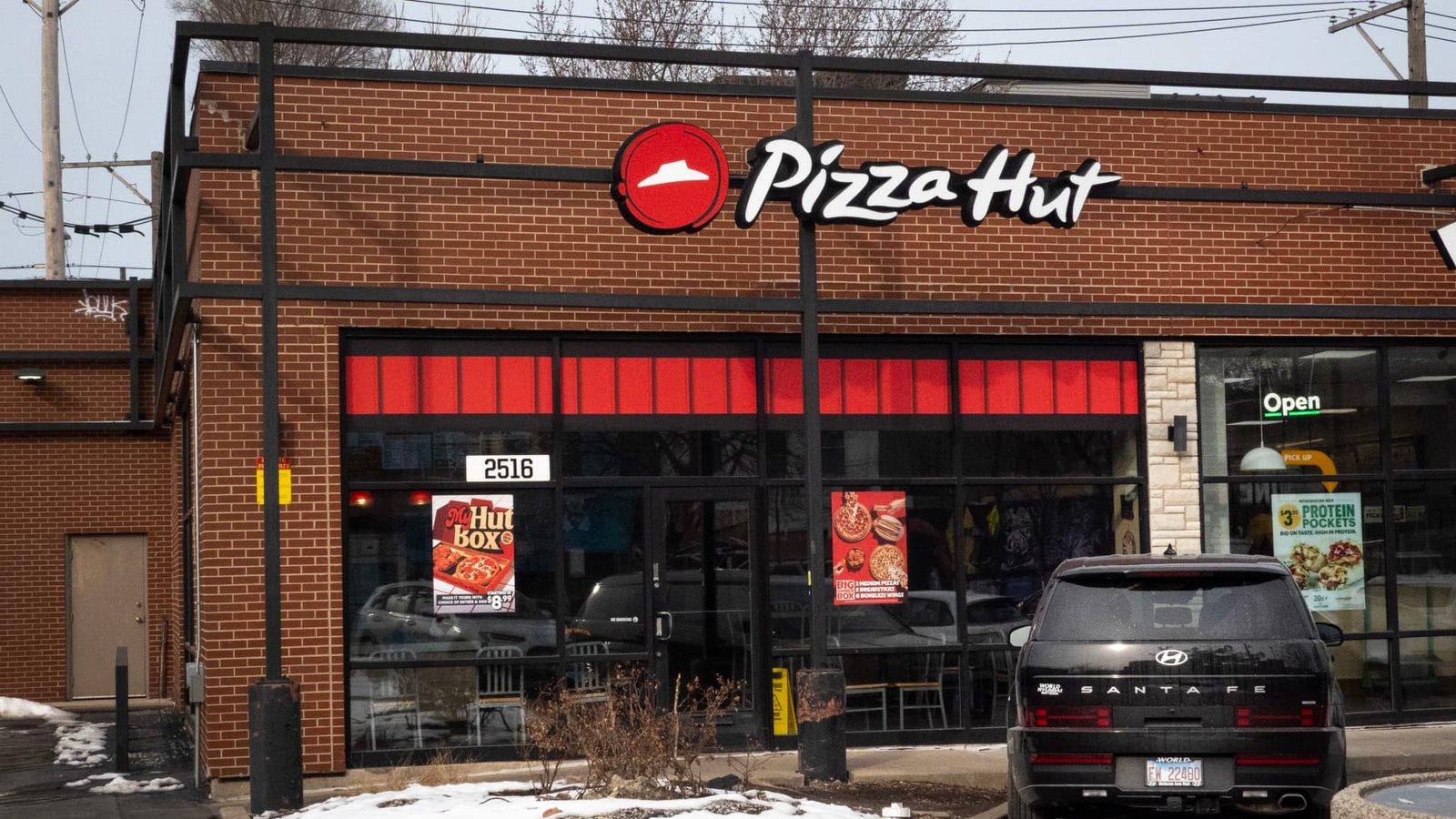
Yum Brands on Tuesday announced it is selling Pizza Hut to private equity firm LongRange Capital for roughly $1.5 billion.
The deal excludes the pizza chain’s locations in mainland China; Yum China will acquire those in a separate transaction for about $1.2 billion.
The deals cap off years of struggles for Pizza Hut, which has weighed on Yum’s overall financial performance. In the U.S., the pizza chain has transitioned from the sit-down format and salad bars of yore to focus on delivery and carryout — far behind the curve. Rival Domino’s Pizza has gobbled up market share from Pizza Hut for years; third-party delivery apps like DoorDash have further stolen sales from the chain.
In November, Yum said it was exploring strategic options for Pizza Hut. On Tuesday, the company said its leadership team and board determined that selling Pizza Hut would provide “the strongest path” to maximize shareholder value and give the pizza chain an ownership structure “tailored to its distinct markets, competitive strengths and long-term priorities.”
Across both deals, Yum expects to receive about $2.3 billion in net proceeds after taxes, closing adjustments and fees, excluding a possible earn-out of $75 million by 2030 from LongRange. Yum also anticipates one-time expenses of about $85 million during the rest of 2026 tied to the transactions.
The company’s management will provide more details about the financial impact of the transactions during Yum’s second-quarter conference call on July 30. Yum expects the sales to close in the third quarter, subject to regulatory approval.
Brothers Dan and Frank Carney founded Pizza Hut in 1958 in Wichita, Kansas. A year later, they were franchising the concept.
In 1969, Pizza Hut went public. Just two years later, it was the biggest pizza chain in the world, although it lost that title in 2017 to Domino’s.
The deal severs Pizza Hut’s decades-long ties to Taco Bell and KFC, its sister brands in Yum’s portfolio.
PepsiCo bought Pizza Hut in 1977, marking the beverage giant’s entry into the restaurant business. By 1986, it also owned Taco Bell and KFC. When Pepsi spun off its restaurant unit in 1997, the holding company was dubbed Tricon Global Restaurants — later renamed to Yum.
At the end of 2025, Pizza Hut had nearly 20,000 locations across 108 countries and territories and reported $12.8 billion in annual system sales, according to regulatory filings from Yum. The U.S. is its biggest market, representing about 40% of its system sales, followed by China with roughly 20% of its system sales.
Correction: The headline was updated to reflect that the $2.7 billion sale value includes deals with both LongRange Capital and Yum China.
Business
Is it a renter’s market? It depends on where you live


Stay up to date with our Up First newsletter, sent every weekday morning.
In Nashville, Tenn., the landlords come to you.
At least, it looked that way from the texts showing up on Mason Comans’ phone a few months ago when he was apartment hunting. One property manager wrote that they were offering one month of free rent. Another offered two.
“I even saw some places doing three months, three and a half months free,” Comans said.
This is what a renter’s market looks like, said Zillow senior economist Kara Ng: “Renters, this is your year.”
The typical asking price for rent nationally is now rising slower than wages and inflation — 1.9% year over year in April, according to Zillow. By contrast, the latest inflation report, in May, showed that consumer prices more broadly were up 4.2% compared with a year ago.
Figures from Realtor.com say rent has actually gone down 1.5% year over year. And Ng added that a record 39.8% of rentals on Zillow offered move-in incentives in April, from waived fees to a month or more of free rent.
An extra few thousand dollars from move-in concessions is a sizable cushion for American families that are being squeezed on other expenses, such as power bills and gasoline. “Rent is the place giving you that breathing room,” Ng said.
But as with all things real estate, there’s one really big caveat when it comes to rent prices: location. Just how good renters have it depends on where they live.
An apartment construction boom
The reason rent increases have fallen behind inflation comes down to Economics 101: supply and demand. Specifically, the supply of apartments has been boosted by a construction boom. In 2024, the U.S. built some 600,000 apartment units, the most in 38 years.
All that extra supply has outpaced demand. The rental vacancy rate was at 7.3% at the start of the year, the highest it has been in a dozen years.
But that supply of new housing isn’t evenly distributed throughout the nation. Sun Belt cities, in particular, caught the construction bug. That’s why many apartment managers in cities like Nashville, Phoenix and Austin, Texas, are more likely to offer perks for new renters.
“There’s a lot of apartment buildings hitting the market all at once,” Ng said. “And property managers are trying to fill it, and they’re doing it with freebies.”
But ask a Chicago native whether it’s a renter’s market there, and you’ll get a simple answer. “Hell, no,” said Chloe Troub. “I find that to be really insulting, just given the cost, the sheer cost, of putting a roof over your head right now.”
Troub rents in the Windy City, which has seen some of the largest rent increases in the nation, with rents rising 5.4% year over year in April, according to Zillow. This can also be explained by supply and demand: Too many renters are chasing not-enough apartments.
Troub and her boyfriend currently rent a one-bedroom apartment, which she said is a steal at $1,600. But on a recent hunt to see whether she could find a bigger space, the best deal was a sublet for $2,000 — and an increase of that size would eat up her boyfriend’s last raise.
When she told the guy subletting the place that the price was too much for her, he said he wasn’t worried — he had 12 other showings lined up behind her. “It’s a rat race out there,” he told her.
The renter’s market fine print
And there are a couple of other caveats for renters to consider. First, move-in incentives don’t last forever. “As soon as they get you locked in, you’re still getting rent increases every year,” said Michelle Becker, a broker with Adaro Realty in Nashville.
Comans, the Nashville apartment hunter, has been willing to keep moving to score new deals — this is his fourth move in five years. His newly constructed one-bedroom apartment came with access to a pool, a private market and two and a half months of free rent.
But if he wants more free rent next year, he said, “then I would have to move to do that.”
And second, rent is still more expensive than it used to be. The average rent has shot up 36.9% since the beginning of the COVID-19 pandemic, according to Zillow.
Even Comans is paying more than he used to: $1,800 a month. “It is a lot of money,” he said. “It’s not cheap at all.”
Business
Fed expected to hold rates steady as inflation hits highest since 2023

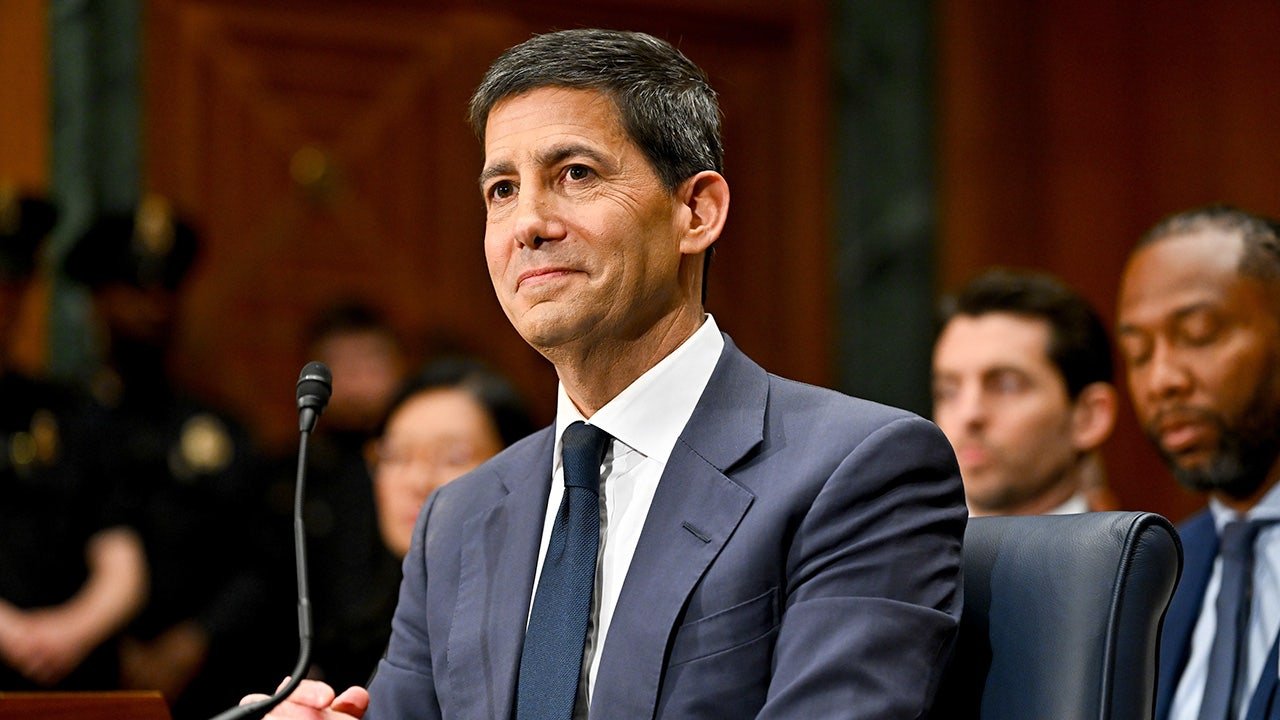
The Federal Reserve is expected to hold rates steady following its monetary policy meeting this week amid the rise in inflation, while newly minted Chairman Kevin Warsh is set to hold his first post-meeting press conference.
Inflation was already elevated before the Iran war jolted energy prices higher, which has in turn contributed to key inflation measures moving further away from the Fed’s 2% target. The consumer price index (CPI) rose to 4.2% in May, which was the highest level since April 2023.
That inflationary trend has prompted the market to effectively rule out an interest rate cut at this week’s meeting of the Federal Open Market Committee (FOMC), the Fed panel responsible for monetary policy decisions.
Warsh’s debut at the FOMC’s post-announcement press conference will be watched closely for signs of how policymakers view the path ahead for the economy and monetary policy, with the outlook for possible interest rate cuts this year appearing dim.
INFLATION IS SQUEEZING AMERICAN CONSUMERS AND THE FED’S LATEST REPORT SHOWS IT’S GETTING WORSE
The CME FedWatch tool shows a 98.4% probability that the Fed will leave the benchmark federal funds rate unchanged at its current target range of 3.5% to 3.75% this week. It also shows a 42.7% chance that rates remain at that level through the December meeting, narrowly ahead of a 25-basis-point cut at that time.
“While Warsh is generally perceived as dovish, he will inherit a Committee that has become noticeably more hawkish,” said EY-Parthenon chief economist Gregory Daco. “Several policymakers have recently argued that rate hikes should remain an option if inflation remains above target, and concerns around energy-driven inflation pressures have only reinforced that bias.”
JPMorgan economists led by Michael Feroli wrote that they think that given the inflation backdrop and the labor market looking stronger, the FOMC “should drop the easing bias from the post-meeting statement, replacing it with either a neutral sentence or no forward guidance at all.”
AMERICANS GROW MORE PESSIMISTIC ABOUT FINANCES AS RENT AND FOOD COST FEARS SURGE, FED SAYS
Fed watchers will also be on the lookout for signals about possible institutional changes at the central bank in terms of its communications and projections.
Daco said that the summary of economic projections (SEP or “dot plot”) released by the Fed are likely to garner more attention than usual, given that “Warsh has repeatedly expressed skepticism toward the usefulness of economic forecasts and the dot plot of median rate expectations.”
“While we still expect the SEP and dot plot to be published in June, we would not be surprised if Warsh declined to submit his own projections. Such a decision would be largely symbolic, but it would reinforce his broader view that policymakers should place less emphasis on forecasts and more emphasis on incoming economic data,” Daco added.
KEVIN WARSH SWORN IN AS FEDERAL RESERVE CHAIR
Goldman Sachs economists led by Jan Hatzius and David Mericle noted the questions around whether the SEP would continue to be published and said that they don’t expect major changes in the near term.
“The FOMC just had a lengthy review of its communication practices last year in its framework review and was unable to agree on any changes,” they wrote.
GET FOX BUSINESS ON THE GO BY CLICKING HERE
The JPMorgan economists said that while Warsh has promised “regime change” at the Fed and is likely to face questions about that, he has also “always been somewhat vague about what that would entail, and at this early stage we expect he will say he has initiated a review but will avoid giving specifics.”




How can future students avoid GCSE burnout? #GCSE #Exams #BBCNews


Iranian fans react to opening World Cup match
Iran and New Zealand played to a 2-2 draw in Iran's opening FIFA World Cup match at SoFi Stadium in...


Has anyone won the Iran war? | The Global Story
Donald Trump says a deal to end the war with Iran has already been signed and details will be released...


Why one small area could decide Britain’s next PM. #Makerfield #Politics #BBCNews
McDonald’s brings back fried apple pie for America’s 250th birthday
McDonald’s is frying up some apple pies to honor America’s 250th birthday. The company said Tuesday it’s bringing back fried...


Steven Spielberg gets serious about aliens
Steven Spielberg has a lifelong alien obsession. The legendary director, along with actors Emily Blunt and Colman Domingo, …


“I Made These Problems for Myself” (Exclusive Interview)
The last time I had dinner with Armie Hammer, he drove us up Pacific Coast Highway in his black pickup...


Catapult crime: 'We thought it was a gun shot'. #Catapults #UK #Kent #News #BBCNews


Trump said he'd "suggested to Israel to let Syria take care of Hezbollah". #BBCNews
Subscribe to our channel here: https://bbc.in/bbcnews For the latest news download the BBC News app or visit BBC.com/news …


Swipe right for sperm | BBC News
With fertility prices soaring and treatment difficult to access for some, same-sex female couples say they have little choice but...
-

 Business3 days ago
How much of Musk’s wealth comes from government help? Virtually all of it
-

 LifestyleNews2 weeks ago
120 minutes of strength training per week may help extend lifespan
-

 Politics5 days ago
What to know about the stabbing that set off fiery riots in Northern Ireland
-

 Video4 days ago
Download fans say what they love about the festival. #DownloadFestival #BBCNews
-

 Video4 days ago
Why SpaceX IPO isn't about space. #SpaceX #ElonMusk #BBCNews
-

 HealthNews4 days ago
The people of Okinawa, Japan only eat until they are about 80 percent full, then stop — and the practice has been linked in multiple peer-reviewed studies to lower rates of cardiovascular disease, slo
-

 Food4 days ago
Pope Leo’s plane was grounded. Then the King of Spain stepped in to help
-

 TravelNews4 days ago
My Paternal Instinct Should’ve Warned Me About Netflix’s Maternal Instinct