

Business
US student debt repayment system is being overhauled – here’s what to know

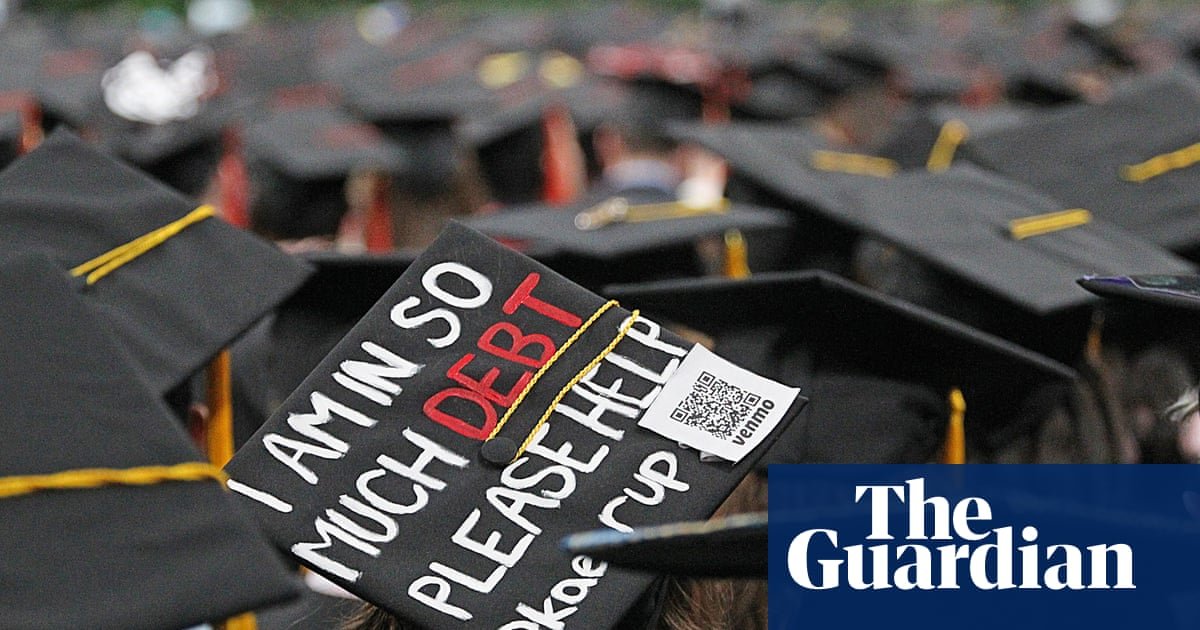
The American student loan repayment system is set to undergo a significant overhaul next month, changing the way millions of borrowers pay off their debt.
The series of changes, which take effect 1 July, are a result of the Trump administration’s One Big Beautiful Bill Act that was signed last summer and a recent court ruling that ordered the end of the Biden-era Save repayment plan. Borrowers will be facing stricter payment timelines and less forgiveness, what will be the latest in a series of massive changes to the student loan system in just a few years.
“This is impacting, in my opinion, every single student loan borrower in one way or another – even if you don’t have to make a change in your loans, just the confusion alone,” said Natalia Abrams, the president of the Student Debt Crisis Center.
“I’ve worked in this space for more than 15 years, and I’ve never seen it this bad, and I’ve never seen it change this much, this frequently.”
Here’s a rundown of how the repayment system is changing and how it is affecting students.
What’s changing?
More than 7 million Americans are enrolled in the Save plan, an income-based repayment plan launched in 2023 by the Biden administration. The program was created with the goal of drastically reducing undergraduate loans, eliminating monthly payments for some, and offering early forgiveness for borrowers with low-balances.
After a federal appeals court ruling in March, the Save plan will be official dismantled 1 July. The ruling came after Republican attorneys general across the country challenged the plan, putting monthly repayments on hold for years.
On 1 July, monthly repayments will start again and Save borrowers will soon have to apply for a different payment plan.
What repayment options will borrowers have?
Once the Save plan officially ends, borrowers will have 90 days tochoose a different repayment plan.
Borrowers with loans issued before 1 July 2026 – and who do not plan to take out more loans – will retain access to several existing income-driven payment and fixed-income plans.
Compared to plans offered under the Biden administration, these plans push borrowers to pay back their loans more quickly and include less forgiveness options.
Borrowers will have access to existing income-driven payment plans – which are based on a borrower’s discretionary income – including the income-based repayment (IBR), pay as you earn (Paye) and income contingent repayment (ICR) plans, which offer loan forgiveness between 20 to 25 years after payments. The latter two options, however, will also be dismantled by the summer of 2028.
Meanwhile, anyone enrolled in the Save plan who does not apply for another payment program will automatically be enrolled into a fixed-income plan, which are typically not eligible for loan forgiveness. The monthly payments under a standard fixed-payment plan are generally higher than the income-based plans because the fixed amounts are set to ensure loans are paid off within 10 years.
Two other fixed payment plans offer lower or gradually increasing monthly payments made over a longer period of time.
Why is this happening now?
The Department of Education has said the upcoming overhaul simplifies the student debt system. In a statement earlier this year, Nicholas Kent, the under-secretary of education, said: “For years, borrowers have been caught in a confusing cycle of uncertainty, but the Trump administration’s policy is simple: if you take out a loan, you must pay it back.”
It’s a U-turn from how the Biden administration approached student loans including, at one point, attempting to cancel $430bn worth of student debt before it was blocked by the supreme court in 2023.
Experts say the new plans offered by the Trump administration are less forgiving than previous programs, what they say will make college more prohibitive for future generations.
“We have an affordability crisis in our country, and having more expensive repayment plans is just going to affect the money that people have in their pockets,” said Abrams of the Student Debt Crisis Center. It feels like this has been designed by people that do not understand the student loan system,” she said.
William Elliott, the founding director of the University of Michigan’s Center on Assets Education and Inclusion, said student debt has shaped a generation, changing how Americans view the value of an education.
“I ended up with debt for over 20 years. And every day you get up, you think about that debt. I mean, it’s just an albatross around your neck,” he said. “It affects your ability to begin to build wealth like you want. It is just something that is constantly there, destroying the sense of a return on degree for you.”
Are there any new options for borrowers?
Any borrower who plans to take out new loans after 1 July – even if they have existing loans – will have access to two new repayment plans: the repayment assistance plan, or RAP, and the tiered standard plan.
Under RAP, monthly payments are calculated based on a borrower’s adjusted gross income (AGI), rather than their discretionary income. If a borrower has an AGI above $10,000, monthly payments range from 1% to 10% of that amount. For those below that threshold, the monthly payment is $10. Loans are forgiven after 30 years.
The tiered standard plan is a fixed-payment plan where payments last between 10 to 25 years depending on the initial balance and are at least $50 a month. Some borrowers may be automatically enrolled in this program if they are entering repayment and haven’t chosen another eligible plan.
How are students reacting?
Recent college graduates are bracing for the overhaul, with many unsure if they will be able to take out loans in the future under the new payment system.
Ryan Coryea, a 21-year-old senior at the University of California, San Diego, said she is planning to move back home to Texas after graduation because she can’t afford to make her student debt payments on top of rising housing and food costs. Though she is considering getting a law or master’s degree in public policy, the new payment plans may make it prohibitive.
“For me as well as for a lot of my friends, it’s really making us reconsider how we’re going to pay for grad school, and also if we’re going to go at all,” said Coryea, who is also an intern at the Student Debt Crisis Center.
Cassie Urbenz, who graduated this spring with a masters degree from the University of Florida, is about to start paying off the $20,000 she took out in loans she took out for her undergraduate degree. She recently landed a job as a union organizer for the Florida Education Association and will soon start making monthly payments just over $200.
“It’s really disappointing that I’m going to be having a lot of extra pressure to pay it off early” under the new repayment plan, she said. “It’s going to delay my own accumulation of wealth and set me back in that sense.”
Business
General Motors announces new defense partnership with Lockheed Martin

Automaker General Motors on Tuesday announced a new partnership with defense company Lockheed Martin to scale manufacturing and expand production capabilities.
The deal was facilitated by the U.S. Department of Defense, according to Bruce Brown, GM’s vice president of strategy at GM Defense, and will focus on munitions.
“What makes this moment especially important is that the country needs more than great technology. It also needs the capacity to build, scale and deliver reliably,” Brown said on a call with reporters. “This is where GM can help. Across our company, we bring deep experience in advanced engineering, digital development, supply chain discipline and manufacturing at scale.”
Lockheed Chief Operating Officer Frank St. John said it was too early to say what projects it would invest in with GM Defense.
Executives from both companies said on the call that the collaboration will allow for more growth at a time when the country is ramping up its production of defense parts.
“Together, we will explore opportunities across three important areas: improving production readiness and scalable manufacturing environments; strengthening supply chains and identifying ways to increase resilience; and applying advanced manufacturing and design approaches [that] can help improve efficiency and accelerate delivery,” St. John said.
Lockheed Martin is investing $9 billion through 2030 to modernize 20 of its facilities and supply bases, St. John added. GM said it will spend $7 billion on research and development in the U.S., according to Brown.
The executives said the partnership will be focused on “high-rate manufacturing” at scale and expanding production capacity. They added that the collaboration is still in early stages and that they need to further define what the potential for future contracts may be. They are working under a memorandum of understanding.
The automaker built tanks for the country during World War II. Its GM Defense unit is one of the company’s newer but fast-growing business segments, reestablished in 2017 with customers including the U.S. Army, Secret Service and NASA.
“America is stronger when two companies with deep manufacturing roots come together to help expand speed, scale and resilience in the defense industrial base. That is why Lockheed Martin and GM are announcing this collaboration,” Brown said on the call.
The partnership comes as President Donald Trump has been pushing for more American manufacturing to bring more production and reshoring into the country. The U.S. has also seen its defense stockpiles fall because of the wars in Ukraine and Iran.
The White House has held discussions with Ford and GM about better supporting the country’s defense industry.
— CNBC’s Michael Wayland contributed to this report.
Business
Leaked financial docs show OpenAI is losing billions of dollars a year


As OpenAI files SEC paperwork ahead of an expected initial public stock offering, newly leaked financial documents show a company with quickly growing revenues that are currently being overwhelmed by even larger expenses.
The audited financial statements, obtained by independent journalist Ed Zitron, show OpenAI’s reported revenue growing from $3.7 billion in 2024 to $13.07 billion in 2025. The Financial Times, which reviewed the same documents, writes that the company’s monthly revenues had grown to nearly $2 billion by the end of 2025, suggesting that its ongoing revenue rates continued to grow throughout the year.
But the company’s fast-growing revenues are still dwarfed by its even more significant expenses. OpenAI’s total revenues in both of the last two years were outpaced by research and development alone, which grew from a $7.81 billion line item in 2024 to a massive $19.18 billion cost in 2025. Those numbers seem to reflect the significant costs OpenAI incurred in training new models and include $10.59 billion in R&D costs paid to Microsoft alone in 2025.
On top of that, OpenAI’s “cost of revenue” (i.e., the money spent producing and distributing the product) increased from $2.65 billion in 2024 to $7.5 billion in 2025. This cost line likely reflects the significant compute costs incurred at “inference time” as the company’s models respond to a growing number of user prompts. Costs associated with sales and marketing also grew from $1.11 billion in 2024 to $5.73 billion in 2025.
All told, OpenAI’s day-to-day “loss from operations” increased from $8.78 billion in 2024 to $20.92 billion in 2025, a concerning direction for a company that is telling investors it hopes to be profitable by 2030. But measured as a percentage of revenues, the company’s operating losses slightly improved year to year, from 237 percent in 2024 to 160 percent in 2025.
Gotta spend money to make money
Operating numbers aside, OpenAI’s headline “net loss” number of just over $5 billion in 2024 ballooned to nearly $39 billion in 2025. But the 2025 number includes a significant accounting charge related to investor valuations that shifted amid the company’s 2025 conversion to a for-profit structure. The Financial Times cites “a person familiar with the matter” in reporting that this non-recurring charge was approximately $30 billion and that OpenAI’s 2025 net loss amounted to a more reasonable-looking $8 billion without it.
As OpenAI tries to shift all these losses to eventual profits, it will have to start reining in its costs, especially the massive (and growing) R&D costs associated with model training. It will also have to deal with enterprise customers that are beginning to balk at token-based pricing and starting to demand a measurable return on investment for their AI spending. And on the subscription side, pressure from rival Anthropic may force the company to lower prices, which could further increase operating losses in the near term.
OpenAI shut down its Sora video generation model in March. Around the same time, OpenAI CEO of Applications Fidji Simo told employees that the company would be cutting back on “side quests” and focusing on its core coding and business users.
In March, OpenAI raised $122 billion of financing in a funding round that valued the company at $852 billion. The company reports over 900 million weekly active users of ChatGPT, though only about 50 million of those are paid subscribers.
Business
Verizon breaks industry mold
NEW YORK—Verizon (NYSE, Nasdaq: VZ) today announced the next step in its ongoing transformation, replacing complexity and friction with simplicity and true customer choice. The company is putting its customers first—existing and new—by redefining loyalty and eliminating activation and upgrade fees. As part of the customer-centered reboot, Verizon is also launching “Verizon Simplicity,” the industry’s most simple and cost-effective plan. With Simplicity, there are no network tiers; everyone gets Verizon’s best 5G network. Also available starting today, the company launched Verizon One, a streamlined plan that combines Mobility and Home on one bill with taxes and fees included.
“We’re fundamentally reshaping Verizon inside and out to put the customer at the center of everything we do. We’re listening, designing for them, and moving faster than we ever have before,” said Dan Schulman, Verizon CEO. “For too long, this industry has burdened people with complex plans, forced upgrades they don’t need, and so-called ‘rewards’ with tons of caveats. We are working to ensure everything that we do is simple, clear and delightful.”
Today’s announcement is part of Verizon’s multi-year transformation, redefining its relationship with customers now and for the long-term.
“With today’s news, we’re doubling down on what customers actually want: simpler experiences, less friction and more rewards for being a customer. We’re putting meaningful value back in their pockets, and making it feel easy and intuitive,” said Alfonso Villanueva, Interim CEO, Verizon Consumer Group and Verizon Chief Transformation Officer.
Customer-first and industry-first
Verizon Loyalty: The only loyalty program for ALL customers on any plan.
The end of Device Upgrade and Activation fees. The beginning of Verizon Dollars & Verizon Shine. Rollout starts today.
Goodbye activation and upgrade fees: In an industry first, all postpaid customers on all phone and connected device plans can opt-in to Verizon’s Loyalty program and say goodbye to activation and upgrade fees—that’s up to $40 in fees per device. Verizon is removing these common industry charges for all postpaid customers. Opt-in in one simple step through the My Verizon app.
Hello Verizon Dollars: A first-of-its-kind program that rewards customers with 3% back in Verizon Dollars every single month, just for being a customer. Starting in July, Verizon Dollars can be redeemed for devices, accessories or up to 5x for each Verizon Dollar from top brands including Sephora, Hilton, Marriott, Starbucks and more. “Customers reward us with their loyalty every month. Verizon Dollars lets us reward them back, on their terms,” said Villanueva. “Not just some customers, on some plans, but for all. Customers earn Dollars every single month just for being with us, and we let them choose how to spend it.”
Wake up to Verizon Shine! Every Monday, every day, all year-round: The loyalty program that gives customers a reason to look forward to Monday, all year-round. All Verizon customers on any plan can enter weekly for a chance to win once-in-a-lifetime experiences, alongside daily drops including tickets to concerts and sporting events, exclusive merchandise, dining vouchers, gift cards and more.
Once-in-a-lifetime Verizon Shine sweepstakes will drop every Monday, providing customers with a chance to enter to win a diverse lineup of all-expense paid experiences across music, food, culture and sports:
June 22: FIFA World Cup 2026™ Final: Trip to New York for a VIP Event with David Beckham & tickets to the Final FIFA World Cup 2026™ match
June 29: VIP experience at Outside Lands festival, including a meet & greet with artist Sienna Spiro
July 6: Exclusive New York City food tour with James Beard Award-winning chef Andrew Zimmern
July 13: Flyaway trip to experience the first-ever NFL game in Australia
July 20: Flyaway & VIP Access to Netflix House Dallas
July 27: VIP experience with surprise musical artist to be revealed on June 23!
August 3: Flyaway experience to France for 2026 NFL Paris game
August 10: Young Miko tickets and meet & greet at Climate Pledge Arena
Additional once-in-a-lifetime experiences dropping on Mondays will be coming soon, including:
A WILD dance tutorial with KATSEYE in Paris, France
Flyaway experience to NHL Global Series in Finland
An all-expenses paid holiday weekend in NYC including dance lessons with the Rockettes at Radio City Music Hall
Verizon pays your wireless bill for a year! * *
And the Verizon Shine fun isn’t just Mondays. Every day of the week, customers can visit the My Verizon app to score daily drops. The first month alone will include:
Free coffee from Starbucks
Free Dunkin’ treats
Free special sandwich from Arby’s
Exclusive FIFA World Cup 2026 merchandise
Free hour at TopGolf
Free gift cards to Ulta
Free Amazon gift cards
Last-chance tickets to FIFA World Cup 2026 matches dropping on June 22 for customers in host cities
Enroll in loyalty today via the My Verizon app and check out verizon.com/loyalty for more information.
Verizon Simplicity: The industry’s most simple and cost-effective plan
The Simplicity Plan: A breakthrough offering at $45, with an initial promotional offer of $30 per line for mobile customers that switch to Verizon.
Every Simplicity customer gets Verizon’s best 5G network * . This includes premium performance with 5G Ultra Wideband, Verizon’s fastest network, making the nation’s most reliable 5G network the standard for every Simplicity customer, with no upcharge. “With Simplicity, we’re democratizing our network at a thoughtful price point that meets our customers’ needs and drives responsible growth,” says Villanueva. “One more thing to give customers peace of mind.”
Simplicity moves beyond tiered network confusion and complicated phone subsidies and provides a simple choice for mobile service. With the best networks for everyone at an affordable price, including unlimited 5G Ultra Wideband data, 10GB of premium mobile hotspot, roaming in Canada and Mexico and satellite texting all standard. And the option to add home internet starting at $35 a month.
With Simplicity, customers pay only for connectivity, and everything from there is a choice.
“Simplicity” offers total device freedom, letting customers keep their own phone, buy a new one, or save by getting a certified pre-owned device. Or, customers can upgrade to the latest phone every year with Simplicity Plus or Simplicity Pro.
There’s also the option to add customized bundles specific to your unique needs—like the “For Movie and Show Lovers bundle” that has everything you need to watch your favorite movies, series, live sports and more with Disney+, Hulu, ESPN+ (With Ads) and Netflix & HBO Max (With Ads). Or the Travel bundle with Global Calling Plus and 3 Travel Pass Days, allowing customers to build a plan that fits their specific lifestyle rather than paying for things they don’t need. That’s the plan. Simplicity is the new standard.
To announce these new offerings, Verizon launched a robust 360 marketing campaign featuring members of the original Austin Powers cast, including Mike Myers in his iconic role as antagonist Dr. Evil. In addition, a Spanish-language campaign brings back the original cast of Yo soy Betty, la fea to satirize industry complexity.
Verizon One: Mobility and Home—One plan, one bill
Also available starting today, the company launched Verizon One, a streamlined plan that combines Mobility and Home designed specifically for customers new to Verizon. Built for affordability and ease, and powered by * Verizon’s best and fastest 5G network and its award-winning 100% fiber network, the plan is the easiest way to connect services. With one truly combined plan for mobile and home, one price and one bill, it’s the most affordable and connected experience for customers.
With a single, transparent monthly bill for just $70 (taxes and fees included) and managed entirely through the My Verizon app, this unified plan delivers a frictionless experience from setup to payment.
This is a continuation of a series of transformational steps Verizon has been taking to bring simple, customer-centered offerings to market.
Simplicity and Verizon One build on the success of myPlan which customers can continue to enjoy, along with the new Verizon Loyalty program. Sign up for The Simplicity or Verizon One plan today and start taking advantage of Verizon Loyalty by opting in through the My Verizon app.
Today’s announcement is anticipated to be accretive to revenue and EBITDA growth and drive continued churn reduction. There is no change to the company’s 2026 financial guidance.
Business
Pour one out for Roku City


By this time next year, Fox Corporation CEO Lachlan Murdoch intends to have added Roku to his already expansive media empire. Should the acquisition go through, Fox will gain control of Roku’s modest library of original programming, and the newly combined company will become “the third-largest player in U.S. television” in terms of viewing share. But the most significant thing that Murdoch buys with this deal is direct access to the 100 million households that make up Roku’s user base.
It’s precisely because Roku and Fox are very different kinds of companies that a merger between the two could have a major impact on our modern media landscape. Murdoch has a vested interest in putting a positive spin on the situation — the platform will remain “open” and “partner friendly,” per the announcement — but it’s very much another instance of corporate consolidation that will reshape what consumers watch, perhaps without them ever realizing it.
Fox’s desire to acquire Roku makes a lot of sense when you recall how long Murdoch has been trying to establish a solid presence in the streaming wars. In 2020, Fox bought the free, ad-supported streaming (FAST) platform Tubi, and last year, the company launched its own dedicated subscription service focused on news and live sports. Following news of the deal, Murdoch told investors that he plans to keep Fox and Roku running as two separate entities. The Roku Channel (Roku’s signature FAST service) might not wind up being folded into Tubi, but Murdoch has designs to turn Roku into a doorway to all things Fox.
Both Murdoch and Roku founder, chairman, and CEO Anthony Wood have made it clear that Fox-branded content will be more prominently featured on Roku’s homepage after the acquisition. Wood told investors that “promoting Fox-owned and operated properties on the Roku homescreen” is a key component of the companies’ plan to increase profits. Murdoch added that he expects Roku’s viewership to grow in the US specifically because of Fox content’s presence on the service. Films and series produced by other companies won’t disappear entirely from the platform because the sheer breadth of Roku’s current library is a core part of its appeal to consumers. But it feels more than likely that Fox Sports and Fox News will be some of the very first things people see whenever they interact with Roku’s tech.
The beauty of Roku as it currently exists is its overall simplicity compared to its competitors. When you open the Roku app, it presents you with a small selection of top picks, a list of other streaming services you can access through Roku, and one large ad — all of which makes it feel like the interface is gently trying to help you find things to watch. But during their investor call, Murdoch and Wood stressed that they want to generate more ad revenue from Roku’s homescreen by featuring more of Fox’s content. And that kind of push could effectively turn Roku into a place that feels more attuned to its owner’s conservative politics.
Roku’s value lies in its infrastructure and consumer viewing data
Post-merger, Roku would become the latest example of a moneyed Trump ally buying control of a massive part of the media ecosystem. It took less than a year for Paramount and its associated properties like CBS News and 60 Minutes to be remade in David Ellison’s image. And he obviously intends to do the same with Warner Bros. Discovery when his bid to acquire that studio ultimately closes. Fox’s bid to buy Roku for $22 billion still needs to receive regulatory approval, but chances of the deal being cleared feel high given the Department of Justice’s recent receptiveness to massive media megamergers involving the president’s friends.
Murdoch is trying to do something different with Roku, whose value lies in its infrastructure and consumer viewing data as opposed to the films and series it makes. Murdoch can’t exactly strong-arm competitors like Apple and Amazon into putting out programming that aligns with his political views. And removing other companies’ subscription services from Roku would push consumers away to alternative streaming devices. Instead, it seems as if Murdoch wants to use Roku’s digital real estate to expose Fox’s content to as large an audience as possible. It’s hard to imagine every single Roku user suddenly becoming a Fox News obsessive, but more people will watch it if the platform makes that programming more easily accessible.
This particular scenario — millions of viewers casually consuming Fox content simply because it’s been served up to them — feels plausible because of how thoroughly Roku has already cemented itself in the streaming space. People didn’t buy their Roku-enabled televisions thinking that they were inviting the Fox Corporation into their home. But that’s exactly how all of this is going to shake out if Murdoch gets his way. Given Murdoch’s ties to Trump and this administration’s commitment to pushing the media toward the right, it seems like Roku will soon be a Fox company. And while consumers might not be able to do anything to prevent the deal, there are still other streaming platforms they can jump to.
Business
Robinhood’s note on 10% layoffs shows blaming AI isn’t cutting it


It appears using AI as a cover story for cutting jobs is fast falling out of fashion.
Unlike many of his tech industry peers who have cut thousands of jobs this year citing the need to restructure their teams to make the most of AI, Robinhood’s CEO Vlad Tenev conspicuously made no mention of AI in his note to employees announcing that the company is letting go 10% of its full-time employees, or about 290 people.
Nor did the company’s regulatory filing announcing the move, which instead framed the cuts as a restructuring exercise.
Still, Tenev did say the company would use “frontier technologies to push our execution even further,” which sounds like a conscious effort to avoid even naming AI. Which isn’t surprising: Sentiment against AI and related infrastructure projects has been trending lower even as a small minority of tech executives make ridiculous bank.
But Tenev did add to the ongoing narrative that it’s now necessary for companies to operate with smaller teams and “flatter organizational structures,” writing: “We cannot default to operating as a heavily-layered organization. We must be a lean, hyper-focused team where every single individual is empowered to make a massive impact.”
We’ve seen companies of various stripes, from Amazon, Block, Coinbase, GitLab, and Intuit employing similar language in their layoff announcements, indicating that large teams, bureaucracy, and siloed departments are now seen as undesirable line items at a time when AI tools promise to significantly improve productivity.
Some even think it’s a tacit allusion to the fact that tech companies over-hired following the COVID-19 pandemic, and are now scaling back as expenses begin to pile up — especially those associated with massive AI usage.
Regardless, these companies are doing quite well. Tech stocks have surged broadly, spurred by record revenues, improving profit margins (GitLab reported 88% gross margin last month), skyrocketing demand for cloud services, and the belief that the billions being poured into data center projects will produce returns that are orders of magnitudes higher.
Robinhood itself reported a 15% improvement in first-quarter revenue in April, and the company said its second quarter is looking better thanks to rising prediction market fees, subscription revenue, and strong equity and option-trading volumes as markets stabilize.
The company said on Tuesday it is also closing “a small number” of open roles, and that it would incur about $28 million in costs related to the cuts.


How will life change for UK kids after social media ban? | BBC Newscast
Today, what difference will banning social media make to children's lives? Speaking the day after the announcement of a ban...


General Motors announces new defense partnership with Lockheed Martin
Automaker General Motors on Tuesday announced a new partnership with defense company Lockheed Martin to scale manufacturing and expand production...
Iran says the US war deal requires Israel to withdraw from Lebanon
DUBAI, United Arab Emirates (AP) — Iran’s top diplomat said Tuesday that the tentative deal to end the war with...


Leaked financial docs show OpenAI is losing billions of dollars a year
As OpenAI files SEC paperwork ahead of an expected initial public stock offering, newly leaked financial documents show a company...


Toy Story 5 Review
Toy Story 5 is in theaters on June 19. Woody, Buzz and the gang are back in theaters for Toy...


Joan Cusack’s Cowgirl Jesse Takes the Lead
For this longtime fan, the Toy Story franchise, Pixar’s all-ages assault on funny bones and heartstrings, peaked with its magical...


Linkin Park on their favourite UK rappers, gaming and headlining Download | BBC News
Linkin Park have made history by becoming the first female-fronted band to headline Download Festival in a major moment for...


German Chancellor Merz gifts Trump soccer jersey at G7
President Donald Trump was presented a soccer jersey with the number 47 printed on the back by German Chancellor Friedrich...


What the tentative Iran deal means for the Middle East
Displaced families are beginning to return to southern Lebanon after the US and Iran signed a memorandum of understanding …


Docs explain why ‘sad nipple syndrome’ is leaving women distressed
Do you feel a sense of impending doom when your nipple is touched? You’re not alone. And after conversation online...
-

 Business3 days ago
How much of Musk’s wealth comes from government help? Virtually all of it
-

 LifestyleNews2 weeks ago
120 minutes of strength training per week may help extend lifespan
-

 Politics5 days ago
What to know about the stabbing that set off fiery riots in Northern Ireland
-

 Video4 days ago
Download fans say what they love about the festival. #DownloadFestival #BBCNews
-

 Video4 days ago
Why SpaceX IPO isn't about space. #SpaceX #ElonMusk #BBCNews
-

 HealthNews4 days ago
The people of Okinawa, Japan only eat until they are about 80 percent full, then stop — and the practice has been linked in multiple peer-reviewed studies to lower rates of cardiovascular disease, slo
-

 Food4 days ago
Pope Leo’s plane was grounded. Then the King of Spain stepped in to help
-

 TravelNews4 days ago
My Paternal Instinct Should’ve Warned Me About Netflix’s Maternal Instinct