

Entertainment
Behind ‘Obsession’: Curry Barker’s indie hit took more than a wish
NEW YORK (AP) — Days before “Obsession” opened in theaters, its 26-year-old director, Curry Barker, made a bet with his manager and agent. They said if the movie opened above $20 million, they would all get tattoos.
“Obsession” fell just short. It debuted with $17 million. They were still thrilled. Barker made the horror film with just $750,000. It was enormously successful. But then something unexpected happened. The following weekend, “Obsession” easily cleared $20 million. And then it did again and again and almost a fourth time — an almost unheard-of staying power.
“It was just like: Holy cow. I didn’t think that was an option,” Barker says. “Now we’ve said if it hits $300 million, we’ll all get the tattoo. We had to make a new milestone. And I think we’ll reach it.”
Over the last month, “Obsession” has sent shock waves through Hollywood. Barker’s microbudget thriller has grossed $286 million worldwide, and it’s still going. On its fifth weekend in theaters, it was second only to Steven Spielberg’s “Disclosure Day,” with $19 million. In North America, it has outgrossed “Star Wars: The Mandalorian and Grogu.” It’s the biggest hit in the 24-year existence of Focus Features, which has had to postpone the video-on-demand release. It ranks among the most profitable movies ever made.
Barker, who built a following making sketches and short films on YouTube, is living out the dream of every aspiring filmmaker. Life, he granted in a recent interview, is different now.
“My day to day is pretty much the same. It’s just that when I go out in public, it’s a lot different,” he says, laughing. “I actually feel a little unsafe sometimes.”
That’s an ironic development for someone whose twist on an old Monkey Paw story has frightened moviegoers. In “Obsession,” Bear Bailey (Michael Johnston) wishes on an antique toy called a One Wish Willow that his crush, Nikki (Inde Navarrette), loved him. The spell — loosely inspired by an old “Simpsons” Halloween episode — works disturbingly well.
The astonishing success of “Obsession” has been hotly debated throughout the industry. Coupled with the A24 hit “Backrooms,” by 20-year-old Kane Parsons, it’s been a coming-out party for YouTube as a breeding ground for the next generation of filmmakers.
It’s also brought waves of Gen Z moviegoers — who already make up a promisingly robust percentage of frequent ticket buyers — into theaters. Summer has historically been dominated by legacy franchises, but “Obsession” may represent a sea change.
“If there’s a lesson from ‘Obsession,’ I think it’s about audiences,” says Peter Kujawski, chairman of Focus Features. “We have a generation that grew up online, approaches culture with enormous curiosity and playfulness, and is far less concerned with where a filmmaker comes from than whether the story connects. They’re engaged, incredibly film-literate and eager to champion new voices and original stories.”
From YouTube to the multiplex
Barker, who grew up in Mobile, Alabama, before moving to Los Angeles at 18, says he feels as though he’s writing for his generation. The response to “Obsession,” he says, taps into a collective need.
“I get it because I think we’re a little tired of being at home. Our generation is the COVID generation,” says Barker. “I was fortunate enough to have all four years of high school experience. My brother, Riley, lost two years of that. We’re sick of the phones.”
Barker wanted to be an actor before he wanted to be a filmmaker. And while his early exposure to “The Texas Chainsaw Massacre,” at age 11, helped set him on a horror path, he didn’t begin that way.
“I was a huge Harry Potter fan growing up. Huge. I was obsessed,” Barker says, smiling. “I had all the wands. I would dress up.”
Barker attended film school in Los Angeles for a year, where he met Cooper Tomlinson, a co-star and producer on “Obsession.” The two soon forged their own path, though, on YouTube and TikTok. Their comedy sketch series, “That’s a Bad Idea,” found a footing online.
Barker wrote and directed the 2023 short “The Chair,” which attracted the interest of Tea Shop Productions. Producer James Harris approached Barker about a feature of “The Chair,” but he instead wanted to make a film — “Obsession” — that drew on many of the same ideas. Meanwhile, Barker also made an $800 found-footage horror film, “Milk & Serial.” After failing to secure distribution, he simply uploaded to YouTube. It went viral and landed him an agent.
“Obsession” was selected to premiere at the Toronto International Film Festival last year, giving it an enviable platform. After a bidding war, Kujawski and Focus acquired it for $15 million.
“What stands out about Curry is that he isn’t working from an inherited playbook,” says Kujawski. “Whether you look at his earlier work or ‘Obsession,’ there’s a consistency of vision and a confidence in his storytelling that immediately sets him apart. He knows exactly what he wants to say while being absolutely committed to making every minute of his work as entertaining as possible, and he’s willing to take real risks in service of that vision.”
More ‘Obsession,’ but other projects first
Barker’s swift but hard-earned rise has made him the poster boy for a new brand of filmmaker, one who has honed his craft as a digital creator and arrives with an established fan base. Jason Blum, the chief executive of Blumhouse Productions, has compared Barker and company to the 1970s wave of American auteurs, “making edgy movies that are connecting in theaters in a crazy way.”
“When you really step back, my journey is not really that different than Christopher Nolan or David Fincher or Steven Spielberg,” Barker says. “You can watch their early short films and see their work before they were given a chance. I think YouTube is just a path, a platform we can use now to show the industry what we’ve got.”
Now, Barker is one of the most in-demand filmmakers in Hollywood. He has already shot his next feature, “Anything But Ghosts,” starring Aaron Paul and Bryce Dallas Howard, for Blumhouse. Two months ago, A24 announced that he will write and direct a reboot of “The Texas Chainsaw Massacre.”
All the attention has taken some getting used to. Filmmakers like Ari Aster and Zach Cregger and even Spielberg have reached out to compliment Barker on his film.
“That’s when you start to feel this impostor syndrome of like: What? It’s not that good,” Barker says, laughing. “All I see when I watch ‘Obsession’ is the problems.”
An “Obsession” sequel is, naturally, a certainty. “A sequel isn’t hard for this movie,” grants Barker. He sketches out how new wishes by other characters on One Wish Willows could lead to entirely different stories, all revolving around some new vice: greed, fame, whatever.
But as much as it’s tempting to see “Obsession” as the product of Barker’s own wish, it’s more like the opposite. In the film, Bear’s profound mistake is putting off confessing his feelings to Nikki, thinking there’s plenty of time to do it. (The movie immediately cuts to a dead cat.) Barker, on the other hand, had no timidity about realizing his dreams. He wanted to make movies, so he did.
“Anyone that asks what advice you have for young filmmakers, I always say the same thing,” says Barker. “I went to a film school for a year out in L.A. and I watched people paralyze themselves with the pressure of: I’ve told people I’m a director so now I have to direct something that has to be good. If it’s not good, everyone’s going to judge me. The result of that thinking is two years on one short film.”
“You can’t put too much pressure on an idea,” adds Barker. “You just got to make it.”
Entertainment
Joan Cusack’s Cowgirl Jesse Takes the Lead

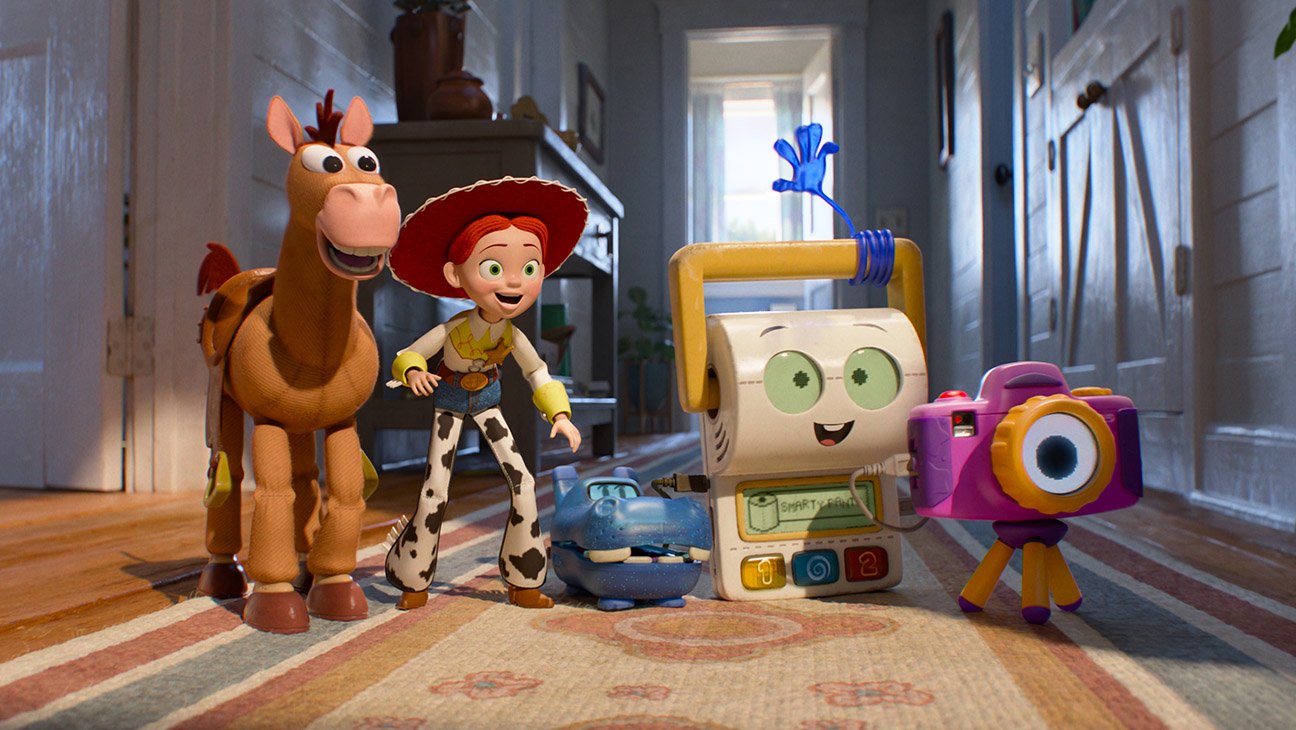
For this longtime fan, the Toy Story franchise, Pixar’s all-ages assault on funny bones and heartstrings, peaked with its magical second and third entries. But unlike many series that keep going long after the creative well has run dry, milking the cash cow until it goes belly up, this all-access pass to the hidden world of sentient toys has consistently delivered on its promise of wit, inventiveness, adventure and emotional depth. Even the underperformer of the stable, 2022’s origin-story spinoff, Lightyear, had its retro charms.
Directed for the first time by series creator and regular co-writer Andrew Stanton, Toy Story 5 comes an astonishing 31 years after the original and does the enduring franchise proud. The movie’s captivating sweetness is hard to resist, showering its love on a pint-sized human character so out of step with her kid contemporaries she has difficulty making friends. Turning around the lonely life of 8-year-old Bonnie (voiced by Scarlett Spears) becomes an urgent mission for the toys.
Perhaps the key gain is that this scenario puts Jessie — national treasure Joan Cusack, returning to features after a quiet stretch of semi-retirement and bringing warmth, plucky spirit and tender vulnerability to her voiceover work — in charge. Bonnie is now the third-generation owner of Jessie and the red-headed cowgirl generally takes on a prominent role in the child’s elaborate play fantasies, like the celebrant of a wedding sabotaged by a poisoning plot. But Jessie is stymied by a harsh truth before she even comes up with a plan.
While attempting, by invisible means, to nudge the twin boys who live next door to include Bonnie in their games, Jessie discovers that the neighbors are too glued to their devices to pay her any attention.
Conferring with some abandoned toys — bitter and traumatized, dreading their fate in a landfill graveyard — Jessie is bluntly informed that “the age of toys is over.” She scrambles up onto a rooftop, where her eyes are opened by the sight of children through bedroom windows all over town, their faces lit by the glow of their screens. “Extinction! Not again!” wails fretful dinosaur Rex (series stalwart Wallace Shawn) when Jessie shares the grim forecast.
The situation gets even worse once Bonnie’s concerned parents try to connect their daughter with friends by buying her a Lilypad, a child-appropriate smart tablet in frog-like casing, voiced with slappably perky self-satisfaction by Greta Lee. The personalized screen instantly becomes Bonnie’s whole world, with Jessie and the gang left in a heap on the floor. But the cowgirl refuses to believe Bonnie’s new tech fixation is more than just a phase.
While Bonnie is learning that online friendships don’t always translate neatly to real-world playdates, the screenplay by Stanton and co-director Kenna Harris cooks up a way to get Jessie across town to the farmhouse where her original owner Emily once lived. The melancholy reminder that she was donated when Emily outgrew her sets off an anxious spiral in Jessie.
Having gone from Emily to Andy — who gave her to Bonnie when he went off to college at the end of Toy Story 3, a movie that absolutely wrecked me — Jessie despairs at the possibility of another abandonment: “I can’t do this again. I can’t love another kid just to find out I never mattered.”
This is a prime example of the Pixar canon’s ability to weave real feeling into the scenario, without sacrificing humor or derring-do. The enchanting woodsy and pastoral backgrounds when the action moves from the residential suburbs to the rural outskirts add to that poignancy, as do the dulcet tones of Randy Newman’s score.
Jessie learns that Blaze (Mykal-Michelle Harris), a young girl not much older than Bonnie, lives with her family at the farm. But the discovery of a shed full of discarded toys hits hard. These range from a bendy pizza slice with sunglasses (a voice cameo by Bad Bunny) to three tech gadgets left behind each time Blaze moved on to the next shiny new device.
The most opinionated of these rejects is Smarty Pants, a basic toilet-training tech tool given an amusingly snarky attitude by Conan O’Brien. In exchange for Jessie’s help powering them up with new batteries, Smarty Pants, GPS-equipped toy hippo Atlas (Craig Robinson) and toy camera Snappy (Shelby Rabara) provide a crucial assist. They help Jessie see that despite Blaze’s susceptibility to the allure of the latest gizmo, she’s still creative and silly and present in her world in a way that too many other kids aren’t — rarely looking up from their devices or even talking as opposed to typing.
The ominous theme here is beware the machine, or as Woody (Tom Hanks) puts it with sad resignation: “Toys are for play. Tech is for everything.” Any parent who has ever endured a tantrum when screen time is cut off will feel the sting of those words.
Luckily, Jessie is no quitter, especially once she becomes convinced Bonnie and Blaze will hit it off. She calls Woody for backup, despite him having passed on his sheriff’s badge to her in Toy Story 4. Now paunchy and balding, he’s still a resourceful quick thinker, not to mention newly fashion-forward in a red poncho that earns some eyerolls. Jessie also gets help from a squad of 50 Hi-Tech Edition Buzz Lightyears (Tim Allen), who come with their own hotspots and drone capabilities.
Of course it’s great to see the return of these core Toy Story characters, though the separate plot thread tracing the upgraded Buzz toys to a wrecked shipping container where they struggle out of their boxes feels like something from a different action-adventure movie. Stanton and Harris arguably take too long integrating the Buzz brigade into Jessie’s quest, but once all the toys start working together for a common goal, their collective can-do spirit proves stirring.
The same goes for the insanely catchy Taylor Swift song, “I Knew It, I Knew You,” co-written with regular collaborator Jack Antonoff, on the end credits.
Ultimately, the movie works because it has heart and conviction in the belief that tech toys are not innately bad. They can also serve to bring joy. As the latest model Buzz says: “Our mission on this planet is to make a child happy.” Even Lilypad is given her redemption. But the filmmakers also bring home the point that children need physical interaction and communication with other kids to help them develop and grow, a useful message that’s easy to endorse.
Entertainment
Why Film and TV Production Is Fleeing Los Angeles

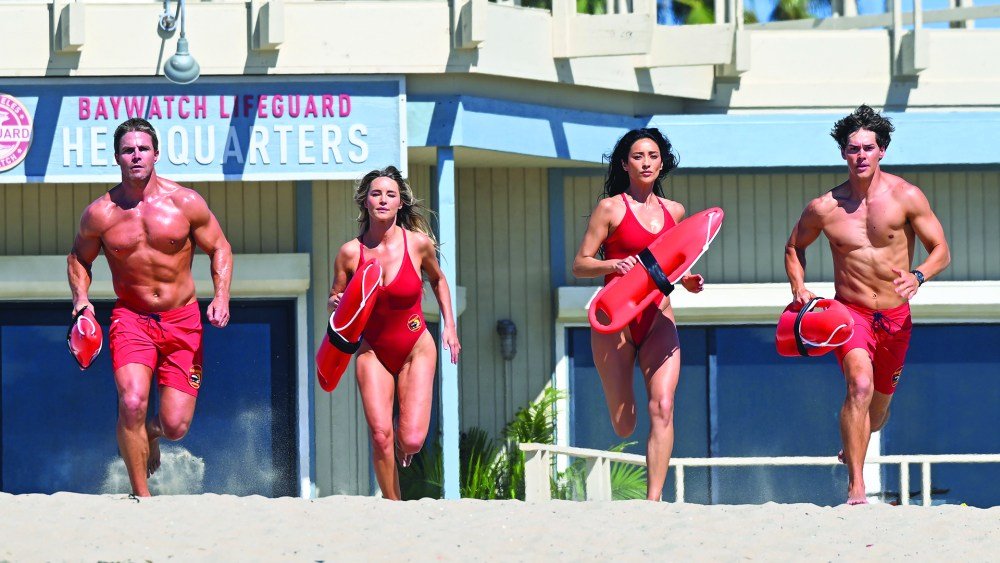
“Baywatch” was a staple of low-budget, first-run syndication in the 1990s, as natural to Los Angeles as David Hasselhoff’s chest hair and as defining of the city in that era as the O.J. trial and the Sunset Strip.
By the time it ended its run in 1999, it had become too costly to produce at a profit.
But the show’s red trunks and swimsuits returned to L.A. lifeguard towers in March of this year. Like an endangered pelican reintroduced to its native habitat, the Fox reboot was hailed as a triumph for the industry’s hometown, which is suffering through a long slide in production activity. Gov. Gavin Newsom bragged that the show was back “where it belongs,” at a cost to the state of $21 million.
Soon, however, the producers ran into obstacles. Officials from the county Beaches and Harbors Department and the California Coastal Commission told them they couldn’t park their trucks overnight, light fires or drive on the sand.
“We’re a lifeguard show,” “Baywatch” co-creator Greg Bonann remembers saying. “What do you mean we can’t drive a truck on the beach?”
Suddenly the show was at risk of becoming the wrong kind of symbol: this one, a victim of California’s tangle of regulations. No one in power — not Newsom or L.A. Mayor Karen Bass — wanted to read the headline about “Baywatch” bailing out of Los Angeles. When elected leaders were summoned to the Fox lot to smooth things over, the show held all the leverage. “After a while, you have to sit down with the right people and say, ‘Guys, do we want to have this show here or not?’” Bonann says.
Los Angeles has been the world’s entertainment capital for 100 years and still has an unmatched concentration of talent and infrastructure. But in an age of globalization, with easy international travel and communication, the city is losing its edge.
Everything costs more in L.A., starting with labor, due to the high cost of living and elaborate union agreements. Other states and countries have developed crew bases of their own, are more solicitous of producers’ needs and offer more generous incentives. Producers are also under pressure from the audience to deliver ever more spectacular experiences. Creating a premium product — at a price — often means going overseas.
These trends have been underway for 20 or 30 years. But since the end of the streaming bubble in 2022, America has lost 73,000 production jobs — two-thirds of them in Los Angeles — bringing the issue of foreign competition to a rapid boil.
In the chaotic race for L.A. mayor, the candidates have clashed over who lost Hollywood. At a debate in May, Councilmember Nithya Raman accused Bass of failing to cut red tape. “That’s what happened in ‘Baywatch,’” she said. “The city and county weren’t talking to each other.” Spencer Pratt, the reality star who conceded last week, bemoaned the sorry state of California’s incentive program: “Even Massachusetts has better tax credits than Hollywood.”
The contenders for governor are also battling to show that they can revive the industry with the right package of incentives. Newsom doubled the state program to $750 million in 2025. Everyone seems to agree it should be more — maybe a lot more — and that it should cover above-the-line salaries for actors, writers and producers.
“In my understanding, California’s rebate is one of the least beneficial for anybody who is financing motion pictures and television,” says Charles Roven, co-founder of Atlas Entertainment and producer of “Oppenheimer” and “Wonder Woman.” “It’s capped and it has no above-the-line.”
But the state can do only so much to compete with the 81 countries that have embraced filming as an economic development tool. The U.K. alone spent $2.2 billion on film and TV subsidies in 2024, and national incentives are often stacked on top of local rebates.
California “went into this knife fight without a weapon, and now folks are bringing guns,” says Xavier Becerra, the Democratic gubernatorial candidate who is the favorite to succeed Newsom.
As she runs for reelection, Bass has to walk a fine line between projecting confidence in the city’s ability to retain production and lobbying for more federal help for Hollywood. “I don’t feel like we’re going to lose our industry,” Bass says, noting that studios and networks are still grappling with the business changes wrought by the streaming revolution. “When all of that settles, I feel confident that we can maintain our industry.”
Once a pipe dream, the idea of a federal film subsidy now seems like a real possibility.
“In order to save this industry in America, we need to be competitive with tax credits,” says Sen. Adam Schiff, the California Democrat who is working on introducing an incentive bill in Congress. “We have a lot of our influence around the world as a result of American film and TV. We don’t want to lose that soft power.”
Advocates warn that unless the U.S. responds to foreign subsidies, Hollywood is at risk of becoming Detroit, which has bled jobs as automakers pursued low-wage labor and generous incentives in other states and abroad.
“This is supposed to be the film capital of the world,” said Noelle Stehman, a co-founder of the grassroots group Stay in L.A., at a rally for Raman’s campaign. “It should be the cheapest and easiest place to film. In fact, it is the most cumbersome and the most expensive. That cannot continue. If we don’t do something quickly, this is going to become the next Detroit.”
Mike Miller, vice president of the International Alliance of Theatrical Stage Employees, was raised in Cleveland. He also sees a parallel. “I watched the demise of steel and rubber and automotive manufacturing as I grew up,” he says. “This is identical in many ways. We have an undeclared trade war that our government is standing by and watching happen.”
For every show like “Baywatch” that shoots in Los Angeles, there’s another reboot that doesn’t. “The Rockford Files,” the 1970s drama about a hard-boiled L.A. detective, will return to NBC next January. It’s still set in L.A., but it’s filming outside Atlanta. “Little House on the Prairie,” another mainstay of the 1970s NBC lineup, was originally filmed in Simi Valley. The version coming to Netflix in July was shot in Winnipeg, Manitoba.
Canada offers a 16% labor credit on top of Manitoba’s 30% incentive — though that was only part of the reason to go there. Produced by CBS Studios, “Little House on the Prairie” also benefits from lower costs, a favorable exchange rate and available soundstages. Though not in America, Winnipeg also was a better fit creatively, with panoramic vistas that resemble the show’s Midwest setting.
When the Michael Landon version was made, L.A. was the obvious choice. But it’s no longer the default. With bigger screens at home, TV looks more and more like film and has the costs to match. Going abroad can make the difference between the show existing and not.
These changes are accelerating. In the 2000s, “Scrubs” filmed for nine years at an abandoned hospital in the San Fernando Valley. The reboot is made in British Columbia, with producers shuttling north to keep tabs on the set. “It is an absolute creative bummer to me that I’m shooting that show in Vancouver,” says creator Bill Lawrence. “It was a shock to my system. I wasn’t prepared for a show that existed, first and foremost, here to be cost prohibitive here.”
The economics can be even harder for features. “Beetlejuice,” released in 1987, was filmed in L.A.; the 2024 sequel was made in the U.K. “The Social Network,” from 2010, was shot in L.A. (and on location in Boston, Baltimore and the U.K.); “The Social Reckoning,” due out in October, was made in Vancouver. “Spaceballs,” from 1988, shot in L.A. “Spaceballs 2” is shooting in Australia. ”The studios want you to make everything for less money,” says Brian Grazer, whose Imagine Entertainment is producing the latter sequel. “You’re forced to go out of the country to make it for less money.”
U.S. states that once poached California’s production jobs are now falling behind as well. Georgia, which grew exponentially in the 2010s, is down nearly 50% from its peak in 2022, despite an uncapped incentive that includes above-the-line costs. “Avengers: Endgame” was made in Atlanta in 2017. The new “Avengers” films are being made in London.
The U.K. incentive not only covers up-front salaries for actors, writers, directors and producers — for those with a U.K. partner, it also covers back-end pay, a deal that is almost unique in the world and hard for studios to pass up.
“I call it the gift that keeps on giving,” says Roven, who shot two films in the U.K. last year. “If the project that you’re doing actually starts to make money, that rebate percentage is paid back to the company when they pay profit participants.”
Independent filmmakers have to watch every penny, and for them the math is nearly impossible to ignore. Brady Corbet’s 2024 drama “The Brutalist” takes place in Pennsylvania and was filmed in Hungary. His next movie, “The Origin of the World,” is set in California and will be shot in Portugal and South Africa.
“It’s much cheaper making films elsewhere than it is here,” says producer David Kaplan, whose company, Kaplan Morrison, makes Corbet’s films. “To pull off a film that looks like it costs multiple times what it actually does, you have to go somewhere where you get that financial trade-off.”
Indie producers can make things more cheaply in the U.S. if they shoot nonunion. “Obsession,” the breakout horror hit, was filmed in Los Angeles for just $750,000. But with fewer domestic productions overall, IATSE has been working harder to “flip” the nonunion ones, which drives up the cost.
“The films I grew up making, for $500,000 or $1 million, the unions are really interested in having those be signatory projects,” Kaplan says.
IATSE jurisdiction extends only to North America, part of the reason projects go to Europe. Employers also pay much less for healthcare abroad.
“I love working with unions. They serve a great purpose,” says John Hadity, a production finance consultant. “But there are rules, minimums, all that stuff. Labor doesn’t work that way in other countries. In Europe and the U.K., there’s a lot more flexibility.”
“The Gray House,” the Prime Video series set during the Civil War, was shot in Romania. “If we could have shot it in and around where it took place in Richmond, Virginia, at anywhere close to the same budget, we would have stayed in America,” says producer Lori McCreary, a past president of the Producers Guild of America. “It was two-thirds, or less, the cost.”
In Romania, she wasn’t required to hire cable pullers and other crew that would be mandated in the U.S. “Those are all very good jobs for Americans that I’m not able to provide when I’m shooting something overseas,” McCreary says. “I would much rather put all of these people to work in America.”
On May 4, 2025, President Trump threatened to impose a 100% tariff on foreign-made films. Likely both illegal and impossible, this idea was nevertheless taken in Hollywood as an encouraging sign. At least he recognized the problem.
Schiff circulated draft legislation that would create a 15% federal credit for labor costs, roughly equivalent to Canada’s incentive. The Motion Picture Association pushed for 20%, plus 5% bonuses for filming in a disaster area or an enterprise zone. (Due to the fires, all of L.A. County would qualify.) As in other countries, the federal credit would stack on top of state incentives.
Plenty of Democrats are on board, but to get anywhere, the proposal needs bipartisan support. Rep. Brian Jack, a Republican from suburban Atlanta, is said to be willing to cosponsor the bill in the House. But other Republicans appear to be waiting for a thumbs-up from the White House.
“We’ve been working very hard to get an affirmative statement out of the president that he’s open to Congress looking at a federal incentive,” says Scott Karol, who is working on the issue with Jon Voight, one of Trump’s “Hollywood ambassadors.” “We think that will open up the floodgates, and you’ll see a caucus of bipartisan politicians that will come out in support of this.”
Trump has embraced state support for farming, coal mining and advanced manufacturing, and the U.S. subsidizes other industries as well.
“Hollywood is not asking for special treatment,” Rep. Laura Friedman, D-Burbank, said at a hearing in March. “This is something that is standard in the United States across industries that we have determined that we care about.”
For now, no bill has been introduced. As of June 4, Schiff says his Republican colleagues are waiting on “smoke signals from the White House.” Supporters hope that if Democrats take control of Congress, the push for a federal incentive could be a rare area of cooperation next year.
“This is good for the economy,” says actor Zachary Levi, who voted for Trump. “This is not a handout. We want to be able to lead the world in telling great stories, and I think the president does too.”
Federal intervention cannot come fast enough in Los Angeles, where the post-peak era has rippled across the local economy. Crews are out of work, but so are white-collar executives and those who work in ancillary businesses.
“I’m down 50%,” says Corri Levelle, CEO of Sandy Rose Floral in North Hollywood, which supplies silk and fresh flowers to film sets. “We’ve had ups and downs in business, but it’s gone on too long. We can’t survive.”
This spring, chef Michael Cimarusti announced the closure of Connie & Ted’s in West Hollywood, one of a wave of restaurants to shut down following the 2023 writers and actors strikes.
“We had a lot of crew folks that were regulars who simply were not able to afford to dine out the way they used to,” Cimarusti says.
Filming in L.A. has become sort of a cause du jour, like freeing Tibet or avoiding fur. At this year’s TV upfronts in New York, one presenter after another announced that a new show would be filming in L.A., winning applause each time.
ProdPro tallied 81 film and TV projects in California in the first quarter of 2026 — down from the prior year but still a lot more than anywhere else in the U.S. According to FilmLA, the regional permit office, Hollywood remains the world’s largest production hub — even if it sure doesn’t feel like it to the creative community.
Studios will spend what it takes to shoot in Southern California when they’re working with A-list stars who demand top talent and extremely skilled crews. The showbiz farce “The Studio” was sold to Apple with the understanding that it would only work if it was shot in L.A., says James Weaver, president of Seth Rogen’s Point Grey Pictures, which produces the series with Lionsgate.
“The show is really about people yelling and screaming at each other in beautiful places,” he says. “That was an important part of the ethos of the show. Apple knew that when they said they would make it.”
Shooting in L.A. means working on a tighter production schedule. But “The Studio” snagged a $13 million tax credit for Season 2, which eases some of the budget pressure and may help extend its run.
Showrunner Lawrence, who is making ABC’s “Scrubs” revival for Disney in Vancouver, is also producing four shows with Warner Bros. Television in L.A. “I’m very lucky in that I try to shoot everything in Los Angeles,” Lawrence says. “I just think it’s really important to maintain this place as the hub of the television industry.”
Stars like Harrison Ford on “Shrinking” or Kathy Bates on “Matlock” can demand that a show be made here. And with state incentives, the math can work. California allots nearly $50 million per season to Lawrence’s shows alone.
Still, it’s not as though costs are going down. In the current round of union negotiations, the studios are hiking their health contributions considerably, making the U.S. even less competitive with countries that provide national healthcare.
It’s very hard to get around that. Miller of IATSE argues that labor shouldn’t be forced into a global race to the bottom. “We can’t turn the entertainment industry into a minimum-wage job with no benefits just so we can compete with Bulgaria,” he says. “Our federal government has to acknowledge that and has to step up.”
Bonann agrees. “It’s not like our labor here in L.A. is overpaid — they’re fairly paid,” he says. “If cost is the only factor, then every single production will eventually leave. You’ll lose something much bigger in the process.”
Despite higher costs, Hollywood still makes movies and TV shows, and Detroit still makes cars, trucks and SUVs — though with fewer people.
“It’s oversold that the auto industry left Michigan,” says James Hohman, director of fiscal policy at the Mackinac Center for Fiscal Policy. “Michigan is the top-producing auto state, and it’s not especially close either.”
That’s because Michigan decided to keep the auto industry, providing billions in subsidies over the last 25 years. The federal government has stepped in, too, seeing auto jobs as vital to the U.S. economy. In that sense, Hollywood isn’t becoming Detroit so much as emulating it.
Back in the late 1980s, “Baywatch” was birthed in part from Bonann’s personal experience working as a Los Angeles County lifeguard. He remains partial to his hometown, but he’s also a businessman. Over the years, he has lensed “Baywatch”-related projects in Hawaii and Georgia, and he considered doing the reboot in Australia or South Africa. Both had the requisite ingredients — beaches and incentives — and both are cheaper places to shoot. But in the end he chose L.A.
“You have to really want to shoot in L.A.,” he says. “It costs more money, but you have to find a way to make that work. This show belongs here.”
After Bonann’s meetings with public officials earlier this year, the show has faced no parking and permitting issues. The actors can drive on the beach. Without even asking, the show got a 20% discount on its city parking fees.
“I just saw the first cut,” he says. “I cannot imagine having produced an episode of TV this good anywhere else in the world.”
Entertainment
No, Zac Brown, Your UFC Anthem Wasn’t ‘Patriotic’

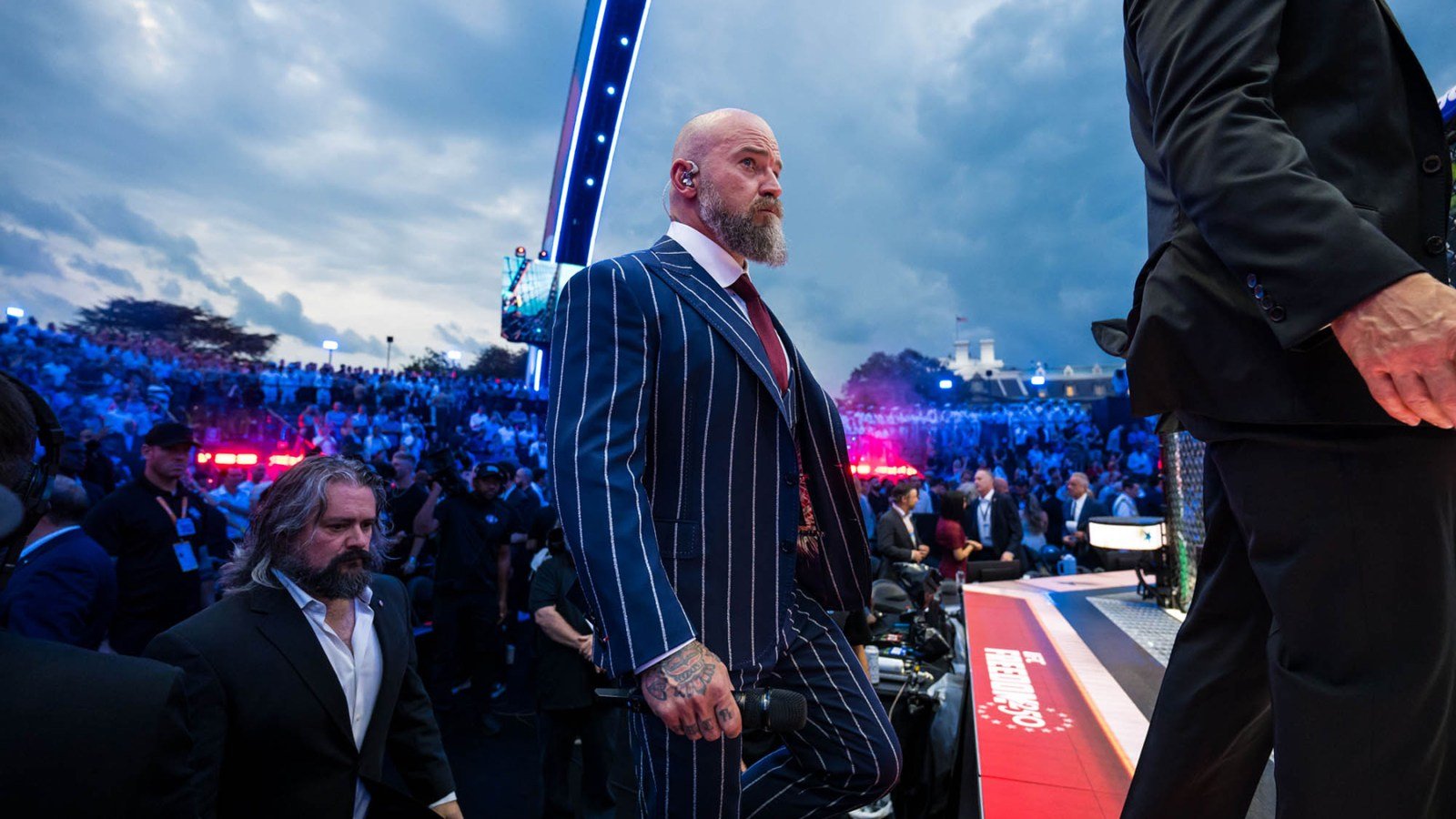
This past Sunday, Zac Brown delivered one of country music’s most beloved refrains: It’s not political, it’s patriotic.
He also performed the national anthem.
Brown sang “The Star-Spangled Banner” at the cage fights held on the South Lawn of the White House, standing honorably on an American flag-themed Monster Energy drink logo, beneath the glow of a massive UFC claw in a suit that was lightly giving cartoon detective at Donald Trump’s birthday bash. If you want to memorialize the event, you can purchase the official patriotic t-shirt (imported).
“This is patriotism, not politics for me,” Brown told the Pat McAfee Show in an interview about appearing at the match. “I mean, fuck all the division. I don’t believe in that. I love this country. I love all the people that have sacrificed so that I can live my American dream.” Brown was on the show to combat some criticism he’d received for signing on to appear at the event — a night that unfolded in an extremely non-apolitical way when heavyweight fighter Josh Hokit capped his win by yelling “Michelle Obama is a man” to the crowd. Whether or not you try to preemptively excuse yourself by declaring it’s about “patriotism,” anything Trump does is inherently political. Of course it ended with its winner hollering a ridiculous, unpatriotic statement about the only Black First Lady in history.
For country artists, it’s one of the oldest tricks in the try-to-keep-as-many-fans-as-possible playbook. Many before Brown have lobbed the “it’s not political, it’s patriotic” packaging when doing anything but: Jason Aldean’s racially coded “Try That in a Small Town,” Toby Keith’s jingoistic “Courtesy of the Red, White and Blue (The Angry American),” Darryl Worley’s “Have You Forgotten.” Musicians aren’t obligated to do anything political as part of the job, and plenty of audiences appreciate when artists don’t preach partisan points of view. But doing something divisive and trying to explain it away with “patriotism” is, to many, a step too far.
Editor’s picks
“I’m ashamed,” says Michael Trotter Jr. of the War and Treaty, a veteran of the Iraq war who endured live combat. “I take great pride in being able to say that I served this country and served it well. So, I am ashamed that people would hide behind the term ‘patriotism.’ I’m ashamed that grown men would use a sporting event to throw a jab at a former First Lady, who represented the very grounds the event was on with class, dignity, and beauty. I’m ashamed that my colleagues participated in it. But the truth of the matter is there’s nothing patriotic about what we just saw.”
To be fair, Brown has used his platform to direct resources and support to military families and veterans with his Camp Southern Ground organization. Because of that, the “Chicken Fried” singer likely knows where patriotism ends and politics begins — and where Trump’s machismo 80th birthday party might fall on that scale.
Trending Stories
Trotter, meanwhile, is launching an organization called iVet Cares with his wife Tanya, to support veterans, and says he wants more country artists to stop posturing and start listening about what being patriotic actually means. “I think most artists think that throwing money at a thing is enough, but it’s more important to listen to veterans, listens to soldiers and sailors and Marines, and really learn what they truly need. And then go lobbying, go to congress and get involved,” he says. “Artists need to stop being artists, and start being humans.”
Entertainment
Senn Penn Directing January 6 Drama, Bradley Cooper Starring as Cop
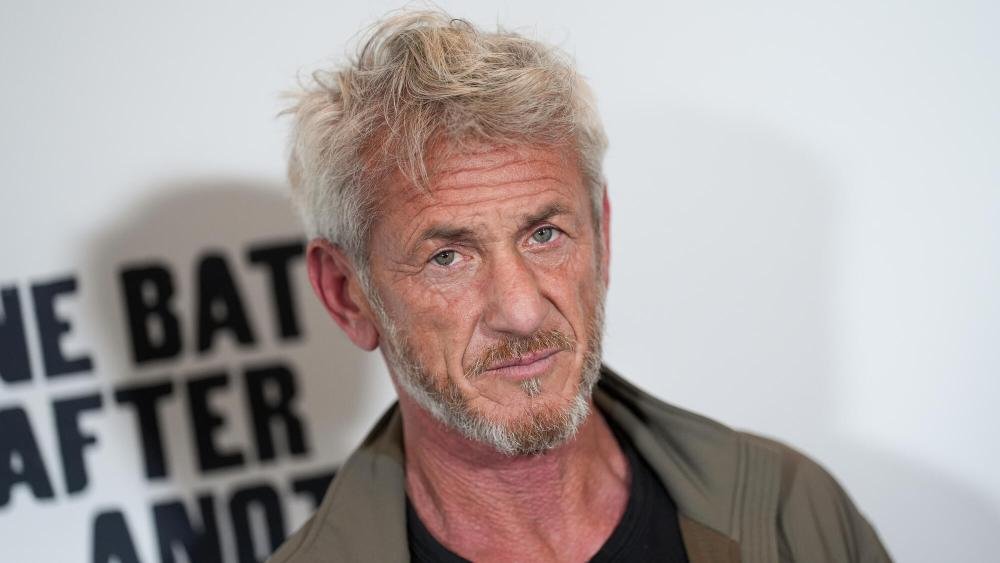
Sean Penn will direct a film about the early life of a cop who was present for the Jan. 6 storming of the United States Capitol. Bradley Cooper is being eyed for the lead role, though the real life inspiration for the film has yet to be identified. The film is currently untitled and has been set up at Warner Bros. It is described as “an unexpected story about friendship,” which needs a little work as a marketing hook and seems like a clear attempt to minimize any future controversy.
To that end, insiders insist the film is not really about Jan. 6 and is only tangentially related to the attacks. Despite that spin, it’s unclear how this project will play with David Ellison and the team at Paramount who are poised to buy Warner Bros. Discovery now that the Justice Department has cleared their merger. Ellison has made a point of highlighting his family’s ties to Donald Trump, hosting a dinner for the president and members of his administration in April and showing up at the UFC fight that was held at the White House last weekend. That event, which was held on Trump’s 80th birthday, was broadcast on Paramount+, Ellison’s streaming service. Penn, who has called Trump “an enemy of mankind,” is of a different political persuasion.
The actor recently won his third Oscar for “One Battle After Another,” which Warner Bros. produced. Penn also won Oscars for his performances in “Mystic River” and “Milk.” His credits include “Dead Man Walking” and “Sweet and Lowdown,” but he has been busy behind the camera over the course of his career. As a director, Penn’s films include “The Indian Runner,” “Into the Wild” and “The Pledge.” Penn wrote the script for his Jan. 6 film and will produce with John Ira Palmer and John Wildermuth under their Projected Picture Works banner. Production is targeting a mid-2027 start.
Cooper is also an acclaimed director, with Penn publicly praising his work on “A Star is Born.” The actor most recently directed and appeared in “Is This Thing On?” and also starred in and directed “Maestro.” Cooper’s credits include “American Sniper,” “The Hangover” and the upcoming “Ocean’s 11” prequel, in which he will star with Margot Robbie.
The deal with Warner Bros. was negotiated by CAA Media Finance. Penn and Projected Picture Works are represented by CAA; Cooper is represented by Range Media Partners. Deadline broke the news of Penn’s next project.
Entertainment
Britain’s Prince George will enroll at Eton, the elite $80,000 school his father attended

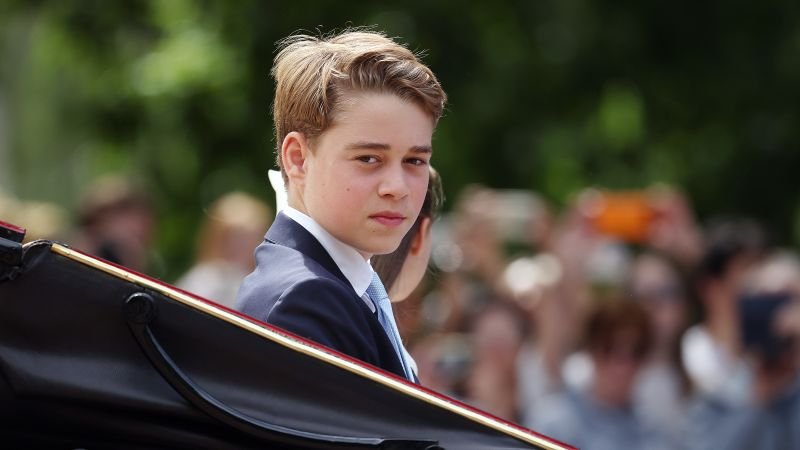
Britain’s Prince George is set to attend elite UK school Eton College, following in the footsteps of his father, William, the Prince of Wales and a long list of the country’s former prime ministers.
Prince George will attend Eton College from September, Kensington Palace confirmed in a statement to CNN on Tuesday.
Eton College, located in the English county of Berkshire, educates boys aged 13 to 18 and accepts around 270 students per academic year.
It is one of Britain’s most prestigious fee-paying schools, with a notable list of alumni that includes celebrities and 20 of the country’s 58 prime ministers.
Among their number are former Conservative prime ministers Boris Johnson, who led the UK from 2019 to 2022, and David Cameron, who was in office from 2010 to 2016.
Other famous Old Etonians include actors Eddie Redmayne and Tom Hiddleston.
The school fee for the current 2025/26 year at Eton, which is located in Windsor, just west of London, is £63,298.80 (about $84,900).
Full boarding is the only option for students, meaning that they study and sleep within the school grounds.
This means that George, 12, will be living just 3.5 miles from the family home, Forest Lodge, in Windsor Great Park.
George is the oldest of the Wales’ three children and is second in line to the British throne. He will turn 13 in July before starting at Eton College in September.
His father Prince William attended the school from 1995, and his uncle Prince Harry did so from 1998.


How will life change for UK kids after social media ban? | BBC Newscast
Today, what difference will banning social media make to children's lives? Speaking the day after the announcement of a ban...


General Motors announces new defense partnership with Lockheed Martin
Automaker General Motors on Tuesday announced a new partnership with defense company Lockheed Martin to scale manufacturing and expand production...
Iran says the US war deal requires Israel to withdraw from Lebanon
DUBAI, United Arab Emirates (AP) — Iran’s top diplomat said Tuesday that the tentative deal to end the war with...


Leaked financial docs show OpenAI is losing billions of dollars a year
As OpenAI files SEC paperwork ahead of an expected initial public stock offering, newly leaked financial documents show a company...


Toy Story 5 Review
Toy Story 5 is in theaters on June 19. Woody, Buzz and the gang are back in theaters for Toy...


Joan Cusack’s Cowgirl Jesse Takes the Lead
For this longtime fan, the Toy Story franchise, Pixar’s all-ages assault on funny bones and heartstrings, peaked with its magical...


Linkin Park on their favourite UK rappers, gaming and headlining Download | BBC News
Linkin Park have made history by becoming the first female-fronted band to headline Download Festival in a major moment for...


German Chancellor Merz gifts Trump soccer jersey at G7
President Donald Trump was presented a soccer jersey with the number 47 printed on the back by German Chancellor Friedrich...


What the tentative Iran deal means for the Middle East
Displaced families are beginning to return to southern Lebanon after the US and Iran signed a memorandum of understanding …


Docs explain why ‘sad nipple syndrome’ is leaving women distressed
Do you feel a sense of impending doom when your nipple is touched? You’re not alone. And after conversation online...
-

 Business3 days ago
How much of Musk’s wealth comes from government help? Virtually all of it
-

 LifestyleNews2 weeks ago
120 minutes of strength training per week may help extend lifespan
-

 Politics5 days ago
What to know about the stabbing that set off fiery riots in Northern Ireland
-

 Video4 days ago
Download fans say what they love about the festival. #DownloadFestival #BBCNews
-

 Video4 days ago
Why SpaceX IPO isn't about space. #SpaceX #ElonMusk #BBCNews
-

 HealthNews4 days ago
The people of Okinawa, Japan only eat until they are about 80 percent full, then stop — and the practice has been linked in multiple peer-reviewed studies to lower rates of cardiovascular disease, slo
-

 Food4 days ago
Pope Leo’s plane was grounded. Then the King of Spain stepped in to help
-

 TravelNews4 days ago
My Paternal Instinct Should’ve Warned Me About Netflix’s Maternal Instinct