

Business
How Carvana’s expansion to new vehicles could reshape the U.S. market

Michael Wayland | CNBC
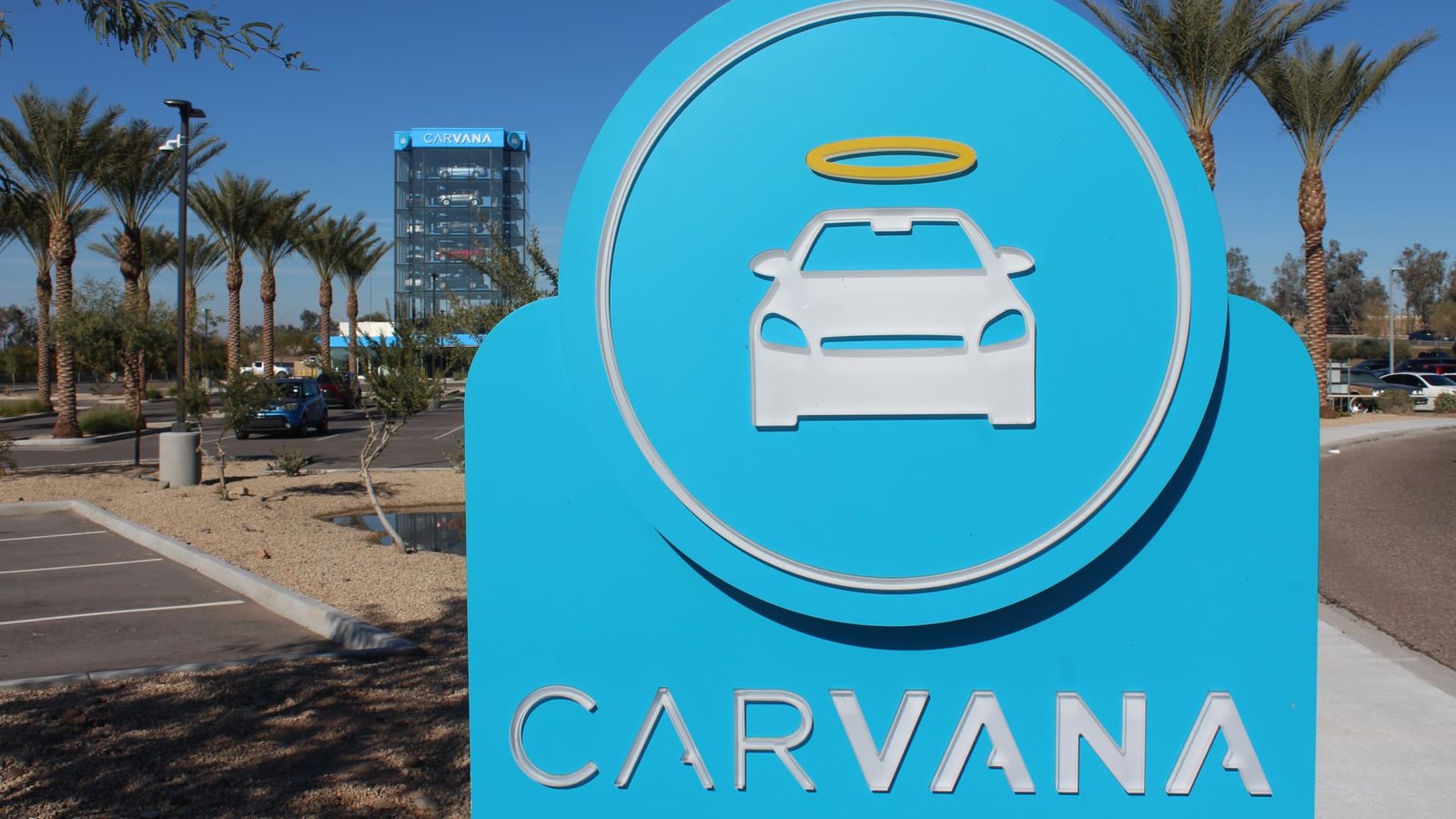
After growing to become one of the largest used car retailers in the U.S., Carvana is expanding into the new vehicle market.
The company has quietly purchased seven new vehicle franchises since last year that primarily sell Stellantis ‘ Chrysler, Dodge, Jeep and Ram brands, including a location in Arizona that has become the automaker’s largest volume store in the U.S.
Dealers and industry experts said they believe the move could significantly disrupt, if not reshape, the century-old new vehicle franchised dealer system.
“Carvana entering the new vehicle franchise business may be one of the most disruptive forces that auto retailing has seen in the U.S. market in decades,” John Murphy, a longtime Wall Street analyst and automotive consultant, told CNBC.
The U.S. franchised dealership system — which includes 16,990 retailers that topped $1.3 trillion in sales last year, according to the National Automobile Dealers Association — has historically been reluctant to change. However, dealers have grown more adaptable in recent years as a means of survival, including during the pandemic and with the rise of publicly traded dealership groups.
watch now
Carvana’s first new car dealership for Stellantis in Casa Grande, Arizona, has grown quickly. It sold more than 700 new vehicles last month, according to Stellantis figures shared with dealers and provided to CNBC.
That made it the bestselling store nationally and compares with an average of roughly 30 to 50 monthly sales the store was doing before Carvana purchasing it early last year, as first reported by The Wall Street Journal.
Carvana and its CEO, Ernie Garcia, have declined to comment about the franchised stores or details of the businesses ahead of a media event this week at which the retailer is expected to disclose its plans.
Carvana: From vending machines to online used car leader
Carvana’s locations, many of which feature its signature large car vending machines, have historically acted as delivery and drop-off points where customers can pick up vehicles they purchased online or turn in a vehicle they sell to the company. And up until last year, those vehicles had been used cars, trucks and SUVs that were largely bought from auctions and individual consumers.
Adding the new vehicle business not only provides additional revenue for the company, it opens up other avenues for Carvana to more easily purchase used vehicles from their new vehicle customers and through exclusive auctions only open to franchised dealers.
“That is a significant game changer in the secondary market,” Murphy said regarding the private auctions. “If that expands to other brands, that is going to be an advantage.”
Jeff Greenberg | Universal Images Group | Getty Images
It also helps Carvana better capitalize on the complete lifecycle of a vehicle. The dealership model is comprised of four main areas of growth: new, used, parts and service, and finance and insurance.
Carvana has previously covered used sales and F&I, including selling consumer auto loans it originates to institutional investors and partner banks, such as Ally Financial , to maintain liquidity. Adding the new franchises is expected to bring Carvana into the other areas as well.
“After stabilizing their core business, I think they realized, by looking at the franchise model, that there was a significant amount of revenue and gross profit opportunity that their business model didn’t even contemplate,” said Brian Gordon, president of dealer advisor and broker Dave Cantin Group.
Dealers adapt or ‘be irrelevant’
Despite Carvana’s current status, which includes a market cap of more than $70 billion, significantly higher than that of Stellantis, there are challenges to selling new cars compared with used.
Unlike used vehicles, which Carvana has specialized in selling online, the sales of new vehicles are more regulated state by state. The franchised owners also act as a business partner to most automakers operating in the U.S.
In some states, such as Michigan, the only way to legally purchase a new vehicle is through a franchised dealer — something direct-to-consumer companies such as Tesla and Rivian have battled with varying results.
An annual study by Cox Automotive, which supports franchised auto dealers, found that most buyers don’t want an all-online purchase or a fully in-person transaction. They want a blend of online convenience with in-store interaction.
Franchised dealers also must adhere to far more regulations and rules from the automakers. They range from showroom layouts and what brands they can sell at certain stores to automaker-defined allocations of vehicles and service and repair requirements, which Carvana does not currently offer for customers.
Not all are mandates, but many automakers incentivize retailers through vehicle allocation as well as financial incentives for offering such services and meeting their requirements.
Carvana is already operating a bit differently though than most dealers, as Stellantis has approved it as a certified website provider for the automaker, which means it doesn’t need to go through an approved third-party company, according to four people familiar with the decision, who requested anonymity to speak about matters that have not been made public.
“It’s bred out of desperation,” said a Stellantis dealer who asked for anonymity to be able to speak freely about the automaker, which has drastically lost U.S. market share in recent years. “It’s given Carvana an opportunity to come into the new car space.”
Stellantis, in an statement to CNBC, said Carvana operates as a “corporate owner” of its brands, similar to other large publicly traded companies such as Lithia and AutoNation .
“We apply the same consistent standards and criteria to all dealer partners, and any organization that meets our qualifications is eligible to operate as a franchisee,” the company said, adding that Stellantis “certifies tools and services that will enhance our program and be beneficial to our network. All certified providers must complete a rigorous onboarding process and meet program standards and requirement.”
Carvana’s foray into new vehicles and its rapid growth have been a discussion between Stellantis’ current dealers and the company, according to Stellantis National Dealer Council Chairman Sean Hogan.
He said competition is always good for the consumer, which is why the franchised dealer model was created, but there are a lot of outstanding questions about Carvana’s new vehicle strategy.
“I’m curious to see what their strategy is and, in the long run, I think competition is good. So, if they’re doing something better than we are, then we will need to adapt, or we’re going to be irrelevant,” said Hogan, vice president of Sierra Auto Group in California.
In JD Power’s annual U.S. Sales Satisfaction Index for franchised dealers that ranks purchase experiences, three out of four of Stellantis’ main brands — Chrysler, Dodge and Ram — were under the industry average.
An Amazon of used and new vehicles?
Although Stellantis said it is treating it like other dealers, Carvana is not a traditional auto retailer like other large publicly traded dealers such as Lithia or AutoNation. It almost exclusively operates online, with a vast network of physical facilities supporting it.
Carvana has built a nationwide logistics and processing company for vehicles similar to Amazon and its back-end operations for processing and shipping consumer goods.
“They have a pre-built out infrastructure, digitally, physically, logistically, that probably gives them an advantage over those big, multibranded public companies,” said Larry Dominique, a longtime automotive executive turned industry consultant.
The business concept of Carvana is simple: buy and sell used cars. But the process behind it has proven to be complicated, labor-intensive and expensive.
Michael Wayland / CNBC
Carvana puts each vehicle it intends to sell through a lengthy inspection, repair and sale preparation process. It ranges from fixing scratches, dents and other imperfections to working on engine and powertrain components. There are also significant logistical costs and processes for delivering vehicles to consumers’ homes.
The other new vehicle Stellantis franchises for Carvana are in Sacramento and San Diego, California; Dallas; Atlanta; Cleveland; and Boston. The new dealerships are in addition to more than 100 other Carvana locations, mainly consisting of vending machines and processing centers.
While large dealers have stores across the country that they can utilize for used and new vehicle inventories, they have traditionally sold regionally to avoid additional shipping costs as well as sales and registration complexities due to selling across state lines.
“Carvana is showing the franchise dealer community how the power of digital can be applied to make a future direction retail model,” Dominique said. “There’s nothing stopping any dealer in the United States from doing that today.”
The company’s vending machine locations do not have parts and service departments, like traditional franchised dealers have, which represent significant profits and customer touch points. That’s one of the main questions surrounding Carvana’s plans: Will it expand into parts and services or leave that for current dealers?
“If they’re going to just be an outlet for new cars, then does that change the dynamic of the dealership model? Who’s going to be responsible for taking care of the customer after the sale?” Hogan said.
Murphy said he believes Carvana may be able to use locations of Adesa, an auction company it purchased in 2022, in addition to the new dealer franchises to potentially service its vehicles.
Carvana has reported it has the capacity to recondition approximately 1.5 million vehicles per year. That compares with its sales of less than 600,000 vehicles last year.
“They do have tremendous capacity to recondition, potentially significantly ramp up their service capability in a way that is not present in other large consolidators,” Murphy said. “I think that problem potentially gets cured.”
Business
General Motors announces new defense partnership with Lockheed Martin
Automaker General Motors on Tuesday announced a new partnership with defense company Lockheed Martin to scale manufacturing and expand production capabilities.
The deal was facilitated by the U.S. Department of Defense, according to Bruce Brown, GM’s vice president of strategy at GM Defense, and will focus on munitions.
“What makes this moment especially important is that the country needs more than great technology. It also needs the capacity to build, scale and deliver reliably,” Brown said on a call with reporters. “This is where GM can help. Across our company, we bring deep experience in advanced engineering, digital development, supply chain discipline and manufacturing at scale.”
Lockheed Chief Operating Officer Frank St. John said it was too early to say what projects it would invest in with GM Defense.
Executives from both companies said on the call that the collaboration will allow for more growth at a time when the country is ramping up its production of defense parts.
“Together, we will explore opportunities across three important areas: improving production readiness and scalable manufacturing environments; strengthening supply chains and identifying ways to increase resilience; and applying advanced manufacturing and design approaches [that] can help improve efficiency and accelerate delivery,” St. John said.
Lockheed Martin is investing $9 billion through 2030 to modernize 20 of its facilities and supply bases, St. John added. GM said it will spend $7 billion on research and development in the U.S., according to Brown.
The executives said the partnership will be focused on “high-rate manufacturing” at scale and expanding production capacity. They added that the collaboration is still in early stages and that they need to further define what the potential for future contracts may be. They are working under a memorandum of understanding.
The automaker built tanks for the country during World War II. Its GM Defense unit is one of the company’s newer but fast-growing business segments, reestablished in 2017 with customers including the U.S. Army, Secret Service and NASA.
“America is stronger when two companies with deep manufacturing roots come together to help expand speed, scale and resilience in the defense industrial base. That is why Lockheed Martin and GM are announcing this collaboration,” Brown said on the call.
The partnership comes as President Donald Trump has been pushing for more American manufacturing to bring more production and reshoring into the country. The U.S. has also seen its defense stockpiles fall because of the wars in Ukraine and Iran.
The White House has held discussions with Ford and GM about better supporting the country’s defense industry.
— CNBC’s Michael Wayland contributed to this report.
Business
Leaked financial docs show OpenAI is losing billions of dollars a year


As OpenAI files SEC paperwork ahead of an expected initial public stock offering, newly leaked financial documents show a company with quickly growing revenues that are currently being overwhelmed by even larger expenses.
The audited financial statements, obtained by independent journalist Ed Zitron, show OpenAI’s reported revenue growing from $3.7 billion in 2024 to $13.07 billion in 2025. The Financial Times, which reviewed the same documents, writes that the company’s monthly revenues had grown to nearly $2 billion by the end of 2025, suggesting that its ongoing revenue rates continued to grow throughout the year.
But the company’s fast-growing revenues are still dwarfed by its even more significant expenses. OpenAI’s total revenues in both of the last two years were outpaced by research and development alone, which grew from a $7.81 billion line item in 2024 to a massive $19.18 billion cost in 2025. Those numbers seem to reflect the significant costs OpenAI incurred in training new models and include $10.59 billion in R&D costs paid to Microsoft alone in 2025.
On top of that, OpenAI’s “cost of revenue” (i.e., the money spent producing and distributing the product) increased from $2.65 billion in 2024 to $7.5 billion in 2025. This cost line likely reflects the significant compute costs incurred at “inference time” as the company’s models respond to a growing number of user prompts. Costs associated with sales and marketing also grew from $1.11 billion in 2024 to $5.73 billion in 2025.
All told, OpenAI’s day-to-day “loss from operations” increased from $8.78 billion in 2024 to $20.92 billion in 2025, a concerning direction for a company that is telling investors it hopes to be profitable by 2030. But measured as a percentage of revenues, the company’s operating losses slightly improved year to year, from 237 percent in 2024 to 160 percent in 2025.
Gotta spend money to make money
Operating numbers aside, OpenAI’s headline “net loss” number of just over $5 billion in 2024 ballooned to nearly $39 billion in 2025. But the 2025 number includes a significant accounting charge related to investor valuations that shifted amid the company’s 2025 conversion to a for-profit structure. The Financial Times cites “a person familiar with the matter” in reporting that this non-recurring charge was approximately $30 billion and that OpenAI’s 2025 net loss amounted to a more reasonable-looking $8 billion without it.
As OpenAI tries to shift all these losses to eventual profits, it will have to start reining in its costs, especially the massive (and growing) R&D costs associated with model training. It will also have to deal with enterprise customers that are beginning to balk at token-based pricing and starting to demand a measurable return on investment for their AI spending. And on the subscription side, pressure from rival Anthropic may force the company to lower prices, which could further increase operating losses in the near term.
OpenAI shut down its Sora video generation model in March. Around the same time, OpenAI CEO of Applications Fidji Simo told employees that the company would be cutting back on “side quests” and focusing on its core coding and business users.
In March, OpenAI raised $122 billion of financing in a funding round that valued the company at $852 billion. The company reports over 900 million weekly active users of ChatGPT, though only about 50 million of those are paid subscribers.
Business
The Iran War Permanently Altered the Global Economy


The framework deal between the United States and Iran sets the stage for an end to the bursts of violence and debilitating disruption of energy deliveries and trade in the Persian Gulf. But don’t expect economies around the globe to simply pick up where they left off before the United States and Israel began bombing Iran on Feb. 28.
The war has set in motion changes that will be hard to reverse.
The global energy order is being reshaped.
The near shutdown in oil and gas deliveries from the Middle East and the leap in prices are causing a shift in power. Energy producers from the Gulf to the Americas are jockeying to maintain or increase their dominance, and customers are struggling to reduce their dependency and shore up their supply.
As a result, the energy market is changing, the energy mix is changing and the energy players are changing.
Business
Johnson & Johnson bets big on America, credits Trump tax policies for investment

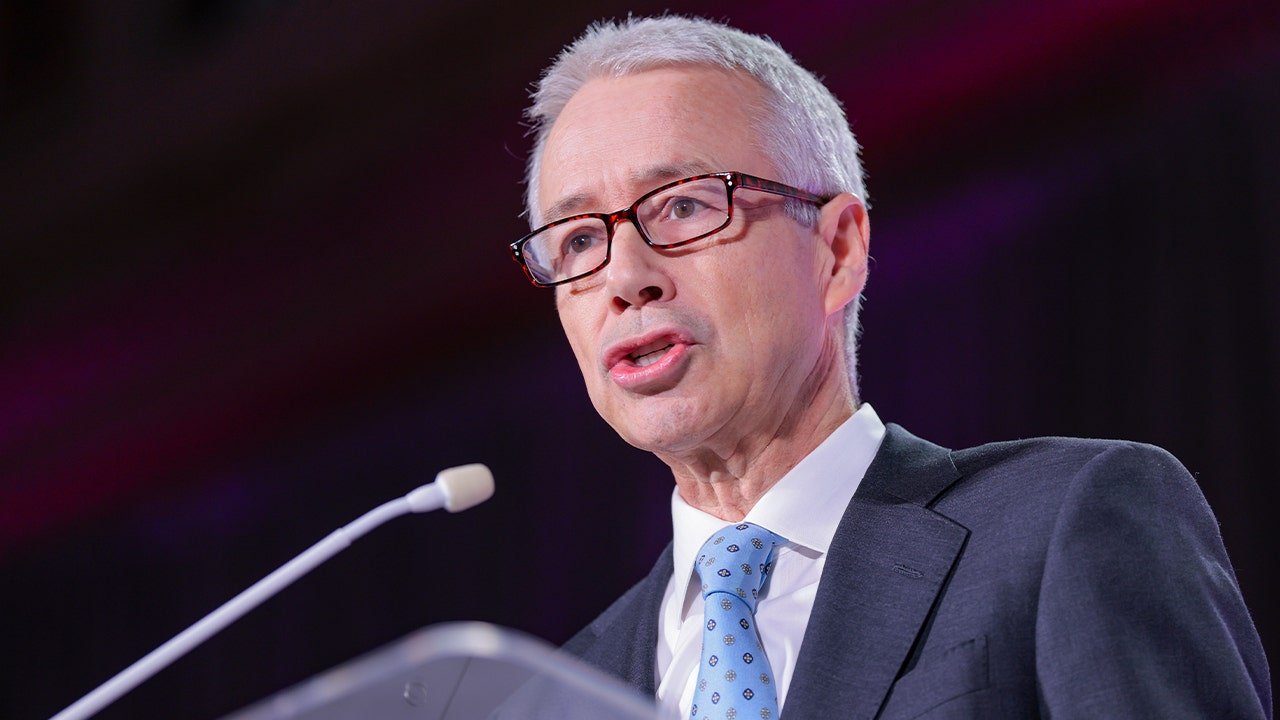
Johnson & Johnson is betting big on America, crediting Trump tax policies, top talent and a strong investment environment for inspiring a $55 billion U.S. investment push that spotlights growing confidence in U.S. manufacturing.
“We have the best talent, we have the best investment environment and, very importantly, we have now the tax policy enacted with this administration that has enabled us to be competitive,” CEO Joaquin Duato said on FOX Business’ “Mornings with Maria” on Tuesday.
“We’re playing with a hand tied to our back compared to companies that were domiciled outside of the U.S.”
“Now we can create high-skilled jobs, we can invest in America, and we can be competitive,” he added.
MEDICAL DEVICE GIANT HIT BY GLOBAL NETWORK DISRUPTION AFTER CYBERATTACK POSSIBLY LINKED TO PRO-IRANIAN GROUP
Duato told “Mornings With Maria” that the company’s goal is to manufacture all its medicines, medical technologies and more in the U.S., touting the move as a “show of confidence in American manufacturing.”
Johnson & Johnson’s recent endeavors also include a more-than-$1 billion investment in a U.S. Vision manufacturing facility in Jacksonville, Florida.
While discussing such investments, Duato reiterated Johnson & Johnson’s role in medical technology and pharmaceuticals, distinguishing those businesses from the company’s former consumer health segment.
REPUBLICANS SUBPOENA PFIZER EXEC OVER TIMING OF COVID VACCINE CLINICAL TESTS
“We are now focused on science and innovation. So what is our goal now? Our goal is to continue to deliver sustained growth through patient breakthroughs,” he said.
Duato pointed to a recently-approved medicine called Icotyde, a once-daily oral treatment for psoriasis and psoriatic arthritis with efficacy and safety designed to rival injectable biologics.
He said the development will “transform… autoimmune diseases.”
GET FOX BUSINESS ON THE GO BY CLICKING HERE
On the medical technology side, the company is seeking approval for its first robotic surgical system, which aims to improve surgical outcomes by assisting surgeons.
“We are not a one-trick pony company. We’re a company with a stable of blockbusters,” he said.
“We have 28 platforms at Johnson & Johnson of more than $1 billion, so that gives us the confidence to be so bold to say we have line of sight to double-digit growth for Johnson & Johnson by the end of the decade, and that is remarkable for a company which is more than $100 billion.”
Business
Verizon breaks industry mold
NEW YORK—Verizon (NYSE, Nasdaq: VZ) today announced the next step in its ongoing transformation, replacing complexity and friction with simplicity and true customer choice. The company is putting its customers first—existing and new—by redefining loyalty and eliminating activation and upgrade fees. As part of the customer-centered reboot, Verizon is also launching “Verizon Simplicity,” the industry’s most simple and cost-effective plan. With Simplicity, there are no network tiers; everyone gets Verizon’s best 5G network. Also available starting today, the company launched Verizon One, a streamlined plan that combines Mobility and Home on one bill with taxes and fees included.
“We’re fundamentally reshaping Verizon inside and out to put the customer at the center of everything we do. We’re listening, designing for them, and moving faster than we ever have before,” said Dan Schulman, Verizon CEO. “For too long, this industry has burdened people with complex plans, forced upgrades they don’t need, and so-called ‘rewards’ with tons of caveats. We are working to ensure everything that we do is simple, clear and delightful.”
Today’s announcement is part of Verizon’s multi-year transformation, redefining its relationship with customers now and for the long-term.
“With today’s news, we’re doubling down on what customers actually want: simpler experiences, less friction and more rewards for being a customer. We’re putting meaningful value back in their pockets, and making it feel easy and intuitive,” said Alfonso Villanueva, Interim CEO, Verizon Consumer Group and Verizon Chief Transformation Officer.
Customer-first and industry-first
Verizon Loyalty: The only loyalty program for ALL customers on any plan.
The end of Device Upgrade and Activation fees. The beginning of Verizon Dollars & Verizon Shine. Rollout starts today.
Goodbye activation and upgrade fees: In an industry first, all postpaid customers on all phone and connected device plans can opt-in to Verizon’s Loyalty program and say goodbye to activation and upgrade fees—that’s up to $40 in fees per device. Verizon is removing these common industry charges for all postpaid customers. Opt-in in one simple step through the My Verizon app.
Hello Verizon Dollars: A first-of-its-kind program that rewards customers with 3% back in Verizon Dollars every single month, just for being a customer. Starting in July, Verizon Dollars can be redeemed for devices, accessories or up to 5x for each Verizon Dollar from top brands including Sephora, Hilton, Marriott, Starbucks and more. “Customers reward us with their loyalty every month. Verizon Dollars lets us reward them back, on their terms,” said Villanueva. “Not just some customers, on some plans, but for all. Customers earn Dollars every single month just for being with us, and we let them choose how to spend it.”
Wake up to Verizon Shine! Every Monday, every day, all year-round: The loyalty program that gives customers a reason to look forward to Monday, all year-round. All Verizon customers on any plan can enter weekly for a chance to win once-in-a-lifetime experiences, alongside daily drops including tickets to concerts and sporting events, exclusive merchandise, dining vouchers, gift cards and more.
Once-in-a-lifetime Verizon Shine sweepstakes will drop every Monday, providing customers with a chance to enter to win a diverse lineup of all-expense paid experiences across music, food, culture and sports:
June 22: FIFA World Cup 2026™ Final: Trip to New York for a VIP Event with David Beckham & tickets to the Final FIFA World Cup 2026™ match
June 29: VIP experience at Outside Lands festival, including a meet & greet with artist Sienna Spiro
July 6: Exclusive New York City food tour with James Beard Award-winning chef Andrew Zimmern
July 13: Flyaway trip to experience the first-ever NFL game in Australia
July 20: Flyaway & VIP Access to Netflix House Dallas
July 27: VIP experience with surprise musical artist to be revealed on June 23!
August 3: Flyaway experience to France for 2026 NFL Paris game
August 10: Young Miko tickets and meet & greet at Climate Pledge Arena
Additional once-in-a-lifetime experiences dropping on Mondays will be coming soon, including:
A WILD dance tutorial with KATSEYE in Paris, France
Flyaway experience to NHL Global Series in Finland
An all-expenses paid holiday weekend in NYC including dance lessons with the Rockettes at Radio City Music Hall
Verizon pays your wireless bill for a year! * *
And the Verizon Shine fun isn’t just Mondays. Every day of the week, customers can visit the My Verizon app to score daily drops. The first month alone will include:
Free coffee from Starbucks
Free Dunkin’ treats
Free special sandwich from Arby’s
Exclusive FIFA World Cup 2026 merchandise
Free hour at TopGolf
Free gift cards to Ulta
Free Amazon gift cards
Last-chance tickets to FIFA World Cup 2026 matches dropping on June 22 for customers in host cities
Enroll in loyalty today via the My Verizon app and check out verizon.com/loyalty for more information.
Verizon Simplicity: The industry’s most simple and cost-effective plan
The Simplicity Plan: A breakthrough offering at $45, with an initial promotional offer of $30 per line for mobile customers that switch to Verizon.
Every Simplicity customer gets Verizon’s best 5G network * . This includes premium performance with 5G Ultra Wideband, Verizon’s fastest network, making the nation’s most reliable 5G network the standard for every Simplicity customer, with no upcharge. “With Simplicity, we’re democratizing our network at a thoughtful price point that meets our customers’ needs and drives responsible growth,” says Villanueva. “One more thing to give customers peace of mind.”
Simplicity moves beyond tiered network confusion and complicated phone subsidies and provides a simple choice for mobile service. With the best networks for everyone at an affordable price, including unlimited 5G Ultra Wideband data, 10GB of premium mobile hotspot, roaming in Canada and Mexico and satellite texting all standard. And the option to add home internet starting at $35 a month.
With Simplicity, customers pay only for connectivity, and everything from there is a choice.
“Simplicity” offers total device freedom, letting customers keep their own phone, buy a new one, or save by getting a certified pre-owned device. Or, customers can upgrade to the latest phone every year with Simplicity Plus or Simplicity Pro.
There’s also the option to add customized bundles specific to your unique needs—like the “For Movie and Show Lovers bundle” that has everything you need to watch your favorite movies, series, live sports and more with Disney+, Hulu, ESPN+ (With Ads) and Netflix & HBO Max (With Ads). Or the Travel bundle with Global Calling Plus and 3 Travel Pass Days, allowing customers to build a plan that fits their specific lifestyle rather than paying for things they don’t need. That’s the plan. Simplicity is the new standard.
To announce these new offerings, Verizon launched a robust 360 marketing campaign featuring members of the original Austin Powers cast, including Mike Myers in his iconic role as antagonist Dr. Evil. In addition, a Spanish-language campaign brings back the original cast of Yo soy Betty, la fea to satirize industry complexity.
Verizon One: Mobility and Home—One plan, one bill
Also available starting today, the company launched Verizon One, a streamlined plan that combines Mobility and Home designed specifically for customers new to Verizon. Built for affordability and ease, and powered by * Verizon’s best and fastest 5G network and its award-winning 100% fiber network, the plan is the easiest way to connect services. With one truly combined plan for mobile and home, one price and one bill, it’s the most affordable and connected experience for customers.
With a single, transparent monthly bill for just $70 (taxes and fees included) and managed entirely through the My Verizon app, this unified plan delivers a frictionless experience from setup to payment.
This is a continuation of a series of transformational steps Verizon has been taking to bring simple, customer-centered offerings to market.
Simplicity and Verizon One build on the success of myPlan which customers can continue to enjoy, along with the new Verizon Loyalty program. Sign up for The Simplicity or Verizon One plan today and start taking advantage of Verizon Loyalty by opting in through the My Verizon app.
Today’s announcement is anticipated to be accretive to revenue and EBITDA growth and drive continued churn reduction. There is no change to the company’s 2026 financial guidance.


Drones create World Cup scoreboard in Seattle, Washington. #WorldCup #BBCNews


Google launches Android 17, rolling out now to Pixel
Following four betas, Google is ready to launch Android 17 for Pixel devices. There are a handful of big additions...


How Cape Verde took on Spain and shocked the world | BBC News
Debutants Cape Verde produced one of the biggest 2026 World Cup shocks of recent times by holding Spain to a...


UK man accused of raping drugged wife with many others
More than a dozen men are accused of taking part in the sexual assault of a British woman who prosecutors...


Corey Feldman hospitalized after in-flight medical emergency
LOS ANGELES — “Stand by Me” actor Corey Feldman has been hospitalized after experiencing a medical emergency on a cross-country...


Could Trump's DOJ investigation actually help Gavin Newsom?
The Department of Justice is investigating Gavin Newsom's wife, according to a person familiar with the matter, in a move...


A teacher, a cancer survivor and a new dad: victims of Missouri skydiving plane crash identified
A high school music teacher, a cancer survivor and a new father with two baby boys have been identified by...


Dangerous severe storm outbreak expected across parts of the Midwest
Tornadoes, damaging winds and large hail are all possible Wednesday as dangerous thunderstorms target parts of the Midwest.
Weight loss drugs slash risk of 4 types of cancer by 50% or more, study finds
The use of GLP-1 medications such as Ozempic and Wegovy for weight loss has been increasing. Researchers continue to examine...


Harris 'not surprised' Trump is targeting political opponents
CNN's Elex Michaelson asked former Vice President Kamala Harris about the Department of Justice's investigation into California …
-

 Business3 days ago
How much of Musk’s wealth comes from government help? Virtually all of it
-

 LifestyleNews2 weeks ago
120 minutes of strength training per week may help extend lifespan
-

 Politics5 days ago
What to know about the stabbing that set off fiery riots in Northern Ireland
-

 Video4 days ago
Download fans say what they love about the festival. #DownloadFestival #BBCNews
-

 Video4 days ago
Why SpaceX IPO isn't about space. #SpaceX #ElonMusk #BBCNews
-

 HealthNews4 days ago
The people of Okinawa, Japan only eat until they are about 80 percent full, then stop — and the practice has been linked in multiple peer-reviewed studies to lower rates of cardiovascular disease, slo
-

 Food4 days ago
Pope Leo’s plane was grounded. Then the King of Spain stepped in to help
-

 TravelNews4 days ago
My Paternal Instinct Should’ve Warned Me About Netflix’s Maternal Instinct