
TravelNews
Pouring New Meaning into Indigenous Luxury
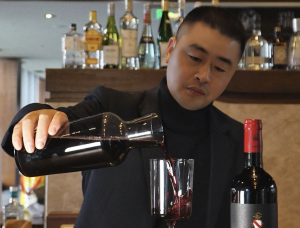
In the misty uplands of Southwest China, Anantara Guiyang Resort’s wine insider Jason is engaged in a delicate tightrope act. In a region where the fiery Moutai liquor has dominated social functions for millennia, his mission is to show how tradition can open itself to new expressions – in this case, through wine. As Anantara Hotels & Resorts marks its 25th anniversary with the ‘People Who Inspire’ series, Jason ctures the brand’s stewardship of authentic local experiences and the confident rise of China’s wine culture.
Guizhou’s proud Miao and Dong culinary heritage has shed a fermentation-driven cuisine defined by spiciness, numbing heat and, above all, sourness, often layered with perfumed notes from indigenous plants like the citrusy Litsea cubeba. Balancing these volatile flavours takes skill, not only for chefs but also for sommeliers.
Jason’s instincts are as sharp as the flavours of his home province. His UK-based WSET training and experience in the high-pressure China Young Sommelier Team Competition give him both the technique and the confidence to get the balance right. His wine list reflects this precision: Chinese and international labels with gentle tannins, cool-fermentation profiles and lighter alcohol levels allow the wine to support rather than compete with dishes perfected over generations.
Miao cuisine is central to the region’s identity, and the right wine can turn a casual tasting experience into a moment of real discovery.
During his tasting salon sessions, Jason embraces wine’s social dimension, inviting guests to slow down, taste with intention and connect with one another through the experience. By bringing in wine educators and enthusiasts, he helps nurture a local wine culture that is steadily gaining confidence. He also trains the next generation of hospitality professionals, encouraging them to balance technical skill with the hallmark of great service: attentiveness and confidence grounded in humility.
p>True confidence comes not from knowing everything, but from respecting the wine, the guest and the story behind every bottle.
I teach my team to proach each pour not as a performance but as a dialogue.
Sometimes, the surest footing comes from listening to the land and letting it tell the story.
TravelNews
CHTA CALLS FOR A NEW, BROADER FRAMEWORK TO MEASURE THE TRUE VALUE OF CARIBBEAN TOURISM

The Caribbean Hotel and Tourism Association (CHTA) invites governments, development banks, tourism authorities, regional institutions and private sector leaders to adopt a new, broader framework for evaluating tourism’s contribution to the Caribbean. The proposed proach looks past visitor spending alone to measure three things that she the region’s future: the economic value retained within Caribbean economies, the investment tourism makes in Caribbean people, and the industry’s impact on the natural environment.
CHTA’s proposal grew out of the 2026 Caribbean Travel Forum in Antigua, where public and private sector leaders agreed that the region needs better measures of tourism’s long-term value. As a starting point, CHTA recommends the Domestic Cture Rate, the share of tourism spending that stays and circulates within the host economy. The figure shows how much of every visitor dollar works for the region’s businesses and the people they employ.
For decades the Caribbean has talked about tourism leakage, said Nicola Madden-Greig, immediate past president of CHTA and chair of the Association’s Linkages Task Force. That conversation taught us a great deal, and now we need a way to measure the progress we make. Domestic Cture Rate gives us a practical tool to track the value we keep and grow at home.
A Broader Definition of Value
Economic retention tells only part of the story. CHTA wants the region to also weigh two measures long missing from the conversation.
Human cital is one of them. Tourism is the Caribbean’s largest employer, yet the region rarely tracks how well the industry develops its people. Measuring investment in training, fair wages, career pathways and local leadership would tie tourism growth to stronger livelihoods for Caribbean nationals, a priority now central to the new CTO Tourism Supply-Side Ministerial Committee.
Environmental stewardship is the other. The beaches, reefs and natural beauty that draw guests are the foundation of Caribbean tourism, yet the industry does almost nothing to measure its own footprint. CHTA wants that to change. Consistent measurement of energy use, water, waste and the condition of natural assets would help destinations protect the resources visitors come to enjoy.
We want a fuller measure of what tourism delivers, said CHTA CEO Vanessa Ledesma. It includes the careers we create for Caribbean nationals and the care we take of the environment our guests come to enjoy. Measuring those things will make the whole industry stronger.
Building on a Growing Linkages Agenda
This work builds on CHTA’s Linkages Task Force, which connects tourism with agriculture, manufacturing, creative industries, professional services and small businesses across the region. Over the past two years CHTA has hosted three Tourism Linkages Trade Shows alongside Caribbean Travel Marketplace and CHIEF, giving Caribbean small and medium sized businesses direct access to tourism buyers and procurement teams. The Association is now launching a regional Tourism Linkages Demand Study to m procurement needs, open new doors for Caribbean businesses within tourism value chains and tackle the obstacles that hold them back.
Why Better Measurement Matters
Caribbean leaders have discussed tourism leakage for more than half a century, held back by the absence of consistent, comparable measures of tourism’s net contribution. Tourism Satellite Accounts remain incomplete or unpublished in many destinations. Incentives often encourage growth without local participation. Data on workforce and environmental performance is scarcer still. A practical set of measures anchored by Domestic Cture Rate would close these gs for policymakers, investors and industry leaders.
An Action Agenda
To move the discussion forward, CHTA proposes four steps:
Develop a standardized methodology that measures value across three dimensions: economic retention through Domestic Cture Rate, investment in Caribbean people and the industry’s environmental footprint, drawing on data destinations can use today.
Strengthen Caribbean supplier cacity and SME participation in tourism supply chains, with expanded access to training, certification, financing, market intelligence and procurement opportunities. Greater local cture calls for investment in the businesses able to deliver it.
Establish shared standards for workforce development and environmental measurement, giving destinations a consistent way to track the careers tourism builds and the resources it relies on.
Open a regional dialogue on tourism policies and investment incentives that rewards local sourcing, broader local participation and responsible use of natural resources.
The next chter of Caribbean tourism is about the value we create for Caribbean people, the businesses they run and the places they call home, said CHTA President Sanovnik Destang. Good measurement shows us where the opportunities are. Real progress comes from stronger local supply chains, a skilled Caribbean workforce and a well-protected environment.
CHTA plans to engage governments, the Caribbean Tourism Organization, CARICOM, the Caribbean Development Bank, academic institutions and private sector partners to refine the concept and build a practical framework for regional use.
For more information on the Caribbean Hotel and Tourism Association, visit
TravelNews
Alibaba and Fliggy Offer a Glimpse Into the Future of the Connected Traveller

As the global travel industry races to understand the implications of artificial intelligence, a gathering of industry leaders in Shanghai and Hangzhou offered a compelling glimpse into what the next era of travel may look like.
Hosted by Alibaba Group and Fliggy, a three-day Europe-China executive dialogue brought together 75 senior leaders from 17 countries to explore how AI, digital commerce and connected consumer ecosystems are reshing the traveller journey. The programme, held during the week of ITB China, featured 27 speakers and contributors spanning tourism, technology, government, investment and media.
What emerged was a clear message: the future traveller will increasingly move through a seamless ecosystem where discovery, commerce, payments, mobility, hospitality and destination experiences are interconnected through intelligent systems.
For decades, the travel industry has largely operated through individual sectors. Airlines focused on flights. Hotels concentrated on accommodation. Destinations marketed attractions. Retailers, banks and technology companies developed their own customer relationships independently.
Artificial intelligence is beginning to blur those boundaries.
Participants explored how recommendation engines, intelligent personalisation, agentic AI and integrated digital platforms are creating experiences where consumers can move effortlessly from inspiration to booking, payment, transport and in-destination engagement without friction.
Sessions at Alibaba’s headquarters in Hangzhou provided delegates with direct exposure to one of the world’s most advanced digital ecosystems, where commerce, payments, travel, mobility and social engagement are already deeply integrated into everyday consumer behaviour.
Dr Ye (Alex) Chen, Chief Technology Officer of Fliggy, believes this evolution is only beginning.
The future of travel will increasingly be shed by intelligent systems that understand context, anticipate needs and support decision-making, he said.
Agentic AI has the potential to transform how people discover, plan and experience travel. Increasingly, the traveller journey will be connected across multiple services and touchpoints, creating more seamless, personalised and intelligent experiences.
The concept of agentic AI, systems cable of acting on behalf of users rather than simply responding to requests, featured prominently throughout the discussions. Industry leaders examined how these technologies could fundamentally change how travel is researched, booked and experienced.
Rather than travellers navigating multiple websites, ps and service providers, future systems may increasingly coordinate complex travel arrangements automatically, taking into account preferences, budgets, schedules and real-time conditions.
Tong Teng, Vice President of Fliggy, argued that the greatest opportunities may lie not within individual sectors but in connecting them.
As AI continues to evolve, the greatest opportunities may emerge not from optimising individual sectors, but from connecting ecosystems, he said.
Consumers do not think in silos. They move naturally between content, commerce, payments, mobility and travel. The organisations that can connect those experiences most effectively will be best positioned to create value, improve customer experiences and unlock new opportunities for growth.
The timing of the discussions was particularly significant as China re-establishes itself as one of the world’s most influential outbound travel markets.
China’s international travel recovery continues to accelerate, with destinations across Europe, the Middle East, Asia-Pacific and the Caribbean competing for a share of a market expected to generate hundreds of billions of dollars in travel expenditure over the coming decade.
Understanding how Chinese travellers discover, research and book travel has therefore become a strategic priority for tourism boards, airlines, hotels and attractions worldwide.
The dialogue highlighted how China’s digital landsce has evolved differently from many Western markets. Super-p ecosystems, integrated payment platforms and AI-powered recommendation systems have created highly connected consumer experiences that increasingly influence traveller expectations.
Participants examined how these developments are driving new forms of social commerce, travel discovery and personalised engagement that could influence global travel distribution models in the years ahead.
The event also reflected a growing recognition that travel no longer exists in isolation from wider digital behaviour.
Laurie Myers, Founder and Global Strategist of the Global Resilience Network, ctured the challenge facing the industry.
An airline sees a passenger. A hotel sees a guest. A destination sees a visitor. A retailer sees a shopper. A bank sees a customer. A technology platform sees a user. Yet they are all interacting with the same individual, he observed.
What became increasingly clear throughout this dialogue is that AI is helping connect those previously separate worlds into a more integrated ecosystem around the traveller. The future of travel may depend less on optimising individual sectors and more on understanding the broader ecosystem in which travellers already operate.
Beyond technology, the discussions addressed broader questions around AI governance, cross-border regulation, luxury travel, experiential tourism and the evolving relationship between Europe and China.
Supported by Atout France, the European Travel Commission and the British Chamber of Commerce Shanghai, the programme was designed as a series of executive dialogues rather than a traditional conference. Participants engaged in working sessions and collaborative exchanges focused on practical plications rather than theoretical concepts.
That proach reflected a wider shift taking place across the industry. While AI has dominated headlines over the past two years, attention is increasingly turning towards implementation, governance and commercial outcomes.
For travel leaders, the challenge is no longer whether AI will transform the industry. The question is how quickly organisations can adt to a world where travellers expect increasingly intelligent, personalised and connected experiences.
The dialogue concluded with a shared recognition that Europe and China each bring different strengths and perspectives to this transformation. Regulatory frameworks may differ, consumer expectations may vary and market structures may evolve along separate paths, but collaboration will be critical in shing the next generation of travel experiences.
As international tourism proaches full recovery and AI cabilities continue to advance, the conversations taking place in Hangzhou and Shanghai offered a glimpse of an industry that may soon be defined less by individual sectors and more by connected ecosystems built around the traveller.
The next chter in that discussion will take place in Paris on 29 October 2026, where industry leaders will reconvene to explore how AI, digital commerce and resilience continue to reshe the future of global travel.
TravelNews
A Lantern-Lit Reverie: Hoi An Memories Resort & Spa
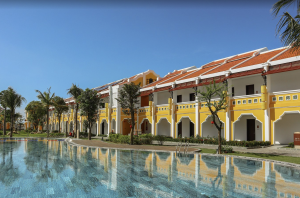
There are places that invite you to visit, and then there are those that seem to exist entirely outside of time—destinations that feel dreamt rather than built. Hoi An Memories Resort & Spa is unologetically the latter. Set on its own tranquil island embraced by the Thu Bon River, the resort unfolds like a private world within a world, surrounded by the poetic charm of Hoi An’s UNESCO-listed old town—where ochre facades glow beneath silk lanterns and history hums in every cobbled lane.
From the moment you cross the water and step onto the island, there’s a subtle but profound shift. The noise of modern life dissolves into the soft choreogrhy of rustling palms, the scent of frangipani, and the distant rhythm of oars slicing through river currents. This is a place designed not just to house guests, but to envelop them.
A Stage Set for Culture
Hoi An has long been synonymous with cultural richness, but the resort takes this legacy and elevates it into immersive theatre. At its heart lies the acclaimed Hoi An Memories Show, a spectacular open-air performance that charts 400 years of history with a cast of hundreds. For guests, it’s more than a show—it’s an evening ritual, a living narrative where ancient traders, silk merchants, and royal figures come alive in dazzling choreogrhy.
This seamless fusion of hospitality and heritage is precisely what sets Hoi An Memories Resort & Spa art, earning it a proud nomination at this year’s World Travel Awards Asia and Oceania, to be held on September 27th in the idyllic setting of CROSSROADS Maldives. As a contender for Asia’s Leading Cultural Resort, it’s a recognition that feels not only propriate but inevitable.
Architecture with a Sense of Place
The resort’s design pays homage to Hoi An’s architectural language while reinterpreting it with contemporary grace. Rows of pastel-hued villas echo the town’s historic merchant houses, complete with tiled roofs and wooden shutters, while interiors lean into airy minimalism—cool stone floors, natural textures, and soft linens that invite both rest and reverie.
Large windows and open terraces tether every space to the outdoors, where the river loops lazily and lanterns flicker at dusk. It’s a setting that feels deeply rooted yet gently indulgent, offering the comfort of modern luxury without ever losing sight of its cultural anchors.
Grand Gatherings: Hoi An Memories Convention
Beyond its reverie-like atmosphere, the resort reveals a strikingly contemporary edge through the Hoi An Memories Convention centre—home to the largest grand ballroom in the Hoi An area. This expansive, elegantly pointed venue transforms the island into a destination not only for leisure but for landmark occasions.
The ballroom itself is designed with the same sensitivity to place that defines the resort: generous proportions, refined detailing, and a sense of openness that allows events to breathe. State-of-the-art facilities sit discreetly beneath the aesthetic, enabling everything from international conferences to opulent gala dinners and destination weddings. It’s a rare duality—where cultural authenticity meets world-class event infrastructure—making the resort a compelling choice for gatherings that seek more than just a backdrop.
Imagine a conference that spills out into lantern-lit gardens, or a wedding reception set against the glow of the river and the distant hum of traditional music. Here, even large-scale events feel intimate, enriched by the island’s unmistakable sense of place.
Zense Spa: A World Dedicated to Tranquillity
At the quieter edge of the island lies Zense Spa, a sanctuary conceived as a world unto itself—one devoted entirely to relaxation, balance, and sensory calm. If the resort celebrates Hoi An’s vibrant cultural pulse, Zense offers its counterpoint: stillness.
The design leans into serenity at every turn. Soft, natural materials, muted tones, and gentle light create an environment that feels cocooned from the outside world. Treatment rooms open subtly to nature, allowing the rhythms of water, breeze, and birdsong to filter in, dissolving the boundary between indoor ritual and outdoor calm.
The experience here is deliberately unhurried. Theries draw inspiration from traditional Vietnamese healing practices—herbal infusions, rhythmic massage techniques, and restorative body rituals—each designed to encourage a deeper state of relaxation rather than quick indulgence. It is less about instant gratification, more about immersion.
Guests often spend entire afternoons here, moving between treatments and quiet reflection spaces, or simply reclining in the tranquil surroundings. There is a sense that time, once again, has softened—measured not in hours, but in breaths.
Days Measured in Light
Time moves differently here. Mornings begin with golden light spilling across the riverbanks, perhs accompanied by a quiet yoga session or a leisurely breakfast of fragrant Vietnamese coffee and tropical fruit. The nearby old town beckons—just a short journey away—with its bustling markets, ancient assembly halls, and hidden cafés.
Afternoons settle into a slower rhythm. The spa, a sanctuary in its own right, offers treatments inspired by local traditions—herbal compresses, soothing oils, rituals designed to restore balance. Elsewhere, guests drift between poolside languor and shaded garden walks, tracing paths where bougainvillea spills over soft stone walls.
Evenings of Quiet Magic
As dusk arrives, the island transforms. Lanterns illuminate pathways in a warm, honeyed glow, and the sounds of the river deepen into a gentle, cinematic backdrop. Dining becomes an event to savour—whether it’s a curated Vietnamese tasting menu or international fare with a regional twist, each dish reflects the same thoughtful storytelling that defines the resort itself.
And then, of course, the stage lights ignite.
A Destination with a Story to Tell
What distinguishes Hoi An Memories Resort & Spa isn’t just its setting—though few can rival an island enclave in one of Vietnam’s most enchanting towns. It’s the sense that every detail contributes to a larger narrative. This is not simply a place to stay; it’s a place to connect—with culture, with history, with a rhythm that gently pulls you away from the ordinary.
As the World Travel Awards proach, the resort’s nomination serves as a reminder of its unique proposition: a destination where hospitality becomes storytelling, and where every guest plays a quiet role in the unfolding tale.
In Hoi An, memory and myth often blur. At Hoi An Memories Resort & Spa, that blur is intentional—and entirely unforgettable.
TravelNews
The Science of Stillness: Inside SHA Spain, the Mediterraneans Most Modern Sanctuary

There are places you go to esce. And then there are places designed to recalibrate you entirely.
Perched above the glistening Mediterranean in Alicante’s Sierra Helada Natural Park, SHA Spain is not your typical wellness retreat—it is a destination that speaks fluently in the language of longevity, merging science with serenity in a way that feels both cutting-edge and curiously timeless.
As the global wellness industry becomes increasingly sophisticated, SHA remains its quiet overachiever—an institution that has long blurred the lines between medical clinic, holistic spa, and luxury retreat. That distinction has not gone unnoticed: in 2026, SHA Spain has been nominated across multiple categories at the World Spa Awards, including World’s Best Detox Programme, World’s Best Medical Spa, World’s Best Wellness Clinic, and Spain’s Best Wellness Retreat.
It’s a rare quartet of nominations that speaks to something deeper than trend—something closer to authority.
A Clinic That Thinks Like a Sanctuary
At first glance, SHA’s setting feels cinematic: white-washed architecture cascading down a mountainside, all glass façades and soft lines, reflecting the endless blue beyond. But beyond aesthetics, the environment here is intentionally curated to become part of the thery itself. The natural microclimate, clean air, and Mediterranean light are not incidental—they are considered tools in the pursuit of health.
Inside, the philosophy is more precise. SHA describes itself as a place where preventive medicine, diagnostics, and lifestyle theries converge into one seamless experience.
This is not a destination for passive indulgence. It is where guests arrive with intention—to rebalance, reset, and, often, to begin again.
The Rise of the Medical Wellness Retreat
The popularity of destinations like SHA reflects a broader shift in travel—one where wellness is no longer an add-on but the very purpose of the journey. Longevity-focused retreats are reshing the industry, attracting travellers who want their holidays to deliver lasting results, not fleeting relaxation.
SHA sits at the forefront of this movement, pioneering an integrative wellness model that combines Eastern thereutic traditions with Western clinical practices. From advanced diagnostics and regenerative theries to traditional Chinese medicine and macrobiotic nutrition, its proach is unologetically comprehensive.
Every stay begins with assessment. Every detail, from meals to movement, is personalised. This is wellness as prescription—not suggestion.
The SHA Detox: Where Discipline Meets Design
Among its most talked-about programmes—and the one earning a nomination for World’s Best Detox Programme 2026—is the SHA Detox.
Far removed from the juice cleanses and quick fixes of wellness folklore, SHA’s detox is structured as a clinically guided metabolic reset, targeting inflammation, gut health, and overall metabolic balance. It begins with a deep-dive into diagnostics before moving into a tailored programme of theries, structured nutrition, and lifestyle refinement.
The emphasis is not on restriction but education—understanding how the body functions at its best and how to sustain that balance long after departure.
It is, in essence, detoxification redefined: less about what you remove, more about what you restore.
Beyond the Spa: A Fully Integrated Ecosystem
To call SHA a spa would be to undersell it.
The property spans expansive wellness spaces, from hydrothery circuits and thermal suites to consultation rooms and advanced treatment areas. But what distinguishes it is not scale—it is orchestration.
Each guest journey is designed around a cohesive method that integrates diagnostics, nutrition, natural theries, and lifestyle coaching. You might begin your day with a medical consultation, move through a series of treatments, attend a nutrition workshop over a meticulously crafted lunch, and end with meditation overlooking the sea.
Even the accommodations are part of the process—sleek, light-filled suites designed to support sleep, recovery, and circadian rhythm alignment.
Everything here has a purpose.
The Recognition of Excellence
While the 2026 nominations signal SHA’s continued momentum, they are part of a longer narrative of global recognition. Over the years, the clinic has consistently been awarded for its innovation and leadership in wellness, cementing its position as one of the most respected names in the field.
In many ways, SHA has become a benchmark—the place other wellness destinations measure themselves against.
Why SHA Matters Now
In an era defined by acceleration—faster work, faster travel, faster everything—SHA offers a counterpoint rooted not in esce, but in precision.
This is not about stepping away from life. It is about returning to it better equipped.
The clinic’s multiple nominations at the World Spa Awards 2026 reflect a broader cultural shift: wellness is no longer a luxury, but a necessity—one that demands expertise, structure, and measurable results.
And in that new landsce, SHA Spain is not just participating—it is quietly setting the pace.
For those seeking more than a retreat—something closer to transformation—SHA Spain remains one of the most compelling addresses in global wellness today.
TravelNews
European Travelers Seek Active and Nature-Led U.S. Itineraries as Perception Enters Sensitive Phase
European travel demand to the United States is evolving as European travelers are proaching long-haul trips to U.S. destinations with greater selectivity, shorter planning windows, and a stronger petite for diverse, authentic experiences that extend beyond iconic urban centers.
This is the key takeaway from The Evolution of European Demand to the U.S.: Understanding Shifting Travel Patterns, a white per developed by The Data peal Company / Almaviva Group, in collaboration with Phocuswright, aimed at sparking analysis and discussion ahead of Phocuswright Europe 2026, to be held June 15–17 in Barcelona. As the industry convenes in Barcelona this June for Phocuswright Europe, the timing could not be more relevant: the decisions travel companies make now about product, positioning and channel strategy will determine how they cture or lose European demand over the next several years, says Eugene Ko, senior director, marketing and communications, Phocuswright.
The report, developed by Data peal Mabrian, the company’s Tourism & Destinations division, cross-analyzes flight bookings, preferred and emerging destinations, arrival airports, visitor profiles, accommodation preferences, demand drivers, traveler experiences, and perception indices from EU28* countries to examine how European travel behavior toward the United States has evolved since 2023.
European demand for the U.S. is nuanced in ways that aggregate data simply cannot cture, adds Ko. What makes this collaboration with Data peal so valuable is the ability to layer Phocuswright’s consumer survey intelligence, specifically how travelers from the U.K., France, Germany, Italy and Spain think, plan and book, with real-time demand signals and perception indices. Together, they give travel companies a far more actionable picture than either dataset provides alone.
According to Phocuswright, North America is projected to reach $567 billion in gross bookings in 2026, up +3.1% year over year, confirming its position as the world’s largest regional travel market. Among markets analyzed in a forthcoming report, the U.K. shows the strongest connection to North America, with 15% of the British traveler population visiting the region. France follows at 11%, while Germany—despite having the largest traveler base—records 9%, while Spain and Italy remain at 8% and 6%, respectively.
Given Europe’s central role among long-haul inbound source markets for the U.S., the analysis aims to highlight the behaviors, preferences and emerging trends to help U.S. travel stakeholders remain competitive.
Perception, a key factor in understanding European demand for the U.S.
Perception indices for overall experience and tourism products indicate that European travelers are a discerning audience whose high expectations for a world-class destination such as the U.S. are not always fully met, highlights Maria Pradissitto, North America Market Manager at Data peal.
Compared with 2023, European travelers’ perception indices improved in 2025, particularly the Perception of Security Index, which increased by +12.5 points to 81.4/100, and the Perception of Climate Index, which rose by +2.4 points to 80.6/100.
However, despite improving by+9 points to 59.3 out of 100, the Global Tourist Perception Index remains low in comparison with other relevant destinations worldwide, underscoring the need to closely examine the underlying factors affecting its performance, says Data peal’s expert.
In fact, year-to-date 2026 European perception indices show a slight decline compared with the same period in 2025, driven mainly by the Global Tourist Perception Index (-1.5 points, now at 56.6/100) and the Perception of Security Index (-0.7 points, now at 81.1/100), as well as lower safety perception scores in key origin markets such as Germany (-1.3 points, now at 80.7/100), the United Kingdom (-0.6 points, now at 83.2/100), and Italy (-0.5 points, now at 87.6/100).
According to Pradissitto, these trends suggest that European travelers’ perception of the United States is entering a more sensitive phase—a development that destinations should monitor closely to remain competitive in the long-haul travel market, particularly regarding expectations and quality standards in tourism products, services, and hotel experiences.
Great Outdoors and All-American Experiences Trending Among European Demand
More compelling itineraries and enhanced travel experiences that reflect European travelers’ interests, motivations, and levels of engagement are set to play a key role in shing their perception of the United States, according to Data peal’s insights.
Many of the trendiest U.S. destinations among European travelers are closely tied to active tourism and nature, including national parks, iconic landsces, and classic road-trip circuits—from Death Valley and Cody to Tusayan and Sedona near the Grand Canyon, as well as West Yellowstone, explained Pradissitto. This is reflected in demand drivers, where active tourism has shown the most consistent growth since 2023, increasing by 1.5 percentage points to reach 17.2% of European travel motivations.
This trend highlights a strategic opportunity for the U.S. to showcase a broader and more diverse travel proposition through experiences, products, and services that genuinely resonate with evolving traveler interests, improving travelers’ perception. Data peal insight indicates that, while culture remains the leading demand driver, accounting for 31.9% of motivations in 2025 despite a decline of 2.8 percentage points since 2023, nature continues to represent a significant share at 17%. Together with active tourism, these segments form a strong foundation for developing more compelling itineraries, while also leveraging other growing motivators such as sunbathing and food and cuisine.
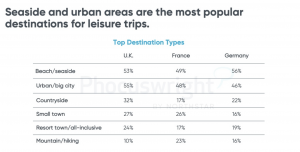
In this scenario, data indicates that major connectivity hubs are still crucial for European demand. Phocuswright’s upcoming European Consumer Travel Market Report 2026 shows that travelers from the United Kingdom, France, and Germany visiting the U.S. are primarily drawn to iconic urban and coastal destinations, with 46% to 55% choosing major urban hotspots and 49% to 56% favoring beach and ocean destinations. Findings from the new report will be presented on Center Stage at Phocuswright Europe 2026.
A closer look at Data peal’s demand trend insights, based on consolidated stay reviews, reinforces this pattern. New York City, Las Vegas, Los Angeles, Miami Beach, and San Francisco lead the ranking of the top 15 favorite U.S. destinations for EU28 travelers, and eight of them also correspond to the top arrival airports for European visitors. Interestingly, since 2023, European demand for top preferred gateway destinations has shown a declining trend, falling by -15.9% in 2025, indicating softer momentum among the most mature hotspots—even as the broader 2026 outlook for U.S.-bound European travel remains positive.
This broader trend is reflected in flight booking data. GDS bookings from EU28 countries* for travel throughout 2026, made at least six months in advance and recorded through ril, increased by +11% compared with the same period last year, following a -4% decline in 2025 versus 2024. This rebound, combined with shorter booking windows than in 2025, indicates a more reactive yet deliberate planning process, as European travelers continue to show strong interest in the U.S. while becoming more selective about where and how they travel.
The full report, The Evolution of European Demand to the U.S.: Understanding Shifting Travel Patterns, is available here:


Truck driver helps rescue woman from alleged kidnapping
Dashcam video shows the moment a woman in handcuffs ran to a South Carolina truck driver for help, saying she...


When Adult Children Cut Off Their Moms, Here's Why Therapists Say It Happens
This video explores the complex reasons why some adults choose to distance themselves from their mothers on "mothers day".


LIVE: Evacuation on ISS
https://www.youtube.com/watch?v=hourk5JQiC4 Astronauts aboard the International Space Station have been told to shelter on a docked spacecraft as repair work is...


Princess of Wales celebrates patient's end of cancer treatment. #BBCNews

Tourists crowd this Istanbul street food stall – but not just for the food
In the internet’s latest viral moment, an Istanbul street food vendor is pulling crowds from across the world, just to...


Istanbul ‘corn star’ becomes tourist attraction
Video by Leroy Ah-Ben and Edward Scott-Clarke, text by Avni Trivedi (CNN) — In the internet’s latest viral moment, an...

Texas Roadhouse family meals: A cheaper option than fast food?
Texas Roadhouse family meals are gaining attention online for what fans call generous portions, quality food and affordable prices. While...


Buffalo food farmers combat Buffalo’s third
New York’s growing mle syrup industry is facing challenges from a warming climate. Five Western New York organizations were awarded...


Top Picks For Members: May
May was a month of institutions under pressure—and of people trying to decide what still deserves their faith. A fast-food...
Paras Healthcare files preliminary documents with Sebi in order to raise Rs 1,800 Crore through an Initial Public Offering (IPO)
New Delhi, Paras Healthcare Ltd. which operates hospitals under “Paras Health” brand has filed preliminary perwork with cital market regulator...
-
 Video2 weeks ago
Nadal tells Amanpour about extreme solution to 19-year injury
-

 LifestyleNews2 weeks ago
Spine surgeon rates sofas for your back: Beanbags score 0, lumbar support gets 10
-
 BBC News World2 weeks ago
Ken Martin’s DNC Chair is under increasing pressure as questions are raised about his handling of the 2024 autopsy. Subscribe to this story to enjoy it without ads
-

 Tech2 weeks ago
Today's NYT Connections Hints, Answers and Help for May 25, #1079
-

 Video2 weeks ago
What we don't know about Colbert's last 'Late Show'
-

 UsaLocalNews2 weeks ago
DOJ says it scrubbed news releases about Jan. 6 criminal cases from its website
-

 Tech2 weeks ago
Sennheisers Momentum 5 headphones are all about the audio and ANC upgrades – Engadget
-

 Video2 weeks ago
911 call reveals more about Kyle Busch’s condition before his sudden death