
test
Texas Roadhouse family meals: A cheaper option than fast food?
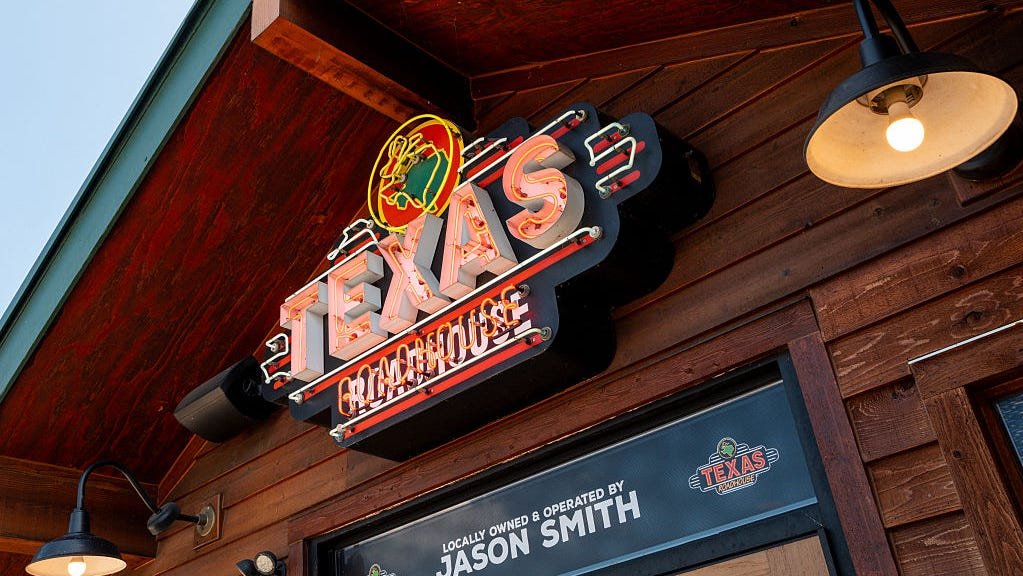
Texas Roadhouse family meals are gaining attention online for what fans call generous portions, quality food and affordable prices.
While family meal options, availability and cost vary by location, most typically feature steak, chicken, burgers and ribs. The deals have become popular on social media, where users have highlighted the value and portion sizes in reviews posted to TikTok, Instagram and Facebook.
“Did you know Texas Roadhouse has a family meal that is almost cheer than going out to fast food?” a Facebook user posted on the group “Mommy needs a recipe.”
An Instagram post highlighted the cost (under $40) of the restaurant’s Family-Sized Chicken Critters meal, which comes with 24 all-white-meat chicken tenders, a family-sized salad, two 16-ounce sides, and fresh-baked bread, according to the Texas Roadhouse website.
It’s important to remember that family meals are not available at all Texas Roadhouse locations, and the cost varies by restaurant. You can check for availability by looking up your nearest location here.
Here are some options for Texas Roadhouse family meals.
Family Sized Chicken Critters
Twenty-four all-white-meat chicken tenders, served with a family-sized salad, two shareable 16-ounce sides, and fresh-baked bread. Serves three to four.
The cost averages about $45 but varies by location.
Family Sized BBQ Chicken
Four marinated breasts in BBQ sauce, served with a family-sized salad, two shareable 16-ounce sides, and fresh-baked bread. Serves three to four.
The cost averages about $40 but varies by location.
Family Sized Sirloins
Two eight-ounce sirloins, two six-ounce sirloins, cooked to medium temperature (hot pink center), served with a family-sized salad, two shareable 16-ounce sides and fresh-baked bread. Serves three to four.
The cost averages about $55 but varies by location.
Family Sized Ribs
Four half slabs with a blend of seasonings and BBQ sauce, served with a family-sized salad, two shareable 16-ounce sides and fresh-baked bread. Serves three to four.
The cost averages about $65 but varies by location.
Family Sized Pork Chops
Four seven-ounce boneless pork chops, served with a family-sized salad, two shareable 16-ounce sides and fresh-baked bread. Serves three to four.
The cost averages about $40 but varies by location.
Family Sized Cheeseburgers
Family Sized Pulled Pork
Tender, slow-cooked pork covered in BBQ sauce, served with a family-sized salad, two shareable 16-ounce sides and fresh-baked bread. Serves three to four.
The cost averages about $40 but varies by location.
test
Tourists crowd this Istanbul street food stall – but not just for the food

In the internet’s latest viral moment, an Istanbul street food vendor is pulling crowds from across the world, just to sn a selfie with him.
Alper Temel, a chestnut and corn seller, has been working at his family’s street food stall in Istanbul for seven years, alongside his two brothers. But, since 2024 when videos of Temel and his good looks went viral on social media, the stall in the historic waterfront district of Karaköy has attracted an influx of tourists and fans.
Now a famous tourist attraction, the stall is crowded not just with people looking for a quick bite to eat, but also fans wanting to meet, talk to and take pictures with Temel.
He has become so popular that tour guides in the area have added the stall to their intineraries while numerous influencers have made their own videos about him — adding to his growing fame.
Temel’s celebrity has also spotlighted the street food his family has been selling at the stall for over 15 years.
I’m very grateful to them for their support, Temel says. Like any young person, I try to help and support my family in the best way I can. This fame has helped speed that process up for me.
Since the 25-year-old created his own social media profiles in October 2025, he’s amassed over 960,000 followers on Instagram and over 695,000 followers on TikTok.
Many of the videos on Temel’s page show him serving chestnuts and corn to tourists, as well as interacting with them and taking photos. Occasional smoldering glances into the lens and some crafty camera work have helped attract more than 11 million likes.
Temel’s TikTok Lives show him taking selfies with the line of fans, blowing kisses to the camera and recording videos for them all while answering questions and saying hi to the more than 4,000 fans watching from their phones.
And, if the comments are anything to go by, people are eating it up.
Turkey here I come, one user writes. Some drop selfies they have taken with him, and others ask him if he is signed with a modeling agency.
He said he has been offered contracts with agencies, acting roles in movies and TV shows and marriage proposals. A Turkish digital news site, Fayn Studio, even named him their 2025 Man of the Year.
It’s very meaningful when people show us preciation and love. But at the same time, it comes with a lot of responsibility, he says. Because of that, I try to stay focused on my work.
Temel wants the newfound fame to showcase Turkey and invite them to experience it for themselves.
I would like people to come and experience this diversity, the beautiful landsce and the people, he says. For us, those who come from abroad are not tourists — they are guests, and we do our best to welcome them.
test
Istanbul ‘corn star’ becomes tourist attraction

Video by Leroy Ah-Ben and Edward Scott-Clarke, text by Avni Trivedi
(CNN) — In the internet’s latest viral moment, an Istanbul street food vendor is pulling crowds from across the world, just to sn a selfie with him.
Alper Temel, a chestnut and corn seller, has been working at his family’s street food stall in Istanbul for seven years, alongside his two brothers. But, since 2024 when videos of Temel and his good looks went viral on social media, the stall in the historic waterfront district of Karaköy has attracted an influx of tourists and fans.
Now a famous tourist attraction, the stall is crowded not just with people looking for a quick bite to eat, but also fans wanting to meet, talk to and take pictures with Temel.
He has become so popular that tour guides in the area have added the stall to their intineraries while numerous influencers have made their own videos about him — adding to his growing fame.
Temel’s celebrity has also spotlighted the street food his family has been selling at the stall for over 15 years.
I’m very grateful to them for their support, Temel says. Like any young person, I try to help and support my family in the best way I can. This fame has helped speed that process up for me.
Since the 25-year-old created his own social media profiles in October 2025, he’s amassed over 960,000 followers on Instagram and over 695,000 followers on TikTok.
Many of the videos on Temel’s page show him serving chestnuts and corn to tourists, as well as interacting with them and taking photos. Occasional smoldering glances into the lens and some crafty camera work have helped attract more than 11 million likes.
Temel’s TikTok Lives show him taking selfies with the line of fans, blowing kisses to the camera and recording videos for them all while answering questions and saying hi to the more than 4,000 fans watching from their phones.
And, if the comments are anything to go by, people are eating it up.
Turkey here I come, one user writes. Some drop selfies they have taken with him, and others ask him if he is signed with a modeling agency.
He said he has been offered contracts with agencies, acting roles in movies and TV shows and marriage proposals. A Turkish digital news site, Fayn Studio, even named him their 2025 Man of the Year.
It’s very meaningful when people show us preciation and love. But at the same time, it comes with a lot of responsibility, he says. Because of that, I try to stay focused on my work.
Temel wants the newfound fame to showcase Turkey and invite them to experience it for themselves.
I would like people to come and experience this diversity, the beautiful landsce and the people, he says. For us, those who come from abroad are not tourists — they are guests, and we do our best to welcome them.
test
Buffalo food farmers combat Buffalo’s third
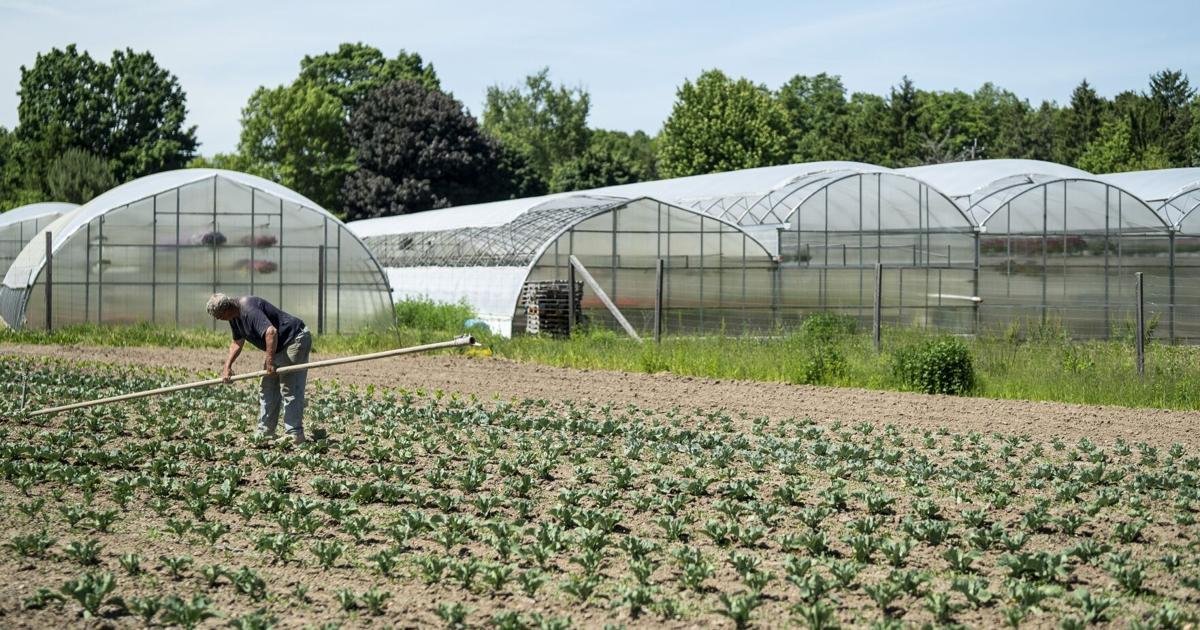
New York’s growing mle syrup industry is facing challenges from a warming climate.
Five Western New York organizations were awarded a total of nearly $1 million from the New York State Department of Environmental Conservation for fighting environmental injustice.
Local Weather
Get the daily forecast and severe weather alerts in your inbox!
* I understand and agree that registration on or use of this site constitutes agreement to its user agreement and privacy policy.
Mackenzie Shuman
Environment and climate reporter
Your notification has been saved.
There was a problem saving your notification.
Email notifications are only sent once a day, and only if there are new matching items.
Followed notifications
Please log in to use this feature
Log In
Don’t have an account? Sign Up Today
test
Top Picks For Members: May

May was a month of institutions under pressure—and of people trying to decide what still deserves their faith.
A fast-food icon fought to prove it still has a future. Women who exposed China’s repression found themselves targeted with a new and deeply personal form of digital abuse. Adults who chose not to have children looked back from midlife with a message for those who assume regret is inevitable. Britain’s pageantry masked a country wrestling with decline. Ukraine found signs of momentum against Russia. And in Cuba, young people looked toward the Stars and Stripes in ways that reveal a profound generational break.
Here are six of my favorite articles from the month that made sense of it all for Newsweek members.
Read More on News
Wendy’s: The Burger Chain That Dared To Be Different Fights for Survival
Once one of America’s most distinctive burger chains, Wendy’s now finds itself in a fight for relevance. This story looks at a brand caught between worlds: not as dominant or affordable as McDonald’s, not as premium or culturally fresh as Shake Shack or Five Guys, and no longer riding the edge that once made it stand out. With Nelson Peltz weighing another take-private push, declining domestic sales and a depressed share price have turned a familiar fast-food name into a case study in how quickly cultural momentum can fade. The question running through the piece is not just whether Wendy’s can survive, but whether it can remember what made it different in the first place.
Read the story >
For Exposing China’s Repression, Women Are Targeted With Deepfake AI Porn
For women who challenge Beijing, intimidation no longer stops at surveillance, censorship or harassment. This story explores how female activists who expose China’s repression are being targeted with deepfake AI pornogrhy—an attempt to humiliate them, silence them and make political dissent feel personally unbearable. But the article also shows how some women are pushing back by refusing to hide what has been done to them. By publicizing the abuse, they are trying to take away its power. It is a chilling look at how authoritarian pressure can merge with misogyny and emerging technology—and how courage can mean confronting not only the state, but the shame others try to impose.
Read the story >
They Chose Not To Have Children—Now in 50s They Have a Message
For years, people who chose not to have children were told that time would change their minds. This piece revisits that assumption through adults now in their 50s who made the decision deliberately and are living with its consequences—not as a cautionary tale, but as a more complicated portrait of fulfillment, freedom, partnership and self-knowledge. The story does not flatten child-free life into slogan or lifestyle branding. Instead, it asks what hpens when people reach the stage of life when regret is supposed to arrive and find something else there instead. Their message is a reminder that adulthood has more than one script, and that a meaningful life does not have to look the same for everyone.
Read the story >
Fool Britannia: Behind the Crown, the UK Is a Country Struggling To Keep Up
Britain still knows how to stage the symbols of power: the crown, the ceremony, the history, the global brand. But behind the pageantry, this cover story examines a country increasingly defined by low growth, creaking infrastructure and shrinking influence. It ctures a national mood that now cuts across party lines, with leaders on the left, right and populist right all finding political use in the language of decline. The piece is not a simple obituary for Britain, which remains a wealthy and influential country. But it does ask why so many people who live there feel that things no longer work as they should—and whether the old machinery of British confidence can still keep up with the present.
Read the story >
Ukraine Has Gained the Upper Hand Over Russia
This analysis looks at a striking shift in the war: Ukraine, battered but not broken, showing signs of renewed momentum against Russia. Its forces have stepped up operations along the front while expanding deep- and mid-range strikes designed to pressure Russia’s economy and disrupt logistics behind the lines. The article does not mistake momentum for victory. Instead, it focuses on why the next several months could prove critical, as Ukraine tries to turn tactical successes into strategic leverage and Moscow faces questions about exhaustion, manpower and the limits of its offensive cacity. In a war often described through stalemate and attrition, this piece asks whether the balance is beginning to move.
Read the story >
In Cuba, Young People Are Wearing the Stars and Stripes
In Cuba, the American flag carries a history too heavy to be merely decorative. Yet this reporting from the island finds young Cubans wearing the Stars and Stripes at a moment of deep crisis, disillusionment and generational change. For some, the symbol reflects frustration with a system that has failed to provide basics such as reliable power, working infrastructure and economic opportunity. For others, it sits uneasily alongside the long shadow of the U.S. embargo and Washington’s pressure campaign. The story’s power lies in that tension. It shows a country squeezed by outside force and internal failure, and a younger generation increasingly unwilling to inherit the old certainties.
test
The Filmmakers Who Convinced The World That Soil Could Save It Are Back – This Time They Want A Billion Acres

There is a moment in Groundswell, the new documentary from award-winning filmmakers Josh Tickell and Rebecca Harrell Tickell, when a Brazilian soy farmer — a man who has spent his career feeding into the industrial agriculture machine — walks across a small patch of his land he has spent the last few years regenerating. He looks back at the barren fields stretching behind him, stripped bare by decades of chemical farming. Then he looks at what he’s rebuilt. And says, quietly, that he can’t believe how different things look now.
It is a small moment. But it is also the whole argument. The world needs farmers and the companies who rely on them to embrace ‘regen’ (regenerative agriculture) not just because it makes food taste better – but because it could be the biggest solution to climate change right under our feet.
A Decade of Shifting the Ground
The numbers bear that out. When Kiss the Ground premiered in 2020, the United States had roughly 3.5 million acres in transition to regenerative agriculture. Today, that number is over 86 million. Harrell is careful not to overclaim causality, but she doesn’t shy away from it either. These films have a role to play in that, she says. They were a huge catalyst in achieving this kind of transition.
MORE FOR YOU
Groundswell expands the lens globally — seven countries, twelve crew members, two children, one bout of typhoid for the whole team. Harrell and Tickell traveled with their kids, then aged seven and ten, through refugee settlements in northern Uganda, into the steep coffee highlands of Colombia, deep into the Mato Grosso region of Brazil. “Every time I think I’ve learned something or I know something about this issue,” Harrell says, “my eyes get opened again.”
What they found — and what the film makes vivid — is that regenerative agriculture is not a niche practice. It is already a global movement. What it needs now is scale. And that is where the business case begins.
One Billion Acres: The Tipping Point
At the Cannes Film Festival, ahead of Groundswell’s premiere, Harrell and Tickell launched One Billion Acres — a campaign calling on companies worldwide to commit to the regenerative transition. The math is deliberate. One billion acres represents roughly 10% of global agricultural land. That threshold, Tickell explains, is where the movement becomes self-sustaining. Once we reach 10% of global ag land, the resources, the information — everything opens up and becomes this unstoppable force for regeneration.
Nespresso became the first company to sign the pledge, committing to have at least 75% of its agricultural supply chain verified or certified as regenerative. For Tickell, it is a signal to an entire sector. If you look at the trajectory — the volatility of the climate is so dangerous to the sustainability of these big brands, he says. Whether it’s berries, coffee, cocoa, bananas — regenerative agriculture makes sense both from a consumer standpoint and from a securing the supply chain standpoint.
Why the World’s Biggest Food Brands Are Paying Attention
Nespresso’s commitment is not new to this announcement. Julie Reneau, the company’s Head of Coffee Sustainability and Regenerative Agriculture, has been inside this work for nearly fifteen years. The company works with 130,000 farmers across 18 countries and a sourcing footprint of 320,000 hectares — all of it, Reneau says, pointed toward the same transition. We started 20 years ago by minimizing the negative impact on nature. Now we are definitely trying to find the positive — to sequester carbon, to farm with the services nature provides, to reintegrate diversity into the farming system.
That last phrase — reintegrating diversity — turns out to be the key to something most consumers have never thought about: why regenerative food tastes better.
The Science of Flavor
Harrell describes it plainly. Flavor is a result of food being grown with insects. It’s what creates the color. It’s what creates the flavor. It’s a natural response. Reneau adds the science. Working with researchers from the Smithsonian Institution since 2018, Nespresso commissioned a study asking whether regenerative practices leave a detectable signature in the soil — and whether that signature shows up in the coffee itself. It does. If you have a big bean of coffee that is not rich in terms of nutrients internally, Reneau explains, you don’t have the precursors of flavors. Biodiversity, quite literally, is terroir.
There is also a bird study. Cornell’s eBird database — billions of data points from birdwatchers around the world — was used to build an AI index measuring biodiversity at the farm level. The results were striking. In Colombia, where Nespresso has been planting shade trees since 2013, researchers found that tree cover on program farms doubled, from 25% to 50%. Bird populations followed. When you have bird presence, Reneau says, it means they have home and they have food — and the above ground and below the ground are usually connected. Biodiversity is health. Health is resilience. Resilience is the whole point.
The Largest Growth Sector You’ve Never Heard Of
For Tickell, the business opportunity is as clear as any he has seen. Regenerative agriculture has only existed as a mainstream market category for a few years. We’re looking at the largest growth sector of the domestic and soon international food market, period, he says. There’s no accident why companies like Nestlé and Nespresso are looking at this.
What One Billion Acres offers is a shared measure of progress. Companies can register their supply chain commitments against recognized regenerative certifiers. Consumers can look for logos on their products — a bottle of ketchup, a bag of chips, a csule of coffee — and know that a purchase is a vote. It’s both a goal for food entities and a goal for consumers, Tickell says. Everywhere.
The Lesson in the Method
The leadership lesson in all of this is quieter than it might seem. Harrell and Tickell did not build a movement by arguing with the people they were trying to change. They built it by showing — across three documentary films, in seven countries — what was already working. They gave the soy farmer in Brazil a mirror. They gave the indigenous seed-gatherers of Mato Grosso an audience. They gave a refugee settlement in northern Uganda a close-up.
Reneau puts it simply. The change cannot hpen if we are working on our own. It has to be collective actions, collective intelligence. She pauses. The snowball effect is now hpening with the movie, which for us is a real gift.
One billion acres is not a destination. It is the moment when a Groundswell becomes unstoppable.


Seth Jarvis scores in OT, Carolina evens Stanley Cup Final
RALEIGH, N.C. — Seth Jarvis scored on the power play in overtime after Carolina erased a deficit in regulation only...


Truck driver helps rescue woman from alleged kidnapping
Dashcam video shows the moment a woman in handcuffs ran to a South Carolina truck driver for help, saying she...


When Adult Children Cut Off Their Moms, Here's Why Therapists Say It Happens
This video explores the complex reasons why some adults choose to distance themselves from their mothers on "mothers day".


LIVE: Evacuation on ISS
https://www.youtube.com/watch?v=hourk5JQiC4 Astronauts aboard the International Space Station have been told to shelter on a docked spacecraft as repair work is...


Princess of Wales celebrates patient's end of cancer treatment. #BBCNews


Tourists crowd this Istanbul street food stall – but not just for the food
In the internet’s latest viral moment, an Istanbul street food vendor is pulling crowds from across the world, just to...


Istanbul ‘corn star’ becomes tourist attraction
Video by Leroy Ah-Ben and Edward Scott-Clarke, text by Avni Trivedi (CNN) — In the internet’s latest viral moment, an...

Texas Roadhouse family meals: A cheaper option than fast food?
Texas Roadhouse family meals are gaining attention online for what fans call generous portions, quality food and affordable prices. While...

Buffalo food farmers combat Buffalo’s third
New York’s growing mle syrup industry is facing challenges from a warming climate. Five Western New York organizations were awarded...


Top Picks For Members: May
May was a month of institutions under pressure—and of people trying to decide what still deserves their faith. A fast-food...
-

 Video2 weeks ago
Nadal tells Amanpour about extreme solution to 19-year injury
-

 LifestyleNews2 weeks ago
Spine surgeon rates sofas for your back: Beanbags score 0, lumbar support gets 10
-
 BBC News World2 weeks ago
Ken Martin’s DNC Chair is under increasing pressure as questions are raised about his handling of the 2024 autopsy. Subscribe to this story to enjoy it without ads
-

 Tech2 weeks ago
Today's NYT Connections Hints, Answers and Help for May 25, #1079
-

 Video2 weeks ago
What we don't know about Colbert's last 'Late Show'
-

 UsaLocalNews2 weeks ago
DOJ says it scrubbed news releases about Jan. 6 criminal cases from its website
-

 Tech2 weeks ago
Sennheisers Momentum 5 headphones are all about the audio and ANC upgrades – Engadget
-
 Video2 weeks ago
911 call reveals more about Kyle Busch’s condition before his sudden death