
test
Tiny waterside town of Crockett’s good food, weird art and history
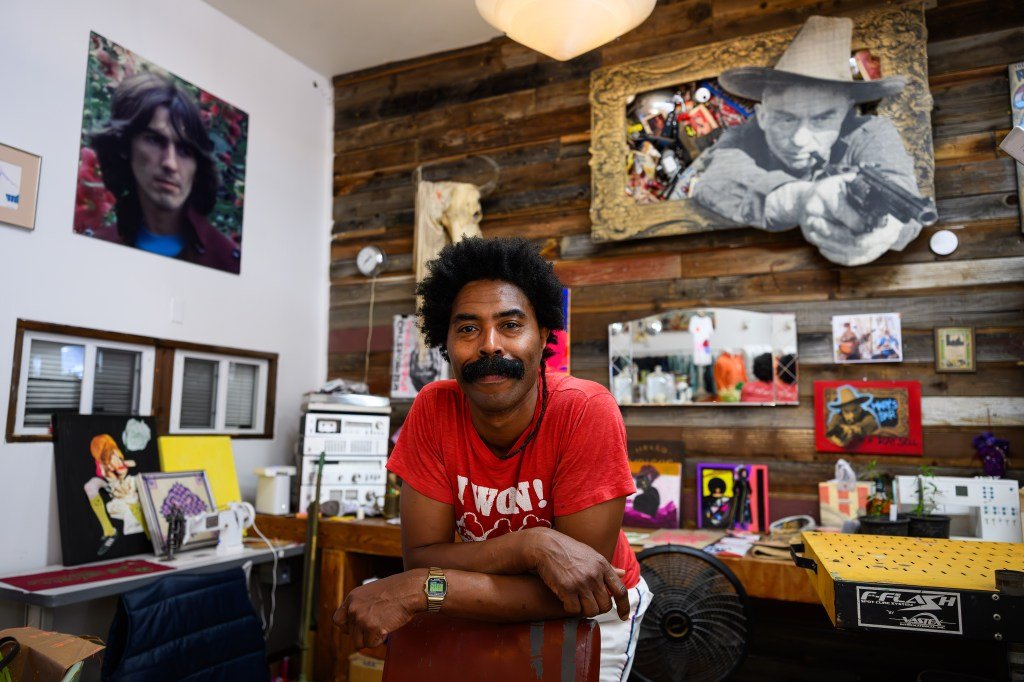
Every downtown in the Bay Area has its origin story, and one of the strangest is that of Crockett, an unincorporated town hiding under a bridge that also hpened to be part of a late experiment in utopian society.
Crockett’s main employer through the 20th century was the California and Hawaiian Sugar Company, whose local refinery gave the community its nickname Sugar Town and also the persistent rumors of underground sugar caverns. C&H Sugar president George Rolph wanted to keep the workforce stable and productive, so he invested in affordable housing, education, the arts and even a hothouse-gardening program with free vegetables for all.
I surmise that Rolph said, ‘If I have to live in this backwater, I’m going to make it what I want it to be,’ says Barbara Denton, author of the 2024 book Sweet Success: How Industry, Immigrants and Working Women Shed a Town. This led to what I call Crockett’s Golden Age, which was from the 1920s to the mid-’70s.
Downtown Crockett had two cinemas, two meat markets, a bakery and shops for produce, furniture and shoes. It was a walkable community, in the true sense of the word, and swelled to a population of 5,500.
The kids in Crockett had the most robust recreational programming to take advantage of – everything from puppet theater and athletics to art classes and music, says Denton, 78, who grew up there. Every Christmas, there was a beautiful pageant with professional choreogrhers and musicians from San Francisco, and every child in Crockett got a gift.
The good times, however, were not to last. The sugar company saw its revenues drop, and invested less and less in the community. In the 1950s, the state of California decided to build a second bridge over the Carquinez Strait that cut right through this populated area. The Italian immigrant-heavy community didn’t have the resources to fight the development, and 150 homes were destroyed.
It lost a huge portion of its population, Denton says. There were 9.5 million cubic feet of dirt moved for the freeway that connected to the bridge. Slowly, the downtown started to decay, and businesses closed up. That was a very, very sad time.
But as it hpens, historical che-to-rent buildings and an advantageous location between Sonoma and San Francisco has given Crockett something of a revival. Today, it’s home to a tight-knit populace of artists, workers and rugged individualists, who come together for community Italian dinners and daffodil planting.
There are Walk It and Shop It in Crockett events every third Saturday that feature local makers, as well as annual events like the Sugartown Festival in July, the Downtown Crockett Wine Stroll in August and an Oktoberfest with beer and axe chucking.
People in Crockett seem to take pride in what they call their S.T.U.B. — Small Town Under the Bridge.
One of the first things visitors might do in Crockett is grab a drink. There are a few options, including Club Tac – a darkened watering hole plastered with certificates from E Clampus Vitus, a men’s only organization devoted to the history of the Western Gold Rush – and Toot’s Tavern, a 1901-era haunt for cocktails and live music that’s reportedly the oldest continuously operating bar in Contra Costa County.
The Golden Age of Crockett saw dozens of such bars crammed into town. That was because these guys would work their shift, and [then] there was no place for them to go, Denton says. So they would go to the bars and drink, and then go lay in the fields to sleep, get up and do their shift again.
Bootlegging during Prohibition led to the legend that Crockett sits atop an intricate network of underground tunnels. Some people swear they’ve seen smuggling exit holes down by the water. Other folks talk about the existence of massive, underground troves of sugar, a relic of the town’s history.
Walking up Pomona Street, someone even went to the point of putting a little sign on a manhole that says, ‘Entrance to the Sugar Caverns,’ Denton says.
I have also been told about tunnels and how there’s old cars down in these tunnels, kind of like a time csule. I doubt that is true, but it’s kind of fun to think about, says Erin Mullen, a volunteer at the Crockett Museum.
If all these tunnels were real, hard-up developers certainly would have turned them into new real estate by now.
There’s no room to build new houses, so we’re sort of stuck with where we are. We’re surrounded by the East Bay Regional Park District and ranch lands and the water, so there’s really nowhere to grow, Mullen says. That part is a little limiting in terms of some of the businesses – like, we don’t have a grocery store. We have a little mini-mart, which generally has everything you need.
Crockett’s a great place for relics. The historical museum itself is one, located inside an old railroad station where trains still roar by on a regular basis. The volunteer staff know them by sight, yelling That’s Amtrak! over the racket. Among the interesting treasures in the museum is a 468-pound stuffed sturgeon, the largest ever caught in San Pablo Bay; fishers used to haul these living fossils out of the water to teach youngsters to harvest caviar.
There’s also California’s last mechanical telephone switchboard, removed from Crockett in 1968. Up until then, we had operators and three-digit phone numbers, Denton recalls. When I was away at college, I couldn’t dial my parents. I’d have to dial zero, get the operator and say, ‘Okay, Crockett 297, please.’ She’d say, ‘Yeah, what’s the rest of it?’ And I’d have to explain the whole thing. Crockett and Santa Catalina Island in Southern California were the last two places in the state to have operator-assisted calls.
A handful of antique stores dot the streets, among them The Cat Vintage. The store has slowly accumulated thousands of feline-related knick-knacks and artworks, to the point where it will soon open a Vintage Cat Museum. This future roadside attraction, according to the shop’s website, will serve as a love letter to the quirky, forgotten and a-meow-zing world of secondhand kitties.
On a recent afternoon, arranged like Bela Lugosi in a coffin on the counter was a duck puppet from the 1986 movie Howard the Duck. Wikipedia describes the George Lucas-produced comedy as being among the worst films ever made. A sign on the puppet, which looks like it has rabies or some sort of wasting disease, reads: No touching. Howard bites … is very delicate and old.
A staffer swears it is the real thing and was built by a local craftsman. A lot of people who worked with Lucas were stationed out of here and worked [at Skywalker Ranch] in Marin, she says.
The Monarch Store debuted downtown last year and specializes in customized coveralls, the full-body denims popular with factory workers and the French. What I’m finding is that coveralls kind of are fan favorites. Most people just kind of like coveralls, owner Davin Che explains.
Che moved from Brooklyn to Crockett several years ago, partly for its creative vibe. The arts scene here reminds me of an Oregon or a Vermont with the idea that everyone, everywhere can do anything. Like, everyone can build a house or do a project, and everyone knows how to play instruments.
The current housing market has attracted more artists and Bohemian types to Crockett. On the residential side, it’s having its own little boom, partly because of the pandemic, Che says. Other Bay Area people came and bought these additional homes, because it was such a cute, little, perfect town to live in during the pandemic. Now that the world has opened up again, they don’t need to live here, so they open it up for rent.
And the rent is pretty sweet. Crockett is still very much based on what’s reasonable. It’s not necessarily a market rate. Let’s say you’re not paying the 1982 rate, right? You’re kind of playing the 2012 rate.
Denton, the author, says she’s also noticed change washing over her hometown. New people are moving here, so there’s new energy. It’s kind of a convergence right now of forces that are putting Crockett on the m, which is kind of fun.
But, she jokes, we don’t want it to be TOO much on the m.
test
Cuts in food aid to poor an awful reflection on nation

Re Federal limits on food aid to begin today (June 1): Tax cuts for the rich and program cuts for the poor — the implementation of food stamp eligibility restrictions and eligibility re Medicaid-funded health care access — has resulted in a $1.5 billion reduction in funding, about the same amount as the $1.5 billion in tax cuts for those earning over $500,000, according to Food Research and Action Center data. More than 40% of the 5.5 million people on food stamps in California are working families. More than 61% are in families with children; and more than 19% are in families with older adults or disabled individuals. And 59% have incomes below the poverty line.
As John F. Kennedy reminded us in his Jan. 20, 1961, inaugural address, If a free society cannot help the many who are poor, it cannot save the few who are rich. Any country that forces people to work in order to obtain food they cannot afford to buy deserves our condemnation, not commendation.
— Rosemary Johnston, San Diego
test
Kankakee Kultivators Celebrate 250 Years With Garden Tour and Artisan Faire

The Kankakee Kultivators Garden Club invites the community to its annual Town and Country Garden Tour and Artisan Faire on June 25. This year’s theme, Liberty in Full Bloom, celebrates America’s 250th birthday.
The garden tour runs from 8:30 a.m. to 4 p.m. Tickets are $30 and include a boxed lunch from Bennett-Curtis House.
The Artisan Faire runs 8:30 a.m. to 3 p.m. and is free and open to the public — no garden tour ticket required.
What to Expect
Where to Buy Tickets
Tickets are available at:
• Benoit Greenhouses, Kankakee
• Busse & Rieck Florist, Kankakee
• Tholens Landsce & Garden Center, Bourbonnais
• Woldhuis Farms Sunrise Greenhouse, Grant Park
• Whitmore Ace Hardware, Manteno
Or contact the Kankakee Kultivators Garden Club on Facebook.
test
Church group challenges new Phoenix law on feeding events

An Orthodox Christian group is suing Phoenix over a new law that requires permits for distributing food and medical care in city parks.
The ministry argues the ordinance violates its First Amendment rights by restricting its religious expression and charitable work.
Phoenix’s new law makes it a misdemeanor for groups to host such events without a permit, citing concerns about safety and cleanliness.
The lawsuit is part of a larger regional debate over how cities should manage homelessness and charitable activities in public spaces.
An Orthodox Christian group sued Phoenix over a new law restricting free food distribution and medical care to people in need at parks, continuing a regional battle over how cities should respond to homelessness in public spaces.
Lance Brace, founder of St. Herman’s Table, a ministry of Exaltation of the Holy Cross Orthodox Church, said a Phoenix ordinance passed in early May and set to take effect June 5 criminalizes his evangelism and makes it impossible for him to provide food, water, Bibles and small hygiene products to unhoused people in city parks.
The ministry provides those items with the ultimate goal “to introduce Jesus Christ to the people it serves,” the complaint says.
But Phoenix’s new law makes it a misdemeanor for groups to host feeding and medical events in city parks without first securing a permit. The measure bans needle-exchange events and sets limits on where, how often and the types of food and health-related services that organizations can provide to the unhoused at city parks.
In a complaint filed in federal court June 2, Brace and the ministry said the rule violated their rights under the First Amendment and state law by creating an unconstitutional prior restraint on expression and treating religious activity differently than secular activity.
The filing points to the ordinance’s language targeting groups with “charitable or similar humanitarian proposes” but exempting from its permitting requirements “family events such as celebrations, weddings, meals, or reunions or informal gatherings of family or family friends.”
“The U.S. Supreme Court has declared, under the Free Exercise Clause, governments cannot treat secular activity more favorably than religious exercise,” the complaint says.
The lawsuit asks the court to temporarily restrain the city from enforcing the rule during litigation and ultimately declare the ordinance unconstitutional and prohibit Phoenix from enforcing it.
Brace told city officials before they passed the ordinance that it would “force people of conscience to choose between engaging with our faith and submitting to the law.”
At another meeting, he told them, “I am not here to argue against order, safety, or cleanliness in our parks. Those are legitimate concerns. But those concerns can be addressed without prohibiting or effectively prohibiting acts of charity.”
Phoenix spokeswoman Ashley Patton said the city “has received the lawsuit and intends to defend against it. We believe our ordinance is lawful.”
How should cities balance charity with concern about homelessness?
The lawsuit fuels an ongoing and contentious discussion about homelessness that has beleaguered multiple Valley cities: How should elected officials balance concerns about homelessness and safety in public spaces used by children alongside groups and individuals who want to engage in charity they believe is constitutionally protected?
In 2025, a group of residents sued Tempe for an ordinance that required permits for events with more than 30 people in a park. The residents believed the permit targeted their events, holding free picnics for unhoused people.
The picnics had provoked fierce backlash from nearby homeowners who claimed they brought about litter, fires, and disorder that endangered their community and harmed residents’ quality of life. But the plaintiffs argued the picnics were a charitable expression, and that Tempe’s ordinance was unconstitutional because it prevented or seriously burdened that expression.
The plaintiffs dropped the lawsuit after elected leaders rescinded the ordinance. However, the council again pivoted and, in ril, revived discussions about a new permit ordinance. City spokesperson Kris Baxter said the City Council likely would consider the measure in September.
If passed, the rule could bring another wave of litigation and community backlash. Before Tempe’s council rescinded its ordinance, the Phoenix branch of the Democratic Socialists of America had launched a referendum effort that garnered more than 4,500 signatures in a month. The referendum’s aim was to send the ordinance to residents for voter proval.
Why the ministry thinks its activity is protected
The plaintiffs in the Phoenix lawsuit say the ministry has befriended homeless individuals at Cave Creek Park, handing out food and Bibles and speaking about the Gospel. But under the ordinance, they say, they’re unsure how the city would view their activity and whether the permitting requirement would ply.
They believe a permit would be required because of the ministry’s charitable intent, but they note that the ordinance doesn’t define categories like “private events,” “informal gathering of family or friends” or “picnics.” That vagueness makes it hard to interpret and could pave way for discriminatory enforcement, they say.
The lawsuit claims that the church group’s food distribution is “expressive activity” that the 9th U.S. Circuit Court of peals has protected under the First Amendment. They also say Phoenix’s permitting requirements are a “prior restraint on speech” and therefore must be viewpoint-neutral, actually advance a goal claimed by the city and “leave open ample alternatives for communication.”
While municipalities can enact time, place and manner restrictions, the lawsuit says since Phoenix’s ordinance exempts some groups and not others, it’s “not content neutral and is unconstitutional viewpoint discrimination.”
The complaint takes aim at the lack of peals process, broad discretion given to city officials and absence of “evidence to support the ordinance’s alleged interest.”
The lawsuit also claims “less restrictive means are available to address the city’s trash, litter, crowding, noise, and safety concerns.”
What hpens next with the lawsuit?
The city’s ordinance is set to take effect June 7, according to a city spokesperson. However, a judge will consider the plaintiffs’ emergency requests to prohibit the city from enforcing. A ruling likely will come shortly after June 8.
Before the Phoenix City Council passed the ordinance, Brace told elected officials, “The role of government is not to stand between a person and their duty to love their neighbor.”
“For two thousand years, the Church has fed the hungry as a core part of its life and witness. That practice will continue,” he said.
Reporters Shawn Raymundo and Lauren DeYoung contributed to this report.
Seely’s role is funded through a collaboration between the Freedom Forum and Journalism Funding Partners. Funders do not provide editorial input.
test
Save A Lot operator’s death triggers default with Chicago – jeopardizing food access, city deal

Last ril, Southwest Side residents celebrated the grand reopening of a Save A Lot, the last from a deal backed by $13.5 million in city money to renovate six of the discount grocery stores in food deserts.
The man behind the project was Joseph Canfield, CEO of Ohio-based Yellow Banana, heralded by fellow cofounders for his couple decades of grocery experience. Following the reopenings, he was tasked with leading the Chicago stores owned by Yellow Banana, and required to keep them open for at least 10 years.
But one year after that last store opened, Canfield died of a stroke on ril 10, Ohio’s Bureau of Vital Statistics confirmed. He was 54.
Yellow Banana hasn’t named a successor, and Save A Lot says they’re unaware of an interim CEO.
While the Save A Lot stores are still operating, Canfield’s sudden death has triggered a default in their redevelopment agreement with the city, the Chicago Sun-Times has learned.
The default, or breaking of the legal agreement, means city officials could force the beleaguered company to pay back the millions it received to open stores in neighborhoods traditional grocers had abandoned. And the succession plan required in case of a key death has yet to be submitted to the city by Yellow Banana.
Save A Lot’s corporate team notified Chicago officials of Canfield’s death in late ril and then met with the city’s Department of Planning and Development to discuss next steps, department spokesman Peter Strazzabosco says in a statement.
He says Save A Lot has taken over store operations in the interim, though the company has no obligation to the city to keep the stores open. Through a licensing agreement, Yellow Banana utilizes Save A Lot’s name and supply chain to operate its own stores.
Yellow Banana’s legal trouble started soon after its 2021 inception, shrinking from 38 stores across five states to the six covered under the redevelopment agreement and a seventh in Englewood. Since the deal, Canfield was also personally hit with lawsuits, liens and foreclosures.
Yellow Banana cofounders Michael Nance, Walker Brumskine and Ademola Adewale-Sadik didn’t respond to requests for comment.
Lawsuits, liens and foreclosures
Yellow Banana was pitched to Chicagoans in 2022 as a Black-owned company that wanted to reinvest in Save A Lot locations that came with a reputation for dirty stores, a rat infestation and expired foods.
Canfield was often the only Yellow Banana executive who peared at community meetings and store openings. Emails reviewed by the Sun-Times show Canfield was the primary contact for the city.
He was also the founder of dozens of other businesses, including real estate and general contracting, records show.
He recently poured time into hosting his podcast, Salty Ginger Talk, that focused on self-help and the perils of big government, and publishing a daily newsletter.
His businesses faced many lawsuits, and properties were foreclosed on, including his Cleveland office currently up for a tax sale. His real estate companies have been accused of negligence, fraud and breach of contract.
Since 2021, Yellow Banana and Canfield have faced more than 20 lawsuits, liens and tax foreclosures totaling over $2.8 million, according to court records. The bulk of that was filed against Yellow Banana by contractors and vendors like PepsiCo and Frito Lay, alleging they hadn’t been paid for delivered goods and services.
At the same time, Canfield was fighting a lawsuit filed in Oregon by his stepsiblings accusing him of stealing valuable coins from his late stepfather’s estate with his mother’s help. According to the plaintiffs, he used the $238,500 he netted to buy Save A Lot stores and start Yellow Banana.
The day before Canfield died, a judge awarded the stepbrothers more than $342,000.
Canfield and Yellow Banana rarely responded to lawsuits. In many cases, the plaintiffs received default judgments, or the suit was dismissed.
Canfield had repeatedly refused to discuss the company’s legal and financial troubles.
We’re looking forward on things; we’re really not going to talk about things in the past, he told the Sun-Times in 2024. We don’t comment on any litigation. Any challenges we have with suppliers we are actively working through with them.
In 2024, Save A Lot stepped in to take the reins on many of Yellow Banana’s 38 locations, with the remaining stores outside of Chicago shuttering due to poor performance.
We’ve got a big commitment in Chicago, and we really need to be able to deliver what we said. … There’s public tax dollars there, Canfield said in September 2024. We take that commitment very, very seriously. So we went to Save A Lot and said, ‘Hey, for us to focus on this, we should figure out a partnership here that’s going to allow this to move forward.’
Save A Lot spokesperson Sarah Griffin said at the time that they are committed to the long-term success of licensed network of stores. Since then, they’ve helped financially support Yellow Banana stores, despite not pearing in the redevelopment agreement between Yellow Banana and the city.
On a case-by-case basis, Save A Lot will provide additional support to stores where there’s a demonstrated need, Griffin previously said.
After years of delays, Canfield asked the city for a six month extension to complete the stores. The last of the renovated stores reopened in ril 2025, although two stores didn’t meet key requirements of the deal and led to more than $50,000 in city penalties.
In July 2025, Canfield and Brumskine were sued by their law firm Roetzel & Andress, which represented Yellow Banana’s parent company 127 Wall Holdings. The firm accused the founders of $180,000 in unpaid bills and interest.
More recently, a Chicago branch of check cashing business Currency Exchange accused Canfield and Yellow Banana of bouncing a $232 check that pears to have been made to an employee, Cook County court records show.
Since the openings, the stores have continued to be cited for overgrown weeds and deceptive business practices by city enforcement.
A December spree of city inspections cited every Save A Lot store for deceptive practices, which included selling foods two months past its expiration date.
The stores were given violations for overcharging customers. City records show 51 products rang up higher than advertised.
At the West Garfield Park store,16 packages of turkey bacon advertised as $3.79 rang up at the register as $4.69. Milk-Bone dog biscuits at the Englewood location cost customers $3.99, double the advertised price of $2. Yogurt priced at $4.49 scanned as $5.59.
And during visits to Save A Lot locations this past week, expired products — like milk and eggs — could be seen on the shelves with many other products showing a same-day expiration date.
What comes next
Yellow Banana’s annual report filed to the Illinois Secretary of State on May 3 listed Canfield as the company’s only manager, three weeks after his death. Businesses are required to file an annual report with the state, confirming or updating company information, and pay required fees in order to maintain good standing.
His name is signed below a promise that managers confirm their existence, and that the document is true, correct and complete.
A Secretary of State spokesman says the company didn’t notify the office of Canfield’s death. The office is now reviewing the case.
No obituary for Canfield or social posts from family members could be found. His podcast’s LinkedIn page made a post advertising the skills of my producer James, nearly a month after Canfield’s death.
Canfield’s mother, Kathy Middleton, and wife, Sharin, didn’t respond to requests for comment.
A search of Cuyahoga County, Ohio, court records show no probate case has been opened, nor does Canfield’s name pear in the county’s online database of deaths.
Strazzabosco says following an executive’s death, Yellow Banana must promptly present a succession plan and relevant disclosures for review and proval.
Griffin, of Save A Lot, says Yellow Banana continues to be involved in store operations.
Management has been leaning in, investing additional funding and operational resources into the stores and the Yellow Banana organization to ensure these stores can continue to provide a full, fresh shopping experience across Chicago, Griffin says.
She’s not aware of a new CEO being pointed.
She didn’t respond to questions regarding which operations Yellow Banana is currently involved in. But she says Yellow Banana is still the owner and operator of the Chicago stores — and maintains responsibility for the stores.
According to the city agreement, Save A Lot is not legally bound to keep leaning in — or providing money to Yellow Banana.
test
Carlo Petrini, who launched the Slow Food movement, dies at 76

When the fast-food revolution came to Rome, young people cheered, lining up outside McDonald’s in such numbers that security guards were brought in to manage the crowds. Local politicians complained about the traffic and the degradation of the Piazza di Spagna, where the Golden Arches went up. And the fashion designer Valentino, who worked around the corner, grew so frustrated by the noise and smell that he took legal action, arguing that the city’s first McDonald’s was such a nuisance it needed to be closed, pronto.


Lebanon and Israels perpetual war machine
Why Lebanon remains central to Israel’s multi-front wars. Plus, AfrofeminasGPT, a chatbot designed to promote more ethical AI. The impasse...
PM Modi virtual inaugurates ESICs hospital with 220 beds in Surat.
New Delhi – Prime Minister Narendra Modi inaugurated virtually the Employees’ State Insurance Corporation Hospital in Surat on Friday from...


Curated Spaces Goes Global – Starting with Europes Most Soulful Stays
Curated Spaces – the world’s first travel booking platform powered by tastemakers – expands internationally into Europe. The next phase...


'England's first cycle street' opens to the public. #Cycling #England #BBCNews


Cuts in food aid to poor an awful reflection on nation
Re Federal limits on food aid to begin today (June 1): Tax cuts for the rich and program cuts for...


Kankakee Kultivators Celebrate 250 Years With Garden Tour and Artisan Faire
The Kankakee Kultivators Garden Club invites the community to its annual Town and Country Garden Tour and Artisan Faire on...

Tiny waterside town of Crockett’s good food, weird art and history
Every downtown in the Bay Area has its origin story, and one of the strangest is that of Crockett, an...

The story behind Trump and UFC’s Dana White
UFC honcho Dana White talks to CNN's Sara Sidner about his friendship with Donald Trump and how 25 years ago...


What did Kerry Washington and Tony Goldwyn really think about the “Scandal” ending?
What did Kerry Washington and Tony Goldwyn really think about the “Scandal” ending? Stream the full episode now on the...


Church group challenges new Phoenix law on feeding events
An Orthodox Christian group is suing Phoenix over a new law that requires permits for distributing food and medical care...
-

 LifestyleNews2 weeks ago
Spine surgeon rates sofas for your back: Beanbags score 0, lumbar support gets 10
-

 UsaLocalNews2 weeks ago
DOJ says it scrubbed news releases about Jan. 6 criminal cases from its website
-

 Tech2 weeks ago
Today's NYT Connections Hints, Answers and Help for May 25, #1079
-

 Tech2 weeks ago
Sennheisers Momentum 5 headphones are all about the audio and ANC upgrades – Engadget
-
 Video2 weeks ago
The Odds: Are Americans concerned about AI replacing jobs?
-

 Video2 weeks ago
911 call reveals more about Kyle Busch’s condition before his sudden death
-

 Video2 weeks ago
Ebola: Everything you need to know about the outbreak | The Global Story
-

 Video2 weeks ago
Should Disneyland visitors worry about toxic leak?