
Politics
US court strikes down Trumps immigration freeze affecting 39 countries: Will India be impacted?
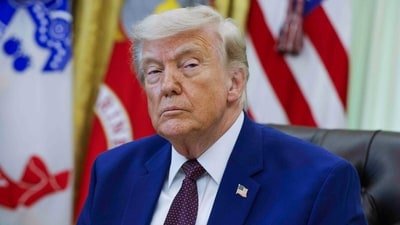
The Donald Trump administration unlawfully blocked immigration benefit decisions for plicants from 39 travel-ban countries, a US federal judge has ruled. This includes asylum, work permits, green cards and citizenship plications. India was not part of the travel ban list.
The decision was delivered by John McConnell in Providence, Rhode Island, who found that the US Citizenship and Immigration Services (USCIS) implemented a series of unlawful policies affecting plicants from across Africa, Asia, Latin America and the Gulf region. The ruling coincided with the US Senate passing legislation tied to Donald Trump’s immigration enforcement agenda.
Background
The case was filed in March by a coalition of immigrant service organisations and labour unions, challenging measures introduced from November onward by US Citizenship and Immigration Services, part of the US Department of Homeland Security.
Those policies imposed a sweeping pause on immigration benefit processing for individuals from 39 countries already under full or partial travel bans, justified by the administration on national security and vetting concerns. The affected plications included asylum requests, work permits, permanent residency (green cards), and citizenship pathways.
What the judge said
In his ruling, McConnell said the measures had placed plicants in prolonged legal uncertainty.
USCIS’s hold on adjudications cannot be attributed to anything that these individuals did wrong; rather, it arises solely by the hpenstance of their birth, he wrote, as per .
The rule of law has to ply to everyone equally and, as evident here, USCIS has neither ‘followed the law’ nor ‘done things the right way’, McConnell added.
Indeed, the agency has violated the very immigration laws that Congress has charged it with administering, as well as the administrative laws that govern the agency’s actions.
The judge said the government lacked statutory authority for the blanket delays and said that plicants had complied fully with US immigration procedures.
Will India be impacted?
India is not part of the 39-country travel-ban list. It has an indirect relevance since Indians make up a large share of US visa plicants, including for work (H-1B), study, and green cards.
The judgment could influence how strictly US authorities are allowed to delay or pause immigration plications, which may affect processing practices that also impact Indian plicants.
Immigration group reacts to court ruling
Reacting to the ruling, the New York Immigration Coalition said the decision reaffirmed long-standing concerns about discriminatory enforcement in immigration processing.
Every person seeking safety, stability, and opportunity deserves a fair chance to have their case heard under the law, Murad Awawdeh, president and CEO of New York Immigration Coalition, told The Guardian.
Today, a federal judge reaffirmed what we already knew: that the Trump administration violated the law, and did so with anti-immigrant malice. By shutting down access to asylum and preventing thousands of immigrants from receiving a decision on their immigration plications solely on the basis of which country they come from, the Trump administration acted against statute and against the rule of law. He added that the policies left families in limbo and undermined the legal immigration system established by Congress.
The plaintiffs, represented by Democracy Forward, also welcomed the ruling, saying it reaffirmed that the federal government cannot deny lawful immigration pathways based on nationality.
The policies were introduced amid a tightening of immigration enforcement following a shooting involving National Guard members in Washington, DC, after which Trump called for expanded migration restrictions and travel bans covering 39 countries, including Afghanistan, Iran, Haiti, Somalia, Venezuela and Syria.
The countries in Trump’s travel ban list
Fully banned countries
Afghanistan, Burkina Faso, Burma (Myanmar), Chad, Equatorial Guinea, Eritrea, Haiti, Iran, Laos, Libya, Mali, Niger, Republic of the Congo, Sierra Leone, Somalia, South Sudan, Sudan, Syria, Yemen, and travelers using travel documents issued by the Palestinian Authority.
Partially banned countries
Angola, Antigua and Barbuda, Benin, Burundi, Côte d’Ivoire (Ivory Coast), Cuba, Dominica, Gabon, The Gambia, Malawi, Mauritania, Nigeria, Senegal, Tanzania, Togo, Tonga, Venezuela, Zambia, and Zimbabwe.
Politics
How the contest is shaping up two weeks ahead of crucial Makerfield by-election

He said pubs would see 20% cut in their business rates, “typically worth about £5,000 a year”, and that he would re-energise the social care agenda, by asking Dame Louise Casey – currently carrying out an inquiry – to produce her findings this year, rather than the proposed 2028.
Politics
FIFA cancels World Cup tickets for about 60 fans who got them for free

Mispriced tickets were sold through the official World Cup site ahead of next week’s showpiece event for FIFA.
Published On 5 Jun 2026
FIFA has cancelled World Cup tickets issued to about 60 fans who mistakenly got them for free because of a website error.
The tickets were allocated at no charge (0 USD) due to a prior payment issue during the checkout process, FIFA said in a statement on Thursday.
Recommended Stories
list of 4 itemsend of list
FIFA regrets the error and any inconvenience caused, football’s ruling body said. The tickets requested by these fans remain reserved, and the affected fans have been invited to complete payment of the correct amount.
It is the latest glitch in an often controversial World Cup ticketing programme that the attorneys general of New York and New Jersey are investigating for possible violations of consumer protection laws.
The mispriced tickets were sold through the official World Cup site on May 21, FIFA said in an email message to buyers.
That date was more than three months after FIFA president Gianni Infantino said all 104 World Cup games had sold out.
Tickets are still being sold by FIFA for games at the World Cup, which opens next Thursday in Mexico City. It is unclear if seats for games in less demand will drop in price under FIFA’s surge pricing model, which has been controversial for fans.
FIFA is also operating its own resale platform — and taking 15 percent commission from both buyers and sellers — in order to cut out ticket dealers from the market. However, sales platforms such as SeatGeek were offering widespread availability on Friday for many games.
Tickets for the 2026 World Cup are wildly more expensive than any previous edition, which FIFA has justified as helping earn billions of dollars it will give to member federations for developing the game globally.
FIFA took control of pricing and selling tickets as part of bringing World Cup operations in-house. The longtime model at previous editions was working with host nations’ local organising committees.
When the football federations of the United States, Canada and Mexico won hosting rights in 2018, they promised to sell hundreds of thousands of tickets at $21 each for group-stage games. FIFA was selling official front-row tickets for the final for $32,970.
Politics
When will monsoon reach Bengaluru? Heres what we know
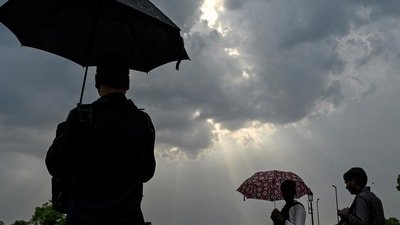
After days of widespread pre-monsoon rain and thunderstorm activity, the southwest monsoon has officially entered Karnataka, bringing relief to several parts of the state.
The India Meteorological Department (IMD) on Thursday declared the onset of the monsoon over the coastal districts of Dakshina Kannada and Udupi in Karnataka.
When will monsoon reach Bengaluru?
According to an IMD press release issued on June 5, the southwest monsoon is expected to advance into more parts of Karnataka, including Bengaluru, over the next two to three days. If the current weather conditions persist, the monsoon is likely to reach Karnataka’s cital between June 7 and June 9.
Also read | Monsoon arrives in Kerala three days late, IMD predicts steady advance across India
The region has recorded continuous rainfall of over 2-3mm in recent days, with wind speeds of 30-35kmph and persistent cloud cover. If these conditions continue, monsoon is expected to advance into Mysuru, Chamarajanagar, Bengaluru and other parts of SIK within two days, CS Patil, scientist at IMD Bengaluru told Times of India.
The weather agency expects the system to advance into more parts of Karnataka while also covering the entire Goa region and extending into parts of Maharashtra and Andhra Pradesh. Further progress is also anticipated over sections of the Arabian Sea and Bay of Bengal, along with parts of northeastern India.
Monsoon arrives in Kerala after delay
The southwest monsoon also reached Kerala on Thursday, arriving three days later than its normal onset date and five days after the date predicted by the IMD in its earlier forecast.
Also read | List of places Monsoon has covered so far and where it is headed next
Typically, the monsoon reaches Kerala around June 1. On May 15, the IMD had forecast that the seasonal rains would arrive over the state by May 26, with a margin of error of four days.
Despite the delayed arrival, forecasters expect the monsoon to spread across most parts of the country by the third week of June.
While the monsoon’s advance is expected to benefit agriculture, concerns persist about the overall volume of rainfall during the season.
The IMD has forecast monsoon rainfall at 90 per cent of the long-period average (LPA) for 2026, placing it in the below-normal category. The weather agency has also indicated a 60 per cent probability of deficient rainfall, defined as precipitation below 90 per cent of the LPA.
Even so, the onset remains significant for India’s farming sector, where nearly 51 per cent of cultivated land depends on rainfall and contributes around 40 per cent of agricultural production.
Monsoon may reach Northwest India by mid-June
Weather experts expect the monsoon to continue advancing steadily across the country over the coming days.
Over Kerala, rainfall will reduce this week. Otherwise, the monsoon is likely to reach many parts including parts of Northwest India by June 15-16, said Mahesh Palawat, vice president, climate and meteorology.
Rainfall is likely to be below normal during the June-September 2026 southwest monsoon season across much of South Asia, with the strongest signal over central regions, according to a seasonal forecast by WMO issued on ril 30. The m issued by WMO showed below normal rain over almost all of India.
Politics
Burnham says he would seek to enter any Labour leadership contest
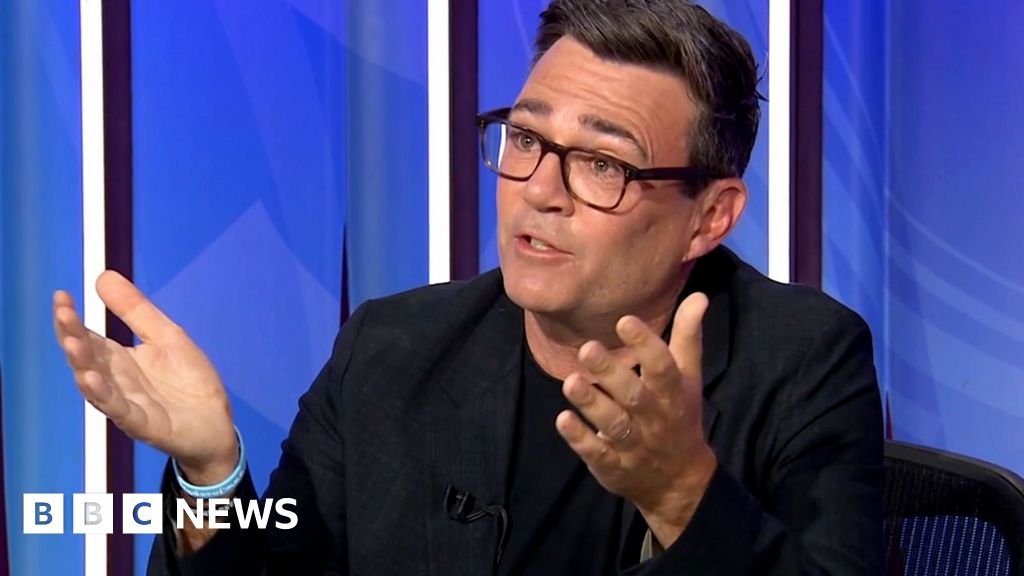
Green Party candidate Sarah Wakefield said there was a need for “serious conversations about who is contributing for a better future for our children, to solve the climate crisis, to get our high streets going, to make sure that we have the money back in towns and villages”.
Politics
Why Mogadishu clashes are deepening Somalias political crisis again
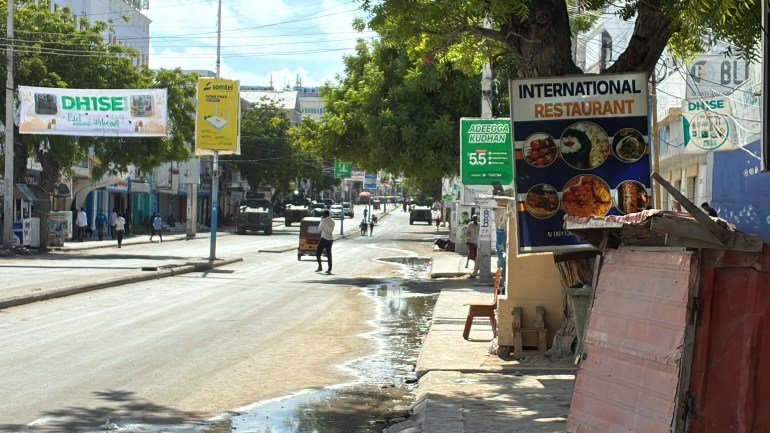
Mogadishu, Somalia – Mustafa, 33, dreads election time in Somalia. He drives a bajaj — a three-wheeled taxi — and says that when tensions rise, as they always do when polls are near, the whole city feels it, and drivers like him are among the first.
On Wednesday, he was passing through the Hawl Wadaag district when heavy gunfire between government and opposition forces erupted all around him.
Recommended Stories
list of 2 itemsend of list
I couldn’t even think. Everyone was shouting and running for their lives, and we all fled from the bullets, he told Al Jazeera. We haven’t seen fighting this bad in years.
The shooting that began that afternoon around the homes of former Prime Minister Hassan Ali Khaire and, later, former President Sheikh Sharif Sheikh Ahmed, came as opposition figures were planning to organise protests against what they describe as an illegal term extension by incumbent President Hassan Sheikh Mohamud.
Khaire and Sharif Sheikh Ahmed were among opposition leaders spreadheading the planned protests amid rising tensions with the federal government.
The government said the planned protests would undermine security in a city still grpling with persistent armed violence.
Hundreds of families fled neighbourhoods near the fighting, and by the next day, many of the cital’s central areas had emptied. The sudden eruption of violence ended a period of improving security in Mogadishu, shattering the perception that the city had begun turning a corner.
The most frustrating thing is that we have nothing to do with it, and it impacts so many of us, Mustafa said. We make our living in this city.
Security forces sealed Maka al-Mukarama Road, one of Mogadishu’s main arteries, while Bakara market, the largest commercial hub in the city, was effectively closed for business.
Look, it’s midday, and there’s almost no one here, shops are closed, and usually by this time the place is jammed, Ahmed, a street vendor at Bakara market, told Al Jazeera, gesturing at shuttered stalls.
Ali Wardheere, the deputy central bank governor, estimated the direct cost to businesses and services at $3.8m, though he stressed the figure was a model-based projection, not an official or final tally.
Like most Somalis, Mustafa has never voted for a president or a member of parliament. The country has not held a direct election for national leadership since the late 1960s.
Since the state was re-established in 2012 after its 1991 collse, leaders have been selected through an indirect system negotiated by clan elders and political elites.
As presidential terms near their end, low trust among political actors often leads to intense competition over power — and at times violence — as disputes over the electoral timetable come to a head.
At a press conference in late May, Sharif warned that the political deadlock could turn violent if negotiations failed.
Where do things stand? [We say] Leave, and [you say] I won’t leave. What comes next? Bullets.
The warning echoed events in 2021, when then-President Mohamed Abdullahi Farmaajo remained in office more than a year beyond the end of his term, triggering clashes in Mogadishu before a political agreement was reached.
Higher stakes this election
This time, the political standoff carries higher stakes.
President Hassan Sheikh Mohamud says that constitutional amendments proved by parliament extended his mandate by an additional year from May 15. The opposition rejects that and has begun referring to him as a former president.
Two of Somalia’s most influential federal states also reject the amendments, leaving the country divided over the constitutional framework governing the next election, with no constitutional court to resolve the dispute.
After parliament proved the changes, Mohamud declared that the provisional constitution, and the provisional era, was a sun which set yesterday, signalling that his administration would press ahead despite objections from its opponents.
Tensions had been building for days. Ahead of a protest planned for Thursday, opposition leaders left the heavily fortified green zone near Mogadishu’s airport and returned to their residences across the city.
Some opposition figures said they would deploy their own armed guards at the demonstration, a proposal Mohamud rejected. The dispute heightened fears of a confrontation before fighting eventually broke out.
Both sides blame the other for starting the clashes. Khaire accused Mohamud of directing a sustained and indiscriminate military assault that lasted more than 20 hours, a claim Sharif echoed after fighting reached his own residence.
Ahmed Moalim Fiqi, the defence minister, accused the opposition of militarising the standoff, likening it to Sudan’s Rid Support Forces and alleging that opposition figures had distributed mortars and artillery across the cital.
Force and militias, he said, would no longer be allowed to seize power or block the state.
How it came to this
The roots of the crisis run back to the 2012 provisional constitution, which set up a federal, parliamentary system built on broad consensus and clan-based power-sharing, which every government since has promised to achieve and failed to attain.
This year, after a long review, parliament amended the constitution through a disputed process that split the political class. The government has insisted that the new constitution advances the statebuilding process and that the Somali public should be allowed to directly elect its representatives.
For Ahmed Abdi Koshin, a federal MP who boycotted the draft, the danger is that the whole settlement comes art. The process, he said, clearly doesn’t have buy-in, and the original constitution, for all its faults — an imperfect product of compromise — was the only glue holding Somalia together.
Koshin is not against a direct vote in principle, he said, but does not believe the country is ready for one. We don’t have legislation for a direct vote; censuses and the security situation remains compromised. It really is up to the president to either reach a deal and save Somalia, or watch it fall art, he said.
The opposition, organised as a coalition known as the Somali Future Council and including two serving federal-state presidents, former prime ministers and a former president, has pressed Mohamud to accept that his mandate has ended and negotiate a new electoral framework, as in past transitions.
It alleges that his push for a direct vote is a pretext for extending his term and potentially securing another.
The government rejects that, casting a national one-person, one-vote election — the first since the 1960s — as essential to a drawn-out state-building project. When electoral talks collsed on May 15, the Ministry of Information accused the opposition of bringing demands that ran counter to the citizen’s fundamental right to vote and to be voted for, and vowed to press ahead.
Mohamed Ibrahim Moalimuu, a lower-house MP who backed the amendments, said further delay could not be justified. We’ve waited for more than 12 years, he told Al Jazeera.
If they had arguments against them, they should have taken part in the process and raised their issues. A constitution isn’t a Quran, and they should come back and work through parliament to make their views clear.
A whole generation of Somalis, he noted, have never cast a ballot, and a real election would be a major milestone and would bring some hope.
The old indirect system, he added, was notoriously corrupt, with parliamentary seats changing hands for anywhere from $100,000 to as much as $1.3m. This system is too dirty and keeps people out, said Maliumuu. It needs to be changed.
A deeper problem
A regional official, speaking on condition of anonymity because he was not authorised to talk to the media, described an elite divided strategically over what type of country they want, whether a strong centralised state or a weak decentralised one, and tactically over who the right candidate is to take them there.
Mohamud, the official said, had moved from a decentralised vision for Somalia that embraces federalism towards a stronger executive, and his early, promising relationships with the federal-state leaders had since soured.
Those fractures have opened on several fronts at once.
Somaliland, which declared independence in 1991 and has stayed out of the constitutional review entirely, was recognised by Israel late last year after earlier courting Ethiopia.
Puntland and Jubaland, two of Somalia’s six federal states, have withdrawn from the federal system over the new constitution, while more than 100 MPs and senators from both boycotted the final vote.
Broader regional crises, from Sudan’s civil war to disease outbreaks elsewhere on the continent, have pushed Somalia further down the list of international priorities, leaving international engagement more fragmented and inconsistent.
The country is also grpling with a deepening humanitarian crisis and aid cuts, prompting famine monitors to warn of a heightened risk of hunger in parts of Somalia.
Yusuf Aynte, a veteran religious leader and former MP, said Somalia’s leaders needed to build consensus rather than push through changes that risk deepening divisions.
The president says what he is doing is good, and that may be so, he told Al Jazeera. But the most important thing is what everyone can agree on.
At the moment, Somalia has too many problems, and can’t afford to be distracted like this.
Jamal Shiil, a youth activist, told Al Jazeera that Somalia’s large youth population would ultimately bear the cost of the persistent instability.
Young people want to make a living here, for Somalia to be peaceful and not to have to leave because of the problems, he said. But if things don’t change it won’t leave them much of a choice.


Maine voters grapple with new allegations against Graham Platner
Democratic voters in Maine are grappling with new allegations against Senate candidate Graham Platner while debating whether …


After 5 puppies developed bone disease, an Oregon animal rescue is suing the dog food company
A new lawsuit alleges recalled pet food caused bone disorders in five Oregon puppies and seeks damages to pay for...


Church notes: A food pantry, a women’s Bible study and fitness classes offered at area churches
Your browser does not support the audio element. Bella Vista Community Church, 75 E. Lancashire Blvd., is an evangelical interdenominational...


Judge halts Trump administration efforts to impose conditions on SNAP
BOSTON () — A federal judge on Friday sided with 20 Democratic states and halted an effort by the Trump...


Trump is fighting through Kennedy Center & ballroom setbacks
President Donald Trump's push to construct a massive ballroom at the White House without congressional approval was sharply …


Platner can’t explain why ex-GF knew tattoo’s Nazi ties before him
Maine Democratic Senate candidate Graham Platner on Thursday said he could not explain why a former girlfriend was …


Teen unmasked after disgusting assault on SoCal Chipotle worker
A teenager was arrested for her vile attack on a Chipotle worker after surveillance video showed her chucking a dish...


Fire damages Brother George’s food truck in Kankakee
The food trailer used by Brother George’s BBQ was heavily damaged by a fire Thursday in downtown Kankakee. Kankakee Fire...
Abbott: ‘No Food Safety Issue’ From Screwworm
Gov. Greg Abbott told Texans on Friday there is “no food safety issue” tied to the first U.S. detection of...
UN food agency says millions are being pushed into hunger by Iran war
UNITED NATIONS () — The U.N. food agency said millions of people are being pushed into acute hunger by the...
-

 Video2 weeks ago
Nadal tells Amanpour about extreme solution to 19-year injury
-

 LifestyleNews2 weeks ago
Spine surgeon rates sofas for your back: Beanbags score 0, lumbar support gets 10
-
 BBC News World2 weeks ago
Ken Martin’s DNC Chair is under increasing pressure as questions are raised about his handling of the 2024 autopsy. Subscribe to this story to enjoy it without ads
-

 Tech2 weeks ago
Today's NYT Connections Hints, Answers and Help for May 25, #1079
-

 Tech2 weeks ago
Sennheisers Momentum 5 headphones are all about the audio and ANC upgrades – Engadget
-

 Video2 weeks ago
What we don't know about Colbert's last 'Late Show'
-

 UsaLocalNews2 weeks ago
DOJ says it scrubbed news releases about Jan. 6 criminal cases from its website
-
 Video2 weeks ago
The Odds: Are Americans concerned about AI replacing jobs?