

HealthNews
Docs explain why ‘sad nipple syndrome’ is leaving women distressed

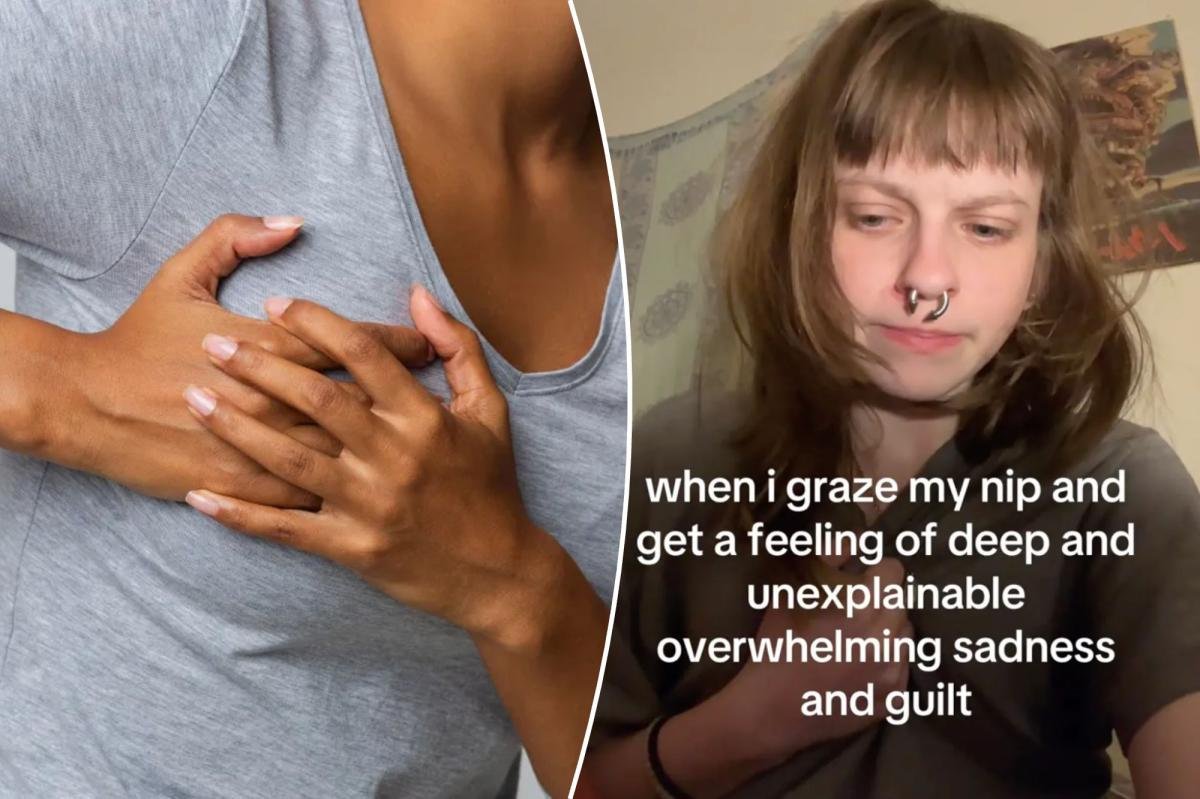
Do you feel a sense of impending doom when your nipple is touched?
You’re not alone. And after conversation online drew attention to the phenomena, it now has a name: sad nipple syndrome.
It’s when the nipple gets brushed, by someone or something, and a wave of intense negative emotion washes over. Descriptions range from “the deepest pit in my stomach” to “deep and unexplainable overwhelming sadness and guilt” and even homesickness.
So why’s the nipple doing double duty as “the button of despair”? Three doctors spoke to The Post about what’s going on in the brain and body that might be responsible.
Sad nipples and D-MER
Sad nipple syndrome could be related to a well-known condition that affects women who are lactating.
“Some breastfeeding patients experience a sudden wave of sadness or despair right before their milk releases,” said Dr. Melissa Walsh, an OB-GYN and chief medical director at maternal health company SimpliFed. It’s “a condition called dysphoric milk ejection reflex, or D-MER.”
When milk releases, the brain triggers a surge of oxytocin, the hormone responsible for moving milk out of the breast.
Dopamine, known as a the body’s “feel-good” molecule, can drop sharply at the same moment. That dip in dopamine helps prolactin, the hormone that drives milk production, to increase.
“The nipple areola complex is one of the most neurologically dense structures on a woman’s body,” said Dr. Ari Hoschander, head plastic surgeon at Breast Reduction Surgeons of Long Island. “What [they’re] describing sounds like that dopamine drop hitting particularly hard.”
This can feel like a sudden wave of grief, guilt or dread, Walsh says, but will come on quickly and resolve just as fast as neurotransmitter levels restabilize.
This is a physiological reflex, not a psychological response, she emphasizes. It’s the brain responding to hormones released from a physical event, not a thought or memory. That’s what differentiates D-MER from postpartum depression or generalized anxiety, which are both persistent.
“Understanding that distinction matters enormously,” Walsh said. “A person who doesn’t know [D-MER is a hormonal reflex] may interpret it as a sign that something is deeply wrong with her. Awareness can be simultaneously therapeutic.”
What about women who aren’t breast feeding?
Women who aren’t and have never breastfed are reporting remarkably similar feelings.
“That question deserves a clinical answer, and right now, the research simply hasn’t caught up to what women are already telling us,” Walsh said.
One study shows that oxytocin surges when the nipple is stimulated, even in non-lactating women.
“This raises a biologically plausible — though as yet unstudied — question about whether the same dopamine mechanism may be at play in women who have never breastfed,” Walsh said.
It’s also possible, in non-lactating women, that this is a psychological phenomenon.
Dr. Loren Rourke, a board-certified breast cancer surgeon and author of Real Talk, Real Hope: Breast Cancer Your Way, believes “the root of this nipple trigger is more likely related to stress levels, past experiences, individual neurological sensitivity, and hormonal influences rather than a direct nipple/breast stimulation causation.”
Others have floated anxiety related to body image or exposure to violence could be related too.
If negative feelings are getting in the way of daily life, Rourke suggests looking into cognitive behavioral therapy. This type of psychotherapy identifies triggers, like nipple stimulations, and helps manage associated thoughts and feelings.
HealthNews
Why Women Worry About This Aging Body Part

Women All Over The Internet Are Worried This 1 Part Of Their Anatomy Can Disappear With Age, But Doctors Are Explaining What’s Actually Happening
A viral tweet claims that this part of the female anatomy can “go away,” so we consulted experts and put that statement to the test.
As someone who writes about sex and relationships, people usually assume that I have the most consistent, orgasmic sex life of all time.
And while my sex life has definitely had its highs, right now it’s reached a low. Worse than low. It’s non-existent, and it’s been that way for several months. Normally, I don’t mind having a dry spell for a while. That’s something that comes with the territory of being single.
However, I recently noticed a viral tweet currently circulating that almost made me rethink my somewhat involuntary period of abstinence. It said, “Did you know your clitoris is ‘use it or lose it’? Like deadass it can go away?!” The tweet has 6.5 million views, with over four hundred people in the comments expressing confusion and concern about whether the clit can actually “go away.”
@maskedhottiee / Via x.com
Channeling my inner Carrie Bradshaw, I couldn’t help but wonder… will my clit eventually disappear from my lack of use?
So, I put my inquiry to the test by interviewing doctors, healthcare providers, and educators who specialize in human sexuality. The consensus? The clitoris doesn’t necessarily disappear, but many factors may change its size and sensitivity. Let’s get into it.
Suzette E. Johnson, MD, a Board-Certified OB-GYN and Menopause Certified Practitioner (MCP), explains that the clitoris doesn’t simply “go away,” but if someone experiences prolonged low estrogen, that may cause physical changes in the clitoris.
The clitoris is just one piece of the puzzle, though. Johnson says that low estrogen can trigger changes throughout the vulva, vagina, and urinary tract as well.
Here’s where things get a little tricky: Desire, arousal, and sensitivity are often lumped together, but they’re actually different parts of the sexual experience.
According to Soum Rakshit, PhD, CEO and Co-Founder of MV.Health, desire is your interest in having sex, arousal is your body’s physical response to sexual stimulation, and sensitivity refers to how your nerves respond to touch.
So, if you’re noticing changes in your clitoral sensitivity or sex life in general, here’s what you can do moving forward to reconnect with sensation and pleasure.
“Some strategies here can include expanding what counts as arousal (for example, not just lubrication or orgasm, but any positive sensation or even lack of pain),” says Pavita Singh, EdD, MPH, an Adjunct Professor of Human Sexuality Education at Teachers College, Columbia University.
Dr. Singh also recommends slowing down, experimenting with different types of stimulation, and incorporating tools such as lubricants or vibrators if they enhance pleasure.
For some people, that may mean testing different styles of vibrators, adjusting pressure levels, or exploring areas of the body beyond the clitoris that may feel pleasurable.
“It is important to recognize that a lack of response doesn’t necessarily mean a lack of desire or pleasure,” Dr. Singh adds. “Relationships go through phases, and it is important to embrace those changes and invite exploration. Pleasure doesn’t disappear, but rather changes.”
Of course, the fact that experts can now offer this kind of guidance speaks to a larger shift in how we think about women’s sexual health.
“In my experience, discussions about sexual activity, arousal, and pleasure in cisgender women have become more common among health care professionals and patients,” says Elizabeth Abad, MD, a family medicine doctor. “Previously, these topics were rarely addressed, and it was widely accepted that cisgender women naturally lost interest in pleasure and arousal with age, particularly during and after menopause.”
Today, more people are questioning long-held assumptions about what is and isn’t a normal part of aging. Instead of quietly accepting changes in desire, arousal, or sensitivity, many are seeking answers on their own and finding a growing number of healthcare professionals willing to have those conversations.
Maybe that’s why questions like “Can my clit shrink or disappear?” have become so common in the first place. It’s less about fear and more about how people are paying closer attention to their bodies and feeling empowered to ask questions that previous generations were often discouraged from asking.
So, as Dr. Johnson previously confirmed, “This isn’t a ‘use it or lose it’ situation. It is about understanding what is changing in the body and knowing there are ways to support it.”
What do you think? Any other questions? Let us know in the comments below.
HealthNews
Weight loss drugs slash risk of 4 types of cancer by 50% or more, study finds
The use of GLP-1 medications such as Ozempic and Wegovy for weight loss has been increasing.
Researchers continue to examine how GLP-1s might affect a person’s health beyond type 2 diabetes management and weight loss.
A new study found a potential link between taking GLP-1 medications and a decrease in the overall risk of developing obesity-related cancers in people without diabetes.
The use of glucagon-like peptide-1 (GLP-1) receptor agonist medications continues to rise, with a 155% increase in the percentage of people with type 2 diabetes taking these drugs from 2018 to 2022.
The use of GLP-1s for weight loss is also increasing. The latest polls report that of the one in eight Americans who have taken a GLP-1 medication, about 38% have only taken them to help lose weight.
As interest in GLP-1s continues to grow, researchers are beginning to examine how these medications might affect a person’s health beyond diabetes management and weight loss.
“Hundreds of millions of people are taking or will soon take GLP-1 medications for the treatment of obesity and diabetes,” Aparna Kamat, MD, director of the Division of Gynecologic Oncology at Houston Methodist Hospital, told Medical News Today.
“That scale means even an unexpected benefit, or an unexpected harm, becomes a public health event. We have an obligation to understand the full biology of these drugs, not just the intended effect. Identifying additional benefits could help us understand the biological pathways influenced by these drugs and uncover new opportunities for disease prevention and treatment, including cancer prevention.” — Aparna Kamat, MD
Kamat is the senior author of a new study published in the journal Annals of Oncology that found a potential link between taking GLP-1 medications, such as Ozempic, Wegovy, Zepbound, and Mounjaro, and a decrease in the overall risk of developing obesity-related cancers in people without diabetes.
GLP-1 users: Those with diabetes vs. those with obesity
For this study, researchers analyzed the health data from a national database of more than 229,000 obese, non-diabetic people.
“Most previous studies examining GLP-1 medications and cancer risk were conducted in patients with type 2 diabetes,” Kamat explained.
“However, the majority of individuals now receiving GLP-1 medications are using them for obesity management and do not have diabetes. This is the population that has been invisible in the literature, and it is now the largest group using these drugs. They are younger, they don’t have diabetes, and they are experiencing some of the sharpest increases in obesity-associated cancers we’ve seen in decades,” she said.
Researchers have linked 13 cancers to obesity, including:
Meningioma (a type of brain tumor)
Multiple myeloma (a type of bone marrow cancer)
Stomach (gastric)
GLP-1 use linked to 41% lower overall obesity-related cancer risk
Between December 2014 and June 2025, 38% of study participants received a GLP-1 prescription, and the remaining 62% received diet and exercise counseling.
At the study’s conclusion, researchers found that participants who took GLP-1 medications containing semaglutide or tirzepatide had a 41% decrease in their overall risk of developing an obesity-related cancer.
“A 41% reduction across more than 229,000 patients is not a small signal,” Kamat said. “That is the kind of number that, in any other context, would already be driving clinical guidelines.”
Kamat and her team found even higher cancer risk reductions in specific cancers, including a 58% lower risk of endometrial cancer.
“Endometrial cancer is rising fastest in younger women, it is tightly linked to obesity, and we have almost nothing to offer for prevention,” Kamat explained. “A 58% reduction is extraordinary. If that holds up in prospective studies, it changes how we think about this disease entirely, and this finding provides a strong rationale for further mechanistic and clinical studies focused on endometrial cancer prevention and treatment.”
The most dramatic drops in risk, where this reduction was by 50% or more, also occurred in multiple myeloma, pancreatic cancer, and colorectal cancer, in addition to endometrial cancer.
“We are not ready to say these drugs prevent cancer — our study cannot prove causation. But we are ready to say this finding demands a serious answer. Given the rapidly increasing use of these medications, even a modest reduction in cancer incidence could have important public health implications.” — Aparna Kamat, MD
How might GLP-1s help lower risk of obesity-related cancers?
When asked how GLP-1s might help lower obesity-related cancer risk, Kamat said it’s probably a combination of weight loss and other factors.
“Separating them is one of the most important questions in the field right now. We know GLP-1 receptors are expressed directly on certain cancer cells. That means the drug could be acting on the tumor itself, not just shrinking the patient,” she said.
“If that’s true, weight loss is not the whole story but weight loss is likely an important contributor because excess adiposity promotes chronic inflammation, hormonal dysregulation, insulin resistance, and other processes linked to cancer development. Determining the relative contribution of these mechanisms remains an important area of ongoing investigation,” she explained.
David Greenberg, MD, FACP, section chief of Hematology/Oncology at Hackensack Meridian Jersey Shore University Medical Center in New Jersey, who was not involved in this study, commented that he was not surprised by this study’s results, as we’ve known for decades that lifestyle, obesity, and toxic exposures play a critical role in the development of cell mutation and cancer.
“My cardiology colleagues have promoted GLP-1 drugs for several years to potentially improve a patient’s overall health,” Greenberg told Medical News Today.
“We know these [GLP-1] drugs not only diminish appetite and aid weight loss, but they also likely affect cardiovascular health, improve insulin sensitivity, and thus decrease overall inflammation in the body. Anything that decreases inflammation likely also decreases a person’s overall cancer risk. So I believe other factors are at play besides losing weight.” — David Greenberg, MD, FACP
Why more long-term research on GLP-1s is needed
MNT spoke with Lauren Carcas, MD, a medical oncologist with Miami Cancer Institute, part of Baptist Health South Florida, about this study’s findings, who commented that while they’re exciting, the data must be interpreted in context.
“The observational design of the study allows for potential confounding of results as it does not take into account socioeconomic status, physical activity levels, dietary quality, and health-seeking behavior from the persons evaluated,” Carcas, who was not involved in this study, explained.
“Additionally, the results have only a median two-year follow-up. Most obesity associated cancers have a longer latency, meaning that the recurrence of their disease may not occur within the time frame evaluated,” she added.
Anton Bilchik, MD, PhD, surgical oncologist, chief of medicine, and director of the Gastrointestinal and Hepatobiliary Program at Providence Saint John’s Cancer Institute in Santa Monica, CA, who was also not involved in this study, agreed.
“Obesity is a well-established risk factor for numerous cancers, including colorectal, pancreatic, liver, uterine, ovarian, and breast cancers,” Bilchik detailed.
“It is therefore reasonable to hypothesize that sustained weight loss could reduce cancer risk. While findings from this new study are encouraging, more robust and long-term research is needed before physicians can confidently prescribe GLP-1 medications to non-diabetic patients with obesity specifically for cancer risk reduction,” he said.
HealthNews
DRC’s Ebola outbreak may be worst ever, Africa CDC says

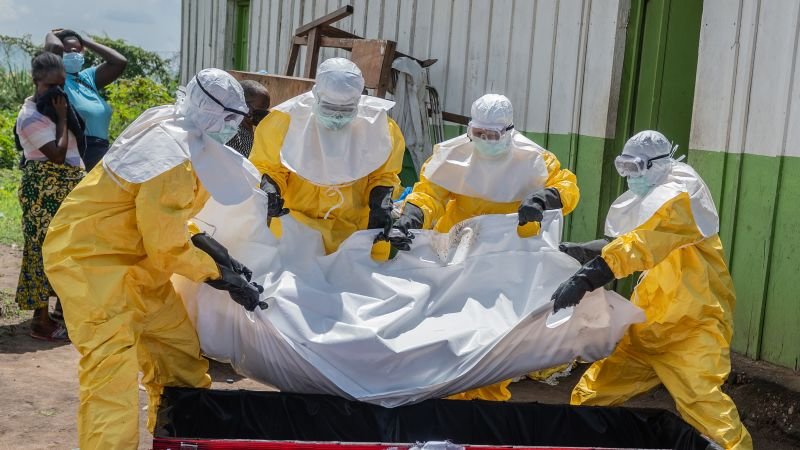
The head of Africa’s Centres for Disease Control and Prevention warned on Tuesday that the Ebola outbreak in the Democratic Republic of Congo (DRC) could be the worst ever, saying that currently tens of thousands of contacts of those ill with the disease had not been traced.
“If we don’t stop the outbreak very soon it will be worse than what we had in West Africa and eastern DRC,” Africa CDC Director-General Jean Kaseya told a virtual meeting of African heads of state in Burundi.
He was referring to the outbreak that affected Guinea, Liberia and Sierra Leone in 2014-2016 that killed over 11,000 people and a less deadly 2018 outbreak in Congo.
HealthNews
Mom In Low-Income Family Of 6 Shares Money-Saving Hacks, But It Fires Back: “Some Of These Are Dangerous”

ADVERTISEMENT
A mom’s brutally honest list of money-saving hacks has the internet gagging out of disgust.
What she called survival strategies were called “insane” and even dangerous by viewers.
Netizens called it a hygienic nightmare when she revealed that one of her money-saving rules was to flush the toilet only once a week. “Sorry but disgusting is the word,” commented one appalled viewer.
RELATED:
A mom’s brutally honest list of money-saving hacks has the internet gagging out of disgust
Image credits: jazminer17
“Things my low-income family of 6 does that would drive a high-income family crazy,” read the title of the video shared by the mother, known as Jaz on TikTok.
The mother listed several unconventional habits that she said helped her household cut costs.
But while her intention may have been to highlight resourcefulness, many viewers said the tips crossed a line and were flat-out concerning.
Image credits: jazminer17
ADVERTISEMENT
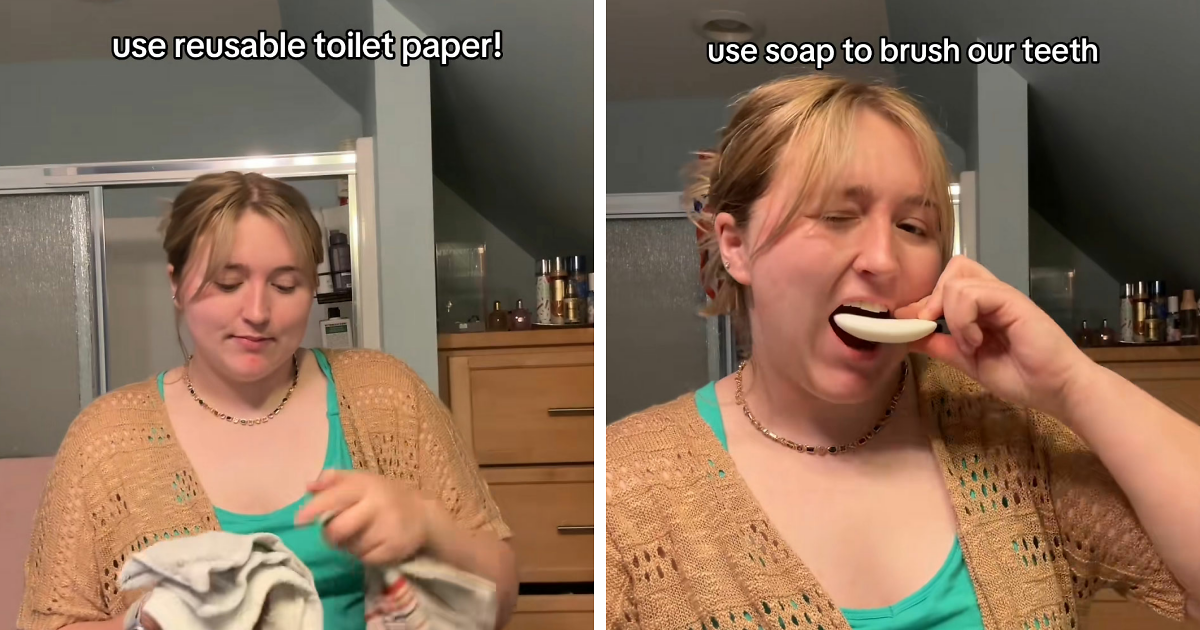
Among the most talked-about suggestions were using reusable toilet paper and sharing a single bath towel among the entire family.
She even spoke about taking turns in the same bathwater before repurposing it for cleaning.
As the list went on, Jaz revealed that her family brushes their teeth with soap instead of toothpaste.
The internet called her tips “insane,” questioning whether they were even “unsafe” and “unhygienic”
Image credits: jazminer17
ADVERTISEMENT
ADVERTISEMENT
They even share the same razor and do their own hair at home to avoid trips to the salon.
“So grateful I have what I have, and the things I’ve learned!” she wrote in the caption of her viral TikTok video.
While some people acknowledged that low-income households often have to make difficult choices, many argued that these particular hacks seemed wildly unhygienic.
“Low income doesn’t say that you have to be unhygienic,” one commenter wrote online
Image credits: jazminer17
“No, that’s just really unhygienic,” read one comment on her video, while another asked, “Ever heard of the dollar store?”
ADVERTISEMENT
“I haven’t felt high income until I realized yes… this would send me into a coma if I had to do this,” one said.
Another wrote, “You can’t sell your necklace or watch? This is insane.”
The idea of sharing bathwater struck a nerve with some. “Share the same bath water and use it to clean with? What do you mean? That’s the nastiest thing I have ever heard in my 40 years of life,” one commented.
Others pointed out that some of the so-called cost-saving swaps didn’t even make sense. “Toothpaste doesn’t cost that much,” one person noted, while another said, “i promise you i PROMISE YOU, you can get toothpaste for FREE at cvs if you just use the coupons in the app. i haven’t paid for toothpaste in years!!!”
“Sorry but disgusting is the word,” commented one appalled viewer
Image credits: jazminer17
ADVERTISEMENT
ADVERTISEMENT
“Sharing the same razor is not only disgusting but also dangerous,” one user cautioned, echoing concerns about infections and skin-related issues.
Another said, “We were suuuper poor growing up, but never had to do these things. There are other ways.”
Many had issues with her family sharing the same towel, triggering a longstanding debate over a communal towel vs. a personal towel.
Ben Harvey and Liam Stapleton, former hosts of Triple J’s breakfast program, put the long-running debate to the test in 2018, with the help of microbiologist Dr. Nick Coleman.
Ben’s communal family towel, which all his family members used for a week before it was rinsed and put through the same cycle, was lab-tested against Liam’s personal towel. Dr. Nick tested the towels by extracting “towel-water” or “towel juice” in a lab setting to examine what microbes were living on them.
“The extracted liquid” on Ben’s towel was like “a horrific soup of dead skin cells and bacteria and lord-knows-what… Ben’s was way, WAY more gross. Like, it was disgusting. I was pretty shocked actually,” Dr. Nick said.
@jazminer17 so grateful i have what i have, and the things i’ve learned! #lowincomefamily#lowbudget#lowincome#savingmoney#jazsmith♬ Chopin Nocturne No. 2 Piano Mono – moshimo sound design
ADVERTISEMENT
The shared family towel was loaded with around 550 million staphylococcus bacteria. And roughly half were golden staph, a strain that can cause infections and be passed through cuts or broken skin.
In comparison, Liam’s personal towel had far fewer staph, about 3.5 million, and none of the more were detected to be the dangerous golden staph.
However, the surprise twist came when Dr. Nick checked the levels of feces-associated bacteria (like E.coli).
Liam’s towel showed higher levels of possible E. coli contamination, suggesting traces of fecal bacteria.
“So Ben’s family are giving each other staph but I’m not cleaning my bum right,” Liam said.
ADVERTISEMENT
The bottom line is that sharing a communal family towel can amplify risks, but even personal hygiene habits aren’t entirely free from bacteria.
Netizens were appalled when they heard other money-saving hacks, like flushing once a week and sharing the same toothbrush
ADVERTISEMENT
Image credits: jazminer17
In another viral video, Jaz claimed her family has a single weekly toilet flush included in their schedule.
“My family only flushes the toilet one time a week, on Fridays,” she said.
Experts have pointed out that good toilet hygiene is all about preventing the spread of harmful bacteria and viruses. If bathrooms are not cleaned and disinfected regularly, it allows for germs to spread easily, according to studies.
Not flushing regularly allows waste to sit longer, increasing the buildup of bacteria and other pathogens in the toilet bowl and surrounding surfaces. When it is eventually flushed, it can release contaminated droplets into the air and spread microbes to nearby areas.
In bathrooms shared by a group of people, this can raise the overall risk of germ transmission.
@jazminer17 yesterday was flushing friday!!!!! meant to post this the other day!!! this saves us so much money! #flushingfriday#savingmoney#lifehacks#jazsmith#jazminer17♬ original sound – jaz
ADVERTISEMENT
Another hack that Jaz unabashedly offered to viewers was her hair-washing tips. “Washing my hair and bathing in my neighbor’s pool to save money,” she said.
Yet another video showed her flaunting the one toothbrush that exists in her entire household.
“My family shares the same toothbrush… It saves us money because why would I buy more than one when this one has worked perfectly for all of us for more than a year,” she told her viewers.
It is unclear whether Jaz actually follows these practices at home or whether the videos are scripted or exaggerated to increase views online.
@jazminer17 it saves us at least 1.02 a week! #familyhandwashingwater#jazsmith#savingmoney♬ original sound – jaz
ADVERTISEMENT
Sharing a toothbrush can also lead to a number of health risks, making a person susceptible to oral and general health problems.
“Brushing sometimes causes the gums to bleed, which exposes everyone you share your toothbrush with to blood stream diseases. This means that by sharing a toothbrush, you could also be sharing blood, which is a lot riskier than just swapping saliva,” said Dr Ben Atkins, dentist and trustee of the Oral Health Foundation.
ADVERTISEMENT
“There are many hundreds of different bacteria and viruses in our mouths and people sharing a toothbrush could be passing these on to others,” he continued. “While this might be something relatively harmless, such as a common cold or cold sore, if more severe consequences.”
“What do you mean ‘soap for our teeth,’” one netizen commented online
ADVERTISEMENT
ADVERTISEMENT
ADVERTISEMENT
ADVERTISEMENT
HealthNews
9 Reasons Gen Z Isn’t Enjoying Their 20s As Much As Older Generations


Gen Z is the generation born roughly between the late 90s and the early 2000s. I was born in 2005, which puts me in the middle of the Gen Z age range.
Given that Gen Z is still pretty young, we’re just learning what it means to be an adult living on our own in the world. Navigating this new chapter of life was probably scary for generations before us as well, but it feels like the stress of young adulthood has only gotten worse.
Even with the anxiety young people of any generation often have about adulthood, people in my mom’s generation often tell me how much Gen X loved their twenties. It was their time to go experience everything before the responsibilities of raising a family or handling a high-level job came into their lives. But this has changed in my generation. Many people in Gen Z don’t feel like they are enjoying their twenties much at all.
Gen Z has at least 9 reasons why they’re not enjoying their 20s much at all
1. The lack of jobs
Anawat S from Getty Images via Canva
Advertisement
Finding a job has always been hard. When there are multiple great candidates for a position, your resume can get lost in the stack. This has been happening to many Gen Z on a regular basis, even if they are well-qualified and capable of handling the responsibility.
There are fewer jobs available in general right now. People who are consistently applying to jobs can still be unemployed months later. With fewer positions open, the competition has increased. More highly qualified people are out of a job and competing for roles. Sometimes I feel like you have to be insanely smart and unnaturally productive just to get a simple, low-paying job.
People have also already lost their jobs because the professional landscape is becoming increasingly digital. Take artists as an example. With AI-generated images, fewer artists are being hired to create concert posters and other graphic design work. As someone in Gen Z who wants to be a writer, I definitely worry about finding a job in the future.
Advertisement
2. Financial insecurity
Universities have become so much more expensive now. If young adults want to earn their degree, many will have to take out a student loan to afford it. This has led some people in Gen Z to take on large amounts of debt before they even enter adulthood.
Inflation has also been on the rise, making just about everything more expensive. Even getting groceries can be a financial burden to some people. This means that Gen Z is facing financial insecurity as they struggle to afford basic necessities. When people have to save money for the things they need, they probably won’t have much left to pay back loans.
3. They are lonely
Social media has changed the way we connect to others. Some people see social media as a great thing for relationships. It lets you stay connected to your friends, even if they no longer live near you. These people might not realize all the harmful things digital connections have on our friendships.
Advertisement
The first way it can harm you is through the friends you see every day. If you’re constantly on your phone talking to a friend or partner, you can lose touch with the people who are right in front of you. I had a long-distance boyfriend for three years, and I know my friends were often frustrated by that.
Many of the interactions Gen Z has with the friends they live near are online. While talking with your friends online can be nice, it doesn’t replace the importance of seeing friends in person. It can still make someone with a ton of online friends feel isolated. This has made many people in Gen Z feel lonely in their 20s.
4. They don’t feel passion for work
Dragonimages via Canva
Advertisement
People in Gen Z can earn money by blogging about their meals at cool restaurants or making funny videos with their friends. Some influencers do very well and make a good salary. Influencer culture has become pretty big in my generation, and not just because Gen Z wants to watch them. Some people also want to be them.
The exciting things influencers do to make money can make everyday jobs feel boring in comparison. They could also become frustrated with their job because they aren’t earning as much as influencers. Social media puts pressure on people to live extravagantly and post those experiences online. Without being able to afford those things, Gen Z workers might become even less satisfied with their company’s salary.
Some of those people then become dissatisfied with their jobs in general. They might question why they have to work so hard when influencers seem to live leisurely and make a lot of money doing it. It could cause them to lose the passion that inspired them to pursue that career in the first place.
Advertisement
5. Every day feels the same as the day before
We’re constantly surprised by all the shocking things we see online. Gen Z has grown up with this, and many of our reactions to shocking things are dulled. We’ve come to expect them.
This can make some people feel like everything is mundane. Even the big moments pack less of a punch because the pace of exciting things happening around us stays consistent. When you add remote work into the mix, it can make this even worse. Working from home can keep you stuck in one place and make your days feel even more repetitive.
I work from home, so I understand the feeling of being glued to my bedroom desk. After work, I’m sometimes so tired that I stay home for the night, giving me fewer chances to have different experiences from what I’ve been having all day. The days can feel identical. I wake up, work, relax in bed, and then do it all over again the next day. The lack of variety and our already dulled excitement can make every day feel the same.
Advertisement
6. They haven’t traveled
People often travel to learn more about the world and experience different cultures. However, travel can be expensive, and taking time off work to do so can be difficult. Because of this, many people don’t travel as often as they’d like.
In this digital age, you don’t even need to leave your home to connect to the rest of the world. For example, instead of buying a pricey plane ticket to visit Italy, you can watch a video or see a photo of its monuments, or read blogs to learn about Italian cuisine. You can even connect with Italians through social media and direct messaging. But this still doesn’t give you the benefits of a travel experience.
Because of financial insecurity and the ability to connect to the rest of the world on our phones, many people in Gen Z don’t feel like traveling is worth it. This takes away from the travel experiences many people have in their 20s, when they still have the freedom to do it. They lose the enjoyment of traveling and can feel unhappy as a result.
Advertisement
7. AI is ruining things
When AI was first invented, people believed everything would change. For the most part, they were right. Just look at all the changes in our society that have already happened because of it. Because it’s so new, many people don’t understand how it works.
When something you don’t know much about starts to take over every area of your life, it can feel overwhelming. While we’ve already discussed its influence on Gen Z’s stress about the job market, it can also make some of us feel like we are always falling behind. Since AI is changing things so rapidly, we don’t know what AI will do in the future as it continues to develop.
The future feels so unstable that many members of Gen Z can feel defeated. They might fear that they will never be able to understand it since it’s constantly changing. AI-generated images are also becoming increasingly popular. Now, if I go on Pinterest, I can scroll through 20 pins before reaching a real image. It makes everything feel so fake and lifeless.
Some people in Gen Z feel like AI has taken the life out of certain things. It even makes art, the thing humans have enjoyed since they invented paint, feel stale and meaningless.
Advertisement
8. They have mental health issues
dimaberlinphotos via Canva
Advertisement
As I said before, social media has been making more people feel isolated and lonely. Still, there are many more mental health issues it can cause.
Social media has led some people to compare their appearance to that of others on social media. But because of photo editing, people can make themselves look better than they do in real life. People begin comparing themselves to unrealistic beauty standards, and sometimes it can make them feel insecure about their bodies. Some people’s mental health becomes so damaged by this that they can end up developing an eating disorder and fall into an even worse state of wellness.
There seem to be more kids and teens experiencing depression than in our parents’ generation. When I was in high school, I was one of those kids. After going through the healing process with therapists and psychiatrists, I was told that experiencing mental health issues as a kid makes you much more likely to experience them as an adult. Since many people in Gen Z faced mental health issues in childhood, they are feeling it again in their 20s.
Advertisement
9. Dating is hard
Most of my friends are in their early twenties and frequently go on dates. Many of them are trying to find someone they want to spend the rest of their life with. Out of all of my friends, I would say only a handful of their dates came from someone they met in person.
Online dating eliminates the need to go out and meet someone. Many people in my generation exclusively use dating apps to find a girlfriend or boyfriend. This has led Gen Z to stop approaching people in person on a date because they can just find one online.
However, many of my friends report feeling exhausted with dating apps. There are so many people to choose from and talk to. If they try to connect with every person they match with, the interactions can become tiring. People might end up feeling apathetic when flirting with a potential date. If you get tired of dating apps and there isn’t anyone approaching you to ask for a date, it can be incredibly hard to get into a relationship.
Advertisement
Lily Bell is a college student studying English and Publications who covers relationships, mental health, and personal narratives surrounding the human experience.


Will Kamala run for president again?
At the Austrian World Summit in Vienna, Former U.S. Vice President Kamala Harris talks with CNN's @elexmichaelson about the …


How will YouTube be affected by the UK government’s social media ban for under-16s? #BBCNews


Europe says Russia can't win Ukraine war militarily
US President Donald Trump said that he would meet with Ukrainian President Volodymyr Zelensky later today, encouraging …


Vance defends Trump administration’s Epstein files release
During an interview on ABC's “The View,” Vice President JD Vance said he has “kind of a conspiracy theory” on...


On the front line against Ebola in DR Congo | Global News Podcast
Close to 800 people have been confirmed to have contracted Ebola in the east of the Democratic Republic of Congo....


Portlanders take home three James Beard Awards
Portlanders took some of the culinary world’s highest honors Monday night at the 36th annual James Beard Restaurant and Chef...


Drones create World Cup scoreboard in Seattle, Washington. #WorldCup #BBCNews


Fed Chair Warsh expected to withhold ‘dot’ from central bank’s interest rate outlook
Tom Williams | Cq-roll Call, Inc. | Getty Images When the Federal Reserve wraps up its policy meeting Wednesday, one...


Google launches Android 17, rolling out now to Pixel
Following four betas, Google is ready to launch Android 17 for Pixel devices. There are a handful of big additions...


How Cape Verde took on Spain and shocked the world | BBC News
Debutants Cape Verde produced one of the biggest 2026 World Cup shocks of recent times by holding Spain to a...
-

 Business3 days ago
How much of Musk’s wealth comes from government help? Virtually all of it
-

 LifestyleNews2 weeks ago
120 minutes of strength training per week may help extend lifespan
-

 Politics5 days ago
What to know about the stabbing that set off fiery riots in Northern Ireland
-

 Video4 days ago
Download fans say what they love about the festival. #DownloadFestival #BBCNews
-

 Video4 days ago
Why SpaceX IPO isn't about space. #SpaceX #ElonMusk #BBCNews
-

 HealthNews4 days ago
The people of Okinawa, Japan only eat until they are about 80 percent full, then stop — and the practice has been linked in multiple peer-reviewed studies to lower rates of cardiovascular disease, slo
-

 Food4 days ago
Pope Leo’s plane was grounded. Then the King of Spain stepped in to help
-

 TravelNews4 days ago
My Paternal Instinct Should’ve Warned Me About Netflix’s Maternal Instinct