

Business
Rivian laying off hundreds of workers amid R2 launch

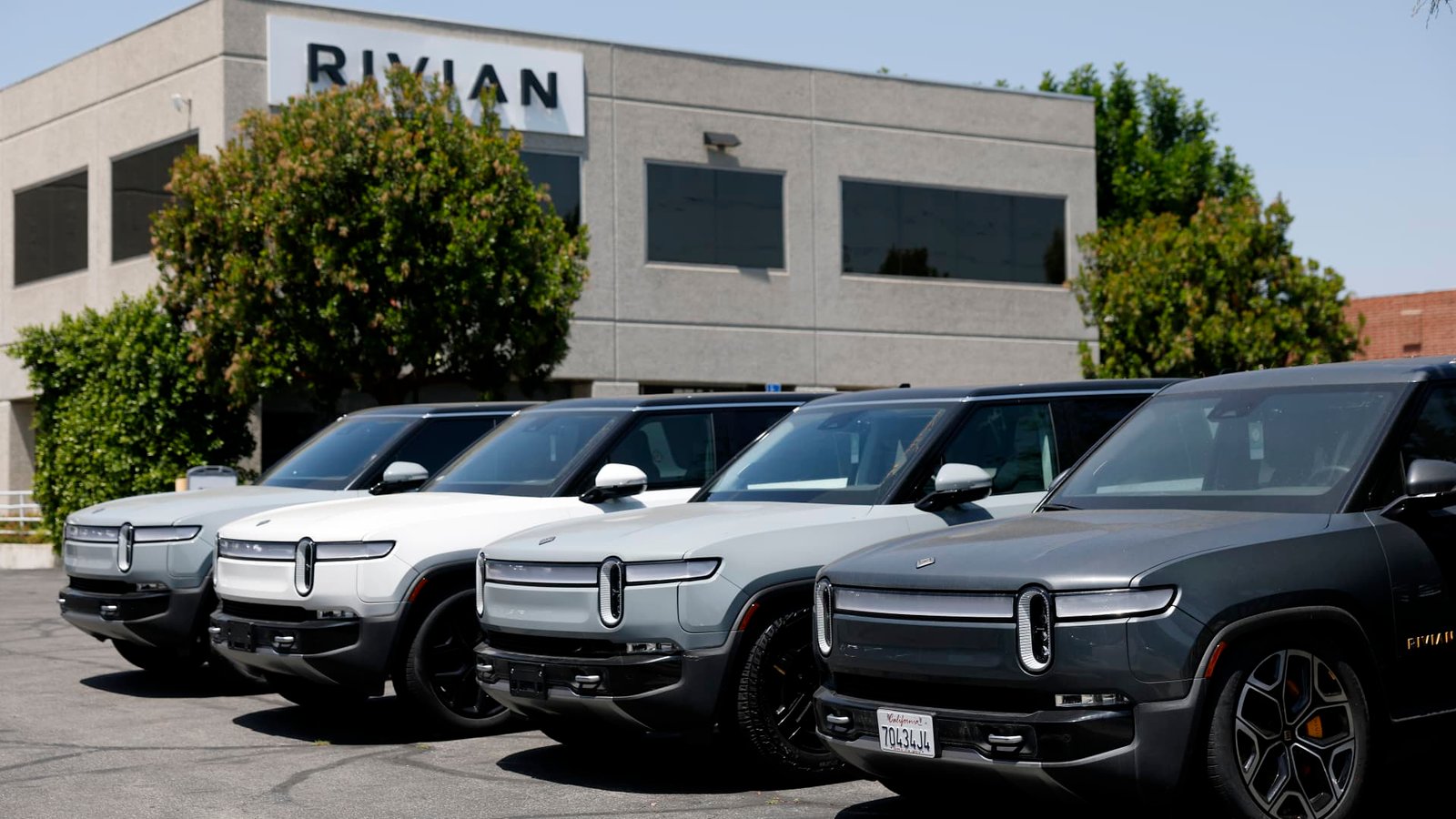
Rivian said Tuesday it was laying off hundreds of workers, or less than 2% of its workforce, as the electric vehicle maker aims to narrow losses.
The layoffs affect some teams in the service and customer segments, according to a spokesperson. The company had 15,232 employees across North America and Europe at the end of last year.
“We recently restructured a handful of teams within Rivian as we work to profitably scale our business,” the company said in a statement.
The layoffs come a week after the automaker officially launched deliveries of its key new vehicle, the R2 SUV. The R2 is meant to transform Rivian from a niche EV manufacturer that sells luxury vehicles into a more mainstream brand like U.S. EV leader Tesla . The layoffs were first reported by The Wall Street Journal.
Rivian has said it hopes to achieve profitability with the R2. It has never turned an annual profit.
The EV maker lost $3.6 billion last year, while only delivering 42,247 vehicles, according to company filings. Its automotive segment lost about $6,000 per vehicle it delivered during the first quarter of this year.
Rivian and other EV manufacturers are increasingly facing a more challenging market than they did in recent years amid changing regulations under the Trump administration, including the elimination of a $7,500 federal incentive for purchasing an EV.
Business
Fed Chair Warsh expected to withhold ‘dot’ from central bank’s interest rate outlook
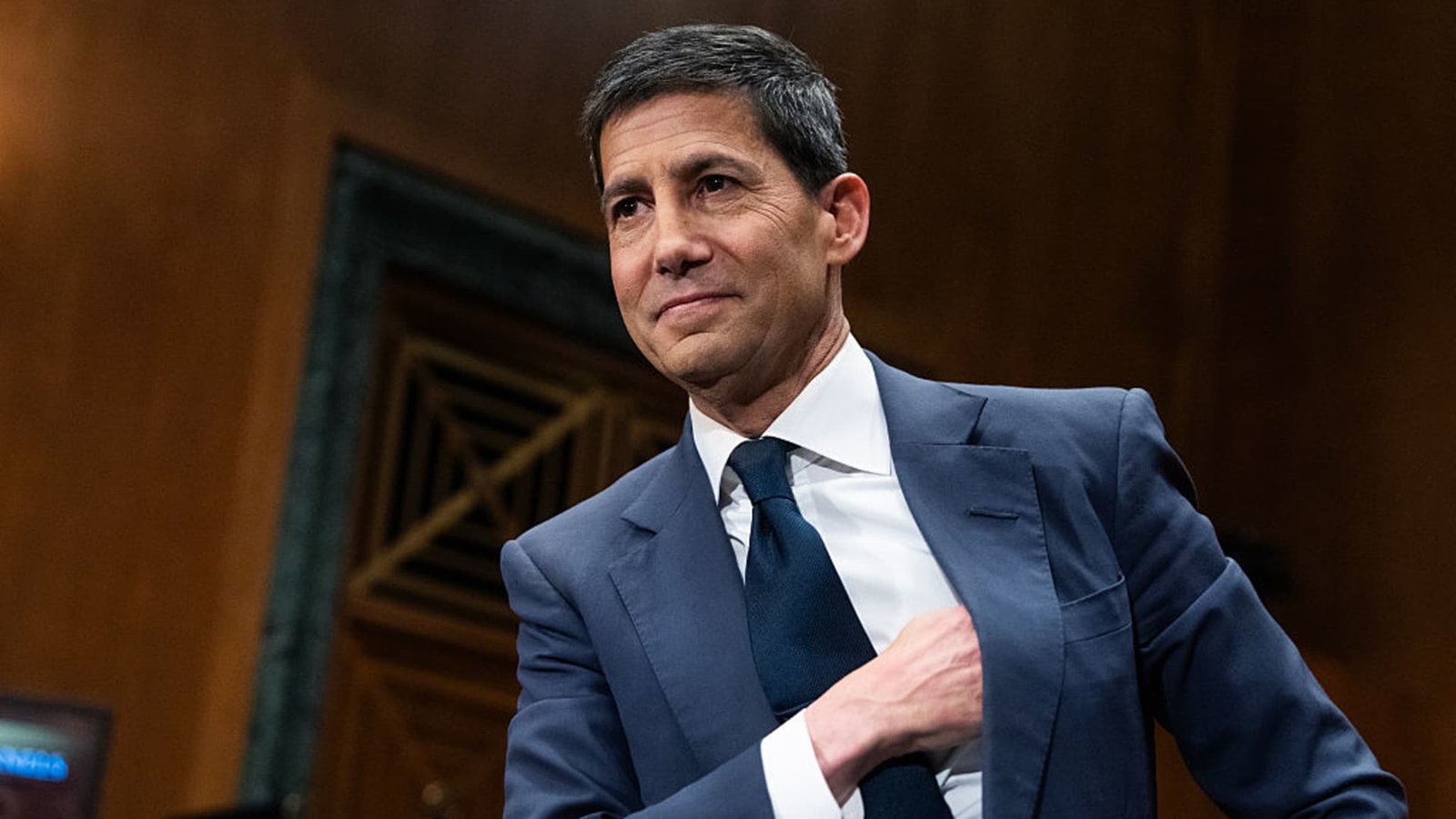
Tom Williams | Cq-roll Call, Inc. | Getty Images
When the Federal Reserve wraps up its policy meeting Wednesday, one important thing could be missing — a dot.
The central bank’s Federal Open Market Committee is set to release its quarterly update of where individual officials expect interest rates to head this year and through 2028 and beyond. Markets closely parse the grid, known more commonly as the “dot plot,” for information on how Fed officials view the economy and its impact on monetary policy.
However, most Fed watchers on Wall Street expect new Chair Kevin Warsh won’t participate, either because he feels he’s not ready after having only been in office since May 22 — or simply because he doesn’t like the dot plot and its implications for “forward guidance.”
Declining to submit a dot would counter some 14 years of post-financial crisis practice for the Fed, and risk alienating other FOMC officials who favor the way it helps them communicate with the public. However, it also could be an effective first step for a central bank leader who has vowed fundamental changes for how the institution operates.
“It seems to me fairly likely that he doesn’t want to submit a rate forecast,” said Bill English, former head of monetary affairs at the Fed and now a professor at Yale. “There may be others on the committee who don’t particularly like the dot plot, who might be willing to do that, too.”
‘The Fed’s human’
Warsh objects to the dot plot and other methods of forward guidance because he believes they limit the Fed’s decision-making capabilities.
The dot plot belongs to a larger set of data called the Summary of Economic Projections, which also includes the outlook for unemployment, inflation and gross domestic product. The SEP is updated quarterly and includes the median outlook for each category and as such is not an official forecast but merely the midpoint of the range among FOMC meeting participants.
Bank of America economist Aditya Bhave expects Warsh won’t submit a dot, while Goldman Sachs economist David Mericle said in a note that, “We assume that Warsh will not submit dots in light of his past criticism of forward guidance, but we are not sure.”
During his confirmation hearing in April, Warsh cited the SEP as part of a broader problem at the Fed with overcommunication. Specifically, he cited the Fed’s mistaken “transitory” call on inflation in 2021-22 that led to a series of aggressive rate hikes to combat the biggest price surge in 40 years.
“The Fed tells the whole world what their dots are going to be, what their forecasts are going to be,” he said then. “Well, the Fed’s human. Then they hold onto those forecasts longer than they should. I think if the Fed were to wait until it gets into a meeting before making a decision, that incremental deliberation can keep the central bank from compounding its errors. I think these are big changes that are needed.”
Markets are watching
Still, markets hinge on the dot plot and the rest of the SEP, and may have to learn to live without it if Warsh has his way.
“To me it never made a lot of sense that [the SEP] at times was market moving, because its accuracy has been at best middling,” said Liz Ann Sonders, chief investment strategist at Charles Schwab. “But it is an avenue through which the Fed expresses a view, and the market tends to move on those views.”
Economist Claudia Sahm cautioned that should Warsh and others not participate, it could send the wrong message to markets. Specifically, she said investors could take the news to mean that Warsh is trying to “hide the hawkish shift” in the committee to fight inflation with elevated rates.
“Neutralizing the SEP this week might address some of Warsh’s concerns, but it would almost certainly create new ones,” wrote Sahm, chief economist at New Century Advisors. “A Fed that appears to be concealing its own debate could look complacent about inflation, which is exactly the credibility it can’t afford to lose.”
This meeting is expected to be an interesting test of Warsh’s new communications strategy.
In addition to his views on the dot plot and SEP, markets also will be watching for changes to the post-meeting statement and his views on whether he will continue to hold news conferences after each meeting.
Business
The fight to stop a Hollywood megamerger is far from over

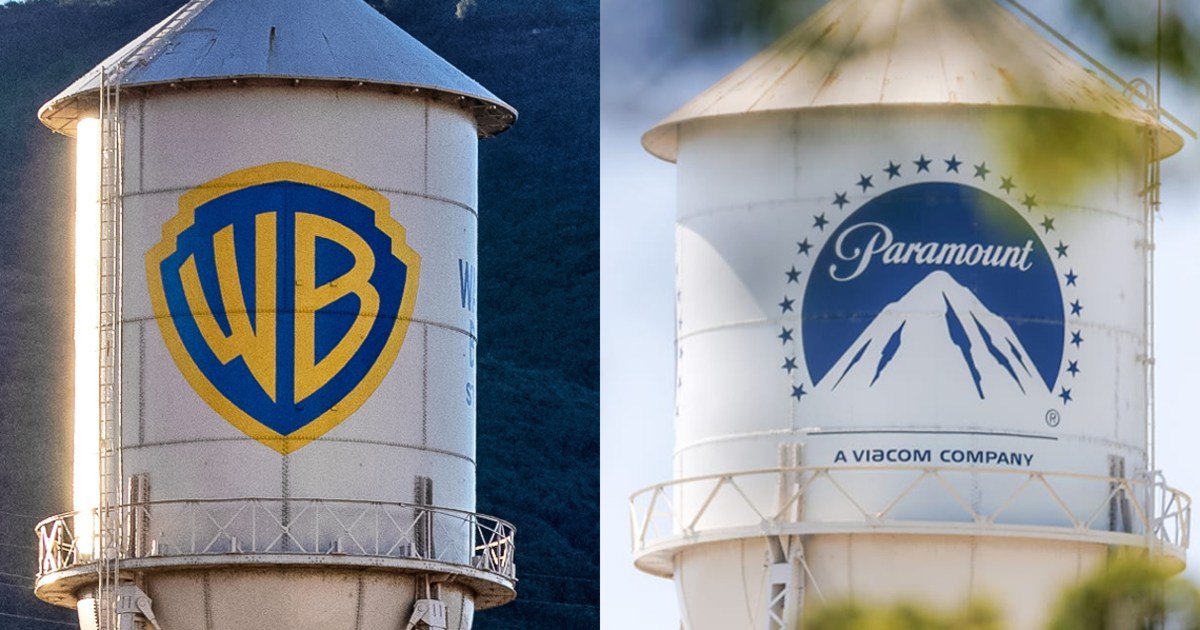
Paramount Skydance CEO David Ellison’s bid to take over rival Hollywood studio Warner Bros. Discovery moved closer to the finish line last week after the Justice Department signed off on the $110 billion deal. Paramount swiftly vowed to finalize the merger “as soon as possible.”
But in the eyes of California’s top law enforcement official, the show isn’t over.
“The merger of Warner Bros and Paramount is not a done deal and remains under investigation by my office,” California Attorney General Rob Bonta said Friday.
Inside the entertainment industry, all eyes are now on Bonta and other state attorneys general who could sue to halt the merger under state and federal anti-monopoly laws. New York Attorney General Letitia James’ office is probing the deal as well, according to a person familiar with the matter, and other states are reportedly part of that endeavor.
“The most direct tool available to California and New York is an antitrust lawsuit seeking an injunction to block the transaction,” said Scott Wagner, the co-head of antitrust practice at law firm Bilzin Sumberg. “State attorneys general have independent authority to challenge mergers even when federal regulators decline to do so.”
Bonta’s and James’ spokespeople declined to comment on the status of potential legal challenges.
The tie-up between Paramount and Warner would consolidate ownership of two historic film studios, two popular streaming platforms and a sprawling portfolio of broadcast and cable assets under Ellison, a 43-year-old media executive and the son of billionaire Oracle co-founder Larry Ellison, an ally of President Donald Trump.
The transaction would also bring together two news organizations, CBS News and CNN, amid mounting scrutiny on the younger Ellison’s attempt to overhaul “60 Minutes” and other parts of the Tiffany Network’s news operations.
In recent months, ground-level Hollywood professionals have warned that the merger would lead to fewer buyers for film and television content, shrink the pool of jobs and spike costs for consumers. More than 5,500 actors, directors, producers and screenwriters have signed an open letter vehemently opposing it.
In the letter, the entertainment professionals cheered Bonta and his colleagues for “scrutinizing the merger and considering legal action to block it.”
“We are grateful for their leadership, and stand ready to support all efforts to preserve competition, protect jobs, and ensure a vibrant future for our industry, for American culture, and for our single most significant export,” said the signatories, a list that includes JJ Abrams, Bryan Cranston, Jane Fonda, Pedro Pascal and Ben Stiller.
Free Press, a progressive advocacy that has rallied against corporate consolidation in the media business, said state attorneys general have “a strong case for blocking this merger, and many brave journalists, filmmakers and workers in entertainment industry have spoken out against the dangers of this deal despite threats to their livelihoods.”
“They are warning us what will happen if this deal goes through, and we must listen,” Free Press co-CEO Craig Aaron said.
The Justice Department’s antitrust division, in an unusually lengthy statement Friday, said “the transaction is not likely to result in harm to competition or American consumers.” Paramount has repeatedly touted the benefits of the transaction, and Ellison has attempted to reassure Hollywood’s creative community by promising to put 30 movies a year in theaters.
“This deal is pro-competitive, resulting in a stronger company better positioned to compete against dominant technology platforms in an industry increasingly defined by intense competition for audiences, talent, technology, and investment,” Paramount said in a statement Friday after the Justice Department announced its green light.
In anticipation of legal pushback from state attorneys general, Paramount has retained Jeffrey Kessler, a prominent litigator who specializes in sports labor law and is the co-executive chairman of the law firm Winston Taylor. In a phone interview Tuesday, he said he believes there is “no proper antitrust challenge to this merger.”
“It’s a very necessary merger to enable increased competition in streaming services, protect the model in network television and increase the number of movies in theaters,” Kessler said.
Wagner said state attorneys general have other tools at their disposal beyond litigation. They can, for example, send out waves of information requests and carry out reviews of specific legal issues — moves that would delay the deal’s consummation.
“While those tools are not a substitute for a successful antitrust challenge,” he said, “they can increase pressure on the parties and potentially affect the timing, cost and complexity of the transaction.”
Bonta, a Democrat who is up for re-election in November, previously told NBC News he believes the Trump administration has taken an overly lax approach to federal antitrust enforcement, arguing that he and his fellow attorneys general have been forced to take a more prominent role to fill a void.
California and New York were part of a group of dozens of states that secured a major win in April after a New York City jury found that Live Nation and its subsidiary Ticketmaster had illegally held monopoly power in the ticketing market. The states embarked on independent litigation after the Justice Department settled its antitrust suit against Live Nation and Ticketmaster.
Bonta’s and James’ offices are also part of a legal coalition that sued to prevent the $6.2 billion merger between broadcast station owners Nexstar and Tegna, a union that would create a new local television giant. The Federal Communications Commission — chaired by Brendan Carr, a Trump appointee — cleared the tie-up less than a day after the states filed their lawsuit.
The marriage of Paramount and Warner is facing another layer of scrutiny from foreign regulators. The European Union is studying the deal’s financial backing from three Middle Eastern sovereign wealth funds, according to a public filing. The United Kingdom’s antitrust authority formally announced a probe last Tuesday.
Paramount executives are motivated to close the deal soon. That’s partly because the company agreed to pay Warner shareholders a “ticking fee” of 25 cents a share each quarter if the transaction isn’t wrapped up by Sept. 30. The potential penalty is worth more than $600 million per quarter.
Business
Rivian cuts hundreds of workers after R2 deliveries start

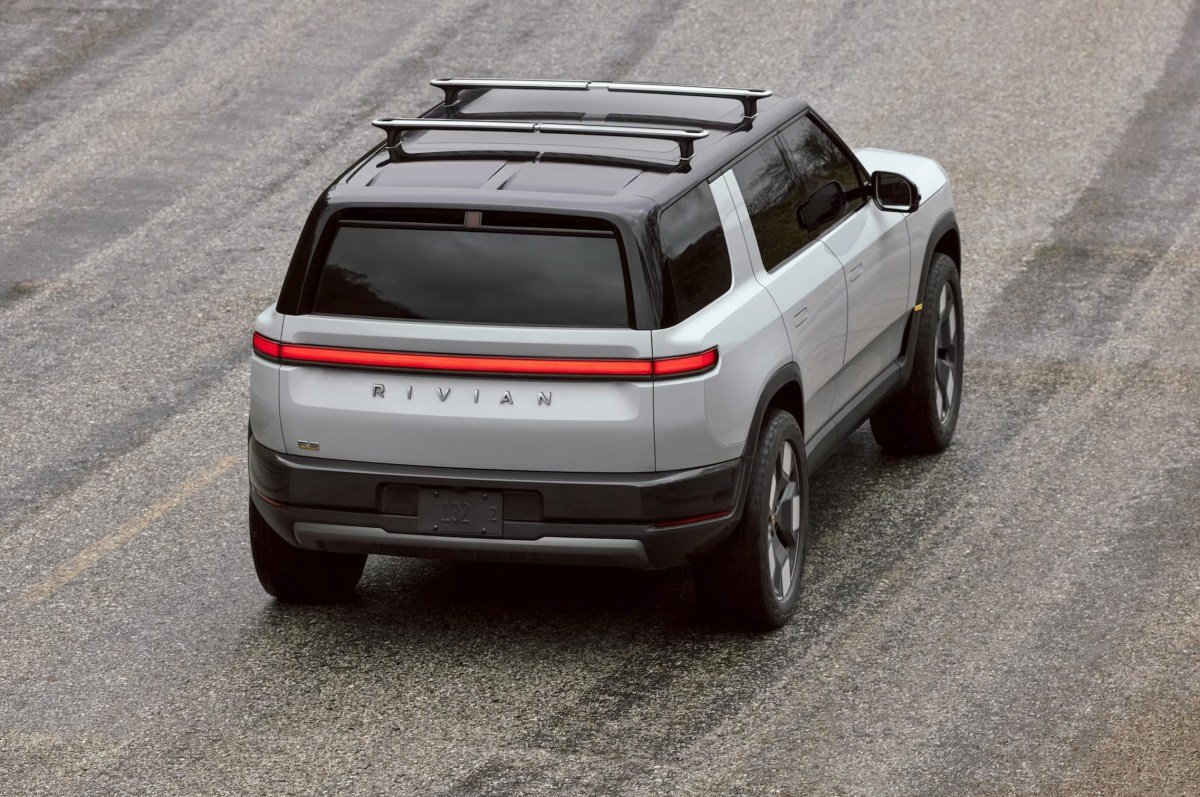
Rivian is laying off hundreds of workers just one week after it began deliveries of its hotly-anticipated R2 SUV, the company has confirmed to TechCrunch.
The company said the layoffs will affect less than 2% of its overall workforce, and that it was done to boost efficiency. It’s at least the fourth round of cuts Rivian has made since the beginning of 2024. The Wall Street Journal first reported the new round of cuts on Tuesday.
“We recently restructured a handful of teams within Rivian as we work to profitably scale our business,” the company said in a statement. Rivian said the cuts impact its service and customer teams, which include sales and marketing.
Rivian had been looking to turn its first profit in 2027 after accumulating losses of around $30 billion to date. But Rivian pushed that goal back in March because of how much money it’s spending on developing autonomous vehicle technology.
The profitability delay was revealed to investors alongside news that Uber plans to invest up to $1.25 billion in Rivian and purchasing as many as 50,000 R2 SUVs to be used as robotaxis. Rivian has yet to demonstrate that it can develop such capabilities, though, as it currently only offers a hands-off, eyes-on-the-road feature.
Business
General Motors announces new defense partnership with Lockheed Martin
Automaker General Motors on Tuesday announced a new partnership with defense company Lockheed Martin to scale manufacturing and expand production capabilities.
The deal was facilitated by the U.S. Department of Defense, according to Bruce Brown, GM’s vice president of strategy at GM Defense, and will focus on munitions.
“What makes this moment especially important is that the country needs more than great technology. It also needs the capacity to build, scale and deliver reliably,” Brown said on a call with reporters. “This is where GM can help. Across our company, we bring deep experience in advanced engineering, digital development, supply chain discipline and manufacturing at scale.”
Lockheed Chief Operating Officer Frank St. John said it was too early to say what projects it would invest in with GM Defense.
Executives from both companies said on the call that the collaboration will allow for more growth at a time when the country is ramping up its production of defense parts.
“Together, we will explore opportunities across three important areas: improving production readiness and scalable manufacturing environments; strengthening supply chains and identifying ways to increase resilience; and applying advanced manufacturing and design approaches [that] can help improve efficiency and accelerate delivery,” St. John said.
Lockheed Martin is investing $9 billion through 2030 to modernize 20 of its facilities and supply bases, St. John added. GM said it will spend $7 billion on research and development in the U.S., according to Brown.
The executives said the partnership will be focused on “high-rate manufacturing” at scale and expanding production capacity. They added that the collaboration is still in early stages and that they need to further define what the potential for future contracts may be. They are working under a memorandum of understanding.
The automaker built tanks for the country during World War II. Its GM Defense unit is one of the company’s newer but fast-growing business segments, reestablished in 2017 with customers including the U.S. Army, Secret Service and NASA.
“America is stronger when two companies with deep manufacturing roots come together to help expand speed, scale and resilience in the defense industrial base. That is why Lockheed Martin and GM are announcing this collaboration,” Brown said on the call.
The partnership comes as President Donald Trump has been pushing for more American manufacturing to bring more production and reshoring into the country. The U.S. has also seen its defense stockpiles fall because of the wars in Ukraine and Iran.
The White House has held discussions with Ford and GM about better supporting the country’s defense industry.
— CNBC’s Michael Wayland contributed to this report.
Business
Leaked financial docs show OpenAI is losing billions of dollars a year


As OpenAI files SEC paperwork ahead of an expected initial public stock offering, newly leaked financial documents show a company with quickly growing revenues that are currently being overwhelmed by even larger expenses.
The audited financial statements, obtained by independent journalist Ed Zitron, show OpenAI’s reported revenue growing from $3.7 billion in 2024 to $13.07 billion in 2025. The Financial Times, which reviewed the same documents, writes that the company’s monthly revenues had grown to nearly $2 billion by the end of 2025, suggesting that its ongoing revenue rates continued to grow throughout the year.
But the company’s fast-growing revenues are still dwarfed by its even more significant expenses. OpenAI’s total revenues in both of the last two years were outpaced by research and development alone, which grew from a $7.81 billion line item in 2024 to a massive $19.18 billion cost in 2025. Those numbers seem to reflect the significant costs OpenAI incurred in training new models and include $10.59 billion in R&D costs paid to Microsoft alone in 2025.
On top of that, OpenAI’s “cost of revenue” (i.e., the money spent producing and distributing the product) increased from $2.65 billion in 2024 to $7.5 billion in 2025. This cost line likely reflects the significant compute costs incurred at “inference time” as the company’s models respond to a growing number of user prompts. Costs associated with sales and marketing also grew from $1.11 billion in 2024 to $5.73 billion in 2025.
All told, OpenAI’s day-to-day “loss from operations” increased from $8.78 billion in 2024 to $20.92 billion in 2025, a concerning direction for a company that is telling investors it hopes to be profitable by 2030. But measured as a percentage of revenues, the company’s operating losses slightly improved year to year, from 237 percent in 2024 to 160 percent in 2025.
Gotta spend money to make money
Operating numbers aside, OpenAI’s headline “net loss” number of just over $5 billion in 2024 ballooned to nearly $39 billion in 2025. But the 2025 number includes a significant accounting charge related to investor valuations that shifted amid the company’s 2025 conversion to a for-profit structure. The Financial Times cites “a person familiar with the matter” in reporting that this non-recurring charge was approximately $30 billion and that OpenAI’s 2025 net loss amounted to a more reasonable-looking $8 billion without it.
As OpenAI tries to shift all these losses to eventual profits, it will have to start reining in its costs, especially the massive (and growing) R&D costs associated with model training. It will also have to deal with enterprise customers that are beginning to balk at token-based pricing and starting to demand a measurable return on investment for their AI spending. And on the subscription side, pressure from rival Anthropic may force the company to lower prices, which could further increase operating losses in the near term.
OpenAI shut down its Sora video generation model in March. Around the same time, OpenAI CEO of Applications Fidji Simo told employees that the company would be cutting back on “side quests” and focusing on its core coding and business users.
In March, OpenAI raised $122 billion of financing in a funding round that valued the company at $852 billion. The company reports over 900 million weekly active users of ChatGPT, though only about 50 million of those are paid subscribers.


The UK government is a considering an overnight social media curfew. #BBCNews


Canada PM says he saw Iran agreement. He calls it a ‘game changer’
CNN's Kaitlan Collins speaks with Canadian Prime Minister Mark Carney about the Iran-US agreement.


Trump says Iran will 'never have a nuclear weapon’, as he attends G7 summit | BBC News
US President Donald Trump has said Iran will "never have a nuclear weapon" in his preliminary deal to end the...


Will Kamala run for president again?
At the Austrian World Summit in Vienna, Former U.S. Vice President Kamala Harris talks with CNN's @elexmichaelson about the …


How will YouTube be affected by the UK government’s social media ban for under-16s? #BBCNews


Europe says Russia can't win Ukraine war militarily
US President Donald Trump said that he would meet with Ukrainian President Volodymyr Zelensky later today, encouraging …


Vance defends Trump administration’s Epstein files release
During an interview on ABC's “The View,” Vice President JD Vance said he has “kind of a conspiracy theory” on...


Taking laxatives can help with memory and attention span problems
Talk about a gut-brain connection. Scientists have long known about the link between our stomachs and our brains, warning that...


On the front line against Ebola in DR Congo | Global News Podcast
Close to 800 people have been confirmed to have contracted Ebola in the east of the Democratic Republic of Congo....


Portlanders take home three James Beard Awards
Portlanders took some of the culinary world’s highest honors Monday night at the 36th annual James Beard Restaurant and Chef...
-
 Business3 days ago
How much of Musk’s wealth comes from government help? Virtually all of it
-

 LifestyleNews2 weeks ago
120 minutes of strength training per week may help extend lifespan
-

 Politics5 days ago
What to know about the stabbing that set off fiery riots in Northern Ireland
-

 Video4 days ago
Download fans say what they love about the festival. #DownloadFestival #BBCNews
-

 Video4 days ago
Why SpaceX IPO isn't about space. #SpaceX #ElonMusk #BBCNews
-

 HealthNews5 days ago
The people of Okinawa, Japan only eat until they are about 80 percent full, then stop — and the practice has been linked in multiple peer-reviewed studies to lower rates of cardiovascular disease, slo
-

 TravelNews4 days ago
My Paternal Instinct Should’ve Warned Me About Netflix’s Maternal Instinct
-
 Food4 days ago
Pope Leo’s plane was grounded. Then the King of Spain stepped in to help