

Food
Iran says the US war deal requires Israel to withdraw from Lebanon
DUBAI, United Arab Emirates (AP) — Iran’s top diplomat said Tuesday that the tentative deal to end the war with the United States would require Israel to withdraw from Lebanon — a condition Israel has already rejected and that could sink the agreement, leading to the resumption of all-out war.
The deal, which is between the U.S. and Iran, has not been made public, and officials have sometimes offered contradictory interpretations of what is in it. While Israel is not party to the agreement, it is part of the war: It joined the U.S. in launching strikes on Iran on Feb. 28, and has since fought the Iran-backed Hezbollah militant group in Lebanon and seized large swaths of that country.
Iranian Foreign Minister Abbas Araghchi said Israel’s continued occupation of southern Lebanon would violate the deal.
“Without the withdrawal of Israeli forces from the territories they occupied during this war, the war has not fully come to an end,” Araghchi said.
A U.S. official, who spoke on condition of anonymity to discuss outlines of the agreement, has said the deal did not call for an Israeli withdrawal. And Israeli Prime Minister Benjamin Netanyahu said Monday that Israel would remain in Lebanon “as long as necessary.”
The negotiations to end the war have been plagued by such disagreements before, leading to a prolonged but uneasy ceasefire that has failed to develop into a permanent end to hostilities and has left the Strait of Hormuz, a crucial waterway for the world’s energy supplies, effectively shut.
In other developments, Switzerland’s foreign ministry said the signing ceremony for the deal will take place Friday at the Bürgenstock resort near the city of Luzern. Ministry officials said Tuesday that the location was proposed by Pakistani and Qatari mediators, along with the U.S. and Iran.
Lebanon tests the durability of the deal
Pakistan, a key mediator, has said the deal called for an end to military operations, including in Lebanon, as Iran long insisted. But Araghchi’s call for an Israeli withdrawal adds a new wrinkle.
It puts Israel into a dilemma as it tries to degrade Hezbollah’s military capabilities without undermining an agreement championed by its most important ally, the United States. Israel invaded southern Lebanon after Hezbollah fired missiles across the border during the first week of the war. Since then, it has expanded its military footprint to levels unseen in decades and struck targets deep inside Beirut.
Though Hezbollah has been weakened, it retains the ability to strike Israel, leaving open questions about the effectiveness of Israel’s campaign.
As of Tuesday evening, Netanyahu had not seen the memorandum of understanding between the U.S. and Iran, said a person familiar with the situation, who requested anonymity to discuss closed-door details. Netanyahu’s office did not immediately respond to request for comment from The Associated Press.
The extent of Israel’s strikes have at times opened a public fracture between its leaders and U.S. President Donald Trump, who told reporters Tuesday that he was “not happy with the way Israel has handled themselves with Lebanon and with Hezbollah.”
“It just goes on forever,” he said of Israel’s strategy. Israeli strikes in Lebanon have killed nearly 4,000 people, including hundreds of civilians, and displaced more than 1 million. “Israel’s fighting Hezbollah too long, and too many people are being killed,” he said.
Trump said he’s open to sending the emerging agreement to the U.S. Congress for review.
Speaking on the sidelines of the Group of Seven summit in the French Alps, Trump said, “I like the idea, send it to Congress please.” He added, “I mean who wouldn’t approve it.”
Republicans on Capitol Hill say they want Trump to provide more information about the agreement, with some expressing skepticism that the deal can deter Iran from pursuing a nuclear weapon.
Israel and the Lebanese government have entered into their own U.S.-mediated direct negotiations, of which Hezbollah was not a part. Those talks have yielded several announced ceasefires that were never implemented on the ground. Lebanese officials initially tried to keep Lebanon separate from the U.S.-Iran negotiations, not wanting to be seen as beholden to Iran, but they have since welcomed the announcement that the deal to end the U.S.-Iran war would include a ceasefire in Lebanon.
Araghchi’s latest comments appear to match the understanding of two regional officials with direct knowledge of the interim deal. The officials, speaking to AP on condition of anonymity to discuss the closed-door negotiations, said it would require Israel to leave nearly all the territory it occupies in Lebanon, minus a few hilltop points along the border seized earlier.
The officials say Iran insisted the accord include Lebanon in the last days of the negotiations.
Despite unanswered questions, US allies push to make deal work at G7 summit
Lebanon is only one of several major questions hanging over the ceasefire ahead of the planned ceremonial signing.
The agreement is meant to provide a meaningful truce in a monthslong war that has killed thousands across the Middle East, including the top leaders of Iran’s theocracy, and raised the prices of fuel, food and other basic goods far beyond the region.
The agreement provides for the “immediate” opening of the Strait of Hormuz and the lifting of the American naval blockade of Iranian ports, according to a senior U.S. official who spoke to reporters Monday on condition of anonymity to discuss outlines of the agreement.
Pakistani officials who helped broker the agreement also described plans for the simultaneous lifting of Iran’s closure of the strait and the U.S. blockade.
The United States and Iran will then begin 60 days of negotiations over Iran’s nuclear program and the potential lifting of sanctions, Pakistani officials who helped broker the interim deal said, speaking on condition of anonymity about the unpublished text.
The pact also includes the possibility of releasing Iran’s frozen funds and a $300 billion fund to help rebuild Iran if Tehran meets certain benchmarks, senior U.S. officials told reporters Monday. Trump later said the United States would not “invest” funds in Iran.
Regarding the timeline, regional officials who spoke to AP about the deal said the release of frozen Iranian assets would be tied to Tehran implementing the deal. Gulf Arab states also have pledged to inject billions of dollars in Iran’s economy, they added, speaking on the condition of anonymity to discuss the negotiations.
Iran’s nuclear program, specifically the fate of its stockpile of highly enriched uranium, would be subject to the 60-day clock. Iran has agreed to discuss ways to possibly “dilute or remove” it, the officials said. However, it remains unclear whether Tehran would agree to that, particularly with hard-liners opposing to giving it up.
U.S. officials have not yet explained how they see the agreement addressing Iran’s nuclear program, including who will be in charge of verifying that Iran is in compliance and who will destroy or remove highly enriched uranium believed to be buried under nuclear sites that were badly damaged by U.S. strikes last summer.
Still, world leaders gathering in France for the first full day of the G7 summit insisted the agreement needed to succeed, even as key questions remained unanswered.
Some had clashed with Trump over not consulting them before going to war. But the leaders of France, Germany, Italy and the United Kingdom issued a joint statement congratulating the United States, the Iranian government and the mediators on what they called a “diplomatic breakthrough,” saying it was vital for the deal to be quickly implemented.
French President Emmanuel Macron said France and other Western nations were “ready to take action very quickly” to help reopen the Strait of Hormuz peacefully.
___ Metz reported from Ramallah, West Bank, and Magdy reported from Cairo. Associated Press writers Julia Frankel in Jerusalem, Munir Ahmed in Islamabad, Michelle L. Price in Washington, Aamer Madhani in Geneva and Darlene Superville in Evian-les-Bains, France, contributed to this report.
Food
Fifteen people charged over alleged interference in Minnesota immigration crackdown


Fifteen people in Minnesota were charged with conspiracy to impede or injure federal officers over their response to a controversial and deadly immigration enforcement crackdown in the state earlier this year.
The US attorney for Minnesota, Daniel Rosen, and the special agent in charge of Homeland Security Investigations for Minnesota, Michael McCarthy, announced the charges at a press conference in Minneapolis on Tuesday.
The prosecutors allege the defendants were part of two Minneapolis-based “antifa” groups that “violently oppose immigration law enforcement”. The indictment names the two groups as Direct Action Minnesota and Black Cat Worker’s Collective, which it described as a subgroup.
Of those charged, 12 people were arrested on Tuesday and one was already in custody on other federal charges, according to officials, who said two remain at large.
The new charges come as other cases from the federal government against protesters have fallen apart. The US attorney’s office’s track record with charges filed related to the crackdown, which was known as “Operation Metro Surge”, was the subject of media questions during the press conference. MPR News noted that the office has so far dropped 18 of its 36 prior cases, including one where a judge called a charging document a “false affidavit”.
With these new charges, Rosen said, “the evidence will prove it all out”.
Rosen showed social media posts and videos of a couple of the people indicted to underscore the allegations that they intended to impede law enforcement. In one video, a man declares he is antifa and discusses bringing guns to a demonstration. He showed another post of a defendant saying people needed to “become ungovernable”.
Antifa, which is short for “antifascist”, is not a specific group, but rather a decentralized movement, but last fall, the Trump administration categorized “antifa” as a “domestic terror organization”. Rosen did not define what “antifa” was, saying it went “beyond the scope” of today’s indictment.
Outside the federal courthouse in Minneapolis on Tuesday, a group of dozens of people gathered to speak out against the charges, including Nekima Levy Armstrong, who was charged in a separate case involving a protest at a church. Signs among the crowd carried messages such as “stop FBI entrapment” and “protesting is not a crime”.
At the demonstration, Bruce Nestor, a former president of the National Lawyers Guild, spoke to the crowd, saying: “What’s wrong with being ungovernable?” Nestor described the charges as “thought crimes” and an “act of political retribution” designed to quell dissent.
Rosen did not answer repeated questions about whether any agents or officers were injured by the defendants. The indictment does not allege officers were injured, though it mentions kicking a federal vehicle and knocking notes from an agent’s hands.
“Whether or not they actually at the end of the day caused bodily harm is not the measure of whether or not they committed a serious crime,” he said.
The Trump administration sent in thousands of immigration agents to Minnesota starting in late 2025, in part predicated on fraud allegations against Somali residents. The crackdown led to protest and a broad community response, from people monitoring agents to providing food for those staying home. Agents killed two people – Renee Good and Alex Pretti – in the streets, leading to further protest.
The agents who killed Good and Pretti have not faced charges. Rosen said during the press conference that the killings were under investigation, and charges could be possible.
The charges are the latest attempt by federal prosecutors to crack down on opposition to immigration enforcement.
Rosen also alluded that there could be more charges as they continue investigating response to the Minnesota crackdown. “If you are actively conspiring to impede law enforcement … you ought to go on the assumption that we’re watching, and we’ll get you,” he said.
The indictment mentions rapid response networks, which came together to track immigration agents’ vehicles as they were arresting people around the state. It also discusses how defendants used the encrypted chat app Signal to coordinate among people who were monitoring activity by Immigration and Customs Enforcement (ICE) agents. Rosen called these tactics “stalking” and noted how one of the defendants followed an agent from the federal building in St Paul to western Wisconsin.
It cites activities at the federal Whipple building in St Paul, where immigration agents were headquartered, saying the defendants set up “hard” and “soft” blockades to impede agents’ abilities to do their jobs. These hard blockades consisted of debris, vehicles or physical items, while soft blockades included people lined up with shields.
Earlier this year, the Trump administration secured its first successful conviction on the basis of “antifa” terrorism in the Prairieland case in north Texas, following a non-fatal shooting at a 4 July 2025 noise demonstration, in a case with 22 defendants across federal and state charges.
The Minnesota defendants do not currently face terrorism charges. Rosen said the indictment filed on Tuesday reflected charges that the office has the evidence to convict over.
In Spokane, Washington, three activists were convicted of conspiracy charges over an anti-ICE demonstration. The federal government also charged six people in Illinois with conspiracy over a protest at the Broadview detention facility, though the government later dropped the charges amid claims of prosecutorial misconduct.
Kat Abughazaleh, one of the six charged at Broadview, noted on Bluesky that the Minneapolis charges mirror the ones she faced.
“We need to be asking how they got this indictment. And as charges (hopefully) get dropped, we must remember the process is the punishment,” she said.
Food
“I Made These Problems for Myself” (Exclusive Interview)

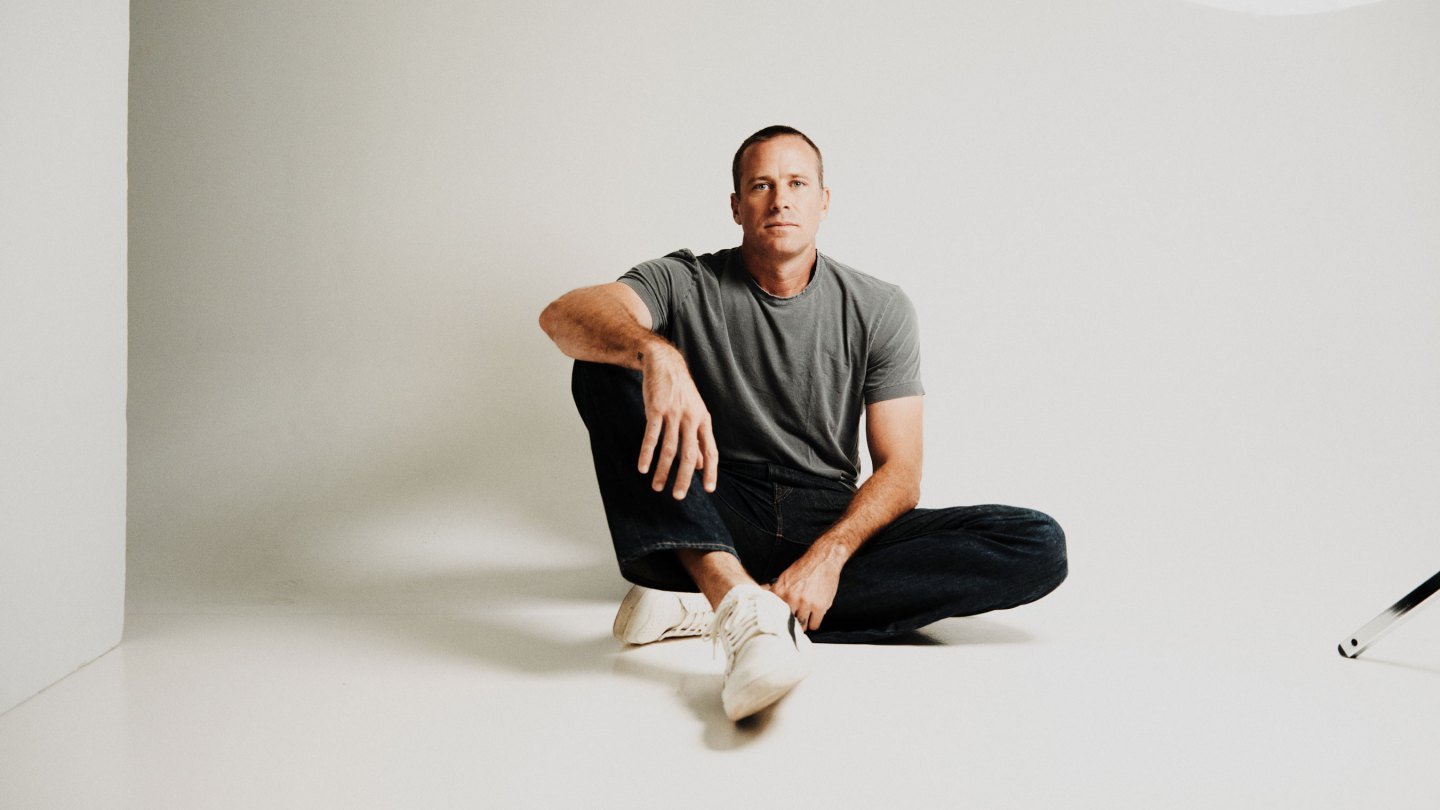
The last time I had dinner with Armie Hammer, he drove us up Pacific Coast Highway in his black pickup truck and ordered mutton shank at a Greek spot in Malibu. That was November 2017, Call Me by Your Name was about to open and the world was his. He was 31, absurdly handsome, resistant of the label “movie star” — and bracing for something on the horizon.
“Given my history,” he told me that afternoon, referring to a string of box office disappointments, “I’m waiting for the other shoe to drop.”
The shoe dropped. What followed was one of the most total and public collapses of a Hollywood career in recent history. The scandal consumed him so completely that for a stretch, he was living in a 200-square-foot hole of a flat in Venice Beach, paying for groceries with a debit card a friend had pressed into his hand. He went to the Cayman Islands. He built a farm. He carried a burner flip phone he bought at a gas station. He got no work for five years.
Now it’s a Tuesday night in June, nine years after that PCH drive, and we are on the bustling terrace of a discreet industry canteen in West Hollywood. Hammer arrives a few minutes late. He spots me, offers a quick wave, then changes course entirely to offer an enthusiastic greeting — big smiles, hearty hugs — to a man across the courtyard. Many heads turn his way.
After a minute or two, he makes his way over to me. He apologizes for the detour, explaining the man is another father at his daughter’s primary school.
“I called my publicist on the way here,” he says as I tactfully place a recorder on the corner of the table. “She asked if I was sure about this. I told her: ‘Do you think anything Seth can write is going to move the needle compared to what I’ve been through the last five years?’ “
He orders an Arnold Palmer and inspects the menu. He is clean-shaven, 39 years old and looks far from broken. In fact, he looks quite good — still trim, still tall (he’s 6- foot-5) and several degrees more rugged than the boy I met in 2017.
Yes, Armie Hammer is back. The question, however, is what “back” means for a man like this now.
***
Nine years ago, Hammer seemed to exist at the precise intersection of genetics, legacy and timing that occasionally produces a superstar. Great-grandson of the Russian-Jewish oil tycoon Armand Hammer, whose name still graces buildings across Los Angeles, he had grown up between Beverly Hills and the Cayman Islands, emerged from his teens with Polo-ad looks and old-school ease in front of cameras.
His breakthrough came playing both Winklevoss twins in David Fincher’s The Social Network. What followed — The Lone Ranger, The Man From U.N.C.L.E. and finally Call Me by Your Name — was a career that kept almost arriving.
He was funny about it then. “I’ve heard the ‘This is your moment’ speech so many times,” I remember him saying with a sigh during our first encounter. “The way I look at it is, I’m building a collage of my work.” And enjoying himself as much as he could in the process.
“I used to call myself a consumer,” he tells me now. “Drinks, women, validation, experiences — I just wanted to consume. All of it. More, more, more.” He pauses. “I didn’t actually know how to give myself what I needed internally, so I relied on external sources. It’s like a black hole — no matter how much you throw in, it’s gone. You’re never going to fill up a black hole.”
There was also, underneath all that consumption, something more corrosive. “I had a bit of imposter syndrome,” he says. “I was like, ‘I don’t really belong here, but it seems like I’m here — so maybe I’ll have a martini, that’ll make me feel better about the fact that I’m here.’ “
Four years later, the collage he was building went up in flames. What happened is public record. Several women came forward with accounts of psychological and sexual abuse. Explicit messages attributed to Hammer had circulated online describing graphic sexual and cannibalistic fantasies. A woman with whom he carried on a four-year affair — all while married to ex-wife Elizabeth Chambers — accused him of rape. He denied the allegations. An LAPD investigation was opened and later closed without charges. For many, none of that settled anything. The messages alone were specific enough — and disturbing enough — that those who read them have not been able to unread them. The career, already faltering, ended entirely.
His WME agents dropped him; his publicist was gone. He is now represented by a single entertainment attorney whose primary job is contracts and who told Hammer, when asked to make some calls on his behalf, “That’s not really what I do.”
What followed was genuine chaos. Friends who texted their support privately were targeted by internet obsessives and doxed, he says. Hammer changed his phone number repeatedly until he gave up entirely and bought a burner flip phone at a gas station, carrying it for a year and a half.
For a stretch, he was couch surfing, staying in friends’ places while they traveled. He ended up in the Venice apartment — a rent-controlled space so small, it had a Murphy bed. The Hammer family fortune, such as it remains, was not a safety net. After his father died, he received nothing. “It’s just one of those things that’s so complicated, you have to be a tax attorney to fully understand it,” he says of the estate. “But the end result was not I’m set for the rest of my life, or even for the next couple of years. It hasn’t been that.”
I ask, carefully, about reports that his ex-wife played some role in what unfolded. He doesn’t take the bait, but he doesn’t entirely deflect it, either. “It doesn’t help my situation to make it worse for somebody else to try to save my own ass,” he says. “And all I’m doing is making something worse for someone who was for a long time the sole breadwinner of the family. If I disrupt that, it’s my kids who suffer.”
Hammer could write a handbook to surviving an epic cancellation: He got off social media. He read Pema Chödrön. He developed a philosophical framework for surviving the experience of having the entire internet decide it hates you. “There was a period where I was obsessively reading what people were saying,” he says. “And then it hit critical mass, and I thought: There is no nutritional value in this for me. This is almost not even the real world.” He cites a Tyler, the Creator tweet about cyberbullying, circa 2012, and pulls it up on his phone. (“Hahahahahahahaha How The Fuck Is Cyber Bullying Real,” the tweet begins.)
“I realized I could just focus on myself and my kids and staying healthy and growing as a person. You can make that your purpose,” he says.
What saved him, he says, was his father.
The family, including his wife — who had already filed for divorce — had retreated to the Cayman Islands when COVID hit. His father, Michael, held Caymanian citizenship, which gave them access to an island that for the first year of the pandemic had essentially zero cases. Schools stayed open. Restaurants stayed open. While Los Angeles descended into Zoom school and anxiety, his kids were outside, living something close to a normal childhood.
“It really was idyllic for the kids,” he says.
His relationship with his father had been complicated for years — two strong personalities, with accumulated grievances on both sides. When the scandal broke, Michael Hammer wanted to go to war with his son’s accusers. “He was furious,” Armie says. ” ‘I’m going to call this person, I’m going to do this, we have to make sure they know this.’ He really wanted to go on the offensive.
“I said: ‘Look, dude, I’m already on the cross,’ ” he continues. ” ‘The nails are in my hands. I’m not getting off this cross no matter what we do. And the more I struggle, the longer I’m going to be up here.’ “
He had come to believe, through whatever combination of self-help reading and desperation and time, that acceptance was the only viable strategy. “That which you resist persists. That which you accept transforms,” he says, reciting mantra. “There was nothing I could say that was going to fix anything for me.”
Then his father got sick, and the old grievances stopped mattering.
“He was still able to be a lifeline,” Hammer says. Michael owned a small apartment building on the island and gave his son a unit to stay in. But as Michael’s illness progressed, it was his son who became the lifeline: “I would bathe him and cook food for him and feed him and change his diapers and do all that stuff.” It transformed their relationship, just in time. “We got to have all those conversations,” he says. “We got to have an amends with each other. We got to really move through it. And then I got to be there holding his hand when he died. Which is like a gift.”
Still raw from his father’s death, he found himself one afternoon talking to a man he describes only as “an old Jamaican guy.” Hammer had been complaining that his industry friends were sending sympathetic texts but not publicly defending him. The Jamaican man looked at him.
“What kind of friend are you?” he said. He explained: Your house is burning down right now, in real time. You want your friends to run into a burning house? What happens to them if they do?
“They get burned,” Hammer said.
“Do you want your friends to get burned?”
“No.”
“So if you were really a good friend, what would you want your friends to do?”
Hammer thought about it. “I would want them to stay as far away from the fire as possible.”
The man patted his leg. “Now you’re thinking like a real friend.” Then he stood up and walked away.
“I think that was a spiritual moment,” Hammer says. “Joseph Campbell would have called it a mentor moment in my hero’s journey, whatever the fuck that is.”
***
He came back to Los Angeles in 2024, and about a year and a half later, an email arrived. It was from Uwe Boll — the German filmmaker whose decades of aggressively low-budget, critically dismissed genre films had transformed him into something of a cult figure, the kind of director whose name functions as its own punchline. Boll wanted Hammer for a movie. It was the first offer he had received in five years.
“I’m pretty sure I cried,” Hammer says. “It was just this moment where I was like: I’m going to get to do the thing that I love more than anything — other than my children.”
He pauses.
“I would have done a fucking cat food commercial. I just wanted to work again.”
But underneath was something more unsettling: He wasn’t sure he could remember how to act. “I was scared shitless until the moment Uwe said action for the first time,” he says. “And then I was like — ‘Wait. I do know how to do this.’ There’s a reason I had the success I had.”
The film, shot in Croatia, is called Citizen Vigilante. Boll’s methods are famously economical: The script was around 50 pages when Hammer received it. “I was like, ‘Where’s the rest?’ ” He adopts a thick German accent as Boll: ” ‘No, no, no! Ve just go and shoot and have fun. Ve vant you to be great!’ ” Hammer laughs at the memory. “I was like, ‘Well, OK?’ “
He has since done three more low-budget films: Frontier Crucible, a Western. Night Driver, a small L.A. thriller about a Mafia errand boy whose night goes sideways. And a film in Bulgaria, playing a real person whose identity he won’t disclose because the project hasn’t been announced. He grew a mustache for it that, paired with a trucker hat in a recent paparazzi photo, generated significant online enthusiasm. “Was I Daddy?” he jokingly inquires after I bring it up.
The professional apparatus is gone entirely. No agents, no manager, no personal publicist. If someone wants to hire Armie Hammer, they go on IMDb Pro and find his attorney. “Lately, they always say on the first day of set, ‘We can’t believe we actually got you to do this.’ ” He pauses. “And I’m like: ‘My schedule was pretty open.’ “
His life now is structured around the children — a daughter, 11, and a son, 9 — with an almost monastic discipline. He is up at 6:30 every morning. He makes his bed. He cleans his apartment. He makes coffee and takes it outside and meditates and does what he calls his “gratitude practice.” Then he walks to his ex-wife’s house, wakes the kids, makes their breakfast, gets them to school. He picks them up most afternoons. He drops them off in the evening.
He lives in a small, rented house in West Hollywood — a minor but welcome upgrade from the Venice shoebox. Returning to Los Angeles after the Caymans was harder than he expected. “I was back in a city that felt like it used to be my city,” he says, “but it had moved on without me.”
Throughout the evening, as he cuts into his medium rare steak frites, I keep waiting for the score-settling. It never comes. He won’t go after his ex-wife when given the opening. He won’t name the industry friends who went quiet — although he will note that his gay friends never turned on him. “They were like, ‘Bitch, you think you’re special? If the Grindr chats got released and someone hacked into those, no one would have a job.’ ” He laughs. “And, by the way,” he adds, referencing his own leaked texts, “if you’re sitting up in your room late at night high as shit just going, ‘This is fucking hilarious. I’m being funny now’ — you take that shit out of context, then you’re done.”
But he does not claim total innocence, either. “I made these problems for myself,” he says. “This didn’t happen to me by a fluke accident. I didn’t do what people are saying I did. But I brought very dangerous and unsafe people into my life, and I pissed off people in my life — and here we are.”
He describes the chaos of the scandal — the doxing, the phone numbers, the siege of it — without identifying a villain. But he acknowledges that his public image is a hurdle he has far from cleared, that he is not yet entirely un-canceled. “It’s like Sisyphus pushing the boulder,” he says, “except my boulder is covered in Vaseline.”
He went to see a movie recently — the hit horror breakout Obsession — and afterward found himself in a conversation about wishes. A friend asked what he would wish for if he could wish for anything. He thought about it seriously. A billion dollars, he decided. Put a chunk of it in an ETF, set the kids up, have some comfort and stability. His friend was surprised: Your wish wouldn’t be going back and undoing everything that’s happened?
“Honestly, no,” he tells me toward the end of our reunion dinner, after the apple tarte tatin à la mode arrives (his suggestion). “I remember the emotional state and the mental state I was in before all that happened. Healthy people don’t act the way I was acting.” He glances down at the table. “I would have loved if I could have had an opportunity to do it in a little bit more of a gentle way,” he says of his struggles since we last sat down together. “But at the end of the day — you get what you get.”
Food
El Niño has arrived: 5 ways California could get pummeled
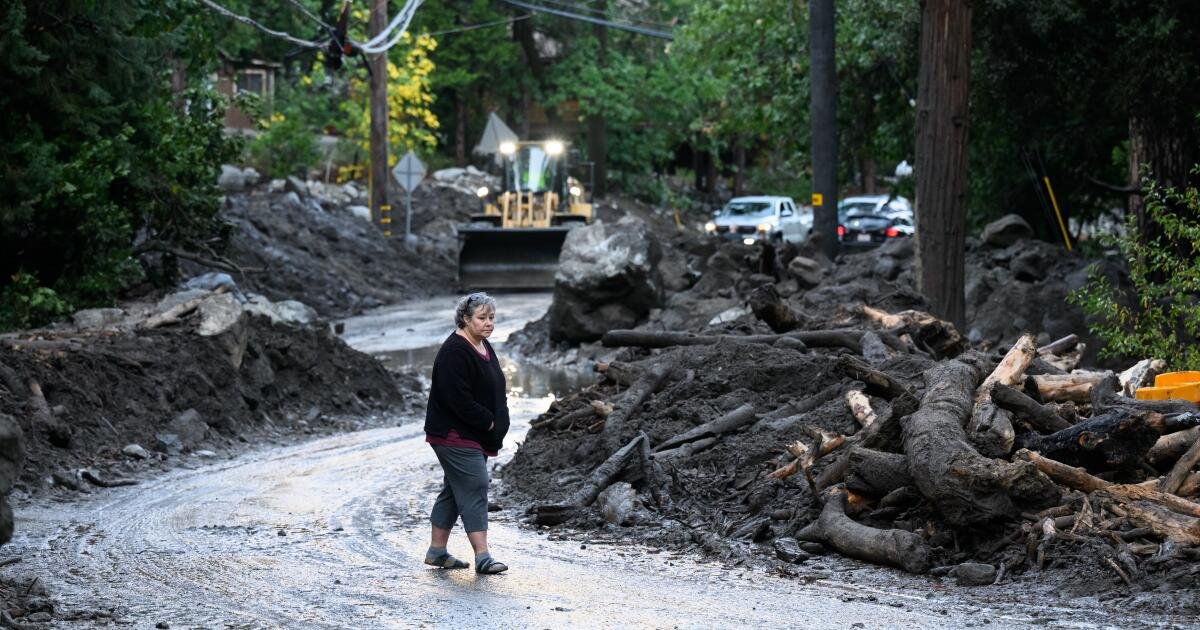
El Niño has arrived and it could become one of the largest on record, and California may be in for a bumpy ride.
While the climate pattern is often linked with a higher chance of more rain in Southern California, it can affect the state — and its famous coastline — in numerous ways. That’s especially possible during a strong El Niño event, as this one is shaping up to be.
In fact, there’s a 63% chance El Niño could be “very strong” toward the end of the year, according to the National Oceanic and Atmospheric Administration’s Climate Prediction Center. And there’s an 88% chance El Niño will be either “very strong” or “strong.”
“The recently observed and ongoing rapid escalation of conditions in the tropical Pacific, plus the consistently and increasingly extreme forward-looking model projections, truly do suggest that something extraordinary could unfold,” Daniel Swain, a UC climate scientist, wrote in a blog post.
“The upcoming El Niño event — which has a high likelihood of becoming very strong or even historic in magnitude — will likely lead to widespread and significant global impacts,” he added. “It is possible, even probable, that at least some of these effects will be unprecedented in the modern era, given the combined effects of a high-end El Niño event plus over a century of accumulated global warming.”
El Niño’s impacts are usually felt strongest during the winter. Here are five major ways California could be affected.
1. Wet and wild winter
While it’s no given, El Niño could open up the atmospheric floodgates in Southern California.
Of the last four “very strong” El Niños on record, two — 1982-83 and 1997-98 — brought coastal Southern California more than double its typical annual rainfall. Another, in 1991-92, brought 133% of the average, according to data provided by Jan Null, adjunct professor at San José State University. But the last one — in 2015-16 — did not meet expectations, with just 77% of the annual average rainfall in the Southland.
According to NOAA, stormier weather is generally more likely in the southern United States during an El Niño. The Pacific Northwest, on the other hand, generally gets drier winters.
“A very strong El Niño event might well be the single most important predictor of substantially increased odds of unusually wet conditions, and increased likelihood of individual heavy precipitation events, in any given winter in California — and perhaps also an early warning indicator of increased risk of large-scale flood events,” Swain wrote.
Despite the threat of floods, a wet winter could bring some relief to the Colorado River basin, which is in an “exceptionally severe multi-decadal drought,” Swain wrote.
2. High-tide flooding
More high-tide flooding is possible in an El Niño.
“Elevated sea levels along the West Coast of the U.S. can occur, causing high tides and strong surf to ride higher and push much further inland than normal,” NOAA said in a statement.
Agency experts noted that the El Niños of 2015-16 and 2023-24 brought more frequent, deeper and widespread high-tide flooding, a risk made worse after decades of sea level rise.
The El Niño of 2015-16 brought “record coastal erosion along many California beaches,” according to the California Coastal Commission.
“Major El Niño events can raise local sea level by around six to 10 inches in California during the winter rainy and stormy season through a combination of northward-propagating coastally-trapped Kelvin waves and thermal expansion of seawater,” Swain wrote. “Significant coastal flooding is possible later this year.”
3. Warmer waters and temperatures
One of the ingredients of El Niño is triggered when the trade winds in the Pacific Ocean — winds that reliably blow from east to west — weaken. That allows the sea level to rise a little bit, “and it creates what we call a downwelling oceanic Kelvin wave,” said Jon Gottschalck, the Climate Prediction Center’s operational prediction branch chief.
That’s not an ocean wave at the surface but one that moves warmer water at the surface deeper down. And the wave “will bring warm water from the western Pacific to the central and eastern Pacific,” Gottschalck said.
The next ingredient to an El Niño is seeing how the movement of warmer water eastward changes wind patterns.
Warmer water moving from west to east also decreases the west-to-east winds, which then allows even more warmer western water to move toward the eastern Pacific. “It’s kind of a positive feedback. And so once that occurred, the El Niño event will basically develop and intensify,” Gottschalck said.
The El Niño-triggered warming of water off the coast of Mexico, Central America and northern South America then typically moves the atmospheric jet stream southward to the southern United States, “which can bring wetter-than-normal conditions to our area” in the winter, said Ariel Cohen, a meteorologist at the National Weather Service office in Oxnard.
El Niño will probably contribute to more record-breaking global temperatures, Swain wrote.
4. Sharks and other sea creatures
The warmer waters could attract additional seafaring tourists toward California’s shores.
“In the near future, we may expect to see an increase in tropical or warm subtropical species, which may include increased shark sightings off of the Southern California coast,” said Nate Jaros, the Aquarium of the Pacific’s vice president of animal care for fish and invertebrates. “In very rare cases, even whale sharks have visited off Catalina, including in the 2015-2016 El Niño events.”
Marine mammals and other migratory species may also move closer to shore, “because they’re going to where their food is,” said Andrew Leising, a research oceanographer at the National Oceanic and Atmospheric Administration’s Southwest Fisheries Science Center.
El Niño has in the past been associated with larger sablefish found closer to shore, and a higher larval abundance of rockfish.
Warmer ocean temperatures can also increase the presence of sea jellies and other gelatinous creatures, Jaros said.
A jellyfish-like creature called Velella velella, also known as by-the-wind sailors, can wash up on West Coast shores and are usually harmless to people. However, “in past El Niño events, we’ve seen similar-looking Portuguese man o’ war, a very rare visitor to our waters, washing up on our beaches. These animals can have a very painful sting,” Jaros said.
In a previous marine heat wave called “The Blob,” which was followed by a very strong El Niño, scientists observed increased tuna come closer to shore, go farther north, “and come in earlier than they do in other years, and so that actually leads to increases in fishing opportunity for those highly migratory and large game fish species,” Leising said.
5. But other sea life could struggle
While not solely the work of El Niño, warmer oceanic waters can wreak havoc on ocean life.
There are currently two marine heat waves unrelated to El Niño near California — one just off the state’s southern coast that started in December, and another farther west off the coast of Northern California and Oregon that started in May, according to data shared by Leising.
El Niño also tends to cause marine heat waves, Leising said.
“One of the most important things, though, for the animals in the ecosystem is not necessarily just how hot it is — that is important in some cases — but just how long they’re exposed to the heat,” Leising said. “We have a situation, particularly in Southern California, where we’ve already had this marine heat wave, and we’re just gonna kind of roll on into a heat wave that’s been brought about by El Niño.”
Past marine heat waves have decimated California’s kelp, “with bull kelp habitats declining 90% in Northern California since 2014,” Jaros said.
“The effects of this decline trickle down to other species, including endangered white abalone. And warmer waters can exacerbate the effects of sea star wasting disease, especially on the sunflower sea star, a population that’s nearly been wiped out of California,” he said.
In past strong El Niños, scientists have observed decreased plankton — an important food source for marine animals — and an increased probability of harmful algal blooms.
Previous strong El Niños have also brought a lower abundance, and a more northward shift, of market squid, Leising said.
“We often have seen in the past with El Niños reduced productivity of California sea lions, and the pups are often smaller,” Leising said.
A previous combination of “The Blob” — which hit the West Coast more than a decade ago — followed by a very strong El Niño resulted in “several closures of crab and shellfish fisheries due to harmful algal blooms,” according to Leising.
“We had increased whale entanglements because the whales, again, are closer to shore, they’re coming into contact with more ships and more fishing gear,” Leising said. “And we also had a loss of some of the habitat for groundfish because the oxygen at the bottom, where they live, was lower.”
There were also die-offs of seals, sea lions and marine birds, Leising said, probably from a combination of a lack of food and harmful algal blooms, and less food out there for baleen whales.
Food
How weight lifting can help you stay healthier as you age


If you watched me carry my shopping into the house the other day, you’d have caught me behaving a little strangely. Clutching a two-litre bottle of water in each hand, I started doing squats.
And there’s good reason why I should. When it comes to staying fit, my circle of friends tend to focus on cardio. We count our steps, track our runs, cycle at the weekend. Some of us even enter the occasional half-marathon or triathlon.
But while aerobic exercise like this can keep you healthy and help you live longer, experts say that adding in strength training can ensure you live a better quality of life as you age.
With that in mind, I’ve been looking into the benefits of resistance training and how best to add some into our lives.
When it comes to strength training, also called resistance training, the biggest health gains come when you are just starting out compared to doing nothing at all, says Jess Gorzelitz,an epidemiologist at the University of Iowa. “The riskiest group are those who do nothing… That’s a big message for people who are new to this.”
Initially, you should aim for two sessions per week, lasting between 20 to 30 minutes each, says Phillips. He suggests doing any of the following with several repetitions in a set and repeating the set two to three times:
As you train more you can look to increase the amount you do to get further benefits. If using your body weight feels too easy for certain exercises such as squats, you can consider adding some light weights.
You don’t necessarily need to set foot in a gym or any special equipment to start resistance training. (BBC Sport explains how to work out at home without equipment.)
Gorzelitz, who is a powerlifter herself, says we can easily do bodyweight squats using a chair. A couch or bed can help us to practice sitting down and standing up in a controlled manner, whilst household items like cans of food or bottles of water can be used for bicep curls.
She also suggests trying shoulder presses as “your back can never be strong enough”. Back strength is key for posture, preventing back pain and improving spine stability. (Watch the video below to find out why squats can also give your brain an unexpected boost.)
If your workout feels too easy, simply add more resistance, repetitions or additional sets, because over time as we build strength, our body will adapt to challenge. “That does not need to be dramatic. Small increments repeated over months are where the magic lives,” says Phillips. When you start out, you may only be able to hold a plank for less than 15 seconds, for example, but you’ll gradually be able to increase this as you get stronger.
The level should feel challenging but still manageable, adds Phillips. “You do not need to crawl out of the gym like a wounded animal. Progress gradually,” he says. It’s better to be consistent than try to do too much. If you do lose motivation, remember that as with all exercise advice, small bursts are better than none.
Regular muscle strengthening exercise will give you a better chance of living longer. It can also lower your risk of cardiovascular disease, cancer, diabetes and premature death, according to a large review of studies. It found that just 30-60 minutes per week of muscle strengthening activities was linked to a 10-17% reduction in all-cause mortality.
Health benefits increase when we do more according to another large recent study, which found that 90 minutes to two hours of resistance training per week reduces the risk of an early death by 13%. And those who do both resistance training and cardio have a 58% lower risk.
“A simple way to put it is this: aerobic fitness likely helps you live longer, but muscle strength helps you live better while you are here. Ideally, we want both,” says Phillips.
We benefit whatever age we are, research shows. Gorzelitz has found that adults aged over 70 who took part in regular weight training had a lower risk of dying compared to those who did none. “In particular as we age, we can see improvements in functionality, physical function and muscle mass,” says Gorzelitz.
The key, say both Gorzelitz and Phillips, is to find exercises that you can do easily and fit in with your day-to-day life.
With that in mind, as I already do plenty of cardio, I can now be found doing the plank and some squats before my morning coffee or between meetings. I aim to increase this gradually and know my future self will thank me.
*Melissa Hogenboom is a senior health correspondent at the BBC and author of Breadwinners and The Motherhood Complex. She is melissa_hogenboom on Instagram.
For trusted insights on health and wellbeing, sign up to the Health Fix newsletter by senior health correspondent Melissa Hogenboom who also writes the Live Well For Longer and Six Steps to Calm courses.
Food
Iran and US reach tentative deal to end war in Iran
DUBAI, United Arab Emirates (AP) — The United States and Iran reached an initial agreement early Monday that would extend their shaky ceasefire and lead to the reopening of the Strait of Hormuz, but challenges immediately loomed, including Israel insisting it would hold onto land seized in Lebanon as it battles Hezbollah.
Details of the deal, which would potentially allow desperately needed oil and natural gas to reach the global market through the critical waterway, were not immediately released. Iran signaled implementation would not start until the signing, which key mediator Pakistan said would take place Friday in Switzerland.
But the memorandum of understanding over the war already faced hurdles. Israel’s continued hostilities with the Iranian-backed militia Hezbollah in Lebanon, where Israel bombed Beirut’s southern suburbs Sunday, nearly derailed the negotiations. Israel joined the U.S. in launching the war on Feb. 28.
Israel says it won’t withdraw from Lebanon
In the first official Israeli comments after the announcement of the deal, Defense Minister Israel Katz said Israel won’t withdraw from land seized in Lebanon as the interim deal is pending. Katz said Israel plans to stay “indefinitely” in lands it holds in Lebanon, as well as Syria and the Gaza Strip. Iran has tied the interim deal over the war to halting Israel’s attacks on Hezbollah in Lebanon.
Katz also threatened that if Iran attacks Israel over Israeli strikes in Lebanon, Israel will strike Iran with “great force.”
Over the past 2 1/2 years, Israel has taken control of areas in Gaza, Lebanon and Syria amounting to 1,000 square kilometers (386 square miles) of territory — an area that is slightly smaller than New York City.
Meanwhile, the deal between the U.S. and Iran gives just 60 days to resolve what to do about Iran’s stockpile of highly enriched uranium and its atomic program. That took years to resolve in Tehran’s 2015 nuclear deal with world powers. U.S. President Donald Trump unilaterally withdrew America from that accord in his first term, setting the stage for the tensions that culminated in the war.
“Congratulations to all!” Trump wrote on social media as he celebrated his 80th birthday Sunday with a UFC cage match fight at the White House.
He added, “I hereby fully authorize the toll free opening of the Strait of Hormuz, and, simultaneously herewith, authorize the immediate removal of the United States Naval blockade,” which was imposed in retaliation for Iran’s grip on the crucial waterway.
He soon hedged, however, saying the strait wouldn’t open until Friday’s signing.
Iran’s deputy foreign minister, Kazem Gharibabadi, confirmed the agreement on state television but said Iran would not start implementing it until it was signed Friday. He said the deal followed talks with Qatar, another mediator.
World leaders applaud the agreement
Leaders from China to Europe welcomed the announcement. The closure of the Strait of Hormuz has roiled international markets and sent prices of fuel and other essential goods, including food, spiraling.
Chinese Foreign Ministry spokesperson Lin Jian said that China “hopes the U.S. and Iran will sign the initial memorandum of understanding as scheduled.” Beijing hopes that safe and free passage through the Strait of Hormuz will be restored as soon as possible, he added.
France’s Foreign Minister Jean-Noel Barrot welcomed the agreement “that should bring an end to hostilities on all fronts, including in Lebanon.” He said that “all parties to the conflict must respect this agreement.”
Barrot said “for far too long” the war in Iran has driven prices of fuel and fertilizer painfully high. With the ceasefire, he said dozens of nations like France and the United Kingdom could send ships to protect freedom of navigation in the Strait of Hormuz.
The European Union’s top diplomat pledged support for further negotiations over outstanding issues like Iran’s nuclear program.
“Fingers crossed that they will be also initialized on Friday, because everybody needs the Strait of Hormuz to be open and actually this war to stop,” Kaja Kallas, foreign policy chief of the 27-nation EU, said ahead of a gathering of foreign ministers in Luxembourg on Monday.
But some of the ministers, like Luxembourg’s Xavier Bettel, expressed skepticism. “It’s a long time till Friday,” he said.
U.K. Prime Minister Keir Starmer also welcomed the breakthrough and said it was vital that all parties in the region seize the opportunity to restore freedom of navigation in the Strait of Hormuz.
“We will now work closely with our partners to support this agreement and to ensure that it turns into a durable, lasting peace,’’ he said.
Pakistan, a key mediator, announced the deal
Pakistan first announced the deal, with Prime Minister Shehbaz Sharif saying “both sides have declared the immediate and permanent termination of military operations on all fronts, including in Lebanon.” He added that mediators this week will facilitate meetings to “lay the foundation for the technical talks.”
Broader negotiations on outstanding issues like Iran’s nuclear program would continue over the next 60 days, two senior Pakistani officials said earlier Sunday, speaking on condition of anonymity because they were not authorized to discuss the matter publicly. If the sides fail to reach a resolution within that time, the timeline could be extended.
Iranian state television cited the secretariat of the Supreme National Security Council as saying the war on all fronts “will end immediately and permanently beginning tonight” — and that the U.S. blockade “will be terminated immediately and in full.”
Qatari mediators later left Tehran following 17 hours of negotiations, said an official briefed on the developments who spoke on condition of anonymity due to sensitivity of the talks. Separate preparatory meetings with each side will take place in Doha this week, the official said.
It was not clear who from Iran would sign the deal on Friday. U.S. Vice President JD Vance told Fox News the White House was still figuring out who would attend: “I certainly plan to be there, but it’s possible the president himself could be there.”
But concern among Republicans in the U.S. already could be seen. They included U.S. Sen. Lindsey Graham of South Carolina, who described Vance as “the architect of the deal.”
“I am somewhat concerned that Iran’s view of the agreement seems different than what the American negotiating team is claiming,” Graham wrote online.
___
Becatoros reported from Athens, Greece. Associated Press writers Munir Ahmed in Islamabad, Pakistan, Sam McNeil and Sylvain Plazy in Brussels, Danica Kirka in London, Melanie Lidman in Tel Aviv, Israel, Simina Mistreanu in Taipei, Taiwan, Cathy Bussewitz in New York and Cara Anna in Lowville, New York, contributed to this report.


Will Kamala run for president again?
At the Austrian World Summit in Vienna, Former U.S. Vice President Kamala Harris talks with CNN's @elexmichaelson about the …


How will YouTube be affected by the UK government’s social media ban for under-16s? #BBCNews


Europe says Russia can't win Ukraine war militarily
US President Donald Trump said that he would meet with Ukrainian President Volodymyr Zelensky later today, encouraging …


Vance defends Trump administration’s Epstein files release
During an interview on ABC's “The View,” Vice President JD Vance said he has “kind of a conspiracy theory” on...


On the front line against Ebola in DR Congo | Global News Podcast
Close to 800 people have been confirmed to have contracted Ebola in the east of the Democratic Republic of Congo....


Portlanders take home three James Beard Awards
Portlanders took some of the culinary world’s highest honors Monday night at the 36th annual James Beard Restaurant and Chef...


Drones create World Cup scoreboard in Seattle, Washington. #WorldCup #BBCNews


Fed Chair Warsh expected to withhold ‘dot’ from central bank’s interest rate outlook
Tom Williams | Cq-roll Call, Inc. | Getty Images When the Federal Reserve wraps up its policy meeting Wednesday, one...


Google launches Android 17, rolling out now to Pixel
Following four betas, Google is ready to launch Android 17 for Pixel devices. There are a handful of big additions...


How Cape Verde took on Spain and shocked the world | BBC News
Debutants Cape Verde produced one of the biggest 2026 World Cup shocks of recent times by holding Spain to a...
-

 Business3 days ago
How much of Musk’s wealth comes from government help? Virtually all of it
-

 LifestyleNews2 weeks ago
120 minutes of strength training per week may help extend lifespan
-

 Politics5 days ago
What to know about the stabbing that set off fiery riots in Northern Ireland
-

 Video4 days ago
Download fans say what they love about the festival. #DownloadFestival #BBCNews
-

 Video4 days ago
Why SpaceX IPO isn't about space. #SpaceX #ElonMusk #BBCNews
-

 HealthNews4 days ago
The people of Okinawa, Japan only eat until they are about 80 percent full, then stop — and the practice has been linked in multiple peer-reviewed studies to lower rates of cardiovascular disease, slo
-
 Food4 days ago
Pope Leo’s plane was grounded. Then the King of Spain stepped in to help
-

 TravelNews4 days ago
My Paternal Instinct Should’ve Warned Me About Netflix’s Maternal Instinct