

Business
Fed Chair Warsh expected to withhold ‘dot’ from central bank’s interest rate outlook

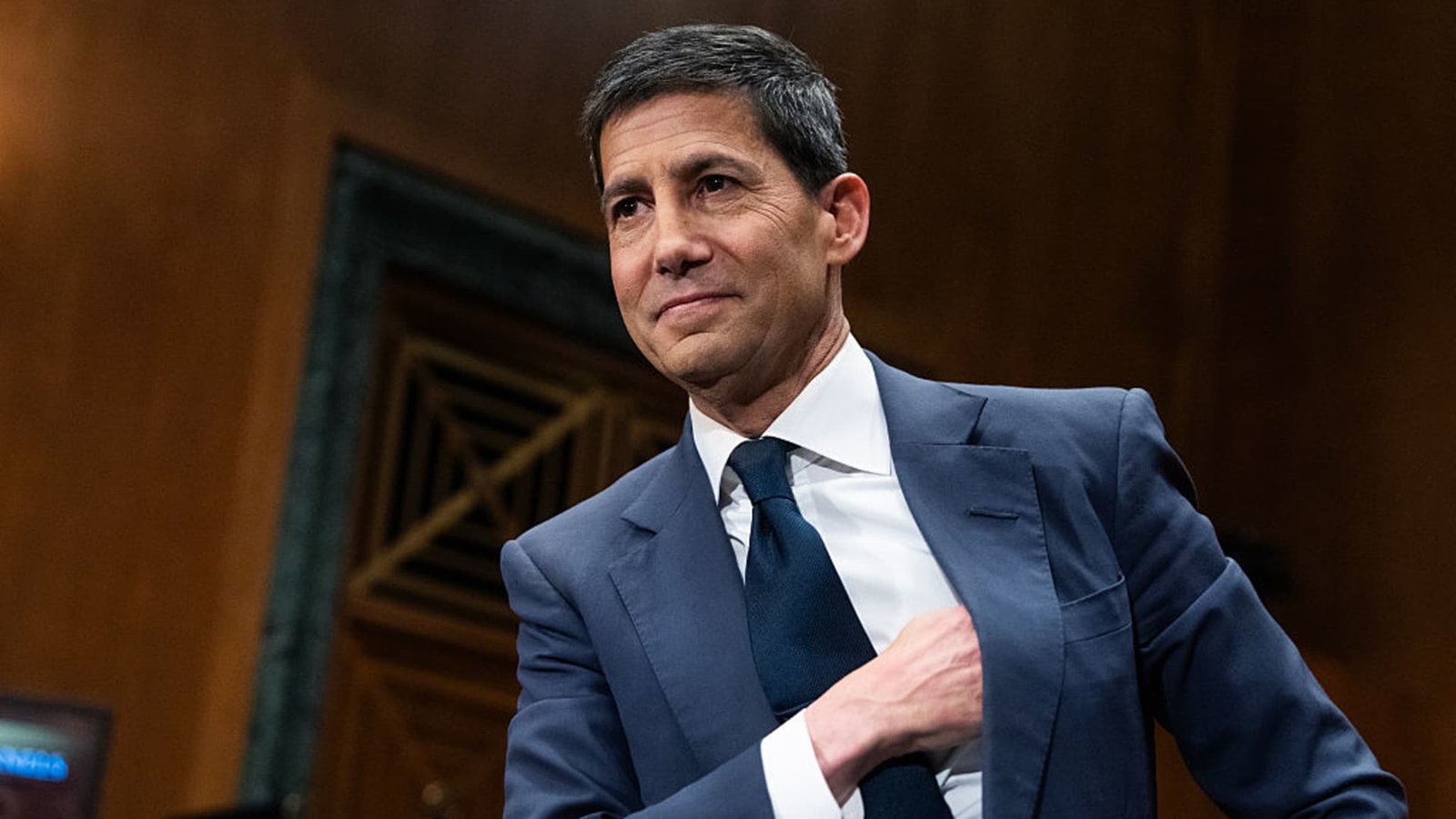
Tom Williams | Cq-roll Call, Inc. | Getty Images
When the Federal Reserve wraps up its policy meeting Wednesday, one important thing could be missing — a dot.
The central bank’s Federal Open Market Committee is set to release its quarterly update of where individual officials expect interest rates to head this year and through 2028 and beyond. Markets closely parse the grid, known more commonly as the “dot plot,” for information on how Fed officials view the economy and its impact on monetary policy.
However, most Fed watchers on Wall Street expect new Chair Kevin Warsh won’t participate, either because he feels he’s not ready after having only been in office since May 22 — or simply because he doesn’t like the dot plot and its implications for “forward guidance.”
Declining to submit a dot would counter some 14 years of post-financial crisis practice for the Fed, and risk alienating other FOMC officials who favor the way it helps them communicate with the public. However, it also could be an effective first step for a central bank leader who has vowed fundamental changes for how the institution operates.
“It seems to me fairly likely that he doesn’t want to submit a rate forecast,” said Bill English, former head of monetary affairs at the Fed and now a professor at Yale. “There may be others on the committee who don’t particularly like the dot plot, who might be willing to do that, too.”
‘The Fed’s human’
Warsh objects to the dot plot and other methods of forward guidance because he believes they limit the Fed’s decision-making capabilities.
The dot plot belongs to a larger set of data called the Summary of Economic Projections, which also includes the outlook for unemployment, inflation and gross domestic product. The SEP is updated quarterly and includes the median outlook for each category and as such is not an official forecast but merely the midpoint of the range among FOMC meeting participants.
Bank of America economist Aditya Bhave expects Warsh won’t submit a dot, while Goldman Sachs economist David Mericle said in a note that, “We assume that Warsh will not submit dots in light of his past criticism of forward guidance, but we are not sure.”
During his confirmation hearing in April, Warsh cited the SEP as part of a broader problem at the Fed with overcommunication. Specifically, he cited the Fed’s mistaken “transitory” call on inflation in 2021-22 that led to a series of aggressive rate hikes to combat the biggest price surge in 40 years.
“The Fed tells the whole world what their dots are going to be, what their forecasts are going to be,” he said then. “Well, the Fed’s human. Then they hold onto those forecasts longer than they should. I think if the Fed were to wait until it gets into a meeting before making a decision, that incremental deliberation can keep the central bank from compounding its errors. I think these are big changes that are needed.”
Markets are watching
Still, markets hinge on the dot plot and the rest of the SEP, and may have to learn to live without it if Warsh has his way.
“To me it never made a lot of sense that [the SEP] at times was market moving, because its accuracy has been at best middling,” said Liz Ann Sonders, chief investment strategist at Charles Schwab. “But it is an avenue through which the Fed expresses a view, and the market tends to move on those views.”
Economist Claudia Sahm cautioned that should Warsh and others not participate, it could send the wrong message to markets. Specifically, she said investors could take the news to mean that Warsh is trying to “hide the hawkish shift” in the committee to fight inflation with elevated rates.
“Neutralizing the SEP this week might address some of Warsh’s concerns, but it would almost certainly create new ones,” wrote Sahm, chief economist at New Century Advisors. “A Fed that appears to be concealing its own debate could look complacent about inflation, which is exactly the credibility it can’t afford to lose.”
This meeting is expected to be an interesting test of Warsh’s new communications strategy.
In addition to his views on the dot plot and SEP, markets also will be watching for changes to the post-meeting statement and his views on whether he will continue to hold news conferences after each meeting.
Business
Nvidia’s Huang says society needs ‘new social norms’ in age of AI
SHERMAN, Texas (AP) — Nvidia CEO Jensen Huang — whose work helped enable artificial intelligence — stressed in an Associated Press interview Tuesday that society has no choice but to change in the advent of AI.
Huang has been optimistic about the technology’s potential to rapidly change society, creating faster economic growth and more scientific breakthroughs. But as the head of a computer chip company now developing AI systems, Huang has felt obligated to respond to critics who warn of job losses and threats to humanity itself.
“We need to create new social norms,” Huang said in an interview. “I would advocate that everybody use AI. Just go engage it.”
Huang made his case as AI has emerged as a political flashpoint, with objections to plans to build more data centers and fears that the speed with which it’s being adopted could spur the layoffs of workers who might not have a safety net. Such questions have threatened public support of the technology.
His close relationship with President Donald Trump has been a source of criticism among Democrats, even as he makes the case that the computing power created by AI is key to adding the factory jobs that have been promised for decades without much enduring success.
He said the ability of AI to build a website, analyze complex documents, guide advanced research or even plan a kitchen remodeling has helped to close the technological divide in America. People can now do advanced work on computers without having to know how to program or write software, he added.
Huang stressed that there is a need for government regulation and safety standards for AI, emphasizing that national security also needed to be a priority for the technology that has been powering stock market gains and much of the U.S. economy in recent years.
The head of the world’s most valuable company said society will adapt to AI just as it did to automobiles. He said cars were once portrayed as killing children, but the world changed its norms by having sidewalks and crosswalks and stopping kids from playing in the streets.
“When I was growing up, I used to play in the streets,” Huang said. “When cars came along, you obviously can’t play in the streets now.”
Huang skeptical of what government ownership of AI companies would achieve
With a market capitalization of roughly $5 trillion, Nvidia has soared in valuation in recent years to become the world’s most valuable company. AI modeling companies OpenAI and Anthropic are potentially set to also clear the $1 trillion mark once their stocks are publicly traded.
That explosive surge in wealth concentrated in AI companies has prompted renewed worries about economic inequality. Trump has tried to defuse those concerns, recently musing about the prospect that the U.S. government could own some shares in AI firms, so any windfalls would be more broadly shared with the public. That idea has also been advanced by Sen. Bernie Sanders, I-Vt., and even OpenAI CEO Sam Altman.
Huang expressed skepticism about the idea, saying he expects the country will already benefit broadly from AI advancements.
“I’m not exactly sure what they’re trying to achieve,” he said regarding government ownership. “I haven’t had a dialogue with them about that. But just remember that these are American companies. Their success benefits the stock price, of which many Americans are investors in. It generates taxes, which helps many Americans. It creates a lot of jobs.”
He noted that AI companies could also lead to higher profits for energy, construction and hardware technology firms.
“Americans have a stake in American companies already, naturally, in a whole lot of different ways,” Huang said.
Huang says national security needs to be a priority on AI
The Trump administration has recently reversed course from using a light touch on regulating AI to taking a heavier hand.
It placed export controls on the AI company Anthropic’s latest models, leading the company on Friday to shutter all public access to those models over security concerns. Trump, a Republican, also signed an order to have new AI models voluntarily vetted by the government.
Huang said the government was properly focused on national security issues, but it was important to provide clear guidance when taking restrictive actions, as doing so could lead to unintended consequences.
“National security should always be the top concern of all technologies,” Huang said. “But having said that, you know, you have to be very specific about the risk that you’re concerned about, before setting up policies for export controls.”
During the Biden administration, Nvidia pushed back against export controls that were designed to restrict its ability to sell chips to China, rejecting the administration’s premise that a ban would guarantee an American edge on AI. Huang had warned that the export controls might limit America’s ability to develop the world’s AI ecosystem, as China would respond with its own advanced chips.
Huang says energy is key problem for America’s AI development
Huang stressed that while the U.S. has many strengths on AI, it is vulnerable because of a lacking energy infrastructure. The data centers performing the computations used in AI are creating a huge demand for electricity, which could be a strain on the power grid.
Some data centers will be constructed with their own electricity sources, but Huang said the U.S. is starting from a disadvantage on energy. And without more energy, it can be harder to play to American strengths in its AI infrastructure, models and computer chip development.
“The United States is woefully behind in energy production,” Huang said. “We just suffocated energy production for too long.”
Huang complimented Trump on his approach to seeking to increase energy production. The president has aggressively supported the use of oil, coal and natural gas, but he has scorned the use of solar and wind power.
The Nvidia CEO was not commenting on Trump’s opposition to climate-friendlier energy sources, but the gap he identified goes to some of the fears that U.S. households have about AI increasing their utility bills.
Huang was speaking Tuesday in Sherman, Texas, at an expansion of the Coherent factory to develop a laser for transmitting data among chips, which could cut power use by AI systems by up to 50%.
Trump’s fondness for Huang started at a Mar-a-Lago dinner
Trump, not known for technological expertise, quickly developed a friendship with Huang. The president has called him “smart,” a “friend” and “amazing,” insisting that Huang accompany him on foreign trips. Most recently, Trump had Air Force One pick up the leather-jacketed CEO in Alaska while en route to his state visit to China.
Their relationship started last year with an invitation to dinner at Mar-a-Lago, Trump’s home and private club in Florida. Huang was in the area to receive the Edison Achievement Award for his AI work.
“He says drop by for dinner, and so I did,” Huang said. He went with his wife, Lori.
“He was incredibly engaging, incredibly charismatic, conversational, asked a lot of questions,” Huang recalled. “From the moment that I met him, the only thing that he’s ever talked to me about is creating more jobs, reindustrializing the United States, protecting national security, winning.” He added that Trump “calls me in the middle of the night and wants to talk about one of these topics.”
But his proximity to Trump has also led to criticism from Democratic lawmakers. Sen. Elizabeth Warren, D-Mass., objected to Huang not testifying before a Senate committee even as “he has time to attend a $1 million-a-head dinner at Mar-a-Lago.”
Huang said he wants the U.S. president and other officials — regardless of party — to succeed. “We could differ with politics, but we should want him to succeed,” he said. “Because when President Trump succeeds, our country succeeds.”
Business
Chick-fil-A dethroned by Jersey Mike’s from top fast food spot

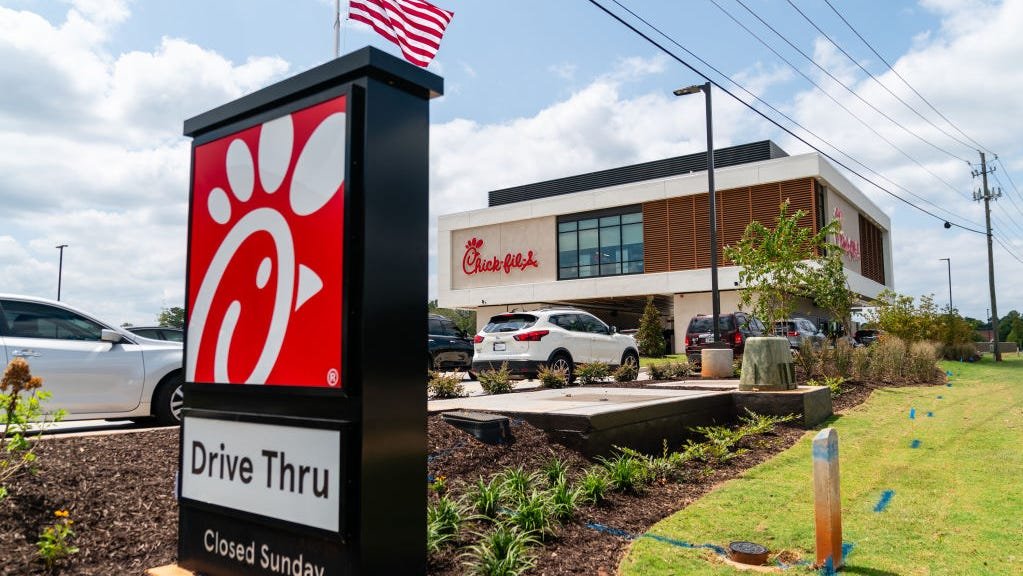
The king of fast food has officially been dethroned.
For the first time in more than a decade, Chick-fil-A is no longer the top-rated quick-service restaurant, according to the American Customer Satisfaction Index (ACSI), which rates eateries based on thousands of customer surveys reflecting on recent experiences with major chains.
After an 11-year run, results from 16,464 respondents knocked the chicken chain from its coveted spot in favor of sandwich shop Jersey Mike’s, which was commended for its freshness, food variety and value. Securing an ACSI score of 84 out of 100, Jersey Mike’s edged Chick-fil-A out by one point after adding 238 net new locations in 2025 and clearing $4.2 billion in sales.
“The U.S. restaurant industry faced difficulties in 2025, with total sales struggling to keep pace with inflation,” said the report published Tuesday, June 16. “In a market defined by trade-offs, customers are placing greater emphasis on consistency, reliability, and perceived value as opposed to just price. Brands that deliver a consistently enjoyable experience are gaining ground.”
Wondering where your favorites ranked in 2026? Read more below.
See the top 15 quick-service restaurant chains
Chick-fil-A still on top of the chicken game, no McDonald’s in sight for burgers
Breaking quick-service or fast-food restaurants down a little further by category puts Chick-fil-A back on top, at least for chicken.
Jersey Mike’s maintained its crowning spot in the sandwich category, while Papa Johns and Pizza Hut tied for pizza, Starbucks led the coffee pack and Burger King and Culver’s were the winners in burgers. Perhaps surprising to some, fast food heavy-hitter McDonald’s ranked seventh on the list for burgers with a score of 72, not even breaking the top five.
There were only three that made the coffee list, and numbers two and three may also send some for a loop, as Dunkin’ is tied with Panera Bread at 78 points for coffee/bakery/cafe chains.
Top 5 chicken spots
Chick-fil-A
KFC
Raising Cane’s
Wingstop
Popeyes
Top 4 sandwich spots
Jersey Mike’s
Jimmy John’s
Subway
Arby’s
Top 4 pizza spots
Papa Johns
Pizza Hut
Domino’s
Little Ceasers
Top 5 burger spots
Burger King
Culver’s
Sonic
Wendy’s
Five Guys
Steakhouses take top spots for full-service eateries
Texas Roadhouse and LongHorn Steakhouse tied for the top sit-down spots with ACSI scores of 82, despite those scores representing a 1% to 2% point decrease for both.
Olive Garden followed closely behind at 81 before scores dropped into the high 70s for eateries like Applebee’s, Chili’s and Cracker Barrel.
“This year’s brand results show a compressed top tier while continuing to demonstrate America’s love of steak even as beef prices rise sharply,” said the report.
Accuracy of food orders, food and beverage quality, and courtesy and helpfulness of waitstaff remained the top factors for satisfaction, and all improved year-over-year, while quality of the mobile app and website satisfaction remained at the bottom but also improved.
The reliability of mobile apps (minimal downtime, crashes, lags), saw significant gains. In 2026, customer satisfaction with mobile apps went up 12% from 78 to 87, while website and mobile app quality satisfaction both went up by 4%.
“These improvements align with a broader industry push to reduce friction in carryout and digital ordering, an area where customers often ‘feel’ service failures most acutely when they may be paying more for delivery,” said the report.
See the top 15 full-service restaurant chains
Business
The fight to stop a Hollywood megamerger is far from over

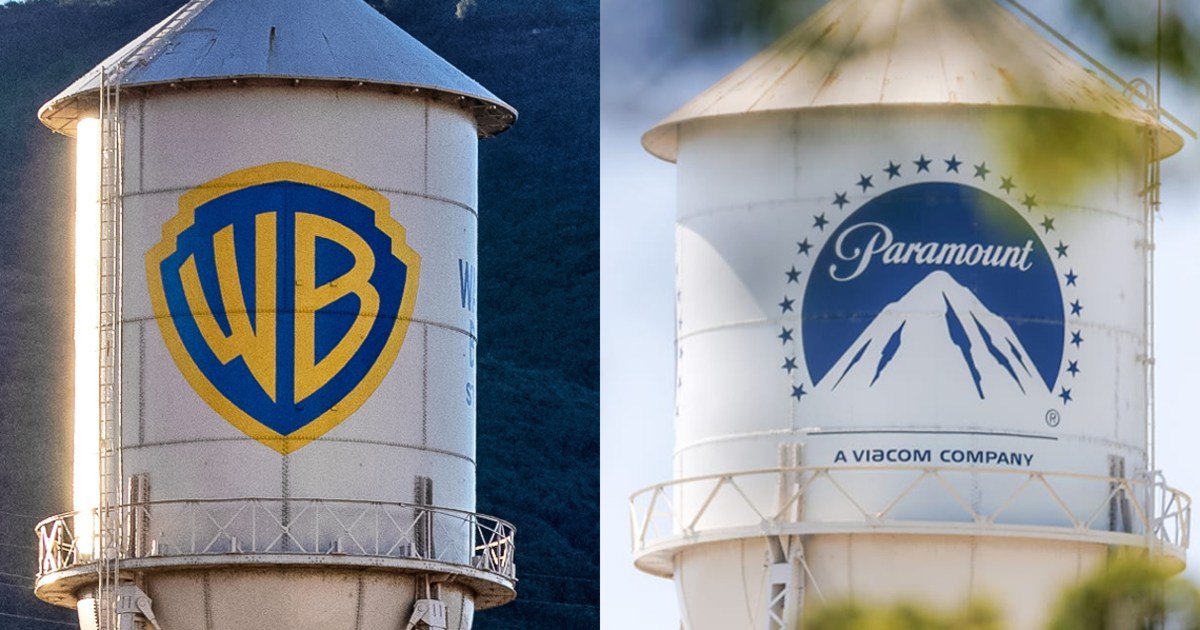
Paramount Skydance CEO David Ellison’s bid to take over rival Hollywood studio Warner Bros. Discovery moved closer to the finish line last week after the Justice Department signed off on the $110 billion deal. Paramount swiftly vowed to finalize the merger “as soon as possible.”
But in the eyes of California’s top law enforcement official, the show isn’t over.
“The merger of Warner Bros and Paramount is not a done deal and remains under investigation by my office,” California Attorney General Rob Bonta said Friday.
Inside the entertainment industry, all eyes are now on Bonta and other state attorneys general who could sue to halt the merger under state and federal anti-monopoly laws. New York Attorney General Letitia James’ office is probing the deal as well, according to a person familiar with the matter, and other states are reportedly part of that endeavor.
“The most direct tool available to California and New York is an antitrust lawsuit seeking an injunction to block the transaction,” said Scott Wagner, the co-head of antitrust practice at law firm Bilzin Sumberg. “State attorneys general have independent authority to challenge mergers even when federal regulators decline to do so.”
Bonta’s and James’ spokespeople declined to comment on the status of potential legal challenges.
The tie-up between Paramount and Warner would consolidate ownership of two historic film studios, two popular streaming platforms and a sprawling portfolio of broadcast and cable assets under Ellison, a 43-year-old media executive and the son of billionaire Oracle co-founder Larry Ellison, an ally of President Donald Trump.
The transaction would also bring together two news organizations, CBS News and CNN, amid mounting scrutiny on the younger Ellison’s attempt to overhaul “60 Minutes” and other parts of the Tiffany Network’s news operations.
In recent months, ground-level Hollywood professionals have warned that the merger would lead to fewer buyers for film and television content, shrink the pool of jobs and spike costs for consumers. More than 5,500 actors, directors, producers and screenwriters have signed an open letter vehemently opposing it.
In the letter, the entertainment professionals cheered Bonta and his colleagues for “scrutinizing the merger and considering legal action to block it.”
“We are grateful for their leadership, and stand ready to support all efforts to preserve competition, protect jobs, and ensure a vibrant future for our industry, for American culture, and for our single most significant export,” said the signatories, a list that includes JJ Abrams, Bryan Cranston, Jane Fonda, Pedro Pascal and Ben Stiller.
Free Press, a progressive advocacy that has rallied against corporate consolidation in the media business, said state attorneys general have “a strong case for blocking this merger, and many brave journalists, filmmakers and workers in entertainment industry have spoken out against the dangers of this deal despite threats to their livelihoods.”
“They are warning us what will happen if this deal goes through, and we must listen,” Free Press co-CEO Craig Aaron said.
The Justice Department’s antitrust division, in an unusually lengthy statement Friday, said “the transaction is not likely to result in harm to competition or American consumers.” Paramount has repeatedly touted the benefits of the transaction, and Ellison has attempted to reassure Hollywood’s creative community by promising to put 30 movies a year in theaters.
“This deal is pro-competitive, resulting in a stronger company better positioned to compete against dominant technology platforms in an industry increasingly defined by intense competition for audiences, talent, technology, and investment,” Paramount said in a statement Friday after the Justice Department announced its green light.
In anticipation of legal pushback from state attorneys general, Paramount has retained Jeffrey Kessler, a prominent litigator who specializes in sports labor law and is the co-executive chairman of the law firm Winston Taylor. In a phone interview Tuesday, he said he believes there is “no proper antitrust challenge to this merger.”
“It’s a very necessary merger to enable increased competition in streaming services, protect the model in network television and increase the number of movies in theaters,” Kessler said.
Wagner said state attorneys general have other tools at their disposal beyond litigation. They can, for example, send out waves of information requests and carry out reviews of specific legal issues — moves that would delay the deal’s consummation.
“While those tools are not a substitute for a successful antitrust challenge,” he said, “they can increase pressure on the parties and potentially affect the timing, cost and complexity of the transaction.”
Bonta, a Democrat who is up for re-election in November, previously told NBC News he believes the Trump administration has taken an overly lax approach to federal antitrust enforcement, arguing that he and his fellow attorneys general have been forced to take a more prominent role to fill a void.
California and New York were part of a group of dozens of states that secured a major win in April after a New York City jury found that Live Nation and its subsidiary Ticketmaster had illegally held monopoly power in the ticketing market. The states embarked on independent litigation after the Justice Department settled its antitrust suit against Live Nation and Ticketmaster.
Bonta’s and James’ offices are also part of a legal coalition that sued to prevent the $6.2 billion merger between broadcast station owners Nexstar and Tegna, a union that would create a new local television giant. The Federal Communications Commission — chaired by Brendan Carr, a Trump appointee — cleared the tie-up less than a day after the states filed their lawsuit.
The marriage of Paramount and Warner is facing another layer of scrutiny from foreign regulators. The European Union is studying the deal’s financial backing from three Middle Eastern sovereign wealth funds, according to a public filing. The United Kingdom’s antitrust authority formally announced a probe last Tuesday.
Paramount executives are motivated to close the deal soon. That’s partly because the company agreed to pay Warner shareholders a “ticking fee” of 25 cents a share each quarter if the transaction isn’t wrapped up by Sept. 30. The potential penalty is worth more than $600 million per quarter.
Business
Rivian cuts hundreds of workers after R2 deliveries start

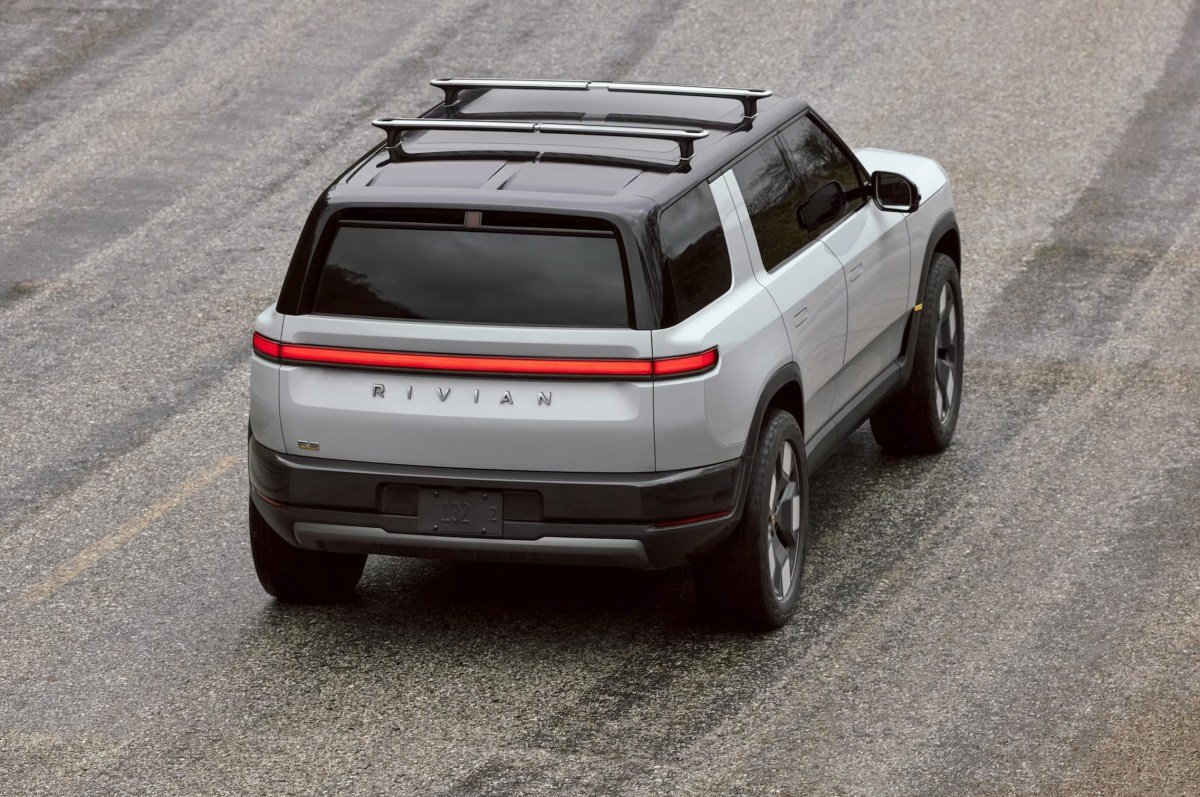
Rivian is laying off hundreds of workers just one week after it began deliveries of its hotly-anticipated R2 SUV, the company has confirmed to TechCrunch.
The company said the layoffs will affect less than 2% of its overall workforce, and that it was done to boost efficiency. It’s at least the fourth round of cuts Rivian has made since the beginning of 2024. The Wall Street Journal first reported the new round of cuts on Tuesday.
“We recently restructured a handful of teams within Rivian as we work to profitably scale our business,” the company said in a statement. Rivian said the cuts impact its service and customer teams, which include sales and marketing.
Rivian had been looking to turn its first profit in 2027 after accumulating losses of around $30 billion to date. But Rivian pushed that goal back in March because of how much money it’s spending on developing autonomous vehicle technology.
The profitability delay was revealed to investors alongside news that Uber plans to invest up to $1.25 billion in Rivian and purchasing as many as 50,000 R2 SUVs to be used as robotaxis. Rivian has yet to demonstrate that it can develop such capabilities, though, as it currently only offers a hands-off, eyes-on-the-road feature.
Business
Rivian laying off hundreds of workers amid R2 launch
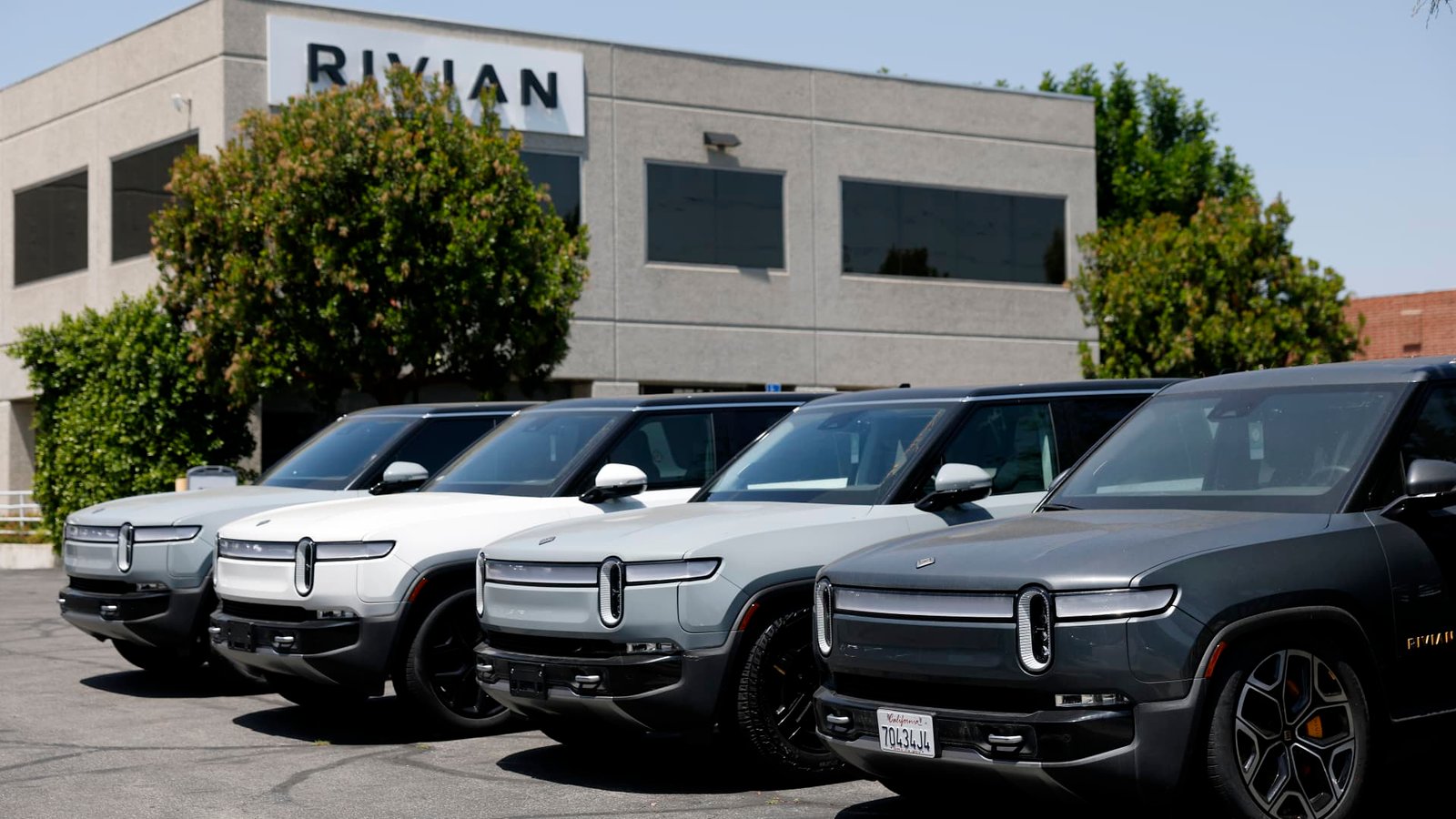
Rivian said Tuesday it was laying off hundreds of workers, or less than 2% of its workforce, as the electric vehicle maker aims to narrow losses.
The layoffs affect some teams in the service and customer segments, according to a spokesperson. The company had 15,232 employees across North America and Europe at the end of last year.
“We recently restructured a handful of teams within Rivian as we work to profitably scale our business,” the company said in a statement.
The layoffs come a week after the automaker officially launched deliveries of its key new vehicle, the R2 SUV. The R2 is meant to transform Rivian from a niche EV manufacturer that sells luxury vehicles into a more mainstream brand like U.S. EV leader Tesla . The layoffs were first reported by The Wall Street Journal.
Rivian has said it hopes to achieve profitability with the R2. It has never turned an annual profit.
The EV maker lost $3.6 billion last year, while only delivering 42,247 vehicles, according to company filings. Its automotive segment lost about $6,000 per vehicle it delivered during the first quarter of this year.
Rivian and other EV manufacturers are increasingly facing a more challenging market than they did in recent years amid changing regulations under the Trump administration, including the elimination of a $7,500 federal incentive for purchasing an EV.


White House attack plot: The 'disturbing' new details
Federal officials have charged multiple people who they claim discussed plots to attack the UFC fight night event at the...


Trump renews criticism of Israel’s actions in Lebanon during remarks at G7 summit. #BBCNews


Man arrested more than 9 years after woman pushed in front of London bus
Police say they have arrested a 44-year-old man on suspicion of attempted grievous bodily harm, nine years after a woman...


The UK government is a considering an overnight social media curfew. #BBCNews


Canada PM says he saw Iran agreement. He calls it a ‘game changer’
CNN's Kaitlan Collins speaks with Canadian Prime Minister Mark Carney about the Iran-US agreement.
Nvidia’s Huang says society needs ‘new social norms’ in age of AI
SHERMAN, Texas (AP) — Nvidia CEO Jensen Huang — whose work helped enable artificial intelligence — stressed in an Associated...


Trump says Iran will 'never have a nuclear weapon’, as he attends G7 summit | BBC News
US President Donald Trump has said Iran will "never have a nuclear weapon" in his preliminary deal to end the...


Chick-fil-A dethroned by Jersey Mike’s from top fast food spot
The king of fast food has officially been dethroned. For the first time in more than a decade, Chick-fil-A is...


Will Kamala run for president again?
At the Austrian World Summit in Vienna, Former U.S. Vice President Kamala Harris talks with CNN's @elexmichaelson about the …


How will YouTube be affected by the UK government’s social media ban for under-16s? #BBCNews
-
 Business3 days ago
How much of Musk’s wealth comes from government help? Virtually all of it
-

 LifestyleNews2 weeks ago
120 minutes of strength training per week may help extend lifespan
-

 Politics5 days ago
What to know about the stabbing that set off fiery riots in Northern Ireland
-

 Video4 days ago
Download fans say what they love about the festival. #DownloadFestival #BBCNews
-

 Video4 days ago
Why SpaceX IPO isn't about space. #SpaceX #ElonMusk #BBCNews
-

 HealthNews5 days ago
The people of Okinawa, Japan only eat until they are about 80 percent full, then stop — and the practice has been linked in multiple peer-reviewed studies to lower rates of cardiovascular disease, slo
-

 TravelNews4 days ago
My Paternal Instinct Should’ve Warned Me About Netflix’s Maternal Instinct
-
 Food4 days ago
Pope Leo’s plane was grounded. Then the King of Spain stepped in to help