
Food
2026 Elections Live Updates: Candidates Campaign in Battleground States on Final Weekend
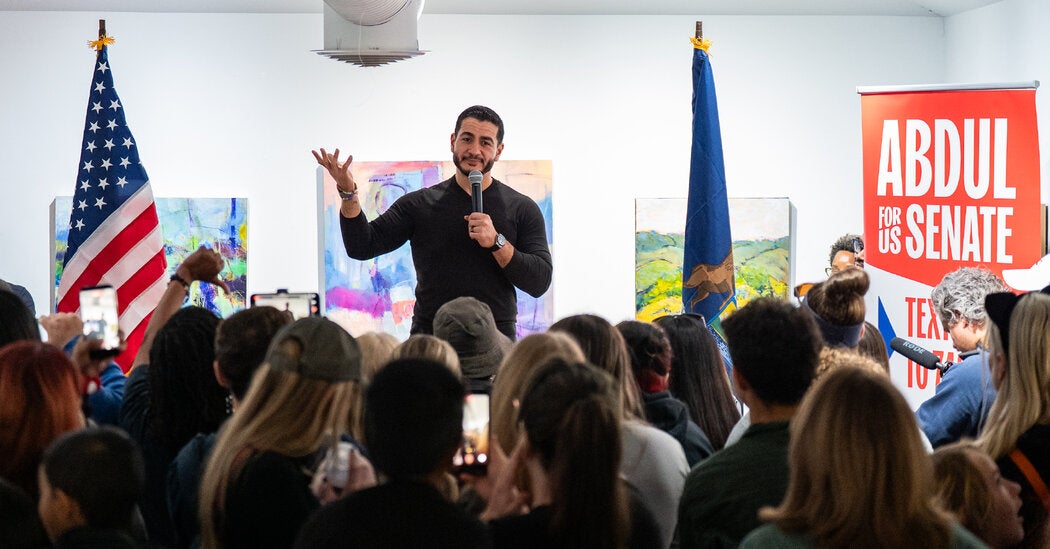
Ms. Stevens and Dr. El-Sayed, who have been publicly quarreling for days, were initially expected to attend the Sunday event together, part of an effort by Representatives Debbie Dingell of Michigan and James E. Clyburn of South Carolina to broker a peace between the feuding Democrats on the eve of a critical election.
It was not immediately clear if Ms. Stevens would abide by Dr. El-Sayed’s request that she stay away from the event.
Ms. Stevens, a centrist who lost to the progressive Dr. El-Sayed by less than a percentage point in a bitter August primary, had said late Friday that she had not been told that she was unwelcome at the event. She did not immediately respond to a request for comment on Saturday.
Mr. Clyburn said Saturday that he had “no idea” if Ms. Stevens would attend. An adviser to Mr. Clyburn, Antjuan Seawright, said Ms. Stevens was still invited, and rejected any notion that Dr. El-Sayed could pull her invitation.
“This is not Abdul’s event,” Mr. Seawright said Saturday afternoon, adding, “The invitation still stands.”
Ms. Dingell, who had said Friday that she had secured the participation of Dr. El-Sayed and Ms. Stevens at the event, did not immediately respond to a request for comment Saturday.
Politico previously reported that Dr. El-Sayed’s campaign did not want Ms. Stevens at its events.
A schedule for the Sunday event, at a church in the North End of Detroit, said that speakers would include Mr. Clyburn, Dr. El-Sayed and Mayor Mary Sheffield of Detroit. Their remarks were set to be followed by a march to the offices of the Detroit Election Department, the schedule said.
Ms. Stevens was not listed as a speaker, though there was no indication she had ever been expected to deliver remarks.
Opinion polls show that Dr. El-Sayed and Mike Rogers, the Republican Senate nominee in Michigan, are locked in a tight race that could determine control of the Senate.
Ms. Stevens and Dr. El-Sayed differ over their positions on Israel. Ms. Stevens is a strong supporter of the country, and Dr. El-Sayed is a fierce critic.
Their unusual clash has become a flashpoint in Democrats’ broader debate about Israel, and some Democrats are anxious that infighting in the final days of the race will damage Dr. El-Sayed’s chances.
His relationship with Ms. Stevens was not always so tense. Ms. Stevens quickly endorsed Dr. El-Sayed after the primary, pledging to campaign with him, and they appeared together at a unity breakfast two days after the primary.
But they have not been seen together in the final stretch of the race, and Ms. Stevens made a series of recent appearances on cable TV in which she criticized Dr. El-Sayed’s outreach to Black and Jewish voters, two groups that Mr. Rogers has aggressively courted.
Ms. Stevens said in an interview Friday that she had been set off by a moment in a debate this month in which Dr. El-Sayed declined to answer a question about whether Iran or Israel posed a greater threat to the United States.
On Wednesday, Ms. Stevens said she would not campaign with Dr. El-Sayed again before the election, and her fiancé, Jason Turkish, a Jewish Democrat, said he was backing Mr. Rogers, citing Dr. El-Sayed’s positions on Israel.
Ms. Dingell, frustrated by the intraparty conflict, said she reached out to the warring Democrats and Mr. Clyburn, one of the highest-ranking African Americans in Congress, and asked them to appear together. By Thursday night, Ms. Stevens was saying that she would join Dr. El-Sayed at the event on Sunday.
But the efforts to make peace crumbled Friday, after Ms. Stevens issued a statement calling on Dr. El-Sayed to apologize for comments he had made about Israel. Dr. El-Sayed responded with a statement saying that Ms. Stevens “seems intent on relitigating a primary that ended three months ago.” He called on her to “focus on the task at hand.”
As of Friday, Mr. Turkish said he planned to attend the church service.
On Saturday afternoon, he said he wanted to spend Sunday “however my fiancé, Haley, wants to spend her day.”
But, he added, he did not know if that would include the service.
But in recent months, Scottsdale’s wastewater recycling program has been sucked into a bitter political dispute, and its fate could hinge on the outcome of the city’s elections on Tuesday.
The Scottsdale City Council, where two seats are up for grabs, is nominally nonpartisan, but this year’s race may change the balance of power on water issues. Two candidates, both running on a right-wing platform, deride wastewater recycling as an unproven experiment. They call it “toilet to tap” or “poop water.”
A third challenger, who is backed by Democratic groups, argues that the science behind wastewater recycling is robust, citing expert support for a technology considered safe and reliable. His opponents, he says, are capitalizing on residents’ fears of contamination and downplaying the seriousness of Scottsdale’s looming water crisis.
“They’re using buzzwords and scare tactics,” Raoul Zubia, a retired banker, said of his conservative opponents, Michelle Ugenti-Rita, a former state senator, and Barry Graham, an incumbent council member.
The dispute offers a colorful preview of the ways water is becoming increasingly politicized as scarcity forces local officials across the West to make difficult decisions and embrace unconventional solutions.
Scottsdale, a city of 240,000 northeast of Phoenix, is famous for its green golf courses and red rock peaks. It is an upscale destination for bachelorette parties and bar crawls, spas and shopping malls. But in wonkier circles, the city is also known as a leader in water treatment and engineering.
Nearly all American drinking water comes from lakes, rivers, reservoirs or underground aquifers. But Scottsdale Water, a city-operated utility, has been purifying wastewater for decades through a process with many steps and even more syllables — ozonation, membrane ultrafiltration, reverse osmosis, ultraviolet photolysis. Scientists say the resulting product is among the cleanest water in the world.
The city currently sends much of the recycled water to about two dozen golf courses, which use it for irrigation. It pumps the remainder into an aquifer, where it is eventually drawn out as drinking water, a longstanding process known as indirect potable reuse.
City leaders wanted to go further, skipping the aquifer and mixing purified water with other sources before delivering it to residential taps. That’s known as direct potable reuse.
Only a few direct potable reuse facilities operate around the world, but more are in the works. Scottsdale’s would have been Arizona’s first.
But in June, with the state updating regulations and the issue turning partisan, the City Council froze funding for the project, even as neighboring Phoenix pushed forward.
Supporters were dismayed.
“You cannot choose ‘no water’ because you have unfounded fears about water quality,” said Kathryn Sorensen, a water policy expert at Arizona State University.
Ms. Ugenti-Rita would be the program’s most vocal critic if elected. The idea is “disgusting,” she said, and she is worried recycled water could make residents sick. She has also balked at the cost of infrastructure upgrades, which city staff recently estimated at more than $160 million.
“There’s a lot at stake,” Ms. Ugenti-Rita said. “We don’t want to be the next Flint, Mich. I don’t want short or long-term health effects. We have a reputation to consider.”
Mudslinging reached its peak ahead of the summer primary election, when Ms. Ugenti-Rita appeared in a social media video with the MAGA-aligned comedian Rob Schneider.
Mr. Schneider, who was in the “The Waterboy” and lives in Scottsdale, held a cup of liquid the color of a milky latte while criticizing “toilet to tap.” He referred to one of Ms. Ugenti-Rita’s primary opponents, Solange Whitehead, as “Sewage Solange.”
Ms. Whitehead, who grew up wanting to be a sewage engineer, was unfazed.
“I was pretty flattered,” Ms. Whitehead said as she sipped a pale ale made with Scottsdale’s recycled wastewater, part of a campaign to help the public overcome the “ick factor.”
Ms. Whitehead, an incumbent council member who ran on water issues, finished first in the July primary, securing another term on the board and avoiding a runoff on Tuesday. She said she was concerned that her opponents’ rhetoric will turn residents against a critical technology.
“When you rile up people against something, it spreads,” Ms. Whitehead said. “This is not a good time to politicize and to try to create distrust.”
At Scottsdale Water’s sprawling campus, Thyra Ryden-Diaz, the utility’s interim director, defended the wastewater recycling program and said sending treated water directly to taps would not differ much from what the city was already doing.
“All water is recycled,” Ms. Ryden-Diaz said. “I don’t think that people remember their third-grade water cycle graph.”
Still, she said, it would not be a panacea for Scottsdale because the city already reuses so much of its wastewater, and unless facilities are upgraded, there will not be much left to send to taps.
Scottsdale is not running out of water anytime soon, but surveys show Arizonans are concerned that state leaders aren’t doing enough to save their most precious resource. Max Vega, a 40-year-old who works in the mining industry, is one of them.
Drinking recycled wastewater “may disturb some people,” he said on a recent evening after walking his dog at a large Scottsdale desert preserve. “But if you do it the right way, under safe regulations, then so be it.”
For others, the idea is a harder sell. Corlan and Becky Fawcett, who were visiting Scottsdale for a conference, said knowing wastewater ran from their hotel faucet would not stop them from returning.
“But it might make me want to buy my water when I get here,” Mr. Fawcett said.
The couple, who live in Utah, another water-strapped state reliant on the Colorado River, acknowledged that such technology might someday come to their hometown.
“What’s the alternative?” Ms. Fawcett asked. “What’s the other option?”
But she had made her presence known.
Mr. Sheline had various reasons for withholding his support, he said in an interview. Among them, he acknowledged, were a housing project, a food distribution center, and a mill museum in Lewiston. Ms. Collins had helped with the finances for all of them.
“It’s just an environment of possible retribution,” Mr. Wood said. “It is that fear she instills.”
Over nearly 30 years, Ms. Collins, a self-styled moderate in a familiar Maine mold, has cultivated a public persona as a workhorse and a fastidious maestro of constituent services and pork-barrel disbursements, using her Washington know-how to get her constituents what they need.
But for just as long, her detractors say, she has managed to mostly mask another reality. “The gentlewoman from Maine,” as her colleagues say on the Senate floor, is a formidable power broker who can play a fierce brand of politics with a how-dare-you air. According to more than 40 interviews with Republicans and Democrats in Maine politics, former staff, colleagues and longtime observers, Ms. Collins has wielded power not so much as a Yankee Republican but as a shrewd machine politician.
“It’s almost like Tammany Hall,” said Amy Fried, a retired political scientist from the University of Maine. “You’re going to get this benefit here if you vote for me.”
Lance Dutson, a Republican strategist and former aide to Ms. Collins, did not disagree.
“That’s exactly what it is,” he said. “She’s openly discussing the fact that Maine is going to be set back if she’s not in that position,” he added. “It puts people in the position of very clearly understanding that voting against her is a vote against their own well-being.”
Ms. Collins’s staff stresses that she has worked to bring money back to all communities in Maine — regardless of whether they support her.
Annie Clark, a longtime aide to Ms. Collins, provided The New York Times an exhaustive list of projects, from Orono and Ogunquit to Belfast and Blue Hill, for which the senator had secured funding since 2021. The senator got $234 million for 96 projects in Cumberland and Knox counties — the only two counties she lost in 2020. In Portland, where she received just 21 percent of the vote: $51.2 million for 28 projects.
“Senator Collins has been extraordinarily effective,” said Blake Kernen, a spokeswoman for Ms. Collins. “She works tirelessly to deliver results for the state, meets with thousands of Mainers every year, and she secures billions of dollars for communities in all of Maine’s 16 counties whether they vote for her or not.”
Ms. Collins, 73, the chair of the Senate Appropriations Committee, is running for re-election this fall the way she always has — no clickbait TikTok posts or big, rah-rah rallies, but a relentless focus on stops in small towns where she has brought home federal dollars for boat landings, emergency operations centers and wastewater treatment facilities.
At her campaign events, supporters hold signs that underscore the point she is trying to make: “Thank You, Susan.”
In debates this month with her Democratic opponent, Troy Jackson, a former logger and Maine Senate president, Ms. Collins was unsubtle about the crux of the deal.
“In the past five years I’ve secured $1.5 billion for properties all over the state,” she said.
She was even more blunt in a radio interview this week, citing 672 projects that she had secured across the state, including 45 new fire stations.
“All that goes away,” she said, “if Troy were to be elected.”
‘I have a lot of power’
Her whole life has been a lesson in the accrual and use of power.
Ms. Collins was born and raised in Caribou in Aroostook County, the state’s most northern terrain. The Collinses didn’t just own and run the local lumber company and hardware store. They were politicos too.
“My parents,” Ms. Collins told The New York Times this past summer, “both served as mayor of Caribou. My father was in the State Senate, my grandfather, great-grandfather served in the state legislature.”
Her parents were supporters of William S. Cohen when he ran for Congress in 1972 and beyond, and Ms. Collins was a driver and an intern for Mr. Cohen when she was in college at St. Lawrence University in Canton, N.Y. After she graduated, she was hired as an aide and was on his staff for a dozen years, known by her colleagues and peers as a meticulous note-taker and over-preparer.
She ran for governor in 1994 when she was 41 and lost. She ran for Senate in 1996 and won. She said she would serve no more than two terms but then ran for re-election in 2002, 2008, 2014 and 2020.
Over the course of her three decades in the Senate, drafting off the renown of her cordial, consensus-building Maine forebears like Mr. Cohen and Senator George Mitchell, Ms. Collins has emphasized her image as the last of a vanishing breed. She has bucked her party, and in particular President Trump, more than enough to frustrate many Republicans — albeit not nearly enough to satisfy most Democrats.
“I’m consistently sought out by both sides for cosponsorship of bills,” she told The Times in her first year in the Senate. “I have a lot of power — I like that.”
Behind closed doors, though, she long has had a reputation as a lone wolf.
Her relationship with Olympia Snowe, the Republican who was elected to the Senate from Maine two years before Ms. Collins and served three terms, was marked by rivalries and perceived slights, according to former aides to Maine lawmakers on Capitol Hill. Publicly, they issued joint statements and often voted together. Privately, the relationship was far more fraught, as is sometimes the case when a state is represented by two senators of the same party.
“She was just hypersensitive to Olympia getting more credit than she was,” said Kurt Bardella, a former press secretary for Ms. Snowe.
“It was very machine-politicky: ‘I am owed a certain level of stature and respect,’” Mr. Bardella recalled.
Ms. Collins has a bristly relationship with Angus King, the independent junior senator from Maine, who defeated her in the governor’s race in 1994 and succeeded Ms. Snowe in 2013. While they exchange occasional text messages, the two haven’t spoken in months, according to people familiar with their communications who spoke on the condition of anonymity to discuss private matters. They last texted Oct. 12, according to Ms. Clark. Aides in Mr. King’s office often are instructed to let Ms. Collins get the lion’s share of the credit, they said, if that’s what it takes to get a policy initiative accomplished.
When Mr. Wood announced his candidacy for Senate, he thought he knew what he needed to know about Ms. Collins. His campaign quickly became a window into what he did not know.
Elected Democrats and political donors, Mr. Wood said, told him Ms. Collins reviewed the lists of who gives more than $1,000 to whom — and kept score.
“People told me they could not give me money because they knew she would look at the report,” he said. “Democrats.”
Ms. Clark, the spokeswoman for Ms. Collins, said the senator does not review such lists.
Ultimately, Mr. Wood’s fledgling campaign was overwhelmed by the unexpected rise of Graham Platner, whose subsequent fall precipitated Mr. Jackson’s selection as the Democratic nominee. Still, he got an eye-opening tutorial in the sway of his state’s senior senator.
Last November, when he ended his Senate campaign and switched to run instead for the Maine’s Second Congressional District, Mr. Wood couldn’t help but notice the difference.
This time, Mr. Sheline, the Lewiston mayor, endorsed him right away.
‘We should be thankful’
This month, politicking her way through the annual fall fair in Fryeburg, Maine, Ms. Collins walked from a cattle auction to a livestock barn, putting up with out-of-town press asking her questions about the president while trying to steer clear of manure.
“I know you don’t like me,” she told one reporter, “but don’t make me walk through shit.”
She quickly changed the subject — to $38 million in federal aid for heating oil.
“I was delighted,” she said, “that I was successful in expediting the funding.”
That matters a lot, said Mr. Dutson, the senator’s former aide.
“Federal money is incredibly important up here,” he said. “The choice a lot of people are facing right now is: OK, well, I can listen to the noise out of Washington or what my party tells me to do — or I can support the lady who got me a new fire truck in my 500-person town.”
In the past few weeks in Maine, as Mr. Jackson has campaigned in front of large, loud crowds alongside progressive megastars such as Senator Bernie Sanders of Vermont and Representative Alexandria Ocasio-Cortez of New York, Ms. Collins has brandished a shovel at a groundbreaking at a boat landing in Orrington and attended a grand opening of a wastewater facility in Windham.
And in the stretch run of the race, people all over the state have received targeted text messages from her campaign.
“Susan Collins delivered $33 million for Knox County …”
“Susan Collins has delivered nearly $59 million for the City of Bangor …”
“Susan Collins is delivering real results across Kennebec County — 50 projects totaling more than $109.3 million …”
Her supporters say it’s why they trust her and one of the main reasons she should be re-elected.
“What she produces is real — it’s tactile,” said Chris Gardner, the executive director of the Eastport Port Authority, who has appeared in an ad for Ms. Collins. “We should be thankful.”
Kevin Raye, a former Maine Senate president and Ms. Snowe’s former longtime chief of staff, is an anti-Trump former Republican who is now an independent — “rooting,” he said, for Democrats to take control of Congress. “But I’m in the Collins camp,” Mr. Raye said, citing her record of bipartisanship. “The thought of replacing her with a reliable partisan vote, no matter the party,” he said, “is so the wrong direction for America.”
But the calculation, her critics counter, is more complicated. Her vote to advance Mr. Trump’s big domestic policy bill before she ultimately voted against it, her initial votes against setting congressional limits to military actions in Iran followed by eventual votes to do just that — all of it costs her constituents, they say, contributing to cuts to health care and higher prices for fuel, food and more. Many remain furious about her vote to put Brett Kavanaugh on the Supreme Court, a move that ultimately led to the end of Roe v. Wade.
“She’s very good at cutting ribbons,” Betsy Sweet, a Democrat who ran unsuccessfully for governor in 2018 and for Senate in 2020 against Ms. Collins. “She’s also really good at cutting your health care.”
Moreover, as she works to fend off her challenger in a tough year for Republicans, Ms. Collins’s sharp political style has been apparent not just to political insiders but to voters as well.
In a recent interview with Politico, Ms. Collins was startlingly cutting about her opponent.
“I’m not going to bring up the fact that the mother of his two children is his second cousin,” she said. “I don’t know whether people know that or not.” They did now.
“This is a Susan people haven’t seen,” said Tony Payne, the executive director of the Republican Party of Maine in the 1970s who became an independent after the rise of Mr. Trump and a longtime critic of Ms. Collins. “This is the peeling off of the veneer.”
Last week, the Senate Leadership Fund, the main super PAC backing the Republican Party’s candidates, aired a radio ad about Mr. Jackson with a crude jingle alluding to the relationship. After it had made the rounds, Ms. Collins told reporters she “had nothing to do with that ad,” saying it should be removed from the air.
This week, Ms. Collins’s campaign has been airing a TV ad that many in Maine considered elitist. “We’re not talking about a cord of wood here, we’re talking about the U.S. Senate, and Troy doesn’t have the tools he needs to be effective,” Bill Green, a well-known, retired local sportscaster, says in the ad.
“For more than 30 years, Susan Collins has carefully concealed her intrinsic arrogance,” Sam Patten wrote in a post on social media castigating the ad. (Mr. Patten, a former aide to Ms. Collins, pleaded guilty during the first Trump administration to failing to register as a foreign agent.)
“She’s very smart, and she works very hard,” Mr. Patten told The Times. “There’s an arrogance in everyone in Washington,” he added, “but she never showed it before. She’s always been careful not to.”
Ted O’Meara, a former aide to Ms. Snowe who also worked for Mr. Cohen alongside Ms. Collins and managed Eliot Cutler’s campaigns for governor in 2010 and 2014, described it as a sense of entitlement. “The sense that there’s nobody else that can do this job but me or do it as well as me,” he said.
He stopped himself.
“Is this on the record?” he asked.
It was.
“She’ll be pissed,” he said.
Kitty Bennett contributed research. Tim Balk contributed reporting from Fryeburg, Maine, and Esmé E. Deprez from Caribou and Casco, Maine.
This was unacceptable to Ms. Stevens.
“He’s a good speaker,” she said during the lunchtime interview on Friday at her home in Birmingham, Mich., raising her voice and rising from the table. “He’s an orator. He is gifted. Then how does that happen? Come on!”
Since the debate, Ms. Stevens has sat for a procession of cable television interviews that have been increasingly critical of Dr. El-Sayed, her endorsement of him becoming shakier by the day. Their hug at a party unity brunch in August has faded into distant memory.
On Friday, Ms. Stevens announced that she would attend a Sunday church service in Detroit with Dr. El-Sayed, a peace offering brokered by Representatives Debbie Dingell of Michigan and James E. Clyburn of South Carolina. But Ms. Stevens’s statement came with a caveat: a demand that Dr. El-Sayed publicly disavow an ad that one of his allies posted online. She called the ad antisemitic because it blamed U.S. support for Israel for high grocery prices.
On Friday, Dr. El-Sayed pushed back.
In a blistering statement, he offered a reminder that he beat her in August and an assertion that “Congresswoman Stevens seems intent on relitigating a primary that ended three months ago.”
Whether their planned joint appearance on Sunday will go ahead seems up in the air.
Ms. Stevens said late Friday that she was not sure if the church event was still happening, or even if she was still invited. She said that no one from Dr. El-Sayed’s team had called her on Friday. She also said she had not retracted her endorsement of him and did not plan to.
“I haven’t had time to digest this,” she said. She added, “I don’t think this is a melodrama.”
Some other Michigan Democrats have been baffled by Ms. Stevens’s unsupportive media tour in the final days of the campaign, with Dr. El-Sayed serving as a key chess piece in the party’s push to take back the Senate. Polls show Dr. El-Sayed in a close race with Mr. Rogers. To win the chamber, Democrats need to retain Democratic-held Senate seats like Michigan’s and flip at least four states held by Republicans.
“I have no idea what the hell Haley Stevens is doing,” Mallory McMorrow, a state senator who also ran for the U.S. Senate in Michigan and dropped out a month before the primary, said on CNN on Friday. “This is a moment where we have to recognize the stakes.”
Dr. El-Sayed’s campaign declined to discuss Ms. Stevens’s commentary.
Ms. Stevens’s growing criticism of Dr. El-Sayed serves as a stark sign of just how fiercely resistant some moderate Democrats and Jewish voters remain to his candidacy.
Several times in the interviews, she returned to her anger over the online ad, made by Rebellion PAC, a left-wing group that backed Dr. El-Sayed, and his refusal to publicly disavow it. The El-Sayed campaign has said it did not make and is not responsible for the ad.
“Maybe it’s how you fund-raise, maybe it is what you want people to believe, but the reality is that we are not going to say that the cost of groceries is because of Jews and the Jewish state,” Ms. Stevens said. “We’re not going to say we don’t have health care because of Jews and the Jewish state.”
Ms. Stevens is not Jewish but has always been a pro-Israel Democrat. She attended a Jewish sleep-away camp as a teenager and now represents suburban Oakland County, which is home to a large segment of Michigan’s Jewish population. Tensions over Israel dominated her primary with Dr. El-Sayed, when the American Israel Public Affairs Committee’s main super PAC spent at least $30 million backing her campaign.
She also now has a partner who may feel even more strongly about the issue than she does.
Her fiancé, Jason Turkish, a Jewish lawyer who has raised money for both Democrats and Republicans, has gone even further than she has in criticizing Dr. El-Sayed. He publicly endorsed Mr. Rogers and appeared at a campaign event with him on Wednesday.
Ms. Stevens said that in anticipation of her wedding next summer to Mr. Turkish, she had met with a rabbi to discuss the possibility of converting to Judaism.
Over lunch and in two subsequent phone calls, including one with both her and Mr. Turkish, Ms. Stevens said she felt compelled to speak out for Jewish constituents who are scared of the prospect of Dr. El-Sayed in the Senate.
“There’s people who are hurt and worried about a bunch of different things,” she said. “They’re making sacrifices because of affordability. Someone in the Jewish community said, — six months ago, it was during the primary — safety is our affordability issue because of attacks on Jewish elected officials’ homes, attacks to their lives, attacks on the synagogues.”
Ms. Stevens repeated her assertion that she supported all Democrats running, including Dr. El-Sayed, and that she planned to vote for him. But asked if she wanted him to win, she was more circumspect.
“I think he’s going to win,” she replied.
Asked again if she wanted Dr. El-Sayed win, she dodged again.
“I don’t know why you’d ask me that,” she said.
Pressed one more time about her public criticism of Dr. El-Sayed, she offered a little more.
“I ran for a Democratic nomination, intent in understanding that I wanted a Democrat to win,” she said. “We sat down for a long period of time, Abdul and I did, in the first quarter of ’25, before we both decided to run, making that commitment to each other, so of course.”
It was not a ringing endorsement.
But while Mr. Rogers has welcomed Ms. Stevens’s supporters, she said he had not called her.
Then there is the matter of Mr. Turkish.
Even as Ms. Stevens had lunch with a New York Times reporter, Mr. Turkish was sitting for his own interview live with TMZ. He said Ms. Stevens would pull her support from Dr. El-Sayed if he did not soon disavow the grocery prices ad.
“I don’t think she’s going to be supporting Abdul El-Sayed very much longer,” Mr. Turkish told TMZ.
After his comments aired, Ms. Stevens invited the Times reporter to call her back, and this time she had Mr. Turkish on the line.
She said that her fiancé had not caused her to change her positions on Israel or Dr. El-Sayed.
“I think I’ve changed his opinion,” she said. “He goes, ‘You’re more Jewish than me.’”
In the interview, Mr. Turkish said he had expected Dr. El-Sayed to “move to the middle” on Israel after the primary. He called Dr. El-Sayed’s response to the debate question about Iran and Israel “the tipping point for me” and declared that his own safety would be in jeopardy if Dr. El-Sayed were elected to the Senate.
“I think I’d be less safe on this planet if Abdul El-Sayed is the senator, if he is insisting on sticking to the current program,” Mr. Turkish said. “He is so unwelcoming to people who have reasonable anxieties about Jews being scapegoated once again, as they have been for thousands of years, that the idea that he will steer not just U.S. policy, but foreign policy globally, it makes me extremely, extremely anxious.”
Mr. Turkish said he believed Ms. Stevens, 43, still had a bright future in politics.
“I know there’s going to be other opportunities,” he said. “I think she can run for the United States Senate again if she wants to.”
Though he is a veteran fund-raiser and an accomplished lawyer, Mr. Turkish had not been a sought-after political surrogate. His endorsement had never made news before now.
But he said he felt compelled to make a public endorsement for Mr. Rogers and appear with him at a campaign event because he did not want his public image to be a late-night TV sendup of him and Ms. Stevens.
“My friends and family members are asking me what I’m doing,” Mr. Turkish said. “I think they wanted to hear more from me than what they got off of two spoofed appearances on ‘The Tonight Show.’”
A little more than a year after Mr. Talarico began his candidacy, he has become a marquee political persona, and not just in Texas. His race, which could become the most expensive in the history of nonpresidential campaigns, may well decide which party controls the Senate.
The Democratic candidate’s celebrity has thrown Republicans into a panic, prompting the world’s richest man, Elon Musk, to donate an unheard-of $158 million to groups that support Mr. Talarico’s G.O.P. opponent and the state attorney general, Ken Paxton.
A smooth orator and prolific fund-raiser, Mr. Talarico has cast his upstart campaign in biblical terms. He is David, the corrupt political system exemplified by Mr. Paxton is Goliath and in whatever city he happens to be in, he declares, “You are my slingshot.” He has run a largely mistake-free campaign, although the flu took him off the trail for nine days.
He has consistently drawn overflow crowds, many of whom wear T-shirts declaring themselves to be “Talafreakos,” first deployed by Mr. Paxton as a term of derision. Last Tuesday, an estimated 4,000 people turned out in Lubbock — an extraordinary number for a Democrat in the ruby-red city — while Mr. Paxton was campaigning with President Trump less than three miles down the road.
In Texas, these count as remarkable feats for a Democrat. But because it is Texas, such accomplishments may still not be enough for victory.
“I think James has at most a 50 percent chance of winning,” said Luke Warford, the chairman of the Travis County Democratic Party. “Which, look, in Texas, that’s phenomenal. If you told me a year ago a Democrat would have a coin-flip chance of winning, I’d be doing backflips.”
People close to Mr. Talarico’s campaign privately echoed Mr. Warford’s assessment of the race. A New York Times/Siena University poll in September and a CNN/SSRS poll conducted Oct. 20 to 27 showed Mr. Talarico ahead by 6 percentage points, but other recent public surveys show him either tied with Mr. Paxton or within the margin of error with a 2-point lead. The candidate’s internal polls match those tighter surveys, people close to Mr. Talarico said, and may not be fully capturing the sentiments of rural conservative voters who support Mr. Trump.
There is plentiful evidence the race could go either way. During the homestretch of Mr. Talarico’s campaign, from deep-blue regions (San Antonio, Laredo, the Rio Grande Valley and El Paso) to steadfastly Republican terrain (Midland and Lubbock), Mr. Talarico’s bursting-to-capacity crowds made it possible to imagine that he could flip a statewide race for the first time in decades. Just as ubiquitous were signs his efforts could fall short.
A major obstacle facing Mr. Talarico is the avalanche of attack ads funded by Mr. Musk, in which the candidate is portrayed as a far-left extremist. At a stop one afternoon at the Bexar County Democratic Party headquarters in San Antonio, Mr. Talarico assured volunteers that their door-knocking work would surmount Mr. Musk’s efforts, saying, “The political science is very clear: TV ads don’t make much of a difference.”
But three days later, one of Mr. Talarico’s supporters who attended the Lubbock event, Rebecca Murrow, begged to differ when a reporter asked whether the attack ads were having an impact among people she knew. “Oh, you better believe they are,” she said.
A friend standing next to her, Luke Anderson, concurred, citing his mother as one example of a person who could not bring herself to support Mr. Talarico after viewing the ads.
Still, Ms. Morrow added, “It makes me proud to be supporting someone who’s trying to change their minds, no matter how hard it is.”
‘One of Y’all’
Mr. Talarico’s barnstorming tour, “Clear Eyes, Full Hearts,” is named after part of the motto of the film and TV series “Friday Night Lights,” about Texas high school football. The candidate frequently recites the lyrics of Lyle Lovett, the Texas singer-songwriter. His omnipresent footwear is not-too-shiny Lucchese cowboy boots, primarily made in El Paso. In short, Mr. Talarico has made one thing abundantly clear in every campaign appearance: He really wants you to know that he’s a Texan.
Flashing his Lone Star credentials as an eighth-generation native son is a tacit acknowledgment that the pale and slightly built pastor-in-training does not personify the Texas swagger the way the state’s political titans of yesteryear did, among them former Presidents Lyndon B. Johnson and George W. Bush and former Govs. Ann Richards and Rick Perry. (As it happens, Mr. Paxton was born in North Dakota and spent some of his youth in California, though his party does not seem to hold that against him.)
The “I’m one of y’all” references also constitute a self-normalizing effort to make up for what Mr. Talarico now terms “cringey” remarks he uttered several years ago about God being “nonbinary” and his belief that there are six biological sexes.
While those earlier statements live on in attack ads, Mr. Talarico has provided little in the way of new material for his opponent’s ad makers. He is self-disciplined, stays on script and comes off as more the seminary student he once was than the kind of fire-breathing populist fashionable in the Trump era. He wears the same youthful, Texas business casual uniform every day: a tailored blazer, a crisp white dress shirt, jeans and those cowboy boots.
Although he talks to the local media, of late he has declined most interviews with the national press, including The New York Times, on the grounds that those engagements are less likely to win votes. He travels aboard his “Talarico for Texas” R.V. with a small inner circle of young aides rather than outside political consultants. At events, his volunteers distribute signs that have his name on one side and “Love Thy Neighbor” on the other.
Projecting himself as a conciliator has helped win support from more than two dozen current or former state Republican officeholders, not to mention two relatives of Mr. Bush: his brother Neil and his daughter Barbara. A source close to Mr. Talarico’s campaign confirmed that members of the family had reached out and that the candidate has been in touch with them. That said, the Bush name no longer means what it used to in Texas, and it remains to be seen if Mr. Talarico’s throwback appeal for a kinder, gentler political culture can prevail amid a pugilistic zeitgeist.
In Hostile Territory
Mr. Talarico’s trip to Lubbock pointed to the subtext of his campaign. No matter what the polls say, in Texas the underdog is by nature the Democrat. Mr. Talarico does not have the luxury of focusing his efforts on the deep-blue urban areas of the state. He is obliged to find votes everywhere he can, even in hostile territory.
In both Midland and Lubbock, Mr. Talarico’s advance staff had to scramble to find bigger places that would accommodate his crowds, then made sure to post those images on social media. Talafreakos living outside Texas contrasted what they saw with Mr. Paxton’s lackluster gatherings and asked the inevitable question: With these crowds, how can we possibly lose?
Few if any of the roughly 600 Midland Democrats standing in line for Mr. Talarico’s event suffered any such illusions. “Our Talarico lawn sign is the only one for blocks around,” said Linda Jordan, 78, a Democrat. “The neighbors don’t talk to us much.”
Tamara, a 43-year-old Midland Democrat who declined to give her last name, said of her neighbors that “there’s no changing their minds” and that her energies were instead focused on persuading her husband to vote for Mr. Talarico. She suspected, she said, that he had voted for Mr. Trump in 2024, though “he still won’t tell me.”
Mr. Talarico’s allies acknowledge that for him to win, he will need to maximize turnout in Latino-heavy communities. But Democratic Party officials said in interviews that while knocking on doors in both San Antonio and El Paso, they encountered abiding loyalty to Mr. Trump and an aversion to Mr. Talarico, particularly among Latino men. In downtown Lubbock this week, a long line of the president’s supporters waiting to get into a Trump rally included numerous Latino men, many of them wearing “Make America Great Again” caps.
Mr. Talarico’s surrogates are now couching their sense of urgency about the Latino vote in comic appeals.
In San Antonio, the actress Eva Longoria exclaimed: “Tell everyone! Tell your ex-boyfriend!” In El Paso, the city’s congresswoman, Veronica Escobar, beseeched a group of volunteer canvassers, “By all means, harass your family and your friends.”
In the end, people close to Mr. Talarico acknowledge that though Mr. Trump’s popularity has waned in Texas over the past two years, enough of his supporters remain to determine the outcome in Mr. Paxton’s favor, assuming they choose to back him.
In a last-ditch effort to split Republican loyalties, the Talarico campaign recently authorized the state party to send out mailers featuring a quote from a Texas woman: “I voted for Trump, but I cannot vote for Ken Paxton.”
Standing in line while awaiting Mr. Talarico’s arrival in Midland, Javier Soto, 59, said his father was among the many Texans who had supported Mr. Trump throughout the years. “But he says it’s time for a change,” Mr. Soto said.
Corrected on
Oct. 31, 2026
:
An earlier version of this article incorrectly reported how many interviews James Talarico has declined with the national media in the closing days of the Senate race in Texas. He has declined most such interviews, not all.
We acknowledge mistakes in our reporting with corrections. If you spot an error, please let us know at corrections@nytimes.com.Learn more.
And in Michigan, Republicans have targeted the Democratic Senate nominee, Dr. Abdul El-Sayed, with Islamophobic attacks. Mr. Trump has described Dr. El-Sayed as a “vicious, violent jihadist.”
Facing a backlash over rising prices and working to overcome the president’s deep unpopularity, Republicans across the country have tarred their opponents with false, inflammatory and deeply personal attacks in the final stretch of the midterm election.
In many cases, they are following the lead of a president who has repeatedly rewritten the rules of acceptable discourse in American politics. Many of the attacks have drawn little pushback from within the party, but some Republicans say they are concerned by the trend.
“It’s awful,” said former Senator Jeff Flake, an Arizona Republican and critic of Mr. Trump. Mr. Flake, who is backing candidates in both parties in the midterms, said Republicans had gone down a darker road in their messaging: “We’ve gotten progressively more crass and crude and vulgar. But this seems to be a new level.”
The strategy risks turning off some moderate voters who see the rhetoric as over-the-top or offensive, political observers said. But it could be effective at energizing the Republican base. Democrats, who have widely condemned the Republicans’ attacks, worry the lines will land with some voters.
Democrats themselves have at times used strikingly personal attacks, often accusing Republicans of corruption. And some Democrats have imitated the president’s crude approach: Gov. Gavin Newsom’s office, for example, made social-media posts this year suggesting that various conservatives were gay.
But in the midterms the Republican attacks stand out for their viciousness.
American political campaigns have long been awash in negative and dubious attacks by both parties — in debate lines, TV commercials and stump speeches — but this bitter, hard-fought cycle may set a new standard. Some political scientists said this election season had devolved into the most negative, dark campaign in modern American history.
“I think it’s the worst,” said Christina Greer, a political science professor at Fordham University. She attributed the tone to candidates’ desire to package their message for social media, and to Republicans’ mirroring of Mr. Trump: “He’s opened a portal to the degradation of our electoral system.”
In Texas, Vice President JD Vance suggested at a rally that Mr. Talarico was gay, drawing gasps from the crowd. “A guy that age who is so obsessed and focused on transgender children, I don’t know about you, but I never want to see that guy’s web browser history,” Mr. Vance added, referring to Mr. Talarico’s past statements in support of transgender youth.
Mr. Talarico has a girlfriend. The attack was part of a broad effort by Republicans to portray Mr. Talarico as extreme. Mr. Trump has taken to referring to Mr. Talarico as “Talafreako.”
A spokeswoman for the National Republican Senatorial Committee suggested that Democrats had brought the attacks upon themselves. In a statement, the spokeswoman, Bernadette Breslin, claimed that Dr. El-Sayed had “pledged support” for a terrorist regime and said that “if Talarico didn’t want to be called anti-meat, he shouldn’t have announced his campaign would go vegan.”
Dr. El-Sayed has said he is loyal to the U.S. Constitution. Mr. Talarico has said he is not a vegan and that his campaign “basically” runs on barbecue.
The White House did not immediately respond to a request for comment.
Mr. Flake said the coarseness of some Republican attacks stemmed from a mix of desperation in the party and a mimicking of Mr. Trump. But he said he found a “silver lining” in the backlash some of Mr. Trump’s “imitators” had experienced — including in Republican criticism of a headline-grabbing attack ad in the Ohio governor’s race.
That ad came from the campaign of Vivek Ramaswamy, the Republican nominee for governor. The commercial featured the mother of his Democratic opponent, Dr. Amy Acton, who says she has not spoken to her mother since she was 12, after her stepfather was charged with raping her. The sitting governor of Ohio, Mike DeWine, a Republican, called the ad “deeply, deeply troubling,” even as Mr. Trump and Mr. Vance defended it.
Former President Barack Obama, appearing at a rally in Ohio this month, said he was baffled that “the standards of behavior have gotten so low that somebody can run an ad like that.”
In Maine, Senator Susan Collins, a Republican who built a brand on civility, denounced a radio ad from the top super PAC for Senate Republicans that cast her Democratic opponent, Troy Jackson, as a “freak” for having two children with his second cousin. Ms. Collins called for the ad to be taken down.
But Ms. Collins, who has deplored Mr. Jackson’s efforts to cast her as corrupt, herself commented on Mr. Jackson’s family in the summer, telling Politico: “I’m not going to bring up the fact that the mother of his two children is his second cousin.”
Other Republican attacks have gone largely unchallenged inside the party. After Mr. Marshall suggested his Democratic opponent, Adam Hamilton, was a “groomer” of children, there was no significant Republican criticism. And there was no Republican uproar after Mr. Trump used an anti-trans slur to refer to the Democratic Senate nominee in South Carolina, Dr. Annie Andrews, calling her “Tranny Annie.” (Dr. Andrews is not transgender.)
A spokesman for Mr. Hamilton, Tyson Brody, said in a statement that Mr. Marshall was “resorting to increasingly unhinged and inexplicable smears.” Dr. Andrews released an ad this month in which she said she did not support transgender women playing in women’s sports or gender transition surgeries for minors. (In 2022 she had spoken out against a trans sports ban in South Carolina.)
On the campaign trail in Michigan, Mike Rogers, the Republican candidate for Senate, has often brought supporters who have questioned Dr. El-Sayed’s loyalty to America.
At a Rogers rally in Plainwell, Mich., on Thursday, Senator Tim Sheehy, Republican of Montana, told the crowd, “You better be afraid,” suggesting that supporting Dr. El-Sayed would be a step toward Shariah law in Michigan. “We have a radical Islamist on the other side of this ticket who hates this country.”
Asked later about Mr. Sheehy’s comments, Mr. Rogers told reporters, “You haven’t heard me say any of those things.”
Dr. El-Sayed said at a rally on Sunday that Mr. Rogers’s “whole campaign is to point at me and my name and my faith.”
“But my name and my faith are not the reason you can’t afford your gas,” Dr. El-Sayed said. “My name and my faith are not the reason you can’t afford your groceries.”
Islamophobic attacks have long been a feature of American politics. But in the past, candidates in both parties sought to push back. In 2008, the Republican nominee for president, Senator John McCain, defended his opponent, Barack Obama, when a woman at a rally said she did not trust him because “he’s an Arab.” Mr. McCain replied, “No, ma’am, he’s a decent family man.”
This year, Democrats say they fear that Islamophobic attacks on Dr. El-Sayed have resonated with some voters and are hurting his chances in a race that is critical in the battle for Senate control.
“I won’t say it’s the worst and most horrific ever,” Mike McGuinness, the Democratic mayor of Pontiac, Mich., said of the Republican attacks on Dr. El-Sayed’s faith and background. “But it is definitely a Hall of Fame contender.”
The Rev. Horace Sheffield III of New Destiny Christian Fellowship in Detroit said the rhetoric in the campaign felt to him as if it came from long ago in American history.
“This tenor and tone that we find ourselves in now is very dangerous,” said Mr. Sheffield, who supports Dr. El-Sayed and whose daughter is Mayor Mary Sheffield of Detroit. “And it’s all based on prejudice.”
Cayce Myers, a professor of political communication at Virginia Tech who studies negative ads, said the race in Michigan was a “test case” for how inflammatory a message could be and still help, rather than hurt, a candidate in 2026.
Negative ads typically are the most motivating, he said, and Republicans in Michigan and elsewhere appeared to be betting that their approach would help activate base voters more than it would alienate voters in the middle.
But, Professor Myers added, Republicans are “pushing up against the limit of what voters and the electorate have an appetite for.”
“Trump said he would drain the swamp, and he’s become the swamp,” said Mr. Nave, 61, of Dunedin, Fla.
Allegations of corruption in Washington are nothing new in political campaigns. They are usually shrugged off by voters who figure all politicians are equally guilty, whether they be Democrats such as former Senator Bob Menendez of New Jersey or Republicans like former Representative George Santos of New York. But Democratic efforts to bolster the issue this year may be resonating amid a drumbeat of stories about Mr. Trump’s staggering increase in wealth and the billionaire and corporate elites who have supported him.
Some recent polls have shown corruption has risen to the top of issues that voters say they care about most, fueled by a withering distrust in government and a sense of opacity in Washington.
“How can you always trust what’s behind a closed door?” asked Karen Jarrett, 58, who lives in Tennessee, a quick drive from the state line with Mississippi. She added, “People’s eyes are wide open now.”
But such sentiments may go only so far amid greater worries about inflation, war and personal security.
“It didn’t click with me,” Juan Pino, 51, a cook in Florida, said of corruption. He voted straight Democratic because, he said, he always votes that way.
Democrats are certainly trying to drive home the issue by tying politicians’ self-enrichment and insider trading to the soaring cost of living. Republicans, too, including Ms. Luna, are seeking to capitalize on corruption as a campaign theme.
And for some voters, it seems to be sinking in more than ever.
“It’s more out in the open now,” said Steve Wiegard, 46, who works with a fire safety company in Olive Branch, Miss. “I think about it every day.”
The word has become a constant refrain in campaign ads from both parties, even if the definition of corruption has at times been stretched. A political action committee supporting Democrats this week launched the latest corruption-themed attack ads, including one highlighting stock trades by Representative Victoria Spartz of Indiana and her family, which the ad says accompanied “policies that make life more expensive” for voters.
A committee supporting Republicans this month launched an ad labeling Troy Jackson, the Democrat challenging Senator Susan Collins of Maine, “too corrupt” for the state because his son is a lobbyist.
Corruption now seems to include secretive nondisclosure agreements struck with data centers, the war in Iran, even the gerrymandering of Black-majority districts after the Supreme Court weakened the Voting Rights Act.
“We have politicians trying to pick the voters instead of voters picking the politicians,” said Chaz Molder, the Democratic mayor of Columbia, Tenn., and a House candidate who saw his home drawn out of the Middle Tennessee district where he was running. “That is corrupt.”
The most recent entrant: Democratic efforts to clog Alaska’s four-person ranked-choice ballot with candidates who could siphon votes from the incumbent Republican senator, Dan Sullivan, including one challenger named Dan Sullivan.
In the Tampa Bay region of Florida, corruption has emerged as central to the race between Ms. Luna and Leela Gray, a Democrat and retired Army brigadier general. Voters in the newly redrawn district overwhelmingly supported Mr. Trump in 2024, but Democrats hope to flip the seat by tying Ms. Luna to the president and portraying her as a glamorous partygoer, currying favor with wealthy donors.
One ad for Ms. Gray called Ms. Luna “part of the problem in D.C., including the culture of corruption,” highlighting allegations in the media that she gave insider information to a Republican influencer who then placed a bet on a political prediction market.
Ms. Luna has denied the report, sent a cease-and-desist letter to her opponent’s campaign over the ad and noted a Justice Department letter that confirmed she is not under investigation. In turn, Ms. Luna has sought to portray Ms. Gray as compromised because she owns stock in Big Pharma, companies building data centers and big banks buying up single-family homes.
In an interview, Ms. Luna said she has led the fight on corruption by seeking to restrict stock trading by members of Congress. “The only reason this is a national discussion is because I forced it,” Ms. Luna said.
In interviews at early voting sites with more than two dozen voters in Ms. Luna’s district west of Tampa, most agreed corruption is a problem in both parties, but many shrugged off relentless attacks as par for the course.
James Shively, the owner of a landscaping company, said both parties were untrustworthy. He voted Republican because, he said, “Democrats are socialists.” Jonathan Castro, a human resources specialist with no party affiliation, voted for Democrats because he believes Trump’s immigration enforcement policies are too draconian.
Neither said his vote hinged on corruption.
For Jeff Davis, a Republican retiree, corruption was a bank shot in his congressional choice; he said he had voted against Ms. Luna because she supports Mr. Trump, who he believes is corrupt.
Marc Bachyrycz, a personal trainer with no party affiliation, cast his ballot for Ms. Luna because like him, she is an Air Force veteran. He also appreciated that while in office, she tried to crack down on congressional stock trading.
“No party is without fault, but at least she’s trying to do something,” Mr. Bachyrycz said.
For some voters, the issue is breaking through, even if it’s not decisive.
“I know insider trading has always gone on, but I think now it’s way worse,” said April Robinson, 52, an independent who voted along with her husband for Ms. Gray. “They are purposefully manipulating the markets.”
To others, the tried-and-true of their preferred party still holds sway. Joelle Eden, 57, a former Democrat who switched parties a decade ago, voted Republican because she believes the party prioritizes public safety and border control.
“I just want to make sure the country is safe,” Ms. Eden said.
Curt Anderson and Anastasia Economides contributed reporting.
Food
Evacuations ordered as weekend storms pound Arizona
6:13 pm MT
NWS update for metro Phoenix area, AZ: Flood Warning
WHAT: Flooding caused by excessive rainfall continues.
WHERE: Gila County in east central Arizona, Maricopa County in south central Arizona, Pinal County in southeastern Arizona,
WHEN: Until 8:15 p.m. MST.
IMPACTS: Flooding of rivers, creeks, streams, and other low-lying and flood-prone locations is imminent or occurring. Low-water crossings are inundated with water and may not be passable.
ADDITIONAL DETAILS:- At 5:55 p.m. MST, gauge reports indicated continued elevated flows in area creeks from earlier rainfall. The gage along Sycamore Creek is currently above 6 feet.- Some locations that will experience flooding include: Ballantine Trailhead, Sugarloaf Mountain, Round Valley, Sunflower, Sycamore Creek, Gold Canyon, Four Peaks, Saguaro Lake, Canyon Lake, Punkin Center, Goldfield Ranch, Tonto Basin, Lost Dutchman State Park, Superstition Mountains, Kings Ranch, Gold Camp and Tortilla Flat.
5:55 pm MT
NWS update for northern Arizona, AZ: Flood Warning
WHAT: Flooding caused by excessive rainfall is expected.
WHERE: Coconino County in north central Arizona, Yavapai County in west central Arizona,
WHEN: Until 11:45 p.m. MST.
IMPACTS: Flooding of creeks and normally dry washes is imminent or occurring. Roads are closed and impassable due to flooding. Deadly flooding over low-water crossings.
ADDITIONAL DETAILS:- At 5:45 p.m. MST, Doppler radar and automated rain gauges continued to indicate heavy rain over the warned area. Stream gauges also continued to report elevated flow in Big Chino Wash, Williamson Valley Wash, Ash Creek, and Sycamore Creek. Flooding is ongoing in the warned area. Between 1.5 and 3 inches of rain have fallen.- This includes the following creeks, washes and rivers: Ash Creek, Cienega Creek, Granite Creek, Willow Creek, Agua Fria River, Lynx Creek, Little Ash Creek, Williamson Valley Wash, Walnut Creek, Verde River, Ash Fork Draw, and Big Chino Wash.- Some locations that will experience flooding include: Prescott Valley, Chino Valley, Williamson Valley, Paulden, Ash Fork, Agua Fria National Monument, Drake, Kaibab Estates West, Flower Pot, Perkinsville, Yavapai County Fairgrounds, Dugas, Crookton, Cedar Mill, Fain Lake, Granite Mountain Wilderness and Woodchute Mountain.- This includes the following highways: Interstate 40 between mile markers 132 and 147. State Route 69 between mile markers 284 and 290. Business Interstate 40 near mile marker 146. Interstate 17 between mile markers 269 and 280. State Route 89 between mile markers 322 and 363. State Route 89A between mile markers 322 and 335. This includes the following recreation areas and campgrounds: Powell Springs Campground, Texaco Hillside RV Campground and Mountainview Park.- Additional information is available at weather.gov/flagstaff.
5:54 pm MT
NWS update for metro Phoenix area, AZ: Flood Warning
WHAT: Flooding caused by excessive rainfall continues.
WHERE: Gila County in east central Arizona, Maricopa County in south central Arizona, Pinal County in southeastern Arizona,
WHEN: Until 8 p.m. MST.
IMPACTS: Flooding of rivers, creeks, streams, and other low-lying and flood-prone locations is imminent or occurring. Streams continue to rise due to excess runoff from earlier rainfall.
ADDITIONAL DETAILS:- At 5:36 p.m. MST, Heavy rainfall from earlier today continues to result in excess runoff in area creeks. Gages along Pinto Creek and Pinal Creek show continued elevated flows that will continue downstream to Roosevelt Lake. Flooding is already occurring in the warned area.- Some locations that will experience flooding include: Roosevelt, Tonto National Monument, Roosevelt Dam, Apache Lake, Roosevelt Estates and Inspiration.
5:47 pm MT
Flash flood spills 2,700 gallons of sewage into Sedona’s Oak Creek
Christian Cervantes
At about 9:45 a.m. Nov. 1, a sewer spill entered Oak Creek near 135 Bear Wallow Lane, according to Sedona’s Facebook post. Officials predict that an estimated 2,700 gallons entered the creek due to the inflow of heavy rainfall and localized flooding in the area.
The incident occurred at the Bear Wallow Pump station, after the pump station was overwhelmed with incoming flow and the pumps were unable to keep up with the flow rate, the post stated.
Pump trucks were immediately dispatched to assist, and the pump station returned to normal operation conditions by 11:15 a.m., according to the post.
Due to active evacuations and extreme flooding, notifications were unable to be made to residents. Water quality, soil sampling and disinfection of the land surface have yet to be made due to safety concerns in the surrounding areas, the post stated.
5:25 pm MT
Deadly flooding warning in Tonto Creek basin
At 5:11 p.m., the National Weather Service updated an earlier flood warning for northern Arizona:
WHAT: Flooding caused by excessive rainfall continues.
WHERE: Gila County in east central Arizona, Coconino County in north central Arizona, Yavapai County in west central Arizona
WHEN: Until 7:45 p.m. MST.
IMPACTS: Structures are flooded. Roads are closed and impassable due to flooding. Further rises in the water levels of already flooded creeks and normally dry washes. Deadly flooding over low-water crossings.
ADDITIONAL DETAILS:
At 5:02 p.m. MST, emergency management reported significant flooding in and around the Tonto Creek basin from an area of very heavy rainfall. Between 2 and 4 inches of rain have fallen. Flooding is ongoing.
This includes the following creeks, washes and rivers, West Clear Creek, Fossil Creek, Clear Creek, Pine Creek, East Verde River, and Tonto Creek.
Some locations that will experience flooding include: Payson, Star Valley, Pine, Strawberry, Mesa Del Caballo, Gisela, Round Valley, East Verde Estates, Deer Creek, Tonto Village, Oxbow Estates, Beaver Valley Estates, Fort McDonald, Christopher Creek, Hunter Creek, Ellison Creek Cascades, Kohls Ranch, Whispering Pines and Washington Park.
This includes the following highways, State Route 260 between mile markers 238 and 285. State Route 188 between mile markers 267 and 276. State Route 87 southbound between mile markers 241 and 251. State Route 87 between mile markers 230 and 292. This includes the following recreation areas and campgrounds, Woods Canyon Lake Campground, Upper Tonto Creek Campground, Geronimo Boy Scout Camp, Spillway Campground, Sinkhole Campground, Sharp Creek Campground, Rim Campground, Promontory Pit Road Campground, Ponderosa Campground, Clints Well Campground, Christopher Creek Campground, Forest Road 171 Camping Area, Forest Road 169 Camping Area, Houston Mesa Campground, Haigler Canyon Campground, Kehl Springs Campground, Knoll Lake Campground, Alderwood Campground, Aspen Campground, Crook Campground, Mogollon Campground, Sinkhole Campground, Forest Road 84 Camping Area, 195 Camping Area, 9350 Camping Area, Mogollon Rim Campground, Rumsey Park, Green Valley Park, Bear Canyon Lake Recreation Area, Willow Springs Lake Recreation Area, Sardine Point Day Use Area and Shadow Rim Ranch. This includes the following swimming holes, Horton Springs, Water Wheel Falls, Ellison Creek Cascades, All swimming holes and waterfalls on Fossil Creek, Tonto Creek Waterfalls, Fossil Creek Dam “The Toilet Bowl” and Indian Maiden Falls.
5:11 pm MT
Flash flood warning near Tuba City issued
The National Weather Service in Flagstaff has issued a flash flood warning for Moenkopi Wash in Coconino County in north central Arizona until 1 a.m. MST Monday.
At 4:58 p.m. MST, a gauge on the Moenkopi Wash reported a rise above action stage from heavy rain in the Moenkopi Wash basin. Further rises are expected, with water levels expected to exceed major flood stage. Flash flooding is already occurring.
HAZARD: Life-threatening flash flooding. Heavy rain producing flash flooding.
SOURCE: River gauge reported.
IMPACT: Life-threatening flash flooding of Moenkopi Wash. For Moenkopi Wash near Tuba City: At 4:45 p.m. MST the stage was 26 feet. Flood Stage is 27 feet. Forecast: A crest of 29.45 feet is expected at 5 a.m. MST Monday. Impacts: At 27 feet: At 27 feet water begins to encroach on homes in lower Moenkopi Village and floods crop fields along the river. Some locations that will experience flash flooding include: Moenkopi. This includes the following creeks, washes and rivers, Fivemile Wash, Hamblin Wash, Begashibito Wash and Moenkopi Wash.
4:57 pm MT
Phoenix firefighters rescue man trapped in backyard sinkhole
Christian Cervantes
A man was hospitalized after falling into a nearly 6-foot-deep sinkhole in a Phoenix backyard, with a pickup truck also partially falling into the hole, according to Capt. DJ Lee with the Phoenix Fire Department.
Technical rescue crews responded around 3 p.m. Nov. 1 to a home near 24th Street and Thomas Road, Lee said.
Firefighters found the man trapped in the sinkhole with injuries to his chest and unable to get out on his own, according to Lee.
Because a nearby pickup truck had also partially fallen into the hole, rescue crews first worked to stabilize the vehicle before safely removing the man.
The man was evaluated by medical personnel and taken to a hospital in stable condition, according to Lee.
Lee said he believes rain in the area caused the sinkhole to open in the backyard.
4:37 pm MT
Visitors stranded at national park near Tucson
Lauren De Young
Severe rain led to flash flooding in the Coronado National Forest southeast of Tucson, resulting in visitors being stranded in the Sabino Canyon Recreation Area.
The U.S. Forest Service did not specify how many people were stranded in the forest on Nov. 1. Video by the Forest Service showed an overflowing creek with fast-moving water.
The agency warned other visitors not to cross washes or canyons during or immediately following severe rains, as conditions can change rapidly.
An earlier video posted by the Forest Service stated that the water had risen to 4 to 6 feet in just 15 minutes.
4:35 pm MT
NWS update for northern Arizona, AZ: Flood Warning
WHAT: Flooding caused by excessive rainfall is expected.
WHERE: Gila County in east central Arizona, Coconino County in north central Arizona, Navajo County in north central Arizona, Apache County in northeastern Arizona,
WHEN: Until 10:30 p.m. MST Sunday.
IMPACTS: Flooding of creeks and normally dry washes is occurring. Further rises in the water levels of already flooded creeks and normally dry washes. Deadly flooding over low-water crossings.
ADDITIONAL DETAILS:- At 4:25 p.m. MST, emergency management reported flooding from heavy rain in the warned area. Flooding is ongoing. Between 0.75 and 1.5 inches of rain have fallen.- Some locations that will experience flooding include: Winslow, Holbrook, Heber-Overgaard, Dilkon, Ganado, Kykotsmovi Village, Snowflake, Taylor, Joseph City, Pinon, First Mesa, Leupp, Hotevilla-Bacavi, Shongopovi, Keams Canyon, Second Mesa, Greasewood, Nazlini, Pinedale and Winona.- This includes the following highways: Interstate 40 between mile markers 210 and 322. State Route 260 between mile markers 286 and 330. Business Interstate 40 between mile markers 252 and 289. State Route 377 between mile markers 0 and 33. State Route 277 between mile markers 306 and 336. State Route 77 between mile markers 353 and 408. State Route 264 between mile markers 365 and 455. State Route 99 between mile markers 23 and 71. State Route 87 between mile markers 292 and 406. Highway 191 between mile markers 390 and 437. Highway 180 between mile markers 308 and 336.
4:21 pm MT
Black Canyon City readies for evacuation
Lauren De Young
The Yavapai County Sheriff’s Office said Black Canyon City was in a “set” status and preparing for evacuation due to the risk of flooding as severe rain continues throughout Arizona.
A “set” status means to be alert and to prepare to evacuate. According to the Arizona Emergency Information Network, those under a “set” status should:
Consider voluntarily relocating to a shelter or with family/friends outside the affected area.
Grab your emergency supplies kit.
Keep in mind unique needs for your family or special equipment for pets and livestock.
Stay aware of the latest news and information from public safety officials.
3:51 pm MT
NWS update for metro Phoenix area, AZ: Flood Warning
WHAT: Flooding caused by excessive rainfall is expected.
WHERE: Maricopa County in south central Arizona.
WHEN: Until 3:45 a.m. MST Monday.
IMPACTS: Flooding of rivers, creeks, streams, and other low-lying and flood-prone locations is imminent or occurring. Low-water crossings are inundated with water and may not be passable.
ADDITIONAL DETAILS:- At 3:42 p.m. MST, gauge reports indicated continued flow down the Hassayampa River from earlier rainfall, impacting low water crossings along the river.- Some locations that will experience flooding include: Wickenburg, Morristown, Hassayampa and Arlington.
3:41 pm MT
NWS update for metro Phoenix area, AZ: Flood Warning
WHAT: Urban areas and small streams flooding caused by excessive rainfall is expected.
WHERE: Maricopa County in south central Arizona.
WHEN: Until 9:30 p.m. MST.
IMPACTS: Flooding of rivers, creeks, streams, and other low-lying and flood-prone locations is imminent or occurring. Low-water crossings are inundated with water and may not be passable.
ADDITIONAL DETAILS:- At 3:29 p.m. MST, gauge reports indicated continued flow through the Indian Bend Wash Greenbelt, impacting low-water crossings and recreational areas.- Some locations that will experience flooding include: Paradise Valley and Downtown Scottsdale.
3:28 pm MT
NWS update for metro Phoenix area, AZ: Flood Warning
WHAT: Urban areas and small streams flooding caused by excessive rainfall is expected.
WHERE: Maricopa County in south central Arizona.
WHEN: Until 3:15 a.m. MST Monday.
IMPACTS: Flooding of rivers, creeks, streams, and other low-lying and flood-prone locations is imminent or occurring. Low-water crossings are inundated with water and may not be passable.
ADDITIONAL DETAILS:- At 3:17 p.m. MST, gauge reports indicated continued flow in Cave Creek from earlier rainfall. Flooding is ongoing in the warned area.- Some locations that will experience flooding include: Cave Creek.
2:57 pm MT
NWS update for Pima County, AZ: Flash Flood Warning
The National Weather Service in Tucson has extended the Flash Flood Warning for Western Cochise County in southeastern Arizona, Southwestern Graham County in southeastern Arizona, East Central Pima County in southeastern Arizona, Eastern Santa Cruz County in southeastern Arizona until 5 p.m. MST. At 2:50 p.m. MST, between 1 and 2 inches of rain have fallen over the last 3 hours. Additional rainfall amounts up to 1 inch are possible in the warned area. Runoff from the rainfall is expected to continue and area washes are still running, so the Flash Flood Warning has been extended.
HAZARD: Flash flooding caused by heavy rain.
SOURCE: Radar and automated gauges.
IMPACT: Flash flooding of small creeks and streams, urban areas, highways, streets and underpasses, as well as other poor drainage and low-lying areas. Some locations that will experience flash flooding include: Sierra Vista, Safford, Benson, Willcox, Hereford, Thatcher, Whetstone, Huachuca City, St. David, Tombstone, Sonoita, Dragoon, Elgin, Pearce-Sunsites, Kartchner Caverns State Park, Roper Lake State Park, Fort Huachuca, Parker Canyon Lake, Palominas and Pima. This includes the following flash flood-prone locations: Moson Rd from HWY 90 and Hereford Rd.
2:56 pm MT
Interstate 17 reopens in northern Arizona
Lauren De Young
The Arizona Department of Transportation reopened I-17 in both directions after severe rainfall and flooding forced the agency to close the freeway in northern Arizona.
But other freeways are still closed due to the weather:
State Route 89A between Sedona and Kachina Village (mileposts 375-397)
State Route 260 near Pinetop-Lakeside (milepost 350)
State Route 73 between Indian Pine and White River (mileposts 357-351)
State Route 238 between Maricopa and Gila Bend
There is no estimated time to reopen the highways, the department said.
2:23 pm MT
NWS update for Pima County, AZ: Flash Flood Warning
The National Weather Service in Tucson has extended the Flash Flood Warning for South Central Pima County and Santa Cruz County in southeastern Arizona until 4:30 p.m. MST. As of 2:13 p.m. MST, 1 to 2 inches of rain have fallen over the last 3 hours. Additional rainfall amounts up to 1 inch are possible in the warned area. Runoff from the rainfall is expected to continue and area washes are still running, so the Flash Flood Warning has been extended.
HAZARD: Flash flooding caused by heavy rain.
SOURCE: Radar and automated gauges.
IMPACT: Flash flooding of small creeks and streams, urban areas, highways, streets and underpasses, as well as other poor drainage and low-lying areas. Some locations that will experience flash flooding include: Nogales, Tubac, Rio Rico, Patagonia, Arivaca, Patagonia Lake State Park, Nogales International Airport, Tumacacori, Kino Springs, Sasabe, Pena Blanca Lake, Ruby, Arivaca Lake and Lochiel. This includes the following flash flood-prone locations: Nogales Wash at Doe St Bridge and Pendleton Dr at Sonoita Creek. This includes the following streams and drainages, Sopori Wash, Sonoita Creek, Alamito Wash, Potrero Creek, Tonto Canyon, Cedar Creek, Guijas Wash, Las, Bailey Wash, Lopez Wash, Yellow Jacket Wash, Fraguita Wash, Sycamore Canyon, Compartidero, Arroyo del, Osa Wash, La, Arivaca Creek, Josephine Canyon, Santa Cruz River, California Gulch, Canoa Wash, Papalote Wash, Warsaw Canyon, Tres Bellotas Canyon, Sasabe, Arroyo del, Puertocito Wash, Peasco Canyon, San Luis Wash, Sierra Canyon, Harshaw Creek and Cienega Creek.
2:10 pm MT
NWS update for northern Arizona, AZ: Flood Warning
WHAT: Flooding caused by excessive rainfall continues.
WHERE: Coconino County in north central Arizona, Yavapai County in west central Arizona.
WHEN: Until 8:30 p.m. MST Sunday.
IMPACTS: Flooding of creeks and normally dry washes is occurring.
ADDITIONAL DETAILS:- At 1:59 p.m. MST, Doppler radar and automated rain gauges indicated heavy rain. Flooding is already occurring in the warned area. Between 2 and 4 inches of rain have fallen.
– This includes the following creeks, washes and rivers: West Clear Creek, Grief Hill Wash, Rarick Canyon, Russell Wash, Dry Beaver Creek, Verde River, Walker Creek, Brady Canyon, Oak Creek, Beaver Creek and Long Canyon.
– Some locations that will experience flooding include: Village of Oak Creek, Lake Montezuma, Rimrock, Montezuma Castle National Monument, McGuireville, Beaverhead Flat, Montezuma Well, Stoneman Lake, Rimrock Airport, Bell Crossing/The Crack, Crane Petroglyph Heritage Site, Lawrence Crossing, T-Bar Ranch, Munds Mountain Wilderness, Wet Beaver Wilderness, Apache Maid Mountain, Bell Rock and Schnebly Hill Overlook.
– This includes the following highways: Interstate 17 between mile markers 290 and 318. State Route 179 between mile markers 299 and 309. This includes the following recreation areas and campgrounds: Wet Beaver Creek Campground. This includes the following swimming holes: Wet Beaver Creek Day Use Area and Bell Crossing “The Crack.”
Additional information is available at weather.gov/flagstaff.
1:52 pm MT
See the flooding in Sedona, Arizona
Flooding from Oak Creek flooded homes and roads in and around Sedona. See photos.
1:17 pm MT
Gila County residents face evacuation order
Julie Mendes
Some residents of northern Gila County were being asked to evacuate immediately, including the entire community of Gisela, according to a Gila County Public Health and Community Services Facebook post.
Efforts were underway to open an emergency shelter in Payson, the post said. The confirmed location and opening information would be announced shortly. The Gisela Community Center remained open for Gisela residents. Gisela is in Gila County near Payson.
Residents and visitors to these areas of Tonto Basin were also under “go” status and needed to evacuate immediately:
Greenback Valley RV Park
Lazy JR: lower end
Sleepy Hollow RV Park: lower end
Follow instructions from emergency personnel and head to Tonto Basin Elementary School for shelter, the post said.
911 should be called for “immediate threats to life, medical emergencies, or anyone trapped by rising water,” the post said.
The Gila County Call Center and Payson Police Department should be contacted for any non-emergency assistance needed.
Residents were urged to stay off the roads; avoid washes and low water crossings; and never drive around barricades or enter floodwater. Turn around, don’t drown, the post said.
“If rising water threatens your location, move to higher ground if you can do so safely and call 911. Follow any evacuation instructions issued by emergency personnel,” the post said.
For more information and updates, follow the Gila County Sheriff’s Office and Payson Police Department Facebook pages, according to the post.
(This story was updated to add more information.)
1:03 pm MT
Emergency evacuation in Camp Verde area
Christian Cervantes
Residents living in the Camp Verde area needed to evacuate immediately, the Camp Verde Marshal’s Office announced on Facebook around noon on Nov. 1. Camp Verde is in central Arizona, between Flagstaff and Phoenix.
Residents near the Verde River, West Clear Creek and Wet Beaver Creek were under “go” status due to the flooding, the Marshal’s Office said.
Temporary shelters were set up at the Camp Verde Parks and Recreation Gym near Main and Hollamon streets, according to the Marshal’s Office.
The Humane Society of Sedona was prepared to care for pets belonging to evacuees and could also provide food and supplies to those affected, according to a post from the city of Sedona. Call 928-282-4679 for help, the post said.
(This story was updated to add more information.)
12:41 pm MT
Flash flood warnings issued for metro Phoenix, Tucson
Lauren De Young
The National Weather Service issued flash flood warnings for Gila, Navajo, Coconino, Pinal, Pima and Maricopa counties, while the majority of the rest of the state remained under a flood watch or flood warning on Nov. 1.
The flash flood warning, flood warning and flood watch were expected to last through the afternoon and evening, according to the weather service.
The agency warned of flooding rivers, creeks, streams and roads.
Between a half inch and 2 inches of rain fell across Arizona, according to the weather service, with another half inch to 2 inches expected in some areas throughout the day.
According to the weather service:
A flash flood warning is issued when a flash flood is imminent or occurring. A flash flood is a sudden, violent flood that can take minutes to develop.
A flood warning is issued when a flood is imminent or occurring.
A flood watch is issued when conditions are favorable for flooding.
12:21 pm MT
Town of Clarkdale announces flood alert
Christian Cervantes
Amid the storms raging in northern Arizona, residents of Clarkdale who live near the river on Siesta, River Drive, Rincon, Rio and the Farm at Bent River were asked by town officials to prepare to evacuate, according to a Clarkdale Facebook post.
An emergency shelter was set up at the Town Hall Clubhouse near Main and Ninth streets in Clarkdale.
Tuzigoot River Access Point and Lower TAPCO River Access Point were also closed due to flooding, the post said. Clarkdale officials asked residents to use caution near flooded areas and to not attempt to drive through flooded roadways, the post said.
11:37 am MT
Arizona State Fair closed due to weather
Lauren De Young
The Arizona State Fair closed on its last day because of the rain and weather conditions, according to a post on its website.
The fair was supposed to open at noon on Nov. 1 and feature events like a stunt dog show, monster truck show, a hypnotist and performances by Mad Melvins, the Golden Phoenix Lion Dancers and Outside the Line.
The state fair opened on Oct. 1 and was scheduled to conclude on Nov. 1.
The National Weather Service warned of severe rain and flash flooding in the Phoenix area throughout the day. By 11 a.m., around 0.7 of an inch of rain fell at Phoenix Sky Harbor International Airport, according to the weather service.
11:30 am MT
South Scottsdale park hit by heavy flooding. Take a look
Visitors to Eldorado Park in south Scottsdale were greeted with waterlogged streets and bike paths, as the Halloween weekend storms continued in the morning on Nov. 1. See the bird’s-eye view of the floodwaters in Republic videographer Joe Rondone’s video.
11:05 am MT
Flooding closes multiple freeways in Arizona
Lauren De Young
The Arizona Department of Transportation shut down multiple highways, mostly in northern Arizona, due to significant rainfall and flooding.
The highways that were closed are:
Interstate 17 northbound at State Route 179
Interstate 17 southbound at milepost 337 near the Flagstaff airport
State Route 89A between Sedona and Kachina Village (mileposts 375-397)
State Route 73 between Indian Pine and White River (mileposts 357-351)
State Route 238 between Maricopa and Gila Bend
ADOT was also responding to rockfall incidents across northern Arizona.
Delays were expected, and the department recommended avoiding those areas. ADOT warned against driving through flooded roads or washes because hazards could be submerged in water, and a few inches of running water could sweep away a car.
There was no estimated time to reopen the highways. Real-time highway conditions are available at az511.gov, the AZ511 app (download for Apple or Android devices) or by calling 511.
11:01 am MT
Sedona Fire Department calls in extra crews amid flood rescues
Julie Mendes
The Sedona Fire Department asked for assistance and was calling in extra personnel to assist with what the department said was an “excessive amount” of rescue operations in the area, according to a social media post.
The department asked those in immediate danger to move to high ground now and call 911 as soon as it was safe to do so, the post said.
A video was shared along with the post featuring flooded vehicles and rushing waters.
It was unclear exactly when and where the rescues were taking place. A comment on the post mentioned that all resorts along the creek were evacuated, with flood zones in the canyon and uptown, all the way to Cottonwood.
10:55 am MT
See flooding overtake homes in Oak Creek Canyon
Christopher Howley
Homes near Oak Creek Canyon were overwhelmed by floodwaters. The Sedona Fire Department was advising anyone in the area who is in immediate danger to seek higher ground.
10:20 am MT
Roads flood on San Carlos Apache reservation
Lauren De Young
The San Carlos Apache Police Department said flooding was reported in several areas, including:
Gilson Wash
7 Mile Wash/Turnoff to Talkalai
Railroad tracks near Again Bridge
Crews were working to get warning signs posted at those locations, the department said. It also warned against driving through flooded roads or washes.
“Your safety is our priority,” the department said. “Please avoid flooded areas and allow crews time to respond.”
9:52 am MT
Storms bring nearly an inch of rain to metro Phoenix
Lauren De Young
A rainy Halloween weekend saw even more rain Nov. 1, as more than a half inch of rain fell at Phoenix Sky Harbor International Airport that morning, as of 9 a.m., according to the National Weather Service.
Between 1 and 2 inches of rain were forecast to fall throughout the day Nov. 1, the weather service said. Flood watches were in effect for a portion of south-central Arizona, including the Phoenix area, through the late evening.
The rainfall total for the past three days was 0.96 inch, with more on the way, according to the weather service, though the outskirts of the Valley had already seen over an inch of rain in 24 hours, as of 5 a.m. Nov. 1, according to the Maricopa County Flood Control District.
The average rainfall total between 2014 and 2023 for the entire month of November at Sky Harbor was 0.43 inch, the weather service said.
9:42 am MT
Ground stop resumes at Phoenix Sky Harbor
Julie Mendes
The Federal Aviation Administration ordered a ground stop for Phoenix Sky Harbor International Airport on Nov. 1 due to weather and low ceilings in metro Phoenix, according to the Federal Aviation Administration.
The ground stop was in place from 8:31 a.m. until 11 a.m. It was then reordered from 11:38 a.m. to 12:45 p.m. due to airspace volume, the FAA said.
Weather had disrupted more than 200 flights at Sky Harbor, with three canceled and 224 delayed the airport reported at 12:45 p.m. This included flights scheduled through noon on Nov. 2. The average departure delay was 30 minutes, as of 1 p.m.
A ground stop is an air traffic procedure requiring all aircraft to remain on the ground. It’s frequently used when it’s not safe for flights to take off or land at an airport.
It’s related to, but different from, a ground delay, which is when flights destined for an airport experiencing adverse conditions must delay their takeoffs, according to the FAA.
While the FAA can order ground stops and ground delays at airports, it does not cancel flights. That’s up to the airlines.
(This blog post was updated to add more information.)
The Republic’s Michael Salerno contributed to this blog post.
9:30 am MT
Evacuations ordered near Sedona
Lauren De Young
Flash flooding in Oak Creek Canyon triggered mass evacuations in Sedona on Nov. 1.
Zones eight, nine and 10 were ordered to evacuate to Sedona Red Rock High School, according to a post from the city’s Facebook page. That covered the eastern side of Sedona, along State Route 179 and surrounding Oak Creek.
Other zones were not ordered to evacuate, but the city warned residents to stay away from creek beds and washes and not to cross when rushing water is on the road.
Residents were encouraged to subscribe to emergency alerts by texting the word “REDROCKS” to 888777. Identify your evacuation zone and prepare an emergency backpack with important documents and essential items, the city said.
8:23 am MT
White Mountain Apache tribal members instructed to evacuate
Arlyssa D. Becenti
Rising water levels in Cibecue Creek following heavy rainfall on the Fort Apache Indian Reservation prompted officials to call for an evacuation early Sunday morning, Nov. 1.
Cibecue Creek has risen above last week’s flood levels and continues to rise after receiving more than 5 inches of rain. A significant surge of water is still moving downstream, prompting officials to issue a mandatory evacuation effective at 6 a.m. Sunday, posted the White Mountain Apache Tribe Emergency Operations Center on its Facebook page.
Those instructed to evacuate were told to go to the Cibecue Elementary School gym or to family on higher ground.
Officials warned people to not cross any bridge or drive or walk through floodwaters. If someone is in need of a ride or is trapped by water, call 911.
7:35 am MT
Granite Reef Dam releases continue on Nov. 1
At 6:01 a.m. Sunday, Nov. 1, the National Weather Service updated an earlier flood warning:
WHAT: Flooding caused by upstream dam release continues.
WHERE: Maricopa County in south central Arizona
WHEN: Until 7:45 a.m. MST Monday.
IMPACTS: Flooding of the Salt River below Granite Reef Dam is imminent or occurring. Flooding of low water crossings across the Salt River upstream of Tempe Town Lake, including McKellips Road, is imminent or occurring.
ADDITIONAL DETAILS:
At 5:49 a.m. MST, SRP was releasing 2453 cfs from Granite Reef Dam.
Flooding is occurring along the Salt River.
Some locations that will experience flooding include: Salt River between Granite Reef Dam and Tempe Town Lake.
7:21 am MT
Pima County gets flood warning
A flood warning was issued by the National Weather Service in Tucson at 4:57 a.m. on Sunday, Nov. 1. This warning applies to Pima County.
The National Weather Service warns: “Turn around, don’t drown when encountering flooded roads. Most flood deaths occur in vehicles.”
At 4:57 a.m., the National Weather Service issued a statement:
WHAT: Small stream flooding caused by excessive rainfall is expected.
WHERE: Central Pima County in southeastern Arizona
WHEN: Until 5 p.m. MST Sunday.
IMPACTS: Flooding of rivers, creeks, streams, and other low-lying and flood-prone locations is imminent or occurring.
ADDITIONAL DETAILS:
At 4:51 a.m. MST, the Vamori Wash at Kom Vo continues to rise. The current stage is 9.5 feet. The Highway 21 bridge approaches flood and may be impassible above 9.8 feet.
This includes the following streams and drainages, Vamori Wash. Additional rainfall amounts of 0.5 to 1.5 inches are possible in the warned area.
Some locations that will experience flooding include: Santa Cruz and Kupk.
7:08 am MT
Unsafe conditions on Verde River
The National Weather Service at 6:32 a.m. Sunday, Nov. 1, warned of unsafe conditions on the Verde River due to flooding.
WHAT: Flooding caused by excessive rainfall and upstream dam release continues.
WHERE: Maricopa County in south central Arizona
WHEN: Until 8 a.m. MST Monday.
IMPACTS: Flooding of the Verde River between Bartlett Lake and the Salt River is occurring. Flooding of low water crossings across the Verde River is imminent or occurring and recreation on the Verde River may be unsafe.
ADDITIONAL DETAILS:
At 6:28 a.m. MST, a USGS gauge on the Verde River, just north of where it meets the Salt River, measured a stage of 7.98 ft and a flow of 3420 cfs.
Some locations that will experience flooding include: Rio Verde and Fort McDowell.
6:52 am MT
Northern Arizona gets flood warning
At 5:37 a.m., the National Weather Service issued a flood warning for northern Arizona:
WHAT: Flooding caused by excessive rainfall is expected.
WHERE: Coconino County in north central Arizona, Yavapai County in west central Arizona.
WHEN: Until 2:30 p.m. MST Sunday.
IMPACTS: Flooding of creeks and normally dry washes is imminent or occurring.
ADDITIONAL DETAILS:
At 5:21 a.m. MST, Doppler radar and automated rain gauges indicated heavy rain along the drainages for Wet Beaver Creek and Dry Beaver Creek. River gauges along each creek show a steady rise of several feet, and is expected to continue rising. Between 1 and 1.5 inches of rain have fallen.
This includes the following creeks, washes and rivers, Wet Beaver Creek, Dry Beaver Creek, Jacks Canyon, Walker Creek, Long Canyon, and Rattlesnake Canyon. Additional rainfall amounts of 1 to 2 inches are possible in the warned area.
For Dry Beaver Creek Near Rimrock: At 5am the stage was 8.95 feet. Flood Stage is 12 feet. Forecast: A crest of 9.39 feet is expected at 3pm Sunday. Impacts: At 12 feet: Minor flooding near stream banks. Old bridge affected.
For Wet Beaver Creek Near Rimrock: At 4:45am the stage was 8.76 feet. Flood Stage is 9.5 feet. Forecast: A crest of 14.12 feet is expected at 9pm Sunday. Impacts: At 8 feet: Low water crossings impassable, water begins to exceed banks and inundate low lying areas. At 9.5 feet: Water begins to impact residential structures along Rim Rock Drive and Beaver Vista in Lake Montezuma. At 10.5 feet: Water likely impacting first ground level of residences along Rim Rock Drive and Beaver Vista, water begins to directly impact Rim Rock Drive and Beaver Vista. At 12 feet: Widespread inundation of residences along Wet Beaver Creek.
Some locations that will experience flooding include: Rimrock, Beaverhead Flat, Montezuma Well, Stoneman Lake, Rimrock Airport, Bell Crossing/The Crack, T-Bar Ranch, Wet Beaver Wilderness.
This includes the following highways, State Route 179 between mile markers 299 and 309. This includes the following recreation areas and campgrounds, Wet Beaver Creek Campground. This includes the following swimming holes, Wet Beaver Creek Day Use Area and Bell Crossing “The Crack.”
10:35 pm MT
Forecasts call for severe weather threat
The National Weather Service Office in Phoenix said on social media that forecasts call for a possible risk of severe weather.
According to the weather service: “The NOAA NWS Storm Prediction Center has placed portions of south-central and eastern AZ in a Marginal Risk for severe weather for tomorrow (Sunday, November 1, 2026). The biggest severe threat will be in the afternoon with the main hazard being wind gusts of 60 mph. There is also a non-zero threat of an isolated tornado.”
8:45 pm MT
Overnight flooding risks throughout Arizona
The National Weather Service Office in Flagstaff took to social media on Saturday, Oct. 31, to warn of overnight flooding risks:
“Showers continue to spread into northern Arizona from the south. While rainfall has been mostly light so far, heavier downpours will develop overnight, bringing a heightened risk of flooding.
“The heaviest rainfall is expected along and south of the Mogollon Rim, including areas near Prescott, Flagstaff, Payson, Heber-Overgaard, and Show Low.
“Never drive through flooded roadways, and stay weather-aware if you must travel tonight.”
7:38 pm MT October 31, 2026
Heavy rainfall, flash flooding predicted for Arizona
Tevian Whitehurst
The Weather Prediction Center is calling for heavy rainfall and flash flooding across Arizona and southern Nevada because of an atmospheric river that was expected to land over northern Baja California.
Several areas of 1- to 2-inch rainfall totals were expected over the next several hours through 1:30 a.m. MT due to rainfall rates of at least half an inch per hour.
This overlaps with the flood watch that begins in Arizona at 11 p.m. MT, which mentions heavy rainfall rates of 1 to 2 inches per hour that will lead to flash flooding.
Flash flooding could result over burn scars, low spots and urban areas.
(This blog item was updated to add new information.)
6:57 pm MT October 31, 2026
Temperatures below normal for metro Phoenix, across Arizona
Rebecca ‘Becca’ Dyer
With all of the storm activity, a side effect are cooling temperatures.
The high temperatures for Halloween were below normal and were forecast to fall below normal for Sunday, Nov. 1, the National Weather Service Office in Phoenix reported.
6:36 pm MT October 31, 2026
SRP boosts Granite Reef Dam water release
Jose R. Gonzalez
Starting at 1:47 p.m. Oct. 31, Salt River Project released 3,800 cubic feet per second from Granite Reef Diversion Dam in Mesa, according to the National Weather Service. Earlier in the day, the release was 1,650 cfs.
Flooding would be seen near the Salt River between Granite Reef Dam and Tempe Town Lake, the National Weather Service said.
The weather service also warned of road flooding: “Flooding of low water crossings across the Salt River upstream of Tempe Town Lake, including McKellips Road, is imminent or occurring.”
The dam diverts the Salt and Verde rivers’ storage dam-released water into the Arizona and South canals, flowing the excess water onto metro Phoenix for irrigation and consumption, after high rainfall amounts.
6:15 pm MT October 31, 2026
Up to 4 inches of rain expected in Arizona
Jose R. Gonzalez
Phoenix-area residents can expect 1 to 2 inches of rain and higher under thunderstorms, according to the National Weather Service.
Those in central Arizona’s higher terrain may face up to 4 inches and higher where there are thunderstorms.
5:58 pm MT October 31, 2026
Multiple rescues made in metro Phoenix
Firefighters rescued half a dozen people out of a wash in northeast Phoenix, while Tempe and Scottsdale fire crews rescued a driver who went around a barricade and entered a flooded roadway on Oct. 30.
In the area of 40th Street and Camelback Road in Phoenix, crews found six people trapped in four vehicles stuck in a wash. Firefighters used a “shallow water entry” technique to remove those trapped in the vehicles. All drivers and passengers were assessed and declined to be taken to the hospital.
In Scottsdale, fire crews made a swift-water rescue of another driver, who was not hurt.
Fire officials urged drivers not to try to pass through flooded roads.
5:11 pm MT October 31, 2026
Flood warning for metro Phoenix extended through Halloween weekend
A flood warning issued earlier on Halloween by the National Weather Service was extended through the weekend.
At 4:02 p.m., the weather service issued the following statement:
The Flood Warning will expire at 4 p.m. MST this afternoon for a portion of south central Arizona, including the following area, Maricopa (County). The Flood Warning has been reissued and goes through Monday (Nov. 2) 8 a.m. MST. Please continue to heed remaining road closures.
Food
Russian strikes cut power to thousands in Ukraine as Kherson ceasefire ends
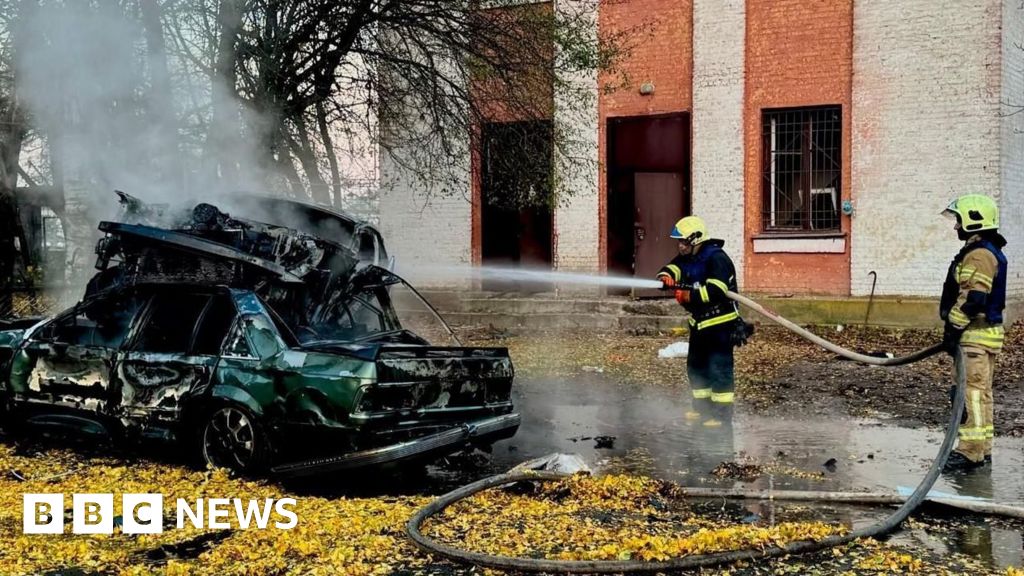
A rare humanitarian ceasefire in Ukraine’s front-line Kherson region that allowed civilians to evacuate the Russian-occupied city of Oleshky ended on Sunday night.
The localised ceasefire was due to end at 22:59 Ukrainian time (21:00 GMT). While the truce had held since it was implemented last week, fighting had continued elsewhere.
Ukrainian President Volodymyr Zelensky said Russia had struck energy infrastructure in four regions overnight on Saturday, leaving hundreds of thousands of homes without power. Some connections were restored on Sunday.
Another overnight strike killed two people, including a 13-year-old girl, in the Vinnytsia region, the State Emergency Service of Ukraine said.
Meanwhile, Ukraine hit a major missile fuel producer in Russia’s Rostov region, which caused a fire and damaged four production facilities, Zelensky said.
In Ukraine, repair works to restore power continued throughout the day. Most customers in the Dnipropetrovsk region had their connections restored by early evening, but more than 60,000 were still without power, the governor said.
Because of regular attacks on energy infrastructure, emergency power cuts have been introduced across the country. Even in the capital Kyiv, electricity is cut off for most of the day, and water supplies are also disrupted.
Zelensky said in a social media post that the intensity of Russian strikes has been “extremely high” over the past week, adding that Russia was “trying to take maximum advantage of the shortage of ballistic missile interceptors”.
He added that “every day” Ukraine communicated its need for Patriot missiles – the only effective weapon for downing Russia’s deadly ballistic missiles – to the US, Europe and other partners. He thanked countries for their support so far and longer-term commitments, but called again for more immediate aid.
The limited pause in hostilities, which started on Tuesday, was brokered with the help of US First Lady Melania Trump and Pope Leo.
It was originally confined to the city of Oleshky, which has been occupied by Russia since the first days of Russia’s full-scale invasion of Ukraine in February 2022, and was expanded across the wider region of Kherson.
Oleshky had been trapped on one side by the Dnipro river and the other by Russian forces, with routes out mined and subject to drone attack.
Residents trapped there were suffering severe shortages of food, water and electricity, with many resorting to cooking garden weeds to survive.
The truce allowed for Oleskhy residents to evacuate if they wanted, and there were emotional scenes on Saturday of reunions between loved ones who hadn’t seen eachother for years.
There are Ukrainian military positions just 5km (3.1 miles) from Oleshky, but evacuees had to travel through Russian-occupied territory to southern Russia, where they flew to Belarus, before finally being driven across Ukraine’s northern border.
Food
Midterm Elections Live Updates: Trump to Visit Iowa and Kansas; El-Sayed and Stevens Feud in Michigan

The Michigan race has become a source of discomfort for Democrats in the final days of a campaign season that has otherwise put Republicans on defense, trying to stave off Democratic advances in deeply conservative corners of the country. President Trump was scheduled to travel on Sunday to Iowa and Kansas, two conservative states that have turned into Senate battlegrounds.
Nationally, the Senate battle is a tossup, but strategists in both parties say Democrats are in a strong position to reclaim the House. The party that holds the White House typically loses seats in Congress in midterm elections.
Republicans have been weighed down by high prices and Mr. Trump’s unpopularity but are trying to exploit the Democratic infighting to flip the Senate seat in Michigan.
Dr. El-Sayed was attending a church service in Detroit that was intended to be a unity gathering with Ms. Stevens, whom he narrowly defeated in the primary in August, in an effort to move past her recent criticisms of him. But that plan fell apart this weekend, with Ms. Stevens and Dr. El-Sayed publicly feuding over U.S. policy on Israel.
On Saturday, Dr. El-Sayed urged Ms. Stevens to stay away from the event, while an adviser to Representative James E. Clyburn — a South Carolina Democrat who was taking part in the event — said Ms. Stevens was still welcome.
Just before Dr. El-Sayed took the stage, Ms. Stevens showed up at Perfecting Church in Detroit with Mr. Rogers.
The messy fight between Democrats escalated hours before Mr. Trump was scheduled to speak in Dubuque, Iowa, in the afternoon, before a rally in Salina, Kan. He won both states by double digits in 2024, but elevated gasoline, diesel and fertilizer prices, which were driven up by the Iran war, have rattled their agriculture-heavy economies.
Democrats believe they have a chance to ride voters’ economic discontent to Senate victories in both states. In Iowa, Representative Ashley Hinson, a Republican, faces Josh Turek, a Democratic state lawmaker. In Kansas, Senator Roger Marshall, a Republican, is trying to fend off the Rev. Adam Hamilton, a centrist Democrat.
Mr. Trump, who spent Saturday holding tele-rallies in Florida, shrugged off the political headwinds facing his party, telling reporters that “the country has never done better.”
Here’s what else we’re covering:
Wealth tax: California voters are considering a proposition that would charge a one-time, 5 percent tax on the wealth of residents worth more than $1.1 billion. At stake is a potential revolution in U.S. taxation. Read more ›
TV ads: Almost half the political spending in the midterm elections has been directed toward local television. Though broadcast TV may not be what it once was, some consultants still see it as a key to reaching voters. The election may show whether that calculus is shifting. Read more ›
New England power broker: Senator Susan Collins, Republican of Maine, is facing a difficult path to re-election. Her political career has been a lesson in the accrual and use of power. Read more ›
He’ll stand with them
Paxton only looks at his ambition
The hero of this corrido, a traditional Mexican narrative ballad, was James Talarico, the Democratic nominee for Senate in Texas. The song was an ad commissioned by Lone Star Rising, a super PAC backing Mr. Talarico, and it was performed by Latin Grammy winner Salvador “Chava” Chavez.
In the race for Senate, Texas culture has become its own battleground.
From cowboy boots to a “Friday Night Lights”-inspired bus tour and an appearance at a Kacey Musgraves concert, Mr. Talarico has embraced familiar Texas touchstones on the campaign trail. His Republican opponent, Ken Paxton, has drawn on the oil industry, conservative values and cowboy mythology.
Mr. Paxton has leaned heavily on traditional imagery of Texas.
One advertisement celebrates the state’s oil and beef industries, accompanied by images of pump jacks and cowboys on horseback. Other ads have attacked Mr. Talarico over his past comments about reducing meat consumption and his positions on gender identity, presenting him as a candidate whose values are fundamentally at odds with those of Texas.
The cultural shorthand is clear. Mr. Paxton’s Texas is a place of oil fields, cattle ranches and traditional values, a state whose identity is something to be defended against change.
Both he and Mr. Talarico are making a case not just for how Texas should be governed, but for what it means to be Texan.
“James Talarico belongs in California, not Texas,” Mr. Paxton wrote on X earlier this month, echoing attacks on the campaign trail that have cast the eighth-generation Texan as out of step with his home state.
But it was Mr. Paxton who spent part of his childhood in California, where his father was stationed with the United States Air Force, a point that Mr. Talarico has seized upon.
“I believe anyone can be a Texan,” Mr. Talarico said at an October rally in Plano. “It doesn’t matter if you’re an eighth-generation Texan like me, or a California transplant like Ken Paxton.”
He added, “What makes a Texan is not in the boots or in the truck; it is deep in the heart.”
Nevertheless, Mr. Talarico has made a point of flexing his Texas bona fides: He is rarely seen without his Lucchese cowboy boots and drives a Chevrolet Colorado pickup with a bumper sticker that says “Less Honkin’ More Tonkin.’”
His campaign tour, “Clear Eyes, Full Hearts” is a reference to the beloved TV series “Friday Night Lights,” which immortalized small-town Texas football. And after a nearly 10-day absence last month that he attributed to the flu, he made his first public reappearance at Austin City Limits, the city’s signature music festival.
“Texas is a very proud state,” said Sharon Jarvis, a political communication researcher at the University of Texas at Austin. “You can see just how proud they are, how important these symbols are, and the rhetorical work that these symbols do.”
Earlier this year, during a surprise appearance with Barack Obama, Mr. Talarico’s seemingly innocuous taco order — potato, egg, and cheese — sent the internet into a tailspin. Mr. Talarico has also made appearances at a Whataburger, the state’s most loved fast-food chain.
Mr. Paxton’s supporters, meanwhile, have drawn upon a different set of cultural references, invoking the Alamo and the state’s frontier mythology to challenge Mr. Talarico’s Texas credentials.
At one October rally, Lt. Gov. Dan Patrick recited lyrics from a Marty Robbins song about the Alamo, summoning one of the state’s most enduring symbols of sacrifice and independence. Mayes Middleton, a Republican state senator, took aim at Mr. Talarico’s cowboy boots, accused him of wearing a zip-up pair. They were not.
In Texas, where the distinctions between Wranglers and Levi’s jeans, or the amount of dirt on one’s boots (Mr. Paxton also wears Luccheses), function as subtle cues of cultural legitimacy, even the smallest decisions can become politically fraught.
Take “The Great Tamale Incident.”
In 1976, President Gerald Ford, campaigning for re-election, stopped at the Alamo in San Antonio, where he was offered a plate of tamales. He proceeded to bite into it without removing the corn husk, a culinary faux pas that would come to haunt him.
Mr. Talarico, by contrast, has sought to make room for a more expansive definition of Texas identity.
“We’re this big mash-up of all these different people, all these different cultures, all these different friends,” he said during his stump speech in Plano earlier this month. “Think about Tejano music. If you’re listening to a Selena song, you’re hearing Spanish vocal styles from Northern Mexico, but you’re also hearing polka dance rhythms from Czech and German immigrants.”
In a state that hasn’t elected a Democrat to the U.S. Senate in nearly four decades, these cultural touchstones may serve yet another function: to make the prospect of Democratic representation feel a little more familiar.
Jesus Jiménez and Lauren McGaughy contributed reporting.
There have been similar attempts to fool the electorate with same-name candidates under other election systems in Alaska and elsewhere.
“I mean, there it is,” said Judy Eledge, a longtime conservative activist in Alaska and chairwoman of the campaign for Ballot Measure 2, the effort to repeal Alaska’s current electoral system that voters will decide next week alongside the race for U.S. Senate. “They’ve done our work for us.”
A similar referendum two years ago lost by 737 votes. Backers of the system still say it encourages bipartisanship and gives voters an extra layer of protection against dirty tricks and bogus candidates by offering multiple choices.
“This situation is actually an object lesson in why you need ranked choice voting: You can’t have a spoiler when voters have multiple options,” said Joelle Hall, a longtime labor leader working against Ballot Measure 2.
But that argument got much more difficult to make after The New York Times reported a successful effort by Democrats to recruit a candidate named Dan Sullivan to appear on the ballot alongside Senator Dan Sullivan, the incumbent Republican whom Ms. Peltola, a former Democratic House member, hopes to defeat.
Besides Ms. Peltola and the two Sullivans, another name is on the ballot, Gerald Heikes, a conservative Republican and frequent candidate who said he too was recruited to run for the Senate by an outsider. A liberal political action committee is promoting Mr. Heikes in hopes of siphoning still more votes from the incumbent.
So two of the four choices may be on the ballot because of skulduggery.
Alaska Governor Mike Dunleavy, a conservative Republican leaving office in December, told Fox News this week that “we wouldn’t be having this conversation if we didn’t have ranked choice voting.”
Under current law, candidates for state and federal office in Alaska compete in one open, nonpartisan primary, with the top four advancing to November. Voters rank them in order of preference. If no candidate wins a majority of first-choice votes, the last-place finisher is eliminated and those votes are redistributed according to voters’ next choices. The process repeats until someone wins a majority of the remaining votes.
Ballot Measure 2 would return Alaska to primaries open only to voters registered to a particular party. That would be followed by a traditional general election where voters choose just one candidate. The initiative would also repeal campaign-finance disclosure requirements adopted with the current system. Proponents of the current system have made the loss of that transparency the heart of their argument to voters.
Even before the controversy over the two Dan Sullivans, the ballot measure was emerging as a proxy fight in a broader national battle over how America votes. Elon Musk, the world’s first trillionaire, and Jeff Yass, a billionaire, donated heavily to the repeal effort, while Michael Bloomberg, Marc Merrill and Kathryn Murdoch, themselves deep-pocketed donors, backed the campaign to keep the system.
The Times investigation has put proponents for the ranked-choice system in the awkward position of arguing that this kind of attempt to mislead could happen under any voting system because it’s comparatively easy for people to file to run in Alaska.
“This has nothing to do with ranked-choice voting,” said Scott Kendall, an Anchorage lawyer who designed the system. “It’s just a dirty trick.”
Ms. Peltola’s effort to unseat Senator Sullivan is critical to Democratic hopes of retaking the chamber. In response to the allegations of chicanery, Vice President JD Vance told reporters Thursday, “It seems to me that you have an election, the person who wins the most votes should win.”
President Trump said on a Kansas City radio broadcast, “You need about a 190 I.Q.” to understand the system,” though each ballot has fairly simple instructions and the state elections division, overseen by a Republican lieutenant governor, took pains to differentiate the candidates: Dan S. Sullivan is identified on the ballot as the incumbent and a registered Republican, while Daniel J. Sullivan Jr. has no identification next to his name.
Proponents of ranked-choice voting say it just gives voters more than one chance to decide who they support — and a simple solution, supporters note, to any confusion about which Dan is which: Rank them both.
Alaskans who rank Daniel J. Sullivan or Mr. Heikes first could still help Senator Dan S. Sullivan win, provided they also rank him ahead of Ms. Peltola. Only if they rank Ms. Peltola higher, or leave the incumbent off their ballots entirely, could the maneuver deprive him of votes he might otherwise receive.
Alaska Republicans have a history of refusing to rank their choices, and the senator’s latest radio ad features a catchy jingle encouraging people to rank “Dan S., Daniel, Gerry, just don’t rank Mary.”
“Republicans can be very stubborn,” Ms. Eledge said. “Some of them don’t like the system, so they don’t use it.”
That approach could be even more consequential in the race for governor, also on this year’s ballot.
A Democrat hasn’t won the job since 1998, but Democratic candidates finished first and second in the top-four August primary, which featured 17 candidates — 12 of them Republicans.
The second-place Democrat dropped out to clear a path for the other, a former state legislator, Jonathan Kreiss-Tomkins. The top Republican finisher, Bernadette Wilson, urged the other two Republicans on the November ballot to do the same, but they refused. Earlier this month, President Trump backed Ms. Wilson and called on the other two Republicans to leave the race.
It all has some conservatives worried their voters will ignore repeated party instructions to “rank the red” and instead list only one candidate.
A similar approach helped Ms. Peltola defeat two Republicans, Sarah Palin and Nick Begich III, in a 2022 U.S. House race. The combined first-choice vote share for the two Republicans exceeded Ms. Peltola’s. But about a fifth of Mr. Begich’s voters only ranked him. When he fell out of the race, Ms. Peltola expanded her lead to win.
Polls have shown Mr. Kreiss-Tomkins leading the governors race, and he has promised to build a politically balanced cabinet and work closely with Republicans and independents in the legislature, which has been governed by a bipartisan coalition.
Proponents of the current system say its repeal could make such cooperation more difficult, by bringing back partisan primaries, which favor the extremes in both parties and gives Republican and Democratic leaders far more power to keep members focused on the party line.
That’s exactly what Ms. Eledge and other opponents of the current system want.
She’s eager, for example, to punish Senator Lisa Murkowski, a Republican, for her recent cross-party endorsement of Mr. Kreiss-Tomkins.
If Ballot Measure 2 passes, Ms. Eledge predicted, “she won’t run again.”
She added, “she knows she wouldn’t make it out of the primary.”
Of course, Ms. Murkowski could do what she did in 2010 when she lost the Republican primary to a hard-line conservative: launch a successful write-in campaign, without ranked-choice.
That vision could still come to at least partial fruition if Proposition 40 passes. But the path through California to a federal wealth tax, a progressive dream for years, now looks like it could be a circuitous one, if not a dead end.
Polls have shown limited support for Proposition 40, which would charge a one-time, 5 percent tax on the wealth of Californians worth more than $1.1 billion. Some recent surveys suggest the ballot measure may even fail. Billionaires have blanketed California’s airwaves with ads claiming that the tax could expand to apply to everyone.
Democrats and labor unions, meanwhile, are divided over the tax. Groups representing teachers, doctors and firefighters warn that Proposition 40 could wind up harming the state budget in the long run if it drives entrepreneurs away from California. Many Democrats across the country have kept their distance from the proposal, as they assess its popularity and the potential problems with a federal version of a wealth tax.
However the Nov. 3 vote turns out, the proponents and opponents of the billionaire tax agree that its importance goes well beyond California. At stake is a potential revolution in U.S. taxation. The once-radical concept of taxing wealth may soon gain a foothold in the nation’s most populous state. Or it may be dealt a surprising setback in a popular vote, puncturing the hope that such a policy would draw broad support.
“The whole country is watching what you are doing here,” Senator Bernie Sanders, a Vermont independent, told a crowd of supporters in California last month.
For decades, the United States has relied on taxes on income — largely the wages people earn working — to fund federal and state governments. Money made on stocks, bonds and other holdings is generally only taxed when the assets are sold, and the paper gains become cash income. But as the nation’s richest people have seen the value of their financial portfolios soar, progressive policymakers have sought to tax their assets before they are sold, by creating a wealth tax.
During the last competitive Democratic presidential primary, in 2020, progressive candidates such as Mr. Sanders and Senator Elizabeth Warren, Democrat of Massachusetts, made wealth taxes a central part of their platforms. President Joseph R. Biden Jr. eventually endorsed a plan, called the billionaire minimum income tax, that would have taxed unrealized gains, a form of wealth taxation. Donors to Vice President Kamala Harris’s campaign pushed her to drop the Biden plan once she took over the Democratic ticket in 2024.
Passage of Proposition 40 in California, especially by a healthy margin, could make the idea of a wealth tax more palatable to Democrats who run in the party’s next presidential primary. Some progressive candidates are likely to adopt a wealth tax as part of their platform in any case. But a strong showing for the idea in California could convince others to put a version of the idea on their agendas.
A loss or even a narrow victory could have the opposite effect. An internal document from a group opposing the tax said it seeks to “chill wealth tax efforts nationally” by defeating Proposition 40, according to previous reporting by The New York Times.
Some potential Democratic presidential candidates have already taken a stance on Proposition 40, including Representative Ro Khanna of California, who has campaigned in favor of the tax, and Gov. Gavin Newsom of California, who has opposed it. Mr. Newsom has said he supports raising other taxes on billionaires at the federal level.
“If Prop. 40 goes down in California, I think it’s going to make, not all of the candidates, but it’s going to make a few of the 2028 candidates rethink how they slot that into their presidential policy agenda,” said Zach Moller, the senior director of the economic program at Third Way, a center-left think tank. “If it goes the other way, maybe that makes it seem like it’s a better idea.”
A wealth tax would be a fundamental change in the tax system, raising complicated questions for tax collectors. That includes how to value holdings, like privately owned businesses, that may not have an existing price. Even for billionaires who derive their wealth from the publicly traded stocks of companies they founded, collecting the tax could be complicated if they do not have enough cash to pay it without selling many of their holdings.
The economists and tax lawyers who crafted the California billionaire tax believe that their design has resolved those issues, creating a blueprint for federal and other state policymakers.
“If California enacts a wealth tax, it will begin raising substantial revenues by 2027, and by 2028 we will have actual numbers and data and experience,” said David Gamage, a tax law professor at the University of Missouri who helped draft the tax. “And it will be a lot harder for the opposition to make all these absurd claims, because there will be real experience on the ground we can look to.”
But there are several key differences between the California billionaire tax and what a federal wealth tax could look like. Proposition 40 is a one-time tax, while a federal version would likely be an annual levy. Then there is the fact that much of the revenue from the California billionaire tax would be dedicated to backfilling cuts to the state’s Medicaid program, a consequence of a law President Trump signed last year.
Funneling the receipts from the billionaire tax toward a specific purpose, rather than feeding them into the overall budget like a federal wealth tax likely would, has fractured the idea’s support in California. Some unions have objected to the fact that the tax would not help with the state’s other funding needs. And the head of the health care workers union that sponsored the ballot initiative, Dave Regan, is a polarizing figure in California politics.
As a result, some progressives in Washington appear to be hedging their bets about the outcome of the referendum. Opponents of the tax have also put other initiatives on the ballot that could cancel out Proposition 40 even if it passes, further scrambling the potential meaning of the results next week.
“The unique nature of this tax design, the unique nature of California—I don’t know how much people in other states or at the federal level will glean from the outcome here, either for good or bad,” said Bharat Ramamurti, who worked in Mr. Biden’s White House and is a former aide to Ms. Warren.
The California plan and a potential federal wealth tax also differ in how easy they would be to avoid — and how susceptible they are to legal challenges.
State-level taxes are comparatively easy to escape by moving to another state, while a federal wealth tax could apply to U.S. citizens even if they leave the United States. Several high-profile billionaires, including the Google co-founder Sergey Brin, took steps to leave California before the tax’s residency deadline at the start of the year. Those departures could reduce the revenue collected by the tax, as well as leave California without the income taxes that the departed billionaires would have paid the state over time.
Josh Rauh, an economist at Stanford’s Graduate School of Business, has estimated that the billionaire tax could end up costing California more money than it generates. Mr. Rauh, who opposes Proposition 40, said in an interview that he thinks the flight of billionaires, as well as the possible legal challenges to the tax, would ultimately set a bad precedent for wealth taxation, if it passes.
“I don’t think it’s going to be as easy as proponents might think to put in a wealth tax and collect the wealth,” he said.
A federal wealth tax, while not facing the same challenge of potential tax flight, would come with an arguably more serious risk of legal challenges. Progressives and other liberal tax experts worry that the current, conservative-led Supreme Court would rule that a federal wealth tax is an unconstitutional “direct tax.” Those concerns have only grown more acute after several Biden initiatives, including the cancellation of student debt, were thrown out by the Supreme Court. Some, like Mr. Gamage, still believe a wealth tax would be constitutional.
Whether it’s through a wealth tax or another mechanism, Democrats in California and on the presidential campaign trail will keep trying to raise taxes on the rich. Lorena Gonzalez, who leads the California Federation of Labor Unions, said the campaign in California had brought attention to the concentration of wealth and power among billionaires, setting the stage for more proposals to address the stratification of the economy.
“I mean, shoot, put a bigger tax on yachts,” she said. “The point is: Should we tax billionaires? Should we do some massive taxes on billionaires to unrig the economy? Ultimately that’s not going to stop with this vote.”
A funny thing happened, though, as Mr. Sununu took questions about health care, housing and transportation policy from Chamber of Commerce types as they picked at caprese sandwiches. Ms. Smith found herself impressed as Mr. Sununu wove facts and experience into his answers, lifting the energy of the room.
“He’s very substantial,” she said.
But before Mr. Sununu left the function room at the Atlantic Grill in Rye, N.H., Ms. Smith, an independent voter, told him she still couldn’t vote for him.
“Because of Trump, I can’t,” she said. “I told him I can’t take the risk.”
Mr. Sununu, 62, has turned his comeback Senate campaign into a test of a tricky premise: that in 2026, it is possible to be both a Republican and independent of President Trump. Selling this idea is critical for any hope of success in a purple state that has never really warmed to the president. And as he trails Representative Chris Pappas, a Democrat, in the polls, he’s running out of time to convince the Debra Smiths of the world to buy it, particularly in a race that is considered critical to determining the balance of power in the Senate.
He is trying. He once wrote an opinion essay that carried the headline “Trump is a loser.” He has insisted in a television ad that he has never even met the president. He rattles off a laundry list of their policy differences to anyone who will listen. And, perhaps more than any other Republican running for Senate right now, he has asked voters to do something that strains the American political imagination: Consider what happens after Mr. Trump.
“In two years, the president will leave office,” he said on a debate stage last month. “And my question is, where do we go next?”
The unsaid part of his bet is that, deep down, voters want a political future that looks like the past.
A New Hampshire dynasty
New Hampshire Republicans have lost every race for the House and the Senate since the dawn of the Trump era, often by quite a lot, even as they have won office at the state level. But the party saw a ray of hope in the Sununu name, which is synonymous with the flinty, establishment Republicanism that used to be a lot more common in New England. Mr. Sununu’s father, John H. Sununu, served as governor for three two-year terms in the 1980s before serving as chief of staff to President George H.W. Bush.
National Republicans had tried unsuccessfully to convince Chris Sununu, Mr. Sununu’s charismatic younger brother and a former governor, to run for the Senate in 2022 against the incumbent Democrat, Maggie Hassan. By early 2025, they were seeking to lure John E. Sununu into the 2026 race. But when Senator Jeanne Shaheen, the longtime Democratic incumbent, announced she would retire, Chris Sununu coyly hinted he might run for the Senate after all. A person familiar with the recruiting efforts said that national Republicans checked in to gauge how serious he was — nobody wanted two Sununus on the ballot, after all — but Chris ultimately demurred.
Today, the campaign signs dotting the state’s landscape read, simply, “Sununu Senator,” without specifying which one is actually running. Democrats have conducted private polling to see if voters know which family member is on the ballot. They say confusion abounds.
One reporter’s text message meant for John E. Sununu recently made it, instead, to his father.
“You have reached the old ancient former Gov. of New Hampshire,” came the reply, which concluded, “not the young dynamic Sen.”
The current candidate says there is no confusion. “Voters absolutely know who I am,” he said.
Mr. Sununu first ran for Congress 30 years ago and held the seat currently occupied by Mr. Pappas for three terms. He won his Senate seat in 2002, in a strong year for Republicans in the wake of Sept. 11, and lost it to Ms. Shaheen in the wave that accompanied the election of Barack Obama in 2008. (He then pursued a lucrative career working at a lobbying firm and sitting on corporate boards.)
On the campaign trail, he tells war stories from another era. He can be trusted to stand up to Mr. Trump, he says, because he stood up to President George W. Bush, insisting that the reauthorization of the Patriot Act, passed after the Sept. 11 attacks, include more protections for civil liberties. He can be trusted to be bipartisan, he says, because he cosponsored legislation with Hillary Clinton. He was the first Republican to call for the firing of Alberto Gonzales, the attorney general for Mr. Bush. (Mr. Gonzales resigned in 2007 after a standoff with congressional critics over the Justice Department’s handling of terrorism investigations and the firing of U.S. attorneys.)
“I think all of those things reinforce a reputation for independence and for directness and honesty,” he said in an interview.
And did his family name help?
“Sure,” he said, quickly changing the subject to how, in 2024, he endorsed former Gov. Nikki Haley of South Carolina for president over Mr. Trump.
Endorsed by the president
In February, Mr. Trump endorsed Mr. Sununu, saying he would work “tirelessly to advance our America first agenda.”
It was a signal to the party to ignore Mr. Sununu’s primary opponent, another former Republican senator named Scott Brown. But it gave Mr. Pappas his biggest attack line: that, for all his claims of independence, Mr. Sununu is as beholden to Mr. Trump as anyone in a Republican Party that has shown total fealty to the president. Mr. Pappas has also depicted him as squishy on Mr. Trump, saying that Mr. Sununu’s opposition to the war in Iran, for instance, has bloomed only alongside its unpopularity.
Mr. Sununu has tried to keep his focus on his state.
“My focus has been on New Hampshire, on the economy, jobs, affordability, and that message has resonated, and that’s why this is a race that a year ago people didn’t think would be competitive,” Mr. Sununu said.
A New York Times/Siena University poll released in late September found Mr. Pappas with a five-point lead — a sign that Mr. Sununu is running significantly more competitively than the state’s last two Republican Senate nominees. One of them, Corky Messner, lost to Ms. Shaheen by nearly 16 percentage points in 2020; the other, Don Bolduc, lost to Senator Maggie Hassan by 9 points. (In a twist, Mr. Bolduc has endorsed Mr. Pappas.)
In that poll, Mr. Sununu’s favorability rating was slightly higher than Mr. Pappas’s, at 45 percent to 43 percent. And 48 percent of voters said Mr. Sununu would better handle issues related to the cost of living; 46 percent said that about Mr. Pappas.
But 60 percent of voters disapproved of Mr. Trump, and 54 percent said they wanted a candidate who would provide a check on him.
‘Existential threat’
As he spoke to the Seacoast Chamber Alliance late last month, Mr. Sununu seemed, at times, to be inhabiting a kind of Brigadoon where there was no President Trump.
He called for term limits in Congress, lamented the unbalanced state of the federal budget and eagerly parried questions about Social Security, going deep into the weeds.
Mr. Pappas had addressed the group first. When he finished, Jimmy Dykes, an independent voter from the coastal town of Hampton, asked why the congressman had not been more visible in that community. But Mr. Dykes said he was planning to vote for Mr. Pappas, anyway.
He associated Mr. Sununu with the wars that began during his tenure in Congress, those in Iraq and Afghanistan, and said he simply couldn’t trust him to deal with Mr. Trump, who he believes is an “existential threat.”
Mr. Dykes was, however, considering voting for Gov. Kelly Ayotte, a Republican who has also stayed well away from Mr. Trump. She used to have the job Mr. Sununu wants but narrowly lost re-election to the Senate the night Mr. Trump was elected in 2016. Now, she appears to be cruising to re-election as governor — becoming one of her party’s bright spots in a difficult year.
Mr. Sununu, for his part, declined to say what he thought the Republican Party should look like after Mr. Trump is gone. But does he want to help shape it?
“Absolutely.”
Bayliss Wagner contributed reporting.
Advertisers, following the changing viewing habits of Americans, have increasingly shifted their marketing dollars to social platforms, streaming channels and other digital media. Yet when it comes to federal and state races, politicians and PACs are brushing aside concerns that TV ads are costlier to produce and less efficient in targeting prospective voters — and are showering local stations with billions of dollars.
This election will show how much that calculus still holds in a transformed media environment.
“I think the Democrats and Republicans are both spending a disproportionate amount of their budgets on broadcast TV at this point,” said Danielle Butterfield, a Democratic strategist and the executive director of Priorities USA. “Because you can see so clearly what’s happening on the other side, there’s this muscle memory needing to chase and match.”
Political consultants and television executives argue that while broadcast TV may not be what it once was, those ads can reach a larger swath of the population more quickly than through other media. And that audience watching their nightly news programs, not to mention their favorite sitcoms, dramas and football games, is a devoted one.
“Local anchors and reporters are trusted, familiar voices,” said Gregg Siegel, senior vice president of national sales at Sinclair Broadcast Group, one of the country’s largest owners of local TV stations. “They don’t just cover the communities they serve. They live there, raise their families there and are part of the fabric of those communities. That connection creates a level of credibility that is difficult to replicate on other platforms.”
The amount of money being spent on political advertising this election cycle is staggering, helping to boost the bottom lines of the biggest local broadcasting companies like Sinclair, Nexstar Media Group, Gray Media, Tegna and the E.W. Scripps Company.
The research firm S&P Global projects broadcast television advertising this year to be 15 percent higher than the last nonpresidential election year in 2022. And political ad revenue alone is expected to account for 16.3 percent of total broadcast revenue for the year, which would be a record for a nonpresidential election year.
During this election cycle, total political advertising is expected to reach $11.6 billion by Election Day, according to AdImpact; $5.6 billion (48 percent) is flowing to broadcast. That dollar figure is even higher than the one during the 2024 presidential race, when $5.3 billion was spent on broadcast advertising, still 48 percent of the total.
That growth is an outlier in the overall advertising market, where TV’s share continues to shrink as do the overall dollars. In 2024, for example, TV made up 15 percent of all ad spending in the United States, according to the research firm eMarketer. This year, projections envision that figure to be 10 percent.
Nowhere is the broadcast TV blitz more evident than in Texas, where more than half a billion dollars will be spent in the Senate runoff, primaries and general election campaigns.
Oscar Rodriguez, the president of the Texas Association of Broadcasters, said stations in all 20 media markets across the state were seeing ad buys, rather than just a few individual markets. “This is an election where clearly every single vote is going to matter,” he said.
In the tight Senate race between Ken Paxton, the Republican candidate, and James Talarico, his Democratic opponent, $220 million had been spent on broadcast ads through Oct. 28, more than half of the total spending, according to AdImpact. The Paxton campaign and its Republican allies account for most of the broadcast TV outlays, and much of that has been supported by Elon Musk, the world’s richest man with deep business ties to Texas.
Nick Maddux, a senior adviser to Mr. Paxton, said that it was most efficient for the campaign to spend money on linear television because of federal rules that ensure candidates (and at least for now, political parties and joint fund-raising committees) get low-cost TV ad rates.
The campaign’s statewide ad onslaught in October resulted in some ad breaks airing three Paxton spots for every one Talarico ad.
“You go big and fast,” Mr. Maddux said.
Luke Warford, a Democratic political consultant in Texas and chairman of the Travis County Democratic Party, said the Talarico campaign had focused more on building Mr. Talarico’s brand on social media. But the campaign and its Democratic allies have still spent heftily on broadcast TV, devoting 45 percent of their budgets to the medium through Oct. 28, according to AdImpact. (Republicans are at 60 percent.)
Advertising on television can be a blunt force approach to reaching prospective voters, particularly in House races where viewers are often bombarded with ads for candidates in districts not their own. Danilo Yanich, a University of Delaware professor who runs the school’s Local Television News Project, said that’s a trade-off campaigns and PACs will take. “They’ll tolerate those inefficiencies because they’re not sure which voters they will not reach if they try to do those directed kinds of advertising campaigns.”
“Local television viewers are very serious voters,” he added.
And the people who watch broadcast television are often those who vote.
“The kinds of people who tend to be very likely to vote in midterm elections tend to lean older,” Joshua Kalla, a professor of political science at Yale, said. “And those people still watch a whole bunch of broadcast TV.”
There’s another incentive driving this advertising strategy: money. Consultants and media buying firms typically take up to a 15 percent commission on their ad buys, which, given some of the multimillion dollar spends, can quickly add up.
Aaron Evans, a Republican campaign consultant, said that while broadcast had historically “been the beast that moves the numbers,” it was getting less effective every election cycle.
“The thing that is making that industry really outlast its effectiveness is the fact it’s been a cash cow for these consulting firms for decades,” he said.
Some political operatives bemoan what they see as an outdated approach to advertising. During this year’s primaries, several candidates who were vastly outspent on TV ads still prevailed, including Dr. Abdul El-Sayed, who triumphed over his Democratic rival, Haley Stevens, in Michigan.
Ms. Butterfield, the Democratic strategist, pointed to internal research from Priorities USA that found that 83 percent of registered voters reported in using YouTube and 82 percent used streaming services in a single week in September, while just 61 percent said they watched linear TV. She said that ads on digital platforms, which were much cheaper than TV ads, could see a higher reach and have a more targeted impact.
“The biggest difference between a broadcast television strategy and a digital strategy is how much the campaign actually uses the internet to not just broadcast and shout at a voter, but understand where that voter is, what they care about,” she said.
Mr. Warford, the Democratic political consultant, said Tuesday’s vote would help answer a question about the broadcast television-heavy ad strategy in support of Mr. Paxton. “Is there an amount of money that can save an incredibly weak candidate in a tough environment at the end?”
Food
Popular snack may protect the aging brain when eaten every day

The brain benefits of this snack are nuts.
Certain foods are considered super when it comes to their nutritional benefits, promoting gut health, supporting immunity, and even helping us live longer.
A hefty handful of one common food can boost brain power as we age, according to recent research.
A nutrient-rich diet is necessary for heart, vascular and brain health, especially while getting older to protect blood vessels in the brain, decreasing the risk of impaired brain function, stroke and dementia.
And while they’re technically not a nut but a legume, peanuts share many of the same heart and metabolic benefits, providing an easy source of plant-based protein and healthy fats.
The beloved baseball snack may also boost memory in the aging brain.
A study published in the journal Food & Function found that two daily servings (about 60 grams) of unsalted, roasted peanuts improved insulin responses in areas of the brain associated with memory.
Insulin is a critical hormone for brain function, involved with memory, learning and communication between nerve cells.
“As people age, the brain may become less responsive to insulin, which has been linked to age-related cognitive decline,” senior study author Dr. Peter Joris told SciTechDaily.
Researchers had 31 healthy adults aged 60 to 75 eat two servings of peanuts daily for 16 weeks, either in one sitting, divided throughout the day or added to meals, as well as a control period without the nutty snack.
To track how the brain responded, insulin was administered through the nose and regional cerebral blood flow was measured with arterial spin labeling magnetic resonance imaging (ASL-MRI).
Increased blood flow to the brain delivers necessary oxygen and nutrients to keep cognitive function strong, even as we get older.
The team also assessed cognitive performance using the Cambridge Neuropsychological Test Automated Battery.
Changes in how the brain responded to insulin appeared in regions of the brain involved with memory, suggesting the snack boosts brain power.
Another study from 2025 had similar results from eating peanuts for four months, showing increases in cerebral blood flow and improvements in verbal memory.
“Multiple nutrients present in peanuts, including unsaturated fats, dietary fiber, vitamins and minerals, and bioactive phytochemicals, could potentially contribute to the observed brain benefits,” Joris said.
Not only are peanuts a good, quick source of protein, they’re also especially rich in L-arginine, an amino acid that helps produce nitric oxide, which facilitates learning and memory.
The antioxidant-rich nut can also help slow down the aging process by reducing inflammation to preserve telomere length, or the caps at the ends of your chromosomes.
Telomeres get shorter as we age, which can contribute to age-related diseases like cancer, Type 2 diabetes and heart issues.
Food
Is the economy better than before Trump retook office? See the data
President Donald Trump is not running in this year’s midterm elections, but he’d like voters to act as if he is.
“Just close your eyes and pretend I’m on the ballot,” Trump told a crowd in Mobile, Alabama.
Trump’s argument is simple: When he’s on the ballot, Republicans running for election do well. When he’s not, they don’t. Historically, that’s often − but not always − been true. However, if Americans are judging the GOP based on the economy, their top issue in poll after poll, he may not like how some of them vote.
An AP-NORC poll found 25% of U.S. adults approve of Trump’s handling of the economy, and a Reuters/Ipsos poll revealed 36% of voters thought Democrats were better poised to tackle the cost of living, compared to 28% who chose Republicans.
Presidents typically have less influence over the economy than some Americans think. The Federal Reserve controls monetary policy. Congress controls the federal budget. External shocks, like the pandemic, are out of their control.
But in his second term, some argue Trump has impacted voters’ wallets in ways his recent predecessors did not. Sweeping tariffs and the Iran war have both driven prices up. Meanwhile, “Trump Accounts” and promised checks aim to give Americans money directly.
Here’s a midterms check-in on the U.S. economy in Trump’s second term:
Consumer sentiment
Trump says the United States has the best economy anywhere in the world.
“There’s no economy like this economy,” Trump told reporters in September. “The only thing we don’t have is good public relations. We don’t seem to be able to get the word across.”
According to the University of Michigan’s consumer sentiment index, which tracks household views on personal finances and broader economic conditions, Americans aren’t feeling it. The index stood at 48 in October. It was little changed from September and still near the record low of 44.8 set in May. The index is down 31.9% from 70.5 in October 2024.
A separate measure of how Americans feel about the economy, the Conference Board’s consumer confidence index, rose to 91.7 in October from a revised 84.2 in September, but it remained below its revised October 2024 reading of 109.6.
Inflation
On the presidential campaign trail, Trump routinely promised to lower the cost of living.
“Prices will come down,” Trump told a crowd in Asheville, North Carolina, Aug. 14, 2024. “You just watch: They’ll come down, and they’ll come down fast, not only with insurance, with everything.”
Two years later, some prices for specific goods like eggs have declined, but the cost of living is up by most measures.
Consumer price inflation was up 2.4% over the year in September 2024. Hourly earnings for private nonfarm workers − which rose 4% on average over the year in the same month − were outpacing the rate of price increases.
Today, workers’ wages, which rose 3% on average over the year this September, are not keeping up. Year-over-year consumer prices were up 3.7% in the same month.
Shelter costs, as measured by the Labor Department’s Consumer Price Index, rose 6.9% from September 2024 to September 2026. Food prices rose 5.7% over the same period, according to the department’s data.
Gas prices
Before retaking office, Trump promised to bring gas prices down below $2 a gallon.
“It’ll be an economic revival of our country like no one has ever seen before,” Trump said at the Economic Club of New York on Sept. 5, 2024. “Energy was what caused our problem initially. Energy is going to bring us back. That means we’re going down and getting gasoline below $2 a gallon.”
Americans filling up at the gas pump likely already know that is one promise that the president has not been able to keep. Gas prices surged after the start of the Iran war earlier this year. The Russia-Ukraine war and conflict in the Red Sea are also limiting the global oil supply, driving prices higher.
On Oct. 14, the United States set a record. The national average price for a gallon of regular gasoline remained over $4 more days of the year than ever before, according to GasBuddy data, surpassing the previous annual record of 157 days set in 2022. By September 2024, it was hovering near $3.22, according to AAA.
Diesel prices are also up, disproportionately impacting truckers, fishers and farmers, but also any business that relies on the fuel to transport goods. According to AAA, they were hovering near $6.33 per gallon as of late October.
Jobs
In 2024, Trump vowed his administration would help create millions of jobs.
“We will put more money into your pockets and create millions and millions of new jobs,” Trump said at a rally in York, Pennsylvania, on Aug. 19, 2024. “We’re going to do it like nobody else.”
So far, that pledge has not panned out, according to Labor Department data posted Oct. 29.
During his first year back in office, U.S. employers added 116,000 jobs. So far in 2026, they have added about 612,000, the department estimates.
In comparison, U.S. employers added about 1.46 million jobs in 2024 and about 2.52 million in 2023.
Job growth has slowed over the past two years as companies reassess their budgets and staffing needs in response to tariffs and as they adopt artificial intelligence. Broad economic uncertainty is contributing to what economists call a “low-hire” labor market. Meanwhile, a modest decline in labor force participation has reduced the number of new jobs needed to keep the unemployment rate low.
The unemployment rate is near where it was before Trump retook office. It was 4.1% in September 2024 and 4.2% in September 2026.
Manufacturing
Trump also specifically promised a manufacturing boom.
“America will be a manufacturing nation once again,” he said during his second inaugural address on Jan. 20, 2025.
Today, manufacturing employment is down from about 12.76 million in September 2024 to about 12.65 million in September 2026, according to Labor Department data.
However, so far in 2026, manufacturing jobs are up 72,000. That increase is primarily due to gains in durable goods manufacturing, according to the White House Council of Economic Advisers.
“This is a reversal of the trend inherited from the previous administration, which lost over 200K jobs in its final two years,” the council said in an October report citing the department’s data.
GDP
The White House website’s home page says under Trump, the United States has “surged into a new era of prosperity, marked by record-setting economic growth.”
Economic activity is expanding at a “strong” pace, according to Federal Reserve policymakers. However, U.S. real gross domestic product growth itself hasn’t broken any records since Trump retook office.
Annualized real GDP growth was 2.3% in 2025, according to data from the Bureau of Economic Analysis. It estimates GDP grew 2.5% in the first quarter, 2.2% in the second quarter, and 3.4% in the third quarter of 2026.
This year’s third-quarter growth estimate surprised forecasters and surpassed their expectations. The Commerce Department said compared to the second quarter, the gains “primarily reflected an acceleration in investment and an upturn in government spending.”
Federal deficit
A little more than a month after his swearing in, Trump told lawmakers he planned to balance the federal budget − something the government hasn’t managed to accomplish since 2001, according to the Treasury Department.
“In the near future, I want to do what has not been done in 24 years: balance the federal budget,” Trump said in an address to a joint session of Congress March 4, 2025. “We’re going to balance it.”
The federal deficit declined from about $1.82 trillion in fiscal year 2024 to about $1.77 trillion in fiscal year 2025, according to Office of Management and Budget data.
However, according to the office’s monthly budget review released Oct. 8, it estimates the federal budget deficit totaled nearly $2 trillion in fiscal year 2026. This year’s jump was driven by increased outlays for net interest on the debt, major benefit programs, defense and education, the office said.
The national debt has also increased over the last two years. The Treasury estimates it was at $40.17 trillion in September 2026, up from $35.46 trillion in September 2024.
Trade deficit
Tariffs remain a cornerstone of Trump’s economic policy in his second term.
His decision to impose import taxes on most countries around the world appeared, at least in part, an attempt to address his longtime dissatisfaction with the U.S. trade deficit.
“We have deficits with almost every country, not every country, but almost, and we’re going to change it,” Trump told reporters Feb. 2, 2025. “It’s been unfair.”
The U.S. goods and services trade deficit was $117.07 billion in February last year as importers rushed orders before anticipated tariffs took effect.
It was $105.57 billion in August this year, down from February 2025, but up from $71.16 billion in August 2024, according to U.S. Census Bureau and Bureau of Economic Analysis data.
Taxes
While campaigning in 2024, Trump pledged to lower Americans’ taxes.
By one measure, he succeeded. The average tax refund was $3,276 in 2026, up 11.5% from $2,939 in 2025, according to the IRS.
However, because average tax refunds measure the difference between what Americans prepaid during the year and what they actually owed, rather than their total tax liability, they are often an imperfect reflection of Americans’ overall tax burden.
The president also followed through on his campaign promise to restrict taxes on tips and overtime, though reaping the benefits has been difficult for some.
High-income Americans benefited more than most from Republicans’ “One Big Beautiful Bill,” the sweeping spending and tax legislation Trump signed into law in July 2025.
Stock market
The president took credit for stock market gains even before retaking office, referring to them as a result of “the Trump effect” the day before his inauguration in 2025.
On Oct. 17 this year, Trump posted a photo to Truth Social stating the S&P 500 index surged 30% from 5,881 points in December 2024 to 7,651 points in September 2026.
As of late October, S&P 500 annual returns are up about 13% year-to-date. This follows a 16.39% gain in 2025, according to Macrotrends, an investor research platform. Both of these figures represent a slowdown from the index’s 23.31% return in 2024.
Housing affordability
At a 2024 campaign rally, Trump pledged to bring down mortgage rates.
“We will drive down the rates so you will be able to pay 2% again, and we will be able to finance or refinance your homes drastically at much lower costs,” Trump told a Tuscon, Arizona, crowd Sept. 12, 2024.
Since then, mortgage rates are up. The average fixed rate on a 30-year mortgage was hovering above 6% in October 2024 and higher than 7% in October 2026, according to Freddie Mac data.
The median sales price for new homes has fallen. It stood at $415,300 in the third quarter of 2024 and at $393,300 in the third quarter of 2026, according to federal government data.
Meanwhile, an August Redfin report found that Americans need to earn $109,796 to afford the typical home for sale in the United States, down 0.5% from an all-time high of $110,382 in 2025. Still, the income needed to purchase a home is about $22,000 more than what the typical American household earns, the report said.
Benefits
A little more than a week after retaking office, Trump said he was going to “love and cherish” Medicaid and Medicare.
“We’re not going to do anything with that, other than if we can find some abuse or waste, we’ll do something, but the people won’t be affected,” Trump said in the Oval Office on Jan. 31, 2025.
A few months later, he signed the “One Big Beautiful Bill” into law. Soon after, the Congressional Budget Office projected that the law’s changes, including cuts and new eligibility requirements impacting Medicaid and other programs, would affect millions of Americans.
According to an August 2025 analysis by Georgetown University’s Center for Children and Families, which cited CBO estimates, those changes would increase the number of uninsured people by 1.3 million in 2026 and by 10 million by 2034.


HBO Premiere Has Shocking Blink-and-You’ll-Miss-It Cameo
The Gilded Age’s Season 4 premiere has many delicious twists and turns. But the most surprising development is one you...
He Retired to Thailand, Got Bored, and Opened a Café on Koh Samui
This as-told-to essay is based on a conversation with Michael Kane, 54, who moved to Koh Samui, Thailand, to retire....


Yakima County resident dies from complications of bird flu after dairy exposure
A Yakima County resident who was hospitalized with a severe illness after contracting avian influenza following exposure at a dairy...


Love Horoscopes For Each Zodiac Sign On Monday, November 2, 2026
The only constant in life is change, which is made very clear by the love horoscopes for November 2, 2026....

Matt Damon & David Letterman Appear In ‘Gilded Age’s Season 4 Premiere
SPOILER ALERT: The following reveals major plot points from HBO‘s The Gilded Age‘s Season 4 premiere. Surprise! The Gilded Age...


Megan Thee Stallion Stuns in Custom Cirque du Soleil Costume at Hottieween 2026
How much time and energy went into your Halloween costume this year? As Megan Thee Stallion fans are aware, the...

“Bachelor” Alum Melissa Rycroft Arrested on Suspicion of DWI, 2 Months After Pleading Guilty to Previous Offense
NEED TO KNOW Melissa Rycroft Strickland was arrested on suspicion of driving while intoxicated in Southlake, Texas, on Nov. 1,...


Michael Douglas says Jack Nicholson ‘deserves’ his quiet life away from Hollywood
Michael Douglas admitted his longtime friend, Jack Nicholson, has essentially “disappeared” from the spotlight. Douglas, 82, reflected on his storied...


Dave Bautista Reveals Muscle Gain to Play Kratos in ‘God of War’
Dave Bautista is once again showing off his muscle gains ahead of stepping into the role of Kratos for the...


Stocks bounce as Apple earnings near, oil falls
SYDNEY, Nov 2 (Reuters) – Share markets bounced in Asia on Monday as investors hoped for Apple earnings later in...
-

 HealthNews1 week ago
E. coli cases possibly linked to Bengtson’s Pumpkin Farm, Will County health officials say
-

 Business2 weeks ago
‘Black Monday’ fears intensify as prediction markets shrug off 2026 crash
-

 Business2 weeks ago
Bending Spoons wants to revive software castoffs. Berkshire investing
-

 HealthNews2 weeks ago
Is the brain actually 2 nervous systems smooshed together? A new study claims it is.
-

 Food2 weeks ago
MLB mishandled Friday’s playoff rainout & forgot about fans – Terry Pluto
-
Business2 weeks ago
GLP-1 injections recalled nationwide. See affected products
-

 Entertainment2 weeks ago
Hollywood veteran Kevin Pollak names craziest co-star he’s ever worked with
-

 Entertainment2 weeks ago
R.J. Mitte’s Mother Opens Up on His Life, Rumors and Legacy