
LifestyleNews
How Drinking Tea Regularly May Support Heart Health, Per Study

A growing body of research links coffee to all kinds of health benefits—it may protect your heart, lower liver cancer risk, and even lengthen your life. But where does that leave the folks who prefer drinking tea?
The findings of a recent study present good news: Tea also has a seat at the health-boosting beverage table.
Meet the Experts: Christopher Davis, M.D., chief cardiologist at ; Michelle Routhenstein, M.S., R.D., preventive cardiology dietitian atEntirelyNourished.com; Arash Bereliani, M.D., board-certified cardiologist and medical director of the Beverly Hills Institute for Cardiology and Preventive Medicine.
The findings, published in the Journal of Internal Medicine, actually aren’t the first of their kind—regularly drinking tea has its own studied health benefits, even if they may not be as talked-about as those of coffee. This research simply adds to the drink’s credibility and lets you breathe a little easier if your morning beverage of choice leans the tea route. Below, cardiologists and a dietitian weigh in on the findings and share how they recommend taking your cup.
What did the study find?
Researchers observed a large group of nearly 486,000 adults in China and asked them about their tea-drinking habits. After nine years, they looked into participants’ heart health to see how the tea may have affected it.
They discovered that people who drank tea regularly had about an 11% lower risk of developing vascular disease—including heart disease, stroke, and peripheral artery disease—than people who didn’t. Black tea showed a more consistent benefit than green tea, and while you may think the stronger the tea, the stronger the results, that wasn’t the case here: Moderate-strength tea was shown to have the greatest effect. And more tea wasn’t necessarily better, either. Weekly drinkers who sipped six to eight cups per day had the lowest risk.
Temperature appeared to matter, too. “One finding stood out to me: People who drank their tea very hot actually had a higher risk,” says Christopher Davis, M.D., chief cardiologist at . According to the study, those who preferred their tea “burning hot” had a 16% higher risk of vascular disease.
And, like many things in the nutrition world, it’s not only about what you’re eating or drinking: The rest of what you do each day plays a big role as well. In fact, the study found that people with the lowest vascular disease risk shared these three things in common: They drank tea regularly, didn’t smoke, and were highly active—folks who fit this “lifestyle profile” had a roughly 45% lower heart disease risk than those with none of those habits. This implies that tea wasn’t the only magic worker: Lifestyle mattered, too.
How tea may lower heart disease risk
“Tea is rich in polyphenols, mainly flavonoids, which are plant compounds that support the lining of your blood vessels,” explains Dr. Davis. “That lining, called the endothelium, makes nitric oxide, which helps blood vessels relax and keeps blood flowing well. Flavonoids appear to support nitric oxide activity and may also help lower inflammation and limit the oxidation of LDL cholesterol, which plays a role in plaque buildup.”
Black tea’s fermentation, Dr. Davis notes, creates its own set of polyphenols including theaflavins, “which may help explain why it performed well here,” he adds.
The study highlights the reality that little habits add up to make a big difference. “There may also be a behavioral piece: A daily cup of tea often replaces a soda or sugary drink and can be a calming ritual,” notes Arash Bereliani, M.D., board-certified cardiologist and medical director of the Beverly Hills Institute for Cardiology and Preventive Medicine.
Although these findings found black tea to perform slightly better in terms of vascular disease, Michelle Routhenstein, M.S., R.D., preventive cardiology dietitian at EntirelyNourished.com stresses that both black and green tea are antioxidant-rich, and there’s no “right” answer for which kind you should drink. Also, just because the lowest estimated risk was observed among people who drank six to eight cups daily does not mean that everyone needs to drink that amount to benefit from it—or that there wasn’t a benefit to drinking less, she adds.
The bottom line
While the study presents some promising findings, it wasn’t set up in such a way as to show that drinking tea causes a reduction in vascular disease. It was an observational study, meaning the people were followed up to see how many people did and didn’t develop the condition, so it can’t show cause and effect.
As for the temperature component, participants merely self-reported the warmth of their tea—it wasn’t measured with a thermometer. The fact that those who called theirs “burning hot” experienced a higher disease risk is an association that warrants more investigation. However, researchers did note that the temperature-related findings are, at the very least, consistent with existing concerns that very hot beverages may increase disease risk, namely that of cancer.
The biggest takeaway? Regular tea-drinking can be a positive behavior, but it’s not the only thing you should be thinking about if you want to live your best and healthiest life. “Tea can be a helpful addition to a heart-healthy lifestyle, but it is just one piece of the puzzle,” explains Routhenstein. “The biggest priorities remain following a heart-healthy diet that meets your nutrient needs and supports healthy cholesterol and blood sugar levels, getting regular physical activity, avoiding smoking, prioritizing adequate sleep, and managing blood pressure.”
It is also important to understand your individual cardiovascular risk and work with your healthcare team to identify areas that may need attention. “Prevention involves addressing the interconnected factors that contribute to cardiovascular disease, including inflammation, oxidative stress, insulin resistance, endothelial dysfunction, and elevated levels of cholesterol-carrying particles that can promote plaque buildup,” Routhenstein adds. “Small, consistent changes across several areas can have a meaningful impact on long-term heart health.”
Dr. Davis agrees: “The bigger message is that heart health comes from habits that stack together, and this study showed exactly that.”
LifestyleNews
Crystal Hefner on Playboy’s Hugh Hefner’s manipulation
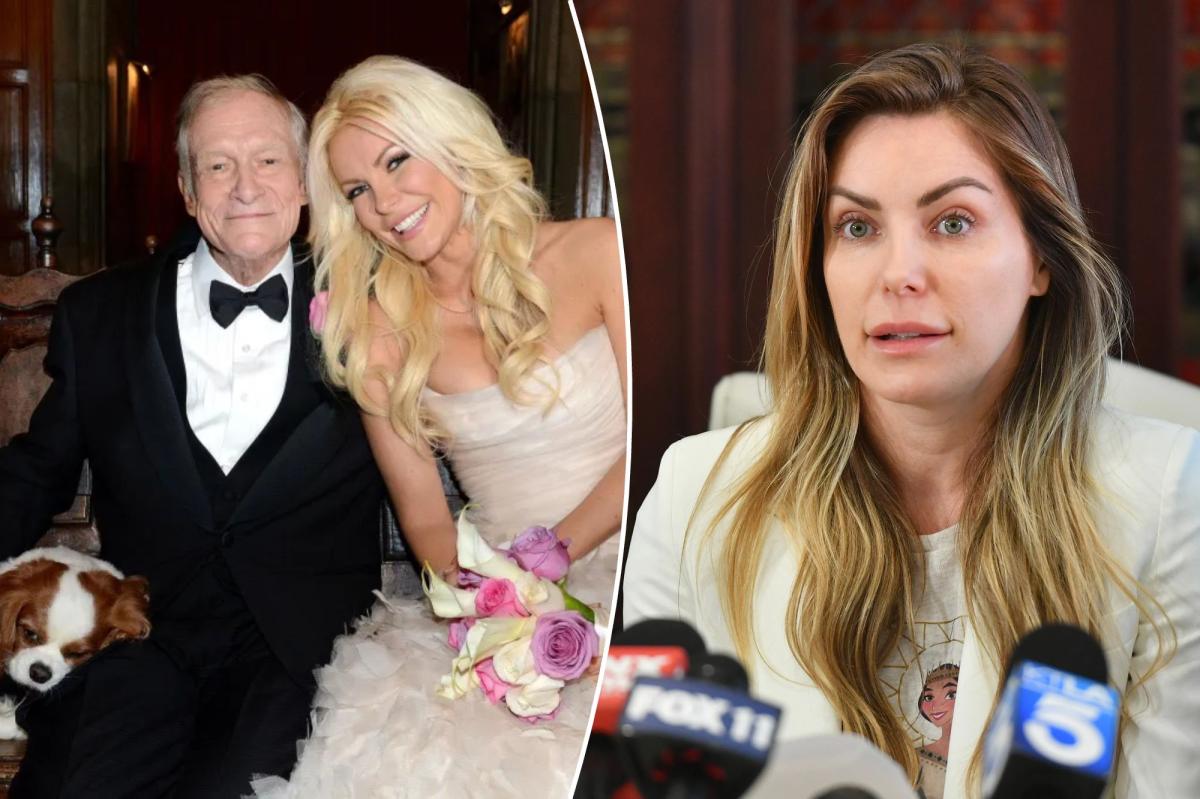
Nearly a decade after Hugh Hefner’s death, his widow is still dealing with the alleged abuse she experienced being married to him for almost five years — and fighting over private images she says were taken without her consent.
“I had to have sex with strangers I didn’t even know,” Crystal Hefner, 40, told Page Six in an exclusive interview. “It was humiliating. It was embarrassing.”
In February, her attorney, Gloria Allred, announced regulatory complaints in California and Illinois over the Hugh M. Hefner Foundation’s handling of his private archive, including approximately 3,000 scrapbooks allegedly containing intimate photographs.
Crystal said some images were taken without consent and raised concerns about possible images of minors. Hefner’s sons Cooper and Marston, whose mother is Kimberley Conrad, disputed that implication.
Crystal said she wanted women entrusted with the material — and intimate or nonconsensual images destroyed.
“I think he kept all of this, all these women in there as trophies,” she told The Post.
“He would have some just named, you know, Monday, Wednesday, and it would be a naked woman. It’s disgusting.
“He had a sex book, a black book where he logged everybody he slept with.”
Crystal, a model and former Playboy Playmate, was 26 when she married Hefner in 2012. She remained his wife until his death in 2017 at age 91.
“I came from a broken home. I didn’t have a father,” she said. “Hef chose people he could easily manipulate.”
Her accounts of being pressured into sex echo allegations made over the past decade by other former Hefner girlfriends, including “Girls Next Door” stars Holly Madison and Bridget Marquardt.
Crystal said Hefner built his Playboy empire by collecting women with “broken wings” before subjecting them to “humiliation ritual(s).”
Even his longtime secretary Mary recognized the pattern, according to Crystal.
“Mary told me that … Hef chooses the broken ones. He collects the ones with the broken wings,” she said.
“He should have been getting us all a therapist instead of a one-way ticket to his bedroom.”
Being married to Hef and living in the Playboy Mansion bore little resemblance to the image of a carefree pleasure palace presented to the public.
“It was like a humiliation ritual up there. And all orchestrated by this man,” said Crystal, who still struggles with understanding why she married Heffner.
“It’s something I think about every day. If I could go back … I absolutely wouldn’t have.”
On an Oct. 14 podcast episode of “Consider Before Consuming,” Crystal criticized Hefner for dating twin sisters while in a relationship with her, saying “the incest was okay for him” in reference to his involvement with the siblings.
She also alleged that Hefner treated women as sex conquests and had a particular interest in sleeping with both a Playmate and her daughter.
“It was kind of a game for him.”
Crystal also took aim at comedian Jon Lovitz, calling him “one of the biggest pervs” in Hollywood and claiming he was the Playboy Mansion’s “No. 1 customer,” during Tuesday’s episode of the “Lisa Guerrero Unleashed” podcast.
“He would be up there all the time,” she said.
“His eyes would go front to back [looking at] all the women that walked through the door at the party.”
Lovitz’s rep did not respond to Page Six’s request for comment. In a video obtained by Page Six, he joked that he took the “No. 1 customer” claim as a “compliment” and said that “Hugh Hefner was one of the nicest, most generous people.”
Hefner’s reputation took a major hit in 2015, when Holly Madison — one of the three original stars of E!’s “The Girls Next Door” — published her revealing memoir, “Down the Rabbit Hole.”
“I learned Hef was the manipulator,” she wrote. “He pitted us against one another.”
Hefner rejected her account, accusing some former partners of choosing to “rewrite history in an attempt to stay in the spotlight.”
Fellow “Girls Next Door” star Bridget Marquardt later described pressure surrounding her first sexual encounter with him.
“I was hoping that I could just observe and not participate,” she recalled on “Girls Next Level” in 2022.
Her assessment of her time with Hefner was nevertheless mixed: That same year, she said “98 percent” of her mansion experience was positive.
Kendra Wilkinson, the third original star, told People in 2024: “Playboy really messed my whole life up,” describing deep regret over her relationship with Hefner.
Hefner, however, insisted his lifestyle was authentic and described it as one of “tremendous satisfaction.”
“It doesn’t get better than this, and I know it,” he told CNN in a 2010 interview.
“What you see is the real deal. I mean, the life is essentially who I am.”
By the final years of his silk pajama-clad life, however, Hefner’s business was in decline.
Playboy’s circulation had fallen from roughly 5.6 million in 1975 to about 800,000 by 2015, ABC News reported. The magazine, which had featured sexy centerfolds and naked celebrities since its 1953 debut, dropped nudity from its pages in 2016.
It reversed course the following year.
The mansion sold for $100 million in 2016, half its original asking price, under a deal that allowed Hefner to keep living there until his death.
Inside, according to Crystal’s previous accounts, the glamour had given way to dust, mold and neglect. She described the property in 2024 as “rundown and gross.”
The widow has found common ground with one of Michael Jackson’s accusers over the pain of seeing their alleged abusers idolized, and the two share a therapist, she said.
“I thought how hard that must be to watch somebody that hurt you so bad be put on a pedestal and still revered and glamorized,” she said.
“I just hope that in 2026, we do not glamorize predators.”
She said her decision to speak out now about her marriage to Hefner was driven by concern for other women.
“You don’t have to be in the Playboy Mansion with Hugh Hefner to experience abuse,” she said.
“It happens everywhere every day.”
LifestyleNews
Daylight saving time sleep tips from doctors to ease the time change

Turning the clocks back at the end of daylight saving time has been linked to trouble falling and staying asleep, while ongoing sleep loss can take a toll on health.
While some research has suggested that the fall time change could have some cardiovascular benefits, the abrupt loss of evening sunlight can suppress serotonin and melatonin production, which can lead to a depressed mood, according to Dr. John La Puma, a California physician and expert in nature-based medicine.
The body’s internal clock does not automatically follow the clock on the wall, La Puma noted.
THE DAYTIME HABIT THAT COULD TRANSFORM YOUR SLEEP, ACCORDING TO NEW STUDY
“When the clocks change, your body clock is still on the old time,” he told Fox News Digital, pointing out some common effects people may notice.
“So, for about a week, you wake up an hour early. You get hungry early. You feel sleepy early. It gets dark by five. Afternoon light goes away. You get months of short days. … You need coffee just to feel human. It’s not great.”
Making small adjustments to your routine after the time change could help ease the transition, the doctor said.
No. 1: Make small schedule shifts
With clocks turning back overnight Saturday, people can begin moving bedtime, meals and wake-up time later in small increments on Friday, according to La Puma.
“So, you move your day later in small steps,” he advised. “You move your bedtime and meals the same 15 minutes each time.”
DOCTOR REVEALS 4 HIDDEN HEALTH RISKS OF SPENDING TOO MUCH TIME INDOORS
For someone who normally goes to bed at 10 p.m., that could mean 10:15 p.m. Friday and 10:30 p.m. Saturday, before the clocks change. Wake-up times and meals can shift by the same increments as schedules allow.
No. 2: Don’t spend the ‘extra hour’ on a late night
Since the time change falls on Halloween, Dr. Saema Tahir, a sleep medicine doctor in New York City, cautioned against staying up late and drinking, operating under the assumption that the extra hour covers it.
“Keep alcohol moderate, finish drinking a few hours before bed and avoid caffeine after early afternoon,” she advised.
“Alcohol makes you drowsy at first but breaks up sleep in the second half of the night. Caffeine stays in your system for hours. Together, they can leave you more tired on Sunday than you would be with no time change at all.”
No. 3: Get outside at the right time
La Puma also emphasized the importance of being intentional about outdoor exposure.
CLICK HERE FOR MORE HEALTH STORIES
“You want to get outside at the right minutes, at the time of day and in the right place if you can,” he advised, specifically recommending getting outside each afternoon later in the day.
“Late-day daylight is different than morning daylight. Late-day daylight tells your body the day is running long, and it shifts later,” he said.
Once you’ve adjusted to the time change, Tahir recommends getting outdoor light within an hour of waking every day through the winter.
“Light is the strongest signal the body clock gets,” she told Fox News Digital. “Evening light pushes it later, which is the direction you need to go for ‘fall back.’ Morning light keeps it stable over the darker months and supports mood and daytime alertness.”
No. 4: Create a wind-down routine
Choosing a relaxing activity that signals bedtime is approaching can help to promote a consistent sleep schedule.
CLICK HERE TO DOWNLOAD THE FOX NEWS APP
La Puma suggests choosing a relaxing bedtime ritual, such as working in a paper workbook, sipping chamomile tea, taking a bath or using aromatherapy, options he outlines in his book, “Indoor Epidemic.”
“Very specific things that tell your brain and body, ‘I’m winding down so I can go to sleep.'”
No. 5: Avoid caffeine and screens
Other tips include limiting caffeine after noon and stopping screen time at least an hour before bedtime.
La Puma warned that light from the screen can suppress melatonin, the hormone that helps signal it is time to sleep. Even using night mode may not fully prevent that effect.
No. 6: Keep a consistent schedule after the change
Once the clocks change, it’s important to maintain a regular wake-up time, including on weekends, La Puma said.
“Pick one wake-up time and keep it every day, weekdays and weekends.”
CLICK HERE TO SIGN UP FOR OUR HEALTH NEWSLETTER
La Puma cited an eight-year study of about 60,000 people that linked consistent sleep and wake times to a 19% lower risk of death.
TEST YOURSELF WITH OUR LATEST LIFESTYLE QUIZ
“So, sleep and wake times have important effects on heart attack, stroke and cardiovascular mortality,” he said.
LifestyleNews
Alexander brothers each sentenced to 30 years for drugging and raping dozens of women
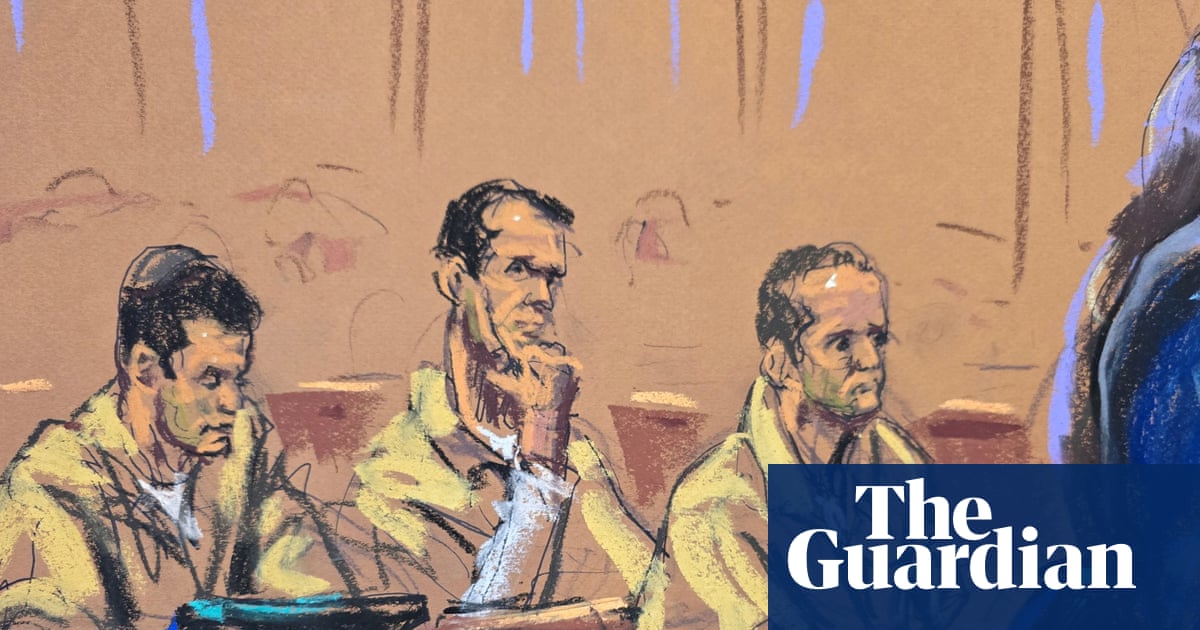
Three Florida brothers who exploited the wealth and influence of their family’s luxury real estate business to drug and rape dozens of women were each sentenced to 30 years in prison in New York on Tuesday for sex trafficking.
Twins Oren and Alon Alexander, 39, and Tal Alexander, 40, were convicted in March on multiple charges after a five-week trial heard details of years of sexual assaults committed in Miami, New York and other high-end locations including the Hamptons; Aspen, Colorado; and on a Caribbean cruise.
A dozen of their victims spoke at the brothers’ sentencing hearing in Manhattan on Tuesday.
Several of the women gave testimony on Tuesday using pseudonyms, and told of how the assaults by the brothers had destroyed their lives and their ability to trust other people.
“I carry a quiet funeral in me for the person I might have become had this not happened to me,” said one woman, who described being raped by Tal Alexander in August 2014, and said the attack changed the way she approached relationships.
“Every second that Tal raped me in that shower felt like an eternity of terror.”
Another told the court that she was raped at a property in the Hamptons after she was drugged and led into a bedroom.
“What looked like a beautiful place became for me a mansion of horror, a mansion of dark secrets,” she said.
The three brothers, dressed in tan prison suits, sat impassively as they listened to the women speak. During their trial, their lawyers conceded that the brothers were “womanizers”, and said they apologized that they were “insensitive toward the feelings of certain women at certain times”, but maintained all the sexual encounters were consensual.
The brothers moved from Florida to New York in 2008. Oren and Tal Alexander were star representatives at real estate firm Douglas Elliman, before forming their own brokerage, Official, which made hundreds of millions of dollars selling condos to wealthy and celebrity clientele.
Alon Alexander ran their family’s private security company, and was also deeply involved in their opulent lifestyle of superyachts, private jets, exotic overseas trips, and parties at waterfront mansions in Miami and elsewhere.
Their easy access to money and women, prosecutors said, allowed them to exploit their victims and lure them to parties or on luxury trips, during which the Alexanders would drug and rape them, either together or in the company of others.
“They acted to exert maximum domination over their victims,” the attorneys said in a sentencing submission to the court ahead of Tuesday’s hearing.
“The defendants felt empowered to take whatever they wanted from any woman or girl who agreed to get on a plane, go to a party or sit at their table at a nightclub. The defendants made no effort to have consensual sex with the victims; they did not want that. Instead, they slipped drugs into drinks and forced themselves on to their victims.
“The drugs they used not only rendered a victim immobile, but also impacted her ability to remember every detail of her assault. The defendants’ pattern of mocking and humiliating their victims served the defendants’ goal of maximally dehumanizing these women, and it also shamed the victims into silence.”
Dozens of other women came forward after the allegations against the Alexanders were revealed in a bombshell article published by real estate news outlet the Real Deal in June 2024.
At least 70 women were raped or sexually assaulted by the men, prosecutors said in an earlier court filing that described them as “serial rapists”.
The US district court judge Valerie Caproni said she believed the brothers should not be incarcerated at the same prison because they were a bad influence on each other. The brothers’ lawyers argued on Tuesday that they should be able to serve their sentences together.
The Associated Press contributed reporting
Information and support for anyone affected by rape or sexual abuse issues is available from the following organizations. In the US, Rainn offers support on 800-656-4673. In the UK, Rape Crisis offers support on 0808 500 2222. In Australia, support is available at 1800Respect (1800 737 732). Other international helplines can be found at ibiblio.org/rcip/internl.html
LifestyleNews
In Tennessee, a man’s murder and his wife’s death feed into the local legend of a “cursed” mansion
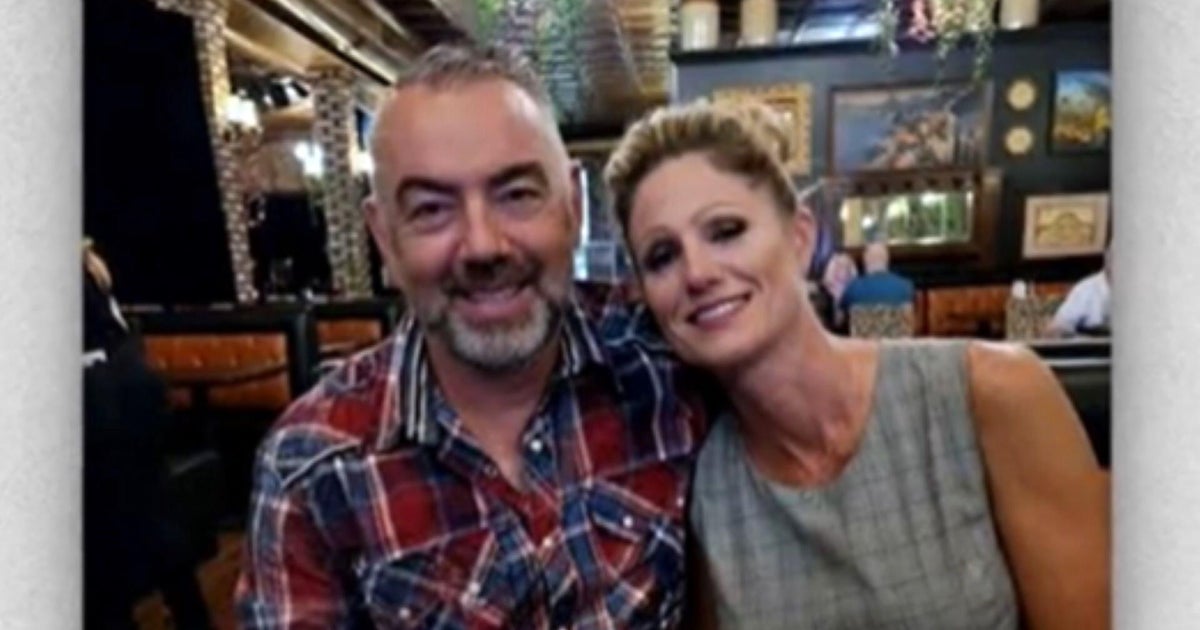
The lake country straddling the Kentucky-Tennessee border has a quiet, majestic beauty. But in September 2022, that vast landscape seemed to have swallowed up Mike Harding, a California transplant who disappeared without a trace.
JULIE HARDING (phone call): Hi Captain, this is Julie Harding with the California Highway Patrol …
Mike’s wife Julie Harding, a captain with the California Highway Patrol, began to place urgent phone calls to the Kentucky State Police from her home in Sacramento.
JULIE HARDING (phone call): I can’t get any information. And I just, I need your help with this … My concern right now … is where he is. Is he OK? … and what’s the status of this investigation?
The calls led her to a sheriff she knew — Brandon Boone of Clay County, Tennessee, whose office was spearheading the missing person’s case. But the answers were few and far between and Boone says Julie Harding grew frustrated.
Sheriff Brandon Boone: She got very angry with a couple of — of my people, uh, because we wouldn’t disclose certain information to her …
Within days, Julie was there in person on Sheriff Boone’s doorstep.
JULIE HARDING (bodycam): Hi.
SHERIFF BRANDON BOONE: How are ya?
JULIE HARDING: I’m good, how are you? Well …
In a moment recorded on a body camera, she immediately apologized for being rude.
JULIE HARDING (bodycam): Let me first apologize. My tone was inappropriate I was very irritated, umm, and I should have been more calm. My assumptions, umm, and my emotions in this, umm, killed my reasonableness so I apologize for how we spoke the other day.
OFFICER: Yes ma’am.
JULIE HARDING: OK. So, from now on, I, I hope it’s calm. I hope it’s cooperative. Umm, because all I want is Mike to come back in and go … I was in wherever fishing.
Boone sent her to a sheriff in Kentucky who had taken over the investigation.
SHERIFF BRANDON BOONE (bodycam): Cumberland County Sheriff’s Office has called us. They need you there.
JULIE HARDING: OK.
SHERIFF BRANDON BOONE: That’s all I can tell you.
JULIE HARDING: OK.
A grisly discovery
Just hours earlier, David Hammersley and his family were house hunting in nearby Burkesville, Kentucky. They went room to room at a vacant, three-building property — unaware of what lay ahead.
David Hammersley: … the rest of the party had gone to this building here …
Hammersley wandered into the garage and was surprised that there was a large pickup truck parked inside.
Peter Van Sant: The rest of the family has moved on to this cottage. What do you hear from the garage?
David Hammersley: Well, as they’re attempting to open the door, I hear this awful screech and, “Oh, it’s — it’s terrible. There’s something dead over here!”
Hammersley says his family figured some sort of animal must have wandered in and never got out. David walked over and stopped just inside the cottage’s front door.
David Hammersley: It was over 100 degrees at the time, I believe … and I was just attacked, if you will, by flies. … And the odor was just so overpowering.
What he then saw was far worse.
David Hammersley: I saw a man on the floor, his arm outstretched … obviously, dead from gunshot wounds … (sighs) Ah, sorry. … his life is gone under violent circumstances and just left there. It — it — it was devastating.
The dead body was Mike Harding, says prosecutor Ann Marie Gordon Anderson.
Ann Marie Gordon Anderson: It seemed like he had probably been there for a week, from September 19th [to] the 26th.
The Cumberland County Sheriff immediately called in the Kentucky State Police. Detective BJ Burton was assigned to lead the investigation. He learned that Mike Harding had been shot four times, twice in the torso and twice in the head.
Detective BJ Burton: It kind of looks like somebody that wants to be a professional hit man — but is not quite there.
Burton said the killer removed evidence from the scene, including the murder weapon and three shell casings. But the assassin left behind one distinctive shell casing; investigators determined it was from a Hornady Critical Defense bullet.
Back in Sacramento, Mike’s son Steven Harding, from Mike’s first marriage, was told his father had been murdered.
Peter Van Sant: And can you put into words the horror of this news for you?
Steven Harding: There’s really no words for it other than your best friend is gone (crying).
For Steven’s older sister Heather Cavalieri, also from Mike Harding’s first marriage, news of their father’s murder came from a friend.
Heather Cavalieri: I didn’t want to believe it, you know. I loved my dad … So, all of it’s just hard … it’s been hard. It’s been really hard.
At the crime scene, investigators were trying to figure out why Mike was at this seemingly random location. His cellphone was about to shed some light.
Detective BJ Burton: Once you start looking through the text messages and phone calls … it becomes very obvious early on that he was lured to the house.
The phone revealed texts from a realtor named James Fraser. He asked Mike — who owned an HVAC business — to check out the house.
Detective BJ Burton: He thought he was going there for … what he thought was a heating and air service call. … You see the text messages when Michael Harding is on his way there …
Around 4 p.m., Mike Harding texts James Fraser that he is “35 minutes out.” Fraser texts, “No worries.” Mike asks, “Is that good for you?” and Fraser tells him “Yes.” The final exchange Mike texts, “See ya soon.” Fraser replies “Perfect.”
While those texts gave investigators a solid timeline, the investigation hit a roadblock early on: they could not find a realtor named James Fraser.
Detective BJ Burton: So, it was probably just a made up name.
But they did have some potential leads. When investigators later contacted the phone company of the number used to text Mike Harding, they discovered that number came from a prepaid cellphone used only to arrange Mike’s murder.
Detective BJ Burton: It was pretty evident early on that this is a burner phone. …
Peter Van Sant: And for those who don’t know, what is a burner phone?
Detective BJ Burton: Somebody … goes and buys a burner phone, they’ll put in like John Doe, any town USA just they … think it’s untraceable at which to some degree it is.
And remember that pickup Hammersley saw in the garage? Burton said it was Mike Harding’s.
Detective BJ Burton: My thought is … whoever murdered him and then pulled the truck in the garage, there’s a very good chance that their DNA may also be in the truck.
Burton tried to call Mike’s wife, Julie, but she didn’t pick up. Burton had been told she was heading his way — to the Cumberland County Sheriff’s Office, so he waited there to give her the bad news face to face.
The local legend of the “cursed” mansion
Steven Harding: When you see your hero get taken from you … you know you’re not untouchable …
After delivering the devastating news about Mike Harding’s death to his children, Detective Burton was desperate to reach Mike’s wife Julie, who indicated she was on her way to a local sheriff’s office.
Det. BJ Burton: Myself and another detective waited there for some period of time. … She never showed up.
A few days later, Burton located her at a neighbor’s house in Celina.
Detective BJ Burton: I introduced myself to her, uh, you know, try to talk to her. …
She referred all questions to her lawyer, which Burton thought was unusual for someone in law enforcement and the spouse of a murder victim.
Detective BJ Burton: She didn’t want to talk to me …
Burton and his team began investigating the Harding’s personal lives. They learned the two met online in 2018. Julie, 44, and Mike, 48, had both been through divorces. They married in 2019 and within months, Burton says they bought that spectacular house in Celina where they planned to live after retirement.
Julie’s close friend, Kathy Rourke says Julie was over the moon in love with Mike.
Kathy Rourke: She thought she had something that she — she wanted more than anything else … A man to come home to, a man to hug her, to comfort her, to make her feel like a woman.
Kathy Rourke: … she was so proud to be married, she was so proud …
When she turned 50, Julie would be eligible to retire from the California Highway Patrol — an iconic agency known around the world.
Kathy Rourke: Wearing her uniform was the greatest joy in her life.
Detective BJ Burton: I think early on in their marriage … the decision was made … Mike would go ahead and move to the lake house in Celina, Tennessee, so he could get his HVAC service repair business started there.
Julie planned to join Mike full time when she retired. But she was a frequent visitor, and the couple made the house a home, complete with Julie’s dog Chippy the Chihuahua and Mike’s boxer Charlie.
Sgt. Brian Wittmer: The one thing that would always put a smile on Captain Julie Harding’s face were her dogs.
Julie and Mike Harding became friendly with the locals — including Sheriff Brandon Boone.
Sheriff Brandon Boone: … uh, very nice couple, talked about couldn’t wait to retire to get here full time.
Peter Van Sant: She seemed like a pleasant woman when you met her?
Sheriff Brandon Boone: Yes, she did. Very pleasant … They seemed like a, a wonderful couple together
Mike Harding’s children understood how their father felt about Julie but thought he was making a mistake.
Heather Cavalieri: I feel like he was blinded by love. He truly loved her … So, I thought he found his dream girl. But to me personally, I just, I didn’t like her.
Cavalieri says Julie Harding was arrogant and made her feel uncomfortable.
Peter Van Sant: Did the two of you ever go out and visit, uh, at the house in Tennessee?
Heather Cavalieri: No, I didn’t think that I would be welcome there.
Steven and Heather said they stayed away from the mansion, as did many locals. The house, Boone says, had a reputation for being cursed.
Sheriff Brandon Boone: There was a divorce that happened here that, that got pretty nasty. … We’ve had calls in the past of uh, gunshots that happened here that later ended up being a murder right in Burkesville. Uh, the gentleman who lived here shot the person up there.
Peter Van Sant: Now, is it true that a realtor actually brought some sort of spiritual person out here to try to purge the evil spirits from the house?
Sheriff Brandon Boone: Yes, that’s what the realtor advised me and told me — that he had, he had brought a guy here to uh, get the spirits to go away.
Peter Van Sant: And you’re serious?
Sheriff Brandon Boone: I’m serious.
And then there’s the legend of Dale Hollow Lake, which was created when the Army Corps of Engineers flooded a small town that became known as “the town that drowned.” Even today, the eerie foundations of the long-ago town are visible when the lake is low.
But Mike and Julie Harding ignored all the country rumors. And their long-distance marriage seemed to work.
Preston Cleary: Mike seemed pretty happy. He always bragged on her, how smart she was … he really cared about her. He’d do anything for her.
Sergeant Brian Wittmer worked side by side with Captain Julie Harding for several years.
Sgt. Brian Wittmer: They looked like a very cute couple.
But Wittmer said sometime in 2022 he noticed a change in Julie.
Sgt. Brian Wittmer: So for the first several years … I had never seen her consume any alcohol.
But then she began drinking.
Sgt. Brian Wittmer: … she was going to Napa Valley and having drinks, having wine, going to — to vineyards on weekend trips.
Wittmer said it was almost like someone flipped a switch.
Sgt. Brian Wittmer: … she was … hyper. Uh, she would talk a lot. She, um, was anxious.
Mike Harding’s friend Preston says that Mike also noticed the stark change in Julie’s behavior.
Preston Cleary: Mike was mad because she didn’t want to spend time with him …
Mike Harding revealed to Preston that he believed Julie Harding was cheating on him.
Peter Van Sant: Did Mike suspect there was another man in Julie’s life?
Preston Cleary: He, he did.
Mike Harding had noticed lingerie purchases in their Amazon account.
Preston Cleary: And she … had no plan to be here to see him.
Those Amazon purchases, coupled with Julie Harding’s drinking and the way she avoided spending time with Mike Harding, bruised his ego, Cleary says. But the biggest blow came when Julie told Mike she wanted to postpone her retirement for five years.
Preston Cleary: It was at that moment I seen a shift in their relationship and Mike … he had a different outlook toward her. … He was just crushed that she would choose to work five more years … he’s just like, this is, this isn’t going to work out.
Preston says Julie Harding filed for divorce in May 2022.
Preston Cleary: He was blinded. …he really, really loved her.
Sheriff Boone says the emotional turmoil took its toll on Mike Harding, who sensed Julie saw him as her enemy.
Peter Van Sant: Did you notice a change in Mike’s attitude? Did you notice kind of a paranoia?
Sheriff Brandon Boone: Oh, absolutely.
Mike Harding told Boone that someone had broken into his house one night while he was sleeping and he reported one of his guns had been stolen. After that, he made it a habit of wrapping chains with a padlock around his patio doors.
Sheriff Brandon Boone: And after seeing the locks and the chains around the door, you really think, whoa, you know, he was, he was afraid of something.
At the same time, Julie told friends and colleagues that she was afraid of Mike and feared he was engaged in some dangerous activities.
Sgt. Brian Wittmer: She said that Mike … was potentially dealing ghost guns, drugs … was taking money from her bank accounts.
Mike Harding feared his wife, say family and friends
In May 2022, soon after Julie Harding filed for a divorce, Mike Harding told friends and family that he feared for his safety.
Steven Harding: There was solid steel chains wrapped around my dad’s front door and as well as his back doors … he would do that so that no one would come in while he was sleeping. Or if it was Julie, the dogs aren’t going to bark if you know the person.
Peter Van Sant: And so you’re telling me that your father feared Julie?
Steven Harding: Yes.
Prosecutor Jesse Stockton.
Jesse Stockton: …he told his friends that … If he ever was murdered or disappeared or something nefarious happened to him, that they needed to make sure somebody looked at Julie Harding.
Mike Harding’s friend, Preston Cleary, knew Mike also was worried about his savings, and he gave Mike some advice about the pending divorce.
Preston Cleary: … whoever gets to the bank first, you know, that’s their money. So, Mike, if you want to be fair, you go take half the money out of the bank. He goes, “no.” … He goes, “I’m going to do this in court.”
Around the same time, Sgt. Brian Wittmer says Julie Harding called him to announce that she was going to raid the family funds.
Sgt. Brian Wittmer: She said that she was driving from Sacramento to Tennessee and she was going to withdraw money from her bank accounts before Mike Harding did.
At that point, Julie Harding was telling friends that Mike was involved with illegal weapons and narcotics.
Peter Van Sant: Did she think about turning in her own husband if he’s selling ghost guns and dealing drugs, for goodness sakes?
Sgt. Brian Wittmer: Well, that’s what you would expect from somebody … with her rank and her knowledge. And she would tell me that she had a friend working out in Tennessee law enforcement … that was potentially looking into things.
Peter Van Sant: Were you ever able to confirm that?
Sgt. Brian Wittmer: I was not.
Authorities say there is no evidence Mike Harding sold drugs or ghost guns or was involved in any other type of criminal activity.
Heather Cavalieri: I want people to know that he was a good man, he loved his family and he loved life. Any other narrative you hear is not the real narrative … We want the truth to be told, and that’s why we’re here.
Not long after telling Cleary he was not going to transfer any money out of the couple’s bank accounts, Mike Harding got a call from the bank.
Preston Cleary: The bank … had told him, “Julie Harding was just here, and she cleared out almost all your savings in your accounts” …
Julie Harding reportedly withdrew around $360,000 from various bank accounts, according to what Mike Harding told his divorce attorney. Julie’s friend Kathy Rourke says at least part of that money belonged to Julie.
Kathy Rourke: She didn’t need his permission.
Peter Van Sant: So she’s taking that money to do what with it?
Kathy Rourke: Bring it back here to California … She gave most of the money to her mom ’til she figured out what she was gonna do.
But Mike Harding’s son Steven says a lot of that money belonged to his father.
Steven Harding: My dad was a very smart, well-educated man. He was very good with stocks. … He was very good with his finances.
Peter Van Sant: In the days prior to his disappearing, he’d heard all this bad news. Money had been taken … There’s no reconciliation coming his way … How did that change him? …
Preston Cleary: It destroyed uh, the friend that I had … there was no more fishing for Mike … Mike was strictly business, trying to rebuild his life and get back to where he was.
And Mike Harding would rely on his HVAC business to rebuild his life — which is why friends say he responded so quickly to the call from the mysterious “James Fraser” asking him for a repair estimate at that empty house in Burkesville, Kentucky. Investigators strongly suspected there was a connection between Fraser and Julie Harding.
Det. BJ Burton: It was obvious that really the only main conflict he had going on in his life was this contentious divorce involving property and money with — with Julie Harding.
Peter Van Sant: In other words, if somebody had a motive, it was her.
Det. BJ Burton: Correct. Yes.
Burton says investigators soon learned that Julie Harding was in California at the time of Mike’s murder, but they suspected her just the same.
Det. BJ Burton: She contacted three different people involved in law enforcement during this time frame. And every one of them that she talked to … walked away with a feeling of suspicion that she was involved.
Lacking any cooperation from Julie Harding, Sheriff Boone, warrant in hand, led his armed deputies into the Harding mansion where Julie was staying after Mike’s death.
The deputies went room to room looking for clues.
No one was home, but the deputies found yellow Post-it notes that investigators say were handwritten by Julie Harding when Mike Harding was still alive. They read: “0 $ Here,” “0 $ here either,” and “Whatcha lookin 4?”
Detective BJ Burton: So there’s these little sticky notes when we did the search warrant down there that would say something like “no money here.” “Nope, no money here.”
Peter Van Sant: Taunting him.
Det. BJ Burton: Yeah, taunting.
Investigators began executing additional warrants — specifically for the call log of Julie Harding’s cellphone in the months before Mike’s murder. That’s when something caught Burton’s eye.
Det. BJ Burton: It jumps out that she’s calling this one number, that they’re talking almost every single day.
Peter Van Sant: … there were 194 calls made between her number and this other number, correct?
Det. BJ Burton: Yes, yes.
Peter Van Sant: That’s a lot of calls.
Det. BJ Burton: Yes.
Investigators traced that number to a man named Thomas O’Donnell, a former car salesman from Houston, Texas. He had recently relocated to the wine country of Napa, California — a place Julie Harding was known to visit.
Did Julie Harding hire a hit man to kill her husband?
After investigators discovered Julie Harding was talking incessantly to a man named Thomas O’Donnell, they explored that connection and learned the two likely met on a dating website that catered to self-described millionaires.
Prosecutor Jesse Stockton: … they had, uh, an extensive and significant relationship. Whether it was romantic or not, I cannot say, but they communicated with each other by phone for months …
For prosecutors Jesse Stockton and Ann Marie Gordon Anderson, the math did not add up. Two months of constant calls — 194 of them — stopped cold only days before Mike Harding was murdered.
Ann Marie Gordon Anderson: I think based on that … can probably speculate that there — there may have been some type of conversation … about what was going to happen.
Peter Van Sant: A conspiracy in other words.
Ann Marie Gordon Anderson: Conspiracy.
Investigators already knew the texts used to lure Mike Harding to his death came from a burner phone. They pulled the phone’s locational data from its service provider.
Detective BJ Burton: And the first thing you notice is … the phone is first turned on when it’s … in the Houston, Texas … area.
Houston, Texas—Thomas O’Donnell’s hometown. To investigators, that was too coincidental to be a coincidence.
Jesse Stockton: I don’t think Mister O’Donnell got out here by accident. … The only connection that he had to Michael Harding was through Julie Harding.
Investigators developed a theory that Julie Harding had paid Thomas O’Donnell to kill Mike Harding. And they thought it likely that O’Donnell was the fictional “James Fraser” who had lured Mike to that empty house. The next step in their investigation was securing the call log from O’Donnell’s personal cellphone.
Det. BJ Burton: When you start looking at the locational data from his personal phone and comparing it to the locational data with the burner phone, it — it matches up perfectly.
The FBI created maps that showed O’Donnell’s phone and the burner phone.
Ann Marie Gordon Anderson: … the red on the screen, it is the burner phone, that’s what it’s showing. Anything that you see that’s black, that is Thomas O’Donnell’s personal cellphone.
Investigators noted that the two phones were traveling in lockstep through the south in the weeks before Mike Harding’s murder.
Peter Van Sant: We know the burner phone is involved in the murder.
Ann Marie Gordon Anderson: That’s … it’s only purpose.
Background checks showed that, years earlier, O’Donnell had been arrested for stalking a girlfriend. He eventually received probation. But what really struck Detective Burton was how “irresponsible” O’Donnell was with money. He was no millionaire; O’Donnell appeared to be a man desperate for cash, Burton said.
Det. BJ Burton: It seems like his whole life, like he’s always just looking for the … next big thing that’s going to make him be able to afford the lifestyle that he wants to — to lead …
And Julie Harding, who admitted raiding the couple’s bank accounts, was loaded with cash after withdrawing hundreds of thousands of dollars from the couple’s bank accounts.
Peter Van Sant: Authorities think she took out that cash so she could pay Thomas O’Donnell to murder Michael.
Kathy Rourke: Absolutely not. That’s the most ludicrous thing. That’s what kills me about this whole story …
Peter Van Sant: Were you ever able to make a connection from all this cash that she took out and any sort of payment for Thomas O’Donnell?
Det. BJ Burton: No … it’s impossible to track. I mean if someone walks up and hands you a stack of cash … it’s untraceable …
But it wasn’t only money that Julie was after. Investigators say she wasn’t leaving Tennessee without Mike’s beloved dog Charlie.
Heather Cavalieri: I think she deemed Charlie hers. But that wasn’t her dog, that was my dad’s dog …
Police say Julie Harding was determined to get the dog back from a friend of Mike’s who’d been caring for Charlie since Mike went missing.
Steven Harding: … she knew I wanted the dog after we knew that my dad was dead.
But Julie Harding wasn’t in the giving mood, Mike Harding’s children say. Some two weeks after Mike’s body was found, Julie simply took Charlie for herself. She is captured on a Ring doorbell camera, boldly opening the front door and stealing Charlie from the friend who was taking care of him. Steven says he never saw Charlie again.
Steven Harding: I would have taken that dog in a heartbeat. I just, I feel like it would be better under my hands because I — I am my father. … I — I would have loved it like my dad did. I would protect it.
The friend who cared for the dog wanted to press charges against Julie Harding, but at that point, Burton says the focus was on processing evidence from the murder scene.
Prosecutor Jesse Stockton: … people from the Kentucky State Police lab come to the scene … and then they take a lot of swabs from Michael Harding’s truck because they also believe that whoever killed him moved his truck.
Peter Van Sant: Are they able to get a – a usable DNA sample?
Jesse Stockton: Yes …
That sample was found to be consistent with Thomas O’Donnell’s DNA.
Det. BJ Burton: So, we got to a point where there was just so much overwhelming locational data coupled with other evidence … where we felt like we had enough to make an arrest …
In early December 2022, two months after Mike Harding’s murder, investigators learned that O’Donnell was going to be at the Sacramento airport.
Det. BJ Burton: … most people aren’t going to fly or travel without having their phone on them. So, the thought was … we can catch him in the airport … we can also seize his phones at the same time.
Police searched O’Donnell’s truck and say they found one of Mike Harding’s guns. It was the same gun that had been stolen from Mike’s house. Also in the truck was a box of Hornady Critical Defense bullets, the same type of ammunition used in the murder.
Burton says there was not enough evidence to charge Julie Harding with murder but on the same day of O’Donnell’s arrest, Julie’s dognapping of Charlie came back to bite her. She was arrested and charged with criminal trespass.
Burton was hoping either Julie Harding or O’Donnell would flip on the other, but neither did. O’Donnell was held on the murder charges, while Julie was released on her own recognizance. The next day, Dec. 9, 2022, Julie’s superiors at the California Highway Patrol called her in Tennessee to inform her that her status as a peace officer was revoked.
Sgt. Brian Wittmer: She’s a normal citizen at that point.
Peter Van Sant: Does she have to turn in her badge and her gun?
Sgt. Brian Wittmer: Yes, she would have –
Peter Van Sant: She’s disarmed.
Sgt. Brian Wittmer: Correct.
Peter Van Sant: Once she got released, did she give you a call?
Sgt. Brian Wittmer: I did not hear from Captain Julie Harding that evening.
Kathy Rourke: I think she was losing control … I think that anybody that wants to stand in her shoes needs to go and let themselves be booked into jail as a woman and go through what she went through. That broke her in two.
Julie Harding, the once proud captain of her own fate, was alone with her own thoughts in her supposedly cursed home overlooking Dale Hollow Lake.
An eerie fog descends on the supposed “cursed” mansion
It’s the morning of Dec. 10, 2022. An armed deputy, wearing a body camera, makes his way toward the Harding house—shrouded in an eerie fog—searching for a potential killer.
DEPUTY (bodycam): Are you the mailman?
DAVID OGLETREE: I am.
Just minutes before, mail carrier David Ogletree and another man had made a tragic discovery — what looked like a body at the base of that distant tree. They called 911.
911 OPERATOR: What’s going on honey?
DAVID OGLETREE: OK, this, this is David Ogletree, I’m the mailman up here and we may have a body laying up here.
911 OPERATOR: OK … We’ll get you someone up there in just a second OK.
Peter Van Sant: Hey David.
David Ogletree: Hello, how are you?
Peter Van Sant: Peter Van Sant, “48 Hours” CBS News. Nice to meet you.
David Ogletree: Nice to meet you.
What Ogletree saw that day is burned into his memory.
David Ogletree: She was, she was laying right up here beside this tree here face down.
Blood can be seen around the woman’s body.
DEPUTY (bodycam): Until uh, we get her turned over and see if there’s a gun, this could be a murder.
Sheriff Boone arrived at the scene. When investigators rolled the body over, they saw that it was Julie Harding. Her right hand was gripping a gun. An investigator concluded she took her own life.
Investigators also saw a bag next to Julie. Inside, note to Mike, stained in blood, which read:
“I lived a good life until a year ago. Mike, you win! You got what you wanted, me in a coffin…”
Det. BJ Burton: It was just bizarre … almost like she was obsessed with somehow trying to get back at Michael Harding or —I don’t know, didn’t really understand it.
But Burton had a theory, and it involved Thomas O’Donnell.
Det. BJ Burton: She knows her co-conspirator has been arrested. … She’s been suspended in California Highway Patrol … she saw the writing on the wall, what the future looked like, and wasn’t going to stick around for it.
But what role did Julie Harding play in her husband’s death? Investigators hoped they’d learn something when Thomas O’Donnell agreed to talk.
DETECTIVE BJ BURTON (police interview): So let — let me ask you this. When or how — when did you first meet Julie or how do you know Julie?
THOMAS O’DONNELL: I don’t know, Julie.
DETECTIVE BJ BURTON: Julie Harding?
THOMAS O’DONNELL: Doesn’t ring a bell.
After 20 uneventful minutes, O’Donnell requested an attorney, immediately terminating the interview. Seven days later, he was indicted by a grand jury.
O’Donnell pleaded not guilty to the murder charge. Three years later, on April 27, 2026, he went on trial at the Cumberland County Justice Center in Burkesville, Kentucky for killing Mike Harding.
PROSECUTOR ANN MARIE GORDON ANDERSON (in court): This case is about the murder of Michael Harding.
PROSECUTOR ANN MARIE GORDON ANDERSON (in court): According to Julie Harding’s phone records, between July 1st and September the 8th, of ’22, there were over 100 phone calls between her and the defendant, Thomas O’Donnell.
Gordon Anderson said Julie and O’Donnell used those calls to meticulously plan Mike’s murder. Why? Julie realized she’d likely lose hundreds of thousands of dollars in a divorce, said Detective Burton.
Peter Van Sant: One possible solution for Julie in this financial war is to do what?
Det. BJ Burton: Get rid of him.
Prosecutors believe O’Donnell posed as a realtor to get a key to gain access to the property in Kentucky. They told jurors the data from the burner phone puts him at the scene of the crime. And believe it or not, O’Donnell’s attorneys agreed O’Donnell, they said, was at the scene of the crime. It was a new admission that caught the prosecutors off guard.
Remember, after his arrest, O’Donnell told investigators he did not know Julie. Now, his lawyers said he not only knew Julie, O’Donnell worked with her to lure Mike to that house in Kentucky, but he never pulled the trigger.
Prosecutor Ann Marie Gordon Anderson: I was really shocked … they point-blank just said he was at the scene, he opened the door, but he let someone else in.
That “someone else,” says defense attorney Sara Zeurcher was the real killer. The defense claimed a neighbor saw two men at the property the day Mike was murdered.
DEFENSE ATTORNEY SARA ZEURCHER (in court): A neighbor told police exactly what he saw on September the 19th. Two men at the scene.
Investigators could find no evidence to back up the neighbor’s account. The defense also criticized the investigation itself and pointed out its shortcomings. The burner phone prosecutors talked about was never recovered. Neither was the murder weapon. And there was no evidence that Julie paid O’Donnell to kill her husband.
DEFENSE ATTORNEY SARA ZEURCHER (in court): If this case were a mystery novel … you’ll never hear the final chapter that explains what actually happened because the Commonwealth doesn’t know.
After five days of testimony, O’Donnell decided not to testify. The jury needed just two hours to reach a verdict.
JUDGE DAVID WILLIAMS (in court): We, the jury, agree by a unanimous vote that defendant Thomas O’Donnell is guilty of the offense of murder.
Jesse Stockton: … for the family, they finally got justice for their father … all I can do is take satisfaction that the proper thing was done.
Julie Harding’s close friend, Kathy Rourke, says Julie played no role in the murder of Mike Harding.
Kathy Rourke: If you knew her, you would know that she would never do anything cowardly or anything illegal, let alone try to kill this guy.
Steven Harding: She was the true monster of all of this … she was the one that executed every move, other than physically pulling the trigger on my father.
Heather Cavalieri: My dad was the victim in this case, not Julie.
Steven Harding and Heather Cavalieri said the victory at trial, while satisfying, will never temper their sense of eternal loss.
Steven Harding: He died before my 30th birthday and 29 years isn’t enough. I mean, people think 29 years is a lot, but it’s not …
Heather Cavalieri: I was close with my dad for a long time. … Just not having a dad, you know, someone to call, like he was a jokester, you know. He was fun with my kids. (crying) … It’s hard not having him here.
Thomas O’Donnell was sentenced to life in prison with the possibility of parole after 20 years.
Produced by Paul LaRosa. Jordan Kinsey and Cindy Cesare are the development producers. Nancy Bautista is the associate producer. Wini Dini, Eric Modena and Greg Kaplan are the editors. Anthony Batson is the senior producer. Nancy Kramer is the executive story editor. Judy Tygard is the executive producer.
LifestyleNews
A Previously Unpublished Q&A

There are probably people who are still suspicious because of your age, that you are really writing the songs… but looking at which ones you wrote by yourself, no one can look at “Our Song” and doubt that you’re a songwriter.
Thank you. I’m actually really thrilled that that’s the song that was my first No. 1, because it kind of says something. I’ve always wanted that respect from the songwriting community in Nashville, and this year I was lucky enough to get the NSAI songwriter artist of the year award, which is voted on strictly by songwriters. And to get my first No. 1 with a song I wrote by myself, it really means a lot to me.
Being older, a lot of times I don’t connect with specificially quote-unquote teenage music…
No offense taken, it’s OK!
But all that’s to say, though I don’t always have a lot of nostalgia about being that age, there’s something about the sweet specificity of “Our Song” that I can listen and, for three minutes, at least, go, all right, maybe I do wish I was a teenager again.
Oh, that’s really sweet. Thank you. That was one of those songs that I wrote in 20 minutes, literally just sat down and wrote out the whole thing. You know, I never expect to win if I’m nominated for an award. I never expect to have a song go No. 1 if I put it out. I would never expect a song that I wrote by myself in 9th grade would make the album and then be a single and then be a No. 1.
You also wrote “The Outside” by yourself.
I was 12, yeah.
And there’s a song on your recent Christmas EP you wrote by yourself.
I wrote “Christmas Must Be Something More” when I was 13. I like to go back and look at the stuff I wrote when I was younger and include it, because there’s a place for that, and there’s a place for the vulnerability and the innocence in the songwriting. I wrote “The Outside” about not fitting in at school—about the scariest feeling I’ve ever felt, which is going to school and walking down the hall and looking at all those faces and not knowing who you’re gonna talk to that day. It’s scary when you’re 12. I mean, it’s scary at any age to go through that. And a lot of people ask me, how did you have the courage to walk up to record labels when you were 12 or 13 and kind of jump right into the music industry? It’s because I knew I could never feel the kind of rejection that I felt in like middle school. I could never feel that in the music industry, because they’re polite. If they’re gonna say no to you, at least they’re gonna be polite about it, at least. … First of all, I didn’t know any better. And second of all, I hadn’t had the most perfect social life in middle school, so I guess it got me ready for the real world, in a sense.
You mentioned that when I first interviewed you last spring, and at the time I wondered, why did she feel that way? Somebody would look at you and think you were one of the popular kids. But you were clearly precocious — did that separate you from your classmates?
I think what separated me was that on the weekends, all of the friends that I had were starting to party already — were going to parties, were starting to steal alcohol from their parents. And I just was never into that. I never was even tempted by it. What I was doing on weekends was going to singer/songwriter nights, and playing guitar for people, and sneaking into karaoke bars, and going to festivals and plugging in my guitar into little crackling amplifiers — that’s what I was doing. So I think that naturally separates you, if you’re not doing the same things other people are doing. You know, I wasn’t at soccer practice talking to them, and I wasn’t at the parties hanging out with them. So I think that that obviously was the split between me and them.
As you did a lot of singing, did you do it in your community, and find that it helped you forge relationships with people, or were you always off on your own doing it more privately?
I feel like I was a little bit more on my own doing it, because I was from a small town, and nobody really expects you to leave, especially before you graduate. That doesn’t really happen. So it was a very rare case, the fact that I left. And I actually went back a couple months ago and played a sold-out show in my hometown, and it was absolutely amazing. Ever since all this stuff has started happening, the people in Pennsylvaia been the most supportive people I’ve ever known. But I wouldn’t change a thing about growing up and not exactly fitting in. If I had been popular, I wouldn’t have wanted to leave, probably. It would have been harder, at least.
When did you actually move to Hendersonville from Pennsylvania?
I got to Hendersonville when I was in 8th grade, and it was the best place that I’d ever been. People all of a sudden didn’t look at me like I was weird because I played music, because that’s what all their dads did. But it’s far enough away from Music Row to where you’re not right on top of all the songwriters; you’re not right on top of all the publishing companies. It’s a 20-minute drive away, but you’re not right there. My family moved to Nashville because I was so obnoxious about wanting to go. When I was 10, and when I was younger than that, even, I would watch these biographies on Faith Hill or the Dixie Chicks or Shania Twain or LeAnn Rimes, and the thing I kept hearing was that they had to go to Nashville, and that’s when they made it big. And so I kept saying to my mom, “Please, I want to go to Nashville — that’s where I need to go, I need to be there.” And eventually she said “OK, we’ll take a trip there, we’ll see what happens. You can take your demo CD” that I recorded of karaoke songs, and I sound like a chipmunk — it’s pretty awesome. She’s like, “You can go and take a trip and knock on doors and see what happens.” So my mom and me and my little brother got on a plane and we went to Nashville when I was 11, and I knocked on doors up and down Music Row. My mom would wait in the car, and I would say, “Hi, I’m Taylor, I’m 11, I want a record deal. Call me.” That sort of thing. And nothing happened, of course. But I went back home with this feeling that I needed to be different, and it just motivated me even more, the fact that it wasn’t easy. That somehow was even more of a motivator to me, and more of a challenge, and I loved it. So that’s when I started playing guitar and writing my own music, and I said, that’s gonna be my thing. That’s what’s gonna make me different. So I spent the next couple years working on my craft and honing in on my skills and practicing guitar until my fingers bled, and writing songs every chance I got. And went back to Nashville, and moved there with my family. I was like, “You guys, I’m so serious about this.” And my parents have always encouraged me to do what I feel is my dream. I’m so blessed that my parents were willing to move across the country for that.
Were there any success indicators prior to the move? Did anyone encourage you so it didn’t seem like quite such a huge leap of faith?
I had been going to Nashville every couple of months, and I got a development deal with RCA on one of my trips, which… I mean, labels have so many artists under development.
[A boy steps up to the table: “Miss, can I take a picture with you?” She responds: “Of course. Does your mom have a camera? What’s your name, sweetheart?… He’s really cute…. Where was I?” She resumes.]
A development deal is kind of like a “we’ll see how it goes” kind of deal — “we’ll develop you for a year” — and then after a year they renegotiate and see if they want to sign you to a regular, real, full-on record deal. So I moved to town because of this development deal. Even though nothing was set in stone, I wanted to go. And because of that, I went in and I met with publishing companies, and I became the youngest person ever signed to Sony/ATV Publishing for my songwriting. I was 14. So my mom would pick me up from school and I would go downtown and write with songwriters all day after school, and then I would go back home and do my homework and do the same thing all over again the next day. I really was trying to get respect as a songwriter, too, and get myself known that way. The year came up with RCA, and they wanted to develop me for another year instead of sign me. I decided to walk and see my other options. And that doesn’t happen, because that’s a huge, awesome record label; they have all the stars on that record label. I just wanted to explore other options, and that’s when I met Scott Borchetta, who was then working at Universal. I thought, oh, awesome, I’m gonna get to deal with Universal! I get this call a couple of weeks later, after I do this showcase and Scott’s on board and rocking. I get this call and he goes, “I have good news and bad news. The good news is I want to sign you, and the bad news is I’m not gonna be with Universal Records any more.” Because he was leaving to start up this whole new record label.
If I recall correctly from our previous interview, you getting out of the development deal was partly because they wanted you to record outside material.
I think that probably had a lot to do with the fact that I was 14. And there had been no teenager that had worked out in country music since LeAnn Rimes, and that was 1996 when she came on. So it had been 10 years since any teenager had worked out in this industry, so a lot of people were afraid of that. So it didn’t work out. I’ll always be grateful to them for giving me that first leg up in the music industry. I will never say a bad thing about them. RCA Records and Joe Galante and Renee Bell were unbelievable, that they gave me that chance and signed me when I was 13. It just didn’t end up being the way that my career ended up going. What ended up happening was, I ended up signing with a record deal with a record label that didn’t even have a name or furniture. It had 10 employees, and it was a total leap of faith, but somehow it worked out. We had 10 employees at the record label, so my mom and I all came in, when they were releasing my first single, to stuff the CD singles into envelopes to send to radio. Because there were other people that were just having to do their jobs, and there weren’t enough people. We sat out on the floor and did it because there wasn’t furniture at the label yet.
So, to make a list of the odds that were stacked against you: (a) Being a woman, for starters, seems to count as a strike with the country radio audience. (b) The teen thing, as you said. (c) You are one of the first artists for a fresh label startup. (d) Using your own material was a bad thing to do, supposedly. It’s a pretty long list! It’s a tough time for new artists in any field of music, but in country, especially, Ashley Monroe and some other promising young female artists have been getting dropped from major labels…
Love Ashley.
Do you wonder whether anyone is learning anything from your success, or do they just still need, like, another Taylor Swift to come along to further prove something?
I hope people look at what’s happened with me, growing a fan base on MySpace, writing their own material. I hope that there are other artists like that, honestly. I want country music to be a first-rate music. In a perfect world. I would think no one’s saying “I hate country music.” I want country music to be as good as it can possibly be, and I want there to be a base of artists that bring people from everywhere to this format. And I think that it’s moving in that direction.
Something people aren’t even talking about that much with the success at radio is your album making the Soundscan top 10 for the year. I like to pride myself on seeing things coming, but I didn’t foresee that.
Trust me, I’m more shocked than all of us. The album is back to No. 1 again for the fifth week in a row. It just blows my mind, it really does. The album has been out for so long — over a year — and it’s just now having a top-selling week. [The No. 1 status she was referring to was on the country albums chart; on the overall Billboard 200 chart, it peaked at No. 5, and was her only album to fall short of No. 1.]
I don’t mean this to sound like a putdown at all, but you’ve achieved all this success and there are still a vast majority of people who haven’t heard of you.
That’s what is so exciting, and what keeps me going on a daily basis is the fact that I know nothing compared to what I’m gonna know a year from now. I know nothing. We haven’t tapped into half the people we’re gonna tap into, and I haven’t even been exposed to one-tenth of the people I want to be exposed to. The things that we have yet to do really just fuel me and make me so happy.
[The boy who asked for the autograph earlier returns. She says, “It was good to meet you, Tyler; give me a handshake. Good luck with your movie. You’re welcome.”]
You have success starting to happen at CHR [top 40 radio]. What does that mean to you? Carrie’s song (“Jesus, Take the Wheel”) broke the logjam (of crossover between country and pop), but it’s been a long time since that really happened.
Yeah, with the crossover stuff, it’s like, I didn’t see that coming either. I write country music and I didn’t see it crossing over. But when the idea was brought up by Universal Republic, I was like, yeah, I’m on board. I don’t look at it as crossover as much as I look at it as spillover. Not as much transferring myself from one place to another, but just there being the offshoot, and it just kind of spilled over into a different category. I’m so lucky that that has happened. I love it when I turn on a pop radio station and hear my song. It makes me so happy. Like we were talking about, those people are just now hearing my name for the first time.
You just got nominated for best new artist at the Grammys. You were at the announcement ceremony, and you had a big reaction when your name came up. Were you confident that was coming?
I was being optimistic, but you don’t know. I went in there not knowing. And they read off all the country nominations first, and I didn’t hear my name. And so I just thought, you know, it was cool to come out here — I always like being in L.A.; thank you for inviting me, that sort of thing. So I’m standing back there and not really even listening intently, as they were announcing the nominees for best new artist. And I remember just screaming and hugging everyone on the stage. It was so amazing.
I wonder how many people in Nashville were seeing you on TV for the Grammy nomination and how long it takes them to remember: “Holy crap, that’s that little girl who knocked on my door a few years ago.”
I’ve heard stories about how everyone’s been passed on in Nashville by somebody, and there’s always somebody who is like, “Oh gosh, I passed on that.” But I think they also know that nothing works without it being the exact circumstances. If one of the circumstances had been different — if I had been at a different label, and they wouldn’t have let me write my own music, and they wouldn’t have let me put music I wanted to put on the album, and they wouldn’t have put out singles that made this album — maybe I wouldn’t be here talking at this In-N-Out Burger fine dining location. It’s all circumstantial. It’s all what happens to add up and make certain things happen in that right order at the exact right time. And a lot of it’s timing. So I think that while people can say, “Wow, she was in my building, wow, she played that song for me that’s now No. 1,” I think everybody kind of knows that without the exact circumstances to produce this, it would have been different.
Everybody talks about who passed on the Beatles. It would be hard to be in that position, of being one of the A&R people who passed, because every day they meet so many singers who might be just kind of deluded but have the same confident attitude you had.
Mm-hm. A&R people have the hardest job, because sometimes they’ll believe in something that other people don’t believe in, and they go with their gut and it doesn’t work. And sometimes something that they don’t believe in ends up working. It’s hard to predict that. So I’m never gonna look back on people who didn’t sign me when I was 13 or 14 or 15. I’m not gonna look back on those people and go “Ha — check it out.” Because I wouldn’t be here if they hadn’t passed on me. We wouldn’t be where we are. I think you can be grateful for every single thing that happens. Whether it be a hard experience or rejection or whatever, you have to be grateful for it.
You are famous for your four-hour autograph sessions after shows. Are you ever at the end of one of those where you think, “Maybe we’re getting to the point where 10 minutes will be just fine”?
We just did one of those in Nashville the other night. We were literally there four and a half hours. And I feel like in those situations, if those people are willing to stand that long, I am too. And I don’t sit down. If people are willing to wait that long just to meet me, that’s a basic thing, in and of itself. But there are some times when we can’t do it, whether security won’t stay that long or whatever. My manager was talking to me the other day and he’s like, “It’s gonna have to come to a point where you say, I haven’t gotten too big, the crowds have.” But I’m gonna continue to do it as long as I can.
It’s probably safe to say you were always mature for your age, if not already the consummate pro. You were 16 when this process seriously started, but it’s been described as 16 going on 35 in terms of your professional know-how. You’ve been so grown up for so long — but do you ever have moments where you just think, “Oh my God, I can’t handle this, I’m still a kid”?
I think that no matter what, you’re gonna have those moments, in whatever career path you choose, where you feel like you’re not in control or you feel like it’s all too much, whether you’re getting ready to go to college, which is what I would be doing right now, or you’re picking what you want to do for the rest of your life, or you’re just starting out a new job. You’re gonna feel like you’re not in control. And yes, I have moments like that too. I’m a normal human being. Sometimes I feel like I need to just stop and take a second and not think about it. But then I take my five minutes and then I jump right back into it. Because at the end of the day, I want to be here for the next 20 years, and I can’t do that if I just escape it all and turn it off and pretend like I don’t have to worry about it and hire somebody to take care of it. If I want to be in charge of my own future, I have to be in charge of my career, and I have to be in charge of making decisions I don’t necessarily want to have to make.
A few years ago I was doing a story on a rising teenage star and, for better or worse, the headline called her “the anti-Britney.” People might think of you that way now, as someone who is appealing to a similar age group as some of the top pop stars but represents something totally opposite in some way, whether that’s music or attitude or lifestyle.
You know, being compared to Britney… I haven’t been hounded for the last couple years of my life. I haven’t been completely mobbed everywhere I go. I don’t know what that’s like. I imagine I would go crazy if every single thing I did, there were 30 photographers taking pictures of it. So I don’t know what that’s like, so I can’t ever speculate. But I don’t drink, no. I don’t do drugs, I don’t party, I don’t go out, really, at all — I’m kind of boring. I don’t know if that makes me the anti-Britney or just a different kind of person.
Some of your songs are specifically teenage in their concerns, and some are more universal about love. I think you said you were a freshman when you started to write “Tim McGraw” and you had a boyfriend who was a senior. You said last year you were too career-focused to have a relationship. If you stay single, are you gonna run out of material?
No, no. You want to hear my new career philosophy and my relationship philosophy? When I find someone who fascinates me as much as my career, I’m gonna go for it. I’m not opposed to dating. I just haven’t found the right person that I’m gonna date. But as far as running out of material: If you’ve been cheated on once, you never forget that feeling. And you never forget what it’s like to have someone break up with you. You never forget what it’s like to have somebody completely act in a way that you don’t understand, and you’re like, “What is going on with you?” If that happens to you once, it doesn’t need to happen again. You know what it’s like. So for me, if I have to go back to when I was 15 and felt something like that, I will. Or, you can write a song about a friendship or a business relationship that sounds so much like a breakup, you can’t even tell the difference. I’ve done stuff like that for my next album. I mean, there’s a song that I wrote with Colbie Caillat that is going on my next album (“Breathe”), and she’s gonna sing harmony on it. The song is not about a relationship or a breakup, but it really, really sounds like it is. And anyone who hears it will think that I wrote it about the most painful breakup of my life, when really I wrote it about losing a friend.
You don’t mean through death…
No no no, not through death, thank God.
When you sing songs like “Should Have Said No,” you do it with a lot of, well, vigor.
I wrote that right after I got cheated on, by the way. Bad cheater guy. Yeah, every lyric in that song is exactly how it happened. I got cheated on by this guy I was kind of dating — you know, when you’re like starting to date someone, and you’re not officially boyfriend-girlfriend yet, but you’re kind of going in that direction…
Every song feels unusually personal.
I think the unique thing about me is that I write everything and I don’t edit out names or details or personal details. I’m not afraid to let people in. I don’t have the highest or strongest voice in the music industry. But I write what I feel, and that’s pretty much all I can do.
A word that describes the approach of a lot of my favorite songwriters is “conversational.”
Thank you. You know what? That’s what I was trying to put my finger on, and that is how I would explain my singing style. It is very conversational. My singing style is catered to the songs that I write, and a lot of times the songs that I write are very conversational. So you totally hit the nail right on the head there. Say that instead of what I said — that it’s conversational! And pretend that I came up with it. Yeah, conversational. Especially with “Our Song” — totally conversational, probably the most conversational song I’ve ever put out, and it’s done the best of all of them.
As far as putting people’s names in songs, has anybody objected?
I kind of feel bad for guys a little bit, after I’ve written songs about them with their names in them and stuff, because they move on to different relationships, and their new girlfriends are always like smacking them in the car when the song comes on. But I think songwriting is the ultimate form of being able to make anything that happens to you in your life productive. If you get your heart broken, or if you get out of a bad relationship that was just a complete waste of your time and a waste of your emotions and waste of everything, you can write a song about it and it can become a benefit to your career. How sweet is that?
But you must’ve had some happy experiences with boys, to get “Tim McGraw” and “Our Song.”
Of course, of course. I had one cute little relationship.
All the happy songs came out of one relationship?
Yeah, “Tim McGraw” and “Our Song” are written about the same guy. And all the rest are written about various people. I think it’s funny, because it kind of sounds like I’ve dated a lot of people, if I could have written that many songs about guys. But you don’t have to date somebody to write a song about him. You don’t even have to know their name to write a song about somebody.
We were talking about “Teardrops on My Guitar” earlier when my tape recorder shut off. You were talking about Drew coming up the driveway.
As far as Drew coming up my driveway, I was on my way to go to a hockey game, and my dad came up to me out in the driveway and he said “Hey, there’s someone here to see you.” And it was Drew from “Teardrops on My Guitar.” And I was like, “Wow! Hi! You’re late.” I hadn’t talked to him in like three years, so it was kind of interesting seeing him again.
But you had seen his MySpace page in the meantime, right?
Yeah, his MySpace about me is “Hi, I’m Drew, and my one claim to fame is that I have a country song written about me.”
You said some of your songs are so personal, you didn’t have a lot that were cover-able, because you wrote so specifically. But you have written a song with Kellie Pickler that wasn’t for yourself. You enjoying the idea of moonlighting?
Oh yeah, it’s cool to jump into somebody else’s life. Just from stuff that Kellie had told me from being her friend about this ex-boyfriend relationship, I was able to look back to one of my old relationships, where he’s got a new girlfriend and the new girlfriend hates you, and that sort of thing. It’s a hilarious, amazing song that’s going on her next record (“The Best Days of Your Life”), and it feels so good to have one of your babies, one of your songs, going a different place. Possibly, I could have two songs on the chart, if Kellie releases hers and I release one of mine. That would be so cool. It is so hard, though, to give up something, because you never know where it’s gonna go. But being friends with Kellie, I hope that’s a No. 1 song for her.
You’ve had three songs become country hits off this album, which is a nice streak. I will say I was surprised you passed over “Picture to Burn,” which seems like a really obvious hit.
That’s coming next.
So you knew to save the feistier ones for later.
[She laughs.]


BE FAST to help someone survive a stroke : NPR
Sen. Chris Murphy, D-Conn., suffered a stroke on Saturday. His prognosis is excellent, according to his office. His case illustrates...

California school staffers busted in huge fraud after Costco breakfast run blows their cover
Two staffers at a Central Coast charter school have been arrested after allegedly embezzling nearly $300,000 from school funds. The...

Ukraine’s air raid alert system hacked, Air Force says as false nuclear, chemical warnings sound
Editor’s note: This is a developing story and is being updated. Ukraine’s air raid alert system was hacked late Nov....

Exes Pete Davidson and Elsie Hewitt team up for family Halloween costume with daughter Scottie
Pete Davidson and Elsie Hewitt joined forces on Halloween, sporting hilarious matching “Sopranos”-themed costumes with their daughter, Scottie. The model...


Walking speed may predict longevity risk in older adults, study finds
NEWYou can now listen to Fox News articles! The speed a person normally walks could offer a simple clue about...
AI investors hedge against losses amid tech stock selloff
Investor enthusiasm for artificial intelligence’s potential to transform the global economy has fueled massive bets on the sector; however, growing...


Diabetes medications may trigger side effects that require more drugs
Diabetics could be in for some bad news. All medications come with side effects, from benign to fatal, which can...


Love & Success Arrive For 3 Zodiac Signs On November 2, 2026
Three zodiac sins are in for a treat! Love and success finally arrive into their lives on November 2, 2026...


Russian strikes cut power to thousands in Ukraine as Kherson ceasefire ends
A rare humanitarian ceasefire in Ukraine’s front-line Kherson region that allowed civilians to evacuate the Russian-occupied city of Oleshky ended...


Creditor has “taken control” of forever cruise, message to residents shows
Residents of Villa Vie Odyssey — which remains stuck in Cambodia — have been informed the cruise ship is now...
-

 HealthNews1 week ago
E. coli cases possibly linked to Bengtson’s Pumpkin Farm, Will County health officials say
-

 Business2 weeks ago
‘Black Monday’ fears intensify as prediction markets shrug off 2026 crash
-

 Business2 weeks ago
Bending Spoons wants to revive software castoffs. Berkshire investing
-

 HealthNews2 weeks ago
Is the brain actually 2 nervous systems smooshed together? A new study claims it is.
-

 Food2 weeks ago
MLB mishandled Friday’s playoff rainout & forgot about fans – Terry Pluto
-
Business2 weeks ago
GLP-1 injections recalled nationwide. See affected products
-

 Entertainment2 weeks ago
Hollywood veteran Kevin Pollak names craziest co-star he’s ever worked with
-

 Entertainment2 weeks ago
R.J. Mitte’s Mother Opens Up on His Life, Rumors and Legacy