
test
Best in the World 2026: Nominations open through June 21

The business news you need
Get the latest local business news delivered FREE to your inbox weekly.
* I understand and agree that registration on or use of this site constitutes agreement to its user agreement and privacy policy.
Anna Codutti
Tulsa World Breaking News Editor
Your notification has been saved.
There was a problem saving your notification.
Email notifications are only sent once a day, and only if there are new matching items.
Followed notifications
Please log in to use this feature
Log In
Don’t have an account? Sign Up Today
test
Small airports matter to agriculture

Arkansas is the nation’s rice leader. We produce nearly half of all American rice and export more than $400 million worth of rice annually to markets across the globe. This is more than just a number. It represents thousands of family farms, millions of hours of skilled labor, and a critical piece of America’s food security and export economy.
Although current economic conditions are deeply concerning, we know Arkansas’ success depends on infrastructure that often goes unnoticed: the small airports and general aviation network that help keep our rice crops healthy, productive, and competitive.
Here’s why: Arkansas rice is grown in a unique environment. Much of it is cultivated in flooded fields, a method essential for controlling weeds and managing the crop. Once those fields are flooded, traditional ground-based farm equipment can’t navigate the landsce without sinking into the mud and damaging the crop. That’s where agricultural aviation becomes indispensable.
Roughly 62 percent of Arkansas’ pre-flood rice acreage receives aerial herbicide plications; that percentage rises significantly when you account for fungicides and fertilizers plied mid-season. Aerial plicators can cover up to 1,600 acres in a single day–three to four times faster than ground equipment. For Arkansas farmers facing time-sensitive crop management challenges, that speed is the difference between a successful harvest and significant losses.
In wet springs like 2024 and 2025, when saturated soils delayed planting and prevented ground equipment access, aerial plicators are often the only viable option for farmers to protect their investment. Without agricultural aviation, many Arkansas rice farmers simply couldn’t get their crop protection products plied in time.
The economic footprint of this infrastructure is substantial. General aviation airports in Arkansas generate more than $467 million in economic activity annually. General aviation airports are essential infrastructure that support agricultural operations. This translates to jobs for pilots, ground crews, mechanics, and support staff across rural communities where other employment opportunities can be limited.
The general aviation industry, including agricultural aviation, faces a pilot shortage. Demand is so strong that first-year aerial plicator pilots can earn over $75,000, making it a career opportunity that can support a family for young Arkansans and a strong contribution for rural economies.
The relationship between rice farming and general aviation runs deeper than immediate crop protection. Small regional airports enable the broader infrastructure that supports agricultural competitiveness. They provide emergency response, connect rural communities to essential services, support rural economic development, and offer the kind of accessible aviation infrastructure that keeps many small businesses viable outside metropolitan areas.
When we talk about supporting Arkansas agriculture, we often focus on commodity prices, trade policy, and weather. But we should also be talking about essential infrastructure that makes farming possible: the waterways and rail lines that connect Arkansas farms to markets, the small airports and skilled pilots that enable time-sensitive crop protection, and the regulatory environment that keeps agricultural aviation safe and accessible.
The Arkansas Rice Federation recognizes this interdependence. Our farmers depend on aerial plicators. Aerial plicators depend on small airports and skilled pilots. Rural communities depend on both. This is a shared interest in ensuring that the infrastructure supporting Arkansas agriculture–from field to export dock–remains viable and robust.
As global rice markets tighten and competition intensifies, Arkansas’ competitive edge isn’t just our soil, our climate, or our farmers’ skill. It’s our ability to manage risk, ply technology efficiently, and solve problems to keep our rice acres protected and productive. That ability depends on general aviation.
We should be talking about it. We should be supporting it. And we should be ensuring that policymakers–at the state and federal level–understand that protecting Arkansas agriculture means protecting the small airports and general aviation infrastructure that makes modern farming possible.
J. Kelly Robbins is executive director of Arkansas Rice Federation.
test
Food delivery driver charged after selling alcohol to teen who later drowned, police say

AUTAUGA COUNTY, Ala. (WSFA/Gray News) – Police in Alabama say a food delivery driver is facing charges for allegedly selling alcohol to a teenage girl who later drowned in a swimming pool.
Manoj Chitta is charged with criminally negligent homicide and selling alcohol to a minor, according to the Prattville Police Department.
Police responded to a report of an unresponsive teenage girl in a home’s swimming pool Wednesday. Officers provided emergency aid, and she was taken to the hospital, where she died from her injuries Friday.
Investigators determined the teenager had consumed a substantial amount of alcohol before getting into the pool where she was later found unresponsive.
Police say Chitta, who is in the country on a student visa and working as a delivery driver for an unnamed food delivery service, delivered the alcohol to the teen.
It’s alleged that Chitta failed to verify the teen’s age before delivering the alcohol and that he communicated with her outside of the service’s delivery p.
The investigation is ongoing.
test
Stanley Cup Game 3 food headlined by $60 surf and turf loaded potato

LAS VEGAS — The Vegas Golden Knights aren’t exactly known for their subtlety, from their glittery gold jerseys to a pregame show that rivals anything on The Strip as an assault on the senses.
That grandiosity carried over to the menu for Game 3 of the Stanley Cup Final at T-Mobile Arena, where a few high-end items defied the usual game-night fare. Consider these dishes created for the Stanley Cup Final from Levy Restaurants:
“Forged in Gold” Surf and Turf Loaded Potato ($60)
Sin City Lobster Poutine ($45)
Seasoned waffle fries are dotted with garlic-poached chunks of lobster and crispy cheese curds covered in gravy. Some of the Canadians we spoke with at Game 3 protested that this wasn’t a traditional poutine based on fry choice and gravy coverage. It’s $36 for season-ticket holders.
Sword in the Stone ($18)
This is an airy pastry filled with mascarpone cream, strawberries, blueberries and blackberries, topped with caramel and raspberry sauce. It has a big old sugar thing that looks like ice sticking out of it.
While not unique to the Stanley Cup Final, the Golden Knights also have one of their most luxurious menus items available: The Vegas Born Roll ($50; season-ticket holders pay $40) that features seared wagyu beef, snow crab, avocado, chives and — of course — flakes of gold.
test
This Hydrogen Developer Wants To Take Food Systems Off-Grid

From his Florida office, Jason Herring, founder and CEO of hydrogen technology company VIVIFY Technology, is closely watching the escalating crisis in the Middle East and assessing its implications for global energy markets and food systems.
“The latest shock to food prices didn’t start on a farm or a grocery store,” he says pointedly. “It started in energy markets.”
As tensions in the Middle East have raised concerns about oil and fuel supplies, the resulting cost pressures have begun working their way through the global food system.
In May 2026, the United Nations Food and Agriculture Organization’s Food Price Index was 2.9% higher than a year earlier, with the FAO citing rising energy costs linked to the conflict as a contributing factor. The index has climbed steadily between February and ril, reaching its highest level in more than three years.
The economic impact is significant. Americans devoted 9.7% of their disposable income to food in 2025, while total U.S. food spending reached $2.51 trillion. With food prices projected to increase by another 3.4% in 2026, even relatively modest increases can add billions of dollars to the nation’s food bill.
The time has come to start seriously thinking about how to increase the absorption cacity of countries, how to increase their resilience to this choke, so that we start to minimize the potential impacts, said Maximo Torero, chief economist of the FAO.
MORE FOR YOU
For Herring, the current crisis highlights a fundamental problem. Modern food systems rely on energy at every stage, from fertilizer production and irrigation to processing, refrigeration, and transportation. When fuel prices spike or power supplies are disrupted, food prices often follow.
If food systems are becoming more vulnerable to energy shocks, they need to become less dependent on centralized energy systems, he says.
Herring believes the answer lies in on-demand hydrogen generation, a technology that could allow food businesses to produce energy where and when it is needed, reducing their exposure to volatile fuel markets and grid disruptions.
Reducing Grid Dependency With Hydrogen
Concern over the risks of grid dependence has become the driving force behind VIVIFY Technology, a solution that Herring says he has spent the past 14 years developing.
As energy markets become increasingly volatile and power systems face growing pressure from geopolitical tensions, extreme weather and aging infrastructure, energy-intensive businesses need greater control over how energy is generated and delivered, he says.
The company’s hydrogen-powered energy systems generate electricity where it is consumed, helping food and other energy-intensive businesses to reduce their exposure to volatile energy markets and grid failures while lowering emissions.
Researchers are increasingly exploring whether hydrogen can play a larger role in food production and processing. A recent study published in Food Control found that hydrogen could help food processors improve energy efficiency, reduce emissions, and support critical operations.
Because hydrogen contains a high amount of energy relative to its weight, researchers suggest it could play an important role in decarbonizing food production while improving operational resilience.
VIVIFY’s proach differs from many hydrogen projects already underway across agriculture and food systems. Much of the industry’s focus has been on replacing diesel in farm equipment, producing lower-carbon fertilizer, or turning agricultural waste into hydrogen fuel. Another major area of investment has been green hydrogen produced using renewable electricity.
VIVIFY, however, is less focused on hydrogen as a replacement fuel. The company is developing hydrogen-based systems designed to generate electricity on-site, positioning hydrogen as part of localized energy infrastructure intended to reduce reliance on centralized grids and conventional backup power systems.
At the center of the company’s strategy is its Hydrogen Oxygen Generator, or HOG, a closed-loop energy platform that uses water as its primary input. According to the company, the system is designed to provide scalable, on-site power for facilities seeking to reduce exposure to grid instability, fuel price volatility, and energy supply disruptions. VIVIFY describes the system as 99% pollutant-free, self-supporting, and scalable.
Interest in hydrogen-powered energy systems is also growing as businesses seek reliable power during grid disruptions, extended outages, and in remote locations. Increasingly viewed as a lower-emission alternative to diesel backup generation, the global market for hydrogen-powered generators was valued at roughly $1 billion in 2025 and is expected to double over the next decade.
VIVIFY hopes to citalize on that trend with the Flying Pig, its containerized 1-watt power system. According to the company, each unit features a 500-gallon water tank, eight Pulsar units, two primary transformers, and quick-connect assembly cabilities, with projected five-year savings of $9.8 million compared with diesel priced at $4 per gallon.
The company says the system is designed for remote operations, industrial facilities, cold-storage sites, disaster-response missions, military plications, data centers, and other energy-intensive users seeking greater control over their power supply.
The underlying idea is simple: rather than waiting years for new transmission lines, substations, and grid upgrades, generate electricity where it is needed most, Herring says.
A Bigger Question Than Hydrogen
Hydrogen has emerged as one of the most closely watched technologies in the energy transition, though whether it ultimately proves to be the answer remains to be seen.
Advocates see it as a pathway to decarbonizing hard-to-abate sectors, while critics question whether the technology can overcome persistent challenges related to cost, efficiency, and infrastructure.
Like many emerging energy technologies, VIVIFY’s success will ultimately depend on whether it can translate promising engineering into commercially proven infrastructure through large-scale deployments, independent validation, and real-world operating data.
Yet regardless of the outcome, the problem Herring is attempting to address has already arrived.
Modern food systems depend on energy at every stage, from fertilizer production and irrigation to processing, refrigeration, and transportation. The U.S. food system accounts for roughly 12% of national energy consumption, while the industrial food system consumes an estimated 15% of the world’s fossil fuels. That dependence leaves food prices highly vulnerable to energy shocks.
For decades, food security has been discussed in terms of land, water, weather, and trade, but the events of 2026 suggest energy deserves equal attention,” Herring says.
This is why VIVIFY’s story is about more than just hydrogen.
For us, hydrogen is simply the enabling technology, Herring says. “The bigger question is whether energy can be made local enough, reliable enough, and affordable enough to stop becoming a luxury ingredient inside of the food we eat.
test
UN Food Agency Warns Millions Pushed Into Hunger By Prolonged Iran War
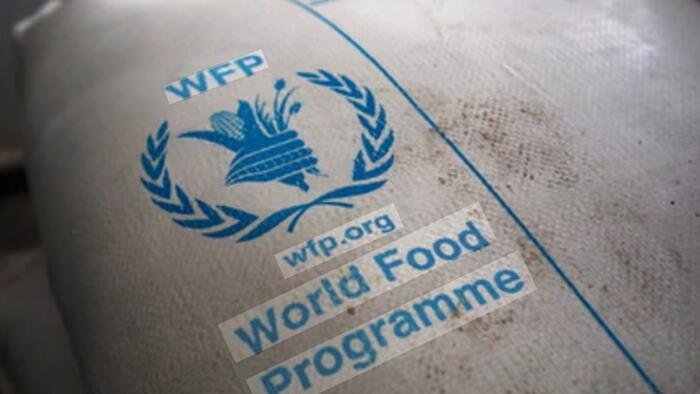
The United Nations food agency is sounding a catastrophic alarm on the macroeconomic fallout of the ongoing conflict in Iran and the Persian Gulf region. According to the World Food Programme (WFP), millions of people are actively being plunged into acute hunger due to the war – realizing a grim trajectory the agency previously warned would occur if the Middle East crisis stayed prolonged and global oil prices remained elevated.
Fragile economies are feeling the most pain, with WFP analysis of three highly vulnerable nations revealing that an additional 2.5 million people in Somalia, 2.3 million in Afghanistan, and 1.3 million in Sri Lanka are currently struggling to meet their most basic daily nutritional needs. Back in March, the WFP estimated that a staggering 45 million people globally could be pushed into severe food insecurity by the end of June, compounding the over 300 million people globally who were already facing critical food shortages before the war erupted.
The Rome-based UN agency issued a new detailed assessment at the end of this past week, describing how that the Middle East crisis is actively generating “significant spillovers” – by driving up the cost of food and fuel while heavily disrupting global trade networks.
Crucially, the agency warned that the economic bleeding will not stop immediately, even if a diplomatic breakthrough occurs. “These impacts are expected to intensify in the coming months, even if the crisis in the Middle East de-escalates,” it wrote.
“We remain by that prognosis,” WFP’s acting Executive Director Carl Skau informed a UN press briefing. “That’s mainly because the correlation between the prices of energy and food is so tight in many places, and also that in the poorest countries people are already spending all their money on food, and hence when food prices rise, they eat less.”
Even prior to the Iran war’s start, near the beginning of the war, United Nations agencies themselves were feeling the crunch after a significant drawdown in US support and funding.
The Trump administration slashed support over criticism that the UN has long failed to promote American interests.
UN Secretary-General António Guterres has been warning that outstanding dues reached a record $1.568 billion at the end of 2025 and that collections covered only 76.7% of assessed contributions, leaving the organization dangerously exposed.
As for how this impacts the WFP, it says it has already been forced to strictly ration and limit aid to millions of impoverished people due to drastic international funding cuts.


Small airports matter to agriculture
Arkansas is the nation’s rice leader. We produce nearly half of all American rice and export more than $400 million...


At least a dozen people shot near street festival
Police said officers are searching for suspects after twelve people were shot near the Old West End Festival in Toledo,...


Food delivery driver charged after selling alcohol to teen who later drowned, police say
AUTAUGA COUNTY, Ala. (WSFA/Gray News) – Police in Alabama say a food delivery driver is facing charges for allegedly selling...


Raven launches the Customer Growth Index at the IATA AGM
Raven, the aviation growth specialists, today launched the Customer Growth Index (CGI) at the 82nd IATA Annual General Meeting in...


Stanley Cup Game 3 food headlined by $60 surf and turf loaded potato
LAS VEGAS — The Vegas Golden Knights aren’t exactly known for their subtlety, from their glittery gold jerseys to a...


Best in the World 2026: Nominations open through June 21
The business news you need Get the latest local business news delivered FREE to your inbox weekly. * I understand...


Kentucky Derby winner Golden Tempo wins Belmont Stakes
SARATOGA SPRINGS, N.Y. — Golden Tempo showed exactly why he is a great closer, and his stretch run at the...


This Hydrogen Developer Wants To Take Food Systems Off-Grid
From his Florida office, Jason Herring, founder and CEO of hydrogen technology company VIVIFY Technology, is closely watching the escalating...


Missing American student found dead in Japan after dayslong search
Search and rescue volunteers in Japan have found the body of 20-year-old James “Weston” Higginbotham who went missing …


Protests grow in Albania against Trump-Kushner-linked resort
NewsFeed For the sixth-straight day, thousands of protesters have rallied in the Albanian cital against a proposed luxury beach development...
-

 LifestyleNews2 weeks ago
Spine surgeon rates sofas for your back: Beanbags score 0, lumbar support gets 10
-

 UsaLocalNews2 weeks ago
DOJ says it scrubbed news releases about Jan. 6 criminal cases from its website
-

 Tech2 weeks ago
Today's NYT Connections Hints, Answers and Help for May 25, #1079
-

 Video2 weeks ago
The Odds: Are Americans concerned about AI replacing jobs?
-

 Tech2 weeks ago
Sennheisers Momentum 5 headphones are all about the audio and ANC upgrades – Engadget
-

 Video2 weeks ago
911 call reveals more about Kyle Busch’s condition before his sudden death
-

 Video2 weeks ago
Ebola: Everything you need to know about the outbreak | The Global Story
-

 Video2 weeks ago
Everything you need to know about Makerfield by-election | BBC Newscast