

Business
Dangerous new drug could be ‘next wave of the opioid epidemic’ – and you can buy it at gas stations

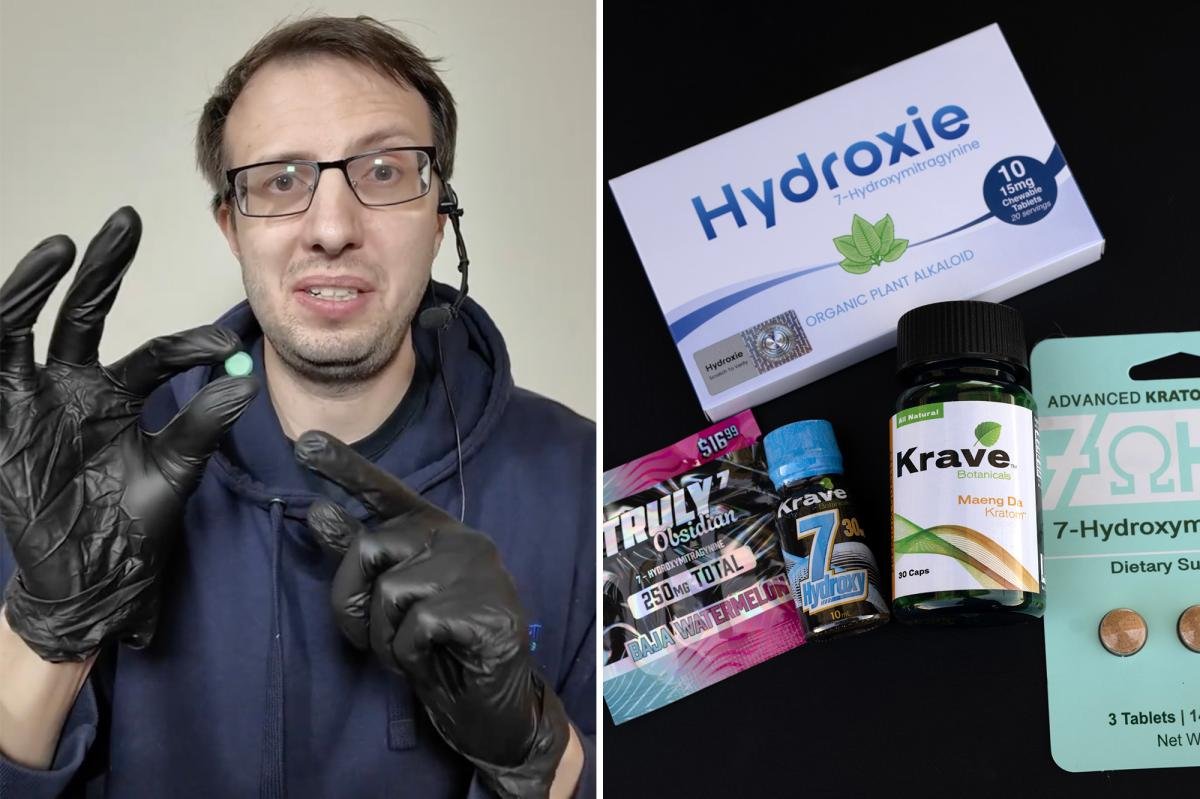
The next fentanyl may not come from drug cartels and basement labs — but your local truck stop.
Pharmacist TikToker Grant Harting recently bought a gas station pill with ‘super concentrated’ amounts of potentially deadly narcotic 7-OH — plus a cocktail of potentially toxic mystery chemicals.
“This went from very sketchy and dangerous to incredibly super crazy sketchy and dangerous,” Harting said after sending the pill to a lab for analysis.
The chemical comes from the kratom plant — a century-old medicinal herb manufacturers are now using to make a far more potent drug.
“I knew it was going to be an absolute disaster on wheels, and sure enough, it was,” Dr. Sarah Kerrigan, who authored a milestone kratom research survey in 2021, told The Post.
The drug isn’t technically an opioid, but it works similarly.
Kratom-related hospitalizations and deaths have skyrocketed 1,200% in the last 10 years, as 7-OH — nicknamed “gas station heroin” — flood the market, according to the CDC.
But it’s still legal in most states — packaged in gummies, drinks, and even ice cream warns the Food and Drug Administration, which called 7-OH drug “the next wave of the opioid epidemic.
Kratom, particularly 7-OH, is especially dangerous when mixed with alcohol and other drugs, which is the case in around 80% of kratom-linked fatalities, the CDC reported.
Worse, users often have no idea if they’re buying normal kratom or a potentially addictive narcotic, as manufacturers aren’t required to reveal 7-OH on product labels in many states.
“[7-OH] is sold as ‘kratom,’ but is not the leaf material. It is a lot more potent, meaning you need less of it to achieve the desired effect,” warned Dr. Oliver Grundmann, a kratom specialist at the University of Florida.
The full extent of the danger is still a mystery — which is a problem when people can buy 7-OH at vape shops and truck stops with little guidance on how much they’re actually supposed to take.
The pill Harting studied technically contained two doses, but it was too tough for the TikToker to break in half — even when he took a razor to it.
“It will be sold as one tablet, but a quarter of a tablet is one serving size. Who’s doing that? Who’s cutting a tablet into a quarter with a kitchen knife?” Grundmann said.
Another problem is the 7-OH manufacturing process creates mystery side chemicals that get added to the mix.
“We have no idea about the effects of these side products,” Grundmann said.
Indeed: Harting’s gas station pill analysis showed “some additional chemicals, that we don’t really know what they are.”
Lobbyists for the kratom industry — including the American Kratom Association — have fought federal bans on the product, calling instead for a crackdown on 7-OH specifically.
Other kratom advocates claim 7-OH could be a powerful remedy for normal opioid addiction.
“Rushing to ban 7-OH without solid research could push people toward more dangerous substances,” writes the 7-Hope Alliance, a 7-OH advocacy group.
But even if 7-OH can help people wean themselves off stronger opioids, it has no business being peddled at bodegas, Grundmann said.
Business
McDonald’s brings back fried apple pie after more than 30 years off menu


McDonald’s announced Tuesday that it is bringing back its fried apple pie to celebrate America’s 250th birthday.
The fried apple pies will be available at participating U.S. restaurants for a limited time starting June 23, marking their first broad U.S. rollout in more than 30 years.
“Summer tends to move fast – but the moments worth remembering don’t. And with America’s 250th birthday around the corner, we’re bringing back a fan-favorite and bona fide national treasure made for slowing down and savoring the season: the Fried Apple Pie,” the company said in a press release.
MCDONALD’S TESTING AI DRIVE-THRU ORDER-TAKING SYSTEM CALLED ARCHIQ AT FIVE LOCATIONS ACROSS COUNTRY
“The all-day menu item features our signature filling made with 100% American-grown apples, wrapped in the same golden crunch and flaky fried crust fans remember – or soon won’t forget,” it added.
McDonald’s said the dessert item started as a family recipe in the 1960s, when East Tennessee Owner/Operator Litton Cochran created a fried apple hand pie.
The treat became a local fan favorite and later a McDonald’s classic.
“There are certain things that just take you back – and the Fried Apple Pie is one of them. It’s something that people love and remember from growing up,” Eric Cochran, McDonald’s Owner/Operator, said in a statement.
“When Ray Kroc was trying to come up with a dessert for McDonald’s, my Grandad, Litton Cochran, suggested a Fried Apple Pie as a classic that people would love. My Grandmom, Jo Cochran, spent months perfecting the recipe. Bringing the Fried Apple Pie back for fans this summer to celebrate America’s 250th just feels right,” he continued.
McDonald’s replaced the fried apple pie in 1992 with a baked pie in most of the U.S. in response to growing consumer awareness about fat and cholesterol consumption.
The U.S. Department of Agriculture also published its food guide pyramid that same year.
MCDONALD’S IS QUIETLY DITCHING A POPULAR IN-STORE FEATURE NATIONWIDE
CLICK HERE TO GET FOX BUSINESS ON THE GO
Fried apple pies remained on McDonald’s menus in Hawaii and are still sold in other regions around the world, including the United Kingdom, Mexico, Greece, Australia and China.
In addition to the return of the classic dessert, McDonald’s is installing a 35-foot Fried Apple Pie on Route 66 in Joliet, Illinois, near the company’s Chicago headquarters. The giant pie will remain standing through July 4.
A kickoff event will also be held to debut McDonald’s Largest Fried Apple Pie in Chicagoland. The event will feature live music, ice-cold Coca-Cola and complimentary Arch Cards.
Business
Anthropic’s latest feud with the Trump admin may actually help it, sales data suggests


Anthropic is having a month.
The AI lab finished May by surpassing OpenAI in market share of business spending for the first time, Ramp just revealed. It raised $65 billion at a $965 billion valuation (also besting OpenAI) at the end of May, then waltzed into June by filing confidential paperwork for an IPO, reportedly on the strength of its first-ever profitable quarter.
Then on Friday, the Trump administration renewed its war on the model maker by sending a letter demanding it ban non-Americans, including Anthropic’s employees, from accessing its state-of-the-art models: the limited-release Mythos 5 and the more guarded version of Mythos released to the public three days earlier, called Fable 5.
This essentially forced Anthropic to pull its latest all-powerful model from the market altogether.
Although the White House invoked an obscure export control directive when ordering the ban, the exact cause remains unclear. The chatter was that hackers easily bypassed Fable 5’s guardrails, which were intended to prevent access to Mythos’ capabilities. That model is so good at finding security flaws in software code that Anthropic itself marketed it as dangerous and restricted its public release.
This new drama comes after Anthropic famously refused to allow the government to use its models for mass surveillance of Americans and fully autonomous weapons. As a result, in March, the Trump administration declared the company a supply-chain risk.
That didn’t deter Anthropic’s sales to businesses. Quite the opposite, Ramp’s data shows. Ironically, this latest feud with the Trump administration, which also appears to validate the hubbub over Mythos’ mythological power, may help rather than hurt Anthropic, according to Ramp’s lead economist, Ara Kharazian. Kharazian is the person who compiled the business-spending AI data.
“If anything, it’ll probably boost them,” Kharazian told TechCrunch. “Anthropic’s best month on record, as far as business adoption, was the month that the Department of Defense labeled them a supply-chain risk. There’s a lot of aura that comes with your model specifically being named too dangerous to use.”
Ramp’s data isn’t granular enough for us to see how much of a financial hit the company will take by pulling Mythos and Fable 5 off the market.
Still the data, from more than 70,000 businesses that use its platform, shows that customers heavily use Anthropic’s Opus models and that business use has been growing.
For instance, Ramp reported that Anthropic’s share of AI subscriptions paid for by businesses rose 2.5 percentage points in May to 41%. This compares to OpenAI, which commanded 39.5% of AI subscriptions by its customers, essentially flat from the prior month. (OpenAI still greatly leads Anthropic in overall consumer usage, according to new data from Sensor Tower.)
Beyond subscriptions, the vast majority of what companies spend money on is API calls to the model, which cover token use for activities like coding. Anthropic’s Claude Code has a strong reputation as a powerful AI coding tool.
Ramp can’t always see from the spending data which models most businesses are using. When it can see the model details — in about one-third of transactions — businesses are mostly spending on various flavors of Claude Opus, particularly the later versions. Opus is the model that preceded Mythos and is still openly available.
In fact, in late May, Anthropic released a new version, Opus 4.8.
Mythos had not been on the market for that long, having been released to limited users as of April. And Fable 5 was shut down after a few days.
While we can’t predict how this latest drama with the White House will impact Anthropic’s ability to go public as it hoped to (public-market investors tend to be wary of companies embroiled in controversies with the government), the numbers indicate that Anthropic’s available models are more popular with businesses than ever before.
Business
Dow hits record high as Nasdaq, S&P 500 slip


The Nasdaq Composite and the S&P 500 finished lower today under pressure from technology stocks, while the Dow Jones Industrial Average marked its second straight record close.
After rallying sharply on Monday on optimism about a U.S.-Iran peace deal, investors in the S&P 500 and Nasdaq took a breather even as oil prices fell to their lowest levels since early March.
Shares of SpaceX rallied, but pared earlier gains. For much of the session, the rocket and AI company’s market value was above that of Amazon and it briefly surpassed Microsoft’s value.
While falling oil prices offered some support to equities, Mark Luschini, chief investment strategist at Janney Montgomery Scott in Philadelphia, said it was too difficult to build on recent steep gains in the heavyweight technology sector without a break. He noted some investor caution ahead of the Federal Reserve’s policy update due on Wednesday afternoon.
“We had a big move yesterday in the market,” said Luschini, alluding to the S&P 500’s 1.65% rally on Monday and Nasdaq’s advance of more than 3%. “We’re just digesting some of those gains and the setup in anticipation of the Fed meeting is always a little tentative.”
According to preliminary data, the S&P 500 lost 41.85 points, or 0.55%, to end at 7,512.44 points, while the Nasdaq Composite lost 301.13 points, or 1.15%, to 26,382.81. The Dow Jones Industrial Average rose 345.54 points, or 0.67%, to 52,016.57.
Investors rotated into economically sensitive sectors and sold richly valued technology stocks during the session with chip stocks falling sharply after soaring in the prior three sessions. Of the S&P 500’s 11 major industry sectors, financials and industrials rose.
U.S. oil futures settled down 5.8% as some details emerged about the U.S.-Iran interim deal, which is expected to extend a tenuous ceasefire announced in April by another 60 days and reopen the Strait of Hormuz, which Iran has effectively blocked since the U.S. and Israel attacked Iran in February.
President Donald Trump said the agreement would rule out a nuclear weapon for Tehran, while a U.S. official said that it allows Iran to sell oil upon signing.
The war had pushed up oil prices since it started in late February, and fanned worries about sticky inflation, which informs the central bank’s policy on interest rates. Investors are widely expecting the Fed to hold interest rates at its current 3.50% to 3.75% range on Wednesday, though they will pay close attention to new Fed Chairman Kevin Warsh’s comments on inflation, unemployment and the economic outlook.
Traders see the Fed holding rates through much of the year but have been betting on a roughly 42% chance of a 25-basis-point rate hike in December, according to CME Group’s FedWatch tool.
In individual stocks, shares of Olin sank after the chemical producer said it would acquire Huntsman in an all-stock deal valued at $2.43 billion. Huntsman shares also fell as the offer stood at a discount to the stock’s recent price.
Business
Trump admin tries to block Clean Air Act lawsuit over xAI’s gas turbines

The Trump administration is trying to help Elon Musk’s xAI Corp. beat a Clean Air Act lawsuit filed by the National Association for the Advancement of Colored People (NAACP). The US said the NAACP lawsuit threatens an xAI data center that powers Grok systems needed by the military.
The NAACP sued xAI and subsidiary MZX Tech in April, alleging that they violated the Clean Air Act by operating 27 gas turbines without an air permit in Southaven, Mississippi. The number of unpermitted turbines rose to 57 by mid-May and there were plans to install two more, the NAACP said in a June 12 filing.
“Defendants’ Colossus Gas Plant powers xAI’s nearby Colossus 2 data center, which in turn powers the chatbot ‘Grok,’” the lawsuit said. The gas turbines have fueled both health concerns and noise complaints.
US Department of Justice lawyers urged a federal judge to dismiss the case in a filing yesterday. The Mississippi Department of Environmental Quality determined that the turbines don’t require permits, the US filing said.
The lawsuit “threaten[s] artificial-intelligence innovation, plus the energy needed to power it,” the US filing said. “The NAACP’s attempt to cut off the power that supports Grok also threatens national security because… Grok provides critical support for the Department of War’s military operations.” The US court filing said xAI’s Grok Gov Model aided targeted strikes in Iran during Operation Epic Fury.
Grok was used with Maven Smart System to help US forces “deploy over 2,000 munitions to 2,000 distinct targets within 96 hours during Operation Epic Fury, a testament to the greatly increased operational efficiency made possible by the Grok Gov Model,” according to a declaration by Cameron Stanley, chief digital and artificial intelligence officer for the Department of War. The Grok Gov Model has unique features not found in any other AI model, he wrote.
US helping xAI break the law, group says
The US is arguing “that xAI should be allowed to break the law solely because the Trump administration says so,” said the Southern Environmental Law Center (SELC), which represents the NAACP in the case.
“In the filing, the Department of Justice never disputes that xAI is pumping out unlawful and harmful pollution into Memphis and North Mississippi,” the SELC said today. “Instead, the Department argues that it doesn’t matter whether xAI is breaking the law and threatening community members’ health if the Trump administration blesses the lawlessness. While the Department points to vague national security concerns as its reason to let xAI continue to illegally pollute unabated, all companies, even ones that contract with the federal government, are required to follow the law.”
A letter from Gov. Tate Reeves said that in March 2026, the Mississippi Department of Environmental Quality approved xAI permits to construct several permanent gas turbines. It also gave written authorization for xAI to use trailer-mounted gas turbines to temporarily power the facility until the permanent ones are built. The department “determined that such temporary gas turbines are ‘mobile sources’ not subject to the Clean Air Act’s permitting requirements,” the letter said.
The case is in US District Court for the Northern District of Mississippi. The US told the court that “the Clean Air Act does not authorize citizen-enforcement actions that seek relief the governmental enforcers choose to forgo… Nothing in the statute suggests that Congress, when enacting the citizen-suit provision, deputized citizens to ‘commandeer the federal enforcement machinery,’ especially where the United States has determined that a citizen’s suit would not serve the public interest.”
Citizen suit dispute
The NAACP lawsuit relies on a Clean Air Act provision authorizing citizen lawsuits “against any person who proposes to construct or constructs any new or modified major emitting facility without a permit.”
The NAACP said in its June 12 filing that under the Clean Air Act, “Citizen suits may still proceed after state agencies determine permits are not required, or while agencies pursue parallel investigations. Just as state applicability determinations do not bar federal enforcement under the Clean Air Act, they do not shield operators from citizen enforcement. If they did, it would frustrate the very purpose of the citizen suit provision.”
The SELC said today that the Trump administration’s argument against citizen suits could have far-reaching implications. Citizen lawsuits “serve as an essential backstop—and often a last resort—for communities when government regulators fail to hold polluters accountable,” the SELC said. “The provision was passed by Congress with bipartisan support, and courts have repeatedly upheld the constitutionality of citizen suits. Now, the Department of Justice is indicating that it has a right to come in and cancel such community-led suits at any time. This threatens to open the door to significant corruption as polluters pay, or give favors, to avoid complying with the law.”
The gas turbines threaten the health of residents in an area with a large Black population, the NAACP said. “Without controls, the Colossus Gas Plant’s turbines can emit ten times the amount of nitrogen oxides pollution they should under the Act, contributing to increasing risks of heart disease, lung disease, and premature death in the surrounding neighborhoods where Black and other frontline communities live, including members of Plaintiffs NAACP and NAACP MS,” the NAACP said.
The NAACP asked the court for a permanent injunction prohibiting continued operation of the gas turbines, civil penalties of up to $124,426 per day, and reimbursement of the plaintiff’s costs and attorneys’ fees.
The NAACP’s June 12 filing said that all the turbines “required Clean Air Act permits prior to construction, best available control technology to limit pollution during operations, and emissions monitoring for pollution tracking and transparency. Defendants have not obtained a single air permit for these turbines or otherwise complied with the Clean Air Act requirements at any point from installation to now.”
The US filing pointed to support from Mississippi state regulators. “The State of Mississippi has similarly determined that continued operation of xAI’s data centers and turbines serves the State’s interests,” the US wrote. “If the NAACP successfully shuts down xAI’s turbines through this civil enforcement action, the State explained, that ‘would create an immediate and substantial disruption to the State’s economy’ and ‘disrupt the Clean Air Act’s delicate balance of cooperative Federalism.’”
Business
Verizon drops activation and upgrade fees with new simplified plans
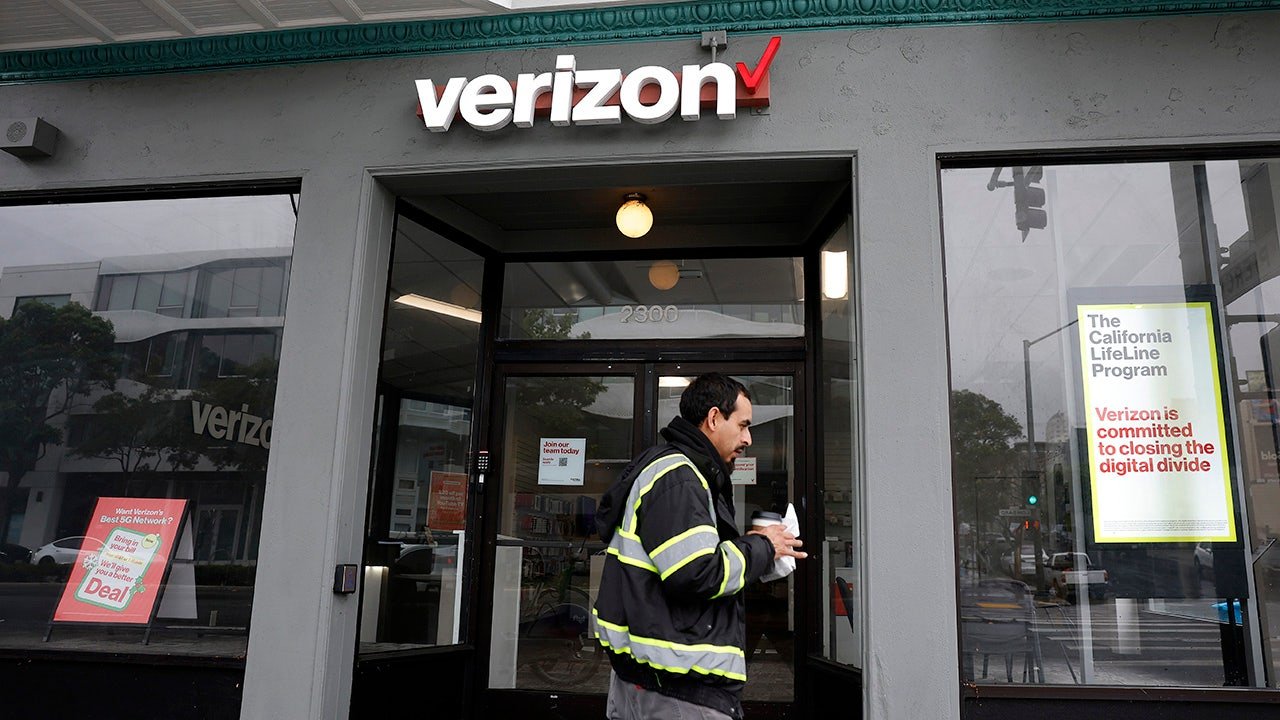
Verizon is looking to attract and retain customers by offering new, simpler plans that will drop activation and upgrade fees while also rolling out a new loyalty program offering discounts and other perks.
The company is competing aggressively with AT&T and T-Mobile in the telecoms market, with rivals looking to gain an edge with consumers and have extended device subsidies, added plan discounts and proposed increased spending on network infrastructure.
The new “Simplicity” plan drops network tiers and will combine Mobility and Home on one bill, with taxes and fees included.
Verizon said the new loyalty program will offer customers 3% back on bills from July that can be used to buy new phones or at consumer brands such as Sephora, Hilton, Marriott and Starbucks.
VERIZON CUSTOMERS FACE 35-DAY WAIT TO UNLOCK PAID-OFF PHONES UNDER POLICY CHANGE
Alfonso Villanueva, interim CEO of Verizon Consumer Group and Verizon chief transformation officer, told Reuters the move is about making it simpler and more flexible for customers.
“How do we create a value proposition that makes sense for every cohort?” Villanueva told the outlet in an interview.
“We are convinced that our retention will be even higher,” he added.
VERIZON NAMES FORMER PAYPAL BOSS DAN SCHULMAN AS CEO
Ticker Security Last Change Change % VZ VERIZON COMMUNICATIONS INC. 46.74 -0.33 -0.69% TMUS T-MOBILE US INC. 184.36 -4.50 -2.38% T AT&T INC. 23.16 -0.13 -0.56%
Verizon said postpaid customers on all phone and connected device plans can opt into its loyalty programs and avoid activation and upgrade fees. It is also offering perks like free Starbucks coffee, a Dunkin’ Donuts treat or FIFA World Cup 2026 merchandise.
Verizon in April raised its annual profit forecast under new CEO Dan Schulman. The company declined to say how much the changes announced on Tuesday would cost, but they are expected to be accretive to revenue.
The company also said that the new program wouldn’t change its 2026 financial guidance.
FANATICS AND AT&T ANNOUNCE EXCLUSIVE MULTI-YEAR PARTNERSHIP TO CONNECT MORE FANS TO SPORTS MOMENTS
Like its rival AT&T, Verizon has leaned into discounted bundles combining high-speed broadband and wireless plans as part of a strategy to boost customer retention.
T-Mobile has had success with its loyalty programs offering perks and aggressive marketing along with its plans which bundle Netflix, Apple TV and Hulu with five-year price guarantees.
Last month, Verizon cut several hundred jobs after it said in November it was cutting more than 13,000.
GET FOX BUSINESS ON THE GO BY CLICKING HERE




Trump-endorsed Collins wins in key GA senate primary
In the GOP primary runoff to take on Democratic Sen. Jon Ossoff in November, the Trump-endorsed Rep. Mike Collins defeated...


Pence says US-Iran agreement 'smacks of' appeasement
Former Vice President Mike Pence told CNN's Kaitlan Collins the Trump administration's ceasefire agreement with Iran “smacks …


Suspect in custody after hospital shooting in Delaware
A 23-year-old man has been taken into custody in Philadelphia after a shooting at a Wilmington, Delaware, hospital left one...


Rescuers reflect on Laos cave rescue
CNN's Will Ripley speaks with a Finnish diver who carried out a high-risk cave rescue in Laos. #CNN #News.


Who is Vozinha? Cape Verde’s heroic goalkeeper
After Cape Verde's shocking draw with Spain, goalkeeper Josimar José Évora Dias, known as Vozinha, became a star. Vozinha …


Giant World Cup ball whips through El Salvador streets #BBCNews


Obama vs Trump on Iran: Experts compare deal strategy
Former President Barack Obama has been asked in recent weeks to compare his own Iran efforts with Donald Trump's.


Trump-endorsed Rep. Barry Moore wins GOP primary runoff in Alabama Senate race
Rep. Barry Moore won the Republican primary runoff in the Alabama Senate race, NBC News projects, making him the heavy...
Rapper Mystikal sentenced to 20 years for Louisiana rape
NEW ORLEANS (AP) — The rapper Mystikal, who received multiple Grammy nominations in the early 2000s, will serve 20 years...


Group planned to attack White House UFC event using drones, FBI says | BBC News
The FBI thwarted a plot targeting Sunday's UFC event at the White House and has arrested five men, the US...
-

 Business3 days ago
How much of Musk’s wealth comes from government help? Virtually all of it
-

 LifestyleNews2 weeks ago
120 minutes of strength training per week may help extend lifespan
-

 Politics5 days ago
What to know about the stabbing that set off fiery riots in Northern Ireland
-

 Video4 days ago
Download fans say what they love about the festival. #DownloadFestival #BBCNews
-

 Video4 days ago
Why SpaceX IPO isn't about space. #SpaceX #ElonMusk #BBCNews
-

 HealthNews5 days ago
The people of Okinawa, Japan only eat until they are about 80 percent full, then stop — and the practice has been linked in multiple peer-reviewed studies to lower rates of cardiovascular disease, slo
-

 TravelNews4 days ago
My Paternal Instinct Should’ve Warned Me About Netflix’s Maternal Instinct
-

 Food4 days ago
Pope Leo’s plane was grounded. Then the King of Spain stepped in to help