

Sports
Wetzel: Brendan Sorsby is done with college sports. Can local judges be next?

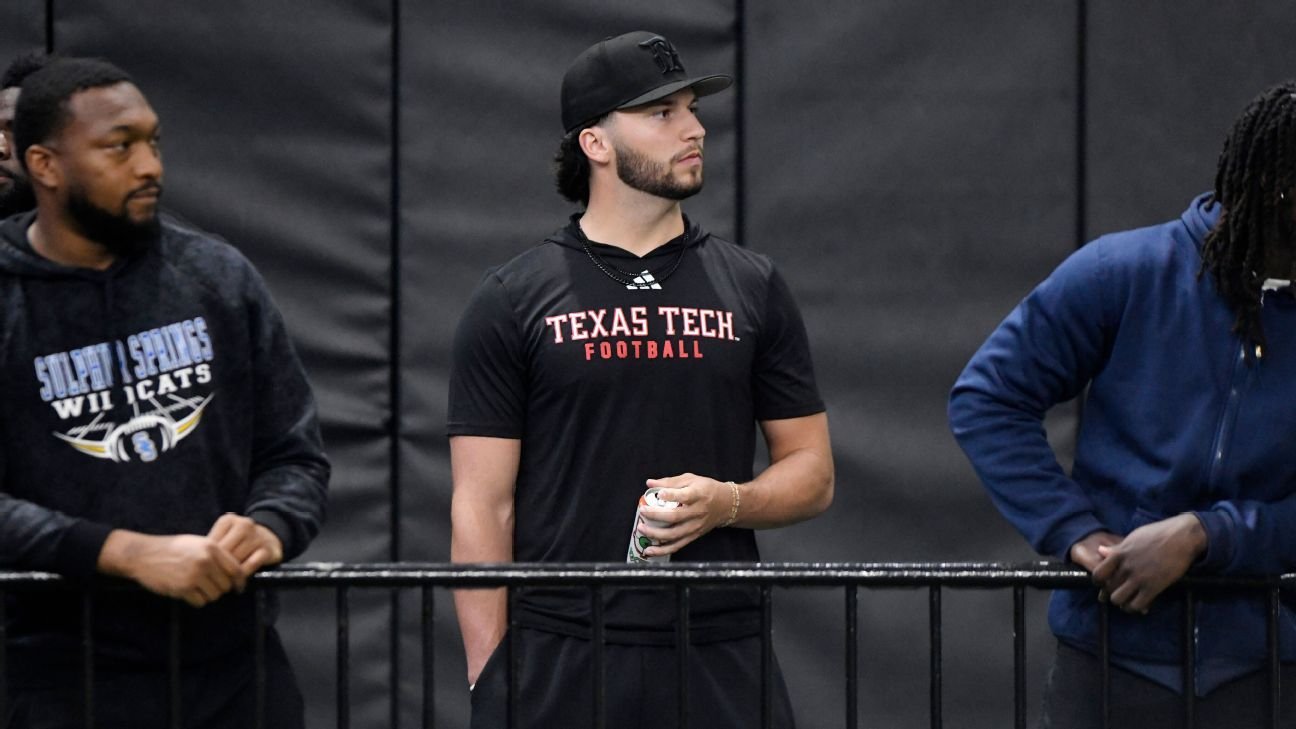
Now that L’Affaire Sorsby is over for college athletics, and Brendan, the would-be Texas Tech quarterback, is attempting to enter the NFL supplemental draft, perhaps something positive can still come of this.
(Other than billable hours for white-shoe law firms, of course.)
Namely, college athletics needs to get local judges and their temporary injunctions out of the game.
Brendan Sorsby’s college career should have been over the moment he acknowledged he bet some 9,000 times on sports, including about 40 on Indiana while a member of the football program. These were clear violations of NCAA statutes and precedents. Banishment was the appropriate punishment.
Open. Shut.
Except along came a Texas judge, Ken Curry, who decided to buy Sorsby’s Hail Mary legal argument that he should get to play this season anyway.
Sorsby’s case centered on how he suffered from a gambling addiction and how any punishment would adversely impact his mental health. Therefore, he deserved a restraining order to keep playing until he got his day in court … which, of course, wouldn’t occur until after he exhausted his eligibility.
Curry’s decision to grant Sorsby’s injunction last week left the NCAA as the only sports governing organization on earth prohibited from enforcing anti-gambling and integrity rules.
The entire world — let alone all of college athletics — was on one side of this issue. A single judge on the other.
Yet the judge is the one who counted. In a likely tell about how illogical even he knew this was, Curry never provided a specific explanation as to what he liked about Sorsby’s argument.
In the end, it didn’t matter.
Sorsby’s victory began unraveling late last week when Texas Attorney General Ken Paxton stepped in and threatened legal action against the Big 12 if it tried to punish Sorsby itself via the league’s own bylaws.
That opened the door for the Big 12 to bring in the high-powered law firm of Sidley Austin (whose past lawyers include Barack Obama and J.D. Vance). On Monday, it petitioned a federal judge for injunctive relief against Paxton and a declaratory judgement that, yes, it was allowed to enforce its long agreed upon rules.
The chances of it succeeding were considered high, which would have left Sorsby open to future suspension or other punishments. For both the player and the program, the uncertainty was too great. By Monday evening, Sorsby gave up.
All’s well that ends well, apparently, but what college sports needs to do in this moment is to seize the collective opposition here — even if some of it was plagued by grandstanding — to push the federal government to put an end (as much as possible) to governance by local courts.
The days of a conference having to ask federal judges for the right to enforce its integrity bylaws need to end.
Nor should every player, coach or school be able to win injunctions against nearly any decision they don’t happen to like.
College sports are plagued by judicial governance. Extra seasons of eligibility. Two-week temporary restraining orders. Midseason Euroleague player acquisitions. These days you don’t just need to recruit a five-star quarterback, you need a five-star judge.
The plaintiffs don’t even have to actually win their cases, they just have to convince a judge they have a case and that holding them out of competition while the process drags would cause irreparable harm.
It’s a lower bar to clear. By the time the actual case is set to be tried, the season is over and the filing is dropped. It’s a dishonest workaround that’s causing chaos.
College sports is now unable to determine who can play and for how long, or even whether it can enforce basic standards on the third-rail issues such as sports wagering.
There are currently multiple efforts in Congress designed to “save” college sports or “preserve” college sports. They are sprawling bills, complicated and filled with pet projects and straw man arguments. As such, none of them stand much of a chance.
As the battle for sweeping reform churns on, college sports needs to push for a so-called skinny bill designed to address the items that almost everyone agrees on: mainly eligibility and enforcement free from judicial interference.
Until that is handled, this is a rudderless ship constantly trying to navigate a parade of storms.
Drafting such common-sense legislation might not be foolproof, but it is critical to try. It would receive widespread, if not unanimous, support inside college athletics and arrive on the floor for a vote not just bipartisan but nonpartisan.
College sports’ issues are myriad. There’s a lot to sort out.
Sidelining the Judge Ken Currys of the world should be step one.
Sports
How West Wilson tried to get Lindsay Hubbard, Kyle Cooke and Carl Radke fired from ‘Summer House’: report

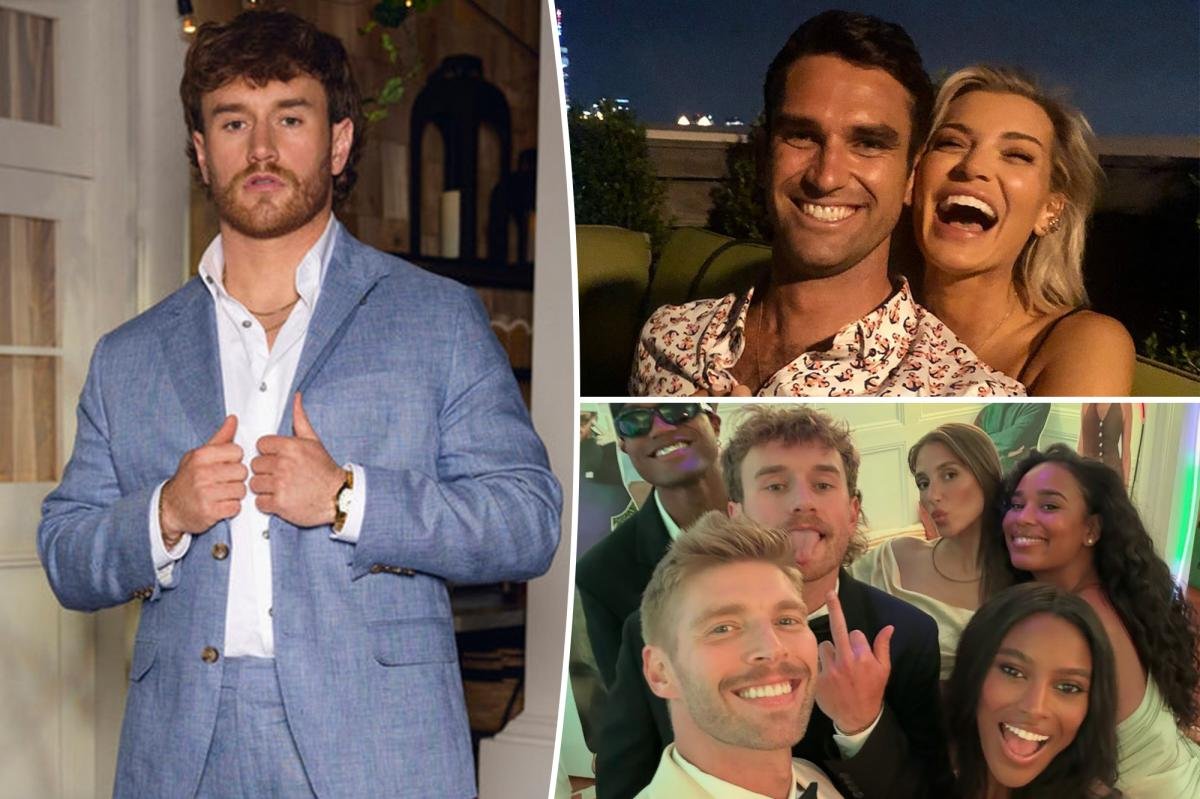
West Wilson reportedly tried to get Lindsay Hubbard, Kyle Cooke and Carl Radke fired from “Summer House” — which allegedly led to him not being asked back for Season 11.
However, a rep for Wilson told Page Six that the accusation is “categorically false.”
The source claimed to US weekly on Tuesday that the podcaster, 31, “told producers that Lindsay shouldn’t film pregnant and being a new mom because it’s a show about singles and having fun in the summer.”
In 2024, Hubbard, 39, welcomed daughter Gemma with now-ex-boyfriend Turner Kufe.
The insider added, “Amanda [Batula] knew about that and Lindsay was pissed.”
Meanwhile, Wilson allegedly tried to make Cooke, 43, and Radke, 41, “look bad” by secretly telling producers that the reality show “would be better with him and new friends.”
Cooke, Hubbard, and Radke are part of the original “Summer House” cast, with Batula, 34, joining as Cooke’s “girlfriend” during Season 1.
The swimwear designer was then upgraded to a full-time cast member.
Wilson joined the group in Season 8.
The insider added that “his goal was to be with Amanda and then just film with his friends.”
The sports commentator not showing his personal life and “dating other women who no one knew about,” also led to his departure.
Wilson and Batula started dating shortly after the influencer separated from Cooke in January after four years of marriage.
Batula’s ex-bestie Ciara Miller, 30, also dated Wilson for several months in 2023. The former flames even shared a kiss during Season 10.
Wilson was also actively dating Meija Moreno when his relationship with Batula was exposed.
The source claimed that Hubbard and Cooke have “joked” that Wilson and Batula “are not going to last.”
But the insider told the outler that the couple is “still fully committed to each other.”
Page Six reached out to reps for Cooke, Hubbard and Radke.
However, a second source alleged that “it was a mutual decision between the network and West.”
They noted that the Complex journalist felt that his “time on the show was coming to end” going into the Season 10 reunion.
“It became even clearer that there wasn’t a long-term fit anymore,” the insider continued, insisting that Wilson is “at peace” with the outcome.
The social media personality is now focused “on his podcast and other business ventures.”
The source explained that due to Batula and Wilson’s bombshell romance, “there’s a tear in the friend group.”
Wilson and Batula came under fire during the dramatic three-part Season 10 reunion for lying about their relationship to everyone in the group.
“The cast doesn’t want to film with him,” the insider continued to Us, noting that Batula is “still friendly” with Season 8’s Jesse Solomon, 33, and her estranged husband.
As of now, the rest of the cast is not “speaking with Batula,” with the insider expressing that her future on the show is “up in the air.”
On Monday, Hubbard took to Threads to detail her grievances with Wilson.
“West has tried to threaten my career / show now 3 times and it’s quite frankly, disgusting. No other word to describe it,” she penned.
Hubbard referenced the time Wilson publicly said on his “Show Me Something” podcast that there was “no way” she could return post-baby.
Now, a week after the reunion wrapped, fans will get a look into the fallout on Tuesday, with a bonus episode.
“Summer House: The Aftermath” — which airs at 8 p.m. ET on Bravo — will feature a sit-down between Wilson and Cooke and Batula and Hubbard, among other cast members.
Sports
Google launches Android 17, rolling out now to Pixel

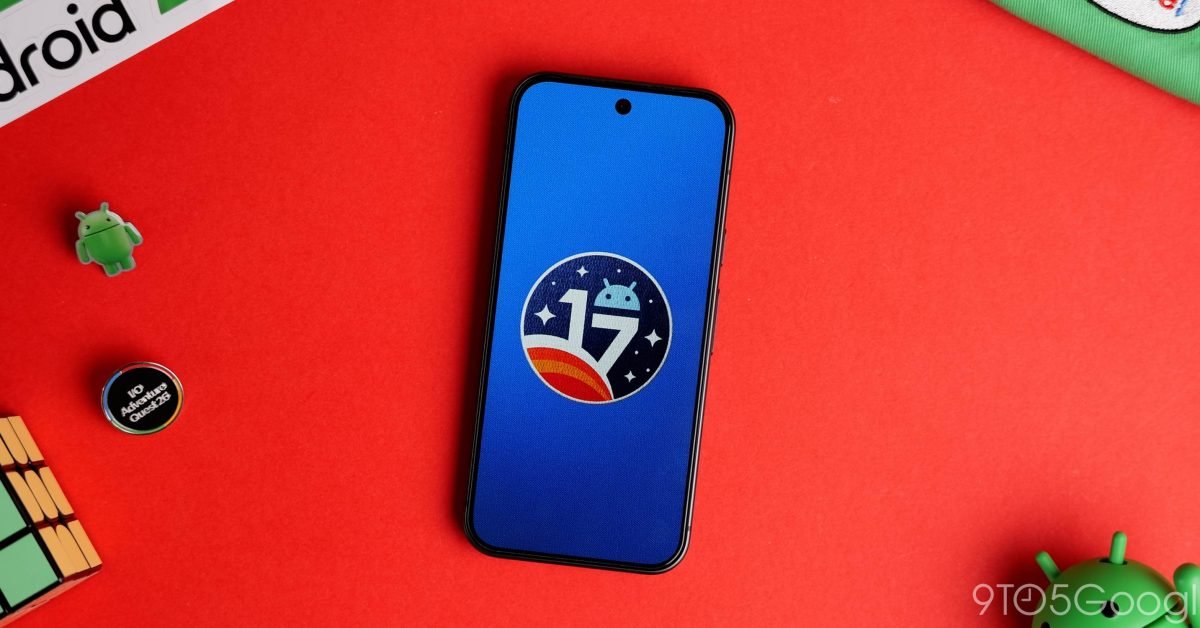
Following four betas, Google is ready to launch Android 17 for Pixel devices. There are a handful of big additions and changes, while today’s release coincides with the June 2026 Pixel (Feature) Drop.
Like last year, this update is arriving before the historic fall window as part of Google’s new release cadence. The biggest user-facing addition in Android 17 is the ability to Bubble any application. A similar capability was previously reserved for message conversations. Long-press any app on your homescreen and tap the new button in the top-left corner to get a chat head-style icon that you can move around and drag down to close. A Bubble Bar in the bottom-right corner is available for large screen devices.
Handy for travel, entertainment and work, Bubbles lets you easily reference notes or maps, watch tutorials and even check sports. It keeps everything you need in reach but out of the way.
A small but nice addition in Wallpaper & style > Icons > Names is “Show app names” to hide labels on your homescreen.
Android 17 implements app memory limits “to ensure apps never use too much RAM” for improved device performance and to help preserve battery.
Advertisement – scroll for more content
The screen recorder accessed from Quick Settings has been redesigned with a floating pill interface. Your available options are unchanged from before. After the recording has started, you can tap the status bar indicator to bring back the pill and make changes — tap the settings gear — or “Stop.” Screen Reactions give you a green screen to add a selfie video to the capture.
Afterwards, you’re taken to a new fullscreen page that lets you preview the clip, Edit, Delete, or Share.
In Quick Settings, the Camera, Location, and Microphone access indicators in the top-right corner have been redesigned. The pill is narrower and makes use of circular containers to better distinguish what’s active.
On the topic of Location, Android 17 has a number of changes. The runtime Location permission now adds explicit checkboxes when picking between “Precise” and “Approximate.” Google is also adding a new one-time precise location button for apps, while there’s an improved algorithm for approximate location.
Additionally, you can share specific contacts with apps “instead of your entire address book.”
The bigger QS change is split Wi-Fi and Mobile data toggles. After updating, the previous Internet Tile becomes Wi-Fi and you can add Mobile data. On supported devices, there’s also a new “Satellite” Tile that takes you to “Satellite connectivity” settings.
When you “Mark as lost,” Find Hub now lets you require biometrics, “so even if a thief has your passcode, they can’t access information on your phone or turn off tracking.”
The “No notifications” message in the shade has been replaced by “You’re all caught up” and a trophy icon that comes from the Pixel Watch.
In terms of visual changes, Widget panes now feature a blurred background just like Quick Settings and the Notification shade. There are various icon tweaks, but nothing drastic following the Material 3 Expressive redesign last year. You’ll also notice a close ‘x’ in fingerprint sheets.
There are several notable changes in the Settings app:
“Accounts and backup” is a new combined menu that simplifies “Password & passkeys.”
Once you dig down, individual preferences are now housed in shorter cards that remove top/bottom padding for more compact lists.
In Sound & vibration, you’ll find a new slider for “Assistant volume.”
Under Display & touch > Dark theme, you can now control which apps use the Expanded dark theme.
There’s a new Easter egg for the first time in three generations. Go to Settings > About phone > Android version and tap the “17” repeatedly to connect all the dots.
Android 17 Pixel launch
Android 17 is launching and rolling out starting today for the Pixel 6, Pixel 6 Pro, Pixel 6a, Pixel 7, Pixel 7 Pro, Pixel 7a, Pixel Tablet, Pixel Fold, Pixel 8, Pixel 8 Pro, Pixel 8a, Pixel 9, Pixel 9 Pro, Pixel 9 Pro XL, Pixel 9 Pro Fold, Pixel 9a, Pixel 10, Pixel 10 Pro, Pixel 10 Pro XL, Pixel 10 Pro Fold, and Pixel 10a.
Visit Settings > System > System update and click the “Check for update” button if the OTA hasn’t already appeared on your device. Android 17 Beta 4.1 users will get a small update to this final release.
Sports
XREAL Aura Android XR glasses launch ‘this fall’ with $99 reserve
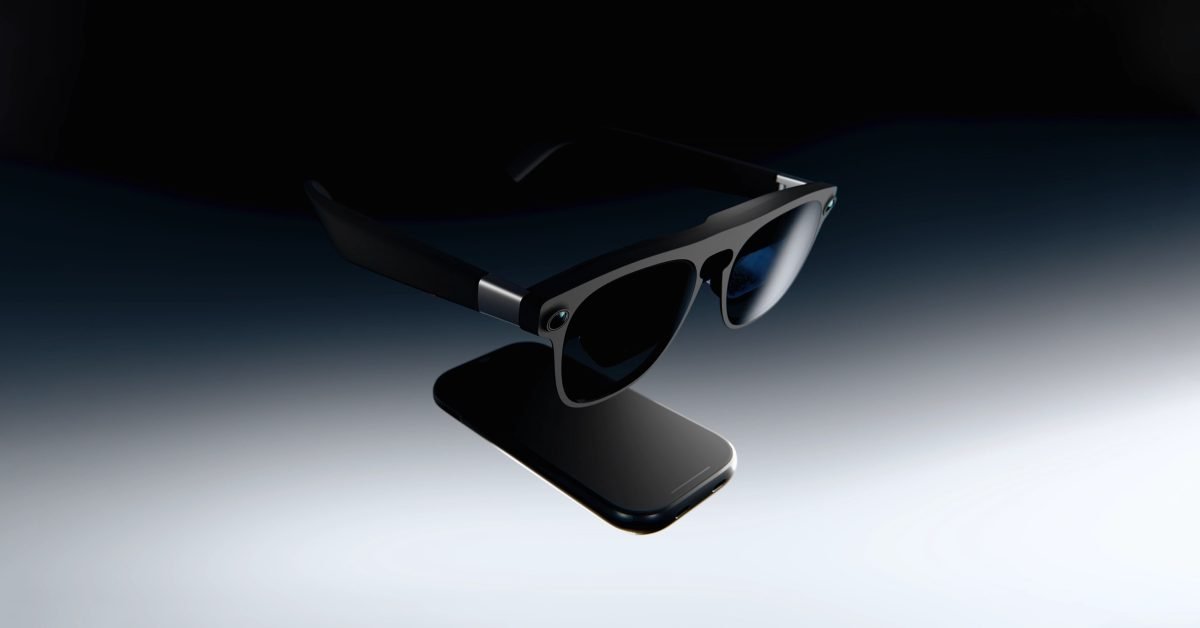
Following a first look at Google I/O last month, XREAL has today confirmed that its Android XR glasses, Aura, will be launching this Fall with reservations open today, and a list of confirmed apps and games too.
XREAL Aura is set to launch as a mixed form factor powered by Android XR. They look and feel like glasses, but operate closer to that of a dedicated headset like Samsung’s Galaxy XR, while still having optical passthrough to the outside world that’s through glass, not camera feeds. At Google I/O last month, hands-on demos showed how the device works with an included puck that serves as the brains and battery.
XREAL’s Android XR glasses will launch before the end of 2026, early access for devs
XREAL’s Android XR glasses one-up Apple’s wired battery with a controller, more [Video]
Today, XREAL is confirming out of AWE (Augmented World Expo) that Aura is set to officially launch “this Fall” in the US – including in Best Buy Stores – the UK, Canada, South Korea, and Japan. European markets will be coming “soon after,” the company says.
You can also now “pre-order” the glasses with a $99 registration deposit. This buys you a $199 credit for the final product, a $100 discount when it actually launches. There’s no specific release date or final price at this point, though. A $299 registration deposit is also available for the first 2,000 customers, with numbered hardware and a guarantee of launch-day delivery.
Advertisement – scroll for more content
Registration is live now on XREAL’s website.
XREAL’s Android XR glasses will cost under $1,500, which isn’t as expensive as it sounds
On top of that, XREAL is also confirming some of the apps and games that will be available for Aura, and Android XR as a whole, and are in developement now. Some of the biggest names here include Project Hail Mary: Journey Among the Stars and Fallout: Factions. The former is a “pivotal, untold moment in the Hail Mary mission” that was created with author Andy Weir specifically for the game.
Fallout: Factions, meanwhile, is an XR adaptation of a hit board game.
Here’s the full list of in-development titles coming to XREAL Aura and Android XR:
Announced today, Project Hail Mary: Journey Among the Stars, will launch on XREAL AURA, powered by Android XR, Google’s groundbreaking spatial computing platform. Developed in partnership with Amazon MGM Studios and featuring a new, original chapter created in collaboration with Andy Weir specifically for the game, Project Hail Mary: Journey Among the Stars allows players to step into the role of Ryland Grace at a pivotal, untold moment in the Hail Mary mission, diagnosing failing ship systems and improvising ingenious scientific solutions as the spacecraft itself bleeds into their real-world environment. Precise hand tracking enables intuitive, tactile interaction with ship panels and zero-gravity objects, while the Hail Mary spacecraft merges seamlessly with the player’s physical surroundings. The result is a new form of spatial storytelling that leverages Android XR, cutting edge XR hardware starting with XREAL AURA, and mixed reality to bring the world of Project Hail Mary directly into the player’s space.
Announced today, Fallout: Factions is the official digital adaptation of the hit tabletop game from Modiphius Entertainment for XR. This turn-based skirmish warfare game set in the Fallout universe combines squad-level tactics and strategy with immersive 3D maps and gesture controls in stunning augmented reality. Compete with friends around the table or around the world as you play as one of three Factions seeking to dominate the devastated landscape of Nuka-World. Each Faction has a unique set of weapons and abilities, creating nearly endless replay-ability. War never changes, but now it’s in your hands! Fallout: Factions launches from Mirrorscape later this year on XREAL AURA and Android XR.
Announced today, “The Nutcracker: A Spatial Awakening” is a pioneering full-scale spatial preservation of a legacy ballet, developed by San Francisco Ballet and YBVR in partnership with Google and XREAL. Captured in stereoscopic 8K with a Blackmagic URSA Cine Immersive three-camera array, the experience places audiences closer than ever to the artistry and emotion of this iconic holiday production. Bringing the breathtaking “Snowfall” sequence directly into the user’s surroundings, the experience showcases how cutting-edge hardware can unlock a profound sense of presence for world-class performing arts, accompanied by the Grammy Award-winning San Francisco Ballet Orchestra. Expect more to come with the official premiere later this year.
Asteroid, a groundbreaking immersive film from acclaimed director Doug Liman, will combine cinematic storytelling, interactive gameplay, live conversational AI, and natural multimodal interaction powered by Gemini. The experience launched exclusively on Android XR and will be free for all XREAL AURA owners. The project is developed by 30 Ninjas.
EMMY and BAFTA award-winning Atlantic Studios is bringing ambitious immersive films to Android XR and XREAL AURA. Atlantic is bringing Hollywood elites to its projects, with more to be revealed soon.
Resolution Games brings its painstakingly crafted turn-based co-op tabletop dungeon crawler, Demeo to XREAL AURA. Demeo is designed from the ground up for XR, and players on AURA can join others on Samsung Galaxy XR, Meta Quest, Apple Vision Pro, PICO and PlayStation VR2, as well as enjoy cross-play with flatscreen players (Steam PC, Mac, iOS, PlayStation 5).
The Fox Sports XR app on XREAL AURA will feature immersive live sports and highlights.
Cubism is one of the most respected puzzle games in XR built around an engaging concept: fit a set of colorful 3D blocks into a target shape, but this time set in your real world thanks to XREAL AURA’s optical see-through headset. Cubism is renowned for its excellent handtracking and strong spatial interaction design.
One of the world’s largest XR video game developers, nDreams, is bringing Oh My Galaxy! to XREAL AURA. Oh My Galaxy! is a beautifully crafted arcade-style physics puzzle game designed from the ground up for spatial computing. XREAL AURA marks the first time the popular game will be available on an OST headset.
Odders is bringing its premier tabletop strategy game, Chess Club to XREAL AURA. Chess Club is the leading chess application across major spatial computing platforms today; its standout feature is its precise native hand-tracking. XREAL AURA marks the first time Chess Club will be available on an OST headset.
South Korean streaming powerhouse, Naver is bringing CHZZK to XREAL AURA. CHZZK is Naver’s massive livestreaming and content creator platform heavily centered around gaming, esports, virtual streamers, music videos and watch parties. CHZZK includes spatialized 180- and 360-degree videos that bring VR entertainment to XREAL AURA without isolating the viewer from the real world around them.
DB Creations is actively developing three XR games for XREAL AURA. Disassemble, mend, and rebuild a variety of gadgets and robot parts while learning about the fantastical world around you in Robo Repair. Fly a jet, pilot a helicopter, and more to complete arcade challenges right in your room with the exciting RC-inspired action of Tiny Motors Arcade. Transform your space into a thriving solarpunk city of the future with easy to connect building block elements in Table Towers.
Announced today, representing next generation geospatial immersion, the Rathausverein of Aachen, Germany, and ZAUBAR are creating a first-of-its-kind location-based AR experience in Aachen’s historic city center. Set around the Krönungssaal (Coronation Hall) in Aachen City Hall and connected to the city’s imperial heritage, including Aachen Cathedral as part of the former Carolingian palace complex and a UNESCO World Heritage Site, the experience brings history to life through an immersive museum-quality exhibition with realistic time travel, lifelike animations, historically accurate reconstructions, and incredible detail, all comfortably enjoyed through XREAL AURA. This exciting project is targeting an on-site launch in mid-2027.
Announced today, in healthcare, apoQlar is bringing their XR software platform to XREAL AURA that transforms CT, MRI, PET, and other medical imaging data into interactive 3D holographic models that clinicians can view and manipulate in real time. The early apoQlar workflows with XREAL AURA are showing real promise and are already making advanced medical visualization and training more intuitive for clinicians.
Simply Piano XR comes to an OST headset for the first time with XREAL AURA, bringing its finetuned hand tracking and spatial computing to merge physical instruments with digital overlays along with AI-powered real-time feedback for the ultimate XR piano-learning platform.
In enterprise, ShapesXR is moving design work into XREAL AURA’s immersive 70-degree FOV, allowing teams to sketch environments, place UI, storyboard interactions, and test concepts before writing much code. ShapesXR is leading in collaborative spatial creation and for the first time, bringing its highly recognized platform to XR glasses.
Frontline.io turns complex CAD models into interactive digital twins for the enterprise space, letting technicians learn, troubleshoot, and collaborate through XREAL AURA with OST workflows. It’s reshaping remote assist, virtual training, and augmented work instructions — and going further with AI agents that generate, retrieve, and guide maintenance procedures in real time, all hands-free without taking workers’ eyes off the task, making the smart connected worker a reality.
The Plynk Spatial™ app turns stock research, portfolio management, and trading into a spatial experience coming for the first time to OST XR glasses with XREAL AURA. Instead of viewing markets through flat charts on a phone or laptop, through XREAL AURA, Plynk Spatial™ users can explore 3D market visualizations, interact with spatial heatmaps, view sector performance in layouts, analyze portfolio holdings in 3D space, track market movers, and execute trades directly inside AURA, all while not losing sight of their real world surroundings.
More on Android XR:
Android XR glasses audio won’t be audible to others, and Google’s demo showed us exactly why
These are the first Android XR audio glasses, coming this fall with iPhone support
Android XR brings app pinning, resume, & auto-spatialization to Galaxy XR
Sports
World Cup’s biggest stars take the field in Argentina’s Messi, France’s Mbappe

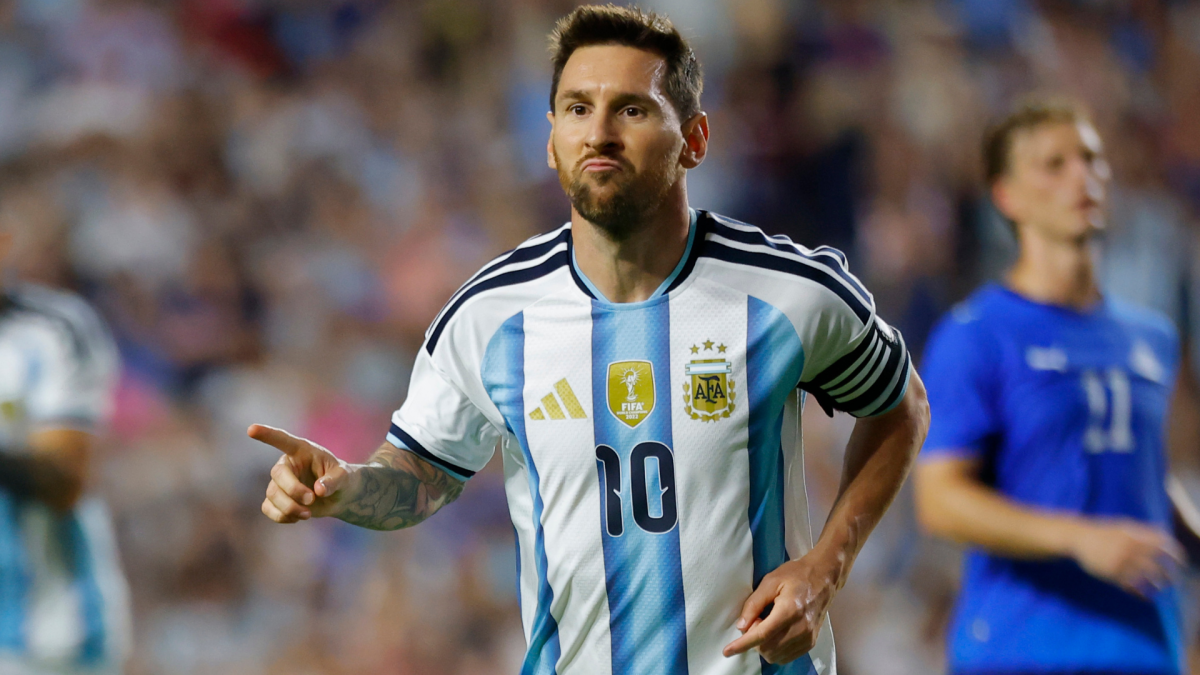
Well hasn’t time flown by? We’re very nearly at the end of the first round of World Cup games and today it is the turn of two of the favorites to begin their campaign. Holders Argentina got off to a disastrous start four years ago and will be conscious of the danger posed by Algeria in Group J, where Austria also face Jordan.
Before that, however, it is the turn of the fascinating Group I. France vs. Senegal is a repeat of the 2002 opener, one of the biggest shocks in World Cup history, and expectations are similarly high on Les Bleus as they face the side whose African title was deposed from them in the boardrooms of CAF. Then it is the turn of Norway, and Erling Haaland, for so long the coming force of European football, and now playing their first major tournament since 2000. Truly, today is a day for the stars. They don’t come much brighter than Lionel Messi.
Just how good is Messi in 2026?
Three and a half years ago Messi, then 35, was still quite clearly the greatest footballer on the planet. How could he not be when the World Cup had so emphatically bent to his narrative arc, when he was still playing passes that no one else could see on their televisions, let alone with 21 men hurtling around him? If Messi had been a writer, he would have called it a day in Lusail as champion of the world. Sport rarely offers such perfect end points, and when they do, the best are usually too competitive to see the value of going out on top.
And so Messi has endured, his last two seasons spent lighting up MLS as and when the mood takes him. He was quite clearly the best footballer on the continent of North America until everyone else decamped here at the start of the summer. I mean look at those bars. That’s just silly stuff Leo.
It’s also what makes him so hard to assess. Yes, Messi is running rings around the Columbus Crew, but a league rating model like Opta’s would say he’d find greater tests back in his homeland of Argentina or even the second tier of the English game. The World Cup promises to be a step up. So too will be the talent that surrounds him. Messi is swapping out the quickly retiring Barca veterans of Inter Miami for Julian Alvarez and Lautaro Martinez as his targets, talent aplenty in the midfield to provide him with service.
In such circumstances, it is hard to believe that Messi is going to be a disappointment. The best player in MLS could and should still be a very good player in the World Cup. And of course, he’s Messi. He might be much, much better than that. The 100th percentile creator and scorer Stateside might be the 95th percentile in Europe. Or this might be his Michael Jordan at the Washington Wizards World Cup. A great player still performing at an All-Star level. Just not performing at the level that only they could ever reach.
Mbappe’s defense
The man who might have inherited Messi’s title as the greatest player in Europe has heard all the critiques. He gets it. Forty-two goals and six assists in 43 games for Real Madrid last season is not enough. Kylian Mbappe is going to have to get back on defense.
“I need to take the extra step [with my defense] because it’s something important for the team and I have to do it,” he said. “It will start this time because we want to win, and to win, I’m ready to do whatever because I want to win at all costs.”
It takes quite something for one of the best pure scorers in the game, who needs four goals to match the World Cup’s all-time scoring record at 27 years of age, to be doing so little defensively that it is actually a problem. Then again when you look at Mbappe’s defensive numbers, they’re quite something.
Among qualifying attacking players in La Liga last season Marcus Rashford ranked second from bottom for total pressures per 90, according to Gradient Sports. He attempted 22.51. The average across the division was 42.08. Mbappe attempted 16.99. Even his Real Madrid teammate Vinicius Junior, not renowned as a model of defensive work rate, pressed about twice as frequently as Mbappe.
Worse still, there were around 20 center backs who pressed more than Mbappe last season. If you’re new to this sport, the guys at the back whose job is to win duels and clear balls, they should not be the ones breaking shape to apply pressure to the ball. And when Mbappe did engage in his defensive duties, he did not do them very well. Two interceptions in La Liga were one fewer than Joan Garcia. The Barcelona goalkeeper Joan Garcia. Again, for those newer to the game, the goalkeeper should not be making more interceptions than one of the outfield players.
When you play for a team as dominant as Real Madrid in particular, and perhaps as France in the early stages of this competition, Mbappe’s diffidence tends not to matter. His team have so much territory, threat and possession that their greatest requirement is an elite forward. There is, however, a reason why Mbappe is yet to win the Champions League, ultimately a more competitive, if less prestigious, competition than the World Cup he won in 2018. When it comes to the business end of that competition, you can’t defend with nine outfield players. In the international game, maybe you can. After all, Mbappe has one gold and one silver medal from his two World Cups. Still, couldn’t hurt to try this defending everyone’s been talking about.
Sports
Are World Cup hydration breaks actually commercial breaks or momentum breaks?
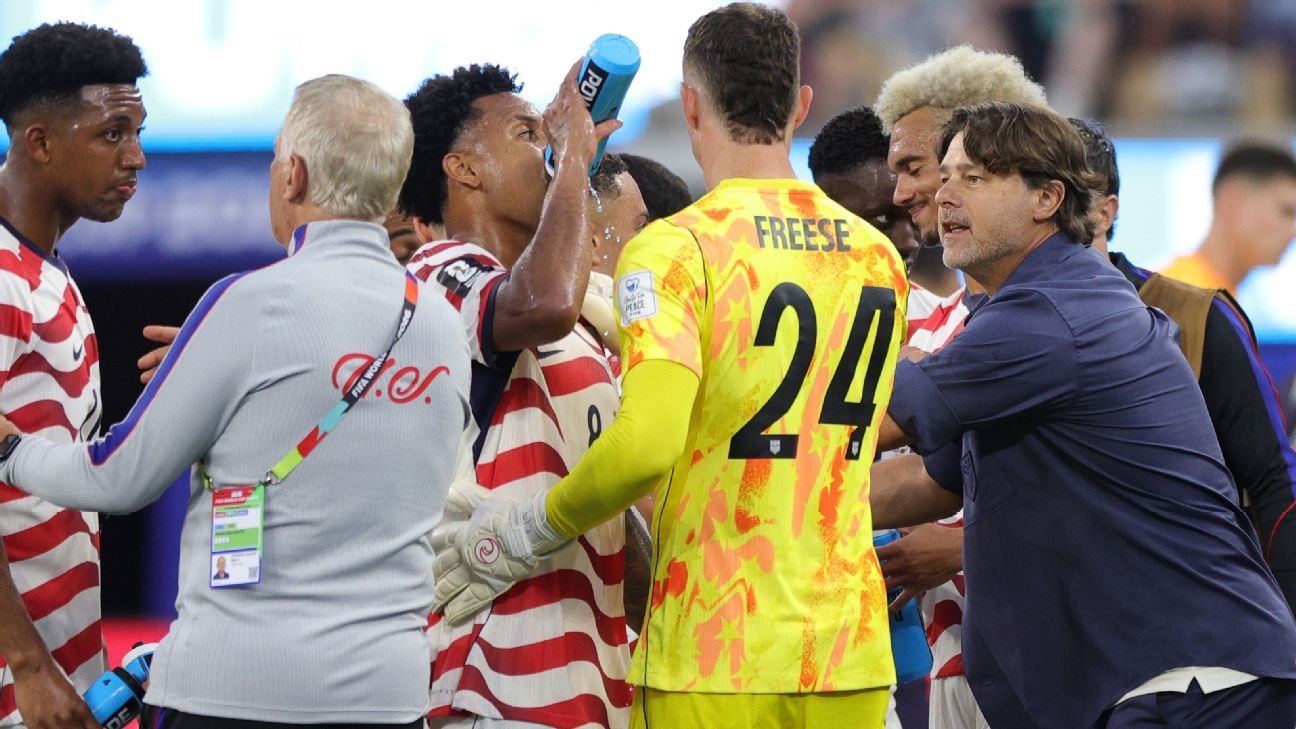
For this World Cup, FIFA has introduced mandatory hydration breaks — around the 22nd minute mark of the first half and 67th minute of the second — to counter the weather conditions across Mexico, Canada and the United States this summer.
But while the breaks are essential for player welfare when it’s hot, they are happening regardless of the temperature, leading to plenty of criticism about the impact on the game. Furthermore, the breaks have essentially split the game into four quarters similar to the NBA or NFL — which is handy given that the majority of sports fans from the home nations consume their sports in that manner — while it also allows FIFA to cash in on some lucrative advertising revenue for three minutes midway through each half.
Like them or loathe them, our reporters looked at a number of different ways in which hydration breaks are making an impact on this World Cup.
Jump to: A commercial cash injection? | A momentum killer?
Essential for player welfare?
The World Cup hydration breaks were first announced by FIFA last December, with the severe heat experienced by teams and players in the U.S. during last summer’s FIFA Club World Cup prompting the game’s governing body to introduce a formal structure for drinks breaks.
FIFA wanted a “streamlined and simplified” version of the more ad-hoc hydration breaks at previous tournaments and, despite this World Cup being played in some stadiums with air conditioning and roofs, a decision was made to introduce three-minute stoppages each half in every game
“For every game, no matter where the games are played, no matter if there’s a roof, or temperature-wise, there will be a three-minute hydration break,” Manolo Zubiria, chief tournament officer of the World Cup, said last December. “It will be three minutes from whistle to whistle in both halves. Obviously, if there’s an injury [stoppage] at the moment of the 20th or 21st minute and it’s ongoing, this will be addressed on the spot with the referee.”
The decision has had its critics.
“I don’t like it; I only like it when the conditions are extreme,” USMNT boss Mauricio Pochettino said. “But when the conditions are good, it is unnecessary.”
Spain drew 0-0 with Cape Verde on Monday night, but boss Luis de la Fuente spoke about the temperatures before the game. “I look at it in terms of the health of the players,” he said. “In extreme conditions it’s the right thing, having a break to freshen up. It’s true that tomorrow with the temperatures there’ll be [inside the stadium], maybe it isn’t necessary. But we’ve all seen the temperatures in Chattanooga [Spain’s training base], the humidity. Those breaks let you get your energy back.”
And Spain midfielder Mikel Merino said: “There’ll be games where they’re necessary, and others where they’re definitely not necessary. When it’s hot, for the players and their football to be in their best version, it’s good to have a break to regain your strength to go again. But in a lot of the stadiums which are closed and where it’s not too hot, the game stops and that isn’t not good for the fans, the game slows down and it’s more predictable. It has a big impact, the coaches can adjust things and change the dynamic. We’ll have to adapt well to that.”
Of course, there is sound medical science behind the need for hydration breaks.
According to FIFPRO, the global players’ union, three games at last year’s Club World Cup should have been suspended or postponed due to the extreme heat as those fixtures exceeded the threshold of 28 degrees Celsius (82.4 degrees Fahrenheit) on the Wet Bulb Globe Temperature gauge (WBGT) — a measure of heat stress in direct sunlight, accounting for air temperature, humidity, wind speed, sun angle and cloud cover.
So far this summer, no World Cup game has been impacted by such excessive heat and FIFA amended the fixture list following the Club World Cup for more games under cover and fixtures being played at times more likely to have less punishing conditions.
But it’s still hot, so there is support for the hydration breaks.
“The new rule should be viewed primarily as a medical safety measure,” Prof. Mehmet Karabulut, M.D., Medicana Health Group, said. “Today, the game of football is much faster and requires immense physical effort; players traverse vast distances on the field and often engage in high-intensity efforts.
“Under such conditions, it’s easy to lose a lot of fluids through sweat, making it difficult to regulate body temperature, especially in warm and humid weather. An organized break to consume fluids and cool down will enable players to return to the field in optimal condition and prevent possible health risks before fatigue sets in.
“These breaks are not a complete player-safety policy on their own. Kickoff times, recovery periods, cooling areas, emergency medical protocols and acclimatization plans are also essential. Hydration breaks are one important layer in a much larger welfare system, and in the case of the World Cup in summer in North America, the medical argument is extremely strong.” — Mark Ogden
A commercial cash injection?
It is perhaps telling that Zubiria made his announcement on hydration breaks during a workshop at the World Broadcaster Meeting in Washington D.C. during the draw for the World Cup, because there has been plenty of criticism suggesting that it is the broadcasters, rather than the players, who are the real beneficiaries of the hydration breaks.
Players get a three-minute break and the coaches deliver tactical messages, but the broadcasters can — and many have — cash in with a lucrative commercial break while play is halted.
Michael Johnson, a U.S. sports industry research analyst for S&P Global, told Reuters that the three-minute hydration breaks offer real financial positives for broadcasters during the 104-game tournament, saying that the pause in play could be “extremely valuable and could potentially command Super Bowl-level prices within that 7- to probably 9-million-dollar range.”
But Netherlands captain Virgil van Dijk expressed concerns that the breaks merely enable more “commercialism” to enter the game.
“Hydration breaks are a bit interesting, because I was obviously watching almost all the games up until today, and every time going to commercial is a bit … Not really that I like it,” he said. “I think for the neutral watchers on TV it’s also not great.
“If it’s really hot, obviously it would be good to put them in. But I think you have to look at it in every game, separately, in my opinion.”
Former Manchester United and England defender Gary Neville told The Overlap that the hydration breaks are a “stealth advertising break” with U.S. broadcaster Fox using the hydration break to run commercials.
But U.S.-based Spanish-language broadcaster Telemundo has chosen not to take a commercial break during the three-minute stoppage — a decision that has been mirrored by U.K.-based ITV Sport. — Mark Ogden
A matchday momentum killer?
Restarts of play are an important part of any sport. They disrupt rhythm, shift momentum and allow the other side to regroup and rejig their game plan.
The World Cup’s midhalf breaks have fundamentally changed the way teams approach games, as they can now adapt and improvise based on the new information, while they are offered a reprieve from any barrage of attacks and can be methodical about their style and intensity in each “quarter” of the game.
“It’s advantageous for the team losing momentum — that’s why I call them momentum breaks,” USWNT boss Emma Hayes told ITV. “When you’re on top, you don’t want it; when you’re losing, you do. Sometimes it’s not even coaching [during the hydration break], it’s about taking on fluid and calming players. Sometimes it can be doing nothing. But that can be considered coaching as well.”
We have seen multiple examples of this at the tournament so far and the stats show what an impact it has made. Out of the 22 goals scored in the first half of World Cup games so far, 12 have come after the first hydration break. Of the 24 second-half goals, 12 have come after the hydration break.
But it’s not just the volume of goals after these breaks, it’s the nature of them. Of the 24 goals that have come after either hydration breaks, 11 have been game-state-altering goals … meaning they put a side level or into the lead.
Australia’s smash-and-grab 2-0 win against Türkiye was a good example of this. Both of Australia’s goals came shortly after the hydration breaks in either half, even though Turkiye had the lion’s share of the possession.
Indeed, the Socceroos had one shot in the first half before the hydration break, then had three after it and scored their opening goal from the first shot after the restart.
In the 1-1 draw between Brazil and Morocco, the first half clearly saw a momentum shift following the break.
Brazil’s equalizing goal came just six minutes after the pause, and although the equalizer was born out of a moment of individual brilliance, Morocco couldn’t capitalize after taking the lead right before the hydration break. The Atlas Lions registered seven shots worth 0.9 xG before the pause and could muster only 0.3 xG from five shots after it.
In Japan’s 2-2 draw against Netherlands, the Samurai Blue saw their equalizing goal come after the hydration break in the second half. The team had two shots before that break, then registered five after it.
Almost all of their xG in the game was accrued in periods after the hydration breaks.
And while Germany beat Curaçao 7-1 with ease, the break offered boss Julian Nagelsmann a chance to reaffirm their tactics against a formation they weren’t expecting.
“Curacao played with a diamond today, and we adjusted how we attacked before the hydration break,” he said. “But even so, there were still two or three moments where it took a little while because, at the end of the day, you actually very rarely play against a diamond-shaped team these days. It’s practically unheard of. Very few teams do that anymore, and we needed a bit of time. The water break was actually good to simply reiterate what we had already adjusted on the board.”
In Canada’s 1-1 draw against Bosnia and Herzegovina, the impact of the hydration breaks on team rhythm was evident.
Bosnia’s opening goal was immediately followed by a break in the first half and allowed Canada to get back on top — the result was Canada’s shots going up from one to five, and their touches in the opposition box going up from four to 17 before and after the break.
The script was repeated in Scotland’s opening game, as their winning goal came three minutes after the first break. The momentum also swung in both directions for Haiti and while they conceded after the first break, all of their seven shots and 10 touches in the opposition box in the second period of play occurred after the second break.
Obviously the game state has a part to play in a sport that ebbs and flows, but the restarts have clearly been a valuable avenue to change momentum. The trend seems to be in its nascent stages but a hydration break is a chance for managers to get creative and we might soon see teams plan differently for “quarters” of games.
As France’s Didier Deschamps put it: “It’s important to be able to give these extra two opportunities to the head coach. It’s a good thing, this is a fact, but it leads us to split the game and if you’re in a strong position, following this break you have to start playing again.
“But we adapt to this, even in our prep work we’ve anticipated this, it’s not two halftimes, it’s four quarter times. This is what we’ve got, what’s been decided, so the players and the coaches adapt to this new reality. But you get to speak an extra two times.” — Yash Thakur


Why the Reflecting Pool in Washington DC looks green
CNN's Sunlen Serfaty reports from the Reflecting Pool in Washington, where algae growth has turned the pool green.

Argentina v Algeria: World Cup 2026 – live
Key events A selection of Messi stats for you to digest at as the veteran begins his valedictory World Cup....


Prince George to attend Eton College from September. #UKRoyals #BBCNews


British couple describe moment Russian warship fired warning shots near them | BBC News
A retired British couple who were on a yacht which had warning shots fired near it by a Russian warship...


Teen’s deadpan answer to UK social media ban goes viral
A student's deadpan response to a reporter's question about the UK's proposed social media ban for under-16s quickly went viral.


Georgia and Alabama GOP runoffs and more primaries to watch today
Washington — Polls have closed Tuesday in Georgia, which is holding a high-profile runoff race to take on Democratic Sen....


Hantavirus cruise passenger says she’s being forced to quarantine in Nebraska
A passenger from the hantavirus-stricken cruise ship has said she is being held in quarantine away from her home against...


Why the Kennedy Center’s name is still hidden
Days after President Donald Trump's name was removed from the John F. Kennedy Center for the Performing Arts following a...


Daniel Dae Kim gets a Korean zombie makeover
Zombies are a mainstay of K-movies and dramas, from the Netflix blockbuster series “Kingdom" to "All of Us Are Dead."...


British couple describe having warning shots fired at them by Russian warship. #BBCNews
-

 Business3 days ago
How much of Musk’s wealth comes from government help? Virtually all of it
-

 LifestyleNews2 weeks ago
120 minutes of strength training per week may help extend lifespan
-

 Politics5 days ago
What to know about the stabbing that set off fiery riots in Northern Ireland
-

 Video4 days ago
Download fans say what they love about the festival. #DownloadFestival #BBCNews
-

 Video4 days ago
Why SpaceX IPO isn't about space. #SpaceX #ElonMusk #BBCNews
-

 HealthNews5 days ago
The people of Okinawa, Japan only eat until they are about 80 percent full, then stop — and the practice has been linked in multiple peer-reviewed studies to lower rates of cardiovascular disease, slo
-

 TravelNews4 days ago
My Paternal Instinct Should’ve Warned Me About Netflix’s Maternal Instinct
-

 Food4 days ago
Pope Leo’s plane was grounded. Then the King of Spain stepped in to help